Campaign Mastery helps tabletop RPG GMs knock their players' socks off through tips, how-to articles, and GMing tricks that build memorable campaigns from start to finish.

Professions Of Character


Montage of characters

This collage combines Medical-Doctor-1236694 from freeimages.com / Kurhan; police-1239587 from freeimages.com / Sandor Pinter; male-1525673 from pixabay.com / namwealthyaffiliate; isolated-1194899 from pixabay.com / TheHilaryClark; star-wars-1118389 from pixabay.com / InspiredImages; man-3244896 from pixabay.com / anarerate; knight-2939429 from pixabay.com / Janson_G; beak-1294093 from pixabay.com / OpenClipart-Vectors; waiter-3296597 from pixabay.com / Alexas_Fotos; and crowd-2361583 from pixabay.com / puzzleboxrecords.

We all roleplay our character’s professions or character classes, right?

Actually, we don’t. What we usually roleplay is someone pretending to belong to a profession, because that’s a lot faster and easier.

The difference between the two might seem small, but the impact when you compare the two is like night and day.

Awareness of the difference actually derives from a show about Air Crash disasters (I watch a lot of them, so I’m not sure which series it actually was); at one point in one episode, an expert investigator states that “Air Crash Investigators never like to close the door on any possibility” – by which he meant that the profession trains people to consider every possible contributing factor to be valid until completely ruled out – and if they run out of possible causes (it has happened in the past), that simply means that something has been ruled out that should not have been. So everything goes back on the table and gets rechecked – again. (EDIT:) Furthermore, even when they have found an apparent cause, they don’t stop there; not only does that cause need to be confirmed in absolute detail, other events may have contributed to the disaster. As a result, they learn to investigate everything in microscopically-minute detail.

And that got me to thinking.

Every profession trains its members to think in certain ways. Fire and Rescue people are trained to identify the nearest accessible exits whenever they enter a room. Law Enforcement are trained to consider everyone a potential threat until proven otherwise, and to protect themselves accordingly. Soldiers, especially in an era with reliable firearms, look for ambush possibilities and are uncomfortable until they are cleared, and also tend to form closer bonds with their fellow soldiers. (Actually, Soldiers are the one case where most people will make the requisite adjustments to character mindsets, without even realizing that they are treating these characters differently to the rest).

These are relatively simple and straightforward manifestations of the principle. I want to focus on four more substantial characterizations.

    Money People

    The superficial characterization of accountants, bookkeepers, and the like, is that they reduce everything to a bottom line. The truth is usually the exact opposite; they are inclined to break numbers into distinctive line items. Often, their problem is seeing the forest for the trees.

    There is also a perception that such careers make people tightfisted, or attracts the miserly. The reality is that money people spend as freely, or even more freely, as everyone else – so long as it isn’t their money. However, this is always controlled spending – or, perhaps targeted is the better term. It’s spending with a purpose.

    No, if there is one drive felt by all money professionals, it’s efficiency. Bang for buck – with ‘bang’ being something that changes with the circumstances. It could be quantity of product purchased, or a maximized income/expenses ratio, or minimal financial liability, or any of a dozen other priorities.

    Doctors

    Doctors are guided by two simple rules above all: first, do no harm; and second, regardless of what you may think of what they have done, you treat the patient in front of you.

    Both of these can cause great ethical complications for a doctor caught up in the wrong circumstances. Harm, for example, can be a subjective thing, not an objective; and then there’s the whole question of short-term harm for long-term gain, and vice-versa. And somewhere into this question, the patient’s wishes have to come into play. And, these days, quality of life. So, this simple question quickly becomes very complicated.

    The second seems a lot more obvious. But we’re talking about people here, not automatons. What if the doctor is so repelled by the patient’s past deeds that he doesn’t trust his objectivity? No problem, pass him on to another doctor, comes the obvious answer – but what if there is no other doctor? There may be no specialist as qualified in the procedure that needs to be performed, or none that can reach the patient in time.

    And then there’s distributed harm. Is it ethical for a doctor to factor in the harm that the patient may do to others in reaching his decisions? Suddenly, the two conditions are in contradiction.

    Every doctor has their own personal answer to these conundrums. Some personalize death or disease as The Real Enemy. Others prefer to think of positive outcomes, focusing on their patients health.

    Lawyers & Psychiatrists

    It’s a common misconception that lawyer-client confidentiality (or doctor-patient confidentiality, for that matter) protects everyone, no matter what. Under certain circumstances the lawyer is compelled by law to breach that confidentiality – such as the client/patient revealing the intent to commit a crime (in some jurisdictions, the shield is only pierced by the threat of a crime of violence, which can include self-harm).

    Even without a legal requirement, a lawyer can ALWAYS choose to violate the privilege, so long as they are prepared to wear the consequences. Depending on the legal code, the authorities may or may not be able to act on any knowledge so obtained without risk to their own careers – much depends on whether or not they were a knowing recipient of privileged information. And even then, if they can show that they would have learned the information anyway, it’s often going to be admitted into evidence.

    It’s well known that lawyers have limited options about turning a client away once they have accepted a case. It may be possible to hand the client off to someone else, but where that would materially disadvantage a client in court, even that might not be possible.

    At the same time, the legal profession requires a lawyer to assist the client to the best of their ability. This poses challenges similar to those faced by a doctor, described earlier.

    Lawyers generally have to learn to set questions of right and wrong aside, or more precisely, to redefine them into terms of being an effective advocate for their client. Instead, they focus on what is legal and what is not, and – perhaps – on the abstract ideal of the law, justice. Even if an individual client is released when the lawyer knows they are guilty, that can be balanced by the fact that the protections provided by the law keep many more people out of unjust punishment than they allow criminals to escape just punishment.

    As a general rule, this leads many to reject absolutes in general, and embrace a relativism. This is necessary so that they can do their jobs and only worry about assuaging any moral qualms afterwards.

    Politicians

    Something similar happens to politicians. How much moral weight do you assign to the rules when you make the rules?

    Corruption is an inherent problem in politics as a result. It may not be for money – giving preferential treatment to an organization because you share the same religious beliefs is behavior that’s just as corrupt.

    Politicians learn to look for compromises. It’s virtually certain that compromise will be necessary throughout their career. Even if the government is not a democracy, you often have to compromise between benefits for sub-population A vs sub-population B, or between rival concerns. One way to raise money quickly, for example, would be to halve the size of the military overnight – but there might be unintended consequences!

These are all individual elements of a greater society. Technological and social context is all-important. In the 19th century, for example, the insane were routinely confined to asylums where the majority received little or no treatment for their problems beyond the distribution of sedatives to keep them (relatively) docile. Some institutions went so far as to explicitly state that it was forbidden to strike a patient, no matter what the provocation – which, by extension, implies that other institutions were fully prepared to condone such measures for the control of patients. Medical practitioners of the time were no less caring than those today; but there was a fatalism involved, a sense that the mind was beyond their power to control or manipulate. The best that could be done for these “poor souls” was to care for them physically and remove from them all sources of stress and triggers of distress, and give them the chance to heal themselves. Furthermore, it was social anathema to admit to anyone that a family member was in such a condition. Euphemisms were used, instead – “staying with friends” or even “convalescing in foreign climes” or simply “traveling”. The date of committal was often viewed as the date of death by families, as victims became dead to their spouses and children. Clearly, the attitude of a physician would need to be modified to take these social attitudes into account.

Personality Disjoint

Most players and GMs are quite capable of looking at the tentative personality profile of a character and stating what it was about that character’s class or profession that attracted them to that career in the first place. They may also think about what the character learned from their incorporation into that stratum of society, and will certainly assess how the character would think of his profession going forward.

Although clearly all related to the central focus, the personalty as it will present during play, there is nevertheless something disjointed about these disparate elements.

This stems from two factors: incompleteness, and the absence of a narrative. Too many people think that a character background is synonymous with a character’s history; a true background incorporates the impact that the historic events have on the personality and mindset of the character, and carries those influences forward into subsequent ‘chapters’. That’s the narrative element that was mentioned.

The incompleteness stems from the fact that there is no structure by which the partial elements listed in the opening paragraph of this section can feed back into the character or influence his circumstances. They are described as static phenomena, signposts to what actually took place over a period of time.

You don’t have to make very many or very strenuous attempts to correct this personality disjoint to discover the absence of consideration, in most cases, of how the professional training experienced by the character has shaped his personality and patterns of thought. In hindsight, it’s obvious.

A shortcut

Unfortunately, few of us have time to generate a “full” background – in the meaning given above – and make it consistent, and fewer still are capable of assimilating the whole of that background at each game sitting. To be practical, we need a shortcut.

Fortunately, the examples presented earlier in the article provide the basis for one.

What we need to do is distill all the contributions on the character’s thinking into a simple “road map” that we can inhale quickly and then express in play. The simplest format for such a map is a list of NO MORE THAN ABOUT HALF-A-DOZEN basic rules that the character lives by.

At least one of these, possibly more, should derive from, or have been modified by, the character’s professional training and experiences prior to this session of play.

  • One should describe how the character handles conflicting requirements.
  • One should describe how the character deals with commands from figures of authority.
  • One should describe how the character feels about his profession, and what personal standards it imposes on them.
  • One should describe how the character behaves towards those who fail to adhere to the standards expected of such practitioners by the character.
  • One should cover snap judgments by the character – on what subjects does he or she make them, how often are they right, and what do they do when they are wrong.
  • It may also be useful to have one detailing how the character responds to being placed in authority over others. Does he apply his personal standards, cut them some slack, become a martinet, treat them like personal slaves?

Throw in one or two deriving directly from the profession itself – the two listed for the Doctor earlier, for example, appropriately modified for social context – and you have an easily-digestible and navigable “road-map”.

This is NOT a character profile; it’s not even the character’s personality. It’s a set of lenses and filters through which that personality will manifest. A description of the personality should be a short paragraph preceding these modifiers. Clearly, that personality will influence several of the questions. Both are incomplete without the other.

There’s Impact In Numbers

Doing this for one character may or may not be enough to demonstrate two things:

  1. That it becomes easier to “wear” the character in play;
  2. That it becomes easier to identify and roleplay the most important professional decisions of the character.

Point 1 should be proven very quickly. Point 2 has to wait until events trigger one or more of these considerations, which is why it may take a couple of applications of the process before the validity of the technique can be demonstrated.

So, in and of itself, the technique can provide value returns for effort. But, the more widespread these principles are, another phenomenon begins to manifest: professional interactions become more manageable, and more susceptible to roleplay.

That means that there is a distinct benefit to viewing the PCs as a team, and getting each player to complete a set of “guidelines” for them to use in roleplay (they are not so hard-and-fast to be describable as “rules” that have to be obeyed). They are a tool. This enables the players to relate to the rest of the team through the lens of their unique representation of their profession and the contribution they make to it.

It also enables interaction at a professional level between NPCs and PCs with greater ease and depth.

Evolution Of Character

One final note: these are not set in stone. They can be changed, and no doubt will evolve over time. Such evolution is normally traumatic.

Clever players and GMs can deliberately design ongoing characters in such a way that they are not what the game role they are to occupy requires, but so that they can evolve into meeting such requirements after suitable professional trauma caused by that shortcoming. This incorporates a deeply personal story arc into each major NPC and into PCs, almost effortlessly.

In the case of PCs, the planned evolution should be factored into his campaign planning by the GM. This act of collaboration on the development of the PCs personality makes the entire game more enjoyable for both, defuses any sense of an adversarial relationship that might develop, and integrates the characters into the campaign more strongly.

Two characters can start off virtual cookie-cutter templates and evolve in distinctly different directions in two different campaigns, simple by virtue of the character development that takes place. And that makes this a very powerful tool, indeed.

Comments Off on Professions Of Character

Could Dungeons and Dragons Make it as an E-sport?


Monster Footprint

Dungeons & Dragons is one of the most influential games of all time. The stories generated by Dungeons & Dragons campaigns have inspired fantasy novels and movies.

Not only has the game itself remained popular for a number of decades, it has spawned countless other tabletop RPGs and even full-blown computer games.

Yet, despite its popularity, Dungeons & Dragons has not yet transitioned into the realm of eSports.

That might be about to change, however. There are a number of reasons to be optimistic about the game’s chances of making the transition.

The Rise of eSports

Even those who aren’t computer gamers themselves must have heard of eSports by now. Those of us who are old enough to remember what such gaming was like in the days before the internet, even before broadband, have witnessed a seismic shift in the way that gamers interact with their games, and with one another. Back then, we shared our passion for gaming by playing split-screen multiplayer, and by buying gaming-related magazines.

Today, gamers have a multitude of ways to connect with one another, and they no longer need to be in the same physical location to play together. Players don’t even need to know who they are playing against in the modern world!

While some people have been taken aback by the rapid rise of eSports – eSports are reported to have generated $660 million in revenue and $485 million of investments in specific brands in 2017 – it has hardly been a surprising development for gamers themselves. Any parent with young children will probably already be familiar with how popular a spectator sport gaming has become. Esports are continuing to gain legitimacy in the eyes of gamers and non-gamers alike, with the rise of services like eSports betting website Betway contributing to the increasing popularity of eSports.

Marketing research firm Newzoo is predicting that 2018 will be a booster year for eSports. Revenues could fly as high as $905 million – a 38% increase on the last year. Most analysts are also expecting a similar increase in brand investment, with an average projection of a .48% increase.

Some games naturally lend themselves to being utilized as eSports titles than others. There are even some games, such as Dota 2, which have been designed with eSports in mind. Dungeons & Dragons might not seem like the most obvious choice for an eSport, but it actually has many of the elements that make a successful eSport.

Dungeons & Dragons has a large and dedicated following, accumulated over several decades. It isn’t something that was usually played digitally (this is changing, however), but this doesn’t mean there won’t be people interested in spectating it – if the experience is rich enough. With a potential audience of 191 million gaming enthusiasts, it seems a near certainty that there are a significant number of Dungeons & Dragons players among their members, especially given the overlap between the two groups.

Competitive D&D

Over the decades, the rules of Dungeons & Dragons have been refined and focused. The game has undergone a number of iterations, with the rules of each being codified in the Dungeons & Dragons rulebooks. With the current generation of the rules now well-established, any player who wishes to learn how to play Dungeons & Dragons can do so. This level of accessibility is important if a game is to become a popular eSport.

Hasbro, the company who owns the rights to Dungeons & Dragons, have been focusing their efforts heavily on promoting the game through Twitch. So far, their strategy has proven successful. Dungeons & Dragons is gaining popularity on the platform. The millions of viewers it has attracted demonstrates that there is clearly a sizeable audience, but is it enough to sustain an eSport?

A Dedicated Community

Dungeons & Dragons is well established as a popular tournament game at Gaming Conventions. While many players enjoy playing Dungeons & Dragons together as a single party, it also has a long history of competitive play. This is the final piece of the puzzle in terms of the key features of a successful eSport. There are a number of platforms and services, such as Roll20 and Fantasy Grounds, which allow Dungeons & Dragons players to play together online, though these games are rarely in tournament form – but that seems a small step in comparison to those already taken.

As it stands, Roll20 seem like the more logical platform from which to launch Dungeons & Dragons as an eSport. Every indication we have so far is that the community at large would be receptive to the idea of Dungeons & Dragons becoming an eSport, and some think it would give the game an appreciable boost in popularity.

Dungeons & Dragons has all the key ingredients of a successful eSport, but will it ever get that final nudge it needs? There are people hoping that this will be the case, but there are no guarantees. What do you think about D&D’s chances as an eSport? Could it work? Would it be popular? The commercial success of any venture is unknown in advance, but the potential is there.

Perhaps more important to those of us who are already players of RPGs, what do you think the impact would be on the game? Would the rules have to evolve, and would this come at the expense of the traditional tabletop version?

As always, the future is terra incognita, and the journey of discovery will have many unexpected twists and turns.

If you have opinions on the subject, I look forward to hearing them.

Comments (2)

Inhabiting the Character Space and 16 other ways to help shy players


Shy Girl

Image by Pixabay.com / LuidmilaKot

On Quora recently, I (and others) were asked for GMing techniques to help shy players come out of their shells.

As it happens, I already had this article underway, in one of those serendipitous coincidences that stretch credibility to the point of near-fracture.

As it happens, I have 17 techniques to offer by which the GM can help a shy player learn to express themselves. None of them will be sufficient on their own, but some combination is almost certain to unlock the potential within the shy player for self-confidence.

I ought to know – I was a very shy child growing up, and easily intimidated. I still feel social anxiety at times, though I’ve learned to suppress those tendencies to the point where it isn’t normally a problem, even under adverse conditions. RPGs helped me to overcome it, but the process actually began with some public speaking (which is really being thrown in the deep end) – techniques 5 and 9 actually derive from that experience, which I have described before, but will reiterate when we get there.

I’m presenting these in a deliberate sequence that makes sense to me, in terms of placing the discussion into a logical narrative. But first, some preliminaries:

Diffidence is not Shyness

Diffidence and Shyness aren’t quite the same thing, though there can be substantial overlap.

    Diffidence

    Diffidence is a hesitation in putting your thoughts and ideas forward because you aren’t confident, either in them, or in your ability to express them, or in your capacity for formulating a thought or idea that’s worth the time its examination would require. Quite often, the person exhibiting diffidence will anticipate being embarrassed by the failure of their suggestions, and so avoid this social failure by attempting to avoid attracting attention.

    This hesitance frequently ignores the notion of inspiration – just because your idea is no good, or is only part of the answer, doesn’t mean that it can’t suggest a more comprehensive solution to someone else. Even negative or flawed contributions to a brain-storm can be beneficial.

    Shyness

    Shyness is being nervous or timid in the company of other people. This manifests in an arrested fight-or-flight reaction – the person feels scared, so their adrenalin surges, their breathing becomes more rapid, their heart pounds, and they acquire a rabbit-in-headlights expression. Panic attacks – a sudden overwhelming feeling of acute and disabling anxiety – may be triggered. Shyness often results from feeling intimidated, and feeling intimidated often results from being shy – a catch-22 that is at the heart of this emotion.

Some of the solutions I will present focus on overcoming diffidence more than shyness, some vice-versa, and some can be applied equally to both problems.

Both often show similar outward manifestations – a player who sits back and observes more than they participate, who speaks in hushed tones, who is hesitant and uncertain, and who often has problems making decisions out of fear of doing the wrong thing.

For the rest of this article, as a literary convenience only, I will consider the two to be manifestations of the same underlying condition, and describe them only as “shyness” and the sufferers as “shy”.

I should also add an important caveat:

I am not a psychologist or any sort of trained therapist, just an experienced GM who would do his best to help a friend (or a stranger) enjoy a social activity – but who has some experience on both sides of the equation. If a professional advises against any of these practices in a therapeutic capacity, listen.

The Preliminaries

Before getting into the solutions, there are a few important questions to consider.

    Does the player want help?

    Few of these will work without the active cooperation of the shy person. It’s important to present them in a positive context when you propose them. “I think the group would benefit from a greater participation by you, and would like to help you achieve that,” for example, or “I think you would have more fun if you were able to interact with the others a bit more and have some ideas on how to help you do that” – accentuating the positive benefits to be gained, and completely ignoring any negatives of the current situation.

    If the player tells you, “I’m fine”, don’t try and force them. And don’t nag them about their problem by repeatedly coming back to them with a different potential benefit, that will only feel like you are criticizing them. Instead, simply reply, “Okay – the offer’s on the table if you ever change your mind.” There are some techniques below that are GM-only – implement them, and be patient.

    Does the player need help?

    Things become a little more serious when the player’s shyness is actively subverting the enjoyment of the game by others. When that is the case, the best solution is to try to arrange some one-on-one gaming outside of, and concurrent with, the group situation. It doesn’t even have to be the same campaign or setting or rules system; choose something that the player will enjoy.

    Sell this proposal to the player without reference to his or her shyness – but use it as a means of implementing some of the techniques offered below in a more private setting, and use the player’s interactions at the group game-table as a way of determining which techniques should be carried over.

    Of course, the GM-only techniques should be implemented in the group setting.

    Does the player have a reason to be shy?

    I once knew a girl who was so intimidated by the beauty and success of her sister, a promising actress who had been granted a role in a major Australian TV production, that she became extremely shy and withdrawn. At the same time, she was incredibly proud of her sister’s success and so frightened by the possibility that her condition would harm her sister’s reputation or career that she became even more shy and even neurotic. When I first met her, she could barely whisper, and that only with great hesitation and reluctance. The last time I spoke to her, after an additional 9 months or so of therapy, she was able to smile and say goodbye in an almost-normal tone of voice.

    She had a reason to be shy, a psychological one, requiring professional intervention. My experiences with her led directly to my caveat earlier in the article. But it also pointed out something to which a lot of readers might not give sufficient weight: that there can be a legitimate reason for people to be shy, not just a cause for shyness to have become embedded within their personalities.

    Some people are afflicted with a stutter, and are shy because it embarrasses them. Some may have suffered some form of physical disfigurement and be self-conscious. It’s even possible for the emotional aftereffects of such injuries to outlast the injury itself.

    It’s extremely unlikely that these techniques will be a lot of help in these situations. If the player you are concerned about has a reason for being the way they are, talk the options below over with them and see what they think will help, if anything.

    It might be that none of them will help, but something else will – renaming a key NPC or the character name to avoid a stutter trigger, for example.

The Solution Techniques

Okay, with the preliminaries and foundation discussions out of the way, it’s time to get into the solutions!

    1. Inhabiting the Character Space

    For this technique, you need to help the player find a large, high-quality image that represents their character in their eyes. Before the player speaks, they should look at the image and imagine that it is the character talking. Sometimes, it can even be enough for them to have a mental image of the character in order to implement this technique.

    Obviously, the choice of image is paramount; you need a character who looks confident and sincere. An image that looks worried or fearful won’t work, and results are often mixed with an “angry” image.

    It’s astonishing how big a difference this simple technique can make.

    2. Refuge in numbers

    The character and the player are not the same person. Most characters have at least one good stat or skill. Reminding yourself (as the player) that “you have an 18 STR” or whatever before you start to speak and trying to make yourself sound like you are someone with 18 STR (or whatever it is) can also work wonders.

    In essence, this technique comes down to pretending that you are confident, even if you aren’t, but using the numbers provides a touchstone to access that pretense internally.

    This sometimes doesn’t work well with technique 1, I’m afraid. You can focus on one thing and lose the other. But sometimes, the player can integrate the two into something more effective than either on their own, by looking at the image and reminding themselves that “he” (or “she”) has “18 STR” (or whatever).

    3. Shy Player / Shy Character?

    It may seem counter-intuitive, but sometimes giving a shy player a character to play who is also shy can give the player the confidence to play more forcefully. Suggest that the player “play the character like C3PO in Star Wars” – 3PO may be nervous and hesitant and somewhat cowardly, but he has no problems making sure that others know it!

    After a while, the player can grow so comfortable roleplaying that they have no trouble handling a more outgoing character – even if the player themselves remains shy! What’s more, shyness is something that is gradually eroded by this success.

    4. Shy Player / Expert Character?

    Another technique is to make the character an expert and, as part of your game prep, producing relevant text for the player to read to the group as his character. In effect, you are assisting the player by providing them the results of their character’s expertise; all they have to do is read it as though they know what they are doing.

    It’s a funny thing, but some people can read aloud with perfect confidence that they lack when speaking – especially when the words have been issued, ex-cathedra, by the GM.

    You can further enhance this with Birthday and Christmas gifts of reference books on subjects that the character knows well and the player doesn’t.

    5. Matching Character and Player expertise

    Similarly, making the character an expert in some area in which the player has expertise can use the player’s awareness of his expertise and experience to overcome their personal shyness. Every single working day adds to the foundations of upon which this solution rests; all this technique does is tap into that well.

    Or you could choose a subject with which the player is interested, rather than one that relates to their profession. For example, let’s say that the player is into science fiction – how could you use that to assist them in D&D?

    Well, first you need to make it relevant – so call it “speculative fiction” instead. Then ask the player what he or she thinks is the equivalent to writing novels in the fantasy environment? They might respond that it’s tales told by Bards and Storytellers, or they might speculate about Dwarven Scribes producing scrolls containing fantastic tales. It doesn’t matter, so long as it’s plausible. So, if the character is fascinated by this variety of in-game speculative fiction, what’s his favorite story? Who is his favorite author or Bard? What’s the most recent tale he’s read/heard?

    Dropping in-game reminders of this expertise not only gives the character more personality, the expertise itself can translate to a mode of game-play for the character. In a dungeon or other encounter, the character might give forth with “this reminds me of a story…” The character might be given to wild speculation, but they won’t be wrong all of the time, and the exercising of the character’s imagination in this way leads them to ideas of what to do and what might be going in the game.

    6. Shy Player / Assertive Character?

    Sometimes, a shy player responds better to being pushed out of their comfort zone by playing a character who is extremely assertive. Of course, this technique conflicts with technique number 3. This is particularly effective at overcoming diffidence – a character who is headstrong, who doesn’t try to explain what he thinks is happening but simply acts, right or wrong leaves no time for hesitation.

    If the character’s choice of action is actually wrong, have the other PCs stop him in character. If the character is right, even if the other players don’t think so, they don’t stop him in time. And remember that he can always be right for the wrong reasons!

    7. Table Position

    I wrote about this subject in The Arcane Implications of Seating at the Game Table – was it really more than 5 years ago?! Essentially, you have two choices: put the shy player next to you so that you can naturally turn to them first (see 8 below) and can hear them even when shyness makes them whisper or mumble; or have them face you (see 14 below).

    There are lots of factors that go into determining the seating order around the game table. For the Zenith-3 campaign, I usually have the player of the Team Leader next to me, and another player is usually opposite me to the right because that gives them access to the power point. But sometimes, when the plot is a mystery, I might have the player of the Detective character sit next to me, and so on. Accommodating shyness in this way is just another criterion to take into account.

    8. Going Round and Round

    I never let an opportunity to go around the table pass me by. When PCs are having their own little plotlines, I’ll do so. When there’s a group discussion, I’ll do so, to make sure that everyone has the chance to have their say. When requiring character saves or skill checks, I will do so.

    Sometimes I will vary the starting position in this routine. Whichever way I go, the goal is to end up at a specific character. If it’s a policy decision by the PCs, that’s the team leader, who has the final say. If it’s a strategy discussion, it’s the field commander, for the same reasons. If it’s a surprising situation that the characters weren’t expecting, they react in speed order (or initiative sequence). In some role-playing situations, it may be a different PC’s player, because they have the greatest relevant expertise.

    Unless a shy player was deliberately going to be last in this sequence, he should always be first to speak. Letting other players go first enables the shy player to simply agree – effectively hiding in the corner without contributing, even if they have another idea.

    But this requires active intervention on the part of the GM when other players criticize any suggestion put forward by the shy player to ensure that it is phrased in a positive way, not a negative (or worse, personal) way. I do this by putting my two cent’s worth (ex-cathedra) after the shy player has spoken: “[Shy Player’s PC]’s plan would work if it weren’t for [X] – [Next PC to speak], do you have any thoughts on how it could be improved to cope with that?”

    9. Working From Prepared Notes

    When I was in 3rd class, my school had an eisteddfod. One of the events was a public speaking contest, but they had only one entry, from a year 12 student (called 6th form at the time) – nine years my senior, in the final year of school before entrance to University. The subject was Nuclear Power, and the student had been researching and preparing for weeks. The teachers knew that I was interested in science, so the morning of the contest, when no other participants had come forward, they begged me to do something on the subject. No pressure, because no-one expected anyone with so little prep time to succeed, and failure would not be reflected on my record.

    I went home immediately and spent the next few hours thinking about the subject and listing talking points on a sheet of paper, practiced it twice, then went back to the eisteddfod, and proceeded to (very nervously) talk off the top of my head on each talking point in succession – which I had arranged in a reasonably logical sequence.

    My opponent had prepared his talking points on index cards, which he had carefully typed up; they contained more facts, something I was ready to concede. His problem was that my off-the-cuff narrative had already dealt with the objections that he thought insuperable, derailing his arguments, and shaping the debate between us in a way that he hadn’t prepared to counter. So he started trying to rearrange his speech on the fly, reading from one index card and then shuffling through the deck to find the next point in a horribly disjointed manner. I knew the subject at least as well as he did, and even I had trouble following what he was talking about.

    It didn’t surprise anyone, after seeing this performance, when I was the unanimous winner. (And my rival was the first person to congratulate me, even before the verdict, which was good of him).

    Not bad for someone who was so shy I almost wet my pants on stage!

    And that’s the key point to this technique for overcoming shyness – have the player come up with little talking points and anecdotes for his character to present. He may be shaky at first, but the inevitable rehearsal in private that comes from preparing these in advance will begin to make itself felt, and eventually he will be coming up with things off-the-cuff in the course of play.

    On it’s own, this technique will probably not be enough, but in conjunction with others, it can be very effective.

    10. Shy Players with Assertive Players

    Just as some players are shy, others are assertive. Some GMs refer to the latter as “Alpha Players”, and there is a truism that the two should never mix at the same game table.

    Alphas tend to grow frustrated by the hesitance and indecision of the shy, and the shy tend to be intimidated by Alphas.

    Most of the advice I’ve seen on the subject recommends either splitting them up or deputizing the alpha to coax suggestions out of each of his fellow players.

    I have another technique – I make the PC of the alpha player an unofficial “big brother” to the PC of the shy player in-game. It might be that they remind him of a puppy that they used to have, or their real little brother who [insert tragic circumstance]. Most alpha players have a high opinion of their abilities (and sometimes that’s even justified) and will relish the chance to show off their roleplaying chops and the additional challenge involved. It only takes a hint or two that their PC is getting the impression that the shy player’s PC is being intimidated into silence by the forceful presentations of the others (never make it them who’s the problem) and they will make it their role-playing mission to elicit the opinions of the shy player – and without even realizing it will, in the process, moderate their own behavior.

    This is a variation on that “usual advice”, but differs in that it is oriented around their characters, which makes it far more palatable and interesting to all concerned.

    For bonus points, have some heavy try to bully the shy player’s character so that the Alpha’s character can come to the rescue. This really cements the roles and relationship between the two.

    11. Coupling Shy Players with Shy NPCs

    Yet another technique is to throw a shy NPC into the party who ‘adopts’ the shy player’s PC as his protector, teacher, hero and/or parent-figure. The shy player feels the responsibility and forgets – at least partially – their personal shyness. As the shy player comes out of his shell, so does the NPC.

    This is slower than some of the other techniques but – if it works at all – works well in conjunction with most of the other suggestions.

    12. Side Chatter as a warm-up

    It’s often the case that once a shy player gets started, they are perfectly able to express themselves – it’s just that they are normally finished speaking before they get ‘warmed up’. Encouraging them to engage in side-chatter in character, in-game before offering their opinions on something can achieve that warming-up before they get to the important bit. Their character’s favorite phrase should become, “this reminds me of the time…”

    At first, you may have to provide the anecdotes, or help the player come up with them, but eventually they will be creating them for themselves.

    Enhance this by occasionally mentioning that the characters are around the campfire, listening to [shy player’s character] concoct another tall tale for your entertainment, or winning free ales in the tavern by entertaining the patrons, or whatever. Making this a roleplaying touchstone to the character gets the player used to speaking out.

    13. Encouragement Awards

    Most GMs factor character abilities into determining how difficult an encounter was, and hence what rewards should be provided. I like to, and try to, factor in the player’s abilities as well. Making a positive suggestion is twice as hard for a shy player, and so they deserve a greater reward for the effort.

    This probably shouldn’t be anything as crass as extra gold or experience points. Other forms of reward are preferable. Allied with suggestion 12, this can be a potent technique for turning encounters into a parley – “[PC] starts telling another of his anecdotes. The [encounter leader] stops to listen. When the brief tale is over, he bursts out laughing. ‘MORE!’ he roars.” A combat encounter has just become a roleplaying encounter, with the shy player’s PC in the forefront, and an NPC has just offered positive reinforcement

    This won’t happen every time, of course. But even a little can go a long way.

    14. Be a Supportive Focus

    Have you ever noticed how many shy players will look at the floor, or at their character sheet, while speaking? Submissive behavior like this is another of the symptoms of shyness. Instead, encourage them to focus their attention on you while they are speaking.

    Not only does this help them forget (momentarily) that there are other people at the table, but you can use your body language to encourage them – nodding your head and so on. And look at them when you ask a question.

    To facilitate this, you need to make a move that will lead some GMs uttering howls of protest: you need to ditch the GM Screen. The shy player needs to see you reacting positively to his speaking up.

    The other plank of this technique is no easier: go a little softer on the PCs when they are following a suggestion of the shy player, even if it’s not a great idea that’s been accepted by the others. If you encourage him or her to speak up and then kill the party when they listen, it sends all the wrong messages to the players, and especially, to the shy player. If you need to redress the balance, you can be a little meaner the next time they don’t listen, or simply reduce the reward they achieve from the softened encounter.

    Get the players to pay attention to you and then send the right signals.

    15. Private Rehearsals

    This technique employs the theory that if you can give a shy player a single starring scene in a day’s play, it will form a wedge into their shyness, enabling them to eventually transcend their problem.

    Tell the player (privately, and days in advance) that there will be a scene during the next day’s play in which their character will have to publicly address X on the subject Y, where X is someone important or a crowd of specific demeanor or affiliation. “Thundervall will have to make a speech to persuade an angry crowd not to take justice into their own hands,” for example.

    This gives the player the chance to draft his character’s speech in advance, and even to rehearse it a time or two – which should help them deliver it in front of the other players, as I know from experience (see 9 above). It does NOT deliver the context of the situation to the player – why the crowd are angry, who they are angry at, whether or not they are justified, etc (it might even be an anticipated reaction by the other PCs!) – so they will need to adjust their prepared speech on the fly, but should have the confidence to do so from their rehearsals, especially if this has been pointed out to them at the same time that the GM offered up the hint.

    The prep and practice makes the player more comfortable and able to deliver his lines, and the absence of context forces the player to roleplay, not just recite. Once they get used to doing so, they will start speaking up at other times.

    If you think this is unfair to the other players, you can drop them the occasional hint along similar lines. Just make sure you leave something out of your advance briefing! A character who is supposed to be an experienced soldier or expert tactician might be given a tactical problem to think over in advance, for example.

    This technique is all about the GM helping a character to do the things in-game that he is supposed to be good at – helping a shy player overcome their shyness is a side-benefit of getting them to interact more substantially or forcefully on a regular basis.

    16. Encouraging Aphorism Of The Day

    There are thousands of aphorisms out there that are either directly related to self-worth, self-confidence, self-expression, or can be interpreted as being relevant. Compile a list of them (to be refreshed when necessary) and at the start of each day’s play, give one to the player to think about as play proceeds.

    Personally, this technique doesn’t do much for me, but others find it valuable. It would also help if the aphorism was in some way directly relevant to the planned events of the day. Selecting the aphorism in advance and using it as inspiration makes this relatively easy.

    An example might be “For evil to triumph, all that is needed is for good men to remain silent” – though I would probably replace “men” with a gender- and race- neutral term like “people” to make it more generally applicable.

    17. Positive Reinforcement

    If the player makes a positive suggestion, call it out. Provide as much positive reinforcement as you can, and squash negative reinforcement immediately.

The Shyness Inequality

All players may be equal in the eyes of the game system, but the reality can be very different. Some players inevitably have greater handicaps to overcome simply to make a contribution, never mind competing on equal terms with the typical player who has no difficulty expressing themselves. It follows that the GM should take these impairments into account in order to more closely approach that idealized equality.

This assists those players who have such handicaps to improve, so that they can truly become the equal of the other players at the table.

The shy player deserves just as much opportunity to have fun as the more outspoken player. Creating that opportunity is your responsibility as the GM. Your group, and your game, improve as a result. And it’s also the decent thing to do.

Comments Off on Inhabiting the Character Space and 16 other ways to help shy players

Survivors Of The Underdark: A New Dwarven Paradigm


Original image by pixabay.com / werner22brigitte
Cropped and contrast-enhanced by Mike
Open the full-sized file in a new tab by clicking the image.

Long-time readers of Campaign Mastery will know that I love concepts that re-imagine standard game elements like races and classes through the prism of a completely new context. During a conversation at the game table a month or two back, I found just such a new context for a staple D&D/Pathfinder race, Dwarves.

Traditionally, D&D – and Fantasy games in general – have used one of two paradigms to describe Dwarves: The treasures-of-the-earth-obsessed and the dying-race-who-delved-too-deep and who now face competition for resources from other Underdark races, or some blending of the two.

In Creating Alien Characters: Expanding the ‘Create A Character Clinic’ To Non-Humans, I offered a glimpse of a more spiritual third choice built around the traditional earth-sensing abilities of the Dwarves as an example. In By Popular Demand: The Ergonomics Of Dwarves, I took an entirely different tack and reasoned my way to a very distinct vision of the Dwarven race based upon their musculature and environment – making a couple of assumptions along the way that could be equally valid the other way around, as the comments make clear.

And, early in the Orcs & Elves series, as background, I describe (very briefly) the Dwarves of my Fumanor (D&D) Campaign as having

“….a very martial culture which is fanatically violent, a cross between Star Trek The Next Generation Klingons and the Taliban. During the Godswar, the Dwarves had retreated to the lowermost part of their mine-shafts, sealing off the passages behind them. Other groups had taken refuge in these upper levels and a number of power struggles were (and are) underway as a result. From the Dwarfish perspective, they’ve been betrayed and picked on by every other race in existence and they have had enough; from the time they sealed their tunnels behind them, they were determined to live their lives on their own terms, and anyone who wanted anything from them had to earn it on those terms. Adding an extremely sense of honor and a propensity to get drunk, rowdy, and rough, and you’ve more-or-less got them nailed. If it’s a Dwarf, it’s respected and trusted; if it’s not a Dwarf, it has to prove itself as good as a Dwarf or it’s considered subhuman – and the challenges are deliberately not easy. How the Dwarves became this specter of extremism is unknown.”

So that’s 5 very different visions of Dwarves and their society. In this article, I am going to propose a sixth: the Survivalist.

Let’s work through some of the traits most commonly associated with Survivalism and see just how they would fit the traditional Dwarven paradigm. (The last couple of items are more speculative and deal with the consequences of adopting this paradigm.)

1. Doomsday

Probably the most commonly identified trait of survivalists is the belief that the “world as we know it” is vulnerable to disruption from a great many potential causes and that only those prepared for it will survive and prosper.

The acute form of this belief states that such a disaster is imminent, and this experiences periodic resurgence depending on socioeconomic, medical, and political developments. The initial fears were of nuclear war; in the 1970s, economic or ecological collapse and or running out of oil became more dominant; in the Reagan era, nuclear war again took center stage; more recently, bird flu and swine flu, mad cow disease, and the outbreaks of Ebola have highlighted medical disasters. The currently dominant drivers are climate change, medical crisis (especially the rise of resistant diseases), and economic collapse. Policy choices by President Trump are perceived as increasing the nuclear threat faced by the world, and may once again bring the original concern back to the fore.

These beliefs drive behavior that is proportionate to the perceived threat and its imminence; the more acute the anxiety felt by an individual or community, the more extreme the preparations and behavioral changes it considers justified in making.

The Survivalist model of Dwarves therefore assumes that their ancestors perceived some threat that was so serious that the entire race made radical changes to their society, migrating underground. This logically implies that prior to the advent of this world-view, they lived on the surface.

There are, of course, three possible alternatives to contemplate when thinking about what the doomsday threat was that drove the proto-Dwarves to this action:

  1. The Disaster has not yet happened;
  2. The Disaster either is happening right now, or is imminent;
  3. The Disaster has happened and been forgotten by the surface survivors.

Each of these has different implications for the resultant Dwarven Race and its society.

    Disaster Has Not Yet Happened:

    If the disaster has not yet happened, there would be a significant sub-population who don’t believe in it, or certainly not to the same extent as the more extreme adherents within Dwarven Society. These would be more willing to “brave” the surface. Of course, they would view those who exercised greater zeal in their beliefs as being just a little “strange” and would tend not to mention them except in a depreciating or oblique manner. “My crazy uncle Grimly…” “Everyone has a crazy uncle somewhere in the family…” – that sort of thing.

    But there would also be some members of the society who would strongly oppose these interactions with the surface world, because the disaster could begin at any time. And these are likely to represent a significant power bloc within Dwarven Society, having been dominant enough to actually bring about the general migration in the past. They may be dominant to this day, in which case those Dwarves who risk going “above-ground” would be considered “adventurers” in the Victorian sense of the word, with all the connotations that this entails. While thrilling to their tales of “beyond civilization”, the typical Dwarf would nevertheless look down on those who took such foolhardy risks.

    Every “clan” would be different in their tolerance for such “Adventurers” – some would be extremely opposed, on the principle that these wild cards are placing the entire society at risk by revealing the clan’s secrets, others would be more tolerant.

    Disaster IS Happening:

    Profoundly different social traits emerge if the disaster is believed to be happening right now, because you would need some enormously powerful motivation to leave the safety of your sheltered society and venture into the surface world. This scenario can quite obviously form the basis of the entire campaign, as the PCs strive to deal with the effects of the unfolding calamity, whatever it is.

    Dwarves who DO emerge to join the struggle would be those who have formed deep bonds pre-collapse with surface people and institutions, and those who can’t tolerate just sitting back and doing nothing. There would be a significant sub-group of missionaries attempting to persuade the surface races of the wisdom of the Dwarven Solution and proselytizing them to enact it for themselves before it’s too late.

    It’s hard to be more specific without knowing the exact nature of the emergency and how obvious its manifestations are. Possibilities range from total acceptance of the reality of the disaster to total rejection of the Dwarven beliefs. And either could be right, or wrong.

    Disaster HAS Happened (and may happen again?)

    This model postulates that the disaster has occurred and the survivors on the surface have forgotten it. That obviously means that Dwarves, as a society, would be less reticent about interactions with the surface world, who might not even believe that anything so dramatic has actually taken place.

    There is a logical subdivision within this model based on the potential for recurrence; if there is no serious expectation of this, then Dwarves remain underground because they have grown accustomed to it, and there may even be some communities who have returned to the surface, displacing whoever had moved in while they were below ground, an ongoing source of tension and friction – Old Grudges Die Hard (Thank Goodness!).

    If there is a serious concern that events of the past could recur, this model more strongly resembles one of the other two cases described.

There are significant implications for the Dwarven Norm from another angle as well: consider the typical Dwarf encountered on the surface and how representative they are of the society as a whole. If you assume that these have stats and abilities as described by the game mechanics, you will find that this disaster evaluation will give quite different implications for the real typical Dwarf.

In other words, how typical are the Dwarves that the Surface World encounters and uses as the basis of their opinions of the race of Dwarves as a whole? Are they exceptionally well-prepared and highly-trained, fiercely independent, relative to that greater population? Or are they closer to the norm?

Underground passage or shelter in the middle of a field.

www.freeimages.com / Patrick Hajzler

2. Isolation/Shelter

If disaster is coming, it only makes sense to try to protect yourself from it. What’s more, desperation can drive people to acts they would never otherwise contemplate, a knock-on effect of the disaster. It follows that survivalists present as being at best slightly paranoid and untrusting of strangers. They tend to isolate themselves as individuals or as a community (depending on how widespread the belief is within the community) and don’t fully trust anyone who doesn’t share their perspective.

No matter where they go, most survivalists carry a “Go bag” packed with life-saving essentials. These are known within the survivalist fraternity by other terms, but those don’t matter to us in this context. In some cases, that’s the full extent of survivalist preparations undertaken by the individual; in others, it’s the merest tip of the iceberg.

These traits and tendencies would also manifest in our “Survivalist Dwarves”; they would perpetually have their “kit” ready to move out, and would always be prepared to abandon anything they couldn’t carry, refusing to form attachments to anything non-portable. They would be wary when dealing with strangers, an attitude easily mistaken for xenophobia. Winning the full trust of a Dwarf would be slow and difficult, but such trust, once earned, would be absolute. Until then, the Dwarf would be, to at least some degree, standoffish, alone even when standing in the middle of a crowd.

And Dwarves would have a natural tendency to “fort up” – even at the expense of comfort and convenience. Their first task, upon selecting a campsite for the night, would be to see to the defenses, and they would pursue this objective for as long as improvements were possible given the circumstances and available light. Other races would be far more superficial in their devotion to this, making sure that tents are erected etc while there is enough light to do so; a Dwarf would prefer to sleep on the ground if they can’t get their tent up in the dark.

3. Underground

As a matter of practicality, it’s a lot easier to achieve substantial isolation and defense with an underground installation than with one on the surface. Your external walls, to all intents and purposes, can be almost infinitely thick. The prototypical survivalist shelter was designed to protect the inhabitants from a nuclear exchange, and some of the designs could – in theory – survive anything short of a direct hit.

Most are not that protective, because digging that deep is quite difficult and expensive. To compensate, they are emplaced some distance from any probable target. At the upper end of the range, we have facilities like that of the NORAD command center at Cheyenne Mountain, 2000 feet below the surface.

Dwarves are known to live underground, so this seems to be an obvious connection to the Survivalist model. But there are some hidden implications that I’ll come to in the more speculative sections of this article.

4. Hidden

Cheyenne Mountain is not a good example for this next Survivalist Trait, which can be seen as putting into practice the maxim that “a danger avoided is even better than one that can be overcome”. That’s because overcoming a danger inherently carries the risk of failing to do so, and inevitably consumes resources. When supplies may be hard to come by, either can be fatal.

Consequently, survivalists don’t want the locations of their shelters to be widely-known, and may go to considerable lengths to conceal them. Every act of entry or egress poses a risk to that secrecy, so the most paranoid are likely to employ extraordinary practices to avoid detection.

If we consider Dwarves as inhabiting such a shelter on a permanent or semi-permanent basis, it follows that they would be extremely paranoid about detection of their facilities when members of their society come and go. Trade would be conducted remotely some distance from their tunnels.

5. Self-sufficiency

One danger to this secrecy comes from employing outsiders in the construction of the shelter. It follows that a poorly-done task done in secrecy by the individual is preferable to a more expert task done by some outsider.

And, of course, being dependent on outside contractors for anything is problematic if the doomsday actually occurs. It is an inherent priority within the survivalist community that you be as self-sufficient as possible.

That means learning to do everything you need to do, for yourself. If you are constructing a shelter and come across a task for which you are not currently skilled, the need to immediately become skilled in that task becomes a priority.

Many survivalist shelters are likely to evolve over time – an initial version that’s “good enough for now” being modified at a later date when the survivalists’ skills have improved.

Not enough attention tends to be paid by Survivalists, to my mind, to the social and psychological effects of isolation. This is a natural outgrowth of reliance on self-sufficiency, and is the major vulnerability of most doomsday preppers.

If we postulate the entire Dwarven Race as Survivalists, this problem is irrelevant except in one respect: it establishes a limit to the functional value of the analogy.

Nevertheless, the inescapable logic demands that the society as a collective would be as self-sufficient as it could possibly be. Others might be able to do something better – Halflings might make the best furniture, for example, and while there is access to the outside world, those who could afford to do so would be free to buy the results of their expertise – but the Dwarves would be ready to do at least an adequate job on their own. At anything that they deem to be necessary.

6. Practical Skills

It follows that the more broadly-defined a skill is, the more highly it would be valued. “Carpentry” is better than “Furniture Maker”, “Metalworking” is more useful because of it’s broader applicability than “Blacksmith” and much more useful than “Goldsmith”.

The implication is that Dwarven creations would be utilitarian and minimalist, even ugly-but-effective. These are traits that are often assigned in fantasy societies to Orcish “craftsmen”, a note of passing interest.

A further implication is that Practical skills would be valued over more abstract skills, but there is a subtle trap here that needs to be avoided: the misidentification of skills as “non-practical”. An example that highlights this is Accountancy. Many people would instinctively place it in the “abstract skills” category, but Bookkeeping is essential to any form of trade, and Payroll skills are likewise essential to any society with a financial underpinning. In a more medieval society, you might be able to do away with Payrolls and the principles of Higher Finance, but Bookkeeping would still be essential. Casually dispensing with Accountancy throws the practical baby out with the abstract bathwater.

7. Survival Emphasis

Everything that a survivalist does is framed around the principle of enhancing their chances of survival – no matter what – to the greatest possible extent. There is a natural emphasis on hunting, fishing, and other outdoorsy activities and a demand to be highly skilled in these areas. Herbology and First Aid and the like also fall into this category.

Most of these are lumped together in the D&D/Pathfinder systems as “Survival”, with the option of breaking out one or more specialist activities if the GM so desires – is “Hunting” a separate skill or not? If so, does that imply that “Survival” teaches no hunting ability, or is there an overlap? If there’s an overlap, how is that reflected in the mechanics, and is that the correct approach? Repeat that list of questions for the other skills I’ve mentioned, and perhaps, for more.

For the record, my usual answers are: Yes, these skills are available as separate from Survival; and Yes, there is an overlap; “Survival” includes the basic fundamentals of the more specialist skill, but can’t be used in any specific capacity. A “Hunter” can devise a trap designed to appeal to a particular type of creature, using “Survival” means that you have to take pot luck. “Survival” lets you dig a simple pit trap and conceal it; “Hunter” lets you place one where you are more likely to trap prey, and construct it in such a manner that it is harder for the prey to escape from, once trapped. Where you are using “Survival” alone, the DCs for “Hunting” or “Fishing” or whatever are 10 higher than using the specialist skill.

One particular case that is explicitly broken out from “Survival” is “Tracking”, and it puts this issue into perspective as something that the GM needs to think about with every campaign.

These facts would manifest in our Dwarven Society in some peculiar ways, because some skills would be just as essential and practical, while others would need to be supplanted with equivalents. This is analogous to a survivalist learning Hydroponics instead of Farming.

The issue of food is one that I’ll return to a little later. For now, I want to continue focusing on the skills/expertise subject.

8. Weapons Proficient/Arsenal

Most survivalists have an arsenal of weapons of different types, from knives to pistols to rifles of different types, and are proficient in their use. What’s more, weapons are in the “indispensable need” category – so survivalists become adept at creating their own weapons if necessary, at performing expert maintenance on their weapons, at making their own ammunition, etc.

Most fantasy campaigns don’t have firearms; many treat Mages or Warlocks as substitutes because of their ranged combat capabilities. However, Dwarves are generally not considered to be great at Magic (usually to distinguish them from Elves), and that’s something that is at total odds with the Survivalist model.

Until now, the Survivalist model hasn’t done that much beyond imparting color to the Dwarfish societies that derive from it. Here, for the first time, the model forces us to go beyond the usual view of the race.

Survivalist Dwarves would naturally become proficient with the available types of weapons, especially those useful in close conditions. Axes, Hammers, Swords, and Knives fit the bill; pole-arms less so. Crossbows make a certain amount of sense; the greater range of effectiveness of longbows is wasted capability, and the greater potential for inflicting damage relative to short-bows would make them desirable. However, they are (relatively) complex and hence potentially unreliable, so I suspect that Crossbows would be discarded after an initial salvo and short-bows employed thereafter.

But I can’t see, under these circumstances, how Dwarves would not seek to encourage proficiency in the arcane arts in anyone with the potential to learn them. This is probably not going to be magic as the surface world knows it, though there might be some parallels and overlap. It might be as simple as an emphasis on Warlocks over Wizards, or it might be Wizards with a slightly different spell list.

My preference, from a strictly theoretical viewpoint, would probably be the latter, but digging up or creating suitable spells could be quite an involved process. It might even be necessary to remove certain spells from the main list, such as the “cloud” spells, where they make more sense in an underground or confined environment.

In place of “fireball” they might have “explosion”, for example – the same basic description in terms of effects, but with concussion effects instead of fire-based effects.

That then raises the question of finding another way to distinguish between Elves and Dwarves. Under this model, it might be only High Elves who consider Magic to be an acceptable career path; most Elves considering it to be unnatural. Those are more decisions for the GM to make – all I can do is put the problem on your radar.

9. Hardy

Survivalists are generally considered to be relatively hardy. This is probably a cliche more than a reality, to at least some extent, though the principles of self-reliance mean that the survivalist would train to avoid being dependent on others for rescue from any given situation. If you break an arm or a leg, you have to deal with the problem yourself, and you have no time for self-pity. Splint it, take painkillers if necessary (but not so much that they distort your perceptions), and get yourself to safety. So there would be some foundation to the cliche, a basis in reality.

This is another area in which the popular vision of Dwarves accords with the Survivalist model perfectly. Though I can’t help but throw a spanner in the works, at this point: once again, the examples that we see and that give rise to the perception of the Dwarfish race as unusually hardy might not be all that accurate a reflection on the race as a whole if the only examples that go above-ground are exemplars of this trait. It’s equally possible that Dwarves on average are actually sickly and frail, but the only examples that anyone encounters are the rare ultra-fit and resilient members of the species!

This is a lesson in making assumptions and assuming that the official sources are gospel that is worth absorbing even if you don’t adopt the Survivalist model. Don’t change things just for the sake of being different, but don’t be afraid to make changes that are sensible in light of the campaign and setting that you are using!

10. Hard Currency

Survivalists like to stockpile hard currency that has some form of inherent value in the belief that the institutions that stand behind “soft money” might not be there tomorrow. Historically, this includes spices and salt.

Dwarves, too, are often described as having great affection for Gold and Silver and other “hard currencies”. To some extent, the fact that everyone in most fantasy games uses these as the medium of exchange masks this trait, and the fact that these resources have to be mined from underground can be used to explain the rest, because the people most likely to, and most able to, extract them are Dwarves.

Of course, the true origins of this trope of Dwarvishness are the Dwarves in The Hobbit, modified by the (historical) events of the Mines Of Moria in the Lord Of The Rings. But those are rarely Canonical within a campaign, so some other justification is needed for the trope if it is to be retained.

The Survivalist Model doesn’t so much change behavior as it does alter the perceptions of that behavior. Under this model, Dwarves extract hard currency because other races find it valuable, and then trade as little of it as possible to maintain a strategic reserve against future need. From an outside perspective, this can easily look like hoarding it. But this is a note of distinctiveness that you, as GM, will need to make explicit through the attitudes of NPCs because it’s so easy to sweep it underneath the blanket justification given in the previous paragraph.

A series of small encounters early in the campaign could be used to impart the revised perspective to the players and give an opportunity to discuss a ‘reset’ of the usual impression of the race. For example, the PCs come across a merchant who is counting the legs on his horses and the wheels on his wagon while getting out a set of scales to weigh the coins he has just been paid with. When they ask what he’s doing, he explains that he just sold (something) to a Dwarven Buyer, ending with the merchant exclaiming “Greedy-expletive-Dwarves!” – at which point, he should suddenly realize that there’s a Dwarf in the party (if there is), and eye them warily while making some sort of half-apology: “…no offense intended, of course”.

11. Food Reserves

Another trope of Survivalism is that they have enough food stockpiled in some durable form to sustain them for as long as is necessary. No more trips to the Supermarket when civilization falls!

This is a point of social vulnerability that a lot of people aren’t sufficiently concerned over, in my opinion. In medieval times, cities stored enough foodstuffs that they could survive the winter with no food coming in at all. Much of their lives in the warmer seasons revolved around harvesting and preserving sufficient supplies to last the frigid season, and crop failures were a real danger.

Industrialization made the transport of goods much easier, and these reserves began to steadily decline. Until the advent of home refrigeration in the 1950s and 60s, cities normally held enough food to last the residents for 4-6 weeks, about half a winter.

Over the years since, that has steadily declined, and in the modern era where fresh produce is more desirable than preserved, and where every last efficiency has been squeezed out of the system, most cities hold just a week of reserves on the shelves of their supermarkets. From the point of view of the supermarket, their inventory is dead money – they have spent it, and won’t be reimbursed for it until the produce is sold. The smaller these reserves, the less of their capital is tied up, doing nothing. Somewhere in the near future – some sources have quoted 2020, others 2050 – it is estimated that the reserves will diminish to a mere 3 days worth.

Of course, purchasing is not uniform – some weeks, everyone wants lemons, or carrots, or whatever. As these reserves shrink, and the emphasis becomes more and more about stock turnover, it becomes more and more frequent for something to be out of stock when you do your shopping.

There was a time when the ambition was to have enough stock on the shelves that any reasonable demand could always be satisfied. Then that was eroded to “the usual levels of demand”, making space for a greater variety of goods. Now it’s “the usual levels of demand until the next shipment arrives”, making space for still greater variety.

This represents an increased dependence on transport infrastructure, a point of vulnerability that has not escaped the attention of survivalists.

One of the ever-present problems to verisimilitude in a fantasy environment is “what do the underground-dwelling races eat?”

Halflings are no problem – they have farms on the surface. Dwarves and Drow provide a more substantial challenge.

You may be able to pay lip service to the problem by suggesting mushrooms and underground rivers and the like, and ignoring the fact that these don’t permit farming on a sufficient scale to provide for a substantial population. There also needs to be some adjustment of attitudes to food variety, and you need to simplify biochemistry to dispense with the notion of nutrients. “Food is food and automatically provides everything you need for health,” in other words.

The ecology of the food chains that provide for these races has to either be tossed aside as glibly as possible, or the GM needs to invest a LOT of deep thought into resolving the issue – time that could probably be deployed onto something more productive in terms of the campaign.

The Survivalist model makes that a lot harder to do, by virtue of the food reserves trope. It’s entirely possible for Dwarves to have been living off the reserves that were initially brought into their tunnels for centuries, supplemented by the occasional source of fresh produce and mushroom cultivation and fishing underground rivers and lakes – but those supplies won’t last forever, and it’s far more credible for them to have either run out completely or be almost all gone than for there to still be plenty.

This would be an unimaginably profound crisis within Dwarven Society, one capable of rocking the social foundations to the core. If you were the leader of such a society, would you tell your citizens that they were facing incipient starvation – or would you keep it a state secret and resort to desperate measures to replenish your supplies as secretly as possible? Either way, the Survivalist Model leads to a crisis in Dwarven Society.

As usual, there are three alternatives to consider:

  1. The problem has been solved, and the crisis is historical, which requires you to work out what the solution is; it may be something that common Dwarves would find socially unacceptable or repugnant (the Soylent Green scenario), and this might be the focus of an adventure or of the entire campaign.
  2. The Crisis is current, and the problem is partially or completely unsolved, which implies that the PCs are going to have to find a solution. Again, if I were the leader of such a society, I would surreptitiously dip into the currency reserves to secretly trade with the outside for more food as a stop-gap – but that will only last for so long, it’s putting off the inevitable. This problem is going to be a featured element of the campaign, even if the PCs are not directly involved.
  3. The Crisis is coming, but has been recognized in time to solve it – probably by means of some draconian measures. Like starting wars to thin out the population, or exiling some Dwarves to the surface to resume farming, or conquering some surface race for slave labor to farm for the Dwarves in sufficient quantity to replenish the stockpiles – preferably without your dirty political laundry becoming public amongst your followers. Once again, this will be a featured element within the campaign.

These examples clearly demonstrate that you can have an (ignorant) Dwarf in the party and make the Dwarves the villains of the campaign. You could even have the surface world enjoying a golden age that is about to come crashing down around everyone’s ears.

There are lots of ways to play this issue, but the repercussions clearly make this a central aspect of any campaign run using the Survivalist Dwarves’ Model.

In my very first D&D campaign, I solved this problem with the use of edible crystals which the Dwarves farmed. At the time, I didn’t perceive the plot potential of the situation, just the challenge to verisimilitude. If you don’t want to explore these issues, you can do something similar to evade the problem – just be aware of what you are throwing away.

12. Hoarding

Anything you can’t make – and your time will be limited – has to be stockpiled in advance, and in sufficient quantities to last the duration of the emergency. Hoarding and Survivalism go hand-in-hand.

That’s less of an issue in a non-technological age, because there are fewer critical supplies, but that doesn’t make the issue go away completely. Leather and Cloth for new clothes, for example, would continue to be needed.

But, in general, once you’ve built up your reserves, you can draw on them and trade for replenishments, because these are not consumed at the same frequency as food supplies.

However, it is incumbent on you to make a few key decisions: How many Dwarves are there, what do they need per year, how long is the shelter supposed to be able to survive if replenishment is no longer possible, and how large do the storage caverns need to be to accommodate the resulting stockpiles?

Once again, these issues are usually conveniently ignored by the GM, but the survivalist trope shines a spotlight in their direction.

13. Evolution?

This starts moving into the more speculative aspects of the Survivalist Model. It seems natural for the Dwarves to start with more normal humanoid dimensions and to have been underground long enough for natural selection to have evolved them into the current physiology.

This makes the assumption that a Dwarf’s smaller stature is not the result of malnutrition, whereas that is a profound influence in the real world. The perception of Asians as short stems principally from this phenomenon, for example.

But the African Pygmy shows that it’s not the entirety of the story, and provides a plausible time-span for such evolution. The popular perception is that they branched off in the late Stone Age, but this view has “no archaeological support and ambiguous support from genetics and linguistics” according to various sources. Genetics suggests more firmly that the divergence occurred roughly 60,000 years ago.

60,000 years is an improbable time-span for supplies to have lasted. If the Dwarves migrated underground that long ago, the problems cited earlier would have overwhelmed the society by now. Either we need to drive evolution at a faster rate, or discard the notion that Dwarfish proportions are the results of their underground lifestyle.

    Challenging An Assumption

    How long have African Pygmies been possessed of their short stature? By using the 60,000 year number, we are assuming that they have only just reached that point in their racial existence.

    Well, we have some information that we can apply to answer this question. There are two different population groups of African Pygmies, known as Western and Eastern – and the division occurred about 20,000 years ago. That means that only 40,000 years at most were needed for this trait to become entrenched in the population.

    It beggars tolerance for coincidence that this should have happened just before the division – it makes far more sense for it to have happened already. We can plausibly knock off a quarter of that 40,000 years with this factor alone, at least speculatively. So that’s 30,000 years.

    Accelerating Evolution

    It seems to me that placing an organism into a new environment which naturally selects for a particular trait – in this case, smaller stature and broader musculature – would drive evolution at a far greater rate than having this occur as a natural divergence. How substantial a factor this would be is unknown, but it certainly suggests that it is plausible to cut that time-frame massively. Perhaps by half, perhaps to a fifth or a tenth.

    Enhancing Nature

    And none of this makes any allowance for artificially goosing development, though in a world with Gods and Magic, that’s a factor that can never be completely ignored. That alone could halve or quarter the time requirement.

    The Combination

    Okay, so the basis is down to 30,000 years from changing assumptions. Accelerating evolution drops that to 15,000, or 6,000, or even 3,000 years. Enhancing natural development could drop those numbers to 3,750 years, or 1500 years, or even 750 years.

    THOSE are plausible numbers for how long it took the Dwarves to assume their current stature, especially the last two. Since it seems equally improbable for everything to have worked perfectly to achieve the outcome in the shortest possible time, I would choose the 1500 years. That even leaves enough margin that they can have had their current dimensions for a plausible length of time, say 500-1000 years.

    The Engineering Implications

    This would be reflected in the engineering of the Dwarves. Their oldest tunnels and rooms would be reflective of their original proportions, declining (because digging is hard work, as noted earlier) as their stature reduces. You should be able to estimate how new a tunnel or chamber is by its height.

14. Population Growth and Rationing

Living on reserves becomes more difficult in the long term if your number of citizens is not carefully controlled. A certain rate of growth could be factored in, but everything becomes simpler without it. I can easily foresee a situation in which population is tightly controlled and food strictly rationed.

It takes two people to form a couple, so the optimum in terms of generational replacement would be for each couple to have two children. But, statistically, you would need to be careful of gender imbalance – so it might be necessary to temporarily increase that rate in order to preserve the gender representation, and then reduce it later. In addition, you need to replace any losses through accident or act of violence.

If I were setting up such a system for real, it would take the form of a minimum number of children permitted per couple plus a lottery system for the balance. In addition, some additional children would be allocated as rewards for exemplary service to the community or achievement. This is the fairest system that I can envisage.

Of course, an ongoing problem would be the issue with having unauthorized children. This can be discouraged by rationing food and other supplies by family unit and not per person, but that punishes the child for the parents’ crime, something that offends my sense of justice.

A far better punishment is for some of the lottery “tickets” (or equivalents) to be marked differently to show that the recipients would have been winners if not for an unauthorized birth, then gather those receiving such tickets and the unauthorized parents together for the latter to explain themselves to the former. This social humiliation spares the child (at least in theory) while punishing those actually responsible. Backing that up with some sort of Community Service would complete the picture. Repeated offenses, of course, might demand more extreme punishment, up to and even potentially including expulsion from the community – creating additional slots for the next lottery.

These are indicative of the types of social issues that would derive from the Survivalist Model. There may be others that I haven’t thought of, and you might choose different punishments or even an entirely different method of restricting population growth.

Of course, these need to be interpreted in context. If there is a supply crisis, as discussed earlier, expulsion to the surface might be appropriate for a first offense – and for lesser offenses as well.

Completing the Survivalist Model

The Survivalist Model impacts on Dwarves in three ways: it places some elements of the race into a new perspective, it imposes additional requirements on the social structure of the race, and it pushes the race (in some ways) outside the traditional envelope.

Or, to put it another way: The first provides enough parallels and commonalities to establish the credibility of the model, the second described ramifications and repercussions that do not conflict with established racial canon, and the third deals with the implications that take the race beyond that canon, justifying the effort involved.

Dwarves as Survivalists works. And – from memory – there were three, maybe four completely distinct campaigns that derive from that concept, without stretching hard. Which, in my book, justifies the effort involved in this article!

Comments Off on Survivors Of The Underdark: A New Dwarven Paradigm

For The Love Of RPGs


kids playing in the park

image by freeimages.com / Seven Bates

The calendar has shed its leaves, and has inexorably led to Campaign Mastery’s turn at hosting the Blog Carnival for 2018. The subject that I have chosen this time around is “Why do you love RPGs? Why do you love GMing?”

I’ve been holding onto this topic for quite a while; it was always my intention to focus on it as part of the buildup to the tenth birthday of the site, coming in December. Picking a June time-frame for hosting, when (traditionally) Campaign Mastery has taken its’ turn later in the year, is also intentional; I always expected that all my time at the tail end of the year would be consumed by the imminent anniversary, trying to fulfill all the plans that I have laid.

rpg blog carnival logo

I have many different answers to the questions I have posed. Some are indelibly time-stamped by personal experiences, others persist in their relevance to this day. Some will find resonances with other readers, while others will be singular experiences unique to myself.

This brings up an important point: while there is always one reason why we initially fall in love with the hobby, this frequently has a limited lifespan. It’s the right thing at the right time to scratch an itch, sometimes one that we don’t even know that we have. Unless other reasons to enjoy the hobby are discovered, though, the affair will eventually flounder on the rocks of time.

It is even possible that for some people, the answer to the first will be “because I love to GM”, conflating the two questions.

The answers below are not intended, nor expected, to be universal. My experiences are not those of anyone else, and may or may not resonate with others as a motivation for gaming. That’s fine with me; I’m not trying to tell anyone else why they might, should, or do enjoy RPGs, not in this article, at least.

There are seven broad reasons that I love this hobby, and why it dominates my social life..

Escape

This is the reason I fell in love with RPGs in the first place. In 1981, I was in my first year of university studies, at an institution that had fumbled the ball very badly, having completely failed to develop a curriculum for the degree that they were offering for the first time, and cobbling together a mixture of maths, science, and engineering foundations that they thought might be relevant. As if that weren’t demotivating enough, I was in a bad place, emotionally, and more than willing to engage in arguably self-destructive behavior (though I didn’t recognize it as such at the time) in an attempt to assuage the pain from a failed romance, even while putting on a brave public face.

My first RPG session was not a huge success from any point of view except one: for a few fleeting hours, I was walking in someone else’s shoes. I had left that pain behind, escaped from it, and – in the process – started to heal myself.

By the time that this was no longer a motivating factor, other reasons for a love of the hobby had manifested, and been absorbed – to such an extent that I’m still an active participant, almost 37 years after that initial exposure.

There have been occasions when this has re-manifested – when I was exhausted through long months of extreme overwork, when I was in severe financial distress, and the like, RPGs brought relief from those real-world pressures and problems.

As a therapy, it might not work for everyone. But it certainly did for me.

Creativity

RPGs have always provided an outlet for my creativity, whether its as an artist or as a writer. But more than that, they have prodded and prompted that creativity to go further than I ever thought possible. If RPGs hadn’t come along, I’d probably become a frustrated science-fiction / fantasy writer or comic-book writer/artist.

Which might provide some insight into why my oldest ongoing campaign is representative of the superhero genre with heavy lashings of science fiction and high fantasy.

Even today, this continues, through the “pages” of Campaign Mastery.

Stimulation

RPGs have prompted me to look at the world around me in ways that would never have occurred to me. Long-time readers will have seen several examples manifesting in articles here. More to the point, they have provided a framework through which other experiences can be dissected and analyzed.

I’ve been forced to contemplate issues that would never have occurred to me without this stimulation. Philosophical debates such as “If a computer system perfectly simulates sentience, should the system actually be considered sentient – and is that sentience software or hardware in nature?” – which naturally leads to, “What is Sentience, anyway?”

I’m still proud of the “physics” I created to explain Aysle, the flat disk Fantasy world within the original TORG, in which gravity was a measure of thermal differential. A molten layer (with pockets of solidity) sandwiched between the surfaces of the worlds ensured that “down” was uniform across the surface planes because the resulting gravitation followed an inverse-to-the-fourth-power relationship with distance. In places where the gravitation was stronger (including underground) you got short races evolving, in places where it was weaker (including the tops of tall trees and mountains) you got taller races evolving, and a higher internal temperature (closer to that of the magma layer) made flight possible for large creatures like Dragons.

I’ve spent a lot of time examining the fundamental concepts that could underlie time travel and their implications, evolving a vision of a complex multiverse with “traditional” physics embedded as a subset of the bigger picture. I’ve contemplated big bangs and heat death, and the lengths that a society might go to in order to survive – and what they could actually do about it. I’ve examined the differences between ethics, professionalism, morality, and justice.

While it’s possible that these contemplations might have taken place without the stimulation of RPGs, the odds of doing all of them without that stimulus is remote to the point of virtual impossibility.

Self-improvement

I mentioned in the previous section the differences and relationships between morality, justice, ethics, and professionalism. A great game gives you the opportunity to examine conundrums in these spheres that would otherwise never occur to you. Those examinations can’t help rubbing off on you, shaping your personal views on the subjects.

RPGs have nurtured and stimulated my growth as a human being, and continue to do so.

Universality

I have an extremely diverse skill-set and an even broader self-education. RPGs are the only hobby that I’ve ever encountered that not only utilizes everything of which I’m capable, but which encourages further growth.

I’ve employed the analytic and logic skills deriving from my Computer Programming training to analyze game systems and solve problems far outside the programming sphere. I’ve employed my bookkeeping expertise to understand the underlying mechanisms of game mechanics and their flaws.

If you’re an athlete, your expertise in the limits of human capacity can be relevant to your participation in an RPG. If you’re a historian, your knowledge of the past can be relevant. If an engineer… well, you get the point. RPGs are the most inclusive hobby in existence because of the breadth of knowledge and expertise than can be brought to bear within them.

Education

In “The expert in everything?” I provided a very long list of things that RPGs have required me to develop some expertise in – from public speaking to astrophysics.

While some of the subjects involved might have been matters of interest regardless, many, many, more of them have come about purely because of their applicability to RPGs.

And, interestingly, very little of that education holds no relevance to real-world situations, has no practical value. I’ve found that I can speak to just about anyone about just about anything – from a layman’s perspective. Almost everyone I interact with on social media can lay valid claim to being more expert in their chosen sphere, can drown me in technicalities – but I can grasp enough of what most are talking about to at least speak intelligently with them.

This social permeability has made it possible for me to interact in workplaces with everyone from the person who empties the trash bins to CEOs. RPGs may be demanding, but they repay those demands in ample, sometimes subtle, ways.

Friendships

But arguably the best reason of all is the one I’ve chosen to place at the end of the list – the people.

Is it possible for RPG players and GMs to be jerks? To be obnoxious, or possessed of odious practices or personal flaws? Of course. But, as a general rule, the social aspects of gaming teach participants how to get along with others. As a general rule of thumb, an RPG player or GM will be more socially open, friendly, willing to talk, and willing to listen, than people in everyday life.

I’ve seen science fiction fans become frothing evangelists when someone disses their favorite author, or expresses support for an author they dislike, and the bubbling undercurrents of hostility between literary and media sci-fi fans are the stuff of legend. I’ve encountered politicians and artists possessed of so much pretentiousness they should sell it. And, while every profession and group has those who are friendly and approachable, who make friends easily, science-fiction fans are – in general – warmer and more open than those who do not share that appreciation. And gamers are warmer and more open than even science fiction fans, simply because their hobby is a social activity instead of something that can be pursued in a solitary bubble.

The people. That’s the ultimate reason to fall in love with RPGs, and to sustain that love of the hobby..

Over to you

So that’s my two cent’s worth on the subject. That won’t buy very much, these days, but I’m happy to give my readers mate’s rates! This article will serve as the anchor post for other participants to provide links to their posts on the subject.

But I’d like this to go further. RPG Podcasters, if you take up this question, I’d be happy to stretch the definition of “bloggers” to include links to the episode in which you do so.

This month’s Blog Carnival is about the things that unite us. In that spirit, how could I do anything less?

Comments (8)

Conditional Modifier Magic: Combating Power Creep in RPGs


Image via Pixabay.com / qimono

One of the banes of RPGs since time immemorial has been been the seemingly inevitable drift toward out-of-control character capabilities at high levels. It’s something that afflicts almost every campaign that persists for any length of time, regardless of genre, but most notably, the various incarnations of D&D.

This problem is so ubiquitous that there is more than a grain of truth in the suggestion that the number-one design priority of 5e was a solution to the problem. As a general rule, this and all related and similar problems tend to get lumped together under the heading of “game balance issues”.

One of the reasons for this, in terms of martial classes, is the stacking of bonuses from multiple magic items. I have a solution to that problem to offer – one that requires a mental shift on the part of GMs from very early in the campaign, if not from its very beginning – but on its own that solution will not be enough.

The Mage Problem

That’s because of the mage problem.

It’s long been recognized that mages are disproportionately vulnerable at lower levels, but rise to become incredibly and disproportionately powerful at higher levels. And that’s without factoring in magic items!

In order for non-mages to stand a chance against a mage character of high level, they need extreme buffs, and even then, it can be iffy.

It’s worthless to fix the martial power increment problem unless there is some sort of crimp placed on the magic-wielding classes as well.

But be warned – this involves digging deeper and making more fundamental changes to the game system than many will find comfortable.

The Martial solution

When I first started drafting this article, the intent was to do nothing more than present this solution. The rest came about as a result of attempting to place the problem into context.

The solution, ironically, is to have more magic items in the campaign of the martial-buffing variety.

It’s my contention that the problem stems, in large part, from the universality of application of the bonuses and modifiers accruing from the standard magic items of the rules. A +3 weapon confers it’s bonus to every attack, and that universality makes each increase to the bonus exponentially more effective. The same is true of armor and shields – they confer their bonuses to every attack.

(I also believe that this stems from a flawed attempt to address the mage problem I described earlier by elevating potential rivals in effectiveness rather than dealing with the real problem).

The martial problem can therefore be stemmed by adding a clause to the title and description of magic items based on the character level at the time of acquisition.

Here’s a hierarchy to contemplate:

  • A specific species
  • A group of related/similar species
  • All species with a specific trait or common characteristic
  • All species not specifically immune* i.e. universal – the current default
  • * (Some creatures may be functionally immune to certain types of damage; others might only be vulnerable to a weapon of greater bonus than the weapon in question).

And here’s another:

  • In a specific environment
  • In a specific environmental condition or circumstance, narrowly defined
  • In a specific environmental condition or circumstance, broadly defined
  • In any environment not explicitly defined as not supporting magic by the GM, i.e. universal – the current default

Here’s a third:

  • Magic takes time to build up; in the first round, it’s +1, then +2, then +3, and so on, until achieving it’s ultimate power level as defined by the item description
  • Magic is drained by use, starting at it’s maximum (say +3 for the sake of example) in the first round, then +2, then +1, then +0 for the rest of the combat.
  • Magic is always on at full power – the current default
  • (In fact, you can further extend the number of entries in the above list by increasing the number of rounds at full power, or spacing out the number of attacks before a decline in effectiveness, or both).

Now contemplate all of the above in combination.

Each of these lists has something in common: they all make the modifier provided by the magic item conditional in some manner, declining in restriction as you advance down the list, until you end up at the current default.

A fourth list makes all of the above less painful to the PCs and the overall level of magic in the campaign controllable by the GM:

  • Otherwise, treat as a normal item;
  • Otherwise, treat as a +1 item;
    ….
  • Otherwise, treat as a +n item (where n is full bonus -1)
  • Otherwise, treat as a +n item (where n is the full bonus – i.e. the current default).

Under this schema, the first magic weapon you acquire might be a “longsword of +1 vs goblins, otherwise +0”. Then you might get a “longsword of +2 vs humanoids, otherwise +0”, then a “longsword of +2 vs underground humanoids, otherwise +1”. And so on. Each of these represents a measurable and quantifiable increase in the value and effectiveness of the magic items at the party’s disposal, while slowing the growth in effectiveness in any given situation to something more controllable.

Ignoring the last part of the list, whose number of entries is dependent on the “full bonus” and so complicates the question, there are 4?=48 combinations (more, if you add entries to the third list), with the current default as the very last of them – every other option is functionally weaker and more restricted.

This degree of nuance means that you can be more generous with magic items, not less (which is the usual advice to keeping Monty haul-ism in check), because there is a practical limit to the number of items that can be carried or at hand.

What’s more, there is an inherent logic in the items available being those that will be most useful in the current adventure. Let’s assume that you knew that you were going to be fighting giant spiders – the weapons that you would be most likely to take into such a battle (assuming you had access to them) would be the ones that gave you the biggest advantage you could find against that enemy. If that wasn’t enough, those are the weapons that will therefore be captured and cached by the enemies – leaving them there to be found when the PCs rock up to pick up where you left off. Of course, if the enemies were actually Dryders and not Giant Spiders, that might leave you in a bit of a pickle…

If the argument were presented properly to the players, you can make a reasonable argument that you are actually being more generous to them. Instead of placing martial equipment with a +1 (universal) bonus, you are giving them a limited +2 item.

The unstated key word to this concept is “containment”. You are containing the bonus in it’s applicability to circumstances that you control.

The ultimate weapon, under this paradigm, might well be a +3 (universal) weapon – which is a lot less effective than a +5 or even a +10.

Another word that comes to mind is “granularity”. You are diversifying the application of magic to ‘buff” martial traits so that there is more room in between the standard magic items with their universal bonuses.

Image via Pixabay.com / ArtsyBee,
Background by Mike

Side-benefits

There are a couple of side-benefits to this approach that are worth noting.

The first is that characters become more distinctive and specialized through the choice of magic items they make. Is a “+3 vs humanoids, +0 vs others” more valuable than a “+1 universal”? A hard choice, isn’t it – very dependent on what enemies you have encountered, and those you expect to encounter. You might be tempted to try carrying both… but then, along comes a “+4 vs reptiles, +0 vs others”, and – as a player – you might start to wonder, “is the GM dropping a hint? Which two should I keep?”

Secondly, it makes the magic items a greater conduit to the history of a location or adventure site or encounter.

Third, it makes the game world more diverse and interesting.

And fourth, it increases the scope of the tactical problems to be confronted by the players. “Hold them off while I get the more effective weapon from the packs!”

The Mage Solution

But that leaves high-level mages unchecked. As such, it’s only part of a solution to the problem.

Right now, the standard rules confer two things (of significance in terms of arcane power) to mages when they gain levels: an increase in the number of spells, and an increase in the spell level that they can cast. What if you didn’t get both by default, but had to choose which form of enhancement you gained?

What do you want: more powerful spells, or more of the spells you can already cast?

Of course, as a mage player, you want both – but you can’t have both.

Then, there’s the question of magic items. Contemplate wands whose caster level declines with the number of charges remaining, or which increase: fully charged, you might get 50 uses at minimum caster level, or 10 uses at caster level +4. Choices, choices, choices.

Choices

That’s the key to solving both problems, really. You are increasing the number of choices that the players have to make about their characters, and increasing their immersion in the game world because that’s the only guideline they have as to which choices are going to be the most useful in their future adventures.

Other Game Systems

Variations on, or combinations of, the principles of these solutions can deal with similar problems that arise in all other genres of game.

What if adding a new superpower to your repertoire required a reduction in effectiveness of all the ones you already have? It’s easy to specify “dead levels” to achieve this.

What if there was a cap to the number of improvements you could make to a skill before you had to start specifying only a limited aspect of the skill that would be enhanced by further skill improvements?

It doesn’t matter what your game system is, the general concepts can be applied to solving your problems with power creep – but you have to start early.

But I’m already In mid-campaign, and while power creep isn’t a serious problem yet….

It’s not too late, provided things are not already out of hand. You simply specify that these effects only apply to equipment/abilities/whatever in excess of the best that the party currently have access to.

It’s easiest to use D&D as the example again: if the best weapon the PCs have is a +2, then weapons are universal up to +2, but any further improvements are to be confined.

A mage’s first 5 levels might proceed as described in the rules, but from his next level onward a mage has to choose.

Remember, too, that these restrictions have to also apply to all NPCs. If you make a ruling such as the one in the previous paragraph, then ALL mages get both benefits (number of spells and spell levels castable) for their first five levels – but then the restrictions come into effect, and you have to choose.

There really is no longer an excuse for power creep to become a problem. There remain reasons why it might happen, but they are all now explicitly mistakes or choices made by the GM – and on his head be the consequences; ye reap what ye sew!

Comments Off on Conditional Modifier Magic: Combating Power Creep in RPGs

The Difficulty Of Deeper Delving: When Dungeon and Story Collide


I’m posting this early to beat the kickstarter deadline. If you want to back the project, which has now reached its funding target, you will need to act quickly – you have less than 52 hours!

Background

A week or so ago, relative to the publication date of this article, Campaign Mastery received an invitation to review a ‘new’ product from Signal Fire Studios, “A Delve In The Cave”, a D&D 5e -compatible adventure.

The author, Jamie Chambers, was forced by a health issue within his family to put his 20 years of tabletop RPG creativity on hold for a few years, and finds himself starting over. This is his first product since that career interruption was resolved (happily, all is now well).

I was both flattered and gratified that several fans recommended that Jamie reach out to me for a review or a mention.

Disclaimer: I have backed Kickstarters from Signal Fire Studios in the past. For whatever that may be worth in terms of bias, readers should take that into account.

I’ve always felt that there is a responsibility associated with having been around for this long in the RPG-related blogosphere, part of which expresses itself as a need to do my share to maintain the health of the industry. Even had I not been sympathetic to Jamie’s situation (he shared more details than I have related here), that would have encouraged me to accede to his request.

Of course, I immediately replied that I would be happy to do so, but integrity compelled me to share a couple of caveats.

    Caveats

    First, this product is associated with a Kickstarter that is due to end in just a few days – so I’m rushing to try and get this article out early.

    Fortunately, the pledge levels for the product, while modest, make it seem very likely that the equally-modest target of the Kickstarter will be achieved. So I don’t feel that I have taken on the responsibility of making-or-breaking its success.

    Secondly, while I did take part in the play-testing, I don’t have a copy of 5e (Campaign Mastery doesn’t pay enough for that) and have never run a campaign using the system, which would limit the utility of the resulting article in terms of its review content.

    (I’m sharing these because I feel the reader should also take them into account when reading the article. Integrity, again.)

I did float the notion of holding off until the Kickstarter had run its course and the product was in its final form – more on that in a moment – and presumably for sale.

Despite these caveats, Jamie indicated that if I could do so, he’d be most appreciative of any additional buzz I could create about his work now, without waiting – even if it couldn’t be published before the Kickstarter campaign closed (Jamie admitted that he’d dropped the ball on the Press/Publicity side of things even before the campaign started – a forgivable mistake, especially under the circumstances, that I doubt he’ll make again).

So here we are…

What Am I Reviewing In This Article?

What I’m looking at is the Early Access version of the product, which premiered at the Origins Game Fair in 2017, and which is now available from DriveThru RPG as a PDF for $3.99 or Softcover B&W book for $9.99 (prices presumed to be US$).

If you buy the PDF, you will automatically be upgraded to the final version when it is released.

I’ll also be looking briefly at the Kickstarter and what has been announced as included in the final version.

Because this is a pre-release version, the artwork is interim, and there will be substantial enhancements to the content, in particular focusing on the story content and the town near the titular cave.

Because I haven’t seen this content, I can’t judge it, and don’t consider it fair to judge the pre-release version on the basis of what’s not there (but will be).

All clear? Good!

The Collision Between Dungeons and Story

Even without the circumstances described in the Background section above, I would have been inclined to accept the offer anyway. Explaining why seems like a good place to start, because it’s from there that the title of this article derives.

“A Delve In The Cave” was described by Jamie as “a D&D 5th Edition compatible adventure published under the Open Game License, one that layers story and mystery with a classic dungeon crawl in a natural cavern. The idea is to be an homage to classic adventures from the early days but with a more modern presentation and style.” The Kickstarter phrases it, “a cavern crawl built to please hack-and-slash groups and storytellers alike!”

    The Plausibility Disconnect

    Now, every GM has strengths and weaknesses, areas that they know they struggle with. One of mine is rationalizing “dungeons” in terms of verisimilitude.

    One or two, I could cope with (and have done so in the past), especially if I broadened the concept of a “dungeon”. But there’s a psychological disconnect in my head between “above ground” and “dungeon” that stretches credibility to the breaking point whenever I think of the latter.

    Part of the problem is that there are supposed to be something like three dungeons to a character level, at least in the old school mentality. More if there’s character lethality and characters starting over at 1st level – also a very old-school tenet. Over 20 levels, that’s a minimum of 60 dungeons, probably more – and that just pushes plausibility too far for my comfort.

    The Shards Solution

    I solved this problem in my Shards Of Divinity campaign by defining dungeons as “Drow Underground Terrorist Camps” – a double-meaning to the term “Underground”, you see. The first dungeon they explored was actually a prison designed by Lolth to contain her ex-lover and stepping-stone to her authority over the Drow, still just a (forbidden) cult within the Elves. She’d have gotten rid of the Drow Prince if she could have, but to get to where she wanted to be, she had needed to ride his coattails and that entailed buffing him up to the point where he was a match for her. When the PCs released him, he was (officially) grateful, and rewarded them with the location of a Drow treasure cache, which was the second dungeon of the campaign. What he didn’t tell them was that their entrance would awaken thousands of his most fanatical followers who had been bound into unnatural slumber by the same Order of Paladins who had been (unknowingly) Lolth’s instruments in confining the Prince.

    The Fumanor Solutions

    In my Fumanor campaign, most traditional dungeons were the creations of the Chaos Powers, places where they could brew up monstrosities, some of which adapted to the outside world and escaped to become permanent residents. Since these were – effectively – anti-Gods, this ‘divine’ origin sidestepped the plausibility problem.

    The other solution implemented in that campaign was to treat each “level” of a dungeon as a society, and the “story” was understanding and relating to that society. So you had the Elves on the surface, and a Troll-Kobold society (Kobolds ascendant and REALLY nasty compared to The Book) residing in abandoned Dwarfish tunnels beneath them (and off to one side a bit), then a Minotaur-Goblin Society (Goblin ascendant), then Dwarves, then Shadow Dragons, then a society of Abberations, and then the Drow themselves. Each of these dungeon “levels” may have contained a number of physical levels, but the narrative thread was all about the society and what the PCs had to do to earn, or force, their way through to the next “level”, which involved understanding the society in question and how they had adapted their living spaces to their needs.

    NOT a traditional dungeon-crawl, through it borrowed some elements from them. Again, it was a way of sidestepping the plausibility disconnect.

So you could see why I’m perpetually going to be interested in anything that purports to bridge that divide and bring “story” to the classic “dungeon crawl”. The more credentialed and respectable the source, the more strongly I would be interested.

The Author’s Credentials

So, what are the author’s credentials?

Actually, Jamie’s story could well have been mine, had I been born in the US. He started gaming in 1982 at 7 years of age (I started in 1981 at 19). He “stumbled into a career publishing supplements and adventures along with designing RPG systems” some years later – something that wasn’t an option for me due to geography – but it was at about the same time that I was looking for a change of career.

Jamie is the founder of Signal Fire Studios and the primary writer and project manager of “A Delve In The Cave”. Signal Fire Studios published the card game Building An Elder God, the
parody book The Very Hungry Cthulhupillar, and most recently 5th Edition of Metamorphosis Alpha. Before that he ran Margaret Weis Productions and Sovereign Press, wrote and designed the Serenity Roleplaying Game, Battlestar Galactica RPG, Supernatural RPG, and was in charge of the Dragonlance game line for 5 years.

That gives him a lot of credibility, making interest in the adventure acute. But it also raises expectations, so I guess it’s time to see whether or not the product lives up to them.

A Delve In The Cave

“Something lurks in the shadows inside the caverns under the hill called Brin Brenin. Ancient enemies of mankind have returned for revenge, starting with the tomb of a long-forgotten hero. Somewhere inside are answers to forgotten questions, deadly monsters, and hidden treasures.” Sounds good.

Right away, it becomes clear that the story elements all derive from the treatment of the dungeon as a society that is interacting in various ways with the surface-world, and which has also done so in the past (though the details have largely been forgotten since). Jamie has done a masterful job of conveying a rich palette of choices for plot hooks leading to the dungeon, with some extremely rich characterization to draw from. However, there is an immediate sense of anticlimax as the identity of the “something” in the quoted description can easily be learned within the town. This information would be better moved into a new sub-section dealing with the town’s reaction to revelations by the PCs after they learn the truth – that’s when the backstory can be learned and appreciated by the PCs.

That implies at least two separate expeditions into the Cave – learn the source of the problems afflicting the town, go back to warn them (and get the backstory) only to be disbelieved by the populace, leaving it all up to them to confront the town’s enemies.

Learning that backstory is the next flaw that I observe – while the backstory is interesting, coherent, and relevant to the adventure, discovering it seems to be made too difficult through a series of die rolls. I would have made the backstory more readily available (once the right questions were asked in roleplay) because it has the sort of heroic mythic structure that would preserve it in the minds and lore of the town. Obscure details may have been lost, to be recoverable only with success on die rolls, but there aren’t many of those provided.

Right away, I can see that while the concepts and story are well done, there are some plot elements that I would revise, were I to run this as an adventure. Fortunately, the supplement gives me enough of the information I would need to be able to do so, and the final version will provide still more.

This organic process of revelation conflicts with the section on Random Encounters because it presumes that the cats-paw of the true villains of the adventure (speaking circumspectly to avoid spoilers) has begun his activities by the time the PCs arrive. I would prefer to have preparations still underway during the “first delve” referred to, with the real countdown to disaster starting while the PCs are back in town learning the backstory.

To facilitate that, I would have the crypt of the hero of the backstory accessible very quickly, but for it to have been despoiled and his bones removed to the altar from which he performed the deeds that made him a legend. This would require areas 2 and 3 to refer to different parts of the same cave (currently area 2), so that the existing area 3 can be re-purposed, and the existing area 4 then re-purposed to describe the link between the combined 2/3 area and the new area 3. The reason for all this is so that the PCs have the clues to the right questions to ask back in town so that they get the backstory.

My next quibble is that there doesn’t seem to be enough use of misdirection on the part of the …beings… attempting to prevent disruption of their plans by the PCs. Their goal would be well served by concealing entrances and creating a circuitous path that doesn’t actually take the PCs anywhere near anything “sensitive”. Their primary tactics are to ambush the PCs and then run in the wrong direction, not a very sophisticated solution – in fact, given the sophistication of the rest of their plans, this seems incongruous.

Speaking of which, location 8 involves – amongst perhaps other things – a swarm of bats. I would have the bad guys use illusions to create the impression of a vampire’s ghost to (a) enhance the atmosphere, and (b) make the encounter scarier than it actually is, in hopes (once again) of driving the PCs away.

Later in the module, there’s a Riddle to solve in order to gain the hero’s “most prized possessions” for the “defense of man’s realm”. I hate this approach; the riddles seem altogether too easy, but worse still, a puzzle or challenge that is supposed to be about purpose and intent can be solved with an INT check, or by the players being clever. No, No, No! It should be a moral challenge – a choice between (illusory) wealth or the “treasured possessions” (which appear to be relatively valueless except for their potential to aid in the overarching plotline of the adventure. Choose wrongly (the illusion) and you get nothing; choose rightly and you not only get the goodies (which might be substantially better than the impression given by them) but the real wealth as well. This is all about the Hero perpetuating his victory and preparing the way for those who will need to follow in his footsteps (the PCs); anyone sufficiently prescient to have done that would have done it right.

Finally, the ending of the adventure. While it’s described as possible for the PCs to succeed, the greater probability is suggested that they don’t do so in time or at all, escalating the situation faced to a whole new level. There is nowhere near enough information on what happens then and how things can be set to rights once more. This leaves the adventure feeling like it stops right before detailing the boss encounter that resolves the adventure. In fact, it feels a lot like the first half of an adventure – it feels incomplete.

There’s a lot of good content here to work with. Compared with a number of other adventure modules that I have read from small publishers, it is solid and coherent, conceptually, and contains plenty for the GM to work with. The tweaks suggested above are minor and trivial compared with those that I have had to make in order to render other modules playable – this is already playable, and the tweaks are intended to make it better.

The Kickstarter

On top of that, there are a number of goodies that are part of the basic package through the kickstarter. But it’s the additional content that is going to be most valuable – more details about the town, and its people, and the connections between the town and the adventure. Plus a color map and a t-shirt, if you’re so inclined. And more art, I expect.

Verdict

And so, to the bottom line: Is it worth the price?

Absolutely, an unqualified yes.

The writing is of a very high standard, and most of the plotting exemplary. There is an inherent similarity to a succession of natural caverns that has been overcome very effectively to give each area its own flavor, and the backstory and underpinning narrative are coherent and excellent.

On the plus-side on top of that, what’s provided is surprisingly system-agnostic. I wouldn’t hesitate to run it under any FRP game system, including Pathfinder and 3.x in general. I could even adapt it to a superhero genre on the fly, with minimal prep.

You can access the Kickstarter via the direct link above or by the dedicated url, http://www.delveinthecave.com/. I presume that after the fundraising campaign closes, it will redirect to another site from which the adventure can be purchased. This one’s definitely worth your time and money, people. And a great lesson in how to integrate story and dungeon-bash; it turns out that my Fumanor approach wasn’t so far off the mark, after all. Good to know!

Comments Off on The Difficulty Of Deeper Delving: When Dungeon and Story Collide

How Much NPC Description Is Enough?


Portrait by subhamshome, via pixabay.com

It’s an important question, and one not easy to answer.

Too much description can not only be boring to listen to, it can obscure important details and confuse the players.

Not enough and players will not be able to differentiate between the NPC being described and any others they happen to encounter – or a stuffed manikin, for that matter.

In the past, I have always relied on the literary model*, while acknowledging that it was an inadequate answer. Now, I think I have found a better one.

* Except for occasions and campaigns when I could use a photograph to avoid the need to offer any descriptions at all – but this article is more about D&D/Pathfinder, where the options for this sort of shortcut are limited.

The Difficulty

Trying to assess when you have gone too far is a difficult task.

It requires the GM to do several things simultaneously, and humans are limited in their capacities for that. Specifically, the GM has to:

  1. build up a mental image of the character being described from his words alone;
  2. ignore any predetermined knowledge of the things that he hasn’t described yet;
  3. describe what the character looks like, what he is doing, and his mannerisms;
  4. which means deciding and creating those things if he hasn’t done so already;
  5. all while keeping control of the game, remembering the purpose that the character has within the plot, and finding a means of achieving that purpose;
  6. which may be entirely separate from the purpose that the NPC thinks the he is fulfilling, which also has to be presented indirectly through his words and actions;
  7. all while maintaining some standard of “Sufficient” in mind;
  8. and comparing the mental image referred to earlier with that standard;
  9. while making sure that he leaves out nothing that is important.

That’s nine simultaneous tasks. Small wonder that corners end up being cut and some of these get overlooked, or performed inadequately, from time to time.

A little prep can go a long way to easing this burden. A canned description eliminates 4, and permits 1, 2, 7, 8, and 9 to be done in advance of the game. That’s 2/3 of the task out of the way, leaving the GM free to concentrate on the things that have to be lived “in the moment” due to the dynamic interactions between game and players. And it’s easy to see why the literary standard seems to be a natural “best fit” in terms of the level of description to be provided.

Too Many Words

The literary standard is too much for an RPG situation. It works in that the reader absorbs some (not all) of the description and extracts from them a gestalt impression that can later be modified by reinforcement of the important details; it ensures that there is enough description to accommodate different standards of minds-eye visual acuity, and – of course – if necessary, a reader can flip back a few pages and re-read the description to better absorb it if they find their “picture” to be inadequate.

Too much description gets in the way of distinguishing between NPCs through their interactions with the character. Employing the literary standard ensures exceeding the actual requirements, rather than falling short of them, and until now, there has been nothing better; that’s about all that can be said for it.

The New Standard

While waiting for the bus this afternoon (as I write this, weeks in advance of actual publication), I was practicing the art of describing NPCs by picking people off the street and trying to describe them. Aside from being a good way to fill time, this exercise sharpens your descriptive “vocabulary”.

But, for the first time, I added a new rule to the exercise: “as succinctly as possible”. And I found something remarkable.

To be effective, the minimum explanation is:

  • enough description to give an impression of gender, age bracket, and geographic origins;
  • plus anything that was sufficiently distinguishing as to be noteworthy;
  • plus anything that told me more about the person than just what they were wearing or looked like.

Strip away any verbiage that doesn’t serve the stated purpose from each of these three, and compress and abstract the remainder as much as you can, and that’s all you need. Anything more is excess beyond requirements – for RPG purposes.

Try it: “Male, Curly black hair, well groomed, slightly-olive skin, mole on left cheek, well-dressed, thick glasses, expensive car.” He might be Italian, or Greek or Spanish – but he’s a businessman, accountant, or lawyer from somewhere in Southern Europe. And you could even catenate “well-groomed” and “well-dressed”, using more emotive language, to “impeccably groomed and dressed”.

Or: “Male, very dark-skinned, long black frizzy hair, cap, oil-stained overalls with “Doug’s Smash Repairs” on a breast-patch, t-shirt, heavyset with thick muscles, whole-arm tattoo” – a mechanic of Pacific Islander background, possibly Maori.

By keeping the descriptions simple, you sketch in a general impression and then let the character’s personality, as expressed through what they are doing and their interactions with those around them, do the rest.

Notice that there are no names – quite often, you shouldn’t present a name until after the visual “sketch” has been established so that there is an association between the two – and the name itself will thereafter bring back the impression created.

Let them introduce themselves – the interaction will begin adding personality to the visual as well as providing the name.

From now on, this is the standard that I’m going to apply when describing my NPCs.

Comments Off on How Much NPC Description Is Enough?

Tales of Yore: An Absent Player Solution


image courtesy pixabay.com

I’m interrupting my planned schedule of posts to talk about what happened this weekend past in the Adventurer’s Club campaign, because it will be relevant to all campaigns regardless of genre.

I was notified on Friday Afternoon that one of the regular players could not make it that weekend. My first thought was to whether or not the game could go ahead without him, and quickly came to the conclusion that the current adventure certainly couldn’t proceed, the planned events revolving around his character were too vital to the plotline. The campaign may be an ensemble cast (Ensemble or Star Vehicle – Which is Your RPG Campaign?) but every adventure naturally has some PCs more prominently involved than others, and this just happened to be one driven by the PC whose character was absent.

I momentarily contemplated the many solutions to a player absence that I have discussed here in the past (Missing In Action: Maintaining a campaign in the face of player absence), and decided that none of them would work.

Which, at first glance, left only the option of canceling the game session – something we had previously done when another player couldn’t make it and the PCs were in-between adventures – when a new idea occurred to me; that new idea is the subject of today’s article. One of the players who wasn’t absent commented, “I certainly think you’re onto something with [this] idea,” – from a player and GM with almost as much vintage as myself, so having a solution to a problem that’s been around almost as long as RPGs have existed that was equally innovative to him definitely counted as a big thumbs-up.

Inspiration: Gotham By Gaslight

My principle source of inspiration was a graphic novel that was originally published by DC comics with the intention of it being a one-off curiosity, in which an alternate-reality Batman in Victorian times found himself in Batman-esque circumstances, chasing down a recently-emigrated Jack The Ripper after his Bruce Wayne alter-ego was framed for the crimes.

It was a surprise hit, and spun off a sequel, and that begat the Elseworlds series – a connection acknowledged when subsequent reprints of the original story featured the Elseworlds Logo.

Pulp By Gaslight

My idea was to recast and reinterpret the existing (and present) PCs (and a couple of key NPCs) to be distant relatives in a different era, and then run them through an appropriately-styled adventure that fitted the game genre but was set in a quite different environment.

The resulting one-off would be an out-of-continuity adventure, in much the same way that comic series often have an Annual that is expressly disconnected from the continuity of the main series. This adventure, which I titled “Pulp By Gaslight,” could interrupt the ongoing continuity without disrupting it.

This could either be a lost part of the background to the main continuity or completely separate from it.

I proposed the solution to my co-GM by telephone when I advised him of the problem, and his response was “If you think we can pull something like that off, let’s go for it!”

Good Genes Breed True

One of the central premises of the solution is that Good Genes would breed through – that the predisposition of their natural traits and abilities could manifest in a blood-related character in a different era.

The practical upshot of this is that the players use the same character sheet that they always use, but various items would be interpreted differently. From my adventure prep, with annotations:

Ian M’s character in the usual campaign, Captain Ferguson, is the owner-operator of a treasure-hunting salvage vessel operating mostly in the Atlantic these days, but originally from the Pacific. In “Pulp By Gaslight”, this character was the first to be introduced, becoming “Captain Ezra Ferguson, master of a Whaling ship running out of Boston in the year 1892. Ezra might be the great great grandson of Captain Ferguson’s Great Great Great Grandfather’s brother. His ship has just made port…” and then it was off into laying foundations for the adventure. Same character sheet, but captain of a completely different type of ship, and any “treasure-hunting” skills mentioned would be reinterpreted as relating to Whales and Whaling.

Eliza Black, a Canadian Intelligence Officer and former Mountie, became a small woman in rugged leather attire and stetson hat, who introduces herself as Mrs Elsa Trulane, nee Black. She was appointed Marshall in the Klondike Gold Fields following the death of her would-be miner husband at the hands of claim-jumpers. She might be Eliza’s great-great-great-aunt. Or not. Same character sheet, but a different background. This would have been before the character’s family came into money, so this was a rougher-and-readier independently-minded pioneer woman – but functionally, mechanically, virtually unchanged.

Father O’Malley, a Roman Catholic Priest from New England, became Father Mallory, an Anglican priest who had emigrated a month earlier from Brighton, England, seeking to trace a lost branch of his family. His great-grandfather’s brother had emigrated to New England in 1810, so far without success – perhaps because Father O’Malley’s ancestor changed his surname for some reason on arrival (which might have happened if they had been disowned from a particularly pious family). Same character, different branch of religion. Unknown to the character, he also possessed Father O’Malley’s abilities to smite supernatural evil etc. – which fits the established campaign background, which states that these are potential capabilities of all Priests, but that some are better at it than others.

The most-changed PC was Steffan Bednarczic, a Polish mining engineer who had fled Nazism and dark circumstances to find work on the English Docks, which was where he encountered the other PCs and signed up with them. This character became Dominikus Bednarczos, a shipwright who was lured to the Americas by the tales of Gold almost a year ago from Pyltin in Russia, his native home, which was once part of the Polish-Lithuanian Commonwealth before that was partitioned in 1772 by the forcible entrance of Russian Troops. A second Russian land-grab in 1793 further annexed parts of the former independent state, and a third by Austria, Russia, and the Kingdom of Prussia completed the conquest of the once-proud nation. But when you arrived, and before you had earned enough to claim a stake in the goldfields, the gold-rush was over. Since then, he has adapted his skills in order to make a living as a Carpenter. A similar character, but one who was single and not a parent, and one possessed of a different set of practical skills. But so long as you remembered “Carpenter / Shipwright” instead of “Mining / Civil Engineer”, the player could step right into his shoes.

Gathering The Troops

One of the things that made this idea work was that – for this first outing of the concept – I had an idea for how the PCs could be brought together in game time. Now that the principle has been established, next time we need to resort to this solution to the absent-player problem, we can simply make something up and present it to the players as having happened in the past.

Variations On A Theme

While the personalities of the PCs and NPCs were recognizably similar, the variation in “shoes” that they were walking in gave the players license to explore and experiment a little more. I don’t think any of them took great advantage of that, but the potential is there and will undoubtedly be exploited on some other occasion.

Minimal Prep

After getting approval for the initial concept, I spent a couple of hours Friday Night doing some minimal prep – mostly writing and researching the information given about the characters above, a little on the settings (Boston and London, 1892), and jotting down the central premises of the adventure. Everything else was created and run ad-hoc off-the-cuff.

Experience

This was a one-session adventure; the standard XP that we award for those (aside from any bonus extras that are given to individual players) is 1 point. We were a little pressed for time at the very end, so this didn’t actually get awarded, but we had emphasized the principle at the start – any XP you earn with your “alternate character” goes into the original character’s pool of such.

The Verdict

For a hastily-thrown-together filler, it was a remarkable success. Some time was spent chatting during game breaks about the potential for the idea – next time, it might be another Victorian adventure, or it might be Barsoom, or a “Buck Rogers”-style adventure, or the American Civil War, or whatever else takes our fancy as a setting for a genre-appropriate adventure. We can go Steampunk as readily as Medieval.

The technique has definitely taken its place amongst the many solutions to the problem of an absent player, and would even be considered preferable to most of the alternatives henceforth.

It was while returning home afterwards that I realized that it could also be applied generally to other genres. With superheros, it might be less successful, because their abilities tend to be fairly specific, but it should be possible to adapt it without too much trouble to something like D&D.

And so, it is being presented here so that you can add it your repertoires, as well.

Comments Off on Tales of Yore: An Absent Player Solution

The Bottom End Of The Magic Biz


What mysterious powers do these eight gems posses? And is the whole greater than the sum of its parts?

Inspiration

I have to be honest and say I’m not completely sure who to thank for inspiring this article. At some point in the last month or so, a tweet appeared in my Twitterfeed proclaiming that the GM sending the tweet always liked to hand out useless magic items – or possibly it was a re-tweet of someone else’s comment.

Unfortunately, I didn’t bookmark it or favorite it and with more than 4000 active to semi-active people in my following list, my timeline gets thousands of tweets every day. I’ve searched for it, without success.

So thanks, mystery person, whoever you are, and hopefully you’ll read this…

Regardless of the source, it sparked a thought. Most of the time, when people refer to “useless magic items” they don’t really mean “useless” – there are a couple of other terms that might be more appropriate to consider…

Useless Magic Items

These magic items have a function that is virtually valueless or impossible to use.

A Nose Ring that when licked, transports the wearer’s belly-button fluff d12 feet to the left. A hair wash that colors the hair in paisley patterns. A button that will only stay done up if the other buttons on a short are unbuttoned. Ink that can only ever be seen by whoever is NOT the intended recipient of the message at the time of writing.

Most “useless” items are placed for their comedic value or because they are expected to be valuable – and aren’t. However, some GMs like the idea of an apprentice’s first creations being trivial items simply because they are a lot easier, just as a lot of computer programmers start their education by writing a program to display the word “hello” on the screen.

Trivial Magic Items

Trivial Magic Items do minor tasks, but do them well. A buckle that polishes your shoes overnight. A backscratcher that always finds the exact right spot. A pen that vibrates when the teacher is watching. A Pillow that guarantees pleasant dreams. Some GMs like these items because they show the integration of magic into the society as a form of technology. Others like the fact that it bamboozles those who cast “Detect Magic” on anyone or anything. And some employ the same logic as given for Useless items.

Conditional Magic Items

Conditional Items only work under specific circumstances or for extremely limited time frames or on very specific targets. The magical effect may be reasonably trivial or may be of considerable functionality within the scope of its limitations. A wand of levitation that only works on hay bales. An oil can that only works on dungeon door hinges. A lantern that will only light when its daytime. A mask that provides three rounds of breathable air when immersed in water. A gem that screams when placed in a bag with gems of lesser value. A scabbard that cleans, polishes, and sharpens any blade placed in it in a month with an R in it. A salt shaker that released the exact right amount of salt required to perfectly flavor a meal, once a week. A sextant that automatically orients on the brightest star that is currently visible.

Some of these items are just plain silly. Some are sensible, but limited. And some are clearly failed attempts at creating something remarkable. Most can be quite useful, but only under the right circumstances.

GMs who like Trivial Magic Items tend to like these because they show a continuity between Trivial Magic Items and normal magic items. As a general rule, they are more useful than a trivial magic item but have similar value because of the restrictions on when they are useful.

Breathless Magic Items

Breathless Magic Items do something useful, but only very infrequently.

A piece of chalk that writes a passage in a language not known to the user – once a month. A token of feather fall that only works under the full moon. A tankard that reinvigorates ale that’s gone flat – but only when the owner has already drunk his fill. A Healing Potion that only works on Acid Damage. A wand of 1d6 Fireballs that automatically recharges itself to three charges when empty – taking a month to do so. A wand that on Mondays, lights every candle within 60′ of the wielder.

Most of these are simply another variant on the Conditional Magic Item.

Restricted Magic Items

Restricted Magic Items are items with all the power of a conventional “listed” item but suffer from Conditional restrictions, or have excessively long or complicated activation procedures. Because of their greater utility when they are useful, these are more valuable than the types of limited item described above.

A wand of Fireballs that can only be used once a week. A sword that summons Lightning Bolts if held overhead for three minutes. Boots of Spider Climbing that will only work if the owner’s feet are wet enough.

Another example might be a variation on the old “luck stone” that confers +2 on all saves and +1 on all skill checks – so long as a 40lb lead ball is held in the off-hand, causing -2 to all attack rolls…

Incomplete Magic Items

This type of magic item is inspired by the Rod Of Seven Parts, and by the Wand Of Orcus. It can be a magic item that is trivial until all its parts are reunited, or it can be useful and combine to become extremely so.

Consider a suit of plate mail that has been broken up and the pieces scattered; each part that is recovered and recombined increases the magical bonus of the whole, for example. Or a wand – each piece of which increases the output of the wand by 2d6.

In the meantime, however, it’s value is limited by the fact that it is only a fraction of what it could become, and by the challenges to be overcome in achieving that potential.

Of course, it’s equally possible that the last parts were never finished….

Incompatible Magic Parts

Nothing works perfectly the first time you attempt it – well, almost nothing. Especially if the task is extremely technical in nature and the principles in back of it are as much about instinct and feeling as they are intellectual analysis.

Let’s take a hit record as an analogy. Let’s say that recording went really well, and only took about four hours, and furthermore, the band had not rehearsed the song previously, crafting it through jamming. Also, for simplicity, let’s say that it’s exactly four minutes long. How many times did the band play it before they got it “down”? Well, if they simply played it all the way through until they got it right, there’s time in that four hours to play it 60 times. If, for three quarters of the time, they only played a minute or two of the track until they got that part of it down pat, that’s three hours of a minute-and-a-half (on average) performances, or 120 – plus the final hour of 15 full run-throughs. And that’s for an unbelievably fast recording.

I recently acquired a copy of a double CD combining the Motels All Four One and Little Robbers albums, with bonus tracks from an earlier album, Apocalypso, that they recorded but didn’t release (because the record company refused, considering it sub-par). Most of the tracks were then re-recorded for All Four One, but a few of them were abandoned in favor of new compositions including the hit single “Take The L”. Two thoughts came to me as I listened to this CD for the first time: Number one, that the polish revealed by comparing the versions of those songs that appeared on both “albums” was the difference between most indie label recordings and the work of the major labels in days past, because it’s too easy to get too close to the trees to see the forest; and number two, that the difference was undoubtedly hundreds of more rehearsals, some rewriting, and – in some cases – an entirely new direction or “take” on the music than the one that the producer of “Apocalypso” provided (which might be because he functioned more as an engineer than a producer, according to the liner notes).

To get the “finished” versions of “Mission Of Mercy” and “So L.A.” on All Four One involved dozens, maybe hundreds, of additional rehearsals and perhaps live performances and tryouts; you can hear the difference that comes from playing around with the music so many extra times and hearing it with fresh ears.

The Beatles multi-CD “Anthology” sets, which are full of rehearsal recordings and alternate versions, further back up this point.

Or you might look at an artist developing a new major artwork. They don’t spend all their time working on the picture directly; instead, they do sketches of the subject, arranging the contents in different ways, experimenting with color and media and technique. A single landscape, done the old-school oil-painting way, might involve dozens of preliminary sketches. And landscapes are easy in comparison with, say, a formal portrait, which is supposed to not only capture a recognizable image of the subject, but often to flatter them and/or say something more about them, through symbolism, representation, and other tricks of the trade.

Incompatible Magic Parts take the principle of “Incomplete” and apply this logic of reality to them. Here, for example, is a Wand Of Lightning Bolt in multiple parts: each part independently does 2d6 electrical in the form of a short “lightning spark”, and they are clearly designed to mate into a larger, more powerful, object. So you put them together only to find that the combined whole does 1d8 electrical in the form of an even shorter and weaker “lightning spark” – the parts are Incompatible.

Have you ever put one battery in a device that takes two or more, back-to-front? For a very short time, you might get the device to function – but (best-case) the batteries will go flat hundreds of times faster than they otherwise would. If the device didn’t short out or explode, or the batteries – and I have seen all the possible outcomes either directly or through reports from electrician friends who had to diagnose and repair the problems.

Of course, even if the intent was to construct a half-dozen of these mated pieces to create something truly epic, after the failure of these two pieces, you would either start over or give up altogether. The results are an object lesson in the crafting of magic items and a curiosity, nothing more.

Or, it might be that the act of creation was interrupted, and the useless can still become the mighty – with research and effort.

There Is Always A Story

There’s always a story in back of one of these items. Sometimes more than one, but let’s not get too complicated.

    A Creator

    Someone made this. Who?

    A Motive or Purpose

    Why? What were they trying to achieve?

    A Value

    Whoever took it to wherever the PCs found it must have had a reason to have taken it there.

    A Journey

    For that matter, it may have changed hands many times en route. To put it mildly, each of these must have undergone a journey. If these items could only talk… wait, that’s an entirely different subject. What’s it’s history?

This backstory should tie into everything found with or near the item in question, which may offer clues to the answers to those questions for the PCs to speculate over. Or, if they stumble across such an item in a merchant’s tent or bazaar, where did the seller get it? This may obfuscate the question, but it only shifts it and adds a page or two to the story of the item, it doesn’t erase the existence or relevance of that story.

Of course, it goes without saying that con men would love these things. Low cost, but a clever story by a facile tongue could inflate their apparent worth enormously!

It cuts the other way, too – there will be lost treasures out there, valueless in practical terms, but of enormous value because of who made them, or where, or when, or because of their history. But if you don’t know that backstory, you would sell them for coppers on the platinum piece. Even in medieval times, there were wealthy collectors…

Placement: Never Trivial

Magic items such as those described might be trivial or (almost) worthless in comparison with the value of “true” magic items, but their placement should never be trivial. Used properly, they can add coherence and continuity to the concepts of an arcane education, or a campaign history, can put a little mud on the boots of the most revered mages and craftsmen that humanizes the legend, can create quests and anecdotes and mythologies to entertain the players and bring the world to a higher state of both verisimilitude and entertainment value.

They have a huge story potential – don’t waste them.

From a GM’s perspective, used properly, they may be worth several times their weight in rare gemstones!

Comments (2)

The Black Meta-Art Of Setting Difficulty Targets


image by Pexels via pixabay.com CC0

Every time there’s a fifth Saturday in the month (with the occasional exception), I run my Dr Who campaign. This uses a simple home-brew game system that I’ve been tinkering with for more than a decade. As the game proceeded (a good time was had by both GM and Player), I noticed the way that I was setting difficulty targets for the occasional skill roll required by the PC, and realized that if I described it, and extended the logic to fit other systems like D&D (3.x variety) and the Hero System – because the processes that I use in those cases is very similar – then it would make a good article. So that’s what’s on today’s menu.

The Lovecraft’s Legacy Skill Mechanics

The Lovecraft’s Legacy campaign uses a mechanic whereby the character gets so many dice from his stat, 1 die for each point in an Application Method, and 1 die for each point in a skill. You can assume that the average untrained person will have 2-4 dice to roll, that the typical NPC with a normal skill level has 4-6 dice, and that a typical PC will have 5 or more, possibly considerably more if it’s something that they are good at.

If the total rolled on these dice is greater than or equal to the target, the character succeeds in whatever he was trying to do. Since the average result on a d6 is 3.5, it’s easy to translate average rolls into “50-50 target levels”:

  • 2 dice: 3.5 x 2 = 7
  • 3 dice: 3.5 Î 3 = 10.5 rounds to 10
  • 4 dice: 3.5 Î 4 = 14
  • 5 dice: 3.5 Î 5 = 17.5 rounds to 17
  • 6 dice: 3.5 Î 6 = 21
  • 7 dice: 3.5 Î 7 = 24.5 rounds to 24
  • 8 dice: 3.5 Î 8 = 28
  • 9 dice: 3.5 Î 9 = 31.5 rounds to 31
  • 10 dice: 3.5 Î 10 = 35
  • … and so on.

Foundation Question

The first half of foundation of any difficulty target is the simple question, “how hard is it to do [x]”, but after that comes any number of often-unwritten assumptions.

    “…for a character with typical expertise” is one – alternatives include “…for a character with no training”, “…for an expert”, and “…for a standard character of ability y with a stat of z”.

    “…under ideal conditions” is another, vs. “…under typical conditions”, vs. “…under current conditions”, vs. “…under adverse conditions”.

There are others as well, but they all provide context for the initial part of the question, the important part, defining the standards against which the question must be resolved.

Translation

Once you have a sense of the answer to the foundation question, the next step is to translate that into a base difficulty target. This is quite often done almost instinctively, using guidelines provided by the rules and the GM’s experience in running the game as factors. It’s usually unnecessary to actually articulate a specific answer to the foundation question; you can simply use the translation as your solution.

Modifiers

The next thing to do is to take into account any circumstantial modifiers. If the goal under the game mechanics is to roll higher than a target number, then + modifiers added to the die roll represent advantages to the character, while + modifiers added to the target represent disadvantages; if the goal is to roll less than a target number, then these are the other way around. And, of course, any negative modifiers work in the opposite way.

It’s most commonly the case that only one value is adjusted, either up or down, because that makes interpretation simpler, but the exact way of phrasing and applying modifiers in the game system determines the interpretation that attaches to a modifier of “plus-whatever”. In the Dr Who campaign-mechanics, the difficulty target is the value adjusted, so a “+” makes things harder for the character and a “-” makes things easier.

This is for two reasons:

  1. As a process, this more accurately reflects the concept of a “Difficulty Modifier”, in my opinion.
  2. By modifying a number that the GM doesn’t have to reveal, it means that the GM can also keep the modifier secret. This will soon be seen to be more important than it might seem right now.

The normal process is to consider each of the environmental and circumstantial factors that the GM considers relevant one at a time, compounding them until you get an aggregated total or run out of factors to take into consideration.

Total and Test

The final step is to apply the modifier in the manner proscribed by the game system and have the character make his roll, then interpret the results.

….At least in theory: The Metagame

That’s all well and good, but it isn’t quite the way that I do it in the real world. Instead, I look at a whole range of Metagame considerations. It’s critical that I do so, because when you have only one Player and one PC in the campaign, there is no safety net. When you have multiple characters, one can backstop another.

The Foundation Question, revisited

The interpretational context used for the foundation question is different, for a start, and relies on my understanding of the PC as a character within the game world and his capabilities. The foundation question I ask is “How difficult should it be for this character to do this, under the current circumstances” – actually, strike that – what I ask is “What chance of success do I want this character to have?”

Answering that question automatically takes into account a whole bunch of variables, many of them indefinable or completely unacknowledged by game mechanics. The consequences of failure to the character, how success or failure will impact the plotline, whether or not the character can get a second attempt, whether or not the character can somehow recover from an error before it’s too late, whether or not the time is right for “high drama”, whether or not there is an alternate strategy (that perhaps the player isn’t currently even aware of), whether or not success would be appropriate for the character being depicted, and yes, the difficulty of the challenge.

The interplay of multiple modifiers

Let’s say there are a number of different modifiers that apply to a given check, and that it’s extremely unusual for any one to be a bigger adjustment than What happens when you put these together?

Well, a lot of the time, one will cancel out another, in whole or in part. In effect, you can simulate the range of a single modifier as “d7-4”, and therefore, compound N of these “die rolls” to map out the normal consequences.

Graph of 1, 2, 3, 4, and 5 modifiers, represented as N(d7-4), compounded into probability curves

Graph of 1, 2, 3, 4, and 5 modifiers compounded, produced using anydice.com – I realize this is only barely legible; if you can’t see it clearly, you can open a larger version by clicking on the image.

This, to me, is a very illuminating graph. It says that most of the time, no matter how many modifiers you have, the net effect of ±1-to-3 will be ±1-to-4-point-something. In fact, it’s a fair statement to say that except in extreme cases, the whole assessment can be be reduced to a single modifier – “will the preponderance of modifiers favor or hinder the character, and to what extent?”

You can also state that if there are N modifiers to consider of equal scale, it’s unlikely (even in extreme circumstances) that the net modifier will be more than 4/3 of the maximum of any single one of those modifiers. Also, even if one of the modifiers has a bigger range, that range will be compromised – evened out – in most cases by other modifiers. In fact, 4/3 of the average will be the boundary value most – say, around 70% – of the time.

So, why not skip the hard work and simply assess where on that ±1-to-4/3-of-the-average-of-maximums range the overall situation belongs? Or even take the next step and decide how hard the check should be based on the plot needs of the moment? Not only do you have a lot less work to perform in determining what a given skill target should be, but the entire basis of the question has been changed from a mechanics-oriented question to a storytelling-oriented basis. The aim of the approach is to permit the PC to succeed – when he has to, and be able to fail when he doesn’t, but always for it to be close enough to be exciting – or trivially easy when the PC is in his element and in a position to show off superior expertise.

Application to Other Game Systems

The same basic approach can be applied to ANY game system that employs a skill check to determine success or failure. My co-GM and I use this basic approach all the time in the Adventurer’s Club campaign; the basic question is always, “What chance should this PC have to succeed at task [x]?” We then consult a copy of the character sheet to determine what the character’s base chance is, and from that, determine what the modifier to his skill check should be in order to achieve the desired outcome, i.e. likelihood of success.

This technique works for 3.x / Pathfinder as well, and I have no doubt that it would function equally-well regardless of the game system. The only difference is in how you approach the problem.

In 3.x, for example, you set a DC that the character has to beat. The number of dice is fixed (one d20), modifiers get applied to that roll, in the form of skill ranks and a stat modifier. Everything else is factored into the DC “target” by the GM. The theory is that this ranges from 5 for the trivially-easy up to 25 for the almost-impossible; but, as I showed in “How Hard Can It Be?” – Skill Checks under the microscope, A fourteenth level character can succeed at a DC 40 task more than 50% of the time. Under reasonable circumstances, he is more likely to succeed than to fail.

Clearly, the scales are out of whack. By the time the character reaches his upper teens in level, it will take a DC of 55 before the character has even a 50-50 chance of failure at any skill he has been improving consistently. In fact, to achieve chances of success that are reasonably accurate to the labels attached to them, you need to apply the corrective calculation, New = 10 + 1.2 x (Old – 10).

I revisited the issue, and the solutions, in Six Impossible Things Before Breakfast, looking at the question of the standard of expertise that should be considered when assessing how difficult any given task should be, and acknowledged along the way that Pathfinder does a better job of it than 3.x did, because for every skill, it provides examples of what applications a particular DC represents. The problem is that this leaves the adventure hostage to the game mechanics.

Simulation vs Abstraction… again

This is yet another case of the debate that’s been going on ever since OD&D was published – should you be a simulationist or an abstractor?

Simulationist-styles attempt to quantify every possible variable and take them all into account. Abstractionists toss realism into the waste-bin whenever they deem it necessary or desirable to do so.

The approach I take in the Dr Who campaign, and the Adventurer’s Club Campaign (pulp), and – for that matter – the Zenith-3 Campaign (superheros) – is relatively abstractionist, with varying degrees of pretense to simulationism. Most game systems are so written that the style you choose can be employed equally-well. I choose this approach in those campaigns because they are all cases in which the campaign’s genre sets the desired tone as being larger-than-life.

My fantasy campaigns have been more variable. The Fumanor campaigns and Rings Of Time campaigns were unashamedly High Fantasy, and so benefited from the larger-than-life approach; the Shards Of Divinity campaign was low fantasy most of the time, but high-fantasy in the right environment, a more unusual choice. The Zener Gate campaign is at a mid-point between the two extremes, leaning toward the larger-than-life later in the adventures while being more gritty and realistic in tone early in an adventure. This is all about adventure Pacing, a subject that I’ve discussed here on multiple occasions.

But, as a general rule, slavish adherence to game mechanics can and should be set aside in the interests of making the game more exciting, more fun, for everyone, in my opinion. Make it look harder than it really is – then let the players succeed anyway, if it improves the experience for everyone involved.

Comments Off on The Black Meta-Art Of Setting Difficulty Targets

Deflection: A Game Show format for RPGs Pt 2


Just because the focus is on one PC doesn’t mean that you can’t involve other PLAYERS…
Image courtesy freeimages.com / Murat Cokal

In the first half of this two-part article I described a game-show format designed for my use in an RPG. A quick reminder:

The License

The game-show format and key elements thereof, as described in this blog post and its predecessor, are © 2018 Mike Bourke. Licensing is free for any RPG-related purpose. Licensing for any other purpose (but especially for use in an actual televised game show) are negotiable, contact me through the website.

The first part also described the building blocks and pre-scripting prep required – decisions about the host, the contestants, and the questions – and examined briefly how the technologies available in different eras would impact on the implementation of the game show format.

In this part, I will examine the process of writing the “script” for the show, how to keep it dynamically-responsive to what the PC did, how to involve the other players at the table, and will wrap up by sharing the relevant excerpts from the actual adventure.

A brief note on terminology

“Players” is used exclusively to refer to players of the RPG except in the excerpts from the adventure. “Contestants” and “Participants” refer exclusively to the PC and NPCs taking part in the game show. Any references to “the PC” refer to the specific PC who is appearing on the game show.

The NPCs

I listed the NPCs who I chose as participants in the game show in part 1 and noted that they were often chosen because of a perceived difference of opinion on some subject of general interest or other relationship that would make the show more interesting. All but one of these participants were completely fictional; the exception was “Sir Alice Cooper”.

It’s worth noting that the unique game background is reflected in that particular identity – the Kingdom Of The United States (also known as the USK) is part of the British Empire (along with Europe, most of Africa, all of south and Central America, the rest of North America, Australasia and various pacific islands, and the more western parts of Asia like India). That means that he is part of the British honors system, and so was knighted for his work in assisting other celebrities to deal with their problems with addiction, which in turn furnished a number of positive role models for others. This was largely based on the interview segment when Cooper appeared on Top Gear.

I also described the host of the game show that I had chosen – named Stuart Debrassie – and how his personality, abilities, reputation, and style impacted on the game show. Stuart is the “toughest interviewer on TV” in the game era, the host of the most-watched public affairs program in the Empire [‘IBC Tonight’], and uses his knowledge to quickly get to the heart of who players are. “IBC” stands for “Imperial Broadcasting Corporation”, the in-game equivalent of the BBC (“British Broadcasting Corporation”).

The Writing

The first segment of the show is all about introducing the participants and establishing both some baseline scores and the basic relationships between the participants. The style was deliberately modeled on a chat show in which trivia questions were dropped into the conversation – there’s the influence of the host.

To avoid hitting the players with a massive info-dump regarding the participants, I conceived the idea that the show would go to some lengths to avoid the contestants knowing who their fellow competitors were going to be in advance. This let me dole out the background information within the narrative, as though the other players were watching the show (which some of their characters were doing).

Various segments were also seeded with interview periods in which the show gave the participants a soap-box.

During the “writing” of the show, I kept track of a number of things in note form: how the contestants felt about each other, the impression created on the studio audience, the impression that the wider public would have of the contestants, the scores, and the tactics that each participant would employ.

There were three set pieces that the “game show” was to deliver. The first was to inform the PCs (and their players) of a political movement aimed at them that was in its very nascent stages but gathering momentum; the second was to demonstrate the PCs growing level of fame to the players; and the third was to introduce the question of what to do with that fame, if anything.

Three of the participants were present to articulate different points of view on the latter, and two more were present to provide polar opposite perspectives on the first. The second was included primarily to make sure that the players were aware that the third was relevant to them as PCs.

The only fixed outcome was that I wanted the voice of the political movement opposing the PCs to demonstrate both the level of passion felt and the lack of support for the position in the current in-game social climate by deliberately choosing to crash out of the game in order to damage the chances of the PC.

In every other case, the progress of the game was determined by putting myself in the shoes of whoever was driving that phase of the game, at that point. When audiences were a factor, I treated the audience as a single NPC, for example.

Involving the other players

The player is not the character. The character knows things that the player does not, and – in this case – has a greater intelligence than just about anyone.

There are two ways of handling that. First, where the player can identify a specific skill that might provide the answer, they could make a roll (assuming that the player doesn’t know the right answer, of course). High Success gives the answer with confidence, Weak Success gives the answer without certainty that it’s right, Weak failure gives an incorrect answer without confidence, and a Bad failure gives either no answer or an incorrect answer with confidence.

But second, the player of the PC could choose to ask one of the other players at the table, based on his knowledge of that player’s hobbies and fields of interest.

There were limits placed on this that were progressively loosened as the questions grew more difficult. This transformed the position of “Game show contestant” into a collaborative effort by the players, with one official mouthpiece – the player of The PC.

This technique – and various analogues – is a valuable one for a GM to have tucked away in his back pocket, because it transforms a solo situation into a group activity in which everyone can participate. The spotlight remains on the featured PC but everyone else gets stage lighting, to employ a metaphor.

Systematic Writing

The process of writing was a simple set of steps, repeated indefinitely.

  1. Decision: who gets the next question? (remembering that in later rounds, this is determined by the audience, who have seen the question in advance).
  2. Any pre-question banter, dialogue, or narrative.
  3. A segue into the next question by the host.
  4. The question.
  5. Review the options open to the contestant at this point in the game, review their current score, the identity of the contestants coming first and last, and the tactics of the contestant in question.
  6. Does the contestant have any relevant expertise or experience? Does the contestant think they know the answer? Are they correct, and how confident are they that they are right?
  7. Which of their options will the contestant choose to exercise?
  8. Contestant talks their way through the question. This may be them explaining how they know the answer, or it may be them searching for the answer, or it may be them justifying the action that they are about to take, or it may be them putting their personality on show, or some combination of the above.
  9. Contestant either gives their answer or deflects the question if they can. If they deflect, there will be a segue from the host regarding the impact on the scoreline and then repeat steps 5 through 8 for the new contestant targeted.
  10. Resolve the outcome, adjust the scores.
  11. Determine the contestant’s reaction.
  12. Announce the outcome, any post-answer dialogue.

The Adventure Excerpts

Each time a contestant received their first question of the round (or otherwise made a statement for the first time, I displayed an image of the contestant. Unfortunately most, if not all, of those images are copyrighted, so I can’t include them here.

I tracked ongoing scores on a whiteboard. Each excerpt ends with either a segue out of recording/broadcasting of the game show, or with a question being posed to the PC contestant, or with a scene shift to another PC who is involved in their own activities/plotline (which haven’t been excerpted here). Such scene shifts also took place in between segments of the game show.

I occasionally improvised descriptions of reactions by the contestants to the question they were being asked – “[NPC X] looks nervous as [s]he says….” kind of thing.

Act two, Scene five: Games, games, games I

Runeweaver is appearing on the popular 3DTV game show, “Deflection”. This is a highly-tactical trivia quiz format. Viewers are shown a question and decide interactively which participant will be asked to answer it. Popular figures tend to get easy questions, unpopular ones get the harder ones. The player being asked the question routinely talks their way around the problem before deciding whether to answer it (scoring points according to the difficulty of the question) or sacrifice points to “deflect the question” to another player. The number of points to be sacrificed is determined by the current ranking of the players on the scoreboard – so bringing the leader back to the pack on your own also sends you to the back of it, while helping a player who is behind to catch up costs relatively little but risks eliminating them completely, painting you as the villain. The questions themselves vary from the ridiculously easy to the mind-numbingly difficult and obscure. The game is won by the player with the highest score when the final question that will fit within a specified time that gives the show enough highlights to fill a 42-minute program gets asked – typically, 50 or so. This being the celebrity edition, instead of playing for personal cash, you’re all playing for donations to charity.

The host and quiz-master is Stuart DeBrassie, who also hosts the most-watched public affairs program in the Empire [‘IBC Tonight’]. Stuart uses his knowledge to quickly get to the heart of who players are. It’s also suspected that his quiz cards have multiple questions on them and the producers are reputed to manipulate the difficulty to make for a more interesting game. As a general rule, the celebrity edition doesn’t get easier questions than the regular one, and the first third of the recording has easier questions than the last third. As a result, the first 1/3 of the show is about introduction and assessing the strengths of the different players, the second 1/3 of the show is jockeying for position and public perception, and the final 1/3 is the showdown, wherein it is entirely possible for any player still in the game to win. The first half is pre-recorded and edited to time; the second half is live to air.

It’s quite common for players to use their “talk around the question” period to try and charm the audience, or paint themselves as the bad guy or girl if they are confident of their abilities. There are other tactics: snappy answers to get more questions in, or taking your time to get less, trying to prune the field, being friendly or ruthless, attempting to send other players down the garden path by offering a red herring in your dialogue, trying to charm the audience, singling out the weakest player or the strongest…

What is Runeweaver’s basic strategy going to be? What persona are you going to project?
(pause for decision)

Another of the tactics that the show uses to keep itself interesting is not to tell the players who they are up against until filming starts, even to the point of getting additional celebrities into the studio audience as red herrings and deliberately casting celebrities with “histories”.

After going through makeup, deciding to wear his regular costume rather than picking something off the game show’s rack (as his identity is part of the mystique that his appearance here is selling), and enjoying a fruit platter supplied by the studio, Runeweaver is escorted to a tiny cubicle sealed on three sides by curtains. The seat reclines into an easy-chair when the cameras are off, lifts the celebrities up when they are needed, and hides discretely in the studio walls the rest of the time. Two floating cameras continually focus on him. As he waits, he can hear other people being maneuvered into position and various production chatter as lights, camera, comms, and sound are checked one final time.

*** Squawky voice: “Testing Camera One – Testing Camera Two – Testing Camera Three – Host in position – ready lights – ready spots – a reminder to celebrities, the curtains will drop when your name is announced, be ready to smile – roll lead-in – roll title – cue audience – cue host in 3…2…1…”

“Hello, and welcome to the first episode of Deflection for 2056! I’m your host, Stuart DeBrassie, and tonight we have some very special entertainment for you. Tonight, seven celebrities go head to head for charity, chasing a share of a total prize pool of But this will be a game of Deflection unlike any you’ve seen before; we’ve rejigged the rules, and this is our first chance to show them off!

“Round One is where we meet our players for the first time. As usual, each will be asked a question chosen at random from our database to help us establish a base score. Used wisely, an early advantage can be decisive!

“First, please welcome the world-famous actress, star of A Midwinter’s Night, Aladdin’s Cave, and Leaves Of Autumn to name just three, Alison Cash, herself!” Runeweaver, Cash is well-known for being strongly opinionated. “Miss Cash, for one point, Which is the only American state to begin with the letter ‘p’?”

“A pleasure to be here, Stuart, and the answer is ‘Pennsylvania’!”

“Right you are, and we are underway! Next, we have….”

Two unrelated scenes followed in which the game looked in on other PCs.

Act two, Scene eight: Games, games, games II

While we were away,

  • Mosul Panasar, a Sikh Comedian who pokes fun at tradition-for-the-sake-of-tradition and racial bias, and who has had several public disagreements about whether or not his comedy is ‘inappropriate’ with Alison Cash, was able to name the Middle Eastern City that is also a variety of Artichoke (Jerusalem);
  • Sir Alice Cooper, a semi-retired shock rocker, actor, golfing celebrity, restaurateur, and vintage automobile restorer/customizer, 107 years old and still going strong, who was knighted for his social services in combating celebrity alcoholism knew where to look for the Sea Of Tranquility (The Moon);
    Alison Cash has, in the past, publicly criticized Cooper for being unwilling to mix entertainment and politics, i.e. to utilize the stage given him by his fame;
  • “Princess”, a somewhat prissy fashion model and Cooper’s great-granddaughter, couldn’t correctly name the fifth planet of the solar system (she said Saturn instead of Jupiter);
  • Congressman Marcel Greene, who “allegedly” contracted with the Circus Of Crime to assassinate a Shock Jock Howard Eskin, who was a thorn in his side – the PCs failed to get sufficient proof of his involvement when they took down the Circus, so he is on the reelection trail – knew that the capital of Spain was Madrid; and
  • Chief Oscar Raven, elected head of the NOPD, with whom the PCs have not previously interacted, failed to name Dom Perignon as the legendary Benedictine monk who invented champagne.

“….and last but by no means least, we bring you Runeweaver of The Champions! Runeweaver, welcome, welcome! And if you could, for two points, tell me which word goes before vest, beans and quartet?”
(Pause for reply)

Stuart: “‘String’ is the correct answer! And so, at the end of our warm-up round, the scores are: A three-way tie for first between Mr Panasar, Sir Alice, and Congressman Greene [4-way if Runeweaver got the answer right], all tied on 22; Alison Cash right behind on 21; Princess lagging behind with 18; and Chief Raven in the caboose with only 17 points.”

“We’ll be back with Round Two, when we starting playing seriously, right after these messages…”

*** Squawky voice: ‘….aaaaand we’re clear! Good job, everyone! Assistants, please see to our player’s needs and squawk the booth when everyone’s ready to proceed. The next round’s a long one, so if you need to use the restroom, now’s the time.’

Another scene featuring a different PC followed.

Act two, Scene ten: Games, games, games III

Back at the TV studio, the producer’s voice erupts from the cheap intercom system.

*** Squawky Voice: “Brxzt – Places everyone… Host ready…. cameras…. lights….. we’re recording again in 3…2….1….”

Stuart: “Welcome back to this celebrity edition of Deflection, 2056-style!” beams Stuart DeBrassie. “We’re about to begin Round 2 of our game. This works exactly like round one except that the audience gets to choose which of our players gets asked the question, and – for the first time – if one gets a question they can’t answer, they can Deflect that question to another player. In this round, each question can be deflected only once. It costs three points to deflect a question to the current leader, or the second-placed player if you are the leader, one point to deflect it to the player in last place, and two points to deflect it to someone else. The only other rule is that you can’t be asked two questions in a row.

“We’ll pause to get to know each of our contestants a little better along the way. So let’s get started!

“Congressman Greene, you had a promising career ahead of you before recent controversies erupted. Why are you again throwing your hat into the public arena?”

Greene (Oily voice, trying too hard to be likable): “I’m glad you brought that up, Stuart, because it gives me the chance to clear the air. Let me start by emphasizing that nothing has been proven against me. I am standing for reelection because I believe that I am the one person best-placed to protect the interests of my constituents. And, should they choose to re-elect me, I will continue to facilitate connections between them and the bloated bureaucracy of the Empire.”

Stuart: “A fairly standard politician’s response, Congressman. Can you give our viewers any specific reason to support you?”

Greene: “Yes, Stuart. It’s my opinion that there is insufficient oversight of the law-enforcement organs of the Empire, including the Champions; and should I be re-elected, I will seek to persuade the government of the day to correct that deficiency. Take my own case – unsubstantiated allegations were leaked to the press by parties unknown within Law Enforcement specifically to damage my political standing. They could not prove wrongdoing, so they sought to manipulate public opinion against me. I was never even charged with an offense, but my reputation was publicly eviscerated, nevertheless. Elect me, and I will strengthen the laws that protect everyone – you, me, them, the public – from such unfounded allegations!”

Stuart: “So you seek to restrict what people can say about someone else to provable facts, stifling the expression of opinion and the airing of allegations, as a defense against presumptive judgment.

“But that would also insulate public officials from changing social standards, surely an undesirable outcome, and free speech has proven to be capable of motivating and polarizing oppositions in the past, so I suspect that this is not going to be the last that we hear regarding this debate in the coming months!

“But, in the meantime – Mr Panasar, for 5 points, what color is a Welsh poppy?”

Caught off-balance momentarily by the change of subject, it takes Mosul a second to realize that the game has resumed and the ball is in his court. Thinking hard, and without a great deal of confidence, he answers, “Yellow?”.

Stuart: “That is correct. Sir Alice, what is another word for the formal meaning of ‘lexicon’?”

Sir Alice (scratchy voice): “Ahhh… I’ll deflect that question, Stuart. And since I don’t want to play favorites, let’s go from left to right, so that’s to Police Chief Raven – good luck, Chief!”

Stuart: “And it’s just a coincidence that Chief Raven is currently in last place, making this the cheapest deflection. That costs you one point, Sir Alice. Chief, can you answer the question?”

Raven (deep voice): “It so happens that I can, Stuart – this is one of my favorite crossword clues. The answer is ‘Dictionary’.”

Stuart: “Correct, Chief, five points to your score. And the next question is again to Mr Panasar. Mosul, for 5 points, which Black actress was the first to win an Academy Award?”

Mosul tells a joke about dodging bullets and then announces, (Indian accent) “Deflect, Stuart. And, picking someone at random, let’s say…. Runeweaver! Good luck, Runeweaver!”

*** Roleplay.

*** Correct Answer: Hattie McDaniel in 1939 for her role in Gone With The Wind. [Update scores, -2 to Mosul, ±5 pts to RW]

Stuart: “Our current points leader is Mosul Panasar. Mosul, you and Miss Cash have been engaging in something of a war through Social Media lately.”

Mosul replies, “Well you know, Stuart, during the Palestine Cleansing of ’22, during a particularly fierce battle a general confronted a soldier who was lagging behind his unit when the enemy outnumbered them four-to-one. After giving the soldier a dressing-down, the general asked the soldier what he had to say for himself, to which the soldier replied that he’d already gotten his four.”
(Audience Laughter)

“Miss Cash believes that some subjects are too serious for comedy. She doesn’t seem to realize that there’s a difference between making fun of something and treating it lightly. I believe that those subjects make the best comedy because it enables you to ridicule outmoded ideas and attitudes, which makes people think about avoiding those attitudes, even while you are using laughter to get past their natural cynicism. I support the same causes she does, I just do it in a way that she doesn’t like – which she seems to think more important that the cause itself.”

Stuart: “You consider comedy to be educational?”

Mosul: “If you tell somebody what to think and what not to think, they’ll ignore you unless they already agree with you. Most people who can be convinced by reasoned argument already have been. If you make them laugh while puncturing one of their beliefs, they will start to soften and change those beliefs, because no one likes to identify with the butt of the joke!”

Stuart: “That’s a very interesting point of view, Mosul. I’d ask what she thinks on the subject, but I think it’s more important right now to ask her, for 4 points, who invented rabies vaccinations?”

Cash (feminine but aggressive voice) : “The only person I know of who invented any sort of vaccination was Louis Pasteur, so that’s my answer, Stuart.”

Stuart: “Absolutely correct. The next question, as decided by the audience, goes to Runeweaver, and it’s worth six points. Can you name the only heavyweight boxing champion to finish his career of 49 fights without ever having been defeated?”

*** Roleplay. He can Deflect. Correct answer is Rocky Marciano.
Chances of answering correctly: Congressman Greene: 4+4-5=3/10; Chief Raven: 5+4-5=4/10; Sir Alice: 7+4-5=6/10; Princess: 3+4-5=2/10; Mosul: 4+4-5=3/10; Cash 6+4-5=5/10. Adjust scores appropriately.

Okay, let’s explain those “chances of answering correctly”: the first number is the NPC’s based chance of getting a right answer, a combination of intelligence and breadth of life experience; the second number is a modifier for any special expertise that might apply (+4 is a middling value, slightly worse than neutral), and the -5 is the points value of the question, which is also its obscurity i.e. difficulty. Since I didn’t know who the player would deflect the question to, I needed to work out what each contestant’s chances were of getting it right, which I was willing to adjust on the fly depending on what the PC said – hints or misdirections. As it happens, after several minutes of discussion between the players, he took a punt – what some people might call a flier – on an answer, Mohammad Ali, and got the question wrong.

Announce the adjusted scores.

Stuart: “And our next question is for Sir Alice Cooper. The Rub Al Khali desert in Saudi Arabia is also known as what, Sir Alice?”

Sir Alice: “I wouldn’t have the faintest idea, Stuart, so I’ll Deflect again. This time, to Alison Cash.”

Stuart: “Miss Cash, do you know the answer?”

Cash: “I don’t think it’s right, but the only answer I can think of is the Sahara Desert.”

Stuart: “You have good instincts – if they were telling you that your answer is incorrect. The answer is, ‘The Empty Quarter’. I’m afraid that costs you the points you scored a moment ago and one more for good measure.

“Of course, the feud you’ve had going with Mosul lately isn’t the only one you’ve been involved in. You’ve publicly attacked a number of celebrities, including Sir Alice. Would you like to tell our audience what that’s all about?”

Cash: “It would be my pleasure, Stuart. It’s about responsibility.

“Our fans – and we all have them – go to our movies and concerts and whatever, and that makes those productions more successful, and that makes us Celebrities. We become quite famous as a result; most if us didn’t ask for that fame, considering it to be the price of success, to be minimized as much as possible. But the public at large see the advantages of fame and consider it as much a reward as a penalty. I think of it as a tool that can be used to our advantage or misused to our detriment, and that implies that we have a responsibility to use the influence that fame gives us for positive purposes.”

Sir Alice: “But where do you draw the line?” interjects Sir Alice. “One day you’re supporting a cause you judge to be worthy, the next you’re supporting politicians who say they support that cause, and the day after that you’re supporting politicians who might empower those politicians, maybe, and before you know it you’re supporting political parties in general, and are just another partisan mouthpiece.”

Cash: “I draw the line where I choose to draw the line. If you aren’t comfortable supporting a particular politician or party then don’t do it!”

Cooper: “Our fans come from all different political persuasions,” rebuts Alice. “By taking sides, you’re telling some of them – it might be a few of them or a lot of them – that their opinions and beliefs are wrong. Who are you to make that judgment? And, if you do, will those fans stick around? Back in the 90s, or maybe it was noughties, that girl group – The Dixie Chicks I think it was – found out the hard way that they won’t.”

Cash: “Do you refuse to spend money because you might get cheated? This is exactly the same thing, fame is just a different form of currency. Yes, it can be lost or perverted into infamy – but that only makes it more important to use it while you have it!”

Stuart: “Can you at least agree that it’s an individual choice?” interjects Stuart.

Cooper: “I’ve always thought it so. I’m an entertainer, I’m not Bono, God rest his soul,” replies Alice.

Cash: “No! Because too many people never make the choice, they simply milk their fame for all it’s worth. They have to be forced to pick a cause they can believe in and then to promote the hell out of it!”

Cooper: “And if the cause I choose to promote is my right to privacy, my right to support causes through donations without making a big deal out of it, where does that leave you? Right back where you started. Your problem is that you want to exclude causes that you don’t like. That’s not fair, and it’s not right. I’ve been misquoted and misrepresented in the press so often that I have no confidence that my support would benefit a cause, anyway.”

Cash: “That’s your problem, Sir Alice – but Journalistic Integrity and Standards sounds like a cause worth fighting for.”

Stuart: “I can see that there’s no convincing either of you to back down, so let’s agree to disagree on the issue and get on with the game.

“According to our audience, the next question should go to Princess, for four points – so it’s a fairly easy one. Which kind of bulbs were once exchanged as a form of currency?”

Princess (high-pitched sultry semi-whisper): “I should probably know, but my knowledge about money ends with how to spend it. So I’ll Deflect it, and because he’s lost a number of points, I’m going to send it to Granddad over there.”

Stuart: “I presume you mean Sir Alice, who is in fact your genetic grandfather. Sir Alice, do you know the answer?”

Cooper: “I’ve eaten a few of them in my time, Stuart. The answer is Tulips.”

Stuart: “Correct, taking your score to 23. Next, we have a difficult question worth 8 points, and the audience wants to give it to you, Mosul. So, Mosul Panasar, how many crocus flowers does it take to make a pound of saffron?”

Mosul: “Louise Ericson, star of Ozzy and Harriet, once said about gardening that it ‘requires lots of water – most of it in the form of perspiration’. But about Saffron flowers, I know it’s a lot, but I’ve no idea how many, Stuart. So I’ll Deflect, and because I don’t like his smug attitude, I’ll give it to the low-score holder, Congressman Greene, in hopes that he doesn’t know, either.”

Stuart: “That costs you one point. Congressman Greene, if you don’t get this right, you’ll be in danger of elimination as the game progresses. What is your answer?”

Greene: “I would normally have Congressional Aides to look up this sort of thing for me, Stuart, and make sure that I got it right, so this is a total guess – I’ll say 10,000.”

Stuart: “Just a little wide of the mark, I’m afraid. The correct answer is ‘up to 75,000 flowers’, which (incidentally) is enough to fill an entire soccer stadium. That reduces your score to only 12 points, I’m afraid.

“It seems our audience either loves or hates you, Sir Alice.”

Cooper: “That’s been the reaction all my life, Stuart,” he replies.

Stuart: “Well, whatever their motives, they have thrown the next question, worth a full seven points, in your direction. Ralph Craig ran the 100m for the US in 1912; when did he next compete in the Imperial Games?”

— Side-note: the Imperial Games is a combination of the Olympics and the Commonwealth Games, which of course, used to be known as the Empire Games.

Cooper: “Sports was never my forte, Stuart, so I’ll deflect this question. Maybe to Alison, to show that there’s no hard feelings,” he grins.

Cash: “Thanks a bunch, Black Eyes. I don’t know, Stuart, but I’ll take a stab at working out the answer. The Games are every four years. He must have been in his early 20s in 1912. It can’t have been 1916, there would be nothing unusual or noteworthy about that, and the same is true of 1920. So we’re looking at 1924 at the earliest, putting him in his early 30s. Again, I don’t see anything especially noteworthy about that, and the same is true of the 1928 games. By the time of the 1932 games, he’d have been about 40, which is starting to get to a significant age. Were those the ones notoriously held in Berlin, or were they later? I’m going to guess that it was the Olympics after that, when he would have been in his early 40s, which makes my answer 1936.”

Stuart: “I’m afraid that’s incorrect, Alison. The correct answer is 1948, after the war, when at the age of 59, he was an alternate member of the Yachting team. While he didn’t actually get to compete in the games, which were in London that year, he did carry the USK flag at the opening ceremonies.

“And with that, we need to take a commercial break. Round two will continue after these messages. Join us, won’t you?”

*** Squawky Voice: “….and, we’re out. Take ten, people.”
Meanwhile….

Another scene with a different PC took place during the ad break, ending with that PC turning back to their 3DTV set.

Act two, Scene Twelve: Games, games, games IV

Stuart: “Welcome back to this celebrity edition of Deflection 2056,” announces Stuart. “We’re deep in the heart of round two, and the game is starting to take shape.

Princess, you’ve been accused of single-handedly trying to revive the waif look, and also of plagiarizing the look of the Rock performer from the turn of the century, Avril Lavigne.”

Princess: “The look is far more of a Goth Noir revival,” replies the model. “It symbolizes both my heritage,” (and she nods at her Grandfather), “and at the same time looks modern and fresh and attention getting. That’s my job – to attract attention to whatever I’m wearing or appearing in.”

Stuart: “There is one significant difference, however. Please tell us about it.”

Princess: “Well, you wouldn’t know it to look at me, but I’m naturally a little chubby. In the past, the so-called ‘Waif look’ was achieved by starvation diets and eating disorders. I get there with exercise and hard work and a healthy diet, and I want people to know that if I can do it, they can, too. You don’t have to be a slave to your body chemistry.”

Stuart: “But Obesity hasn’t been a serious problem for most people since the fat-buster pill was introduced in 2040. Why does it matter?”

Princess: “Taking an artificial hormone to accelerate the natural fat-burning processes of the body is way over-used as a treatment and an excuse to live a lifestyle of excess. We don’t know what the long-term effects are, only that if you stop taking it, you’ll balloon up, and in rare cases, risk organ failure. It’s all about taking responsibility for what you put into your body and what you do with it once it’s there.

“I know it’s not a popular movement, but that’s because too many people are lazy and take the easy way out.

“But I grew up listening to Grandpa’s stories of the days of excess in Rock-and-Roll and what they did to everyone else around him, and when I looked around, I saw the same thing happening to half the population in a more general sort of way. The Causes’ time hasn’t quite come yet – but it will, I’m sure of that.”

Runeweaver, the depth of these interviews should be beginning to worry you. Everyone, including that slime-ball Greene, seems to have had something of some substance to say, probably prepared in advance. It will be your turn very soon – what are you going to talk about? While the questions continue, you might want to start making mental notes. Or you might want to pay close attention to the game, where there are a number of personal relationships affecting play – that’s up to you.

The player replied, in character, “I’m feeling way out of my depth and even farther out of my comfort zone at the moment. I’m giving up any thoughts of winning and just hoping not to embarrass the team too much more than I have already. I’m trying to think of something to talk about but I’m coming up blank. But I don’t think DeBrassie is the type not to have a contingency plan prepared, so I’ll let him take the lead and just respond to whatever leading questions he throws my way, and concentrate on the game.”

Stuart: “Our next question is once again for Mosul Panasar. I guess people must have liked what they heard from you Mosul, it seems everyone wants you to have control of the game and the chance to score.”

Mosul: “Either that, or they are trying to knock me out of the game, Stuart!”

Stuart: “Yes, I guess that’s possible, but if that’s what they want, from the looks of the scoreboard, they might be disappointed! Anyway, for 7 points, can you tell me which English town was the first city in Europe to have a street tram system?”

Mosul: “As a matter of fact, I can, Stuart – I happened to tour there a few years back and that’s a bit of trivia that stuck in my head. The answer is Birkenhead, England.”

Stuart: “Well done, Mosul – that takes your score to 32 points. Sir Alice, you seem almost as popular. I guess people don’t like the idea of a thought police.”

Cooper: “They can think what they want, Stuart – I don’t like the idea of a thought police.”

Stuart: “So, can you, for 4 points, name the world’s biggest island?”

It was at this point that the other players started trying to guess at the answers to every question the way they would if they were watching it on TV. This was when I knew that I had them fully engaged as a group in what was going on.

Cooper: “Most people probably think it’s Australia, and I’ve toured there many times, but the correct answer is Greenland – Australia is officially considered a continental landmass, not an island.”

Stuart: “Correct! That takes your score to 25. Mr Greene, the first of our ten-point questions is out, and traditionally, the first ten-point question is a sympathy question directed at the lowest score-holder. Right now, that’s you, Congressman. What was blonde bombshell Jayne Mansfield’s IQ measured at? I need the exact number.”

Greene: “I don’t know, Stuart, so I’ll deflect that question – (aggressive tone) to Runeweaver.”

Stuart: “You subtract [two points] from your score, and pass the buck to the superhero. Runeweaver?”

*** Runeweaver must try to answer. Mansfield’s height of fame was the 50s and 60s, so the question is much closer to your time-frame of experience than the contestants think – does that give you a better shot at an answer?

*** Roleplay.

He took a guess, after much debate. The consensus was that it had to be noteworthy, and so either very high or very low, and guessed high, in the 150s.

Correct Answer: 163, well into the “Genius” category. Adjust points accordingly,

Stuart: “The audience haven’t given up on you, Congressman – the next question is also for you. Can you tell me, for two points, is the speed of sound faster or slower in water than in air?”

Greene: “Finally, something I know – my state builds sonar equipment for the navy and has for almost a century. It’s faster, Stuart!”

Stuart: “Correct – sound moves faster in liquids than in gasses, and faster still in solids. In air, it’s 343 meters/second; in water, 1484; in steel, 5120; and in diamond, it’s 12,000, which is better than 43,100 kilometers per hour. So that’s two points, taking your score to 12. You’re still in very dangerous territory, points-wise.”

Suddenly, the spotlight shines on Runeweaver – it’s his turn to face interrogation by one of the sharpest journalists in the Empire! But meanwhile….

To give the player one final chance to get a topic in mind and center himself “in character”, a scene featuring a different PC followed, which had supposedly taken place simultaneously with the segment of the show played so far.

Act two, Scene fourteen: Games, games, games V

Stuart: “Of course, someone who is no stranger to dangerous territory is Runeweaver. Religion has been waning as an influence over people’s lives since the mid-twentieth century, Runeweaver – is your persona merely a reflection of that?”

*** Reply

“You use something you call ‘Magic’. Now, brilliant as some of them have been, I don’t think that’s quite the same thing as stage magic, is it?”

*** Reply – host will push for Runeweaver to define his ‘magic’

“Your accent is slightly Scandinavian. Where do you call home?”

*** Reply

“What’s your opinion of the questions that have been raised about privacy and intensified police oversight? Because I’m detecting something of trend, here.”

*** Reply

“Some of your membership seems more outspoken than others. Vala, your most controversial member, is always quotable; St Barbara seems endlessly popular but watches her words carefully; Blackwing is relatively conservative and tends to stick to the official ‘line’; and your fifth member, Defender, seems almost Diffident, and very hard to get anything out of. Where do you stand in this continuum, and why?”

*** Reply

“So you would probably align yourself more closely with Sir Alice than with the views of Alison Cash. I’m sure that even now, Miss Cash is composing an eviscerating Tweet on the matter, but before you get there, Miss Cash, can you tell me, for 8 points – Costing around $2,600 per pound and made only to order by Knipschildt, what is the name of this chocolate truffle?”

Cash: “The most expensive chocolate I’ve ever heard of is ‘Cornet Port Royal’, is that the answer?”

Stuart: “I’m Sorry – Cornet Port Royal is the name of the dutch chocolatiers appointed to provide exclusive treats for the royal family, but these are even more exclusive than that. The correct answer, I’m afraid, is Chocopologie.

“And, speaking of Sir Alice, we have another question that the audience has chosen to send your way for 5 points – Which is Britain’s oldest Sunday newspaper, published for the first time in 1791?”

Cooper: “My association with the print media being what it is, I have no idea, so I’ll deflect that question. Let me see, who to? I could give it to Mosul, but he probably knows the answer. I think I’ll throw this one at Runeweaver, I’m curious whether or not he does, too.”

*** Roleplay

Another question the PC had to answer, another incorrect guess.

Correct Answer: The Observer. Adjust Scores: Sir Alice, -2; Runeweaver, Announce the scores, as Stuart.

“…and here’s another question that our audience wants to put to you, Alison Cash, possibly since you’re no stranger to controversy. The Amazon is generally regarded as the longest river in the world, but in 2016-7 this view was challenged, and the question remains officially unresolved to this day. For six points, What is the name of the Amazon’s challenger?”

Cash: “As it happens, I do know the answer, we studied this extensively when I was junior high – The river they think may actually be longer than the Amazon, is the Nile. A Brazilian scientists’ 14-day expedition then extended the Amazon’s length by about 284 kilometers, making it 105 kilometers longer than the Nile, but his figure is not accepted by everyone. The problem is that if you follow the edge of any complicated shape, you get a longer measurement than if you measure down the center. Which one is the right figure? Until someone walks the Amazon with a GPS, the way the Nile explorer did, and someone else defines exactly what the length of a river means, the question of which one really is longer can’t be answered – except as you phrased it. Heck, because of the way it twists and turns, it’s even possible that the Mississippi is longer than the official length of the Amazon.”

Stuart: “Completely correct, Miss Cash! Six badly-needed points to your total.

“Our final contestant tonight is New Orleans Chief Of Police, Oscar Raven. Chief Raven, I understand that you don’t have to face reelection this year, unlike most such officials?”

Raven: “That’s correct, Stuart. When my job was established, it was thought desirable to ensure continuity from one administration to another, even at the price of requiring an extra election now and then. As a result, instead of four year terms, the contract is for 5 years of service unless that would result in both elections falling in the same calendar year, in which case it will be for six years.

“The practice is archaic, but traditions are important.”

Stuart: “So it must have been unsettling to have a group of amateurs given police authority within the city. What do you think of the Champions now?”

Raven: “For the first time that I can remember, you’ve been misinformed, Stuart, though it’s a popular misconception. The Champions were slotted into the existing legal and law-enforcement framework of the Empire as a whole. Relations between them and the NOPD started as cordial and have only become more-so as we have grown accustomed to their presence. Their cases and ours rarely intersect, and where they do, we’ve been very grateful for their assistance, and vice-versa, I’m sure.”

Stuart: “You welcome their presence, then, despite the controversies, the public dangers, the social and political attention?”

Raven: “Controversies, Smontroversies. Controversy simply means they’re talking about you, and there are a host of cities who would pay good money for that social and political attention. The last time New Orleans was put on the map, it was due to the disaster of Hurricane Landau. Before that, the explosion of the USKN Birchwood, and before that, the mishandling of the Hurricane Katrina disaster.

“For the first time in more than 80 years, we’re the focus of attention for a Good reason, and not a disaster. As for the public danger, buying the house next to the fire station doesn’t mean your house is more likely to catch fire, just that if it does,help is closer at hand. Yes, I welcome the Champions to New Orleans, both officially and unofficially.”

Stuart: “You’ve always been one to speak your mind, Chief. Hopefully the right answer will be on that mind when I ask you, for three points, which popular BBC series about old collectibles began in 1979 and is still running to this day?”

Raven: “I’m afraid that my job doesn’t permit much time for television-watching, Stuart, and back when life did, that sort of program would not have been entertaining to me – though it might well fascinate me now that I’m older! The only show on the subject that I know is “Going For A Song”, which I know started a long time ago, so that may as well be my answer.”

Stuart: “I’m afraid that is not correct, Chief. The right answer is Antiques Roadshow. That drops you back to 18 points.

“Alison Cash, the audience has an easy three-point question they would like me to put to you. Who is the most famous Registered Eccentric in the modern Empire?”

Cash: “I really should deflect this to Runeweaver, but I need the points, so – the answer, obviously, is St Barbara, perhaps only by a narrow margin ahead of his other teammate, Vala.”

Stuart: “That is correct, well done. And our last question for this round is to Mosul Panasar, for a massive 9 points. Get this right, Mosul, and you will have something close to an unassailable lead. Aside from being a musical instrument, what does the term ‘piano’ mean in music?”

Mosul: “I don’t know a violin string from a bowstring, Stuart, so I’ll deflect – let’s give it to the musician amongst us, Sir Alice.”

Stuart: “Sir Alice it is, costing you two points. If you can answer this correctly, Sir Alice, you will move into the lead. Get it wrong and you’ll be under great threat of elimination.”

Cooper: “I should probably know this, but I don’t. So, I know this will be wrong, but Keyboards – synthesizers?”

Stuart: “I can only take one answer, Sir Alice, and I’m afraid that both of those are wrong. It’s possibly a foreign concept to a shock rocker like yourself, but the correct answer is ‘to be played softly.’

“Time for a score check (insert Runeweaver’s score in the correct place). Mosul Panasar is on 28 points and leading, followed by Alison Cash on 19, Chief Raven on 18, Princess on 16, Sir Alice is in hot water on 14 points, and Congressman Greene is bringing up the rear on 10 points.

“So, you’ve met our contestants, and our studio audience has set the stage for an exciting game. When we return after these messages, we will be live throughout the Empire, and you at home will have the opportunity to join in the fun! We’ll be right back, so stick around!”

*** Squawky Voice: “And we’re out! Ten minutes, everyone. This will be the last long break before we’re live before the Empire, make the most of it!”

Meanwhile….

This was the first time that the PCs realized that this was an election year despite the hint when Congressman Greene was introduced. The last election the PCs were involved in was both significant and traumatic, and dominated the campaign for months, ultimately leading to the Big Finish of the previous campaign, so they viewed the prospect with some trepidation. At the very least, Greene’s position makes it clear that they will be a political football. This also threw into perspective a number of other background developments – including the relevance of the position advocated by Cash in the game-show.

Attention had slightly drifted after Runeweaver’s interview (which he handled very well, far better than some of the other PCs had done in past adventures when similarly put under the spotlight), but this caused a buzz and a protracted conversation amongst the players as the pieces that I’d been setting up for more than two years real-time began falling into place for them.

This marked a turning-point within the campaign, as it moved from phase I (set-up, i.e. putting those building blocks in place) into phase II (interaction).

Another lengthy scene away from the game-show followed, in which still more building blocks were placed into the emerging broader context, and the players began discussing how they were going to actively respond to the situations I had been setting up.

After that, there was a teaser for future plot developments in another scene, and play ended for the day.

Game Day Two

When play resumed a month later, after a brief synopsis and a reminder of the scoreboard, we moved into the more dramatic segments of the game show, when it definitely goes up a notch in pace…

Act two, Scene eighteen: Games, games, games VI

Stuart: “Welcome to Round Three of today’s celebrity edition of Deflection 2056. I’m still your host, Stuart DeBrassie, and these are our players, and we’re live!

“In round three, a randomly selected member of the audience can offer his best guess as to the answer, but the questions mostly get harder. If they like you, or want to show how clever they are, they might give the right answer, but if not…. You will have to make snap judgments about whether or not to pay any attention to their suggestion. Once again, if you aren’t sure and don’t trust the audience participant, you can Deflect the question, and also once again, you can’t be asked two questions in a row. This is where the game gets tactical, so stay sharp, and good luck to you all.

“To Sir Alice for 8 points: How tall would a double elephant folio book be in old Imperial measurements? The suggested answer is one foot.”

Cooper: “The audience member is wrong. I have several of these – the right answer is 8-and-a-half inches.”

Stuart: “Correct. Alison Cash, for a whopping 10 points, can you tell me what were the Empress Elizabeth and Prince Philip famously given as a present for baby Prince Andrew while on a visit to Gambia? The suggested answer is a Brooch.”

Cash: “Deflect to Mosul, Stuart.”

Stuart: “One point from your score. Mosul?”

Mosul: “An Elephant, Stuart?”

Stuart: “No, I’m sorry, but you were on the right track – it was a baby crocodile. Chief Raven, for six points, this should be right up your alley – it seems the audience out there likes you. Which police departments usually investigate possible suicides? The suggested answer is the Homicide department.”

Raven: “The suggested answer is the right one. In any suspected suicide, Homicide must be ruled out, and that’s the job of the Homicide Department.”

Stuart: “Six badly-needed points to you. Sir Alice, for 7 points, what color is a Himalayan poppy? The suggested answer is blue.”

Cooper: “You asked earlier about Welsh Poppies, and they turned out to be yellow. So I’m betting that this is a trick question. I could deflect, but I’ve made a career out of trusting my audience, so – Blue.”

Stuart: “A good call, Blue is correct, and you’re back in the game. Alison Cash, for 9 very valuable points and potentially the lead at the end of the round, what is the oldest surviving printed book in the world and when was it printed? The suggested answers are The Diamond Sutra and the year 868.”

Cash: “The Diamond Sutra is correct, I think, and it was carbon-dated at something in the 800’s, but no-one’s exactly sure when it was actually printed. So I’ll go with the audience’s suggested answer, 868 AD.”

Stuart: “Correct. Runeweaver, for eight points, name the film noir actress who starred in I Married a Witch, The Glass Key, So Proudly We Hail! and Sullivan’s Travels. The suggested answer is Veronica Lake.”

*** Roleplay. Will Runeweaver take the (correctly) suggested answer? Will he know? Or will he Deflect to someone else?
Chance of answering correctly: Greene: 4+6-8=2/10; Raven 5+6-8=3/10; Cooper 7+6-8=5/10; Princess 3+6+1-8=2/10; Panasar 4+6-8=2/10; Cash 6+6+2-8=6/10. Adjust scores accordingly, RW -2 or +8, other player Alison Cash, it’s you again, this time for 10 points, can you name the first two of Shakespeare’s plays to be translated into Klingon? The suggested answers are Hamlet and A Comedy Of Errors.”

Cash: “What’s Klingon? Deflect, Stuart, Deflect! Looking at the scoreboard, to Congressman Greene.”

Once again, after minimal engagement over the actress, this was when the other players started trying to guess at the answers to every question, recapturing the mood of the previous game session.

Stuart: “As Congressman Greene is in last place, that only costs you one point. Congressman, you need to get this right or you’ll be left a lame duck; succeed and it could be the start of a major comeback. Your answer, please?”

Greene: “Unlike Miss Cash, I doknow what Klingon is. Hamlet sounds about right, but I don’t think A Comedy Of Errors is correct. Henry VIII, Part 1, sounds more up to Klingon sensibilities.”

Stuart: “You’re half right, the answers are Hamlet and Much Ado About Nothing. I’m afraid that leaves you vulnerable on only two points.

“And, speaking of two points, Runeweaver, for a deuce, what color jersey is worn by the race leaders of each stage of the Tour De France? The suggested answer is Polka-dots.”

*** Roleplay. This time the audience suggestion is wrong. The right answer is Yellow. He can deflect.

Chances of answering correctly: Greene: 4+6-2=6/10; Raven 5+6-2=9/10; Cooper 7+6-2-2=9/10; Princess 3+6-2=7/10; Panasar 4+6-2=8/10; Cash 6+6-2=10/10. Adjust scores accordingly, RW -2 or +2, other player.

So far, he had gotten nothing right (not even the ones I expected the group to be able to get, collectively), and he was down to just 2 points. But he gave the right answer. None of the players thought too deeply over the fact that the audience had deliberately tried to mislead him, a sign that the PCs were not universally loved by the public.

Stuart: “Yellow is correct. Alison Cash, another hard one being sent your way; for nine points, What is the oldest film ever made, and when was it made? The suggested answers are Bristol Garden Scene and 1889.”

Cash: “Neither of those sound right to me, but I don’t know the answer. I’ll deflect to Chief Raven.”

Stuart: “That costs you two points, go ahead, Chief.”

Raven: “They aren’t quite right, but they are close. My daughter is a student studying the history of film at the moment, and I used to help her prepare. The correct answers are Roundhay Garden Scene and 1888, not 1889.”

Stuart: “Absolutely correct, Chief, and with that answer you are threatening for the lead – not exactly the outcome I suspect Miss Cash was hoping for.”

You can’t completely predict how a game like this will go, when a PC has the ability to alter not only his own scores but those of other contestants. So I next inserted an additional sub-scene, with a question that could be valued at whatever I needed it to be valued at in order to make the pre-planned outcome with respect to Congressman Greene take place as required by the broader plot. I have no problem railroading NPCs when the occasion dictates; it’s PCs that are hands-off!

    [OPTIONAL INSERT: NEED TO MAKE SURE GREENE IS ON 2 POINTS:]

    Stuart: “Congressman Greene, according to legend, a spectral knight on a horse of what color is sometimes seen riding toward Weichenwang to visit his lover?”

    Greene: “It has to be black, doesn’t it?”

    Stuart: “I haven’t yet given you the viewer’s answers, Congressman, so I don’t have to accept that as your final answer. One says black, and the other, gray.”

    Greene: “I’ll stick with Black as an answer, Stuart.”

    Stuart: “I’m afraid that the correct answer is White, Congressman. That costs you [x] points and leaves you with a score of just 2. From their answers, it seems that our audience has not proven receptive to your views.”

    “The election is still months away, Stuart, and as was once famously said, ‘I have just begun to fight’. I have no doubt that the public will change their minds when the facts come to light. I’m good at persuading others to see things my way.”

As it happened, the optional extra scene wasn’t required, because (instead of targeting his avowed enemy), Runeweaver had taken the high moral road in an attempt to make the former Congressman look petty and vindictive. This approach was what I had expected the character to choose, so it wasn’t a great surprise to me.

As an out-of-continuity moment, I read the scene to the players afterwards.

Stuart: “Sir Alice, for six points, what is the third most common gas in the Earth’s atmosphere after Nitrogen and Oxygen? The suggested answer is Argon.”

Cooper: “I don’t know Argon. I’m going to say Carbon Dioxide.”

Stuart: “I’m sorry to say,
Argon was the right answer. You should have stuck with your maxim about trusting your audience! Mosul Panasar, for nine points, what was the name of the Italian cruise ship hijacked by Palestinian terrorists in October 1985? The suggested answer is the Good Ship Lollypop.”

Mosul: “Seventy-three years and some months ago, Culture Club were number one with ‘Do you really want to hurt me?” Perhaps I should sing a verse or two to the audience, given that suggested answer. As it happens, though, I think I know the answer. Is it the Costa Concordia, from 42 years ago?”

This had players nodding their heads and making sounds of agreement.

Stuart: “I’m sorry, it was the Achille Lauro, hijacked by the PLO in 1985. Costa Condordia capsized and sank, but terrorists had nothing to do with the disaster. Princess, your fans are thinking of you and would like you to tell them, for 5 points, in which film did Humphrey Bogart say, ‘We’ll always have Paris?’ The suggested answer is Casablanca.”

Princess: “Oh Gee, I should know this one. I think it was actually The Maltese Falcon.”

Stuart: “No, I’m sorry – Casablanca was the correct answer. You’re down to 11 points and living dangerously. Alison Cash, for nine points, ‘May Queen’, ‘Wisley Crab’, ‘Foxwhelps’ and ‘Lane’s Prince Albert’ are all species of what? The suggested answer is ‘Fruit’.”

Cash: “Sounds like I should join Mosul in his singing! Fruit is not a species. The correct answer is Apple.”

Stuart: “Correct, and it’s getting tight at the top! Congressman Greene, the next question is for you. Get it right and with the seven points you earn, you’re back in the game. Get it wrong, and you will be eliminated. You don’t have the points to deflect it to the leaders, but you can deflect it to the last-placed competitor, which at the moment, is Mosul Panasar, leaving you on a single point.”

Greene: “I’d rather go out in a blaze of glory, all or nothing. Ask your question.”

Stuart: “Bray Studios, near Windsor in Berkshire, was home to which famous brand of horror films? The suggested answer is Frankenstein.

Greene: “I wouldn’t have the faintest — wait, I’ve got two points at the moment? I’ll deflect – to Runeweaver, as personal thanks for the outstanding services he and his teammates have performed for my career.”

Stuart: “If you do that, you will be eliminated from the game, you do understand that?”

Greene: “You heard me, Stuart. It’s a petty revenge, but it will have to do – at least until the elections.”

Stuart: “Very well, you have been eliminated from the game. But we will speak to you again, before the end of the show! Runeweaver, Congressman Greene has attempted to play the role of a spoiler in your game, but if you answer the question correctly, you can turn the tables on him. Your current score is [4*]. Again, for 7 points: Bray Studios, near Windsor in Berkshire, was home to which famous brand of horror films? The audience suggestion is Frankenstein.”

*** Roleplay

*I’ve inserted the score as it was, but in the adventure as played, this simply read [ ]. Now, as it happened, the player of Runeweaver had already burst out with the correct answer as soon as the question was read, as had at least two other players, and as I expected them to do.

Stuart: “The correct answer is – Hammer Horror, or Hammer Studios, or simply ‘Hammer’, though they did make a number of Frankenstein movies, amongst others.” [Adjust RW score

“And the last question of the round goes to Sir Alice: Which parody Heavy Rock band claimed that their drummer spontaneously combusted on stage during a jazz festival? The suggested answer is Spinal Tap.”

Cooper: “I love it! I used to know those guys so well, they really became backdoor icons within the industry. The audience is correct, the answer is Spinal Tap – their drummer spontaneously combusting was a running joke during the original Mockumentary and a gag they kept up when they became a ‘real’ band.”

Stuart: “Completely correct! So, at the end of round three, and with one player eliminated from contention, let’s have a score check: Alison Cash on [33], Raven on [32], Sir Alice up from 2nd-last to [20] points, Runeweaver lurking on [ ] points, Princess on 11, and in last place on 9 points is our Round 2 leader, Mosul Panasar. Congratulations to you all on surviving Round 3, and let me assure you that anyone who’s still in the game can still win from here. (To the audience) I hope you’ll rejoin us after these commercial messages for what promises to be a most exciting conclusion!”

*** Squawky voice: “….and we’re clear. 3 minutes 30 seconds, people. Look sharp! Makeup touch-ups for everybody, hustle, hustle, hustle!”

Another unrelated scene followed, but it gave another player the chance to distract Runeweaver if he chose to do so – it was a matter of great concern to his PC, after all. He didn’t, and I didn’t think that he would.

I’d also like to make the point that both Runeweaver and Greene were on scores of 2 points at one point or another in the game show. While Runeweaver had recovered slightly, his score was not high enough to survive getting his deflected question wrong. Greene’s action was a blatant attempt to knock Runeweaver out of the game show, even if the attempt was a Pyrrhic victory, and I did modify the remarks above on-the-fly to reflect that.

I couldn’t have forecast the situation as I thought Runeweaver would have a higher score at this point, and would merely be crippled,score-wise, but it definitely added to the spiteful persona exhibited by the former Congressman.

Act two, Scene eighteen: Games, games, games VII

*** Squawky Voice: “We’re back live in 3…2….1….Music….Cue Stuart.”

“Welcome back to this celebrity edition of Deflection 2056. Our celebrity guests are playing for pride, ego, and a share of the In the right hands, that money can and will change lives for the better! So, before we get into the final questions let’s hear from each of them one more time as they tell us who they are playing for. As they do so, we’ll flash a phone number up on the screen where you at home can add to the donation pool, so if you like the sound of what you hear – our operators will be standing by.

“Congressman Greene, since you’ve been eliminated, you stand to earn the lowest amount for your chosen charity – maybe the viewers at home would like to express support for the cause, though. Who are you representing?”

Greene: “Stuart, I hoped to bring in plenty of money for Imperial Urban Poor, who do a great job of getting homeless and distressed people off the streets and into productive employment.”

Stuart: “A very worthy cause. Sir Alice?”

Cooper: “The Red Cross’s Blue Shield Appeal, Stuart, who provide the poor and underprivileged with access to state-of-the-art health care.”

Stuart: “An excellent choice! Princess?”

Princess: “The Rescued Pets Foundation, Stuart. They rescue unwanted pets and retrain them to be companions for the sick and elderly.”

Stuart: “Something we all support, I’m sure. Chief Raven?”

Raven: “My Office is tired of convictions being quashed due to inadequate representation, so I have established a new Charity, the Fair Shake Foundation, whose goals are to promote and train the Public Defenders of the Empire in hopes of generating better legal outcomes for everyone who appears before the courts, Stuart.”

Stuart: “And is this strictly a local affair, or will it operate on a larger scale?”

Raven: “Our board is local, because the Foundation is chartered in New Orleans, but the plan is for it to be operating throughout the USK by the end of 2056, to add Canada and Mexico by the end of 2057, England by 2058, and be Empire-wide by 2059. The more funding we raise, the more we can accelerate that program.”

Stuart: “Perhaps not the sexiest of causes, but justice is something we all want to see. I wish you good luck with it. Runeweaver?”

I had expected the answer to come back immediately because in a past adventure each of the PCs had been required to choose a cause and spend a certain amount of time each week working on it’s behalf – but the player had not made a note of his choice, and the cause that he suggested as the most likely answer he would have given was very similar to the one that another player had picked. So there was a few minutes out-of-play while this was discussed and resolved.

Stuart: “Umm-Hmm. And you, Mosul?”

Mosul: “I’m here to support Clown Doctors, Stuart. There’s nothing funny about sick kids, but the Clown Doctors help them forget being sick for a while, which has been proven to speed recovery times – giving the parents something to smile about, too.”

Stuart: “And, finally, Miss Alison Cash?”

Cash: “The Big Screen Relief Fund, Stuart, which helps give actors and production staff who don’t earn the big bucks achieve a secure retirement – and provides a safety net in times of trouble.”

Stuart: “A very worthy cause, I’m sure. So, let’s next have a score-check while you at home decide which of these causes is worth a fully tax-deductible donation of your hard-earned money. Alison Cash [33], Chief Oscar Raven [32], Sir Alice Cooper [20], Runeweaver [11*], Princess [11] and early leader Mosul Panasar bringing up the rear on [9] points, and of course, eliminated contestant Congressman Marcel Greene is also still with us on zero.

“It’s time now for the final round, and we’ve tweaked the rules a little for this last throw
of the dice. The questions are harder, but are worth Double Points if you get it right, you get double the audience suggestions and twice as long to think about your answers, and for the first time, the opportunity for a double-deflection – when someone passes you a question you don’t like, you can now pass it to anyone but the person who gave it to you. They are then stuck with it!

But on top of that, we’re no longer going to tell you how much or how little each question is worth until AFTER it’s answered!

Deflection costs are also doubled, and – for the first time – you can now receive two questions in a row.

“Anyone can still win – or crash out! If your fans want you to win, they, and only they, can give you the opportunity – and it’s up to you to seize it! Who will get the crowd’s support – and, given how hard the questions are, do you really want it? It IS possible to win simply by avoiding every question in this final round – and we’ve thrown in one or two easy questions just to mess with your heads!

“So, let’s get the round underway. Mosul Panasar, where would you find the Beach Of The Cathedrals? Our Audience says Spain or France.”

Mosul: “I’m not sure, Stuart, so I’ll deflect to Miss Cash.”

Stuart: “Four points off your score. Miss Cash?”

Cash: “I have no idea, Stuart, so I’ll also Defect, to Chief Raven.”

Stuart: “Two points off your score. Chief?”

Raven: “I’ve visited there in on Holidays, Stuart. The answer is Spain.”

Stuart: “Correct, for eighteen points, and we have a new leader! Runeweaver, can you name the actor who starred in 142 films including The Quiet Man, The Shootist, The Searchers and Stagecoach before his death in 1979? The audience suggestion is unanimously John Wayne.”

*** Correct Answer: John Wayne. He can deflect.
Chances of answering correctly: Raven 5+9-6=8/10; Cooper 7+9-6=10/10; Princess 3+9-6=6/10; Panasar 4+9-6=8/10; Cash 6+9-6=9/10. Adjust scores: RW +12, -12 or -2; Other contestant.

There was a lot of discussion about this question; the player in the hot seat didn’t know any of the movies, and the biggest movie buff in the group knew only the last one and didn’t remember who starred in it, but didn’t think it was Wayne. In the end, the player chose to deflect and handed the question – and the points, after a correct answer – to Chief Raven.

Stuart: “Miss Cash, what is known as the world’s most dangerous Hiking Trail, where would you find it, and what does the name mean in English? The audience suggest Camino del Ray in Portugal, meaning the King’s Road, or the Huayna Picchu Trail in Peru which is alleged to mean the High Places Trail in English.”

Cash: “The answer is El Camino del Rey, it’s also in Spain, and in English, it means The King’s Pathway.”

Stuart: “Correct for 18 points and leaves you once again hot on the leader’s trail. Mosul Panasar, which chess piece can only move diagonally? Is it a Bishop, as our audience members both think?”

Mosul: “It is a Bishop, Stuart”.

Stuart: “Correct for 4 points. Sir Alice, who invented Television? The audience say ‘Logie Baird’ and ‘Nicola Tesla’, respectively.”

Cooper: “Difficult, Stuart – I think I’ll Deflect to Chief Raven, the points leader.”

This is one question which I expected the players to feel confident of, because Logie Baird is widely known in Australia as “The Father Of Television.”

Raven: “Tesla did a lot, but TV? I don’t know – it’s a bit after his time, I think. No, I’m not sure, so I’m going to play it safe and Re-Deflect to Miss Cash.”

Cash: “Logie Baird sounds right – aren’t the Australian TV awards named after him?”

They are, and every player at the table knew that and was more convinced of the answer than ever..

Stuart: “In fact, George Carey, a Boston civil servant, first thought up television in 1876. John Logie Baird is often quoted as its inventor but his ideas didn’t come along until the 1920’s. These days he is regarded as the inventor of television technology, but not of television itself. I’m afraid that’s a twenty-point hit to your score after a successful tactic by Chief Raven that leaves him way out in front.

“Chief Raven, the next question is for you. Who was the first designer of fashion ornaments in America? I need the full name. The Audience suggest Jeremiah Dummer and Philip Syng.”

Raven: “I know that Jeremiah Drummer was the first America-born silversmith, and that Philip Syng made the inkwell that was used at the signing of the declaration of independence, but did either of them design fashion ornaments? I don’t know. I’m going to offer a third, even more famous name – Paul Revere.”

Player reaction, still recovering from the previous question: ‘Never heard of either of the first two, but we like the third choice,’ followed by groans and ‘of course’ when:

Stuart: “You’re all three wrong. The correct answer is Louis Comfort Tiffany. That costs you 14 points, I’m afraid – [you are still in the lead, but the gap is closing] (VERIFY FIRST). Runeweaver, An absence of the SRY gene means what for a human being? Our audience answers are male and genetically female, respectively”.

*** He can deflect.
Chance of a correct answer: Raven 5+9-10=4/10. Cooper 7+9-2-10=4/10. Princess 3+9-10=2/10. Panasar 4+9-10=3/10. Cash 6+9-2-10=3/10.

This was a difficult question if you got distracted by the technical details; the clue was in the audience suggestion. The players hemmed and hawed for a while but the player on the spot eventually made the call and gave the answer “Genetically Female.” Instead of immediately revealing whether or not it was right – and I have excised that information from my excerpt above, I started to build up the tension:

Stuart: “If you get this right, you will be our new leader. The Correct Answer: That gene is what makes the Y chromosome a Y and not an X, so it makes a foetus male instead of a female. It’s absence therefore indicates that the owner is genetically female. [Points Adjust

“Sir Alice, where would you find the rock formation known as the Twelve Apostles? Is it in Palestine or Australia?”

Cooper hums and has for a while, before answering, “I’m not sure, Stuart. Australia used to have something like that, but most of them have crumbled away. Could somewhere on the Red Sea coastline have stolen the name from them? It’s just possible. I think I’ll deflect – to Chief Raven.”

Stuart: “That costs you 2 points. Chief?”

Raven: “Re-deflect to Miss Cash.”

Stuart: “Alison Cash, if you get this right you could retake the lead.”

Cash: “I think the second audience member was on the right track, but not quite right, so I’ll answer ‘The Middle East’, Stuart.”

Cooper: “Gotcha!”

Stuart: “The Correct answer is Australia, costing you 12 points, and putting Chief Raven back into a strong position. Princess, at the beginning of the 1990s which country had the most camels? Was it Somalia or Egypt?”

Princess: “Deflect, Stuart! It could be anywhere in the Middle East, and Northern Australia has a Camel Problem, too. The 1990s were a long way before my time. Give it to Miss Cash.”

Stuart: “Four points from your score. Miss Cash?”

Cash: “Having gotten one Middle East question wrong already, I’m not confident, Stuart. Re-Deflect – give this question to Runeweaver.”

Stuart: “Runeweaver, is it Somalia, Egypt, or some other country that you care to name?”

*** He can deflect. Correct Answer: Somalia.
Chance of a correct answer: Raven 5+9-2-10=2/10. Cooper 7+9-4-10=0/10. Princess 3+9-2-10=0/10. Panasar 4+9-10=3/10. Cash 6+9-2-10=3/10. Adjust scores, 20 points.

He and the other players weren’t confident of any answer, and were briefly distracted by the fact that Australia had a camel problem at one point before the time-frame of the specific question. He chose to re-deflect it back to Cash, who got it wrong.

Stuart: “Chief Raven, a painting called The Doctor was used to promote state-run healthcare in Britain and to oppose it in the United States. Name the artist – was it Rembrandt van Rijn or Poerawidjaja?”

Raven: “I don’t think it was either of them – something shorter. When I was just a beat cop, it was exhibited at the New Orleans Museum Of Art. No, I’m not sure – Deflect, and I hope he can answer it, to Runeweaver.”

Stuart: “Four points off your score. Runeweaver?”

*** He can re-deflect. Correct Answer: Luke Fildes.
Chance of a correct answer: Cooper 7+9+2-10=8/10. Princess 3+9-10=2/10. Panasar 4+9-10=3/10. Cash 6+9-2-10=3/10. Adjust scores, 20 points.

He did re-deflect, to Sir Alice – who got it right and got himself into the game lead as a result, the fourth different leader in the round, out of six (seven if you count the Congressman).

Stuart: “Just five questions left in the game. Sir Alice, Name three primary colors in an subtractive color space. Are they Red, yellow and blue or yellow, cyan, and magenta, as our viewing audience have suggested?”

Cooper: “That’s got to be a trick question! Yellow, Cyan, and Magenta make white in spotlight terms, or on TVs, I think. So it could be right. But are they called Primary Colors or are they called something else? In paint, red yellow and blue makes a muddy awful brown, but that answer still seems right, but maybe it’s not? The answer has to be in the word subtractive, but I’m not sure what that means. But the answers are so simple, this can’t be worth very many points, so I’ll take a guess – Red, Yellow, and Blue.”

Stuart: “A set of Primary colors are a set of colors that can combine to produce every other color, but in spotlights and television sets they are known as the primary hues. Red, Yellow,
and Blue is the correct answer, 4 points to your total.

“The last four questions are worth 58 points between them, any one of you can still win. Chief Raven, in mythology, Romulus and Remus were brought up by which type of animal? Was it a Wolf or a Bear?”

Raven: “A Wolf, Stuart.”

“Correct, for 12 points. Runeweaver, name the only cricketer in history to get a hat-trick spread over three consecutive overs? Was it Merv Hughes or Shoaib Akhtar?”

*** He can deflect.

This caused quite a bit of consternation amongst the players who couldn’t initially see how such an outcome was even possible. Of course, it’s probably somewhere close to meaningless for anyone unfamiliar with cricket terminology. See hat-trick and then consult The Ashes: Understanding Brit and Aussie Characters to understand what an “Over” is, and you will begin to realize why this is such a memorable feat.

The players were equally uncertain as to who to name as the historical cricket-player in question. Once again the player most in the hot seat made the call, choosing to deflect to Sir Alice, who answered that he had met the man in question and gave the correct answer, taking the lead.

*** Correct Answer: Australian Merv Hughes – the last ball of one over, the first ball of the next to bowl the side out, and the first ball of the Opposition’s second innings.”
Chance of a correct answer: Raven 5+9-2-10=2/10. Cooper 7+9-4-10=0/10. Princess 3+9-2-10=0/10. Panasar 4+9+2-10=5/10. Cash 6+9-2-10=3/10. Adjust scores, 20 points.

Stuart: “Princess, you can no longer win from here, but you can still earn more money for your charity. What was the original name of Shakespeare’s touring company and how was the Globe theater destroyed? Our Audience are suggesting ‘the King’s Men’ and ‘Lord Chamberlain’s Men’ for the name, and that the Globe was destroyed in a fire caused by a cannon shot.

Princess: “Back when I was just getting started, I tried my hand at acting, and even managed to get a bit part as a barmaid on Doctor Who, Stuart, in an episode in which he returned to Shakespeare’s time. It was a remake of an earlier episode from way back in the 2000s or something, but I distinctly remember my line from the show, delivered to a drunken Shakespeare: ‘Get out, you smelly oaf, and take the rest of Lord Chamberlain’s Men with you.’ I thought that was curious, so I looked it up. The correct answer is Lord Chamberlain’s Men, with the name later being changed to The King’s Men, and the Globe was destroyed when it caught fire from a cannon shot during a performance of Henry VIII.”

Stuart: “Completely correct for 18 points. Runeweaver [if he hasn’t been eliminated, ask to the #2 position on the scoreboard if he has been], the final question, get this right and you [win the game]: In the 1935 British adventure film Sanders of the River, what African political leader portrayed a tribal chief? Was it Jomo Kenyatta, as one viewer thinks, or Idi Amin, as another suggests?”

*** Can Deflect.

…and that’s exactly what he chose to do, to Sir Alice, the current points leader, which ensured a respectable mid-field result and a politically-sensitive position one point behind Chief Raven. Sir Alice then re-deflected the question to Alison Cash, costing himself a couple of points but retaining the lead – unless she got the question right.

Chance of a correct answer: Raven 5+9-10=4/10. Cooper 7+9-2-10=4/10. Princess 3+9-10=2/10. Panasar 4+9-2-10=1/10. Cash 6+9-2-10=3/10.

She didn’t.

Correct Answer: Jomo Kenyatta, who later became the president of Kenya.
Adjust scores, 20 points.

*** Final Score-check, last non-eliminated to first.

Stuart: “The charities of the players will receive £2,000 for each point our celebrities scored on their behalf, and the winner earning an extra The remainder of the prize pool will then be evenly divided amongst all seven worthy causes. In addition, we have raised a colossal (Pause to calculate, from low to high), how much each person gets.

*** Ceremonial handing out of the check to the winner “Well, that brings to a close this extra-special Celebrity edition of Deflection 2056. Join us next week when seven ordinary citizens will compete for a share of our usual prize pool of I’m Stuart DeBrassie, and it’s been a pleasure to entertain you.”

***Squawky voice: “And dim lights… roll credits… And cut!”

The final scores, for what it’s worth: Sir Alice Cooper 28; Princess, 25; Chief Raven, 21; Runeweaver 20; Alison Cash 17; Mosul Panasar 9; and Congressman Greene, zero.

There were a lot of techniques employed in this part of the adventure for others to learn from. The use of different voices to establish different speakers; the incorporation of background developments into an adventure, rather than simply telling the players something was happening; and the care used to keep personalities both distinct and to put them on display, to name but a few.

In terms of the game show format, the final tally was five different leaders in the final round, and different six leaders out of seven participants in the course of the entire show. At one point, Mosul Panasar had a lead of more than 30 points, and he ended up coming second-last. It was exciting and tactical and fun, and the players – many of whom were not fans of the television genre – all felt that if this was a real show on TV, they would at least consider watching it.

Parts of the above were planned in advance, but most of it was the result of unplanned reactions to the current situation in this game-within-a-game; the situation was too fluid for anything else.

It’s also worth noting that every time a participant was asked a question, I performed the same calculations to determine their chances of knowing the answer and then rolled to get an outcome; I simply didn’t bother recording those chances except when there was uncertainty as to who would have to attempt to answer the question.

And, most importantly, everyone had fun in a way that was distinctly different to the usual sort of activities in the game.
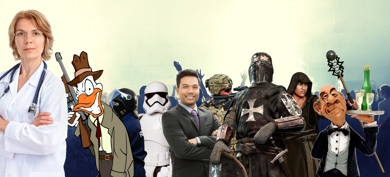
Comments (2)