Tales of Yore: An Absent Player Solution
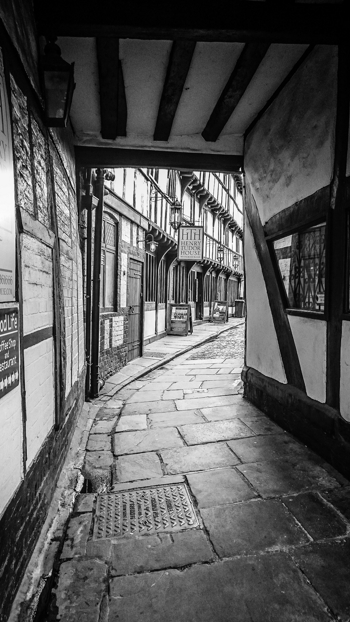
image courtesy pixabay.com
I’m interrupting my planned schedule of posts to talk about what happened this weekend past in the Adventurer’s Club campaign, because it will be relevant to all campaigns regardless of genre.
I was notified on Friday Afternoon that one of the regular players could not make it that weekend. My first thought was to whether or not the game could go ahead without him, and quickly came to the conclusion that the current adventure certainly couldn’t proceed, the planned events revolving around his character were too vital to the plotline. The campaign may be an ensemble cast (Ensemble or Star Vehicle – Which is Your RPG Campaign?) but every adventure naturally has some PCs more prominently involved than others, and this just happened to be one driven by the PC whose character was absent.
I momentarily contemplated the many solutions to a player absence that I have discussed here in the past (Missing In Action: Maintaining a campaign in the face of player absence), and decided that none of them would work.
Which, at first glance, left only the option of canceling the game session – something we had previously done when another player couldn’t make it and the PCs were in-between adventures – when a new idea occurred to me; that new idea is the subject of today’s article. One of the players who wasn’t absent commented, “I certainly think you’re onto something with [this] idea,” – from a player and GM with almost as much vintage as myself, so having a solution to a problem that’s been around almost as long as RPGs have existed that was equally innovative to him definitely counted as a big thumbs-up.
Inspiration: Gotham By Gaslight
My principle source of inspiration was a graphic novel that was originally published by DC comics with the intention of it being a one-off curiosity, in which an alternate-reality Batman in Victorian times found himself in Batman-esque circumstances, chasing down a recently-emigrated Jack The Ripper after his Bruce Wayne alter-ego was framed for the crimes.
It was a surprise hit, and spun off a sequel, and that begat the Elseworlds series – a connection acknowledged when subsequent reprints of the original story featured the Elseworlds Logo.
Pulp By Gaslight
My idea was to recast and reinterpret the existing (and present) PCs (and a couple of key NPCs) to be distant relatives in a different era, and then run them through an appropriately-styled adventure that fitted the game genre but was set in a quite different environment.
The resulting one-off would be an out-of-continuity adventure, in much the same way that comic series often have an Annual that is expressly disconnected from the continuity of the main series. This adventure, which I titled “Pulp By Gaslight,” could interrupt the ongoing continuity without disrupting it.
This could either be a lost part of the background to the main continuity or completely separate from it.
I proposed the solution to my co-GM by telephone when I advised him of the problem, and his response was “If you think we can pull something like that off, let’s go for it!”
Good Genes Breed True
One of the central premises of the solution is that Good Genes would breed through – that the predisposition of their natural traits and abilities could manifest in a blood-related character in a different era.
The practical upshot of this is that the players use the same character sheet that they always use, but various items would be interpreted differently. From my adventure prep, with annotations:
Ian M’s character in the usual campaign, Captain Ferguson, is the owner-operator of a treasure-hunting salvage vessel operating mostly in the Atlantic these days, but originally from the Pacific. In “Pulp By Gaslight”, this character was the first to be introduced, becoming “Captain Ezra Ferguson, master of a Whaling ship running out of Boston in the year 1892. Ezra might be the great great grandson of Captain Ferguson’s Great Great Great Grandfather’s brother. His ship has just made port…” and then it was off into laying foundations for the adventure. Same character sheet, but captain of a completely different type of ship, and any “treasure-hunting” skills mentioned would be reinterpreted as relating to Whales and Whaling.
Eliza Black, a Canadian Intelligence Officer and former Mountie, became a small woman in rugged leather attire and stetson hat, who introduces herself as Mrs Elsa Trulane, nee Black. She was appointed Marshall in the Klondike Gold Fields following the death of her would-be miner husband at the hands of claim-jumpers. She might be Eliza’s great-great-great-aunt. Or not. Same character sheet, but a different background. This would have been before the character’s family came into money, so this was a rougher-and-readier independently-minded pioneer woman – but functionally, mechanically, virtually unchanged.
Father O’Malley, a Roman Catholic Priest from New England, became Father Mallory, an Anglican priest who had emigrated a month earlier from Brighton, England, seeking to trace a lost branch of his family. His great-grandfather’s brother had emigrated to New England in 1810, so far without success – perhaps because Father O’Malley’s ancestor changed his surname for some reason on arrival (which might have happened if they had been disowned from a particularly pious family). Same character, different branch of religion. Unknown to the character, he also possessed Father O’Malley’s abilities to smite supernatural evil etc. – which fits the established campaign background, which states that these are potential capabilities of all Priests, but that some are better at it than others.
The most-changed PC was Steffan Bednarczic, a Polish mining engineer who had fled Nazism and dark circumstances to find work on the English Docks, which was where he encountered the other PCs and signed up with them. This character became Dominikus Bednarczos, a shipwright who was lured to the Americas by the tales of Gold almost a year ago from Pyltin in Russia, his native home, which was once part of the Polish-Lithuanian Commonwealth before that was partitioned in 1772 by the forcible entrance of Russian Troops. A second Russian land-grab in 1793 further annexed parts of the former independent state, and a third by Austria, Russia, and the Kingdom of Prussia completed the conquest of the once-proud nation. But when you arrived, and before you had earned enough to claim a stake in the goldfields, the gold-rush was over. Since then, he has adapted his skills in order to make a living as a Carpenter. A similar character, but one who was single and not a parent, and one possessed of a different set of practical skills. But so long as you remembered “Carpenter / Shipwright” instead of “Mining / Civil Engineer”, the player could step right into his shoes.
Gathering The Troops
One of the things that made this idea work was that – for this first outing of the concept – I had an idea for how the PCs could be brought together in game time. Now that the principle has been established, next time we need to resort to this solution to the absent-player problem, we can simply make something up and present it to the players as having happened in the past.
Variations On A Theme
While the personalities of the PCs and NPCs were recognizably similar, the variation in “shoes” that they were walking in gave the players license to explore and experiment a little more. I don’t think any of them took great advantage of that, but the potential is there and will undoubtedly be exploited on some other occasion.
Minimal Prep
After getting approval for the initial concept, I spent a couple of hours Friday Night doing some minimal prep – mostly writing and researching the information given about the characters above, a little on the settings (Boston and London, 1892), and jotting down the central premises of the adventure. Everything else was created and run ad-hoc off-the-cuff.
Experience
This was a one-session adventure; the standard XP that we award for those (aside from any bonus extras that are given to individual players) is 1 point. We were a little pressed for time at the very end, so this didn’t actually get awarded, but we had emphasized the principle at the start – any XP you earn with your “alternate character” goes into the original character’s pool of such.
The Verdict
For a hastily-thrown-together filler, it was a remarkable success. Some time was spent chatting during game breaks about the potential for the idea – next time, it might be another Victorian adventure, or it might be Barsoom, or a “Buck Rogers”-style adventure, or the American Civil War, or whatever else takes our fancy as a setting for a genre-appropriate adventure. We can go Steampunk as readily as Medieval.
The technique has definitely taken its place amongst the many solutions to the problem of an absent player, and would even be considered preferable to most of the alternatives henceforth.
It was while returning home afterwards that I realized that it could also be applied generally to other genres. With superheros, it might be less successful, because their abilities tend to be fairly specific, but it should be possible to adapt it without too much trouble to something like D&D.
And so, it is being presented here so that you can add it your repertoires, as well.

Discover more from Campaign Mastery
Subscribe to get the latest posts sent to your email.
Comments Off on Tales of Yore: An Absent Player Solution