Campaign Mastery helps tabletop RPG GMs knock their players' socks off through tips, how-to articles, and GMing tricks that build memorable campaigns from start to finish.

Fade Into The Background


Image compositing a number of elements created to illustrate Azuria – see text below.

A Status Update

It can be readily observed that this is not part 3 of the ongoing series on Economics in RPGs that I’ve been publishing for the last couple of weeks.

Right up until the last moment, I was uncertain as to whether or not to continue with that series this week, but two – no, four – factors compelled a break.

First, I have been coming up with a number of good ideas for articles outside of the series, and wanted to keep the queue of these short – I still have a couple left over from my last burst of creativity (‘The Collision Of Aphorisms’ and ‘Measurements In Hand-waving’) that have not yet been published, and while the first of these is well-documented but conceptually incomplete, the second is vague and uncertain. I’m sure I knew exactly what it was about when I came up with the idea… ‘striking while the iron is hot’ is more than just a casual consideration (this also plays into why I have so many series here with one or two parts remaining before completion – the intent and desire are there, but the difficulty has risen).

Second, Economics is hardly the most stimulating of topics to most readers. I like to think that I’ve been able to keep the series entertaining and interesting to readers so far, though I may be deluding myself; but there is a risk of burnout from a tinder-dry subject on the part of both the audience (that’s everyone reading this) and the writer (that’s me). And that also plays into those unfinished series that I mentioned. A change of pace, for anyone who hasn’t been bothering with the Economics series, or who doesn’t run a Fantasy campaign and so has found the content thus far to be of limited relevance to them, is not a bad idea.

Third, there’s been a serious time-crunch lately. I’ll go into the reasons for that in a moment; for now, suffice it to say that I’ve got a lot of time-sensitive major projects underway simultaneously.

Even with all three of these taken into consideration, the decision was still 50-50 in my mind, but this fourth item was the kicker: the content of the third article is still taking shape in my mind. Without all those distractions, I might have been able to better focus on that content and be writing a very different article right now! With more time up my sleeve, I would have dived into the writing even without a full picture of content in mind, confident that I would be able to use narrative momentum and experience to get me through to the end. Either way, I would now be writing about economics in the Renaissance and Pre-industrial eras. Without those luxuries to fall back on, a quicker alternative was called for. So, here we are.

What are these major projects that are getting in the way? I can’t go into too much detail, but thought a quick roundup would be in order:

    1. Campaign Mastery: Economics In RPGs

    Obviously, this is still on my mind. I expect to be able to deliver Part 3 next week.

    2. Dr Who: Azuria, Azurials, Azurians, and Azurites

    The next adventure takes place on the homeworld of the Doctor’s current companion, Quasima. Q’s species started out conceptually as ‘a sentient shade of the color blue’ but the campaign is more hard-science with a soft-science gooey shell around it; imparting at least a veneer of pseudo-scientific credibility demanded amplification of the concept of the Azurites, a concept that continues to grower deeper, richer, and more complex as I work on it. Currently, they are a viewed as an almost two-dimensional sheet of sentient energy, a complex internal arrangement of electrified plasma given form by virtue of its self-awareness.

      2a. Homeworld Of Sentient Blue

      If the adventure is to take place on Azuria, the homeworld of Quasima, I need to know what that environment is going to be. Hint: it’s going to be manifestly strange! Actually, the fundamental concepts concerning Azuria came to me fairly quickly, perhaps because I’ve had months of this being in the back of my mind.

      The major project is to illustrate what’s been forming in the back of my head. To that end, I have 28 major components to the illustration ready to stitch together (and four more to do), 23 bolts of lightning with which to adorn those components (and cover any imperfections) and 22 high-resolution images of inhabitants (which won’t be enough, but the balance are all going to be small, and low-res images that will be quick to produce). So this project is coming to a close, on Thursday if not sooner.

      In fact, it’s so close that I’ve thrown together some of the components to form the image used to illustrate this article. The final composite will be very different from this one, in which the natives dominate.

      2b. Life-cycles Of Sentient Blue

      Other aspects of the species have also been playing on my mind, especially their life cycles; one reason I have put together so many high-resolution examples is so that they can be compiled into an infographic. (I also have vague ideas about using lightning elements to link these in a visual way, but that might not work.

      2c. Societies & Lifestyles Of Sentient Blue

      You can’t think about these subjects without also starting to think about the society in which they live. One thought along this line triggers another thought about the life cycle or the environment which then gives a new idea bout the society; the whole grows not as isolated ideas but as consequences of broad concepts that daisy-chain their way through multiple aspects of their existence. This is one technique for creating a consistency within the concept that will withstand being presented to the player in smaller chunks, observations, and events.

      In fact, you can lump it all under the heading of “background”.

    2. Dr Who: Adventure 8: The Coming Of Ageless

    One thing that I concentrate on is making sure that the adventure draws upon and highlights elements within the background. How does where something is happening impact what a character would perceive as happening? The victims, their habits, their protective social mechanisms, all will be different. A heist in Elven lands should not be the same, and should not feel the same, as one in South America, or one in Los Angeles, or one in 1812 Germany. Everything from what is being stolen to who is doing the stealing should be different, and the expectations of what a PC is supposed to do about it will also be different.

    It should be noted that I am using the ‘heist’ as an example deliberately, because the adventure is not a heist!

    I have a clear enough idea of what’s going to happen in my head that I can run it even if completing the earlier projects takes up all the available time, but improv is so much better when it’s supported by prep – and the whole purpose of thinking about the environment and society is to inform the adventure. The prior listings aren’t isolated entities, they are all contributions to the actual adventure.

    All this Dr Who work needs to be completed in the next 2 weeks, because that’s when the adventure is to start – whether it’s ready or not. That’s the shortest deadline, so it gets the highest priority right now.

    3. Pulp: Adventure #33: Lucifer Rising

    Speaking of composites, I have a composite image to complete for the next Pulp Adventure. Below is a screen shot of the elements of that composite, which has been on the back-burner for a while but slowly approaching completion. To the right is a screen capture of the elements either underway or completed. I really need to get my finger out on this one, it will be needed in 3-4 months. Note that I am using a very thumb-nailed screen grab because it won’t give any hints to the players.

    The adventure itself is complete, but I also need to finish indexing the selected images (getting them into the sequence we expect to use them in play) and referencing the resulting image sequence number in the adventure text. That won’t take long – maybe a day, maybe less – but it still needs to happen within the next 2-3 months.

    4. Pulp: The Map Of New York

    I started generating a large-scale map of New York City (plus all of Long Island, most of New Jersey, and up to Sleepy Hollow to the north) so that I could put markers down for where various events and locations were situated, relative to each other. The scale is just enough to show individual streets, enough of them with names that specific locations can be identified. As it happened, it turned out not to be needed – a burst of inspiration solved the plot problem the map was to help us address – but it’s so close to completion that I’ve been pressing on, regardless. This is a composite of more than 200 screen grabs from an internet map. Unfortunately, the original map was too large to keep as one piece – instead, it’s going to end up being 6 or 8 image files by the time it’s all done.

    Another 2-3 days work and this should be done – but I’m going to have to start lowering it’s priority rating, since the need is no longer urgent. I’ve been desperately trying to finish it before that happens.

    5. Pulp: Adventure #34: The Kindness Of Strangers

    The adventure for the Pulp campaign that my co-GM and I are currently working on, and for which the map was initially required. We’re probably about half-way through it. I can’t say too much, the players all read this blog from time to time!

    6. Zenith-3 / Team Shadow: Act 10 (ongoing)

    I had a huge project to synchronize the events that comprise this act of the current adventure to accommodate a number of possible player decisions. Most of those decisions have now been made and I know that they will be following a prepared pathway through the rest of the act, so I am focusing on the final scenes. This content will need to be completed about 2 months from now.

    7. Zenith-3 / Team Shadow: Protocols & PCs

    A large part of that content will be describing the suggested Protocols that the team will need to think about in terms of modus operandi. Currently it looks like: (a) Discover an emergency; (b) gather everyone; (c) pile into their cars and drive at top (legal) speed to a remote location about 10 minutes away, briefing as they go; (d) transform into hero guise; (e) travel to the emergency at the speed of a fast car – but in a more-or-less straight line; (f) resolve the emergency; (g) reverse steps e, d, and c; (h) debrief.

    Limited travel speed and overheads are something that the team haven’t really had to deal with before; they are used to teleporting in the wink of an eye to the adventure. Now, we’re talking 15 minutes to an hour, maybe more – it’s up to them whether or not they put a limit on it. This situation will impose additional judgments on the team – “what’s the likelihood that an emergency of type ‘x’ will be resolved before we can get there?” will need to be considered for the first time. Before they can make decisions, I need to figure out the questions that will confront them.

    8. Zenith-3 / Team Shadow: Data: Places To Go and Things To Do

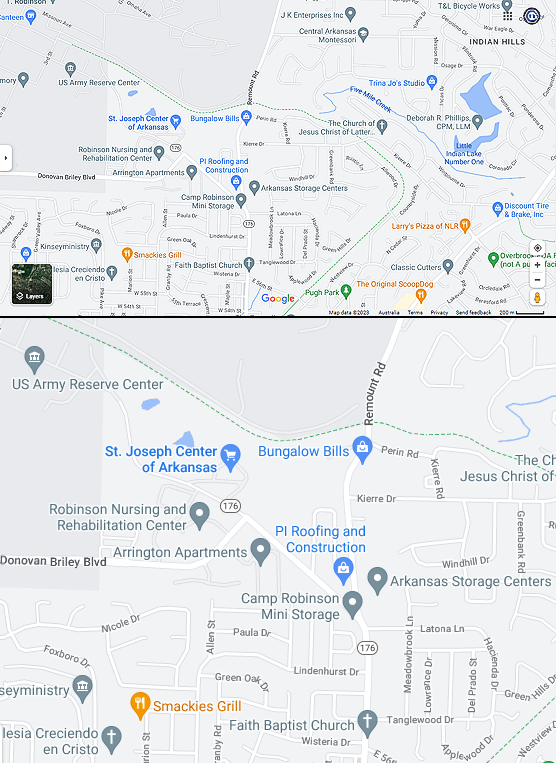
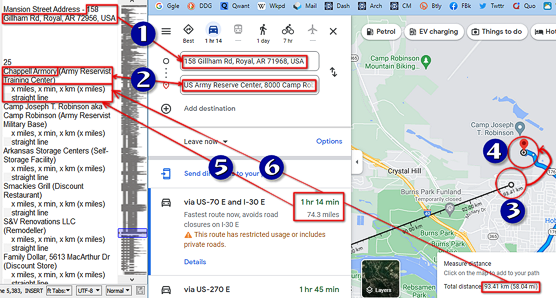
    Now that they have chosen a base of operations (a ‘mansion’ located in Royal, Arkansas) and are on their way to buy it, I need to view the place as a hub. Certain plot threads will come with the location – I need to nut those out. There are going to be shopping expeditions in and around the location.

    I have generated a huge list of places of interest and businesses for the PCs to shop in, and am in the process of documenting travel times (and flying times in cases of emergency). There’s maybe another 16-20 hours of work in data gathering – so that’s 4-5 working days. I could get it done this week, but next week is a more likely target. Especially since I keep finding more stuff to list!

    Along the way, I’m also compiling mini-adventure ideas based on suggestive locations. The PCs want to spend several game weeks building up a local reputation and fitting out their chosen base before the real action starts, and they haven’t even started to figure out how they are going to do it (another protocol question). So I’m building up resources to facilitate the PCs doing what they have said they intend to do.

    9. Zenith-3 / Team Shadow: Documentation: Places To Go and Things To Do

    The info gathered in project 8 will get presorted by type put into a number of tables and sub-tables that I have designed, which can then be individually sorted in various ways – so that if they want the nearest hairdresser, for example, I can simply scroll through the table to get an answer.

    Completing the data acquisition will take another 3-4 sessions of about 4 hours each; populating the database will take weeks, there will be hundreds of entries. The more time I can fill up with Acts 10 & 11 (initiating those plot threads), the longer I have to get this done – so I have a 2-3 month timeline before this project needs to be complete.

    10. Zenith-3 / Team Shadow: Mansions & Mapping

    I recently purchased, as a bundle, Campaign Cartographer 3 and a bunch of add-ons, with the express intention of using it to design the floor-plan of the Mansion in Royal. I have a list of rooms (now approaching completion), I have the design philosophy that was used in the 18th century to build the place, and I have a concept of layout and how the PCs might change it.

    I know what functions they have identified as things they want to be able to carry out there, and identified a number of the existing rooms that can have those purposes mapped onto them.

    Right now, they can’t even really explore the place because it isn’t fully designed yet. So doing that is a major task that hasn’t yet really started.

      10a. HD Space / Laptop Cleanup

      One reason (aside from time) that it hasn’t started yet is that I started to run out of space on my Hard Disk. I can see gigabytes being used for the process, with me editing the labels (or adding new labels) to a copy of the map in real time, as the players discuss their options. So one task that has more or less wrapped (for now – it’s an ongoing thing) was to archive off a whole bunch of stuff that I don’t use regularly.

      I started with a free capacity of 50.4 Gb. That’s now up to 77.2 Gb – so that’s 26.8 Gb of space cleaned up, most of it in old documents and unwanted MP3s and backups of installation files for software. There’s at least another 2.25 Gb in Campaign Mastery archives that I can ditch from the working Hard Disk if I need to, maybe more. That amounts to about 29 Gb of space freed up to enable the Mansion Mapping project to take place.

      And, once I’ve installed CC3, I can delete it’s installation source files, too (they’re already backed up) – that’s another 16 Gb, bringing the total cleared to 45 Gb, or about 10% of the HD’s capacity.

    11. Warcry

    The Warcry campaign rolls on. Designed to be low-prep, I have a game session in hand but need to start thinking about the next adventure, due to start in just over a month. That will involve between 2 and 20 hours work over the next 5 weeks or so.

    12. Campaign Mastery: Other Article Ideas

    I mentioned at the top of this ‘status report’ that I had a list of other articles for Campaign Mastery in progress. There’s –

    • ‘Looping Rolls’, a new concept in game mechanics, which will take a lot of work;
    • ‘Disease At The Speed Of Plot’, about diseases in RPGs, obviously!
    • ‘The Collision Of Aphorisms’, which I’ve mentioned already;
    • ‘The Alignment Of Decisions’, which is also about GMing style, and which revolves around alignment as a metaphor (which is a lot more problematic these days!)
    • ‘Patterns Of Alien Intellect’, which I actually started in 2016 but never finished,
    • ‘Measurements In Handwaving’, ditto;
    • ‘GMing Style vs Playing Style’, which is barely a concept yet;
    • ‘What is Magic?’, which is a shortish article about half-finished;
    • ‘Rumormongering For Fun and Profit’, which I started and set aside;
    • ‘Beware Old Habits’, which is nothing but a title;
    • ‘The Changing Needs Of Content With Blog Growth’, which is a beginning and not enough substance;
    • ‘The Trouble With Disaster’, which is about 8,500 words long and about 90% unfinished; and which may end up being a multipart series if I ever get back to it;
    • And, of course, all the ongoing series, and a load of other ideas that are nothing more than a line of description or a title.

    Not all of these will make the cut. Some have been abandoned for some time – tomorrow, as I write this, it will be six years since I’ve done anything with ‘The Alignment Of Decisions’, for example. But some of them deserve better. The higher up that list an item is, the more likely it is to ever see the light of day. So the top 5 or 6 look good, but the others are on shakier ground.

As you can see, I have a LOT of irons in the fire at the moment. Thinning that list before something else comes along is a high priority of my day, every day.

Well, if the Economics article wasn’t going to be ready, and might not have been finished even if I had started it, I needed something else – and that brings me to the subject of today’s post.

This is one of those ‘set-aside’ ideas that looked like it could be finished relatively quickly and easily. So far up that list of unfinished articles that It’s popped right off the top.

Fade Into The Background: The Premise

GMs should always strive to fade into the background as much as possible during play. It’s impossible to do this as completely as is ultimately desirable, unfortunately.

The goal is one that demands continual monitoring of our GMing habits and style to ensure that we are getting as close to that theoretical ideal as is possible.

Why?

There are two questions that I always like to answer right after giving some advice. The second is ‘How’, and I’ll get to that in a moment; first there is the question of ‘why?’

A player can only pay close attention to a limited number of things at once.

  • Where their PC is and what they are doing there;
  • The campaign background, and what parts of it matter, and why;
  • What the NPC / creature / location in front of the PC is doing or saying;
  • What the rules are for what the player wants to do;
  • How to enter combat if that takes place;
  • The PC’s current health and any ongoing status effects;
  • What the GM is saying.
  • What the GM is doing, eg what he has just rolled;
  • What the PC is saying or about to say;
  • What the other players / PCs are saying.

That’s ten things, and the GM’s presence is only one of them (I don’t count what he’s doing, because it’s irrelevant who is doing it; it could be anyone moving a piece on a battle-mat or rolling dice. All the player really cares about in this category is what is going to affect his PC and how).

At the same time, the GM wants to be heard; he’s imparting what he considers vitally important game information. There is, therefore, an important distinction to be made: the GM should fade into the background, not the content of what he is saying. That distinction provides the ‘why’ – the more attention the player focuses onto the GM, the less attention he has available for assimilating and responding to the content that the GM is imparting.

In fact, it’s quite common for three or four items on that list to ‘go missing’ at any given time during play. You don’t want to add to that list.

How?

When I’m a player in a game, I like any situation to start with what scriptwriters call an “Establishing shot”. A snapshot of the scene that enables me to visualize the location and environment and what is happening in the background. I assemble this, as best I can, from what the GM describes, then try to keep it in mind as the backdrop to everything else that happens.

This can be more difficult than it sounds, because other players are often more intent on getting to the action, or are more willing to make assumptions about the environment or ignore it as irrelevant. They lean in, asking questions and stating actions or making chitchat or simply start switching off, no longer listening. As soon as the GM perceives this, he has a difficult choice to make: keep imparting the details he thinks important enough to mention (possibly after demanding refocused attention), or assume that the PCs aren’t paying attention to those things and move on to the events that are to transpire.

The first involves the GM making himself the focus of attention, possibly forcefully, then shifting it back to the scene. The second fades the GM into the background, a shadow lurking somewhere behind the information that he is imparting. Doing this successfully means assuming that PCs will notice anything the GM hasn’t described yet as soon as it becomes significant, and also that the GM has been combining obviousness and importance to rank the information he is providing.

    A Sitting Room

    Let’s say that the PCs have just entered a sitting room. The GM wants to end his description of the setting with the figure seated in an easy chair, because that’s an obvious call to action or interaction. What description of the room and scene are absolutely necessary before mentioning that figure?

    Would you spend time on the Oriental Rug? No. Would you mention the fireplace and it’s ornate wrought-iron screen that prevents sparks from reaching the rug before the hearth? Yes, and no, respectively. In fact, if the fire is not lit (worth mentioning), the screen might never rate a mention – or not until a PC pays special attention to the fireplace, anyway.

    How can you front-load as much description into individual terminology? “A Victorian drawing room, vivid green wallpaper, two easy chairs before the roaring fire with a small table between them, an instant feeling of comfort and warmth. One of the chairs is occupied by…”

    The keywords here are “Victorian drawing room”. Everything else is refining the resulting vision. So long as the GM can clearly envision the room, any additional details can be provided on demand.

    In fact, the example description offered is so sparse that an additional detail can probably be sneaked into the narrative, just to further individualize this particular drawing room. “A stuffed owl dominates brick-a-brac on a shelf above the fireplace.” or “Portraits of Queen Victoria and Prince Albert hang proudly on the wall in gilded frames.”

    The NPC Description

    The decision on whether or not to include such detail comes down to whether or not I need to add such details to the description of the NPC sitting in the easy chair. If I do, that takes priority; if not, then I can spare it to provide some additional color to the room, in the process adding characterization to the owner.

    “A man with a long nose is slumped in an easy chair, deerstalker hat, pipe in hand still smoking, with a heavy tome opened upon his lap, finger poised as though tracing a line of text, with two pronounced and bloody holes visible in his jacket.”

    Someone has murdered a Sherlock Holmes fan…! or maybe, Holmes himself!

    Once again, the call to action / interaction has to come last, because once it is stated, anything that follows will be overshadowed by it.

    In Case Of Interruption

    What if I got only as far as “pipe in hand still smoking,” before a player announced, “I step forward and present my hand to shake his, saying, ‘Mr Holmes, it’s a great honor and pleasure to meet you.”

    The answer is to build the response into the description – “He doesn’t look up at you, his finger still poised above a line of text in the heavy book in his lap; perhaps he’s distracted by the two obvious and bloody bullet holes in his jacket.”

    The change to the last phrase is important, as it is just a bit facetious, the sarcasm implying a gentle rebuke over the interruption (my experience with many Americans is that they wouldn’t recognize sarcasm if they tripped over it, but I have high hopes that a gamer will be amongst the cream of the crop in understanding such nuance, and have rarely been disappointed in that regard).

    Of course, the book itself might mean everything, or nothing; its simply what the NPC was doing when he was shot. Unless and until one of the PCs moves the hand, perhaps to try and take a pulse – in which case, it was pointing at a last dying (and frightfully obscure) clue from the great detective as to his murderer, a clue that has just been carelessly lost!

    Content Is More Important Than Delivery

    There’s enough of an example here, I think, for readers to begin to discern the key elements. Description is kept minimal, but leaving out nothing important. Save for any calls to action /; interaction, information is delivered in a logical sequence – it will often be that of decreasing significance, but may not be. Loaded terms are used to provide maximum description and flavor for minimal verbiage. And the GM has followed the important principle that the content that he is delivering is more important than the delivery itself. He doesn’t want the object of attention to be himself, he wants it to be that information content.

    Other logical sequences include distant to close, left to right, right to left, floor to ceiling, ceiling to floor, or still to moving.

    One More Iteration

    I couldn’t resist one more variation on the example as a further demonstration of the technique. What if the figure wasn’t dead, hadn’t even been shot, but was simply concentrating hard on what he was reading?

    “A man with a long nose is slumped in an easy chair, deerstalker hat, with a heavy tome opened upon his lap. As you enter, he raises one hand in an unspoken plea for silence, smoking pipe still clasped between fingers and thumb, while his other forefinger traces lines of obscure text in the book. Reaching the end of the passage, he looks up at you, almost visibly changing mental gears.”

    I don’t know about you, but if I heard that as a player, I would expect that the Holmsian figure was about to say something, potentially profound, possibly whimsical. Instead of a call to action / interaction, there is a foreshadowing of such, which is what creates that impression. Notice also that the sequence of items has changed so that the action elements – hand calling for silence, finger tracing lines of text – follow details of the static environment

    Training

    The final point to make here is that if you make a habit of always (and deliberately) making your final phrase the call to action / interaction, your players will learn to recognize that, and generally get into the habit of waiting until they hear one. Sometimes, eagerness will get the better of them, but any improvement in this areas is a good thing!

    This is a habit that you have to get into; it will very rarely happen of its own accord. Similarly, listening for such a cue won’t happen overnight; but that is less important than the effects that a call to action / interaction will have simply by virtue of their nature.

The Wall

Some GMs use a Screen (some of the most popular posts ever, here at Campaign Mastery, have been on the subject)..

I use a laptop for the same effect, plus I get to turn it around to show images to the players (a single image can replace whole tracts of text – 1000 words is a lot, but even a saving of 100 words of description is a LOT. See A Picture Should Be Worth 1,000 Words for more on that.)

One of the benefits of such devices is that the GM can hide behind them, presenting a disembodied voice for the players to interact with – but that rarely seems to get mentioned. All the attention is on hiding game content and die rolls from those ‘on the outside’, and the benefits of putting tables and reference material at hand.

Creating a Wall between players and GM makes it easier to separate message from messenger. There are other benefits, and there are liabilities as well; this just adds another to the list.

Mechanical Narrative

Another habit that I’ve been trying consciously to get into is the use of a specific format when it comes to player interactions with game mechanics.

  1. Recapitulate what the character is trying to do, or if this has been articulated sufficiently clearly and is a straightforward maneuver, describe the beginning of the movement. Use verbs – ‘action words’ – as much as possible and try very hard to make the moment described ‘live in the now’.
  2. Ex-cathedra, specify any game mechanics needed to advance the description of events further, and – if necessary – who is to perform those game mechanics.
  3. Perform any game mechanics and privately interpret the results. Avoid telegraphing with simple statements like “You hit” that suck away any trace of the atmosphere, if you can – that’s the part I’m having the most trouble with.
  4. In a single statement, still living in the ‘now’, advance the attempted action, bearing in mind the admonition in (3). If there are no more game mechanics interactions needed, exit the process and move on to the next character to act.
  5. There will often be a need for further game mechanics interaction before the action can be resolved. Specify it, as per (2).
  6. Resolve these mechanics as per (3). If more game mechanics interactions are potentially needed, go back to step (4).
  7. In a single statement, still living in the ‘now’, advance the attempted action to a conclusion, whatever it may be, bearing in mind the admonition in (3).

Note that I use the same process for NPCs that a PC can see / sense.

Let’s break that down at bit with a simple attack sequence with a weapon that mandates a saving roll of some kind on a successful hit.

    Attack Example Step 0:

    There are game mechanics which determine the sequence in which characters act. I work this as an ‘out-of-game moment’ – padding the event with gossip and rumor and news from real life. Nothing a player says gets interpreted in-game. Once this is done, the results are never mentioned to the players in game mechanics terms if I can avoid it.

    Sometimes, prior events will mandate a specific action on the part of the character, for example if he was knocked prone, the character can either act while prone or get up in some fashion. This can trigger responses or give the character an attempt at a further action, depending on how they go about it – but sometimes this takes an action that is normally automatic and imposes a die roll requirement for success.

    I will introduce the action by stating any such situation, if I can; if not, I will use more general action: “Next, [Character Name] makes a decision on how to respond to the situation,” or whatever (from now on in this example, I will use ‘Blaine’ as the Character Name, and John as the player’s name).

    I try (frequently unsuccessfully) never to say ‘Next, it’s Blaine’s turn to act”, or worse still, something along the lines of “It’s John’s Turn”!

    Attack Example Step 1

    If I know what John has said Blaine is trying to do, I proceed from there. If not, I ask: “John, what is Blaine trying to do [this round]?” – if a player specifies an action that will take multiple rounds, I tell them that, giving them the chance to change their minds; once they commit to a multi-round action series, they may or may not be able to readily abandon the sequence.

    In a multi-round action, if it can be abandoned, I will use language such as “John, Blair is about to continue {doing X] unless you change your mind or interrupt it to do something else.” This invites the player to interact with the game system as the character, placing the mechanics at arm’s length, and helping the GM fade into the background.

    In this example, we’ll assume that John has indicated that he is going to attack Enemy #1 with a (roll of mental dice) Dwarven Battleaxe (which probably means that Blaine is a Dwarf, who knew?) – so I will announce, “Blaine twists to get his axe into position to strike,” or .something similar.

    Attack Example Step 2

    “John, make your attack roll. You are at -1 because of the slippery conditions and dim lighting.”

    There is a hard divide between character and player, and all the game mechanics belong on the player’s side of that line. I try (and again, frequently fail) to avoid saying “Blaine is at -1 because…” or anything like that. It’s not always possible. Sometimes, i will omit such things when it’s an NPC acting, but sometimes I’ll throw them in just to show that the mechanics are even handed and affect NPCs as much as they do PCs – and are being taken into account.

    Attack Example Step 3

    John rolls a 14, which is enough to hit the target. He announces “I roll a 14. That should hit.” Note the implied assumption that if it doesn’t hit, either I’m cheating or there’s something he doesn’t know, which is perfectly fair – he thinks he knows what is going on, and is telling me this fact. My mental analysis shows that John is quite correct, and not just because these targets are easier to hit than might be expected, because they move sluggishly.

    Attack Example Step 4

    “The axe head flies toward the target’s chest, who attempts to block it with his shield but fails.” In other words, I tell John that he is correct, and Blaine has hit the target, and hint at the sluggish nature that I mentioned. This calls for a second round of game mechanics focused on the damage done.

    Attack Example Step 5

    “Roll your damage. Don’t forget the Strength bonus.”

    Attack Example Step 6

    John selects dice and rolls them. “12 plus 3 is 15 points.”

    Unknown to John, a successful hit is not as good a thing as he thought. Having failed to kill the enemy outright, there is now a consequence. So I go back to step 4.

    Attack Example Step 4 (#2)

    “Blaine’s axe bites deeply into the creature animated by the lightning that runs through its veins and arteries like blood.” (Uh-oh).

    Attack Example Step 5 (#2)

    “You can’t bring the weapon back for another strike, your muscles have locked up. You will need to make a Strength roll at -4 for Blaine to let go of the weapon. Until he does so, he will take 2d6 damage every round. Next round, the penalty will be -6, then -8, and so on. You can’t talk, your lips and tongue are no longer under control, but you can emit a painful half-scream.” (Swearing from the other side of the table indicates surprise) “Oh, and if you’re wondering, the hilt bindings are insulating you, otherwise it would be 4d6 or more.”

    This explains the game mechanics that he needs to know to the player.

    Attack Example Step 6 (#2)

    John attempts his Strength check, as required, while I roll the damage. His roll would have succeeded if not for the penalty, he announces, considerably deflated. I have rolled a 9.

    Attack Example Step 7

    “Blaine jerks and his mustache begins to smolder as his muscles lock in place. He can try again to release his painfully tight grip next round.”

    I note down that Blaine will be at -6 on next round’s strength check while John records the damage done.

From there, it’s on to the next Round 0 introduction. It’s probably worth the effort to reread that example, skipping the explanations and my descriptions of events. Like this:

    GM: “Blaine moves up to the attack, as eager for battle as ever. He twists to get his axe into position to strike.”

    GM: “John, make your attack roll. You are at -1 because of the slippery conditions and dim lighting.” [John rolls].

    John: “I roll a 14. That should hit.”

    GM: “The axe head flies toward the target’s chest, who attempts to block it with his shield but fails. Roll your damage. Don’t forget the Strength bonus.” [John rolls].

    John: “12 plus 3 is 15 points.”

    GM: “Blaine’s axe bites deeply into the creature animated by the lightning that runs through its veins and arteries like blood. You can’t bring the weapon back for another strike, your muscles have locked up. You will need to make a Strength roll at -4 for Blaine to let go of the weapon. Until he does so, he will take 2d6 damage every round. Next round, the penalty will be -6, then -8, and so on. You can’t talk, your lips and tongue are no longer under control, but you can emit a painful half-scream. Oh, and if you’re wondering, the hilt bindings are insulating you, otherwise it would be 4d6 or more.” {John attempts a strength check while I roll damage].

    John: “I would have made it if not for the penalty.”

    GM: “Blaine jerks and his mustache begins to smolder as his muscles lock in place. He can try again to release his painfully tight grip next round. Take 9 points.” {While John documents the damage, the GM notes that he will be at -6 on his STR check next round].

It’s really hard to stay immersed during combat and other game mechanics. The best that you can usually do is to touch base with it at regular intervals. It gets even harder if your games revolve around combat, because the language itself very quickly becomes repetitive.

Prep is the Sword

It’s a lot easier to Improv when you have good prep. Because I was writing it in advance of anyone reading it, I was able to revise and edit the “Drawing Room” example – some of what you have read is my third draft (about half of it isn’t).

You will notice that my preferred construction methodology for game narrative, bullet points, are deliberately reflected in the example. These make it so much easier to find any details that are relevant, or find where you were up to before being interrupted.

Prep is the weapon that the GM can bring to the quest to hide in shadows as much as possible.

Rather than a whole heap of relevant links, I’ve decided on just two:

Experience is the Shield

All things are easier with practice. If Prep is the weapon, experience is the shield that tells you when to follow advice like that contained in this article, and when not to.

We get better at the things we do regularly, usually without even noticing it. Where it first shows up is an ability to cope with circumstances that would once have thrown us for a loop. I have enough experience behind the (metaphoric) GM’s screen that I can go into an RPG session with no prep at all, without even an idea, and run something on the fly that will at least be satisfying.

Add an idea to that, and it gets easier, permitting a greater focus on entertainment. Polish that idea with some forethought and running the game session becomes relatively easy.

The downside lies in documentation of events, and integrating them into a broader narrative than a one-off game session. Nuances are already being lost by the end of the game session. And improv game sessions can take a lot out of you – enough that you don’t have the energy left for any documentation that’s more substantial.

You don’t need prep to run a game, or even a campaign; but it makes an effective glue to bind one together over multiple game sessions. It might not be the magic fairy dust of RPGs, but it will do until something better comes along!

Comments Off on Fade Into The Background

Economics In RPGs 2: The Later Medieval


This entry is part 2 of 16 in the series Economics In RPGs
Welcome & General Introduction

Following a successful Dr Who adventure in which the player started to see how a number of plot threads intersected, my head is currently full of the strange environment in which the next adventure is to occur.

I mean, this is the homeworld of his current companion – a psionic sentient ball of ionized blue gas. What is the right environment to produce such an unlikely ‘creature’ (using the term loosely)? Fortunately, I think I have a handle on the answers, but my mind keeps adding in nuances and details regarding social structure and activities within the culture that derives from such a life-form.

Hint: there are more similarities (with nuanced unusual differences) than there are differences – but some of those differences are doozies.

Since I wanted to give that subject as much time to percolate through my gray matter as possible, I’ve delayed starting this article until the last minute. Hopefully, I’ll still get it finished in time.

— UPDATE: Well, I didn’t quite make target. But readers get an extra 3,000 words for their patience!

Related articles

This series joins the many other articles on world-building that have been offered here through the years. Part one contained an extremely abbreviated list of these. There are far too many to list here individually; instead check out

the Campaign Creation page of the Blogdex,

especially the sections on

  • Divine Power, Religion, & Theology
  • Magic, Sorcery, & The Arcane
  • Money & Wealth
  • Cities & Architecture
  • Politics
  • Societies & Nations, and
  • Organizations. and
  • Races.

A disclaimer: I am not an economist and I’m not trying to turn anyone else into an economist. An awful lot of this content will be simplified, possibly even oversimplified. Bear that in mind as you read.

A second disclaimer: I’m Australian with a working understanding, however imperfect and incomplete, of how the US Economy works, and an even more marginal understanding of how the UK economy works (especially in the post-Brexit era). Most of my readers are from the US, and number two are Brits. Canadians and Australians fight over third place on pretty even terms, so those are the contexts in which what I write will be interpreted. And that means that the imperfection can become an issue.

Any commentary that I make comes from my personal perspective. That’s important to remember. Now, sometimes an outside perspective helps see something that’s not obvious to those who are enmeshed in a system, and sometimes it means that you aren’t as clued-in as you should be. So I’ll apologize in advance for any errors or offense.

I’ll repeat these disclaimers at the top of each part in this series. Right now, I’m expecting there to be three parts – but it might be more or it might be less.

Today’s Article

The scope of today’s discussion is to look at the economics of Limited Monarchies (and if you don’t know what I mean by that term then you need to read part 1 before continuing), and then to talk about handling the in-game economics of most Fantasy Games.

I say ‘most’ because there are some that are fairly accurate in taking their frameworks from one or the other historical periods. The majority, like the world of the Forgotten Realms, are a loose compilation of elements from different eras with little regard for how they come together coherently.

The Economics of a Limited Monarchy

Choices made in search of security and convenience in an early medieval period, as detailed in part 1 of this series, inevitably bring about the transformation into a Limited Monarchy, which characterizes the late medieval period.

There is a general principle revealed in the process: Economic structures are far more heavily linked to social structures than most people realize. Sometimes, this is obvious, as when a particular technology like steam drives change in both spheres, but even without a technological engine driving the changes, the relationship is there – it’s just harder to see.

In particular, the principle of only claiming a balance owed and leaving the rest of a sum of money where it is brings so many benefits and advantages that it seems (in hindsight) an inevitable development – and that one change, more than any other, starts the dominoes falling.

Responsibility

Successfully accepting and handling responsibility for money leads to responsibility over other aspects of the individual’s life becoming plausible. Instead of a genuinely ignorant serf, what we have is a peasant who is capable of making reasonable choices, especially if the alternatives are spell out for him or confined to only those that are generally reasonable.

A peasant knows that he needs to produce a certain amount of food or goods for his dues to the nobility, a certain amount of his product for his own use, and a balance that can be traded to other peasants at a market for their product, diversifying his menu and enabling investment in his accommodations and lifestyle.

Sometimes, this can lead to hard choices – new clothes may make you look great, but better cookware will make you feel great. Of course, you are far less likely to invest in home improvements if the home belongs to a landlord – so the opportunity to purchase home and land from the noble (while preserving the obligation to pay mandated taxes) instead of paying rent on top of those taxes gives the nobles another way of extracting money from the grassroots, but ultimately benefit everyone.

Quite often, a hybrid model would arise – for every acre the peasant worked, he might have to spend so many hours a week working a common lot belonging to the whole village, and so many hours working one still owned by the noble. This simply taxes in units of time instead of cash; the principle is the same (and that also eventually leads to the concept of a pay rate equating money and time).

Rights

Responsibilities demand the opportunity to carry them out. Sounds obvious, doesn’t it? Especially when those responsibilities are often thrust onto the individual whether they want them or not: “From [date] on, the state will no longer be responsible for [x]. Failure to correctly handle [this responsibility] will be a criminal offense, resulting in fines and/or prison”.

But the other side of the coin is that this gives rise to the concept of individual rights as a fundamental principle – especially the right of self-determination – because it gives individuals the right to choose. “If I’m to be held responsible for something, I demand control over it” – or the more-common corollary, “If I have no control over something, I cannot be held responsible for it”.

This is still a valid defensive argument except in circumstances where the individual is deemed to have control over something, in other words that society would expect the individual to have such control if they were conducting themselves professionally.

Common Law

If not centrally administered, every region will develop its own laws and system of penalties for infractions. This quickly leads to total confusion and anarchy, especially for those who travel from one domain to another.

Inevitably, responsibilities and rights will end up codified into a Common Law. It doesn’t matter how unfair or unbalanced this may be, at first – time will erode privilege, if necessary through protest, force, and disruption. That’s a good thing, because the people formulating and codifying this body of Law are one of the parties to it, and they wouldn’t be human if they didn’t shade things in their favor, given the opportunity.

Restrictions

From the grass-roots upwards, the principles of codified rights and responsibilities imposes obligations and responsibilities, both to themselves, upwards, and downwards.

A peasant’s Rights are all about what services he can expect from the Noble who commands his property, how that Noble is required to treat the peasant, and what choices he can make of his own accord. His responsibilities are to behave civilly, to accept a summons to arms if one comes, to pay his taxes, and otherwise be a credit to the community of which he is a member.

The Noble is responsible for providing the services and goods expected by the peasant, being fair-minded and just and honorable, for collecting his due from the peasants who work on his behalf, and for discharging his obligations to the crown and/or any superior Nobleman, which includes raising troops on his behalf. Outside of the common law, he has the right to decide legal questions, dispense justice, the right to command troops, and the right to collect what he or his superior Nobles are owed. Beyond the edicts of the throne (and any superior Noble above him), and the mandates of common law, he is pretty much a completely independent entity.

And this progression continues up the Noble hierarchy all the way to the throne. That’s what makes a Monarchy Limited, and not an Absolute Monarchy. Restrictions on Crown powers are the defining trait of this type of monarchy.

These trends and changes can be resisted, in the manner of King Canute and the rising tide, but historical trends are hard to buck, as King John (I think it was) discovered when the Magna Carta was imposed upon the English Nobility.

Sidebar: an extremely abbreviated tale of King Canute

Canute was actually a very wise King who knew his limitations. This is directly contrary to the expectations generated by the legend which has created his fame.

When he came to power, his Court began making all sorts of demands of him, asking him to do this or that, sometimes with good reason offered, more commonly with the ,em>appearance of a good reason, and sometimes with no reason offered at all. Most of these were way beyond reasonable in one way or another; the Court was trying to take advantage of his youth and perceived naivety.

Canute responded to them by pointing out (heavily paraphrased) that he could go down to the water’s edge and order that the tide stop rising, but it wouldn’t make the least bit of difference; he could not command nature to his bidding, and wishing it otherwise would not make it so. Similarly, while the Court might think that he could do many things, he could not change reality to suit, and most of the things they asked for would not have the results claimed – or any results at all.

“King Canute ordering the tide to stop” is actually a story about knowing one’s limitations. But it’s been misrepresented so often that most people think it’s about opposition to the inevitable being foolish, and attribute foolishness therefore to the King in question.

The Magna Carta

The basis for the Common Law in England, which in turn is the basis of law virtually everywhere that has ever been part of the British Empire (including the USA) is the Magna Carta.

It was drafted by Stephen Langton, the then-current Archbishop of Canterbury, in order to “make peace between the unpopular King and a group of rebel barons”, ending the English Civil War.

The Magna Carta “promised the protection of church rights, protection for the Barons from illegal imprisonment, access to swift justice, and limitations on feudal payments to the Crown, [all] to be implemented through a council of 25 Barons. Neither side stood behind their commitments, and the charter was [later] annulled by Pope Innocent III, leading to another war.

“After John’s death, the regency government of his young son, Henry III, reissued the document in 1216, stripped of some of its more radical content, in an unsuccessful bid to build political support for their cause.

“At the end of the war in 1217, it formed part of the peace treaty agreed at Lambeth, where the document acquired the name ‘Magna Carta’, to distinguish it from the smaller Charter of the Forest which was issued at the same time.”

It was rewritten and reissued a couple more times in the years that followed. It was the 1297 reissue that was most significant as it also confirmed it as part of England’s statute law, leading to it becoming an ongoing part of English political life.

— quotes from Wikipedia.

I can’t let this section end without referencing the Magna Carta in one final way – it was so pivotal an event that I made it the point of divergent history that led to the game world named “Earth Regency” in my superhero campaign. At least half the time, this is the home base for the superhero team at the heart of the campaign.

You can read the divergent history – well, the relevant part of it – in The Imperial History of Earth-Regency, Part I: The Middle Ages – 1189-1220, part of a very long series that details that history through to 1998. More than half of that article tells the tale of ‘real’ British History, and places a lot of context on the above brief retelling of the story.

Legalities

One of the critical pieces of the Magna Carta dispensed with the notion of High Justice except for crimes directly against the Crown. In practice, this simply recognized, and forced the Crown to accept, a reality that was already in place to some extent.

Circuit ‘judges’ traveled from community to community dispensing justice, often through a jury of the accused’s neighbors. Sometimes, a local mayor heard more petty cases in a similar fashion, but for anything important, they had to wait on a suitable jurist’s availability.

This was the beginning of the distinctions between misdemeanors and felonies that remains part of our legal system throughout the western world to this day. Much of our legal framework orients around the concept of stratification of offense, with different legal rules to ensure fairness at each level.

The risk to the Judiciary

Someone traveling from place to place to hear cases and dispense punishments for some (and not for others) is going to make enemies. Furthermore, they are someone for whom a ransom can readily be demanded from someone with the capacity to pay it. These traveling judges were always under threat.

Bodyguards were expensive, and could be unreliable, and could easily be outnumbered. But such judges generally only heard the petty crimes and the equivalent of small claims – disputes between neighbors and the like; the worst offenders were handled higher up the legal food chain. In part, this was to help protect those traveling judges.

Nevertheless, it was a dangerous occupation at times.

Regional Nobles as jurists.

Any passing Noble with rights over the land could be called upon to dispense justice. If warranted, he could order an offender remanded to another noble’s court, especially if he was not directly responsible for the lives or livelihoods of the peasants concerned.

Some made it a practice to tour their lands, ostensibly for other reasons, but part of the justification was to keep an ear to the ground and pick up on any grievances (like traveling judges who were possibly being bribed) before they became major issues. This also gave them an opportunity to hear any of the more serious cases without disrupting the lives of those who were to give evidence (and who were supposed to be earning him money) too much.

With the formal stratification of offenses under the law came the formal stratification of judicial responsibility. If a case was serious enough, either the Noble had to make a special trip (having been summoned for the purpose) or had to send guards to remove the prisoner and witnesses and bring them to him (or her), wherever he or she was, if other responsibilities precluded a local hearing.

There is a natural trend that results – the inconvenience involved acts to push criminal acts of lesser severity to the lower courts, and sparing the “Judge” the inconvenience by entering an acceptable plea bargain was obviously going to be well-regarded.

Only when severity overcomes the inconvenience will a type of crime remain in the higher bracket, a Felony; at all other times, the trend will be to place a crime in a lower strata. Stratification of offense, once established, becomes self-sorting; it can simply take a while for rare and obscure offenses to be tested.

Centralized Justice

Prison time was a serious sentence; not only was the noble obligated to feed and ‘care’ for the prisoner, and pay the costs of restraining him and sheltering him, it removed him from the ranks of citizens earning wealth on the Noble’s behalf. Inevitably, a legal structure relating seriousness of offense to severity of punishment comes into effect simply by restricting the authority of punishments that can be handed down by lesser courts (i.e. traveling Judges).

Centralized prisons have two big advantages that tip the balance in their favor: they could be made more secure, and they could be made more efficient.

  • Let’s say it costs $X per prisoner confined to pay for that confinement, not counting any lost productivity.
  • That means that it will cost $100X per 100 prisoners confined. If X is, say, $20 a year, that’s $2000 a year for 100 prisoners.
  • Obviously, there will be a tendency to want to get people out of prison as quickly as possible, if it’s possible at all (given the offense), and a tendency to push for capital punishment if someone can’t be safely released.
  • Of the $100X, Y% of it will be spent on security. Again, let’s use X=20 as a simple example; for a single prisoner, that means you have Y% of $20 a head to keep them locked up. If Y is 10%, that would be $2, which won’t buy you very much in the way of a prison. If you are housing 100 prisoners, though, you have $200 a year to spend, and that buys a lot more prison for your buck.
  • A% spent on administration and B% on actual prisoner care make up the balance – so A + B + Y = 100.
  • Centralized records might reduce A by 5%, say. That’s 5% that can either be spent elsewhere within the prisons system or simply withheld from the budget by the ruling Noble, effectively giving him a pay raise (guess which one is more often chosen?)
  • But the bigger savings come from B. Caring for 100 prisoners doesn’t cost 100BX – it might only be 90BX. Caring for 50 prisoners might cost 95BX. Doing both could save $300 of that $2000, each and every year.
Centralized Justice

If you have a centralized prison, it starts to make sense to hear the important cases somewhere nearby – but that requires the transportation of prisoners and witnesses to the court, with attendant costs and loss of productivity. Empowering someone to take sworn witness statements means that those statements can appear in court in place of the witness, who can thus continue to work for the Noble with minimal disruption

Once again, the costs involved mean that this would only be employed for the most serious of offenses, like stealing from the Noble, or worse. It can be suggested, rather cynically, that the primary motivation for making murder such a heinous offense was that it cost the Noble a productive worker – two, if you count the prisoner!

The answer: regional prisons, with regional Judges who stayed put, hearing cases regarding the second stratum of offense, those not against the Crown itself, and not attracting the death penalty. If jail time were a possibility, this is the court that handles it.

As you can see, there were a great many forces pulling the justice system this way and that, and the stratification of offense and of punishment was an inevitable outcome – hence the reality that was recognized officially in the Magna Carta.

Traveling Professionals

Judges weren’t the only professionals to travel around a circuit of regional markets. There might not be enough work in one village for a skilled blacksmith who specialized in locks or strongboxes, for example, but by dividing his time amongst four markets – staying in one for five days or so and then moving on – enough work might be sourced to support him.

On the sixth day, he would travel, and on the seventh, he would rest (anyone else see the beginnings of the concept of the “weekend’ here?)

Of those who were best-equipped to handle the new responsibilities, such professionals would clearly number amongst them, simply because they were being trained and educated by someone who already knew what they are doing.

Professional Establishments

If there was enough demand, these professionals didn’t have to travel, they could set up a permanent establishment. This not only enabled them to work on the Saturday (earning them more money), but it meant that mobility was no longer a restrictive factor, permitting greater investment in non-portable equipment like furnaces – and apprentices.

Once again, there is an inevitable consequence – multiple tiers of professionals, from the less-skilled itinerant who makes nails to the more-skilled itinerant who makes horseshoes (and is often a functional veterinarian to the animals that he shoes) to those who can make a living staying put and having customers come to him to the elite who provide personal services to the nobility.

When one of the lower-skilled workers stiffs a customer or does something else not up to the ethical standards of the upper-skilled toffee-noses, it reflects badly on the whole profession. Usually, it would be those in the middle who bore most of the brunt.

The equally-inevitable result is the establishment of Guilds to set standards, enforce them, license operators, provide resources and professional networking, represent the profession at the Royal Court, and collect fees to cover administrative costs (and potential future administrative costs) as “Guild Fees”.

Guild Responsibilities

Most of these services can be sold to potential members or to the Nobility on the grounds of Responsibility. The Guild will take certain obligations off the hands of the Nobles and promise a better yield of quality goods to fatten his bank account in exchange, but he also has to accept the Guild acting to protect it’s own reputation and the integrity of its membership, and back the Guild up by recognizing and being bound by the authority that they have given the Guild.

Some Guilds may well demand services from their members in addition to fees. Attending meetings, sitting on committees, and other such obligations, for example.

With a standardization of costs and expenses, comes a standardization of fees for service. This predictability – and always subject to negotiation – forms the basis of a professional subclass, comprised of the membership of Guilds in general. These are the wealthiest of the peasant class, soon so much so that they form an entirely distinct middle class.

New Opportunities

Even peasants benefit from these changes. They always had a level of leisure time, however limited; but the obligations imposed by the inefficiencies of an Absolute Monarchy meant that they frequently had to work in that leisure time just to try and make ends meet.

Now, they have a small amount of leisure time plus a pittance of personal wealth in their pockets – but there are a lot of them. In our history, it was many centuries before these factors reached levels where it mattered, but most Fantasy Games preempt this historical element.

Leisure time plus coins in the pocket creates a new opportunity for income generation (which leads to taxable incomes) – locally, inns and taverns; regionally, tourist attractions and sporting activities. Some of the Leisure time might be invested in relieving children from labor in order to educate them. This sort of social trend will bubble away under the surface until later in the Renaissance, but the early seeds were sewn in the Late Middle Ages.

Taxes and Tax collection

The big downside of giving people responsibility is that you have to make sure that they are discharging those responsibilities in a fair and accurate manner. Enforcement requires professionals, and there is still going to be some movement of cash necessary.

These tax collectors are part of a system of checks and balances that accompanies the new Rights and Freedoms, whether those subject to them like it or not. They are bookkeepers and accountants to the illiterate, at least at first; as time passes, they simply relieve those busy earning money with the responsibility of tracking this information.

Most people would be incompetent to file a formal tax returns, in this era. These days, they serve as audits on the fiduciary behavior of the individual, but in medieval times, that simply didn’t happen. They weren’t on the side of the public, they were the Crown and Nobility’s enforcers, there to make sure that they got the fair share owed to the peasant’s social superiors.

Actual reality of circumstance frequently vanished from their considerations because it was easier and simpler to assume that competence would yield a minimum outcome. Thus, each plot of land could be deemed to earn a certain amount in produce or coinage, and if it didn’t, it was a failure on the part of the peasant to live up to his end of the social contract, usually by spending more time looking after his personal plots than he should. The remedy was obvious and simple – demand the taxes due for the land use, whether the peasant earned enough to pay them or not. If they were short, they had to make up the difference from their personal production.

Persistent Inequities

This should make it clear that not all the old inequities had gone away; they were just better disguised, and often enforced by different social, legal, and political mechanisms.

The biggest differences were in the relationship between Nobles and Crown, in which absolute authority had been taken away from the Crown and redistributed.

The peasantry exchanged a life of hard certainties for a life of uncertainty – but the freedom to earn a better social position within that uncertainty. They would certainly have felt better off than under the previous regime, unless the Noble to which they were beholden was overly strict or greedy – but many of the latter were strict, and greedy, and authoritarian.

In the best cases, the relationship was a paternalistic one, in which the Noble cared for his peasants as children, sheltering them from the harms that they were ill-equipped to deal with on their own. But life was rarely perfect.

Centralization Vs Decentralization

This was the central debate of the age. In modern times, we’re used to using hard data to make such decisions; back then, this was a vigorous philosophic debate. Centralists looked to the Crown for protection and authority; decentralists assumed that they now had the power and acted accordingly, paying attention to the Crown only in matters of import to the nation as a whole.

The reality is that both positions are right (sometimes) and wrong (sometimes), depending on the particular aspect of society being discussed. Even the dispute between Henry VIII and the Catholic Church can be interpreted through the matrix of this debate; it persists to this day in discussions concerning “Small Government” and “Federal Overreach”.

In-Game Economics: Fantasy Games

That’s a good thing, because the historical foundations that underpin a fantasy campaign have to be interpreted by a modern-day player. Most of the time, unless you have an actual student of history amongst them, that is going to require some concessions of historical accuracy in favor of accessibility and ease of comprehension.

That’s a major source of the simplification that blends these two quite different eras together, with not regard for the resulting incompatibility.

In general, these can be summed up as a late middle-ages society with some later social development thrown in because the society is well-established, but with an absolute monarchy still in place.

There are a number of key questions that need answers before the incompatibilities can be resolved into a unified view of the society, and these tend to be sufficiently profound that they will impact on the PCs from word one.

What are adventurers?

This is one of the most important questions of all.

Are adventurers all (or generally) the lesser sons of Nobles (those with the leisure time to be reasonably well-educated)?

I’ve played in a Traveller campaign in which this was the presumption – it gave access to limited resources, but still offered a head-start on life, plus an imperative to make your own way in the world.

Are adventurers members of something akin to a professional Guild?

This is the Fumanor Solution, explained at greater length in other posts here at Campaign Mastery. Specifically,

I’ll demonstrate why this question is so economically important a little later.

Who’s In Charge Of What?

Counts, Barons, Dukes, Earls, Kings & Queens – and other ranks? Something every GM should do is sit down and list the hierarchy of noble ranks in their game world, what each rank is in charge of, and where they get their money from – all in general terms, of course.

An example might be:

  • Counts – command cities and large towns. Sometimes awarded by the Crown for direct services to the Throne.
  • Barons – command regional estates or significant defensive outposts. Several Counts usually report to a single Baron.
  • Earls – awarded to those who distinguish themselves in senior positions in Court, or to successful Battlefield commanders of merit. Usually accompanied by a reward and a pension. Nominally between Counts and Barons in rank, but the authority and wealth that derives from their positions elevate them, and an Earl can give commands to a Baron in relation to military matters.
  • Dukes – command a number of regions, with a special responsibility for roads, waterways, trade, and diplomacy. Several Barons and a dozen or more Counts usually report to a Duke. A Duke can tell an Earl what to do but not how to do it.
  • King & Queen – the pinnacle of command and responsibility, everything happens in the name of the reigning Monarch and that Monarch exercises responsibility over the conduct of the other Nobles. Can ratify treaties and trade deals at a national scale, but the details are usually negotiated by Dukes. May or may not command troops in the field on a regular basis.

– though this example doesn’t go into the economics. Additional ranks might be mentioned such as Peasants and Freemen.

The Magic Factor

Equally profound, and also dealt with in the above references is the impact of Magic on the economy, so it doesn’t bear more than a brief mention here.

If Magic makes value faster than it incurs costs, the impact is as profound as the industrial revolution. If it makes value slower, it’s economically unviable and needs to be subsidized by patronages, guilds, or others. So the key to a sustainable economy is to ensure that costs are reasonably commensurate with the wealth generated; in which case practitioners can be treated as just another skilled profession, perhaps with their own Guild, or perhaps as a specialized membership within other Guilds.

The Religious Element

I’ve written a number of articles about Religion in fantasy worlds. In our world,. religious authority bypasses the secular and commands all levels of society – or tries to. In practice, it was often regarded as a secondary secular hierarchy, but all that changes when priests can literally work miracles on demand.

In particular, the economic relationship between secular authority and the Church needs close scrutiny. If the church is largely parasitic, taking in more than it provides its membership in capacity for greater productivity, it is a drain on the coffers of society, and eventual conflict with those secular authorities is certain. If the Church is a positive benefit, it is another factor comparable to the industrial revolution. As with mages, if the benefits and the drains are roughly equivalent, the situation is relatively stable.

Assessing this question requires the GM to think about the economic losses due to sickness, disease, and rampant monstrosity. Finding hard numbers on which to make such a determination is really hard, but it would not surprise me to learn that it was on the order of 60% in our real history – which means that for every day’s work, a person would only achieve about 40% of the production of which they would otherwise be capable.

Once you have a number in mind, assume that society compensates by throwing more manpower at the problem – then take most of the problem away. Social and economic disruption are the inevitable consequence – but that can play into the answer to the first question. When there are too many farmers for the available land, you either get Kings using them as an army (ultimately, correcting the problem, one way or another) or you divert them into a new social band – adventurers. Or you end up with a massive unemployment problem – which, if the churches are charitably inclined, can alter the entire question back into balance.

They are all viable answers, and some can even coexist in stable configurations – but the economy and society will be affected profoundly by the answer.

A fixed economy

With wealth keyed to some commodity, a gold standard if you will, the economy is relatively fixed and stable. It will take a downturn in hard times following a war, and an even steeper downturn if that war is lost; at other times, it will be prosperous but not excessively so.

There is just so much money to go around – so if there are more demands on the royal purse, the only way to fund the increase is to add more resources to the income. So long as the increase is not excessively more than the demands, prices will remain relatively fixed and stable – and that means that the prices quoted in the rulebooks can be used fairly reliably.

Ensure that you take into account supply issues, however – most things still need to be transported from one place to another in order to be available. Some need to be taken to an intermediary point and refined, first. Such transportation should add to the cost of anything containing the resource in question.

Bartering

While I’m in the vicinity of the subject, you can either rule bartering to be permitted or not. If it’s permitted, you have to accept the principle that there are limits to how far a bargain can deviate from the rulebook-quoted prices, even if its for superior workmanship, and that the average (over multiple customers) will float around the vicinity of the book price.

If a merchant was talked into a generous deal with someone for a large order, they will need to be greedy with a great many smaller customers to break even. Any other course risks putting them out of business. On the other hand, if they gouge the seemingly-wealthy, this can subsidize generosity when dealing with those who are not as well-off. Social expectations can thus be that wealthy customers are expected to pay 10% or 20% more than quoted – and failure to do so should have social consequences.

If bartering is not permitted, it actually makes for a colder, harsher world. The merchant has to tell the peasant, “Sorry, that’s the price of that pot. I can’t discount it for you just because you need it.” Do that a dozen times, and you will get at least one attempt to steal a pot – not necessarily from that source. Replicate this for a hundred other goods and commodities, and crime rates will explode. It’s open season on Tax-men and Judges as a result, and security demands quickly eat up available workforces. This mild dystopia suits murder hobo campaigns.

A broken economy?

Let’s say there are ten Adventuring parties in the Kingdom, bringing in goods from outside the economy at a rate proportionate to their character level – a year’s worth of income every four weeks on average.

This immediately grows the economy by the amount of their expenditure, including taxes, gifts, guild fees, dues, and the like. Which is a win for everybody, right?

The economy grows, and expenditure rises to equal the new prosperity. Sounds wonderful! But there are a finite number of dungeons out there to be looted, and one day, the last one will be gone – then what? The economic disaster would be akin to the Great Depression, or even worse.

But income is more generally relatable to character levels squared. At low levels, this doesn’t make much of a difference – at high levels, it makes Adventurers one of (if not THE) dominant economic factor in the existence of a realm, with income equal or greater to that of the Crown or the entire Kingdom.

There are those who suggest that the discovery of higher-level magic items and the ‘discarding’ of old items (read ‘resale’) mean that the correct value is the cube of character level.

In order to separate an adventurer from his wealth, prices inflate – rapidly. Beyond the reach of non-adventurers. If such an economy isn’t broken already, it soon will be.

Every GM needs to confront this problem and devise a solution within their campaign worlds. One answer is for all earnings from adventuring to be paid directly into the Royal accounts – by confiscation, if necessary – in return for Adventurers to be pampered like prize race-horses.

If you want a stable economy, the returns from adventuring should be commensurate with the costs. But you can’t inflate the costs – fixed economy, remember? – so the only solution is to limit the proceeds from adventuring. But this flies in the face of most game system fundamentals.

Hobbiton’s economy only survived Bilbo’s return with his chest of gold because he had been declared dead and had to spend most of it getting his possessions back.

Think about that for a while – long and hard.

Who has authority over adventurers?

This situation brings up a related issue – who can tell an Adventurer what to do, and how do they enforce those commands? Is there a guild leadership? Is there a particular Noble? Is it the Crown? Can adventurers buy their way up the social ladder?

The Inheritance Problem

But, back to the main problem. There’s one solution, and that’s to make something in the society a massive parasite. And the most readily-available candidate is the Church – in the form of pious people leaving their lands and Estates to the church in their wills.

While some of this legacy will be converted into cash, most of it will be kept as income generating property – which isn’t a problem unless churches are Tax Exempt, as in most of our world. In which case, the Kingdom is effectively shrinking, and the excess wealth is going into ever more elaborate displays of ostentatious wealth.

If you then factor in the charitable support of the lower classes, you can actually get an economy back to stable – if you don’t have too many adventurers in the world and too many magic giveaways.

Wars – Social, Economic, Political, Theological, and Arcane

But, let’s say that you don’t and the overall wealth of the Kingdom rockets up 500-fold – with no corresponding increase in population numbers and hence in military might. One of two things will happen – either the King will expend a chunk of money on mercenaries and pull a Genghis Khan, or one of this neighboring Kingdoms will look at this poorly-defended treasure-trove and say, “Mine.”

Others may try subversion and corruption. Some religious groups will see this as a ‘god-given opportunity”.

Get the economy wrong in respect of Adventurers and a perpetual state of war is the certain outcome.

Simulation

Okay, so here’s the bottom line: the economy should be, in any RPG, this shadowy force that never intrudes. Its consequences, those should intrude. The plot opportunities that it generates, those should intrude. The resulting society, and in particular, it’s flaws – those should intrude. But the economy itself? No way.

Keeping the economy itself under wraps reflects the fact that nobles are under no obligation to make their accounts and balances public. So far as the public is concerned, the King is made of money.

Ultimately, your choice is a simple one: you can have the world of the PCs overwhelmed by one of the many pitfalls described, or you can come up with some way of balancing the books. It’s not an impossible task, but your chosen methodology will reshape the society and the campaign world, and that change should be noticeable by the players.

Even in this relatively primitive economy, you can see some of the trends and practices evolving that we take for granted in the modern era, but the evolution of economic model in our history took a turn before those trends really manifested themselves, going from an Absolute Monarchy to a Limited Monarchy, and in the process sewing the seeds of both the Pre-industrial and Steam-age economies.

In part 1::

  1. Introduction
  2. General Concepts and A Model Economy
  3. The Economics of an Absolute Monarchy

In this part:

  1. The Economics of Limited Monarchies
  2. In-Game Economics: Fantasy Games

Still to come:

  1. Pre-Industrial Economies
  2. Industrial Economies
  3. Modern Economies
  4. Inflation
  5. In-game Economics: Gaslight-era
  6. In-Game Economics: Pulp-era
  7. In-Game Economics: Modern
  8. In-Game Economics: Dystopian Futures
  9. In-Game Economics: Utopian Futures

The plan is still for items 6 and 7 to be in Part 3, and 8 & 9 will either be in part 4 or broken into parts 4 and 5. The rest will follow in one or two concluding parts. But all is fluid conjecture and we’ll see what actually happens when I put hands to the keyboard.

I still haven’t decided whether or not to continue hard on this series without respite, or to break it up with some unrelated posts. One way or another, the decision will have to happen next week. While I found it a little hard to change gears for this post, as explained at the start, once I got started, everything flowed nicely. So the jury is still out – and it might come down to the quality of any alternative ideas that come to me in the meantime.

It may be noted that I still don’t have any entry for “In-Game Economics: Steampunk”. There are two reasons for this: first, there will probably be a lot of overlap between that and the Gaslight-Era entry, and second, I’ve never run a steampunk campaign nor delved into the genre too deeply, and don’t feel qualified to write such a section. If anyone would like to contribute a ‘guest section’ on the subject, get in touch!

Comments Off on Economics In RPGs 2: The Later Medieval

Economics In RPGs 1: The Early Medieval


This entry is part 1 of 16 in the series Economics In RPGs

This image combines a significantly-edited version of “money-1040010” by Richard Heinen and “gold-1013596” by Peggy und Marco Lachmann-Anke, both from Pixabay

I’ve been working on this article for several weeks now, on and off, and have come to the conclusion that it will be beneficial to the subject matter to break it into a series of related posts, dividing one concept from another.

It started out as an intention to simply explain “inflation” to RPG GMs and players, after seeing a huge amount of incorrect information on social media and through Quora, and that’s still going to be a major part of the content – I have a set of pretty pictures planned for when I get there. But that’s for a future part of the series.

This time around, I’m going to introduce the subject and then look at economics in one family of fantasy campaigns. I’ve touched on this a number of times in different contexts but never focused on it before.

This will join the many other articles on world-building that have been offered here through the years. These started way back when with

the Distilled Cultural Essence series

and A Quality Of Spirit – Big Questions in RPGs,

and run all the way through to the more recent (last week!)

A Tale Of Two Empires (and more)

— (the sections on Kingdoms inevitably becoming Empires through growth could almost be a primer for this article!)

There are far too many to list here individually; instead check out

the Campaign Creation page of the Blogdex,

especially the sections on

  • Divine Power, Religion, & Theology
  • Magic, Sorcery, & The Arcane
  • Money & Wealth
  • Cities & Architecture
  • Politics
  • Societies & Nations, and
  • Organizations.

Oh, and maybe the stuff on

  • Races,

too.

A disclaimer: I am not an economist and I’m not trying to turn anyone else into an economist. An awful lot of this content will be simplified, possibly even oversimplified. Bear that in mind as you read.

A second disclaimer: I’m Australian with a working understanding, however imperfect and incomplete, of how the US Economy works, and an even more marginal understanding of how the UK economy works (especially in the post-Brexit era). Most of my readers are from the US, and number two are Brits. Canadians and Australians fight over third place on pretty even terms, so those are the contexts in which what I write will be interpreted. And that means that the imperfection can become an issue.

Any commentary that I make comes from my personal perspective. That’s important to remember. Now, sometimes an outside perspective helps see something that’s not obvious to those who are enmeshed in a system, and sometimes it means that you aren’t as clued-in as you should be. So I’ll apologize in advance for any errors or offense.

I’ll repeat these disclaimers at the top of each part in this series. Right now, I’m expecting there to be three parts – but it might be more or it might be less.

An Economic Introduction

There are people out there who enjoy talking about, thinking about, even writing about, Economics. For most people, the subject is as boring as it’s possible for a subject to be. I want to start this article (and the subsequent ones) by acknowledging this and making it clear that I’m going to try not to be boring!

    In fantasy games: a prelude

    I’m going to preempt the intended structure of this series with this prelude, simply to stress that – for the most part – an economy should be completely invisible to the characters in a fantasy game.

    That’s not to say that individual adventures / challenges can’t arise from specific parts of the economy – they can. Protecting a shipment / caravan from bandits is an RPG staple, for example. There are others.

    The mechanisms of the economic engine may be buried beneath the surface most of the time, and discovered piecemeal, if at all, but in order to discover and utilize these opportunities, the GM should understand the parts of the iceberg that aren’t on show.

    When something happens that will affect the economy, the GM has some concept (from that understanding) of the impacts and how they will manifest to the PCs.

    There’s more on this subject to come, but that’s enough for now.

Economics is all about money, how much it is worth, where it comes from, and where it goes.

A fundamental model

Let’s start really simply. Imagine that you have a pile of 100 pennies that represents the wealth of the entire country at this specific moment in time – and that this is an entirely fictitious country, so it bears no resemblance to any reality.

    Workers & Bosses

    Every week, a person gets paid a penny by their boss, who also gets a penny for his troubles. So that’s two pennies out of the stack, leaving 98. In fact, let’s say there are 20 such bosses-and-workers pairings out there, so that’s 40 pennies out of the stack and 60 pennies left.

    Each worker spends virtually all of their money, one way or another, and stockpiles whatever little remains for future spending. He also pays taxes.

    Each boss spends some of their money, invests some of their money in the businesses of other bosses. He also pays taxes, at least in theory.

    The government employs another 20 workers and 10 bosses, paying each of them a penny every week.

    So that’s another 60 pennies, and the government is suddenly out of money.

    Money in

    What the government therefore needs is for the sum total of the money it is raising through taxes, and whatever else, to add up to 100 pennies a week, or more.

    It will get some of it from taxes on workers – maybe 1/4 of a penny each. With a total of 40 workers, that’s 10 pennies a week.

    It will get some of it in taxes from bosses – maybe 1/3 of a penny each. With a total of 30 bosses, that’s another 10 pennies each week.

    The investments of the bosses also earn taxes on the profits, AND grow the economy (in theory) by the amount of the investment plus more. If the bosses are investing half a penny each week, that adds up to maybe 60% of a penny each week. 30 bosses x 60% = 18 pennies a week.

    Every cent that workers or bosses spend goes to someone, who pays taxes on it, and who spends some or all of it, creating an economic daisy-chain with government taxes at every link in the chain. That’s 8/10ths of a penny from each worker, and maybe 1/5 from each boss. 8/10×40 + 1/5×30 = 32 + 6 = 38 pennies.

    Adding all that up, and you get 10+10+18+38 = 76 pennies.

    Necessary Growth

    That means that the government has to grow the economy by another 24 pennies every week just to stay afloat. It does that by spending money that it doesn’t have on things that it needs, in the expectation that these things will come back to it in taxes and economic growth. Like exploration for gold mines and oil wells. On top of that, all the mines and wells already found deliver a certain amount of wealth every week. So that 24 pennies is not too hard to find, especially in a fantasy world where lots of such things remain to be discovered.

    It’s fair to expect that 90% of the required amount will come from exploiting existing resources and that the real economic growth needed is therefore about 2.4% a week.

    Boom & Bust

    If growth is more than that 2.4%, then you have a boom, and it’s more likely that the investments made by others will prosper, and by a bigger amount, so the government takes in more money in taxes on the profits. And next week, the economy might be 105 pennies in size.

    If growth is less than the target – or worse yet, economic contraction – then the economy shrinks, there isn’t enough money to go around, so the bosses sack some of the workers (so that instead of 2 pennies in, one out, the business is paying 2 pennies in, 1/2 a penny out). So taxes go down from multiple revenue streams, and the economy is in recession. If a recession lasts for too long, it gets given a new name, because the effects begin to compound – it’s called a depression.

    To get out of a recession, the government can take one of two paths – it can spend less, and wait it out, or it can spend more in a bid to stimulate economic growth and push the numbers back up.

Basic Model: complete

This is an oversimplified but fundamentally correct economic model (there’s no allowance for corporate R&D, for example), and it applies – more or less – to every type of economy out there. I’d estimate this explanation to be at about a 6th-grade level, for whatever that’s worth.

Serfs and Peasants

With the foundation established, let’s talk about peasants and serfs. Back when I was starting as a D&D GM there was not enough recognition of the difference. Heck, even in the 2000s, there wasn’t really enough appreciation of the difference. But it’s fundamental to the economics of every D&D world out there.

That’s because D&D economics is usually mish-mash of aspects of both early medieval and later medieval cultures, with the GM / author unaware of the differences. It doesn’t help that they are both aspects of the one social system, feudalism.

A serf doesn’t own the land, has no say in what happens to it, and is simply a cog in the production process. Peasants have at least partial ownership and some say in what happens to the land. Serfs can’t even choose not to work; peasants can do so (with consequences, of course).

These are distinguishing features of the two different economic systems They are a long way from being the only differences, but at least they are characteristic.

Terminology

Having identified the existence of two different economic models, we come back to the problem of terminology, which I blame for a lot of the confusion in this subject matter. Too many of the labels that could be used apply equally well to both systems, or are so abstruse that people won’t recognize them. After much thought, I have decided to use the terms Absolute, and Limited, Monarchy to describe the two systems. You’ll see why, in just a moment.

The Economics of an Absolute Monarchy

The King owns everything, or – more properly – the crown or the throne owns everything, and the King of the moment simply controls it. He is responsible for the lives and welfare of everyone who works or lives on the land, and they all work for him, and at his direction.

Because the king can’t be everywhere at once, he appoints a peerage to manage things on his behalf. Since he gets most of his news and all of his military from the nobles within this peerage, such positions automatically confer power and authority.

Members of the peerage are responsible for paying whatever the land earns to the King, who gives each a budget to expend on the next period of production. But shipping wealth to the Crown and then getting some of it sent back is inefficient; it’s faster, safer, and far more convenient, for the noble to simply deduct from the revenues whatever amount he is entitled to and pass the rest on to the crown.

Corruption and Entitlement

It doesn’t take much of a shift of mindset on the part of those nobles to go from “I send the King everything but what I’m allowed to keep” to “I send the King everything he’s entitled to and keep the rest.” Most members of the peerage make that adjustment on day one of their reigns.

In theory, the Peerage is receiving their money from the throne in exchange for their loyalty to the throne and the ruler currently seated upon it. That loyalty is corroded by the shift in attitude, but not to point of destruction.

More commonly, the shift in attitude lets the Noble cut the allowances made for the serfs who work the land to the bone, increasing the amount that he or she gets to keep for their own purposes. Before that shift, any such excess simply increases the amount to be paid to the throne, so there is no incentive on the part of the peerage to stint.

Skilled Professions

Let’s talk Blacksmiths, as a typical example. Everything that the Smith has, from tools to forge to training to raw materials, is the King’s to dispense, though the administration is usually in the hands of the peerage. There’s just too much minutia involved in personally managing every detail for a ruler to do it all themselves, even with a trained staff to assist them.

Everything that the Blacksmith produces also belongs to the King. He hands it over to the Peer and in return, is entitled to food, and lodgings, and protection from raiders and criminals, and occasionally a pittance to spend on a luxury item. Again, in practice, he simply hands these goods over to whomever the peer directs – some of it will go to this village or that (horseshoes, for example); some will be claimed for use by the peer to outfit soldiers (some of whom may be called upon to fight on behalf of the crown, and usually led by the peer himself, for reasons that will become clear shortly), and some may go to the throne for direct use in outfitting a royal guard or supplementing the armament of less-prosperous domains that try to make up for the shortfall with enthusiastic support.

Distributed wealth

Of course, the same principle – easier, safer, and more convenient – applies at every step down the chain, so long as the person responsible is sufficiently numerate and responsible or can hire someone with those attributes. So Barons permit Counts to withhold ‘their share’ and simply pass on the rest. But there are limits – while this distributes wealth throughout the Kingdom to some extent, it never reaches the Peasants because they are never educated enough to handle any budget more rigorous than ‘how much do I have that I can spend?”

This provides an important security measure for the King. Since the bulk of his nominal wealth is secured and never in transit to anywhere, it can’t be stolen and can’t be destroyed or rendered inaccessible by natural disaster.

Furthermore, it creates an incentive for those Nobles occupying border estates to be vigilant and prepared for hostile acts by the neighbors. So, in theory, everybody winds from this practice.

Rewards For Service

Kings and higher Nobles will obviously value loyalty to themselves very highly, and other “Noble” attributes like bravery, or tactical acumen, just behind that one. It’s common for displays of such attributes to be rewarded with higher titles, more land, more power, and hence more wealth. These rewards are often taken from those who fail to display those attributes.

Court politics are the inevitable result. No matter what the ideals on which the Kingdom may have been founded, at the first hint of favoritism, envy and self-protection will ally to create politics and politics always creates opportunities for corruption and greed and malicious activity. Easing this transformation and lubricating it is the change in attitude mentioned earlier.

So, a sailor – probably a minor noble – discovers a new land that can be colonized by the King. Or a surveyor discovers a new mine, or whatever. Everything belongs to the King, and that includes this new discovery. So there is no incentive for expansion, and that inhibits economic growth.

The usual story is that the Crown issues a commission to fund the search for such resources, and rewards success with noble titles and more such commissions.

Economic Expansion

The discovery of new resources or more efficient technologies / crops, can only ever be a small part of the necessary economic expansion. There will be certain boom periods in which such new technologies make it possible to travel further than was possible before, in hopes of discovering and claiming new lands on behalf of the throne, but most of the time, that’s not possible, either. And such lands are rarely uninhabited, leading to colonialism and native uprisings and conquests (not always successful).

That leaves only two ways of fattening the national purse: trade and war.

Wars Of Conquest

Let’s tackle War first. This adds to the national treasury by taking someone else’s resources and making them your own – a simple enough equation. But it’s immediately complicated by the fact that the current owner will resist, and if he loses control of a territory, will try to take it back.

Preventing a loss as rapid as a possible conquest requires the expenditure of some of your resources in the form of an army. The more effective an enemy is, militarily, the larger the commitment and the cost, and the less profitable the conquest will be, because the value of the resources is a fixed number.

Ultimately, this model of military conquest is usually a losing proposition. That’s where religion enters the picture.

Religion

Religion provides a motivation to conquer, in the guise of “converting the heathens” or proactively defending against them coming to convert you. It can also employ a much slower but much cheaper method of conquering a territory – that’s “converting the heathens” again.

But it also sucks money out of the economy, because it gets used in adorning the temples and personages of the Faith.

These two factors rarely balance exactly, and noblemen attempting to buy their way into heaven by spending on basilica and religious statuary and the like frequently tips the balance against religion (from the perspective of the throne).

Tipping it back is the fact that dogma that supports the right of the peerage to rule over the serfs becomes indoctrination that persuades many of them to willing privation and support of military ventures against which they would otherwise revolt. It makes populations more pliable, and that permits wars that would otherwise be untenable – and which (if successful) just happen to bolster the national wealth by more than the (reduced) cost of the conquering.

Trade

Peace between nations is often purchased through the intermarriage of noble houses. A web of familial ‘connections’ provides avenues for diplomacy (when attempted conquest is impractical or too expensive) and thus opens the door to trade.

Trading is founded on the principle that resource X is worth more over there than it is here. Every manner of goods and resources is a potential trading commodity. If you can take something worth 1% of your national economy to you and sell it to someone else for 3% of your national economy, or its equivalent in goods, then you have grown your economy by 2% less the cost of transporting it.

Paper Money

As soon as anyone with an ounce of greed hears that summary, they start thinking about ways to reduce the cost of carriage. Transportation in bulk is good, but leaves you more vulnerable to bandits and pirates. But some commodities are valuable in and of themselves – what if you didn’t have to transport those commodities, but just keep them safe and sold the right to claim them?

The promissory note becomes the banknote, i.e. paper money, very quickly. Transporting a piece of paper is so much cheaper and easier than transporting the goods to which the they entitle the bearer that the development is almost inevitable.

The questions that then arise are all related to who has possession of the ‘hard currency’, what security they have protecting it, and to what extent are they really protected or liable should that security fail?

Government holdings tend to be the most secure, because they can spend as much as necessary on security. Commercial operations, theoretically liable, often have ways of evading responsibility should the worst happen – declaring bankruptcy, for example, or seeking a government bailout so as to prevent the damage to the economy that their failure will entail.

Service Fees and Interest

It’s a short step from paper money (promissory notes can be considered paper money of no fixed denomination) to having intermediaries who handle the minutia, and another short step from that to them charging a fee to compensate them for the associated labor and risk.

Some institutions will respond by bringing these services in-house. It’s usually not long after that happens before the concept of lending money to reputable and reliable clients for a fee gets introduced, and not much longer before that fee becomes a percentage of the amount of the loan.

Flat rates of interest on loans soon give way to some schema in which the degree of risk involved raises or lowers the interest rate itself. Note that in this society, such services are only going to be available to those with noble titles, and are often going to be underwritten by deeds to land.

Savings, more fees, and more interest

At the same time, the concept of someone holding your wealth securely on your behalf gives rise to ‘savings accounts’ – in which people deposit their wealth in an institution and no longer carry as great a risk of losing it.

Since the institution only needs to carry enough cash on hand to pay out their expected withdrawals before the next shipment of currency arrives, they can put the rest to work as loans and investments, and profit from the deal. They usually charge a fee to cover the costs involved in the transaction and security, so this is all gravy from their point of view.

As soon as competing institutions start chasing the same customers, though, one will attempt to sweeten their position by offering a share of the money that they will make from these loans and investments, which is obviously going to be proportional to the amount deposited – and so savings start to earn interest.

Because some loans will always go bad and not be repaid, the interest rate for savings accounts will always be less than the interest rate on loans.

Relating reality to our simple model

The entire pile of pennies, no matter where they are, belong to the King, and everybody works for the King, though some part of the stack are held by the peerage. They, in turn, may have some of their holdings in institutions.

Between the concepts of trade and conquest / colonization, there is more than enough capacity to achieve any reasonable level of growth in the economy.

Running Out Of Money

Until the invention of banks and bank loans, if a noble runs out of money, their only escape from trouble is to beg the throne for more. Since the throne has already dispensed an amount they consider to be reasonable, they won’t be easy to persuade.

A more enlightened monarch might relent in the face of temporary adverse circumstances, especially if they are relatively localized, a more authoritarian monarch might refuse outright or demand some quid-pro-quo.

It was not uncommon for nobles to intentionally run their budgets ‘lean’ so as to force their peerage to beg such rescues while holding onto greater liquidity, but this is a dangerous strategy, directly opposing the sense of entitlement and authority described earlier. Nobles are already plotting against each other (it’s called ‘politics’); it’s a very small step for them to start plotting against the throne, too. Very, very carefully.

Budgetary Restraint

If a nobleman has run out of money, he has to do what you or I do at such times – we cut the necessary expenditures to the minimum, then raid the luxuries budget, and – at some point – start living beyond our means in hopes that things will come good, one day.

Loans and Gifts

That’s where the various networks that surround the Noble become vital. If demonstrably pious, the Church may persuade another, more prosperous, Pious Noble to loan the destitute Nobleman (some of) what he needs. Or it might be a family connection (through intermarriage) that is the magic window. Or the commercial properties fostered in better times. Or revised terms of trade with someone else. Or – most likely – some combination of all of the above.

Consequences

In the meantime, there’s less money for the serfs, there’s less money for their supervisors, there’s less money being spent by the Noble on goods, and everyone is just that bit (or a lot) more destitute.

It’s not common, but it’s also not unheard of for a Noble Title to be vacated on the grounds of economic mismanagement. It’s far more common (but still rare) for one to be vacated on the grounds of corruption. It’s more common, still, for a title to be vacated or reassigned on grounds of treason – because then, as now, desperation creates opportunities for enemies.

That, of course, is the real concern of the Throne, and the real reason why loans or gifts in cases of undeserved hardship will often be granted – with some surety to prevent the peerage going to the well too frequently.

Even in this relatively primitive economy, you can see some of the trends and practices evolving that we take for granted in the modern era, but the evolution of economic model in our history took a turn before those trends really manifested themselves, going from an Absolute Monarchy to a Limited Monarchy, and in the process sewing the seeds of both the Pre-industrial and Steam-age economies.

In this part:

  1. Introduction
  2. General Concepts and A Model Economy
  3. The Economics of an Absolute Monarchy

Still to come:

  1. The Economics of Limited Monarchies
  2. In-Game Economics: Fantasy Games
  3. Pre-Industrial Economies
  4. Industrial Economies
  5. Modern Economies
  6. Inflation
  7. In-game Economics: Gaslight-era
  8. In-Game Economics: Pulp-era
  9. In-Game Economics: Modern
  10. In-Game Economics: Dystopian Futures
  11. In-Game Economics: Utopian Futures

At the moment, I expect 4 & 5 to be in Part 2, 6 and 7 to be in Part 3, and 8 & 9 will either be in part 4 or broken into parts 4 and 5. The rest will follow in one or two concluding parts. But all is fluid conjecture and we’ll see what actually happens when I put hands to the keyboard.

What’s completely undecided at the moment is whether or not to focus on this series exclusively or intermix it with articles on other subjects. Both approaches have their strengths and weaknesses. The decision will probably wait until I start to write next week’s article!

It may be noted that I don’t have any entry for “In-Game Economics: Steampunk”. There are two reasons for this: first, there will probably be a lot of overlap between that and the Gaslight-Era entry, and second, I’ve never run a steampunk campaign nor delved into the genre too deeply, and don’t feel qualified to write such a section. If anyone would like to contribute a ‘guest section’ on the subject, get in touch!

Comments (4)

A Tale Of Two Empires (and more)


This post details two Empires contending with each other in the Warcry campaign at the moment. I’ll talk more about that in a little bit.

Pieces Of Creation Logo version 2

There’s also some discussion of when a Kingdom needs to become an Empire, and a mysterious religious body that seems entwined in events.

The working title of the article was “Empires Of Pain”, and I’m still not sure which title is the better one. In the end, I made an instinctive choice.

Acknowledgment

The Idorian Empire and Lamaraine Imperium are derived from material published in I. C. E.’s “Raiders From The Frontier”, a campaign module for Space Master by A. Brooke Lindsay III, © 1989.

Use In Other Campaigns

Everything herein should be fully compatible with Traveller, and with most other sci-fi franchises. The abilities and distinguishing political structures of the two empires mean that they can also work in a superhero campaign, and maybe in horror, too (with a bit of work).

It should also be possible to reinterpret the content to achieve compatibility with a Fantasy campaign run with a rules system like D&D or Pathfinder. The Gene-splicing of the Idorians might be ‘magical infusions’ instead of technology. Similarly, the brain grafting of the Lamaraine sounds like something Illithid might be paid to do.

A bigger problem is confining them to a site that is large enough to support the necessary imperial infrastructure but not so large that the PCs bumbling into the middle are totally overwhelmed by sheer numbers. Forced to be subtle and stealthy, perhaps.

    The Fumanor Scale

    Fumanor was a game setting under active threat. That meant that there was always a fluid situation requiring command decisions on a regular basis – the closer you got to the borders, the more this was the case.

    A rider who runs his mounts to near-death and then transfers to a fresh mount can travel about 8 times as fast as a determined traveler, all things being equal – or so I decided. That gave the initial Kingdom of Fumanor four layers:

    • The Inner Kingdom, up to one day’s death-race away (8 days normal travel). This was reduced to 5 days normal travel to take advantage of natural defensive terrain (a choke-point in a ravine between two impassable mountains). In fact, it was surrounded in all other directions by impassable mountains.
    • Outside the Inner Kingdom on its one ‘exposed’ side was The Major Kingdom, two days death race away (16 days normal travel). It was surrounded by a wall and regular fortifications that took a generation to erect, even with magical assistance. With the expansion of the Kingdom, these are now rarely threatened and many have fallen into disuse. Many think of the Major Kingdom as the “real” Kingdom, an attitude that leads to political turmoil.
    • The Outer Kingdom, three days death race away (24 days normal travel). But there was no hard border; in some areas, a habitation could be 32 days from the capital, in others it might be only 28. This area is under constant threat from the creatures of the Wilderness.
    • And beyond the Outer Kingdom lies the Wilderness, where men were the hunted, not the hunters. Three weeks’ travel through the wilderness brought you to the Elven Lands, a further week could take you to the Elven capital or the entrance to the Dwarven Mines; three weeks beyond those was the gateway to the Orcish Kingdom.

    (It’s worth noting that the inner kingdom started as a Barony, but had the good fortune to survive a global cataclysm relatively whole about a century before play started. They have been expanding and civilizing the surrounding wilderness ever since). There’s more to both stories but it’s too long and complicated to go into right now).

    The campaign was all about growing pains caused by the success of the PCs. They brought closer alliance with the Elves, forged an alliance with the Dwarves, the terms of which made them independent entities within the overall Kingdom. At a stroke, this doubled the area and resources of the Kingdom, but the new lands were simply too far away for effective management.

    The solution was to split the kingdom into three administrative regions or “Kingdoms” (plus the Elves and Dwarves). The original capital would directly rule over the inner Kingdom and about half of the Major Kingdom. A new western capital would rule over the balance of the Western Major Kingdom and the western Outer Kingdom. A new Eastern capital would directly rule over the Eastern Reaches and be the diplomatic point of contact with the Elves and Dwarves. Each would have its own ruler, who would sweat fealty to the King in Fumanor.

    Of course, the PCs then had to go and win a war with the Orcs (who attempted an massive invasion due to Drow manipulations). In the course of the war, Lolth recaptured the spiritual heartland of the Elves using the gates of Joraldon (which I have written about before, in The Ultimate Weapon: Spell Storage Solutions Pt 5) – but she lost her grip on her own ‘beloved’ Drow in the process.

    The whole thing turned out to be a half-baked scheme to elevate her to the status of a true deity. Again, that’s a side-issue; what really matters is that the war was concluded by exposing Lolth’s deception to the Orcs, who hate being used for another’s benefit. So they agreed to peace terms that permitted them to take the place of the Elves, who had abrogated the treaty almost immediately. Individuals, however, still respected the treaty; not all of them became evil, just as it took time for Drow to step out of the shadows.

    At a stroke, the Kingdom expanded more than 5-fold in area – most of it wild and untamed. And then the Orcs were invaded by The Golden Empire, with their armies of Undead and magic beyond anything the Kingdom could muster. So they did what they always did, and assembled an adventuring team to investigate – and if possible, solve – the problem. That’s the basic background to the Fumanor: Seeds Of Empire campaign.

    The key point: The Kingdom had already grown to the point where efficient administration required it to distribute it’s administration. It would be a Kingdom for less than a generation; the only practical approach was for it to become an Empire. It had all the problems of an Empire but not the tools to solve them (Though, to be fair, it’s “Empire” was more of a Commonwealth than an Empire in the more traditional sense).

Applying the same logic to an interstellar political body is simply a matter of scale. Think of each significant resource or population center as a town; and consider the capital in terms of the time it takes supplies to reach the populace within. Major cities are always net importers of food and net exporters of skills and goods.

If the capital needs the full resources of every system within 1 day’s travel, forcing those systems to also be net importers of food, it not only needs a multi-system administration, but a defensive perimeter around those critical worlds, and then a broader swathe of systems that feed those inner systems, and an army / navy / space corps to protect all of the above, and put down any insurrection]. That’s a kingdom, in my book – an interstellar one.

Divide the speed of the fastest messenger service – we’re obviously talking FTL of some kind, here (see Fascinating Topological Limits: FTL in Gamingfor more on that subject) – by the speed of the typical merchant / transport vessel.

You’ll usually get a ratio of three-to-five. These faster vessels are the equivalent of riding horses to death, what I described earlier as a death race; as soon as your basic kingdom grows that many times in distance from the capital, it needs to decentralize its administration and become an Empire (or equivalent sociopolitical structure).

So that’s the practical definition of an Empire that I use.

The basic Interstellar Kingdom is 1 central system plus a ring of systems feeding it, plus a ring of defensive systems. Call it 15 systems as a rough guide (refer to Anatomy of An Interstellar Empire, below). As soon as the Kingdom grows to around 60 systems, it needs to shift to an Imperial model.

In this diagram, there is one Capital, four inner systems (in yellow), and ten outer systems (in red). From those outer Kingdoms, another layer of 12 fringe systems have been colonized, almost doubling the size of the Kingdom; at this point, the Kingdom would be starting to display signs of growing pains, if you knew where to look.

This takes the preceding Kingdom and grows it a bit more. The 12 systems that were in the outer Kingdom have been joined by 12 more, and from those 24 systems, another 49 have been claimed, bringing the total to 88 systems. What’s more, another 20 systems have been reached and at least partially explored; at any tick of the clock, the Empire could grow to 108 systems.

It wasn’t a deliberate design feature, just a function of the geometry, but it’s worth observing the ratios of systems in each layer (which is why I separated the 24 and 49).

    10 / 4 = 2.5
    24 / 10 = approx 2.5
    49 / 24 = approx 2

    These ratios imply that the next layer, exploration of which has only just begun, will eventually contain between 2 and 2.5 times the 49 systems of the current outer layer (green), i.e. 98-124 systems. This is a fairly good approximation to use in other maps of provinces and the like; assuming that they are all roughly the same size, you’ll get two-to-two-point-five as many in a ring around the existing cluster. If they are larger, this number will go down; if smaller, it will go up.

This Empire is pretty close to minimum size. At the very least, half of the worlds in the “10” ring would need to become provincial capitals, or better yet, 10 of the worlds in the “24” ring.

What’s the difference? “10-ring” provincial capitals or sector capitals (or whatever you want to call them) would be ideal for administering the Empire as it is right now because they are roughly half-way from the Imperial Capital to the outer reaches.

The “24-ring” would result in looser direct Imperial control (not necessarily either bad or good in itself), but would be ideally placed to administrate the next ring of worlds, too.

Okay, so now we’re on the same page, definitions-wise; you don’t have to use my approach, but it’s important that you get a sense of scale in terms of what I mean when I describe an “Empire”, so that you can translate it back to a fantasy equivalent.

The Idorian Empire

This empire is situated in a globular cluster within the Galaxy. It’s inhabitants may or may not have been human, once; for certain, they can’t be described that way any more.

The homeworld

Idorians are very secretive as to the climate and location of their homeworld, even to the point of refusing to discuss the basis of their biology. There’s a lot of speculation from various sources that they come from a Swampy world and originally had webbed fingers to help them in swimming, but there’s nothing but a few vague hints that could all be misdirection.

Dominant Species

The Idor are the dominant species within the Idorian Empire. They have gray skin with a slight hint of blue, with individuals varying in both darkness of gray and intensity of blue shades. Their faces include flaps that grow from the cheeks to cover the nose and mouth and provide a natural protection against atmospheric contaminants. When angered or upset or simply claiming dominance, these flaps flare out, revealing the facial features.

They are tall, strong for their size, and incredibly resilient. Specifics beyond these general traits vary from occupation to occupation, as many lower castes are specially engineered to have greater capabilities and prowess relevant to that occupation.

Quite how that fits in with their religious orders, no-one knows.

Furthermore, it is likely that one in three carries an experimental genetic modification, granting them unusual capabilities even relative to others of their caste / occupation.

Slaves

When the Idorians discover a new species, they enslave it. At first, this isn’t as bad as it sounds; the Idorians tend to stick fairly close to the shadows and rule by locally-installed proxies, and they are lavish in their expenditure of resources to improve the local botanic, medical, technological and agricultural capabilities. In terms of protection from predating rivals or natural disasters, it can even be seen as a good deal by the locals.

Genetic analysis

Part of those medical advances are extremely detailed genetic analyses. These are not considered adequate until the genetic analysis of an individual tells the Idorians everything that there is to know about the individual through the various phases of its life (arbitrary divisions are used if there are no natural changes to which distinctions and specifications can be attached). The assumption is always that the individual will be raised in a healthy and secure environment, taking into account local conditions.

Social Assimilation

The analytic work can easily take decades if not generations. Quite often, to discover the significance of a particular sequence, the Idorians will need to analyze the genetic codes of other life-forms indigenous to the planet.

All during this phase of their conquest, the Idorians will be incorporating any worthwhile social practices into their own culture, while also firmly suggesting that the conquered species adopt more efficient approaches when those are clearly superior.

Gene Crafting

Things start to change when a genetic trait that is deemed desirable is identified. They identify the genetic coding that confers this trait, look for associated biological systems and subsystems, and work up a genetic ‘package’ to be applied to a select number of the ruling Idorian children hatched thereafter. These are carefully watched and their genetic inheritances and potentials mapped and analyzed; it is rare for these grafts to succeed the first time, or even then tenth time.

Early grafts are not intended to breed true; that is a separate problem to be tackled only once all the ‘bugs’ are out of the ‘system’. But that is the ultimate goal.

An example should make the problems in the process clearer.

    Two additional eyes on prehensile stalks, generally facing behind the Idorian.

    The eyes and the stalks are the easy part, copied whole from the slave species. It’s the supporting infrastructure that gets complicated.

    Nictating membranes to protect from glare. Maybe taken from the donor species, maybe from a species of aquatic creatures.

    Additional visual processing centers within the brain, which either has to grow as a result, or something else has to be sacrificed. Increasing the size of the brain can cause balance problems, or weakened skull density, or all manner of other problems. Musculature and bone might need to beefed up to support the additional mass of the head.

    Some of these problems can be alleviated by reducing the functionality of the new eyes; they might not need to see color, for example. They might be able to get by with lower detail resolution. Perhaps they can be tuned to function in spectra to which the host organism, giving them better night vision or natural infrared-sensing capabilities.

    Additional motor controls to permit conscious control of the eye stalks. They might be able to get these by modifying the genes from an insect, effectively adding the stalks as an extra limb. Or they might steal an idea from terrestrial cockroaches, who effectively have a single brain cell controlling each limb with no communications to, or direction from, the central nervous system (such as it is). An entire upgrade plan might be needed to incorporate refinements one at a time.

    Then there’s the problem of reconciling the visual input between the different sets of eyes. Should the new eye stalks be able to trigger impulses and reflexes without conscious thought? Or should they be tools that have to be actively monitored by the consciousness? Is it better to dim or even block the main eyes when concentrating on the stalk view – that could simplify the brain re-engineering considerably!

    Does the new visual sense increase the need to take mental shortcuts in processing visual information, leaving the species more susceptible to optical illusions? Does it promote ‘laziness’ that costs visual acuity in the primary sense? Do the additional brain capabilities cause an increase in psychoses or other mental aberrations? Is there an unexpected resonance between the new sense and some other biological function – do the eyes twitch when the host breathes in, for example? Do they become useless when the host is shivering?

    The list of questions, and potential problems, just keeps growing.

It will sometimes transpire that a perceived advantage is not adjudged worth the attendant cost to the organism. in which event, it will simply be documented as an ‘unsatisfactory’ upgrade.

(I had another example that i was going to include – a venomous bite – but am short of time. So here’s a very quick summary:

    Sacs to contain the venom, a biological function to produce the venom, personal immunity from the venom, secondary organ functions, voluntary vs involuntary release, and so on. But it isn’t as good an example as the one I presented in full.

The Slaughter

It’s when all the potentially-useful upgrades have either taken root in the Idorian population that the status of the conquered species takes a turn for the worse. The Idorians now consider themselves the ‘heirs’ of the conquered species, so they commit an act of mass genocide (aside from a few specimens preserved for research) and simply move in.

Eugenics can be a nasty business, can’t it?

Emotions and Emoting

It should be clear that the Idorian Empire’s primary species has an utterly ruthless streak. It would be easy to consider them unfeeling and emotionless, but this is incorrect; they simply think of their species as the pinnacle of creation – and should it not prove so, they simply upgrade themselves to eliminate any perceived deficiencies.

They are racists and fascists, but they are fiercely protective of their young and are capable of great gentleness. They generally treat conquered species part of the ‘family’ – but that doesn’t have quite the same meaning for them as it does for humans.

Other Personal traits

Idorians are not without their virtues. They have a stronger sense of honor than most humans, see charity as a responsibility as well as a virtue, could lecture Klingons on bravery, are generally highly intelligent, and are good conversationalists – if they are interested in the topic.

They think that incorporation of another species genetics into their own is a way of honoring that species, while the subsequent genocide is perceived as a mercy killing on a mass scale; the donor species is now clearly inferior to the (modified) Idor, and doomed to eventual extinction after generations of suffering.

Idorians take great pains during such acts to reduce suffering to an irreducible minimum and expend considerable effort to document and preserve the culture and history of the donor race. As they see it, having ‘inherited’ the resources, they have a responsibility to the new source of their genetics. And you can never tell when an element from a past culture will influence or inspire a new generation to advance the hybrid species.

Image by Julius H. from Pixabay, cropped and darkened by Mike to focus on the city visible in the view-port.

The Lamaraine Imperium

The Lamaraines have a number of qualities that makes others perceive them favorably, but this respectability is a veneer that only exists to the extent that it is useful to the Imperium. They are strongly opposed to any form of racial prejudice, and – within their own particular social structure – are also strongly gender-neutral. In fact, anything that could stop an employee from willingly giving his all for his employer is considered barbaric and expressly forbidden.

Origins

A couple of thousand years ago, according to legend, a starship from some other great empire landed on a planet after an accidental space transit beyond the bounds of known space. Unable to return home, the crew formed a colony on the planet, which they named NewHome.

The survivors were just large enough in number to make the colony viable, from a perspective of genetic diversity. They cannibalized what was left of the ship that carried them to NewHome to give themselves a leg up as a colony, used fertility drugs to increase their birthrate, and sacrificed social mores and restrictions as necessary to maximize their gains.

In a generation, one colony had become twelve, that were starting to specialize economically by exploiting natural nearby resources. At the centenary of their arrival, twelve homesteads were a half-dozen towns with thousands of inhabitants. A century later, there were almost 58 million of them, and they had conquered the landmass on which their colonies stood.

100 years later, they were rediscovering the technology that had brought them hence, and they had conquered NewHome. Their numbers were now approaching 12 billion, and they were spread throughout the star system of NewHome. 500 years after their arrival and they had discovered pathways to other star systems and were an Interstellar Kingdom.

Stellar Geography

The Imperium occupies a ribbon loosely connected to a galactic arm. They are unsure whether that galactic arm is the one from whence they escaped, or if it contains the semi-mythical Home from which the dominant race derive. Some records were damaged or lost before the survivors learned how to read and preserve them, and some information was simply never documented within their databases because it was not considered necessary for their original mission.

Mysterious Purpose

What that original mission might have been is another fact that has been lost to history. There are all sorts of speculations, but nothing verifiable. It once must have been common knowledge, and as such no-one made a point of documenting it – until suddenly, the last person who knew it was gone.

There are hints – certain turns of phrase, such as references to ‘escaping’ the old culture, which is frequently demonized as repressive. But none of it is definitive. Heck, there are a dozen different names recorded for the ship that brought them to NewHome, and no-one knows which one is true.

Administrative Structure

The Imperium is ruled over by Mega-corporations, most of which once provided essential governance services on NewHome, but which have diversified by claiming and exploiting other star systems.

Each corporation, at its heart, is a family dynasty called a House ruled over by a Senior President. Within their own spheres of power, these Houses are virtually completely autonomous provided that they abide by the decreed law of the Imperial Praetor of NewHome (which is the head of another dynastic family).

The corporations rub shoulders at the imperial court on NewHome, often engaging in baroque and involuted games of dominance, spying on each other and stealing resources and intelligence – or trying to.

There are multiple tiers of management and staff within each corporation, and it’s not uncommon for workers desirous of promotion to move from one House to another – if they can physically relocate. The lowest tiers of worker are generally only paid enough on which to survive, but as workers are promoted in rank and responsibility, responsibilities and remuneration rise disproportionately. Senior executives may command the wealth of an entire star system that is nominally part of the House, for example.

Military Assets

The Imperium maintains a military that is nominally under the direct command of the Praetor, but which is provided – with trained crews – by individual Houses. Some specialize in one type of unit or asset, others are commonplace and built to common Imperial standards, if not to unified specifications.

These services are allocated to the corporations by Imperial Contract, which have a defined review date; should a house lose an Imperial Contract it is a serious blow to the prestige of the House which suffers the loss and a boost to the House that is awarded the new contract. In practical terms, this usually reflects a change in the status or capabilities of the House in question; decisions are relatively apolitical, but are also strongly influenced by public perceptions.

in practical terms, each House has its own militaries, which differ in strength and makeup of specialist units and Assets, but which is overseen by the Imperium as a whole.

Alien Relations

Almost a dozen sentient species have been discovered during the expansion of the Lamaraine Imperium. Under Imperium Law, these are automatically accorded full ‘human’ rights. However, before those rights can be accessed, their planet must accept being part of the Imperium, with it’s infrastructure, bureaucracy, political structures and social practices. If they do not accept membership, they are sealed into their solar systems and left to fend for themselves (although humanitarian aid may still flow in emergencies).

Should they accept the proposal, they receive full imperial benefits immediately. Work on any necessary infrastructure commences right away, at the expense of the House which has contacted the alien species. The locals cannot refuse these ‘gifts’ once they have opted into the Imperium.

When the lives of the aliens are as comparable to those of any other Imperial Citizen, the total cost is determined by the House (audited by the Imperium); the species must return to the House resources of comparable value, either in the service of its citizens or in material goods (including food).

Once that payment is made in full, the planet becomes part of the House that found it, or may establish it’s own House as it sees fit; the discovering House is entitled to a 5% share of any net profits earned by the new House or 10% if they are given responsibility for the new member planet, to defray maintenance costs.

In practice, this is many times that maintenance cost, by no accident whatsoever, ensuring that bringing a new species into the Imperium is a profitable exercise for the responsible House.

Senior Presidents

These are the heads of the ruling corporations and of the family Dynasties. Think socially-aware Robber Barons, or the CEOs of corporations in Cyberpunk.

Each bears a remarkable similarity in skills, attitudes, and personality traits to their parent, too much so for this to be accidental, but few bother to inquire further. The corporations make no secret of the cause, though they do not publicize it widely, either.

Firstborn Male Inheritance

The firstborn males are raised in the secure knowledge that they will, on their 18th birthday, inherit the corporation and become head of the Dynasty. This typically gives them an exaggerated sense of entitlement.

Life is generally pleasant for these unfortunates; they are frequently widely traveled, get to have adventures and a fair degree of independence, often have significant wealth in their own right, and it is not uncommon for alliances between Houses to be reflected by apprenticeships in the allied Houses’ service.

Every few months, the parents brain is stimulated to produce a ‘brain bud” containing skills, expertise, attitudes, and personality traits. These are grafted into the brains of the firstborn heir, where the engrams, RNA, etc, are incorporated into the brain, transferring skills and expertise from one generation to the next.

These are integrated with the existing experiences of the child, so each generation is like a more-modern revision of the existing Dynastic head. The heirs all know that something of them will survive the experience – and is sometimes even the source of the dominant personality traits – and have the general reckless confidence of youth to think that this will be the outcome in their individual case.

In the meantime, hedonistic tendencies are balanced by increasing responsibilities to the Corporation; they are generally viewed as extensions or representatives of the patriarch.

Later males

Everyone makes mistakes, and learns from them. Some mistakes are deliberately preserved as object lessons, often hard-learned, in the Heirs; but others are more shameful or unwanted. In particular, any weaknesses or vulnerabilities are not to be passed on; the goal is to make each generation incrementally better than the one before it. Early on, then, these are extracted via brain-bud and preserved in the mind of subsequent lesser heirs.

Upon reaching adulthood, these are expected to make their own way in the world; they are given a modest start (but more than most people get) and turned loose. However, they generally have the benefit of having accompanied either the patriarch or his elder brother on corporate assignments, may have been apprenticed to a member of the Corporate Board, have received a first-rate education, and are generally very well prepared for the inevitable.

They also frequently get to vicariously participate in the antics and adventures of the Heir. These shared experiences usually result in close bonds. It is not uncommon for an Heir to hire his brother as an Executive within the Corporation.

The reasons of this largess are to inhibit any thoughts of bringing about an ‘accident’ to the Heir in order to become the eldest (surviving) child. Between the price potentially incurred (the death of self) and the removal of incentive, there is little reason for disloyalty. “Better him than me” is often a mantra amongst these lesser male heirs.

Daughters

Daughters not only get educations as comprehensive as those of the males, they are often better educated in areas not directly relevant to Corporate Management. Sciences and arts are freely available, and they are encouraged to explore their own interests. Some families are happy for daughters to accompany Heirs on their escapades, while others shelter them a little more, or require them to go exploring life separately (with their sisters).

Daughters serve one additional vital function: insurance. The brain-bud process is not perfect, and sometimes things go wrong, something that often can’t be detected until the grafting is complete. Furthermore, even a successful bud does damage to the source brain. So both the existing Patriarch is aging, mentally, and the Heir may suddenly develop a serious psychosis or mental deficiency that renders him ineligible to inherit.

Other male heirs are either too young and inexperienced, by definition, or have been the recipient of brain buds of traits that are deliberately not to be conserved, making them ineligible for consideration. In such cases, the eldest daughter or daughters assume control of the company, overseen by their mother, and the Corporation becomes (briefly) a matriarchy.

Corporate matriarchies are feared throughout the Imperium. Their heads know that they are only in charge until their eldest male child becomes mature enough to take over, and they are furthermore being forced to carry out a job that they never wanted to perform. They can make only limited brain grafts to their children, who will automatically be disadvantaged as a result; the only hope they have for protecting those children from the depredations of other Houses is to force other Corporate executives to donate brain buds to their Heir.

In the meantime, they are automatically expected to be less capable, and to hand on a seriously diminished House; this gives them free reign to implement social change as they see fit with a total ruthlessness and lack of attention to profitability. They are responsible for a lot of the long-term reform and improvement within the Imperium, the radical progressives that counter the inherent conservatism of the brain-graft process.

And, because they are not expected to know the “unwritten rules”, they can sometimes use sheer ruthlessness and disregard of ‘established wisdom’ to create profit where none could be perceived.

When they reach adulthood, assuming that they have not been called upon to substitute for a defective male Heir, they not only get the same start in life as a younger son, they also get twice as much held in escrow as a dowry.

New Houses

Because new Houses are automatically the rulers of a new Corporation, which will only survive if other Houses invest in it, it must also be appreciated that it takes both a Male and a Female to found a House – and the female is usually the source of the ideas and inspiration that give the new corporation a ‘product’ or ‘service’ to sell.

Nine-tenths of New Houses fall in their first 5 years, and Ninety-nine in one hundred within two generations. To succeed, they have to offer something new, or better than anyone else, have to turn that into a profit, have to invest that profit wisely, and have to diversify enough to withstand any reverses of fortune – which jealous rivals will be actively trying to engineer.

A smart daughter is therefore at the heart of a new House, by definition. This immediately gives their birth House the first opportunity to invest in the new House, and to ally with it, benefiting both.

Political and Arranged Marriages

Anyone who claims these don’t happen is deluding themselves, but as a general rule they never work in the Imperium – and are strictly illegal, to boot. Daughters have the same rights and responsibilities as any other sentient, and coercion in choice of partner is an open-and-shut case. A great House can be felled by such a daughter simply going to the media and lodging a public complaint – if there’s evidence to back up the claim, of course.

The only safe option is to throw a male from the House you want to ally with into the company of a compatible daughter, repeatedly, and hope that something clicks.

Machine Rights

To be adjudged a sentient citizen with full rights, a machine intellect has to (1) prove that it is capable of learning and integrating new information into its world-view, and (2) prove that it has independence of thought. It’s not enough to pass some sort of Turing Test; it has to demonstrate a capacity for humanoid-type intellectual growth.

There is a Society For The Advancement Of Machine Rights operated by the Delphus-Vienna Family through the Yttrium Corporation who zealously police the ranks of those afforded Machine Rights; it is their philosophy that any false case harms the acceptance of Machine Rights in general, while any refusal to accept and acknowledge a genuine representative of the Machine Kind is an indictment of the entire Imperium.

Should some corporation own the hardware in which a Machine Person resides, the legal model is based on what happens with alien species – the corporate owners of that hardware have to immediately hand possession and title over to the Machine Person, but that Machine Person then owes the corporation the value of the hardware of of any services they were expected to provide. This has to be repaid before the Machine Person is truly free.

Agreements for upgrades on similar terms may be made; that’s a matter of negotiation. Some corporations are quite open about their support for Machine People in their service; others are sensitive to an independent Machine Person having access to their corporate secrets, and make it (relatively) quick and easy for the Machine Person to buy their full liberty.

Religion

The Imperium has a religion of sorts that dates back to the founding of NewHome, but many of its precepts are a patchwork of confused half-guesses. There’s something about an Omniscient Cosmos that would sound a lot like the principle of Karma, and a destiny that is to be shared by all sentients when they join with that Cosmic Omniscience.

Recent History

The two empires came into contact for the first time about 50 years ago. Both reacted cautiously. Diplomatic envoys. Gifts. Pretty speeches. Dancing Ghirurhs (8′ tall marsupials with three 10 inch claws on each hand).

Slowly, though, it became clear that there were irreconcilable philosophical differences between the two.

As things stand, neither the House (Jade-London) in direct contact with the Idorians nor the Empire have enough power to decisively overcome the other. The Empire is considerably stronger than House Jade-London on its own, but it almost certainly would not fight alone; there are any number of alliances that might be called on, and if the full might of the Imperium gets involved, the Empire is toast.

The result has been a lukewarm cold war in which both sides are attempting to boost their production enough to prevent the other from changing the status quo, accompanied by a number of limited (and deniable) skirmishes. If any of these take place at a flash-point, though, the war could heat up very quickly.

Acting as an anodyne to these petty grievances has been the Church Of The Omniscient Mind.

I’m using a severe crop of an image that I created for my Dr Who campaign to illustrate the Monks of the Church Of The Omniscient Mind. The image is a composite of four sources. (1) The background is “Space Station Lobby” by 3D Artist Stevyn Pietsch. I suspect that it was downloaded from this page at Artstation. I couldn’t find any copyright info on the piece, but it’s downloadable free from there. (2) The Monk’s habit was from This Pinterest page. (3) (From memory) I liked the habit but not the hood, so I found another hood and ‘grafted’ it over this one, I think. It also came from Pinterest I expect, but could not trace a source. (4) Finally, the face was extracted from this Pinterest page, which reveals it to be an illustration of an Aslan from the Traveller RPG. Again, I couldn’t find a source to credit but will happily do so if the artist gets in touch with me. The crop is intended to restrict the amount of copyrighted work that is displayed in the image to an amount consistent with reasonably fair usage.

Church Of The Omniscient Mind aka The Order Of Tharsh

This is the principle religious body of the Imperium but no-one really knows what the faith is all about. Members of the Church are secretive and authoritarian, and are frequently recruited from the younger sons of the Great Houses.

Factions and Splinters

The Church has splintered into differing groups a number of times, leading to incessant interfaith conferences aimed at reconciling the differing beliefs. Ultimately, the Praetor can only publicly back one (and needs to have one to lead the official services within the Imperium, so he can’t stay neutral), which means that the incarnation that most closely publicly matches his personal beliefs is the one that will generally emerge on top.

Monks

Monks are the individuals with whom the general public has the greatest contact. These are frequently hooded, need not be human, and assume absolute authority over births, deaths, and associated rites. Almost every social function – marriage, maturation, etc – has a religious component performed by a monk.

Alien Faiths

One known tenet of the Church is that all true faiths contain at least a piece of the Truth, and none hold it all, for they are all the creations of flawed sentients. Even if such were personally guided by the Cosmic Omniscience, which several claim, the imperfection of the sentients perception of that guidance mars the work.

This doctrine has permitted the Church to assimilate the faiths of several of the alien species who have joined the Imperium.

When the Idorians and Imperium came into contact, it was determined that the Idorians had a more polytheistic nature, broken into multiple cults and sub-faiths. It was a natural reaction for the Church to host multiple interfaith exchanges between themselves and these cults, but it still surprised everyone when they announced that they had examined the precepts of the Yendai cult and found them to be fundamentally compatible with the Faith.

The inclusion of alien belief patterns is one reason why the faith is not really understood outside the Church itself. To which they would reply, “Understanding is not required; much is merely symbolic, anyway. Faith and Respect for those who believe is sufficient.”

Abbots

Monks can eventually be promoted either to Abbots or to Novitiates.

Abbots are still monks, but they get trained in bureaucracy, administration, and command, and in turn, train other Monks. They set policy locally and represent the Order Of Tharsh to the rest of the Galactic Arm. This path suits those of a practical or pious bent. Monks and Abbots swear oaths to remain celibate so that family connections have minimal influence over the church (it should ideally be none, but that’s recognized as impractical).

Novitiates

Novitiates are the lowest-ranking members of the Priesthood proper. As they advance in rank within the Faith, Priests are required to interface with the public. Senior Priests also set Church policy and doctrine. This path suits those of a more social or political personality. Priests are permitted to marry..

Higher Ranks

Clerics*, Bishops, Archbishops, Pious – these are the publicly known ranks of the Priesthood. What their responsibilities and powers are is not known publicly.

It is known that no-one not of Bishop rank can be assigned as spiritual advisor to the Praetor. But this role is usually confined to helping the Praetor make up his mind without influencing the substance of the decision. Whether or not this is another of those ‘hypothetical ideals’ is not known, but is generally assumed.

Other Precepts

Despite the monks best efforts to keep their philosophy internalized, a few specifics have leaked out. Some of these will be familiar to students of theology in our world, though often recast in slightly strange phrasings:

  • Judge others not, for ye will be judged.
  • Wealth placed in the service of Justice will reap Justice until it is corrupted.
  • Wealth placed in the service of Honor starts wars.
  • Peaceful prosperity is worth almost any secular price.
  • What is sewn will be reaped. Often with interest.
  • Corporate Irresponsibility is the only thing worse than Corporate Responsibility.
  • All beings are motivated by Spirit. Some of them even know it.
  • The sharper the blade, the deeper the casual cut. The same is true of tongues.
  • A secret revealed is free for others to misuse.
  • Truth in all things is preferred except when it is better to lie. There is no middle ground.

In general, most of the socially progressive beliefs and business practices of the Imperium have been incorporated into the faith-structure of the Church. The primary exception at this time centers around Machine People, which they are still considering.

The Church and its agents never refer to “souls”. They will refer to Spirit, which they consider the motivating force that drives all sentients, and to “taint” which perverts that force into destructive acts either against the self or others.

Politics and The Church

The Church attempts to steer as clear of all political narratives as possible; they dislike being forced to take sides, especially since there is no certainty that two Priests will reach the same conclusion and offer the same advice / interpretation.

They are, however, NOT meek and subservient. They are polite, and friendly, and pious, and as arrogant as hell. THEY know the operating system of the Multiverse and no-one else does, and they like it that way. They can go from diffident to forceful at the drop of a cassock; they are accustomed to ‘persuading’ arrogant House Patriarchs into abiding by their instructions. They only succeed in this because, most of the time, they don’t stick their noses in where they aren’t wanted.

The Hoods

The hoods worn by the monks tend to be a neutral middle gray (about 35% black for those familiar with that mode of description). They include wired shells underneath to distort the perceived shape of the habit so that the species of the wearer cannot be readily discerned. There are some things that are beyond this capacity, but they are always developing new tricks to this end – including holographic tentacles in place of hands.

Two-and-a-half creations

So there you have it. I guess it’s time to talk a little bit about the backstory. As discussed earlier, these are all inspired by someone else’s work, which I happily acknowledge. I read the part of the supplement that contains the adventure Cargo Macabre a month and a week before play, and a week later made some rough notes about how to dovetail the adventure with the ongoing quest within the campaign – enough that I would have been comfortable winging it the next day.

Specifically, i needed to involve some gentlemen of noble rank – the primary PCs daughters need husbands and their mother insists on this (and many other) preconditions. The PC has his own ideas, and there’s rarely room for both.

Which meant that I needed trouble sufficient to bring some representatives of the ruling house to the site of the trouble – and that demanded information about the culture. The basis of everything that you’ve read here was written in a single evening session the night before we actually started play – and the players are currently about half-way through the resulting adventure, which bears only minimal resemblance to the original.

What you have read here today takes those rough notes and the additional cultural details that appeared in the campaign and expands on them (including taking into account a few observations of the players during play). That expansion also consisted of a single evening session of writing.

Comments (2)

The Land Of Green – No DALL-E version


A bit of a fill-in article this week (and maybe next week, too), so that I can put additional effort into a larger article on Economies in RPGs.

Pieces Of Creation Logo version 2

In the original version of this article, it was illustrated with a composite image created from three DALL-E (Ai-generated) images. Part of the reason for doing so was because I knew from past experience that actual photographs of the environment I wanted to display would be extremely hard to find, and part of it was to see if DALL-E could provide a more efficient solution.

Long story short: No, it couldn’t. To get something half-way passable required just as much manual editing as working with actual photographs would have done, maybe more. I had to composite three separate generated images to get something approaching the look and textures that I thought necessary, and the results were still only just good enough – after hours of editing work. The artificial results were too cartoonish in style, for one thing.

It’s not an experiment that I will be repeating any time in the near future.

Furthermore, some creators and backers of this site refuse to support any work that is or that features AI-generated content, because they want to back human creators. As a human creator myself, I can’t argue with their position – and so I am reposting the article without the offending AI-generated content. Which means, no featured image this time around.

Now, on with the post!

With the recent return of the Warcry campaign, I thought that I would describe a couple of the more interesting creations that have appeared in the campaign. One of these is part of the current adventure, another is part of the campaign’s history that is still remembered vividly by the players.

I’m framing this as part of the occasional “Pieces Of Creation” series, which contains material created for my own campaigns (or, in this case, re-created from memory). It’s been a while since I’ve done of those – the last one was The Artificial Mind: Z-3 Campaign Canon about eight months ago, and it came so close to not being done in time that I didn’t even include the series logo!

Acknowledgment
I am sure that the Land Of Green was based in part on material published elsewhere, and would happily acknowledge that intellectual debt, but I can’t locate the source. I do know that part of it also derived from expanded material that I prepared for the Living Land in my TORG campaign.

It is almost certain that the source was an I.C.E. module for Space Master, but I think I took a small part of one and blew it up in significance. But I’m not even sure of that, any more.

Use in other campaigns

While the material is obviously sci-fi oriented, and would work in most superheroic campaigns, it would not take much to adapt it to a fantasy setting. You might need to set The Land Of Green on an island instead of making it a whole planet, though.

I also have to add that the ‘explosive evolution’ theory is no longer in vogue. But with alien genetics involved, who knows?

The whole genetics / evolution question becomes more difficult in a fantasy setting; while it may be useful to the GM for analyzing just what is there for the PCs to find, it will be far more common to simply take the environment as found.

Plot problems are largely going to center around the issue of whether or not it’s acceptable to addict a PC against his will with little or not saving throw. I know that I’d be pissed if that happened to one of my PCs, no matter what the GM thought was realistic. Overcoming this problem entails doing one of two things:

  1. Conferring some sort of temporary immunity or protection to the PCs, probably magical.
  2. Making the addiction weaker, so that it’s both harder and less frequent that characters become addicted and easier to recover.

Or both, of course.

All right, without further ado:

The Land Of Green

An exploration ship has discovered a planet completely covered in plant life with virtually no animals, but a series of massive fossil deposits testify that animal life was once dominant on the planet. The ship is searching for resources that can be exploited as well as scientific discoveries; if these are significant enough, a specialist ship will be dispatched.

In time, the exploration ship may be able to determine the following:

    Beginnings

    Once, GRN-7244 was home to a rich biosphere, reaching a stage similar to the late Cretaceous / Jurassic eras here on earth – think dinosaurs, mega-fauna, birds, insects, etc. Then one plant developed a novel means of dispersing its seeds over a much wider area; it included a combination of mild psychotropic and euphoric compounds in the fruit wrapper that contained its seeds.

    Animals that ate the fruit liked it, a lot, and wandered off in response to the fantasies created by these compounds, breaking even life-time mating bonds, and venturing into areas that would normally not have been considered safe had the creatures been in their right minds.

    It mattered not a bit if the ‘host’ was killed and eaten in the process; this still provided the plant with the opportunity to spread into areas that might otherwise have been inaccessible.

    Mega-fauna Appetites

    Of course, the problem with mega-fauna is that they eat a lot of vegetation. Plants evolved many strategies to protect themselves from this; prolific spread or heavy fruit yields amongst them. Evolution cares not a whit for the survival of any individual representative of a species; it is always focused on the spread of the species overall.

    The mega-fauna appetite becomes a much greater problem if your produce is perceived as an attractive part of the available diet. 80-ton creatures might be drawn to consume the fruit, but they were rarely discriminating, and would strip the plant of its foliage in a psychotropic daze. The very success of its strategy for increasing the range of its spread was placing the survival of the species under threat.

    A New Strategy

    When species are ‘stressed’ in the environmental / survival sense, there is far greater pressure for evolutionary change and diversity; when existence is comfortable, change can proceed at a more leisurely pace. In one of the threatened plants, genetic chance brought forth a concentration of the psychotropic compounds in the leaves and an ability to spread it like a scent through the air.

    The plants became toxic; even being close to one could administer a lethal dose of toxin. At a greater distance, their presence caused breakdowns in the social structures and habits of any species that crossed the path of the plants. In effect, they turned from a spread-far-and-wide protective path into a survival-in-isolation strategy.

    The Wave Of Death

    These disruptions provided a new evolutionary pressure on the survival of the mega-herbivores, but before they could respond to it, species began to vanish, all cohesion lost. This was strictly a regional issue at first – how is a species to be propagated if its members lose interest in mating for a generation or two? Like a blight, these regions grew and grew; on an evolutionary scale, the net effect was a mass extinction without warning.

    There were many domino effects in consequence; without their prey to nourish them, the super-predators were the next to feel the blowtorch, triggering a second wave of the mass extinction of the mega-fauna. Birds and larger insects soon followed. But many plant species have evolved to require the intervention of animals as part of their life-cycles; some of these also began to vanish.

    All At Sea

    Coastal waters became contaminated whenever rainfall washed some of the fruit from these plants downstream. When a plant fell, for whatever reason, that waterway carried the psychotropics all the way down to the sea. Larger species of marine life joined the wave of extinction save a few species at home in the deepest seas. Over time, the surface water and upper oceans all became contaminated and any species that did not derive nourishment directly from plankton, fell.

    Green Explosion

    With the decrease in competition, the plants carrying this compound flourished, but they were no longer alone; several others had taken the compound on board through contaminated water supplies. Those that learned to use it as did the originating source, as a toxic protection, also gained a significant evolutionary protection against the smaller surviving herbivore species.

    As those species consumed the plants that were capable of sustaining them, it presented an opportunity for spread to those plant species not being eaten, so the non-toxic food supplies continued to dwindle, and the poisonous species spread far and wide, adapting to any environment that supported plant life.

    Green Implosion & Revolution

    Many plants require the existence of animal life to prosper; they revitalize soils, recycle plant material, convert oxygen into CO2, and provide many other vital links in the biosphere. Those links were now failing, one by one, and whole ecologies were once again under threat of total collapse. The result was a ‘Green Implosion’ in which less hardy plant species began to die out, creating still more capacity for those plants which were not so dependent on animal services to thrive.

    The Green Implosion became a time of explosive growth in the number of subspecies of plant life due to the many empty micro-environmental niches that had been emptied, and the psychotropically-toxic plants took full advantage. They were now the undoubted dominant species of life on GRN-7244, and exploded in subspecies to fill those empty niches.

    New Tricks

    Where it was needful, some of the new species of toxic plant learned new tricks – like the trees whose spore-like seeds contained a surface covered in fine hairs bearing barbed hooks; once these would have made it easier for the seeds to latch onto the fur of small mammals or feathers, but now they learned to come to rest on the flowers of other plants, where they waited for the next strong gust of wind to resume their journey, in the process conveying pollen captured by these surfaces to parts unknown, assisting in the spread of both species.

    It was a short step from such arrangements to symbiosis between the species; others joined in, until whole biosphere colonies were carried aloft in summer breezes. It wasn’t long before these began to supplant the remnants of the original psychotropic species, the latest victims in the ongoing ecological war for survival.

    Other animal functions were mimicked by other species. One vine-like species learned to perambulate from one tree-limb to another in a semblance of locomotion, and some of those trees in turn evolved to use the vines as go-betweens in the reproductive process. When the trees began to reward the vines with nourishment, making those trees a ‘preferred’ species by the vines, symbiosis between the two was complete.

    Some have even learned the art of respiration, thriving on oxygen and releasing carbon-dioxide back into the atmosphere.

    Remnants Of The Old Guard

    There were a few species of animal life who also employed toxins as defenses against predators or to hunt. Now, there were no more predators and little enough prey. In particular, a few species of snakes found that they no longer needed to produce their own venom (there was nothing to use it on) but that if they ingested plant mater from these bio-toxic plants, they could concentrate the dangerous compounds in their own (disused) venom sacs, keeping them safe and viable. Of course, they remained somewhat unpredictable immediately after feeding, so their spread has been slow. They are now the dominant form of animal life on the planet.

    The Current Picture

    The ecology and biosphere diversity is very similar to that of the earth – but for any animal role, there is a plant doing it instead. Virtually every plant on the planet contains psychotropic drugs in sufficient quantity to cause addiction with a single bite.

    Low-level doses of these compounds float through the air all spring and summer, sufficient to cause hallucinations and an unquenchable desire to eat the fruit of the trees that are everywhere. Even a small dose is enough to cause delusions, such as the captain giving permission for crewmen to leave the vessel and harvest the fruit.

    The water is similarly toxic except in the depths of winter. The greater the proximity of plant life to the edges of a watercourse, the more toxic it will be; the worst cases of contamination are enough to kill instantly, and to addict any not so killed.

    Going outside of a sealed and controlled environment, even in a sealed spacesuit, simply allows the compounds to adhere like pollen to the external surfaces; if decontamination is insufficient on return to the sealed environment, crew may be affected. Merely touching an exposed object is enough to create mild audio and visual hallucinations.

    Some of the colony spores may be hardy enough to survive exposure to vacuum, so visiting spacecraft may inadvertently be responsible for spreading the Green Revolution to other worlds and environments.

    Snakes can be up to a meter across and forty meters in length. Their bite is instantly fatal, but they are less inclined to act in this way than terrestrial snakes, because they no longer perceive animal life as a food-source.

In-game

Warcry and companions arrived just as the explorer ship was preparing to test the atmosphere on lab animals. They had detected the low concentrations of euphorics and psychotropics in the air, and were concerned as to what the effects would be, so they were proceeding cautiously.

Accidents happen from time to time in even the best-run labs. Such an accident caused a number of crewmen to be exposed to the atmosphere before the results of the testing referred to were fully analyzed. One crewman made it all the way to the fruit before being recaptured.

Those exposed went through withdrawal, experiencing berserker rages in which they exhibited unusual strength and a singular need to consume the fruit of the trees near the ship. They broke free of their confinement and once again reached the fruit; several consumed some of it and died instantly, an expression of euphoria on their faces. In the process, several more members were exposed.

When the ability of the ship to return to space became threatened due to crew members becoming untrustworthy, the captain elected to depart the planet. Several crewmen mutinied, and were confined, creating a new puzzle – they were not known to have been exposed, how had it happened?

That was how the spore effect was discovered. When Warcry deduced that the ship’s exterior would have been covered in spores, the Captain decided that he had no choice but to list his vessel as the victim of a plague and carry out a self-destruct action. He could not risk carrying colonies of the Green to a new world.

Warcry, who had made a number of friends amongst the crew while they worked to discover the secrets of GRN-7244, decided that this was one world that the universe could do without, particularly when he discovered that some of the spores had burrowed into the atmospheric seals of the explorer ship and space suits. Luckily, his worked on a different principle.

Simply blowing it up would have been the easy option, but would have created an asteroid belt rich in valuable metals; someone sooner might have mined it and come across a viable colony spore. So his solution was even more drastic (and difficult to arrange) – he caused it to plunge into its star, reasoning that if any plant could survive that, everything else was already dead, they just didn’t know it yet.

Next Monday: two more creations for the Warcry Campaign, this time from the current adventure, ready to be copy-and-pasted into your sci-fi, fantasy, and superhero campaigns.

Comments Off on The Land Of Green – No DALL-E version

Pieces Of Creation: The Land Of Green


This post features a composite of three AI-generated images. If you disapprove of AI-generated content, you may prefer to view a version without the AI-Content. If so, just click on This Link: https://www.campaignmastery.com/blog/the-land-of-green-no-dall-e-version

Having searched for jungle images before, I knew that finding the right one would be problematic, so I turned to DALL-E. The images above were all close to what I wanted but not quite right, so I composited the three into one master image.

  • The main source image is the most recognizable as a contributor; I separated it into creek & foreground and trees & midground. I copied-pasted-and-manipulated various bits to extend the latter beyond the original frame on both sides & above and the former beyond it to the left. I also separated the two, creating a gap between the two pieces.
  • In the second (which is actually the first image that I generated), I extracted the tree because I liked it’s shape, and stretched it and tweaked the angle to create a framing element on the right-hand side. I then used the rest of the image, enlarged, as the background between the two parts from Image 1 – but, because of the nature of the canopy image extracted from the base image, this background actually forms a new midground plane in between the two main image sections.
  • From image three, I liked the texture of the tree but not the shape, so I extracted the part of the tree above the foreground leaf and twisted and manipulated it to match up with the tree from Image 2. I also extracted the foreground leaf (bottom right), and – after adding texture to make it look more realistic and less cartoonish – used it to give the tree hybrid a sense of scale, pushing it back into the midground and making it seem a lot larger. You’ll see the final resulting image after a few preliminaries are taken care of.

A bit of a fill-in article this week (and maybe next week, too), so that I can put additional effort into a larger article on Economies in RPGs.

Pieces Of Creation Logo version 2

With the recent return of the Warcry campaign, I thought that I would describe a couple of the more interesting creations that have appeared in the campaign. One of these is part of the current adventure, another is part of the campaign’s history that is still remembered vividly by the players.

I’m framing this as part of the occasional “Pieces Of Creation” series, which contains material created for my own campaigns (or, in this case, re-created from memory). It’s been a while since I’ve done of those – the last one was The Artificial Mind: Z-3 Campaign Canon about eight months ago, and it came so close to not being done in time that I didn’t even include the series logo!

Acknowledgment
I am sure that the Land Of Green was based in part on material published elsewhere, and would happily acknowledge that intellectual debt, but I can’t locate the source. I do know that part of it also derived from expanded material that I prepared for the Living Land in my TORG campaign.

It is almost certain that the source was an I.C.E. module for Space Master, but I think I took a small part of one and blew it up in significance. But I’m not even sure of that, any more.

Use in other campaigns

While the material is obviously sci-fi oriented, and would work in most superheroic campaigns, it would not take much to adapt it to a fantasy setting. You might need to set The Land Of Green on an island instead of making it a whole planet, though.

I also have to add that the ‘explosive evolution’ theory is no longer in vogue. But with alien genetics involved, who knows?

The whole genetics / evolution question becomes more difficult in a fantasy setting; while it may be useful to the GM for analyzing just what is there for the PCs to find, it will be far more common to simply take the environment as found.

Plot problems are largely going to center around the issue of whether or not it’s acceptable to addict a PC against his will with little or not saving throw. I know that I’d be pissed if that happened to one of my PCs, no matter what the GM thought was realistic. Overcoming this problem entails doing one of two things:

  1. Conferring some sort of temporary immunity or protection to the PCs, probably magical.
  2. Making the addiction weaker, so that it’s both harder and less frequent that characters become addicted and easier to recover.

Or both, of course.

All right, without further ado:

The above doesn’t really do the finished image justice, so I’ve also uploaded the full-sized version. Click the image above to open it in a new tab.

The Land Of Green

An exploration ship has discovered a planet completely covered in plant life with virtually no animals, but a series of massive fossil deposits testify that animal life was once dominant on the planet. The ship is searching for resources that can be exploited as well as scientific discoveries; if these are significant enough, a specialist ship will be dispatched.

In time, the exploration ship may be able to determine the following:

    Beginnings

    Once, GRN-7244 was home to a rich biosphere, reaching a stage similar to the late Cretaceous / Jurassic eras here on earth – think dinosaurs, mega-fauna, birds, insects, etc. Then one plant developed a novel means of dispersing its seeds over a much wider area; it included a combination of mild psychotropic and euphoric compounds in the fruit wrapper that contained its seeds.

    Animals that ate the fruit liked it, a lot, and wandered off in response to the fantasies created by these compounds, breaking even life-time mating bonds, and venturing into areas that would normally not have been considered safe had the creatures been in their right minds.

    It mattered not a bit if the ‘host’ was killed and eaten in the process; this still provided the plant with the opportunity to spread into areas that might otherwise have been inaccessible.

    Mega-fauna Appetites

    Of course, the problem with mega-fauna is that they eat a lot of vegetation. Plants evolved many strategies to protect themselves from this; prolific spread or heavy fruit yields amongst them. Evolution cares not a whit for the survival of any individual representative of a species; it is always focused on the spread of the species overall.

    The mega-fauna appetite becomes a much greater problem if your produce is perceived as an attractive part of the available diet. 80-ton creatures might be drawn to consume the fruit, but they were rarely discriminating, and would strip the plant of its foliage in a psychotropic daze. The very success of its strategy for increasing the range of its spread was placing the survival of the species under threat.

    A New Strategy

    When species are ‘stressed’ in the environmental / survival sense, there is far greater pressure for evolutionary change and diversity; when existence is comfortable, change can proceed at a more leisurely pace. In one of the threatened plants, genetic chance brought forth a concentration of the psychotropic compounds in the leaves and an ability to spread it like a scent through the air.

    The plants became toxic; even being close to one could administer a lethal dose of toxin. At a greater distance, their presence caused breakdowns in the social structures and habits of any species that crossed the path of the plants. In effect, they turned from a spread-far-and-wide protective path into a survival-in-isolation strategy.

    The Wave Of Death

    These disruptions provided a new evolutionary pressure on the survival of the mega-herbivores, but before they could respond to it, species began to vanish, all cohesion lost. This was strictly a regional issue at first – how is a species to be propagated if its members lose interest in mating for a generation or two? Like a blight, these regions grew and grew; on an evolutionary scale, the net effect was a mass extinction without warning.

    There were many domino effects in consequence; without their prey to nourish them, the super-predators were the next to feel the blowtorch, triggering a second wave of the mass extinction of the mega-fauna. Birds and larger insects soon followed. But many plant species have evolved to require the intervention of animals as part of their life-cycles; some of these also began to vanish.

    All At Sea

    Coastal waters became contaminated whenever rainfall washed some of the fruit from these plants downstream. When a plant fell, for whatever reason, that waterway carried the psychotropics all the way down to the sea. Larger species of marine life joined the wave of extinction save a few species at home in the deepest seas. Over time, the surface water and upper oceans all became contaminated and any species that did not derive nourishment directly from plankton, fell.

    Green Explosion

    With the decrease in competition, the plants carrying this compound flourished, but they were no longer alone; several others had taken the compound on board through contaminated water supplies. Those that learned to use it as did the originating source, as a toxic protection, also gained a significant evolutionary protection against the smaller surviving herbivore species.

    As those species consumed the plants that were capable of sustaining them, it presented an opportunity for spread to those plant species not being eaten, so the non-toxic food supplies continued to dwindle, and the poisonous species spread far and wide, adapting to any environment that supported plant life.

    Green Implosion & Revolution

    Many plants require the existence of animal life to prosper; they revitalize soils, recycle plant material, convert oxygen into CO2, and provide many other vital links in the biosphere. Those links were now failing, one by one, and whole ecologies were once again under threat of total collapse. The result was a ‘Green Implosion’ in which less hardy plant species began to die out, creating still more capacity for those plants which were not so dependent on animal services to thrive.

    The Green Implosion became a time of explosive growth in the number of subspecies of plant life due to the many empty micro-environmental niches that had been emptied, and the psychotropically-toxic plants took full advantage. They were now the undoubted dominant species of life on GRN-7244, and exploded in subspecies to fill those empty niches.

    New Tricks

    Where it was needful, some of the new species of toxic plant learned new tricks – like the trees whose spore-like seeds contained a surface covered in fine hairs bearing barbed hooks; once these would have made it easier for the seeds to latch onto the fur of small mammals or feathers, but now they learned to come to rest on the flowers of other plants, where they waited for the next strong gust of wind to resume their journey, in the process conveying pollen captured by these surfaces to parts unknown, assisting in the spread of both species.

    It was a short step from such arrangements to symbiosis between the species; others joined in, until whole biosphere colonies were carried aloft in summer breezes. It wasn’t long before these began to supplant the remnants of the original psychotropic species, the latest victims in the ongoing ecological war for survival.

    Other animal functions were mimicked by other species. One vine-like species learned to perambulate from one tree-limb to another in a semblance of locomotion, and some of those trees in turn evolved to use the vines as go-betweens in the reproductive process. When the trees began to reward the vines with nourishment, making those trees a ‘preferred’ species by the vines, symbiosis between the two was complete.

    Some have even learned the art of respiration, thriving on oxygen and releasing carbon-dioxide back into the atmosphere.

    Remnants Of The Old Guard

    There were a few species of animal life who also employed toxins as defenses against predators or to hunt. Now, there were no more predators and little enough prey. In particular, a few species of snakes found that they no longer needed to produce their own venom (there was nothing to use it on) but that if they ingested plant mater from these bio-toxic plants, they could concentrate the dangerous compounds in their own (disused) venom sacs, keeping them safe and viable. Of course, they remained somewhat unpredictable immediately after feeding, so their spread has been slow. They are now the dominant form of animal life on the planet.

    The Current Picture

    The ecology and biosphere diversity is very similar to that of the earth – but for any animal role, there is a plant doing it instead. Virtually every plant on the planet contains psychotropic drugs in sufficient quantity to cause addiction with a single bite.

    Low-level doses of these compounds float through the air all spring and summer, sufficient to cause hallucinations and an unquenchable desire to eat the fruit of the trees that are everywhere. Even a small dose is enough to cause delusions, such as the captain giving permission for crewmen to leave the vessel and harvest the fruit.

    The water is similarly toxic except in the depths of winter. The greater the proximity of plant life to the edges of a watercourse, the more toxic it will be; the worst cases of contamination are enough to kill instantly, and to addict any not so killed.

    Going outside of a sealed and controlled environment, even in a sealed spacesuit, simply allows the compounds to adhere like pollen to the external surfaces; if decontamination is insufficient on return to the sealed environment, crew may be affected. Merely touching an exposed object is enough to create mild audio and visual hallucinations.

    Some of the colony spores may be hardy enough to survive exposure to vacuum, so visiting spacecraft may inadvertently be responsible for spreading the Green Revolution to other worlds and environments.

    Snakes can be up to a meter across and forty meters in length. Their bite is instantly fatal, but they are less inclined to act in this way than terrestrial snakes, because they no longer perceive animal life as a food-source.

In-game

Warcry and companions arrived just as the explorer ship was preparing to test the atmosphere on lab animals. They had detected the low concentrations of euphorics and psychotropics in the air, and were concerned as to what the effects would be, so they were proceeding cautiously.

Accidents happen from time to time in even the best-run labs. Such an accident caused a number of crewmen to be exposed to the atmosphere before the results of the testing referred to were fully analyzed. One crewman made it all the way to the fruit before being recaptured.

Those exposed went through withdrawal, experiencing berserker rages in which they exhibited unusual strength and a singular need to consume the fruit of the trees near the ship. They broke free of their confinement and once again reached the fruit; several consumed some of it and died instantly, an expression of euphoria on their faces. In the process, several more members were exposed.

When the ability of the ship to return to space became threatened due to crew members becoming untrustworthy, the captain elected to depart the planet. Several crewmen mutinied, and were confined, creating a new puzzle – they were not known to have been exposed, how had it happened?

That was how the spore effect was discovered. When Warcry deduced that the ship’s exterior would have been covered in spores, the Captain decided that he had no choice but to list his vessel as the victim of a plague and carry out a self-destruct action. He could not risk carrying colonies of the Green to a new world.

Warcry, who had made a number of friends amongst the crew while they worked to discover the secrets of GRN-7244, decided that this was one world that the universe could do without, particularly when he discovered that some of the spores had burrowed into the atmospheric seals of the explorer ship and space suits. Luckily, his worked on a different principle.

Simply blowing it up would have been the easy option, but would have created an asteroid belt rich in valuable metals; someone sooner might have mined it and come across a viable colony spore. So his solution was even more drastic (and difficult to arrange) – he caused it to plunge into its star, reasoning that if any plant could survive that, everything else was already dead, they just didn’t know it yet.

I was going to present another pair of creations in this post, but have decided to save them for next week.

Comments Off on Pieces Of Creation: The Land Of Green

3 Things Every Player and GM Should Know


Image by joergweitz from Pixabay, cropped and resampled by Mike

There are three facts about a character that can be considered definitive of what sort of person they are, diagnostic of what sort of mistakes they will make, and instrumental in defining what sorts of adventures will consume their attention.

These are not the whole sum of the substance of the character or his personality, but they are a lot of what is on open display to others; mastering these facts and their implications goes a long way to mastering the playing of the character.

That’s of equal importance to both players (for their PCs) and GMs (for NPCs, obviously).

These three things are:
 

  1. What quality or attribute their character prizes above all others?
     
  2. What quality or attribute other than the opposite of 1 the character loathes more than any others?
     
  3. What specific cause (outside of 1 in general) will the character most willingly sacrifice for?
     

Answers should be as succinct as possible; don’t try to make formal sentences, keep everything as compact and declarative as possible.

Every player should know this about their character without having to look it up. Every GM should know it about every NPC who appears in the game.

The answers to these questions are neither good nor bad, honorable or ignoble, in and of themselves; such judgments are applicable only to the deeds that are performed as a consequence of these key motivations.

Let’s take a closer look at each of the three, to better understand why they are so important.

What quality or attribute their character prizes above all others?

This speaks to what drives the character, what motivates them to get up in the morning, what they aspire to, and what qualities they seek to develop in themselves. But it also implies the opposite – what the character will oppose most strongly, what is anathema in their eyes, and the criteria by which they assess the value of others.

“Value” might not be quite the right term, depending on the answers – but it gets the point across.

For example, if the answer is “loyalty” then quite obviously “betrayal” and “treason” are the most heinous crimes imaginable. The results could describe anyone from a pious priest to a ruthless dictator, because qualifiers – loyalty to something – is not considered a valid answer; the correct answer is the general one.

If the answer is “progress” then “stagnation” is repugnant. But the answer applies equally to the progressive politician as to the fevered anarchist, or the Loki-style mischief-maker who simply likes to shake up the status quo.

This answer, on it’s own, is not definitive; it’s part of the definitive answer.

Which brings us to the second question.

What quality or attribute other than the opposite of 1 the character loathes more than any others?

It’s the exclusion of the answer implied above that is most significant, because that means that this answer will illuminate aspects of the personality that the first question doesn’t touch on.

This is where the distinctions between Pious Priest and Ruthless Dictator, between Anarchist and Idealist are made.

It does require a little more thought than the first answer, because most people think of their characters in terms of what they support, not what they oppose; the first can imply multiple things to be opposed, but the second is more definitive.

The authoritarian might decry anarchy or independence; the zealot might oppose lax morality or corruption or secular priorities; the idealist might rail against greed or self-indulgence. For any given “approve of”, there are usually multiple alternatives of “oppose”, and each carries nuance.

Both this question and the preceding one are ‘big picture’ and ‘long-term’ in scope; they say nothing about the priorities of the character, about their immediate ambitions and objectives; which brings me to the third question.

What cause (outside of 1 in general) will the character most willingly sacrifice for?

For there to be a cause, there has to be a movement (however small) that has goals that the character considers to be – at the very least – a step in the right direction. Quite often, they foresee a domino effect in which one key reform makes others, currently impossible, something that can be achieved.

This question is also relatively specific – choosing a general response tags the character as ‘a dreamer’ without practical goals or as a ‘drifter’, insufficiently motivated to do more than bob along the surface of life’s waves.

It concerns what aspect of (1) the character wants to prioritize, where he or she (or it) thinks they can make a difference. It can legitimately be about building personal wealth or prestige – in other words, gathering the tools and influence to make a difference.

The value to GMs

Aside from defining the aspects of the personality that will define a character’s actions in a readily-codified form that makes reactions and responses to circumstance relatively easy to determine, in the case of NPCs, there’s a lot of value in the GM understanding the answers of a player about their PC.

These define and codify desired campaign direction, sought-after plot threads, and the plot hooks that will capture a PCs attention every time.

They define where characters will be operating at cross purposes, and where conflict with authorities might lie, and who will oppose the meaningful actions of the PC. Some opposition is simply a matter of interpretation; there is always room for debate between those ‘of good conscience’. Characters have even been known to change their minds from time to time!

Enemies

But there is some opposition which the character will take personally, implacable enemies not because of who they are but because their agendas oppose those of the character. The individualist in an authoritarian society, or the legislator in a libertarian society who seeks to curb the excesses of robber barons.

If the same answer to (1) can be either positive or negative, there will be those who will see the negative and oppose it. And there will be those who will see the positive, and oppose that because they are threatened by it. Whether or not these antipathies actually materialize into bitter opposition depends on the answers each makes to (3).

Strange Bedfellows

The answers to (3) can also make room for allies of convenience. These strange bedfellow are headed for an eventual confrontation of colossal proportions, made all the more intense by the fact that in the short term, both want the same thing (undoubtedly for different reasons!)

Identity Examples

So important are these personality attributes that you can often identify a character by the answers they give.

Don’t believe me? As one final pitch for the importance and value of this descriptive tool, let’s try a handful (or so) of examples. Yo9u may differ with my interpretations of character in some cases, but I think that it will still be clear who I’m talking about!

Mystery Character #1

Who Am I?

Answers:

  1. What quality or attribute their character prizes above all others? – Personal Gratification / Liberty.
  2. What quality or attribute other than the opposite of 1 the character loathes more than any others? – Theft of what assures (1)..
  3. What cause (outside of 1 in general) will the character most willingly sacrifice for? – Proximity to, if not possession of, the one thing that he feels assures him of his independence from the great and powerful.

So, who am I? Answers at the end of the article – if you need them.

Mystery Character #2

Who am I, this time?

Answers:

  1. What quality or attribute their character prizes above all others? – Human Survival capability.
  2. What quality or attribute other than the opposite of 1 the character loathes more than any others? – Intellect without conscience.
  3. What cause (outside of 1 in general) will the character most willingly sacrifice for? – the safety of her family.

Who am I? Answers at the end of the article.

Mystery Character #3

This is a fun game!

Who am I, now?

Answers:

  1. What quality or attribute their character prizes above all others>? – their personal welfare.
  2. What quality or attribute other than the opposite of 1 the character loathes more than any others? – intellectual inferiority in authority.
  3. What cause (outside of 1 in general) will the character most willingly sacrifice for? – a way of getting back to Earth.

What’s your answer? The answer awaits, if you need it.

Mystery Character #4

Who Am I?

Answers:

  1. What quality or attribute their character prizes above all others? – Personal Honor
  2. What quality or attribute other than the opposite of 1 the character loathes more than any others? – a lack of self-discipline.
  3. What cause (outside of 1 in general) will the character most willingly sacrifice for? – the safety of others, especially those in his care.

Okay, that’s a little more difficult; it could potentially be almost any square-jawed idealistic hero. When that happens, review your answers, looking for something more definitive. But in this case, the only alternative serious alternatives come in question 2 – there’s a reason it was tagged as the most definitive question!

  1. What quality or attribute other than the opposite of 1 the character loathes more than any others? – a lack of professionalism.

I’m not sure that’s much of an improvement. I’ll make one last try:

  1. What quality or attribute other than the opposite of 1 the character loathes more than any others? – personal greed.

Nope. Maybe the character really is a cookie-cutter model. If I were to offer a different answer to (3), though, the identity should become clear:

  1. What cause (outside of 1 in general) will the character most willingly sacrifice for? – the recapture of the vessel on which he serves.

That’s a lot clearer, isn’t it? The problem was that the answer to question (3) was too broad, too general, not specific enough.

But, for this to work, we need to take the previous answer to (3) and recast it as an answer to (2):

  1. What quality or attribute other than the opposite of 1 the character loathes more than any others? – endangering others, especially innocents.

You can get confirmation of the answer in the usual place.

Mystery Character #5

Who Am I?

Answers:

  1. What quality or attribute their character prizes above all others? – Nobility.
  2. What quality or attribute other than the opposite of 1 the character loathes more than any others? – disunity.
  3. What cause (outside of 1 in general) will the character most willingly sacrifice for? – obtaining the Holy Grail

Go to the end of the article for the answer – if you need it. I don’t think you will.

Mystery Character #6

Who Am I?

Answers:

  1. What quality or attribute their character prizes above all others? – Justice.
  2. What quality or attribute other than the opposite of 1 the character loathes more than any others? – Dishonor.
  3. What cause (outside of 1 in general) will the character most willingly sacrifice for? – redistribution of wealth that has been extorted illegally from the poor

That should be fairly obvious to everyone, I would think, though the answer to (2) doesn’t feel quite right to me – but if you need help, you know where to look.

One more:

Mystery Character #7

Who Am I?

Answers:

  1. What quality or attribute their character prizes above all others? – Corporate Welfare.
  2. What quality or attribute other than the opposite of 1 the character loathes more than any others? – Disloyalty to the company. Sorry,.that won’t work, it’s the opposite of (1), which is forbidden. Okay, try: Valuing the individual over all else.
  3. What cause (outside of 1 in general) will the character most willingly sacrifice for? – Getting a symbiote to the company’s bio-weapons research unit.

So, who am I? Answers at the end of the article – but I don’t think you’ll need them.

General Summary

(1) and (2) are descriptive of the type of person the character is. (3) is how that personality manifests, and hence is more definitive of specific identity.

Character Generation

There may be a temptation to use the answers for the generation of characters, especially by GMs who should exploit any game=-prep shortcut open to them.

Nevertheless, I do not recommend this approach. The reason is that without having defined the character already, you will tend to get cookie-cutter cardboard characters – remember the problems encountered in Example #4?

Once a personality has been derived by one of the many other methods offered in Campaign Mastery over the years (be warned, it’s a long list [presented here in sequence of likely relevance]) –

– this can be a valuable tool for distilling that character down to the essentials that are likely to manifest in play, but doing the summary first is putting the cart ahead of the horse.

This tool can be useful as a means of crystallizing thoughts, however, or of testing the uniqueness and distinctiveness of a character. The fact that only one answer to each question can be definitive, and that you have only the three answers to be comprehensive, forces close attention to getting the answers right.

Answers to the Who Am I examples

Hopefully, by now, I’ve convinced you of the value and utility of these three questions as a tool for the definition of characters. So I’ll close this article with the list of answers to the examples:

  1. Gollum
  2. Sarah Conner (Terminator, Terminator II)
  3. Dr Smith (Lost In Space – the TV series more than the movie remake)
  4. Casey Rybeck (Under Siege)
  5. King Arthur
  6. Robin Hood
  7. Burke (Aliens)

Comments Off on 3 Things Every Player and GM Should Know

Taking The Initiative and changing it


I was thinking about the perception of time and how that doesn’t match up with the mechanism of time-keeping in the standard initiative systems in games.

I mean, it’s certainly possible to design additional mechanics to take these variations into account, and reinvigorate a system that has become predictable.

More interesting AND more realistic at the same time? That certainly bears further investigation!

And so, here we are…

Physical measurement of Time

Let’s try to start this discussion with a level of objectivity, by looking at how we measure time.

To start with, let’s agree that there are three scales in use, and perhaps should be more.

There’s the Planetary scale, that have always been measured by observations of objective phenomena – everything from a day up falls into this category.

There’s the human scale, which is used for everyday events, actions, and perceptions – human reaction time at it’s best is about 1/4 of a second, but if we play on the safe side, we can say that anything from 1/10th of a second up to a day falls into this category (with the longer entries a little more vague and approximate in meaning and measurement).

There’s the atomic, which can only really be handled in a lab, often with expensive apparatus, but which we have bent to our wills to more precisely measure the human scale.

I would argue that there should also be the Cosmic, used to lop off seemingly-endless repetitions of zeros in measuring events like stellar lifetimes and galactic interactions and planetary histories. But this doesn’t seem to have caught on, at least not yet. Maybe when such phenomena are reported daily in the newspapers…

It’s entirely possible that when we start grouping clusters of related events together at the Cosmic Scale that we need to break it in two or even three different scales just to keep things comprehensible in relative terms. That’s beyond the remit of this very broad examination of what is ultimately, a side-issue – at best, a foundation..

We know how each of these scales relates to each other. We can convert one into another with relative aplomb. No-one would ever do so for practical purposes, but if we had to, we could estimate the lifetime of stars in terms of frequencies of light.

Make no mistake, each of these scales exists (or doesn’t yet exist) purely as a human convenience. Within them, various measurements are employed by humans, and have been for a very long time in most cases.

    Seasons

    Let us start with the seasons. These are obvious objective phenomena that recur every year, but whose start and end points are fuzzy, and ill-defined until you start getting into astronomical observation.

    Then someone links the winter solstice with the season whose name it bears, and the summer solstice likewise, and you have ‘pinned down’ (with an artificial definition) two of the four fuzzy markers.

    The relationship these markers have with the objective reality experienced on the ground is illustrated vividly by the fact that Groundhog Day persists, year-on-year.

    Sidebar: An improvement? A perspective.

    It might be possible, and even better from a human perspective, to define the start of a season as the first time in a cycle that one or more certain objective measurements being recorded. It might be the first night where the temperature dips below a certain level, or the first time snow falls, or whatever.

    These would be functional and practical definitions that would correlate with the experiences of the growers of crops, making them useful, too.

    But they completely lack the color of an event like Groundhog day, which transforms the passage of time into something to be celebrated – and we humans love any excuse for a good party.

    Non-humans of more sober mind-set might well opt for the more practical approach described – something to keep in mind. In fact, since military success is often tied to the impact of the seasons, we could probably include those of a more martial mind-set on that list!

    Months

    Whew, I waffled on about seasons far longer than I intended! So let’s try and redress the balance a bit over the next few categories.

    Months come in two varieties – there are Lunar Months, which are tied to an objective physical phenomenon, and there are calendar months, which are a convenient abstraction, dividing the year into 12 roughly equal units and the seasons into a beginning, middle, and end.

    Sidebar notes

    It’s perhaps worth observing in passing that it is the extreme circularity of the Lunar Orbit that makes Lunar Months sensible. Were the orbit more elongated, they would not be even close to the same length in more objective counts – some might last for 60 days, and some for 15. If orbital eccentricity on that scale were the case, I’m not sure the concept would even evolve.

    Things would also grow more complicated if there were two visible moons up in the sky, because we now have three visible phenomena – the periods of each moon and the subdivisions provided by the relative frequency of their interactions.

    I employed both of these in my very first fantasy campaign, in ways that are far too complicated to go into here. Suffice it to say that I ended up with 36 “Months” and ten “seasons” in a “calendar year”.

    Days

    Another obvious objective phenomenon is the rising and setting of the sun. Never mind that it happens at a different time every day, and that the period of daylight is also variable over the course of a year – daybreak-to-dusk plus the night is a reasonable definition to work from.

    Sidebar: Starting each day at zero

    Humans (these days) use an objectively-set artificial zero, sometimes called “Midnight”, as the boundary from one day to another. This is a very modern perspective that shouldn’t necessarily apply in a fantasy culture.

    A lot of it comes from a fixed and precise notion of the length of human-scale time units, which are next on my to-examine list. Take that away and replace it with arbitrary or approximate measurements, like the length of a candle burning down, and incorporate the practicalities of rural life as the locally-dominant feature, and you can end up with a quite different answer, and one that can add functionality to fantasy campaigns:

    Each day starts at zero, and is divided into 10, 12, or 16 arbitrary units of approximately equal span until dusk. Any leftover is a god-given time to relax, or to squeeze in one extra (unscheduled) chore. But what the gods may give in the warmer months, they steal back in the winter. At night, the same-sized arbitrary unit is used to approximate divisions, but there will usually be either more of them or less of them, depending on the season.

    In the Zenith-3 campaign, on the current campaign date, at their new base of operations in Arkansas, dawn currently arrives at 6:01 AM and lasts 14 hours and 20 minutes.

    As the height of summer approaches, dawn will come earlier, and the day will last longer. These two changes are not equal, but the differences are measured in a rate of change of seconds per day. Come winter, and the day will be down to around 10 hours (I haven’t looked it up, I’m just subtracting from 24).

    So, if Dawn is zero each day, and we’re using divisions of 12, then each ‘division of labor’ is 1 hour and 21.75 minutes long – call it 80 minutes for convenience. This permits a farmer or laborer to divide his ‘day’ into functional units by which to estimate the progress of tasks and the scheduling of activity.

    The night is 24-14h21m = 9h39m in length; divide this by 80m, and you get a night of 7.2375 ‘divisions’. Call it 7 1/4 for convenience. So, for night-time tasks, 2 divisions on and 5+ off is equitable for four – so long as the ‘2 divisions’ that are short (only 1 1/4 in length) are rotated around.

    You can already see this having an impact on social and logistical patterns, on the ‘real world’ around the characters, and this is just the starting point. But it all stems from using arbitrary-but-meaningful units instead of absolute-and-measurable ones.

    Avoid using the terms ‘hours’ and ‘minutes’ – reserve those for the real-world objective measurements, or you’ll eventually get yourself in a hopeless tangle. “Divisions” works for comprehension (and comes naturally with “subdivisions” for a smaller unit), but is fairly flavorless.

    But once again, I’m getting off-track.

    Portions Of A Day

    Another fairly basic objectively-observable phenomenon is ‘noon’, when the sun is at it’s highest point in the sky. This, in fact, is where ‘midnight’ comes from, when the sun is at it’s (theoretical) ‘lowest point’.

    Humans have found it convenient to abstract the daylight spans on either side of this non-arbitrary point into “morning’ and ‘afternoon’, and then to subdivide those (‘early morning’, ‘mid-afternoon’, and so on) – generally into subdivisions of three for no good reason that I can come up with without arbitrarily defining a day as 12 hours long, in which ‘into thirds’ becomes a natural subdivision.

    In practical terms, no-one has the time to stand around watching the shadow of a stick (or equivalent), so “noon” becomes fuzzy, and the divisions equally so. I would suggest that this fuzziness is the reason these concepts can survive differing lengths of day – they are approximations of convenience.

    Sidebar: More speculations, plus Dwarves

    Again, those who want to make their cultures a little more alien, take note! Dwarves, with their underground lifestyles, might have an entirely different sense of ‘convenience’ in such matters – ‘start-shift, mid-shift, short-shift, and ‘end-shift’ (a division into four) might be more appropriate – with ‘short-shift’ called that because it’s interrupted by,. and begins with, a mid-shift meal.

    Weeks & Fortnights

    From whence does the concept a week come from? And a fortnight, whose bright idea was that?

    I have always held the (uninformed) opinion that these started as subdivisions of a ‘month’ (one quarter and one-half, respectively) and then got codified into a fixed number of days because it permitted sufficient worship on the seventh day to retain religious indoctrination without compromising the productivity of the laborer too much – a compromise between religion and secular power, in other words, and so far back in history that the origins have been lost.

    But that might be just my fanciful imagination.

    Taking the ‘fancy’ and the implied criticism of theology out of it, what I am left with is that these are arbitrary subdivisions defined in terms of shorter time periods (days) that have proven useful in defining satisfactory levels of work-‘life’ balance.

    Factor in recurring market days and the like and social patterns quickly shape themselves around these intervals. It’s debatable whether longer groupings (eight days a week, anyone?) with their more complex patterns, are too much for people to tolerate, or if this is simply a human artifice to marry these periods into some semblance of integration with the longer time-units.

    Still more speculation

    I have occasionally wondered why we humans don’t use a 360-day year, with recurring days that ‘aren’t counted’ as holidays spaced throughout in order to make up the ‘natural year’ of 365 days.

    You can even add in an extra ‘non-counted day’ on leap years, except when the year ends in ’00’ but doesn’t end in ‘000’ to make this system every bit as accurate as the one we do use.

    And the convenience! Months that are exactly 30 days long. Weeks that are either 5 or 10 days long. An exact number of weeks in every month.

    Species of a more ‘precise’ or analytic bent might employ such a system, but I think it more likely to find favor amongst species that are even less mathematically-inclined than we are. Like Halflings. Something about the notion of sweeping those days of the calendar that don’t fit to one side and using them as an excuse for a feast resonates, for some reason.

    Years, Decades, Centuries, Millennia

    Until we get astronomy locked down to a reasonably high standard, ‘years’ are semi-arbitrarily defined by the rotation of the seasons. Decades, centuries, and millennia are simple base-10 groupings of years.

    That’s an important point that anyone involved in computers in the early days should appreciate.

    “10” in binary, =2 in ‘real-world’ (base-10) numbers.
    “10” in octal (base 8) = 8 in base-10 numbers.
    “10” in hexadecimal = 16 in base-10 numbers.

    Computers ‘think’ in binary, but usually in groups that form ‘words’ of code. Octal has largely fallen out of fashion, replaced by hexadecimal codes, and these are still in use today. If you write in ‘machine language’, you are coding in hexadecimal.

    The implication is that if a species uses base some-thing-other-than-10, these arbitrary compilations of years will represent different tallies.

    Beyond years, these are simply units of convenience.

    Seconds, Minutes, & Hours

    We need to talk about the convenience of 12, and of 30, 60, and 90. I’ll try to keep it brief.

    12 is evenly divisible by 1, 2, 3, and 4. When it comes to measuring angles, though, 12 subdivisions of a circle yields units that are too large, and that quickly become inconvenient.

    Logically, then, we extend by 5 to get 30 – the first number to be evenly divisible by the first 5 digits, and we get the sixth as a bonus.

    So, why aren’t angles measured in degrees of 30ths of a circle?

    My best guess – and I don’t know for certain – is that the resulting margins of error were too large to make the subdivisions useful. 1 thirtieth of a circle is 12 traditional degrees, and that’s a big enough interval that dwelling measured to that standard would be in constant danger of collapse. “Level, plus-or-minus six degrees?” Not going to work.

    Navigation – if your course is correct to within a margin of six degrees to either side, over a distance of 100 miles, you could be as much as 10½ miles away from your intended destination – that’s MORE than 10%, and enough that you might completely miss your target.

    So someone decided to double it, to sixty and then increase that six-fold to 360° because being accurate to within 1° is a heck of a lot better in everything from carpentry to home construction to navigation.

    But the earlier unit of sixty remained for sub-subdivisions of degrees and of sub-sub-subdivisions – still known as minutes and seconds, respectively – and because these angular measurements predate accurate timekeeping, hours were subdivided the same way when clocks were invented.

    The term ‘second’ was first used in the year 1000 by a Persian scholar named al-Biruni, basing the measurement on a fraction of the time between New Moons of certain specific weeks relative to the preceding Sunday.

    That’s my theory, and I’m sticking with it until some better explanation comes along.

    Minutes and seconds are, therefore, arbitrary divisions of a basic time unit (hours) that have been chosen because they can be subdivided evenly in many convenient ways – one half, one third, one quarter, one fifth, one tenth, one sixtieth.

    Attempts to change units of angular measurement have been tried over the years – look up Gradians – and have foundered. Radians (there are pi of them in a circle) have survived because they are mathematically convenient in some contexts beyond the everyday.

    Because the mathematical utility of these sub-divisions remains true, even if they are arbitrary, I would expect most civilizations to adopt them – but the precise interval of time represented with them will vary with the definition of an ‘hour’. I have posited at least one alien civilization in which the hours are divided into 100 minutes, however – even though I don’t think it would actually ever happen in real life.

    Heartbeats

    Okay, now we’re getting into intense territory. The human heartbeat varies in beats per minute quite considerably, depending on what we’re doing and on our emotional state. It also varies massively from individual to individual as does the variability. To some extent, this is due to physical training, but that’s far from the whole story.

    It’s a documented fact that formula one drivers have a far lower resting heartbeat than most people would consider normal, and a far higher heartbeat when under stress, which they are able to sustain for longer periods than almost any other type of athlete (from 40 to 200+ bpm, for up to 2 hours). The same is also documented in other forms of motor-sports, though to a lesser extent perhaps.

    Take away the sustained nature of this pattern, and you get Test Pilots and Astronauts, who can operate at absolute peak efficiency for minutes at a time. Lower the peak from there and you get other elite sportsmen and elite combat troops, and so on.

    When our hearts are pounding, though, this remains the most important timekeeper, at least subjectively. Everything else fades into insignificance in comparison.

    And that’s where I think subjective time comes into the picture, something I’ll discuss more fully a little further down the track.

    (English?) Railroads

    I’ve been informed that there was very little precision in timekeeping until national railroads began running, especially in England. Suddenly, it because vital for all the clocks in all the railway stations to read the same thing at the same time so that arrival and departure times could be precise. Anything less would soon lead to one train colliding with another, and even sooner lead to a horde of angry customers.

    From that beginning, it spread – radio broadcasts and hours of labor and television and so on. The whole concept of being punctual was fuzzy prior to this – you arrived when you got there, and so long as you didn’t waste any time or get delayed en route, that was as punctual as it got.

    Not sure of the relevance, but I’m throwing it in here, anyway.

    Crystal Oscillations

    Precision started mechanical, but became electronic, when electrical oscillations in particular types of pure crystals became precise radio wavelengths and the corresponding frequencies, and were then adapted into clocks.

    Not that most such clocks and watches were very precise, at first. The vibrations seemed sensitive to all sorts of environmental variations that such digital clocks and watches were known to gain or lose time, all the time.

    In a good one, that might be a minute or two a month; in a more typical one, that much per week; and in a bad one it could be that much in a day. The good ones therefore needed resetting every 6 months or so, the typical ones every couple of months or less, and the bad ones, weekly.

    Precision did improve somewhat over the years, but became increasingly expensive. You can get digital watches now that are guaranteed to be accurate to within one second per century – but they cost thousands of dollars.

    Sports and sporting prowess has remained one of the major drivers of precision in a relatively everyday setting. The time was when it was sufficient to measure lap times to within a tenth of a second – and then it became necessary to do so to the nearest hundredth in order to split competitors, and then to the nearest thousandth, and now to the nearest ten-thousandth.

    You can see the same thing happening in other areas, too, like human sprint races, and swimming races. Those are eternally compromised by the need to actuate the timers with mechanical triggers, though, so there is a hard limit to the accuracy with which these things are measured, and the ‘dead heat’ still happens.

    Beats Of Atomic Light

    In physics, greater precision was needed. It came, first, in the same crystal technologies described earlier, and then in atomic clocks, and then in the counting of frequency ‘beats’ of particular wavelengths of particular atoms, under extremely controlled conditions, which is where the ultimate in precision stands now.

    The current definition of one second is 9 192 631 770 vibrations of the ‘unperturbed ground-state hyperfine transition frequency’ of the Caesium-133 atom, measured in Hertz (i.e. cycles per second). Other atomic ‘vibrations’ have been defined as secondary ways of measuring the unit of time, some of them with greater stability and hence greater practicality, but the Caesium isotope is still the standard.

    Wikipedia’s article on ‘second’ (the SI standard unit) adds,

    A set of atomic clocks around the world keep time by consensus by “voting’ on the correct time and steering the voting clocks to the consensus, which is called International Atomic Time.

    Civil Time is defined to agree with the rotation of the Earth. The international standard for timekeeping is the Coordinated Universal Time (UTC). This time scale “ticks” the same atomic seconds as TAI, but inserts or omits leap seconds as necessary to correct for variables in the rate of rotation of the Earth.

    Einstein

    It seems likely that future standards will have to specify that the measurements be taken at a specific speed of motion relative to the observer (zero within tolerances) because Einstein complicated everything with his theory of General Relativity.

    This showed that as the relative speed of motion increases, time is perceived to stretch, and that gravitational fields, by distorting the space and hence the distance through which a beam of light must pass, do likewise.

    One of the first accepted ‘proofs’ of the theory was the solution to a problem in which the orbital period of Mercury was wrong in predicting when it would become visible from around the far side of the sun. This proved both the principle of Gravitational Lensing and solved a problem that had been vexing astronomers for some time.

    But it also means that with motion, time stops being fixed and becomes flexible. At low speeds, the effect is trivial, even negligible – but even jet aircraft have been shown to exceed the minimum reasonable threshold for ‘trivial, even negligible’.

    They did this by sticking an atomic clock on just such a jet; the clock that had been perfectly synchronized with another on the ground. They then flew the jet around the world and compared the two clocks, finding that they no longer agreed.

    Precision timekeeping is needed for GPS to work, for one example, and this source of error would completely disrupt the service if it hadn’t been taken into account.

    So speed of motion creates a hard limit to the accuracy of timekeeping, and it’s not just a perception of time that it is inherently variable.

    Or is it? Before falling down that rabbit hole, lets switch to the second line of discussion – perceptions of time.

The Perception Of Time

I’ve occasionally gotten into arguments by suggesting that all time is perceived, and that we have no direct functional sense of time, and that seems like a good place to start.

We measure time using clocks and the like by observing changes over time. We have agreed that a specific such amount of mechanical change represents an hour, or a minute, or a second (to refer to the hands of a clock).

Other techniques involve electrical currents and the electrochemical reactions that produce them. But we don’t see these electrical impulses, vibrations, or the reactions that create them; we see a counter change when a threshold count is exceeded. That counter is the readout on a digital clock, it could be in the hours, minutes, or seconds position.

    Inferred time

    We can infer time based on a standard speed of movement or even one that changes consistently, such as the acceleration due to gravity over a fixed distance. but, just like the swinging of a pendulum, this relies on perception of a visual change in a system.

    We might be able to infer time by the period that it takes certain chemical or physical reactions to proceed. This may be a fairly fuzzy choice, but water clocks use this principle.

    Every external measurement of time gets perceived as such a change. That doesn’t mean that it’s not an objective standard; just that we have to perceive time indirectly by the changes that occur.

    Internal perceptions

    What about our internal perceptions of time? Well, there are inherently variable phenomena like heartbeats – and persistent stories of people who can control them sufficiently to use them as timepieces. I’ve never seen any of these claims proven empirically, though.

    Beyond that and similar biochemical reactions of which we have no direct perception (since they occur at a cellular level), we have reaction times and a subjective sense of the passage of time, sometimes pegged to theoretical circadian rhythms.

    I’m not arguing that these are inherently inaccurate or accurate to a certain standard; just that they are subjective, and rely on a perceived interval of time having passed.

    Internal Alarm Clocks

    Most of us have an internal alarm clock that wakes us up to whatever degree of reliability or unreliability. It might do so at the same time every day, or at the same condition of natural light, or at the first rooster-crow, or some combination.

    There’s a psychological element to these ‘clocks in our heads’, too – if I set my (external) alarm clock and really need or want to wake up then, I will often awaken five or ten minutes before the actual alarm sounds. If I don’t feel such a burning need, or don’t synchronize my internal chronometer to the time shown on the alarm clock by setting the alarm, it doesn’t happen.

    But there have been occasions when the power failed, killing the external clock – and the internal one still worked. Once, as a prank, the digital clock was reset while I slept – I still woke up at about the right time (ten minutes late, as I recall). And there have been a number of occasions when I have mis-set the alarm to PM instead of AM – but because I had perceived the applicable time as AM, I awoke at around the right time.

    This isn’t just a matter of going to bed at the right time, or of awaking after a consistent period of sleep; it would be a lot more predictable were that the case. So far as I am concerned, this is an objectively-real if unreliable phenomenon – one that most people share to some extent, and with differing reliability levels.

    But it’s still subjectively observed and interpreted, no matter how objectively real it may be.

    Other biological functions

    And the same is true of every other biological or biochemical or neurological or neurochemical process that I can think of. These are undeniably objectively real, but none of them are perceived directly, so they are all subject to subjective interpretation and the time intervals they ‘measure’ are subjective in length..

Two subjects

That means that there are two fascinating subjects to be analyzed in thinking about these phenomena and how to reflect them in game mechanics on behalf of the PCs and NPCs who may experience them.

There’s the phenomenon of time perception, also known as chronoperception, itself; and there’s the relationship, if any, between this and ‘objective time’, which would define things like the reliability and accuracy of the perceptions.

To me, the more I thought about it, the more inextricably-linked these became, because I couldn’t think about the perceived passage of time without referring to some external perception or objective time interval.

I could subjectively perceive that ‘morning’ has become ‘afternoon’ but those terms don’t have any meaning without the perception of external reality itself.

I could perceive that it’s been about an hour since I last checked the time – but to do so, I have to have noted the time an hour ago, and have a concept of ‘an hour’ against which my subjective interpretations are compared.

The subjective perception has no meaning without the objective reality, and so everything said on the subject relates to the relationship between the two – and that leads me back to the earlier point about our only ever perceiving time indirectly, and therefore subjectively.

So, let’s talk about different subjective interpretations of time, since that’s all we’ve got.

    Past Time

    When I think back over the years, some events seem more remote than others.

    I’ve lived in two different places totaling more than thirty years in both – but that doesn’t ‘feel’ like half my lifetime. A third, tops. That could be interpreted as my feeling 90 years old (and I do, sometimes), so let me be clear – I mean that 30+ years feels more like 20-or-so at most.

    I can still remember clearly, events from my childhood (just fewer of them) – but some events that are far more recent are also far more clouded in clarity and specificity.

    There are two primary theories of time perception that could apply, according to Wikipedia:

    The strength model of time memory. This posits a memory trace that persists over time, by which one might judge the age of a memory (and therefore how long ago the event remembered occurred) from the strength of the trace. This conflicts with the fact that memories of recent events may fade more quickly than more distant memories.

    The inference model suggests the time of an event is inferred from information about relations between the event in question and other events whose date or time is known.

    I think that both of these are probably correct to some degree, and the perception of recency lies in the first, while the ease of recall and perception of detail lies in the second. Thus, soldiers suffering from what used to called PTSD can experience flashbacks to events that seem contemporary and immediate and completely visceral (and will then act and react accordingly), while knowing and feeling that these are long-past events the rest of the time.

    It also seems likely that the frequency of recollection makes recollection easier and hence the memory, more immediate. Time spent without a traumatic past event being triggered helps encrust that memory with distance, creating greater resistance to it being triggered in the future, even by stimuli that would have immediately induced a full flashback.

    These mechanisms would also limit the impact of such traumatic re-visitations, so that a flashback might be a passing emotional flash and not a full reliving of the trauma – combat veterans from the Vietnam war have often said that a helicopter being heard or seen overhead or the snap of a twig often brings a flash of emotion deriving from their time of service. In some cases, these pass almost immediately, in others they last significantly longer and are far more intense and immediate because of it.

    Science has determined that different ranges of duration are processed by different areas of the brain; to me, this directly relates to the storage, processing, and recall of memories.

    Wikipedia (my primary reference source for this article, and not even consulted until I got to the modern definition of a second) lists a number of temporal illusions, or distortions in the perception of time.

    I’ll touch on some of these as they become relevant. So far, the major ones to be applicable appear to be

    • Time Telescoping, in which events are recalled as nearer or further back in time than they really occurred, referred to as Forward and Backward telescoping, respectively;
    • Auditory stimuli may appear to last longer than visual stimuli, which suggests differences in how the brain handles those stimuli;
    • and one that Wikipedia doesn’t mention, that different senses may cause stronger or weaker memory accesses than others. Scent is often a much stronger stimulus than sight or sound, for example, if one that has fewer significant events ‘tagged’ by it.

    But we’re not really talking about memory here, other than perhaps indirectly. So let’s move on.

    Slow Time

    “Events seemed to unfold in slow motion”. I’ve heard and read that any number of times, both from sportsmen who were in the zone, or who were about to experience a traumatic event that they could see coming, and from those experiencing violence of some kind like soldiers and police officers.

    To some extent, this is all about the brain going into hyper-drive due to adrenaline, focusing more of its resources into analyzing a situation perceived as survival-critical; it is often accompanied by a form of tunnel vision, as ‘irrelevancies’ are discarded or ignored.

    In past articles about optical illusions, I’ve talked about the Gorilla paradox, in which a brain concentrating on one task (counting the number of passes of a basketball by one team) can fail to observe a guy in a gorilla suit wandering through the field of vision, waving at the person, and leaving. Magicians use it for misdirection, getting the audience to focus so intently on one thing that they don’t notice another.

    Slow time gives the perceiver greater time to react, and to choose between different reaction options.

    Endless Time

    “A watched pot never boils” is another aphorism, and one that describes a different mental phenomenon – that, in response to boredom, a brain can either wander off (which cuts short the time perceived to pass) or can simply shut down and rest (which prolongs the perceived passage of time without any events to trigger a sense of Slow Time.

    When I’m writing – be it an article or an adventure or whatever – and the words are flowing smoothly, they just continue to stream from thoughts into words on the page. Sometimes, it can be hard to keep up, because I can’t simply let misspellings and missed punctuation go, I have to correct those I perceive immediately.

    If ever the words stop flowing, and I have to stop and think about what to say next, or if I’ve left anything out, or should this be moved there instead of appearing here. it’s easy to start writing in my head than on the page. I can rough-compose whole pages in my mind this way – and, if I’m lucky, remember them when I resume putting down actual words.

    This can encourage that smooth flow, when it occurs, but it can also mean that a snap decision turns into five minutes of reverie with nothing to show for it.

    Long Time

    When you are focused on one thing, like writing, time outside of that focus can slow or stretch. I can compose words for what seems like a few minutes, only to find that a substantial portion of an hour has passed – or I can struggle through a difficult passage for what seems to be hours, only to discover that only a few minutes have passed.

    Both of these are examples of different phenomena of Long Time – either the perceived duration of time interval lying outside the point of focus is longer than objective measurements, or the perceived duration of focus is stretched relative to objective measurements.

    Intensity of focus vs distraction tends to shift perception from one to the other. Frustration of any sort pushes perception toward stretched duration of focus. There’s also a rebound effect, as perceived time shifts first one way and then the other. Intensity of concentration is a factor in both.

    Subjective awareness of the passage of time is inherently sloppy, it seems. But that brings me to Vierordt’s Law: Shorter intervals tend to be overestimated while longer periods tend to be underestimated.

    Clearly, there is a threshold in between these two perceptions, but I would contend that there is often a threshold outside the ‘longer periods’ range at which longer periods again become overestimated.

    A really long movie, for example, can seem even longer than it was. Adding ten minutes to the running time can cause a movie to seem twenty or more minutes longer. Stimulation and boredom both play a part in this, as does exhaustion – you can’t stay at 11 for the whole movie, you need to occasionally dial things down and let people catch their breaths.

    That was one of the key principles in my article on emotional pacing in RPGs (Part 1, and Part 2).

    Heinlein

    One of the key tenets of at least one of Robert A Heinlein’s stories lay in the perception of time by characters in the story, and was summarized as “the duration of an interval is proportional to the number of learning events experienced” – more or less.

    Three of the temporal illusions referenced by Wikipedia apply to this:

    • Time intervals associated with more changes may be perceived as longer than intervals with fewer changes;
    • The perceived temporal length of a given task may shorten with greater motivation; and
    • The perceived temporal length of a given task may increase when broken up or interrupted.

    I’d actually broaden these to some extent, again by bringing the concept of focus.

    Revised Temporal Perception propositions

    A) When you are focused (higher motivation), interruptions and distractions are (1) more easily tuned out, but (2) have a disproportionate impact on the perception of duration when they are not.

    B) When you are not focused so strongly, the perceived passage of time is more strongly measured by events that could be considered distractions and interruptions than on progress in the task at hand.

    Music In The Background

    Let’s say that I have music playing in the background while I write. This not only cues me to take regular breaks – I’ll come back to that in a moment – but it helps me monitor the passage of time, except when I’m intensely focused, when I simply tune it out and don’t hear it at all.

    The more familiar the music is, the easier it is for that tuning-out to occur. What’s interesting is that the more easily I can tune out the music, the more successful I am at tuning out other forms of environmental distraction, including awareness of the passage of time.

    I mentioned those periods of protracted reverie a little while back? They don’t derail the process of writing as frequently or for as long if there’s music playing. Note, not music videos or TV shows – it’s too easy to get distracted by the visual stimuli. I need to save that for the page, where I really need it.

    Perceived Productivity

    The other thing that plays into this perception is perceived productivity.

    We often imply the length of a time interval by considering the achievements within that interval together with an impression of the ease and efficiency with which they occurred. That’s just human nature.

    I can look at a graphic representation of the length of this article and guesstimate it as being significantly longer than average, about 7000 words so far maybe, and that since it has mostly flowed freely, I’ve been writing it for about 6 hours. So, reality check: as of THIS word, it’s 6,850 words (close enough) and I started writing it (aside from some headings and subheadings and the opening paragraph) at 10:30AM this morning, 6 1/2 hours ago.

    Notice that I overestimated the work product slightly and underestimated the time interval slightly.

    There is the perception that regular short breaks waste time. Testing has shown that this is not the case unless you are operating at the highest level – when the words are flowing freely, for example. Most of the time, though, I write at about half the pace indicated by those actual measurements, and taking regular breaks increases the productivity without increasing the perception of productivity.

    And that skews those mental assessments. In fact, it can skew them dramatically. So, unless I’m in the zone, those prompts to take a short break at semi-regular intervals can more than make up for any time lost due to the distraction factor.

    The other benefit is that it prompts me to save my work regularly – something that I haven’t done since I started. So let’s take care of that, right away!

    Quick Time

    There’s a very thin line between being in slow time and being so overwhelmed by events to which you have to pay attention that you are overwhelmed.

    When that happens, the natural response, as I indicated earlier, is to develop tunnel vision. You can focus only on the enemy or task in front of you, and everything else gets shunted to one side.

    Intelligence: Is More, Better?

    Clearly, a high intelligence helps you have clarity, helps you analyze situations on the fly, and helps you develop and modify clear tactics to achieve your current objectives.

    All of those sound like good things in terms of situational awareness and are easily thought of in terms of slow time.

    But consider that high intelligence frequently means high awareness or perception (for exactly the same reasons) and that means that there are more things for you to keep track of, and more possibilities for each, and more possible responses on your part to things that they might do – so it would actually be a lot easier to suffer from a monomaniacal focus.. Arguably, high INT/PERC should help until suddenly it doesn’t – when it becomes a liability.

The Mechanics Of Temporal Mis-perception

At this point, you should have a pretty good handle on what we want to modify the game mechanics in order to simulate.

But it’s probably worth a nutshell review of Initiative systems before we go there, though.

In lots of game systems, initiative can be thought of as a numeric value that expresses who acts first. So it starts low (1st character to act) and rises to N (last character to act). These values are often determined by some sort of roll or draw, which may or may not be modified by a stat value or by some sort of character ranking like class level.

In the Hero games system, it’s a little more complicated than that, because characters get a different number of actions in a given 12-second turn, depending on their character’s speed. These are distributed unevenly across the 12-second span – everyone acts in segment 12, and any remaining actions are evenly distributed over the remaining 11 segments (each lasting one second).

One of the first changes I made to the standard Hero System was to rewrite the actions table to evenly distribute actions across all 12 segments, eliminating the “Segment-12-everyone-acts” because typical combat segments could last a couple of minutes while Segment 12 took over an hour. Even distribution eliminated that problem.

In the D&D 3.x system, initiative is a numeric value that indicates in relative terms when a character acts, counting down from the highest to the lowest. This system is so much faster than the Hero Games model that it has largely replaced the superhero subsystem in my campaigns. I’m still thinking about a “last character acts then everyone recovers” model. It’s slightly complicated by the capacity to hold actions until a trigger of some sort, but by and large it works extremely well.

Between them, these are representative of most of the initiative systems that are out there, so those are what I’ll be looking to modify.

    Injecting Some Variability

    The two types of systems can be treated as belonging to two classifications: High sooner, or Low sooner.

    To inject some variability, we simply need each character, after they act, to roll a d6 and add it to their previous initiative value to get their next round value..

    If you’re in slow time, that means that you have either rolled low (in a low-sooner model) or rolled high (in a high-sooner model). It’s as simple as that.

    Variability Modifiers

    Anything else that we want to factor in can largely be treated as a modifier to that die roll – with limits on how much it can change, so that you don’t waste a lot of time dealing with lots of modifiers.

    In low-faster systems, anything that makes your perception of time better, that aids your comprehension, subtracts 1 from your die roll. That’s anything and everything – and not one each item, it’s one for anything at all.

    In high-faster systems, you add 1 instead.

    That includes things like a simplification of the tactical situation, being a lot more capable than the enemy, outnumbering the enemy, and so on.

    More robust alternatives make it plus-or-minus 1 for each of the named factors – but you can’t get an initiative adjustment of less than 0, anything more than that simply goes to waste.

    The point here isn’t to have a big adjustment in a given combat round, but a steady accumulation of them as different advantages add up.

    The GM can also decide that a tactical situation has worsened – the enemy get reinforcements or whatever – and impose a modifier on everyone except selected characters as a one-time thing. This covers situations in which a character is flanked and has to try to focus in more than one direction, and so on. These assessments should take place, with immediate effect, after the last character acts in a round.

    Tactical Focus Vs Tactical Myopia

    Finally, we have the problem in which characters become overwhelmed, causing tunnel vision. Once this happens, the GM should impose a modifier based on the character’s intelligence score and use it to move the initiative value in the direction of ‘go slower’. If they ever reach the point of trying to take initiative points off a score of zero, these should be applied as a ‘go faster’ to everyone else – it’s all relative values.

    Once tunnel vision occurs, the character fails to be aware of anyone else doing damage to them. All attacks against the character get the usual ‘surprise’ bonus or ‘from behind’ bonus, whichever is greater.

    Trigger

    So, how does this happen? In low=slower systems, i.e. high-sooner it’s easy – any modifier that would push the character’s initiative value below zero instead puts the character into this condition.

    It’s a little bit trickier in a high-slower system; we need to establish a triggering threshold. As a general rule, 5 + low init + high init should be a reasonable threshold. If the status appears to be triggered too often, raise this by another 5.

    Exit

    Any change in condition that moves the character away from the threshold gives the character the chance to refocus – but note that the character is in a tunnel-vision state in which only the enemy right in front of them exists. In practical terms, that means that the enemy in question has to go down, or get flanked by an ally of the overloaded PC. The character can then take a round to clear their head and generate a new, unmodified, initiative score.

Finally, it would be extremely irresponsible of me not to offer up such a set of game mechanics house rules without considering the potential impacts.

Opening New Possibilities

Before I go there, though, I’d like to point out that this proposal offers more than just what you’ve seen on the face of it, a yin to the downside’s yang..

    Feats To Manipulate Initiative.

    This opens up a whole new class of combat feats – you could have feats that negate a certain category of negative modifiers, feats that let you impose a negative feat on an enemy, feats that let you add a positive modifier to an ally, feats that modify the die size, feats that force the other side to modify their dice size…

    Classes That Manipulate Time

    Similarly, you can have classes or class abilities that do some or all of these things. In fact, you could have an entire class or subclass built around the concept of combat-awareness, or of creating combat confusion in their enemies.

    Spells/Magic items That Manipulate Temporal Perception

    And, of course, there can be spells that temporarily, and magic items that permanently confer these effects on those who otherwise wouldn’t have access to them.

This analysis doesn’t quite answer all the possible questions. “Is a barbarian who is Raging more susceptible to Tunnel Vision”, for example. I like to leave some such issues open for individual GMs to resolve, because that enables them to make the concepts their own.

The Inevitable Question

Is it worth it?

That’s a difficult question to answer. Despite efforts to minimize it, there can be no doubt that these modifications will add some overheads to the system that determines who goes first – that, after all, is what it’s designed to do.

A Warning From The Past

No matter how straightforward it appears on the surface, any recurring modification to the mechanics has to be approached with an air of trepidation. If you don’t know why that should be the case, take a look at My Biggest Mistakes: The Woes Of Piety & Magic, most especially, the first of those subjects. I assure you that it remains an object lesson to this day, not only to myself, but to everyone who played in the affected campaign. Okay, so that’s just one surviving player these days, but still…

An Act Of Balance

There are a lot of benefits promised for this set of house rules – and they would all serve to bind this modification more tightly to the campaign.

My personal opinion – well, I have several of them.

  • There are very few combat systems that modify the mental state of the combatants, discounting the Sanity mechanics of Call Of Cthulhu. So this would immediately be a point of distinction for any campaign.
  • I think there’s more than enough analysis offered to show that the results would be more realistic in ways that most game systems don’t even recognize.
  • The game mechanics are designed to be as far from onerous as possible. Even so, without considering fringe benefits, it’s problematic whether or not they are worth implementing on blind faith and optimism – but they are worth trialing.
  • Those fringe benefits are huge, but come with a downside to match. If the basic modifications have passed a successful trial period, that limitation goes away and the goal-posts move.

Ultimately, these leech a little of the abstractness from an initiative system and make it a little more simulationist. That could be seen as good, or bad, depending on your perspective; you need a balance between both for a system to be practical.

If you try them and like them, you may find it necessary to further abstract some other element of the combat system to compensate.

All I can do is provide food for thought and some guidance. The rest is up to you!

Comments Off on Taking The Initiative and changing it

Big Mysteries, Small Mysteries PLUS!


This image composites two sleuths, one and the other, both from Peggy und Marco Lachmann-Anke from Pixabay, against an original background by Mike

I’ve been fortunate enough to write a number of very well-regarded articles on how to run mysteries in RPGs.

There was

Today (referring to when this article was first drafted), seemingly from nowhere, a stray thought suggested another, and that’s what today’s article is going to deliver.

Big Mysteries

I was reading something the other day about an extremely corrupt politician getting caught with his fingers in the cookie jar, and how he had brought his political party into disrepute, potentially costing them the next election or even more, and how some members of that party hated him even more than the members of the opposition did because they took what he had done so personally.

At the same time, this politician was refusing to lie down and go quietly, and the balance of voting was such that his party leadership didn’t really want him to go

And this morning, I thought to myself, it’s a good thing no-one killed him because there would be so many suspects that it might be almost impossible to get a guilty verdict.

We’re talking enemies and friends and victims and fruitcakes, all with good reason to want this joker six feet under. We could be dealing with a lone gunman or a massive conspiracy.

How would you go about investigating such a major case?

Means, Motive, And Opportunity

Detectives like to work from Motive because its the best way of identifying suspects and immediately points the investigation of those suspects in a direction that could lead to their quick exoneration through the other two factors. Starting with motive quickly narrows the focus of the investigation – at least, it does under normal circumstances.

With such a large suspect pool, that approach won’t work.

The only choice, then, is to focus on one of the other elements of guilt. The nature of the assault and the inferred means is probably as good a way of winnowing through the options as any, but this is far less precise than motive; there is always the possibility of someone acquiring the means through coincidence, accident, or opportunity, and none of those can be ruled out.

That means that you need to also approach the problem from the standpoint of opportunity, looking for where means and opportunity intersect.

Once you have a narrowed pool of suspects, you can look for corroborating evidence and circumstantial indicators that support the motive and how the suspect reacted to that motive, and so close in on the killer.

Be prepared for the fact that some people will never be convinced, one way or the other, by this evidence. It’s entirely possible that the case will never be solved to an evidentiary standard that would satisfy a court of law.

But the real value of such a sweeping mystery lies in the exposure and exposition of the background, and the level of nuance that can be imparted to the social and political fault lines it contains. This is a big-picture, broad-sweeping scenario, and it requires a commensurate effort in game prep.

That also makes it an ideal start-of-campaign adventure.

The Small Mystery

But that brought to mind a number of episodes of Columbo, and the way each shone a spotlight on a single small aspect of the world that he inhabited.

You start with the victim, and their interests and the social circles in which they moved as a result, including the immediate family with whom he was in contact; that is your initial suspect pool.

From this starting point, you seek to eliminate those suspects using one or more of the three elements. That means getting to know the social circle in question, what binds them together and what they do together, and the role that the deceased played in that society.

In some ways, this requires even more prep than the big mystery. Depiction of the society in question can’t be superficial, or the whole plot will ring hollow; so you need to do your research and understand that social circle clearly and in depth. Through exemplars and ‘guide characters’, often themselves suspects, you then need to communicate that research.

The fun comes when you contrast the game world with the real one within which you have conducted your research – how do those differences manifest in the activities of the social circle?

This makes the small mystery a doorway into the consequences of the (possibly) hidden history and assumptions that underpin the game world. A magnifying glass with a singularly useful focus, as it were.

The smaller mystery

Murder, is – pretty much by definition – an extremely intensely-focussed mystery. The consequences are so extreme that a substantial passion is required to justify the act, and often those strong feelings are one of the first clues as to the guilty party.

Take that passion away, take that crime away, and you are left with smaller passions and motives, and ‘smaller’ crimes. Fraud, theft, deception, embezzlement…

These mysteries are almost always about relationships – be it between people, between employer and employee, family members, or whatever – and about some form of betrayal of that relationship.

Even a seemingly random theft puts pressure on all the relationships of those affected as they come under suspicion of involvement; even if that suspicion proves unfounded, the consequences of that pressure will remain.

Value

The smaller mystery is ideal for taking an even smaller element of society and shining a spotlight on it. Instead of factories of type X or businesses of type Y, the focus is on this specific example and on the relationships of the individuals who comprise it.

For example, let’s say we’re talking about a payroll robbery. The first thing the GM needs to do is make it distinctive enough to attract the attention of the PCs (and, more importantly, the players).

“Two men, calling each other ‘H’ and ‘C’ respectively, wearing ski masks, robbed the payroll of Dwight Pemberton and Co. as it was being delivered to the personnel office. Despite the payroll consisting of more than 15,000 Lucarnos, the thieves only took 1, 424 Lucarnos – and ‘H’ handed back 68 sublucarnos in change.”

So L 1423.32 were stolen, when the thieves could have taken 15,000? And one even went to the effort of giving change to reach that exact amount? How bizarre – and right away, you have the audience hooked.

From that beginning, you then need to sustain the interest. There are two methods of doing so: one is to pile improbability on unlikelihood, perpetuating the strange nature of the crime; this rarely works well, and needs to be handled expertly to succeed. It’s a pity, then, that this is often the first resort.

The alternative is to work hard at making the characters encountered interesting and compelling. This erects a framework around the mystery that holds it together when additional equally-bizarre information comes to light about the original crime.

Distinctive characterization, eccentricities, strong opinions, angels and demons and those who seem a mixture of both – those are what the GM should focus on when dealing with a Smaller Mystery (once the hook is in place, of course).

From the GM’s perspective, the benefit of the smallest mysteries is the way it takes the big picture and zooms in to show the impact on specific individuals. It’s one thing to say that “there has been a shift in the political winds, and the city has been quietly gearing up for war” – and quite another to actually make that political ‘reality’ come to life.

The Inflating Mystery

Finally, let’s turn our attention to a fourth class of mystery that we GMs can rarely do without. This category are mysteries that start small and grow to reveal themselves as but the tip of an enormous iceberg.

The prototypical example of this is the Watergate scandal. A break-in at the political headquarters of the opposition party as the country heads toward an election is undoubtedly news, but it’s not very important news. The editor assigns the story to a couple of relatively junior reporters because if that’s all their is to it, it’s not worth the time of anyone more seasoned. They write their story and that’s the end of it.

But wait, there’s an added human-interest dimension – it seems the would-be burgers were fairly inept, so a followup for a laugh or two seems worth the effort. And then there comes to light an additional political dimension when it is revealed that the apparent motivation was the planting of microphones in order to spy on that opposition.

And so it goes, revelation leading to denial leading to cover-up leading to investigation leading to hearings leading to recordings and supreme court hearings and the Senate at odds with the White House and – two years later, after the election itself is history – to the shock resignation of a President.

The story just kept getting bigger, better, and juicier, until the ultimate head was rolled because of it..And those junior reporters went from unknowns to two of the most prominent journalists on the planet – everyone (at the time) knew who Woodward and Burnstein were.

So much for the archetype. This sort of mystery starts small and grows, usually involving either a scandal, or a conspiracy, or both. They tend to have long fuses, taking a long time to explode, and that’s the GM’s first problem right there – games don’t have the playing time to take all that long, it’s usually necessary to compress such time spans.

Technique

One of the best approaches is for much of the early (slow) action to have happened off-camera, possibly completely unnoticed by the PCs. They then become one of the multitudes who get caught up in the plot as the mystery grows.

1. Someone [NPC] sees something they shouldn’t, at work. They think nothing of it, simply route it to where it was supposed to go in the first place.

2. That person starts having strange encounters with high-level personnel, stopping by to talk about, well nothing, really – but eventually getting around to asking about the something and how much of it the sacrificial lamb saw.

3. Accidents and strange events begin to occur around the sacrificial lamb, enough to scare them, The authorities discount any reports they may make, because a record of treatments for paranoid delusions has mysteriously appeared in the sacrificial lamb’s medical history.

4. The sacrificial lamb goes into hiding, and there’s a minor flurry of interest because of the accounts that had been earlier dismissed as paranoia.

5. Internal investigations reveal that someone had embezzled a non-trivial amount (but not enough to seriously damage the company). As the person who has vanished, suspicion naturally falls on the sacrificial lamb, whose reputation is now being completely trashed. Maybe they had better reason to flee than paranoid delusions, maybe that was just a cover story.

6. Someone tracks down the sacrificial lamb. There’s an attempt or two on their life. Some of the missing money is found where they were hiding out.

7. A friend of a friend of the sacrificial lamb asks the PCs for help. They are only moderately curious – until the friend of a friend is killed under suspicious circumstances

8+: And so on.

Analysis

Accidental discovery (1) leads to investigation (2) and an attempt to downplay the significance. When that doesn’t work because it’s clumsily done, (3) it leads to fear, and an initial attempt to damage the credibility of the discoverer while clumsy attempts are made to remove the discoverer. Things escalate in (4), leading to a more expert cover-up / distraction (5) and more serious attempts to silence the discoverer (6) and destroy any credibility they might have. There’s no smoke without fire, and (7) fills the room the PCs are in with (metaphoric) smoke, and bring about a new escalation in seriousness. This backstory can be told – with details – in only a few minutes, but there is clearly something rotten in the state of Denmark, as the saying goes.

More than simply exposing or examining some facet of the game society in which the PCs exist, this casts shadows (where there may have been none) and ultimately instigates change within that society. It can thrust the PCs into the spotlight of public awareness or provide more limited exposure as other people become the public face of the consequent investigation.

Another example of this is The Pelican Brief. But that’s a relatively slow build-up – in a movie, you can take that time. For a more suitable example for the pacing of a game version, there’s an episode of Scorpion that comes to mind, in which the ex-wife of their government handler is the sacrificial lamb in a plot fairly reminiscent of what I’ve described above (Season 1, episode 9, “Rogue Element”).

Mysteries, Big and Small

Because they can be difficult to do well, GMs sometimes avoid mystery plotlines. In doing so, they fail to see the value that can be added to a campaign using a mystery as a vehicle.

In the Star Trek: Next Generation episode, “Clues, {Season 4, Episode 14), the Enterprise crew awaken after an event that has a serious but trivial explanation. But clues begin to accumulate that all is not as it seems, creating a mystery – and, as Captain Picard later explains, human beings often find a mystery to be irresistible. We love to find, manufacture, or discover explanations for such events, be they big, small, or even trivial.

Your players are human beings, too – and just as susceptible to this allure. Harness it, and put it to work in the service of your campaigns – or, if you’re doing so already, use this article to sharpen your focus and improve your techniques.

The right mystery is out there, somewhere, waiting to illuminate some aspect or element of your campaign world while thrusting your players deep into immersion within your invented reality!

And now for something completely unrelated: A contest!

Evil Genius games are inviting the gaming community to participate in a contest relating to a planned reboot of Urban Arcana.

Participants are to pitch a magic setting for the Everyday Heroes core rules system, using 100 words* to explore “how magic exists in the modern world, the role of goodly races in society, and the state of monsters in this new world”.

*

The documents detailing the contest list a 200-word submission guideline. I’m not sure which one is correct, but 200 seems a lot better suited to the breadth of concept required than 100.

I can add that the 100-word limit comes from an early announcement, and the official web-page for the contest uses the 200-word limit.

So I would feel safe in advising you to do so, too.

UPDATE: I have been informed by Dave of Evil Genius that the initial limit was 100 but they decided to increase it before the contest began. So the 200-word limit is golden.

The winning pitch will be developed into a fully realized setting that will be included in the Everyday Arcana supplement, with the contest winner receiving full pay and credit for their contributions (my emphasis).

If you want to break into the ranks of the published gaming professionals, this could be your big break (but don’t expect to get rich off it alone, or even earn enough to give up your day job – it’s a starting point, not a pot of gold at the end of the rainbow).

Don’t send your entries to me and Don’t post them as comments below – I’m not judging this contest / opportunity, I’m just telling you about it!

Submissions are open now, and will close on April 20th, 2023.

Everyday Heroes, the core

In February 2022, just over a year ago, at the conclusion of the main text of Image Compositing for RPGs: Project No 2, I promoted the Kickstarter campaign for the core rules around which this contest is to be oriented. This should serve as a quick introduction to the context and system core. It’s your starting point, in other words, if you’ve never read the rules themselves.

And, of course, it has a link to that Kickstarter page, even though the project came to fruition long ago, which will deepen your knowledge of the core concepts embedded within.

Urban Arcana, the setting

The Urban Arcana setting is “a magical world set in modern times, complete with the origin of magic and the fate of elder races such as elves, dwarves, and halflings.

“Imagine a world where magic is real, and the impossible becomes possible. But how did this magic come into existence? Was it a gift from the gods, or the result of a long-forgotten experiment that went awry? Your proposal should delve into the origins of magic and how it has shaped the world we know today, as well as explore its effects on the modern world and its people.

“The elder races, with their centuries-old wisdom and knowledge, have their own story to tell. How have they adapted to a world that has changed beyond recognition, and what role do they play in the present day? Your proposal should explore the struggles and triumphs of these ancient beings and their relationship with the world they now live in.”

Even with 200 words, there’s barely enough space to posit a general concept. Submissions are going to have to be lean and efficient.

Semi-finals

Ten semi-finalists will be invited to write a 1,000-word proposal expanding on their pitch. The semi-finalists will be announced on May 5, 2023.

These 1,000 word submissions will be accepted from May 8th to June 9th, at midnight EST.

Semi-finalists will be paid for this submission.

Finalists

From the submitted semi-finalists, three finalists will be chosen. These will be announced on June 26th, 2023.

These will then be judged in a public vote, which will run from June 26th through to Midnight EST of July 14th.

Winner!

The winner will be announced on August 3rd, 2023. That winner will be hired by Evil Genius to transform their 1,000 word submission into a 50,000-word history of the magical world of Everyday Heroes.

Restrictions, Terms, and Conditions

Anyone who wants to enter should read Section 9 of Evil Genius Gaming’s Terms and Conditions page.

Most of it should be obvious, but it needs to be pointed out anyway.

Content

The intention is for this to be a serious reboot, with no constraints deriving from older versions. “We are looking for someone with an inspiration for what direction to take the world in. We don’t have many preconceptions other than the general notion of fantasy content in a modern setting.”

Your Rivals

So far, over 300 interested parties have made contact with Evil Genius. So there will be plenty of competition. This can be both a good thing and a bad thing.

It’s bad if you get dispirited, decide that you have no chance of winning, and give up without even trying.

It’s good if this spurs you on, knowing that if you do get the nod as a semi-finalist, your creation will have earned serious credibility – and some of that glory will be reflected back onto you.

Campaign Mastery’s Advice on your best chance of success

Some of this is going to be mutually contradictory. Make of it what you will, this is strictly my personal opinions.

You have to impress whoever is judging the contest at Evil Genius Games. That means your entry has to be original, interesting, innovative, and easily-grasped – not necessarily in that order. It has to fit the overall core concepts of the Everyday Heroes system.

You also have to impress, and appeal to, and interest, the voting public. That means it has to be original, interesting, innovative, enticing, distinctive, and possessing of vision and scope, while still having traditional values and scope (and you thought the first part was hard!) – again, not necessarily in that order.

On top of that, you will need to be able to communicate clearly and effectively with minimal wasted verbiage (which probably puts me out of the running, ha ha). Conveying color will be vital, but never at the expense of clarity – or even delaying that clarity.

Don’t waste a single word of your 200 words. Don’t waste a single word of your 1,000 words, if you get that far!

Very, very few will be able to tick all of those boxes. That means that most of the rival submissions won’t do so, either.

Finally, inconsistencies and logical holes can always be papered over – but only if you get the chance. Better by far to weed these out before anyone else gets to read word one of your concept. Not that you have a lot of words to waste on them to start with!

More Information

Evil Genius will make more details available for those that sign up to get info.

To do so, head for this web page and scroll down to the big red button. Or you can click on the image at the start of this announcement.

And yes, I have an idea for an entry of my own…

The best of luck to anyone who enters! Again, though:

Don’t send your entries to me and Don’t post them as comments below!

Comments Off on Big Mysteries, Small Mysteries PLUS!

Overcoming The GM Crash


Image by Ben Kerckx from Pixabay, cropped by Mike

Most people – and I include many players and GMs in that grouping – have no idea how tiring it can be to run a game, and try to do it well.

For many years, I didn’t notice it, either; my reserves of stamina were sufficient that I could happily GM for 5 hrs, take a break, GM for another 4 1/2 hours, take another break, and be good to go for 5 hours more.

I can’t do that any more, and I recently realized that there was a point somewhere in between having that capacity and now when I might have been semi-capable of such longevity but should not try to exercise it.

There is also likely to be some truth in the statement that doing that sort of thing regularly helps you do that sort of thing regularly. It’s like any other form of exercise, right?

The GMing Crash

These days, in theory, we start play at around 1PM and wrap up at about 4:45, giving players time to pack and catch the 5:04 Bus. In practice, it’s often about 1:30, and the last minutes are a mad scramble with play overlapping with packing up until around 4:55. And there’s usually a five- or ten-minute break somewhere in the middle, sometimes two.

GMIng is an incredible adrenaline rush; you’re operating at the highest level you can manage, especially if you have a significant group of players.

  • You’re keeping track of multiple conversational threads (including a couple only in your head),
  • multiple story lines (at least one for each character),
  • employing a laser-like focus on the immediate situation….
  • ….in a fantastic and utterly non-existent reality that only fully exists in your mind,
  • deciding how best to manifest that reality in the minds of your players (frequently using nothing but your voice and descriptive prowess)
  • …and never losing sight of the big picture and the broader narrative.
  • In complex campaign structures, you may be keeping track of half-a-dozen intertwining plot threads at the same time.
  • You’re also keeping the identities, motivations, intentions, actions, and capabilities of as many as a dozen individuals in your head at the same time,
  • ….and remaining aware of how those personalities interact with those plot lines, reacting to developments and pivoting the course of any or all of them on a dime.

Sounds impossible, right? It’s easier than it sounds, but that doesn’t make it easy. It’s like a sporting achievement for all that it’s intellectual in nature.

Good prep makes it easier. What ‘good prep’ means varies from campaign to campaign, and one of the things that we get better at with experience is intentionally designing that definition into the campaign so that it better fits our circumstances – initially, as those circumstances are, and later, as we expect them to be going forward.

“Sustainability” has a double-meaning when it comes to GMing.

As soon as play stops and the goodbye-see-you-next-time-hope-you-had-fun-today’s begin, the adrenaline begins to wear off. About half and hour after it’s all said and done, I absolutely crash; I feel like I’ve run a marathon, at least mentally. Those few hours feel like a full day’s work at the highest intensity possible, and they leave me utterly exhausted.

Collaboration

For the Adventurer’s Club campaign, I collaborate with the original creator of the campaign. We get together once or twice a week for about 10 hours in total; half that time is spent socializing, and about half is devoted to writing the next, or a future, adventure.

Currently, we are playing the 32nd adventure in the campaign (not counting a couple of last-minute off-the-cuff fill-ins), “The Hidden City”; Number 33. “Lucifer Rising” is almost in the can and ready to go (I have one illustration to finish); and Number 34, “The Kindness Of Strangers” is coming along nicely. Work on numbers 35 through 38 is at an early stage, and we have outlines for at least ten more beyond that.

Those collaborative sessions are as intense and busy with problem-solving (sometimes through a haze of mental myopia) as running a game.

Which only makes sense, when you think about it a bit – when planning and writing an adventure, you have almost all the things in your head that actually go into the running of that adventure, and all the alternative ways that things could go – and you are constantly trying to winnow things down to the best choices, even if the differences that result won’t be noticed until game sessions later.

Always, we try to be guided by five questions (in sequence of priority high to low):

  1. What is best for the campaign?
  2. What is best for the adventure?
  3. What will be the most fun for the players?
  4. What is the most campaign-appropriate?
  5. What is the most genre-appropriate?

As a result, about an hour after he goes for the day, I experience a GMing Crash that is usually only a little less severe than the one caused by actually GMing for a like period of time.

Solo Prep

Solo prep, where you are doing it all on your own, is usually a lot less stressful and intense. You can stop whenever you want to, take breaks as necessary, and – if you’ve followed the advice offered in other articles here at Campaign Mastery- in particular,
 

– even if you only follow the advice in principle – then you know that you’ve hit the most important parts of the game prep and are going to be as ready as you can be.

Sustained effort is still exhausting, of course, but it takes a solid 10-14 hours of game prep to achieve the same levels of fatigue. You can get an awful lot done in that sort of time-frame!

In fact, my guideline for solo prep is 1 1/2 to 2 times the playing time usually produces a playable outcome if the work is prioritized correctly. Anything that can contribute to future adventures as well as the immediate one can either be counted on top of that basic game prep requirement, or can be amortized over the entire spread of adventures to which it is going to be relevant.

That means that if you are creating an NPC who will appear in four adventures, only 1/4 of the prep time involved should apply to this particular adventure. And if said NPC is not going to appear in this adventure at all, but is going to influence it, that counts, too.

But it’s usually too much work splitting hairs that way, taking time that can be put to better use – so I simply tack it on as extra to the normal and move on.

Game prep can be pleasurable, but it’s not often fun – and that encapsulates the intensity concerned, which in turn indexes the scale of the GM crash that follows.

Image by mohamed_hassan from Pixabay, cropped by Mike

Excessive Prep Needs

There are times when the time available is simply not enough, or – worse still – you underestimate the prep required (or lose yourself down one of the many creative rabbit-holes that can eat time faster than a black hole consumes a light lunch).

When this happens, you have only three options:

  1. Work like a dog trying to achieve an acceptable prep standard in the time remaining, even if it costs you sleep or interferes with other activities;
  2. Inform the players that prep is taking longer than expected, and the next game has to be deferred/canceled as a result;
  3. Create or unpack a fill-in adventure that is deliberately designed to be low-prep (even if it means interrupting an ongoing adventure) to buy yourself more prep time. If you choose this option, turn your attention to the fill-in adventure immediately.

Options 1 and 2 are clearly extremes, Option 3 is a somewhere in-between.

Which one you choose depends on two factors: How often you play, and How late in the process you realize the situation you’re in.

    How Often You Play

    The more frequently you get together, the less important it is if – on rare occasions – you have to miss a session. Option 1 beckons, with Option 3 as a backup.

    In fact, it’s possible to have a second campaign (even if it’s run under another GM) established as an on-going backup solution. This isn’t the sort of thing that happens by accident, but it is the sort of idea that good planning can produce – because you will probably need it at some point!

    How Late In The Process

    The closer you are to game day, the closer you are to the prep finish line – and that makes Option 2 more attractive, again with option 3 as a backup.

    Confronted by these circumstances, you then have to make a second, harder, choice: you can either set the main adventure aside long enough to prep the fill-in to an absolute minimum standard, with the intent to run a lot of it ad-hoc (see the many articles listed under “GM Improv” on the Game Mastering page of the Blogdex and the section on Ad-hoc adventures on the Adventures page of the same resource – in both cases, it’s the last section of the page, so scroll to the bottom and work up).

    Again, there are those who advocate having a fill-in adventure prepped and on standby; I have done so, myself. The problem is that it’s entirely too easy to go overboard when you do this, and before you know it, you have something that’s just as rich and complex as your regular adventures – and takes just as much time and effort to prep.

    You can get around that by not developing more than a singe-paragraph outline of the fill-in adventure, leaving all other prep work for when you actually need the fill-in. This is a compromise, but it’s not a bad one. Equally, you can draw any other line in the creative and metaphoric sand that you want to use, the principle remains the same.

Enough Sleep?

I mentioned, in the context of option 2 of the ‘too much prep to do’ solutions, a key term: Sleep. I’ll have more to say about it in relation to avoiding the GMing Crash, but first I want to look at the question of how much a lack of sleep impacts on the GM Crash itself.

At an absolute minimum, I need about 5 1/2 hours sleep before I can GM. If I’m half-an-hour short of that, it brings the Crash forward about 15 minutes, and starts a “droop phase” about 15 minutes before that.

A “Droop Phase” is when you are starting to struggle with fatigue, impairing your decision-making, concentration, and reaction time. Just as the adventure is coming to a climax for the day is possibly the worst time for this to happen, exceeded only by the climax of the whole adventure, or the climax of the whole campaign.

A second half-hour short brings forward the Crash by 5-10 minutes and begins the Droop Phase 15 minutes earlier again.

It’s when sleep drops below that four-and-a-half hours that things really take a turn for the severe. In fact, in my experience, if you are going to get less than that, you are better off not going to bed at all – but I’m a night owl most of the time.

Every half-hour below 4½ hours sleep brings forward the GM Crash by about 15 minutes and the Droop phase by about 25 minutes.

Let’s count those up:

  • 5½ hrs Sleep = Crash 30-60 mins after the game
  • 5 hrs Sleep = Crash 15-45 mins after the game, droop for 15 mins before that
  • 4½ hrs Sleep = Crash 5-35 mins after the game, droop for 30 mins before that
    — Note the risk of droop commencing during play
  • 4 hrs Sleep = Crash between 10 mins before game end and 20 mins after, droop for 55 mins before that
  • 3½ hrs Sleep = Crash between 25 mins before game end and 5 mins after, droop for 80 mins before that
  • 3 hrs Sleep = Crash between 40 mins and 10 mins before game end, droop for 105 mins before that (1 hr 45 min).
    — Compromised performance for up to 1/2 the game session.
  • 2½ hrs Sleep = Crash between 55 mins and 25 mins before game end, droop for 130 mins before that.
    — Compromised performance for more than 1/2 the game session.
  • 2 hrs Sleep = Crash between 70 mins and 40 mins before game end, droop for 155 mins before that (2 hrs 35 min)
  • 1½ hrs Sleep = Crash between 85 mins and 55 mins before game ends, droop for 180 mins before that.
    — Compromised performance for almost the entire game session.
  • 1 hr Sleep = Crash between 100 mins and 70 mins before game ends, droop for 205 mins before that.
    — High probability of Compromised performance for the whole game session.
  • ½ hr Sleep = Crash between 115 mins and 85 mins before game ends; droop for 230 mins before that.
    — Virtual certainty of Compromised performance for the whole game session.

Image by Amr from Pixabay

No sleep at all is about as bad as getting that full 4½ hours sleep, but it makes the eventual Crash more severe, and typically requires an early night afterwards.

To some extent, a lack of sleep the night before can be ameliorated by getting ample sleep in the nights before that – typically, 3-4 nights worth, running. I haven’t factored this in because it can be quite variable. The other crash mitigation techniques offered below can also assist to at least some extent (but there are limits).

Sleep quality is another ignored factor here – suffice it to say that if your sleep quality is poor, for whatever reason, you need more of it to reach the same levels of restedness!

Note that this is all in terms of my personal experience, it may be better or worse for you, just as it used to be much better for me – before my sleep started to be compromised by bodily aches and pains, for example!
.

Why do I call it a Crash? What Happens?

When you Crash, your thinking becomes woolly (you might prefer the term fuzzy) in the extreme, your judgment is largely irrelevant because it’s hard to concentrate enough to actually make a decision, and if you relax for more than a moment, you are likely to drop off – it might be for minutes or for an hour or more. You will remain prone to nodding off for the rest of the evening.

None of this sleep can be considered quality sleep; you will awaken eventually, but will not experience much in the way of recuperation from your fatigue. It takes 1½-3 hrs of such dozing to recover – and that’s enough that it can disturb your usual sleep patterns. But a protracted doze will bring you back to the level of exhaustion that you should feel after being awake for as long as you were at the time you dropped off, or thereabouts.

Which means that you are then good for another 5 hours or more of activity, and will find it hard to actually go to sleep for a like time-span..

Playing through a Crash

Droop happens in spite of the stimulation provided by play, and so does a crash – to at least some extent. If you can actually restart play, or employ any of the amelioration processes below, you can usually reboot yourself enough to return to the GMing chair.

That does not mean that it won’t affect your GMing – it will. Your decision making will be poor, and if the action level ever pauses, even for a little while, you can still Crash to the point of dozing off, mid-game.

It’s a far from ideal situation.

Partial Solutions

There are no magic bullets. You’ve been working hard, and grow fatigued as a result, and that’s only natural.

But there are a few things that can lesson a crash in severity and even combat droop for hours – enough to present a facade of normality, even at the game table. These have been proven to work, at least in my case, even though some of them are a little counter-intuitive.

    Exercise

    Mild exercise – walking or jogging for a few minutes – can be enough to make the Crash a soft landing. One of the other reasons I call it a crash is because of the suddenness with which the fatigue strikes, and at least part of that is the adrenaline rush wearing off. This stimulates a more gentle downslope, such that your energy levels might be a little low for the rest of the evening, but you are otherwise fit to engage in other activities.

    Stimulation

    It’s not enough to turn on music or call up a movie or TV show that you want to watch; you need something dynamic which prompts an actual response from you. The music only works if you get up and dance.

    Computer games are a better choice, because they are interactive. Conversation is a good choice for the same reason. In both cases, though, beware lulls in the action – the Crash is lurking and can strike given the least opportunity.

    Napping

    You can take the edge off a Crash with a 15-30 minute nap. This requires someplace totally devoid of stimulation (no conversations audible) and as comfortable as possible – and an alarm. Set it for 20 or 30 minutes. When you awaken, splash some cold water into your eyes and proceed with the measure below.

    (Legal) Stimulants

    Drink a cup of hot tea or coffee. Cold drinks don’t work as well. Make it black if you can, as milk becomes a soporific when heated.

    If you must have milk, energy drinks like Red Bull and V are probably a slightly better option unless you can drink the resulting hot beverage very quickly.

    The idea here is to create a quick rush of energy to cause a softer landing – just as with exercise.

    Fatigue-minimization techniques

    There are a number of other fatigue-minimization techniques listed as part of my article, Tourism in Sleepland: Sleep management for GMs & other creative people (be warned, it’s a long one). You may not be able to use some of them, but others can be of value in this situation – a hot/cold/hot shower, for example, need only take five or ten minutes. If you are going to play again, tell your players that you need to take a few minutes to perk yourself up.

    To that general advice, I can add one thing more: discomfort is the enemy of fatigue, especially being cold. Being comfortable or warm is the enemy of alertness when you are fatigued. The trick is to ensure that any cooling or heating goes far enough.

Using these techniques, a GM Crash can be minimized or even seem to be avoided (I’m not confident that the avoidance is complete). They can be enough to enable you to carry on GMing – maybe not at your sparkling best, but close enough for everyone to be entertained. Or, they can be enough that you can carry on working for the rest of your normal day, or to permit you to relax and watch something of interest without falling asleep in the middle of it.

In other words, they can bring you back to something approaching a normal condition. I never thought that I’d need them for that, but if – like me – you do, you now have the tools to defeat the dreadful GMing Crash.

Comments Off on Overcoming The GM Crash

Subversive Alliance: Kickstarter of Merit


Art from Subversion. Click the image to back the Kickstarter.

Whenever they present themselves, I like to call attention to Kickstarter campaigns and products of special RPG merit or promise. It’s been a while since I’ve done one, not since an announcement was tacked onto Image Compositing for RPGs: Project No 2, in fact.

Frankly, I don’t get to do it often enough, but I never seem to remember how much work goes into one, by the same token – if they started showing up all the time, I might be less eager!

This time around, I have just such a product / campaign to tell you about (and I hope to have another in a month or so!)

There are a number of things that RPGs do poorly, despite many attempts through the years.

Two of these are moral systems and the integration of computer-interface time scales with real-world time. Close behind these two come the integration of technology with magic, and keeping pace with the last (perhaps a half-step ahead or behind) is the integration of different combat styles.

It follows that any serious attempt to better the high-water mark in any of these areas is going to be of interest to a great many players and GMs whether or not the game itself is something they might want to play.

Which brings me to Subversion by Fragging Unicorns Games.

Subversion

Subversion is a new RPG being delivered and enhanced by a Kickstarter fundraising program. As I write this, the campaign has 17 days to go, but by the time you read it, that is likely to be 16 days or less.

This is a fantasy game in a Cybertech environment. The setting is “Neo Babylon”, where the ruling populace are wealthy, powerful, technologically enlightened, corrupt, and self-serving (sounds fairly typical of a Cyberpunk setting, doesn’t it?)

Most characters in such environments are expected to be anarchists opposed to the status quo (which casts them in the role of the downtrodden). While they cooperate out of necessity, they are individualistic, competitive, and prone to go their own way at the drop of a hat somewhere clear across town.

Subversion, on the other hand, has ambitions to establish a different relationship between characters with an altogether more-interesting take on these two classic genres. So, let’s talk about those intractable problems for a moment, and how they shed light on potential interest in this RPG beyond the borders of its actual content.

    Tech and Magic

    PCs in Subversion are representatives of communities striving to survive and prosper in a world subject to rapid change from “powerful magic, pervasive technology, wondrous creatures and Babylonian Gods”.

    All of these save the technology have, for millennia, defined power by proximity to these forces, but now corporations and the technology that empowers them are challenging the old world order.

    Right away, that all ticks the “Tech v Magic” box, then.

    Morality Systems

    Each of the seven major species – Dwarves, Elves, Goblins, Humans, Orcs, Yettin, and Harmaku (winged humanoids) – are envoys of a community of that species, with their own unique ability combination, “determined to protect and advance their communities while remaining true to their own ideals”, to paraphrase the blurb text.

    Art from Subversion, brightened slightly by Mike. Click the image to back the Kickstarter.

    The game is focused on community, direct action, revolution, hope for the future, and commonality of interest, all being confronted by “runaway technology, unchecked power, and dangerous secrets”.Differing social values and the relationships between them are buried beneath the surface but essential driving forces to the game dynamic, especially the confrontation between capitalism and nationalism.

    The PCs are cast as heroes who need to collaborate with the envoys of the other races or be plouwed under. Diversity and relationships are critical to success.

    This takes issues of moral standards out of the province of the individual and places them where they truly belong, elements of the society from which the individuals derive. Each individual has to then interpret the imperatives of their communal behavioral standards into a personal ethos by which to live, and hopefully, prosper – just as it is in real life.

    When PCs act in accordance with their defined values, for good or ill, they are rewarded; when they oppose these values (for convenience, to help a friend, or another reason), they are confronted with consequences and may even have to make amends.

    The Communities that each PC represents are partially created by the GM and partly by the player; giving joint ownership of the results to both; this encourages both to create a community that is interesting and one that the player wants to represent and exemplify. The more creative the player, the more deeply this relationship can extend; we’re talking a package deal in which the player has at least some creative control not only over the individual but the background that drives and defines them.

    This is the element that is predominantly missing in most Cyberpunk campaign concepts, directly responsible for the ‘collection of misfit anarchists’ philosophy common to the genre, so right away, this RPG promises to be something profoundly different.

    Even more significantly, it presents a template for other campaigns to follow to achieve the same result. This directly opposes the conceptual core of “Murder Hobos” without forcing draconian restraints on the characters. It can be argued that this is exactly what D&D and Pathfinder have been missing all their many years!

    Combat Styles

    Subversive is built around what the authors are describing as a “unique paradigm system” that “lets players build tons of customization into their characters, not just in how well PCs can fight”. Paradigms are “like mini-classes that you can dip into as much or as little as you like.”

    The rules system is described as “medium complexity” but “easy to learn”. It’s primary mechanical philosophies orient around two principles: “Make storytelling easy and fun” and “make character advancement meaningful and worthwhile”.

    At the core of the mechanics is the skill test, which is a dice mechanic unlike those of any other RPG I’ve seen. It’s sort of half-way between the Hero System and my own Sixes system, with heavy admixtures of the basic mechanics common to RPGs from the early days of D&D forward.

    With each Community and Species being so individually distinctive, their philosophy and approach to battle will inevitably be equally distinctive. The diversity of challenges that can confront the PCs is such that no one solution to such problems will be universal; tactics will need to evolve to become optimized, and that can only happen if the combat styles mesh in terms of game mechanics.

    This is not stated outright in the materials reviewed, but even the promise of doing so through the mechanics incorporated makes this product of interest to anyone who runs any other genre-mutable campaign or environment – and they are all of that nature to at least some extent.

    D&D / Pathfinder, for example, blends the martial and the magical and sometimes the spiritual. Superhero games blend all of these in even more diverse combinations. Horror games like Call Of Cthulhu blend the spiritual with technological forms of combat (and reserve the traditional martial as a last-ditch option). I could go on, but you get the point.

    Computer Time

    Even less explicitly addressed is this issue. And yet, there are nuggets of information that imply the presence of this issue within the mechanics, and it is – to at least some extent – inherently a part of any cyberpunk system.

    So the game makes no promises, but if the mechanics are not broken in this respect, there is the implication of a solution. For some GMs and genres, this alone might be worth the price of admission!

That all sounds quite promising, I’m sure you’ll agree.

The setting

I’ve already mentioned this but it’s worth pulling in some other descriptive text from the campaign page to expand on the point.

The core of the setting is the city of “Neo Babylon”, and a map of the city is provided along with, presumably, other setting details – organizations, businesses, and the like. That would hold a certain value in some campaigns all on its own.

Cropped excerpt of the map of Neo Babylon from Subversion. Click the image to back the Kickstarter.

But there’s more: “The story of Subversion is set against the rival powers that are currently fighting for control, wealth, and power in Neo Babylon. The old masters, the Ukkim council, hoard magic like secrets and their old money and old magic still has preeminence. But the explosion of cybertech has meant that the power gap between the magical haves and have-nots is closing. Corporations, guilds, and even organized crime lords are now every bit as threatening … as the Arcanist mages.”

The richness and diversity of the stories and campaigns that could be told from this starting point are simply breathtaking. Anything from…

  • …a superhero campaign (modeled, perhaps, more closely upon the Legion Of Superheros, where each character is an exemplar of a particular species, with the abilities that make that species unique are that character’s ‘powers’)…
  • …to a Cthulhu-esque plot in which the ruling overlords summon something they shouldn’t in a bid to regain lost dominance…
  • …or a more general steampunk interpretation…
  • …perhaps even a pulp / sci-fi riff in which the PCs have to uncover the hidden past that not even those old masters know as clearly as they think…
  • …or maybe a “Pirates Of The Caribbean” -inspired riff of corporate commercialization vs the freedom to be an individual.

That’s a lot of diversity. And, of course, they can all blend and run together, nuancing some common thread (the PCs).

One of the stretch goals of the campaign is a separate map of the city. That’s a $60,000 target (presumably USD) – it comes after extra artwork (the primary motive for the Kickstarter campaign), two adventure PDFs, and a fiction anthology. The only one that I would question is the last – I think the separate map might be a more attractive goal than the fiction add-on, myself.

Campaign Status

Art from Subversion’s Kickstarter campaign, layout slightly compressed by Mike. Click the image to back the Kickstarter.

The campaign was 200% funded in 4 hrs, 32 minutes (and 34 seconds). It’s currently sitting at AUD $66,253, which is about $44,850 USD.

Which means that the two adventure PDFs are already funded and the campaign is almost half-way to the fiction anthology add-on. It seems very likely to me that the campaign will achieve that $60,000 level and may even reach the stretch goal beyond it – a third adventure at $75000. I’m not quite so sure that the top tier bonus, a GMs screen at $100K, will be reached.

That still makes this an eminently successful fundraising campaign.

Other Opinions

There’s often not a lot of interest on Kickstarter pages once you get past the Risks section (and that tends to be fairly boilerplate). This time, it’s different – there are excerpts from playtesting feedback and reviews that make for very interesting reading.

I have no doubt that these are at least partially responsible for the success described above. I wanted to include a couple of excerpts from these quotes in this review.

  • “The rules were intuitive and easy to understand.”
  • “The dice mechanic is honestly one of the coolest I’ve seen in a while.”
  • “Every time I climb to a higher rooftop to shout the praises of this setting it just affords [me] a better view of everything it has to offer.”
  • “The game’s focus on community makes it stand out … and intertwines perfectly with the … mechanics and themes in a way I’ve never seen before.”
  • “I … often find myself at odds with the mercenary and criminal elements that are common in the [cyberpunk] setting. Subversion is a breath of fresh air with its focus on community building, humanistic character creation, and central theme of fighting against oppression and corruption.”

One other comment referred to the values-infusion brought to their approach by Fragging Unicorns Games, but I thought I’d close this article by giving them a chance to speak for themselves in the form of one or two more quote from the Kickstarter page:

    “FUG (Fragging Unicorns Games) is trying to make the world a better place, one game at a time.

    “We want to be decent people. We don’t want to step on people on our way up. We want to see things and do things differently.

    “We’ve gathered diverse, inclusive, and good-hearted people to be the best there is at being cool. To everyone. For everyone.”

But it does make me feel old to realize that they are all about half my age….

So, there you have it

There are a lot of reasons to back this Kickstarter, in fact to kick it up to a next level of funding, and not a lot of good reasons not to.

To join what is already a sizable crowd, click on this link, or on any of the illustrations that adorn this article.

And tell ’em that Mike sent you!

Comments Off on Subversive Alliance: Kickstarter of Merit

Bad Things, Good People – Theological Worldbuilding


I used careful scaling, blurring, sharpening, cropping, framing, contrast enhancement and black tinting to turn a single base image into a story told in a sequence of five panels, because I lost too much detail in that base image when I scaled it to fit. The Base Image was by elukac from Pixabay

In any game with Deities or Religions (and that’s almost all RPGs), the questions that dog real religions need to have answers that are plausible, whether we as real people believe them or not. The more interventionist the Deities are, the more this needs to be true, because there is greater capacity for the priests and spokesmen to interrogate the deity in question directly.

One of those central questions is ‘Why Do Bad Things Happen To Good People?’ The stock answer is a platitude about ‘God’s Plan’ that (to me) always seems to evade the question and is never satisfactory to those receiving it.

This was a problem that was considered very carefully in crafting Cyrene, the deity and her mythos in Assassin’s Amulet (see The Creation Of A Deity: The Origins Of Cyrene and Cyrene Revealed: an excerpt from Assassin’s Amulet – the first is the backstory of the creation and the second an edited excerpt of the content from the game supplement itself).

Today’s post is going to offer a number of better answers for you to put into the mouths of priests and deities in your game world for use when tragedies strike people who don’t deserve such misfortune.

Some Caveats and Important Contextual Notes

I’m NOT trying to convert anyone, here. If you have faith, that’ wonderful for you. If you don’t believe in higher powers, that’s fine, too – but it only makes it more imperative that you have reasonably convincing answers to put into the mouths of your NPCs when this (and similar issues) arise, for the sake of plausibility if nothing else.

The problem with presenting this sort of list is that it directly challenges GMs to answer the question of why these answers are not sufficient for them in real life – and those can be uncomfortable questions to answer. I have my own answers to those questions, but I’m not here to force them on anyone else.

Again, I’m not trying to create controversy, here. This is strictly an intellectual exercise regarding one philosophical aspect of the simulated unreality in which our games take place, nothing more.

So, without further ado, let’s talk a little turkey…

    1. Toughen Them Up

    It is often said that mothers, and those who suffer from some sort of ongoing medical problem causing pain, have a higher pain threshold. Certainly, most military organizations seem to operate on the belief that pain experienced in a controlled environment (basic training) makes soldiers more resilient under combat conditions, when the lives of the soldier, and the other members of his unit, stand in the balance. That principle – toughen ‘them’ up, either directly or indirectly, so that they become fit to be ‘soldiers of [God]’, can be used to explain why bad things happen to good people.

    Consider the logic: if bad things happened to bad people, it can be perceived as simple justice, and no-one save those who fall into the category of ‘bad people’ can be expected to learn a thing. These are not going to be inclined to be ‘good soldiers’, no matter how many object lessons they experience.

    The preferred recruit is always going to be a ‘good person’ (from the perspective of the recruiting sergeant). Therefore, these people should suffer more, not less, to equip them to fight and survive.

    But a deity who is seen to be unjust and a persecutor will find it hard to attract recruits – so the optimum balance is achieved by distributing pain and ill-fortune as evenhandedly as possible. It’s just that there’s an ulterior motive for the suffering of the worthy and spiritual.

    2. Egalitarian Worship

    If all men are created equal, and all are treated equally by the god(s), with no room for fear nor favor, it encourages people to see others as their equals. No favored sons permitted. Gods can’t spare their followers, because the faith of those followers will then become a crutch, a way of avoiding punishment, a way for the unworthy to swell the ranks of the worthy. One bad apple can contaminate the whole bunch.

    This goes far beyond ‘you get what you deserve’ or ‘as ye sew, so shall ye reap’. It elevates thinking of yourself or your group as ‘special’ or ‘chosen’ to one of the ultimate sins, in the eyes of the deity.

    The flip side of this particular coin is that this is a particularly heartless philosophy, one devoid of empathy. You can either embrace that, or you can compensate for it with greater empathy in other ways.

    For example, the price of a Healing Deity making a cure available for every ailment might be for everyone to suffer equally, no matter how much the deity might wish it did not have to be so – ‘no pain, no gain’.

    There is a deep-set implication of some sort of ‘cosmic balance’ that is served by this egalitarian approach; the nature of that balance should be the subject of deeper thought by the GM.

    3. Balance Of Good And Evil

    Speaking of deeper balances, let’s talk about elementary account-keeping. In order to spend, you have to have money – that’s fairly basic. Even if you borrow money, you have to repay that debt, usually with interest, making things more expensive in the long run.

    In order to bestow suffering on those who do not worship a deity, that deity might need to build up their ‘bank balance’ by forcing the faithful to suffer. Of course, having a greater bank of suffering built up than you inflict upon the non-faithful would be cruel; so this world-view only works if the deity ‘spends’ every cent they accrue.

    Bad things happen to good people so that bad people can be made to suffer.

    Or, contrariwise, it might be that bad things happen to good people to accrue the capital for good things to be done to good people. It’s just another interpretation of the same basic philosophy.

    In most campaigns, it is the faith of the followers that is the fundamental ‘power unit’ of what the deity does. This proposal suggests that it is not their faith that matters, it is the suffering inflicted on the faithful – the matter of their faith simply determines to whom the resulting ‘credit’ will accrue.

    I, personally, find this to be a very bleak and dystopian concept, and hence one that would suit a very bleak and dystopian game world.

    4. A Harsh Education

    ‘Sometimes, you have to be cruel to be kind’. In many game environments, Gods are limited, not omnipotent, even within their pantheistic role. Gods inflict pain on worshipers because painful things will happen anyway, and the caring Deity wants to equip their followers to survive in a hostile and harsh reality.

    This philosophy works particularly well if there are one or more groups of antipathetic non-Deities – Devils, Demons, etc – who are outside the control of the Gods, and who inflict suffering for their own perverted pleasure / gain. It can even be seen as immunizing the faithful against the far worse suffering that the faithful may encounter, because the Gods can’t protect people against everything all the time.

    There’s a lot of resemblance between this philosophy and that of justification number one, above. This is also a very paternal / maternal concept, reflective of the ‘strict parent’.

    5. An Appreciation Of Contrast

    This is, perhaps, the answer that most accords with my own personal philosophy – without the occasional bad time, you have no appreciation of how good the ‘good times’ actually are, in fact you are more inclined to take them for granted.

    No-one who has not suffered from some chronic medical problem fully appreciates the occasional pain-free day, or so it seems to those who do so suffer. Certainly, those subject to chronic disease are far more appreciative of ‘good days’ when they happen to occur.

    Gods can inflict suffering just so that the faithful can properly appreciate a lack of suffering. After all, it may be beyond the power of a Deity to bestow a life that is any better than a lack of suffering.

    This plays into the attitude of many horror stories about wishes like The Monkey’s Paw – the concept that life is a zero-sum game and that one person’s reward has to be built upon the suffering of one or more others. There is only so much ‘wealth’ in the world, this theory runs – whether that ‘wealth’ is good fortune, or prosperity, or health, or whatever – and anyone being gifted such wealth requires it to be withdrawn from someone else. Over the whole of a society, the best that a deity may be able to do is provide a lack of suffering – most of the time.

    ‘Into each day of sunshine, a little rain must fall; into each deluge, there will be a break in the weather, an eye in the storm’.

    In a metaphysical sense, suffering could be said to occur because someone, somewhere, is depriving others of their fair share of good fortune. Greed can be satisfied only by the suffering of others. It follows that greed for more than one’s fair share of those good things listed earlier will eventually be harshly punished. But, until that happens, a lot of other people will suffer through the actions of satisfying that persons greed and ambition.

    6. A Test Of Faith

    It’s easy to be faithful when that faith is never put to the test. Gods may inflict pain on their worshipers to test their faith, seeking to identify the elite, who can then be rewarded either in this life or the next. This concept is endemic within the Christian faith, where only the ‘worthy’ will be welcomed into heaven. It reeks of elitism.

    But there can be many subtle variations. Perhaps the elite are to be singled out to perform in the direct service of a deity in the protection of the general populace from a worse fate – this is an ‘officer candidate school’ equivalent of the ‘basic training’ concept offered as justification number 1. The testing is to see who can be trusted with the power and authority that the Deity grants to the elite in his service – and the freedom and independence that power and authority bestow.

    Heaven is for sheep, in this worldview – anyone can earn their way into it. It’s enduring the suffering without losing faith that is the pathway to real rewards.

    No-one who subscribes to this philosophical approach can do so fully without having read Robert Heinlein’s “Job: A Comedy Of Justice” (link is to Amazon, available in Hardcover, Paperback, and Audio CD – the printed versions are reasonably priced, I will get a small commission if you purchase).

      Job is the story of God persecuting a worshiper to prove to Satan how strong that worshiper’s faith is. This persecution takes the form of shifting the worshiper from his native world to others at random intervals while throwing the promises of rewards at him and then snatching them away. Enduring a shipwreck, an earthquake, and a series of world-changes Alex and Margrethe work their way from Mexico back to Kansas as dishwasher and waitress.

      Whenever they manage to make some stake, an inconveniently timed change into a new alternate reality throws them off their stride (once, the money they earned is left behind in another reality; in another case, the paper money earned in a Mexico which is an empire becomes worthless in another Mexico which is a republic). These repeated misfortunes, clearly effected by some malevolent entity, make the hero identify with the Biblical Job.

      The protagonist, Alex, attributes these misfortunes to Satan, while Margrethe attributes them to Loki (she is a pagan by Alex’s philosophy). As they near their destination they are separated by the Rapture – Margrethe worships Odin, and pagans do not go to Heaven. Finding that the reward for his faith (eternity as promised in the Book of Revelation) is worthless without her, Alex journeys through timeless space in search of his lost lady, taking him to Hell and beyond.

      — Summary partially excerpted from this Wikipedia page. I can’t go into much more detail without spoiling the book for anyone who hasn’t read it.

    If you are one of those unfortunates who haven’t read ‘Job’, it is definitely worth your time. Be warned, Christians may find it challenging.

    7. The Chess Player

    Moving on, we have a variation on the omniscient omnipotent “not a sparrow falls” / “God’s plan” concept, in which the Deity is a master manipulator who is steering humanity (or part thereof, or equivalent) toward some end that only he / she can perceive – but which is so worthwhile that any short-term pain inflicted is amply justified.

    Problems with predestination can be avoided by having some other agency actively working to oppose this idyllic future, causing the Deity in question to continually revise his plans and strategies.

    I’ve used this basic concept (usually in the form of a Pantheon vs Something Else) a number of times.

      My superhero campaign contains a deliberate progression at a metaphysical level – from us vs them, to good vs evil, to order vs chaos, to cooperative world-building vs the forces of anarchic destruction and nihilism in the guise of ‘freedom’.

      Each such conflict eventually ends in a cataclysmic confrontation between metaphysical exemplars of the philosophy in question that destroy almost everything, but which leave a residuum that grows and evolves into a reborn reality, shepherded into existence by the next generation of metaphysical entities.

      The Zenith-3 campaign is currently building toward the next such confrontation – in fact, the Apocalypse is the underlying tapestry of the current campaign.

    One reason for using it so often is that you don’t need to create a fully fleshed-out grand strategy – you can do most of it on the run, as opportunistic moves and half-baked tactics cause responses and reactions. This convenience can save you a lot of world-building time, which can then be devoted to other campaign needs.

    8. Dominance Games

    One of my persistent criticisms of Deities as Stat Blocks is the potential for non-Deities (read: the PCs) to challenge and even overcome / overthrow the Deities, something that is inherently embodied in the concept of restricting Deific power levels to a mere set of numbers.

    Naturally, I’ve examined the opposite choice, in which Deific ‘turnover’ is accepted, and Gods view mortals as potential rivals and heirs even though said deities are inherently dependent upon the mortals. This, in fact, was the central conceptual spine of my Rings Of Time campaign.

    This asserts that the Gods (1) use mortals to do their dirty work, because they are always less than myth and legend would have it, and (2) inflict suffering on the populations subject to them (whether they worship the deity or not) as a means of establishing, reinforcing, and cementing their dominance over those potential rivals.

    If you choose to go down this path, a central concept of the Theology that results needs to be the reasons why the Deity is dependent on their mortal followers. There are endless possible answers, and variations on those answers, to explore.

      For example, one that I have never utilized is that Mortals give the Gods a Moral Foundation; without mortal worshipers and the object lessons that the Deity gets to experience through them, they become Evil (Devils) or Anarchic (Demons), they lose their way as it were.

    Whatever the ties are that bind the two together, these love-hate-fear relationships are central to the resulting mythos.

    One of my earliest posts here at Campaign Mastery was A Quality Of Spirit – Big Questions in RPGs. This is exactly the sort of thing that I had in mind.

    9. An Illusion Of Simplicity

    Finally, we have the possibility that – at least superficially – one or more of the above appear to be true, but that appearance is the result of oversimplifying an even more complex reality.

    This is “there are more things under heaven than are dreamt of in your philosophy,” writ large and made manifest.

    The usual approach to this possibility that I recommend is to pick one of the others (the over-simplification) and use that to define restrictions on behavior – then, once the players are familiar with it, and with its implications, carve out an exception, a case where what has to be done doesn’t fit the model.

    No theology in a game should ever hold all the answers; the fringes of understanding should always contain dark corners and unexpected departures for future discovery and exploration.

    I’d like to close this section of the article with a (relevant) quote from Douglas Adams’ The Restaurant At The End Of The Universe:

      There is a theory which states that if ever anyone discovers exactly what the Universe is for and why it is here, it will instantly disappear and be replaced by something even more bizarre and inexplicable.

      There is another theory which states that this has already happened.

      — quotation provided by brainyquote.com.

There may well be other answers to the question; but these nine are all better than that wormy old proverb, in terms of credibility and plausibility (it is worth pointing out that some of them can be simplified into that proverb, however).

Having Priests articulate one of these arguments in response to the question, or offer it as comfort to those suffering loss, and believe it wholeheartedly, puts their faith (fictitious though it is) onto a firm characterization footing.

Of course, each of these, if taken as the official position of a theology, will impact the practices and beliefs of that theology in other areas. That sort of extrapolation is not possible in an article of this scope, and rests too strongly on other aspects of the game worlds offered by the GM.

In other words, you will need to explore the ramifications for your game world on your own. But at least this is a starting point.

Oh, and don’t ignore the possibilities raised by the converse question: “Why do Good Things happen to Bad People?” These can be equally illuminating, and a good Theology should be able to answer both!

Application

The articles that I linked to earlier offer a demonstration and example of how to go about such extrapolations. We were very careful to make Cyrene a deity with rich characterization, with both positive and negative aspects, and with some aspects that could go either way depending on the individual’s circumstances.

In general, the impact of a particular philosophy or theology will come down to (a) offering appeasement, (b) seeking protection, (c) giving thanksgiving, or (d) requesting intervention (one way or another), and each of the possible answers listed earlier will manifest in all four of these.

In addition, there will be (e) some races / classes / professions that are thought to be protected by their relationship to the answer, (f) some that will be considered threatened, (g) some that may be considered offensive, and some that are considered (h) friends, (i) allies, (j) enemies, or (k) interested observers / subjects of observation.

The complexities of Theology

By the time you have entries under each of those headings for the chosen justification of suffering promoted by a specific deity / priesthood / clerical order, you will have developed a diverse, rich and compelling set of interpretations and roles for the deity, just as we did for Cyrene. You can easily determine, on the fly and as necessary, how any given group or profession will relate to the deity in question and vice-versa.

Once you have done two such interpretations for the same deity (favored by different priesthoods / sects / orders / groups) or for a different deity, you can start exploring and defining the complex ways that they can interact and interrelate. Heck, even a broad conceptual description of those others is enough to get you started.

That’s all we had for the other deities in Cyrene’s pantheon. The relationship of that conceptual thumbnail with the one deity who had been fleshed out was enough to start fleshing out the others. Each deity subjected to the process then forms a building block to further define others.

The bigger picture that results

This simple process can turn a bland list of deities into a genuine pantheon with its own internally consistent and original Theology. Even if the perceptions are erroneous, and all this merely projections onto the Deities by over-inventive mortals, you achieve an ever-tighter integration between that Theology and the game world, the environment in which adventures take place, making it more unique, more interesting, and more complete.

The justification of suffering is a toolkit for the enrichment of your game in all sorts of ways. It’s never a wasted exercise.

Comments (2)