Campaign Mastery helps tabletop RPG GMs knock their players' socks off through tips, how-to articles, and GMing tricks that build memorable campaigns from start to finish.

The Past Revisited – Nov 2017 Blog Carnival


rpg blog carnival logo

This isn’t the post I expected to put up today. The other one’s ready, and will appear later in the week. The reason is because it’s almost November – and that has a significance that will become clear any second now…

Once again it’s time for Campaign Mastery to host the Blog Carnival for the month of November!

I don’t know how other GMs choose their topics when they post, but thought a passing word on how I do it might be of interest.

Sometimes there’s some subject I want my fellow blogger’s opinions on; sometimes I already have an article in mind for the Carnival and shape the topic around it; but most of the time, I turn the question over to my subconscious, without preconceived notions, months in advance – and wait. Eventually inspiration will strike, and when it does, I make a careful note of it. The subject for this month’s installment of the Blog Carnival was the result of the latter process, and recorded in early September – which is cutting things rather finer than I like, but good enough.

That topic this time around is “The Past Revisited: Pick a post (your own or someone else’s) and write a sequel. Should include a link to the original article if it is still online.” Extra points if the original is more than a year old!

This article is to serve as the anchor post for the Carnival – if you have something to contribute to the carnival, drop me a comment with a link to your new article.

    On the nature of Sequels

    A sequel article could be a partial or complete rebuttal; it could extend or update the original; it might explore a side-tangent branching off from the original article; or it could be similar in theme to the original but completely divorced from the inspirational content.

    There’s a perception that a sequel must always be inferior to the original. In music, it’s referred to as “the dreaded follow-up album”. That’s because the author has, in theory, used up all his best ideas on the first in the series, ideas that have been built up and honed and polished over many iterations; with the success of the first album that results, time pressures often mean that the second is stuck with the leftovers.

    In novels or movies, unless the first was always intended to be part of a series – and that happens in the Fantasy genre, and in the “big universe” style of movies (e.g. the Marvel Movie Universe) far more commonly these days, the first was shaped to be as self-contained as possible, and that can make it much harder to open the universe up to a larger narrative. The Empire Strikes Back shows some of those growing pains, for example.

    But it doesn’t have to be that way. Look at the Star Trek movies – II was more successful on any number of fronts than I, IV was more successful than III, VI was more successful than V – it’s not until VII, “First Contact”, that the pattern gets broken. Or does it? VII was the second movie featuring the Next Generation cast…

    IN RPGs, the difference in GMing mindset between a one-off adventure and a campaign can be profound. A lot of the time, we actually design a new sequence of adventures to be a campaign. In that respect, we’re a lot more like a comic book or a TV series than we are novels or movies. We design for, and hope for, longevity, and often hold back our best ideas for later in the campaign (than the first adventure).

    And yet, when we write blog posts, our approach is more literary, more self-contained, either to a single post or to a defined broader narrative of specified parts. So why am I convinced that there’s buried gold to be revealed by this choice of Blog Carnival topic?

    I think that it’s an inevitability, and it all comes down to editing. Editing generally prunes away the irrelevant, focusing a blog post far more concisely on the subject at hand. If the writer is the organized type, he or she might save those expurgated passages to see if there’s a new article to be constructed from them; if not, it’s simply tossed away. The better-edited a blog is, the more tightly each article will focus on the subject at hand, and the more scope there will be for a sequel that explores one or more of the subject areas that weren’t covered in the original.

As long-time readers know, it’s my goal to provide useful content (in terms of my mission here at Campaign Mastery) even in an anchor post. While the discussion of sequels above might be interesting, it doesn’t really help GMs better their games very much. Fortunately, a topic came to me over the weekend.

One of my players mentioned that he had been spending a fair bit of time that week updating the NPCs in the campaign that he runs. As he did so, the thought flashed through my mind, “there must be a better way” – and was immediately followed by the lightning bolt of inspiration! There is a better way, and that is the subject of today’s article.

Because most readers are users of Pathfinder/D&D, I’ll orient the mechanisms described toward those games, but the process should be readily adaptable to any other system. And so, without further ado, I present

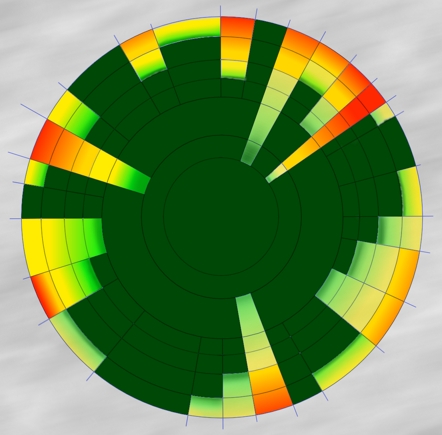
This image – minus a couple of labels on the graph and one or two other small touches – comes courtesy of freeimages.com / Dominik Gwarek

The XP-less NPC

What is experience other than a scalable measure of the progress toward character enhancements? In Objective-Oriented Experience Points (July 2011), I proposed eliminating XP from all sources except as a measure of the progress toward plot-based goals, and awarding it (effectively) as a percentage of the progress toward the character’s next level.

In this article, I’m going to go further, and propose eliminating XP from NPCs entirely. That should free up the GM’s time to do other things, and prep time is always in short supply.

The process itself is simple enough. It requires the GM to number his game sessions, starting at 1 even if you are in an existing campaign. NPCs are generated by the GM as they will first appear, and never have to be updated (with a couple of exceptions that I’ll deal with in a moment). In place of the character’s XP, the GM writes in the session number in which they first appear in-game (even if the PCs didn’t notice them).

When that NPC appears in the course of the adventure, the GM simply subtracts the session number of the day’s play from the session number in which the character first appeared, consults a table that the GM has constructed (one unique to this campaign and that applies universally throughout it) and reads off the number of bonuses over what’s on the character sheet that the NPC has at his disposal.

Each time he uses one of those bonuses – whether it’s to hit, or to present a harder target to avoid being hit, or to successfully use a skill – it gets subtracted from that pool of bonuses and the changed variable gets written onto a scrap of paper that will be tossed at the end of the day’s play.

If the GM feels that the character has enough bonuses, he can permanently reduce them (by updating permanently the “starting session number”) and writing in additional class abilities, enhanced or improved abilities, magic items, or whatever. Those are the only changes that ever have to be made permanently to the NPC’s character sheet!

This concept is based on three key assumptions.

  1. That experience is nothing more than a progress marker towards improved bonuses;
  2. That, over time, the rate of progress will average out to a consistent value;
  3. That, in the course of an adventure, only a fraction of the enhancements made to a character will actually make a difference to the NPC’s capabilities.

The devil, as always, is in the detail. How many bonuses per game session? Does everything cost the same? How many bonuses are required to grant the character new class abilities as though he had gained a level? How many bonuses are required to acquire a magic item? How are magic spells to be handled?

Most of these will vary with campaign and GMing style, and hence be individual to the campaign. To determine the answers, the GM has to dig into the nuts and bolts of character progression in their game system. That sounds like a big job, but it won’t be that difficult.

To understand how to answer this new round of questions, and what form the analysis should take, let’s start by taking a closer look at those three assumptions.

Experience Is Nothing More Than A Progress Marker

Experience points received are proportional to the threats overcome and the progress made towards various plot-related goals. They are indexed against character level, and character level, in turn, translates into tangible benefits – improved hit points, attack scores, skill points, and so on.

This truth is obscured by the fact that the goal markers keep changing. It always takes more XP to go from level L to L+1 than it did to go from L-1 to L. This can be seen as forcing characters to increment the challenges they face, or as depreciating the value of the challenges they have already been overcoming – there just isn’t as much to learn from them.

Rate Of Progress Averages Out To A Consistent Value

But the net effect is that the value of encounters rises at roughly the same rate as character level goals. The value of an individual XP becomes smaller. Sure, a GM could avoid artificially inflating the challenge rating of the “average” monster, so that it takes progressively
longer to earn character levels as the get higher – but they are called “challenge” ratings for a reason; doing so makes them easier to overcome, and ultimately to boredom at the game table. “Ho-hum, more Orcs? Again?”

No, if you are to challenge the PCs, you need to continually advance the difficulties they face, in line with their capabilities. And, once you do that, you put your entire campaign in the hands of system nuances – if there is even a slight discrepancy between the incremental increase in challenge-rating-to-xp conversion rate and the XP-to-character level conversion rate, the error will skyrocket exponentially. Characters will either perpetually advance more slowly or more quickly than you, as GM, anticipate.

My original article, linked to earlier, identified this problem and proposed resolving it by eliminating the challenge-rating-to-xp conversion entirely, effectively making character level advancement something that the GM built into his plotlines, and I still stand by that concept as it applies to PCs.

Only A Fraction Of Enhancements Make A Difference

At any given character level, the character gains certain enhancements. Some of these are new or improved class abilities, some are skill points, some are improved combat abilities, some are numbers of hit dice, which translate into additional hit points, and so on.

In any given encounter, only a fraction of those enhancements get called into play. Most of the skill points are applied in abilities that don’t get used. If you have only one or two class abilities, you will almost certainly call on them; if you have ten or twenty, most won’t even get mentioned by the GM.

Some are more reliably invoked than others, but the general principle holds true.

The Analysis Process

What’s needed, then, is to look at exactly what a character gets from going up a character level over the lifetime of a character; to look at exactly what the typical session of play provides in the way of experience, and how that relates to progress in acquiring those enhancements; and to relate the two directly.

    Class Progression

    Fighters, for example, in the Pathfinder system: +1 base attack bonus with every level; +1 to FORT saves with every level; +1 to REF and WILL saves every third level; A bonus feat every second level (plus one extra at first level that I’ll get back to in a moment; Armour Training every 4th level, starting at 3rd; Weapons Training every 4th level starting at 5th level (with the extra bonus feat taking its place at first level); +1 hit die per level; 2+INT modifier skill points per level.

    That last one looks like it might pose a problem – so let’s redefine it as “one bundle” of Skill points, with the size of the bundle varying with INT Modifier.

    Add all those up and you get 1+1+1/3+1/3+1/2+1/4+1+ 1= 4 and 5/12 per level.

    Standard Progression

    On top of that, all characters get feats every 2nd level and ability score improvements every 4th level. So that’s + 1/2 and +1/4 per level, or 6/12 and 3/12, respectively, increasing the total to 5 and 1/6th.

    Magic Items

    But we’re not finished; there’s the question of magic items. And that’s where the individuality of campaigns and GMs first enters the picture.

    Over the course of a campaign, a fighter might expect to gain a +5 version of his primary weapon (plus all the prior versions), an item that gives +5 in his primary stat (plus, presumably, the prior versions), a secondary weapon of +3 or maybe +4, a shielding magic (either shield or ring) that gives +5, six or five miscellaneous magic items (the extra replacing the extra plus in the secondary weapon), and probably a similar number in miscellaneous magic items that are lost or consumed along the way (call it 6). On top of that, potions and disposable magics will also come along at the rate of 1 or 2 per level – average that to 1.5, or 30 over the twenty levels. Plus he is likely to have different primary weapons and secondary weapons along the way, trading them in when something better comes along and the occasional extra disposable magic over and above the quota given above – I’ll deal with this fudge factor in a moment.

    Adding those up, we get 5+5+5+3+6+6+30 = 60. Dividing those by twenty gives 3 per level. Now, that fudge factor: we’re short 5/6ths of a level of a whole number. If you multiply that out over 20 levels, you get 15 2/3 items, most of them probably in additional disposable magics.

    At first glance, that seemed a little high – but the more I thought about it, the more it made sense. There might be +3 in a tertiary weapon (that used to be a primary weapon), +1 in a quaternary weapon or two, and half a dozen extra potions – that’s 11 of the 15 used up already. Four extra potions here and there along the way is very easy to believe.

    Of course, you may be more generous than is typical, or you might be less; you might alter the mix to favor disposable magic, especially healing potions. So you will need to perform your own assessment. That’s why I’m showing the working – so that the example acts as a guideline.

That brings the total to a neat 6 points per level, assuming that everything that goes into a level is valued the same. That’s another variable that’s in the GM’s control; if magic items are rarer, they should be more significant – so they will cost more of these ‘points per level’ and everything will work out fine. My personal inclination is to increase the value of both stat increases and permanent magic items, perhaps to 2 and 3 points per, respectively, or maybe even 2 and 4 You would want to think about wands and other items that have charges, and how much they are worth – my inclination would be to certainly increase those but then multiply by the fraction of the charges that remain to get the true ‘cost’ of that item. Some GMs rule that magical armor bonuses also add to fort saves; and some would hold that since magical weapons add their plus to both attack and damage, they should count twice. Still others might judge that disposable wealth on-hand should be factored in – be it 100 GP per level per point or 1000. Of course, anything along these lines would also increase the total per level.

One side-benefit of this proposal is that it forces the GM to really think about his attitude to, and distribution of, magic items!

But, for the purposes of this example, I’ll stick with the basic 6 per level that I’ve outlined, and move on.

The second factor: Sessions to Levels

How many game sessions does it take a PC to level up? The books all suggest that it’s around ten – my experience is that it’s closer to five or six, and a number of the house rules in my campaigns have been directed at slowing the rate of progress to this level! I generally count the GP value of magic items and wealth as experience already received, deducting them from the payout. I also adjust individual awards to favor those of lower levels relative to those of higher level on the basis that the more the character still has to learn, the faster they will learn, relative to someone who has already mastered those “life lessons”. Without those adjustments, I can easily believe a progress rate of three or four sessions per level.

This makes a huge difference when it comes to campaign planning. The PCs in my Rings Of Time campaign entered play at fifth level, the junior members and sole survivors of an expedition to kill a dragon and claim its hoard (in reality, they were being set up by the Gods, but that’s a whole other story). By the time play concluded due to the death of one of the players, they had levels in the mid-40s, and well on their way to achieving their ambitions (since they had been manipulated into doing the dirty work and heavy lifting of the Gods, they intended to become at least demigods themselves).

But all that would change if the provisions of Objective-Oriented Experience Points are implemented, which makes progress in levels a question of progress in plot.

If there are fourteen adventures left in the campaign plan, averaging four sessions per adventure, and you want the characters to hit 20th level just before the campaign’s big finish, they have 13 adventures times 4 sessions each = 52 sessions to earn enough levels to reach 20. If they are currently 8th level, to pluck a number at random, that’s 12 levels.

Fifty-two sessions divided by 12 levels is 4 1/3 sessions per level.

The third factor: utilization efficiency

Not everything that a character improves makes a difference in every session. As you’ll see, this creates a complication – we need to reduce the points allocation to the level of actual usage. But taking the skill points out of the equation simplifies that greatly, because that’s the area of greatest inefficiency. Simply reducing the number of skill points the character gets per level is more-or-less enough.

The more skills-oriented your approach to gaming is, the greater the diversity with which skill points will be spread around, and the greater the likelihood that any particular improvement won’t make a difference in the course of the current game session.

In a typical campaign, assuming intelligent character construction (developing the things you are most likely to need), and intelligent usage in-game (playing to your strengths), I would estimate that 1/3 of the skills improved have no impact. In a skills-heavy campaign, that probably increases to 1/2 – a difference of 1/6th. It follows that in a skills-light campaign, things would probably go the other way, reducing wastage by 1/6th to 1/6th.

An alternative model would be 1/4 wastage in the typical campaign, 1/3 in the skills-heavy campaign (a difference of 1/12), suggesting a wastage level of – again – 1/6th in the skills light campaign.

A third set of values might be 30%, 40%, and 20%, respectively.

Which one is right? That rather depends on the GM’s style and the nature of the adventure being played on the day. Heavy roleplay involves some skill usage, but is mostly just roleplay. Combat often involves a very limited amount of skill use. Investigation and mystery solving tends to draw on a lot of different skills to acquire and analyze information. Shopping may involve negotiations and bartering – some skills will be heavily resourced. In my experience, the thing that involves consulting the greatest diversity of skills is social settings and behavior.

My tendency would be to use the campaign/GMing style to select between skills-heavy, skills-typical, and skills-light, then choose which model to apply based on the adventure content that’s involved.

Once you know the wastage, you know how many skill points aren’t going to be ‘wasted’ in terms of this particular occasion; multiply the total skill points to be awarded by that fraction, and you’re in business.

Combining the factors

Construction Points Table 1

At 6 points per level, that’s 6 divided by 4 1/3 sessions per level to get the number of points per game session – which gives the absolutely awful number of 1.384615384615384615… It’s only slightly neater as a fraction: 1 5/13ths.

You could work with this number, but there’s enough fuzziness built into the estimates that I would simplify it to 1.4 just for the convenience.

Either way, the inconvenience of the result shows why you need a table.

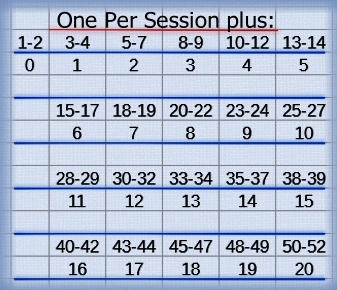
To the left is just such a table (based on 1.4), but it’s not very user-friendly.

You have one row of sessions, and one counting points, repeat until you get to 52 sessions.

Below and to the right is a far more satisfactory way of showing exactly the same information. It starts by noting that there’s one construction point per session, so you only need to track the accumulation of decimal places.

Construction Points Table 2

Note the progression of values in the session numbers after the initial entry – a range of 2 followed by a range of 3. That’s because the decimal used – 0.4 – becomes a whole number every 5 times it is accumulated. That’s why I offset that first entry by a column. I thought about using that pattern to further simplify the table, but the improvement was minor. If I had kept the original fraction – 5/13ths – the pattern would be 13 session numbers long, and would contain five entries.

If you were to do the same for each of the major character classes, you could construct a table in which session numbers run down the first column and you simply track down to the right row, then across each column – one per character class – to get the right answer. But I think that a more user-friendly way of compiling the information would be to put Construction Points down the left-hand column and for the table body to contain the number of sessions required to get to that outcome. It turns the ranges back into a single number, which is always useful for compactness. That’s up to each individual GM.

Another thing that you can do is to deliberately distort the table. You might feel that spacing it evenly like that is unrealistic, that greater progress happens – or should happen – early in the table, i.e. at lower levels. This can be done by altering the ranges.

For example, you might decide that in the first half of the table, all the 2-ranges should be 1-ranges, balancing that by making all the 2-ranges in the second half a range of three values. So the pattern becomes 1, 3, for a while, then 3, 3. You could alter that to even out the first part of the sequence: 2, 2, then 3, 3.

Or, instead, you could take the “1, 3, then 3, 3” pattern and further increase the pace of development at the lower levels by also dropping the three-ranges for the first quarter to two-ranges, and making up for it by increasing every second 3 in the last quarter to a range of 4. So that would give 1, 2, then 1, 3, then 3, 3, then 3, 4. If you again pull the “evening out” in the second quarter, you get 1, 2 to 2, 2 to 3, 3 to 3, 4.

Or, you could decide that the big gains tend to come at the higher end of the table – you achieve that by lengthening the early ranges and shortening the later ones. “3, 4 to 3, 3 to 2, 2 to 1, 2” is every bit as valid as “1, 2 to 2, 2 to 3, 3 to 3, 4”. My personal feeling is that early progress is in areas other than magic, while later improvements are mostly magical in nature, but that overall, it would tend to balance out.

What this is doing, in effect, is customizing class progression rates to your own campaign, style, and philosophy. The way you think it should be is the way that it becomes – at least for NPCs.

For that matter, there’s absolutely nothing preventing you from designing a custom advancement sequence for each individual NPC, probably starting from a common template.

But it’s also possible to go even further. If your NPCs are still consistently getting their tails whupped by the PCs more easily than they should and failing to present the challenge that they should, on paper, represent, all you have to do is increase the construction points per session that they get. Even a small change will accumulate – going from 0.4 to an even 2 per session, over 52 sessions gives an additional 31 construction points! Thank back to what those points represent – +1 to saves, to to-hits, to damage, to armor class, to feats and magic equipment and to the count of class abilities. 31 more of them is a big impact – think +4 in each of those categories, with a few left over!

With this system, there is no ceiling to abilities the way the level-capped system imposes. If that 52-session example actually took 60 sessions to complete, the extra eight levels simply means that the NPCs get a bigger boost, and that you might need to compensate by handing out some additional magic items. Or not; it’s only really the last adventure or two that will be affected, and ramping up the opposition at such times is entirely reasonable!

Use In Play I

Use is incredibly simple. Just note the session number, subtract the first session in which the NPC appeared in the campaign, and look up the number of construction points available from the table you’ve constructed. For example, if an NPC enters the game in session 60, and this is session 72, you would look up 12 sessions. Using the fighter table that was generated as an example, we get 1 per session = 12, +4, for a total of 16. From this amount, subtract the amount expended on permanent improvements to the character, which would normally be determined in advance of starting play – improving the magic weapon on the character sheet by +1, and giving the character a new pair of magical boots, for example. That would be 2 of the 16, and would leave 14 to expend in the course of play.

It’s worth being aware of the rough breakdown of these points. At an estimate of 6 per level, that’s 2 levels worth, plus a couple more. So, there would be +2 to hit, +2 to FORT save, +2 HD, and 2 lots of skill points – that’s eight of the fourteen. We’ve used two more with the enhanced magic items. That leaves 4 – one of them will be a bonus feat, and one will be something else, and one will probably be a consumable magic item like a potion of Cure Light Wounds. But there are so many variant classes and prestige classes out there that if you wanted to add an extra 1 to the to hit (giving +3) and reducing the fort save improvement to +1, that’s perfectly fine, too. But, knowing this, I wouldn’t allocate most of those until I needed them in-play – if you miss with an attack by 3, you can assume that the character has received +3 in his to-hit; it simply means that he will have to go without a full increase in some other area.

In terms of the skill points, I would wait until the character used a skill then assume that it’s gone up 2 for a core skill, or 1 for something that’s cross-class, until I ran out of skill points. This works because we’ve already determined that only the skill expenditures that are going to make a difference in the course of the day’s play are going to be counted as ‘available’. If this particular character gets 5 skill points per level, (including INT bonus), and 1/3 of these are going to be wasted, 2 levels-worth is 10, and only 7 of these will be significant today.

Similarly, if you know the mechanics of feat construction – +2 to one ability or skill, or +1 to 2 related ones, or whatever is appropriate for your game system – you can simply apply them directly to represent the bonus feat without worrying about what that feat actually is.

Or you might choose to make that a permanent alteration on the character sheet as well. But the whole point here is to enable character development to take place “on the fly”, reducing the time the GM has to commit to NPC character development.

You record these expenditures on scrap paper so that you can be consistent, but can throw that away at the end of the day – or commit the changes permanently, increasing the expenditure of points accordingly. The latter greatly speeds the process of character development; the former speeds it up even more. Hot tip: if you commit the changes, update the session number as though the character had just entered play.

Use In Play II

For the next seven game sessions, the NPC doesn’t appear. He is presumably elsewhere doing something else. But, in session 80, he’s back! 80-60 is twenty, so it’s been twenty sessions since the character first appeared. Consulting the table, that’s one per session (so, 20) +8, or a total of 28. 2 of these were permanently expended on his weapon and his boots
the last time he appeared, so he has 26 remaining, assuming that the notes from last time weren’t kept as permanent changes. At about 6 to a level, that’s roughly four levels relative to what the character was when he entered play. This time, the GM chooses to expend two points on an improved AC and two points improving one of the character’s key stats – permanent changes, leaving 22.

+4 to hit, +4 FORT save, +1 REF and WILL saves, +4 HD, 4 lots of Skill points – that’s 18 of the 22 gone. There should be a couple of bonus feats, and one increase each to his armor and weapons abilities, respectively. That’s all 22 expended. 4 lots of skill points, with an anticipated wastage this time around of 30% – unless the stat increase was to INT, that’s 70% of 4 times 5 that will be useful, or 14 available.

It’s that fast. 2 minutes, tops, and the character is ready to play.

Liberating, isn’t it?

Comments (20)

To Your Own Self Be True


A side-comment by one of the players in my Zenith-3 campaign the last time we played raised some interesting questions.

The player was speculating that the solution to a side-mystery that the PCs are currently investigating might have repercussions beyond those the players were presently aware of, simply to cause trouble between political authorities and the PCs, based purely on the fact that I had done that before.

His point was that my pattern of behavior – my style as a GM – was a potential indicator of what in-game circumstances I might seek to exploit and what I might do, at a plot level, with those circumstances.

This, of course, is metagaming, but it’s justifiable as a guide to in-game thinking by the character in question as a “lesson from history” – i.e. “there is a potential land-mine here, this sort of situation has blown up in our faces before.”

Thinking about this situation has yielded four insights that will be of interest, and potential value, to other GMs.

To Your Own Self Be True

The player in question clearly had a valid point, both at an in-game level and at a metagame level. To a certain extent, a GM has to be true to his style, and that can make him a little more predictable at a metagame level, which in turn is a reflection in-game on life-lessons discovered the hard way through past PC experiences.

Trying to move the game in a different direction is clearly something that would not come naturally to a GM; he would be fighting his natural style, which is part of what the players bought into when they signed up for the campaign.

At the same time, while this may be just as valid at a metagame level, it is only justifiable speculation at an in-game level if the characters have sufficient exposure to game history to produce a reasonable Life Lesson in respect to the principle being applied. If that experience is not present, such thinking represents an unjustifiable level of paranoia.

This is a key differentiator between smaller campaigns and the sort of multi-year deals that are my stock in trade; as a campaign proceeds, there is clearly a significant evolution of the relationship between metagame and in-game thinking.

Unpredictability Is The Spice Of RPG Life

At the same time, however, simply repeating exactly the same things that you’ve done before will eventually grow dull. You need to be true to the principles that you have established as your modus operandi while presenting different situations and distinctive plot twists that are unpredictable.

This points, I think, to one aspect in which a campaign has a limited life-span. When you reach the point of repeating yourself and predictability, that campaign needs to close (or it will die a slow death); the GM needs the stimulus of new characters, new settings and contexts, in order to be able to devise new plotlines.

Campaign Longevity mandates Diversity

The converse of this thought is that being sufficiently creative that you can continue to explore new thoughts and new directions within the context of the existing campaign is a sign that it has not reached the end of it’s natural lifespan. If plotting is one of your GMing strengths, the result will be a campaign that can last for decades, as mine has.

This is not solely the province of the GM’s abilities, either. In any campaign that lasts this long, characters and players will come and go, providing fresh stimulation and evolving the campaign; but this demands creativity on the part of the players, who have the responsibility for the creation of those original characters. Should the well run dry – and I’ve seen it happen – the player has to bow out of the campaign, for his enjoyment thereafter will be crippled, and will negatively impact on the entertainment to the others.

Depth of characterization and background are also critical factors; these need to be rich enough to support variety of situation and response over a long period of time. This is an area in which some game systems excel, while others do not.

The Hero Games system, by virtue of digging into the psychology and ongoing circumstances surrounding a character through the Disadvantages sub-systems, encourages this sort of depth, for example, while D&D and Pathfinder do not mandate anything of the sort. This tends to blur the line between player and character a little more, and many of the distinctive features of a character are defined in terms of class and race – and (to all intents and purposes) are shared with everyone else who also possesses those attributes.

Which is a somewhat roundabout way of suggesting that some game systems better support campaign longevity than others. Ironically, being more open in terms of leaving things up to the players, impairs campaign longevity, while being more defined and hence restricted, encourages it.

Metagaming can be a useful tool for both Players and GM

Finally, I find it enlightening that these truths were revealed through the analytic gaze of metagaming. I have to wonder what else might be revealed through this unexpected tool?

Metagaming means viewing in-game developments from the loftier perspective of player knowledge. As such, you should be able to see bigger pictures, and their relationship to the smaller details of in-play experiences, more clearly. It means viewing game mechanics from the perspective of the use that the GM is making of them – which may be quite different to the usage suggested by the rule-books. Metagaming is all about applying purpose to everything else – either the GM’s purpose or a players’ purpose. That includes, plot, characterization, game mechanics, and even paranoia!

There is a perception that metagaming is inherently something bad. I tend to think it’s something positive that can be abused. The distinction is one of motive: why are you employing a meta-perspective? If the reason is positive – for example, arranging in-game circumstances to equalize screen time amongst players – then I think there’s nothing wrong with metagaming. If it is being used by the GM to maintain dominance over his players, manipulating and coercing them, and limiting their freedom of choice within the parameters of their characters, then it is a form of abuse of position, and not acceptable.

Purpose matters. Intentions matter. Everything else is just mechanism.

Comments (4)

The Impact Of Urban Migration On Fantasy Games


Image provided by FreeImages.com / Gabor Palla

Documentaries are supposed to educate and enlighten, to Document and explain. There is little so irritating as a documentary that ignores or commits errors in basic facts to present a myopic, distorted, or one-sided view that provides only half the story.

This evening I started watching just such a documentary. One segment was discussing the great migration of humanity from rural to an urban setting, and it made a number of points worth recapitulating and interpreting from a fantasy RPG perspective. But then it committed a vital sin of omission of the type described above, and from that point on, became increasingly unwatchable as irritation over the fact tainted the experience.

This article will aim to correct that, and point out the true story. It will veer this way and that in the course of examining its subject matter, but always with the goal of helping fantasy GMs more accurately visualize their fantasy settings and the infrastructure needed to make them viable and believable.

Static Until About 1800

We’re so used to a booming urban population that it requires a profound adjustment in our thought processes to appreciate the fact that cities were rare.

Until about 1800, only 10% (at most) of the population resided in an urban community of any size, and between 9/10ths and 99/100ths of those were in small communities of no more than a few hundred people. A city of half-a-million was overwhelmingly extreme and improbably, and only the largest in the world could even approach that number. London at this time had not even hit the 1,000,000 mark.

Most of the population was rural, living on the land in what were essentially extended family units, frequently in the employ or service of a landowner.

It was the steam engine that changed this situation; it made factories possible, and factories provided employment, while at the same time, the steam engine made it possible for fewer laborers to produce the same or greater quantities of food more efficiently. (The documentary emphasized the first half of that statement while completely ignoring the second, and that was its great faux pas).

And food supplies define the size of a city, far more than disease or trade or anything else. If more food can’t be brought in, the city can’t grow, and if it does, the excess population will quickly starve.

A plague that wiped out 1/3 of the urban population would be a dreadful one indeed – worse than the Black Death – but, if adequate nutrition is available, those numbers would be replaced in but a single generation.

It was not until the steam revolution that it became possible to bring in sufficient food for a city to really grow in size. And, even then, it was not until 2016 that – for the first time ever – there were more people living in urban communities of noteworthy size than there were living in a rural setting, distributed and dispersed.

The economics of City Populations

Let’s say – and I don’t have access to the correct figures – that the typical well-fed individual in a medieval society consumes about 4lb of food per day, the adequately-nourished half that, and the ragged underclass, half that again.

If you have a population of 300,000, of whom 20% are adequately fed, and 3% are well-fed, that leaves about 77% at the edge of starvation. In fact, about 2/3 of this number would be starving most of the time, though they would all gain sufficient food to stave off death – often just in time. That’s the way populations work.

So that’s 60,000 getting 2lb of food a day, 9,000 getting 4lb, 77,000 getting 1lb, and 154,000 who average 0.3 lb overall by going hungry most of the time but getting 1lb of food every 2-4 days.

Multiply those food consumptions out, and you get 120,000lb + 36,000lb + 77,000lb + 46,200lb = 279,200 lb per day, or about 101,908,000 lb per year. Near enough to 51,000 tons. If the average wagon can bring in 10 tons of food per trip, that’s 5,100 wagon-loads, or about 14 per day.

An acre of wheat can produce perhaps 1 ton of wheat, 1/2 of which has to be conserved to sew next year’s crop, and 30% of which at least goes to the landowner and in various tithes and taxes. The remaining 20% feeds those who produce that acre of wheat.

So those 10 tons going into the city are only 30% of what the land produces – and that’s with one of the most efficient crops. Animals and Fruit and other forms require more area to produce a given quantity of food, sometimes a lot more. So let’s assume that the average is actually going to be half as efficient (and that’s being generous) – to get to 10 tons of food, you need about 67 acres of agricultural land.

Most land is not as productive as the best – let’s double the requirement to allow for that. 134 acres per 10 tons. And that makes no allowance for spoilage – let’s be generous and only add 50% for that. 200 acres per 10 tons. It also makes no allowance for bad years – so let’s add another 25% for that. 250 acres per 10 ton wagon-load.

The more agricultural land you have, the greater the distance that food from the outlying areas has to travel, increasing the spoilage rate, but that can be countered by various forms of food preservation – pickling and smoking and what-have-you – before the food sets out, or at some convenient location part-way to the market.

51,000 wagon-loads of 10 tons each thus represents the production of 12,750,000 acres, or about 19,922 square miles of average agricultural land – if the assumptions are correct. They aren’t of course; the real situation is far more complicated. That’s a radius of about 80 miles in all directions doing nothing but feed both itself and the city.

Wait – that all assumes that the ruler of the city doesn’t have anyone else to whom he has to pay taxes and tithes. If 30% of what the city gets in has to go elsewhere, we’re talking roughly 18,215,000 acres, or 28,461 square miles, or 95.2 miles in every direction. There’s more than enough fuzziness about some of these guesstimates to say that everything in a radius of between 80 and 400 miles goes into feeding this one city.

Yet, when most GMs picture a fantasy city, they think of something akin to the steam age cities in scale, a million people.

Making Urban Populations Practical

There are four things that can make urban populations of the 300,000+ size practical in medieval terms. The first is that they will inevitably be situated wherever the best land is. The second is that they will be situated on rivers, and river transport can easily carry produce faster, farther, and in greater quantity than any wagon. The third is that most animals can be conveyed ‘on the hoof’ and slaughtered on arrival, or after a suitable period of replenishment; that’s a lot more efficient than carrying that much dead weight in food, even though it will take longer. And finally, most major cities will be on or near the coast, because the sea adds a third dimension to the land-use – depth.

20 square miles of fishing area with a usable depth of 30′ is 6 times the size of 20 square miles that can only use the top 1′, even allowing for the fact that fish are not as densely-packed as vegetables can be. If a city can pull 1/3 or half it’s food supply straight from the oceans, it needs to bring in that much less via other means.

So you could have a city of 500,000 or 1,000,000 if you really want one. But the city has to support that level of population.

And it may not be able to do so, indefinitely.

Waste Disposal

It’s not a pretty subject, but it is an important one. Let’s say that 1/3 of the food consumed becomes human waste. That’s 1/3 of 51,000 tons a year, or 17,000 tons. It all has to go somewhere, and fantasy games are generally set in an era where sewerage processing is at its most primitive.

That river comes in handy once again, because that’s where it will all go – regardless of the medical dangers that this might pose, or the long-term effects on the fishing off the coast.

There must necessarily be an ongoing drive to improve the size and efficiency of the fishing fleet, because they will – over time – have to go further and further away from the city to find untainted food sources.

But here, the power of pi-r-squared comes to the rescue. a semicircle of 10 miles radius would represent an area of about 157.08 square miles. If that gets fished out or tainted, how much further out would your fleet have to travel to maintain the same fishing area? Well, we’re talking about doubling the area, which means we have to multiply the radius by the square root of 2, which is 1.414 – so between ten and 14.14 miles out to sea, there is as much surface area as there is within that 10 mile radius. And that’s assuming that you don’t get any more depth to play with, which is also unlikely.

That’s why improving the efficiency and effectiveness of the fishing industry is so important to a city achieving the sort of population scales that we’re talking about.

An Arcane Economy

A lot of this restriction goes out the window if industrial-scale magic is a factor, but few GMs go down that path, especially when it comes to Agriculture. Most of us don’t like the implications – mass-produced wands of Cure Light Wounds, a Sleep spell for every mugger, +1 swords on every street corner…. and even fewer are capable of working out the economic impact of all this. Certainly, the prices given in any game supplement don’t reflect this sort of industrial application of magic.

But, if you truly want a steam-era London for your capital, approaching 5 million citizens, with its thousands of beggars and poor and criminals, that’s what you have to embrace.

Even without going that far, any enhancement to the agricultural productivity of a region
through the use of magic – Divine, Clerical, Druidic, or whatever – can have a profound impact. Contemplate, even given the rough-and-unreliable numbers used, the impact of turning away the worst storms, and especially those at the wrong times of year, or of being able to guarantee good rainfall each and every year. Or, equally, sparing crops from insects and blight.

50% improvement means that 25% less land is needed to support a given population. 100% improvement – double the yields – means that half the land is needed. Or, to put it more appropriately, those would increase the size of the city population 25% and 50%, respectively, at a conservative estimate.

The more such intervention is routine, the more viable it is to have vast cities. Another mathematical property of numeric functions becomes significant – the exponential growth function. Let’s say that you have three such factors, and each improves agricultural productivity by 50%. The same area would then support a city of 1.5 x 1.5 x 1.5 = 3.375 times the size. 300,000 becomes more than a million.

If those three factors doubled production – still a relatively conservative estimate of what would be possible – the city swells to 2 x 2 x 2 times it’s size – 300,000 becomes 2.4 million.

The question then becomes, “What are the social and economic adjustments that are required to make such improvements sustainable?”

For the sake of argument, let’s suggest that all this is possible through Clerical Magic. The maximum number of acres that a given individual Cleric of a certain character level can care for would be carefully calculated, and there would be a massive industry set up to recruit, train, disperse, and support those Clerics.

If you assume that half the increase in population – or 2/3, or whatever seems reasonable – are employed in this manner, you can actually work backwards from the population increase in the cities to determine the number of acres each “practitioner” can support.

Farmers would have no choice in the matter. If they refused this Divine Aid, their efficiency would be so poor relative to their neighbors that they would immediately fail to meet the quotas that were set up on the assumption of such aid; they would be taxed off the land, and the farm turned over to someone more…. enlightened.

Social & Economic Dominoes

Ignoring entirely the question of magic for a moment, consider the impact of a city so dependent on its fishing fleet that a refusal to serve brings the city to its knees. Seamen would inevitably advance a step or two on the social ladder. They would be economically far more prosperous, able to afford nice homes. Law enforcement would almost certainly learn to look the other way when it came to minor offenses – like public drunkenness.

Whatever the justification for the population is that you choose to employ, it will inevitably have social, economic, and even theological implications. These must also be considered carefully; while they may be secondary effects, they are nevertheless tangible differences that should be apparent to the players.

The Size Of Fantasy Cities

As you can see, you can have cities of any size you desire in your fantasy world; but there is a necessity for cities to “justify” their sizes or the setting’s credibility will always limp. Your players might not know quite what is wrong, but something about the setup simply won’t seem right to them.

Decide the size you want your cities to be, then set up the social, political, economic, and agricultural demands that are required to sustain cities of that size. And that’s all there is to it!

Comments (4)

One Gesture Writ Large


You can never tell where your next inspiration is coming from. Today’s article was founded upon an interview with a group of multimedia performers who combine original music with puppetry and performance that dated back to a few weeks ago. I didn’t see the whole thing, so I’m not even sure what show it was; all I know was that the end of it got caught at the start of a show that I had time-shifted and finally got around to watching over the weekend past.

One of them was telling someone else – either an interviewer or a new member of the group, I couldn’t be sure – about the difference between puppetry and live performance by an actor. With a puppet, you can’t make realistic movements; not only do they not have sufficient range of motion to replicate anything even close, but attempting to do so makes it impossible to follow the story being told.

Instead, you need to “distill the entire movement down to a single simple gesture” (I think the quote’s correct). The rest of the story amplified on the point with the example of someone reaching to open a door and then started to talk about the music, which isn’t directly relevant to the discussion at hand.

The similarity to the situation we face as roleplayers and especially as GMs was immediately obvious to me.

We can’t completely inhabit the roles we adopt and perform; we have to continually break character to discuss game mechanics and die rolls and – in the case of the GM – deliver omniscient narrative and make plot and situational judgments and do half a dozen other things. And even then, we can’t physically perform in the role; simply speak in character and distill the actions that we describe, out-of-character, down to simple single gestures delivered sequentially.

In truth, we have more in common with a bunch of actors and crew sitting around a big table somewhere giving a script its’ first read-through than with an actual on-stage or on-film performance, and an equal legacy from radio-based improvisational theater.

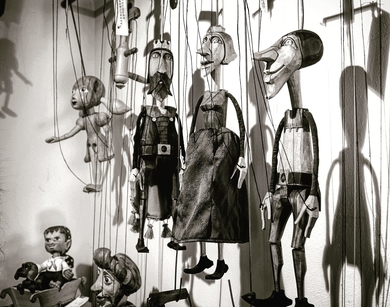
But the idea that the characters we depict have more in common with shadow puppets was a new one, and it crystallized something that had been lurking in the back of my mind for a while.

How do we roleplay? What’s the process?

Well, I can’t speak to how anyone else does it – and I’ve never read anyone else’s attempt to describe the process in detail – but I thought it would be instructive to analyze and document how I do it.

Visualization

Step One is to refresh a mental visualization of the situation as the character perceives it. This may be aided by illustrations, photographs, battlemaps and miniatures, sketches, maps, and what-have-you, but ultimately it comes down to my imagination taking in the words spoken by others at the game table and the event outcomes described by die rolls and the perceptive & comprehension limits and capabilities of the character, used as a filter.

I don’t have long to put this visualization together – a second or two at most, and usually less. This is possible only because I already have such a visualization from previous turns and/or narrative, so it only needs updating from round to round.

The more characters that I am keeping track of, the simpler the logistical situation needs to be so that I don’t have to spend additional time perpetually adjusting for the differences in capabilities that distinguish those characters. The more that I can simplify the task, the better.

Characterization

Next, I need to capture, in a different part of my mind, the characterization of the character who is being depicted at that particular moment. Personality could, and should, always be a factor in deciding what a character will say and do, regardless of the situation.

Again, I have very little time to do this. When I am running a single character, this is relatively straightforward, but when running multiple characters, the time that it takes to shift from one mindset to another becomes a significant factor.

The best solution is to distill the personality, no matter how complex, down to one or at most two fundamental “directions”, then quickly scan the character sheet or character write-up to ensure that nothing else usurps those as the most fundamental determining factor in the character’s behavioral choices.

One Choice Of Action

The combination usually makes it clear what the character is going to do, and – if that response is to say something – what the gist of that statement and it’s emotional content is going to be. Say, 99% of the time.

(This used to be a LOT lower and slower, back when I was still relatively inexperienced as a player; and when first becoming a GM, it was either slower and less frequent or the characters were a fairly basic characterization without sophistication or nuance. This is definitely a learned skill).

On rare occasions, the character might need to hesitate to give me a moment to think, or I might need to employ some other factor in my decision-making.

Those other factors generally come in three forms, often simultaneously and in contradiction: What the character’s objective is in the scene, what impact I want the scene to have on the plot, and what the desired emotional intensity of the scene is (and whether the current levels are too low or too high).

What Isn’t There

But, most of the time, those metagame considerations are either irrelevant because I’m not the GM, or I have already baked them into the scene.

My objective, when designing a scene or encounter, is to create circumstances that achieve those metagame goals by virtue of the character being who they “are”, simply so that I don’t have to think about them most of the time.

The key point is this: 99% of the time, there’s no need to think about the bigger picture, simply to respond to the micro-picture presented to the character that I am representing.

And I make it a point to touch base with those subjects each time I am forced out of character, and update those “one or two fundamental directions” if necessary.

…Even when Improvising

This is largely true whether I’m working from some predetermined plan or improvising on the spot. That’s because this is a process of roleplaying that I have developed to take advantage of those many many times that I am forced to break character for one reason or another – that long list that I mentioned at the head of the article.

Bringing it back to the point

In many different respects, there is a limit to the degree of nuance that you can communicate effectively. In simplifying the world-view to the single perspective of what this character perceives and how he interprets it, or simplifying his or her personality and the impact that it has on their choices of actions, or simplifying the available choices of reactions/responses to the one that best fits the situation, or even in simplifying the context of the situation to something that I don’t need to actively modify and moderate continually, permitting focus on the smaller and more immediate picture, many different aspects can be described by the phrase, “distill the entire movement down to a single simple gesture” – at least metaphorically.

How about you? Have you ever stopped to analyze exactly what process you undertake when you roleplay? Or is it all purely instinctive, with no “process” at all?

The more you understand what it is that you do, the more easily you can identify and correct flaws in your approach, and the better you will become at this most central of crafts. You don’t have to do it my way, but you should know what your way is – because that analysis always helps you improve your skills more quickly.

Comments Off on One Gesture Writ Large

Finalizing the Mechanics for the Zener Gate Campaign


This entry is part 4 of 4 in the series The Zener Gate System

Introductory Recap

This is the third post on the development of a bespoke game system for use in my latest campaign, which is now scheduled to start play on October 21st – so finishing this has become a priority.

Let’s start with a recap. A couple of minor details that weren’t properly explained the first time around are presented in italic bold.

Stats:

In the first article, I listed the 18 stats that I expected to use, with some notes on how they would tie into the game system. I have re-ordered them slightly in the list below to move most of the calculated stats to the bottom of the list.

  • STR – Strength, i.e. physical force.
  • CON – Constitution, i.e. health.
  • RES – Resistance to physical harm, assuming maximum defensive armor. Lighter armors subtract from it.
  • NIM – Nimbleness. Heavier armors will subtract from it.
  • DEX – overall measure of manual Dexterity, used for manipulating tools and keyboards. The stat rolled is averaged with NIM to get the actual stat value. Hand protection will subtract from it.
  • ACC – Accuracy with aimed weapons.
  • MEL – effectiveness with Melee weapons & unarmed combat.
  • PRAC – the character’s aptitude for Practical skills.
  • THEO – the character’s aptitude for intellectual/analytic/Theory skills.
  • ENC – Encyclopedic Knowledge, the character’s knowledge bank of facts and processes.
  • LAN – the character’s capacity for quick-learning Languages. Discussed below.
  • AWA – Awareness of the environment around the character, used for “spot” and “listen” checks.
  • PERS – Personality, a combination of Presence, Charisma, and Persuasiveness, the foundation of any interpersonal skills.
  • END – Endurance. Starts equal to CON.
  • INT – Intelligence. Equal to 1/4 of (PRAC + THEO + ENC + LAN), + 1d6, -1d6.
  • HP – Hit Points. Equal to 2 x CON + RES + NIM.
  • SHK – Shock Threshold. equal to 1/5th HP, round up.
  • KARMA – The universe’s debt to the character’s good fortune. Initially 10, -1 for each stat with a score of 17 or better, +1 for each stat with a score of 8 or less. Karma can be sacrificed in-game to gain a lucky advantage or to buy off a restriction placed on the PCs by the campaign background, the latter at prices to be determined by the GM. Some penalties must be bought off collectively by all PCs contributing to a pool. The GM can also throw unlucky circumstances at the PCs which turn into a Karma boost if the PCs overcome the circumstance indirectly, i.e. without directly countering with PC Karma, effectively adding to the XP that the characters get for the adventure.

It then went into the stat population process – how stat values are generated and allocated – in some detail, so I won’t repeat it here.

Stat Checks

Roll 4d6 + modifier from the GM. The character needs to get stat or less on this roll to succeed in the challenge.

Improving Stats

During Character Generation, +1 to a stat for -3 skill points or -1 to a stat for +2 skill points.

Skills
Skill Base Values

Stat / 2 +2, round up.

Skill Points

Starting skill points = INT x 2.

Skill Definitions

Characters define their own skills. Their profession must be the first such skill listed.

Skills are then classified by the GM as Specific, Narrow, or Broad. Specific skills are only useful for one small, closely-related set of tasks; Narrow skills are useful for a somewhat wider variety of tasks; and Broad skills are useful in a wide variety of applications. These cost 1, 2, or 4 skill points, respectively.

Skill Checks

When the PC attempts a task, he lists any skills he feels are relevant. The GM selects a stat basis that he thinks is most relevant and picks the single skill that is most appropriate from the list offered by the player.

Skill ranks + stat basis + modifier = target value. Player rolls 3d6 and must get less than or equal to the target value to succeed.

If a character has more than one skill that might be relevant, he must select the most relevant one, breaking ties in favor of narrowness. Each additional skill, if the GM agrees that it is also relevant, adds 2 to the target value for the check.

Weapon Skills

Characters can take weapon skills. These are broadly defined, and cost 2 skill points each, or general category skills, costing 3 skill points each. “Gun” is a general category, and so is “Firearm”. “Handgun” or “Pistol” or “Rifle” are broadly defined weapons types. If characters want to waste their points, a specific skill in a specific model (1 point) can also be applied.

Unproficient

If a character has no ranks in the skill he is attempting to use, his chance of success is defined by the relevant Skill Foundation alone, +1 for each indirectly-related skill the GM deems appropriate.

Improving Skills

Additional ranks in a skill cost 1 skill point per rank.

Skill Standards [from article 2]

Expert/Professional = 3 ranks
Skilled Assistant = 2 ranks
Trainees/Junior Assistants = 1 rank
Unskilled/Support Staff = 0 ranks

Eventual Success

If the referee deems a circumstance to be such that the characters will eventually succeed and is more interested in how long it takes to achieve that success, instead of applying “Extra Time” as a modifier, he can use the degree of success or failure on the skill or stat check as an index and interpret the “extra time” as an indicator of how long success takes to achieve. He may apply a modifier to this result based on the degree of success that the characters indicate is desired.

For example, if setting up a camp site, the characters may deem a marginal success as undesirable. Based on the standards that they describe, the GM may decide that success by 5 or more is what they want to achieve; when they make their check, he reduces the margin of success by 5, accordingly, before consulting the extra time chart.

There is a trade-off possible in which quality of outcome is further traded for extra time taken to achieve it, or vice-versa, and the GM may also interpret the results for the players in such a way that they have the choice of accepting an outcome or of spending more time to achieve a better result.

Disadvantages

These are ranked in terms of applicability of circumstance by the GM and awarded values of 1, 2, or 4 points, (specific to general). Specific disadvantages cause a reduction in proficiency in one particular skill or similar area of activity. Two points affect a broader range of activities, while 4 point skills affect a very wide range of activities. For example, “Poor at Mathematics” is a 2-point disadvantage.

If the Disadvantage is one that isn’t readily/directly applicable to skill checks, the impact on the character’s life and freedom of choice should be assessed and a value chosen based on a skill penalty of similar impact.

Multiple ranks can be taken in a Disadvantage; each confers the equivalent of two negative ranks. Each additional rank reduces in value by 1 point to a minimum of one point.

Disadvantage Points add directly to the number of Skill Points available to the character.

Karma Limits

There is a limit to the total number of ranks that a character can have in a given disadvantage equal to his starting Karma divided by 3, round up.

There is a limit to the number of disadvantages that a character can earn points from that is equal to his current Karma.

Removing/Reducing Disadvantages

Before a Disadvantage can be removed, it must be reduced to a single rank. Normally, only one rank can be removed from a given disadvantage per adventure but this restriction can be varied by the GM if it seems appropriate.

To remove a rank in a disadvantage, the character expends 1 point of Karma, reducing his Karma total accordingly.

Karmic Debt

If a character’s Karma drops in the course of an adventure to the point that he is forced to reduce one or more disadvantages because they would exceed the Karmic Limit described above, he is forced to experience a Complication.

A Complication is a player-invoked setback that worsens one or more other disadvantages by one rank for each rank in the Disadvantage being nullified. If he can no longer do so because his disadvantages are at the maximum permitted level, a stat other than Karma is semi-permanently reduced as a consequence of the setback. Note that this has to happen in-play.

The nature of the setback offered by the player and the number of stat points lost determine the value of the Complication – minus one point in one stat is worth one rank in the setback. That means that the scale of the Complication should be set to match the total unpaid Karmic Debt accrued by the event.

Another form of setback that is acceptable is for the player to deliberately blow a mission-critical roll for his character and refuse a re-roll.

Setbacks are treated as disadvantages worth “negative karma” and can be paid off whenever the GM deems it appropriate by the expenditure of earned Karma, i,e, XP (see below).

Karmic Starvation

If a reduction in disadvantages means that a character has expended more on skills than his disadvantages can pay for, he experiences Karmic Starvation. This mandates a Complication, as above, but instead of reducing ranks in Disadvantages, it temporarily reduces the amount of skill points expended by two skill points per rank in the Complication.

Other Uses For Karma
  • Karma can be used to re-roll a failed roll at the player’s discretion, or to give another character a +5 in a mission-critical roll. These applications consume one Karma.
  • Karma can be converted into additional Skill Points at the rate of 2 Skill points per point of Karma consumed.
  • Karma can be converted into a stat increase at the rate of 2 Karma per +1. Once a stat exceeds 25, this cost doubles, and for every +5 to that limit, it doubles again. Note that this is far more expensive than during character construction.
  • Karma can be expended during character construction to modify rolled stats. Every point of Karma consumed permits one stat to be reduced by 1 and another to be increased by 2. Note that this also affects the character’s Starting Karma.
  • Karma can be expended to obtain a stroke of good fortune in the course of an adventure. The player tells the GM what “good luck” he would like to have and the GM counts the number of successful rolls that he would normally require in order to achieve the same outcome. That count is the cost of the stroke of good fortune, in Karma. If the cost is more than the character can or is willing to pay, the GM may propose a lower-cost variation that gives the PCs some or even all of what they want; the GM is expected to work with the players in this respect.
  • Karma can be expended to reduce or remove a limitation placed on the characters by the campaign setup or background, for example to expand a character’s Meitner Field Radius, permitting them to carry more equipment through a Zener Transition. An explanation for this change will be incorporated into the next adventure by the GM, and the benefit will take effect from that time, NOT immediately.
  • Finally, Karma can be expended to delay the next Zener Transition long enough for the PCs to complete their current adventure. The cost in Karma is the Time Shift shown on the modifiers table. This will only be possible after three specific campaign upgrades are purchased – enlarged Meitner Fields (PCs can carry equipment), Limited Comms to Zener Command (who design a detector), and Zener Transition Threshold Detection (when the PCs build the device designed by Zener Command).
Experience

Experience is earned for surviving an adventure.

More experience is earned for helping the locals deal with whatever problem they are experiencing when the PCs arrive. +50% XP for a solution to be implemented by the locals following PC advice, double XP for a solution to the problem that is put in place by the PCs, and these are doubled again for a permanent solution to the problem. Typical BASE xp will be 1-3 per game session, lower more often than higher, based on the length of the adventure and the difficulties that have to be overcome.

Selfish or amoral behavior reduces XP award is by 1, but this will be waived if the whole purpose of the plotline is to benefit the PCs in some way.

XP is paid in additional Karma.

The GM can (and probably will) choose to introduce an additional complication into an adventure at any time, at the cost of immediately giving the directly-affected character or characters 2 Karma, or he can give an NPC +10 to a roll (GREATLY increasing their chances of success) and increasing the Karma of one or more PCs by 1. He can do this AFTER a roll is made, turning a failure into a success . These immediate payments are in addition to any Karma earned in the course of the adventure. Increasing the difficulty can also increase the Karmic Reward at the end of the adventure. However, setbacks and complications from Karmic Debt or Karmic Starvation do not affect the Karmic Payout.

If a PC chooses to, he can sacrifice Karma to nullify or redress this interference through a stroke of good fortune, as described earlier; doing so means that the complication introduced by the GM also doesn’t count toward the end-of-adventure bonus. You get “paid” to solve your own problems through game-play, not use the game mechanics to do it for you.

Unspent Karma is always useful to have, but spending it improves the self-reliance of the PCs. Having too much unspent Karma effectively reduces the effectiveness of the PCs, having not enough can induce Karmic Debt or Karmic Starvation. The margin that a player considers safe is up to him!

As the PCs discover the situation that they are in, the GM may choose to symbolically reflect each piece of bad news for the players with a token representing an increased XP value for the adventure. The more impossible the situation seems to be, the more Karma he makes “up for grabs” – if the PCs are clever enough to earn it!

Equipment

Equipment in general is defined in the same way as skills (broad, narrow, specific) but is never the basis of a check. Equipment does count for the purposes of “other appropriate skills” or “indirectly-related skills”, provided the equipment is actually being used for the task – actually having a “.33 special” doesn’t help in firing that 44 Magnum.

Unless noted otherwise as part of the circumstances, a skill implies having the appropriate equipment; buying the equipment specifically in addition to the skill implies that the character has something that’s been customized or modified to suit them. So “Fisherman” implies having a rod and reel, or the means to improvise something. Actually buying a Fishing Rod in addition is unnecessary (but does provide a bonus to your fisherman skill checks).

If circumstances have left the character without those implied tools, that’s a factor that the GM takes into account with his circumstantial modifiers.

Three exceptions are weapons, armor, and Campaign MacGuffins.

Weapons

The cost and characteristics of a weapon are calculated as follows:

  • The base damage inflicted by a weapon is up to the GM. As a rule of thumb, most melee weapons will be 1d6 or smaller, most handguns will be 2d6, most rifles will be 3d6, most shotguns will be 4d6, most grenades will be 5d6, most anti-vehicle weapons will 6d6 or more. Base Damage: 1 point for 1/3 d6, 2 points for 1/2 d6, 3 points for 1d6, 4 points for 2d6, 5 points for 3d6, and so on.
  • Rate Of Fire: 1 point for 1 shot per round, 2 points for a short burst per round (conferring an extra d6 on the damage), 3 points for full auto (confers an extra 2 1/2 d6 per round).
  • Additional Damage: 1 point for each +1 to damage.
  • Maximum Range: The above costs are added together and compared to the universal index table (see below) to determine the base range. The GM can then restrict this to an “effective range”, reducing the cost of the weapon 1 point for every 2 steps up the table. Weapons defined as “Melee” automatically have zero range, but additional range can then be bought as “reach”.

This cost is halved (round up) if the character takes an appropriate skill in the weapon’s use.

Note that until PCs buy an Expanded Meitner Field, there are limits on what weaponry a character can carry.

Equipment that PCs obtain in the course of an adventure but can’t take with them costs nothing.

If the equipment is completely consumed or used up in the course of an adventure, the PC is refunded all but 1 point of the actual cost.

Armor

The cost and characteristics of armor are calculated as follows:

  • Hardness (1-10 scale) – each step on the scale increases the protection provided by the armor in the form of bonus Resistance.
  • Coverage (1-4 scale) – each step on the scale increases the amount of protection provided by the armor by approximately 25%, so one-quarter coverage, half-coverage, three-quarters coverage, or whole-body coverage.
  • These are multiplied together, The penalty imposed to Nimbleness is then decided based on what the GM considers reasonable and added to the total.
  • The result divided by three is the cost of the armor in Skill Points.

This cost is halved (round up) if the character takes an appropriate skill in the armor’s use.

Note that until PCs buy an Expanded Meitner Field, there are limits on what weaponry a character can carry.

Equipment that PCs obtain in the course of an adventure but can’t take with them costs nothing.

If the equipment is completely consumed or used up in the course of an adventure, the PC is refunded all but 1 point of the actual cost.

Campaign MacGuffins

Some of the campaign limitations are so “big” that they have to be bought off in stages, for example constructing a reliable communications link back to Zener Command. Less-reliable comms will become available as plot devices in the meanwhile.

Each point of Karma expended for the purpose by any PC adds to the total invested in “Campaign MacGuffins” and is translated into a component of the whole or a refinement of the design or construction that will be incorporated into the next adventure.

These tangible Campaign MacGuffins will be given suitable names in-game, e.g. “crystal radio set”. When the GM feels that the characters have accumulated enough of them, an improvement will be made in one restriction. These amounts are being left flexible for now, but the rough scale is intended to be 4 points for a minor improvement, 10 points for a new capability, 20 points for the complete removal of a limitation.

A couple of side-notes before I continue.

    XP Balance

    First, part of the rationale behind the point costs for Campaign MacGuffins suggested above is that I want time for the players to get used to a given “state of the campaign” before the next upgrade, part of it refers to the value that I expect it to have in terms of advantages to the PCs, and part of it is controlling the amount of XP that the characters have available for improvement in their abilities.

    Take another look at that XP-earning profile. To make an adventure interesting, there might be a couple of setbacks thrown into the plot. There could be as many as 3 base XP. That gets us to 7. If the PCs provide a permanent solution to whatever the problem is that the locals are experiencing when the PCs arrive, that gets multiplied by 4, to 28, and there are two PCs in this campaign, so that’s effectively 56 between them. On top of that, there’s 4-8 instant XP for those setbacks – so, “best-case” scenario from the PC’s point of view gives them as much as 64 xp to spend.

    If a couple of points get expended by each on re-rolls, and maybe a couple more on “stroke of good luck” – call it 8 points between them – and if each keeps 8 points unspent for the next adventure, that leaves 40 points. 20 points spent on a major Campaign Macguffin, and that will leave 20 to spend on skills and stats – from a major adventure.

    A smaller adventure might have one setback affecting both PCs, and would only be worth a base of 1 xp. Again assuming a best-case scenario, that’s (2+2)x4=16 xp each, or a total between them of 32 xp. With the same 8 spent, and the same 16 held in reserve by both, that leaves 8 – enough for a minor Campaign Macguffin and 2 points each for a small skill or stat improvement.

    Those aren’t huge amounts, given perhaps half-a-dozen to a dozen skills and 18 stats.

    Of course, the players might spend less, and keep a smaller reserve, and might already have a reserve from previous adventures – so they might have more to spend. At the same time, as the campaign proceeds, they will also have expenses for equipment to eat into those past reserves.

    Although the numbers were tossed out fairly quickly in the first article, there was actually a lot of thought given to campaign balance behind the scenes. The goal is to give away enough experience that the campaign and PCs keep progressing, while not being enough to produce overwhelming change, and keeping the PCs hungry for more..

    Min-Maxing is extremely difficult

    Another key consideration behind the scenes is that the system is designed to give players multiple priorities to choose between, several of them contradictory if not competing. The goal is to make min-maxing very hard to achieve.

    This mattered in the design because one of the expected players is very good at doing this sort of thing almost instinctively, while the other is not. Making it more difficult to find a clear path to overwhelming advantage should equalize the two.

    In particular, the stat roll selection mechanism is intended to ensure that all characters have room to develop. Choosing a high INT brings skill flexibility, which will pay off over the longer term, but sucks a lot of points out of the character in the short term, when stat improvement is at its most efficient, and well-chosen skills are at their most valuable.

    But each of the stats brings a benefit to the character, there are no obvious dump stats, and that’s not by accident.

Which brings me to the second article, and the populating of the Modifiers Table. This is a central feature of the game system. I have compiled everything into a single table (which fits on two pages) but I’ll break it down below. First, incidental rules; second the base values and progression rates; and third, the actual tables. In addition, near the end of the boxed-off recap, a two-page PDF putting everything together into a single two-page table (A4 in size, so if you print a copy you will want to take that into account).

Additional Rules
Impossible Chances

If it is impossible for the character to succeed, a character can try for a miracle success. For every extra dice they roll and count toward the total, they increase the target by +2, up to the point where a possible roll is achieved.

If a character can’t fail, the character can choose to add “extra benefits” to their attempt. The GM evaluates what benefit or trick the player wants to add as an increase in the difficulty. For every 2 over 18/-, the difficulty target gets reduced by 2 for every extra dice that the character gets to roll, while ignoring all but the lowest 3.

These are intended to (1) give PCs a chance at achieving a hail-Mary pass; and (2) offer them a benefit if they increase the chance of failing when success would otherwise be automatic, both as optional rules that the player (not the GM) can invoke.

Loads

A Balanced load counts for 1/2 of its actual weight. An unbalanced load counts for its full weight. A Distributed load counts for 1/3 of its actual weight.

Shared loads are calculated by dividing the total load by the number of participants gives each individual load, and the group can only move as fast, and as far, as it’s most heavily-burdened character.

Vehicle STR defines their carrying capacity, which is used for fuel, passengers, and luggage. These are considered balanced loads.

Target Size Adjustment

If the range modifier is greater than the target size modifier, add the Range Adjustment Modifier based on the difference. If the range modifier is smaller than the target size modifier, subtract the difference.

Cover

Cover reduces the effective size of the target as shown. So does choosing a more precise target vs attacking the full body of an opponent.

The system is based on +0 for fully-exposed human. -1 for head & torso or aiming for a flesh wound; -2 for head and neck; -3 for an open hand or a weapon in hand; -6 for an eye socket.

Extra Time Spent/Rushing

Taking extra time or rushing a task produces the modifier shown on the time chart. This does not apply to aiming weapons, which have a special interpretation of the time chart (see below). Simply pointing a weapon in the general direction of a target and pulling the trigger (i.e. suppression fire) is defined as having a -5 chance to hit.

Aiming

The time spent aiming is converted to a bonus to hit according to the time chart. Pistols capped at 2 sec, Rifles capped at 10 sec, Sniper attacks capped at 10 min.

Assistants

The number of assistants of skill level 1 less than the lead operator for a given bonus is shown on the table of values. For assistants of skill level 2 less, drop one level on the table, and so on.

Table Summary
Base Table Values:

Weight/Load: index 10 = 30kg
Distance/Range: index 0 = 1m
Target Size: index 0 = 1m² at 2m, 10=1000m² at 2m.
Aiming/Extra Time: This is non-linear, consult the table.
Delicacy: index 0 = 1 cm
Scaling: index 0 = x1
Assistants: 0 = None at skill -1, 1 step down for additional reductions in skill

Table Value Progressions:

Weight/Load: x2 Weight for +7 index value.
Distance/Range: x10 distance for +10 index value
Target Size: index +1 = Approx x2
Aiming/Extra Time: This is non-linear, consult the table.
Delicacy: index +1 = /2, index +2=/10.
Scaling: index +1 = x10
Assistants: index +1 = +(index+1), +1 after index 2

Tables

In addition to being presented below, the Zener Gate system tables have also been compiled into a 2-page PDF (in the format they were ultimately intended to take), which can be downloaded by clicking the icon to the left.

Weight/Load Table:

-24 1.5 kg pistol + holster; two grenades, 4 loaves of bread
-11 4 kg rifle, lightweight sleeping bag
-8 5 kg pickax, riding saddle
-7 6 kg portable astronomy telescope
-6 6.5kg heavy sleeping bag
-5 7 kg folding cot, cloth & aluminum
-4 8 kg shot-put, baby
-3 8.7 kg sleeping bag, arctic weight, wide-band radio receiver
-2 9.6 kg large baby
-1 10.5 kg typical overnight bag, portable TV set
0 12 kg aluminum 12′ ladder, M-60 light machine gun
1 13 kg 25 gallon barrel of water, western saddle, bicycle
2 14 kg heavy overnight bag, small wood & canvas folding table, 1-man tent
3 15 kg large metal toolbox, man-length of light rope
4 17 kg block-and-tackle
5 18.5 kg Encyclopedia Set
6 20 kg Small Child, Chainsaw, 2-man canvas tent
7 22.5 kg Small Missile, goat
8 25 kg Full Suitcase, Small TV
9 27 kg 4-man canvas tent
10 30 kg Movie camera
11 33 kg
12 36 kg
13 40 kg child
14 45 kg small sack of mail
15 50 kg older child
16 55 kg
17 60 kg early teen
18 66 kg
19 72kg
20 80 kg teenager, slightly-built adult
21 88 kg
22 100 kg healthy large adult
23 110 kg overweight/large adult
24 120 kg
25 132 kg
26 144 kg
27 160 kg
28 175 kg
29 200 kg piano
30 220 kg
31 240 kg
32 265 kg
33 290 kg
34 320 kg
35 350 kg
36 400 kg Large motorcycle
37 440kg


Distance/Range Table:

-8 16cm pistol barrel, female hand
-7 20 cm male hand & wrist
-6 25 cm 1′
-5 32 cm
-4 40 cm forearm & hand
-3 50 cm forearm, hand, pistol barrel
-2 64 cm ~2′
-1 80 cm arm’s length
0 1m 3′
1 1.3m ~4.25′
2 1.6m ~5.25′
3 2m 3 normal steps,
4 2.5m ~8′
5 3.2m ~10.5′
6 4m 13.1′, approx length of a small car
7 5m ~1.5 small cars or approx 10 sec walk
at slow pace (2km/h)
8 6.4m ~21′ (length of a semitrailer)
9 8m ~26′
10 10m ~33′
11 13m ~42.5′ (distance traveled in ~0.5 sec at 60mph
or walked in ~10 sec at normal pace
(4 km/h))
12 16m ~52′ (distance traveled in ~0.5 sec at 75mph,
or 1 sec at 35mph, or walked in
~10sec at brisk pace (6 km/h))
13 20m >65′
14 25m railway carriage, ~82′, distance traveled
in 0.93 sec at 60mph)
15 32m ~105′ (distance traveled in ~2 sec at 35mph
or walked in ~1min at slow pace
(2km/h))
16 40m ~130′ (distance traveled in 1.2 sec at 75mph)
17 50m 164′
18 65m ~213′ (distance traveled in 2.4 sec at 60mph
or walked in ~1 min at normal pace (4km/h))
19 80m ~262.5′ (distance traveled in 2.4 sec at 75mph)
20 100m 328′ (distance walked in 1 min at brisk pace
(6km/h))
21 130m 426.5′
22 160m 525′
23 200m >655′
24 250m ~820′, about 1 city block
25 320m 1050′ or 0.2 miles, ~1 sec at Mach 1
26 400m 1/4 mile
27 500m 0.31 miles
28 650m 0.4 miles, ~1 sec at Mach 2
29 800m 1/2 mile
30 1 km 0.6 miles, 1 sec at Mach 3
31 1.3 km 0.8 miles, 1 sec at Mach 4
32 1.6 km 1 mile (distance traveled in 1 min at
60 mph or 1 sec at Mach 5)
33 2 km 1.25 miles
34 2.5km 1.55 miles (distance traveled in ~1.25 min at
75mph, or in 7.33 sec at mach 1)
35 3.2km 2 miles
36 4km 2.5 miles (~6 sec at Mach 2)
37 5km 3.1 miles (2.9 sec at Mach 5)

 
Target Size Table:

Target Size Table (at 2m):

-8 Keyhole
-7 Ring, Bulls-eye
-6 Eye Socket
-5 Finger
-4 Fist
-3 Open hand or weapon in hand
-2 Human head and neck
-1 Human head and torso, or aiming for a Flesh Wound
0 1 square m Whole Human Body
1 Large Motorcycle, Doorway
2 Small Car Side View
3 Truck Side View
4 Aircraft control cabin
5 Fishing Trawler, Barn Door
6 Locomotive, Barn Side
7 Small Train
8 Large Train, Freighter (Side view), Small House
9 Large House
10 Small Mansion, Lighthouse
11 Large Mansion, Eiffel Tower
12 The Pentagon (top view)
13 Small Skyscraper (side view)
14 12,000 square m
15 25,000 square m
16 50,000 square m
17 1 square km
18 2 square km
19 4 square km
20 8 square km
21 15 square km
22 30 square km
23 60 square km
24 120 square km
25 250 square km


Range Adjustment:

+1 1
+2 3
+3 7
+4 12
+5 18
+6 25
+7 33
+8 42
+9 52
+10 63


Aiming/Extra Time Table:

-6 < x 0.1
-5 x 0.1
-4 x 0.2
-3 x 0.4
-2 x 0.6
-1 x 0.75
0 x 1
1 x 1.5
2 x 2
3 x 5
4 x 10
5 x 20
6 x 50
7 x 100
8 x 200
9 x 500
10 x 1,000
11 x 2,000
12 x 5,000
13 x 10,000+


Delicacy Table:

-2 1m
-1 5 cm
0 1 cm A marble, Bone thickness
1 5 mm Ants, Seeds
2 1 mm Pixel, Furniture tolerance
3 0.1 mm Human hair,
Resolution limit – naked eye
4 0.05 mm Thickness, paper sheet;
Human skin cell
5 0.01 mm Silk fiber, 1971 transistor
6 5 µm Cell nucleus, X Chromosome,
Red blood cell
7 1 µm (1 micron) Y chromosome, clay particle, e coli bacterium
8 500 nm largest virus;
750 nm = red wavelength,
400 nm = violet wavelength
9 100 nm HIV Virus;
Resolution limit – optical microscope
10 50 nm Hepatitis B virus
Infrared wavelength
11 10 nm 25 nm = 2017 transistors
12 5 nm Cell membrane, DNA
13 1 nm = 100 Angstroms Buckyball
14 50 Angstroms Glucose molecule, Cesium atom
15 10 Angstroms 34 Å = Carbon atom
28 Å = Water molecule
16 5 Angstroms Resolution limit – electron microscope
17 1 Angstrom 3.1 Å = Hydrogen atom,
2.5 Å = Helium atom
18 0.5 Angstroms
19 1 picometer Gamma Ray wavelengths
Resolution limit – theoretical gamma-ray microscope
20 50 femtometers
21 10 femtometers 15 fm = Uranium nucleus
22 5 femtometers 3 fm = Helium nucleus
23 1 femtometer Proton, Neutron
24 500 attometers
25 100 attometers smallest confirmed objects in existence

 
Scaling Table:

Scaling Table:

0 x1
1 x 10 (Magnifying glass, Jeweler’s loupe) High-quality precision manual tools
2 x 100 Scaling limit, precision manual tools
3 x1000 Primitive process-based designer tools,
Computerized scaling tools
4 x10k Generation-2 process-based tools,
Computerized scaling tools
5 x100k (Resolution limit, optical microscopes) Generation-3 process-based tools,
Light/laser-based scaling tools
6 x 1M Generation-4 process-based tools,
Energy-beam-based scaling tools
7 x 10M Virus-based nanotechnology,
Generation-5 process-based tools
8 x 100M True nanomachines,
the Nanocar
9 x 1000M (Resolution limit – Electron Microscopes) Process-based chemical tools, Buckyballs
10 x 10G or more (Sci-Fi Only)


Assistants Table:

0 None @ skill -1 1 @ skill -2 2-3 @ skill -3 4-7 @ skill -4
1 1 @ skill -1 2-3 @ skill -2 4-7 @ skill -3 8-12 @ skill -4
2 2-3 @ skill -1 4-7 @ skill -2 8-12 @ skill -3 13-18 @ skill -4
3 4-7 @ skill -1 8-12 @ skill -2 13-18 @ skill -3 19-25 @ skill -4
4 8-12 @ skill -1 13-18 @ skill -2 19-25 @ skill -3 26-33 @ skill -4
5 13-18 @ skill -1 19-25 @ skill -2 26-33 @ skill -3 34-42 @ skill -4
6 19-25 @ skill -1 26-33 @ skill -2 34-42 @ skill -3 43-52 @ skill -4
7 26-33 @ skill -1 34-42 @ skill -2 43-52 @ skill -3 53-63 @ skill -4
8 34-42 @ skill -1 43-52 @ skill -2 53-63 @ skill -3 64-75 @ skill -4
9 43-52 @ skill -1 53-63 @ skill -2 64-75 @ skill -3 76-88 @ skill -4
10 53-63 @ skill -1 64-75 @ skill -2 76-88 @ skill -3 89-102 @ skill -4
11 64-75 @ skill -1 76-88 @ skill -2 89-102 @ skill -3 103-117 @ skill -4
12 76-88 @ skill -1 89-102 @ skill -2 103-117 @ skill -3 118-133 @ skill -4
13 89-102 @ skill -1 103-117 @ skill -2 118-133 @ skill -3 134-150 @ skill -4
14 103-117 @ skill -1 118-133 @ skill -2 134-150 @ skill -3 151-168 @ skill -4
What Remains

At the end of the first article, in addition to the tables listed above (the populating of which consumed the entire second article), I listed a number of things that still needed to be completed before the rules would be ready to play – plus a few things that have come to light since. Answering those questions is what this third and final article is intended to achieve.

Hit Location

I have something of a love/hate relationship with Hit Location systems. They can greatly add to the verisimilitude of combat, or they can stifle it. They can be a pain to use, and a bigger pain to create, and they take up an inordinate amount of space in the rules. They make hidden assumptions – the Hero Games version assumes a bullet or other point attack, and don’t work well when considering a slashing attack or beam attack that transects the body in a relatively straight line that can start anywhere and go in any direction. It also fails spectacularly when shrapnel-style area attacks are involved. But, worst of all, I can never be sure that the modifiers applied to different locations are correct, and distrust the conflation and compounding of Hit Locations and Critical Hit damage.

I want the combat system in the Zener Gate campaign to be cinematic and fast-slowing, and that usually doesn’t accord well with a Hit Location mechanic.

Nevertheless, I have reluctantly convinced myself that a simple Hit Location system is required because of the presence of the target size / aiming rules, which distinguish between whole-body, head-and-torso, head, fist/heart, and eye-sized targets with different degrees of difficulty. If you hit with an attack in one of those bodily subdivisions, you need to know where; and if you miss with one of the smaller areas, does that mean that you’ve missed the entire target?

Because characters are already rolling multiple dice, I want to minimize the additions that this will entail, so I have decided on a simple d20-based system. However, under certain circumstances, the GM can mandate that a smaller die be used, increasing the likelihood of a particular result.

Hit Location Table:

Whole-body Head & Torso Head & Neck Left Hand Right Hand    Eye   
Location d% d% d% d% d%
Skull/Scalp
(automatic critical location)
1-5 1-7 1-10 1-2 1-2 1-15
Face 6-10 8-14 11-21 3-5 3-5 16-40
Neck (1 in 6 critical location) 11-15 15-21 22-28 6-10 6-10 41-55
Left chest
(d12: 3 in 12 critical location)
16-30 22-35 29-42 11-20 11-15 56-60
Left upper arm
(d6: 1-2=shoulder, 6=elbow)
31-35 36-42 43-49 21-30
Left abdomen/groin
(1 in 6 critical location)
36-40 43-49 31-35 16-20
Left forearm
(d6: 6=left hand)
41-45 50-56 50-56 36-50 21-30 61-65
Right chest
(1 in 6 critical location)
46-60 57-70 57-63 51-55 31-40 66-70
Right upper arm
(d6: 1-2=shoulder, 6=elbow)
61-65 71-77 64-70 41-50
Right abdomen/groin
(1 in 6 critical location)
66-70 56-60 51-55
Right forearm
(d6: 6=right hand)
71-75 78-84 71-77 61-70 56-70 71-75
Left leg
(d12: 1-6=upper leg, 7=knee,
8-11= lower leg, 12=foot)
76-85 71-80
(Upper Leg Only)
71-75
(Upper Leg Only)
Right leg
(d12: 1-6=upper leg, 7=knee,
8-11= lower leg, 12=foot)
86-95 81-85
(Upper Leg Only)
76-85
(Upper Leg Only)
Attacker’s choice,
automatic critical location
if one available
96-00 85-00 78-00 86-00 86-00 76-00

Hit Location Effects:
  • Undefined Critical Location: +2 Trauma, -1, (-d3 on a crit) dmg to stat as shown below
  • Non-Critical Location: +0 Trauma, -1 dmg to stat as shown below on critical


  • Skull/Scalp +2 shock, +4 trauma, and (d8): 1-2=THEO, 3=ENC, 4-5=AWA, 6-8=PERS.
  • Face +4 shock, +2 trauma and (d5): 1-2=CON, 3=THEO, 4-5=AWA.
  • Eye +2 shock, +6 Trauma, and (d10, 2 rolls): 1=DEX, 2=ACC, 3-4=PRAC, 5-6=THEO, 7-9=AWA, 10=PERS.
  • General Neck +1 shock, +2 Trauma, and (d5): 1-4=CON, 5=RES.
  • General Chest +2 shock, +1 trauma, and (d8): 1=STR, 2-3=CON, 4-5=RES, 6=MEL, 7-8=END
  • Shoulder (d4): 1-2=STR, 3-4=MEL
  • General Upper Arm (d6): 1-2=STR, 3=DEX, 4=ACC, 5-6=MEL
  • Elbow (d6): 1=STR, 2=DEX, 3=ACC, 4-5=MEL, 6=PRAC
  • General Lower Arm (d6): 1=STR, 2-3=DEX, 4=ACC, 5=PRAC, 6=THEO
  • Hand (d10, 2 rolls): 1=STR, 2-4=DEX, 5-6=ACC, 7-8=MEL, 9-10=PRAC
  • General Abdomen/Groin +1 shock, +1 trauma, and (d12): 1=STR, 2-5=CON, 6-7=RES, 8=NIM, 9=MEL, 10-12=END
  • General Upper Leg (d5): 1=STR, 2-3=NIM, 4-5=MEL
  • Knee (d5): 1-2=STR, 3-4=NIM, 5=MEL
  • General Lower Leg (d5): 1=STR, 2-4=NIM, 5=MEL
  • Foot (d5): 1-3=NIM, 4-5=MEL

For the record, the risks by stat are:
STR: 14, CON: 12; RES 5; NIM 11; DEX 12; ACC 9, MEL 18; PRAC 10; THEO 8; ENC 1; AWA 10; PERS 5; END 5

or, to put them in sequence from greatest risk to lowest,
MEL 18,
STR 14,
CON, DEX (tie) 12,
NIM 11,
PRAC, AWA (tie) 10,
ACC 9,
THEO 8,
RES, PERS, END (tie) 5,
ENC 1

Initiative & Surprise

The GM should be aware of a character’s current AWA at all times, and have determined the collective AWA of the party using the “Assistance” rules. Whenever there is an opportunity for characters
to be surprised (Initiative 0) he should make a secret AWA check.

Initiative is based on 1d6, plus:

  • 0 for the character with the lowest AWA, +1 for the character with the next lowest, and so on;
  • 0 for the character with the highest MEL, +2 for the character with the next lowest, and so on.
  • If it is more appropriate, the GM can use ACC instead of MEL.

Characters who cannot move automatically roll “1” on the d6. Characters who are surprised automatically roll “0” on the d6. Characters who are prone (GM determination) have their roll automatically capped at “3”. The modifiers given above only apply in rounds in which the character is not surprised.

Time

Time will be handled in three different ways within the campaign: Ordinary Time, Combat Time, and Micro-Time.

Ordinary Time

Ordinary Time is the most flexible. The Players tell the GM what they are doing and the GM advances time either to the conclusion of the task or to the next significant plot development, whichever comes first before prompting for a new choice of action by the PCs.

Combat Time

Combat Time is somewhat less flexible. Combat is cinematic in style, which is achieved by varying the length of combat turns. A combat turn is defined as the length of time required before a character has the opportunity to attack, based on their initiative numbers and combat abilities, in other words, until there is the opportunity for some change to occur in the status quo – typically 10 seconds, but it may be more or less at the GM’s discretion. If both sides have cover and are firing semi-automatic weapons with plenty of ammunition, it might be a minute or more before there is any opportunity to change the combat situation, for example, especially if both sides are concentrating on suppression fire, i.e. preventing the other side from getting a clean shot.

It follows that only a limited number of events can actually change the course of combat and end a combat turn. A mistake by one side or the other, a change in tactics, a change in the ammunition status of one or both forcing a change of tactics, the arrival of reinforcements, a lucky shot, or the conclusion of some sort of countdown.

The last requires some amplification – I was thinking of a situation in which characters are stalling for time while awaiting the outcome of some prior action already instituted, for example a character trying to pick a lock, or a grenade exploding, or some other such event.

Micro-Time

When characters have the same initiative value, combat will briefly enter micro-time. In sequence of lowest RES to highest, the characters with the same initiative value choose and announce their actions without those actions being carried out. This gives those with higher defensive values the chance to choose their actions taking into account what those of lesser values are going to attempt to do. The GM then resolves all those announced actions simultaneously.

The other function of micro-time is when fractions of a second make a difference. Without the internet, it’s hard to do basic research, but let’s assume (for the sake of argument) that a weapon/ammo combination has a muzzle velocity of 1000 m/s and the target is 250m away. That means that a single bullet will reach that target in 0.25 seconds. As noted in Article 2, “Mean Reaction Time for college-age individuals is about 160 milliseconds to detect an auditory stimulus, and approximately 190 milliseconds to detect visual stimulus. The mean reaction times for sprinters at the Beijing Olympics were 166 ms for males and 189 ms for females, but in one out of 1,000 starts they can achieve 109 ms and 121 ms, respectively.”

1000m/s is also near enough to the speed of sound, so there would be no auditory stimulus from the shot, but there might already have been some stimulus to which the target can react, or he might see a visual cue and react accordingly – 190 milliseconds would give just enough time to start doing something else if the character already has something in mind or is trained to react automatically to such cues. This can be enough to change the hit location roll, for example. Micro-time may be required to deal with events between the pulling of the trigger and the arrival of the round.

If the target has the next initiative, they can preempt their next action and automatically react. If not, they may attempt to do so by making a NIM save. The base modifier for such a save is determined by dividing the milliseconds by 60 (round off), finding the result on the time chart, and subtracting 10.

For example, 250ms = 4-and-a-sixth when divided by 60. That rounds to x4. Times four isn’t quite enough to get to the x5 value of +3, so the value is +2. Subtracting 10 gives a -8 modifier. Not good, but it could be worse!

The more time the target has to react, the easier this save becomes. 1000 ms divided by 60 = 50/3 =16 & 2/3, which rounds to x17. That isn’t enough to reach the x20 so the base modifier is the index that goes with x10, or +4. Subtracting 10 gives a -6 modifier.

Endurance

Ordinary activities cost 1 END per half hour. Strenuous non-combat activities (exercise, manual labor, forced march, etc) costs 4 END per hour. Combat costs 0 END per round, but each physical attack costs 2 END and each non-physical attack (just pull the trigger) 1 END..

Combat

I was going to look at d20 vs 3d6 or 4d6, but that choice was made for me when I thought up the extra dice for impossible results rule (summarized in the part 2 section above). But I haven’t talked about why some rolls are to be made on 3d6 and some on 4.

In a nutshell, it comes down to chance of failure. Skill checks operate on 3d6+modifiers vs half the stat+2, or less. So a stat of 20 needs 12 or less on 3d6, which is about a 65% chance of success if the modifiers are 0, about 55% for modifier of 1, and about 45% for a modifier of 2. A stat of 24 needs 14 or less on 3d6, so there is still a chance of failure even without modifiers. Stat Checks are run on the full stat value or less vs 4d6+modifiers. So a stat of 20 gives about 97.3% chance of failure without modifiers – but I expect to apply more modifiers to such rolls – and a stat of 24 gives a 100% chance of success without modifiers.

What should Combat rolls be made on? Well, it depends on the target numbers to be achieved. Defense will define what needs to be rolled for attack.

Defense

Defense = RES-15 + Armour, which is rated on a 0-10 scale (where 0 is none).

Attacks

A stat of 20 gives a defense score of 5+Armour. The attacker subtracts this from his attack stat roll + weapon skill ranks – if he has three of the latter (the maximum), and a stat of 20, that’s 15-5-armor, or 10-armor. To this, he adds any modifiers for target size, range, and aiming. For a human-sized whole-body target, that’s +0, and the range and aiming modifiers are designed to permit the attacker to cancel out one with another. So he needs to roll 10-armor or less on Nd6.

No armor: 10 or less. 1d6 and he always hits. 2d6 and he hits most of the time. 3d6 and it’s about 50-50. Adding armor reduces those chances – by up to 10. At maximum armor, he needs 0 or less – which says he can’t do it, regardless of whether N is 1, 2, 3, or 4. However, the “impossible result” rules offers a way out – he can increase the chance required by +2 and add a dice, repeating until he gets a possible success. 0+2=2 or less on N+1 dice – which works for 1d6. 0+2+2=4 or less on N+2 dice – which works for 2d6. 0+2+2+2=6 or less on N+3 dice, which works for 3d6. 0+2+2+2+2=8 or less on N+4 dice, which works for 4d6.

On 1d6, he would need 2 or less on 2d6 – a 1 in 36 chance.
On 2d6, he would need 4 or less on 4d6 – a 1 in 1296 chance.
On 3d6, he would need 6 or less on 6d6 – a 1 in 46,656 chance.
On 4d6, he would need 8 or less on 8d6 – a 1 in 1,679,616 chance.

Which of those results seems appropriate?

The only way to judge is to look at lesser armor values, and see how the chance changes – something I had hoped to avoid by going straight to the maximum-armor result.

  • No armor: 10 or less. 1d6 and he always hits. 2d6 and he hits most of the time (~92%). 3d6 and it’s 52%. 4d6 and it’s about 17%. I have an immediate liking for the 2d6 and 3d6 results. The 4d6 roll is definitely out, and the 1d6 option doesn’t have enough variability, so forget it.
  • Armour 1: 9 or less. 2d6 and he hits 83% of the time. 3d6 and it’s about 38%.
  • Armour 2: 8 or less. 2d6 and he hits 72% or so of the time. 3d6 and it’s about 26%.
  • Armour 3: 7 or less. 2d6 and he hits 58% of the time. 3d6 and it’s about 16%.
  • Armour 4: 6 or less. 2d6 and he hits 42% of the time. 3d6 and it’s about 9%.
  • Armour 5: 5 or less: 2d6 and he hits 28% of the time, a decline of about 1/3. 3d6 and its 4.6%, a loss of roughly half.
  • Armour 6: 4 or less: 2d6 hits 17% of the time, a decline of almost half. 3d6 and it’s 1.85%, a loss of close to 2/3.
  • Armour 7: 3 or less: 2d6 hits 8% of the time, half what it was. 3d6 hits 0.46% of the time, a massive loss.
  • Armour 8: 2 or less on 2d6, i.e. 3% of the time, a loss of two-thirds. 2 or less on 3d6 becomes 4 or less on 4d6 hits 0.08% of the time, one sixth of the previous value.
  • Armour 9: 1 or less on 2d6 becomes 3 or less on 3d6, a 0.46% chance of success, a massive drop of 85%. 1 or less on 3d6 becomes 3 or less on 4d6 becomes 5 or less on 5d6, a 0.128% chance of success – and, again, 1 sixth of the previous value.
  • Finally, Armour 10: 0 or less on 2d6 becomes 2 or less on 3d6 becomes 4 or less on 4d6, a 0.08% chance, a loss of about almost 83%. 0 or less on 3d6 becomes 2 or less on 4d6 becomes 4 or less on 5d6 becomes 6 or less on 6d6, which is
    again exactly 1/6th of the previous chance of success, or 0.021%.

The pattern is clear – the 2d6 option is beset with wild inconsistencies in the change of chance of success as armor value rises, while the 3d6 option gives a neat, smooth pattern.

To sum up:

  • Attacks cost 1 or 2 END (has to be paid before the attack proceeds).
  • Subtract the target’s Defense score from the attacker’s attack stat roll (ACC or MEL).
  • Add the attacker’s weapon skill ranks in the weapon being employed.
  • Add any modifier for Target Size.
  • Subtract any modifier for Range.
  • Add any modifier for Aiming.
  • This is what the attacker has to roll on 3d6 + any circumstantial modifiers applied by the GM in order for the attack to succeed.
  • If the character rolled all 1’s on the dice and that is less than what they needed to hit, they have achieved a critical hit. This may do additional damage as indicated on the hit location table.
  • if the attack succeeded, roll d% on the appropriate hit location table. Roll on any hit location sub-table. Roll to select the stat impacted as indicated on the hit location effects chart.
  • If a critical hit results in no additional damage, the attacker is at +2 to attack the same target next combat round.

An attack that misses by no more than 5, when the target was smaller than whole-body for reasons other than cover will hit the next larger area, but will achieve -1 Shock and -1 Trauma.

An attack that misses by no more than 10, when the target was smaller than head+torso for reasons other than cover, uses the hit location chart two steps up, achieves -2 shock and zero trauma.

Damage & Recovery

Damage in the Zener Gate system comes in 4 varieties: Trauma, Shock, Stat, and Radiation.

  • TRAUMA is physical damage. It is based on the weapon type as was described under equipment in the first article, plus any bonus trauma from hit location, and less any armor worn by the target. It subtracts from current hit points. Characters heal 1/3 of the total trauma inflicted (round up) after 1 day’s peaceful recuperation & rest, plus any healing ranks in medical equipment or skill ranks from a medical professional. The balance is healed at the rate of 1 point per additional day of rest, again plus 1 less per day than any healing ranks in medical equipment or skill ranks from a medical professional (minimum 1). This is deliberately unrealistically fast.
  • SHOCK is stun damage that may produce unconsciousness, but not death. It’s base value is 1/2 TRAUMA done in an attack (round up), plus 1d6, plus any bonus trauma from hit location. If Shock exceeds the character’s Shock Threshold in 1 round, the character must make a CON save or be rendered unconscious for d10-4 seconds of time on the universal scale. For every point that the shock threshold is exceeded, there is a -1 penalty to the save and +1 modifier to the time roll. If the character makes this saving roll, he suffers only 1/2 the trauma indicated on the die roll + any bonus from hit location. If the cumulative Shock received over all attacks exceeds the character’s Hit Points, he falls unconscious for d10-7 minutes time on the universal scale. A character recovers 1/3 of accumulated shock damage at the end of combat or by skipping an action during combat, recovers another 1/3 from 40-CON minutes rest post-combat, and recovers the remainder after at least 4 hrs sleep.
  • END is expended by various actions. d6 END can be recovered by skipping 2 successive rounds in combat or resting for 30 minutes in non-combat. The balance of any loss is recovered at the rate of 1 point for every hour of rest, or 30 minutes of sleep.
  • Stat damage is inflicted by trauma according to location. The GM will incorporate any stat damage in his description of the outcome of an attack. Players are encouraged to roleplay accordingly. Stat damage reduces the affected stat by the indicated amount. 1/2 (round up) of any stat damage to 1/2 of the stats which have been reduced (round down) is recovered by 8 hours of sleep in a comfortable setting, or 1/4 (round up) to 1/4 (round down) from 8 hours of sleep in a less comfortable setting e.g. when camping. If multiple stats have been reduced, the character selects which stats experience this recovery. Half of the remainder (round up) can be healed at the same time as trauma at the rate of 1 point to 1/2 (round down) the affected stats. Medical care (ranks in appropriate skill) and equipment (ranks equivalent) increases one or both of these values, the player decides how this bonus is to be distributed. The remainder also heals at this rate but such healing can only commence when the character is completely free of Trauma damage. Note that stat losses reduce a character’s abilities immediately, which may detrimentally impact his combat capabilities.
  • Radiation Damage is a special case that is dealt with separately below.

A quick example: A character is shot with a rifle for 2d6 trauma. He has armor 5. The attacker rolls 8 points of trauma damage. The hit location adds 1 additional trauma, for a total of 9-5=4 points. This is halved to give base shock of 2, plus 1d6, plus 2 additional shock from the hit location [chest], for a total of d6+4; the attacker rolls an 8, exceeding the SHOCK threshold of the target by 2. The character must make a CON save at -2 or fall unconscious for d10-4+2 on the time chart in seconds. The character fails and rolls a 6; adding the modifiers shown results in a 4. The character is unconscious for 10 seconds, and is forced to miss an action. He recovers 1/3 of the shock damage inflicted, rounding up, i.e. 3 points, at the end of that missed round, and since he was at -2, he awakens with 1 point of Shock Threshold; he would be well advised to take an additional round or two to steady himself.

If the character had succeeded in his save, the amount shown on the additional d6 would have been halved to 2, and the base shock from the Trauma not counted, inflicting 2 +2 from hit location shock to his cumulative total.

The attack was not a critical hit and did not strike a Critical Location, so it inflicts 1 point of damage to a stat. The character rolls 1d8 as indicated on the Chest Effects chart and gets a 4, so the character loses 1 point of RES, effectively reducing his defenses by 1 for subsequent rounds of combat.

Death

If a character reaches zero or less in any stat other than their Shock Pool or Threshold, they are dying. Each round, they must make a CON roll to survive, with a +1 penalty cumulative per round including the first round affected. Medical attention (an appropriate skill check) each round can convert that +1 to a -1. If the character receives such attention with no penalty in effect and makes his CON check, he is restored to 1 point in the traumatized stat and is no longer dying.

For example, a character goes to -2 hit points in round D of combat. He must make a CON roll immediately or die. He succeeds and can act in round D. Next round, he must make another CON roll at +1 to the die roll. He again succeeds, and can act in round D+1. In round D+2, he must make another CON roll at +2 to the die roll. He succeeds and once again can act. In the round D+3, he receives medical attention which succeeds (an appropriate skill check is made), so the CON check penalty reduces from +2 to +1 instead of worsening to +3. He again succeeds, and can act. In round D+4, he again receives successful medical aid, so the +1 becomes a +0 instead of worsening. He makes his CON check at +0 to the die roll, so he is restored to 1 HP.

Other Armour Effects

Armour comes in 10 grades of effectiveness, which carry various effects on the stats of the wearer.

Resistance Modifier

Armour type 0 (i.e. none) reduces Resistance by 4.
Armour type 1 reduces Resistance by 3.
Armour type 2 reduces Resistance by 2.
Armour type 3 reduces Resistance by 1.

Nimbleness Modifier

Armour type 10 reduces NIM by 4.
Armour type 9 reduces NIM by 3.
Armour type 8 reduces NIM by 3.
Armour type 7 reduces NIM by 2.
Armour type 6 reduces NIM by 2.
Armour type 5 reduces NIM by 1.
Armour type 4 reduces NIM by 1.
Armour from a low-technology world adds 1, 2, or even 3 to the armor type for the purposes of determining NIM modifier.
Armour from a high-technology world subtracts 1, 2, 3, 4, or even 5 from the armor type for the purposes of determining NIM modifier.

Accuracy Modifier

Odd-numbered armors of type 5 and above reduce Accuracy by 1 every second armor type, i.e.
Armour type 10 reduces ACC by 3.
Armour type 9 reduces ACC by 3.
Armour type 8 reduces ACC by 2.
Armour type 7 reduces ACC by 2.
Armour type 6 reduces ACC by 1.
Armour type 5 reduces ACC by 1.
Armour from a low-technology world adds 1, 2, or even 3 to the armor type for the purposes of determining ACC modifier.
Armour from a high-technology world subtracts 1, 2, 3, 4, or even 5 from the armor type for the purposes of determining ACC modifier.

Melee Modifier

Even-numbered armors of type 6 and above reduce Melee by 2 every second armor type, i.e.
Armour type 10 reduces MEL by 6.
Armour type 9 reduces MEL by 4.
Armour type 8 reduces MEL by 4.
Armour type 7 reduces MEL by 2.
Armour type 6 reduces MEL by 2.
Armour from a low-technology world adds 1, 2, or even 3 to the armor type for the purposes of determining MEL modifier.
Armour from a high-technology world subtracts 1, 2, 3, 4, or even 5 from the armor type for the purposes of determining MEL modifier.

Dexterity Modifier

Every 2nd Armour type starting at type 4 confers a DEX penalty
Armour type 10 reduces DEX by 6.
Armour type 9 reduces DEX by 4.
Armour type 8 reduces DEX by 4.
Armour
type 7 reduces DEX by 2.
Armour type 6 reduces DEX by 2.
Armour type 5 reduces DEX by 1.
Armour type 4 reduces DEX by 1.

Languages

Languages are defined by era, and subdivided into spoken, heard, written and read. “Spoken” is the character’s ability to speak the language, “Heard” is the character’s ability to understand it when it is spoken to them. “Written” is the character’s ability to write something in the language, while “Read” is the character’s ability to read something written in the language.

Spoken and Heard form a natural pair, as do Written and Read.

Languages also have a different meaning by Ranks. 3 ranks = colloquial, 2 ranks = functional, 1 rank = conversational, 0 ranks = marginal.

Characters only purchase one aspect of a non-native language. They automatically get 1 rank less in the other part of the natural pair and 2 ranks less in the others. Each step removed from the defining era also reduces the ranks by between 0 and 0.5 – the amount varies. Ranks are rounded down, but this means that several eras will be at the same rank. Ranks round down except for ranks 0-point-something, which round up, i.e. once you have a language, you always have at least one rank in that language if the reduction is due to era.

Which aspect of a language that a character purchases will depend on in-game circumstances and opportunity, except when buying starting languages.

Example: 1920s Spanish:

    Spoken: 3 ranks
    Heard: 2 ranks
    Written: 1 rank
    Read: 1 rank

If the character finds himself in WWII Spain, that’s 1 era difference, but languages didn’t change that much between those two time periods. Perhaps -0.25 ranks. So effectively, he has 2 ranks in Spoken, and 1 rank in the other aspects of the language.

If the character subsequently find himself in 1960s Cuba, that’s 2 eras difference, and about the same change in language – and has the same ranks as shown above. There might be a few new words, and the subjects that people talk about might be different, but most of the language would be the same.

The next significant event in Spanish history at the international scale was the formation of the EU, which saw a number of words from other languages start to migrate across borders. As a result of that, plus technological change, the language of the early 21st century is also a little different from the pre-EU language. In particular, cultural referents have changed. To an NPC from that time period, a PC with the example dialect would have an old-fashioned, almost archaic manner of speaking.

Era differences are not precise and are usually simply estimated by the GM.

Starting Languages

Characters are possessed of a rare genetic quirk that enables them to survive transit through a Zener Gate Transition. This genetic anomaly, for a still-unexplained reason, also makes Chronosquad members able to learn languages really quickly. This gift will be largely untapped prior to the start of play, but that doesn’t mean that a character starts without language skills.

For every 5 points in the INT stat, the character may select one free language to have at one rank in one aspect.

The character gets their native language for free, 3 ranks in all four disciplines. However, for each rank that they reduce one of these values, a character gets two to use in purchasing other languages. In addition, the character may spend ranks equal to their LAN skill in improving or acquiring additional languages.

It costs 1 point to buy a language skill at 0 ranks in all four aspects, Each additional point spent improves one of the aspects by 1 rank, with the others automatically increasing as explained above.

In-game language usage

Language skills are used primarily as an aide to roleplaying. When necessary, the GM may require a language roll (which is why the system is modeled on the skills system – most notably, when acquiring additional language skills in-game, as described below. Zero ranks gives a modifier of +15, one rank gives +10, two gives +5, and three gives +0.

In-game language acquisition & improvement

Languages can be obtained through immersion and attempted usage. To do so, the character spends the required time period as indicated below and makes a LAN check. If he succeeds, he acquires a rank in the language skill.

3 hours acquires the local language at 0 ranks, 6 hours more adds a 1st rank in one discipline, 12 hours more adds a second, and 24 hours more takes the ranks to 3.

If the process is interrupted by a Zener transition, it resumes at the next opportunity. If there is an era shift (quite likely), the modifier due to era must be “paid off” first.

Example:
A character acquires 1 rank of 16th century French “in the field” before a Zener Transition. At a future point, he finds himself in Russia during the Napoleonic invasion, surrounded by Troops speaking 18th century French (1 era difference). If not for the era difference, 12 hours of exposure to the more modern language would suffice to add a rank to his 16th century French, but because of the era difference, he has to first spend 6 hours (1 rank) adjusting his “ear” to the more modern usage. At the end of that time he needs to make a LAN check at +15 to complete that adjustment period. If he succeeds, the clock starts on the 12-hour interval; if not, the 6-hour interval restarts.

Alternatively, the character can choose to begin acquiring 18th Century French in addition to his 16th Century French. This restarts his “language experience clock” at zero, but his expertise in 16th Century French counts as a related skill, giving him +2 to his Language Rolls and avoiding the -1 (or whatever it might be) for era differences.

Of course, the normal mechanics surrounding die rolls are also in force – characters can use experience/karma to improve their chances or re-roll a failed roll, and in particular, characters can choose to delay the roll, spending extra time to improve the likelihood of success.

Spot/Listen Checks

From time to time, it will be necessary to determine whether or not characters notice something. This is handled as a simple AWA check, but (unlike most skills), the Range and Size modifiers are relevant. In addition, if the characters advise that they are actively looking out for something, they may get up to -5 improvement in the modifiers.

Radiation Damage

Performing a Zener Gate Transition exposes the Temporanaut to an unusual form of radiation consisting of accelerated particles and energies. Much of this will be Gamma Radiation but some will be other forms in which atomic particles within the bodies of the Temporanauts are subjected to extreme accelerations. One of the principle side effects of the unusual genetic makeup required to serve on a Chronosquad is a resistance to this radiation, which would otherwise kill quite quickly. (Side-note: It is anticipated that anti-radiation therapies of varying efficacy will become available to PCs from time to time. Supplies of these therapies will be strongly controlled by the GM to ensure that Radiation Damage remains a subject of concern to the PCs).

Radiation damage is handled as a separate category of long-term damage to the CON and HP of the character. Each time a character transitions between worlds/times, the character must make a CON roll at +15. If the character succeeds, he takes 1 point of long-term CON damage and d3 points of Trauma and Shock. If the character fails, the consequences are more severe. According to the circumstances, the GM rules the Zener Transition to be a category 1, 2, or 3 Event.

Category-1 events are the least damaging, and reflect a tranquil jump with minimal temporal change. Category-2 events are normal Transitions. A category 3 would represent entering a Zener Transition while under fire from particle-beam weapons or something of the sort, i.e. some sort of external conditions that make the Transition more damaging or problematic.

In a Category-1 Transition, the GM rolls 1d6. The character takes 1/2 of this as long-term CON damage and the entire amount as ordinary Shock and Trauma.

In a Category-2 Transition, the GM rolls 1d6. The character takes this amount as long-term CON damage and the result+6 as ordinary Shock and Trauma damage, some of which may be caused by an awkward landing on “arrival”.

With a Category-3 Transition, the GM has a choice: long-term damage or more severe short-term damage. The latter makes life more difficult for the PCs in the long term with less immediate threat, the latter reduces the long-term dangers but puts the characters at greater risk of imminent death and will almost certainly produce short-term complications in the form of a period of unconsciousness, which the GM is fully entitled to take advantage of in terms of capturing the characters or otherwise putting them into challenging circumstances in order to kick-start the adventure.

Category-3A Transitions are the long-term options. The GM rolls 2d6 long-term CON damage and halves the result to determine the Shock and Trauma suffered. Category-3B transitions do 1d6 long-term CON damage and 2d6+3 Shock and Trauma. The frequency of both types of Category-3 event will be about the same, with the GM favoring Category 3A early and saving his Category 3B events for when long-term CON loss begins to threaten the lives of the PCs.

Every successive Zener Transition after the first adds +1 to the damages experienced by the Temporanaut. If the fourth Zener Transition is a Category-1 event, for example, the character would experience 1/2 d6 +3 temporary CON damage and 1d6+3 shock and trauma. If the fifth transition is also a Category-1 event, the character would suffer 1/2 d6 +4 temporary CON damage and 1d6+4 shock and trauma, and so on.

Long-term CON damage is recovered differently to other forms of stat
damage. 24 hours after first exposure, the character regains up to 6 points of such damage, provided that this period includes at least 6 hours of restful sleep or 9 hours of less-comfortable rest. Then it’s 4, 2, and 1. Thereafter, it’s one every 2 days, 3 days, 4 days, and so on.

Anti-Radiation Therapies have four aspects.

  • 1, 2, or 3 points of Immediate long-term CON loss healed.
  • d3 to 3d6 reduction in the “extra damage” caused by repeated Transitions.
  • d3 to 3d6 reduction in the steps down the “Recovery Time” track.
  • d6 to 3d6 additional Shock damage suffered.
  • d3 to 2d6 additional Trauma damage suffered.

Most Therapies will represent a combination of all four in some measure. As a general rule, the more advanced the treatment, the more effective it will be with fewer side-effects. Characters may choose to experience up to 1/2 the Shock and Trauma damage inflicted as END damage, recovered normally after a delay of 4d6 hours, but the reduction has to be the same in both – if you reduce trauma by 4 you must also reduce shock by 4, suffering 8 END loss while the treatment takes effect.

Note that in most societies, significant radiation exposure (warranting the issuing of Anti-radiation Therapies) is a politically/criminally significant event that will attract unwanted attention to the Temporanaut. This can only be avoided by stealing the Therapeutic medication from an appropriate facility.

Some anti-radiation therapies reduce in efficacy with repeated usage. These are potent medications that are not intended for repeated exposures – that simply doesn’t happen in normal life, and the developers would have no reason to test for it. The obvious exception would be any world which had suffered a nuclear war, where repeated exposures to radiation would be more commonplace (though no less concerning to officials).

At a metagame level, Radiation Exposure is intended to serve as a handicap to the PCs, not a punishment or direct threat. Rather than kill a PC with CON Loss, the GM is free to “transfer” the long-term CON loss to some other affected stat. This is healed as though it were still long-term CON loss.

If characters continue to Transition without receiving appropriate treatment for the accumulated radiation damage, their health will deteriorate (CON loss) to the point where other bodily functions begin to break down.

Note that CON losses from radiation have no effect on calculated stats – Hit Points, END, and Shock Resistance remain at the values set during character generation except as indicated by combat damage.

Cybernetic Enhancement

It may become possible for characters to undergo Cybernetic Enhancement in some time frames through the purchase and installation of appropriate “equipment”. Characters should think about this very carefully; side-effects and complications are always possible, power supplies may be affected strangely by Transitions, and repairs might be difficult or impossible to achieve in other time frames. Biological functions might be more limited, but they are also going to be more reliable, and the GM should have no compunction about taking advantage of the opportunities they afford for making life more difficult for PCs.

Other Drugs and Medications

It is anticipated that in some time frames, the characters will be able to come into possession of various other medications that are “Stat Enhancing”. These provide short-term gains in one stat or another, usually in the form of a die roll, and a loss to another stat (which may be deferred until after the medication wears off). As a general rule of thumb, the costs of using such a medication will be twice the short-term gain. There may be other side-effects as well.

For example, “Stimutabs” provide +1d3 STR for 1d3+3 hours (the players should know the first result and not the second). Using the enhanced STR costs 1 additional END and when the drug wears off, 1d6+6 points of damage divided evenly between NIM, DEX, and ACC – the character experiences “The Shakes” – for 60 x 1d6/4 minutes.

Are such drugs worth the consequences? Depends on the circumstances, that’s something that only the PC can judge (or, in some cases, a medical professional).

Other Medical Treatments

It is anticipated that some time-frames will have other forms of advanced healing treatment. This may be as simple and effective as the use of a hyperbaric chambour (can increase recovery from trauma and some stat losses 3-fold) or as complex as nanotech “restoratives” that repair stat damage, heal broken bones, etc. All of these technologies are “use at your own risk”. But remember that the goal is for the PCs to have adventures, mostly action-oriented; crippling that capability is not in the GM’s game plan.

Character Sheet

Although it’s untested and may require tweaking, I have also created a two-page character sheet to accompany the game system, which can be downloaded by clicking the icon to the right.

Comments Off on Finalizing the Mechanics for the Zener Gate Campaign

The Elephant In The Gray Room, Pt 4 of 5: Major Structural Repairs


This entry is part 4 of 4 in the series Elephant In The Gray Room

‘chorme’ from freeimages.com / Michel Amaro (which was possibly meant to be named ‘chrome’…)

The Elephant In The Gray Room is a metaphor that I have created to represent Plot Holes.

These are matters of huge significance or importance that everyone is overlooking because they are not immediately obvious, but that once you see one, you can never forget that it’s there.

This is a series about methods of fix plot holes so that even when they get noticed, it’s just a spur to your creativity and not a complete calamity.

Part one introduced the topic and offered a system for determining how critical the problem was, and the concept of matching the severity of the solution to that measure of criticality (you can read it here if you need to get up to speed).

Part two
dealt with minor repairs, the sort of things you can do to handle small problems before they have time to metastasize into something nastier.

Part three dealt with more serious repair techniques for plot holes of greater significance to the campaign in the medium term.

Part four is about to deal with plot holes that lead to substantial structural problems.

And part five, which will conclude the series, will deal with catastrophic problems and the critical repair techniques needed to correct them. And I hope you never need them – though, if you GM for long enough, the odds are that you will, eventually.

There are times when you discover that you’ve made a mistake that threatens to derail your whole campaign. This could be an NPC who is too powerful for the PCs, or a PC that is too powerful for the NPCs, or an NPC who is not powerful enough to pose the kind of threat that will drive the campaign forward. It could be that your long-term plotline has collapsed.

And that’s only about half of the possibilities! But we’re talking here about plot holes, and those are a specific sub-type of structural defect, though a broad one. What the structural problems under this umbrella have in common is that the campaign or some component of it, either as it will be or as it is expected to be, doesn’t work, doesn’t make sense, or conflicts with the campaign’s past or the standards of good GMing. Conflicting elements could be plot, or character, or metaplot, or history, or even exotic elements like prophecies.

(One GM I know once told me about an in-game prophecy that was supposed to define the plot outcome of events surrounding a key NPC, only for that NPC to be written out of the campaign in the first adventure – leaving the prophetic road-map of the campaign floating around and not really connecting with anything, even though it had been used as a guide to PC generation, i.e. the PCs were given roles to interpret that fulfilled different lines within the prophecy…)

Solutions from Part 2

You should never use an elephant gun when all you need is a fly swatter. It doesn’t happen often that you can fix a major problem with a minor repair, but you should never ignore the possibility.

The sooner you spot the problem, the more likely it is that the cumulative effects of a sustained smaller corrective mechanism can be used to fix it, simply because the problem has had that much less time to spawn domino consequences. However, the system of classification outlined in part 1 should minimize this possibility; you only get to a classification of “Major Structural Problem” if a smaller solution won’t solve your problem.

But perhaps the solution is simply inobvious, or a smaller solution can be part of solving the bigger problem, and so it is worth the effort to run through the solutions that have been offered thus far in the series to determine what, if any, role they might play in solving it.

    Minor Repair Technique #1: Ignore the problem

    This isn’t really a solution to problems of this scale, which are only assigned that status if they pose a significant threat to the campaign. Ignoring them and hoping they will go away only lets small problems become large and large problems breed more smaller ones.

    Minor Repair Technique #2: Acknowledge and ignore

    It’s possible but unlikely that this technique will offer any real solution to the situation, again because of the significance of the problems. I regard this as very much a last resort.

    Minor Repair Technique #3: Depth Of Character

    If the problem is one of characterization, this might hold a viable solution. Most of the time, the inconsistency is too fundamental for that to be the case, but this is such a simple solution that the problem needs to be considered in this context just in case this is one of those rare occasions.

    Minor Repair Technique #4: NPCs are humanoid, too

    You’re the main villain in the campaign, passionate – even driven – and have been obsessively planning your ultimate victory for centuries, polishing every nuance. And so far, everything has been going in accordance with that plan. That really rules out some sort of human error, unless the character can be given a massive conceptual blind spot, a key assumption that can remain a hidden flaw until the very last minute. I’ve used that technique on a number of occasions deliberately, but never had to use it to get out of plot hole – nevertheless, it should be a viable solution in some cases.

    Minor Repair Technique #5: Retroactive Explanation

    You’ve spent years carefully pruning and shaping the big finish to your campaign, only to tell the players “okay, go home and I’ll let you know what happens”. You can see immediately why this won’t work for this scale of problem. Bad enough for it to take place in the middle of the campaign, it’s so far removed from ideal at the end of a campaign that it’s not even worth considering.

    Minor Repair Technique #6: The Wisdom Of Players

    In theory, this is a viable solution. In practice, it means upsetting the apple-cart and letting the cat out of the bag about everything you’ve been building toward in the campaign, deflating and derailing the endgame. This may be suitable to smaller problems, but it is definitely not an option when problems become this serious.

Solutions from Part 3

There is an extent to which Major Structural Problems are simply “Significant Problems” with added urgency, seriousness, or repercussions. That means that the solutions discussed in detail the last part of this series need to be given careful consideration.

    Significant Repair Technique #1: A New Plot Device

    Everything written about this solution last time around remains valid. It can solve many problems, even of this scale. The caveat stated last time was that if you “Get it right and all is well; get it wrong, and you may do more damage than the original problem would have caused, or accelerated the onset of critical damage.” And that poses serious handicaps to the use of this technique to solve urgent structural problems; the seriousness of the problems amplifies and accentuates the risks and dangers. It therefore becomes even more critical that the restrictions and constraints described last time are observed.

    At the same time, the scale of the problems posed by Major Structural Issues make it that much harder to get the solution right, increasing the risk of an unsatisfactory outcome. So this is a solution that can be used, but which requires extreme care.

    Significant Repair Technique #2: Historical Event Narrative Revisit

    “I only pull this weapon out of my toolkit when there is some reason why it can’t be roleplayed effectively. It’s no fun for the players to sit and listen to the GM for hour after hour, for example”. …”you may have enough time to do the job, or you may not, and you won’t know until the deadline begins to loom.” “You do have a ‘Plan B’, right? Because if you don’t, you can find that your crisis has escalated.”

    All of which may be how you came to be in this mess in the first place.

    This may offer a solution – with heavy emphasis and underlining on the word ‘may’. Urgency is always a factor when a crisis escalates, and Urgency doesn’t work well with this technique. Nor do you have unlimited time – the closer you get to the end of a campaign, the less scope you have for fill-ins and other forms of procrastination that might have bought you precious time earlier in the campaign.

    This is an all-or-nothing solution, with no dodging the bullet if the deadline gets missed. Add in the fact that it’s at best a second cousin to a satisfactory answer, and it’s not something that I would either recommend or contemplate unless I was completely sure that no matter what interruptions took place I would be finished in ample time – and then only if there was no better solution. This is, at best, the penultimate resort when it comes to Major Structural Issues.

    Significant Repair Technique #3: A Corrective Scene or Encounter

    This solution down-sizes the concept of “a new plot device” to a retcon that can be dealt with in a single scene or encounter. Since I have already made the point that “a new plot device” may not be big enough and splashy enough to resolve a problem of this magnitude, it becomes extremely unlikely that this technique will suffice. That said, it may once have been the solution of choice – before the problem became in-your-face-urgent.

Major Structural Repair Techniques

Practicalities dictate that while some of the solutions already presented may hold promise, they present such difficulties or limits of application that most of the time, you will need to resort to a bespoke solution intentionally geared to this scale of problem. Your campaign is heading in the wrong direction for some reason, a head-on collision with the most substantial of nothings, a plot sinkhole so vast and central to the campaign that it threatens to swallow you and your campaign whole. This is not a time for wishful thinking and pie-in-the-sky solutions that might work if they can only be ready to implement in time – almost certainly, the solution will need to be as drastic as the problem is critical.

There are three such solutions. I’ve employed them all at one time or another.

    Major Structural Repair Technique #1: A Corrective Adventure

    The first is also the least likely to be sufficient, but an adventure for the sole purpose of filling the plot hole with something can be a viable solution to the problem. Your logic must be ironclad and the comprehensiveness of the solution equal to the problem at hand; half-measures won’t solve these problems, not any more. You may need to throw your campaign plan out the window and then see what you can salvage after the fact; depending on the scope of the issue and the lengths you have to go to in patching it, this might need to be “the adventure in which the whole campaign changes”.

    I once discovered that due to the evolution of in-game circumstances, a master villain’s grand plot had been rendered an anticlimax. So I wrote an adventure in which he achieved everything he had been working toward since adventure1 of the campaign, only to discover that it wasn’t what he expected – so he renounced that prize and turned his sights toward a new goal. This required cannibalizing parts of the intended big finish and impacted on every adventure that remained between the Event and the Campaign Climax, altering motivations, objective, context, circumstances, moral restrictions, schemes, and personality.

    An adventure in which the major objective is to alter the status quo is easy. Keeping it contained to a sufficient extent that it remains a single adventure is more difficult.

    Major Structural Repair Technique #2: A New Layer Of Plot

    In many ways, it’s easier to institute a series of changes in the form of a new layer of plot. This almost certainly entails extending the campaign, but that’s a small price to pay. It’s easier for three reasons: first, you aren’t trying to shoehorn the solutions to all your difficulties into one adventure, they are spread out amongst several; second, you don’t need to come up with everything all at once; parts of the solution can be deferred, making the imminent “trigger” adventure smaller in scope and hence, easier to write; and third, adding a new strand to the campaign freshens everything up.

    The first Zenith-3 campaign was headed toward a big finish that would have been okay, but not spectacular, but not everything was ready for the sequel campaign. So I added a new layer of plot (and a number of self-contained adventures on the side) that extended the campaign by almost two years while I got my ducks in a row. Because of the changed in-game context and circumstances, the original plans for the big finish (which weren’t all that satisfactory) had to be scrapped, and were replaced with something altogether better, which seemed a lot less superficial and more tightly bound to events within the campaign – dating all the way back to their first adventure.

    The big trick is to make it seem like the new plot layer was inevitable, and that’s easy to do if you base in on other things that have been established within the game. Whereas you may have previously employed Occam’s Razor and chosen the simplest explanation for an in-game event, under the new paradigm that event was but the tip of the newly-inserted iceberg.

    Major Structural Repair Technique #3: Radical Character Overhaul/Transformation

    The third solution works well in cases where the institution of a new layer of plot won’t solve the problem outright. It’s kind of like the “Depth Of Character” on steroids. Radically transforming an NPC or a PC so that the plot hole no longer exists can be seen as a drastic step, but – like most do-overs – it gives you a second chance to get things right with the benefit of hindsight.
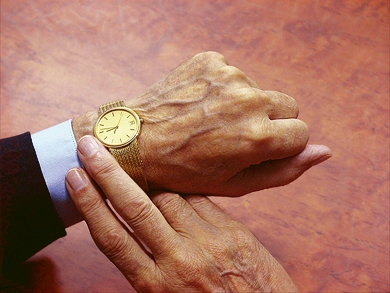
    NB: Don’t change a PC without the player’s permission!

    To implement this solution, you need a triggering event, a reason for that event completely reshaping the character (at an in-game level, exposing potentials within the character that were always there beneath the surface), and specifics of the transformation. There should be consequences and ripples, and your plans for every adventure subsequent to the event needs to be reexamined and potentially rewritten to accommodate the changes. And you need an in-game reason why these potentials weren’t already being exploited. At a metagame level, the reasons will be painfully obvious, but everything that happens in or is justified by metagame events needs to be paired with in-game explanations.

    Because this is only changing a single character, it can be the simplest of solutions; but because of the implications, it can also be the most complicated. As I said, every adventure still to be run within the campaign can be affected. This solution therefore requires careful thought and planning.

Major problems with an attached urgency can be solved, but they often entail drastic and decisive measures. The window for alternatives is small, and frequently closed before you’re even aware there is a problem. The good news is that each of these solutions can also be characterized as an opportunity; at the very least, you are giving your campaign a polish and fresh lick of paint..

That’s also true of most of the solutions that will be examined in Part 5 of this series, dealing with critical repairs – but they are necessarily so comprehensive in scope and so much work to implement that it can be hard to appreciate the positive benefits that they can yield, as you’ll see in the concluding article in this series.

Comments Off on The Elephant In The Gray Room, Pt 4 of 5: Major Structural Repairs

An Important Update


When I announced that I would be unable to post to Campaign Mastery until my internet service was restored, I had no idea that it would take this long. It is now believed that the phone lines were accidentally cut by an unknown third party, and my Internet Service Provider’s subcontractor won’t even commit to an estimate of when repairs will be complete until the 13th of October – at which point, I will have had disrupted or no service for more than four weeks, and it could be more weeks before repairs are actually carried out.

To say that I was angry about this state of affairs is an understatement of epic proportions, but there is nothing that I can do about it but wait.

But I haven’t been wasting my time while waiting; I’ve written thirteen articles, edited another, and this update makes fifteen (with another underway)! One of them needs some additional editing to be post-ready, and the author of the edited article needs to approve my revisions, but that still leaves lots of articles ready to go. However, there are other considerations involved in the scheduling to take into account, so the bottom line is this: I’ve uploaded four articles (plus this update) and scheduled them for automatic publication according to the normal schedule here at Campaign Mastery, and have enough more ready to go that I will be able to see October out – and then some.

Once internet service is restored, I’ll continue to lean on those pre-written articles while I address the more than 900 spam that has been received by the site (so far!) while I’ve been unable to actively maintain it.

In the meantime, I’ll keep writing – so don’t be surprised if I sneak the occasional extra mid-week article into the mix once the spam backlog has been cleared!

Comments (2)

A Role To Play


A good GM’s comfort zone (green) covers most of the territory and his Range (green + yellow) is growing with only a few problem areas (red). This article simplifies this into a ‘Yes – within Range’ / ‘No – out of Range’ question, but the reality is a little more complex and nuanced, and I thought it important to acknowledge that.

For the last two days, what was an intermittent telephone and internet problem caused by excessive line noise has become no telephone and internet service at all. So I will be posting this via an Internet Cafe, but it will be the last post published until this mess is sorted out. Hopefully, that means that there will be a new post Monday and aside from this note, you’ll never know there was a disruption.

What is the difference between a good actor and a great actor? And what do those questions have to do with roleplaying?

Tell you what, let’s come back to those questions in a moment.

Shoes That Fit

To really succeed in playing a role, whoever is doing so – player or GM – needs to be able to immerse themselves in that role. You need to understand how that character thinks, which is often facilitated by understanding why the character thinks that way.

But that’s often not enough to give more than a wooden, superficial performance as the character. To really get under the character’s skin in a way that is manifestly obvious to everyone else at the table, the character has to be playable. That is achieved when the person controlling the character has a strong – even complete – understanding of the way the character’s abilities and attributes work, and how the character’s personality is expressed through them.

It is sometimes possible to achieve something close to roleplaying when only one of these requirements is achieved. Dragon’s Claw from my first Zenith-3 campaign illustrates and explains that point far more clearly than I could achieve without such an example.

    Dragon’s Claw

    Dragon’s Claw was a non-Asian martial artist who was raised in a Japanese temple by monks who believed that he was destined to become a great and enlightened warrior. The concept was something of a cross between “Remo: Unarmed and Dangerous” (which is known by a different title in the US, but I don’t have access to the internet to get the correct reference) and The Shadow. Because of this destiny, he was bequeathed and trained in the use of a Mystic Katana which granted him the ability to use his martial arts at a distance, amongst other things. This was to be a character steeped in Eastern Philosophy and Mysticism, according to the creator and player.

    He wasn’t played that way. Instead, he was fiercely independent of the team, behaving as an overt vigilante from day one. No sooner had the team spent 30 minutes planning their approach to the problems at hand and agreeing to maintain a low profile than he was out trolling for muggers on Boston Common, and using his full intimidatory abilities to make himself memorable.

    What’s more, the rules in use at the time favored item-based powers excessively, while under-rewarding martial arts abilities, so the former was where the player sunk his experience points, becoming known within the team as both a loose cannon and a “sword delivery system” – the other players’ choice of phrase, not mine.

    At no point did the character enunciate a single example of Eastern Philosophy. The gulf between what the character was supposed (on paper) to be and what he actually was provided ongoing difficulties for both myself as GM and for the other players, who could never tell exactly what he would do in any given situation – only that he would think of himself first and the team a distant second.

    It wasn’t that the character didn’t understand the concepts involved, or did not have numerous role models to draw on from his own television and filmic experiences – he possessed both. But in the heat of play, he struggled to apply that knowledge to his character in any manifest or meaningful way except when it came to set pieces prepared in advance, with my connivance. On such occasions, he was a completely different character.

    The character was simply outside the player’s range – the character’s shoes didn’t fit the player.

This wasn’t the only occasion when that happened, even within that campaign. At one point, we had a mage who was reluctant to use magic (because there was a 1-10% chance, depending on the spell, of a miscast producing undesirable side effects), and a precognitive who didn’t understand how his character’s powers worked or could be used to achieve anything practical.

Both the former, and Dragon’s Claw, eventually dropped out of the campaign, replaced by other characters, while the player of the latter revealed that as much as he enjoyed the stories of Sherlock Holmes and various detective shows on TV, he himself struggled as a detective, and dropped out. For a while, the character became an NPC before being taken over by a different player – but that’s a whole different story.

In a completely different campaign – D&D this time – I had a player who wanted to play a Warlock. I struggled at the time (and still struggle to this day) to understand what makes this a viable character class, what separates them from a Mage with inbuilt system rorts that bypass some of the key limitations on the latter class, and – most importantly – how such a character thinks. That made it extremely difficult to prepare game content to focus on the character.

Before the player can walk a mile in their character’s shoes, those shoes have to fit both player and GM.

The Convention Connection

This becomes especially significant when it comes to convention gaming (not that I’ve done very much of it, but I have talked to GMs who have). GMing at a convention is done in one of two ways – either using pre-generated PCs created by the GM, enabling him to frame the adventure to suit those roles and personalities, or by having the Players bring in their own characters which the GM either approves or rejects based on his knowledge of, and the player’s adherence to, the guidelines layed down in advance by that GM.

The latter exposes the convention adventure to the headaches of players who simply can’t stretch their experience and mindset to encompass the perspective of the characters they are being asked to play, while the latter avoids those options, but limits the depth of integration between characters and adventure – making it harder, for example, to ensure that everyone gets equal screen time, and can make contributions of equal significance..

The ideal solution – characters that the players are familiar with sent to the GM in advance with personality profiles, etc – is usually impractical.

The aspects of Acting

This article actually started with a stray thought regarding acting, and especially the so-called “Range” of an actor.

For an actor to succeed in a role, three things have to happen. First, the actor must be able to put himself into the role he is portraying; Second, the actor must be able to express that character with nuance and plausibility; and third, the audience has to accept the actor in that role as though he were the character.

If the first two don’t happen, the chances of the last are greatly diminished.

Great actors are those with sufficient capability in the first two that they can inhabit a variety of roles with complete conviction and acceptance by the audience. Some actors can only manage roles within a particularly narrow scope; outside of that narrow range, they either fail the first, being unable to put themselves in the shoes of their character, or they fail the second, being able to sufficiently capture the character enough for a suspension of disbelief on the part of the audience. And, admittedly, some roles are easier than others.

A really great actor will get so deeply under the skin of his character that he is able to enlarge upon the role in some substantial way; this famously happened with Spock in the original Star Trek, for example, and many of the actors and actresses on Babylon 5 enlarged their roles, bringing additional definition to the races their characters represented in the process.

Some actors proved themselves excellent within a narrow window – Keanu Reeves, for example, in Speed and in the Matrix trilogy – but struggled when asked to step beyond that role. In many cases, the actor is able to talk a good game, displaying a deep understanding of the character in interviews, and yet somehow failing to deliver that understanding to an audience’s perceptions when actually performing on-screen.

It’s also fair to state that sometimes it’s not the actors’ fault; the director has to not only draw out the performance required, but has to capture it for others to see. It’s also fair to state that actors learn from their efforts, and grow into a role that they were unable to capture initially. (I’ve recently been re-watching early episodes of Marvel’s Agents Of S.H.I.E.L.D. and you can see that happen very quickly with the actor who plays Grant Ward, and a little more slowly with the actor who plays Fitz – compare the latter with his performances in seasons 3 and 4 and the contrast is very noticeable. But I’m wandering off point).

The actor’s job is clearly similar to that of the Player (or the GM when roleplaying an NPC) and the GM’s job similar to that of the Director.

A Player’s “Range”

I have known players who were great at playing “themselves plus ability X”, but who struggled to go beyond that. I have known players who were great at getting under a character’s skin, but who were utterly incapable of transforming that understanding into a performance that went beyond “themselves
plus ability X” when the time came. I have known players who found a role with which they were comfortable and who forever after played variations on that role regardless of the game system and genre in which any given game was taking place.

And I have known players who seemed to be able to cloak themselves in the mantle of a completely different, completely original, character, seemingly effortlessly.

I’m certainly not going to name names. Every player must be assumed to be doing his best to succeed in all three aspects of bringing to life the character they are playing. And sometimes, a player won’t realize that something is out of their “range” until they are committed to the role. Everyone has strengths and weaknesses, and instinctively tries to play to what they perceive as their strengths (which might be a third thing entirely).

Through The Looking Glass

So, what do you do when it becomes clear that a player is struggling to master a role that they have shouldered?

You have a number of options, not all of them desirable as outcomes.

  • Lose the campaign
  • Lose the player
  • Give the player time
  • Discover a touchstone
  • Transform the character
  • Amend the game mechanics
  • Transfer the character
  • Retire the character

As you might have guessed, I’m now going to examine each of these options.

    Lose the campaign

    The worst-case outcome, this is the result of forcing a player to continue in a role with which they are not succeeding, when that player (for some reason) does not want to drop out of the campaign or has no opportunity to do so. If you do nothing, this is one of the two possible default outcomes, and definitely rates as an undesirable. This is especially unlikely if a particular misfitting role is ruining everyone else’s fun at the table – and yes, I’ve seen that happen, too.

    Lose the player

    The more likely default is that the player will simply drop out of the campaign, and possibly out of roleplaying games altogether. I don;t consider this to be a particularly desirable result, either. These first two options are what we are trying to avoid. And it’s worth noting that it may take months or even years before accumulated distress yields one of these results, and that other problems can yield the same result – be sure that you’re fixing the real problem and not wasting time knocking down a straw man.

    Give The Player Time

    Discussing the character with the player can yield insights on both sides of the gaming table. That, plus time to either evolve the character, or the player’s familiarity with the game mechanics, or simply to come to grips with the character, may be all that’s required. The first thing to do is to talk to the player and tell him or her that you get the impression that he/she is finding it a difficult character to roleplay. Where the problem is in stage 2 of the acting process, the player can be unaware that there even is a problem – or it might be the GMs’ problem and he hasn’t realized it.

    The player has four possible responses: “Yes”, “No”, “Sometimes”, or “What makes you think that?” Regardless of the answer, this is the starting point for a conversation that should prove enlightening for one or both participants, and may indicate one of the solutions below as appropriate.

    Discover a touchstone

    I have learned that there are often key words or phrases or concepts that can capture the essence of a character, and that reciting these to yourself at appropriate times can catapult your mindset into the one that’s required to get into the character. These are different for every player and every character, and sometimes there might not be one – the variables are so great that it can be almost impossible to discover one except by accident.

    And certainly, this concept may not be a universal panacea;

    The best technique that I have found is to sum up the character in a single phrase. If that phrase isn’t the touchstone (and it probably won’t be), look for other ways to express it, more abstractly, or from different perspectives, or by analogy, or symbolically. If that doesn’t work, identify the character’s strongest personality trait or outlook and run that through the same process.

    I have two NPCs (neither in play at the moment, and neither of whom might show up in-game at all) for whom the touchstone is “Emotionally Volatile”. In one case, it represents a character who flies off the handle at each and every perceived setback and who is always ready to perceive a setback even when there isn’t one; in the other, it represents a character who has extreme emotional mood swings, lurching from extreme happiness to extreme anger to extreme fear to extreme depression to… well, you get the idea. Any sort of mood change in this individual is immediately carried to extremes. To get into character, I simply have to recite the touchstone to myself (remaining aware of the context). How well I then convey the resulting portrayal remains to be seen.

    I have another NPC whose touchstone is “pragmatically obsessive”. That doesn’t mean that he is obsessed with being pragmatic, it means that he is an obsessive who will always be pragmatic when necessary, and who will continue to pursue his goals obsessively to the fullest extent of what it possible, regardless of the cost.

    Transform the character

    To whatever extent the game system allows, I have learned to incorporate a “looking glass” somewhere in a character’s early appearances – whether it’s a PC or an NPC – that lets me perform radical surgery on the character if it becomes necessary. This surgery can be conceptual, or it can be in the ways that the concept manifests itself.

    When it becomes clear that it isn’t required for that purpose, I can re-task that :looking glass” to give the player the chance to walk down “Might-have-been” street with a temporary transformation. These serve as a change of pace and can be great fun for all involved.

    In one of my campaigns, I included the house rule that characters could morph from one class to another and/or one race or another at any point in the first three game sessions – but that once a class or race were abandoned, the character could not go back to it. That worked fairly well, especially since I had a three-session adventure in mind to let the players “try out” their characters.

    Amend the game mechanics

    This might seem a radical suggestion, but if there’s a particular set of sub-rules that aren’t “working” for a player (or for yourself), you have to consider changing them.

    That doesn’t mean that the rules aren’t functional; they might work perfectly (in theory) or even work perfectly for every other participant at the table.

    Such changes can be temporary (spreading balm on the problem before it becomes inflamed), or indefinite, or even deliberately permanent.

    I once knew a (novice) player who couldn’t wrap his head around the concept of “THAC0”. He was perfectly capable of doing the maths, he understood the theory, but given any practical occurrence of a need to work out what he needed to hit, and what impact that should have on his tactical decisions, his head yielded “error”, usually followed by “tilt”. So I adjusted the game system (AD&D) for him only,. restating the number as “To Hit Me” – i,e, what he needed to roll in order to hit a character with the same AC as he had, and revising it whenever necessary. Result: no more problems. Estimating an enemy’s AC relative to his own became a point of his roleplaying when entering a combat situation and told him immediately whether to run, look for a way to avoid combat, look for a way to gain an advantage (or nullify an advantage enjoyed by the enemy), or attack.

    And, of course, there were times when it was appropriate to be a little vague about the result, or when it was appropriate that the character over- or under-estimate the opposition. The player knew that, and fed that into his roleplaying as well. That one slight change to the game mechanics (which didn’t really change the way that they worked at all) overcame his conceptual roadblock, transforming him from a tactical liability to the best tactician in that group of players!

    Transfer The Character

    A more extreme response is to give that PC to another player (who may or may not already have a character in the game) and let the player with the problem create a new and different PC – one that doesn’t suffer from the same problem.

    Retire The Character

    Or perhaps you might make the old PC an NPC until you can write them out of the campaign. A more extreme variation on this is to “retire” the character while the original player is still handling it, usually by deliberately orchestrating a personal calamity of some sort. Still another variation has the character remaining a permanent NPC who is reduced to a non-combat role, or who only shows up occasionally.

    The latter works especially well in a superhero campaign, where it’s the norm for no-one to die forever (not even Bucky).

The GM’s “Range”

I make no bones about my problems with the Warlock character class. Others have no problem with it whatsoever, and even look at you funny if you mention it as a problem. The warlock simply lies outside my “range” as a GM.

When this happens, you have the solutions listed above, but you also have a couple of additional choices that might help.

  • Run A Solo Example
  • Alter the Class/Race
  • Restrict or Remove the Class/Race
    Run A Solo Example

    Sometimes, running a solo game in which you are both player and GM helps you come to grips with a problem. You aren’t restricted by normal campaign etiquette when you do this; you can make assumptions, have them blow up in your face, and
    change those assumptions – if necessary, in mid-combat. And because there’s no one to wait for, no explanations or descriptions to others required, this testing can proceed at lightning speed.

    What should you be looking for? It depends on the specific issue that you are experiencing. If a conceptual issue, like my problem with Warlocks in D&D, the key question is “why?” Why is the class the way it is? Why is this ability the way it is? – And you aren’t looking for metagame answers, you are looking for answers that work in an in-game context, i.e. from the point of view of the character that you are playing. Quite often, such problems will come from an assumption that you have made that is unwarranted and having a detrimental effect, and they key to solving your mental blocks is to identify that assumption and change it. Sometimes that means amending the campaign background that is built on that assumption, or amending the class to avoid the clash that has produced the problem; but whatever the conflict is, before you can solve it you have to identify it.

    Sometimes it’s helpful to compare the way the class or race (or whatever) plays in the basic rules relative to under your house rules. That’s also often a good place to start.

    I have also experienced cases where there was nothing inherently wrong with the character affected, it was simply a matter of requiring the owner to juggle more things mentally than other classes; in this circumstance, the player may be able to cope (though it does raise the question of whether or not they are having to work harder for their fun – and some would say they enjoy the challenge); but you, as GM, are having difficulty keeping the character in focus with everything else that you have to keep track of. That’s a specific type of overload that can often be managed once you know the source of the problem.

    Finally, double check everything, at least at first; what you understand from the descriptions and what those descriptions are actually saying can sometimes be two wildly different things. Make sure that you haven’t been you own worst enemy.

    Alter the Class/Race

    As the GM, and hopefully guided by the playtesting described above, you may find that you need to make alterations to the class or race to integrate them into the game world because there is a conflict between the two concepts, or to because you need to make the change to bring such characters into your “range” as a GM. If you go down this path, you will need to have a plan in place for dealing with characters of the affected type who may already be in-game, one that can be applied retroactively. This may be as simple as giving the character’s owner the opportunity to switch N levels of Warlock to N levels of Mage, plus (perhaps) a sweetener to the deal, or it may be something more complex. Remember that by changing the class/race, you are changing what they thought they were getting when they chose that trait of the character, inconveniencing them for your own benefit; the fact that solving the problem will also benefit everyone at the table in terms of fun should not be a factor, only a motivation.

    Restrict or Remove the Class/Race

    A more severe solution to be used only when the playtesting described doesn’t deliver an answer, or is impractical for some reason (which will usually involve the “real world”). Again, you will need a plan for addressing character classes already dedicated to the class/race and other choices that may have been made – if a character has been working toward a particular variant or subclass, or a particular race/class combination, this may nullify all their character choices from level 1 of the character.

    The rule of thumb is to stay as true as possible to the personality of the character as it has been expressed in play; everything else can be changed to fit.

    This is definitely not an option to consider lightly; it’s a last resort before you end up at one of the two deadly-ends listed under the “player-problem” options. It’s certainly not a step to be undertaken without serious discussion with any players affected.

Final Words

We’re all human, and we all have our limitations. In no two cases will those limitations be equal. Part of the technique for lasting at the game table is identifying your “Range” and working within it, with the occasional push to extend it just a little (without doing so explosively!) In particular, you need to focus on areas in which you and your players are equally within your working/’acting’ limits; it does no good for one of the two to be within their range while the other is way out of their depth.

If you’re exceptionally lucky, and exceptionally versatile, these problems will never be an issue at your game table. For most of us, that isn’t the case. You don’t become the best GM that you can possibly be by accident; you need to work at it, crawling beyond your limits until you can take baby steps towards the edges of a new limit. Some of this development comes naturally, just by doing; it’s not uncommon to look at something you’ve just created or played out and realize that X months or years before, it would have been utterly beyond you.

Being successful as a GM entails embracing the art of the practical, whether it’s the limits placed on the amount of prep that can practicably be completed prior to play, or the limits placed on you by your personal flaws and limitations. Own the space that you can reach, and cast a greedy eye on those that are beyond you, but don’t throw away what you have in an attempt to own even more of the creative potential within a game system. Know and own your range and the ranges of your players, and go beyond those limits only judiciously.

Beginners

Beginners, this advice doesn’t necessarily apply to you – not 100%, anyway. For the first few months or even years after you start, a lot of things will be outside your comfort zone. Set realistic goals and targets for self-improvement in the GMing art, and be prepared to make a lot of mistakes.

Some beginner GMs make the huge mistake of setting their first campaign in the game world or gaming space that they have always wanted to play in. They may have an idea for a particular fantasy world that consumes and fascinates them, into which they have poured all their creative energies for months or years.

While that level of enthusiasm can be an undeniable asset, your skills and abilities as a GM are almost certainly not up to the job of implementing your dream campaign right off the bat. Save it and polish it for later use, when you can do it justice; start with something smaller and let it – and your skills – grow organically until you’re ready.

The same is true for beginner players. Your dream class might be a spell-caster, capable of reshaping reality with but a word, a gesture, and the force of your will. But Mages are complex character classes to run; get your fundamentals down pat, first, with something simpler. I started with a rogue (who didn’t survive for very long), and my focus was immediately on discovering and conveying the personality of that individual. I was acutely aware that I had just scratched the surface of what looked like being a fun character to play when he was killed. The resulting frustration could have poisoned me on the hobby; instead, it lit a fire that has lasted for more than thirty years, because he survived as a character just long enough to give me that glimpse of the possibilities.

And never forget that the game should be fun for everyone – players and GM alike.

Comments Off on A Role To Play

Old Grudges Die Hard (Thank Goodness!)


Image via Pixabay.com / martakoton

I’m not sure how I’ll go when it comes time to upload this article; my internet connection (and telephone) are giving me a lot of trouble at the moment. If I have to, I’ll hit an internet cafe tomorrow.

I’m always looking for ways to sneak campaign background and historical information into my adventures so that I don’t have to take time out from those adventures to brief players. This not only increases the level of interest players have in the subject, but also its relevance and verisimilitude (because the event is seen as having had an ongoing impact on the game world).

So, when Blair (my pulp co-GM) mentioned that a guest from India who appeared on a recent current affairs show had (in Blair’s eyes) a manifest prejudice against the British, which biased his answers and the opinions he expressed on the show, and that many others also resented the nation’s colonial history (not entirely without cause, I hasten to admit), my radar went “Ping”.

Grudges as a background delivery vehicle

Old grudges – with or without merit – can serve as an excellent mechanism for game background because what do people typically do when they have a grudge? They broadcast their opinion and the reasons for it to anyone who will listen. The more obsessive will relate virtually every activity they undertake to that grudge.

In the past, I have thought that to be effective, the grudge needed to be activated by the presence of a trigger amongst the PCs or in the circumstances that have led the PCs to interact with the NPC. But in thinking about this article, I have realized that this doesn’t matter – such strongly-held opinions will manifest anyway, given half a chance, and that provides a vector for an NPC to vent an overtly biased perception of the events in question.

If you decide in advance that you are going to employ this delivery mechanism, you can even restrict your campaign notes to a bare mention of the event, its cause, its trigger, its duration, and its outcome, like this:

    “World War I: An assassination triggered an unnecessary war which, through a series of treaty ‘dominoes’, eventually involved or affected almost every government on Earth. About four years later, and after the death of over a million combatants, it ended in a negotiated armistice that imposed huge reparations and military restrictions on Germany (even though the Germans weren’t the instigators of the conflict).”

As anyone who knows anything about the “Great War” (and that should be most GMs), that is just about the most superficial recitation of events it’s possible to craft and still use something that reads comfortably as a paragraph. To be more succinct, you need to either leave things out – which is fine – or go beyond the rules of good English into something akin to bullet points:

    “World War I: An assassination – treaty ‘dominoes’ – almost every nation on Earth – 4 years – killed over a million – ended by imposing huge reparations and military restrictions on Germany.”

Of course, if you do your writing the way I do, you would have started with those bullet points, using them to structure your narrative and make sure that you left nothing out.

When the time comes – which is either when you have an NPC in need of color or an in-game situation in which the details of the event become relevant – you simply introduce your “Background Delivery System” and have a character (motivated by an old grudge) provide the salient details to the PCs, usually in the form of a complaint about someone or something.

This technique works even if the subject is an event the players have never heard of before, or know of only in passing from a brief mention of the event in campaign or adventure briefing.

Motivating the PCs to seek out an NPC with a grudge

Picture the following scenario: Early in your campaign, your players acquire (either by contrivance or choice) a mission while being given minimal background information, not all of which is necessarily accurate. In the course of the adventure, they encounter several difficulties which could have been avoided or prepared for if they had been given better intelligence (in the military sense of the word). Despite these difficulties, they succeed in their quest/mission, only to discover that they were being used to further an agenda they strongly disapprove of.

It’s a good bet that they will make a solemn vow amongst themselves to never be so used, again.

This is not only a great way to introduce a mastermind villain (as the person manipulating the PCs or as the person in back of them), it’s an object lesson that the players are never likely to forget. Henceforth, when given inadequate intelligence, one of their highest priorities will be to find out more about the situation, preferably before they commit themselves. What’s more, that lesson is almost certain to carry over into other campaigns, especially under the same GM.

So the PCs need to ask someone questions about the situation they are about to become enmeshed in; whoever they ask is either the person with the grudge, or directs the PCs to speak to that person (perhaps with an appropriate warning).

What happens is that Background material becomes a source of roleplay. Your adventures might take a little longer to play out, and your prep might need to be a little more substantial, but (almost?) everyone will have more fun in the process.

A Hidden Assumption To Observe

This scenario implies a hidden assumption – that whatever is in the background material already provided to the PCs is everything they know about the situation in question.

Once you are aware of that situation, you can turn it into another vector for engaging the players with an adventure; all you need do is note some additional briefing information that you can provide when a player asks “What does [my character] know about….”

Providing a teasing tidbit not only tells the player that you have prepared this adventure with these specific PCs in mind,, it tells him or her (through your choice of phrasing) that there is more information to be had if they ask the right person the right question(s).

Tactical intelligence-gathering is often a secondary (and sometimes unrealized) source of gaming pleasure for the combat types who don’t necessarily get off on straight roleplay!

The NPC Conduit

Simply giving an NPC a personality doesn’t guarantee that they will have something to say. Quite often, NPCs are reactive, requiring the PCs to push certain “buttons” to get to the more interesting parts of the NPC. A lot of NPC color is superficial, and can be ignored after it is first noticed. “Every evening at sunset, [NPC] drinks a silent toast to the flag” is a great bit of NPC color – but at any other time of the day, unless someone asks about the practice (having observed it or heard of it as an eccentricity), it might as well not be there.

“Distrusting of Warlocks” is another example – unless the subject somehow comes up, or one of the PCs happens to be a Warlock, or the adventure happens to involve a Warlock somehow, the situation won’t come up and can seem forced if you parade it anyway.

A grudge isn’t like that, in one important respect – it gives the NPC something to talk about. In fact, it does so on every single occasion that the NPC appears. The first time (taking a war grudge as an example), it can be the general information; the next time, a key combatant, or an important battle, or some other NPCs opposing bias, or an official action that is viewed as disrespectful of veterans of the conflict and/or their memories… the list goes on and on.

Or perhaps the NPC lost his job after the manufacturing plant where he was employed was bought by Japanese businessmen – something that happened quite a lot in the 1980s – and consequently the NPC holds a grudge against the Japanese (something else that happened a lot back then). This grudge will manifest every time a Japanese gets mentioned, or is in the news; every time a business gets bought or sold; every time someone loses their job, or gets hired; every time someone retires; every time a trade union does something (even something unrelated) because it was often the unions who were cast in an adversarial role to the new management…. So, this week the character waves a newspaper around and complains, next week he is busy dumping all his crackers in the garbage because the company has just been bought, the time after, he is filling out his tax forms and complaining about big business avoiding their fair share of the tax burden, the week after that he’s celebrating because a Japanese CEO was caught with his hand in the cookie jar, the week after that it’s the prominence of Asians at the local high school…. the grudge becomes the NPCs defining characteristic simply because it can manifest in a different way on every separate occasion.

It seems quite clear that a grudge – defined as “a strong emotional response to factual triggers associated with the subject of the grudge, however peripherally” – adds massive amounts of color to an NPC at the same time as giving the NPC role-playable “content” to inject into any encounter.

But a little additional thought and creativity on the GM’s part can substantially enrich the role of the NPC with a grudge; all you need is to make the grudge confer some positive benefit to the character in a social sense. The NPC with a grudge against “the old enemy” can become a spokesman for veterans’ causes, or a ready source of completely unofficial aid to veterans in trouble. You can even use this as
the means to deliver the occasional adventure to the PCs – “I’ve got a buddy in a spot of trouble, and I thought you would be able to help”.

I never give a character a grudge without trying to find some respect in which that grudge can do something positive. Sometimes, the character with the grudge is unaware of the possibility (enabling growth in the character as the game progresses); sometimes he’s unaware of the connection; and sometimes, he knows full well that his grudge is motivating him.

Even a deeply-depressed nihilistic villain who wants to slaughter millions to spare them the pain that he has felt, and who sees everything through this murky web of imminent pain, acquires a richer, deeper characterization, in this way. His goal is to spare people from suffering, and there are all sorts of positive contributions that he can make to society in furtherance of that end with his right hand, even as his left is perpetrating monstrous deeds in the name of that cause.

Beware overuse

If the benefits are so huge, there has to be a temptation to give every NPC a grudge (I’ll deal with PCs and grudges a little later).

Don’t Do It.

Overuse will cause the technique to lose its effectiveness. You need the grudge to stand out, and that means using it only in a carefully-targeted manner. I’m always careful to employ three criteria: One, it has to give the character something interesting to talk about in encounters with the PCs; Two, it has to be logical that someone would have such a grudge, which requires either that the events be recent or that they have some vehicle of perpetuation through the years; Three, the subject has to have relevance to at least one significant adventure; and Four, it has to enrich and make interactive what would otherwise be a dry and stale subject within the campaign Background.

I want to amplify the caveat in item two a little before moving on. But some might take offense over what I have to say on a couple of delicate subjects – so if you find yourself in disagreement with anything in the inset panel below, I would ask that you simply skip to the end of it.

    Contrast the US Civil War with Native American relations, in the context of a modern-day grudge. These days, if you were to be holding a grudge about what took place in the Civil War, you would be regarded as a bit of an eccentric if not an out-and-out kook. That’s what makes groups like the KKK such ready targets of ridicule; they seem so out of step, more of a cult than a valid political perspective. This causes them to be underrated as impediments to social progress, cartoon figures to be lampooned, rather than perpetrators of potential domestic terrorism. This is also true of the Taliban, who seek to apply 16th and 17th century social standards to a modern world for reasons of religious indoctrination and the acquisition of political power. Given the date on which this is being written, this point seems especially poignant.

    Native Americans, on the other hand, have legitimate reasons to hold grudges today. The history of forcible relocation to reservations and broken treaties is perpetuated to this day by the legacies of those past acts. My own country has its own, not unrelated, problems in this area, though there was never a treaty made with the First Australians, and it is all too easy to understand grudges held over past political and social mistakes – even those made with what the people of the time considered best intentions. Rather than condemning those with such a grudge, we laud and encourage those who rise above them – they are held to a different social standard, in other words.

    (For the record, I support recognition and reconciliation; I support and approve of all members of society being given an equal opportunity, with no-one getting unearned special privileges – with “unearned” as a key word – and I support a social safety net to ensure that all members of society receive a minimum standard of safety, security, health, and standard of living. And I support religious freedom, tolerance, and multiculturalism, right up to the point where such support places others at risk of harm, where the need for society to protect itself supersedes those freedoms).

Distortions of history

The benefits to GMs don’t end there. By definition, anyone with a grudge is going to have strong opinions and interpretations of events involving the subject of their grudge. As a general practice, because they have to see all sides of a situation in order to properly roleplay those involved in any faction, GMs tend to adopt a fairly neutral and arms-length position regarding their game histories. This causes an active disconnection between our personal opinions on any subject and the ‘official’ position. Like historians, we adopt an Olympian perspective.

If game history is to be delivered through the lens of of character with a grudge, there is no need to go to such lengths. Prep Research can be sloppier and even contradicted to some extent by subsequent manifestations of the same event. The character is telling a biased, distorted, and myopic version of the story. This is personal to them, somehow.

If you make it clear through their behavior and rhetoric that the NPC is speaking from the perspective of having a grudge, you don’t have to worry about the “other side of the story” (let alone the truth) until the PCs have the opportunity to interact with that “other side” – let the players filter the bias out for themselves, making whatever assumptions or interpretations they find necessary.

Even when the PCs do interact with “The Other Side Of The Story”, don’t make the mistake of making that the “true story”; it should be just as distorted and myopic, at least in critical areas. Only when PCs are in a position to learn the real truth, free of any bias, should that be of concern to the GM.

Most events involving humans don’t have immutable and incontrovertible timelines. Let’s take a hypothetical war between Elves and Dwarves – the Dwarves might date the beginning of the war from the date of Dwarfish incursion into Elvish Territory in response to what they consider lengthy provocations; the Elves might consider this just the overt escalation of a conflict that began when the Dwarves attempted to bargain in bad faith, abrogating or ignoring past treaties, months or even years earlier.

Does a battle begin when a raiding force begins to march, or when that force encounters the defenders of the raid’s target?

It all depends on your perspective. Even something as strongly defined as the Birth of the USA – July 4th of 1776 was when the Declaration Of Independence was signed, but did the revolution actually begin when they started negotiating it, days or weeks earlier?

Two sides to every story

The “winners” write the history? Says who?

Losers perpetuate their own version of events – so long as victory is less than total.

Even if that’s not the case, the experiences of the surviving losers in a conflict will enter the popular zeitgeist of their social group as a subculture within the victorious and dominant society – and, arguably, the social position that results could qualify as the type of “perpetuation” I was discussing above. Certainly, through to the 80s and 90s at the very least, African Americans could cite the long legacy of slavery and oppression as a driving impetus behind the struggle for Civil Rights, which is a profound example of the phenomenon.

It is often helpful to the GM to deliberately stock some part of his campaign with an advocate of “the other side” as soon as he introduces the character with The Grudge. This advocate need not appear at once, and need not appear with the same frequency as the character with The Grudge; his function is simply to remind the players from time-to-time that there is another perspective of perhaps equal validity. Nor does the GM need to worry about this NPCs manifesto until such time as he will appear in-game.

Simply make a note of his existence and pop him into some appropriate scene that seems a little quiet and needs livening up.

Three sides to every story

GMs should also always remember the Vorlon Saying from Babylon 5: There are three sides to every story: Your Side, Their Side, and The Truth. You don’t have to worry about the content of the other two when creating content for the character with The Grudge, but never forget that the other sides are out there. The character with the Grudge should be wrong occasionally, and that error should manifest in the form of trouble for the PCs who rely on his information.

Does anyone really believe that the American Government and Military conducted every single encounter during World War 2 with complete honor and integrity? Or the British? That expediency and internal politics never led to a compromising of principles?

Anyone who knows history, knows better. The incarceration of Japanese Americans is one shameful example, and one that has been demonstrated to have been in error of justice in subsequent years. There are those who still question the need to bomb Nagasaki; in light of what the Americans believed at the time, and of Japanese attempts to negotiate a settlement of the war on their own terms after Hiroshima, I think it can probably be justified, and any taint of lack of necessity counterbalanced by the comedy of errors and misjudgments that turned Pearl Harbor into a sneak attack.

The absence of a victory

I don’t want to belabor the point too much further, so I will simply cite three additional points of contemplation and leave the reader to muse on them for themselves.

  • Consider modern US-UK relations – well, those before President Trump and Brexit became somewhat divisive elements in that relationship
    – with the outcome of the American War of Independence, in which Britain accepted that the War could not be won with the resources they had available, given the problems that they faced with their European neighbors of the time. It was that acceptance and a subsequent normalizing of relations that drew a line between that conflict, paving the way for the US to come to the aid of the Allies in the First World War.
  • Contrast that with the relationship between India and Britain. The liberties granted to the East India Company were frankly exploitative, aimed at fostering the wealth of the Company at the expense of the locals while promoting the Imperialism of Britain in the era. British control was maintained through force and corruption until those were no longer tenable. That Britain gave much, in cultural and technological terms, to the Indians can’t be disputed; but the behavior of the British at the time can only be justified in the context of the morality of the era, and fails utterly by modern standards. Although grudgingly granted independence during the reformation of Empire into Commonwealth, and despite overtly good relations between the nations since, there are still Indians who hold an anti-British Grudge. This was the attitude expressed that initially inspired this article.
  • And then, contrast both with the relations between Northern and Southern Ireland, whose history raises harsh and difficult questions. There were occasions during the twentieth Century when each side of the Northern Irish conflict behaved abominably, prompting the question, how far you entitled to go in abrogating your morality in order to secure “inalienable rights”? And, the inevitable followup question – was anything really gained, or did they simply take turns building a barrier to peaceful resolution of the conflict? I’m sure that if you were to ask, both sides would defend and justify their actions. Ultimately, it was a political process that ended the conflict – and I’m equally sure that there are those on both sides who still bear grudges against the other.

Adventuring Potential

All the benefits of giving an NPC a grudge arise even before we consider the potential for adventures to manifest from the background material in question. That potential takes four forms:

  • Legacies,
  • Acts Of Revenge,
  • Unpopular Histories, and
  • Outside Forces & Conspiracies.
  • Legacies

    Somewhere, in a long-forgotten corner of the game world, there is a leftover from a past conflict that poses a threat to the modern world. This could be an unfinished doomsday weapon, or “forbidden” research, or any of half-a-dozen other possibilities. Used sparingly, this plot gimmick never gets tired.

    Acts Of Revenge

    It’s easy for a Grudge to lead a character to cross a line. Every time a line gets crossed, it gets easier to do so again. Inevitably, in some cases, minor acts of pettiness resulting from a Grudge lead to more substantial acts of revenge, and characters who – due to dissatisfaction with the outcome – want to reignite the old conflict. However justified the dissatisfaction might be, the result is unjustifiable acts of revenge. What’s more, dissatisfaction leaves a character or a population open to exploitation. That, in a nutshell, is the story of the European theater of World War II, when megalomania exploited justifiable dissatisfaction to rebuild national pride into an arrogance that permitted acts of extreme barbarism.

    Unpopular Histories

    At first glance, it might seem like there is nothing under this heading to really exploit in terms of adventure. Revealing or Discovering an unpopular truth might be intellectually interesting, but it rarely gets the gaming juices really flowing.

    Look a little deeper. I dealt with this question in in The Veil of Secrecy: A truth about organizations in games without really digging into the implications.

    An organization – be it a business or a government agency or an entire government – does something that they can’t admit to. They now have a secret. To protect that secret, they erect a cover story. In furtherance of that cover story, they do other things that they can’t admit to – bribes, intimidation, ruining reputations, disinformation, perhaps even murder. Now they have another secret to protect – and one with deeper personal ramifications for those involved. Should the secret come under threat, a violent countermeasure is almost inevitably justified in the minds of those involved.

    There have been lots of movies and TV shows in which characters come under threat because their activities threaten a secret. Even good people can do so if they judge the myth to be more important than the reality. Threaten to undermine that myth, and you make yourself a target.

    Of course, in most such stories, the main protagonists aren’t the ones threatening the secret, they are the ones trying to protect them from those with the secret. Which is generally easier to orchestrate, from a GM’s perspective.

    Outside Forces & Conspiracies

    Finally, the other side of the coin is also about the exposing of secrets – the discovery that a past conflict was orchestrated for their own purposes by a third party inevitably leads the person making that discovery into a position of hostility toward that third party. Of course, such a secret would not be easily discovered; you would have to be motivated to dig deeply for the breadcrumbs that make it seem like a conspiracy theory. Characters with a grudge are highly motivated….

PC Grudges

With such depth of characterization on offer, it can be a temptation to load one or more PCs down with a grudge. And the dividends are exactly the same as for an NPC.

I urge you to resist such temptation, except under unusual circumstances – not that I have any such in mind, but concede that it’s just possible there could be some.

The first problem with this tactic is that it takes that ?deferable and compromised? background research and makes the deadline immediate and ongoing. Because you will need to keep feeding content to the PC, you actually force the player to cede some measure of his control over his character. At the same time, from an outside perspective, you can give the impression to other players that you are playing favorites. And finally, you run the risk of overuse of the “Grudge” mechanism, something I warned of earlier.

There are simply too many minefields. If you can see a way to circumvent them, then this is worth considering – but that is going to be an isolated case, I think. PCs are better served, most of the time, being the neutral observers caught in the middle, and caring about the things that the player wants them to care about.

Some things are too good to waste on Player Characters. Grudges are one of them.

Comments (2)

RPG Industry Products and Projects Of Note (Sept 2017)


I get far more invitations to review products and Kickstarter campaigns and the like than I could ever hope to satisfy. Every few months I gather several of these together for a round-up set of mini-reviews. This time around, with Christmas Shopping on the immediate horizon, I have no less than 25 products to bring to your attention. Not all of these are new; some had simply escaped my gaze until now.

I have divided them into five sections. But be aware of the crossover value from one genre to another.

– THE CHARITY SECTION –

I’m always proud of the way the RPG community responds to tragic events. Hurricane Harvey has brought out the usual standards of generosity. That said, I wish there was a relief bundle for the victims of the Indian floods (Harvey: 48 dead, India/Nepal/Bangladesh: 1600 dead) that I could link to, and of course, as I write this, Hurricane Irma is heading toward the East Coast, having already lashed Puerto Rico: 7 dead (so far) and this Category 5 hurricane is now the 5th strongest storm ever recorded, with winds of 297km/h (gusting to 360 km/h) (that’s 184.5 and 223.6 mph for those more familiar with the older scales).

1. Harvey Relief Bundle (Fainting Goat Games)

The numbers speak for themselves in this bundle. $420.37 worth of products – 65 of them – for $25, with all proceeds going to hurricane relief. There are far too many products to list separately. Click on the link below and see for yourself what is included.

.

2. Heroes For Harvey (Legendary Games)

I’ve linked (further below) to a couple of other projects in the Legendary Games repertoire. This is a small bundle by them and their affiliated companies containing three products for $9.99 (normal value $22.57) with all proceeds going to disaster relief, especially those areas that are not the main focus of attention.

You get Aetheric Heroes (10 Pathfinder Characters, 2 from each of the races within the Aethera Campaign Setting); Nautical Heroes (8 Piratical Characters, normal Pathfinder/D&D races); and Legendary Planet: Planetary Heroes (8 pre-generated characters for the Legendary Planet campaign/setting).

.

3. D3 Adventures products (D3 Adventures)

Jason Yarnell (owner at D3 Adventures) has a GoFundMe set up by his sister to help out all the damages and destruction caused by Hurricane Harvey. Jason himself is a regular contributor to charities and good causes, as a google search for “Jason Yarnell gofundme” will soon show. One way that you can support the cause is by buying a D3 Adventures product (Complete List from RPGNow).

I’ve singled out four for special attention because they presented immediate appeal to me in the hopes that they will also appeal to readers.

3a. Extras! Cosmic Criminals (D3 Adventures)

Five villains constructed using the Mutants & Masterminds rules designed to challenge “Galactic” heroes. These should translate readily into multiple genres and settings.

for $2.49.

3b. Extras! Mystical Guardians (D3 Adventures)

“When evil hides in the shadows and corrupts the souls of innocents, when it attacks the mind more than the body, when the threat is too insidious for normal adventurers, it is time for Mystical Guardians. The Planar Blooded have gathered to fight against dangers that normal adventurers are unable to oppose.”

Used singly or as a group, these Mystical Guardians are rife with possibilities. For example, they might decide that part of the universe needs to be quarantined from a growing danger – with the PCs and their world/realm/plane on the wrong side of the quarantine line. Or they might be persuaded that the PCs pose a threat, thanks to the manipulations of an enemy (of either or both). The very concept of “threats too insidious for normal adventurers” is full of potential! The concepts are rich enough that they could be allies, enemies, or something even more dangerous in between the two extremes.

I could use this in a Fantasy, 7th Sea/Pirates, or Superhero campaign, and possibly in a Pulp campaign.

for $2.49.

3c. Quantum Collapse (D3 Adventures)

“What if there were parallel universes endlessly stacked upon each other like pages in a book? What if there were millions of versions of you, spread out through the multiverse? What if someone figured out how to make you more powerful… by eliminating those parallel ‘yous’?”

That’s the premise of The One starring Jet Li, but it is also the central concept of Quantum Collapse, a game setting based on the Mutants And Masterminds 3E rules architecture. As a GM with a campaign that integrates Parallel and Alternate Worlds, anything along these lines naturally sparks interest.

This is a 78-page supplement priced at $14.95.It is available through .

3d. Extras! Quantum Collapse Issue 0 (D3 Adventures)*

Something purely super-heroic in genre at first glance, this is a single character for Quantum Collapse – but when you are talking about parallel worlds, the term “Single character” takes on new meaning! ‘Hurricane’ is presented at five different power levels, and four separate parallel-world variations are also provided, along with contextual information on the worlds from which these alternatives derive.

Extras! Quantum Collapse #0 costs $2.49 and is . However, it is also included in the Harvey Relief Bundle listed below.

4. RPG Creators Relief Fund

The Roleplaying Game Creators Relief Fund (RCRF) is a 501(c)(3) nonprofit charitable organization founded to provide financial assistance to tabletop roleplaying game creators suffering hardship due to medical emergencies, natural disasters, and other catastrophic situations.

You can donate directly through their website (link above) or through DriveThruRPG.

.

– THE UNIVERSAL SECTION –

5. The Gamemaster’s Worldbuilding Journal by Rick Hershey (Purple Duck Games)

Purple Duck are one company whose products I wish I could promote more often, just because Mark Gedak seems to be such a stand-up guy. What can I say about this product? “…forms, documents, and sheets created to cover all aspects of world design”. Comes in 5 formats: Watermarked PDF (one copy of each form and print what you need when you need them) just $4.95; Hardcover book (standard) 840 pages in 10 chapters for $59.99; Hardcover book (premium) 1050 pages in 12 chapters for $100.99; and combinations, which have a small discount. The extra two chapters are designed to divide the world into 10 regions instead of the standard 8. The description also lists form-fillable PDF versions of each of the sheets and a compiled version with all the forms in a single PDF with listing this amongst the purchase options; my presumption is that these come with any of the PDF purchase options.

Available from DriveThruRPG.

– THE FANTASY SECTION –

6. Kaigaku by Jacob DC Ross (Thunderegg Productions)

Thunderegg very kindly sent me a review copy of the Premium Edition in hopes that I would be able to promote their RPG System. Unfortunately I never got the chance to delve into it in any depth.

The system is available in two formats: the basic no-frills, no-art edition () which contains everything that you need to play, and the 72-page Premium Edition, which is currently discounted from $10 to just $5 for the PDF or $25 for the softcover, which adds 20 more schools, crafting rules, and lots more setting info, from this page at DriveThruRPG.

Kaigaku is a retroclone that blends simple OSR rules and inspiration from famous samurai-themed games of the past; it can be used to play intense duels between bushi, wars of words among courtiers, ninja missions, and more.

This is an active and growing RPG subcommunity, oriented around their Google+ community, which has already added four game supplements, each interesting in their own ways:

  • Ryu: Schools that teach your characters powerful abilities.
  • Kiseki: Stones charged with unimaginable power that Ascetics can harness.
  • Kaigaku: An evocative setting inspired by Japan, China, Mongolia and Europe
  • Duels: Rules for dramatic one-on-one ritual combat.

Unless you choose the basic version (and the associated loss of content), I would strongly recommend shelling out for the physical book. Why? Because the page art is absolutely stunning – check out the screen-grab below.

If you haven’t heard of the game before, now is the time to correct that hole in your RPG education!

7. Samurai Dice (Thunderegg Productions)

Samurai Dice is “a brand new system that blends the fast-paced dice rolling of games such as Yahtzee and Farkle with tactical decision-making and a deep story”. The action takes place in the same world as Kaigaku (above). This is a FREE playtesting release of the Basic Rules in PDF format, a prelude to a Kickstarter campaign to fund production of both the Basic Edition and Story Edition, which will include Factions, Scenarios, and a couple of decks of cards that will modify the tale you tell with each game.

When playtime was less restricted by the vagaries of public transport and busy modern lives, we used to set aside 45 minutes or so at the start of each day’s play for a quick card or board game, just to lubricate our imaginations, get the “fun juices” flowing, and engage in sociable behavior with people actually playing in some other game – there were usually three or four and sometimes as many as six or seven different games being played simultaneously when the ‘games club” (formally, The NSW Wargamers) was in full swing.

This is exactly the sort of game that would have been a regular alongside favorites such as Grass, Blue Max, Naval War, and Hacker. If you’ve ever noticed that some of your players are more engaged and active in your second hour at the table, this could be your answer.

Score your free copy from DriveThruRPG.

8. Demon Cults & Secret Societies by Jeff Lee (Kobold Press)

For D&D 5e, this features 13 organizations that should readily translate to any fantasy game (and selected Pulp/Modern/Superhero campaigns, to boot). Each has its own agenda, details of their command structure (and the people currently occupying those roles), a selection of acolytes/soldiers and minions, adventure seeds, cultish plots, and schemes, and related artifacts, magic items, spells, and the occasional variant monster that makes each of these a unique proposition for inclusion anywhere that you can make them fit!

Prices are $17.99 (PDF) or $39.99 (Print or Print-and-PDF) from the .

9. Tyranny and Manipulation (Purple Duck Games)

“It happens with every experienced gaming group. As Game Master, you can’t put your players up against a creature of appropriate CR without hearing them accurately estimating its AC, hp, and special defenses. Throw a high CR monster at them and you might be serving them XP on a silver platter or guaranteeing a Total Party Kill. It isn’t your fault. It isn’t your players’ fault either. Invariably a group that plays together a long time learns the game better. You can accept this and watch your encounters get decimated. You can move on to a different game, kissing your shelf of gaming books and the money you invested in them goodbye for now. Or, you can break out the secret weapons.”

“Featuring rules to change the landscape of every encounter, even your veteran players will be scrambling to keep up with your unpredictable challenges.

  • Run
    encounters like never before using new base classes the Shepherd and Warmonger.
  • Coordinate your assaults with the synergizing ruler and minion feats.
  • Turn classic monsters into the unfamiliar threats with mutations.
  • Unleash massive armies with the easy-to-use hordes template.

All this and more…”

…such as Two new base classes, Over 30 new archetypes, More than 75 new feats, including two new feat types, Over two dozen new spells, Mutations to literally remake classic monsters, Hazardous Environments, to turn your terrain into a whole new threat, A new template, Hordes, to make Combat with armies of enemies simpler than ever; and simplified versions of 17 base classes to cut down on prep time.

$9.99 for 134 pages, available now at RPGNow.

10. Crisis Of The World Eater Complete (LPJ Design)

This is a compilation of 4 linked adventures into one epic tale for the Pathfinder RPG. But I’ve linked not to the product but to a bundle that adds 4 more related adventures to the story, including a prequel, for just $22.99, or a little more than twice the compilation. How long the bundle will be available, I don’t know.

Available from .

– THE “MODERN”/PULP SECTION-

11. Modern Adventures (Higher Grounds Publishing) – Kickstarter

d20 Modern took the 3.x system and adapted it to a modern-day setting, but ultimately, all that you could use were sections of the 3.x core rules.

This represents the other side of the coin of that concept – a modern-day adaption of the Pathfinder rules which includes principles for the modern-day descendants of the inhabitants of the Bestiary, with the implication being that virtually any Pathfinder supplement can be integrated into the setting. A troll serving behind the counter of the local 7-11? An Orcish Motorcycle Gang? Delving the Tomb Of Horrors with your heroes armed with Grenades and AK-47s? Or with Superpowers, with a little adaption on your part? “…everything you expect from a modern setting including computer hacking, firearms, vehicles and aircraft. You’ll also get all of the races such as Elves, Dwarves and Gnomes in addition to some new, never-before-seen races available for play.”

I can’t speak to how lavish the interior art will be, but can state that the publishers have been quite generous in including art in the press kit. The book cover is shown above, and one of the interior images, below.

This is a Kickstarter campaign with 18 days to go as I write this, which has so far acquired pledges of $1850 toward their $2000 goal. That says to me that it is almost certain to achieve it’s funding goals. What’s more, fulfillment will be by DriveThruRPG, which really minimizes the risks involved (assuming that the funding goals are achieved).

Personally, I would love to see them achieve the $20,000 stretch goal, unlocking a supplemental volume with 23 conspiracies. This would be of value to any GM (the amount of value might vary with genre).

It’s definitely worth checking out.

12. 1930s American Surnames (dicegeeks.com)

This 3-page PDF contains two d100 lists, one of common surnames and one of uncommon. This is the sort of thing that every modern GM needs to have up their sleeves for emergency usage, especially if you have trouble naming NPCs on the fly.

And the best news of all: It’s free from RPGNow.

You won’t find a better bargain.

– THE SCI-FI/SUPERHERO SECTION –

13. Popular American Names for Near Future Settings (dicegeeks.com)

…Except for this one, which does the same thing for modern / near future characters – for the same price! Contains Eight d100 tables, including the 200 most popular male and female christian names in both 2000 and 2017. There is a surprising amount of drift in this, something that fascinates me every time I stumble across an analysis of it.

.

14. Stargates (Legendary Games)

“From local system portals to intergalactic wormholes, you’ll find within a detailed system for defining not just the basics like direction and range but mysterious manifestations of transmaterialization energies, the dangers of activating dormant or damaged gateways, including malfunctions like biomutation, psychic backlash, and temporal displacement!” What appeals most to me is that there is content that makes it possible to distinguish between different types of interstellar connection – everything from arcane portals to Psychic Bridges. For the Interstellar RPG, 5e – but it’s as close to genre-universal as you’re likely to get, and would be well worth the effort of adaption.

Stargates costs $5.99 for the PDF or $11.99 for the softcover (or $13.99 for both), available now from DriveThruRPG for both D&D 5e and Pathfinder game systems.

15. Alien Bestiary (Legendary Games) – Kickstarter

One GM I know has been trying to merge sci-fi and fantasy genres in his games for at least 30 years, largely by using psionics as his bridge between magic and physics. Some of his blends have been more successful than others, to be honest, but anyone who signs up for one of his campaigns (regardless of genre-of-record) knows that aliens and monsters, psionics and sorcery, long-lost tech and a rich and complex background (often only superficially understood in-game, something he achieves by giving the players only superficial understanding of the ‘true history’ of the setting) will all be on the table at some points.

Legendary Worlds treads similar thematic territory, infusing fantasy elements into a futuristic game setting using either Pathfinder or D&D 5e rules systems as the vehicle. The product line is spreading tentacles in multiple directions – “…as part of our continued partnership with Robert Brookes and the gang at Encounter Table Publishing, fans of the awe-inspiring Aethera Campaign Setting
will also find dozen more exciting additions to their space-faring saga, from the invading Taur and Aether-touched Infused to the Organic Symbionts, living machine Phalanx, and, of course, the magnificently malevolent Kytons!”

Personally, my interest in this volume would be infusing its contents into a superhero or sci-fi setting such as my Dr Who campaign. I already have plans to incorporate the aforementioned Kytons into the latter, inspired by the art shown above (at least, I assumed that the art was of a Kyton – it isn’t, it’s a “Bil’djooli Shock Trooper”, by Lance Red – the Kytons are more like “The Puppet Masters” by Robert A Heinlein).

At more than 200 pages, and having achieved their funding goal of $10,000 and stretch goals every $2000 thereafter (pledges stand at $15,217 as I write, with 24 days to go), this is a Kickstarter that will succeed and can only get better value-for-money.

Make no mistake, there are ideas here that can be infused into any Sci-Fi/Superhero campaign, and most Fantasy campaigns to boot. This is definitely a product to consider!

16. Legendary Planet: To Worlds Unknown (Legendary Games)

This is the first of a series of 7 linked adventures to carry a party of adventurers from 1st to 20th level, which I discovered through links included in the press release for the Alien Bestiary, above.

A 100-page PDF ($17.99) or 102-page print volume ($24.99) (or buy both for the discounted price of $29.99), this initially seems like quite a high-priced purchase. But it was the full listing of the contents that persuaded me to list it:

  • “To Worlds Unknown,” a Starfinder Roleplaying Game adventure for 1st to 5th-level characters by Jim Groves
  • A “Planetary Bestiary” by Jim Groves and Thurston Hillman, featuring the ferocious Bahgra, the mysterious Elali, the cruel Jagladine, the savage Klaven slave-soldiers and Klaven warbeasts, and the terrifying Tauslek and Tauslek Matriarch.
  • A collection of “Alien Treasures” by Jim Groves and Jeff Lee, including mundane and magical items from deathbloom nectar to the rejuvenation vine and skystrider harness.
  • A gazetteer of the planet Argosa, “World at the Crossroads,” by Jim Groves, Jonathan H. Keith, and Andrew Christian.
  • A detailed examine of the 20 deities of the “Planetary Pantheons” by Sean K. Reynolds.
  • A downloadable PDF art and map folio, featuring unkeyed player-friendly maps and more.
  • And last but not least, “The Treasure Within,” the first chapter in a 7-part short story by award-winning author Chris A. Jackson.

The DriveThruRPG product page also lists the other 6 parts in the series – unlinked, but making it easy to search for them. When you do, you will find that the price and extras list for the other products are similar – #2, “The Scavenged Codex”, includes the second chapter in that sci-fi novella, for example.

There is content within the series for both Fantasy and Sci-Fi genres. I’ve linked to the Pathfinder version above, but there are also versions for D&D 5e and Starfinder.

17. Tome Of Aliens (Frog God Games)

Space is incredibly vast. Such huge volumes need filling with aliens in any Sci-fi / Superhero RPG; you can never have too many options at your disposal!

That’s the purpose of this 48-page supplement – to provide you with 60 more options with which to discombobulate your players. Without look at the actual descriptions, to be fair, there are some that I would not expect to use very often, such as the altogether-too-cutesy “Electric Boogaloo”, and some that I might well want to rename prior to use, like the Liquid-Crystal Dwarf. But there are others that are quite frankly tantalizing.

The PDF is priced at $9.95 through RPGNow.

18. Further Vistas: Stars & Systems (Draken Games)

If you need a lot of aliens to inhabit Deep Space, you need even more planets. The current estimate is that there are 100 Billion planets in the Milky Way galaxy alone, and every discovery of new astronomical weirdness in this area increases the range of possibilities. If you look at an old Sci-Fi RPG, they will tend to divide planetary populations into two types – gas giants and rocky planets. We now know that to have been an utter failure of the collective imaginations of astronomers and sci-fi authors alike. Check out this list of the 25 strangest alien worlds that have been discovered so far, or this similar list of ten weirdies and have your imagination stretched!

Throw in the effects of intelligence – terraforming this and exploiting that – and the potential for uniqueness goes way up.

To begin expanding your horizons sufficiently to “explore” the modern galaxy, you need all the help you can get. And that’s what makes this 45-page PDF so attractive a proposition. For only $2.95, you get 25 star systems (that’s 25 down and still tens of billions to go, according to NASA).

.

19. Infinite Space: Hazards: Stellar & Xenobiological (LPJ Design)

Something that I am working hard to achieve in my Superhero campaign at the moment is transitioning perceptions of the (misnamed) “Astral Plane” (more correctly: “Buffer Space”) from something that can be crossed at will, or that need only be endured, into a full environment, complete with distinct regions, quirks, unique environmental hazards, and its own residents – if not its own ecosystem.

A lot of players seem to have a similar attitude to space travel, I’ve found – the hazards (vacuum, radiation, potential wildlife, aliens, etc) are “all known and can be anticipated”. This status quo simply won’t do!

Enter this game supplement. Six pages long and costing $1.49 through RPGNow, it provides sixteen interstellar threats with which to smack your PCs in their complacency. A must for any superhero or sci-fi campaign involving space travel!

20. Star Maps – Volume 1 (Fat Goblin Games)

20 hex-gridded maps in space with black holes, inky void, planets, asteroids, stars, galaxies, nebulas, and more. Each map is layed out in portrait format (wider across than tall) measuring 12.25″ tall and 18.25″ wide with 1″ hexes. Note that this is no mere PDF, these are the physical maps in printed form – all twenty – for the reduced price of $12.95.

Purchase through RPGNow.

21. Epic Races: Racial Abilities Androids (Fat Goblin Games)

Hands up, every GM who has ever discovered a blind spot in their imaginations, be honest. Yeah, that’s what I thought – most of us have experienced the odd occasion when everything we can think of has been done before.

Sometimes, this writer’s block is just temporary, and we get through it on our own, perhaps after a period of extemporizing and delay. Sometimes, we need a spark from someone else’s imagination to kick our own creativity into play. And, sometimes, there’s no time to wait, and you need to use someone else’s creation as though it were your own – at the same time, finding something that your players haven’t seen before.

Some products are better suited to such applications than others. This work may be designed for the Starfinder game system, but it promises to be an example of this type of inspirational resource. It has only one rating – but that one is 5 stars. It may be short, but it won’t put too deep a hole in your wallet at $1.99, so if artificial life (possibly including Golems, Warforged, and similar fantasy analogues) is a factor within your game world, this might just be a worthy investment.

Available now through RPGNow.

22. Starship Deck Plans (Frog God Games)

Starship Deck Plans take forever to draw up. I know, I’ve done it the hard way. And I decided then and there, “never again – not if I can help it!”

That means sourcing deck plans, when I need them, from somewhere else, or abstracting the whole concept. So supplements like this two-page product are perpetually on my shopping list.

That said, $9.99 is not cheap – not for something of this length. And it’s a PDF, meaning that you have to print it yourself. Normally, the combination of those factors would leave this product out in the cold.

But there’s one final factor to be considered – the cartographer is Alyssa Faden, and much of her work is absolutely brilliant – check out her Facebook page, or the Pathfinder supplement she co-authored Castles Of The Inner Sea (Used $7.27, New from $10) at Amazon for proof.

Starship Deck Plans is .

Wrap-up

Twenty-five products – or ninety-odd if you itemize the bundles. There should be something there for just about everyone. I recommend the Hurricane Relief bundle, the free products, and at least one of the paid products, as the optimum mixture for supporting both the charitable efforts of the industry and the industry itself, but the choice is up to you. Absolutely everything on this list appeals to me in one way or another, so I have high hopes that every reader will discover something worthwhile!

Comments (3)

The Reality Deadline


‘Watching Time’ courtesy freeimages.com / Richard Dudley

Every GM experiences deadlines and deadline stress. There comes a point at which you have to be ready to play, whether you are or not, and whether you feel adequately prepared or not. In learning how to cope with that situation, you also learn how to manage – at least somewhat – the many analogous situations that you will encounter in real life, whether that being a work-related presentation, a speech, or committing to a regular publication schedule.

Quite often, the only solution open to you is to go with whatever you have on hand and hope to polish up the rough spots as you go. That’s where the standards of the individual, and their levels of self-confidence, are on display in their rawest state. What one person feels is an inadequate level of prep may be perfectly satisfactory to someone else.

What I have found as a result of the diversity of campaigns and genres that I have GM’d is that we each have multiple such standards, whether we realize it or not. I can be completely comfortable in a D&D session having performed prep that wouldn’t begin to cut the mustard in my Zenith-3 (superhero) campaign, which is a Swiss watch of precision in comparison. The Zener Gate campaign that I’ve been developing off-and-on is intended to be as close to zero prep as I come. And my Dr Who campaign requires still more effort in some areas than the Zenith-3 campaign, while in others it is more at the D&D-session standard.

Which shows that, in fact, there are a whole array of standards at play that are sometimes collated into a general statement of prep, and that different GMing styles (because that’s the primary non-genre distinction between those campaigns) affect different aspects of the prep array in different ways – heightening sensitivity in some areas and diminishing it in others.

If I were to be asked what my top three pieces of advice to new GMs would be, it’s the following:

  1. Don’t over-prep to the point that spontaneity is lost or causes prep to be wasted time; keep things loose.
  2. Don’t under-prep in the areas that are weak, especially if they are critical to the GMing style that you have adopted; prep smart, not more, target your weak areas, and prioritize what time you have.
  3. Become aware of the correlation between GMing style and prep requirements and alter the first to accommodate the realities imposed by your current situation on the second.

Today’s post is an example of the last of those pieces of advice. I had definite plans for what I wanted to do today, but real life has compromised my capacity to adequately execute those plans. Nothing important, no personal disasters – just a shortage of enough time to adequately prepare and compose the article that I wanted to write.

When that happens, you have four choices:

  1. Do the best you can to execute what you had planned, knowing that it won’t be up to your usual standards;
  2. Do something else that requires less prep;
  3. Shift the deadline, if at all possible;
  4. Roll out something that you have “on standby” for just this sort of occasion.

The last of these is always my first preference, while the second-last one tends to be my last resort. I have – once, in more than thirty years as a GM – had to admit that I wasn’t ready to run, and could we please do something else this week? I have also – two or three times – pulled out a canned module or adventure from the internet and said, ‘Okay, this week is a “what if” adventure completely divorced from ongoing reality within the campaign, a “fill-in issue” as it were’.

It must also be said that the options available aren’t quite as black-and-white as the above list suggests. It is sometimes possible to find a compromise between two or more choices.

Which is where today’s article re-enters the discussion. It is a blending of options 2 and 3 – what I had intended to write today will now appear on Thursday evening, Australian time. And, instead of compromising quality (option 1) by doing an inadequate job today, I am instead talking about deadlines and deadline stress, a subject that has absolutely no relation to the intended subject.

Having ameliorated the proximate cause of deadline stress, does that mean that you no longer suffer from the effects? Absolutely not – these prevent further “damage”, but don’t undo the mental and emotional impact of such stress experienced in the past, or while agonizing over the best plan of action to choose in response to whatever situation has impacted on your plans and intentions.

You can tell how much as I love doing Campaign Mastery from the fact that in almost 9 years, there have been only two occasions when I’ve completely missed posting, and another couple of occasions when I’ve done what I’m doing here today. That’s nine years of weekly (to mid-2012) or twice-weekly (4 1/4 years)) articles. 744 of the articles published here (not counting this one) have my by-line.

That’s nine years without a break in the publishing schedule. With most jobs, you get at least two and more often four weeks off, a year, to recharge your batteries. My former partner in the site, Johnn Four, has started taking a month off each year to avoid burnout and discharge the accumulated deadline stress. Most of my campaigns are on a schedule that gives a month off somewhere in the December-January period (because people are busy doing other things).

Nevertheless, there are times when it feels more like a job than a fun activity. That’s when the deadline stress is really starting to bite.

It probably doesn’t help that I have started sidelining intended content simply because there didn’t seem to be enough time available to write the article – I have a long list of post ideas that are simply not on the agenda at the moment for that reason, and that reason alone. Never fear – I have a plan to start tackling those as part of the 10th anniversary buildup, starting just a few months away, a plan that also has the side-benefit of giving me even more free time. Potentially enough that aside from an hour or two of housekeeping each day, I will be able to build up enough material in advance of publication that I will even be able to start taking the occasional fortnight’s holiday without stressing about it for months in advance.

There will be more news on that front in a couple of months – stay tuned!

In the meantime, though, I have other means of de-stressing.

The first is GMing – which may sound paradoxical. After all, I started by pointing out that every GM feels deadline stress for the same reasons that a blogger with a regular schedule does. But the fact remains that actually GMing (as opposed to doing prep) can be a great relief simply because of the fun that you have.

Mindless computer games – my favorite games in this respect are Bubble Shooter, and Mega Miner, and Mad Virus. I’ve also had a great time playing the Into Space series (Into Space!, Into Space 2. Into Space 3: Xmas Story), Galaxy Seige 3, and GrandPrix Management.

Non-documentary Television – I can relax by watching shows that I find entertaining more than interesting. My choices range from VS Arashi to Marvel’s Agents Of S.H.I.E.L.D. to the various incarnations of NCIS.

I also used to be able to count reading favorite fiction in this category, but failing eyesight has made this more problematic lately. With new reading glasses in tow, I hope that I can now return to that method of stress relief!

Am I the most highly-stressed of people? Absolutely not! There are a lot of people out there doing it a lot tougher than I am, which is one reason why I give to charities what I can when I can. Things used to be a lot worse for me, which is why I don’t often complain!

So, what would my advice be to anyone else out there suffering from deadline stress? Try one of the above activities – but be aware that they are all time-consuming, and therefore inherently compound deadline stress even as they are relieving it. If that’s not enough, you may need to look at reducing your commitments, or taking a break for a month or so.

Everyone is different, feels and reacts to deadline stress differently, and hence requires a different combination of “therapeutic releases”. Your best answer might not even appear on my list!

The best and only substantive answer I can provide is to try all of these, and anything else that you enjoy, in moderation, and see what works best for you and in what proportions.

Reality deadlines don’t have to be a killer burden. If you suffer from deadline stress, no matter how moderately, do something about it – because it will only grow worse if you don’t.

Comments Off on The Reality Deadline

Effortless Campaign Decoration With Mundane Reality


Taiwanese markets image from freeimages.com / Kate Jim

In November 2016,. Campaign Mastery hosted the Blog Carnival with the subject being Everyday Lives. Today I have a new technique for integrating the everyday lives of your PCs into the campaign that is virtually effortless, has virtually zero impact on game-play, and yet makes the life of the PC affected more substantially real.

Where is he going / What is he doing

Every encounter, and the opening scenes of almost every adventure, are all intersection points between the mundane reality of the PC’s life within the game world and the “interesting stuff”. All to often, players are asked what their characters are doing (when there is nothing for them to do) or are told they are in some neutral situation (“You are on the road between A and B” or “You are relaxing in the Tavern”).

These are wasted opportunities. The player may know the PC, but he doesn’t know the game world, so his responses to such questions are either going to serve to enhance the PC, or justify such enhancement in the future (“I’m studying X” or “I’m doing my daily workout” or similar), or deal with established campaign elements (“I’m trying to get the cook to use more spice in his cooking” or “I’m trying to get [Another PC or an NPC] to make a bet with me”).

The person who knows the campaign world best, and who is responsible for integrating the lives of the PCs into that world, is the GM. These responses are parts of the everyday lives of the PCs that quite often add nothing to the campaign, overall.

Instead, the GM can use these as opportunities to enlarge the scope of the private lives of each PC, not by making an event a ‘feature attraction’, but simply by mentioning an act within the ordinary life of the PC as something that has just happened, is about to happen, or that the PC is traveling to/from.

It’s that simple.

Instead of making a vanilla statement about where the PC is and what they are doing, or soliciting a decision from the person who knows the least about the subject, you tell them where the character is going or what he is doing.

The Six Delivery Methods

There are six options:

  • PC has just discovered the need to do something
  • PC is en route to do something
  • PC is about to do something
  • PC is in the middle of doing something
  • PC has just done something
  • PC is en route after doing something.

The “do/doing” is critical. It takes the problem (whatever it is) out of the realm of a problem to be solved by the player and puts it into the category of a solved problem, a piece of color, not of plot-substance..

Distancing the event from significance

The next part of the recipe is equally important. It takes the form of the next word in the sentence, a word that completely rules out the trivia of the background event as important, and makes it just a delivery vehicle, a mechanism to get the character into the real action of the plot. That word is “when”.

[The PC] has just discovered the need to [do something] when…
[The PC] is about to [do something] when…

…and then you describe the start of the significant event, the one that actually matters in terms of plot.

The Benefits

This technique gives the world around the PC realism and depth, establishes the principle that what happens in play is just the high points of the life of the PC, and employs the balance of that life to tell the players a little about the world and the way the character fits into it. It also supplements the main events in the character’s lives with a light exploration of the more mundane aspects of that life, and in particular how the character fits into the society around them.

This is akin to imparting background by stealth, in easily-digested chunks.

Almost-Effortless

It’s incredibly easy (most of the time) to generate content with which to populate these little touches of ordinary life. All you need to is maintain an awareness of what happens to you in your day-to-day life (and those of the others around you) and translate them into analogous situations within the context of the genre and game setting.

Examples might include getting caught without an umbrella, needing to sew up a rip in your shirt, running out of milk, finding that a bottle of wine has become vinegary, feeling unexpectedly peckish, noticing that something brass is tarnished and needs polishing, being late, having a toothache, doing your grocery shopping, a payment being late, discovering a forgotten bill just before it’s due (or just after), witnessing an accident, visiting a friend (healthy), visiting a sick friend, changing a light bulb, dealing with a leaky faucet, checking your mail….

Perhaps equally important is that by keeping these elements small and of minimal significance, you also limit the effort required to perform these translations. In fact, as they accumulate, and the local culture becomes more sharply focused in your mind, it gets easier and easier.

From time to time, you will become aware of situations that exist within the game environment and which have no mundane analogue in our experience. These are often cultural elements inspired by a human culture other than the one that surrounds the players and GM. These are the social and background elements that you need to give greater prominence within an adventure, because they are more defining of the differences between the game environment and the culture experienced by the games participants, and will require more time to understand and integrate.

Dynamic Introductory Scenes

An extension of the logic behind these principles reveals another truth: whenever a PC enters a situation, like a new town, the scene should never be static. Instead, it should highlight the daily existence of the inhabitants by showing them doing things. The more those activities highlight the unique aspects of the encounter setting, the better.

However, simply adding these descriptive elements to what you already have to convey is not a good idea. It’s easy to over-saturate your narrative by including too much. Instead, focus on the activities and locations that can be integrated into, or implied by, what you do describe.

The cooking of freshly-caught fish by one market stall implies a fisherman, who might well be the vendor. The cooking of fresh fish into a dozen different dishes by a dozen different providers implies that a fishing industry makes its home there. That brings to mind wharves, and boats, and nets, and retailers/craftsmen specializing in these fields. Add an anchor to the decorations of the local inn, and you provide confirmation – there is no real need to even mention the implied details.

At the same time, eschew broad and generic phrases like “fishing village”; you want to emphasize whatever it is that makes this particular example different to all the other such that dot the coastline.

Details that imply content, people doing things that imply vitality and activity and not a place simply waiting passively for the PCs to ride in like some Potemkin village, a point or two of distinctiveness, and letting the minds of the players fill in the rest, can accomplish as much for creating a vibrant setting as five or ten times as much narrative.

That is the operational principle behind Stealth Narrative: Imputed info in your game and a key objective of my six-part series The Secrets Of Stylish Narrative.

The Occasional Spotlight On Mundanity

Of course, if you want to occasionally focus more closely on these ordinary-life events in order to “ground” the PCs and contrast with the high-adventure existence they normally lead, these give everybody the foundations upon which to do so.

It’s not often that you find a technique that imparts such huge benefits for so little effort. I think it deserves some serious thought by every GM reading this, and hopefully I have motivated you to give the subject the attention that it deserves in your own game.

Comments Off on Effortless Campaign Decoration With Mundane Reality