Effortless Campaign Decoration With Mundane Reality
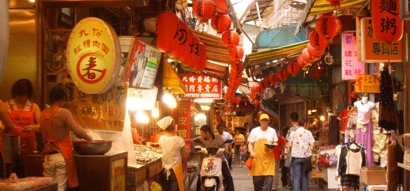
Taiwanese markets image from freeimages.com / Kate Jim
In November 2016,. Campaign Mastery hosted the Blog Carnival with the subject being Everyday Lives. Today I have a new technique for integrating the everyday lives of your PCs into the campaign that is virtually effortless, has virtually zero impact on game-play, and yet makes the life of the PC affected more substantially real.
Where is he going / What is he doing
Every encounter, and the opening scenes of almost every adventure, are all intersection points between the mundane reality of the PC’s life within the game world and the “interesting stuff”. All to often, players are asked what their characters are doing (when there is nothing for them to do) or are told they are in some neutral situation (“You are on the road between A and B” or “You are relaxing in the Tavern”).
These are wasted opportunities. The player may know the PC, but he doesn’t know the game world, so his responses to such questions are either going to serve to enhance the PC, or justify such enhancement in the future (“I’m studying X” or “I’m doing my daily workout” or similar), or deal with established campaign elements (“I’m trying to get the cook to use more spice in his cooking” or “I’m trying to get [Another PC or an NPC] to make a bet with me”).
The person who knows the campaign world best, and who is responsible for integrating the lives of the PCs into that world, is the GM. These responses are parts of the everyday lives of the PCs that quite often add nothing to the campaign, overall.
Instead, the GM can use these as opportunities to enlarge the scope of the private lives of each PC, not by making an event a ‘feature attraction’, but simply by mentioning an act within the ordinary life of the PC as something that has just happened, is about to happen, or that the PC is traveling to/from.
It’s that simple.
Instead of making a vanilla statement about where the PC is and what they are doing, or soliciting a decision from the person who knows the least about the subject, you tell them where the character is going or what he is doing.
The Six Delivery Methods
There are six options:
- PC has just discovered the need to do something
- PC is en route to do something
- PC is about to do something
- PC is in the middle of doing something
- PC has just done something
- PC is en route after doing something.
The “do/doing” is critical. It takes the problem (whatever it is) out of the realm of a problem to be solved by the player and puts it into the category of a solved problem, a piece of color, not of plot-substance..
Distancing the event from significance
The next part of the recipe is equally important. It takes the form of the next word in the sentence, a word that completely rules out the trivia of the background event as important, and makes it just a delivery vehicle, a mechanism to get the character into the real action of the plot. That word is “when”.
[The PC] has just discovered the need to [do something] when…
[The PC] is about to [do something] when…
…and then you describe the start of the significant event, the one that actually matters in terms of plot.
The Benefits
This technique gives the world around the PC realism and depth, establishes the principle that what happens in play is just the high points of the life of the PC, and employs the balance of that life to tell the players a little about the world and the way the character fits into it. It also supplements the main events in the character’s lives with a light exploration of the more mundane aspects of that life, and in particular how the character fits into the society around them.
This is akin to imparting background by stealth, in easily-digested chunks.
Almost-Effortless
It’s incredibly easy (most of the time) to generate content with which to populate these little touches of ordinary life. All you need to is maintain an awareness of what happens to you in your day-to-day life (and those of the others around you) and translate them into analogous situations within the context of the genre and game setting.
Examples might include getting caught without an umbrella, needing to sew up a rip in your shirt, running out of milk, finding that a bottle of wine has become vinegary, feeling unexpectedly peckish, noticing that something brass is tarnished and needs polishing, being late, having a toothache, doing your grocery shopping, a payment being late, discovering a forgotten bill just before it’s due (or just after), witnessing an accident, visiting a friend (healthy), visiting a sick friend, changing a light bulb, dealing with a leaky faucet, checking your mail….
Perhaps equally important is that by keeping these elements small and of minimal significance, you also limit the effort required to perform these translations. In fact, as they accumulate, and the local culture becomes more sharply focused in your mind, it gets easier and easier.
From time to time, you will become aware of situations that exist within the game environment and which have no mundane analogue in our experience. These are often cultural elements inspired by a human culture other than the one that surrounds the players and GM. These are the social and background elements that you need to give greater prominence within an adventure, because they are more defining of the differences between the game environment and the culture experienced by the games participants, and will require more time to understand and integrate.
Dynamic Introductory Scenes
An extension of the logic behind these principles reveals another truth: whenever a PC enters a situation, like a new town, the scene should never be static. Instead, it should highlight the daily existence of the inhabitants by showing them doing things. The more those activities highlight the unique aspects of the encounter setting, the better.
However, simply adding these descriptive elements to what you already have to convey is not a good idea. It’s easy to over-saturate your narrative by including too much. Instead, focus on the activities and locations that can be integrated into, or implied by, what you do describe.
The cooking of freshly-caught fish by one market stall implies a fisherman, who might well be the vendor. The cooking of fresh fish into a dozen different dishes by a dozen different providers implies that a fishing industry makes its home there. That brings to mind wharves, and boats, and nets, and retailers/craftsmen specializing in these fields. Add an anchor to the decorations of the local inn, and you provide confirmation – there is no real need to even mention the implied details.
At the same time, eschew broad and generic phrases like “fishing village”; you want to emphasize whatever it is that makes this particular example different to all the other such that dot the coastline.
Details that imply content, people doing things that imply vitality and activity and not a place simply waiting passively for the PCs to ride in like some Potemkin village, a point or two of distinctiveness, and letting the minds of the players fill in the rest, can accomplish as much for creating a vibrant setting as five or ten times as much narrative.
That is the operational principle behind Stealth Narrative: Imputed info in your game and a key objective of my six-part series The Secrets Of Stylish Narrative.
The Occasional Spotlight On Mundanity
Of course, if you want to occasionally focus more closely on these ordinary-life events in order to “ground” the PCs and contrast with the high-adventure existence they normally lead, these give everybody the foundations upon which to do so.
It’s not often that you find a technique that imparts such huge benefits for so little effort. I think it deserves some serious thought by every GM reading this, and hopefully I have motivated you to give the subject the attention that it deserves in your own game.

Discover more from Campaign Mastery
Subscribe to get the latest posts sent to your email.
Comments Off on Effortless Campaign Decoration With Mundane Reality