Webs Of Gossamer: Retrofitting For Plot Pt I
Image by Gerd Altmann from Pixabay
So let’s say that you have an RPG campaign that is doing well. Your plotlines are interacting with each other, your adventures are compelling, your players are happy, and everyone’s having fun, but you’re starting to struggle to keep on top of the entwined complexities of your plots and your prep is becoming a nightmare because nothing is organized.
I was contacted a couple of weeks ago by one of my readers from the early days of Campaign Mastery who was in just such a bind and at the end of his rope; he was at the point where he was even contemplating having to kill the campaign because it was becoming more than he could manage.
He was smart enough to have analyzed the problem and recognized that the problem was the lack of organization making it hard to keep track of everything that was going on and losing sight of both the big and intermediate-scale picture as a result. What he wanted was a way to parachute some structure and organization into his campaign planning so that he could keep and even extend the complex interaction between plotlines that was a feature of the existing campaign while getting on top of the planning and taking the hard work and frustration out of it.
I’ve written about campaign structuring many times in the past, and was able to provide a huge list of links to those articles, but none really looked at the problem of retrofitting an existing campaign into a structure. So that’s what today’s article is all about (and next week’s, too).
Something I should make clear up-front: there is going to be some hard work involved. We’re talking about filtering and sieving a quivering morass of entangled plotlines to distill a coherent structure out of them. None of the step involved is overly arduous but there are a number of them, and some have to be performed several times. With even a complex campaign, it should be possible to do this in a couple of “weeks” (depending on how much time you can invest) [see below] – but that’s the rub, isn’t it?
The First Decision
The first decision that has to be made:
Should the campaign take a holiday while the process is ongoing?
There’s actually quite a bit to unpack in this question. The process relies on starting with a reasonably solid synopsis of play from at least one, and preferably two, game sessions. These can’t be too removed from the date of play, or essential details will be lost. But continuing play after you have this foundation will enormously complicate the process and can bring the whole procedure unstuck.
My recommendation, therefore, is to schedule a holiday for the campaign for two or three game sessions – allowing a “game session” to generate the first adventure within the new structure – to start after the next one or two game sessions.
I would assume that you can probably get a decent synopsis out of the last game session, and so would only need to continue for one more session afterwards, but that won’t always be the case; it depends on how sieve-like your memory is, and how long ago it was. So this is something that you will have to decide for yourself.
The other point to consider is that this schedule has no wriggle room, no contingency for things going wrong, or for work becoming demanding, or even for the process taking longer than I think it will. If you are totally confident about those things, then you probably don’t need this process at all! For everyone else, adding an extra game session or two of shutdown as contingency is probably a very wise move.
Scaling The Shutdown
The span of time between game sessions is a good indicator of how much free time you have to devote to the process. If you only run every second week, the time that’s available is the amount of prep time you would normally spend getting ready to run a game session. Other activities are likely to have occupied any leftover free time, though you may be able to squeeze a little more effort out by briefly sacrificing some of them. Assuming that game sessions are approximately the same length the world over – a VERY big assumption – that means that the calendar can be based on a game-session count and be more accurate and useful, than on a simple count of weeks.
Use your own judgment, and add 50%.
Plan For The Shutdown
If you tell the players why it’s necessary, they will usually accommodate you, especially if the alternative is to kill the campaign completely. So making sure that everyone is on the same page is part of planning the shutdown.
The other part is this: just because the campaign is temporarily shut down, that doesn’t mean that you and your players can’t get together as you usually would and play a board game, or maybe one of them would like to try a no-pressure fill-in adventure or two. It’s probably a good idea to make this completely different in genre to the usual campaign.
You can also take advantage of the impending shutdown to gather planning intelligence. Ask each player “What is the one thing that your character would most like to achieve by the end of the campaign”, and take careful notes – promising nothing, but you’ll see what you can do, mind you!
The Overall Structure
The overall structure that this process will implement is something that I’ve come to call the Spiderweb Structure, but it didn’t always go by that name. This is the structure that I have in place in my superhero campaign, and which I have discussed a number of times. I’m going to assume that you’re familiar with the essentials of what that implies and comprises, because if you aren’t, the process itself will educate you in that respect.
But I want to talk about some generalities and guiding principles to use in your conversion process before we get too bogged down in actual processes.
- World Politics
- US Domestic Politics
- The Russia-4th Reich War
- The 5th Reich & Central America
- Alliances & Enemies
- 4 “criminal” organizations
- A new alien race
- The role of Magic in the game world
- Time Travel
- Inter-dimensional Physics
Perspective
All your planning – with one set of exceptions that I’ll get to in due course – should be done from the point of view of the villains. What do they want, how will they get it, what do they know that others don’t that will advance their plans, what don’t they know that will force them to modify those plans, and how will their implementation of their plans impact on the lives of the PCs?.
At it’s most elementary, you can view this campaign structure as a set of NPCs for whom those questions have been answered. But continually advancing and revising plans for each of these instigators is a daunting proposition because the workload increases geometrically according to the number of such NPCs.
1 -> base
2 -> 2^2 = 4 x base
3 -> 3^2 = 9 x base
4 -> 4^2 = 16 x base
5 -> 5^2 = 25 x base
6 -> 6^2 = 36 x base
7 -> 7^2 = 49 x base
8 -> 8^2 = 64 x base
9 -> 9^2 = 81 x base
10 -> 10^2 = 100 x base
…
20 -> 20^2 = 400 x base
…
50 -> 50^2 = 2500 x base
…
80 -> 80^2 = 6400 x base
…per game session.
My superhero campaign has 10-15 years yet to run, 36 interacting plotlines, many with multiple instigators with the PCs caught in the middle. If there’s an average of two such instigators per plotline (and that’s probably understating it), that’s 72 such plotters to keep track of – every game session.
One such plotline – “reasonably” self-contained – involves 27 moving pieces (the instigators) and 11 adventures. Along the way, it touches on and influences:
….and a whole lot more, besides.
Not all of the plot threads are as sprawling as this one. But two-per-plot-thread is an underestimate, if anything – five is a more likely average. And 5×36 = 180 plot instigators, or 32,400 x the complexity. If it takes 10 minutes for the base update (1 instigator), that’s 324,000 minutes per game session, or 675 eight-hour days between game sessions. NOT what anyone would consider practical.
But that’s the point of this structured approach: it compartmentalizes, reducing complexity and redundancy, and makes this unruly mess practical to administrate.
A good story
At it’s heart, each of those 36 plotlines is one good story. Sometimes, two or more – but always at least one serial narrative that has been broken into multiple episodic segments. Actually, it’s been broken into multiple Events, which have then been grouped into episodic segments, but you get the point.
Multiple layers of good story
None of these episodic adventures takes place in isolation; each is surrounded by the legacies and context of past adventures and dangling unresolved plot threads, that will influence them; but the heart of the plan is one or more good stories.
And that’s the first scalpel that can be used to cut through that morass of plotlines: if a connection or interaction between two concurrent plot threads will enhance a plotline, it’s in if it can be made to work; if not, never the twain shall meet, and the job of the campaign plan is to make sure that they don’t.
A single adventure might be one episodic segment from one plot thread, but it is more frequently an amalgam of episodic segments from several plot threads.
More layers of good story
Another element that I stress is that each PC has to have some personal plot thread or milestone in each adventure. That might be inherent in the Events comprising the episodic segment at the heart of the adventure, or it might be something parachuted in to give that character a connection to the adventure.
Pacing
When the whole lot is compounded, that too has to form a good story. A much bigger and more rambling affair, to be sure, but a cohesive narrative.
It’s easy for it to form a story; that happens anyway, through sheer continuity of protagonists (i.e. PCs). The tricky part is to make it a good story – with reversals of fortune, and plot twists, and interesting character interactions, and menaces overcome, and an ultimate triumph (or at least, an attempt at one).
One of the key elements is the overall pacing of the campaign, and how the pacing of individual plot threads and segments within plot threads, combine to create that overall pacing. I’ve written extensively on plot pacing in the past – you can find everything under one umbrella in this article (Part 1, Part 2) and this series; but – for now, suffice it to say that pacing should be lumpy, but intensifying. Lumpy – there should be times when events flow thick and fast, and times where there is room for some introspection, punctuating those manic periods. Over time, those periods of calm should become shorter, or more manic in their own right, or both, while the manic periods should become more and more extreme, until the campaign reaches….
A Crescendo
Every campaign should have a crescendo, and there should always be a palpable sense that things are building towards something big. You don’t have to wrap up every loose end, tie off every dangling plot thread, in such a finish; that’s what sequel campaigns are for. See Been There, Done That, Doing It Again: The Sequel Campaign Part One of Two: Campaign Seeds and Been There, Done That, Doing It Again: The Sequel Campaign Part Two of Two: Sprouts and Saplings, when the time comes. See also A Grand Conclusion: Thinking about a big finish and the article linked to at the start of it (“How To Stage A Blockbuster Finish”) for more on the subject.
These principles are your guide, telling you what you are trying to achieve in different phases of remainder of the campaign.
The Overall Process
The process that I am going to describe in both this post and the next is not a short one. There are 15 steps, some of which need to be repeated multiple times. Each step is fairly simple and straightforward, and I’ll be looking into them in as much detail as I think necessary, but wanted to start with an overview.
- Synopses -> Multiple Plot Threads
- Character Ambitions -> Additional Plot Threads
-
- Each Plot Thread -> Current Status
- Each Plot Thread -> Planned Resolution
- Each Plot Thread -> General Narrative, Now to Then
- Each Plot Thread -> Specific Events
- Groups of Specific Threads -> Collected into Plot Segments
- One Plot Thread -> Central Plotline
-
- Central Plotline -> Campaign Spine
- Each other Plot Thread -> connects with Campaign Spine
- Each other Plot Thread -> other cross-connections, Context
- Each other cross-connection -> additional Campaign Spine elements
- Campaign Spine -> Core Timeline
- Campaign Pacing -> Revised Timeline
- Revised Timeline -> Campaign Plan
- Campaign Plan -> Adventure Plans
-
- Each Adventure -> Plot Segments comprising the adventure
-
- Each Plot Segment -> Events within the Adventure
- Planned Adventure -> Sequence of Events
- Planned Adventure -> Start and Finish
- Planned Adventure -> Pacing within the adventure
- Planned Adventure -> Other adventure events
- Planned Adventure -> Ready-to-play adventure
- Making the Campaign Plan dynamic, not static
Most campaigns will consist of 3-6 plot threads, plus one for each PC. Some may have less, a few may have more.
That’s a lot to pack into just 15 steps – but those steps only carry you through to the Campaign Plan. The rest is all about using that plan, translating it into adventures.
The rest of this article is going to detail the first nine steps of the plan, which will comprise 70-80% of the work involved:
- Start With A Synopsis
- Add another Synopsis
- Break the Synopsis into Plotlines
- Structure the future of each plotline
- Select a core plotline
- Flesh it out into events
- Ensure that it tells a solid story
- Flesh out the instigator
- Repeat for the other plotlines
Next week, steps 10-15, and using the campaign plan to create adventures, and some final advice:
- Identify cross-links and cross-purposes
- Resolve complications, preliminary timeline
- A plotline (or two) for each PC
- Integrate into the timeline
- Create the blanks, fill in the blanks
- Finalize the timeline, divide into adventures
- Crafting an Adventure
- Integrating new plotlines
- Player Responsiveness
- Recommendation: An Ideas File
That’s the plan. Let’s get started….
1. Start With A Synopsis
Synopsis 1 is a snapshot of the campaign as it now exists, through the lens of your most recent game session or two. The focus shouldn’t be on events, it should be on decisions, and especially decisions by NPCs, which is quite distinct from the usual PC-oriented approach such synopses take.
You want this to identify the plot threads that are already running, and where you think they will go in the near future.
“Tired of their repeated interference in his earning a dishonest gold piece or two, Estrahd sent a couple of heavies to follow the PCs into the Caverns of Zilnych and lure the creatures that abide there into attacking them.”
“Konrad The Sage sold the PCs a false map to the Caverns of Zilnych because he feared they would interfere in his plot to discredit the Ruling Council of Tribwich..”
What did the NPCs do, and why? What is the desired outcome, IF it has not yet come to pass?
If there has been a decision or judgment made by the PCs that has yet to play out, that is also relevant.
“Juniper has convinced the other PCs that the two shadowy figures attracting all the wandering monsters are in the employ of Konrad the Sage, after discovering that the map they were sold is completely unreliable after the first couple of caverns. Because the PCs (and their tails) are now trapped behind a dead-fall, there isn’t anything they can do about this, yet, but when they can do so, Konrad will become the focus of their attention.”
2. Add another Synopsis
The other synopsis that is of value is one of the campaign overall, to date. This will hopefully capture any plotlines that are currently lying fallow, i.e. that played no direct part in the most recent adventure.
“The Ruling Council of Tribwich has responded to recent civil unrest by imposing martial law and hanging a couple of beggars. They are hiring mercenaries to supplement the town Watch, and have increased the levies charged against adventurers to enter the town to pay for it.”
3. Break the Synopsis into Plotlines
This is a lot more easily done using an electronic document. From the examples listed above, three plotlines are obvious:
- Konrad vs the Tribwich Council,
- Estrahd, and
- the Caverns Of Zilnych.
There are times when I think that putting each into its own document is more useful, and times when having them all compiled into a single document is the better choice. I normally come down on the former, simply because it means that I can have several of them open at the same time, making it easier to find cross-links.
Into each plotline, copy & paste first the relevant content of Synopsis 2 (overall campaign) and then the relevant content of Synopsis 1 (recent game session(s)).
4. Structure the future of each plotline
Turn each plotline into a “good story”. Where is the plotline headed? It’s often easier to skip right to “the end” of the plotline and then fill in the middle (between “now” and “then”).
Use a short paragraph or two. Make sure that everyone has times when things swing in their favor, and a reverse or two that they have to overcome. Use an estimate of the intelligence of the instigator, if you know it, to determine how likely it is that they will make a mistake, and how they will avoid making it a fatal error.
This narrative might not even mention the PCs.
“Konrad has fallen into the classic trap of thinking that the end justifies the means. To prepare for the Rain Of Blood that the auguries prophesy, and which no-one else believes in, he is convinced that he needs to be in a position to dictate policy throughout the Kingdom of Aztil. His plan is to seize control of the town of Tribwich, use it to blockade Silver caravans to the Capital from behind the scenes, and appeal to the Crown for military support to suppress the “bandits” who he blames for the disruption. Restoring the shipments should earn him favor in the Royal Court; he will follow this with a contrived “emergency” which only he fully understands, but which he can manufacture, eg a Dwarfish uprising. This will distract from a campaign of assassinations and discrediting of the other members of the Inner Court, ensuring that he has the ear of the King when the time comes and the Moons align to release the Whisper Dragon and it’s Rain Of Blood.”
Here we have a character of good intentions, suffering from the flaw of hubris (perhaps amongst other faults), who is intent on a ruthless pursuit of influence and power. What’s missing are the setbacks that have to be overcome. The first of these is the attention of the PCs, but a facile story about a “curse” should overcome that. He underestimates the opposition that he will face, a common wish-fulfillment failure of schemers; that could bite on a number of occasions, and should do so as often as possible. The Town Council, expecting the ‘Bandits’ to do what they are told, the ‘Dwarfish uprising’, and avoiding any overt connection with the plots and schemes of the Court. Finally, what if he’s wrong about the nature or timing of the threat? He also makes no allowance for existing intrigues, or for a real emergency arising while everyone’s dealing with his ‘manufactured’ one.
I would actually consider these two paragraphs to be not quite enough – the ultimate resolution needs to be defined, but perhaps that is part of another plot thread, one that has not yet started, the Whisper Dragon.
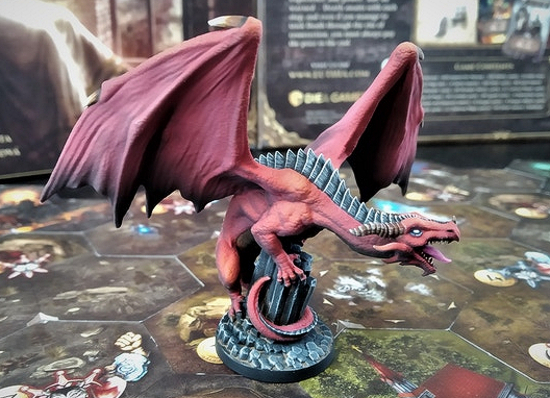
Perhaps Konrad is only half-right; the dragon will be released, as he has divined, but is a guardian against the Rain Of Blood (whatever that is!) And/or, perhaps, what Konrad is doing is what releases/awakens the Dragon. There are other possibilities, but those two are enough speculation for now – in an example.
5. Select a core plotline
The core plotline is the narrative “Spine” around which the campaign will be structured, the “all roads lead to this” plotline. It should also stretch from “Now” to the end of the campaign, and have a climax suitable to ending the campaign.
There are two contenders amongst the examples – the first is the Konrad plotline, in which case the Whisper Dragon is a furphy, and he is completely wrong, and the core plotline is all about obsession and the slippery slope of good intentions. The alternative is the far more dramatic and still-vague possibility of the Whisper Dragon plotline, in which the campaign seems to be about those things until the plot twist adds a whole new layer to the story and one final chapter.
I have to confess that I would be strongly tempted by that option, but this isn’t about me or the choices I would make.
6. Flesh it out into events
Once you have outlined the plotline that is to be the spine of the campaign, the next step is to break it down into a sequence of events.
Simply because it’s the more well-developed, for the sake of example, I’ll choose the Konrad plotline – and develop it about half-way.
- (Past event) Konrad begins destabilizing the local politics of Tribwich.
- (Past event) Through subtle mind-altering magic, the Thought Shadow, he has led the Ruling Council of the town to paranoia and heavy-handed enforcement of the law, stirring unrest amongst the populace.
- (Past event) The Council, influenced by the Thought Shadow, have imposed martial law and hanging a pair of beggars on charges of Treason. They are hiring mercenaries to supplement the town Watch, and have increased the levies charged against adventurers to enter the town to pay for them.
- (Current event) When approached by the PCs because they heard that he might have a map to the Caverns of Zilnych, Konrad worried that this might be a pretext to investigate his activities. He sold them a false map that would leave the PCs trapped within the Caverns.
- The Mercenaries will begin overstepping their bounds, influenced by the Thought Shadow, creating further resentment of the Council.
- The PCs escape the Caverns, thinking that Konrad has hired mercenaries to attempt to assassinate them by proxy while they were trapped.
- When the PCs return to Tribwich and confront Konrad, he will claim to have been extorted into deceiving them by the leader of the Mercenaries. He will know nothing about the people who were following the PCs and trying to get them killed, but promises to look into it when he can; he dislikes not knowing things.
- PCs Vs The Mercenaries Of Tribwich plotline.PCs drive the mercenaries away after forging a secret alliance with Konrad.
- Konrad leads the townspeople in an open revolt against the Council and forces them to abdicate their positions. He replaces them with a puppet government answerable to him.
- He ‘rewrites’ recent history to cast himself as a liberator who came to power after the evil and corrupt Council were deposed by a popular revolution. He sends the PCs to deliver reports to this effect to the Capital, getting them out of the way, at least for now.
- PCs in the Capital City plotline.
- Konrad uses the Thought Shadow to manipulate the greediest of the former councilmen. In disguise, he offers the councilman the funds needed to re-hire the mercenaries to operate as “bandits”, intercepting the Silver Caravans from the Dwarfish Mines.
- He also hires the Mercenaries to ambush and kill the PCs as they return from the Capital.
- The Ambush plotline. The PCs overcome the ambush but are injured. A crazed Druid heals them but imprisons them in his Grove (think Alice In Wonderland). The PCs eventually escape.
- With the PCs out of the way, Konrad sends an urgent message to the Capital accusing the Councilman of an open revolt against the Crown and Banditry, and requesting Military assistance in clearing the “Bandits” from the region.
- The PCs arrive to find Royal Soldiers in command of the streets and a former Councilman hanging from a Gibbet for High Treason (Konrad acts like he’s pleased to see them safe and whole; he feared the worst).
…. and so on.
Konrad needs to next parley his demonstration of loyalty to the crown into influence over the Royal advisors. The PCs should learn that he had nothing to do with the people who tried to kill them in the Caverns; when he heard their story, he quietly investigated and now lays the blame (correctly) at the feet of Estrahd to distract them in the meantime (another plotline)….
7. Ensure that it tells a solid story
It’s one thing to lay out a sequence of events this way, with each step in the story leading to another one; but too many people don’t re-read it afterwards to make sure that it “plays well,” i.e. that it tells a solid story.
That means that it has a middle, an end, reversals, plot twists, and so on. As you gain more experience with this method of planning, and more confidence, there will be less need for this, but the assumption being made is that you are starting from scratch in the middle.
You will also have noted that I’ve jumped the gun a little, integrating a couple of side-plots when they were needed to keep the PCs occupied elsewhere – or simply ensuring that they lead lives of adventure, wherever they happen to be. If the PCs are at the Capital City, for example, they should have an adventure there!
These plots may either be already in existence (though they haven’t yet undergone the process of expansion, first into a self-contained plotline, and then into a sequence of events), such as the Estrahd plot thread, or be entirely new, such as the Druid’s Wonderland plot idea.
I also want to call attention to the fact that this is all about what NPCs are doing, and not what the PCs are doing. Nor do these plotlines really require the PCs to follow any given plot direction; they are free to pursue their own agendas. That won’t stop the NPCs from fearing what the PCs might do, or acting against them.
8. Flesh out the instigator
The next step is to go into a lot more detail about who Konrad is, and what he wants to achieve, and why that impacts the PCs.
There are those who would suggest that this should predate the expansion into events, and from a pure story-telling perspective, they have a point; but I feel that doing things in this sequence enables the events to shape the character to fit the needs of the story, rather than the character forcing events, perhaps in contradiction to the outlined story.
I have a strong sense that I have a clearer vision of the personality and capabilities of Konrad from the event-by-event outline above than I did when I started writing it, for example; if I had outlined the character first, the personality would have dictated events that might have been in contravention of the story goals. Better to have the character emerge organically from the story.
9. Repeat for the other plotlines
Repeat steps 6-8 for the other plotlines. In some cases, you should have done this already, though they might need to be rewritten to fit the “spine” now that you have a clearer idea of what it is.
For example, some of the above is clearly designed to put the brakes on the Estrahd plotline until it suits Konrad to re=awaken it.
That doesn’t mean that Estrahd won’t make other, perhaps more serious, attempts, or that the PCs won’t interfere in his plans again before Konrad points them in the direction of their “enemy”; on the contrary, there should be regular reminders that there’s someone out there who doesn’t want the PCs around. Of course, when Konrad’s moves against the PCs get noticed by them, they will probably blame those on that “hidden enemy” as well.
As anticipated, I didn’t have enough time to completely write up the process, but this should be enough that you can start to see the campaign taking shape. I might have been able to do so if it weren’t for the examples, but I think they perform an essential role in illustrating and clarifying the process.
Next week, I’ll pick up where this article leaves off. The good news for anyone attempting to put this process into practice is that it will probably take you a lot longer than that delay to get all this done.
Part Two of this article is now available: Webs Of Gossamer: Retrofitting For Plot Pt II