Campaign Mastery helps tabletop RPG GMs knock their players' socks off through tips, how-to articles, and GMing tricks that build memorable campaigns from start to finish.

The Imperial History of Earth-Regency, Part 7: Disintegration And Repair – 1973-75


This entry is part 7 of 12 in the series The Imperial History of Earth-Regency


Pieces Of Creation is an occasional recurring column at Campaign Mastery in which Mike offers game reference and other materials that he has created for his own campaigns.

All images used to illustrate this article are public-domain works hosted by Wikipedia, Wikipedia Commons, or derivations of such works, except for the “Civil Service Uniform” illustration which is by Me!
 

Continuing the alternate history right from where we left off in the early 70s, these three years were a watershed period in Imperial History. Problems were solved (at least in theory), new problems arose, consequences of old solutions became new nightmares, and some solved problems became unsolved. Some situations improved, but others became worse than was thought possible. An era of instability and bloodshed, it began a transfiguration of the administrative and social concepts at the very heart of the Empire.

General Augusto Pinochet, photo courtesy Archivo Clarin Argentina, taken 19 Jan 1978

1973

’73 was a case of same old same old. Israeli fighter planes shot down a Libyan 747, Palestinian terrorists murdered the Imperial representative to Sudan, Israeli Commandos invaded Beirut and killed three Palestinian guerilla leaders, a violent military Junta in Chile seized power in the name of General Pinochet, Egypt and Syria attacked Israel in retaliation for the Israeli aggression earlier in the year; Israel declared war over Imperial protests, leading eleven Arab nations to cut oil production and raise prices in protest over the perceived Imperial support for Israel, a military coup in Greece ousted the established Government, and the Invasion of Afghanistan continued to flounder.

Profile photo of Richard M Nixon for official portrait, taken 2 sept 1970

Watergate

Irregularities in the conduct of the recent USK† elections led to the impeaching of Prime Minister Nixon. The “Watergate” affair had first come to light in late 1972 thanks to the investigative work of two reporters, Woodward & Bernstein. It was widely believed that they had an inside source, who came to be nicknamed “Deep Throat”.

Some speculate that “Deep Throat” was a member of Imperial Intelligence, who leaked enough details of the bungled attempt to bug the opposition political offices under the direct orders of the Empress, a covert action to bring to heel another US head-of-state before he became an embarrassment to the Monarch. It was not the first time that untoward political events in the USK would be attributed to the Monarchy (refer “John F. Kennedy” in the previous chapter), and it would not be the last event interpreted in this way by conspiracy theorists.

†USK = “Kingsom Of The United States Of America”. Refer previous chapters of the series.

Northern Ireland

Attempts were made to reach a peaceful settlement of the unrest in Ireland, producing a government that would be representative of all the interested parties. This settlement had been approved by a general referendum in Ireland but only 59% of the populace had bothered to vote, despite it being compulsory under the law. At the first attempted sitting of the new Government, proceedings were disrupted by militant Protestants.

Map of Chile, Image by Scansculotte

The Chilean Revolution

Pinochet’s coup was accompanied with a new approach to the problem of relations with the Empire: the Chileans simply ignored it and waited for it to go away. There was no dramatic ultimatum, no attempted secession, no request for recognition; in fact there was no recognition of Imperial authority at all. If this tactic had been attempted a year or two earlier, it might have posed a significant development; but the Pakistan resolution had provided a precedent, which the Imperial authorities proceeded to implement – give them what they want to such an extent that they don’t want it any more.

The instructions given to the various civil servants involved were concise and specific – all Chilean citizens had to obtain citizenship of another country before they would be acknowledged. No trade licenses or agreements with Chile would be honored. No payments promised to the Government of Chile would be honored. No defense of Chile would be mounted in the event of aggression – which had some of Pinochet’s neighbors salivating. No Chilean border controls would be recognized. All expatriot Chileans not seeking citizenship in another country would be deported – with a full and specific explanation of the reasons. The entire country was up for grabs if anyone wanted it; and if Chile fought back, the object of their military action would receive full Imperial Military support.

Within a week, troops were approaching the (former) Chilean border on three sides, and a Chilean Ambassador was desperately trying to arrange diplomatic talks about the Chilean membership of the Empire with diplomats who refused to acknowledge their existence. When the invading ground forces were only minutes from entering Chile, the diplomats got their meeting… at which point, their options had narrowed to two: either petition for recognition, on any terms the Empire chose, or cease to exist as a nation.

Pinochet chose the former, and almost immediately reports of human rights violations began to surface; Chile was consequently downgraded in Imperial Membership repeatedly, and more direct controls were put in place by the Empire. On readmission to the Empire they had been assessed as a Class VII nation; by the end of the year, they were a Class X, and Imperial Administrators had taken control of virtually all public functions.

Pinochet repeatedly failed to learn from his mistakes, however, and continued to take his displeasure out on the public; Chile remains a backwater in the Empire to this day (2055).

Dirty Politics in the Aegean

The Greek uprising presented a more difficult problem.

This was not exactly a fringe nation; while not in the Heart of the Empire, they were not far removed from it. In addition, Imperial Intelligence had uncovered the fact that the coup was secretly sponsored by the opposition to the established government with the deliberate intention of weakening their control over the country, and thereby improving the opposition’s chances of gaining office legitimately, by forcing a downgrading of Imperial Citizenship – ostensibly as a consequence of the current government’s policies. It would be months before the Empire decided how to react to this attempt to take political advantage of its policies by undermining a member in good standing within its borders.

The Three-Day Week Experiment

The year ended as industrial troubles deepened throughout the Empire. While the lessons of the Coal Strike of ’72 (refer ‘1972’ in the preceeding chapter) had not been lost on the leaders of the Unions concerned, they could and did authorize go-slows, ‘blue flus’, and other more passive disruptions of their industries. If the Government were to accede to the union demands, it would produce an inflationary spike that would almost certainly plunge the Empire into a recession; if they did not, the cumulative impact of lost production would produce a deeper, longer-lasting recession after a lengthier waiting period.

Suddenly, all the new policies which had seemed to meet the challenges being posed of Imperial Government were being shown as lacking.

In desperation, the British Prime Minister imposed a three-day working week in a bid to cushion the impact of granting the pay rises demanded; but it was widely recognized for what it was, and the Stock Market continued to decline. After only three months, the shorter working week would be rescinded.

Ein Fiq, Golan Heights - photograph by Roybb95 taken 23 Feb 2004. Click the thumbnail for a larger image.

1974

Imperial Diplomats made further headway in the Middle East, persuading Israel & Egypt to accept a peace plan partitioning their forces on either side of the Suez Canal. The Israeli Prime Minister would later resign when his constituency became bitterly divided over both the War and the acceptance of the peace plan. The Empire monitored the dissention between hardliners and moderates closely, and drew up tentative plans to further reduce the Israeli citizenship status if it escalated, which would have the effect of placing the military and police forces under direct Imperial control.

This was acknowledged as a move to be resisted if possible, as it would undoubtedly spark terrorist reprisals by hard-liners; but, argued the supporters of the plan, it could also have the effect of taking much of the wind out of the Arab Nation’s sails, and might ultimately reduce the level of bloodshed. They were all guessing, really – tapdancing through a policy minefield at the edge of a cliff in total blackness.

The caretaker Government continued to pursue diplomatic resolutions in a bid to stave off this new indignity, and in May reached a settlement with Syria over their territorial claims in the Golan Heights. When the new government was elected in mid-year, they found their choices to be an acceptance of this fait accompli or of being perceived as responsible for their nation becoming a third-world country in the eyes of the rest of the world.

Hatfield Main Colliery, one of many mines whose workers were involved in the 1970s industrial activity. Photo © Paul Glazzard, licenced under the creative commons attribution-sharealike licence version 2.0

A softening of Industrial Relations

In late February, the coal mining industry began a full-scale strike in a bid for better working conditions and a protest for the heavy-handed actions in breaking the strike of two years earlier.

Agreement for the strike was virtually unanimous, and that made the consequences of enforcing that policy the equivalent of extending the strike in perpetuity.

One key difference was that this time they waited until the worst of Winter was past, and sufficient stockpiles had been accumulated to make the action little more than an inconvenience – in the short term. This was a compromise to social responsibility that helped garner them public support, or at least reduced the levels of public alienation, and had a marked impact on the Official response; instead of wading in with all guns blazing, the civic-mindedness of the industry was taken into account. The “essential services” decree was softened in consequence, and a moderate pay rise was granted, despite the knowledge that doing so would sponsor a new wave of wage claims in other industries, and an inevitable rise in inflation.

This was a compromise, there is no question of that; that it was viewed as a just and necessary compromise did not change the impact that it had on the various levels of governance throughout the Empire. Certainty that policy, once established, would be applied consistently was replaced with a seed of doubt. Whatever short-term banefits accrued, the long-term repercussions would outweigh them – but it takes a heart of stone to ignore those in difficulty, and (contrary to public opinion), bureaucrats are not insensitive to the impact of their decisions. Sometimes, it was felt, the long-term pain was a justifiable price for a little short-term relief.

Marcello Caetano of Portugal, photo by UNEO, licenced under creative commons 2.5 general licence

The Portuguese Catch-22

Unfortunately, few people can predict the future with any accuracy, and the true cost of this decision was one that none of the bureaucrats who had made the decision could see coming.

An almost bloodless coup ousted the Prime Minister Marcello Caetano of Portugal. This was a direct result of dissatisfaction with the public service, and reflected the growing impotence of elected officials to make sustentative changes in domestic policy, and signaled the growing public dissatisfaction with their leaders that resulted; but because the coup did nothing to replace the bureaucrats who were now the true masters of the Empire, little changed in consequence.

It should have been viewed as a warning signal of troubles to come, but the reports to the Empress by the Civil Service were so sanitized that the correct interpretation was of events was almost impossible. Instead, the report ascribed the coup to dissatisfaction with the politicians’ ability to deliver on their promises.

Prime Ministers Willy Brandt and Richard Nixon, photo by de:Benutzer:Wolpertinger

The Coup is Complete

In Germany, Prime Minister Willy Brandt was forced to resign following a spy scandal, while the military coup in Greece ended with a raid by the Australian-based Imperial Special Forces which captured or killed the leaders of the revolutionary uprising.

The former leader of the Government was then reinstated, and informed that if two conditions were met, Greek Citizenship in the Empire would not be affected. The first was that he regain control of his country – without violating Imperial edicts on human rights or civil liberties – and the second, that he act to address the causes of the internal dissent that had led to the coup in the first place.

This was a new step for the Empire, and completed the cycle of finger-pointing. For any given domestic problem, there was now always someone else who any involved body could accuse as the source of the trouble. It therefore became impossible to act to correct the real problems, and only superficial symptoms remained addressable. Power had been distributed so evenly through the Empire that no-one had both the authority and the knowledge to change anything. The civil servants were in command.

Chairman Yasser Araffat of the PLO, photo taken in 1974, image provided by www.comunismulinromania.ro/

The Howling Storm

This was most clearly demonstrated a few months later (in retrospect) when the Empire recognized the PLO as representatives of the Palestinian people, and began the process of making Palestine a sovereign nation.

This angered most of the Middle East, to be frank; the rival Arab tribes protested loudly, while the Israelis felt that the entire peace process had been sabotaged and demanded guarantees for their citizens living there.

The Empress was furious; the decree had been made without consultation, and all the Civil Service protests that the recognition was simply to accredit the PLO as local spokesmen and that the sovereignty of Palestine was merely under investigation as a possible solution, could not disguise the fact that they had showed their hand and usurped the Empress’ authority.

Wheels within wheels

This development placed the Empress in quandary; the Empire was perceived as too vast, too complex, for it to be administered without a Public Service of some kind, and she had based her entire rule on the premise that while politicians represented the people, and the peers represented industry, they were all essentially amateurs, and the most valuable advice would come from experts recruited into the Service.

Now the Experts and Bureaucrats were beginning to dictate policy, even if only by painting an unflattering picture of the alternatives, while quietly setting the wheels in motion for whatever solution they favored this week. Furthermore, the first suggestions of corruption within the service were beginning to become apparent. She could not abolish the Service, and any reform would have to be carried out by the very people it was aimed at, and she could not do nothing.

At the same time, she knew that there could be no half-measures; this was a battle for control over the Empire itself, and she would get only one opportunity. Until it came, she would have to bide her time and endure the situation – and take advantage of any lesser chances to keep them from further consolidating their power in the meantime.

1975

If there was no solution at hand for these new problems, at least there was progress being made in solving the old ones.

The equal pay and sex discrimination acts came into force at the beginning of the year, removing the last legal race and gender-based inequities. Tough new laws also came into effect that forced industry to bear the responsibilities of the environmental impact of their operations, which would hopefully begin the long process of correcting the Empire’s pollution problems.

Hopes and Hopes Dashed

The stalemated invasion of Afghanistan continued despite tremendous losses. King Fasail of Saudi Arabia was assassinated by his nephew, permitting his son to gain the throne. This was seen as the first good news to come out of the Middle East in some time, tragic though the circumstances were; Prince Khalid ibn Abdul Aziz was widely known as an Imperialist, while his father was suspected of subtly derailing many of the attempts at a negotiated peace in the region. But hopes of a further improvement in the level of turmoil were short-lived; only three weeks later, civil war again tore Lebanon, and especially Beirut, apart. This was another conflict of ideologies, the division between Christian Evangelists and Muslims being at the heart of the conflict.

Nigerian Soldier, photo by SSGT. Paul R. Caron, USAF.

Even Civil Servants Make Mistakes

Nor was the rest of Africa all that peaceful. In July, a bloodless military coup deposed former General Yakubu Gowan as Prime Minister of Nigeria. The Civil Service had completely misread the signs of the impending revolution, and several of the more influential members had publicly backed the stability of the existing Government.

This gave the Empress a small opportunity which she was quick to exploit; she sacked the offending members for incompetence. There was, of course, an immediate response by the Civil Service, who threatened strike action; but the Empress responded by defining the Civil Service as an “essential industry”, and threatened to invoke the Coal Act against any striking worker.

Nor was the Service entirely united over the issue; in particular, those who stood to gain promotions through the dismissal of the sacked were not wedded to the notion of industrial action. It was entirely likely that Elizabeth would be able to maintain basic services with a much slimmer public service, though the influence they had slowly accumulated would certainly be lost.

The legendary 'uniform' of the British Civil Servant - Bowler, Briefcase, Suit, Tie, and Umbrella (Brolly), Cup of tea optional.


A Life In The Service
By now, a career path through the civil service was reasonably well established. After a classical education through one of a small handful of Universities, one would be recruited into a junior position (for which the individual was grossly overqualified), and would then be indoctrinated into the culture of the Service.

As one gained experience and a satisfactory record of achievement (within the Service definition of the term), one would rise through the ranks. As he individual rose in authority, he would be cultivated as a ‘friend’ by various influential bodies. If he chose the right mix of patrons, he would be helped in his career – introductions made, consultancies arranged, and so on. These would, in select cases, lead to a senior official taking the prospect under his wing, and placing him on the “fast track”.

That official would train the individual in the various aspects of the senior bureaucracy, and groom him to eventually become his replacement. Eventually, the up-and-comer would become a senior official himself, or even a department head. He would then serve for a number of years, repaying those who had sponsored him during his rise; he would argue the position of the moneyed interests who had backed him, he would arrange special favors and memberships of various committees for his former superior, and he would, eventually, select and train his own successor.

After a few years in various civic roles, arranged to his benefit by his hand-picked replacement, he would accumulate enough Brownie Points to be nominated for a minor peerage, which would enable him to take his place as a captain of industry, earning exorbitant remuneration. He would then be steered into the House Of Lords, where he would again work through the ranks, gaining seniority as he represented his backers on various committees and review boards, before retiring, an extremely wealthy man with a long list of honors and privileges.

The benefits of a career in the Civil Service was entirely too much to lose in a single stroke, which would be the result of the Empress following through on her threats. Her willingness to do so was uncertain, but the risks were just too great for the matter to be left to chance.

Ultimately, it was better to accept the principle that Civil Servants could be sacked for incompetence – and then to ensure that the review process was entirely within their control. This was not a decisive victory in the undeclared conflict between the Civil Service and the Empress, but it at least threw them into some disarray and pegged back their confidence.

King Carlos I of Spain (image cropped and edited). Photograph taken 1977.

The Rules Change

In October, Crown Prince Juan Carlos of Spain made history by running for the position of Prime Minister – and winning.

In theory, this was forbidden under the rules of peerage within the Empire, but because he was not yet King, he was able to renounce the privileges that came with membership of the peerage, except for the one privilege that he was not permitted to rescind – that he would one day inherit the throne. That day was not long in coming, as his father succumbed after a lengthy illness less than two months later. This blurred the lines between commons and peers, lines which past rulers within the Empire had been careful to delineate very clearly.

It is likely that had the gap between election and ascension to the throne been lengthier, the Empress would have forced him to either renounce the throne or step down as Prime Minister; but the timing was such that by the time a decision had been made, it was too late to do anything about it.

That said, the new King was undoubtedly popular, and hence there were clear advantages in uniting the two roles. He appeared to be that rarest of animals, a popular and enlightened Dictator. Before she passed judgment over the situation, Elizabeth decided to interview the young King. What was said at that meeting is not a matter of public record, but afterwards, the Palace announced that in this particular case the Empress had seen fit to make an exception to the usual rules – this being one of the few areas in which she still had unconditional authority.

King Carlos announced in his New Year’s speech of 1976 that he did not view the two roles as incompatible; he viewed his position as Prime Minister as representing a perpetual vote of confidence in his rule by his subjects. He also explained that there were conditions attached to the exception granted by Her Wisdom, specifically that his position as Prime Minister was not to be construed as a hereditary office, and that should he ever be defeated electorally, he would not stand for elected office subsequently, and that he would accede to the will of the people if his policies were rejected.

The beautiful mountains of Argentina, photograph by Alps. Click on the thumbnail for a larger image.

1976

The events of 1976 had a familiar ring to them.

A bloodless coup deposed Prime Minister Isabel Peron, widow of former PM Juan Peron, over electoral fraud charges, whose investigation she had blocked using the power of her office. Race relations in South Africa continued to deteriorate. The ceasefire in Lebanon collapsed, only to be restored after 6 days of bloodshed that accomplished nothing for anyone. Idi Amin began to show his true colors, restricting the right to vote in national elections in such a way that only his supporters and aides were eligible; in effect, he rewrote the law to make himself Prime Minister for life.
 

Entebbe Airport, Uganda, scene of the hostage drama that unravelled a Dictator. Photo by SSGT. Chris U. Putman. Click on the thumbnail for a larger image.

The Devil’s Choice at Entebbe

Palestinian terrorists hijacked an Air France jet and forced it to fly to Entebbe, Uganda – the first hints of an accommodation between the Amin regime and the Arab rebels. This put both Prime Minister Amin in a difficult position; Amin did not want outsiders in Uganda, fearing that they would cause trouble for his regime; but if he did not permit the Imperial Military to deal with this new problem, he would confirm the allegations, and bring down on his head the very trouble that he hoped to avoid.

He took the only way out that he could see, deliberately misunderstanding the instructions he received. He was supposed to prepare accommodations and briefings for specialist Israeli anti-terrorist troops who were to be on-hand to storm the aircraft if the terrorists made unreasonable demands; instead, he “misheard” this to say that he was to use the Imperial Troops stationed in Uganda (and nominally under his command) to storm the aircraft because the terrorist’s demands were unreasonable.

In theory, most of the hostages would have been rescued had the task been left to the Israeli experts; instead, the B-grade Ugandan military botched the operation appallingly, and all but 3 hostages were killed outright. Prime Minister Amin was suitably apologetic afterwards, blaming the poor state of communications equipment throughout Africa and requesting £735 million to upgrade telecommunications throughout the continent in a programme to be administered by Uganda on behalf of the Empire.

The audacity of this request in a fiscally-restrained climate was breathtaking, and initially it served its purpose of distracting the Imperial Bureaucracy from any investigation of the Entebbe massacre; the proposal won considerable support in a number of quarters, especially France and Germany, whose industries would almost certainly be subcontracted for the job. It fell to “The Whisperer” to raise the red flags and begin the downfall of Amin.

The Whisperer

“The Whisperer” was an opinion/gossip column in the London Times which every now and then was the medium of choice for “official” leaks.

The column of July 7th is widely believed to be an example of this usage; it stated that the author had heard a recording of the conversation with Prime Minister Amin prior to the Entebbe disaster which showed no signs of communications problems. It then argued that this suggested that the competence – or lack thereof – of the Prime Minster was more likely to have created any misunderstandings; and then asked the very pointed question, “These people couldn’t organize barracks and lunch for the specialist soldiers being dispatched to deal with the crisis; now they want to organize a 735 million Pound pan-African telecommunications programme?”

With the distraction eliminated from the agenda, and the implication that Amin was lying about the cause of the misunderstanding, the very issue that he had hoped to deflect again took centre stage. Journalists began to investigate his regime with a thoroughness and tenacity that were in the highest ideals of journalism.

Ian Douglas Smith, Prime Minister of Rhodesia. Photograph taken in 1990 by Cliftonian and made available under the creative commons licence 3.0.

A Rhodesian Diversion

This investigation was interrupted briefly by a dramatic development in nearby Rhodesia. For 6 years, they had tried to go it alone as an independent nation in the centre of Imperial-controlled Africa.

On September 24th, President Ian Smith stunned the populace by announcing a two-year plan for transition to Black Rule, and readmission into the Empire as the “Kingdom of Tribal Africa”.

This proposal was almost farcical; the native tribes of Africa were no more capable of union than the Arabs, and for essentially the same reasons. Perhaps in 30 or 50 or 100 years, this might be a realistic goal; but the concept at the current time was sheerest fantasy. Nevertheless, Smith was completely serious.

His concept was to take a leaf out of the Israeli political handbook: Rhodesia would form the central administration for an empire-within-the-Empire; any native African would be eligible for citizenship in the new political unit, in addition to any national citizenship they might retain locally.

In particular, Smith wanted to try and avoid Central and Southern Africa degenerating into the kind of senseless hatred that consumed the Middle East. They were laudable and lofty ambitions, and the generated many columns of interesting newspaper ink, but no-one expected it to work.

Bosco delle Querce ('Wood Of Oaks'), the park built to commemorate the Seveso Disaster. Two tanks of contaminated waste are buried here. Photo taken 20 March 2011 by Massimiliano Mariani and licenced under the creative commons 3.0 licence.

The Incident At Seveso

The newspapers always find something to print, but 1976 was an excellent news year by any standards. The ongoing Middle East crisis, the Entebbe crisis and its aftermath, and the Spanish succession were all good for headlines for weeks. As was the first of a new type of story that would become all too common in future years – the first ecological disaster.

This story broke less than a week after the Entebbe disaster, and centered on the town of Seveso (near Milan) in Northern Italy, which was devastated by the accidental release of poisonous dioxin gas from a nearby pesticide plant.

Subsequent investigation showed that the pesticide concern had been losing money for some time, and that as a result of cost-cutting, safety measures had been neglected, which permitted an accidental fire to develop into a major catastrophe. This was the first serious test of the Imperial legislation on pollution and if found guilty of placing the environment at risk, several Italian nobles faced potential jail terms.

The prosecution case fell apart when private settlements conditional on a denial of liability were reached with the survivors; to protect their compensation, they refused to testify. In theory, their testimony could have been compelled, but in practice they would have been unconvincing. Also in theory, the nobles involved had committed the even graver offences of conspiracy to pervert the course of justice, bribery, and interfering with witnesses; but unless the survivors testified, those charges would not succeed either, and even then it would be touch and go.

Thus the management received a reprimand, a rap over the knuckles, and a financial loss that would certainly have been much greater when the legal fees for defending against the charges were included. The newspapers had a field day on several occasions as this succession of scandals emerged.

The Seveso Legacy

There were immediate repercussions to these controversial events. In particular, there were three consequences:

  • the links between the Civil Service and the Peerage, who in turn were directly connected to big business, came in for considerable (and unwelcome) scrutiny;
  • manufacturers throughout the Empire came under harsh scrutiny by both environmentalists and investigative journalists whenever there was a slow news day;
  • and the public discontent grew even stronger.

The events confirmed in the Empress mind that the Civil Service now posed a grave threat to the Empire. It had become a recruiting ground for the Peerage, and in the process, had become partisan. She was still unable to force a confrontation, however; the biggest weapons at hand against the Peerage were the labor unions, but using them would only replace one problem with a bigger one, and nothing less would be enough. The wedge she needed was still missing.

1977

1977 was always going to be significant year in Imperial History. Not only were there still ramifications of ’76 to fill the headlines, but this was the year of the Empress’ silver anniversary. While the week-long official celebrations were not scheduled to begin until June 1, the year would be full of lesser events – dedications, public appearances, and so on. In many ways, this was time the Empress would have preferred to spend addressing the problems still facing her rule, but the calendar could not be denied, and there were undeniable advantages in the longer term to reinforcing public support for her rule.

Photograph of Haile Selassie taken October 1, 1963, during a visit to Washington, by Cecil Stoughton.

The African Dilemmna

Those problems continued to be hot news items. Africa continued to disintegrate politically, for example.

In February, Prime Minister Haile Selassie of Ethiopia was murdered. There were three political theories of the crime, none of which were ever disproven; the simplest was that this was a coup attempt that went horribly wrong; the second, that it was a terrorist act; but the third, and favorite amongst the ever-present conspiracy theorists, that Ethiopia had been opposed to the Rhodesian “Grand Plan” and had been removed to make way for someone more inclined to the will of Ian Smith.

Only two weeks later, Archbishop of Uganda Janinin Luwum, a civil rights activist, was murdered by security forces before he could keep an appointment with a British Journalist; and with each such act, the world edged closer to discovering the truth behind the Amin Regime.

In July, Somali forces invaded Ethiopia in a dispute over the Ogaden area, while in September, the militant Black South Africa leader Steve Biko was killed while in police custody; but when everyone involved was acquitted by an obviously partisan investigation, it became one violation too many for the Empire.

The ongoing violations of human rights in the Kingdom’s war of oppression against the Native Tribes had been public policy for some time, and tolerance of extremism anywhere on the continent was wearing extremely thin. In November, the Empire prohibited weapons sales to or within South Africa.

Zulfikar Ali Bhutto, photograph taken during a visit to the White House by the White House Press Office.

From Bad to Worse

The Middle East was no less disastrous. The Afghan meat-grinder continued to chew up men and material.

In March, Zulfikar Ali Bhutto claimed a massive victory in the Pakistan General Elections, maintaining the existing government despite the ill-fated rebellion against Imperial Rule. Within days, the kingdom had erupted in widespread violent protests and uprisings over allegations of vote-rigging.

After almost two weeks of riots, and after the Empire had promised an impartial investigation of the allegations, the violence quietened down; after receiving the reports of the investigators, Imperial General Zia ul-Huq arrested Prime Minister Bhutto, seized power, and declared Martial Law.

He publicly thanked the investigators and ensured that they were not molested by the Press on their way to the airport; in fact, they were ushered out of the country with unseemly haste. Only when their jet landed at Heathrow were they able to reveal that their investigation had uncovered vote-rigging and massive corruption by both major parties.

The General had, in the meantime, passed this news to Her Majesty and advised that as neither party could be trusted to form a legal government, rule of Pakistan had to be placed in the hands of a third party, of necessity; his military dictatorship would control all government functions until such time as the parties held a proper election, under the gaze of international inspectors, which showed no fraud or malfeasance.

He then established rules of governance that made such elections virtually impossible, in particular placing restrictions on the right of citizens to gather in numbers – not unreasonable, in terms of maintaining law and order, and given the violent unrest of recent times, but of a certainty they made organising a general election all-but-imposssible.

This was a fundamental breakdown in the Imperial Model, which assumed that Governments would always be democratically elected. Nevertheless, under the conditions described, there was little choice; at least ul-Huq was considered to be loyal to the Empire. The Imperial concern was that this set a precedent for others to follow; by interfering on behalf of both sides in an election, in a way that was manifestly apparent to the citizens, it was possible for a military to seize power indefinitely on a more-or-less permanent basis. It was the ultimate distillation of the Military Coup.

Anwar Sadat (L) and Menachem Begin (R), Photograph by White House Staff Photographers.

The Birth Of Hope

By mid-year, there were finally promising signs from the region that there might be a return of peace in the Middle East, with the election of a known Moderate to office in Israel, Menachem Begin.

After months of effort by Imperial diplomats and go-betweens, Prime Minister Sadat of Egypt signaled his willingness to negotiate peace terms with the Israelis. Once this willingness had been stated, the Empire broke diplomatic speed records in arranging a face-to-face meeting between the two; less than two weeks after his initial offer of negotiations, Sadat had addressed the Knesset (the Israeli Parliament) and was engaged in top-level discussions, and meaningful progress was underway.

Sadat immediately came under political fire from his neighbors for this stance; but he refused to have the policies of his nation dictated by others, and responded in December by breaking off diplomatic ties with Syria, Iraq, Libya, Algeria, and South Yemen. Another major power in the region had returned to the Imperial fold; but would the consequences increase or decrease the resiliance of the fragile stability of the region? Only time would tell…

Comments (1)

The House Always Wins: Examining the Concept of House Rules


Sometimes we old hands, tired of a subject that’s been talked to death, or thinking that everything there is to be said on the subject has been said, forget that a lot of players and GMs have come into the hobby more recently than we have, and hence weren’t privy to those discussions.

This produces, or at least contributes to, the ‘Generation Gap’ that differentiates modern gaming from ‘old school’ gaming. To overcome this, every topic needs to be revisited from time to time.

One of the most controversial posts I’ve ever written here at Campaign Mastery – much to my surprise – has been Draco Inadequatus: Beefing Up 3.x Dragons, published in August 2011, largely because it touches on one of those subjects that is all-too-familiar to old hands of RPGs – House Rules.

In a good-spirited but lively debate in late January, in the comments of the aforementioned post, Scott (one of our readers) touched on the subject of House Rules and why they should – or shouldn’t – be present in a game.

Credit Where It’s Due
I want to start by acknowledging up-front two references that were great reads in researching this article. I’m going to try and avoid repeating what they say, so you might want to click on the links below and have a read. They’ll open in a new tab/window, so don’t worry about losing your place.

The first is a section of “Introduction To Role-Playing” called ‘Kim D&D’ and especially the section ‘Setting Philosophy‘ and especially the first two subsections, concerning Realism vs. Playability and Continuity and Longevity. I don’t know when Kim E Lunbard wrote his content, but he couldn’t have summed up my attitude to the subject any better if he had tried, hitting several of the points I wanted to make squarely on the head and reminding me of what’s important in this conversation.

The second is a forum topic post at Warpshadow.com in which Eidre lists her house rules criteria. This dates all the way back to 2005 but is still directly relevant today.

Why Have House Rules?

Let’s start by looking at some of the reasons why a GM might introduce House Rules:

  • Regulation of Social Behavior
  • Correction of inadequate rules
  • Compatibility with the Campaign Setting
  • Improving game performance
  • Correcting a perceived Game Balance problem
  • Inspiration and Experimentation
  • Adding to the fun or game flavor
  • Increasing the flexibility of the Game
Regulation of Social Behavior

House rules are often used to regulate social behavior at the game table, but while house rules such “who brings the drinks” may be important, most of them are beyond the purview of this dissertation. But there is some overlap with the type of rules that we’re concerned with – questions like cocked dice, dice that roll off the table, consequences for interrupting the GM or another player, and so on.

This sort of thing is what most people would recognize by the term “House Rules” and they are not that dissimilar to what many other sorts of “House” might have – from a restaurant to a footie clubhouse. I doubt there is any serious contention from anyone that this type of House Rule, defining etiquette and standards of personal behavior, is perfectly acceptable. But don’t get too comfortable with this sense of agreement, it won’t last.

Correction of inadequate rules

In fact, we’ve gone directly into a source of ongoing warfare between different gaming philosophies that has been bubbling away within the hobby for as long as I’ve been part of it – 1981, if anyone’s counting.

Are there rules that just don’t work? Most game systems usually have one or two mechanics that either simply don’t work, or that take too much game time to administrate, or whatever. When this sort of situation comes to the GM’s attention, he has only three choices:

  • Live with the rule as written regardless of how broken it might or might not be;
  • Eliminate the rule and any attendant subsystem or sub-subsystem completely with a house rule; or,
  • Replace the rule with a house rule.

I can remember when no RPG review was considered either complete or adequate without the identification of at least two holes in the game system to watch out for!

To be honest, there is a lot less justification for this sort of change than there used to be in the bad old days. That doesn’t mean that this is completely dead and buried; I remain firmly convinced that the DC-setting mechanism for skill checks in D&D 3.x is broken, making success too easily achieved. But, by and large, the game designers have learned over the years, and game systems are now (generally) a lot more robust. This sort of problem is now the exception, not the routine reality that it used to be.

Compatibility with the Campaign Setting

This is a reason that far too few GMs consider, but it’s one that I consider not only perfectly justified, but absolutely mandatory.

Game settings which are not supported by House Rules are settings without depth. They are making no difference to the day-to-day operations of characters within the game, and hence are pretty superficial.

It’s only when a game setting begins to make itself felt within the game mechanics that it really comes alive. Different, campaign-specific skills, magic, materials, powers, restrictions, character classes, different or variant races, unique monsters, strange settings with unexpected environmental effects… perhaps just one or two of these, or all of them.

But this opens a Pandora’s box – whatever is put in place will never be as rigidly play-tested and very rarely as well-designed as the original rules. And if you change the rules too much, the game will become unrecognizable. The Game Setting can justify any rules change – but with that power comes great responsibility. I’ll talk about the right way to discharge that responsibility a little later.

Improving game performance

Maybe there are rules that actually do what they are supposed to, but have a side-effect: slowing combat or other frequently-occurring gameplay to a languid molasses-like crawl. The weapon speed adjustment rules for AD&D used to be like that, for example. Elemental Controls and Multipowers in the Hero System can sometimes be another example – the combat sequencing system certainly is.

There is always going to be room for improvement in any set of rules, and anyone who thinks differently needs to change the colour of their lenses – lose the rose-tinteds, folks!

At the same time, there is a school of thought that runs, “if it ain’t broke, don’t fix it”. And “don’t reinvent the wheel.”

And both sides have valid points in this particular debate. Quite often – as Johnn discovered, and reported, in his post My Group’s Time Thief Revealed – what seems to be the roadblock, often isn’t.

There are also times when changing something to make it more playable does extreme damage to the look-and-feel of the game system – at which point you should think twice before keeping the House Rule.

And, finally, quite often you will take a mechanic that is clunky-but-works and replace it with one that is faster-but-broken – or worse yet, with something that is clunky-and-broken.

The upshot is that this motivation for house rules is a quagmire filled with unsuspected dangers and expected twists and turns. That makes this motivation a marginal one at best.

Correcting a perceived Game Balance problem

And here’s another hot-button topic setting up an army marquee on the field of battle: just what is game balance, anyways?

The problem is that the one term is used generically to sum up a whole host of different aspects of the rules system. It can refer to imbalance between races, genders, classes, spell effectiveness vs. spell level, combat effects in general or in specific, risk-vs.-reward, the power of magic items vs. the ease of construction and/or cost of said items, and on and on and on.

It’s usually at this point that the “Realism First” proponents start speaking up, if they’ve even managed to keep quiet for this long.

The problem is that changing any one of these rule-effectiveness ratios usually causes another to go out of whack, which also needs adjustment, and so on. I’ve seen it happen on many occasions.

The difficulties are made worse by the fact that these are rarely as simple as a constant ratio. Take D&D 3.x Mages, for example: at low levels, they are as fragile as spun glass and almost as useful in a combat situation – until at some point they suddenly go to the opposite extreme and then power their way into the stratosphere. There is no one simple fix for this, because what we have here are two or more separate game imbalances with opposing effects.

Boost the usefulness of low-level mages and you will usually find that high-level mages, already demigods in comparison to their peer rankings in other classes, become Cosmic Powers. I’ve seen all manner of attempts to fix this, and most have failed miserably. The only one I saw for AD&D that came close to success was so radical that the game no longer felt like D&D, it was closer to RuneQuest, and beggared the question of why they didn’t play RuneQuest to begin with?

This isn’t just a quagmire, it’s full of landmines – a dangerous reason for a House Rule. Sometimes necessary, but more often than not, it’s a poor justification.

Inspiration and Experimentation

Cooks play around with recipes, artists play around with paints, and roleplayers play around with rules systems. It’s a fact of life, a measure of our level of interest in the games that we run that, like a car-collector, we want to get our hands dirty and tinker around under the hood in search of an extra 3/8ths of a horsepower.

I’ve been astonished at the degree of (polite, slightly removed) crossover interest between the Formula 1 fans that I chat with on twitter and the RPG GMs and authors. Each has promoted a link or article about the other at some point, sometimes more than once. It was only when I wrote the paragraph above that the similarity of interests made itself clear to me.

Of all the reasons for creating House Rules that have been discussed so far, this is probably the least defensible, but also – cloaked behind claims of more benevolent motivations – probably more common than we like to admit.

At the same time, every improvement to the robustness of game systems that has occurred in the history of RPGs started life as an experiment and was filtered through the rule author’s accumulated databank of things that had worked and not worked in the past. You can’t learn how to write good rules until you’ve written your share of bad ones.

So there is something positive to be said for experimentation with the rules, so long as the author (usually but not always the GM) doesn’t hide the real reason for the rule behind some other purpose.

Adding to the fun or game flavor

This is a somewhat touchy one. We all get different things out of an RPG, so one person’s “fun” probably won’t match that of the person seated next to them.

All the changes that I’ve seen that use “fun” as a justification rank amongst the most egregious cases of Monty Haul-ism and munchkin-ism that I’ve encountered:

  • “These Vampires shoot death beams from their eyes – cool, hey?” (well, No.)
  • “The Dragon leaps out from the old man’s backpack and breathes fire at you. It has a wingspan of 400 feet and does 30d6, no saving throw.” (Really? Uh-uh.)
  • “The wand explodes when the Druid casts Warp Wood on it, doing 400d6. Save for half damage.”
  • “Okay, everyone’s weapons are now +1 enchanted.”

These are all real examples that I’ve encountered at the game table. In each case, the GM had changed the rules (and, in one case, what was physically possible) to make the game more “fun”.

Other examples of this type of rules change include incorporating critical hit tables from another game system because they sound like fun, etc.

As for game flavor, if it doesn’t match the campaign setting you want to use, how can you justify changing it? Either the ‘flavor’ matches the setting and the campaign, in which case the change is contradicting what you want to achieve, or it doesn’t, and the change can be better justified on those grounds.

So far as I am concerned, neither of these justifications hold water. Either a House Rule can be successfully defended on one of the other grounds listed, or it shouldn’t be there.

Increasing the flexibility of the Game

Few GMs stop to realize it, but every game supplement outside the core rules that they choose to incorporate into their games comes with a House Rule stating the acceptance of the material in that product.

Sometimes, more than one will be needed, because even when sourced from the same publisher, even the publisher of the core rules, these are not always compatible with each other. Sometimes they can be downright contradictory, at other times one simply ignores the existence of the other.

The only mention of the 3.0 Epic Levels Sourcebook in Deities and Demigods is the suggestion that in an epic campaign, it might be necessary to increase the character level of the Deities.

Every time a player takes a prestige class that isn’t in the PHB or DMG, a House Rule comes into existence. The only exception to this statement comes if there is one House Rule that gives blanket approval to ANY source that the player wants to use.

Heck, even the core rules of a game usually contain a few optional rules!

The Compact With Players

There is an unwritten agreement between the GM and players. The GM promises to interpret the rules fairly, and to create adventures for the PCs that are fun for the players – or, at the very least, interesting/diverting. The players agree to accept any measures that the GM finds necessary in order to achieve this result, and to tolerate the GM’s style. The GM promises not to interfere with the player’s ability to dictate the attempted actions of their characters, and the players agree to accept the GM’s arbitration of the results and consequences of those actions.

If a game is no fun for the players, they won’t stay. Every House Rule has the potential to erode that fun, or to enhance it.

If a game is no fun for the GM, he won’t run it. Every House Rule has the potential to destroy that fun, or to enhance it. Every arguement about a House Rule will certainly reduce it.

Gaming is a shared experience, and both sides need to be mindful of that fact, and allow the other their share of the joy.

Taming The Rules Jungle

So there are lots of reasons for introducing House Rules. Some of them are dubious, some of them hard to argue with. (That is NOT a challenge to our readers to do so!) The only way to sensibly integrate House Rules is to have some House Rules about House Rules!

In General

There are a few things that should be done, regardless of the justification for the rule.

  1. Make sure everyone knows what the House Rules are.
  2. Keep them in writing.
  3. Review them from time to time, and make sure they are up to date.
  4. Each time a House Rule is introduced, give it a defined trial period.
  5. Establish very clearly the reasons for the House Rule and, from those justifications, what the purpose of the rule is.
  6. Discuss the need with your players BEFORE introducing the house rule.
  7. Look for implications, especially hidden ones. Have your players do likewise.
  8. Establish clear criteria for failure, and a clear fallback position. The rule might need to be tweaked, replaced with a new House Rule, or abandoned completely, reverting to the base rules.
  9. When the review period is up, demand your player’s input on the rule – is it a success or a failure? Has it had unexpected consequences or repercussions, and are those desirable or undesirable? Are any gains worth the costs?

There are probably more, but that list – even though most of it is blindingly obvious – is enough to get started on.

Some specific notes, by justification:

Social Behavior:

These are the least likely to cause you trouble if prepared in advance of someone getting upset. Don’t get carried away with penalties and the like, if you don’t have to – remember the Compact! That said, if it comes down to a choice between shutting down a game that is even only sometimes fun or getting strict about social behavior, you may need to get tough. It’s better to throw one player out than spoil everyone’s fun.

Each GM has some soft spot that players can savage – I’m a fairly mild-mannered guy, but constantly being interrupted and not being permitted to finish what I was saying can make me explode. I’ve never been driven to the point of just getting up and walking out, though I have seen others do so. I did once, in early 2005, reach the point of contemplating getting out of RPGs altogether because they just weren’t fun any more. And I did once reach the point of ripping an adventure in two and shutting down the campaign – before being persuaded by the rest of the players to resume it.

The worst time to craft such rules is when problems have driven someone to the point where they are about to snap.

It’s also worth remembering that there are three sides to any dispute – your side, their side, and the people caught in the crossfire.

Correction of inadequate rules

This justification requires careful thought. Why are the existing rules inadequate? Is there any chance of misinterpretation? What would constitute an improvement? What else will get lost in the change, if anything?

Campaign Setting

Because this can be such a blanket justification, it comes with some specific hazards. It may be necessary to be prepared to junk part of the campaign setting if the rules to implement it are excessively troublesome. I’ve written in the past (My Biggest Mistakes: The Woes of Piety & Magic) about one occasion when that was the case. This is worth reading because it also has advice on removing a flawed house rule.

Game Performance

Although it might seem that direct comparisons of performance are possible, this is never quite true; there are too many variables. Even repeating exactly an encounter or circumstance won’t work because the players will have seen it before, and will have learned from the experience what works, and the die rolls will be different. It follows that these criteria will either be statistical in nature, or subjective. The problem with statistics is that they can easily be misinterpreted; the problem with subjective differences is that they have to be fairly substantial to be noticeable and memorable. And the problem with using both is that they can disagree.

And, of course, as noted earlier, the whole House Rule can be mis-targeted.

So assessments of House Rules justified in this way are often the fuzziest – just when a clear yes-or-no is most desirable.

The best answer is not to get too fancy – track the ratio of combat time vs non-combat time, divide by the number of encounters of each type, and compare the gross effects. Then take with a grain of salt.

Things to watch out for are anything which gives the players or GM more work to do – refer to the “Piety” article listed above. A small delay which recurs frequently can add up to a mountain of lost and wasted time.

Game Balance

Here we’re talking about assessments made in a dynamic situation. As a result, these are also pretty subjective or fairly extreme.

Inspiration and Experimentation

Ohhkay. More than any other, this category needs clear criteria for failure that can be objectively measured, because you are replacing something that works with something that might work better.

Fun/Game Flavor

If this is the sole justification for a rule, it had better be a spectacular success or else. I have never seen house rules that exist for no other reason that were any good, but that doesn’t mean they don’t exist. Even when I advocated House Rules in the context of genre-enhancement as part of the series on Reinventing Pulp the changes can be justified in terms of Campaign Setting.

Again, be very clear as to what will constitute an improvement.

Flexibility

Since this is the one area of House Rules that is virtually guaranteed to be present in a campaign, it is the most important of all to have clear criteria. I use a fixed procedure to assess proposed character classes, feats, spells, magic items, even new skill uses. The following is an extract from the house rules for my Fumanor campaigns:

  1. Editable Copy A physical copy of the must be provided to the referee for conversion to an editable computer-based document. Where this is provided by the loan of the sourcebook to the referee, the “computer version” must be generated by the referee when time permits before this step is considered complete. Players wishing to accelerate the process may choose to submit an electronic copy ready to be edited and then copy-and-pasted onto the approved list. PDFs of the source which do not permit copy-and-paste are considered the equivalent of loaning a sourcebook, because the work required is still the same. Note that it is not enough to simply list the game mechanics, the ‘fluff text’ are considered to be rules needing review as well.
  2. Background Justification: The referee will review the content from a standpoint of campaign background fit, and make any adjustment deemed necessary, or refuse to approve the submission. If the submission is not rejected as unsuited to the background, it then proceeds to step 3.
  3. Comparative Justification: The referee will then review the content from a standpoint of game balance, and make any adjustment deemed necessary, or refuse to approve the submission. If the submission is not rejected as unsuited, it then proceeds to step 4.
  4. Rules Justification: The referee will then review the content from a standpoint of uniqueness, logic, and necessity, and make any adjustment deemed necessary, or refuse to approve the submission. If the submission is not rejected, it then proceeds to step 5.
  5. Requirements Review: The referee will then review the requirements to ensure that they reflect the considerations of steps 2-4 above, and make any adjustment deemed necessary, or refuse to approve the submission. If the submission is not rejected, it then proceeds to step 6.
  6. If approved, the submission will be noted for inclusion on the the official Approved lists.
  7. When time permits, the referee will act on that note and add the approved version to the official Approved list. If time is short, he may include the submission as an addendum to the official list; this qualifies as approval.
  8. Until placed on the register of approved submissions, characters may not choose the option, though they may reserve a “slot” (feat slot, character level, skill points) pending availability.
  9. Any character who has an un-Approved option listed on their character sheet will lose both the option and the slot it occupies, and the option in question will be banned from the game from that time forward regardless of whether or not it would have been approved had it been submitted properly. It is therefore in the player’s best interests to submit any desired material for approval in advance of choosing the option for their character.

Looking Beyond The Rules

I want to close this article by pointing readers to an Ask-The-GMs post from September 2009. While the secondary focus of the post is answering a specific rules question – an answer that not everyone agreed with – the primary focus is on the process that I use in determining such answers. Every ruling is a House Rule, that should be applied consistently from that time forwards. Click on this link
to read the post. And remember to have fun in your games!

Comments (10)

The Imperial History of Earth-Regency, Part 6: Coming Apart At The Seams – 1960-1972


This entry is part 6 of 12 in the series The Imperial History of Earth-Regency


Pieces Of Creation is an occasional recurring column at Campaign Mastery in which Mike offers game reference and other materials that he has created for his own campaigns.

All images used to illustrate this article are public-domain works hosted by Wikipedia, Wikipedia Commons, or derivations of such works, with the exception of the “fistful of dollars” which is public-domain clip art.
 

Beatles original drum logo by Erwin Ross, Hamburg. Logo may be a registered trademark.

The 1960s

History continued its implacable march. The 1960s saw the rise of “pop” music and the overwhelming success of the Beatles.

U2 spyplane photo by jamesdale10

1960-1962: Unhappy Developments

A U2 spy plane crashed in China, and the pilot was arrested. A planned summit meeting with the Mao had to be abandoned when they subsequently refused to attend unless the Empress delivered a personal apology; she refused. The cause of the crash was never ascertained; was it mechanical failure, despite the aircraft being inspected and judged airworthy before the mission? Or had the Mao learned to counter the primary Intelligence source deployed against them during the 1950s? Even the possibility of the latter cause was enough to accelerate demands for the conquest of “higher ground”, i.e., Space Travel.

In the Congo, local battalions of the Imperial Army mutinied against the government when they refused orders to conduct a wave of terror against the populace, which had rioted against Prime Minister Youlou only a week after his election following allegations of electoral fraud. Imperial peace-keeping troops had to be sent in to restore order, the beginning of an unhappy pattern in Africa. In response, the all-white government of South Africa banned all Black political groups and arrested the most vocal Black Leaders, including Nelson Mandela, on trumped-up charges. African politics would tear the continent apart for the next 20 years.

Fidel Castro, 1978, photo by Marcelo Montecino

Castro

In October 1960, another case of internal disunity within the empire rose in significance as Cuba nationalized all USK-owned† industries in response to “Economic Aggression”; within 6 weeks the USK would establish an embargo on all freight to or from Cuba originating from their Kingdom and warned that any ships passing through their waters with a Cuban destination would be subject to seizure without reparation. A naval blockade by the US Coast Guard was immediately put in place to enforce these edicts and a military base established at Guantanamo Bay. On 3rd January of 1961 they would sever all diplomatic links to the Island nation, and in April an attempted invasion by US-based Cuban expatriates and sponsored by the USK branch of Imperial Intelligence was foiled. In response, the Cubans led a coalition of Central American Nations to secede from the Empire and form an independent Kingdom. King Castro welcomed alliances with other nation-states within the Empire; while most were cautious, a few opened negotiations without waiting to see the official Imperial Response.

†USK – Kingdom Of The United Stated Of America. Refer to previous chapters of this history for any further explanation.

The USK had made it difficult for the Empress to intervene directly against the new state, having compromised the reliability of the Intelligence Service on which she relied for accurate assessments, necessary for the formulation of effective and practical policies. The unilateral action taken in the Imperial name as good as announced that the USK was ready to go to war with the rest of the Empire over the issue; a circumstance that would undoubtedly trigger the attempted secession of a number of other disaffected nations.

Politically, the choice was between condoning the actions of a rogue state or of overseeing the disintegration of the entire Empire. She was reluctantly forced to choose the former option, but tasked IMAGE and the Intelligence services with the priority mission of bringing the USK to heel. This cost her much of the political credibility she had built up over the years; and she foresaw the Americans becoming the centre of political power within the Empire if they were not stopped.

Tristan da Cunha, from the NASA ASTER volcano archive. Click on the thumbnail for a larger image.

Tristan da Cunha

Later that year, the island of Tristan da Cunha was destroyed by a volcanic eruption; the population had been successfully evacuated after a warning to the Empire was issued through diplomatic channels by the Mao. This was seen as a mixed blessing by the Empire; it was of great concern that the Mao knew of the impending eruption, but the issuance of the warning gave hopes that common ground for peaceful relations might be found in humanitarian considerations.

NASA Landsat image of the Shetland Islands

1963

In October of 1963, a similar warning was sounded concerning the Shetland Islands; although not known to be volcanically active, the Empire evacuated them rather than taking a chance. The morning of the supposed “eruption” brought clear skies and a Chinese invasion force which appeared literally from thin air in front of the various instruments that had been emplaced by Imperial Scientists to monitor the situation. The Mao forces seized control of the island unopposed, in the process demonstrating that they had achieved a technological defense to the Empire’s nuclear capability.

After substantial saber-rattling by both sides, and having proven their capabilities, the Mao withdrew; before the island could be reoccupied by the Empire, it was destroyed by a volcanic eruption, revealing that the Mao, too, now had city-destroying capabilities.

Scientists studying the remains soon established that the volcano had not been generated through nuclear power; none of the signature characteristics were present and there was no radioactive residue. Mao science – like the Mao themselves – remained as inscrutable as ever. And, as usual when the Mao were involved, there was anguish amongst the Imperial Intelligence community.

Prime Minister Kennedy of the USK - official white house photograph

John F. Kennedy & The Hippie Movement

In late 1963, the American President who had overseen the entire Cuban Crisis, John F. Kennedy, was assassinated while pursuing reelection. Conspiracy theories immediately began to surface, though none were ever proven – but not all could be disproven either.

Was it a Cuban-backed assassin? Or was Lee Harvey Oswald a patsy for an internal US revolt against the Kennedy Dynasty? Or had the Empress removed a leader who had become an official Embarrassment? This was also the year that had seen race relations within the USK come to a violent head; was there a connection? When the founder of the pro-violence Black Nationalist Group was assassinated over a year later, was it payback?

There were those who would never be convinced, and the truth (whatever it was) would never be known to anyone’s complete satisfaction.

The assassination of Kennedy was seen as a watershed event in Imperial History. Had he not embarrassed the Empress over the Cuban situation, instead of a second term as USK president, he was considered a sure bet for being the first colonial to become Prime Minister of The Empire. His natural charisma and the aura of hope and destiny that he manifested at will were tremendous assets, as was the undoubted ability to extract that little bit more enthusiasm and optimism in and for the Government. (Which gave the conspiracy theorists yet another possible solution to the mystery – had IMAGE “brought the USK to heel”?)

Although Kennedy had never announced such plans, it would later become public record that such a campaign had been in preparation before Cuba scuttled his chances. But more significant than might-have-beens was the impact of his passing; Kennedy had achieved substantial popular support throughout the Empire with his enthusiasm for the future, and when he was killed in Dallas, much of the public faith and trust in the Government seemed to die with him.

From that point on, a growing element within the Imperial population would consider the Government their enemy, not their leaders. Over the next four years a counterculture amongst the youth of the Empire would begin, fueled by psychedelic drugs, alcohol, and disillusionment with “The Establishment”. The heirs of the Beatniks of the 60s, the ‘Flower Power’ movement would succeed where its predecessor had failed, becoming a universal element within most Imperial Nations rather than a cultural fringe.

1967

1967 also saw a war in the Middle East narrowly averted, while in 1968, problems arose in Northern Ireland, where extremists demanded an Irish Kingdom within the Empire.

John Lennon rehearses 'Give Peace A Chance', Photo by Roy Kerwood

Peace, Love, and Anarchy

The Hippie Subculture rebellion was in full swing, and a growing faction centered in Germany but spreading throughout Europe advocated a united political front – “Youth Of The World, Unite” was the slogan – with the avowed intention of electing John Lennon to the position of Imperial Prime Minister in 1969 – for the purposes of disbanding the government once and for all.

Author’s side-comment: John F Kennedy vs. John Lennon – that would have been an election worth watching!

Despite the loss of support from areas of the US following the “bigger than Jesus” controversy, the prospects were enough to concern established politicians throughout the Empire. But when the leader of the movement, Rudi Dutschke, narrowly survived an assassination attempt, the “peace-loving” movement exploded into violence across Europe.

In many Kingdoms, especially France, the rioters were joined by workers and union officials who staged strikes in sympathy and in support of the cause. The Empire was teetering on the edge of total collapse; and in its defense, the students brought previously warring political factions together in a united front against the rebellion.

(It is worth noting that there is no evidence that Lennon was ever associated with the “Youth Of The World” movement; he was an anointed saint to the movement’s leaders, and horrified by many of the deeds committed in his name.)

A measure of influence?

As happens periodically, the rival political parties had grown so alike in policies and manner over the years that they were almost indistinguishable. They now formed an alliance with the Peerage to defend the privileges and powers that they had accumulated.

Radical changes in civil policies took place throughout the Empire in response to the agitation of the rioters. France banned all open-air demonstrations; Germany cut funding to the Universities, forcing many students out of their places; and gung-ho Americans lamented the lack of a good war to which they could send the protestors.

Author’s Note: the absence of the horrifying pictures which were televised into living rooms during the Korean & Vietnamese conflicts is a subtle influence on Imperial Society but one of incalculable power and significance, as will become evident later in this History. It continues to shape the Empire in 2055 and its perceptions and can be overlooked only at your peril.

Buzz Aldrin removing passive seismometer from compartment on the Lunar Lander, photograph by Neil Armstrong. Click on the thumbnail for a larger image.

1968-69

Eventually, passions calmed; but the tension remained in the air. The specter of Youth Armies, denied any other recourse, staging revolutionary uprisings throughout the Empire, was one of the key background features of the next two years.

In January of 1969, Czech student Jan Palache burned himself to death in public to protest the “oppression of his age group” – ironically on the same day that the voting age throughout the Empire was reduced to 16 and made compulsory in all Kingdoms; and many of the political parties began strenuous efforts to recruit a younger constituency.

It was felt that by providing an outlet for the political passions, the threat of youth uprisings could be averted. But the change seemed to make little difference to the outcome of the US elections, the first to be held under the new voting rules, as Richard M Nixon was swept to power in an extremely narrow victory.

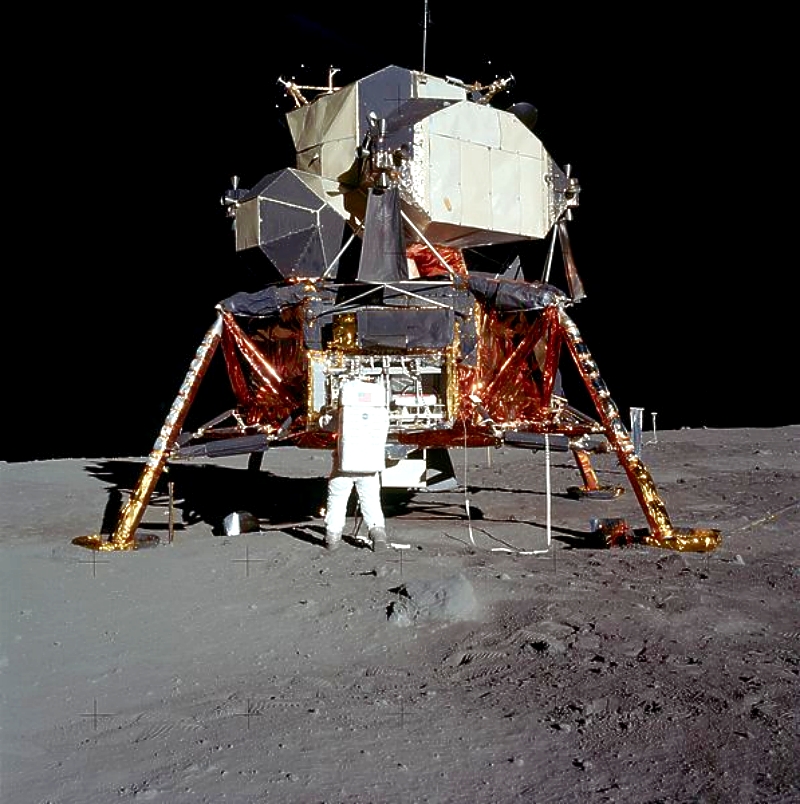
It wasn’t all grim tidings in 1969. The USK space programme made its spectacular landing on the moon with Neil Armstrong and Buzz Aldrin, getting the space programme back on track, which gave the whole Empire a Morale boost. But this was followed by unhappier news, with the discovery that the Chinese were supplying Mao Technology to the Irish, and were probably behind the rebellion against the Empire, and by a military coup in Libya which installed Muammar Qadaffi as the new head of state.

Investigating The Mao

American spy planes launched from Korea had achieved only limited success in scouting out the Mao, and had revealed little more than was already known about their capabilities. It was known that China showed few of the characteristics of an industrialized nation; there were no signs of factories, the cities were sprawling, decentralized affairs, and the roads appeared to be relatively primitive. There was no sign of railroad tracks. To the outside observer, i.e. the Empire, China was at best a medieval culture; and yet, they had shown themselves to be a superpower equal, even superior in some respects, to the Empire.

Civil works had been achieved which clearly matched the best that the Empire could manage; whole mountains had been leveled, or raised, farming was as intensive and productive as the best the Empire could achieve. Scattered throughout the Chinese mainland were spires of mountainous rock hundreds of feet high, on which vast fortresses that watched over the lands below.

Imperial strategists were eagerly awaiting real-time imaging from orbiting satellites, in the hope of gaining some greater knowledge of how the elementary problems of production and distribution were handled without the necessary industrial infrastructure. How could they allocate acceptable targets in any future confrontation if they didn’t know what was vital and what was not? This would no doubt prove to be vital intelligence in understanding the Mao and their technology, and might even be useful ideas that could be applied within the Empire. But as yet, the state of the art was inadequate to build such devices.

The Irish Rebellion

In the meantime, the Irish situation presented a heaven-sent opportunity, which several Imperial advisors demanded to take full advantage of. If the Mao were giving the rebels technology, they had to be showing them how to use the weapons; and that gave Imperial Intelligence something to get their teeth into. A movement within the Empire even arose dedicated to stirring the Irish up further to prolong the opportunities presented, and sabotaging attempts to arrive at a peaceful resolution. They risked both careers and lives; treason was still a capital offence, after all.

Unfortunately, the first thing that the Imperial agents doing the investigating learned was that the Mao had also exported their “techno-elitist” political structure to the Shin Faen; not everyone was being shown how to work the technology, only specific individuals – perhaps one in 100. Most of the acts of violence were being perpetrated using conventional weapons.

What astonished the analysts most were the collateral effects on the Irish cultures, where conservatism, superstitions and “the old ways” began making inroads even amongst the general populace. A survey conducted in 1970 found that more Irish people believed in leprechauns than believed in the Moon landings.

Agent OOC

One agent in particular managed to get further than any before in assessing the Mao technology; this was 00C‡ of MI6, who would go on to become a legend within the Intelligence community.

He was so convincing an infiltrator that he was sponsored for testing by the Mao trainers to see if he had “The Knack”, as the Irish had come to call whatever the difference was that the Mao were looking for. This test was conducted as a mixture of an ancient religious ceremony (which predated Christianity by several centuries), Tantric Meditation, a Buddhist ceremony, a few neo-military exercises, and an interrogation under the influence of some form of truth serum.

00C had mastered tantric meditation some years earlier, and was able to use the abilities so learned to delay the influence of the truth serum long enough to pass what he viewed as the only significant test, and of course he was in superb physical shape, and so had no problem proving his fitness. But for some reason he could not understand, he was turned down by the Mao for training. He didn’t have “The Knack”. He could only conclude that there had been some other subtle test carried out under the cover of the religious smokescreen and that he had failed that test.

‡ In the late 1990s My superhero campaign developed a spinoff based around an elite team of UNTIL agents, UNTIL being the United Nations police force in the Champions milieu. They had a number of spectacular successes against a variety of opposition – Viper, Genocide, Demon, and other Intelligence agencies. One of their key members was Agent Falcon, formerly Agent 00C of the British Secret Service – a ‘James Bond’-meets-Batman character. After the spin-off campaign wound up, the character (now an NPC) was seconded to the primary superhero team of the Campaign World – he was that good – to hunt down a suspected traitor within the team.

Since this is an Alternate History of that campaign world, significant individuals from that suite of Superhero campaigns will get name-checked or even play significant roles from time to time. When it happens, I’ll pop in one of these sidebars to offer a spot of context.

The Green Earth Treaty

But even while the Mao were sponsoring terrorist uprisings in Ulster, they were negotiating with the Empire on a number of different issues.

Two topics of particular attention were trade, and Major Weapons. Although unable to make much headway in the former area, the summit talks did at least have a beneficial result as both parties agreed that germ warfare, and biological weapons in general, were barbaric and should be outlawed by both.

This agreement cost the Empire more than it cost the Mao; China’s technology was not the type to develop a germ warfare weapon, so far as could be determined; but the Empire was happy to dispense with them nevertheless. They were always a risky business, quite capable of striking wielder as severely as target, and the ever-present risk of accidental release was unconscionable. The “Green Earth Treaty” was coached in generalities, but with some specific issues which benefitted both sides, essentially forbidding any form of “scorched earth” defense.

Whatever happened, any territories captured from the other side in future conflict were to be left in a condition to support the local populace and economy. The treaty, in effect, traded the volcanic weapon of the Mao for the Germ Warfare factories of the Empire, and both sides felt the more secure for the agreement. The Mao negotiators hinted that this was not their only weapon capable of widespread destruction, but the Empire still had its nuclear arsenals, so parity was maintained.

It was also tentatively agreed that on another occasion that this arsenal might also be placed on the negotiating table; “When you know what other weapons we can employ,” replied the Mao representative, insightfully.

The 1970s Begin

Through the 1970s, “Pop” would become subdivided into “Rock”, “Heavy Metal”, “Disco”, and a swarm of other musical sub-styles.

Author’s note: You may be wondering why I keep heading each decade with a spot-check on popular culture, especially musically. All will be revealed, eventually!

1970

The decade began with further declines in the stability of the Middle East and Africa; the trouble started in March of 1970 as Rhodesia declared itself a republic and severed all ties with the Empire.

Even as a military force was being prepared to reclaim it, and show the other member nations that “this is not a gentleman’s club from which one can come and go at one’s whim”, Israeli and Syrian forces met in violent conflict, which in turn edged Jordan and Egypt closer to hostilities with Israel. To make matters worse, the Empire was considered by the Arab nations to be biased and partisan in the matter, as shown by its creation of Israel in the first place, and none of the participants was particularly willing to accept Imperial mediation as a result.

This gave the Imperial strategists a new conundrum to unravel – if they used military force to keep the Arab States in line, it suggested the Arabs were correct in both the claims of partisanship, and that they needed to be independent in order to have any say in their own futures; while if the Empire did nothing, they would be shown as unwilling to aid a member state under attack by self-proclaimed independent forces. It was Central America all over again.

Ultimately, they found they had no choice at all; the troops that had been intended for Rhodesia were instead dispatched to defend Israel, and the Empire gave up its territorial claims in the Middle East in return for a cessation of hostilities. This was felt to be the only viable solution in the short term; and it meant that the Empress had to decide, once and for all – was the Empire to be a military state, in which freedoms were begrudgingly granted in exchange for loyalty to the throne, or was it to be a Commonwealth of independent states with a central Government, as it had slowly been becoming?

It was clear that it had been the audacious move to independence by Central America that had inspired the Arab nations; if American bungling had not forced the Empire’s hand, politically, the Cuban revolt would have been suppressed and the issue would not have arisen.

Again, the Empire had no real choice; this new pattern had to be nipped in the bud or there would BE no empire a century hence. But the answer was not as clear-cut as it first appeared; there was little support amongst the populace for a war of aggression, and acting to preserve the Empire might well condemn it to a more protracted and violent death. So inflamed were passions that in May, four students at Kent State University in Ohio were shot dead by troops while taking part in an Anti-War demonstration.

Now, more than ever, the experts of IMAGE needed to find a third answer, a way out of the corner into which the Empire had painted itself. They could scarcely believe it when the rebelling nations furnished the solution of their own volition – but that’s getting ahead of the story.

A costly victory

It would be repeating a common error in perspective to consider the Arab nations of the Middle East as a single unified voice, or even as capable of presenting such. They may stem from a common racial stock – the former Persian Empire – but they consist of numerous tribes who hate each other with a passion, and each tribal leader generally considers it his Allah-given right to speak, and act, for all. This disunity was a direct outgrowth of the essentially medieval cultural level of the societies, which perpetuated the old ways, the old religions, and the old hatreds. Now it played into Imperial Hands.

Libya began construction of a nuclear reactor, with the avowed intention of making itself a Nuclear Power, able to dictate terms to the Empire as an equal; while Palestinian guerrillas hijacked four passenger aircraft to obtain the release of Palestinian “freedom fighters” (terrorists) being held in Israel, Switzerland, Germany, and Britain.

When negotiations reached an impasse, the Imperial Army moved in to recapture the aircraft. The stumbling block might have been overcome with persistence and patience, but the Empire was on a short fuse and had little tolerance for delays and games. Rather than be captured, the Palestinians blew up the aircraft and all aboard.

By deliberately painting all Arabs with the same collective brush, the Empire was able to rapidly generate a pro-War sentiment where none had existed only months before; and in September of 1970 the Empire began what would be a decade-long and struggle to recapture the Middle East – and, not coincidentally, to recapture the oilfields that were critical to its long-term future.

It was a victory of sorts in the short-term, breaking the deadlock blocking military mobilization into the region; but ultimately it would backfire, turning allies into enemies and moderates into zealots.

In the meantime, Rhodesia was in an uproar. The controlling white minority refused to concede control to a Black Prime Minister under any circumstances; and furthermore, the entire peerage was exclusively white – and determined to keep it that way. These two issues prompted the formation of two rival Guerilla movements, each of which opposed each other as much as they did the white rulers of the Kingdom.

Caricuture of Ugandan dictator Idi Amin by Edmund S. Valtman. Click on the thumbnail for a larger image.

Idi Amin

Once the decision was made to let Rhodesia get away with secession, at least for a time, it was obvious that there would be imitators. The first was a blending of Qadaffi’s rise to power and the Rhodesian coup, as Major-General Idi Amin ousted the existing government and established himself as dictator and absolute ruler of Uganda. Amin was more cunning than these revolutionary predecessors; after ensuring that the available public records supported his claim of needing to take office in such a forceful manner to restore order to a nation that had grown corrupt and greedy, he petitioned for Imperial Recognition of his government.

He knew that while independence would in theory give him more freedom, it was an open invitation to the Empire to treat his power-base as they saw fit; whereas, by appearing to be a member in good standing, he would have almost as much freedom, guaranteed trade, the protection of the Imperial Military in the event that his neighbors got out of hand – and sapped much of the political will to oppose him.

All these things were important, because Amin was a sociopath who had navigated his way to supreme power, where he could give vent to the desires and urges he had spent decades hiding, suppressing, and cultivating; a monster who deliberately invoked the protection of society for his own benefit.

Middle Eastern Strategy

But these facts would not emerge for some time. At that time, Imperial focus was very definitely somewhat to the north of Uganda. The Empire’s conduct of the war puzzled many; the best public explanation was that too many cooks were trying to run the show, producing a wildly haphazard approach.

In reality, IMAGE was dictating the military objectives, and had customized the approach to each of the targets. In particular, they were using diplomatic carrots to appeal to the more moderate countries while throwing military sticks at the ones they wanted to “chastise”.

This multipronged policy began to bear fruit after only a few months, as Egypt and Jordan renewed their vows of fealty to the Empire, and opened negotiations with Israel concerning the disposition of the Palestinian West Bank. The military aspects of the campaign were in more serious trouble; the invasion of Afghanistan had met with something less than success, the country being rocky and full of passes in which “a grandmother with a broom could hold off an army”, to quote one Russian general.

The Arabic reaction was not all that swift, but was brutal when it eventually came, as Palestinian terrorists assassinated the Prime Minister of Jordan, prompting King Husain to rule out further talks; Jordan would henceforth try to steer a passage between the two factions that would neither offend nor satisfy either.

Location of Bangladesh, map by Rei-aitur based on a World Map by User:Varchion

The Pakistan Solution

At about the same time, other minor conflicts were threatening to escalate; In particular, India and Pakistan had become embroiled in a conflict over the autonomy of Bangladesh, where religious separatists had attempted to form a separate nation within the Empire.

The Imperial government was inclined to recognize Bangladesh; it followed the precedents established in the Middle East, and it was hoped that tensions could be prevented from escalating into a new conflict with the Mao, who had so far resisted being drawn into what was essentially a local matter on the fringes of both Empires. Pakistan, however, threatened to secede from the Empire if its borders were not guaranteed – in other words, if they didn’t get to keep Bangladesh.

The Empress was not impressed. She doubted that Pakistan truly wished to be an independent state trapped between two Empires; and she doubted even more strongly that even if the Government wanted to try, that the populace at large would want to go along.

She ordered all Pakistani citizens at large within the Empire to be rounded up, detained for 24 hours, and then deported – the last 747s permitted to enter or leave Pakistan airspace. At the same time, all non-Pakistani Imperial Citizens within the Kingdom – including the diplomatic teams – were evacuated, severing all diplomatic ties. It’s important in understanding her response to note that no notice was given to the Pakistani government of the return of their citizens, and that as members of the Empire, immigration checks were desultory at best.

The returned citizens were thus released into the general population to explain the reasons they had been sent home. Even as they were doing so, all trade with Pakistan was stopped and all shipping blockaded, effective immediately the last diplomat was evacuated. Bangladesh was recognized and the food shipments on which Pakistan proper relied were diverted there, as were a substantial contingent of Australian Special Forces, ready to react strongly to any attempted incursion. In effect, the Empress called the Pakistani bluff and put in place – forcibly – the very situation that Pakistan had threatened.

Central America was a long way from the Chinese boarders; that, and its general lack of importance in the greater scheme of things was sufficient to enable it to get away with secession. Pakistan was right next door to the captive state of India (which had been a Mao posession since its capture during the Third Global War), and had received enough people fleeing across the borders to understand the limitations on personal freedom and opportunity that conquest by the Mao would entail. The result was a mass uprising against the Pakistan government, which fell within a week. If rogue states could use revolutions to get their way, so could the Empire!

Topographic Map of Pakistan by BishkekRocks. Click on the thumbnail for a larger image.

Reforming An Empire

But when Pakistan petitioned for forgiveness and readmission into the Empire a week later, it was not restored to full citizenship.

IMAGE had been studying the larger problem handed them by the Empress, and had arrived at a modern redefinition of the concept of Empire. During the interim of the Pakistan Revolution, a progressive ten-tier level of Imperial Citizenship had been defined in the interim; at each stage, greater local autonomy was granted and less Imperial control mandated. Each stage was calculated to take progressively longer; Class 10 members could be recognized as Class 9 in only 1½ months, Class 8 could be attained in an additional 3 months, and so on. In effect, Class X members were on probation for almost 64 years.

Pakistan was readmitted as a Class IV member – capable of limited self-government, but not fully trusted, and with direct Imperial controls over their military and economy, with some travel restrictions, and with some trade penalties. It would require satisfactory membership within the Empire for 56 years before they were restored to their old status, though that could be reduced in certain circumstances.

This was the real Pakistani Solution – the development of an entirely new Imperial Model which defined an avenue for nations to transition from Imperial Subject Nation to an independant member of a great community of nations. The reformation of Empire which had begun with the American Revolition was now complete – at least in theory.

Wheels Within Wheels

To ensure that Pakistan did not feel that it was being singled out, a full-scale review of all other Imperial nations was carried out. The Empire had been relatively stable for well over 100 years, the results made zero difference to the typical Imperial Citizen.

The unusual timescales involved had been carefully chosen; Germany, the last great source of political instability within the Empire, had been forcibly brought to heel some 26 years earlier, and hence would have received a Citizenship upgrade to what was now designated Level VIII status some years earlier; the immediate effects was of a reduction in the restrictions on their citizens that had been imposed following the Third Global War and an increase in their level of freedom. In 8 years, they could be expected to qualify for level 9 status, and in 2010, all going well, they would be returned to full independent membership within the Empire.

Importantly, those countries whose membership had been forcibly interrupted, like France, but who had refused to cooperate with the invaders, would be unaffected. It went completely unnoticed that this placed yet another aspect of Imperial Policy within the purview of the Civil Service, who now held considerably greater powers than they had possessed at the founding of the Empire, when their bungling had brought about the American War Of Independence.

Decimal Currency & The Metric System

In 1971 coinage throughout the Empire was decimalized, an action which the French and Americans had long advocated, and the metric system was imposed throughout the Empire, which the Americans had long opposed.

The archaic Imperial weights-and-measures system of pounds, feet, and miles, had long been a stumbling block in the growth of the Empire, but the fact remained that a lot of people found it difficult to understand the new scales. Weights and lengths were not a huge problem, volumes were reasonably easy to cope with after a period of adjustment; the problems stemmed from the larger units of area. The “Hectare” was a unit that people had trouble getting a grip on, and the older “Acre” remained dominant in popular usage.

NB: This is a reflection of the author’s personal biases and limits!

1972

1972 brought no relief to the Empire from the problems besetting it. The year began with a strike by coal miners which led to large-scale power cuts.

The union movement, which had been skating on thin ice for many years, had finally gone too far. There was already an Oil Crisis, due to the ongoing problems in the Middle East; as a consequence Coal Mining was currently defined as an Essential Industry. The striking workers were arrested and charged with treason and sabotage, crimes of such magnitude that many of their normal civil rights were reduced or suspended entirely.

Interrogations established three scales of penalty:

  • Those who merely obeyed the vote were acquitted;
  • those who actively voted in favor of the strike action were found guilty and given suspended sentences – which banned them from working in any sensitive or essential industry, prohibited them from running for political office, and placed a permanent black mark on their records which would aggravate any subsequent appearances before the Magistrates;
  • and those who actually planned and led the strike action, who had stated publicly that the current need for their industry’s services meant that they had the Government “over a barrel”, and hence had known the severity of their actions, were imprisoned for 12 years, and permanently reduced in Citizenship classification. They were banned from ever holding positions of leadership again, prohibited from certain careers, and placed in punitive taxation brackets.
    A special grant of child and spousal support was made to the families of those affected – to be paid on the date that their divorces from those affected were decreed final.

These decrees, promulgated by the Empress at the instigation of the Civil Service with the support of the House Of Lords, were enforced by the Military, and marked a turning point in Imperial Society, introducing some aspects of Martial Law into the day-to-day lives of the citizens.

The Middle East Nightmare

The bloody stalemate in the Middle East continued to devour the Imperial Military. It was recognized that before a final Victory could be achieved, someone would have to develop an entirely new military doctrine, the equivalent of the leap forward taken by the Australians in the Jungles of GW3.

Terrorism continued to grow in intensity and frequency, culminating in the murder of Eleven Israeli athletes in the Games Village near Munich during the course of the 4-yearly Empire Games, and the hijacking of a Lufthansa airliner in a bid to secure the release of three terrorists being held over the Empire Games assassinations. This resulted in the implementation of strict anti-hijacking measures internationally, especially at airports.

A lesson in Economics

This was also the year in which Inflation became the economic buzzword. Economics is never easily understood and frequently seems to adopt positions contrary to common sense – a favorite example being that a strong dollar is bad for an economy. Inflation is all about the rate of growth of an economy, and in particular, the rate of growth in comparison to the manufacturing costs of the items that are on offer within the economy. If inflation goes up, it means that the manufacturing costs of the average commodity have increased by more than the real-world value of the pound, the dollar, the yen, or whatever. This of course means that it costs more of those units of currency to pay for the item in question.

When costs are dominated by factors other than the labor required, inflation is stable and largely irrelevant; but when the labor cost is the dominant factor it can create a feedback loop, a runaway chain reaction. The cost of living goes up, which creates pressure to put wages up so that people can continue to live the lifestyle to which they have become accustomed, but that puts costs up by almost as big a percentage as wages went up, so prices go up – raising the cost of living and starting the whole cycle over again.

The other half of the inflation story comes from the difference between economic growth and fiscal growth. Economic wealth comes from increasing the total value of possessions under control in the economy. Discovering a new oil well or mineral deposit adds real value to the economy. Simply printing more money produces the superficial appearance of economic growth, without actually increasing the wealth in the economy – which means that the wealth represented by a unit of currency shrinks. In terms of goods, the value of the currency shrinks, which means that it costs more to buy something.

In the early part of the 20th century, currency values were fixed – a dollar represented so much gold, or whatever standard the currency was pegged to. But after World War II it was decided that this was unrealistic and inflexible, and that the currency should have an unspecified but fixed worth, with the amount of a given commodity that you could buy with a dollar changing.

In theory, this meant that the economy was not forced to grow only by the amount of resources discovered during the year; “soft growth” like increased employment, new materials, new manufacturing techniques, new products, or whatever, could be taken into account. In theory, this was all well and good; it was only when married to another economic reality that the new evil became inevitable. That economic reality was the growth in employment vs. the growth in resources, and allied with a floating currency, this spelt trouble.

If the population grows 5%, and the level of employment stays at the same level, it means that there are more jobs than there were this time last year. That demands that the amount of cash circulating through the economy is a certain amount per head of population – regardless of the increase in wealth. This produces inevitable fiscal growth, regardless of the economic growth, which shrinks the resources represented by a single unit of currency – and sparks the endless cycle of rising prices and shrinking value of the Pound – in other words, inflation.

Prior to the 1920s, economic growth from new resources vastly exceeded the fiscal growth. Even afterwards, up until the 1950s and 60s, the economic growth that resulted from adding more workers equaled or outstripped the fiscal growth of the economy, so inflation still wasn’t a problem. But as it became harder to discover and exploit new resources, that began to change. If the population growth is 5%, the value of resources discovered and mined has to grow by at least 5%, or the economy begins to inflate. If 1,000,000 tons of wheat were grown this year, 1,050,000 tons have to be grown next year, and 1,276,281½ five years from now – and so on. The laws of compound interest demand that all economies begin to suffer from inflation as the worlds on which they live are fully exploited and their populations rise. It was an inevitability from the moment of the invention of currency.

Economic high fever

But in the 1970s, much of this simple progression of cause-and-effect was poorly understood, if at all; Inflation was seen as inherently bad, to be stopped at any cost. The economy was perceived as out of control, and like anything in that condition, was a train wreck looking to happen. The result was a growing lack of public confidence in the economy, and the 1930s had already shown the consequences of that – the economic disaster predicted by the doomsayers.

To keep the economy running, it was necessary for governments to print more and more money, representing wealth that the economy just didn’t have. The alternative was a 1930s-style crash, followed by another great depression – something that was in no-one’s best interests. To provide the illusion of health, and shore up that public confidence, national governments began borrowing vast sums of fictitious money from each other, and running up huge deficits. This cushioned and slowed the crash – at the cost of rampaging inflation.

Meanwhile, bank interest rates, which in theory were pegged to the growth in wealth, but in reality reflected fiscal growth, had gone through the roof. It was not impossible to reap an interest rate of 25% per annum.

Larry Hagman, 1973 publicity photo by ABC Television, USA. Copyright on this photograph may persist in some locations.

The New Entrepreneurs

Added to this was the growth in new industries driven by and servicing new technologies, which made it possible to acquire a fortune seemingly overnight. Just as in the 1920s, there was a get-rich-quick mentality in the air, and a new breed of entrepreneurs emerged from it. It was these entrepreneurs who were the ultimate accumulators of the fictitious “wealth” that the governments were pumping into their economies.

These colorful figures quickly found their existence reflected in the entertainment media. The programme that most reflected their influence – and the levels of underhandedness to which they had to stoop to keep their business empires intact against the ravenous appetites of others of their ilk – was “Dallas”. The soap-opera lives, trials, and tribulations of the Ewing family more closely reflected the reality of the world around them than even those living in that era appreciated.

It was in November of 1972 that the Empire, whose Civil Servants were the only ones in a position to be able to perceive the looming disaster of the overall international economy, imposed a 90-day freeze on wages, rents, and prices. This was the first of a number of attempts aimed at reigning in the impossible levels of inflation. If they had been able to maintain it for years – and reduce the birth rate at the same time – it would probably have succeeded. But because it could not be held long enough, and did nothing to address the population growth vs. wealth growth issue in the long term, it was doomed to failure. The great unknown was when the Crash would occur – and how bad it would be.

Revelations in the 70s

The weather has generally unreasonably cold through the latter half of the 20th century so far, a period of twenty-odd years. In 1962-3 there had been no frost-free nights in the northern hemisphere from Dec 22 through to March 5th; in January, cold weather forced the cancellation of virtually all sports.

It was through the use of weather satellites in attempting to understand the global weather patterns that the first significant breakthrough came in understanding Mao technology, when in 1972 an enterprising meteorologist attempted to chart the entire “life-cycle” of a single weather front.

Of course, this meant using satellites to track the front beyond the Imperial Borders, into Mao-controlled territory, and furthermore, involved the combining of data from multiple different satellites.

His report created a huge storm within the defense and intelligence communities, as it was shown that the Mao had clearly mastered some form of weather control. Severe weather fronts seemed to break apart as soon as they crossed into Mao territories, becoming mild and regulated. Simultaneous with this effect, a new weather-front formed off the coast of Japan, without perceptible cause, whose growth precisely correlated in timing and intensity over time with the diminution of the original front. This new front would then make it’s way through the normal climatic channels, picking up moisture from the Pacific and chilling in the arctic air, before sweeping south to engulf the rest of the northern hemisphere. In effect, the Mao were shipping their bad weather to the rest of the world.

Emvironmental War?

Was this an act of War? It clearly benefitted the Chinese at the expense of the Empire, so at the very least it was an unfriendly act; but since there were demonstrable benefits for the Chinese, and there were no regulations within the law that were directly comparable, it was not an easy debate to resolve.

Ultimately, it fell to the Empress Elizabeth to make the decision and set the precedent. She considered, and then determined that “…insofar as The Empire at no stage takes into account the consequences on, and well-being of, the Chinese Peoples in determining its policies (other those which directly relate to relations between our Empire and theirs), the Empire has no right to demand this consideration of the Chinese and their rulers. This is, of course, an issue of some sensitivity, and we should all strive in future negotiations with the representatives of China to ensure that the welfare of all becomes such a consideration.”

It’s important to bear in mind the context of the times when considering this decree. It was the early 1970s and the unwanted byproducts of their industrial culture were only beginning to show as problems on the Imperial Agenda. Concerns about the environment and pollution were beginning to rise for the first time, although these were still seen as regional issues; this waterway being affected by that factory, and so on. By generalizing and aggregating these into a global perspective, Elizabeth showed publicly for the first time just how sharp a mind resided on the throne at Buckingham Palace; it would be decades before Imperial politicians and policymakers would reach the same perspective.

Risk Assessments

With the determination that this was not to be considered an act of aggression, the focus shifted on tracking and analyzing Mao climate-control and its impact on their society and capabilities. These studies focused into two areas; one group studying the effects of an absence of severe climate, and the other analyzing the way the Mao utilized less severe weather.

The first group came in with their results quickly; they already had considerable raw data (thanks to the enterprising Meteorologist, who was given a Nobel Physics Prize for his discovery). The first question was how long this had been going on? It was decided that because there was no evidence to the contrary, it would have to be assumed that this had been the cause of the unusually chill winters that had been experienced in the Empire periodically over the last several centuries. Any impacts on Chinese society would be firmly entrenched by the modern era.

The basic principle of insurance is to prepare for the statistically improbable by collectively paying a fraction of the costs of repairing the damages that result from an incident.

An insurance insight

If, in a year, 1 home out of 1000 insured homes will burn down, for example, then the fundamental cost of a year’s insurance against fire is 1/1000th the cost of a new home. If the home costs 100,000 Pounds, the policy would cost 100 pounds a year, plus a fair share of the administrative overheads, and any profit margin. This imparts a degree of stability to life that is otherwise impossible to achieve. Insurance companies generally only run into trouble when they lose sight of the need to build up adequate capital reserves to meet future needs and begin disbursing their reserves as increased payouts to stockholders, increasing the paper value of their worth without increasing the funds available for their use. The fact that the people who stand to gain the most from this shortsightedness are also the people who select the corporate leaders of an insurance firm would lead to problems in the 90s.

The biggest problems in assessing the risk in the 70’s came from those statistically remote threats that generate multiple claims – floods, bushfires, earthquakes, and the like – and the assumption that the countdown to such events is set at zero at the time insurance first comes into effect. If there is a 1-in-100-million chance that an entire suburb will be wiped out by a flood in any given year, then simply dividing the rebuilding cost up over 100 million years produces a very low component – less than a penny per year. But if such an event happens after only 10 years of the insurance being in operation, then only ten one-hundred millionths of the cost have been saved towards such an unlikely event. Living and existing in an uncertain world mandates awareness of risk and of forward planning that arises directly from the need to be ready for the improbable.

Insurance companies soon learned to absolve themselves of these risks, passing the responsibility for dealing with “Acts Of God” to the Government. Slowly, over time, the reduction in capitol reserves would introduce more and more restrictions into the coverage provided. No conspiracy was required; one company would make a small restriction, others would imitate it, and then another would inch the line of coverage lower still. Corporate greed can overturn the principle of competition for a customer’s trade with no need for secret negotiations.

A Glimpse Into Mao Society

But the Mao were not faced with those risks. In fact, they were not faced with any environmental dangers to property. Without those risks, spontaneity and flexibly and a willingness to take risks would become far more prominent. The Chinese would be far more inclined to react to the here-and-now and not to the possible problems of tomorrow. To Imperial eyes, they would be tragically short-sighted; this not only explained much of their military conduct, but their reasons for war, and their conduct at the negotiating table. There would be a trend towards fatalism and a belief in destiny – that events would have a life of their own which could not be set aside – and a trend to react, not act. Awareness of these psychological elements would potentially be of huge benefit in future relations with the Mao.

The other primary effect of preventing serious climatic effects over a long period, it was determined, would be another side of the same coin: the Chinese would have no need to hold resources back in preparation for such unwanted occurrences, permitting a greater utilization of what they already had. Since the need to concentrate resources and then direct that concentration to the areas in which it is currently needed is one of the triggering factors for the growth of centralized communities, this began to explain some of the geopolitical landscaping within the Mao regime.

These results were also indicative of the social consequences of Mao technology. Unlike that of the West, Mao science was clearly an elite study, with few individuals able to understand and utilize the technology effectively – facts that had been known since the Second Global War. This implied a feudal structure to their society, with a poorly-educated underclass dominated by a specialist human middle-class and a well-educated alien upper class. This lower class would have little civil liberty; their lives would be tightly regulated. A Caste system was also distinctly possible.

There was a clear resonance in these findings with Eastern Philosophy and religion, with its concepts of reincarnation in the material world, acceptance of the status quo, and pre-destiny.

Further revelations in that area followed the analyses of the other group. They found that even minor weather systems were regulated and controlled by the Mao, travelling down restricted passages which fed into a series of dams and waterways. The entire Mao Empire received its water supply through irrigation. Again, the most significant aspect was the lack of wastage; in most countries, a significant percentage of rainfall takes place in areas outside the catchment zones for the domestic water supplies. By regulating where it rained, and how much, the Chinese were able to utilize virtually 100% of the available supply.

This in turn permitted extremely intensive agriculture – just add fertilizer. It went a long way to explaining some of the patterns that had been observed but not understood in Chinese agriculture; crop-intensive areas alternated in vertical strips down the map with livestock-intensive areas. The Chinese clearly practiced empire-wide crop rotation with natural fertilizers being provided in off-seasons by cattle, buffalo, and other domesticated animals. This was indicative of a tightly-regulated society, one which changed only slightly from one generation to the next; but (as was revealed by the earlier analysis), one capable of rapid and total response to changing circumstance. Once again, the pattern of being reactive, as apposed to being active, was revealed.

At last, thought the Imperial analysts, they were beginning to understand their enemy. They were learning the right questions to ask – and why some of their earlier questions had failed to yield answers of value.

Screenshot of NASAs World Wind globe software showing China. Click on the thumbnail for a larger image.

Reality Check: You didn’t think it would be that easy, do you?

In the early 1970s, satellite technology at last achieved the breakthrough that the strategists had been waiting for.

Not only would real-time imaging – or even rapid-time-slice photography – give valuable information about the technology and society of the Mao, it would also provide the intelligence community with a vital reality check of the deductions made from the weather control analyses.

The scientists and spooks were intently interested in the first images, of a farm being prepared for spring planting. They expected to see simple ploughs being drawn by cattle or buffalo.

Instead, they saw furrows being ploughed with no visible agent other than a single individual standing at one end of the field. This person pointed, and a furrow began at his feet and extended the length of the field; he would then take a step to one side and repeat the process. In the meantime, other people – who appeared to be dressed as simple farmers – walked along the newly-ploughed furrow and dropped seeds. When the entire field was ploughed, a gesture from the specialist brought rain clouds from the nearest weather-channels to provide a good covering of rain for the field, and he moved on to the next field in sequence. This evidence confirmed the broader speculations and deductions of the analysts while at the same time showing the potential for error in detailed forecasting of the impact on Chinese society. No oxen, no ploughs; but an essentially medieval/feudal social structure, with a technological elite.

As I said last time, if it’s not clear to any Gamer reading this that the Mao are using magic, you aren’t trying hard enough. Unfortunately, science doesn’t admit that magic exists…

A rude shock for Physics

The physicists were more outraged than anyone else.

One of the sacred cows of modern physics is that action at a distance, without some transmitting medium through which an effect can travel, is impossible. One of the hallmarks of Einsteinian Relativity is that it describes space itself as the medium which carries gravitational effects, eliminating one of the major examples that appear to contradict this belief. Yet the Mao ploughman violated this principle with a casual gesture.

Their fundamental assumptions had to be completely wrong to permit this to occur. They immediately linked this phenomenon with the other impossible things the Mao were clearly achieving – weather control, volcanic eruptions, some manner of instantaneous travel – and decided that the only way to avoid abandoning every principle on which all western technology was based was to assume that there was some previously-unknown medium which Mao technology manipulated.

In other words, just because they couldn’t see it, didn’t mean that there was nothing there to see – they just had to develop the right sensors, was all.

Vitally, this gave them a means of identifying – eventually – the nature of Mao science. All that was needed to identify a field of research as the one which the Mao had mastered was to look at a spring planting, (or probably a harvest, for that matter). If a sensor saw something, it was the right field of study; if not, it was something the Mao weren’t using – and hence, something that might give an advantage against them if applied to military technology.

Either way, the late 1970s set the stage for what was hoped to be a new boom in military technology. That meant funding, and the only thing that matters more to a physical scientist than his or her scientific principles is the funding which gives the opportunity to explore those principles. (Some would argue that funding is less important, overlooking that observations are expected to defy incomplete scientific theories, necessitating the revision of scientific principle – but without funding there are neither observations nor ability to revise. A problem with the science can always be corrected, if the funding is there.)

Personal Side-comment: This is the great danger posed by the ideological determination of what scientific should be funded and what should not. Modern religious, social, and political zealots are great at setting up “scientific” research that can only find the answers that the research was designed to find in the first place, confirming predetermined ideas and carefully eliminating results that do not conform. True science studies the actual data and uses it to test the best understanding of actual reality in hopes of discovering a new avenue of insight. “Research” which is not conducted in this fashion is not science. It was true of Lysenkoism, It’s true of most “Christian Science”, and it’s true of Global Warming.

There’s a parallel to the early reception of the theory of Continental Drift, which is now widely accepted, but was initially rejected for reasons both good and bad. Because the advocate of the theory, Wegener, was not a Geologist, many dismissed his findings. The fact that Wegener had no explanation for the motive force and didn’t try to invent one should have made his observation of the fact that continents DO drift more compelling, not less. But it contradicted the accepted dogma of the time. It was only in 1958, fourty-six years after Wegener’s proposal, when the theory of plate tectonics was introduced, that the ‘scientists’ involved began to accept the theory. You can read more on the story at this Wikipedia page.

Right now, we are in the situation in which Global Warming is accepted dogma and attempts to disprove it are stifled. The theory that it is NOT happening is the equivalent of the theory of Continental Drift. It might be happening, it might not – but the evidence is so biased by the dogma that it’s hard to accept it at face value.

I’m a skeptic on the subject because political ideology is being used to cut funding to attempts to disprove the theory – I’d be far more willing to accept the possibility if those in power were not so intent on shutting down any opposing view. It’s not science, it’s dogma. Feel free to disagree.

Comments (7)

Sugar, Spice, and a touch of Rhubarb: That’s what little names are made of


This entry is part 3 of 11 in the series A Good Name Is Hard To Find

Photograph by Geri-jean

This is the third part of this series on character names. Part 1 discussed the value of a good name, and examined the attributes and benefits that characterized a good choice of name. In Part 2, I explored “Name Seeds”, the heart of a system that I have developed for the creation of passable-or-better names for my own use. It studied the process of converting a central conceptual point into a Name Seed by means of structured and directed association. I also skipped ahead a little to reveal the basic process of converting a name seed into an actual name, a topic that will be the central theme of Part 5 of this series.

But before you can complete the transformation from Name Seed to Name, an essential step is to determine the Name Structure. Different constructions can add layers of meaning, informing about the society of the character as well as the individual and their place within that social structure.

The name structure contains hints as to the ability to expand, the level of cultural development, the attitude towards family and children, the educational standards, and the respectability of a profession, and much more. This is often the most overlooked aspect of generating a good character name.

There is a sociological hierarchy to the development of names of increasing complexity that runs all the way from the primitive to the decadent. This hierarchy is going to be our roadmap through the subject of today’s discussion.

The stages of this hierarchy (and related subjects) that I’ll be talking about are:

  • One-word Names – Monosyllables, Bi-syllables, and Polysyllables
  • Bi-structured names – First names and Second names, Christian Names and Surnames and other binary structures
  • Tertiary names – Middle names and Maiden Names and other nuances
  • Decadent naming structures
  • Abstract names and Descriptive Names
  • Alien & Non-human names
  • In, Of, and other unlikely critical naming elements
  • Reflected Cultural Values & History
  • The Emphasis Of Inheritance
  • The Importance Of Titles

From time to time, I’ll be departing from this script, but that’s the overall agenda. Its way too big a subject to cover in just one article – In fact, this week will barely make a dent in that list! So, without further ado…

One-word Names

I’m sure there’s a specific term for “one-word names” but I couldn’t find and identify it. Would anyone care to enlighten me?

There are three uses for One-Word Names:

  1. Some writers use only one word for alien names to use the strangeness of the name structure to add to the exotic flavor of the name.
  2. One-word names can denote simplicity, power, primitiveness, and strength.
  3. Superhero and stage names are often a single name for similar reasons.
Alien Names: There are better ways

Pulp and Space Opera adventures often use single-word names for aliens – “Blarg” and “Zaph” and “Xoorm” and so on. Because this usage is traditional, it is reasonable to permit it as an exception to the rules. But in any other sort of campaign, this choice of name is not a good one.

The more populous a species, the greater the need for additional names to identify a discrete individual. That’s why humans started with one name, which evolved to be one name “of” somewhere, then two names, then three or more. And that’s despite the incredible number of languages and dialects here on Earth, all of which carry different naming standards and conventions – i.e. more names to choose from. Unless the alien species in question consists of a single individual – a colony or hive mind, if you will – or something equally unusual with equally tight integration – one-word alien names should be reserved for the occasions when reasons 2 or 3 are valid.

Monosyllables

The ultimate in primitive names is the monosyllable. Names like “Bam”, “Gork”, and “Durg” are almost grunts instead of speech. But there are only so many of these to go around – at first glance, you might be able to name a couple of hundred individuals, but that seems like the limit.

Or is it? There are 21 consonants in the English language (counting “qu” as one) and 5 vowels. Add in “th” to make it 22 consonants. So a simple consonant-vowel-consonant structure gives enough variants for 22x5x22= 2420 words – and that’s without adding in an “r” or an “l” before the last consonant, or even an “rl”. These alternatives come close to quadrupling the number of possible results (there will be a few that are invalid) to 9680.

Actual results would fall short of this mark because “l” and “rl” don’t work with every consonant, and there will be homonyms to eliminate – “c” is either the same as “s” or “k”. Even so, 4000 sounds like a fairly conservative estimate, and 7000+ a more likely result.

But there’s a problem with this logic. Presumably, this range would have to accommodate the primitive society’s entire vocabulary. I have read that 4,000 words are enough to form a basic vocabulary, but that the results are totally lacking in nuance. A functional vocabulary for anything above a stone-age culture would have to contain at least twice this number of terms. That means that each member of our fictitious society is actually named for some everyday, ordinary object, action, quality, or relationship.

And not all the vocabulary would be acceptable for the purpose. Perhaps as many as 10% of the words in the vocabulary would be unacceptable for reasons of meaning – calling an individual “child” or “father” or “mother” (or their monosyllable equivalents) as their name just won’t work. A similar number of terms would fail to make the grade because they would be demeaning or insulting, something no parent would saddle a child with. And twice as many again would have to be excluded because they would cause confusion – try reading a passage from any novel, replacing the character’s name with something like “work” or “kiss” and you will soon see what I mean!

With as many as 40% of the potential names excluded for the purpose, our 7000+ looks more like 4200. So that is the theoretical maximum number of individuals who could be named using the one-syllable approach. In practice, this approach would be abandoned because of lack of choice when only half, or so, of the available names had been used.

In other words, Monosyllable names only work if there are no more than about 2000 individuals to be named – or less – total.

That’s not 2000 in a tribe, that’s 2000 total across ALL tribes. Okay, if there were more than 20 tribes, it would not be unreasonable for a name to recur in several – as many as 5 of them, perhaps. But expecting a total population of more than 5000 to be serviced in this way is impractical. So save the monosyllables for the most extreme cases.

Generating a monosyllabic language the easy way:

1. Generate a list of consonant-vowel-consonant combinations, using the principles discussed above. For ease of use, these should be organized alphabetically. Include “St” and “Th” and “Qu” but not “C”, include combinations like “Br” and “Dr” as consonants at the start of the resulting monosyllables and “rb”, “rd”, and so on at the end. Exclude any which are known English words.

2. Randomly rearrange these by moving all occurrences of a given consonant to a different place within the order at the same time. “Ta”, “Te”, and “Tu” might be followed by “Be”, “Bi”, and “Bo”.

3. Get a copy of Roget’s Thesaurus.

4. For each of the numbered Head Words in the thesaurus (not the index of words and phrases), attach one of the consonant+vowel combinations, in order. If an entry in the thesaurus indicates both a noun and a verb form, use a separate entry for each. Simplify the “entry word” as necessary by skimming through the entries in the thesaurus. DON’T try translating adjectives as well, you’ll run out of combinations.

That means that the ‘alphabetic’ sequencing of the list of combinations associates similar sounds with words and phrases relating to similar subjects:

Tath = Existence (noun) = Reality
Teth = Existence (verb) = Begin
Tiv = Non-existence (noun) = Nothing
Tiz = Non-existence (verb) = Destroy, Break
….. and so on.

5. The end result is a vocabulary of 990 nouns to describe objects in general and a similar number of verbs to describe actions. Since the results are in the same logical sequence as entries within a Thesaurus, a little practice will make it easy to run down any word that you need to translate.

6. From time to time, you may encounter something specific that deserves it’s own name. For example, this technique will yield one word for “Animal” and one word for “Weather” – but “Horse” and “Bear” are not the same thing, and neither are “Rain” and “Snow”. Simply generate a new, more specific, word for your list based on the existing general word.

Two-syllable primitive names (bi-syllables)

Once again, I’m sure there is a technical term to describe one-word two-syllable names, but I couldn’t find it. “Bi-Syllabic” and “Bi-Syllables” will have to do.

The preceding analysis makes it quite evident why it became socially necessary to expand beyond the one-syllable name (and the one-syllable word, for that matter). Five different approaches to adding the extra syllable present themselves:

  • Descriptive Addenda
  • Atavistic Addenda
  • Locale Addenda
  • Occupational Addenda
  • Familial Addenda

The choice between these options immediately sets once society apart from those who choose an alternate option and begins demonstrating the attitudes of that society and the impact of those attitudes on its citizens.

Descriptive Addenda

Adding a second syllable which derives from a one-syllable descriptive term is something that only works when the individual has achieved sufficient maturity that the qualities to be exemplified have begun to manifest. This accords in most species generally with the onset of puberty, as the child begins to become an adult. The implication is that either the infant/child mortality rate is so high that few child names are important prior to this point in life (and that the birth rate is corrospondingly high); or that children are so few in number that only a few names are needed until this stage of life is reached (with a correspondingly low birthrate and long lifespan).

Children are going to be valued less in the first of these societies; they will be a drain on resources in the short-term but this will generally be considered an investment in the future. The thing is that most people only invest disposable income, after the necessities are taken care of. Consequently, children will be poorly cared for, will receive only the leftover food after the adults have fed, and so on. This in turn implies a naturally hardy species. This sort of structure also suggests that child-rearing is a whole-tribe activity, performed only after more urgent duties are completed; the bonds between parents and child will weak or even non-existent. Children will be considered part of the tribe or extended family, not a part of a family group. These characteristics all accord with the usual interpretation of Orcs and Goblins in fantasy RPGs. There would almost certainly be some form of rite-of-passage at which the second name was conferred. Characters with this name structure will have names that are genuinely representative of their personality and individuality.

In the rare-child society, children would be greatly valued and sheltered from harm at all costs. Again, child-rearing would be a whole-society function, with reduced or no emphasis on individual family relationships. With greater rarity, it becomes more likely that children would be perceived as distinct individuals from an early age. There would be a tendency to confer second names quite early. This in turn means that there would be more chance of getting it wrong, so second syllables would be less strongly reflective of the individual’s actual characteristics. This social structure would be appropriate for less civilized elf-kinds, or other simple fey.

Avatistic Addenda

Many primitive societies seek not to identify with personal attributes but with the attributes they wish to acquire, or to identify with a creature that they believe will shape their attributes and lives. An individual desirous of strength might associate with “Bear”, for example, whole one desiring keen eyesight might choose “Eagle”. If these are defined as direct translations of a monosyllabic tongue, adding them to a character’s name is a form of avatism, and the resulting name has an avatistic component.

Unfortunately, this form of name construction doesn’t work as well as other options do when using the “Name Seed:” technique. This is because a Name Seed already embodies any desired avatistic element, the first syllable of this construction being already based on the character’s most defining characteristic. Either a character ends up with a name in which both halves mean roughly (or precisely) the same thing – vastly reducing the number of possible combinations available – or the initial name seed is in danger of being overshadowed by a second, less symbolic, name element.

Overcoming this problem can require a little lateral thinking. There are three solutions:

  1. The second syllable can reflect some associated trait or alternative aspect of the Name Seed represented by the primary syllable. How does possessing the attribute described by the first syllable usually make a character feel?, for example. A character named “Strength Leader” suddenly manifests as an aspirational name, even if neither of the individual syllables mean that within the monosyllabic language. (‘Leader’ expresses the name seed ‘confidence’, which describes how a strong character usually feels). But this name could translate into at least two alternative meanings: “Confidence In Strength” (a far more gung-ho jarhead personality than ‘Strength Leader’); and “Strong Leader” (denoting a character who possesses more than a little Leadership capacity).
  2. The second syllable can reflect some contrary or counterbalancing influence. “Hidden Strength” still means “Strength”, but also carries connotations of subtlety, for example, while “Strong Control” suggests a character who is more manipulative and forceful than one possessed of outright physical strength.
  3. The second syllable can derive from an opposing level of abstraction to that of the original syllable – i.e. if the original Name Seed was an abstract interpretation of the chosen character theme, the second syllable can be a literal interpretation of the same Name Seed, or vice versa. This produces character names like “Strong Bear” or “Tall Mountain”.

Any of these three approaches will work just fine – so choose the one that best fits the character that you are naming. The more complex and sophisticated they are, for example, the more prominant option #1 should be in your thinking. The more focussed the concept is on a single central attribute or theme, the more prominantly option #3 should loom. And option #2 is at its best when you have only a vague concept for the character, since it throws up interesting possible personality profiles that you might not have thought of.

Locale Addenda

This is one of the most common ways of extending a name. The “Zog” who lives by the lake is not the same person as the “Zog” who lives near the big tree, who is not the same person as the “Zog” who lives in the big cave, who is not the same person as the “Zog” who lives in the Marshes.

While it is more common for whole names formed in this way to be two separate n-syllable names, the principle can apply just as easily to forming a two-syllable one-word name.

Occupational Addenda

This, in comparison, is a very rare method of extending monosyllabic names, simply because societies who are so primitive that they are only now getting started on polysyllables rarely have differentiated labor and professions. Each person does whatever is necessary for the maintenance and operation of their own household.

That’s not to say that certain individuals would not get a reputation for being better at some task than others; this is the foundation for a simple trade in services. “I caught an extra fish today. I will give the fish to you if you give me a handful of your lemons”.

Accordingly, even in a society where other sources of second syllables predominate, there will be the occasional smattering of names using this structure. Such names will only occur in cases where the individual is comparatively gifted in the subject denoted by the second syllable.

The other exception generally concerns a form of leadership – temporal or spiritual or ritual or military. The theory is that someone’s mode of address contains an active reminder of the special status of that individual. It is this line of though that eventually leads to the creation of Titles, a subject to be discussed separately. There is no good reason why the invention of “Titles” cannot precede the invention of two-word names.

That would mean, of course, that whatever the second syllable was that the person had prior to taking up their new authority, it would change when they did (people who are only figuring out two-syllable names aren’t nearly ready for “title plus two syllable”. Accepting the office results in the office-bearer changing his name. The new name is thus a constant reminder to everyone of the authority, significance, and responsibilities of the person being addressed, which would have a powerful symbolism in any society utilizing this approach.

Familial Addenda

This is at once one of the most powerful forms of name extension for conveying information about a society and – at the mono-to-bisyllabic levels – one of the least likely. We’ve already established that most societies at this standard of civilization would practice communal child-rearing; it would be quite easy for a mother in such circumstances to neither know nor care which of the young she had given birth to, and it would be even less likely that a male would know whether or not he was a father.

Events such as pregnancy , with a substantial gap between cause and noticeable effect, would be ‘the will of the gods’, not a consequence of Biology. At best, sexual activity on the part of the mother might (eventually) be construed as signaling the mother’s readiness to produce young.

It is this unlikelihood that makes this name construction such a powerful tool for communications about a society. If the familial name is Matronomic then that has implications for inheritance and property ownership, which in turn can have implications for the structure of authority and wealth. If it is Patronomic then either women are (or were) considered the ‘property’ of a male, or there is some other reason why males dominate in this respect – a reason that will have implications for rituals, ceremonies, taboos, superstitions, religions, inheritance, social organization… the list goes on and on.

Perhaps because the naming pattern which most of us are used to in modern times is Familial (and usually Patronomic) in nature, this is often the first approach that occurs to writers and GMs, and especially to beginners. Because few of these recognize the implications, it is also one of the most-frequently abused.

Save this approach for those occasions when the society you are creating and the implications are in accord – at least when it comes to bi-syllabic names.

My Name Runneth Over – streamlining syllable soup

The human tongue is lazy by inclination, almost as much so as the human operating it. Unless a rigid formality or love of enunciation are strong social values that you want to bury within the naming structures used for a character or series of characters, sloppy articulation will cause syllables to run together over time. This is especially true if the syllables are both defined as “consonant-vowel-consonant”. Over time, one or both of the resulting sets of consonants will tend to get lost, partially or completely, to make pronunciation easier.

With Prep: To make your names functional, realistic, and easily-vocalized by an always-too-busy GM, this needs to be taken into account. Doing so is not all that difficult if names are prepared in advance; simply repeat the name three times aloud, quickly. The first time, you will probably get it right, exactly as written; the second time, your tongue will stumble or catch at any tricky points; and the third time, your tongue will generally “smooth over” the stumbling block – rendering the name in its final form.

Take the example “Boptklik”, which is made up of the syllables “Bopt” and “Klik”. This technique quickly uncovers the first “k” as the stumbling point, and on the third enunciation, produced “BOPTLIK” – a perfectly serviceable two-syllable one-word name.

Without Prep:When creating names on the fly, you generally don’t have the luxury of enunciating a name before you use it. In this circumstance, an alternate technique is to say the name to yourself a few times, moving your tongue as though saying it aloud without actually vocalizing anything. This is generally a less-efficient and less-effective approach, but it will usually get the job done.

Be aware that names can be vocalized more easily at low volumes like this than they can be spoken aloud at volume when you are concentrating not on the name but on everything else that you have to communicate.

Polysyllables

Polysyballic names should not be confused with Decadent Naming Structures which can also tend to produce polysyllables. The distinction lies in the purpose of the extra syllables; in a polysyballic name, they are used to generate a one-word identification symbol for a specific individual, in a decadent name structure, they are used to enhance an already-adequate name in some (or several) respects. I’ll go into more detail on the subject of decadent naming practices in a dedicated section in Part 4.

When names start stretching to polysyllable one-word names, most of the original meaning of the syllabic approach will have been lost. Most of the monosyllable words in the vocabulary will have been replaced with a multitude of more subtle and nuanced variations in meaning as the language grows.

It’s at this point that you can forget about symbolism and direct meaning, and start considering the sort of criteria that were discussed in part 1 of this series, and the examples that were offered in part 2.

This is actually a rare naming structure. Far more commonly, name structures will evolve into multiword structures in preference to bigger one-word structures. Consequently, this choice once again almost-subliminally buries important information about the culture into the name structure. That quality can be summed up in one word: concise. This is a population who will never use two words when one will suffice, even if that one word has to be larger.

Like an iceberg, nine-tenths of the significance of this choice is not on overt show. This same conciseness would pervade every other aspect of the society. There would be nothing done purely for ‘show’, all undertakings would have a minimalist approach. Future needs would rarely be accommodated in the planning and construction of buildings, furniture, implements, etc – so long as it us fit to serve the function it is to have “right now”, it would be good enough, and anything more would be excessive. Efficiency – of thought, of plan, of deed – would be the most highly-prized virtue.

Bistructured Names

Technical terminology can be a pain at times, but there are also times when its absence is keenly felt. Trying to come up with a term to describe names that consist of two discrete, generic, sub-names, was one of those times. Hopefully, the reader will be able to tell the difference between a “Bisyllabic” name (one-word, two syllables) and a “Bistructured” name (two words, no particular syllable length). This text panel is to call out the problem and bring the difference to the reader’s attention.

This name structure will be familiar to just about everyone, as it is the most common name structure on the planet (while most of us have middle names, they are rarely used in ordinary usage). It breaks a name into two separate words, usually a christian name that denotes the individual and a surname that denotes a related grouping of individuals. Usually the christian name precedes the surname, but this order can sometimes be reversed.

Christian Names

Since the naming of individuals is generally a matter of free will on the part of the person or persons responsible for naming the individual, it would – at first glance – seem to have little to do with the attributes or personality of the named individual. Deeper thought reveals that this is going to be the name with which the person is most closely identified (by both the individual and by others). It will be directly reflective of the personalities and attitudes of the individual’s parents (or whoever is most responsible for rearing the individual as a child), and therefore offers a clue as to the individual’s home life.

It will also be the name the individual will most-often respond to, will in fact get in the habit of responding to. The attitudes and opinions of the people around the character and especially of their peer group will be (in part) shaped and informed by this name and its social connotations or ‘flavor’ within the society. How many children are teased by others using a derivation of their name, especially in their most formative years?

The resulting experiences will undoubtedly have a marked influence on the personality, ambitions, and activities of the named individual.

The causal connections may be indirect, but they are definitely pertinent and very real.

Relevance to the ‘name seed’ approach

Ultimately, the individual’s personality and parameters can be considered analogous to a sausage. A whole host of influences and experiences combine to produce that individual, but – much like a sausage – they are chopped up and minced together in the process. The more that is known about the individual’s history, the more of these connections between behavior and circumstance and influence can be traced. In seeking to use the name to encapsulate the end result, we are attempting to establish a one-to-one identification between the name and the individual – in effect, stating that the name is the result of the same influences and circumstances that produced the individual. But tracing out and identifying all those causative influences and their relative impacts can be a long and tedious process, akin to trying to turn hamburger back into steak-plus-additives.

The ‘Name Seed’ approach ignores the process and considers the end result, this one-to-one relationship between individual and name, to generate a name that describes the individual. The economy of this approach is that we don’t need to identify all those influences in advance and chart their impact on the character’s life; instead, we can create the name and – if desired – work backwards as much as necessary to identify the strongest of the influences and their implications on the character’s past.

Surnames

What, then, of surnames? Since the character – and those with the responsibility for naming him – have no volition (or, at best, limited volition) over this element of the name, surely it doesn’t hold as much relevance to the personality and attributes of the named individual?

Well, while the peer group / outside reaction to the surname would be less than in the case of christian names, it would still be present. In addition, the surname is usually reflective of socio-economic status to at least some degree, which can have lasting effects. Finally, the surname may publicize affiliation or association with a particular social, religious, or ethnic population, and that exerts both direct and indirect influence over the named individual. Furthermore, as discussed in the earlier section on second syllables, the surname may well reflect cultural patterns (inheritance rights, for example). All told, it’s possible that the surname exerts an even greater influence over the individual’s development than the christian name!

Placement within scope

I often think of the relationship between the two names this way: the surname dictates the scope and the nature of the opportunities that will be or have been presented to the character; social reaction to the christian name dictates, in part, how the character will react to, and how well they can utilize, these opportunities.

Backtracing the cause-and-effect sequence – hamburger into steak – means that this relationship pattern should be reflected in the name of an individual whose personal circumstances are dictated by the plot or by their current status. In effect, the Name Seed approach inverts the cause-and-effect sequence; rather than considering the name to be the end result, we consider the Name Seed to be the ’cause’, and use it to derive a set of possible ‘effects’ which we then choose between. Restoring the cause-and-effect arrow to its normal direction produces a name which reflects the ‘effects’ that have shaped the character.

This clearly relates back to the reasons a good choice of name can add to the depth and solidarity of a character. The many benefits of such a name listed in part one are the direct consequence of the closeness of relationship between name and individual – the closer this identification, the better the name.

Other Approaches to binary name structures

The christian-name-surname combination is not the only pattern that is possible. One of several alternative approaches that has already been mentioned is for the christian and family name to be reversed in sequence. This implies that family, clan, or tribe, are more important within a social structure than the individual.

Or perhaps the father’s christian name is used as the character’s surname – “Lionne Perlesque” meaning (literally) “Lionne, son of Perlesque”. This places the parental authority over the family unit in more prominent position.

Or the character’s surname might be the christian name of the oldest living family member at the time of their birth, or the oldest male, or the oldest female, or simply of the family/clan/tribal ‘leader’ at the time. All these choices are subtly different and imply different relationships, social values, and authority structures within the family unit, and hence within the societies that these family units are, in turn, part of.

Perhaps the surname is the christian name of the most-recently deceased member of the household, suggesting a form of ancestor worship (or at the very least, a veneration and respect for the ancestors that goes beyond what we would consider normal). Note that you get very different societies if this surname is restricted to only male or only female ancestors, or if gender is disregarded!

There is the traditional Amerindian practice of a surname reflect an event of significance (metaphorically speaking) that takes place on a vision quest or at the onset of manhood, usually relating to the first living thing that the adult individual sees, coupled with an anglicized christian name – “John Running-Horse” immediately identifies the racial and cultural origins of the character.

Ullar: An extreme example

"Ullar" is both an abbreviation of the full name and the name chosen by the character for use in his relations with humanity in general. It was inspired by the cries of the Martians in Jeff Wayne's 'War Of The Worlds.'


In the society from which the original superhero of the Zenith-3 campaign background derives (a character created by me to learn the system), part of the character’s name derived from the mother’s name, part from the father’s name, and a third part chosen by the parents to bridge any pronunciation gap between the two. Another syllable was added to represent the character’s current social class, one for the highest educational standard achieved to date, and one for the (broad) career chosen.

As the individual matured and different stages of life, there was a formal recognition of this growth by changing the “bridging syllable”:

  • the infant choice by the parents
  • the child-name by a pair of older relatives (one from each side of the family) (the parents would choose if there was no-one else)
  • then two the child’s teachers (the student-name)
  • the child’s career planner (the teen-name)
  • the child’s two closest friends (chosen by the teenager) (the semi-adult name)
  • and finally, the individual themselves (the adult name).

Each transition was accompanied by a traditional coming-of-age ceremony, and carried proscribed levels of independence and responsibility.

From this mélange, the individual chose a two-syllable combination as a name for every day use by friends, another for use by family, another for use professionally, and other combinations as necessary to reflect some chosen group identification – the individual might choose a new name for use in his chess club (or equivalent) if chess became important to him – the theory being that each person presents a slightly-different face in each different social setting. Six syllables, taken two at a time to form a name, yields 36 combinations.

When they married, the male would choose one of his wife’s syllables to add to his name and she would choose one of his to add to hers – each losing the syllable chosen by the other. Only when addressed in high formality would the full name be used.

These choices were not arbitrary or capricious, but were the subjects of careful consideration. Whichever syllable the wife appropriated would change the character’s name in those affiliations in which he had used it, and hence would both advertise his changed status to that group and the nature of the relationship between the couple.

In that society, knowing an individual’s full name told you everything you needed to know about them (most of the time). It was very easy to build in personal history – a character from that society whose records showed that the parents chose the character’s semi-adult name was immediately marked as a loner without close friends, for example.

This is perhaps the ultimate example of a name reflecting hidden cultural values to those with the wit to grasp them.

Sources Of Surnames

In addition to the directed free-association approach demonstrated in the previous article, there are many other sources of surname choice that can be considered. I won’t bother to list them here, because the list is exactly the same as the possible sources of a second-syllable in a two-syllable name, given earlier in this article – descriptive, locale, occupation, and so on. If free association comes up blank, or if you want to emphasize one of these sources as important within the society in general or for this character in particular, draw apon these for inspiration. “Ludwig of Salzburg” is a perfectly valid combination of names, for example – though technically, since I haven’t yet discussed Bridging Words like “of” in a name (I’ll get to that next time), at the moment it would be “Ludwig Salzburg”.

Still to come:

Whew! Out of time already, and still with a lot more to discuss in part 4:

  • Tertiary names – Middle names and Maiden Names
  • Decadent naming structures
  • Abstract names and Descriptive Names
  • Alien & Non-human names
  • In, Of, and other unlikely critical naming elements
  • Reflected Cultural Values & History
  • The Emphasis Of Inheritance
  • The Importance Of Titles

Comments (12)

The Imperial History of Earth-Regency, Part 5: The Cold War Begins – 1945-1959


This entry is part 5 of 12 in the series The Imperial History of Earth-Regency


Pieces Of Creation is an occasional recurring column at Campaign Mastery in which Mike offers game reference and other materials that he has created for his own campaigns.

All images used to illustrate this article are public-domain works hosted by Wikipedia, Wikipedia Commons, or derivations of such works.
 

The INS <em>Missouri</em>

The Empire Fractures – 1945-1953 (~100 years ago)

When the history lesson last drew to a close, the Mao had been forced to the peace table by the Imperial development of Nuclear Weapons, ending The Third Global War. When the Chinese cease-fire was signed aboard the INS (Imperial Naval Service) Missouri, the Empire looked forward to a period of relative calm. Regrettably, any such hopes were quickly to founder…..

State Of The Empire

It would be a mistake to view the Empire, at any given stage of its history, as a homogenous whole. Within the constraints imposed from above, each nation retained its own cultural and social identity. The integration of the new structure with the remnants of the old was frequently a turbulent and tumultuous process, and one which could rarely be said to be complete. In this history to date, much has been made of how the Empire as a whole behaved toward its individual constituents and how Imperial Politics concerned those members. Rather less attention has been given to the attitudes of the individual nations toward the Empire. Yet, as a matter of day-to-day practicality, to the ordinary person, these individual perspectives are easily at least as important as the overall broad picture.

A beautiful rendering of Napoleon Bonaparte, color by Jan Arkesteijn - Click on the thumbnail to see a larger image

France

France, for example, had a constant love-hate relationship with their Imperial Membership. At times, they were solidly pro-Empire, as their ongoing membership had clearly brought vast benefits to the Kingdom. France was the birthplace of Bonaparte, acknowledged as one of the greatest political and military figures in Imperial History – far more significant, if truth be told, than many of the actual occupants of the Imperial Throne. The problem was, mostly, that the ordinary British Citizen expected the French to be grateful – and over time, that rankled and irritated. Consequently, every decade or so, the French mood would do a complete backflip. But even when most disgruntled, things never went so far as to consider an attempted withdrawal from the Empire; when all was said and done, parts of France were the oldest non-British members of the Empire, and this seniority gave them considerable social status. And, of course, the sheer notion of an Empire was a romantic one, and the French have always been lovers of Romance.

The Colosseum photographed in 2003 by Andreas Ribbefjord

The rest of Europe

The Italians were never more than lukewarm and pragmatic members of the Empire. Surrounded by the relics and icons of an Empire which, in Italian hearts, was as great and powerful as that of the Modern Day, they had a perpetual chip on their shoulders about their perceived social status. The Spanish and Portuguese largely ignored the Empire so long as it ignored them, and simply carried on in the placid lifestyle to which they had become accustomed. The Swiss saw themselves as the arbiters of the Empire, the negotiators to whom all would turn when they sought an alternative channel to the Civil Servants. And the Russians were the downtrodden never-say-die pragmatic pessimists which kept Eastern Europe, and hence the Empire, secure from the Mao. They were the perpetual front lines, and took an almost-perverse pleasure in being ‘the rocks against which all attacks would eventually founder’. Austrio-Prussia were the cultural elitists of the Empire. And the Greeks claimed the kudos for inventing both the concepts of Empire (in the Western Sense) and Democracy; to them, the Empire was nothing more then the ultimate expression of Greek culture. Scandinavia saw itself as the fountainhead of morals and ethics within the Empire, the most socially progressive and enlightened nations within the Imperial family.

The Pacific

Australia and New Zealand maintained a larrikin independence – they always rallied ’round when the chips were down, but they did it because their national pride demanded it, not because of any overwhelming love of the Empire – not that they were in any way disloyal; on the contrary, there were few members as staunch. South & Central America, like the Spanish, played no significant role within the Empire, and were happy to leave things that way so long as they were left alone in turn.

The USK

The Americans, as is usually the case, had a mildly smug attitude towards the Empire. To them it was clear that they were the engine that kept the Empire functioning and intact. It was their contributions that decided the wars, they who had fought the Mao to a standstill. Their industry drove the empire, their economy that was the lifeblood of the Empire. Also as usual, this was not an entirely inaccurate view.

Post-war Germany

Germany, in contrast, had a massive inferiority complex. Unlike the Italians, dreaming of past glories, they saw themselves as one of the ‘Modern Great Nations’ – and yet, when one examines Imperial History, there are virtually no significant Germans – except as villains. They longed for a Bonaparte of their own, or something to which they could point and claim, ‘this is our contribution, this is what the Empire needs from us’. It was this inferiority that Hitler shrewdly manipulated and rode into power, thereby exploding for all time the quant notion, held by some (especially the English) that regional attitudes didn’t really matter to the Empire.

The Middle East

Nowhere in the Empire were the local perspectives on Imperial membership so important as the Middle East. Pakistan had once been part of India, but the histories of the regions differed considerably; one had been retained following the second global war, the other had not. They also differed on religious grounds, and it was this difference that ensured that any hopes for peace were to be dashed.

The beginning of Terrorism

The first six months after the war were relatively idyllic, but the positive mood ended in February of 1946. Pakistani had long been divided in it’s religious denominations and the various factions possessed only a veneer of tolerance for one another. Only some very quick dancing by the Imperial Civil Service had prevented explosions of violence in the past; inevitably there would have been an eventual misstep.

That misstep came with the appointment of a Sikh hardliner to the Pakistani High Court. Intended to be a bone thrown to defuse building tensions amongst an angry minority, what was not taken into account was that this would give the Sikhs a majority representation in the Court – sending the Moslem majority up in flames. The very act intended to ease tensions actually inflamed them. Although the riots lasted only two days, the disruption ushered in one of the dominant themes of the post-war era – thereafter, conflicts would be less about politics or resources, they would be derive from differences in ideology.

This was only the beginning. Only 4 months later, Zionist terrorists bombed the Imperial Palestine Army Command in the King David Hotel in Jerusalem, while in November there was a similar bombing in Hanoi, later traced to French extremists, who were unhappy that the war had ended in less than a total victory against the Mao and intended to restart the hostilities by any means necessary.

Thus the specter of Terrorism announced its arrival. Terrorism is different to ordinary military action in a number of key elements. Firstly, as indicated already, it’s about ideology and fanaticism and not about politics. The targets are calculated to impact the public confidence and economic infrastructure of a national group, instead of being directed against the military of the ‘enemy’. They may or may not involve murderous violence or brutality; many don’t. Snap Strikes in key industries can be considered an act of terrorism, for example; the perpetrators are seeking to force a change in policy of some sort by going outside the regular channels – usually because whatever they want is something that they would not be considered entitled to under the normal rules.

NB: The Empire has a somewhat broader definition of terrorism than is commonly accepted.

A Legacy Of Pain

Nowhere was the growth in terrorism more marked than in the nations which once comprised the Arabian empire. The growing significance of their vast oilfields entitled them to a more significant role within the Empire, but this was not enough for a number of hardliners. It was characteristic of these extremists that no grievance, however small, could or would ever be forgotten.

The differences between the Arabs and the Empire started and ended in religion; but anti-semiticism, the crusades, alcohol, moral and criminal codes, and a vast list of other divisions and disputes lay in between. In many ways, the citizens of the Middle East were as alien to the Empire as the Mao.

Socially, many of the nations in this part of the world perpetuated an essentially medieval culture, paying lip service to Imperial Edicts as necessary and then going their own way the rest of the time. It is one of the principles of the Empire that National Law is overridden by Imperial Law and policy; but as a practical matter, in the Middle East, the reverse can be considered true (it was not particularly surprising that the region was targeted by the Mao as a place for agitation). The flashpoint was Jerusalem.

Considered Holy by most of the dominant religions of the Empire, disputes about access to Jerusalem had bubbled perpetually for centuries. Cultural differences led to many religious leaders adopting the position that this Holy Place was in the hands of infidels, and needed to be liberated.

Ultimately, Emperor George III had put his foot down on the subject. The entire city was made a protectorate of the Throne, subject to no one national group. Although intended to put an end to the endless disputes, this was arguably the greatest mistake made in the region during the 20th century. By decreeing ‘once and for all’ the status of the disputed territory, George effectively closed the regular negotiation channels, welding shut the safety valves that had permitted the anger of the zealots to be bled off. In effect, he left the fanatics with no recourse but Terrorism.

Another source of dispute (as alluded to earlier) was the creation, post-Global War III, of the Jewish state of Israel. The maltreatment of Jews in Russia was old news, and there was nothing new about the prejudice shown in the United States against that racial stock, either. Hitler, however, had taken anti-semiticism to the ultimate extent possible, and his act of attempted Genocide created considerable sympathy for the long-suffering Zionists. Accordingly, one of the aftereffects of the war was the creation of Israel.

If truth were told, many of the Zionist hardliners were no better than their new neighbors. Israel was intended to be the caretakers of the Holy City, not the owner; but any time the ultimate religious authority is also the political leader of a group of people, policies will be enacted out of religious principles and fanaticism, instead of practical social consideration. In particular, the policy of ‘All Jews are citizens of Israel’ fostered an ‘Us Vs Them’ attitude in many otherwise affable and respectable Jews, and made them just as fertile a breeding ground for fanatics as surrounding Islamic populations.

It is a matter of record that the first act of Terrorism in the region was perpetuated by a Zionist fanatic, who sought to gain full recognition of Israel as a separate Kingdom within the Empire. By bombing the command position of the Imperial Military Forces who were present as peace-keepers, he sought an end to the martial law that had been imposed on the region from the outside. Of course, the Islamic social code is essentially ‘An Eye for an Eye’, ‘Blood for Blood’ – Tit for Tat. Childishness became endemic on both sides.

Social Problems

Nor was this the only strife within the Empire to boil over in this period. Civil Rights for Women had been won long ago, but equal status for ‘colored folk’ had been a long time coming. They were second class citizens in fact, if not in law, and were tired of it. Race Riots had started in Chicago during GW3, and while the movement had been forcibly repressed due to the exigencies of the War Effort, it had simply been driven underground. It would bubble to the surface sporadically throughout the 1950s and explode in the 60s.

Another problem which had been threatening to explode for decades was the Union movement. Initially begun to win a fair deal for workers, these had been increasingly corrupted by the lure of money, and not a year went by that did not feature at least one crippling strike. Labor Reform was desperately needed.

Overwhelming all of these in the 50s were the Mao Witch-hunts. When Hitler had blamed sabotage within the Imperial Industrial Base on Mao Agents, it had gotten an overzealous politician in the USK thinking. The ‘sabotage’ idea was in itself ludicrous, if the Mao had agents within the Empire – and it was a sure bet that there were some – there were far more effective things that they could be doing. Initially, Representative McCarthy saw this as a ‘Hot’ issue which he could parley into votes, perhaps Prime Minister of The United States, possibly even Prime Minister of the Empire. But as his excessively zealous investigations brought more and more cases of ‘Mao Sympathy’ to light, he slowly began to believe his own publicity, and launched ever-more-aggressive investigations throughout the Empire. McCarthy made it a crime to be curious, or to have knowledge of Eastern philosophy, or even to have a pet Cat. Torture and interrogation were used intensively until the suspect was forced to confess and name others.

Queen Elizabeth and Prince Philip, 1953 - Unknown Photographer, National Film Board of Canada, Still Photography Division reproduction referance number DAPDCAP82719 MIKAN ID number 3242153

The Science Age Begins

Trying to deal with all these problems was a new Empress. His middle-eastern mistake had been just about the last act of consequence by George III; his health had been failing for many years. In 1952, he died, and his daughter Elizabeth ascended the throne; her actual Coronation took place in June of 1953. Another of the Great Monarchs of Imperial History, she had always striven to be true to both aspects of the office to which she would eventually be called, both the heir of the Culture and Society of the Peerage and of Victoria in particular, and at the same time, The People’s Friend. Self-sacrificing and eminently practical, intelligent and well-educated, she would have been amongst the Greats in any vocation to which she was called; but the calling was to the Imperial Throne and the Empire was the better for her rule.

Empress Elizabeth’s style was to generally work behind the scenes, exerting a subtle influence where previous monarchs would have bludgeoned with Imperial Authority. She regularly toured throughout the Empire; admittedly she was the first Imperial Monarch in a position to do so, thanks to the rise of mass transportation. Everywhere she went, she insisted on meeting ordinary citizens and on making them feel part of the Empire. She borrowed freely from the well-established political playbooks, giving several public broadcasts and ‘fireside chats’, and generally treated her position as a role she had to persuade the common citizen that she was fit for. This was more than a duty to her; it was an avocation. She is generally considered the ultimate incarnation of the ideals of Imperial Rule, even today. Elizabeth’s answers to most problems were delivered through the Civil Service. Dozens of new bureaus and departments were created.

IMAGE

Particularly important was her first creation, Department IMAGE. – The IMperial Analysis of Government Endogenisis.

An Endogen is plant that grows by additions developed from the inside; Endogenisis describes the process of growing in this way. The acronym was chosen by a Civil Servant with a Botanical hobby.

IMAGE was tasked with a fairly ‘simple’ job – reorganizing the Imperial Bureaucracy to create growth toward a solution to any problem, real or perceived that they were assigned. They controlled the organizational structure of the Civil Service, of the public funds, of the criteria for entry into the Civil Service – they were a think-tank given control over the Empire’s daily activities, and which to some extent supplanted the power of the politicians.

Author’s Note: I have created a Logo for IMAGE for use within the campaign, and it looks great – but I suspect it may be based on a copyrighted image, so unfortunately, I can’t share. Sorry.

The Operation Of IMAGE

What made IMAGE so remarkable is that it was NOT staffed exclusively by Civil Servants.

For each problem they were assigned, they would form a working party consisting of Scientists, Military Commanders, Civil Servants, Lawyers, Government representatives, high-profile Interested Parties, and, most importantly, representatives of ANY affected interest group.

The working group would generate solutions to the problem, which would then be independently analyzed for practicality, effectiveness, and potential side effects. This in turn would frequently lead to other interested parties being identified and recruited.

If some faction of the working party disagreed with the findings of the majority, they were free to coalesce their objections into a minority report, which had to reflect ALL objections. These reports would then be passed to a sub-department, who would identify flags and checkpoints and signs to watch for so that when a policy was enacted, the Empire always knew how to monitor the success or failure of the policy, and how best to fall back to an earlier condition. The intention was to treat the formulation of civil & political policies as an exercise in military planning.

Author’s Note: While the presence of the Mao and the rise of the Empire had brought about differences in the History of Earth Regency in comparison with ‘normal’ history, most of those differences were in the details and the context; the overall shape of history had not been impacted all that severely, showing clearly the resilience of historical trends. E-Regency had a World War against Adolf Hitler and an Axis Alliance; that war was fought to a victory in Europe first and the Pacific afterwards; and so on. IMAGE is so significant because it has no equivalent in non-Imperial history. Although its impact was initially small, by the current date it has produced significant divergence in the SHAPE of overall Imperial History.

The Space Race

The other technique thrown at problems by the Empire from this time forward was technology. It had not escaped attention that the greater their technological progress, the closer the Empire came to parity with the Mao, who clearly were not advancing as quickly, but who had started from a far superior position. In one limited area, the Empire had even outstripped their Asian opponents already – for the time being. Intensive R&D – at wartime levels – was the Empire’s best weapon against the next conflict. Based on their past patterns of behavior, hostilities would not resume until the Mao had developed weapons of mass destruction at least equivalent to those used in GW3.

One of the problems facing the Empire was that Imperial Intelligence of the Mao remained woefully inadequate. While maps and documents captured during the war provided sufficient intelligence to select targets for the atomic weapons used to end the last global war, and to establish the locations of the principle population centers, the Empire still knew next-to-nothing about their enemies. No Imperial agent had ever succeeded in getting into Mao territory and back out alive or with useful intelligence. They were always detected somehow – the Mao clearly had some 100% infallible techniques which the Empire had made zero progress in understanding, let alone countering. The only solution was to obtain the intelligence from outside the Mao borders – from outer space.

German scientists had taken the rocket from an improbable device of fiction and turned it into a practical engineering exercise during the Third Global War. The first contribution made by IMAGE to Imperial Life was the establishment of a massively-funded space program. This had a number of purposes, primarily military in nature. The prospect of being able to direct missiles and other weapons from space, giving the Mao no opportunity to defend against them, had tremendous appeal to the Empire; the notion of using an eye in the sky to spy on them was equally provocative.

So massive was the resulting space effort that it was too large for any one Kingdom to support. The fundamental research was obviously going to be based in Germany – at last giving that Kingdom something to have some pride in. To that extent, and entirely unwittingly, Adolf Hitler had actually achieved his promised goal for the Fatherland. Electronics and industrial activity in general was of course the province of the USK, though Russian factories had necessarily been subject to a complete retooling following the second and third global wars, and were fully capable of running a parallel program. Tracking stations for communications with any space vehicles would necessarily be located in many different nations. The essential question was – where should the launch facilities be located?

Maps showing the spaceport locations in The Kingdoms Of Mexico and Spain.

Spaceport Americas and Spaceport Europa

There were a number of contending nations. Practicality stated that the optimum site was as close to the equator as possible, and with Water to the East, permitting a measure of safety in the event of a major malfunction. But if the more sophisticated space vehicles were to be constructed in the United States, it only made sense for the primary launch facilities to be somewhere on the North American Continent. However, IMAGE recommended in the strongest possible terms placement somewhere other than the USK; this was an opportunity to make other ‘fringe’ members of the Empire feel a stronger bond with the whole. Tampico, Mexico, thus became the North American launch facility, ‘Spaceport Americas’, while Villarreal, Spain (near Valencia) was its European counterpart, ‘Spaceport Europa’. Serious consideration had been given to an African site for the latter, but the practical question of transporting the delicate machinery and launch vehicles through the Middle East – who were strongly opposed to the whole notion on religious grounds – was rejected as ludicrous.

The two programs were to have different, complimentary, objectives. The Russians were to concentrate on unmanned probes, developing the basic launch vehicles, weapons platforms, and then on permanent occupancy in space; the Americans were to concentrate on manned launches, human exploration, space medicine, intelligence gathering, commercial exploitation, and extreme distance research.

It was planned that the Russian programme would go for early results, while the Americans – with the more difficult problem – took a more considered, and more expensive, approach. Once the Americans were ready to take center stage with their manned vehicles, the Russians would be released to move on to the second Phase of their programme. When the American programme began winding down, the Russian programme would again take centre stage, and so on. One would always be doing the background research and development while the other was generating the results to keep the politicians, and the public, happy.

Mockup of Sputnik 1 at the National Museum of the US Air Force

Sputnik I

As planned, the Russian programme showed results first. On October 4th, 1957, Sputnik I was launched and orbited the earth 32 times. This was followed by Sputnik II, which carried a dog into orbit and brought him back alive. At the same time, the US programme was gearing up for it’s first test of it’s launch vehicle, while the Soviet programme began developing satellites to photograph the lunar surface. The actual handover of the developmental frontier was supposed to take place on December 7th; instead, the American rocket exploded on the launchpad.

While the Americans blundered time and again in design and engineering of their space vehicles, the Soviet programme forged ahead. A number of satellites had been successfully orbited by the latter, while the former had yet to so much as a rock off the ground. The situation persisted through 1958 and into 1959. On January 2nd of that year, the Soviet programme completed stage II of it’s assigned missions, as Lunik I flew past the moon, beaming back photographs of the surface, before entering permanent solar orbit. On May 25th, the US finally managed to get a ship into the skies, carrying aloft two monkeys. While the ship failed to enter orbit – the mission was very much an exercise in saving face – it came too late for the US space programme to be spared the further humiliation of having some of it’s mission objectives tasked to the far more successful Russian programme.

On September 14th, Lunik II crash-landed (intentionally) on the lunar surface, while on October 4th, Lunik III was launched; it went on to take the first photographs of the so-called ‘dark side’ of the Moon, completing Stage II of the Russian Brief. They then turned their attention, under orders from the Throne (and much to American embarrassment) to preparing for the first Humans in space, while the Americans took up the next phase of their assignment – the production and launch of permanent satellites for scientific and commercial purposes. It had become a matter of national pride to save at least some face by succeeding in this assignment with their first attempt; no expense was to spared, and the US government was pumping additional funds into the Imperial Space Programme faster than they could print the notes.

TIROS-I Weather Satellite Mockup at the Smithsonian National Art & Space Museum, Photograph by Krissyb428.jpg

Tyros I

The US succeeded on April 1, 1960, orbiting a weather satellite, Tyros I, while in August a prototype Russian space capsule successfully orbited 17 times while carrying two dogs, and returned them safely, verifying the Russian capability of putting a man into space, which they did on April 12 of 1961. In 1962, Telstar, the first successful communications satellite, enabled Empire-wide television broadcasts for the first time. Finally, the massive US expenditure was beginning to show results. The US then returned to its primary mission – manned space flight – while the Russians began developing the technologies for the long-term occupation of space.

Author’s Note: The ‘space race’ thus proceeded in a fashion virtually unchanged from that experienced in our History, and would continue to do so. The only changes thereafter are in keeping with the programmes outlined above; for example, Skylab was designed by the USK for scientific research but engineered, constructed, and orbited by the Russians.

In general, if people live in it, the Russians built and probably designed it; if the purpose was preliminary exploration of the local planets, ditto; otherwise, it was a USK space achievement. This aspect of Imperial History won’t be mentioned again except as it connects with other subjects.

The space age is actually considered by Imperial historians to have begun with Tyros I, the weather satellite, as for the first time there was a quantifiable impact on the lives of ordinary citizens – in keeping with normal Historical practices within the Empire.

Imperial Prime Minister Clement Attlee

The Nationalization Drive & War On Drugs

Not all developments in Imperial life during this period were so welcome. In particular, the rise in Narcotics and other ‘recreational substances’ fostered a growing crime problem. The policies put in place for dealing with this problem were perhaps the biggest Imperial blunder of the era. Opium had been a background fact within the Empire for over a century, without causing major disruption; but the rise of Heroin and Cocaine as recreational drugs coincided with the administration of Clement Atlee as Imperial PM.

Atlee achieved great progress in labor reform through the simple act of nationalizing a number of key Imperial industries. This had the effect of ‘stealing’ them from the Peers who had made them successful at the expense of workers rights and safety, and putting them under Civil Service control. The Peers protested vehemently, but the Civil Service were in favor, as was the PM, and the Civil Service wielded the might of the Monarchy. The arguements used have an uncanny resemblance to those of Adolf Hitler pre-GW3 in retrospect; but at the time this was lost under a mass of ‘reform agendas’. Amongst the industries nationalized under the Atlee Reforms were Coal, Steel, Electrical, Gas, Rail, Civil Aviation and the Bank Of England. He forced the Building industry to clean up its act by threatening to nationalize it as well; corruption within the Building and Trades unions having reached epidemic levels. The key effect of this nationalization was to make unwarranted disruptions by labor an act of Treason against the Empire.

But we were speaking of Atlee’s War against Drugs. One of his problems was that he was a raging Narcophobe, and he enacted laws that criminalized possession and use. This was the blunder referred to earlier. It had the effect of driving up the price to the point where it became viable for drug barons to emerge, and it marginalized the users, isolating them from ‘respectable society’ and forcing them to form an underground culture. More than anything else, it was the progenator of the second generation of organized crime. Further, because the prices were so high, and users were automatically criminalized, the members of this underground social network had no compunctions against performing other criminal acts to gain the funds necessary to support their habits. They were practically forced into it. This error, which would become entrenched in Imperial Policy for five decades thereafter, was the direct cause of more social problems than any other single development.

Long Shadows

The problems that had arisen earlier in post-war Imperial History had not gone away either. Terrorism and racial equality were still looming catastrophes, and so was the rise in ideologues. The results were a peculiarly dichotomic compound of optimism and pessimism, of light and dark; at this point in time the Empire could be considered an optimistic and progressive society, which sought scientific and rational solutions to its problems – but one that was shot through with veins of pessimism, depression, hopelessness, crime, violence, intolerance, and economic disparity. Even some of the purportedly ‘solved’ problems had received only band-aids; true racial and gender equality were decades removed, though some regions were more progressive than others.

In retrospect, some of the rise in religious hysteria could be traced to the degree of scientific enlightenment being achieved within the Empire. The rising standard of living amongst the middle classes gave them both the leisure time and financial independence to fill that time. It also slowly broke down the old social community structures, as entertainment slowly became more directed at the individual household and more private.

Under those circumstances, it was inevitable that some would turn to religion to fill the growing void in their lives, and that a small percentage would become extremists. This pattern was not new; but with technology giving ordinary citizens ever-greater power, the impact and influence of any given extremist was also magnified, to the point where it could become significant to the Empire as a whole.

An extremist with a pulpit, horse, and cart is a fairly local problem. An extremist with a horse and a sword is able to influence a greater political area, but is still small potatoes on the Imperial scale. An extremist with guns, bombs, and telecommunications has a reach as broad as the Empire; and a long-standing minor problem – religious intolerance – suddenly poses a significant threat to society. The same extremist with weapons of mass destruction becomes a threat not only to society in general but to the very existence of that society as a whole.

The role of IMAGE

All these problems were handed to IMAGE for solution, and to fair, they tried to solve them all.

They established new diplomatic missions and partitioned nations where the populace could or would no longer tolerate their citizens of other faiths, and managed to stitch together an ad-hoc peace in the Middle East – a peace in a perpetual state of collapse, but which held at a national level – at least most of the time.

They enjoyed rather more success in resolving the racial and gender equality issues, in that sequence, though the practical impact of the resulting changes in policy took decades to come into effect in resistant communities, such as the ‘Deep South’ of the USK, and in South Africa.

Labor Union reforms instigated by Atlee and then by IMAGE met with mixed success, but there was definite progress.

Attempts to solve the problem of terrorism and to overcome the social problems stemming from the drug trade failed miserably.

The fact that there were no wars in the 1960s and 70s – or anything even closely resembling one – can largely be attributed to the success of IMAGE at troubleshooting specific and local issues; but larger scale problems still seemed to possess an unstoppable momentum.

And so the unity felt during the Third Global War fragmented during the ‘frantic fifties’. Each Kingdom (and, sometimes, smaller regions within a Kingdom) began to place their own interests and ambitions ahead of the Empire overall. Society, in general, was fragmenting, disintigrating along with the family units that were its foundations. Existing standards of morality were seen as passe, if not completely retrograde. By the end of 1959, these forces were in full swing, if sometimes unrecognised as an imminant crisis. The seeds for what would become known as the Scandalous Sixties had been planted throughout the fifteen years preceeding them…

Comments (4)

Top Apps in 2012 for DMs: a guest article by Melanie Gray


Want a quick game in the break room? Run a game session from your smartphone!

Photograph by Petar Miloševic, licenced under the Creative Commons Attribution-Share Alike 3.0 Unported licence, sourced from Wikipedia Commons

Introduction

Modern technology has revolutionized many aspects of everyday life, and – since it’s a slightly geeky hobby – tabletop gaming was one turf very quickly invaded by the latest in mobile computing devices – the telephone.

In this article, Melanie Gray – a specialist writer in the smartphone field – gives us a rundown on the latest and greatest apps for use in tabletop gaming…

1. WordPress (iPhone/Android)

WordPress is the highest-quality free blogging client out there, but it’s also a good way to manage your campaign notes. With customizable privacy settings and quick search and archiving, you can access monster data, story notes, and other private DM stuff, while sharing adventure records, magic item info, and rule data with your players. By keeping your game data on a WordPress account, you can play anywhere within your T-Mobile wireless coverage with your storytelling tools at hand.

2. Sylloge’s D&D Compendium (Android)

If you have access to D&D Insider, Sylloge’s D&D Compendium puts every monster, power, ritual, and magic item at your fingertips, along with special rule information and flavor beyond the contents of the main rulebooks. With all that information at your disposal, it’s easy to flesh out a new adventure, villain, trap, or campaign, even if the idea comes to you in the waiting room at the dentist’s office. While it isn’t intended to be a stand-alone app, Sylloge’s D&D Compendium is a must-have for anyone subscribed to D&D Insider.

3. Cheeky’s D&D Buddy (Android)

A smooth game depends on a party that knows the rules and keeps track of their characters. This can be a challenge when you’re first starting out or introducing a new player, but Cheeky’s D&D Buddy makes it easier to keep track of hit points, surges, action points, temporary effects, and all the other stats that tend to get lost in the shuffle while you try to keep the game moving. It has simulated dice, inventory, and notes so your players can keep track of the evidence, riddles, and people of interest they meet throughout a campaign.

4. Dropbox (iPhone/Android/Blackberry)

Download Dropbox’s free app to share character sheets, digital maps, and rule information with your party, or access campaign notes from your home computer on the fly. Dropbox has a brilliantly simple interface—just drag and drop any file you want your players to see into their individual shared folder (or a party folder), and they’ll have instantaneous access to it from their own devices. Whether you’re running a home game with your laptops or just hammering out a game over lunch break with smartphones, you can access and share everything you need quickly and easily.

5. D&D Random Encounters 4e (iPhone/Android)

With this app you can create a complete D&D experience, armed with nothing but your smartphone. The work of generating random encounters is done for you, with monsters, maps, and treasure included. Tell the app your party size, level, location, and how hard a fight you want to give them, and it does the rest. This makes it easy to keep up your schedule if you didn’t have time to put together something of your own, or catch up a player who missed a session. Use it to shake up your storytelling with an element of surprise for both you and the party—unexpected monsters and out-of-place treasure can lead your story in fascinating directions, and the intellectual exercise of explaining an umber hulk’s presence in the duchess’s bedchamber (for instance) can be a fun stretch for a talented DM.

6. Diceshaker D&D (Android)

You could use any random number generator for your smartphone gaming session, but there’s something special about actually seeing dice clatter across a (virtual) table. Using DiceShaker D&D you can tip or shake your device to roll all the dice on the screen, or swipe to roll an individual die. DiceShaker also sums your rolls, which is a small thing, but every little convenience lets you focus your attention on story and character instead of minutia.

Melanie Gray is a writer for AndGeeks, a popular site that provides Android news, commentary, reviews, and Android tips for newbies. Melanie’s husband is a D&D GM, who has found ways to make his smartphone a utility for his gaming, making her uniquely well-qualified to write this article. Thanks, Melanie!

Comments (15)

The Imperial History of Earth-Regency, Part 4: An Empire At War – 1910-1945


This entry is part 4 of 12 in the series The Imperial History of Earth-Regency


Pieces Of Creation is an occasional recurring column at Campaign Mastery in which Mike offers game reference and other materials that he has created for his own campaigns.

All images used to illustrate this article are public-domain works hosted by Wikipedia Commons or derivations of such works, save for the illustration of The Mao.
 

The Technological Era Begins – c.1910-1936 (~120 years ago)

As is usually the case, the dawning of a new era was largely unnoticed, recognizable only in hindsight. Certainly no-one in the Empire paid much attention to a small airfield in the south of France in late 1907 when George Orville and William deBarre† finally managed to get a heavier-than-air craft into the sky. It might have taken place sooner had Orville’s former partner, Wilbur Wright, not perished in an accidental fire in their workshop near Kitty Hawk, USK‡. But to those interested in the conquest of the air, this was exciting news; and so quickly did aviation technology progress that January 1910 saw the beginnings of mail delivery by aircraft, and the opening of Henry Ford’s first factory for the manufacture of automobiles. As always, a change in era was marked within the Empire not with a discovery but with its first practical application.

† ‘William deBarre’ was originally going to be pioneer aviator Felix du Temple de la Croix but at the last minute I decided to use the name of a fictitious “pioneer aviator” as a composite of de la Croix and several others. It was also subsequently determined that the first aircraft would still be named “The Wright Flyer” in tribute to Wilbur. This historical change was needed to delay the age of aviation by a few years for tactical reasons.

‡USK = “Kingdom Of The United States Of America”.

Emperor George II

The Empire was consumed by the issues that had been of concern at the end of the Industrial Era. Victoria had been succeeded by the elderly and unwell Edward I, and the Monarch’s health was a matter of considerable concern. In 1910 he succumbed to old age after a reign of only 9 years, and was succeeded by George II, altogether a more vigorous monarch, and a man of strong opinions.

1913 saw the first suffragette demonstrations in London, as the Educated Middle Class Women who were Queen Victoria’s legacy demanded the Vote. In the same year, the Labor Government finagled the Trade Union Act into law, which established the right of Trade Unions to use Union Funds for political purposes. This set the stage for two of the themes of the era – the franchise and who could exercise it; and the heated confrontations between the Unions and the Government.

But it was not until 1914 that the Empire knew just how different this era was to be. It was in that year that the Chinese again emerged from behind their borders with the intention of conquering the World. Unknown to the British, the Mao had instigated a number of minor crises in the Empire to keep their attention focused inward while a massive buildup of troops took place. This included the assassination of most of the Royal Family of the Kingdom Of Russia, the sponsoring of an armed uprising in South Africa, the enlisting of the forbidden and underground Thugee Cults in India, and a variety of other headaches. This tactic largely succeeded, though the ending of the Boer war had at least forewarned the Empire that China was again looking outward. Despite this warning, they remained blissfully unaware of the true level of danger that the Chinese, and their secretive masters, the Mao, posed.

The Second Global War

The rude awakening began with a Thugee uprising in India. Chinese troops swarmed across the Border in support of the Death Cult, while other armies invaded Pakistan, Afghanistan, Korea, Hong Kong, Australia, and Russia. The Second Global War had begun without warning. The technology of the Chinese defied Imperial understanding; Imperial aircraft were shot from the sky by beams of light, their troops were incinerated by fast-moving walls of flame, Chinese troops once again seemed able to come and go at will, striking from behind Enemy lines with impunity. One survivor of a skirmish in Turkey reported that only minutes after a potential battlefield was scouted with no sign of the enemy, it was swarming with troops who appeared from the sky like ghosts.

Any gamer reading the above should immediately recognize it as the way magic would be described (if it really worked) by a scientist who refuses to believe in magic.

After only 4 months of hostilities, the Empire had lost the entire Middle East, Italy, Central Australia, all Asian holdings, Eastern Europe, Russia, and Austria. France and Germany were under direct threat, their armies massed in trenches many miles long. The primary Chinese deficiency in the last war between the two Empires, Naval Power, had seemingly been rectified to Chinese satisfaction; they ruled the waves of the Pacific, but encountered more problems in the Atlantic, where they had underestimated the severity of the conditions they would face. In that ocean, a rough parity between the two sides was soon discovered by each side.

One significant difference between this war and that of 76 years earlier was the invention of moving pictures, which enabled the Empire to capture images of the attacking army and the way they used their terrifyingly effective weapons. It was hoped that at last the Empire would gain some understanding of the operating principles of these strange arms, or at the very least, of their operational parameters, which would enable their tacticians to counter them. Unfortunately, they continued to defy explanation; much of the footage would have been dismissed as trickery were not the results as incomprehensible as the technology. However, the Empire were able to determine that only one or two men in any given squad utilized these weapons; most were equipped with weaponry vastly inferior to that of the Empire. If those key men were eliminated, the Defenders won the battle; if they were not, the conflict was hopeless.

At least this operational information gave the defenders clues as to how to utilize their own arms most effectively. Artillery barrages, Gas attacks, Minefields, and Trenches protected by Machine Guns and barbed wire, were all effective tactics. Most significantly, they learned that if they held every inch of their side of the battlefield, the enemy somehow knew it and were unable to employ their surprise-behind-the-lines tactics. Careful use of tactics and the profligate expenditure of men at last halted the Chinese advance, and captured Chinese troops were forced to reveal that resupply was a major problem for the invaders. The Chinese soon realized that digging their own trenches was the best defense against these tactics, and their advance ground to a complete halt.

But defensive tactics were insufficient; if the Empire were to combat the enemy effectively, they had to develop their own equivalents of at least some of the enemy technology. In particular, a fast-moving mobile strike force that carried sufficient protection against enemy weaponry; capable of inflicting heavy damage very precisely, and which could shift targets rapidly, was required. The Tank was the perfect solution; the enemy troops were behind no barricades of steel, wearing only medieval armor of cane and bone and hideous masks. So long as there was sufficient fuel, they could strike deep into enemy territory destroying all opposition in their path.

Ensuring that fuel supply was the rub; the USK had more than enough to build the tanks, and to fuel the offensive – if the shipments could get through. Naval superiority was again the key to victory, especially in the hostile waters of the Atlantic. The Empire needed better protection for their convoys, and more powerful strike vessels to hound the enemy out of the Sea. These would take years to design and construct, and only when they were deployed and taking effect could the Empire turn to constructing their counterattack, secure in the knowledge that their land power could be delivered to the target. For the next two years, the bloody meat-grinder of trench warfare, and the resulting stalemate, would be the reality of war.

The new vessels entered active service in the Imperial Navy in late 1916. Six months later, half of them had been sunk by the enemy, but the Atlantic belonged to the Empire. Almost exactly a year after the first of the new Battleships and Destroyers entered service, the Imperial land counteroffensive began.

In early 1918, sufficient naval forces existed to invade the enemy-held Pacific Ocean, bringing relief to the Australian Colony. In October of 1918, most of the captured territory had been reclaimed, but the Empire was struggling to maintain the offensive; fuel and arms expenditure had been running at triple their most pessimistic estimates for well over a year. Supply though the much larger Pacific was still especially problematic, despite the recapture of many key strategic points such as Midway and Wake islands. Finally, a forward commander received an official envoy of the Chinese, bearing a proposal of peace.

The War peters out

The Empire had been stretched to the limit, and had yet to claim and hold any significant land territory on the Asian Mainland, let alone getting a military force anywhere near China itself. Although unhappy with the current situation, they had little choice but to accept peace terms. Even if an end to hostilities was declared immediately, the Empire faced famine: the farmers who should have been planting crops had instead been sent to war, and altogether too many of them had been killed.

The Imperial Military commander agreed to negotiate a peaceful end to the conflict, but insisted that the Chinese be represented by one of the Mao, in person. The Chinese were outraged, but were facing similar problems to those of the Empire. They reciprocated by insisting that the Empire be represented by someone able to speak for the Empire as a whole, knowing that this meant the Emperor – and that the Empire would refuse to risk such a prominent individual, and that this would give them the leverage to dismiss the original demand.

But China had reckoned without the changes in Western society over the last 80 years. Thanks to the passivity of Queen Victoria, it was now the Throne that was important, not the individual who currently sat apon it. On behalf of the Emperor, they agreed, knowing that should he fall through trickery, his heir, and his heir’s heir, and so on down a line of succession almost 1400 names in length, stood ready to assume the “burden”.

The Mysterious Mao

The Mysteries Deepen

It thus came to pass that the Empire got its first substantial intelligence on the Mao, no member of whom they had ever seen. The Chinese representative was tall, almost eight feet in height, and both lithe and muscular in build. Completely enshrouded in robes and mask and gloves, his soft boots showed metal “toes” designed for ripping and shredding. He walked with an odd gait, and spoke in a peculiar, throaty whisper, with an even stranger – and decidedly non-oriental – accent.

The peace negotiations took place on the Island of Singapore, since both sides held part of it too securely to be dislodged – an area that was decidedly windy at this time of year. As a result, the Empire was further able to determine that the Mao’s physical build was completely unlike that of any human that had ever lived. The negotiators were not great artists, but between them they drew the sketch shown. Note the flattened and inclined nose, the projecting jaw, the unusual ribcage, hips, and ankles, and the general resemblance to many “Ancient Astronaut” pictures. Observe also the deep-set eyes and their unusual angle and shape.

Where the Mao came from, and how, remains a mystery to this day. No Imperial citizen has yet knowingly seen an unmasked Mao.

The Postwar Impact

The War had dominated politics within the Empire for its duration. Elections were suspended and a coalition government formed from members of both Labour and the Tories from the lower house and selected Nobles from the Upper house as well. The armistice signed on Nov 11th of 1918 ended this coalition and restored normality to Imperial Politics.

The social effects of the war were as substantial as the political, but far longer lasting. In Western Europe, up to 60% of the Male population was called into military service, and fully 2/3 of these did not return. Hardest hit was the 16-30 age bracket, with three quarters of that generation’s males dying in the course of the conflict.

This left Wives and Daughters running farms and businesses, or trying to, and increased the existing pressure to grant women the vote. 24 hours after the peace treaty was signed, George II extended the privilege of compulsory voting to women over 30 and men over 21 (except for Peers, lunatics, and felons).

That winter was a harsh one. In addition to the problems of adequate food supply, many other commodities had run short and been subject to rationing. It was an environment certain to lower the general health of the population. During the War, the Empire had been lucky; but with the coming of the winter of 1918, that luck ran out. Even while George was negotiating the diplomatic waters with the Mao, the Emprie was deep in the grip of a world-wide influenza epidemic that would ultimately kill another 100,000 people – not counting any deaths in Mao-held Asia.

With manpower at an all-time low, the only solution was a greater level of industrialization; replacing people with mechanical arrangements. To ensure that the workers who were available were not made to do the work of several, the Labour government persuaded George II to limit the Working Week to 48 hours in 1919, the same year in which George granted the petition of the Viscountess Astor, who wished to participate fully, and on an equal basis, within the House Of Lords.

Further social fallout from the War would follow over the next decade. In 1926 the adoption of children was legalized in Britain; many mothers having found it impossible to cope with the practical demands being made apon them and with the social obligations of raising children. In addition, in many parts of the Empire orphanages had been overcrowded beyond any ability to cope, again as a consequence of the War. This change had been proposed in 1919, but for reasons which remain inexplicable, it had been refused by George II.

Only when the Upper House brokered a deal with their Parliamentary brethren to overrule the Monarch did they come into effect. The Quid Pro Quo that the Government demanded was that the vote for women be placed on the same qualifications as had been promulgated for men.

The following year, the Upper House demanded an increase in the minimum age for marriage – which had been 14 for boys and 12 for girls – to 16, and then only with parental consent or a Judicial License. This was another consequence of the lack of parental guidance resulting from the war losses. Only at 21 would marriage be freely permitted.

Life had more or less returned to normal throughout the Empire, and the war was a fading memory over a decade old. Then the Financial Markets crashed, led by Wall Street in the USK, on a day in 1929 which would come to be known as Black Tuesday,

The Roaring 20s and the Great Depression

For stock market investors, the 1920s had appeared to be a dream come true. The somewhat gloomy picture painted by government policies aimed at countering the negative consequences of the war is not indicative of the overall mood of the times. To the common man, the underdog, the “British Bulldog”, had come from nowhere in extra time to force a terrifying enemy to its knees and score a mighty victory. 1919 might have been a little rough, but by 1920 the mood could best be described as “buoyant” and it only went up from there.

New-fangled technology, like the radio (RCA) and the car (Ford started mass production) coupled with real estate speculation created an economic temperament of “get rich quick.” Jazz was all the rage and clubs were starting up in the major cities. Life, in general, was good, although poverty was still evident. Industrial production was rising, and this fueled the speculation. The “Working Man’s Dream” of making a fortune and retiring wealthy seemed to be available to just about anyone who wanted to lift a finger to demand it. From 1925 to 1929, the average price of common stocks on the New York Stock Exchange more than doubled. The world economy was booming as the stock market rose to unparalleled heights.

Everyone wanted to think that the growth would never end. The “bull market” motivated thousands to buy stocks “on margin.” This meant that investors bought stock by borrowing huge amounts of money from the broker. Before the abolition of debtor’s prison, this would never be contemplated; but not only was the gamble seen as a “Sure Thing” – even (especially?) by people who should have known better – but even if they jumped the wrong way and lost their shirt, that meant little more than a decade-long setback on the road to riches. The times were known as the “Roaring 20s” for a reason!

The ordinary investor did not see the risks that were involved, figuring that once their stocks increased enough, they could sell them at a huge profit and easily pay back the broker. In pursuit of fortune, many invested their life savings. By 1929, over a BILLION shares were traded! To meet the demand, the stock exchange added 275 new seats and built a second trading floor.

The Banks, too, saw these investments as sure-fire winners, and were more than happy to underwrite huge sums of money to the brokers who were doling out get-rich-quick investment schemes like candy to a sweet-tooth. Broker’s fees were generating huge incomes, and these incomes themselves were considered adequate collateral for the most outrageous loans. It was not impossible for a man with £50 to his name and a clean suit to walk out of a bank with a line of credit of three or four digits, with no guarantees of any kind. And, while the bull market held sway, buoyed up by this vast influx of capital, record profits resulted.

The stock market continued to spiral upward until October 24, 1929, when it stabilized for the first time in over 5 years.

The Stock Market Crash of Earth-Regency

Black Tuesday

On Tuesday October 29th, Wall Street witnessed a 13% decline in the Dow Jones, earning the date the sobriquet of “Black Tuesday.” It is generally recognized that this was the beginning of the Great Depression. In modern times, students of history have gained the impression that the economic collapse took place overnight, but in reality it was a long, sustained period of falling share values. Between early September and the end of October 1929 the market lost a total of 40% in less than 8 weeks. Even this was just the end of the beginning of the crash; the market continued to fall for several years after Black Tuesday. By the end of the slide, some pundits conjectured that the market might actually go to zero value! From its high of 386.10 in September ’29 to its low of 40.60 on July 29, 1932, the market had lost a total of 89%!

What really happened on Black Tuesday is little understood and highly controversial. What history suggests is that the mass of investors capitulated, in essence said, “Enough is enough,” and ran from the market, most of them never to return. This is overly simplistic, to say the least.

Production and GDP were rising at a much slower rate than the stock market, in other words the number of possessions of value weren’t increasing as quickly as was the value that people attached to them. They were no longer buying investments based on what a company had and could do, they were speculating on what it MIGHT be able to do in the future.

That began producing an economic squeeze on the banks and financial institutions that held the cash which flowed through the Imperial economic arteries. Ultimately, it was these institutions that were underwriting the risks of the margin calls. With the size of the speculations continually increasing, it was inevitable that eventually an investor would write a cheque that his backer couldn’t cash.

This had also occurred a number of times before the crash, so it alone is not the “smoking gun”. The banks had long had a policy of protecting each other, and bailing each other out when this happened, in effect, investing in each other. It just so happened that on October 21st, a number of backers couldn’t cover the margins, and that as a consequence the banking sector overall were forced to reassess the potential of what they might be able to do over the next decade.

They so advised their larger customers of their new, rather bearish outlook, in a bulletin issued on the 23rd. With the prospect of loans becoming harder to obtain, or costing more in interest, several key manufacturers in turn had to revise their future plans. Whispers and rumors were already circulating around the smaller investors, who had not been made privy to the Bank’s bulletin. When, on the 24th, Bank investors began to sell off stocks at a little less than their current value – converting the stocks to cash in hand – the market growth slowed, and then stopped. By noon, panic had set in and millions of shares had been sold. The selling frenzy continued all afternoon. By closing, 13 million shares had been traded and the market dropped four billion pounds.

If there is a lesson that the Empire has been forced to re-learn time and again – and has only recently come to properly appreciate – it is that morale is both insubstantial and the most important aspect of society. In the course of a week of stagnating market values, the mood of investors turned cautious. A small but decisive percentage of them decided to follow the banks’ lead, and cash out for now until they saw which way things went. They began to sell and not buy; at first, there were a number of people to snap up the shares offered, and for a few hours the market again began to rise, seeming to rebound after its brief hesitation.

Crowd outside the New York Stock Exchange after the crash

An Opportunity Lost

Intervention at this moment might have prevented the catastrophe to come. But there were more shares being sold than there were willing buyers. What’s more, because the smaller investors didn’t know that the problem was restricted to one small part of the market, and its flow-on effects, they weren’t just selling the affected stocks, they were selling all stocks. To keep selling, the people trying to get out had to accept smaller and smaller amounts, and slowly the market began to fall. Ultimately, someone found that they simply could not sell a stock – history does not record who or which stock – but the word of an offer made to sell at 90% of the apparent value which had no takers quickly went around the floor of the trading house.

This scared other investors, who had been planning to wait and see what happened, into selling – or trying to. But those willing to buy had spent their money already, and the banks – noting the falling values of stocks across the board – refused to extend further credit to them. The asking price for various stocks began to drop precipitously as traders began to panic. Over 16 million shares of stock were sold on Black Tuesday and the market fell by over 14 billion pounds. By comparison, the entire budget of the USK Government that year was three billion pounds. Brokers screamed as hysterical visitors were taken away by the police.

The Great Depression

In one day, the Kingdom of the United States lost more capital than it had spent in all of The Second Global War. Some of the losses had been soaked up by smaller investors grabbing onto shares priced as fire-sale commodities, providing a late surge that lifted the market back up slightly. Overnight, a number of these changed their minds, but it was too late to sell. And so the market crashed. People who had invested their entire life savings during the boom were now bankrupt. Many banks and businesses were forced to close. But the worst was yet to come.

The Kingdom Of The United States Of America was a microcosm of the economy of the entire empire. The same forces at work on Wall Street had been in full force in Sydney, London, and Berlin.

Black Tuesday was the result of the collapse of a house of cards, and the chill economic wind that it generated blew over all the other houses of cards. The market would continue to trend downwards for the next three years. The crash had such an impact that the market did not recover its lost value until 1954, 25 years later.

The consequences have been shown on many newsreels; the lack of employment, the poverty, etc – and need no amplification.

Adolf Hitler, Photographed by Henirich Hoffman

The Third Global War – c.1936-1945 (~110 years ago)

Politics in the German Kingdom had always been murky, and far more Machiavellian than those of Machiavelli’s Italian birthplace. Through a prolonged period of double-dealings and betrayals, Adolf Hitler had become Prime Minister in 1928. He blamed the depression and its harsh effects on the Empire, and began placing bureaucratic “buffers” between the Kingdom of Germany and the rest of the Empire.

Like most of the Imperial Kingdoms, Germany had rearmed and rebuilt its military substantially in preparation for further hostilities with the Chinese. Hitler began a massive arms buildup, enacting local laws which came close to martial law to force construction, research & development, and manufacturing to unprecedented levels. More disturbingly, he claimed to have evidence that the Mao had penetrated the governments of many of the other Kingdoms, and that only his purges of the unreliable had eliminated these spies from Germany; and as a result, he refused to share the results of his scientist’s efforts with the rest of the Empire.

There was no one thing that he did in the years leading up to 1936 that was all that alarming or unwarranted, if his reasons were taken at face value, which the rest of the Empire had no reason not to do. It was only when reviewed in aggregate, and with the assumption that he might not be entirely truthful – as demonstrated through his political history – that they began to take on disturbing overtones of intentional malice.

The rest of the empire had also begun to recover from the effects of the great depression, following the lead of the Prime Minister of the USK, Franklin D. Roosevelt. Big Government spending and government debts were the way to get the mood of the country turned around. To FDR, the term “Great Depression” was not about economics, it was a description of the state of mind of the citizens he represented. A massive investment in infrastructure by the Government would pay for itself in the long run, according to his philosophy, and would stimulate the economy and create jobs in the short term. The trick was to sell the idea that things were getting better to the public, and then to ensure that the benefits of the infrastructure investments began to appear before he ran out of government projects of real value.

Prime Minister Neville Chamberlain

The Nazi Buildup

Many of the Kingdoms neighboring Germany had suffered badly from economic and political mismanagement. Despite this, to “build up the Imperial Economy”, Hitler placed many orders with these kingdoms for machinery, components, raw materials, and other produce. That these kingdoms had the capacity to meet these contracts was unquestionable; but time after time something seemed to go wrong.

At first, Hitler alleged sabotage by Mao agents, and demanded that the Empire investigate at the highest level; but he was not taken seriously. Newly-elected Prime Minister of the British Empire, Neville Chamberlain, began a policy of appeasing Hitler, trying to prevent a general loss of morale throughout the Empire. He promised the German leader an investigation, but the British effort was little more than a token review; the Imperial investigator delegated the task never even left London, simply having the relevant records shipped to him. (It is now generally accepted – without proof – that had a serious investigation taken place, it would have found proof of German sabotage).

Emperor Edward II painted in his coronation robes by Luke Fildes

State Of The Monarchy

These developments had taken place under the auspices of a new and untried Monarch. George II, who had so ably steered the Empire through the trials of the Second Global War, had passed away on January 20th of 1936, Edward II ascending the throne to succeed him.

But Edward wanted to marry a commoner, and under the terms of the Magna Carta (and many subsequent documents and treaties), it was not permitted for a woman subject to the protections of Common Law to marry a member of the peerage, and the Emperor was considered to be just that under the terms of the Magna Carta. While he could simply issue a decree rescinding this condition as it applied to the Monarch, doing so would call into question many of the other agreements and treaties which held the Empire together in the political sense. It risked the complete disintegration of the Empire, and this was unacceptable.

Emperor George III

Abdication

After almost a year of resisting pressure to set aside his “infatuation” with the commoner and wed some suitable member of the peerage, Edward finally made the difficult choice between the throne and romance; on December 5th, he abdicated in favor of his cousin, the Duke Of York, who ascended the throne to become George III. (Side-note: Edward has never been a lucky name within the Imperial monarchy, while George has been the name of the greatest of the Emperors. This piece of folk wisdom has been generalised over the decades to the point where “Edward” is considered a name of ill-omen throughout the Empire).

The Nazi War Flag. NB: It may be illegal to view this image in Germany, Austria, Hungary, Poland, Czech Republic, France, Brazil, The Ukraine, Russia, and elsewhere. To view the image AT YOUR OWN RISK click on the curtain above.

Aryan Promises

In 1937, Hitler claimed to have had enough. Using his pristine new military forces, he invaded Austria, and then Czechoslovakia. He claimed that it was in the Empires’ best interests that vital industries and resources be placed under efficient and effective control. Taking a cue from the formation of the Empire, he left the existing Monarchs in titular charge of the captive Kingdoms, which fell in a terrifyingly short space of time. But the governments were mostly dismissed and German administrators took over, implementing policies that mirrored the “efficient” ones of Germany.

Chamberlain immediately departed for London, where he was convinced by Hitler that the Germans had no territorial aspirations at all; they simply insisted that the government meet a professional management standard. Either the failures had been caused by sabotage, as he had thought initially, or by incompetence; if he accepted Chamberlain’s reassurance that Mao saboteurs were not the problem, it only became more important for Germany to help the Empire recover with some sound Aryan management. Chamberlain returned to promise ‘Peace In Our Time’ in an infamous speech to the Government. To ensure that the public received his speech well, and bolster his chances of reelection, he used the same speech to announce that the creation of Paid Holidays throughout the Empire.

What Chamberlain had failed to notice that with the exception of a couple of sympathetic talking heads and “representatives”, no one had heard from any of the German peerage for years. They were virtually all under strict “House Arrest”, including the Monarch, King William IX. To all intents and purposes, Hitler and his Nazi Party were the sole controllers of Germany.

Benito Mussolini and Adolf Hitler, Image from the United States Holocaust Memorial Museu, photographer Muzej Revolucije Narodnosti Jugoslavije

Trust Betrayed

In late 1939, Hitler turned his attention to Poland, but Chamberlain, stung by what he perceived (correctly) as a double-cross by Hitler, advised George III to issue an ultimatum to the Nazis. They responded by dissolving the bureaucratic barrier which had kept the Empire at arms length within their boarders and declaring the creation of the Aryan Empire. They revealed that they had the support of the Russians, who had never been satisfied by Imperial efforts to rebuild their Kingdom after the Mao invasion, and of the Italians, who under Mussolini had begun to model themselves on the German archetype.

He had timed the announcement well – it was the heart of winter in the Northern Hemisphere, when fuel and oil reserves were at their lowest, and people were least interested in foreign affairs. In fact, this was the coldest winter in Western Europe since 1894, so reserves were far below even their normal levels for the season. (Records recovered after the War would show that Hitler knew of the depth of the impending Winter long before the season’s first snowfall, and had delayed his offensive accordingly. How he could know remains a mystery).

Prime Minister Winston Churchill, drawn by Lin Ott, 1942

War sweeps the globe

Chamberlain tried to reinvent himself into a wartime Prime Minister in the mould of Asquith, who had led the coalition government through The Second Global War, but his credibility had been shattered by his many opportunities to foresee what was coming and act accordingly.

In May of 1940 he was forced by George III to step aside for a coalition government formed around Winston Churchill, whose family had once been members of the peerage but who had stood aside to become commoners – without severing their social ties to the Nobility. Churchill had been among the first to observe the overall pattern of events and react with public and outspoken alarm, for which he had been openly ridiculed by Chamberlain; his appointment was particularly galling to the outgoing PM.

In terms of actual events, the conduct of the war had little variation on the events documented as World War II on Earth-Prime until Dec 7, 1940. While the “allies” were far more tightly united, and America was already in the War, The Axis allies had been able to take advantage of existing conditions to achieve an even stronger military force, and the Imperial Defenses were focused outward, against the Mao, and were of the type expected to be most useful against that enemy. In addition, this “civil war” had the usual aspects of such wars – conflicts of loyalty, etc – which weakened the allied positions, and the Aryans had far greater intelligence concerning Imperial tactics and planning.

The axis had amassed enough naval power to blockade Europe, just as had the Mao; it was a tactic of proven effectiveness. As with the Second Global War, the disposition of the USK would be the ultimate determining factor between victory and failure. Germany made serious and extensive attempts to persuade the USK into the axis ranks even as Nazi Saboteurs did everything within their power to disrupt the industrial capability of this key player, and conducted negotiations with Mexico aimed at neutralizing the potential American threat.

The following paragraph is only appropriate to a Pulp or Superhero campaign. Anyone using this Alternate History for any other purpose may wish to ignore it altogether.

The German efforts at persuading the USK to abandon the Empire and strive for total independence were fruitless, and their sabotage efforts were blocked by the rise of a new breed of public figure – the masked hero. Ordinary people who sought, for one reason or another, to conceal their identities, and fight the good fight against the forces of Tyranny. These heroes had a series of fantastic adventures and escapades against an equally-colorful breed of enemy, captured the public imagination and gave heart to the allies. Their names are incredibly camp by modern standards, as are those of their opponents – Baron Blitz, Rubber Doll, The Green Man, Tank, Mr. Wilde, The Bee, The Comb, Union Jacky, Stars-n-stripes, Miss Glamour, Red Cave, Empire O’Day, and the evocatively-named Blue Mask being amongst them.

But on December 7, 1941, The Imperial countermeasures against the Axis threat suffered a serious setback. By now, France had fallen, and most of Europe was under the conqueror’s Heel, but the Empire remained confident that the huge counterstrike being assembled in the USK would turn the tables, especially given the double-cross the Nazis had pulled on Russia, which had returned that Kingdom – somewhat dispirited but with a Never-Say-Die-Attitude – to the Imperial fold. The Nazi diplomats now sold out what remained of their Imperial Loyalties, and welcomed a third superpower into the axis – The Mao.

Strategic Dancing

The first that the Empire knew of this development was when a Mao aerial force attacked the Pearl Harbor shipyards without warning, where the munitions for taking control of the Atlantic were being built, far from the planned War Zone. The existence of Mao aerial forces was an unexpected development, and one that signaled that they had come up with a few new tricks since their last conflict with the Empire.

The situation was desperate, and called for a desperate response. Although Imperial technology had improved – Imperial researchers thought that by Century’s end they might be able to match the technology already demonstrated by the Chinese – that was still 50 years off at best.

In the meantime, as it had in the past, courage and sacrifice would be the order of the day. The King ordered a bold strategy – the Empire would parachute a full heavy tank division into the Siberian territory occupied by the Mau by coming across the pole with orders to drive for China and stop at nothing. This would leave the European campaign bereft of the forces to do anything more than Dig In and hold on for grim death while the arms were readied in the USK for a war of European Liberation.

This was a suicide mission designed purely to buy everyone else the time to knock over the Nazis. Once the Empire had been reunified, the allies would implement a full-scale Pacific War, with the USK being supported as they had previously supported Europe. The bulk of the nation’s food would either be exported from Europe or grown by volunteer tenders from the Continent, freeing the USK to focus their maximum efforts on military action. They might be unsuccessful at overthrowing the Mao completely, but the intention was to make their Asiatic enemies pay dearly for their presumption.

In each military encounter with the Mao, Imperial technology had advanced, permitting better analysis of the Mao techniques and technology. While the operating principles remained as unfathomable as ever, the Imperial understanding of the operational parameters of the Mao elite forces became clearer each time. What was learned from the attack on Pearl Harbor was that they had developed some form of personal flight, and that the Mao technology operated on Voice Control of some sort. The language was a specialized and unnatural one, clearly suggesting that it had been custom-designed for its purpose; the extreme sophistication of the language spoke volumes about the degree of variation of effect the Mao could generate. This went a long way in Imperial minds toward explaining why they had never had the smallest success making Mao devices function correctly. It also suggested for the first time a class of potential counter-weapon against them.

Fortunately, the damage to the systems and warships at Pearl Harbor proved less severe than initial estimates; much of it was cosmetic or quickly repairable in nature. To some extent, this was a consequence of the designs involved; intended to make turnaround of a vessel damaged by naval artillery more rapid, it proved equally effective against the Mao attacks. Still more importantly, the very existence of an error of judgment of that magnitude proved that the Mao were not superhuman, however alien they might be; they were as capable of error as anyone else, and that fact gave a much-needed shot in the arm to the entire Empire.

In retrospect, a third piece of vital intelligence was realized: wherever the Mao came from, clearly from somewhere beyond the Earth, they clearly did not have access to the resources of that point of origin. Rather than being part of some invasion from beyond the stars, they were more akin to the planned parachute assault in Siberia, dumped and forced to fend for themselves with whatever resources they could muster of their own volition – again news of some cheer to the beleaguered Empire.

Imperial Survival

For once, everything went more or less as planned. Although subjected to air-raids daily, England held until American forces could be forced through an increasingly-hostile Atlantic. While the critical commodity limiting the Imperial war efforts was oil, allied intelligence suggested that the Nazis were in even greater need in this area, and would have to undertake serious military action to obtain it – which meant a massive North African campaign.

Now the true strategic situation began to clarify for the Imperial analysts; the attacks on neighboring kingdoms were to obtain their oil reserves, each victory enabling the war machine to roll on. The current bombing of London was not a prelude to an imminent invasion as feared; it was intended to tie allied resources down. The role of the Italians was to hold and protect the Mediterranean and Black Seas, enabling the Nazis to make their real thrust for the recently discovered African oil fields. Even the closing of the Atlantic by German warships was intended less as a direct defense of the Fatherland than it was to help keep the Empire pinned down.

Knowing at last the German strategic direction, the Empire determined to target the Italian forces. If they could seize control of the Mediterranean, they could isolate the Nazi forces in Libya, preventing resupply of arms from the Continent and resupply of the Continental Oil reserves. Once driven out of Africa, it would only be a matter of time before the Nazi war apparatus began to wind down; victory in Europe would then be only a matter of time. The capture of the German industrial base would be a harder mission than simply destroying it, but would enable Europe to reverse the direction of logistic and tactical support, adding that much more force to the war against the Mao.

These plans proved even more effective than the Empire could have hoped. Their researchers managed through technological development to crack the German “unbreakable” Enigma code, giving them access to top-level German intelligence and planning. The imperial war effort focused on, and successfully liberated, Malta, giving them a platform to attack both Italy and Libya. The moment the first troops set foot on Italian Soil, they received a total capitulation by the Italians, who had never been steadfast in their loyalties; Mussolini had simply done whatever he had to do in order to ensure his own position, and he hoped that by surrendering he could preserve his rule.

The King was less forgiving than the Imperial diplomats might have liked, and insisted that the entire Italian Leadership be tried for the crime of High Treason against the Empire. While some were found guilty of lesser offenses, the Italian Inner Cabinet and Leadership were convicted and most were sentenced to death by Hanging. Churchill, whose eye was still firmly fixed on the War overall, persuaded George III to commute these sentences to lifetime imprisonment so as to further weaken the German resolve; he wanted to attempt to parley the “last chance to take a stand” concept amongst the German Population into a fifth column. The assistance of the French resistance had been incredibly valuable already, and bolstering a German equivalent would only make the overall objectives easier to achieve. Largely unsuccessful (the Gestapo were simply too efficient), this move would eventually prove beneficial to the Empire; as Germany crumbled in 1943-4, it prevented and blocked many Nazi attempts at the equivalent of a “scorched industry” defense.

The Pacific Theatre

When Germany surrendered in 1944, following Hitler’s culminating act of murder-suicide, Imperial attention turned to the Pacific War. This had proven to be a much nastier affair than Empire planning had hoped; the Siberian counter-invasion, using mostly Russian, Scandinavian, and Spanish forces, with Pakistani support, had paused repeatedly to subdue captured territories rather than acting as the intended spearhead into China itself. (At their subsequent Court-Martial, the coomanders of the force pointed out that the manner of prosecution of the mission had been left to their discretion, and that they had opted for a slower, longer-term approach which far extended their ability to harass the Chinese from behind. They were exonerated by a narrow vote).

That meant that the Chinese offensive had been only blunted, not slowed dramatically, which in turn led to the loss of several key strategic positions in the Pacific, and threatened a second invasion of Australia by way of New Guinea. Only stubborn resistance and the devising of new forms of tactics by the Australians permitted the fall of that Island, despite being outnumbered ten-to-one. These new tactics, later named “Guerilla Warfare” by Imperial Analysts, meant that the Mao lines were in a state of perpetual hemorrhage. By the time they had been driven out of New Guinea, the ANZAC forces had established themselves as the elite Special Forces troops of the Empire.

A Desperate Plan

This led to a radical change of plan for the Pacific Theatre campaign. Rather than the straightforward liberation of Wake & Midway Islands, followed by the capture of some of the larger Japanese Islands to form staging points on the Chinese mainland, Churchill decided to focus Naval operations on the Banda Sea by way of Polynesia and Samoa, releasing the battle-hardened Australian Troops to swarm throughout Indonesia and then up through Thailand and Burma. Once the invasion of Thailand had begun, the Chinese fleet would have been cut in two, permitting first the Indian and then the Northern Pacific oceans to be recaptured.

The foundation of the whole strategy was promoting the Australian forces into senior positions and providing experienced troops from the European campaigns to learn this new and very effective combat style. The Imperial Tacticians had learned an invaluable lesson: The Empire did not need to be more technologically advanced than the Mao to defeat their enemy, they simply needed to use what they had more effectively than the enemy could use what it had.

Which was not to imply that Imperial technology had not developed by leaps and bounds. Heavy Bombers, Fighter Aircraft, Radar Systems, Electronic Computing Devices, Tanks and Armored Personnel Carriers, Submarines, and Jet Engines had all been developed in the course of the War. Through the recapture of Germany, Missiles, Rockets, and Jet fighters were all newly-acquired technologies; while they could not be developed fully without substantially more time, if the Pacific War went – as anticipated – for as long as the European Campaign had, or longer, they would surely be in service by Wars End. And scientists within the USK were now working on the most potent explosive ever devised, an atomic explosive, capable of leveling a city with a single weapon. Not even the Mao had shown themselves able to do that!

Setbacks and Successes

Not everything went quite according to the script, of course. In War, as in life, it rarely does. The breaking up of the elite Australian units didn’t work, and the veteran Europeans resented and ignored the lessons the Guerilla Fighters had learned the hard way. As a result, they tried to fight the campaign using traditional European tactics, and lost, time after time. The source of the problem lay in the mostly European commanding officers, who were not amenable to changing “proven” (traditional) methods. As a result, the only units which achieved positive results were commanded by Australians who enforced their insistence on the new tactics very pointedly.

At first, the Emperor received a constant stream of complaints about this treatment, complaints which began to vanish as the effectiveness of the results built esperit de corps. At the same time, the other Commanders were perpetually complaining about the Australians under their command being arrogant, uncontrollable, dirty wild men with no concept of military discipline. At first, the monarch and his senior military commanders didn’t know what to make of these complaints; only slowly did the respective patterns of behavior emerge. The units which were forced, unhappily and unwillingly, to follow the new procedures learned to be effective in the Jungle & Rainforest combat theatres, and eventually stopped complaining; those that continued to complain were the ones that had disobeyed orders to follow the lead of the Australian experts and that were, consequently, failing to achieve their objectives.

In a time of peace, this might be cause for nothing more than a reprimand and possible demotion; but in this time of war, it was a direct violation of orders in the face of the enemy which was placing the entire Pacific War in jeopardy. The issue then became, what to do about it? Wholesale Courts Martial were the solution called for by strict interpretation of the Military Code, but this would be counter-productive.

General Eisenhower, who was (unfairly) made a scapegoat and object lesson

The Decree of the monarch

It was decided by George III that an object lesson, and a full report of the trial, was the better solution. The other commanders would then be placed on notice – obey orders or face the same. For this example to be effective, it needed to be a high-profile target, and the choice was the matter of some debate. Again, it was the Emperor who made the final selection – General Dwight D. Eisenhower, the successful commander of the Imperial Forces in the recently completed European Campaign, was charged with a raft-load of charges, including Disobeying a direct order in the face of the enemy, taking the most extreme viewpoint of his actions in the Pacific.

This was somewhat unfair, as Eisenhower was by no means the worst offender; but his high profile ensured that the lesson would not be lost. The tribunal which attended his court-martial was no lightweight one either; Both George III and Prime Minister Churchill, who had been military officers in their youth, were amongst its members, as was General Douglas Macarthur, the unwilling architect of the Pacific Campaign, and a natural show-boater, known to hate Eisenhower with a passion. It was a hanging Jury, and it did not escape notice that the supreme commanders of the war were both the men preferring charges and those sitting in judgment. The trial took place on Feb 10, 1945.

Eisenhower was found guilty of all charges, and sentenced to death by firing squad. This sentence was later rescinded when legal issues concerning the impact of common law on military officers were raised; the presence of George III and Churchill on the tribunal was adjudged to have tainted proceedings, and have been improper under the protections of common law. Years later, Churchill’s memoirs would show that this was no accident, but had been a deliberate act to avoid carrying out an unjust verdict, despite the need in military terms for that verdict to be issued. Nevertheless, he freely admitted that “…of all the black decisions made in overcoming the foulest of villains in that foulest of conflicts, only the firebombing of Coventry troubled me more.”†

† The Empire had learned that Coventry was to be firebombed, but could not act on the knowledge without revealing thier breaking of the Enigma code to the Germans.

At the time, the sentence had the desired effect, as it spelled out exactly how the General had been deficient in his duties as instructed by his Commander-In-Chief and Emperor – and how others would be treated if they continued their current policies. The target of the prosecution had been well-chosen, as Eisenhower was actually not very popular amongst those under his command despite his success in Europe (neither was Macarthur amongst the Pacific troops, if truth be told).

The hard road to victory

The armed forces slowly began learning the brutally practical lessons being dished out by the Australians, and the tide of war began to turn. But much time had been lost; where before a total victory might have been possible, the Chinese had been given ample opportunity to entrench and prepare fortified defenses. Where the still-theoretical atomic super-bomb had once seemed like icing on the cake, a final trump card to cap an overwhelming campaign, it now seemed the only prospect for a lasting victory. Conquest by force of conventional arms would virtually annihilate the Imperial Defenses, and the lessons of the recent German conflict had shown clearly how dangerous that would be, even without taking into consideration the belief that it would take the Mao considerably less time to rearm. Analysts predicted that a minimum of 100 million men would be needed to achieve victory in an invasion of the Chinese mainland without the use of these weapons for their maximum shock value.

Consequently, while areas of the Asian coastlands had been captured, the military objectives had slowly narrowed from the pursuit of total victory to forcing the Mao to recognition of the status quo. By the time the weapons were ready, this strategic transition was complete. On August 6, the first nuclear device ever used in anger was dropped from a B52 bomber on Tianjin; it was followed three days later by a second device dropped on Hefei. These targets were of a clearly military nature, but at the same time carried tremendous civilian casualties.

Unknown to the Mao, this also exhausted supplies of the new weapon, save for one abandoned prototype that had only a 50/50 chance of detonation. It would be at least 8 months before sufficient weapons-grade materials were accumulated for a third bomb. Nevertheless, the Empire now carried out its most dangerous bluff – as a completely false bombing schedule was “accidentally” leaked through a suspected Chinese sympathizer. Concurrently, Churchill demanded the surrender of the Chinese forces, or they would be “exploded into complete oblivion”.

The Chinese fell for the bluff, largely because the military preparations for the bombings to take place were being carried out – even the Imperial Defense forces had been bluffed. This turned the uncanny intelligence-gathering abilities of the Mao to their disadvantage, and ensured that the bluff was convincing. On Sept 2, 1945, the Chinese called for a cease-fire, and to all intents and purposes, the War was over.

A Negotiated Peace

Negotiation of the peace terms took another 3 months (it had taken over 2 weeks just to establish the protocols for the formal cease-fire agreement!); this was no defeated enemy, it was a proud and independent nation forced to accept that it was not the only military significant force on the face of the planet. In the end, the Empire got as good a deal as it could have hoped for. There was no end in sight to the cold war between the two Empires, however; the Mao, their motivations and psychology and technology and origins, remained as murky as ever before, and hence as unpredictable…

Comments (3)

The Wellspring Of Euonyms: Name Seeds


This entry is part 2 of 11 in the series A Good Name Is Hard To Find

Wow. I just realised this is the 351st post here at Campaign Mastery! A quick thank-you to everyone who has contributed, participated, commented, or read our stuff along the way!

I also want to spare a moment to mention the people affected by the flooding here in Australia at the moment. We’re about 2 days into a major wet-weather event that in 48 hours has already flooded an area the size of France – with 2-4 days more heavy rain to come, if not more. To anyone who is affected, or any of our readers who knows someone who is, my thoughts are with you.

I now return you to the regularly-scheduled blog post…

Photograph by gopanancha

Part One of this series established why good character names are important, some of the characteristics of good names, the mistakes that can create less-than-optimal choices, and some of the negative consequences that result from poorly-chosen names.

This part is going to examine a number of approaches that can be followed to symbolically represent an NPC in a “Name Seed” that can then form the foundations of a name.

Don’t recognize the term “Euonym” (pronounced “You-Oh-Nim” or perhaps “You-ah-nim” with a sloppy Australian accent)? It means an especially “apt or fitting” name.

The Name Seed

The perfect name synopsizes the overall general impression of a character that you want to convey to the players/GM/audience (yes, this approach works for PCs as well). Sadly, finding the perfect name is usually a lot of hard and sometimes dull work, and since I’m not very good at creating even marginally-tolerable names on the fly, I’ve developed a system for the quick generation of names that are at least good-to-excellent.

The core of that system is the “Name Seed”, a referent that symbolizes the one quality of the character that I most want to express or encapsulate in the name.

This ononatopoeiaic approach to is the simplest of the available techniques for generating a Name Seed because there can be so many different descriptive elements to choose from (ononatopoeia = “formation of names or words from sounds that resemble those associated with the object or action to be named, or that seem suggestive of its qualities”).

There are five subcategories:

  • Physical
  • Emotional
  • Mental/Psychological
  • Equipment, and
  • Occupational
Name Seeds from Physical Descriptions

I employ this approach when the most central fact of the character is simply that he exists, not what his role in the plot might be. Common NPCs whose sole purpose is to interact with the PCs fall into this category, such as shopkeepers, merchants, waiters, barmen, witnesses, and advisors of all kinds. These characters are not so much intended to provoke a reaction on the part of the players/audience as they are to interact with them.

The vital descriptive element that I wish to convey will often be physical in nature. Height, weight, an irregular bloodline, a family curse, attractiveness, ugliness, illness, age – these are all reasonable characteristics to mine for Name Seeds.

Here’s a list of example Name Seeds for each of these attributes to show you how it works:

  • Tall, Short
  • Thin, Fat, Athletic, Runner
  • Bastard, Orphan, Adopted
  • Wolven, Cloven, Horned, Blighted, Ape-like
  • Handsome, Attractive, Lady-killer, Femme Fatale
  • Scarred, Marked, Ravaged, Limp, Lame
  • Sprightly, Old, Young, Vigorous

Each of these has, of course, a number of synonyms from which the name can be derived.

That, then, is the process of selecting a Name Seed. Decide on the type of quality that is the most appropriate source, select the general category of Name Seeds from amongst the many that fall within that group of categories, pick a word that fits this character from within that general category. Start broad and refine your way to a specific term step by step, then consider synonyms.

But before I take you through the next step in the process – the actual generation and selection of a name from a Name Seed – lets look at the other categories and when they are most appropriate.

Name Seeds from Emotional Descriptions

Believe it or not (and unlike in real life), emotional descriptions are simpler than physical descriptions when it comes to Name Seeds. That’s because there are only two categories of emotion that matter in terms of names:

  • Emotions that dominate the character to be named; and
  • Emotions that the character to be named typically arouses in others.

What’s more, the list of entries in both categories is identical, and runs the full gamut of human emotions. (If you’re smart enough to devise them, it would also encompass non-human emotions if appropriate, but most people simply dress up human ones for the purpose).

Also fitting into this grouping of Name Seeds are opinions. These belong in both categories; for example, “Suspicious” can be a description of how the character makes other people feel, or it can describe the NPC’s attitude. “Trustworthy” can describe how the NPC sees others (at least until they prove otherwise – which is the difference between this and “Gullible”) or how he appears to others – or even how he wants to appear to others (see “Aspirational Variants” below).

Some abstract qualities also make an appearance here, even though they are not emotions per se. “Honest” and “Honorable” are examples.

By now, it should be fairly obvious when this category of name seeds is my first resort – when an NPC is intended to play a prominent plot role that will require roleplaying beyond that of a simple merchant or other relatively anonymous character. In other words, when I want an NPC to have an emotional impact, one way or another.

Name Seeds from Psychological Descriptions

This type of Name Seed emphasizes one of two things:

  • What a character thinks (or doesn’t think); or,
  • What the character wants other people to think about them, about someone else, or regarding some subject or circumstance that matters to them.

Some readers may not immediately perceive the difference between this category (mental) and the previous one (emotional). The core differences are that Emotional Name Seeds are about feelings and instinctive beliefs, motives, and motivations. This category is more concerned with interpretation and ideology, with patterns and habits of thought and philosophies, with how a character’s (emotion-based) beliefs shape their actions and decisions.

That does not mean that these ideas can’t arouse feelings in the part of a player or the PC that encounters them; on the contrary, if it doesn’t provoke a reaction of some sort, it’s not a very interesting basis for a character. This is fine if the Name Seed is “anonymity” but a fail under just about any other circumstance I can think of.

Name Seeds from Equipment

There are times, especially when a character is adopting a pseudonym or nom-de-plum, when the most significant element of the character is a particular item of equipment with which he is to be identified or associated. This may be a weapon, a piece of equipment, or a mode of transport. In its direct form (refer “Variations On A Theme”, below), this is a relatively rare Name Seed, which can make it ideal for exotic and unusual characters.

Name Seeds from Occupations

The final type of Name Seed is employed when the most pertinent fact of a character is his occupation, or (especially in fantasy campaigns) his father’s occupation. This option is my first choice when I want to emphasize a character’s personal history. English surnames are full of this type of name – “Baker”, “Butcher”, “Smith”, “Wainwright”, “Wright”, “Marshall”, and “Cooper” to name but a few.

There’s an element of implied practicality and down-to-earth simplicity that comes with such character names that makes them ideal when what-the-character-does is more important than who-the-character-is.

Variations On A Theme

In addition to the direct interpretation, each of the sources of Name Seeds discussed above also comes in five other flavors, possibly more. Altogether, the domains of Name Seeds are:

  • Direct (these are the interpretations specified in the descriptions of each source above);
  • Inversions;
  • Aspirations;
  • Historic;
  • Subterfuge; and,
  • Metaphor.

These six domains combine with the five origin-types to create 30 categories of Name Seed, most of which have at least two internal variations – around 70 different sources of Name Seeds. Picking a Name Seed permits you to “zoom in” on names that express the character by eliminating 98%+ of the possible names that don’t fit, as well as giving a spur to your powers of association, a starting point.

Let’s look at each of these domains (they should be fairly obvious, but why make risky assumptions?)

The Direct Approach

Quite often, you will want the name to do exactly what it says on the tin – serve as a central focus for the character by reinforcing and nuancing the description and behavior of that character. This is the simplest approach, and it’s hard to go wrong with it (not impossible, just more difficult). But it’s also the least creative and subtle of the possible approaches.

Even if the alternatives are embraced, this should still be your first choice most of the time. Save the variations for important characters.

Inversions & Perversions

Sometimes, you want a Name Seed to be the exact opposite of the actual character. Calling a small person “Tiny” is often construed as an insult; calling an 8′ Ogre “Tiny” is being ironic. “Tiny” (or “small”) therefore works as a Name Seed for a character who is big and strong. For that matter, so do “Feeble” and “Weak”; “Meek” works for an overly-aggressive character, as does “Gentle”; and so on. It can be surprising how effective this approach can be, when used sparingly.

One of the best examples in literature (and the first one to come to mind) is Stragen’s Court in David & Leigh Eddings’ series, “The Elenium.” The head of a local Thieves’ Guild styles himself a King and insists on being addressed as “Milord” as much for the insult it offers the real aristocracy and dark humor as for the sense of authority and entitlement that it conveys.

Aspirational Variants

The third domain represents the Name Seed as something the character desires to achieve. The implication is that whatever the Name Seed represents is something the character is not, for some reason, and that they were even further removed from it in the past.

Further artistry can sometimes be possible if the character’s nature is such that their circumstances or history prohibit the character from ever achieving this aspiration. This sort of irony can elevate the character from a simple one to a rich and complex personality.

Historic Foundations

If a Name Seed can be a referent to the character’s future, it can also be a reflection of a character’s past, a description of some singular event that shaped the character’s life.

The Subterfuge Options

A fifth interpretation comes when a character deliberately adopts a name, or Name Seed, as misdirection or subterfuge. One of the original PCs in my superhero campaign was named Behemoth – a good, strong, and fairly typical superheroic name. It implies size and strength, and the character had both to spare, and a character who is clumsy and a little on the dim side – neither of which was true. In fact, the character name artfully concealed a supergenius-level IQ, something that would be immediately apparent to anyone on meeting the character; but, before he became too famous, it was a name that led many villains to underestimate him.

This is also an option that clever villains should exploit – the smarter they are, the more subtle they should be. For example, a villain whose powers have a cold-based side-effect – but who has no overt heat vulnerability – might call himself “Cryo” or “Coldsnap” or something else suggestive of the cold.

It works in fantasy games, as well. I once seeded a dungeon with lots of references to research into a new form of golem, listing its vulnerabilities and the wizard’s attempts to overcome the design flaws. As a result, the PCs were well-prepared when they finally encountered one. Except that the name was a bluff, and the supporting research was faked, and the encounter was with an exotically-shaped iron golem – who was only enhanced by all the spell effects that it was supposed to be vulnerable to!

The Metaphor Expansion

The final interpretation of the Name Seed options should come as no surprise to any regular readers of Campaign Mastery. I’ve been extolling the virtues of metaphors in gaming for years!

All the other options presented are either literally true in some fashion, or literally untrue. This choice broadens the potential range of Name Seeds enormously. I use this option when the more direct approach seems a little too obvious, or when I want to layer additional depths of meaning into the name.

For example, suppose I want to come up with a name for an ultra-British character, the embodiment of bravery and steadfast resistance no matter what the odds. In the previous incarnation of the Zenith-3 campaign, I had just such a character appear as an NPC. This superhero looked like he should be an accountant; he had a wiry build, was 5-foot-nothing, and appeared to be a 98-pound weakling. He was incredibly good at sounding heroic, giving a number of press conferences, being on a first-name basis with the reporters, taking time out in the middle of a crisis to sign autographs and pose for the cameras, with a smile as broad as the Thames. The British revered him as a hero; the team had a lot of trouble figuring out why. When the conflict got underway, they discovered the answer: his abilities were directly fuelled by the public belief that he could do anything, solve any problem, defeat any foe.

All of the above had been worked out in advance, but I needed a name for the character that summed up that quality of plucky indomitability. I wanted the PCs to have expectations from the name alone simply for the contrast with the character’s actual appearance and behavior.

None of the direct solutions quite worked. My first thought was the British Lion, symbolic of bravery and nobility – but the “nobility” element didn’t quite match the overtones that I wanted to project, which were all about the public perception of the character. It was only when I decided to employ a British metaphor for bravery that the solution came to mind, and it did so immediately I approached the problem from the new perspective. All told, it took me less than 30 seconds to come up with the name “Lionheart” – the perfect vehicle for what I wanted to convey.

So popular was the character with the PCs, and so much fun was had at the table that day, that we all regretted that Lionheart had not become part of the campaign soon enough to make a return appearance – but the campaign was ramping up to its big finish at the time.

Generating a Name Seed

Once you know what the name is going to attempt to convey – which comes from the category – you can start generating Name Seeds. I take the chosen descriptive element and apply each of the variations, one after another, until a name suggests itself. If it contains the right nuances, then I keep it; if not, then I try the next variant. If none of them works, then I go back to the Category and look for an alternative category.

Okay, so I have a Name Seed. Now What?

Once you have a Name Seed, it’s time to start turning it into names that are suggestive of the Name Seed or of one of its synonyms. The logical connection to the final name can be immediate or tenuous, straightforward or evolving through many links of “A suggests B suggests C”. The whole concept of Name Seeds is not to give you a name directly as much as it is to direct and guide your thinking when you are trying to come up with a name.

A couple of examples (some first name, others surnames):

  • ‘Gentle’ or ‘Soft’ (Emotional Name Seeds) gives names like “Feather” or “Fern”.
  • Wholesome (Psychological Name Seed) leads to “Natural” which leads to “Flower” which gives “Flora” or “Daisy” or “Rose” or “Violet” or “Lily” or any of several other types of flower.
  • Trustworthy (Direct Name Seed) gives “Baker’s Dozen” which gives “Baker”†.
  • “Gambler” (Inverted), for a character who meticulously plans everything, suggests “Chance” or “Risk”.
  • For a corrupt character, “Snouts In The Trough” works as a Metaphoric Name Seed, which leads to Pig, which leads to Swine, which suggests (through a similar sound), “Swaine”. (My apologies to anyone with that surname!)

†Don’t get this connection? The Baker’s Dozen comes from a time when it was forbidden for a Baker to undersell a dozen loaves of bread. To make certain that he met the standards, trustworthy bakers would usually throw in a 13th loaf – so a “Baker’s Dozen” is a sign of honesty, and that connects directly to the name seed “Trustworthiness”.

Multiple Choice Answers

The best Name Seeds are those that give multiple possible names, such as the “Flower” example above. By permitting you to nuance the choice of name, they present the opportunity to integrate overtones and subtle distinctions. If the character is especially beautiful or unblemished, “Rose” might be the most appropriate. “Rose” can also suggest a character that has a confrontational nature that can sometimes be disconcerting because of the association with thorns. If the character is dark and mysterious, or timid, I might choose “Violet”. If the character is sharp-tongued, I might choose “Nettle” which leads to “Nellie”. If the character is especially tall, or elegant, “Lily” works. And if the character is plainspoken, simple, and rural, I might choose “Daisy”.

“Rose” also works for a character who is naive and defenseless by inverting the ‘thorns’ inference. “Violet” can suggest a character who is very “what-you-see-is-what-you-get” by inverting the ‘mysterious’ inference, or a character who is especially prone to violence. A character who is soft-spoken might have “Nellie” from inverting the ‘sharp-tongued’ association. Short and dumpy might give “Lily” by inversion. And whoever would suspect someone named “Daisy” of being a criminal mastermind?

The Sly Merchant

Here’s a more robust example, which is closer to the actual process I use. We have a merchant who overprices and cheats his customers outrageously, for whom we need a name.

I start by considering each of the direct name seed alternatives and listing the name seeds that free-associate with the qualities I want the name to express:

  • 1. Physical: Shifty-eyed
  • 2. Emotional: Greedy
  • 3. Psychological: Grasping
  • 4. Equipment: Scales, False Weights
  • 5. Occupational: Merchant, Salesman

The next step is to apply the different Name Seed Variations to the chosen Name Seed. Don’t spend much time on this, just a few seconds each. If nothing comes to mind, move on.

Normally, I would pick whichever one of these best summed up the character I had in my minds eye – probably 2, 3, ot 6. But this time, purely as an exercise, I’m going to run all these possibilities through the subsequent steps to demonstrate how many different names can result from this very abbreviated description.

  • A1. Physical: Shifty-eyed
  • A2. Emotional: Greedy
  • A3. Psychological: Grasping
  • A4. Equipment: Scales, False Weights
  • A5. Occupational: Merchant, Salesman
     
  • B1. Inverted Physical: Steady gaze
  • B2. Inverted Emotional: Generous
  • B3. Inverted Psychological: Charitable
  • B4. Inverted Equipment: Standards
  • B5. Inverted Occupational: Buyer
     
  • C1. Aspiration Physical: Sharp-eyed
  • C2. Aspiration Emotional: Wealthy, Merchant Prince
  • C3. Aspiration Psychological: Owner, Proprietor, Independent
  • C4. Aspiration Equipment: Chain (of stores)
  • C5. Aspiration Occupational: Royal Commission
     
  • D1. History, Physical: Delivery Boy
  • D2. History, Emotional: Poor, Penniless, Urchin
  • D3. History, Psychological: Shrewd Investor
  • D4. History, Equipment: Travelling Wagon
  • D5. History, Occupational: travelling Salesman, wanderer, Gypsy
     
  • E1. Subterfuge, Physical: Blind, Short-sighted, Monotonous, Dull
  • E2. Subterfuge, Emotional: Fair
  • E3. Subterfuge, Psychological: Trusting
  • E4. Subterfuge, Equipment: (no ideas)
  • E5. Subterfuge, Occupational: Middleman, Broker, Diplomat, Ambassador
     
  • F1. Metaphor, Physical: Weasel
  • F2. Metaphor, Emotional: Scrooge
  • F3. Metaphor, Psychological: Penny-thief (from the saying, “He’d steal the pennies from a dead man’s eyes”)
  • F4. Metaphor, Equipment: Snake-oil
  • F5. Metaphor, Occupational: Silver-tongued, Sharp

Remember, normally I would have only one of these sets of five. From that set of five, I then pick the one that is most suggestive of one or more desired name components.

  • A1. Physical: Shifty-eyed -> Sneaky -> Nicky -> Nicholas.
  • A2. Emotional: Greedy -> Needy -> Ned.
  • A3. Psychological: Grasping ->Grasper ->Jasper (christian name orsurname).
  • A4. Equipment: Scales, False Weights -> Fake -> Jake.
  • A5. Occupational: Merchant, Salesman -> Seller -> Sellers (surname).
     
  • B1. Inverted Physical: Steady gaze -> Constant -> Constance -> Constantine (surname).
  • B2. Inverted Emotional: Generous -> Giving -> Given -> Ivan.
  • B3. Inverted Psychological: Charitable -> Charity -> Charlie.
  • B4. Inverted Equipment: Standards -> Common -> Bob, Pete, Mike, or some other common name. For Surname, try Smith or Jones.
  • B5. Inverted Occupational: Buyer -> Owner -> Keeper -> Keep (Surname).
     
  • C1. Aspiration Physical: Sharp-eyed -> Perceptive -> Eagle-Eyed -> Eagle (surname).
  • C2. Aspiration Emotional: Wealthy, Merchant Prince -> Gates -> Gate (surname).
  • C3. Aspiration Psychological: Owner, Proprietor, Independent -> Mine, All Mine-> Daffy -> Duck -> Donald (christian name), Duckworth (surname).
  • C4. Aspiration Equipment: Chain (of stores) -> Link (christian name or surname).
  • C5. Aspiration Occupational: Royal Commission -> no ideas
     
  • D1. History, Physical: Delivery Boy -> Patrick, Sean.
  • D2. History, Emotional: Poor, Penniless, Urchin -> Oliver (christian name or< .em> surname).
  • D3. History, Psychological: Shrewd Investor -> Wise (surname).
  • D4. History, Equipment: Travelling Wagon -> Hatchback -> Hatch (surname).
  • D5. History, Occupational: travelling Salesman, wanderer, Gypsy -> Franco, Vladim, Jarno.
     
  • E1. Subterfuge, Physical: Blind, Short-sighted, Monotonous, Dull -> Blind (surname), Freddie.
  • E2. Subterfuge, Emotional: Fair -> Looker (Surname).
  • E3. Subterfuge, Psychological: Trusting -> Priest (surname), Father -> Faber (surname).
  • E5. Subterfuge, Occupational: Middleman, Broker, Diplomat, Ambassador -> Deal (surname).
     
  • F1. Metaphor, Physical: Weasel -> Wiezel (surname), Lawyer-> Law (surname).
  • F2. Metaphor, Emotional: Scrooge -> Ebenezer (christian name), Ebenezer -> Evan (christian name), Evan -> Evans (surname).
  • F3. Metaphor, Psychological: Penny-thief -> Robber -> Robb (christian name or surname).
  • F4. Metaphor, Equipment: Snake-oil -> Rattlesnake -> Rattle (surname).
  • F5. Metaphor, Occupational: Silver-tongued, Sharp -> Lucifer.

Again assuming that I only had access to one of these sets, I would end up with names like:

  • A. Direct: Nicholas Jasper; Jake Sellers.
  • B. Inverted: Bob Constantine, Peter Keep.
  • C. Aspirational: Don Gate, Charles Petersgate, Charles Duckworth, Don Eagle, Eagle Link.
  • D. Historical: Patrick Wise, Sean Oliver, Oliver Hatch, Jarno Hatch.
  • E. Subterfuge: some excellent surnames but the only christian name doesn’t go with any of them.
  • F. Metaphor: Evan Law, Robb Law, Robb Wiezel, Ebenezer Rattle, Lucifer Wiezel.

Of these, my favorites would have to be Jake Sellers, Charles Duckworth, Jarno Hatch, and Ebenezer Rattle. But, I wouldn’t actually have these results grouped like this; instead I would have all the “1” results together and all the “2” results together, and so on, to form the sets of options. And that arrangement leads to names like:

  • 1. Nick Constantine, Patrick Eagle, Sean Blind, Jonathon Law.
  • 2. Ned Oliver, Ned Evans, Ivan Gates, Oliver Looker, Ebenezer Gate.
  • 3. Jasper Duckworth, Don Wise, Jasper Priest, Robb Faber
  • 4. Jake Link, Link Smith, Bob Hatch, Peter Rattle
  • 5. Franco Seller, Vladim Keep, Jarno Deal, Lucifer Keep

Again, a number of very workable names. My favorites from list would be Nick Constantine, Jonathon Law, Ebenezer Gate, and Jasper Duckworth. Each of these choices carries hints and overtones that can be inspirational (see “Name Seeds As Generators”, below).

But notice how we’ve gone from a simple and incomplete character description to having a choice of names, and probably in less time than it takes to actually read that short-list.

Name Seeds as Generators

If you have a Name Seed to work from, you can use it as the foundation for any other aspects of the character that are not predefined when you need them. “Nick Constantine” carries overtones of the mysterious in my mind, while “Jonathon Law” suggests a superficial simplicity adorning a more complex character with internal contradictions. “Jasper Duckworth,” as a name, reeks of old money and mining interests to my mind, implying a backstory concerning the circumstances which led to the character being a moderately successful merchant; there is also a hint of a dangerous edge to the character. “Ebenezer Gate”, on the other hand, carries overtones of authority, perhaps the past ruler of a small community who was cast down and is making his way back up the ladder of power; there are hints of dark deeds and a ruthless determination.

The name itself is doing a lot of the work of generating the character.

Using the name in this way ensures that it provides a central focus to the character, and defines the character as a “simulated individual for whom this is a good name” – thereby bringing into the game the entire list of benefits that I extolled in part 1 of this series.

Unlocking The Roleplay

If a good name is doing its job properly, the name itself is enough to get your thinking into the particular mindset of the character. It becomes a touchstone that you can use to immediately get yourself into character, ready to roleplay an interaction with a PC.

What’s to come in Part 3

Obviously, there’s still a lot of ground to cover. The examples offered in this discussion of Name Seeds all involve a fairly standard christian name-plus-surname structure, but the gamut of possibilities is much broader than that; before you can actually turn a name seed into a character name, you need to nail the appropriate Name Structure down. We haven’t even touched on alien and non-human names, or the social implications of name structures. These are questions that integrate a name into a campaign, rather than having them float above it, separated by a vast associative disconnect. And then there’s the question of foreign characters…

Comments (10)

The Imperial History of Earth-Regency, Part 3: Birth Of An Empire – 1782-1910


This entry is part 3 of 12 in the series The Imperial History of Earth-Regency


Pieces Of Creation is an occasional recurring column at Campaign Mastery in which Mike offers game reference and other materials that he has created for his own campaigns.


All images used to illustrate this article are public-domain works hosted by Wikipedia Commons or derivations of such works.

Introduction

The Magna Carta was one of the most pivotal documents in history, not so much for its specific content as for the principles which that content embodied. (John II and several monarchs who followed would go on to reissue the Magna Carta, each time varying the specifics to some extent. The final version had virtually nothing in common with the original beyond the general principles).

This revolutionary document shifted the economy of England to an income-based/income-taxed system, replacing the flat-levy system that had been in place. It mandated a standardized currency. It recognized the right of ordinary people to own property. It established the legal protection of property rights and held those protections binding over all (“Common Law”). It established the parliamentary system of Government, created & empowered the civil service, and gave structure and authority to Law-Enforcement and Judicial systems.

Many of these innovations were intended by the Barons to circumscribe the power of the throne, others were intended by the Throne to restrict the power of the Barons; both placing it in the hands of the commoners, who they would then “Represent”. But all were capable of generous interpretation, depending apon which of the two factions emerged as triumphant. On Earth-Regency, the victory went to King John, and it was he who interpreted and refined these radical social changes.

The empowerment of the individual citizen of the British Empire set the stage for the aristocracy of talent to emerge. In the person of one somewhat-short and slightly-dumpy individual of legendary nasal size, one such ordinary citizen was about to transform the very Empire from root to tip. The name of this legend: Napoleon Bonaparte.

'King Washington I' - based on the 1796 portrait by Gilbert Stuart.

“Il Spectre” & The Conquest Of Europe: c.1782 – 1816 (~250 years ago)

When we left off last time, King George had responded to the Colonial Crisis in the Americas by appointing George Washington as King and Regent of the United States Of America and elevating himself to the position of Emperor George I of the Greater British Empire. The other great houses of Europe – Germany, Italy, and Prussia – had seen the writing on the wall and had banded together in a last-ditch attempt to remain free of the British Colossus. The result was what has become known as The First Global War, and it marked the point of near-total historical divergence from other dimension’s histories, after a long period of growing differences.

It was the plan of the Great Houses to deceive the English Empire. A carefully-orchestrated series of petty confrontations with each other gave the impression that the Great Powers were at each other’s throats, and when each began an arms buildup, it was clear that this was in response to these provocations. England determined to remain aloof, especially when each of the other houses sought alliance with the English, making a strong case that any such alliance would easily overthrow any one house that was not so allied. The strength of England slumbered as the other powers prepared for war.

Given the apparent political situation it was clear how the conflict between the houses would develop. Germany, trapped between the Italians and Prussians, would be forced to fight a war on two fronts. They would have the advantage of defending, but they were at such a decisive overall disadvantage that it was inevitable that they would fall. Thereafter, it would be a question of which side had suffered the greatest losses in getting that far; the stronger side would inevitably prevail and non-English Europe would find itself united under one flag – only to find itself in turn surrounded, or so the English Tacticians thought.

While the “Foreign Rabble” squabbled and wore each other down, English eyes had been focused on the conquest of Asia, starting in India and continuing throughout the region. Their best troops and officers had been sent to the subcontinent, save for a few reserved to nibble at the edges of foreign colonies destabilized during the coming conflict. English intelligence had been completely deceived, having grown overconfident, and it was clear that they were under no threat from the other European Powers were too busy squabbling amongst themselves.

And so it was that there was no alarm raised by the presence of three armies numbering over 2,000,000 men each directly on the English Borders. To further lull the English, their enemies then conducted what amounted to war games with live ammunition, luring the Imperial observers into seeing what they were meant to see. On the 18th day of “Battle,” many of the seemingly wounded and slain arose from hiding and joined their fellows for a sudden strike into English territory. The two massive “conflicts” were instantly transformed into a massive pincer movement driving toward France, while the bulk of the English military command, including all their “A”-grade units, were a continent away. It fell to one relatively junior officer, Napoleon Bonaparte, to take command of the poorly-trained and ill-equipped forces which remained and resist forces which outnumbered him eight-to-one.

The First Victory

Napoleon knew that surprise was a weapon that could cut two ways. If he could make his opponents think that the forces he commanded were more powerful than they truly were, he could cause them to fall back in disarray, giving the Empire time to raise a stronger response. Detaching one man in 20, he impressed every able-bodied citizen within arms reach to pad out the “units” so created. This gave him sufficient “forces” to make it appear that the defensive positions they occupied were fully manned, while giving him a force capable of decisive action – against one of the invading columns. For tactical reasons, he chose the completely land-based column to the North.

Because the impressed forces were literally fighting for their homes and families – they were all locals – they had an advantage they were able to convert into a minor victory. This in turn injected a fighting spirit into the rest of Napoleon’s irregulars that led them to fight like wildcats. While they eventually fell beneath the onrushing hordes they faced, they made the enemy bleed for every mile.

As a result, and believing that the Imperial forces still lay before them, they brought their reserves to the front – exactly what Napoleon had been waiting for. The invaders had no idea that beyond a hard crust of defensive units, the heart of the Empire lay essentially undefended. It was only when Napoleon counterattacked far to the rear, and cut their supply lines, that they discovered their error. Caught in mid-transit, the reserves were turned around as rapidly as possible, but Napoleon eschewed traditional tactics and did not pause to subdue the liberated territories; as a result, the full military strength of the Empire arrived hard on the heels of the panicked messengers from the invading column’s rear. Caught flat-footed and badly out of position, they were scattered and overwhelmed. From this central position within the heart of the enemy column, they captured virtually the entire column in one bold stroke and three days of battle.

The coming of ‘Il Spectre’

This victory raised espirit de corps within the Empire to unprecedented heights, and gave the southern invaders pause. They were sure that the only way such a result could have been achieved through traditional tactics was through the use of overwhelming force. And if their intelligence had so badly underestimated the Imperial military strength, it was all too possible that the Empire had simply been letting them overextend themselves. Cautiously, they began to fall back, dogged at every step by Napoleon’s irregulars.

Napoleon, meanwhile, had devised a different trap to deal with the nervous invaders. Attacking with a tenth of his forces, he led the inspired troops into an attack which reeked of desperation, and which was overcome with relative ease. Eighty per cent of his small force was wiped out, and again the invaders were forced to reassess their tactical position. Perhaps a combination of overconfidence, ill luck, and a desperate counter-attack had led to the northern flank’s defeat after all – based on the casualties they had inflicted, it appeared that over 85 per cent of the Imperial Armies on the continent had now been defeated, there could not be many left. The invaders might be fleeing from nothing.

Having brought the retreat and consolidation of the invaders to a halt while they reconsidered, setting the trap, Napoleon now set about springing it. With a few hundred men, he again staged a desperate attack, ordering his men into a full retreat and false rout. The mid-level commanders, sensing a dramatic victory, charged off in pursuit; the diffidence and defensiveness of the now-cautious senior commanders was overwhelmed by the thrill of victory. In full pursuit, they were caught by surprise when Napoleon’s unsuspected main force attacked both flanks, grinding them between the Imperial forces without mercy.

The nervousness of the invading high command was now converted into panic. Under Napoleon, Imperial forces seemed able to come and go at will, capable of materializing from nowhere, winning a decisive victory, and then vanishing as mysteriously as the came. The Italians nicknamed him “Il Spectre” – “The Ghost” – and again began falling rapidly back.

'General Bonaparte' - portrait of Napoleon by Delaroche

The Ghost Strikes

Napoleon, meanwhile, had achieved such preeminence amongst the Imperial forces that as the first elite forces returned from the Asian Campaign, it was inevitable that they would be placed under the Frenchman’s command. He directed that they assemble close to the Italian border, and attack on specific dates, before turning and fleeing back aboard their transports, to sail a couple of days down the coastline, regroup, and repeat the process.

These landings, supposedly in captive territory, were cleverly calculated to reinforce the “legend” that Napoleon had generated around himself. The invaders were perpetually lured out of position, repeatedly attacked from unexpected directions, and the retreat soon became a rout. Only then did Napoleon fully commit the elite units he now commanded, spearheading a drive north that again cut the enemy supply lines. Not realizing that they outnumbered the forces blocking them from their homelands over ten to one, the now-surrounded invaders surrendered en masse.

Napoleon was by now enshrouded in myth as the greatest general the Empire had ever seen, and his tactical abilities struck fear into the hearts of the other imperial powers. They scrambled over themselves in their haste to surrender to the little general in an attempt to secure favorable terms before it was too late to remain the heads of their respective Kingdoms. But the Emperor was indisposed to clemency; this was a far different situation to that which the Empire had faced with their rebellious colonials. He determined that the heirs of the former Empires would be permitted to reign as Regents within the Empire – if their parents were publicly beheaded. The Empire intended to show that they could be ruthless as well as merciful. Little did they realize that in the process they were setting the stage for a still greater and more expensive future conflict.

Bonaparte The Great: The Consummate Politician c.1816 – 1823 (~230 years ago)

But that lay many years away. For right now, Napoleon was a popular hero. It was almost inevitable that he would enter politics, and when he did, he went on to be just as effective a civil leader as he had been within the military. The first non-native to become Prime Minister of the British Empire, he would prove to be one of the most significant men in its history.

Napoleon’s first problem as PM coincided with his election. A volcanic eruption in Indonesia blanketed the world in clouds of dust dropping temperatures significantly, ruining crops, and inciting economic havoc. When combined with the aftereffects of The First Global War, also known as the Napoleonic War, the situation in the Empire was growing desperate. This no doubt was a significant contribution to Napoleon’s electoral success, as the public latched on to the closest thing to a savior that came readily to hand.

The Napoleon Reforms

Economics was not Napoleon’s forte, but he succeeded in grasping the elementary concepts by virtue of oversimplifying the situation. He saw that some areas of industry, especially paper mills, were booming, while others, such as wheat farming, were in dire straits. Yet, wheat was far more essential to the health of the Empire than paper. This gave Napoleon the conceptual wedge that he needed to get a handle on the situation. He ranked every industry within the Empire by profitability and by importance to the empire, according to his own prejudices at first. This was then used as an index to the tax rate to be applied – the least-profitable, most-essential occupations attracted no tax, or even in some cases government subsidies, the most-profitable, least-essential occupations were most heavily taxed.

The benefits of the resulting taxation system have been debated ever since. There are those who argue that it prolonged the economic woes by slowing the growth of those industries which were lifting the Empire back into prosperity, while others vow that it supported essential industries at the expense of luxury frills. Certainly all agree that if the resulting tax rates were locked in, they would be unbelievably repressive; but Napoleon from the first recognized that economic factors would naturally fluctuate, and hence (with the full support of the King) decreed that the tax rates should be reviewed annually. In the process, he implemented the first census of the Empire. Six months later, he accepted an amendment which individualized the rates by region, recognizing that what was an essential industry in Glasgow might not be so important in Florence. In years to come, this basic system would be further refined to take into account indirect employment and a growing sophistication in economic understanding, but the essential taxation principles would remain unchanged. As a consequence, it would be many years before the introduction of personal income taxes, and even then they would only be applied in narrowly restricted cases. Certainly, the innovations were credited with averting the Manchester cotton spinners’ strike of 1818.

To an outside observer, the net effect of this system was fairly minimal. Instead of lobbying for tax breaks and government subsidy, the special interests lobby for the relative importance of their industries, arguing that they employ more people, or provide key components or raw materials or trained staff to more essential industries. From that perspective, the system is neither better nor worse than the tax systems with which people would be more familiar; just simpler and different.

The Civil Code Napoleon

By Napoleon’s era, continental Europe had largely been reduced to English vassalage, and thus he never gained the opportunity to make himself an Emperor; instead, he entered the British Armed Forces, rose to the rank of Brigadier-General and the highest-ranked field commander within the Army, before retiring into political life and being elected Prime Minister.

Napoleon had been brilliant as a general, overseeing the final conquest of Central Europe and the Russian States; as a political leader, his tendency to overreach was neutralized by the various impediments, checks, and balances in place within the Government. Only his positive innovations proceeded to take effect, his errors were (mostly) stopped. (It’s worth noting that the civil service’s philosophy of preventing mistakes by politicians largely dates from this era).

It is also significant that Napoleon was the first Prime Minister not born in England, heralding a more cosmopolitan political approach that reinvigorated an empire that had been becoming politically moribund.

Napoleons’ “Judicial Reform Code” proceeded to modernize the legal system of the British Empire on Earth-Regency in exactly that the same way that the “Napoleonic Code” did in those Realities in which he became the Emperor of France.

The Asian Expansion continues

Nor did the Empire’s Asian expansion stop entirely during the Napoleonic era, as evidenced by the founding of Singapore in 1820, though it did slow and become more conservative. Bonaparte only served as Prime Minister for 6 years, but between his tax and legal reforms, he reshaped the Empire as no other politician had before. The census in the year of his death showed that Empire now totaled a population of 125 Million – a 10% increase in the time of his rule despite a significant economic downturn, mass starvation, and the legacies of a crippling war. This was a clear signal of the confidence that his presence brought to the population.

Napoleon’s Successors: The Reformers 1823-1832 (~220 years ago)

Napoleon’s death in office cut short what promised to be a civil golden age. But history never stands still, and life went on.

The 2nd Earl Of Liverpool, Robert Banks Jenkinson

Robert Banks Jenkinson, Prime Minister

Bonaparte was succeeded by Robert Banks Jenkinson, whose administration began diffidently; Jenkinson seemed almost unwilling to change anything his predecessor had put in place, or to implement anything Napoleon-the-Great had not planned, but he could only tug on the coattails of Bonaparte for so long. In 1823, he began to cautiously advance his own policies, encouraging judicial reform; where Napoleon had rewritten the fundamentals of the system, Jenkinson categorized and regulated the penalties for crimes, applying principles not dissimilar to the basis of the tax system, where the economic and social harm cause by an offence was directly related to the crime. This eye-for-an-eye approach was actually a progressive move, as the immediate effect was a review of the actual harm committed by each offense, leading to the abolition of the death penalty for over 100 crimes.

'Emperor William I' - a portrait of King George III

Emperor William I

The next lasting milestone in Imperial History came in 1832. The Emperor had died and been replaced, but that had little impact on the Empire overall, as prosperity continued to steadily return. But at the beginning of the year, public unrest was rising over the prickly issue of just who was permitted to vote in the election of government, and over worsening corruption within the Government.

From an outside perspective, this was the first example of a new historical pattern that would hold true for the next century – the history of the Empire was now the history of Britain, writ large. When, in our history, Britain experienced civil unrest, Earth-Regency’s history showed civil unrest throughout the “Civilized World”.

This unrest continued until the middle of the year when the new Emperor, William I, pushed Legislative reform through parliament with the support of the House of Commons. With two of the three legislative branches voting in favor, the House Of Lords had no way to overturn the decree.

The political structure on Earth-Regency will be explained in more detail in a supplement following this history of the Empire. Selected sections of that article have been quoted in this manuscript.

Although superficially packaged as Civil Service reforms, the real effect was to dramatically widen the Gulf between the House Of Lords and further erase the power of the old Nobility. Members of the House Of Lords, and their families, now had a choice – they could retain their honors, with the prestige and benefits that came with them, and accept responsibilities commensurate with the authority that resulted, or they could have the vote, and the protections of Common Law – while still being answerable under that law for their actions. In other words, they could be as entrepreneurial as they wished – if they forfeited the safety net of the common man and the right to participate in the election of the Lower House. At the same time, a requirement for citizens to be financially solvent before they were eligible to vote was removed from the Imperial statutes.

Because the Government of England was essentially the Government of the “Civilized World” – the laws and edicts of the British Court being able to overrule those of the Subject Kingdoms – participation in the English elections was extended to all citizens of the Empire. A citizen of the Kingdom of Italy would not only vote for their national parliament, they would also vote at the same time for the Imperial Parliament.

Given the distances and level of communications technology available within the Empire, it was clearly impractical for all the elections to be conducted simultaneously; it could be 6 months or more before the returns were received from some of the outlying colonies. The possibility was never seriously considered, so blatantly outrageous was the idea. Instead, national elections became an ongoing series of referendums on the performance of the Imperial government of the day, and the timing of national elections remained a local decision by the national governments.

It might be thought that the result would be anarchy; it was as though there was a by-election every few months, and the Imperial Civil Government could never tell, from week-to-week, what size majority it could command in the Lower House of the Imperial Parliament – or even when it might suddenly find itself the minority. Nevertheless, there were sufficient member nations, and elections were sufficiently-widely separated, that changes occurred gradually and permitted an overall continuity of government.

With the great increase in the number of voters, the margins of victory shrunk correspondingly, and it became far easier to unseat the Government of the Day. No longer could the Government count on an entire term for people to forget its mistakes, its unpopular legislation, or any scandals – at most they were only ever six months from a vote of No Confidence. Seemingly by accident, the governments elected by the people became far more answerable to the people.

At a stroke, the King, by giving the People more power over their elected representatives, had destabilized that branch of the Government, providing a significant advantage to the House of Lords (to which all nobles of Confirmed Title, including the Royal Houses of the Subject Kingdoms, were automatically members) and hence a positive incentive for members to accept the new burdens which had been layed on them, while at the same time reducing their power over policy – and as the only political force not weakened in the process, had elevated his own position.

The Evolution of Political Realities

At this point in time, there was very little difference between small business and the common man in terms of policy demands; the biggest distinction between the parties concerned spending on the Colonies and the Outlying districts of the Empire. The Tories wanted to concentrate on building up the heart of the Empire – England and Western Europe – while the Whigs wanted to push for self-sufficiency and expansion of the outlying colonies. Almost immediately, the new legislation showed its power, as the Canadians threw the Tories out of office and elected the Whigs.

What resulted was a delicate balancing act for the politicians – upset any faction, and they would have the government out of power in short order. Instability in elected office forced the moderation of policies. When the Whigs regained power following the Spanish Elections, they brought with them an innovation that would be a permanent element of Imperial Politics thereafter – the Referendum. When faced with the need to make a difficult choice, the only chance to retain government afterwards was to put the question to the people in advance – which usually meant a delay of 2-3 years before implementing the policy. The House Of Commons thus became subject to a new political balance – conservative politics verses progressive politics.

If the government didn’t know what issues would be relevant in 2-3 years, they could not pose the right questions of the voters, and would almost certainly lose office. The party that was best able to adopt a long view and devise policies to suit forthcoming conditions was the party that would govern. Policies had to be carefully thought out in advance – but they had to not only be practical, they had to be seen to be practical. After all, there would be years of consideration and review to expose any deficiencies.

At the same time, anything too wild and speculative would be torn to pieces by the time enough voters had weighed the issues. Lower-house politics became less about day-to-day reactions and more about devising and implementing carefully considered directions for the advancement of the Empire, a strange combination of innovation and conservative policy.

The Upper House, in reaction, found itself subjected to influences toward which it already leaned; continuity and stability became conservativism and tradition, and at the same time, this was the House that more and more dealt with day-to-day matters of Government – restoring some of the authority that had been stripped from the Nobles in the past. The instrument that chained them to their responsibilities restored much of the power that had been stripped from them.

Over the next 40 years, these patterns would entrench themselves as one aspect of Imperial Governance reacted to another and the overall political structure of the Empire fell into place. In a nutshell: The House Of Commons was elected by the Imperial Citizenry and not only served the interests of the Citizens, it devised policies for the betterment of the Empire in the mid-to-long-term, and had a cautiously progressive tone.

For those policies to be implemented, the Prime Minister needed the support of either the House Of Lords or of the Emperor, guided and advised by the Civil Service. The House of Lords, including the peerage of all Kingdoms within the Empire, represented the interests of Big Business and “Old Money” and dealt with the day-to-day political practicalities – running government Departments, etc – with a conservative style based heavily on tradition and traditional values. It fell to them to implement the practical structures that were required to implement the policies developed by Parliament and approved by the citizens. Tenure within the House Of Lords was offered by the Monarch and carried significant benefits, but came at a heavy price, as Common Law protected ordinary citizens from the Nobles and Civil Servants (including the Police force), but the peerage had no such protection from John Q. Citizen.

Ruling over all was the Imperial Throne, whose decrees could only be vetoed by the combined forces of both Houses of Government, and whose decrees were otherwise treated as Law. The Emperor’s role was to set Imperial Policy, defining the overall shape of Society, and to react to unusual situations – disasters, wars, etc – as they arose. The style and personality of the Monarch, more than anything else, dictated the Tone of the Empire.

Outside Observer Comment: The resulting political structure is not too far removed conceptually from an Americanization of British Political Structures.

Unfortunately, by the time this structure’s evolution was complete it had been rendered semi-obsolete by a factor that was already taking shape and beginning to turn traditional roles on their heads. The Industrial Revolution had begun.

The Industrial Era & The Reign Of The Empress Victoria – c.1832-1909 (~150 years ago)

A number of social changes were underway as technology began remaking society from an Agriculture-and-Trade basis to an Industrial one. These can generally be summed up as four interacting themes, all consequences of the age of machines that was now dawning. These were (in no particular order):

  • Firstly the factories and the consequences for employment and commerce;
  • Secondly, the shift from an illiterate society to an educated one;
  • Thirdly, Civil Rights issues and reform would be a recurrent refrain throughout the next century or so;
  • And last, the growth into maturity of the Colonies founded in the Age Of Exploration.

It’s worth noting the date. Although machinery and even industrialized factories had been around for a while, the inhabitants of The Empire date the Industrial Era not from the invention of the steam engine or other such technological achievement, but by the date on which the technology had a significant impact on society.

In this case, it was the Factory Act of 1833 which forbade the employment of children below the age of nine. This was the first legal age restriction on employment, and began a series of social reforms in the mid-19th century. It was followed a year later by the abolition of Slavery in Britain, a change which many of the regional Kings resisted, implementing local laws to maintain the practice. The last to bow to Imperial pressure was the Russian Kingdom, which emancipated their serfs 29 years later (1863).

One reason for the delay was that colonial and regional issues arose to occupy Imperial attention. The first such was the result of the potato famine in Ireland, which began an economic downturn in the region that lasted until 1842. This led to a massive emigration to other parts of the Empire, especially Australia and North America. These new colonials found the contrast between the frontiers and the heart of the Empire overwhelming, especially the prejudice against colonials who were generally treated as second class citizens. Agitation for equal status and recognition under the law would be an ongoing political problem for years.

Coronation portrait of Victoria - click the thumbail for a larger image

The China War

These early manifestations of the forces for internal change within the Empire took place against a background of other significant events. The death of Emperor William I in 1837 led to the accession of the Empress Victoria, whose relatively stuffy moral beliefs and quirks quickly transferred throughout the Empire; but for the most part, she was distracted from domestic problems by the beginnings of the China War.

Chinese forces had been busy creating an empire of their own in Central and Eastern Asia, and for some time the two political colossi had been butting heads and getting in the way of each other’s expansionist plans. From the British perspective, the Chinese were not fighting fair, however; their principle weapons were superstition and myth, which the Empire had trouble countering. By now, the British controlled Pakistan, India, & Indonesia, while Afghanistan was something of a no-man’s land that no one wanted. But when the British sought to annex the regions they named Thailand, Burma, Kampuchea, and Vietnam, relations deteriorated to the point of conflict.

The British Empire had vastly greater military resources to draw apon, but was distracted by its social and domestic issues, and a new and mistrusted military commander in the Empress Victoria, while the Chinese were focused with a singularity that approached obsession. They believed that they had mystic powers that made them collectively invincible, and the fervor and success of their attacks, and the incredibly advanced weapons under their control – of which the British never succeeded in capturing a single specimen – soon had the troops sent to fight them convinced as well.

Morale is a very insubstantial thing, but its importance cannot be disputed. Until now, the Imperial Military had wrought miracles in the field, notable under the command of Napoleon; but he was dead, and that seemed long ago and far away to the outmatched and outnumbered forces in the East. The Chinese won victory after victory on the mainland, and it was not long before Western Siberia, India, and Pakistan were under direct threat. The British troops had no confidence in the Military abilities of Victoria, and it seemed there was nothing to prevent the “Golden Horde” from capturing the entire Eurasian continent.

At sea, it was a different story; while their weapons were just as powerful, and the British ships even more vulnerable to those weapons, the Chinese fleet was a bad joke as navies went. Their ships were slow and flimsy and delicate and ungainly, earning – and deserving – the nickname “Junks”. When the Chinese were able to surprise the British and close to short distances, they were victorious – but almost every time the British blew the colorful Junks out of the water long before they were within range to pose a threat.

The British launched a series of sea-based raids which succeeded in capturing Southern Korea and the city of Hong Kong, well behind the advancing front of the Chinese empire. This was enough of a warning to the Chinese that they did not possess the overwhelming superiority that they believed, and a truce between the two empires was negotiated after three years of bloody warfare. England retained the captured territories, but lost the annexed regions which had sparked the conflict, Eastern Siberia, Afghanistan, and the island of Borneo.

Neither side held any illusions that this was a lasting peace; it was a respite which would enable each to address the deficiencies in their respective military commands, nothing more. A resumption of hostilities was inevitable. In the meantime, what can only be described as a cold war between the two would rage.

The Victorian Age

Wars are always expensive, and wars a long way from home more so. Three years of conflict with China had been very expensive, and the prospect of reinvigorating a thoroughly overmatched and dispirited military would be more so. It was going to be necessary for the Government to fund the shortfall with additional taxes, without imposing additional burdens on an already-stretched economy. The solution was the reintroduction of Income Taxes; but the House of Lords didn’t want them (as their members had higher incomes than anyone else) and the House of Commons didn’t want them because the party who introduced them would be booted out of office for at least a generation.

It was now that the Empress Victoria began to make her mark as a monarch; she negotiated a bargain with the Prime Minister. Income Taxes would apply to everyone, but an Exemption would be placed within Common Law – so that only the nobility had to pay them. In return, Victoria demanded that the Government support her legislating ladylike behavior on the part of the female population, starting by outlawing their employment as miners and in other forms of “Hard Labor”. What was more, the labors of male children were to be strictly supervised to protect them from excessive work demands. Victoria was determined to civilize the Empire, and this was her first step. It occurred in 1842, even as news of the massacre of 150,000 troops in the Khyber Pass by the Chinese and the collapse of the truce with China were reaching the heart of the Empire.

Meanwhile, the Empire had begun its preparations for the resumption of War. They first had to modernize their military and address the endemic morale problems; the former was simply a matter of money, which had now been provided for, but the latter meant that the newly-stabilized government would need to be realigned once again to be able to cope with this new threat. The supreme commands of the various military branches were made specialist military roles and the military were removed from the direct control of the Monarch. Only the monarch could order their use, but once the order was given, it was up to the military itself and a new specialized series of branches of the Civil Service to determine the actual military objectives and plans, under the guidance of the joint leadership of the houses of Commons and Lords.

Unfortunately for the Empire, Victoria found this too convenient a way out; unless she deigned to take a personal interest in the matter, i.e. it bore some relation to her personal mission of cultivating the “Civilized Virtues Of Society”, she abdicated all responsibility and placed the matter directly under the control of the Civil Service. This was in direct opposition to the essential concept of the Empire as established by George I, and would lead to the bloated bureaucracies of the latter 20th century.

Another problem to emerge from the China War was the need for significant government investment in research, which had until now been principally privately-funded; but with so many industries going their own way, this was going to be extraordinarily difficult to coordinate. The only solution was to nationalize (“Imperialize”?) key industries such as communications and transport. Communications in particular would benefit, as the Empire immediately authorized the construction of the Transatlantic Telegraph Cable, intended to link the expanding communications networks throughout the Empire into a single global network.

Dances With Politics

This had an immediate impact on Imperial Politics. The cable would not be complete for several years (it was first used in 1866), and even then the Pacific Region and African Subcontinents would not be linked in, but the inevitable end result would be the virtual elimination of the communications delays that prevented simultaneous elections.

The Lower House were practically salivating at the thought of being able to actually see out a four year term without the constant threat of dismissal, and painted a rosy picture of the forward planning that such terms would permit.

The Lords saw this as an imminent threat to the now-traditional roles of government, and countered with suggestions of a Lower House able to ignore public opinion for three years out of four – or five out of six, if the rumored plan to extend the term of Parliament were correct. In truth, this was bald-faced propaganda; there was no such proposal on the table, but it aroused public anger at the then-Government. More significantly, it marked the first intrusion of the Upper House into the field of Public Opinion, which immediately proved to be a formidable new weapon in their political arsenal.

At the same time, the Leader of the House, the Right Honorable Duke of Glengarry, exacted his revenge on the Lower House for their secret discussions and deals with the Empress Victoria by having his own secret discussions with her. Pointing out that as the social reforms would be publicly popular (another little white lie, they weren’t), giving the Lower House the capacity to ignore popular opinion would also give them the capacity to ignore her plans for the Empire. By manipulating everyone else in this fashion, the Peerage were able to persuade the Monarch that entrenching the accidental pattern of the past into law would be in everyone’s bets interests, and further to persuade the public – to whom the lower house were still answerable on short notice – that attempts to block such a political change would be bad for them. Victoria issued an Edict to that effect, which the Upper House did not want to block, and which the Lower House could not afford to try to block – a move that would have been doomed to failure in any case.

The transformation of the Imperial Government into a political hotbed was now complete, and the Empire showed itself to be the true legacy of King John the Great, with each of the 4 elements of Government (this includes the Civil Service) making and breaking political alliances with each other and seeking to play one element against another. Some modern critics of the Government have suggested that this event marks the date at which Power slipped from everyone’s grasp, while other, more astringent historical commentaries, flag it as the first hint of the inevitable slump into Decadence.

Such criticism aside, Victoria’s 4th Decree maintained the status quo by dividing the world into 12 zones, whose elections would be evenly interspersed over a four-year period. To ensure that regional issues did not overwhelm policy as each corner of the world became of electoral dominance, a 4+1 pattern was adopted. This meant that while Germany and England/France had adjacent zones, their elections would be perpetually 20 months apart. Which meant that every 20 months, instead of every 4 years, the regional European situation would become important to the Government – ensuring that they were never ignored.

The Asian Comedy Of Errors

The final problem arising from the China War was to find a way to gather intelligence from within the Chinese Empire, a task at which the Empire had never succeeded. They had, in fact, never even managed to get a spy more than 2 miles into Chinese territory – or if they had, no such spy had ever succeeded in reporting back. The only hope lay in the newly conquered territories – and that meant making special efforts to obtain the loyalty of the citizens there, in the hopes of obtaining some spies who were of the same racial stock as the target.

Accordingly, in 1843, both Korea and Hong Kong were declared full and individual Kingdoms within the British Empire – a shortsighted move which immediately led to heightened resentment and unrest in all the other British Colonies, especially India and South Africa, which had been loyal to the Empire for decades now, and who saw this as a deliberate slur against them. In 1857, this resentment would explode into violence, as India demanded recognition as a Kingdom in its own right.

The Empress Victoria refused to be blackmailed in this fashion, and ordered the rebellions to be suppressed ruthlessly. This drove many recognition movements in many Imperial colonies underground, where they would fester and ultimately threaten the survival of the Empire itself. In India, the focus of the current wave of repression, the sense of persecution that resulted made the “subject nation” ripe for sedition, an opportunity which the Chinese lost no time in exploiting. Underground cults based around the old religions flourished, in particular that of the Thugee, This was one of Victoria’s biggest mistakes, and one which would ultimately come back to haunt her Empire.

For the next quarter century, the Empire seemed quiet, peacefully investing in technology and domestic infrastructure; but beneath the surface, tensions heaved. So angry were the various colonies and subject nations that to support any of Victoria’s social reforms would have been electoral suicide, and would have led to mass uprisings that could culminate in Civil War. The House of Lords and the Civil Service now emerged as the political heavyweights within the Empire – both arch-conservative and unwilling to promote change of any sort (unless it led to greater profits). It would not be going too far to suggest that Victoria had inadvertently given the general public the same morale problem that had beset the army at the time of her ascension – they had no faith in their Monarch or Government.

The Middle-Class Entrepreneurs

Instead, they put their faith in themselves and in what they could create with their own hands. As has been suggested, Infrastructure investment and exploration was at an all-time high, and many entrepreneurs hitched their wagons to a dream. The discoveries of Gold in California, Diamonds in South Africa, and other mineral wealth in other corners of the Empire, the railroads and steamships, all led to the rise of small-to-large businesses – outside the control of the traditional (Noble) corporate heads.

As the wealth and power of the emerging middle class consolidated, the shape of the Lower House – which had become more-or-less redundant at the hour of its greatest influence – began to change. Divisions that had been about Colonial Power shifted to issues of Wealth and its circulation. The existing political parties split and recombined until the ideological divide was reshaped into the contrast of Workers Rights vs. Business & Management. Along the way, the Whigs lost their political identity and were reconstituted as the Labor Party – but for many years to come they would be in the political wilderness.

The Rise Of Labor

It was not until 1869 that the Labor Party managed to accumulate the voting numbers to sweep into power, but their arrival heralded a series of significant developments. They tested the waters by abolishing the practice imprisoning debtors who could not pay, instituting the concept of Bankruptcy in the wake of the failures of a number of speculative enterprises. The following year saw the legalization of Trade Unions; as a concession to enable the passage of the legislation, they were forced to make the practice of picketing illegal. At the same time, the Civil Service completed remaking the military in its own image, by prohibiting the practice of selling Commissions in the Armed Forces. Henceforth, the military would be a professional organization, a meritocracy.

One of the consequences of the rise of independent contractors and competitive bidding for contracts was the inevitable corner-cutting that made low-bids profitable.

Zulu costume by the Lewes Bonfire Society

The Reinvention of the Tories

Nine years after the arrival of the Labor Party and their remaking of the industrial culture of the Empire came the inevitable result; in 1879 the Tay Bridge collapsed in a storm taking a train with it. The subsequent enquiry – conducted by the Civil Service at the insistence of the Empress Victoria – revealed a scandal of incredible proportions. Everyone involved from start to finish had cut corners and/or provided substandard or shoddy workmanship, from the people who provided the under-strength bricks to the concreters who diluted their cement slurry with sand. The Bridge had been a disaster waiting to happen, and only good fortune had prevented a far worse calamity. An immediate secondary investigation was launched to review the safety of all other public works carried out within the Empire over the last 15 years. The resulting outcry was enough to force the Labor Party from power, electing the Tories, who had remade themselves into the ‘friends of the Middle Class Citizen’.

At the same time, the colonies’ resentments had reached boiling point. The first to act were the Zulus of southern central Africa, who had been experiencing substantial levels of oppression at the hands of the colonials, especially those of neighboring South Africa. What began as a peaceful protest over their treatment soon degenerated into a violent uprising against the Empire. The Empress Victoria – who had been quiescent for decades, contenting herself with tea parties and leaving government in the hands of others – was forced to act. She had not changed overly as a person, and neither had her response – the uprising was to be put down by the Army without mercy.

The first significant outing of the new-look military command proved that there was still a crack or two in the system. Although the Zulus, lacking modern armaments, were easily routed, the Army commanders were so abrasive toward the colonials that South African resentment of their lack of status within the Empire overcame their good sense (given that they had just seen the power of the Empire).

They demanded independence of recognition as a Kingdom by the Empire – and if they were not granted the latter immediately, they would take the former by force and without apology. Much of the army were trapped behind enemy lines and cut off, and for the first time in almost 50 years the Empire faced a significant military threat. The Boar War would grind on for many years to come.

Being called apon to exercise the power of the throne repeatedly in such close succession reawakened Victoria’s social agenda. She had been forced to set it aside, decades earlier, as it had become a hopeless cause; but the new Middle Class, and the new Government, represented an element within society that would welcome Victoria’s innovations. So it was that in 1880 Victoria resumed her “civilizing” of the Empire, with a decree mandating school education for 5-10 year olds. She then sat back and waited for people to grow used to the idea for a year or two, having learned patience and political maturity.

She followed it with the Married Women’s Decree of 1883, which granted married women the right to own property in their own name; and a year after, by extending the vote to agricultural workers – something that Victoria personally disliked, but felt to be necessary. She had to extend and expand the scope of the middle class, and that required the serfs and peasants to be able to aspire to a better life. With time, enough of them would acquire property and prosperity sufficient to make the Middle-Class targets of her reforms general throughout the Empire.

In the meantime, the influx of people who viewed themselves as having more in common with the working class proved sufficient to restore the Labor Party to government, temporarily bringing a pause to Victoria’s social agenda. The last act of the outgoing government was to establish Greenwich Mean Time as the prime meridian of the world – a propaganda move intended to remind every Imperial Citizen of their place within the larger whole. 1883 also saw the eruption of Krakatoa near Java, causing a tidal wave that killed an estimated 30,000. It would be years before the Empire would suspect the real cause of that catastrophe.

Liberty Regina Victoria - based on an illustration NYFreiheitsstatue2

Golden Jubilee

Four years later, the Empire celebrated as June 21 marked Victoria’s Golden Jubilee. Although she had made a mess of things on several occasions, she had become a fixture, an element of permanence within the Empire. The French Kingdom had been contracted to mark the occasion with the construction of 5 especially magnificent structures in different corners of the world. In India, they completed the construction of the Taj Mahal (whose religious significance and nature was an attempt to counter past mistakes in dealing with the residents). In the Kingdom of the United States, Birthplace of the Empire, they erected a colossal statue of Queen Victoria overlooking New York Harbor. Paris saw the creation of the Eiffel Tower, while in Australia they sponsored the commencement of a bridge to span Sydney Harbor. The 5th and final monument was located across most of the Empire, as a common rail link connected France, Italy, Germany, Austria, and Prussia for the first time.

Sydney Harbour Bridge - photo by WikiWookie


It took eight years for Victoria’s agricultural middle class to become a reality, but the steadily mounting standard of life throughout the Empire had now given her social agenda a momentum that could not be stopped, only slowed. In 1891 she made Primary Education both free and compulsory; in 1892, she limited the working underage – the under-18s – to a mere 74 hours a week. At the request of the Civil Service, she implemented Local Governments throughout the Empire in 1894, and in 1896 she officiated at first Empire Games, modeled after the Olympics of Ancient Greece. In 1897 she celebrated her Diamond Jubilee, and at the request of the Labor Government of day, she promulgated the Workman’s Compensation Act which made employers liable for the insurance of the workforce.
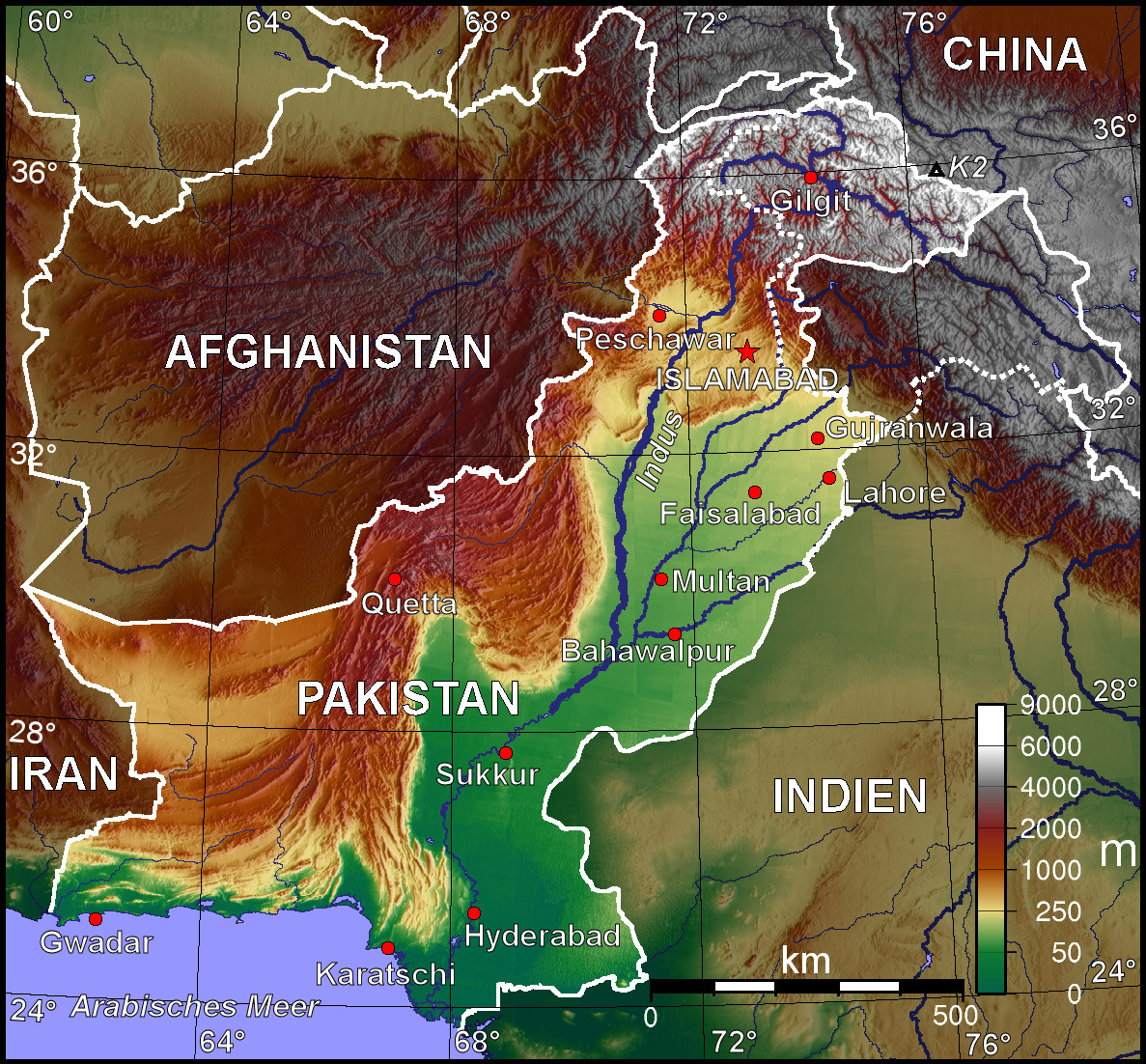
Eiffel Tower and general view of the grounds, Exposition Universal, 1900, Paris, France.

The Boer War

South Africa had long since become the loudest colonial voice for equal treatment, and not even the forcible suppression of their secession attempt 30-odd years earlier had derailed the deep-felt anger and resentment the Boers felt over their lack of independence within the Empire. In 1898, the time was ripe for another attempt, with funds provided by the Chinese. Tensions between the two great empires had not eased, and despite 75 years of mutual separation the cold war between them had showed no signs of abating. The Empire had continued to fail at its attempts to place spies within the Chinese Empire for all that time, a matter which had reached the point of desperation amongst Imperial Intelligence. Unknown to the Empire, internal problems had delayed the Chinese prosecution of the inevitable war, but those problems had now been resolved. The Chinese Emperor had been replaced by a shadowy ruling class called the Mao, who were far more subtle and Machiavellian in their tactics. It would not be until 1902 and the end of the Boar War that these facts would become known to the Empire – and only with Victory on the part of the Rebels, as the Empire was forced to choose between the granting of full Status as a Kingdom or of an even more humiliating military defeat.

The Taj Mahal - photo by Amal Mongia - click the thumbnail for a larger image

The Final Days of The Victorian Era

Victoria was drawing close to the end of her days, her sheer longevity having marked her as one of the most significant Monarchs of the Empire. Even while her troops were fighting and dying for her reign in South Africa, she continued with her social agenda, raising the school leaving age to 14 years. The next steps would have been to broaden access to University education, while removing Women from the workforce; but her health failed before she was able to carry out these plans. Nevertheless, the social momentum she had created would eventually compel these social changes, so it must be said that ultimately she achieved her objectives, with an uncompromising determination characteristic of every British Monarch since the accession of King John the Great.

Her final act was to respond to the threat of imminent uprisings in other British Colonies by setting down clear standards of social welfare, prosperity, and self-sufficiency which when met would permit, and compel, the founding of an independent Kingdom within the Empire. India, Pakistan, and Australia became Kingdoms on January 1, 1901, exactly three weeks before Victoria passed into the pages of History for the last time. These Kingdoms would be followed by South Africa in 1902 and New Zealand in 1907. It would be the 1970s before the last British Colony would become a Kingdom.

The last decade of this era, and the first of the 20th century, would see the culmination of the social changes instituted during Victoria’s reign. The creation of Secondary Education to prepare students for University, the creation of the 8-hour working day, Juvenile Court, and Old Age Pensions – all took place as the Empire began to move from the Industrial Era to the Technological Era, an era which would pose its own, more serious challenges. In Victoria’s era, the consequences of conflict were largely intangible; in the new century, the survival of the species would be at stake.

Comments Off on The Imperial History of Earth-Regency, Part 3: Birth Of An Empire – 1782-1910

Evil GM Tricks For Over-Resting PCs


Over-resting PCs

A bit of thought and planning ahead of time can put a rest to this problem

Have you heard of the five minute adventuring day? The characters blow their powers in the first combat each day and then choose to rest so they are fully charged tomorrow for the next challenge. This is not only boring, it’s terrible storytelling.

We just posted a new lesson in the Faster Combat course for game masters about the problem of over-resting and what to do about it. I’m going to expand today on one of the solutions to over-resting, as there are many cunning and evil tricks within this solution you can employ to prevent PCs from abusing rest periods.

Over-Resting Taxes Your Game

In game systems with a generous rest mechanic, players typically abuse the rules. Over-resting, where the PCs take a break too often in their adventures to recuperate, taxes the game.

Within the Faster Combat point of view, where we want to run combats as fun and fast as possible, rest gives characters their expended powers and abilities back. This means they face more battles fully charged, which results in a few combat-lengthening problems for you:

  1. Battles take longer because players have more choices to make. As powers get restored, those become options again for players who have to take time each round now to consider.
  2. Pacing goes to hell. How can you offer easier encounters to mix things up with when you don’t know what state the PCs will be in?Great pacing includes PCs steadily weakening to increase the drama, then getting a rest opportunity before the critical battles.
  3. Your story goes to hell. The PCs stop at ridiculous times and places to recuperate, stretching sense of disbelief.”You don’t want to press ahead a bit so you can camp outside, under the stars, in fresh air with a warm fire?” “No, we’re down to 50% hit points. This room full of monsters we just killed will do.”
  4. Nuclear arms race begins. PCs tackle foes with a full array of powers knowing they can rest and regain their abilities after the battle, so you have to keep dishing out difficult combats.But as the PCs gain levels, you need to make encounters even more over-the-top to compensate. Woe to the GM who errs in treasure pacing, because too many magic items will make the arms race unstoppable.
  5. Entitlement sets in. The minute you prevent players from taking their “hard earned” break after the morning’s first battle, they accuse you of railroading, meta gaming or worse.Your players are not evil, they’ve just become accustomed to driving into every combat in their shiny Porches. This is unhealthy, and further entrenches their sense of entitlement.

Dynamic Foes vs. Rest

Lesson 2.11 in Faster Combat addresses solutions to over-resting in RPG. The lesson is titled They Can Sleep When They’re Dead. One of its teachings is to make your foes dynamic.

Make foes react to PCs who rest often, and have your foes use their native cunning and abilities to make PC rests painful.

This is excellent advice and it works. And right now, I’m going to dive deeper into this one solution and offer you several evil tricks to show you how to run Dynamic Foes vs. Rest.

Full Alert

After an incursion and the PCs stop to recover, the alarm should sound within the dungeon or region. “Enemies afoot!”

The whispered grapevine should be at full bandwidth. At water holes, trading lines and crossroads where denizens meet, foes should warn each other, or at least set each other up to whack the PCs. “They are heading your way next!”

Word will spread and the PCs will meet only alert and prepared opponents tomorrow.

Make the PCs’ tactical error known to the players. In your descriptions, gives clues the monsters have been up all night or week preparing for the group’s arrival.

Roleplay it. Have foes inform the PCs of their mistake. “We’ve been expecting you since Moonday. Prepare to die!”

Mustering

Once intelligent monsters know PCs are about, they will bolster defenses by adding to their ranks.

Option 1: You can hand-wave these efforts and just up the monster count.

Option 2: Better, go Gygax on the adventure and create probabilities for mustering. 1d4 new mercenaries will join the band starting one day after Little Eye travels back to town and starts recruiting.

Option 3 (my favourite option): slaving. Here’s a chance to merge your dungeon’s encounters together in strange and cool ways.

What happens when the ogres attack the bugbears and subjugate them – six hours ago? (Hint: awesome roleplaying, story and tactics potential.)

What happens when the smart slime colony drives the leprous dire hounds into a cave and starves them until the PCs arrive? As the party nears, the slimes recede into the shadows. Who let the dogs out!

In Riddleport, I have another method of mustering that’s working well. There are summoners and Outsider alliances that result in numerous summoned creatures from the planes occupying the city.

Some foes last only a short time before the magical summoning wears off. Others last longer because they arrived through means other than spell.

Either way, I can drop in demons, devils, dragonspawn, drow or whatever into encounters I need based on pre-determined factions and alliances. If the PCs over-rest, I can muster on a moment’s notice because just about everybody in the pirate city is connected in a mob-like way to one faction or another.

Watch And Learn

The PCs look so peaceful in their sleep, don’t they? Well, except for the paladin crying out during another one of his not-so-chaste dreams brought on by the wizard’s terrible Slow Bat Soup at dinner.

Have foes approach to watch and study during PC rests. Then make sure they use this knowledge in battle.

Due to the slower pace, have foes watch while the PCs travel and fight others. Who leads and why? Often, killing the scout means future traps will be more successful. Do the PCs need light? Which ones? What buffs do the characters use and how long do they last?

Most importantly, what significant tools and weapons do the PCs have? Items are the easiest asset to take away, so foes should consider targeting known tools and devices first.

If I were an intelligent creature waiting for the invading force to arrive, I’d want to get a close look at my foe and learn their methods and tactics. Take out ranged threats first, perhaps through rear guard actions. Spellcasters have gotta go too. And hit the party before they seem to gain in power from magic just before they enter battle each time – best attack before they’re prepared.

Flying PCs means stage your defense in low-ceiling areas. PCs with reach need to be fought toe-to-toe. Sundering, tripping and disarming weakens the ones wrapped in heavy metal.

Hit the ones immune to fire with cold. Let spellcasters know which targets are likely to be more susceptible to mind attacks, which seem likely to dodge magical attacks, and which seem able to withstand a lot of magical abuse.

Fake Havens

Bring the battle to the PCs. Have foes create areas that seem safe but are death pits.

That pile of stones on the hill is set to roll down with a rope tug. The tunnels underneath lead to trap doors for easy and silent popups under sleeping PCs. Exits are easy to block and the place filled with water, fire or poison.

Create spaces that give foes tactical advantage, especially flanking or many-to-one situations.

Create spaces where you can divide and conquer. Separate PCs and attack individuals en masse, one at a time.

Spy Game

Frequent rests make NPC encounters seem natural.

“Tohm, you are on guard. In the distance you see a wounded warrior stumbling toward you. As he approaches he pleads for water. His name is Petr.”

“The GM is bored, so he’s adding some roleplaying. Ok, we’ll bite.”

Turns out Petr is a spy. And a saboteur. He’ll ruin stealth or steal a critical item just as PCs enter combat. He’ll leave messages that reveal the PCs’ weaknesses.

You can only do this once, maybe twice. Then the players get smart.

So you get smarter:

  • Introduce two NPCs. Who hate each other and try to kill each other. But are secretly a team.
  • The PCs find three alive but unconscious on the battlefield. The survivors do not radiate evil (that’s why you pick neutral spies).
  • The NPC enters on the last round to help save a PCs’ life as the character lies bleeding on the floor. It’s just the GM having mercy again.
  • Flying creatures do not even need to hide their nature. They just need to stay beyond range of the party’s missile weapons.
  • Do the PCs sweep for invisible foes before resting? How creepy would it be for the invisible spy to sleep on top of a PC each night to keep them both warm. It’s all about the flavour text, people.
  • “Oh man, this new pet dog is awesome. Look at his teeth! I told you I could train him. He breathes fire, too!”

Forwards And Backwards

PCs will leave a trail of destruction so wide only a dead dwarf would fail to track it.

There are two things players never do. They never look up and they never go back.

Why go backwards anyway? It’s boring. “We already killed that stuff and got the loot.”

Mobile foes will use this to advantage to track and approach from an unexpected direction as the PCs rest.

Better yet, they will attack the PCs when the party is most vulnerable. This is often during combat or just after combat. It’s also when half the party is trying to cross the threadbare rope bridge.

You need to hit the lesson home, though. Players will think it’s just more foes spawned from your infinite critter generator. You need to show the PCs the mobile foes came from their future, warned and given enough time to react.

One way to do this is for surviving PCs to stumble onto the mobile creatures’ lair later in the adventure. Through roleplaying or clues, players learn their foes slit off, with one (or more) groups to attack the PCs proactively, and another to defend the lair.

In the end, though, who cares? The PCs had a couple extra battles to fight. So what?

Hit them where it hurts most – their pocket book. There are two currencies in D&D style games: treasure and XP.

Treasure first. Foes warned in advance will hide their most valuable stuff that can’t be used as a weapon or defense. The crown jewels have got to be buried. Best case is rivals show up to town a week later with a ton of bling harvested from methodical searching in the PCs’ wake.

XP second. Foes might flee. You can’t level up when foes flee and leave behind just a few terrible traps. Foes offer less XP when divided because the difficulty level goes down.

If you can swing it, give story objectives associated with foes. And when foes have time to prepare because the PCs rest so much, the object gets nullified along with the XP bonus.

In Faster Combat, we teach you how to create and use Mission Stat Blocks – special goals used to help you merge story with combat, and to make combats faster because fights end not when one side’s last hit point has bled out twelve rounds from now, but when the mission objective has been reached in dramatic fashion three rounds from now.

Alliances

In dangerous times your enemy’s enemy is your friend.

Once word spreads through the grapevine the PCs are coming, foes will form temporary allegiances.

Now it’s two – or even three – on one. And all because the PCs gave their foes time to team up.

Turn this scenario into an exciting one of roleplaying, politics and tactics if possible. Make the monster alliance tenuous so PCs can break it up through clever play. Even make it possible for the PCs to turn the alliance on itself so the characters can do a bit of their own divide and conquer.

Bring The Dungeon To The PCs

Have foes and their plotlines interrupt rest instead of forcing PCs to travel to specific locations to unlock progress.

One time I ran combats every hour of sleep. The PCs got not a lick of rest. The night culminated in a fight with the stage boss. The PCs were sorely depleted and it was an awesome battle.

The adventure’s Stage One objective was accomplished at the same time because the stage boss had a clue on him who his master was and where the master might be based.

The PCs never had to step foot outside of camp because the adventure came to them.

The party was at a disadvantage the whole time. If the party had not stopped to rest, they could have scouted and generated tactical advantage for themselves. But instead, their foes did that to them!

The party survived the night, but unfortunately they retreated back to Hommlett. Others came along and cleaned up the abandoned foe lairs. The stage boss in particular had some nice baubles stashed away.

Conclusion: Be Consistent

These tactics all hit home the need for PCs to press on and not wimp out so much.

However, none of these GM tactics offer a one-time permanent cure.

You will need to adapt your style a bit so you reinforce the message that over-resting is bad, over and over.

Make your foes dynamic and smarter (at least up to their Int score – their leader’s Int score) and reactive. Use all the techniques outlined above often.

Over time your players will learn not to abuse your game’s rest mechanic. They will learn it’s better to forge on a bit until it’s tactically sound to take a break.

This not only adds more drama and story opportunity for your game, but it makes combats faster. Weakened PCs have fewer options and decisions to make.

Players who’ve learned to forge onward instead of rest up will manage their resources better, which also means more efficient decisions during combats.

And you can roll out a larger variety of encounters not maxed out to the party’s level +4 every combat, which means fewer rounds needed to reach resolution.

Bonus points if you use our Mission Stat Blocks to give thrilling combats a purpose and an even shorter duration.

Check Out Faster Combat

If you are curious about this online course for GMs I’ve been mentioning, it’s 52 lessons on how to run awesome combats in half the time with twice the story and excitement.

You study at your own pace, and I’m always around to answer your questions. Lessons contain step-by-step instructions on how to GM create Mission Stat Blocks, killer Combatscapes, Turn Efficiency and many other important GMing concepts.

Check Faster Combat out >>

It’ll give you a lifetime of new GMing skills.

Comments (6)

The Imperial History of Earth-Regency, Part 2: The Road To Empire – 1220-1782


This entry is part 2 of 12 in the series The Imperial History of Earth-Regency


Pieces Of Creation is an occasional recurring column at Campaign Mastery in which Mike offers game reference and other materials that he has created for his own campaigns.


Portait Of Sir Francis Drake by Henry Bone

Welcome to part two of this series of articles introducing the history of Earth-Regency. Part 1 showed how a small change in one weak Baron’s attitude enabled King John The Great (John II) to use the Magna Carta to strengthen the power of the monarchy instead of handing most of it over to his rebellious Barons, and how John II used the increased military strength to conquer most of France and force an Oath of Fealty from the King of France, who continued to rule in the south as the vassal of King John and Pope Innocent. John had direct rule over the northwest, while the north was “given” to The Germans, but was able to wrest its independence back quickly. They sought to return to the rule of the French King, who was undoubtedly tempted but did not have the forces required to hold the larger realm. At first, the only external impact of these changes was that France was unable to periodically bleed England of its best troops, and as a result, England’s military and political power grew.

The Rise Of Rivals

We begin this part at the opening of the Age Of Exploration. The German Empire has waned, and England controls continental Europe East to the Italian border, North to the Danish Empire and Holland, and South to the Spanish border. Hemmed in by the English, those powers are forced to seek other regions for expansion.

The Danish Empire become master traders, accepted as neutral by each of the other powers, and the perfect go-betweens – for a price. The other Empires, also with strong navies, began exploring further and further afield – first Africa, then the Americas, and the Pacific Islands. Of course, the British were not far behind; were they not cautious when it came to protecting what they had already claimed, they would have been the preeminent global power. As it was, they were merely the equals of the other seafaring nations. Thus the Portuguese, Spanish, and Dutch emerged as new rivals to British dominance.

It was a situation that was intolerable to a Kingdom which had grown accustomed to being the foremost power in the known world.

British Colonialism

Increasingly, England began pouring resources into exploration and conquest overseas. While they had been preoccupied with internal security, the other great naval powers had been able to keep up; but once England committed to intercontinental exploration in force, they had little hope of maintaining parity.

The War Of The Roses

The balance between expansion and security was a delicate one, and inevitably, the Kingdom overstepped the mark, weakening its internal defenses sufficiently to tempt England’s enemies. A secret alliance between Spain, Portugal, France, and the King’s cousin, Henry Tudor, the Duke of Richmond, was formed in an attempt to exploit that weakness. So began the War Of The Roses. The year was 1455.

Twelve days later, it was over.

R.I.S.K.

John the Great had learned the value of intelligence from the events surrounding the Magna Carta, and had vowed to never be reliant on blind chance again; it had been clear to him that if it were not for that one turncoat Baron, his planning and plotting would have failed in the end.

The commons could, for the most part, be ignored when it came to matters of conspiracy against the throne; it was amongst the nobles that sedition might succeed, and amongst his Continental Rivals that he must stand prepared. The King of France had sought to gain through treachery what he could not gain by force, and had come uncomfortably close to success.

After his victory against the Nobles, King John had commissioned the establishment of the Royal Order Of Intelligence Service Of Knights, which would in more modern times come to be known by the (abbreviated) acronym, RISK. Two branches were formed – one (the publicly known branch) of gifted commons and minor nobility, who were given special Knighthoods in exchange for loyal service; and the other, never revealed to the public, amongst the Nobility.

John knew that the latter group would not come to fruition for decades after his reign ended; but he left careful instructions to his successors, explaining the purpose of the hidden branch and the steps which had to be achieved to forge a group which could achieve that purpose.

Reconciliations

Paramount amongst the interim goals which had to be completed before the second group could become an effective reality was the reconciliation of Crown and Peerage. Behind locked doors, King after King had made secret deals with Baron after Baron. Whatever any given Baron desired, so long as it was not the Throne, and was within the capacity of the Crown and the abilities of the noble, it was granted – once. A tax shelter? Done. A favorable marriage? Done. Public prominence? Done. Many of the seemingly weak monarchs who followed John The Great did not deserve the reputations they earned; instead of being weak, they parleyed short-term losses into long-term gains, following a plan they were incapable of having devised alone.

Most of these deals were kept very secret. By the time of Edward I, the Lords of England were united behind the throne, and the time had finally arrived for part two of the plans layed down so long ago by King John.

The reality of accord between Throne and Lords was kept secret, hidden behind false tales and rumors of disaffection. From each generation of Lords, four were chosen, by personality, for specific roles; in return for which they received a number of benefits not available to most. There was a designated hot-head, a designated vain fool, a designated ringleader, and a designated sly intellectual. None of them knew who the others were, enabling them to watch each other.

Their assignment was to each seem to be “perfect” for a given type of conspiracy. If approached, they were to play along, get the maximum information possible, and lay a trap for the conspirators. So effective were these two intelligence services that no matter how weak the King’s personality appeared – or was – there was no effective rebellion against the crown.

The War Of The Roses, Revisited

Henry Tudor had been the hot-head of his generation, one of the people who any foreign powers seeking to meddle in British Politics would naturally consider approaching to act as figurehead of a foreign-backed grab for the throne. The Spanish/Portuguese conspiracy took the bait.

No sooner had their representatives departed than Henry was in a carriage to Buckingham Palace. England had been forewarned that the two were up to something by their intelligence service’s more prosaic branch, which had by now infiltrated most of the other Governments on the continent.

King Edward IV of England - click on the thumbnail for a larger image

The Price Of Victory

Henry bargained hard with King Edward IV, and Edward was forced to agree to the terms demanded; Henry was adopted as Edward’s “Son” and heir, but his line would not retain the throne; Edward’s son would in turn inherit from Henry VII. The final condition demanded by Henry was that Edward’s grandson marry Henry’s granddaughter, strengthening their position within the peerage to undisputed second in line of succession thereafter.

With the deal done, the trap was layed for the foreign soldiers being “lent” to support Henry’s “uprising”, and quickly sprung. The Spanish troops were captured and taken into custody as soon as they disembarked.

Reprisals

England now had all the justification it needed for it’s own foreign adventures against the nations which had conspired against it, and promptly declared war on Spain and Portugal.

The latter was the first to fall; it could not stand against the armies of the British. Spain could not come to their aid; it had its own problems.

Spain was already isolated along it’s northern borders; England began by blockading the Spanish seaports for two years while the Portugeuse were sacked. Having weakened the Spanish, and resisted all attempts by Spain to negotiate, the English invaded. There was a technical violation of the French Borders – which Charles II carefully failed to notice. (Arranging that had taken much of the two years). Over 500,000 men at arms swarmed through France and into Spain all along the Spanish-French border.

The Fall of Spain

Spain, as had France decades earlier, was forced to surrender. But always in the past it had been an international coalition of forces who had gone to war, and with whom England had been forced to share the spoils; this time, they stood – and conquered – alone. But so big, and so obvious, were the events that the secret order within the Royal Intelligence Service was exposed for the first time.

The Growth Of Empire

With the fall of the Spanish and Portuguese Kingdoms, their colonies were captured, one after another.

Most of the British colonies were not so much chosen for their settlement prospects as for their positioning with respect the colonies of other nations. Australia, for example, had been colonized as a knife at the throat of the Dutch in the East Indies. Britain conquered South America & Central America, settled North America, seized control of the entire African Coastline, and took Canada from the Dutch and French. Spanish expatriates held Central America, Portuguese dissidents held remote islands here and there and parts of the African Interior, and the Dutch had Indonesia; the rest of the colonies now flew the Union Jack.

The Spirit Of '76

The Spirit Of '76 by A M Willard - click on the thumbnail for a larger image

1776

Then came the US War Of Independence. In 1776 there was an uprising against the British Throne, or more specifically, against the remote administration. The locals hadn’t asked for much; it would have taken only a small effort at listening to their complaints and attempting to resolve them.

Trouble between England and its colonies had been inevitable since the time of John the Great. The Civil Service, whose roles were supposedly to assist and advise the King, had grown, in the nature of all bureaucracies, into a labyrinthine monstrosity. Gradually, they had become the conduit through which the Throne and Government exercised power. The colonist’s list of grievances – most of them petty and small in comparison to the scope of the Empire – had fallen between the cracks of this subcommittee and that committee-of-the-whole, and their pleas for relief had never reached the King’s ears.

The Enemy Within

In effect, a new struggle for power over the Empire had begun. The civil service bureaucracy had usurped power a little at a time, and it was not until their manifest failure to deal with the Colonists as equals under the British throne that the fact became apparent. The rebellion was suppressed quickly, but in the process, it had attracted the attention of the British Monarch to the position and failures of the Civil Service.

It was now that another of the long-term impacts of the influence of John the Great came home to roost; the King had almost-absolute power, but had rarely wielded it. Because the American Revolution involved a case of high treason, King George was required to hear the cases personally, and the rebels were at last in a position to put their case directly to the King.

The Post-revolutionary flag of the Imperial States Of America. Click on the thumbnail for a larger image

An Empire In Name

After deliberating for 3 days, George found the rebels guilty, and sentenced them to form an independent government of the British Model under the English Throne; and to ensure that distance did not hinder swift and practical administration, he appointed a Regent to serve as King’s Representative In America. In the process, he made the transition from King To Emperor, acknowledging in Law what had been the case in fact for centuries.

On January 1, 1777, George III, King Of England and Greater Britain, declared himself Emperor George I of the British Empire. In effect, he created a new layer of Bureaucracy, giving each member of his Empire it’s own Regent, to rule on his behalf, as King, and elevated himself above them.

The Bureacratic Purge

He then preferred charges of High Treason and Negligence against various senior members of the Civil Service; the specifics being that they had been too busy empire-building and nest-feathering to perform the tasks appointed to them, and in the process had manifestly failed their oaths to him. One month later, the head of the Civil Service, the Chancellor Of The Exchequer, and various others were hung for high treason. He also cut the civil service payroll 40%.

The upheaval galvanized and revitalized an empire that had been growing moribund. George interviewed the descendants of the royal families of Portugal and Spain, and appointed the most able of them Regents of their countries, dismissing from service the bureaucrats who had formerly administered the conquered territories. Ireland, Scotland, Wales, and on and on, they all received their own Kings, preferably from amongst the traditional royal lines of the nation in question. Where there was no native royal line, a Regent was appointed. Another way to look at these developments is that George had invented a series of rewards for loyalty that had been considered impossible.

King Louis XVI of France - click on the thumbnail for a larger image

The French Revolution

King Louis XVI, knowing of the growing disaffection of his subjects, and uncomfortably aware of the fact that he was almost completely surrounded by the British, decided to have a revolution of his own before his people made him the focus of an undesired one; in 1782 he petitioned the Emperor Of Greater Britain, still George III, for direct admittance to the Empire – on condition that he be appointed the nation’s Regent.

This was another significant turning point; the remnants of France became the first conquest of the Empire achieved solely by political forces. They would not be the last. The Great Houses of Europe now numbered 4 – Britain, Germany, Italy and Prussia, with the first threatening to devour the others whole, one piece at a time. It was a situation not to be tolerated.

Meanwhile, to the British, the mysteries of the East beckoned. The road to Asia had been opened. Or so it seemed…

Comments (4)

A Good Name Is Hard To Find


This entry is part 1 of 11 in the series A Good Name Is Hard To Find

Introduction

Let’s talk about the art of naming characters, especially NPCs. This is one of the (thankfully few) aspects of the GMing craft that doesn’t come naturally to me. I can usually get there in the end, but off-the-cuff names can be a real struggle.

To deal with this handicap, I have evolved a system and a process for coming up with character names that does most of the work for me, and that works even more effectively with a little targeted prep time. This series of articles is going to contain that system and process, because what works for me might work for you, too.

As with many of my articles, this started out as a one-post extravaganza, and quickly grew once I started writing. It’s now expected to be a five-part series.

  • Part One will discuss the philosophy of character names and the differences between a good name and a bad one.
  • Part Two outlines a number of ways of deriving the “seed” of a character name. Like an adventure seed, this is a starting point for a character name, but its output isn’t immediately ready to use in a game. There are 12 such sources for seeds.
  • Part Three deals with name formats, their significance, and how they cam be used to refine or extend the hidden subtext within a name. There are at least 7 choices here.

  • Part Four will show how to apply the process outlined in part 2 to the naming structure chosen in part 3, using one of the 84+ combinations to generate name seeds for a specific character, and how to turn that name seed into an actual character name.
  • And finally, Part Five will review a number of the tools that I use to enhance the process of transforming a name seed into a character name.

At this point, it’s undecided whether or not posts on other subjects will be interspersed between these 5 sub-articles.

having laid out the agenda, let’s get to work!

The Virtue of a Good Name

A great choice of name immediately brings the character to whom it is attached to live in the minds of the audience, or in this case, the players. It can conjure an image of the character, imply speech patterns and mannerisms, suggest a personality profile, hint at a social structure and the character’s place within it. It can convey information on attitude, education, occupation, and intellect.

It can compress a pre-existing character concept into a single, easily-digested concentrate and download that concentrate directly into the minds of the audience. It can prompt choices of action by the players or create doubt and hesitation.

Coupled with other aspects of the character – speech, description, relationships, actions – it can be the glue that holds a character together.

A good name embellishes a character.

Finally, a good name can serve as a touchstone, a shortcut for the GM to get himself into the mind of the character.

If it has the right sounds, it can even get you into the right accent – I’ll never forget Peter Jurasik describing his technique for getting into character as Londo Mollari in Babylon 5: he would simply recite “Good Morning, Mister Garabaldi” in the pseudo-Hungarian accent that he had chosen for Londo and it instantly “locked” him into character. This doesn’t happen often with just a name – but it’s one heck of a fringe benefit when it does occur.

The Pitfalls of a Bad Name

If a good name can do all those things, is it any surprise that a bad name can be just as significant? The wrong name can tear an otherwise great character concept apart, reducing it to mediocrity. It can undermine every other significant aspect of a good character, resulting in an NPC that is full of mixed signals, forgettable, or even just a collection of random characteristics.

Why is a name so powerful?

The reason the name means so much is that most players will hear a description – once. Players ‘experience’ each action that the NPC carries out – once. They have each dialogue with the NPC – once. In order for all these elements to glue together, there has to be some common connective tissue – and the one that will get used repeatedly, time after time – by both the players and the GM – is the character’s name.

Okay, So Names Are Important!

So how do you know a good name from a bad one?

The rest of this article lists a number of rules to follow that will help avoid bad names – but that’s not enough.

Representative

A good name will articulate one or more central themes of the character, and will add substance to the character beyond that theme. Identifying the central theme and choosing the means of articulating it is what the second part of this series is all about, so I won’t get into it here.

The name has to encapsulate the most important, most significant, most central concept at the heart of the character.

Avoid The Famous

Choosing the name of a famous character or real person is the first refuge of those with no imagination, or who make no effort, and this impression swamps whatever content you wanted the name to carry. The results are usually a name that is passable but never right. Consider, for example, “Bankroft Holmes”; it takes only a few seconds to connect that with Mycroft Holmes, the somewhat-indolent-but-a-deductive-genius brother of Sherlock Holmes. The lack of originality makes this name marginal; but how much worse would it be to actually call your character “Mycroft”?

Actually, there are even better reasons not to do so. If you ever hope to publish anything related to your game – and a lot of people do – you don’t want any copyright problems to bother you. Even holding them at arm’s length can be a risk.

I wasn’t always aware of this problem, I must be honest. But because of it, I would have difficulty publishing the novelizations of my Superhero campaign that I wrote in the 90s, simply because there are already several groups in comics named “The Champions”, because Hero Games have put out several game products that refer to “UNTIL”, and so on. In fact, the campaign has a great many cultural references that would require editing – sometimes just the names, sometimes a complete re-conceptualization. And the nagging worry that I may have missed one, or not sufficiently distinguished the re-imaginings from the source of inspiration, would take all the fun out of such a project.

Avoid The Loaded

Some names are associated with traumatic or notorious events in modern history. These should be avoided when naming new characters. The associations can overwhelm the character you are trying to portray, reducing them to a caricature. Obvious examples include “Hitler”, “Bin Laden”, and “Darth” anything.

Avoid the Cliché

In fact, that last point can be enlarged to this one, which pretty much speaks for itself.

Avoid names that end in S or Z

A practical hint. Such names give real trouble with possessives. They not only look strange in print, they are difficult to pronounce clearly, and can lead to unnecessary misunderstandings. Consider, for example, a character named Pass. At first glance, a perfectly acceptable name. But when we try to use the possessive form, we get “pass’s” or “pass'”. Try saying them out loud, and you’ll soon get the point. Even a character named “Past” can get a little tongue-twisting. It’s easier and better to avoid trouble in the first place.

Ensure it’s pronounceable

Practice saying the name out loud half a dozen times in reasonably quick succession. If you have trouble pronouncing it more than once, consider a simpler name.

Ensure it looks right

When you use the name in a simple text sentence, does it look right on the page? “Halla Malloram” might be the perfect name for the character you are trying to create (though I doubt it), but the alliteration looks strange and will almost certainly produce malapropisms and spoonerisms.

Ensure it sounds right

Another problem to watch for is where the ending of one part of the name, combined with the beginning of the next part of the name, combines to give or to suggest an inappropriate word. “Chopper Linquist” might be an acceptable name, or even a great name, but there’s a “pearl” in the middle of it. Okay, so this example is reaching a bit, but that’s preferable to any of the several examples that came to mind more readily involving obscenities.

Contemporary Names

Choosing names that are contemporary with your game setting is a big advantage. Not only does it assist with verisimilitude, and confine your choices to reasonable ones, it automatically builds in an additional layer of meaning. To make this work most effectively, determine the character’s age at the time his name was assigned; this will be the year of the character’s birth most of the time, but in the case of orphans and amnesiacs may be years later. It is this name that determines which names are “contemporary” for that particular character. This approach also permits characters that change their names to choose appropriately.

Walking a fine line: Alien Names

Special care must be taken when crafting names for non-humans. While there is no need to create a whole new language, it’s best to set down some name-generation rules and construct names using it. I’ve written in the past about the language house rules for my Shards Of Divinity campaign, in Ask The GMs: Rubbing Two Dry Words Together.

The same techniques can be applied to character naming for original and alien cultures. Consider the examples of the Borg in Star Trek (both Next Gen and Voyager) and of the Kzin and other aliens in Larry Niven’s Ringworld.

It must also be remembered that the more alien the species and their language, the more they will need to adopt “human” conventions simply to converse with us. It’s easy to invent a species that communicates by releasing different odors, but humans will name individuals for reference, and conversational needs will soon lead to the aliens adopting those names for their own usage – unless they are sufficiently strong-willed to choose their own to start with. At best, the name might have some association with the dominant “scent” of the individual’s name in “perfume-tongue” – Apple, Pippin, or Grannysmith for someone who uses an apple scent, for example.

Don’t be predictable

GMs are like everyone else; they fall into patterns and acquire habits, both good and bad. These can lead the GM to adopt a particular naming style that becomes predictable. When that happens, the players will get used to that naming style and pay less attention to the names the GM gives to his characters – with the result that subtexts built into the names and characters by the GM are often overlooked.

Sound like you, not someone else

Don’t steal your names from Tolkien unless your game is set in the world of the Lord Of The Rings. Don’t steal your names from Star Wars unless you’re playing Star Wars.

In the bad old days, everything was fair game. I can remember a D&D game from many years ago – in fact, the second RPG game I had ever played – in which the PCs were named “Dilbo”, “Grak”, “Darth Violet”, “Alabaster The White”, and “Hank Solo”. They were, respectively, a Halfling, a Half-Orc, a Wizard, a Cleric, and a Fighter/Rogue. (You can groan now.) My character in that game? “Wülfex Stariskos”, usually abbreviated to Wülfstarr, a character cursed to have the appearance of a Lycanthrope for some offence committed by his long-dead parents, and whose central focus was on learning how to remove or lift the curse. Thankfully, gamers are usually less juvenile these days – at least the ones I play with.

Beware the Cute

“Dilbo” and “Darth Violet” (fresh wince) also points up another naming pitfall. No matter how cute the character or its race is supposed to be, avoid naming the character in any sort of cutesy fashion. Not only does it make it look like you don’t take the character seriously, it encourages players and outside GMs not to take YOU seriously. One of my players has only half-learned this lesson; his character names run from the excellent to the abysmal. He thinks he is being funny when he attaches a name like “Spuriouset” to one of his PCs, and can never seem to realize that he’s the only one laughing.

Yes, there will be occasions and characters whose names are deliberately cute, for effect. Save these names for those occasions, no matter how tempted you might be.

Beware the Diminutive

Related to the previous point is this: Diminutive versions of names, often chosen to convey youth or innocence, can often trespass into the realm of the “cute”. Whenever you create a character, spare a thought for how that name will render in the diminutive; and whenever you create a character whose name is intentionally of the diminutive form, make doubly sure that every aspect of that name conveys the subtext and message you intend and no other.

Consider an NPC I created for the previous incarnation of my Superhero campaign, James Fingreiz (pronounced Fing-Greez) – or, as the PCs came to know him, Jimmy Fingers. “Jimmy-The-Fingers” was a teenaged street punk who was there to develop a crush on one of the PCs. He tried to impress by being macho, but that didn’t work. Time after time, he got himself into trouble or complicated the PCs lives by getting in the way. Several Angst-ridden conversations between Jimmy and the target of his affections followed – and, of course, he took all the wrong messages and signals out of these. He took ever more daring risks to prove himself worthy, infiltrating villain organizations (gathering intelligence in the process that the team needed to have) – and then getting caught. Finally, the PC in question (the Player was getting desperate) told him flat that no romance between them was possible because he didn’t have powers and would always be in danger when they were together. Predictably, this backfired, sending Jimmy off on a quest to become worthy of the woman he loved. The final sequences in this plotline form part of the new campaign. (Much to the PC’s chagrin, Jimmy has encountered a couple of romantics along the way who have done their best to help him achieve this goal instead of sending him home where he belongs).

This was a case of very carefully choosing a diminutive version to emphasize the youth (and the age disparity) between the NPC and the PC. The players have never even heard the character’s full name; to them, he first introduced himself as “Jimmy-The-Fingers” and became “Jimmy Fingers” thereafter. Every aspect of the character was designed to contrast with that of the PC who the NPC was targeting; innocence and naivety vs. maturity and experience; petty hoodlum vs. heroine; swarthy vs. Anglo-Saxon (Danish, to be more specific). And the name was then chosen to embody, represent, and reinforce those aspects of the NPCs makeup. He was designed NOT to be taken seriously as a figure of romance by the PC, and the name achieved this perfectly.

First Syllables matter

Complicated names are usually abbreviated for convenience, and more than any other source, those abbreviations derive from the first syllable of a name. “Sebastian” becomes “Seb”, “Barbara” becomes “Barb”, “Donald” becomes “Don”. It should come as no surprise when “Quiximacolte” becomes “Quix”.

It’s also important to be sure that the diminutive or abbreviated forms of the name don’t lead to unfortunate and inadvertent explicitisms. “Falodin Uss” might seem a perfectly reasonable name, but reducing the christian name to a single syllable produces a meaning that is not at all desirable.

Consider the Nickname

Does the name suggest a nickname that is undesirable? Surnames that are also nouns, or sound like nouns, are especially prone to this problem. Consider the obvious problems that would afflict a character named “Richard Weed”, for example.

Real parents have this problem all the time – or fail to consider it, and mar their children’s lives throughout their formative years.

But it’s too strong to advise GMs not to choose names for this reason alone; it is a factor that they should take into account, but there may well be times when an unfortunate nickname can explain the source of character personalities far better than a small mountain of prose. Consider a character named “Geoffrey Rubb” – he will almost certainly be nicknamed “Grubby”. Whether this turns the character into someone who is indifferent to hygiene and cleanliness or someone who is pathological about neatness is up to the GM – but that nickname will have a major effect on young Geoffrey.

As with several other criteria, this sort of thing is fine when done deliberately, but can be troublesome and detracting when it occurs accidentally.

Flavor is more important than meaning

I think every player and GM goes through a phase when they want the character names to mean something, usually when they first come into contact with the use of a book of baby names as a character generation resource.

The problem is that most of these meanings are ancient in derivation, and have little relevance in the modern mind. “Richard”, and it’s derivations, “Ritchie” and “Dicky”, means “Strong Power” or “Hardy Power”. But those are not the connotations that come to mind when I hear those derivations; I associate “Ritchie” with “Ritchie Rich” and “Dicky” with “Richard Nixon” – and both of those are very different to “Strong Power”. A lonely child trying to buy affection from others, and a manipulative Machiavelli, respectively, would be closer to the mark.

So forget the fancy meanings; the flavor that a name imparts in your mind when you hear it is far more important.

Beware Alliteration

One of the staples of the pulp genre, that has made its way into the superhero stable via Superman’s pulp origins, is the alliterative name. “Lois Lane”, “Lana Lang”, “Clark Kent” (pronunciation is more important than spelling), “Felix Faust”, “Brick Bradford”, “Peter Parker”, “Reed Richards”, the list goes on and on.

The problem is that these all smack of “cute” – and “cute” can get in the way of the actual message you’re trying to encapsulate in the name, as mentioned earlier.

Even used sparingly, these can stand out as exceptions to every other character name you’ve offered, weakening the verisimilitude of the campaign. So resist the temptation – unless it’s genre-appropriate, and even then, think twice.

Beware the Follow-on

When a character’s name consists of more than one word, avoid christian names that end with the same sound that is at the start of the surname. This is a recipe for pronunciation difficulty on almost every occasion. “Foccult Tuttle” doesn’t exactly trip off the tongue.

There are occasions when you can get away with this – but it’s additional work, and usually unnecessary work.

Know the Genre Rules Of Naming

We’ve already touched on this rule lightly, but it deserves to be rendered a little more explicitly. Know the “rules” (rarely actually written down anywhere, that would be too easy) for the genre of your game and use the naming conventions to anchor your game that little more solidly into that genre. Pulp names usually have short first names and action-oriented, dramatic or powerful surnames. Superhero names tend toward the obvious. Western Surnames tend toward the practical and occupational.

It is also useful to have some notion of the way subcultures influence names. Many common names in the US derive from Jewish sources; nothing wrong with that, but picking a name at random can lead to mistakes like applying such a name to a non-Jewish character. Names with such derivations would be fairly rare and noteworthy in any era prior to WWI – in the Old West, or in the era of the American Revolution. That’s not to say there might not have been some exceptions to the general rule – but, as with many other rules in this list, do it deliberately, when it’s appropriate, not inadvertently or through laziness.

Intelligence permits clever names

Some names – stage names, supervillain and hero names – can be chosen for effect, or for concealment of a character’s nature. The more intelligent the character choosing the name is, the more likely this should be. At the same time, there is something to be said for deliberately adopting a stereotypical name, in that it can lead your opposition to underestimate you.

Never Be Temporary

There are two types of temporary names: the unsatisfying attempt, and the unimaginative placeholder.

The unsatisfying attempt is a name that doesn’t quite achieve your objectives, but that you use until you can think of a better choice. The problem is that a temporary name constrains the imagination to a range of similar solutions, making it that much harder to find the perspective that will ultimately give you the right idea. Worse still, you can forget that you need to find a better name until it’s too late.

The unimaginative placeholder is even worse, and more pernicious. One of my players has the habit of using “Bob” in this way, every time the PCs meets a character that I have to invent off the cuff, if there is even the slightest hesitation in my giving them a name. Every time he does so, it completely derails the mental process which was busy choosing a name at the time. One of these days, I’ll name a Machiavellian arch-enemy “Bob” out of sheer spite. Once again, the problem is that the placeholder restricts your thinking and, at the same time, pressures you to accept the first half-way decent choice that comes to mind. Both are unacceptable.

A Good Name is Hard To Find

To be honest, I operate as much by instinct and “feeling” when it comes to naming characters as I do by working through a detailed checklist like the one I’ve presented in this article. Many of these principles are in the back of my mind, but few are at the forefront of my thinking.

What I’ll be concentrating on is the character, their personality, and the role they are to play in the adventure at hand. I’ll pick the item that it’s most important to communicate to the players, or to reinforce, and then try to think of names that encapsulate that meaning. I’ll keep trying and discarding possible names until I find one that works – then decide whether or not I’m satisfied with it.

Consider, for example, the name of an NPC from the current Pulp Adventure: Pastor Esteban Dominguez. The title came first, when the background of the character suggested a somewhat-gifted amateur archeologist. We wanted the character to be intelligent, and we knew that he was going to be using religious institutions for his own purposes; both suggested that he be a member of the religious infrastructure. Archbishop and Bishop gave the character too much authority; so we were left with “Priest” or one of the titles that were synonymous with that designation. While the character was to have served in a prestigious capacity as a support worker, we wanted him to be a country boy at heart. The mediocrity and pretentiousness of “Pastor” (as compared to the more commonplace “Father”) seemed to sum up the personality and authority we wanted the character to have.

Secondly, we knew that we wanted the character to be Hispanic in ethnicity – originally from the US, but now living in Mexico. That meant a Spanish-based surname; and the choice was further narrowed by our desire for his name to be fairly commonplace. There were any number of surnames we could have chosen, but Dominguez was the first to come to mind, and it fitted the criteria perfectly.

That left a christian name, and this was the most difficult choice of them all. We could have used “Enrico”, or a dozen alternatives; or we could have given him an Anglo christian name. We went through nearly a dozen choices before coming up with “Esteban” – a name with a slightly formal connotation, a distinctive, and with a hint of both education (it’s polysyllabic), and a hint of both menace and respectability in our minds. Finally, we repeated the name to ourselves a few times to ensure that the combination “felt right” and then aloud a few more times to ensure that it sounded right when someone else announced it.

A good name may be hard to find, but the results make the effort more than simply worthwhile.

Comments (9)