Campaign Mastery helps tabletop RPG GMs knock their players' socks off through tips, how-to articles, and GMing tricks that build memorable campaigns from start to finish.

The Imperial History of Earth-Regency, Part I: The Middle Ages – 1189-1220


This entry is part 1 of 12 in the series The Imperial History of Earth-Regency


Pieces Of Creation is an occasional recurring column at Campaign Mastery in which Mike offers game reference and other materials that he has created for his own campaigns.


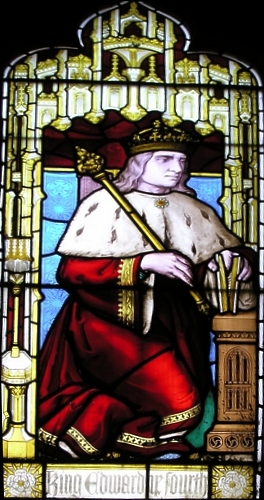
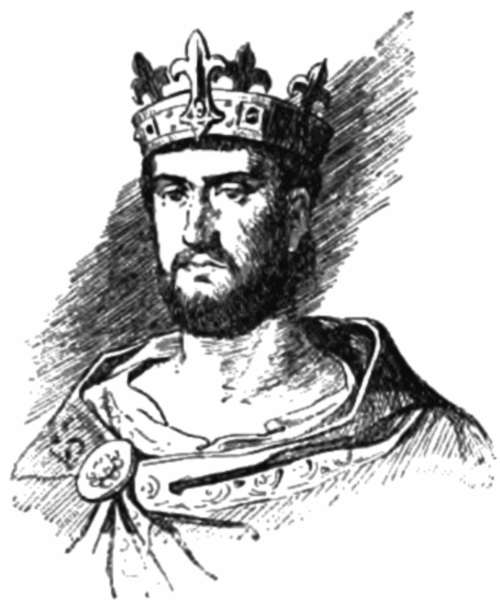
Richard I, King of England 1189-1199

Richard I, King of England 1189-1199, from Wikipedia Commons; Click the thumbnail for a larger image

Introduction

A couple of weeks ago I described my ground rules for handling alternate histories in RPGs and promised to excerpt the writeup I did for my superhero campaign of Earth-Regency.

This is a world in which the sun never sets on the British Empire, in which the known world is – theoretically – either British or belongs to a mysterious people known as the Mao.

The changes in history that lead to this profoundly different history – without leading to a profoundly different society – really start with the events surrounding the signing of the Magna Carta. So that’s where this series starts….

Royal_Arms_of_England_(1198-1340)

The Royal Arms Of England, 1198-1340, from Wikipedia Commons; click the thumbnail for a larger image

Part 1: Imperial History through the Middle Ages

Although there were some small differences in history, the trickle of divergance between the history we know and that experienced by Dimension-Regency only became a raging torrent in the era of Robin Hood / King John II. The reign of John II received more than it’s fair share of negative spin-doctoring over subsequent centuries, so let’s begin by briefly setting the record straight on the situation he faced when called to the throne.

The Economic Crisis

The economy was virtually bankrupt. Richard I had kept the kingdom running by selling three northern counties to the King Of Scotland in 1189 for 10,000 Crowns, but had expended almost all of these in funding the third crusade, as well as the funds liberated from the Treasury at Winchester.

The Civil Crisis

Richard was a king in Absentia most of the time. Civil authority had devolved into the hands of the ruling Barons, who took full advantage of what was effectively absolute authority.

The Religious Crisis

The only potential rival to the authority of the Barons was the Church, but it had become estranged from the throne over the appointment of Stephen Langton as Archbishop of Canterbury. The Pope of Rome had supported Langton at the time of his appointment, but King Richard had refused to accept the political appointee and had chosen Grey instead, who was personally loyal to Richard. In retaliation, the Pope shut down religious services throughout England – no baptisms, no last rites, no weddings, no funerals – and no church tithes. The Church in England became extremely poor, a situation not at all to the liking of the churchmen caught in the middle. These monks and scholars, who would later write most of the histories of the era, needed to blame someone other than the Church for their misfortunes, and targeted the aristocracy.

King John II

John thus faced opposition from virtually every other authority figure in the land. He was used as a scapegoat for all the sufferings inflicted on the commons by the Barons, and by the Pope.

John did reasonably well, under the circumstances; he reigned the Barons in, somewhat, and managed to reestablish the treasury. He proved a clever general, leading a number of audacious and forceful attacks into France.

John played political games which would make modern diplomats and senators look like amateurs. He played Baron against Baron, Nation against Nation, Barons against Pope, Pope against the King of France, the French King against the Dauphin, (The French King’s son and heir), and even the Germans, the Swabians, and the Flemish bought in. John trod a fine line of promises – promises, which, like all ‘good’ politicians, he never completely kept. But he was in command at all times. He played forward and rearguard actions against friends, relatives and enemies alike.

John failed in his next outing to France because he could not get the support of the Anglo-Saxon Barons of the north. Despite this lack of support, John was able to utilize good Generalship to lead his troops toward a strong victory. At the height of the conflict, the Barons who had refused to support John mounted a more direct challenge to the throne, with the support of the King Of Scotland. John was forced to abandon the conflict in France, leaving the troops under the command of his nephew, Emperor Otto of Germany, who fouled up what had until then been a successful campaign.

The Pope had excommunicated John, but the King had regained his good standing in the eyes of the Church by giving them England. The Pope immediately dismissed Grey and elevated Langton to the position of Archbishop. John never had any intention of honoring this compact; he stalled, and then utilized the rebellion to distract the church from the issue, by invading Scotland. John forced the Scottish King to swear fealty to the English throne, and took the King’s two sisters or daughters as hostages, a normal but all important practice of maintaining power, insurance to keep the trust.

He invaded Ireland, and forced Anglo/Norman Barons, Chiefs and petty Kings to give allegiance. He invaded Wales, took thirty hostages, stopped off at Chester and overcame a couple of his own unruly Barons, again forcing them to support him. His forays were impeccable. His two main objectives were to protect his money, and the hostages in his royal castles, both supervised by trusted men. Hostages were not ill-treated; many roamed relatively freely on their own cognizance, but they were an important political tool of power in those days.

Philip I of France

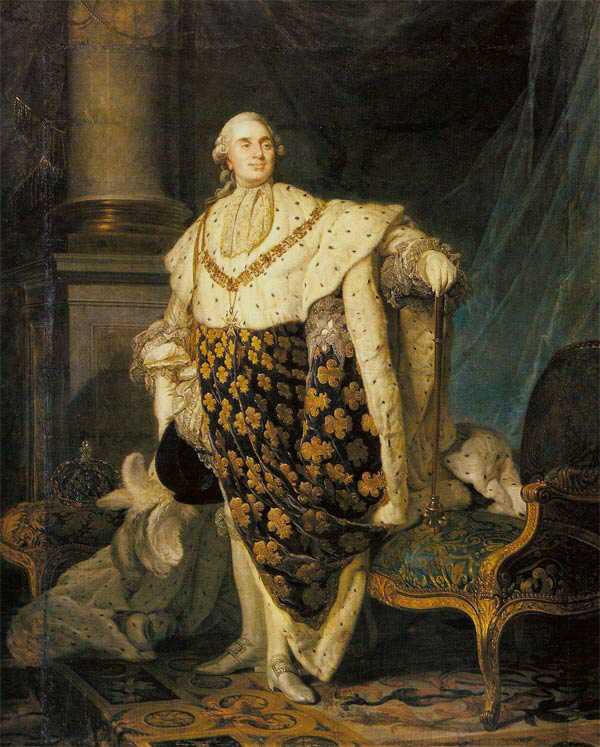
King Philip I of France, courtesy of Wikipedia Commons; click on the thumbnail for a larger image

Philip I of France

The Barons in the north had appealed to the French King Philip against the progressive abuse. The King of France was presented with a glorious opportunity. But John kept up his onslaught of the Barons. He wrecked their estates, took more hostages, and redistributed the power more evenly.

Finally, John was reluctantly forced to deal with his rebellious barons at Runnemede outside Windsor Castle in June 1215. He had danced his force of 2000 knights around southern England for a month with promises that he would meet them. They had marched from Northampton, to Bedford, to Stamford, to Brackery (Brackley), and to Oxford. The force became desperate, some were becoming irresolute, and supplies were low. On May 5th, the Barons arrived in Wallingford and formally renounced their allegiance to King John. Despite victory after victory in both the political and military arenas, John was forced to negotiate a settlement with the Barons by virtue of the fragility of his own command.

In addition to the terms that had been offered by King Henry 1st over a century earlier, John was forced to offer additional concessions. These were John’s agreement to release his hostages, ensuring his loss of power, and to allow virtual rule of England by the 25 Surity Barons. The frills also included formal recognition of many authorities and existing unofficial practices of John’s era, notably the civil authority of Sheriffs and Serjeants, much of which had already been conceded by Henry 1st.

King John II signing the Magna Carta

King John II signing the Magna Carta, courtesy of Wikipedia Commons; click the thumbnail for a larger image

The Magna Carta

It took four or five days under a tent to formalize the agreement in what was called the Magna Carta. The document was sealed on June 15th, 1215; but probably it was really argued and agreed four or five days earlier by Stephen Langton, Archbishop of Canterbury – the same man who had been rejected by Richard the Lionhearted. It became law on June 19th. In apparent defeat, John instructed William, Earl of Salisbury, to return all confiscated lands and parks to the Surety barons. The Magna Carta was born and John shared rule with an oligarchic committee.

By giving England to the Barons – seemingly unwillingly – John ensured that he was unable to fulfill his promise to give it to the Church. Pope Innocent immediately annulled and abrogated the Magna Carta, describing it as a conspiracy against, and persecution of, his vassal, King John of England. He ordered Stephen Langton to excommunicate all the Barons who were signatories to the Magna Carta. On September 24th 1215 Pope Innocent excommunicated the rebellious Barons personally, because Langton had refused to do so. The Baron’s attempt to implement the Magna Carta resulted in armed conflict. In hindsight, it was another masterful move by the astute politician, King John, playing the Church against the Barons.

The Puppet Master’s Finest Hour

John behaved as expected of a correct vassal of the Church, in effect relegating his Barons down in the pecking order to mere under-tenants, a very different social and power status, and essentially, reduced them to being landless. He retired to the countryside and defended his royal castles beyond, and nominally complied. He released a few hostages, and readjusted some of his administrative functions and loyal men.

The Barons had negotiated an instrument which legalized what amounted to high treason. They could present John with any concocted grievance and unless corrected within 40 days, he could virtually lose his throne, under the terms of the Magna Carta. But they still lacked most of the hostages – they still lacked real power. They were apprehensive about John’s loyal tenants-in-chief, the real power behind the throne. The rebels controlled London and little more – John now held the North strongly, as well as a fortified ring of castles around the capital. In time, the Barons would inevitably be forced to return to the negotiating table, giving up the power claimed through the Magna Carta in exchange for John’s refuting the agreement with the Church. John’s power would again be absolute, having played rebellious Barons against a greedy Pope – and having acquired Fealty from Scotland, Wales and Ireland into the bargain.

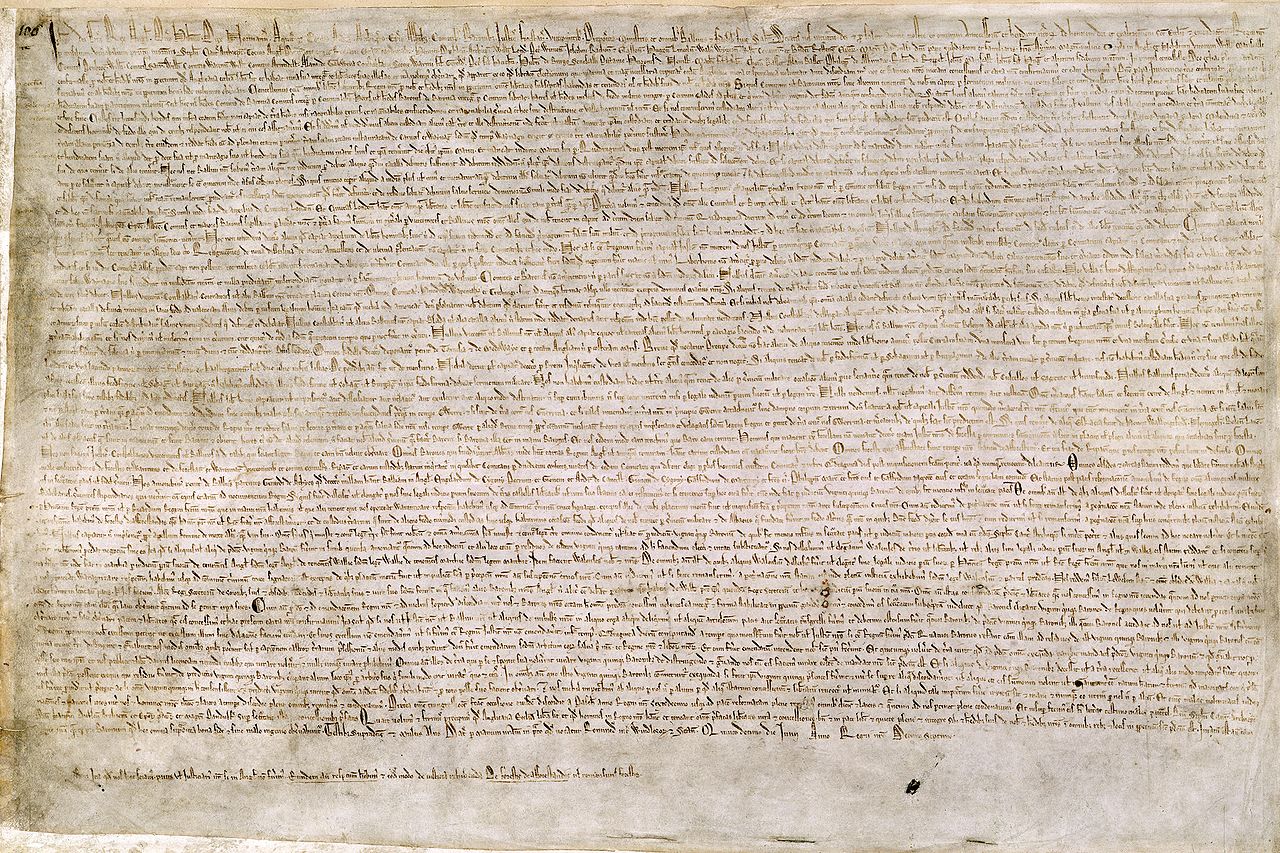
The Magna Carta

The Magna Carta, originally known as the Charter Of Liberties, enacted in England, 1215, courtesy of Wikipedia Commons; click on the thumbnail for a larger image

It all unravels

However, a long-hidden alliance headed by the French recognized that at the current moment, John was vulnerable, and invaded, and John was never able to force the withdrawal of the Magna Carta – he needed the troops subject to the Barons in order to secure the boarders. For once, John had been caught short in his planning.

That is how it is recorded in our history. But in Dimension Regency, events turned out a little differently…

The Regency Twist

In that reality, one of the rebellious Barons turned coat on his fellow conspirators. Baron Kay of Wessex forewarned John of the Barons’ plans and of the conspiracy against his rule that the French had orchestrated. John therefore knew that he needed to distract France while he was engaged in dealing with his domestic rebellion; he falsified orders to a unit of the French Army, making them agents provocateurs against the Italians, and at the same time planting some falsified intelligence which would eventually fall into the hands of the French, suggesting an alliance between the Pope and the Flemish aimed at starting a war between Italy and France. This relieved some of the pressure on Otto, enabling him to at least hold onto the territory John had captured, which in turn meant that the French could not afford to leave themselves vulnerable by invading England while John was resolving his domestic problems.

What’s more, the presence of additional troops courtesy of Baron Kay, the need to subdue one less opponent, and the presence of a mole within the highest councils of the enemy command, all permitted John’s forces to succeed more rapidly in the ensuing moves against Scotland, Ireland, Wales, and his domestic Barons. Baron Kay advised John that the conspirators were counting on deterioration of morale after a long campaign to force John to the negotiating table. This forced John to actually keep his word to his troops, secretly meeting them en route to Oxford, bearing with him fresh supplies. The resultant morale boost late in the campaign was carefully hidden from the Rebellious Barons; they overconfidently declared their independence at Wallingford, and demanded a meeting between themselves and John at Runnemede to negotiate terms of his surrender of power. John seemingly went along, and in no respect were events overtly different to those documented by normal history; Once again a treaty, the Magna Carta, was “forced” out of him, and once again he played the Church against the Barons. He then starved the Barons out until they were forced to surrender, exactly as he had planned.

The small differences

The terms of the Magna Carta were not exclusively to the advantage of the Barons; some of them replaced the practice of Tithing with a general taxation system, and established common law – in theory, to protect the commoners against the throne, but the wording negotiated could in fact cut two ways – something the Barons learned when John made an example of Baron Ethan of Chinchester for his abuse of the peasants on his lands. John thus became a public hero to both the commons and the church, ensuring that history would record his rule in markedly different fashion.

At this point, another of John’s ploys came home to roost, as the Italians and French negotiated a peace treaty, and the French discovered the planted intelligence accusing the Pope and the Flemish of being the instigators of the Franco-Italian conflict. This weakened the church’s support considerably, ensuring that they were in no position to attempt to force John to honor the terms of his agreement assigning England to them; he renegotiated the deal, offering them an equal share of the spoils of victory from the ongoing invasion of France.

John then turned his attention back to the campaign against the French, which had stalemated under Otto’s inept leadership, leading a flanking force to surprise the French. Taking advantage of the tactical stagnation on both sides, and the reduced numbers of French defenders, he was quickly able to cut the supply lines of the resistance and capture fully one-third of the French Army, and leaving the way clear to invade Paris itself. The French had no alternative but to surrender and negotiate terms.

England thus acquired the Northwestern third of France, an Oath of Fealty from the French King, and undisputed dominance of Western Europe. The Northeast of France was turned over to the Germans, and the Southeastern provinces were given to the Church, placating the Pope. The Germans soon discovered that claiming possession a territory was not the same as owning it, and Northeastern France declared independence. They attempted to return to the control of the French King, who was undoubtedly tempted – but he had been left vulnerable by the heavy occupying force to his Northwest. Laying claim to those provinces would have overextended his forces and left what little remained of France vulnerable to renewed British aggression.

The dominos begin to fall

European History was disturbed only slightly by these changes for a considerable period of time. The essential difference was that France was unable to periodically bleed England of troops, and that as a result, England grew in power both militarily and economically. In time, the Dutch, Portuguese and Spanish emerged as new rivals to European Dominance as the age of exploration began, and Naval power began to overtake infantry as the premier field of conflict.

That was when England’s growth, in both budget and manpower, truly showed itself, overcoming the Spanish in South America, settling the North American Continent, Seizing control of the entire African Coastline, and taking control of Canada from the Dutch and French. Spain held Central America, Portugal held remote islands here and there and parts of the African Interior, the Dutch had Indonesia; the rest was British.

Then came the US War Of Independence – but that’s a subject for part 2…

Comments Off on The Imperial History of Earth-Regency, Part I: The Middle Ages – 1189-1220

The Ethical Reviewer


From time to time, gaming companies offer us products to review here at Campaign Mastery. Past such reviews include Tome Of Monsters from 4 Winds Fantasy Gaming in ‘Perfect Skin: Some Musing On The Design Of Monsters’, Players Option: Flaws in ‘On The Nature Of Flaws’ (also from 4 Winds), Nobis: The City-States from Pantheon Press in ‘Nobis: Going Renaissance and Loving It’, and Eureka! from Engine Publishing in ‘Eureka! Some Inspiring Notions’. We have also occasionally been invited to review websites and online utilities; one of our most popular articles is just such a review, ‘Building The Perfect Beast: A D&D 3.5 Online Monster Generator’.

I always get an ego-boost from such offers, but there have been a few such offers I wasn’t able to accept, and thinking about why was the initial inspiration behind this article.

Setting Standards

We pride ourselves at Campaign Mastery on offering value for money – and, since time is money, this means that we want every article we post to be an honest attempt at rewarding anyone who takes the time to read it by offering a substantial contribution to their games.

That means that reviews take as much time to write, if not more, than a normal article – if they are to be done right. The time to write the article is going to much the same, and on top of that is the time to read, assess, and appraise the product being reviewed.

To achieve the value-for-reader’s-time targets that we have imposed on ourselves, we have established an unwritten set of standards – at least, unwritten until now, because the bulk of this article is to be a discussion of these standards:

  • Honesty,
  • Impartiality,
  • Fairness,
  • Usage,
  • Value For Money,
  • Substance,
  • Depth,
  • and Scope.

Why write this article?

I have two motives in writing this article – firstly, educating our readers on the principles that shape what we offer for them to read. Second, offering the writers of other sites some food for thought; while there are some excellent and ethical reviewers out there, there have also been all too many reviews that clearly violate these standards. The results of such violations are always a review that misleads the reader to some extent, eroding the credibility of the publishing site. There may be other motives as well – such as needing something to post this week – but those are secondary concerns.

Honesty

Whatever opinions we present as part of a review will be our honest impressions of the product. If there are things we don’t like, or have trouble with, it’s our duty as reviewers to make those clear in the review, because it’s a reasonable expectation that some of our readers would also encounter those same issues. Equally, if there are things we like, you need to be told about those as well.

Sometimes, these opinions are misinformed – we may have missed a key paragraph of text, or a key menu option. Part of the honesty standard is to offer Mea Culpas when this occurs, and another part is to welcome replies to our reviews from the publisher of the product.

We’re also mindful that ANY product takes a long time to develop; people have invested long hours in its development and must be assumed to have done so to the best of their ability. You wouldn’t be happy if someone trash-talked something you had spent a lot of effort creating, so negative elements in a review are always delivered with an air of regret on our part. There’s nothing we like better than being able to laud a product without reservation.

Impartiality

Through twitter, I have friendly relations with a number of game product publishers, such as Robert Thompson from 4 winds and Jonathon from Nevermet Press. Johnn has been active in game product development as a professional writer for even longer, and has even more contacts within the gaming community.

No matter how much we may like a publisher personally, we try to leave that on the shelf when reviewing a product from by that publisher. The same is true of other sources of bias, such as how much we like past products from that publisher – we regard those as setting a standard against which the new offering can be measured, nothing more.

Those are both general sources of bias. Sometimes there is a potential bias relating specifically to the product being reviewed, such as being offered a free copy or reciprocal endorsements. While we do our best to maintain impartiality in such circumstances, we will always describe any such biases openly and prominently so that the reader can take them into account when assessing our review.

Fairness

This criterion relates to our expectations of a product. If it relates to encounter generation, we don’t expect it to make omelets as well – so much the better if it does, that’s an unexpected bonus (and worthy of note). We don’t expect a product to do anything more than the publisher promises – on the cover, on their website, etc. Sometimes, that leads to pleasant surprises. There have been game products that I would not recommend for their primary purpose – but which are absolutely fantastic and worth purchasing for some extra that has been offered.

Usage

A key question that we always have to answer in a review is whether or not we would use the product in one of our own campaigns, and if so, in what capacity – and, if not, why not. The goal is always to present enough information that each reader can decide for themselves whether or not a product is something they want to consider buying.

A related question is whether or not we like a product enough to spend our own money on it. We have been quite positive about Holly Lisle’s ‘Create A Character Clinic’, reviewed in ‘Creating Alien Characters: Expanding the Create A Character Clinic’. This product’s advertising on Holly’s website was enough to persuade me to buy it – but I got a set from Johnn for my Birthday before I could do so.

This is, essentially, putting your money where your mouth is. It also plays into a related criterion: Value for Money.

Value For Money

There have been any number of products, gaming and otherwise, that I have come across over the years that I would happily have recommended – at half the price.

Now, setting the price of a product is a black art that no-one has ever fully mastered, because it hooks into all sorts of other criteria, especially in terms of expectations. Something not only has to BE value for money, for the price to be justified, it has to appear to be value for money before the buyer cracks open the covers. If it doesn’t do that, the price is so high that it will negatively impact sales.

The biggest service that reviewers can offer is to bring a product to an audience’s attention that is value for money even if it didn’t appear to be so from the product advertising, about which most modern audiences tend to be cynical – or warn them about products that sound great but that fall short of achieving what they promise by such an extent that they aren’t worth the asking price.

Substance

In my bio page here at Campaign Mastery, I state that I have never read a game supplement without thinking that I could have done at least some part of it better than it has been done (and I don’t except products like Assassin’s Amulet that I have co-authored).

Sometimes, that statement relates to some content that hasn’t been executed as well as the rest of the product, but at least as often, it refers to something that could have been included but has been left out – usually, I think, because the authors didn’t think of it.

I always like to add “something extra” to a review – part of the “value for money” ethos of Campaign Mastery – that carries the article beyond simply being “I liked this” and “I didn’t like that”. In other words, I like the article to have substance beyond simply being a review. That happens naturally, because when I read something, I’m always asking myself “How Can I Use This?”, and sometimes the answers are something original.

It’s a huge ego-boost when the publisher replies with a “great idea” comment about such ideas. It happened most notably with the Eureka! review.

Depth

I like to get my hands on the mechanics of anything I review. Why does it do things a certain way? What Else can be done that way? Is there anything I can learn about creating effective game mechanics from it?

Reverse-engineering products in this way adds depth and insight to a review, so it is worth doing for its own sake. I started doing it for the reasons nominated in the preceding paragraph, but these days I consider that a side-benefit.

Scope

The final criterion is to look at the whole, not just part of a product. This comes back to giving enough information that a reader can decide whether or not to buy the product based solely on the review, and on deciding whether or not a product is value for money.

It all takes time

None of these are achieved quickly. Some criteria are, nevertheless, relatively painless; others take time and effort and some deep thought on top.

It follows that if time is short, there are two options: publishing a substandard review (according to our own arbitrary standards, admittedly) or not publishing a review at all. Given the commitment to quality that we strive for at Campaign Mastery, that’s no choice at all – better no review than a substandard one. (As a side-note: we apply the same standard to weeding out spam comments – even marginal ones tend to go into the trash. Have some legitimate comments been thrown out with this bilgewater? Almost certainly. But that’s better option than polluting the contributions of our readers. Better no comments on a post than spam – no matter how flattering a superficial piece of spam might be, once language and grammar are cleaned up. Have we missed the occasional piece of spam? Again, almost certainly – but those occasions would be few and far between.)

But here, once again, my personal and professional ethics manifest themselves. I try never to do half a job. I take pride in what I write and the contributions that I’m able to make. It is my most sincere hope every week that someone’s campaign, somewhere, is improved by what I write.

If I accept an offer of a free product, I feel compelled to thank the person or company extending the offer by publishing a review of that product. I won’t accept an offer unless I have the time to provide recompense with a review that’s up to scratch. Usually, there is no insistence on such reciprocation, not even a request for it – the offers are made with no strings attached. My pride and ethics attaches the strings.

The ethics of paid articles

We frequently get offers of payment for publishing articles with links to gambling sites, and almost as frequently, we turn these down. If reviews have to meet our own ethical standards, non-review articles have to do so even more stringently. I couldn’t and wouldn’t write an article for no other reason than as an advertisement for a site offering online bingo or internet poker or whatever without being sure that the article had some intrinsic value to our readers.

Anything less than this approach is taking advantage of our readers in an unconscionable manner. Our readers come to Campaign Mastery to read something that will enlighten, empower, or improve their games, or at least make an honest attempt at doing so. No matter what other interests an article might have, it has got meet that primary objective.

Our articles must have inherent validity and value or we damage our most valuable asset – our credibility.

But sometimes…

Nevertheless, there have been a few occasions when we have been able to naturally fold a paid link into an article that has genuine merit in its own right. There have even been one or two occasions where the site that we were being paid to promote has enhanced an article – for example, my article ‘A Different Perspective: changing the dynamic with a different metaphor’ which considers the benefits of using mechanisms other than die rolling to simulate complex situations, a principle that I put to good effect in a subsequent Ask-The-GMs about the best way to simulate a fishing tournament without reducing the game to a procession of die rolls (‘Ask-The-GMs: How to set up a fun fishing mini-game’).

Ethical Reviews

Wikipedia defines Ethics as a branch of philosophy that involves systematizing, defending, and recommending concepts of right and wrong behavior.

In this article, I’ve tried to set out a summary of what we here at Campaign Mastery consider ethical behavior when it comes to reviews – and to explain to various publishers why I haven’t accepted their offers of free merchandise.

Bottom line: we want you to be able to trust what you read on this website. We don’t want you to have to rely on our legally-obligated disclaimer (‘Material Connections’).

Some other time, I’ll go into the actual process that I use to write a review. Just don’t get me started on the ethics of RPGs…

Comments (8)

GM Toolbox: Conclusion


This entry is part 14 of 14 in the series GM Toolbox
GM Toolbox

What tools go into your GM toolbox?

Written by Michael Beck, with contributions and editing by Da’Vane.

As we started with in the Introduction, Michael Beck provided four reasons for writing the GM’s Toolbox.

We only presented two of those reasons since they made ideal opening statements from Michael explaining his motivation for the series, without having to have read the series first.

He also presented two more reasons, which we will share with you now, having concluded the series, because they will make better sense.

Categorizing Roleplaying Tips

One initial motivation was to have an overview over all the topics the GM has to handle. As you can see, it is quite a lot.

Just the index of this tip would consume a page (so throw this list at a player who thinks “GMing can’t be that hard”, of course after saying: “Ok, you try.”).

By creating this index, I hoped to categorize new tips out there, so I can easily compare them to the tools I use and can quickly draw a comparison. You can use this series as an index in the same way.

Also, sometimes I just forget about a good tool because I only used it once. By mentally putting it into a certain space in my toolbox this may help to remember nice tips.

Getting an Overview of My Own GMing

Michael: One motivation of this large roleplaying tip grew by writing it. By giving examples, I forced myself to see where I have gaps in my knowledge or what aspects of my GMing needs improvement.

That was a nice experience to actually question yourself about how you perform in each aspect of your game. Before finishing this tip, I asked Johnn to look for gaps in the index and he suggested some more sections.

Partially, these had been aspects of the game I never cared much about, or just got used to not caring about that much. I think I got by writing this, thinking about what Johnn was asking in his GM Interviews, the 10,000 Foot view of my GMing.

Maybe writing down in a few words, your own tools which you use for each aspect will grant you the same 10,000 foot view. It’s awesome, try it.

Da’ Vane: I had exactly the same experience when I was forced to write about my own GMing abilities in a way that added to this series.

I know from my academic studies that working with material makes you better at it, so you become more skilled using the tools you use the most, and the ones you neglect you find become harder and harder to use.

This is why revision is such an effective means for learning and preparing for exams. The act of writing about something forces you to process the information you are writing about, so the more you write about it, the more proficient you become at it.

Discussion works in the same way. Any means of actively engaging with the material helps you to learn more effectively, and learning is the key to becoming a skilled GM.

By reading other people’s tips on GMing, and then commenting on them in a way that is more than just saying “That’s a good idea,” you are learning to become a better GM, and heading towards becoming a true Games Master.

Someone who doesn’t take their power at the gaming table from a book, and feel bound by it, but from their own expertise and their own skills, because they know they still have the power to run a great game even if the books weren’t there.

Someone whom your players know they can trust to run a great game for them without hesitation, and whom they know will put themselves into the game, using their own skills and abilities, rather than just copying it from someone else.

Anybody can move a few miniatures around and roll a few dice for the bad guys. If you think this is not true, then you’ve not experienced many of the ways board games, card games and war games have been using these tactics to add spice to their games without a dedicated GM for years.

Look at how advanced various CRPGs have become in the past few years, from the likes of Baldur’s Gate all the way to modern classics like Oblivion. Yet, the advantages of having a GM are far beyond this, and consist of one thing that computers and dice will never be able to complete with – human experience.

The quest for artificial intelligence may march on, but nothing replaces actual intelligence on the far side of that GM’s screen.

I’ll leave you with a saying of mine which is applicable, and defines the whole point of learning, and the whole point of this series. “Experience is learning from our own actions. Intelligence is learning from the actions of others.”

About the Authors

Michael Beck considers himself a novice GM, but is encouraged in sharing his tips at www.spielleiten.wordpress.com (German language). Having played RPGs for roughly 10 years now, he accepts the challenge of living with his girl-friend, two cats, a non-finished PhD-thesis and two running roleplaying campaigns.

Da’ Vane, or Christina Freeman in the real world, is the owner of DVOID Systems, and the primary writer of their D-Jumpers series of products. With an academic background in science, especially socio-psychology, she is what many would regard as a “know-it-all.” However, the truth is that she doesn’t know everything about everything, but she knows a lot about a lot, especially about her passions which are games, stories, learning, and people. She is a consummate geek goddess, and yes, she is single if you feel like tracking her down and hitting on her some time….

Comments (3)

A Twist in Time: Alternate Histories in RPGs


The latest iteration of my superhero campaign has just gotten underway. Being set (mostly) on an alternate-history Earth, it holds a number of elements that may be of interest to readers, especially if I explain the thinking that led to the various choices that were made and my approach to the construction of a detailed alternate history.

The Point Of Initial Divergence

The first question, whenever creating an alternate history, must always be “what was the first difference?”

I had already determined that this was to be a world in which half the planet was under the control of a British Empire that was more substantial than any known in our world; in fact, all bar Asia, Oceania, Siberia, was to be part of this British Empire, while the rest of the world was under the control of the mysterious Mao (rhymes with “how”).

India, due to its historical connection with Britain, would be excluded from Asia, and part of the British Empire, as would Sri Lanka (still known in this world as “Ceylon”); to balance that, with some regret, I gave up the rest of the Pacific, including my homeland of Australia, Antarctica, and South America. I also chose to have Central America and the Middle East as disputed territory between the two. Because I would need their advances in electronics and miniaturization for various social and technological phenomena, the Empire would have to claim Japan, not the Mao.

Clearly, the age of exploration would be greatly altered. Changes to relatively recent history, like the 20th Century World Wars, wouldn’t cut it. Instead, I went all the way back in history to the point at which Britain ceased to be an absolute Monarchy – the signing of the Magna Carta – and chose to ‘meddle’ in the events which led up to that singular event. The change needed was only subtle – I made King John a little wilier, a little shrewder, and a little more intelligent. I had expected to need a more dramatic change, but…

Research

I already knew of the broad significance of the Magna Carta and had some appreciation of the circumstances that led to its signing, but – having decided that this was potentially the point for this history to diverge – my next step was to research it more thoroughly. I read up on the relevant Wikipedia pages – Magna Carta and King John I – along with a number of other websites such as Magna Carta 1215 and Useful Dates In British History, and finally, a webpage that was once a useful general resource, The University Of Wolverhampton’s Distance Learning LLB Curriculum, but which has been replaced by a page that is more concerned with Distance Learning (and its pro’s and con’s) in general – still, no doubt, useful information, but not for the purpose for which I employed it (hence there is no link).

I also read relevant chapters of various History references that I have. At all turns, I was seeking not just What happened and When, but the more difficult questions of Why and How – and that all-important element, a discussion of the consequences and effects that events had on the future.

Of course, there’s a lot of context and interpretation in analyzing historical events; not all of these sources agreed with each other, and I did not agree with all of them, either. So this mish-mash of research was filtered through three sieves – plausibility from a 21st century dramatic context, internal consistency, and finally, whether or not the interpretation advanced the chain of events in the general direction I wanted it to go.

The Substitution Principle

It was going to be important to me that society have a recognizable shape and pattern, so that the players could simply sit down and start playing with no culture shock; the campaign was to be in the near future of such an Empire, about 2050, but a future derived from a campaign world that was already 20-50 years ahead of our own in technology. Technology and its repercussions, and a changed history, would already pose sufficient culture shock for the players, there was no need to add to the burden.

That meant that anything that was fundamental to our culture had to stay, or – if removed by events – be replaced by an analogue. This meant backtracking all the way back to the historical beginning and adding another plot thread to the background to bring about the existance of that analogue. The first example, of course, is the Magna Carta itself. Despite the erosion and removal of almost all the provisions of the document over subsequent years, the principles that it established were fundamental to modern society. That meant that the Magna Carta had to stay, but the weakening of the monarchy that its adoption reflected had to be removed.

With a little thought, I was able to devise a course of history that permitted John to come to the conclave with his rebellious nobles in a position of strength, and for him to offer the nobles a subtly altered version of the Magna Carta which recognized the Crown as the Protector Of The People – a fairly nice-sounding title of no obvious importance, just something that sounded nice at the time. The Nobles, thinking that John had made a mistake and granted concessions he did not intend, rushed to sign. Only then did they find that this innocuous title gave John all sorts of controls over what the Nobles could and could not do, while he was free to do things in this capacity that he was forbidden from doing on his own behalf. Rather than stripping John of a measure of authority and control, the Magna Carta restricted the Nobility, granting them absolute authority – within the bounds of constraints that John controlled.

In the process, a three-pronged power structure was established, which in due course would develop interdependencies, because the eventual result was Common Law – the British equivalent of the Bill Of Rights, insofar as it established what rights and privileges the common people had, and which the Nobility was required to provide and defend. The Monarch was the people’s spokesman and ultimate defender, and without them, the Noble’s estates would quickly fall into ruin.

Everything Stays The Same Until It Changes

Another of the principles that are the foundation of my approach to alternate histories then came into play. Having made the key change to history, I tracked it’s consequences forward in time, assuming that nothing that had not specifically changed had remained the same as recorded in the history books. Little by little, deviations from history accumulated; only if I reached the point where history was no longer trending in the desired direction did I go back and seek a series of events that would restore the desired shape. Slowly, the power balance in Europe was reshaped. There was still a Napoleon Bonaparte, who became the most successful General in Imperial History, and who also introduced significant social and legal reforms. There was still an American Revolution, and while it failed (since the English military strength was not being sapped by conflicts closer to home), it still forced democratic reforms on the Empire, and so on. There was still a First World War, and still a Hitler, and still a Blitz, and so on.

The Principles Of Genius

I believe I’ve mentioned this one in the past, but it’s worth reiterating. The concept is that a man (or woman) of genius will advance the art of their chosen field by as many steps in any alternate history as they did historically. Should something happen to prevent one of them doing so, it will set that field of study back by precisely the number of steps that the individual contributed, historically.

This plays into a second, related, principle: no advance is possible until the foundations exist. Sir Isaac Newton invented Calculus (as did a number of others, independently) in order to analyze and understand certain celestial observations, which led him in turn to his laws of motion. If those celestial observations had not been made, due to inadequacy of telescopes – and it was Newton’s study of telescopes that led him to his advances in optics – then Newton would have remedied the lack, at the expense of another of his historical discoveries.

Social and political changes have a role to play in these functions, because they dictate who one scientist can easily communicate with, and the ends to which their researches will be put, and where their patronage is coming from. That means that in some cases where a scientist had to ‘reinvent the wheel’ in order to advance their field, he was now free to advance his field by two steps instead of just one.

Working forward through history, from year to year, backtracking as necessary, produced a workable timeline. (Unfortunately, I never got to finish writing that history – too many projects of greater importance intervened. I only got as far as 2015 – though I have draft material that completes the history, and that I have to finish as soon as this article is written!) Some discoveries came sooner, some later; these brought some social changes sooner, and some later; and the whole history evolved forwards. (It’s my intention to use that history as a series of articles in Monday Posts once the GM Toolbox series concludes – that’s the only way I’ll find time to finish it!)

The End Result

A few of my objectives for the end product haven’t been mentioned yet, but need to be acknowledged. The first is overall tone: the previous incarnation was a world which was initially in very Dystopian condition, and in which the side effects of the PCs adventures slowly transformed into a more Utopian situation. As a distinct contrast to that, I wanted this world to be (at least superficially) trending toward the Utopian when the PCs arrived – things would be good, and with prospects of getting better. Sure, it would have it’s problems, but the overall tone would be positive – more Eureka than Blade Runner – at least at first. In the course of the campaign, it would grow steadily darker, until the Big Finish, when the PCs will get the opportunity (if they play their cards right and haven’t made any serious mistakes along the way) to usher in a new Golden Age.

The other objective was to provide an environment with a lot of scope for adventure. To that end, now that the preamble has been disposed of, I can finally get to the original point of this article – outlining the current political situation within the Empire.

The British Empire

There are essentially three divisions of power: the Nobles (now gathered into a House Of Lords that must ratify all legislation), a representative lower house elected by the people from amongst the candidates proposed and endorsed by various political parties, and the Crown, which appoints a Civil Service to provide a continuity of bureaucracy. The Crown is the Protector Of The People, the safeguard, spokesman, and authority when it comes to the rights of the ordinary citizen. As such, it decides who can vote, controls electoral boundaries, and so on. The Lower House is led by the Prime Minister Of the Empire, while the House Of Lords is led by the Lord Chancellor. Through modern technology, the Crown is in direct contact with the populace – and can also shape opinions. Complicating everything is the supposed subservience of the Civil Service which – in reality – has developed a degree of autonomy that they will aggressively defend. Half the Lords are appointed by the Crown – often from the ranks of the other bodies of government, and occasionally from the general public – and the other half hold hereditary memberships. Governments have a proscribed lifespan of 3-5 years, within which span a fresh general election must be gazetted.

Each country or nation member has its own, lesser parliament, organized along similar lines. Some nations are divided into districts, or states, or counties; these also have elected bodies. It’s quite possible for a nation to have a government of one political party while the overall Empire is controlled by the policies of a rival party. The national governments are constrained to authority over local issues only; deciding what is a local issue, what is a national issue, and what is a Imperial issue is the purview of the Imperial Government, as advised by the Civil Service – which must obey the instructions of the Crown.

In theory, Governments are elected by the people to represent their interests and decisions, but the rise of lobby groups and political donations as an avenue to power means that they are more about the Economic emphasis of the authority they exercise. The result is a complex situation in which there are many channels – and backchannels – of power. Industry elects governments, but can be overridden by popular sentiment, which is shaped by the Crown. The balance of power in the Lords is appointed by the Crown, which can also withdraw an appointment for specific reasons – and which acts as a check on the authority of the Government; in theory, the Lords are to take a longer, wider view. But there are backchannels to the House Of Lords by which Industry and Union groups and other factional interests can lobby, and the Lords can always be overridden by the Crown. However, the crown must always honestly reflect overall public opinion on any issue, something it can shape but not control – and which the other branches of government and lobby groups can also influence. And, functioning as the interface between them all is the Civil Service – which can have its own agenda.

The result is a perpetually-boiling hotbed of political intrigue in which no branch of the Government can dominate, or can thwart the intentions of the people for very long. Go too far, and the government will find its legislation blocked, with the support of the crown and the unions; or, should the Lords seek too dominant a position, they will arouse the ire of the populace, who will beg the monarchy to alter the balance of power within the Lords accordingly. And, should the monarchy go too far, it will either strangle the economy apon which they depend, or it will unite both branches of government against the Throne – and the combination has a veto over the powers of the Monarchy.

This would suggest a political conservatism, a creeping paralysis – but the Empire is too complex for that to work. The Civil Service, through reforms based on modern technology, is incredibly efficient; only if everything is perfect (or at least getting better) for everyone can a government afford to simply mark time. Any dissatisfaction, by anyone, will be seized apon and amplified by a hungry media pack, which are yet another influence over public opinion. The added complications of conflicting governments at different levels of hierarchy within the Empire ensures that no-one can get complacent; there is always something new coming up.

Registered Eccentrics

Various branches of the government, over time, have been forced to recognize the power of Social Gadflies. An outgrowth of the Court Jesters combined with the “Bread And Circuses” appeal of distracting the public, Registered Eccentrics are people specifically permitted to speak their mind – no matter what they might have to say – or do any crazy thing they like, so long as it doesn’t hurt others. Selected entertainers, social commentators, some reporters, and superheroes – these people are there to keep the government, in all its branches, honest, and the people safe.

Altered Histories

The rules for creating an alternate history in this way are simple, and the results credible (for the most part). Selecting the right departure point, and being willing to put in the research and development time, are all that’s needed to shape a culture into whatever the story of the PCs is going to demand. Along the way, surprises lie in store for both you and for the players – but that’s what makes the process fun. And, as a side benefit, you gain a greater knowledge and appreciation of the interlocking of cause and effect within the history of the world around you.

That’s not a bad deal.

Comments (6)

Beyond the Game III: Learning to Become a Better GM


This entry is part 13 of 14 in the series GM Toolbox
GM Toolbox

What tools go into your GM toolbox?

Written by Michael Beck, with contributions and editing by Da’Vane.

GM’s Toolbox, looks at tools, tips, and techniques you can use to improve your games. Toolbox offers you a skeleton for running a campaign, rather than fleshed out tips. This series is presented in a discussion style, and we ask you to contribute with comments about your own tools, tips, and techniques at the end of this post.

There are plenty of things you can do beyond the core game as GM to improve everyone’s experience. There are points where roleplaying interacts with real life, sometimes with negative impacts on the game itself.

Some of the following are not just a GM-only job. However, your players often expect you to be responsible for these things, simply because you are the GM, and that’s reason enough.

In part I, we went over a few ways to improve your game experience outside the game using handouts and props, as well as a campaign newsletter.

In part II, we covered some of the issues around organising the actual game itself, including finding players.

In this part, we will cover the ways in which you can improve your abilities as GM.

Quick Ruling

Often as GM you have to deal with a situation that is not described by the rules or is something nobody else at the table knows about.

Skimming through the rule books for an answer is often not the solution you are looking for, because it takes too long or ruins the tension, unless you already have a fair idea of where to look for the rules.

So, you will have to do some ruling quickly. This ruling should fit the situation and be coherent with the core rules. There may be some extra wishes to this ruling, like not exploiting possible weaknesses in the system or making sure that the ruling provides tension while being fair when it is resolved.

Michael: In my experience, rule-light systems like Savage Worlds or Cthulhu bring you often in the situation of spontaneously deciding how things work. In contrast, systems like D&D or Shadowrun seem to have a rule for everything, but there is seldom anyone who knows all of these rules. So, in the end, you end up with the same level of detail in the rule-system.

The basic tool here is to avoid it, for example by preparing rulings and references beforehand. This keeps rule discussions to a minimum, especially if you are enjoying a high authority towards your players.

Nevertheless this is not always possible. Knowing the basic mechanisms helps a lot here. Check out the rules mastery for dummies articles on campaign mastery for good tools for quick ruling.

Da’ Vane: Preparation is key, and failing that, a good grasp of the underlying principles of the game system at hand are often useful, as this allows the GM to recreate any rules needed to keep the game flowing as smoothly as possible.

The actual rules might be slightly different, but if the differences are relevant then there is often some hint about the situation that would suggest to the GM a possible refresher of the rules might be useful to avoid the need for quick ruling in the first place.

As stated in my comments throughout the Campaign Mastery series, a GM’s power within the game should be more or less absolute, coming from a mixture of both the authority that being a Games Master following the rulebook provides, and the expertise gained from running the game and knowing the players, which is the very essence of GM mastery in the first place.

As GMs progress, they will slowly build up their expertise so this becomes more of their power, requiring less and less authority from the rulebooks, at which point a GM can pretty much play entirely by quick ruling everything, with rules systems only providing guidelines. This makes for a smoother game, which in the end is the best outcome for everyone.

Johnn: In my games I welcome rules lawyers. Instead of being threatened by them, I welcome their feedback during games and between games.

We have a group understanding that rules discussions end fast, suggestions are welcome, and I make ad hoc rulings to keep things moving.

We also have an understanding that a player can point out something anyone is doing wrong, including me, at any time. This helps us learn the rules properly, as a group, through gameplay. When I stand corrected, I always thank the player.

Knowing Your Players

Knowing your players can increase the fun your group is having at the table. Important questions here are:

  • Why are the players roleplaying (have fun after work)?
  • What are the players roleplaying (what kind of characters)?
  • How are the players roleplaying (power-gamers, deep character backgrounds)?
  • What is important in the eyes of your players (sticking to the rules, nice stories from your side)?

Michael: I try to watch my players closely during sessions. Often I’m too busy for that, but this is not good. There should be nothing more important as my players.

So I’m working hard on this one. Here again, Joe Navaro’s book about body language and nonverbal communication comes into my mind. As well as the classification of players by Robin Laws.

Da’ Vane: By knowing your players, you can tailor the game play experiences to them, as well as learn how best to handle any potential issues that might arise before they come up.

Most issues within games come down to a mismatch between player expectations and what the GM is presenting, so being able to better synchronise with your players’ wishes will make for a better experience for everyone.

A good start is by identifying what your players want, and then catering for those desires with your encounters, while skimping on those your players find disinteresting. You aren’t going to get anywhere if you have a party that prefers tactical combat encounters, and you insist on giving them investigative puzzles to solve instead, or scenes with lots of roleplaying and storytelling.

If you have a mix of players who like a variety of styles, make sure they are all covered, and do your best to make sure they all get adequate time doing what they enjoy.

Don’t let a few players dominate the game at the expense of the others. If you can, try to find creative ways to combine different styles of play into a single encounter.

Fighting GM Burnout

Remember the time when you started your last campaign, fresh, enthusiastic, full of ideas? Well, as we know, this feeling will not hold forever. I think it’s quite natural that every GM has a burnout now and then. As such, it’s good if you have tools to get you motivated again.

Michael: I found a great tool for myself – The Funny One-Shot. Other possibilities for me are watching my favourite movies or lying on my back remembering my first roleplaying experiences.

Also thinking about some radical changes in your current running campaign may not only surprise your players, but also gets you motivated again, because it’s new!

I also like to listen to these guys sessions over at RPGMP3.com.

Da’ Vane: GM burnout can be a tough one, and the best means to overcome it is to have a change of pace, often by running or playing something else. Let someone else take charge for a while, so that all the stresses and responsibilities of being a GM can disappear, while you get back to actual gaming. You might even pick up some new tips and ideas to take back into your own game.

Johnn: Check out these articles to help if you have burnout:

9 Symptoms Of GM Burn-Out: Avoiding GM Burn-Out Part I

8 Tips For Recovering From GM Burn-Out

Remedies For GM Burn-Out

Playing With Fire: Dodging GM Burnout

Master Your Tools

There are tools suited for advance preparation and improvisational use. This is a nice place to talk about these two kinds of tools. The first tool is used before actual play, and it is allowed to take some extra time for better results.

The latter is used in minutes or even seconds during play, where the results are not so important, since the priority lies on the game keeps running.

However, one should never forget there is some possible conversion between the two types of tools:

  • A tool suited for advanced preparation can be used multiple times and the results can be stored somewhere for use during play as it is needed, similar to an improvisational tool.
  • An improvisational tool can be used during preparation and have the results tuned until it fits with the rest of the campaign material, similar to an advanced preparation tool.

You may find your tools are not doing their job well enough anymore. If this is the case, then you need a means to get new tools. It sounds simple, and you may be able increase your GMing skills simply by going through your actual toolbox from time to time and think about improving your tools or getting some new ones.

Michael: Well, you are reading this stuff here, so you actually already know about one tool I use to get new tools. Without further commenting, you can find a lot of new tips at roleplaying tips and campaign mastery websites, as well as on many other sites.

Da’ Vane: Games mastery is becoming a body of knowledge that is quickly rivalling that of any other social science, because it is driven by passion and enthusiasts who want to improve their skills and abilities.

It is also becoming much more academic, as more people are becoming competent and desiring to take their passion into a professional capacity. Combining this with the increasing popularity of gaming in mainstream society, of gamification within our daily lives, and the increasing important role of education and teaching, the role of Games Master will become even more popular and important.

Games started out as a means to safely explore situations and learn new skills through play, and this method of thinking has now gone full circle within the teaching community. The tools for learning to be a better GM are the same tools for learning to have a better life, and come from the same source.

So, everything you learn has the potential to improve the tools you have in your GM Toolbox, regardless of what its original purpose might have been.

About the Authors

Michael Beck considers himself a novice GM, but is encouraged in sharing his tips at www.spielleiten.wordpress.com (German language). Having played RPGs for roughly 10 years now, he accepts the challenge of living with his girl-friend, two cats, a non-finished PhD-thesis and two running roleplaying campaigns.

Da’ Vane, or Christina Freeman in the real world, is the owner of DVOID Systems, and the primary writer of their D-Jumpers series of products. With an academic background in science, especially socio-psychology, she is what many would regard as a “know-it-all.” However, the truth is that she doesn’t know everything about everything, but she knows a lot about a lot, especially about her passions which are games, stories, learning, and people. She is a consummate geek goddess, and yes, she is single if you feel like tracking her down and hitting on her some time….

Comments Off on Beyond the Game III: Learning to Become a Better GM

A Game For All People: The Perfect DnD Recipe


This article is being written in advance of reading any material concerning the actual content of DnDNext from WOTC.

Unless you’ve been living under a rock somewhere, the odds are that you’ve heard the announcement of D&D… well, no-one’s quite sure what it’s going to be called yet. The most common handle seems to be DnDNext. As it happened, I was on Twitter when the news broke, and when the official announcements were made a little later.

Kudos to those like @Morris of Enworld who kept their professional integrity by not jumping the gun on the announcement the way others did – who should have known better. Brickbats to those who succumbed to temptation.

There were a lot of reactions, ranging from skepticism to celebration, but overwhelmingly the prevalent emotion on display was one of cautious hope. The goals announced for the new edition in that initial press release were certainly laudable, and even if Wizards only come close to them, the final release will be cause for celebration.

You can read Morris’ write-up of how Wizards told him about 5thEd – which is another term that’s been extensively used to describe it – at the Enworld Website.

Possibly the biggest jaw-drop for me came when Wizards openly admitted that they had completely and deliberately ignored feedback from playtesting of 4th Ed D&D. This was something that had long been suspected, but no one expected them to come out and acknowledge it. At the time, I could only wonder who much of the pain of the edition wars could be laid at the doorstep of that decision. Well, they certainly reaped the rewards of that misguided policy – half of their market feeling abandoned and unwanted, and ripe for someone else to capture – and well done to Paizo for doing so with Pathfinder. The reason Wizards came clean was to explain why they were going to take an extra year or two in development of the new edition – they were deliberately setting out to do what they didn’t the last time around – and again, Kudos to Wizards for that. Well, there will be more on the playtesting regime in due course, I’m sure. At the moment, all I can say is that I know more than I can say.

The sentiment that I expressed at the time was that Wizards were putting their credibility on the line with the announcement of that policy. If there should even be a hint that playtesting feedback is ignored this time around, it will lie in tatters. There were those who felt that Wizard’s credibility had already been lost, and were not interested in taking part; but most people seemed willing to give Wizards a chance to put their money where their press release was. They say they’ve learnt from their mistakes? From where I stand, they deserve the chance to prove it, from where I stand.

But the key announcement was the objective of unifying fans of all editions behind the new one. Most people were asking “how can that be possible” – or even making declarative statements that it was pie-in-the-sky. But within ten minutes, I had conceived of an approach that would permit it to happen, based on the thoughts that I had made public in a previous blog post (Top-Down Plug-in Game Design: The Perfect Recipe). I’m about to share those thoughts with you, readers, and hence with the wider world beyond – and, specifically therefore, with the powers-that-be at WOTC, in the hope that they will be helpful in clarifying their thinking.

That’s where the disclaimer at the top of this article comes in. Aside from those published at the time of the announcement and it’s immediate aftermath, I’ve avoided any blogs describing their author’s thoughts on the subject, and I’ve avoided reading any playtesting material that may or may not be in my possession – all because I want to offer this perspective uncontaminated by reality or by anyone else’s thoughts on the subject, and definitely wanted to avoid violating any confidences.

Only once I have these thoughts off my chest will I feel free to delve into the thoughts of others on the subject.

In adopting this course, I run the risk of everything written here being old hat; if it’s all been said before, then I apologize in advance for wasting everyone’s time! But it’s my hope that I have something here to contribute….

A note on terminology

I learned my pattern of thought as a computer programmer, and from time to time that leaks out. I’ve tried not to use esoteric jargon, simplified terms where possible, and coined new ones where they might prove more familiar.

The Goal: A Universal D&D System

So, what’s the objective? It’s not just to take the best from all the different editions and blend them into some sort of homogenous whole; I doubt that would satisfy anyone. The objective has to be to combine everything that’s been learned through the various editions and package it in such a way that a single set of rules can be used to play any edition of the game. The only way to do that is by making it modular.

The Foundation

If there’s one thing that they seem to have gotten right in 4th ed, compared to any other edition, is that characters are not only more equal in capabilities but the operational need for teamwork seems to have been better integrated. It’s my understanding (possibly inaccurate) that this was achieved by abstracting uniform character capabilities and then varying the specific implementation of each capability to make each class unique. Every advantage received a matching vulnerability to someone else’s advantage, and so on. It seems to me that this is the correct foundation of a unified game – defining a “Player Character” as a template which is adapted to the description of each level of each character class.

This goes beyond a unified stat block; it would specify that at a given character level, a character can achieve an effect that does X (it might be an extra dice of damage, or a greater chance of success at a task, or whatever, but each character type would have their own X received at that particular character level. This approach, defining the base mechanics of the game in terms of what a character can do, should preserve the game balance that most of those I know who have played 4th Ed report as the best attribute of that version of the game, and makes it possible to extend it to all the other editions.

The Skeleton

Using the character as the basis of the system, its starting point, permits a system skeleton to be crafted – a list of all the things that a character might want to do, from examining an object to paying a bill. To be comprehensive, this will need to be abstract in nature, and fairly simple. “Look Around You”, “Hit a target”, and so on. These should be divided into tasks until they meet the minimum requirements of the simplest version of the system, but how these tasks are to be achieved should be left indeterminate – for now.

Standard Routines

In addition to defining the system at the broadest scale – the skeleton – the design should define the system at the smallest possible scale. These routine tasks should specify how standard system interactions are to take place; how to resolve a skill check, and so on. The library of these procedures forms the standard routines, the abstract “how to’s” of the game system. There will be surprisingly few of these, in my opinion, because so many tasks – when abstracted – are basically the same, or should be. That was one of the big advances of D&D 3.0.

Black Boxes

Each entry in the skeleton thus becomes a “Black Box” with defined inputs – the information to be provided – and a defined output, or result, with the transformation between the two defined – at an abstract level – by the standard routines. Laying these entries out as templates permits the construction and integration of additional “black boxes” as necessary.

Each Black Box contains an essential game system or subsystem. Each would come in a variety of styles, one for each of the varieties of game system to be encapsulated. In fact, there are only four styles that I can see as being necessary to achieve Wizard’s objectives:

  1. Minimalist,
  2. General,
  3. Martial, and
  4. Detailed;

though, perhaps, a fifth would be worth considering, if the authors had the inspiration:

  1. Next

Minimalist

This is the simplest acceptable rules design, giving only an absolute success or absolute failure from straight die rolls. A simple check that gives a simple ‘yes’ or ‘no’, ideal for younger players.

General

This is not much more complicated than the minimalist design. The primary difference is that there are two new concepts to be incorporated at this level: “floating” targets, where a characteristic value of the target defines the number to be achieved, and characteristic bonuses.

Martial

A step forward in sophistication. For each black box there is an overall difficulty assigned by the referee according to an overall general impression of the difficulty of the task, each of which corresponds to a fixed difficulty number by character level. This still gives straightforward “yes” or “no” results, and is therefore comparable to both 4th Ed and 3.x – but (hopefully) with some of the problems discussed in the past ironed out (refer to my Sept 23, 2010 article, ‘How Hard Can It Be’ – Skill Checks Under The Microscope for a discussion of some of those problems).

Detailed

Finally, there is the ‘detailed’ standard, which operates with a base target number based on the overall difficulty of the task, a series of modifiers which adjust that target by specific amounts for specific factors, as listed in a table, and a check for success that contains an explicit adjustment for the character’s level and another range of modifiers. Depending on the task, there may be rules (to be applied when the GM deems appropriate) for partial success, or for delayed success (where a task simply takes longer to achieve a result of character-specified standard). This is the version of the rules that is compatible with AD&D and with 2nd Ed.

The Advantages

By packaging each task into it’s own little “module” and presenting mechanisms of increasing complexity and sophistication as “black boxes” that can fit into that module, the game contains not only all the previous versions, but it permits a GM to mix and match with complete confidence that the game will still play properly. That means that an individual GM can choose to default to the Martial Level, for example, except for specific modules like “examining a scene” where the Detailed Level can be employed. Or a GM can change from one level to another depending on the circumstances then operative within the game, permitting it to be cinematic when desired, combat-oriented when that is appropriate, or extremely specific when that is most useful. This would confer a new standard of gameplay to the rules that uses the greatest asset of each generation of rules when it confers an advantage to the game system and ONLY when it confers that advantage.

Even more usefully, it permits GMs to homebrew their rules as desired while containing and encapsulating the changes, making it easier to integrate different game settings and optional rules as desired. There could be a specifically “Eberron” set of Black Boxes, for example, or a specifically “Forgotten Realms” set. This extracts the influence of the game setting from the rules and makes it explicit. By including such a set within the core rules as a fifth standard, the rulebooks would define how GMs are to approach creating their own campaigns, what is permitted and what should be tinkered with only after careful consideration because it could have undesirable consequences.

Character Capabilities

One of the biggest areas of incompatibility over the years has been in defining “what a character can do that’s extraordinary”. The first couple of editions did this with Magic Items, Class Abilities, and Race Abilities and modifiers. 3.x abandoned the racial modifiers but introduced an additional mechanism, Feats; and 4e did away with Feats and replaced them with something else again. Straightening this confusion out will be one of the greatest challenges for DnDNext, but it is something that must be done if it is to succeed in being compatible with all previous versions of the game system. But, in fact, it’s easier to achieve than you might initially think; only two additional concepts are needed.

The first is Defined Progressions which essentially state how many abilities a character or a monster/encounter gets, according to their Hit Dice.

The second is a standard template, or set of templates, that define what an acceptable ability/feat/power can do – in other words, a set of rules for creating a power. The differentiation between sets of templates would be in terms of requirements – if you can only select an ability if you have already taken a lesser ability, for example, and can only use that lesser ability as a basis for a single higher ability. Higher abilities could be more powerful, or could be used more frequently.

These templates become the models for everything from Feats to Class Abilities to Magic Spells – making it easy for GMs who want it to replace the standard Vancian magic system with something else without risking game balance.

What will the reality hold?

Will I be disappointed if the reality of what WOTC are offering bears no resemblance to this structure? Not really; I’ll only be disappointed if whatever they offer doesn’t work and isn’t fixed.

Comments (10)

Beyond the Game II: Roleplaying and Reality


This entry is part 12 of 14 in the series GM Toolbox
GM Toolbox

What tools go into your GM toolbox?

Written by Michael Beck, with contributions and editing by Da’Vane.

GM’s Toolbox, looks at tools, tips, and techniques you can use to improve your games. Toolbox offers you a skeleton for running a campaign, rather than fleshed out tips. This series is presented in a discussion style, and we ask you to contribute with comments about your own tools, tips, and techniques at the end of this post.

There are plenty of things you can do beyond the core game as GM to improve everyone’s experience. There are points where roleplaying interacts with real life, sometimes with negative impacts on the game itself.

Some of the following are not just a GM-only job. However, your players often expect you to be responsible for these things, simply because you are the GM, and that’s reason enough.

In part I, we went over a few ways to improve your game experience outside the game using handouts and props, as well as a campaign newsletter.

In this part, we will cover some of the issues around organising the actual game itself, including finding players.

In part III, we will cover the ways in which you can improve your GM abilities.

The Gaming Room

Having a nice place to game is awesome. Sadly,  this is the one thing a lot of us can’t control very much. A nice gaming room should contributes to the atmosphere, be cosy and comfortable for the players, and offer enough space for the GM. Ideally, it should also be isolated, in the sense that nobody disturbs the group, or protects the rest of the world from loud screaming gamers who decided to make a dance of joy at three o’clock at night.

Michael: Here the tools I used to get close to the above remarks. When my girlfriend and me were deciding what kind of living room table we should get, I only had one criterion in mind: It should be large, or better huge. It’s almost ironic that here in Germany, you can only find really large tables in second hand stores.

During gaming sessions, I sit at one table head and use the floor as the largest shelf imaginable, also I’m using slipcases for my rule-books, because firstly, standing books consume less place and, secondly, it’s faster to find a book in slipcases then in a pile of books. In my old flat, we played in the basement (old house, old basement, for that dungeon feeling!) with a lot of posters on the walls and nicely isolated to the rest of the world (except for coldness). Having candles or smaller lamps is almost better everywhere than the ceiling lamp.

Da’ Vane: Most of my roleplaying sessions take place in public places, so finding somewhere that is convenient and quiet can be quite a challenge. Luckily, a gaming club that I attend has actually secured long-term use of a private function room in the upstairs of a pub, since it’s a regular event on a quiet day (Sundays) and everyone tends to spend a lot on refreshments and food in the bar downstairs, so it is convenient all round. It’s also nice since, while it takes a journey, you get the whole feel of having a day out and socialising that makes it more like a mini convention than a personal gaming group.

Scheduling Sessions

It might be a big disappointment when sessions don’t take place because of misunderstanding in scheduling sessions. If you are encountering this disappointment frequently, you may think of using some tool here.

Michael: I’m the big scheduler for all three of my groups, and the two in which I am a player.

For scheduling, I use doodle.com. We are doing pretty fine by making a doodle for the following two weeks after each session, and repeating this pattern every other week. This gives the guys one week to enter their availability in doodle, and the GMs have enough time to prepare.

After everybody does their entries, I juggle around the dates and schedule the sessions in such a way that there are as many sessions taking place as possible without overwhelming a certain GM (including me).

The Cthulhu group, does not fall into this pattern – we have Wednesday as fixed date. The reason for this exception is that the campaign is very long, and we need this fixed schedule to have at least hope to finish it.

Da’ Vane: Scheduling sessions is easy for our group, since we’ve settled on a fixed routine where we meet every Sunday. Although the sessions are fixed, the games that are run for each session are not, since there are a large number of players and GMs, and a wide range of tastes within the group. So, we run games in four-week cycles.

At the moment, we currently have one or two games each cycle, since not all players attend every cycle because of other commitments. This gives a freedom of choice, while allowing for a wide taste, and quite a few campaigns have been run over the years.

A few players have lamented the lack of a long term campaign, since it can be several cycles before a game is repeated. This means there can be a year or two between playing the games, but in general, being able to play in different games better suits the play styles of the group as a whole.

Finding Players

There is no game without players, and sadly, players have the tendency to leave at a certain time for various reasons. This is the point when you need new players.

Michael: I don’t really have a tool here. Today I told some guy that we are pretty crowded and I don’t see possibilities to start one more group with him. So, finding new guys is not that much of a problem for me.

This resulted from something I did for the students’ council of mathematics in my local university: In the introductory weeks for new students, we organized a roleplaying evening where the students could test what this roleplaying is.

After that evening everyone of them got a dice for free. Don’t underestimate the dice for free! If you want to interest somebody in roleplaying, play a short one-shot with them and after that gift a D20.

This weird and kind of special relic will keep them reminded of the fun of roleplaying, and they will come back seeking for more.

You may also want to check out Johnn’s e-book – Filling the Empty Chair.

Da’ Vane: Players hasn’t been an issue at the gaming club I attend, which has a steady number of players, including quite a few regulars who have been going there for several years.

It’s one of the larger groups in London, and convenient to reach, so most people who want somewhere to go for a game will generally find it, although there has been a significant decline in gaming overall within London and the UK, as things seem to be switching back to the less communal model that was popular during the last decade.

A lot of this stems from the decline of brick and mortar stores within London over the last few years. Roleplaying has always been more popular in the university towns however, but if you aren’t at university, it can be impossible to reach any of these places.

On a personal note, I’ve always struggled to find players for local games, because it’s not so much as case of filling the empty chair as finding the empty chair. I find I have a tendency to keep missing players, as gaming is always something that people seem to have done in the past but given up, with no idea that I’m actually looking, simply because everyone else is too busy doing other things in their lives.

The people I used to game with have grown up and moved away. It’s a predominant attitude for the area in which I live, which is a gaming dead zone. I’ve tried a few times to contact local gamers, but nothing ever comes from it.

About the Authors

Michael Beck considers himself a novice GM, but is encouraged in sharing his tips at www.spielleiten.wordpress.com (German language). Having played RPGs for roughly 10 years now, he accepts the challenge of living with his girl-friend, two cats, a non-finished PhD-thesis and two running roleplaying campaigns.

Da’ Vane, or Christina Freeman in the real world, is the owner of DVOID Systems, and the primary writer of their D-Jumpers series of products. With an academic background in science, especially socio-psychology, she is what many would regard as a “know-it-all.” However, the truth is that she doesn’t know everything about everything, but she knows a lot about a lot, especially about her passions which are games, stories, learning, and people. She is a consummate geek goddess, and yes, she is single if you feel like tracking her down and hitting on her some time….

Comments (1)

The Future Is Bright: The coming boom in RPGs


I’m not possessed of any special abilities when it comes to prognostication, but I’m as capable of forming opinions as anyone else. Two stray thoughts occasionally click together for me to form a new idea, and when that happened recently, the implications spelt out an unexpectedly rosy future for RPGs and the recording and media companies – provided they don’t annoy too many people in the meantime with overprotective nonsense like SOPA, of course.

Genesis

The catalyst for this new enthusiasm for the future derived from one of the final episodes of a BBC TV series called “Turn Back Time: The High Street”. The TV series is not yet available on DVD, but there is a book available through Amazon (shown below) which is definitely now on my shopping list. (If you want to know more about the TV series, here’s a link to the BBC’s episode guide and one to for the series).
Turn Back Time - The High Street

Getting back to the subject at hand, the series was summarizing the social changes of the 1960s in the course of the second-last episode and the rise of the social and economic force called “Teenagers”.

As an employment shortage grew, opportunities for teenagers to earn disposable income began to grow, and industries emerged to target those disposable incomes. Since it was easier for one teen to sell to another, and wages for employing them were lower, this created an ascending economic spiral for the emerging social class. During the 1980s and beyond, many of these employment opportunities dried up with erosion of the purchasing power of teenaged incomes, followed by the rise of minimum wages, and a series of recessions and economic shocks such as the oil crisis which produced a general shortage of employment.

For some reason, this economic history – which I had heard before – connected with another notion, that of an aging population, and because I was concentrating hard on preparing for the return of my superhero campaign, now set in the equivalent of about 2050 on a parallel world, for the first time, the two notions connected together.

Implications Of An Aging Population

As the population ages, the ratio of those under the age of retirement to the number of jobs available will drop, quite substantially. Employment will become easy to find once again, and as a result there will be a marked rise in opportunities for younger employees – not just for the poor-paying typical employment with which we are familiar in modern times, but even middle-class incomes.

I have seen estimates that claim the there will be as many as ten jobs available for every jobseeker. In order to attract staff, companies will have to offer more. There will also be increased educational requirements. Scholastic programmes have already started to change in anticipation of this need; I know that my cousins were studying calculus years before it was part of my schooling. Even when I was attending university, the first year chemistry course was virtually identical to the one that I had passed in High School a year earlier, so this is hardly a new trend.

Inevitably, better-paying jobs and greater competition for employees means that disposable incomes will rise, and so will the demands placed on those earning those incomes. There will he an increased need to discharge stress – these people will be working hard, and partying harder.

The New Teen Market

These factors will combine to make teenagers a major market segment once again, and what will sell best to them are independence, identity, and entertainment. Specifically, I would expect boom times in:

  • Low- and mid-priced cars;
  • teen-oriented car accessories;
  • teen fashions;
  • music;
  • Teen-oriented movies and media in general – shows like Buffy, and Charmed; and finally,
  • Games of all kinds, especially those that can reinvent themselves for a modern audiance and that are immersive in nature.

And the type of game that best fits that prescription? RPGs. You heard me: Role-playing games.

The Gaming Future

RPGs reinvent themselves all the time. They are fundamentally immersive. They are just far enough outside the mainstream that they will still appeal to teenagers looking for a mild dose of rebellion. They are priced from cheap-as-chips to inexpensive, but with almost unlimited capacity for expensive extras like miniatures and landscapes and 3D virtualizations and game-related software. They are ideal for a better-educated populace.

Whether or not this bright future includes tabletop RPGs, or will be the exclusive domain of computer-based games like World Of Warcraft, remains to be seen. My personal feeling is that there are unexploited potentials for synergies between the two.

Picture, for example, software that simulates a game world, a-la World Of Warcraft, in which an adventure-designer permits a GM to operate their home-brewed game world in a manner more akin to that of a table-top RPG.

Or software which, after the input of character abilities, permits each player to select their action for the next round and then integrates them all into an animated round of battle that can be viewed and replayed from multiple angles before pausing for the selection of the next round’s actions.

This sort of interactive roleplaying technology is well within the grasp of current software engineering, led by systems such as those developed to individualize the reactions of computer-generated characters in the Lord Of The Rings movies. I would predict the first such to arrive within the decade.

But even without such radical new developments, the future of the hobby seems assured. And that’s one heck of a silver lining for those of us who care about the hobby.

Comments (5)

Beyond the Game I: Handouts and Props


This entry is part 11 of 14 in the series GM Toolbox
GM Toolbox

What tools go into your GM toolbox?

Written by Michael Beck, with contributions and editing by Da’Vane.

GM’s Toolbox, looks at tools, tips, and techniques you can use to improve your games. Toolbox offers you a skeleton for running a campaign, rather than fleshed out tips. This series is presented in a discussion style, and we ask you to contribute with comments about your own tools, tips, and techniques at the end of this post.

There are plenty of things you can do beyond the core game as GM to improve everyone’s experience. There are points where roleplaying interacts with real life, sometimes with negative impacts on the game itself.

Some of the following are not just a GM-only job. However, your players often expect you to be responsible for these things, simply because you are the GM, and that’s reason enough.

In this part, we will go over ways to improve your game experience outside the game using handouts and props, as well as a campaign newsletter.

In part II, we will cover some of the issues around organising the game itself, including finding players.

In part III, we will cover the ways in which you can improve your abilities as GM.

Creating Handouts

Handouts are a great way to give your players a large chunk of information, which they don’t have to remember. Of course, this large chunk of information can be hidden in less important information.

The style of the handout will often reflect the in-game character who has written it, and can add a lot of flavour to the game. A tool can help you here not only to come around the problem of bad handwriting, but how to create and organize your handouts quickly and easily.

Michael: I use the standard office programs and connect them with fonts I find on the net. For getting the style of how a handout is written, it’s a nice tool to have a similar real world text.

If I want to write something prophetic, I search for some nice bible verses, which I can alter to fit. When I want to write a riddle, I search for poems and alter them.

It’s a bit harder to write in the perspective of an NPC, but here my NPC creation tools help out.

Da’ Vane: Handouts are great for providing large chunks of information, while also giving your players something tangible to hold and sift through. Often a handout can feel like a reward, even though it’s really just a clue to more of the story.

If you like espionage games, dossiers are a good target for handouts, and help reinforce the mood of the genre. The players can receive a bundle of papers to sort through at their leisure, and work out what is important and what is fluff. You might include photos, evidence reports, and other files using this show, don’t tell method.

Lots of adventure games improved their worth by including extras to read through to provide additional information that you didn’t automatically know when to use. The Infocom adventure games were particularly famous for it.

It’s also a good way of handling lengthy monologues the PCs would otherwise have to sit through – often at the start of the game. A pile of news cuttings beats having to sit through a lengthy one-sided briefing where they are told what to do.

Props

Props are a great way to increase the mood at the table. Players will be quite surprised when you actually put the mysterious, rusty dagger right into their hands.

Besides that, it can is a great reminder as to which PC actually has which items.

You may want to create props, buy them or improvise them. Sometimes you might have some prop and build the adventure around it, so you can get this prop into use.

Michael: Tools for props can be actual real life tools, depending on your crafting abilities. Mine are just awful, so that’s nothing for me.

To be honest, I’m not working much with props. For a Cthulhu campaign, I once scribbled mysterious symbols on my mirror (there was something about mirrors in the adventure).

The props that come to the most use in my games are item cards for my Fun-One-Shots. In these adventures, I made cards similar to my reward cards for items. The player who holds the card actually has the item.

Da’ Vane: I don’t use props either, and it’s not something that’s covered by a lot of games. However, the Fighting Fantasy and Advanced Fighting Fantasy Roleplaying Game series did advocate the use of props, and every scene they included had ideas for props for the scene to make it more enjoyable.

Whether it was having a stick to wave around to pretend to be a wand (or to poke the players with, in some cases) or an odd-tasting concoction for the players to drink when they were required to use a potion, there were a ton of ideas how to get more from your games using props.

This may have been because Fighting Fantasy and Advanced Fighting Fantasy were extremely simple systems, so featured a lot more roleplaying than engaging with the system, and anything to encourage this roleplaying was emphasized, from acting to handouts to minis.

Johnn: Props have featured several times in the Roleplaying Tips Newsletter. For more props and handout ideas, check out Props Contest Entries One, Two, Three and Four.

You should also check out Tips On Making Creative And Informative Player Handouts and How To Use Props In Your Games – 8 Tips.

The Newsletter

A newsletter about your game is a lot of work, so don’t underestimate it. However, there are also great benefits from it.

The newsletter can be packed with all kinds of information, such as the world and its history, deeper descriptions of NPCs, house rules, and whatever else you think is reasonable to tell the players in a written form.

It’s great if you have tools here to decrease the amount of work by at least a bit.

Michael: I’m stunned by the easy handling of Microsoft Office Publisher, especially by its templates. There may be other publishing software out there, but I’ve never noticed them.

When I got my tablet notebook for work there had been the office stuff installed, so I just checked them out. This actually convinced me into doing a newsletter.

But a nice program is not everything – you still have to fill it with content. Here is the structure of my newsletter: Maybe it helps you to fill yours with content.

  • Page 1: There is a small box on the left side, below the session number and its date, in which is a short summary of that session. Below this is an index. The main articles on first page are a longer summary of last session, with introductory flavour text, describing a key action of the session (for example, a heroic description of how a PC died). Below these is a small section about house rules, unusual usage of skills, new feats or spells, and other rule related stuff.
  • Page 2: Here I have plenty of space for going into more details of certain aspects of last session. If they met a new NPC, he could be described in more detail here. Did they find some hints? I gather them here. Did they enter a new town? I write down what the PC heard about it beforehand and so on. Also, other big chunks appear here like new prestige classes.
  • Page 3: This page is for history, tales, holidays and that kind of thing. One PC in my group is from another world, so he should know much less about the actual setting than the others. This is why only the others get this page. In compensation for that off-world PC, he gets a page only he receives. He’s playing a ranger, so he knows some tales and campfire stories. They appear here on the last page for him. I also add pictures and funny roleplaying quotes you can find easily on the net, which all players receive.

Da’ Vane: I have used a newsletter in just one game, and I found it was more effort than it was worth for my group. However, you can create a similar experience with a website or wiki, if you have one, and this often serves multiple purposes.

It’s easy to add out-of-game content to a website or wiki, much as you would with a newsletter, and then collate this information making it easy to access. Bear in mind copyright laws though. For many systems, including non-house rules on a website or wiki is a breach of copyright. And even though you are likely to remain undetected if it’s just for personal use, especially if it’s behind a login area, you can still get in trouble for doing this.

Overall, a newsletter or website/wiki with out-of-game content is probably only really beneficial if you have a long-term game or a long-term gaming group.

Johnn: Roleplaying Tips has some tips on campaign newsletters, a reader’s tip on campaign newsletters and a couple of newsletter examples.

About the Authors

Michael Beck considers himself a novice GM, but is encouraged in sharing his tips at www.spielleiten.wordpress.com (German language). Having played RPGs for roughly 10 years now, he accepts the challenge of living with his girl-friend, two cats, a non-finished PhD-thesis and two running roleplaying campaigns.

Da’ Vane, or Christina Freeman in the real world, is the owner of DVOID Systems, and the primary writer of their D-Jumpers series of products. With an academic background in science, especially socio-psychology, she is what many would regard as a “know-it-all.” However, the truth is that she doesn’t know everything about everything, but she knows a lot about a lot, especially about her passions which are games, stories, learning, and people. She is a consummate geek goddess, and yes, she is single if you feel like tracking her down and hitting on her some time….

Comments (6)

The Echo Of Events To Come: foreshadowing in a campaign structure


The Campain Structure series:
Back To Basics Part 1: Adventure Structures
Back To Basics Part 2: Campaign Structures
Back To Basics Part 3: Example: The White Tower
Back To Basics Part 4: Example: The Belt Of Terra


In my recent posts on campaign structure (refer the panel above), I made a big point of the need to foreshadow key events, situations, and characters. One reader wrote back asking if I had any tips for doing so, because it never seemed to work out right for him. So, here we go:

Foreshadowing Events

‘Events’ in this context refer to large-scale developments in the campaign background or setting. Changes in Government Policy, Invasions by Orcs, Magic Ceasing To Function – that sort of thing.

It’s important for such major changes to be foreshadowed because they are far less believable when they come out of the blue. Successful foreshadowing implies that the hints of what was to come were there to be read, if only people (read: The PCs) had interpreted them more closely.
 

A word of warning: Large-scale events in a campaign usually imply that someone or something – be it a plotter, a conspiracy, or economic factors – is responsible. The PCs will usually want to do something about whoever it is, and – if possible – do something about the consequential events. Plan accordingly.

Each of the examples cited would respond best to a different foreshadowing technique or group of techniques. Between them, they should encompass just about all the options. So let’s look at each example and consider ways to successfully foreshadow its occurrence within a campaign.

Changes In Government Policy

These never happen in isolation; there is always a triggering event, or sequence of events. Those events can be political or military or economic or social or just about anything else you can think of, providing that the triggering events are widespread enough or significant enough. In fact, when you come down to it, such changes are always a response to one of two possible causes:

  • A sudden emergency
  • A growing need or trend

A sudden emergency
The only real difference between these two is that a “sudden emergency” doesn’t give forewarning, it comes out of the blue.

You may be asking, ‘Doesn’t that contradict the entire concept of foreshadowing?’ – if so, the answer is no.

An emergency is caused by someone or something. To foreshadow the response to the emergency without compromising the surprise element of the emergency itself, all that is needed is ensure the players have heard of the the cause. Floods can be foreshadowed by a weather report forecasting heavy rain. A terrorist attack can be foreshadowed by a media report about trouble in the region from which the terrorists derive (or, worryingly, by a sudden silence from such areas), or by a politician railing against terrorists, or by well, anything that would remind the players that such groups exist in the game world.

More exotic solutions can be the release of a disaster movie (that correctly forecasts the crisis to come – at least in part), prophetic visions, rumors, or even news of a similar disaster elsewhere, or side-effects of the precursor events. The latter is used in both Volcano and Dante’s Peak. These build-ups can be quick or slow, as the GM sees fit – the only rule is not to be too consistent about the timing; some events should be brought to a slow boil, while others should be an explosive ramp-up.

A growing need or trend
This is even easier – all that needs to be done is to show the growing need or trend and have people talk about it. An example from forthcoming events in my superhero campaign: The political party in power when the game starts will be strong supporters of the PCs organization, and will lend them public and political support. The opposition party will be placed in the difficult position of opposing something popular (the PCs organization) or seeking to establish control over it. At the same time, there will be numerous other problems which will make the existing government unpopular with the electorate, despite the boost in popularity that they get from associating with the PCs, so the election will be a line-ball decision. By the time a general election rolls around, both party’s policies will be well-established by news reports and political analysts – so any change of government policy will follow a change of government, one that almost everyone can see coming. Even if the existing party is returned, they will be forced to compromise their support of the team. The election outcome is the event that triggers the change in policy, and the pre-election build-up is the foreshadowing.

Invasion By Orcs

This type of event requires a different style of foreshadowing because the PCs do not have direct access to the news. To properly foreshadow this event, the best approach is a four-step process:

  1. Establish a pattern of orcish attacks on outlying regions. The aftermath of a few of these will be found by the PCs, but most will simply be rumor and traveler’s reports, and widely exaggerated.
  2. Once the PCs have had time to get used to this pattern, have it stop suddenly. No announcements, no commentary, just stop all mention of the Orcs. Only when a player asks about the fact that you haven’t mentioned them in a while (or some equivalent statement) will you announce “Actually, come to think of it, you haven’t heard much about them lately.” No explanations, and keep it as off-hand as possible.
  3. At this point, let the PCs stumble across altars out in the wilderness on which various wild animals known to be totems of power to the Orcs have been sacrificed.
  4. Finally, wherever the PCs happen to be when the Orcs actually invade, let someone – it might be a nearby NPC or the party cleric or whatever – experience a vision of untold swarms of Orcs crossing a rise, thick as ants.
Magic stops working

This is another situation that I’m working up to in one of my campaigns, and that’s telling no secrets! In this case, I have established in the campaign background that magic is becoming increasingly unreliable, and that the mages have discovered various stopgaps like drawing magic circles in the earth to overcome this. These started out being just a circle, and have now become extremely elaborate – to achieve the same effect. The trend is obvious, so much so that the central goal in the campaign is doing something about it.

Foreshadowing A Situation

A “situation,” in this context, is a personal event or crisis. Foreshadowing such an event involves the introduction and gradual alteration of a character (usually an NPC) who is central to the situation.

Again, here are a trio of examples to illustrate the process:

An old friend of one of the PCs gets into serious trouble with gambling debts.
This is a situation in which the foreshadowing consists of three steps:

  1. Introducing the friend;
  2. Providing subtle clues that the old friend is a gambler;
  3. Letting the PC discover that the friend has secretly been in moderate financial trouble for reasons unrelated to his gambling.

All this makes it abundantly plausible when the friend is attacked for gambling debts, or comes to the PC desperate for help because he needs to raise a hundred thousand dollars in a day or two, or however the GM wants to introduce the main plotline.

Without it, the player has no time to get invested in the relationship with the NPC and won’t care two hoots when he gets into trouble – oh, he can feign it, because the NPC is the PCs friend, but he won’t feel it.

A family member acquires a terminal illness
This is slightly more involved than the gambling debts problem because you want to elicit a stronger reaction from the PC. That means more involvement with the character in advance of the real crisis, and hence a longer lead-up.

  1. Once again, as the first step, we introduce the character, making sure that there is some reference to his sporting or exercise activities (even if it’s as simple as “he’s carrying a squash racket”).
  2. The character gets a promotion or his business picks up – anything to keep him from getting his regular workout for a while.
  3. Introduce the character’s wife and children.
  4. Have the character get mixed up in some sort of incidental way with some other plotline. Make it convincing enough and the player will think that this second plotline involvement is the reason for the character’s presence in the campaign, and let the guard down.
  5. A couple of social encounters with the character and his family will continue to lull the player into a false complacency.
  6. On one of those social encounters, the NPC will experience shortness of breath and complain that he can never seem to find the time to exercise properly any more.
  7. At another social encounter, the character will complain about being tired all the time, but will be otherwise enthusiastic about the future.
  8. As social encounters continue, the character will lose weight, at first slowly and then drastically. This is so opposed to what the player would be expecting of someone who has stopped exercising regularly that it should worry the PC. He might even go so far as to insist that the NPC go to the Doctor for a check-up. By now, the relationship between the two characters – PC and NPC – should be firmly established.

The stage is now set for the NPC to learn that he has a terminal illness. If I were running this plotline, I would research the stages to acceptance of such illnesses, then develop subsequent encounters with the PC reflecting those.

Of course, once the illness is established, there is no longer any need for the NPC; depending on the GM’s plot needs, he can die in an unrelated accident, or go downhill rapidly.

As with the gambling example, the key to making this plotline plausible is the slow build-up that establishes the relationship between the PC and the NPC, then putting the PC almost in the position of trying to convince the GM that there is something wrong. Forcing the PC into that stance forces him, subconsciously, to accept the situation and to defend that acceptance vehemently. In effect, he takes the clues that the GM has offered and uses them to do three-quarters of the work of convincing him of the situation on his own.

An obsessed NPC begins stalking the PC
Most cases of stalking involve a trigger event, some act of courtesy or friendliness that the stalker misinterprets. This can be as subtle as a look in their direction (or even a look straight down the barrel of the camera), or as overt as sticking up for the NPC because the PC doesn’t like the way some bullies are treating them. It can even be as little as the stalker identifying with the subject’s situation or history. Once the stalker starts to fixate, no further stimulus is required for the ‘relationship’ to develop; they think the subject is speaking to them, or that they are the perfect partner to the subject, the cure to all their ills (even if those troubles were fictional to start with). Even denials and outright rejection are often not enough to deter the obsessed character.

Translating all that into in-game events generally requires a slightly less subtle approach.

  1. The stalker needs to be established as a personality. The target PC needs to know that the NPC exists. The NPC should exhibit some form of emotional instability, though they may mask it well.
  2. A trigger event occurs as a subplot within some other plotline. This could simply be the NPC seeing an interview with the PC, but this plotline generally works better if the PC saves the life of the NPC, or comes to their rescue in some way. Failing that, something needs to throw the two of them together briefly – making the lab partners, or making the stalker president of the AV club who is setting up the equipment for a media event or press conference, for example. In D&D terms, good solutions are the confrontation with bullies, or the PC accidentally knocking a (fragile) object out of the hands of the NPC and then apologizing and replacing the broken item.
  3. The initial obsession should result in behavior and actions that the PC is not aware of. Collecting photos or news clippings or other souvenirs, for example.
  4. The second stage should come when the NPC alters his clothes to either look like those of the PC, or to make the NPC appear “more attractive” to the PC. If the PCs favorite colour is red, the NPC will start wearing something red all the time.
  5. letters and gifts from the NPC should start arriving. Initially, these will be sweet or thoughtful. As this phase progresses, they should become more and more disturbed and disturbing. Often, these will be unsigned, or anonymous in some way – “Your True Love” or something along those lines.
  6. The PC should gradually become aware that the NPC is nearby at unusual times, unusually often.
  7. Declarations of affection and support should be daily.
  8. When the PC confronts the NPC, it signifies that foreshadowing is complete and the player is ready to ‘accept’ that the NPC is a full-blown stalker. The NPC will begin performing extreme actions to get the attention of the PC, becoming more and more unbalanced. Attempted or even successful murder of rivals for the PCs affections; Kidnapping the PC; bizarre rituals to cleanse the PC of the ‘mental control’ exerted by others that is forcing the PC to reject the NPC’s advanced, deciding that they are meant to be together in the next life and not this one (intended Murder/Suicide), and so on.

The progression is to start with an ordinary encounter and use an unnatural recurrence of events to slowly suggest that the NPC has developed an unhealthy fixation.

The most (deliberately) over-the-top example in media that I can point to are the two episodes of The Flash (TV series) in which Mark Hamil appears as The Trickster. This can also be useful reference because you only have to tone it down a little and slow the development a little for it to become completely plausible in a roleplaying setting, and – because it is so over-the-top – the phases of activity can be more easily identified.

Another fruitful avenue of research is to consider the stalker to be “addicted” to the PC. Researching and applying the stages of alcoholism to such a relationship over a period of time can produce an utterly believable situation.

Foreshadowing A Character

Completing the trio of types of foreshadowing is one that crosses over with the previous examples: foreshadowing a character. This essentially means making the players aware of the existence of a given identity or role before that character or the NPC who fills that role actually appears in the campaign. Such foreshadowing comes in three basic flavors: Tertiary, Secondary, and Primary.

Tertiary foreshadowing

Tertiary foreshadowing is three steps removed from the actual character being foreshadowed. It doesn’t name the character or describe directly anything concerning the character; instead it describes the consequences of actions carried out by the character or in his name. At its most effective, these hints (properly read) give the background of the character being foreshadowed, or at least its most recent highlights.

  • “Did you hear that someone bought the Mill, outright?”
  • “The Thugs all had this business card for the Artemus Foundation in their wallets.”
  • A vision of an exploding galaxy disturbs your sleep.
  • News Report: “An influx of new investment drove the Stock Market up today.”
  • “They say a mysterious figure dressed all in golden silk and wearing a red mask paid them to attack us.”
  • News Report: “Wanted criminals continue to elude the FBI. All indications are that they have gone to ground somewhere and are staying out of sight. An FBI spokesman stated that the criminals had, in effect, ‘locked themselves up’ but that sooner or later they would make a mistake and be discovered.”
Secondary Foreshadowing

Secondary foreshadowing name-checks the character or role responsible, but does not directly involve the character.

  • “I heard that nobody has ever seen this mysterious Archer Newberry who bought the mill. The whole deal was done by lawyers and messengers carrying instructions and gold.”
  • “The Artemus Foundation is a non-profit research organization seeking to develop new methods of criminal rehabilitation. It was founded by a recluse, Hugh Maleric Ashton, supposedly after a neighbor was robbed. No-one knows where Ashton comes from, or where he got his money. He is also going to sponsor the next US Open Golf tournament, in the name of the Foundation.”
  • “He’s a refugee from another galaxy, which he says was blown up by the army of the warlord Anachron, and wants to know if he can stay here.”
  • News Report: “A series of brilliant investment coups today made Lincoln Shade the wealthiest man in the world, and an overnight trillionare. Although initially suspected of insider trading, an SEC investigation of the transactions showed them to be legitimate. Shade, trading under a number of pseudonyms, fronts, and agents, seems to possess an uncanny ability to forecast the market’s reactions to other acquisitions and sales. Mr. Shade declined to be interviewed.”
  • “This is the third mysterious figure in gold silk and a red mask that we’ve found and taken down. None of them know why they did it, if they are to be believed, and they all report having dreams of a Golden Castle in the clouds.”
  • News Report: “In a daring jailbreak today, convicted killer Warton Melange, better known as Cyberslay, escaped custody. Cyberslay was broken out of prison by several of the FBI’s ‘most wanted’ list, none of whom had any previous known affiliation with each other. The FBI are speculating that some organizing mastermind, who they have named ‘Mr Zero’, was gathering an elite group of criminals for some nefarious purpose. An unnamed FBI source told BNS News that the name signified the fact that the FBI knew absolutely nothing about ‘Mr. Zero’.”
Primary Foreshadowing

The third and final type of foreshadowing involves one of three things: A direct representative of the character being foreshadowed and who therefore knows something about him; a direct appearance by an NPC who will eventually be discovered as the character being foreshadowed; or a direct communication from the character being foreshadowed.

  • The Mill is closed. A note on the door reads, “This primitive abomination is closed and will be demolished on behalf of the owner, Archer Newberry. All employment is terminated; all former employees are released from their contracts.” Nearby, a farmer with a wagonload of wheat sacks is worrying about whether he can reach the nearest alternative in Wikleshore before nightfall, and how much they will charge – and whether he will earn enough from the flour to pay his taxes. As he prepares to saddle up, another farmer arrives to announce that the Mill at Wikleshore has been closed by its new owner, can he get his wheat milled here?
  • NPC: “Hi, I’m Quince Peartree. I’m a reporter for the Wallowing Gazelle and I’m conducting an investigation into the mysterious ‘Hugh Maleric Ashton’. I wonder if I could have a few minutes of your time?” PC: “You’re joking, right? You couldn’t come up with a better pseudonym than that? So, who are you, Really?”
  • Announcement on all radio frequencies, worldwide, simultaneously, in the local language: “People Of the Milky Way Galaxy: By granting refuge to a known agitator and terrorist, your galaxy has committed an act of war against the Empire of Anachron. You have 24 hours to surrender or military operations may commence against you without further notice.”
  • News Report: “Lincoln Shade today announced the conversion of his entire holdings into the purchase of the national debts of several neighboring small countries and issued foreclosure proceedings against the governments of those countries due to their inability to meet their debt burdens in timely fashion. He has also issued eviction notices to all residents of those countries, pending the resolution of his foreclosures. Legal council to the United Nations stated that there was nothing illegal in these actions, which have the potential to create a refugee problem of unparalleled magnitude. Shade has warned that squatters who remain on his private property will be shot without warning.”
  • A PC discovers a clue in the national record: Twelve years ago, a gnome came to the Royal Court seeking funds to develop a device he had devised called a ‘Dreammaker’. He was turned away by the father of another PC, who served as a minor bureaucrat in the court at the time, and reportedly left for the Kingdom of Dallac in the hopes of securing backing there.
  • “Mr. Zero”‘s Henchmen were just spotted near the Cowsill Point Nuclear Reactor…
Foreshadowing Unlimited

While it can help if you have an idea as to where the plot being foreshadowed is going to head, it’s often not strictly necessary. In the case of some of the examples given above, the nature of the ultimate encounter with the character being foreshadowed is pretty obvious. The foreshadowing leads to an inexorable confrontation of some type. But with the Mill plot, for example, all I know is that someone is undermining the economy and food production of the country or region – who “Archer Newberry” is, and why he’s done the things attributed to him, I have absolutely no idea.

A Big Example

I’m going to wrap this article up with a big example from the planning for my Superhero campaign, an entire character plot arc that will form a subplot for several years of game play before coming to a head. The basic plotline for this plot arc was developed in collaboration with Blackwing’s player, after assessing the character’s current mental and emotional state, and the vulnerabilities that result. In particular, it was decided that the character is currently:

  • Inclined to trust anyone who seems supportive;
  • Inclined to mistrust his own judgment; and,
  • Susceptible to feelings of frustration and doubt.

In this plot, someone publishes a book that would destroy the PCs’ reputations, and they must ride out the media storm that results without making things worse.

Foreshadowing is used very carefully in a number of ways in this plot arc: The NPC is established before they have any plot significance; the relationship itself develops naturally, with occasional stumble; the NPC plays a prominent role in several other plotlines unrelated to their main plot; and the lengths to which the character will go in order to achieve their goals is established quite early in the developing relationship.

Oh, yes: the discerning may note that this was based on, and in parts echoes, a plotline from The West Wing.

Dismembering The Code:

BW identifies the plot arc. This is an abbreviation of “Blackwing Plot Arc”.

Each major event or step in the plot arc is then indicated by a two digit number – “00, 01,” and so on.

Some events are broken down into substeps, indicated by an alphabetic character – “BW03a” for example. These either occur simultaneously or successively – this usually clear from context.

Some substeps are so significant that they are further broken down into events, also identified with a two digit numeric code, for example “BW17h01”.

If you study the events of the plot arc closely, you will notice that some of them have been shifted in order to better fit in with other events and plotlines.

Some abbreviations

“BW” refers to Blackwing. Aside from the team brick, he’s also a detective. And a living dimensional interface, though that doesn’t really play much of a role in this plot arc.

“RA” refers to the “Runeweaver Addiction” plot arc in which one of the PCs is found to be addicted to magical power-ups.

“St B” is often used as an abbreviation for “Saint Barbara”, the team leader and media spokesman, named for the patron saint of artillerymen and others who deal with explosives.

“Champs” and “Z-3” are both abbreviations for the PCs team. “The Champions” are their parent team, and the team’s public profile; to the parent team, this group of characters are known as “Zenith-3”.

“V” refers to Vala, a psionic member of the team with emphasis on information-gathering abilities.

“IMAGE” are the government agency which has been put in charge of liaising with the PCs. While they have no direct authority over them, the PCs operations would be greatly hampered if IMAGE were opposed to them.

“BC” refers to “The Bright Cutter”, which is the team’s (slightly small) starship, and the self-aware computer system that runs it. Another major plotline deals with the question of whether BC is a member or a slave to the PCs – one of several plots relating to the rights of “artificial people”.

The Plot Arc
  • BW00 – St B meets the reporter when both appear on a Talk Show.
  • BW01 – Meet Reporter – after RA13
  • BW02 – First Date w/reporter – after RA15
  • BW03 – Second Date w/reporter interrupted by emergency (BW has to leave, reporter tries to convince him to take her with him) – after RA16
  • BW03a – Reporter files story on the emergency & on Champs readiness to go into action at any time – sympathetic piece
  • BW04 – Third Date w/reporter – after RA25 – an emergency right in front of them – she meets rest of team – date resumes afterward – steps up the seduction, first sex (at her place)
  • BW04a – The morning after
  • BW05 – “On The Job” encounter, Reporter gives info that helps in a case (Lunar city?)
  • BW05a – Reporter uses insights to give a more thorough report than anyone else
  • BW06 – “On The Job” encounter, reporter gets into trouble trying to “get closer to the story”, was confident BW would rescue her
  • BW06a – Reporter files inside story of the mission – first arguement?
  • BW07 – Fourth Date w/reporter – asks for more explanation about something, puts finger on weak point of incomplete St B press conference, sex at her place
  • BW07a – BW’s expanded explanation is used to clarify press conference/official line – second arguement?
  • BW08 – Reporter comes across trouble, calls BW
  • BW08a – Reporter files inside story of the mission
  • BW09 – Fifth Date w/reporter, asks BW to spend the night (her place)
  • BW10 – Sixth Date called off (her deadline), Reporter asks if she can meet BW at base later, spends the night in his room
  • BW10a – The next morning meet staff and computer. NB: NO story follows, builds trust
  • BW11 – Team uses reporter to leak a story to bait a trap – reporter warns there will be a quid-pro-quo sometime
  • BW12 – Reporter again spends night in BW’s bedroom – gets inside scoop on a mission but doesn’t use it, makes a point of that with other team members / base security
  • BW13 – Big story inadequately explained – Reporter calls in favor from BW11 for the real story, manages to spin it to protect the real secret while giving the inside story – trust escalates
  • BW14 – Reporter asks to spend a day “on the job” with each team member, doing an “in-depth” profile for a series
  • BW14a – A day with St Barbara (BW’s reaction)
  • BW14b – A day with BW
  • BW14c – A day with RW
  • BW14d – A day with Kzin
  • BW14e – A day with Vala
  • BW14f – A day with the Knightly Building + Bright Cutter
  • BW15 – In-depth profile series appears, revealing insights into team personalities & history that team might have wanted to keep private, but that might have been identified by a keen observer
  • BW16 – A big story that the team had been hoping to sweep under the rug is exposed by the reporter – focus attention on the ethical conflict the reporter has been “dealing with”
  • BW17 – rumors of a forthcoming book, a tell-all expose being written under a pseudonym, reach the team via a gossip column
  • BW17a – St B is able to verify that there IS a book
  • BW17b – IMAGE ask Vala & BW to investigate the book to discover what is in it
  • BW17c – Vala & BW are able to ascertain that whoever wrote it has received a six-figure advance
  • BW17d – Vala + BW are able to get their hands on a partial galley – revelations are dynamite – BW as a convicted Killer, RW as something akin to a Drug Addict, St B as a sexual predator, Kzin as a human-hating megalomaniac, Vala as a revenge-thirsty invader of secrets, off-dimensional origins of the team, team as a political tool brought in to shore up support for the Throne
  • BW17e – Reporter asks BW about the rumored book
  • BW17f – Vala discovers that the reporter is the author – as she uncovers a new chapter describing the team reaction to the book – does she tell BW?
  • BW17g – Resolve the reporter plotline – she reveals that the sex was great but only a means to an end, “the people have a right to know who and what they are dealing with – I’ve done it before and I’ll do it again”
  • BW17h – The book is published. Effects, aftermath: “The Crucible Of Opinion”
  • BW17h01 – copies are distributed to all members, instructions to review them immediately, anywhere in the book they are mentioned – we have to know what to expect in fallout
  • BW17h02 – St B reacts to content questioning her morality and trustworthiness
  • BW17h03 – BW reacts to content suggesting that he is a corrupt ex-cop and a homicidal killer
  • BW17h04 – RW reacts to content describing him as a drug-addicted ex-soldier who lives in a fantasy world with little resemblance to reality
  • BW17h05 – Hevth reacts to content describing him as a fanatic incapable of loyalty
  • BW17h06 – V reacts to content describing her as a naive pawn, incapable of self-assertion or critical self-analysis
  • BW17h07 – BC reacts to content describing him as a servile automaton with delusions of independence
  • BW17h08 – KB reacts to content describing it as a failed, even dangerous, experiment in machine intelligence which has been corrupted into thinking itself the equal of a living being
  • BW17h09 – “The staff want you to know that you have our full support. We’ve got your abck, just tell us what you want us to do.”
  • BW17h10 – St B reacts to content about the other members
  • BW17h11 – Gov’t reacts to content – “The Champions have our full confidence.”
  • BW17h12 – RW reacts to comments about the other members
  • BW17h13 – Media requests for interviews go ballistic – they weren’t this heavy even when the team first arrived
  • BW17h14 – Hevth reacts to content about other members
  • BW17h15 – Public opinion is strongly polarized by the book. Those who distrusted or opposed the team already attack with venom, those who supported them defend them with passion.
  • BW17h16 – BC reacts to content about the other members
  • BW17h17 – The initial media response fans the flames of the vitriolic election campaign currently underway – “the timing is simply too coincidental to be plausible” for some. The book is seen as an attempt to deflect attention from the very real political problems of the Empire. Curiously, some attack Z-3 for participating in such a loathsome charade, while others consider them victims of a bureaucracy capable of any extreme.
  • BW17h18 – The Knightly Building reacts to contents about the members
  • BW17h19 – A spokesman for the former government condemns the new government for their lukewarm support of the team, describing the official response as “damning with insincere platitudes”. They point out that they were fully supportive, and that the Throne encouraged this; but the reformers first act apon assuming power was to order the team to disband. This latest statement shows that the government cannot be trusted and should never have been elected and should now be impeached.
  • BW17h20 – Protesters begin to assemble at the Knightly building. Police and security are concerned, caution against inflaming the situation.
  • BW17h21 – BW reacts to content about other members and the knowledge that his relationship with the author led to all this
  • BW17h22 – Media begin showing news footage & photographs of BW and the author together in public. Some suggest that the Champions actively encouraged the book as a ‘safe’ way of leaking things without putting the public offside, and that the new gov’t disbanding the team was a response to learning these secrets and distancing themselves from the team. Others suggest that she has sanitized the book, and there is a lot worse still hidden.
  • BW17h23 – Vala reacts to content about other members and to their reactions to everything that is going on.
  • BW17h24 – IMAGE (ie the civil service) demands an official media policy & press conference to deal with the book. “Control the message or the message will control you.”
  • BW17h25 – Team meeting about these events to agree on a response
  • BW17h26 – The team hold a press conference
  • BW17h27 – Security report that fans and supporters of the team have started to gather for a 24-hour vigil of support outside the Knightly Building. The police are setting up cordons but things could turn ugly with any provocation – and both sides are doing their best to provoke the other.
  • BW17h28 – IMAGE’s legal experts report that there is nothing actionable within the book; because they are legally0-registered eccentrics, they are not covered by or subject to normal libel laws. Legally, public or media can say anything they want to about the team.
  • BW17h29 – Protestors and supporters clash, and the situation around the knightly building devolves into a riot. Police want Z-3 to stay out of it, you would only inflame the situation.
  • BW17h30 – Gov’t (ie politicians) demands an increased media presence by the team over the next few days.
  • BW17h31 – St B is interviewed about the book and whether it represents a breach of trust, and whether or not there’s more and worse.
  • BW17h32 – V is interviewed about her relationship with St B. Interview is constantly disrupted by religious extremists.
  • BW17h35 – Hevth is interviewed about his loyalty and trust issues
  • BW17h34 – RW is interviewed about the allegations in the book concerning him.
  • BW17h36 – BC is interviewed (remotely) about his role in the team and how long he’s been with them etc.
  • BW17h33 – BW is interviewed about his relationship with the author. When did it end? Does he feel betrayed? Does he still have feelings for her? etc
  • BW17h37 – St B is (sympathetically) interviewed about the reasons for secrecy
  • BW17h39 – BW is invited to return serve on the author and spill any dirt she doesn’t want to be public.
  • BW17h40 – RW is asked how his teammates really feel about the book
  • BW17h38 – V is asked how all this looks from an alien perspective.
  • BW17h41 – Hevth is asked what he really thinks of his teammates
  • BW17h42 – BC is asked about his relations with the team and why they have kept him a secret
  • BW17h43 – St B is informed that the media are beginning to find other news to occupy them, and that the media storm roused by the book is fading. There remain the usual number of requests to interview her (as much because ratings always spike when she appears as because of the current situation), and there are a few requests for Blackwing – normally an unpopular interview subject – because of his close relationship with the author, but that the real media darling to have come out of the whole episode is the Bright Cutter – they can’t get enough of him. Requests to interview him are running two-to-one compared to St B’s normal – they are calling him the “forgotten Champion”. The current expectation is that the book will be a three-day wonder, and this is day three.
  • BW17h43a – Vala, RW, and Hevth are informed that they have no extraordinary media requests for today and can resume their normal schedules.
  • BW17h44 – BW is interviewed, but the focus is on his new-found eligibility. What sort of girl does he like? Or has this whole experience soured him on women? After the interview, the reporter tells him to chin up, he’s almost out of the goldfish bowl – the public are losing interest in the story, and the press will soon follow. And, in case he’s gotten the wrong idea, she’s happily married already!
  • BW17h45 – Bright Cutter is interviewed about his impressions of the Empire. How much of it has he seen? What did he like? Where else has he been? How did it compare?
  • BW17h46 – St B is interviewed about the difficulties of those in sensitive positions maintaining outside relationships in general. The book is never explicitly mentioned.
  • BW17h47 – BC is interviewed about his perspective on the political questions. He dodges the briar patch with great professionalism while reaffirming an overall moral stance.
  • BW17h48 – St B is interviewed about the coming season’s fashions, and her uniforms, and whether or not she would ever consider letting a professional designer work with her wardrobe choices.
  • BW17h49 – BC is interviewed about his perspective on religious issues. He again avoids trouble without offending anyone. Several church Ministers try to trip him up but it quickly becomes clear that he is VERY expert in theology, has read every Holy Book on Earth=Halo, has perfect recall, and can quote from them at length. He soon has them tied in knots over their refusal to denounce criminal acts (base on West Wing episode I). If he keeps this up, she might be able to hand over the job of Media Liaison.
  • BW17h50 – St B is advised that the BC has accepted an invitation to be interviewed by one of the most controversial religious right-wing fundamentalist figures on the radio, something every other member of the team has managed to avoid by listening to the advice of IMAGE’s media dept.
  • BW17h51 – BC is interviewed by the radical fundamentalist reporter. He is polite for a while and then takes total control of the interview, publicly humiliating her over her extremist position. (base on the religious critique in the West Wing). It looks like it’s going to be a whole new PR disaster for the team, but at the very end he confirms his support for religious tolerance and the rights of individuals to choose for themselves; he doesn’t have any final answers, and even if he did they would not apply to humans anyway. What he cannot abide is religious intolerance and bigotry and evil cloaked in the pretence of righteousness. He then reminds her that she insisted that he reveal his thoughts on the subject.
  • BW17h52 – BC is finally asked what he thinks about the contents of the book. He systematically tears its credibility to shreds, while maintaining that on the occasions he met “Miss Lawrence” she was not at all biased or deceptive; he is quite sure that the book was reedited by an unknown third party to attack the team’s credibility, putting the most hostile spin possible on every statement it contains.

Comments (4)

What’s In Store For Johnn In 2012?


2012Last week I revealed my crash and burn in 2011 and a new commitment to not biting off more than I can chew.

So this week’s post is going to be a bit on the conservative side, and I’m going to talk a little about my plans for 2012 and a little about where I think the state of the gaming industry is at.

Better Project Management

First up, let me brag about my current organization system. I developed it as a result of taking on too many projects and commitments last year.

I needed a system that would provide me clarity on what I’ve got on my plate at any given moment, plus facilitate my penchant for coming up with new ideas all the time.

I have experimented with many organization systems, and landed on GTD plus MyInfo software.

I still use these for workflow and information management because they are superb.

But I also needed a project management system that would help me stay focused.

As luck would have it, the web team at work switched to the Agile method of working, and it’s paid them huge dividends. Agile prevents you from tackling too much. It keeps you focused on what needs to be done next. It allows you to queue up as many projects and ideas as you like, but it keeps you focused on the task at hand.

Agile also helps control scope creep, it helps you launch projects faster so you can get feedback sooner, and it creates a more robust working environment.

So, I studied the team’s implementation of Agile management and crafted my own version of it to help me control my projects. So far, it’s awesome. I’m getting more done, faster.

It’s still early days though, having just emerged from the phoenix of 2011, but things are looking solid for 2012 in terms of managing my own projects and keeping the sanity.

Game Writing

In 2012 I will continue to write GM tips, advice and how-tos. Some content will be for the Roleplaying Tips Newsletter, a bit will be for Campaign Mastery, a bit will be for ebooks and reports, and some will be for various websites as guest articles to help me spread the word about Assassin’s Amulet, Faster Combat and other products from Roleplaying Tips Publishing.

Business Writing

Since forming Gamer Lifestyle with Yax of dungeonmastering.com fame, I have discovered I love business writing as well.

In the same way I enjoy breaking down GMing tasks and writing about them in how-to or step-by-step fashion, I enjoy doing the same for online entrepreneurs.

Taking my experience from running RPT and Gamer Lifestyle, from writing and publishing various books over the years, and from my various day job endeavours, I will be doing more business writing in 2012 to help people learn how to start up and run profitable side businesses from home.

Most of this writing will appear on the Gamer Lifestyle site or as ebooks.

Faster Combat

The world’s first online GMing course is a huge success. By the time this article gets published, Faster Combat will have its 100th member!

Tony Medeiros from Leonine Roar and I have created a course that is guaranteed to help you cut your combat time in half while you increase the drama and tell better stories at the same time.

It’s amazing seeing the 52 lessons you receive come together and the depth of material covered. Feedback from members has been tremendous, as well. I published several testimonials in a recent Roleplaying Tips issue, and GMs are loving the how-to and actionable advice.

I’ll be working on spreading the word as much as I can about Faster Combat in 2012. If you could tell your gaming friends about the GM course, I’d sure appreciate it.

Legacies Campaign Setting – More GM Toolbooks

Mike Bourke has an amazing vision for the Legacies Campaign Setting that kicked off with Assassin’s Amulet in October.

We called Assassin’s Amulet a GM Toolbook because it’s as much a GM campaign tool as it is a resource for assassins in your games as villains and NPCs. I talked about this last week, so this week I’ll move on and say 2012 will bring the next title to the series.

Legacies #2 will delve into the other end of the spectrum – paladins. But, of course, things are not always as they appear, and Legacies #2 will be a GM Toolbook with depth and twists to help your campaigns rock.

The RPG Industry in 2012

Not only do I think there are more gamers than ever before playing RPG, but I think the time has never been better to get into the industry, especially for self-publishing.

The Biz Side of Things

I run the Gamer-Lifestyle.com site with Yax. It teaches you how to publish your own RPG work and to make your first dollar online within 90 days. So this endeavour might have me donning my rose-coloured glasses, but hear me out.

I do not work for a big tabletop RPG company, nor have I ever worked for one. I’ve always self-published and been in the trenches with my fellow game masters. So I do not have the expensive industry data some companies might buy or develop to see the big picture.

However, think on this. Pathfinder is kicking ass. Paizo reports Core Rulebook sales in 2011 were more than sales in 2010, and those books flew off the shelves in 2010.

Though this is a broad generalization, I stand by the statement that if you give gamers what they want, they will love you for it, buy your stuff and spread the word to their friends.

Again, I do not know what the big picture for profits are for the likes of Paizo, WotC and such, but for us small publishers, this is extremely encouraging news.

We don’t have huge payrolls to meet or stockholders to assuage.

We can create cool gaming products that gamers want and do a good business that helps pay off the mortgage, pay the bills, or better yet, pay for more gaming stuff. :)

Further, the barriers to entry into the publishing world are non-existent. The tools are now available for gamers to publish their stuff for little to no monetary hurdles.

And the great news for us gamers is the level of quality continues to rise in fan-based and small-publisher based materials. That’s because tools for publishing are making it ever easier to produce quality stuff.

At the heart of RPG for a lot of us is homebrew. We craft our own worlds, adventures, house rules and game systems. The hobby has always had a grass roots do-it-yourself culture, which is what makes the hobby so much fun.

And companies like Paizo who support this, who allow fans to create stuff and publish it for free or for a few bucks, understand this aspect of gaming and help keep the hobby alive.

And there’s never been more ways you can stand on the shoulders of others to get your creations out there, with all the cool free systems that give you license to create stuff with their rules for their fans. Fudge, FATE and Savage Worlds come to mind.

For a guy who grew up during a time when the industry leader would seek out fan content and have it removed from the internet, this is nirvana.

All this means more choice for gamers who just want to play stuff, not publish or create it. And the rising quality of amateur (as in amateur – love of) creations adds even more pleasure to our games.

Marketplaces like RPGNow.com, Paizo’s store, LuLu, the Kindle Store and others give RPG enthusiasts more choices, more ways to share their content and more ideas than ever before.

Another trend on the biz side of things that indicates to me small publishing is thriving is kickstarter.com. This service allows gamers to vote with their wallets on the gaming stuff they want to see created.

For RPG businesses, Kickstarter reduces risks and helps them do market research before investing time and money. And the number and variety of Kickstarter projects continues to rise, as does the number of projects that meet their green light thresholds! More great news for everyone.

The Gamer Side of Things

I’ve already covered most of the points I wanted to make about why the industry is thriving. But to recap, gamers have more choices and better quality choices today. They are supported and encouraged to create content and share it for certain games. And they have lots of services and venues for sharing their content where gamers gather online.

I also think the number of casual RPG players is on the rise. Again, I have no stats for this, and it’s just hand-wavy optimism based on feedback I get from my websites and newsletter.

But there is a growing group of casual gamers out there. When they get together with friends, they ponder their options and sometimes pick an RPG to play. More RPGs are available for single night gaming than ever before.

Some of these gamers will become hard core, like us. :)

In addition, virtual tabletop gaming is on the rise. WotC has their new VTT software in beta, and their are lots of other options such as Fantasy Grounds, ScreenMonkey, MapTool and Battlegrounds.

There is also forum gaming and play-by-email.

So, while industry projections on gamer numbers based on purchasers of big company products might show the number of gamers worldwide has dropped, those numbers do not show the truth.

And I think there are more gamers than ever before. Some casual, some virtual, and most playing a wider selection of games. This means a more splintered community, but also more opportunity.

Why more opportunity? From the publishing side, you can create niche products perfect for a specific group of gamers because there are so many choices you can appeal to.

From the gamer side, the chances of running into a gamer, former or current, is better than ever before. Gamer friends are easier to find as well.

What’s Your 2012 Going To Be Like?

So enough about me, my goals and my hand-wavy industry musings.

What about you? What kind of goals have you set for 2012?

Hi! I’m Mike Bourke, the other primary writer here at Campaign Mastery, and I’m hijacking-slash-gatecrashing the tail end of Johnn’s post to drop in a few words about where CM, & I, are going to be heading in 2012.

Thursday Posts: These are part of my weekly routine now, and I’ve still got lots to discuss. So these will be continuing. I have a number of articles series that I want to wrap up, or at least carry closer to a conclusion, and there’s that Ask-The-GMs backlog to finally deal with. You start these things with the best of intentions…

Monday Posts: Come february, all of our stockpiled content for these posts will have wrapped up. I’ve started doing sample posts for a number of new columns to generally positive but limited feedback, and these will continue. The aim with these posts is for them to be a lot shorter than my more epic Thursday articles, but I’ve tried to keep it short before, without notable success. How long is a piece of elastic? All I can say is that these will be as lengthy as time, subject matter, and inspiration, allow.

Best Posts: This list in our right-hand-side menu is long overdue for an update. This is high on my 2012 to-do list.

More Assassin’s Amulet Add-ons: A couple of technical problems and the real-world Holiday season disrupted schedules as soon as they were announced, but the intent is still there to value-add to purchasers of the product. There’s a good month or so of work to do in getting them out – and it’s to give me a bit more time to knock these over that we’re running Johnn’s posts this week and last, and the big wrapup to the GM’s Toolbox series.

Legacies Product #2 This has more working titles than a TV series in development by committee, but the central vision is clear for this product. In fact, a good quantity of it has been designed already, at least through the preliminary stages. So we’re hoping to get the first draft of this book done by mid-year – and for it to be somewhat smaller than AA! – and get it out quickly thereafter – while avoiding all the panic and rush of this year. The Cover Art contest for AA was really successful, and if it’s at all possible, I’m keen for a repeat of that this time around. As Johnn has revealed, the next entry in the Legacies Campaign Setting will revolve around All Things Paladin – including that never-ending source of friction in gaming, the alignment system and its restrictions.

Other Ebooks: We still have lots of plans for other e-books. In fact, if time allowed, we already have enough content for 18 or so. It doesn’t, but I want to at least get a few out. I also want to find the time to work on a couple of unfinished e-books of my own.

There are also a host of little things, some of which have been on my to-do list for a couple of years now, but that keep getting shunted aside for higher priorities. I have 76 almost-done designs for a logo for Campaign Mastery and some ideas for a matching favicon, for example. Little stuff like that, which have been stewing away in the background for quite a while.

Finally, on the personal/gaming side, I’m really excited about the long-planned return of my Superhero campaign after a year’s hiatus. This might very well be the last superhero campaign I ever run, because I’ve thrown every idea I’ve got into it! Except that I keep thinking up new ones…

There’s lots of fun planned for 2012, so hang around, OK? If the world ends (I’ll bet $xxx it won’t) because the Mayan Calandar is about to recycle itself, I want to go out gaming!

Comments Off on What’s In Store For Johnn In 2012?

The Foundation Of Averages: Psychohistory and RPG Rules


Confession Time: This is not the article I intended to post today. I simply ran out of time – after my sense of the day-of-the-week was thrown off by the Holiday Season, leading me to start late. Normal service will be resumed as soon as possible!

Over the last few weeks, I’ve re-read the Foundation series by Isaac Asimov. I’m sure most of you are familiar with the premise: scientist develops a statistical treatment for predicting the future, discovers that the Galactic Empire is past saving, but develops a plan by which the intervening dark ages can be cut from 30,000 years to just one millennium. In later years, he revisited the original trilogy with additional titles such as Foundation’s Edge which modified and expanded the core concept a little, reflecting the somewhat simplistic view presented originally, but that remains the core premise of the stories. From that foundation (no pun intended), the narrative describes the history of the “Foundation” which is to form the nucleus of the new Galactic Empire.

Every time I read this series, I am reminded of how much Psychohistory resembles some of the rules of an RPG – or should that be the other way around?

The Statistics Of A World

Most fantasy games don’t bother with whole-world statistics; being conducted at a more “human” level, there’s no need. Most science-fiction games, on the other hand, deal in multiple worlds, and therefore need some means of describing them and their relationships. This has been true ever since original Traveller, and I don’t expect it to change any time soon. The simplest such systems cover planetography, population levels, socio-political structure, planetary wealth, tech level, and law level – and most people reading this will already know what those terms mean, they are reasonably self-explanatory. More complex systems may deal with biosphere, climatology, ecology, and any number of other sophisticated and complex subjects. In order to make these useful in a game setting, they need to be reduced to a series of quick tables, one per subject, describing the standard characteristics of a particular type of world within the parameter specified. The most sophisticated systems actually use hidden logic to bias the results on subsequent tables according to the results of earlier tables, restricting randomness in the name of rationality and conceptual cohesiveness. For example, if you picked “Desert World”, the system would consider the impact of that environment on the society and modify the likelyhood of a given social structure accordingly, then use that result to modify the Law Level, and so on.

As GMs, we are interested in generating one world at a time, and as a result, we don’t tend to tend to see the forest for the trees. This is where “psychohistory” and RPG world generation go in different directions: We use the equivalent of “psychohistory” to develop profiles of individual worlds, rather than gathering statistics on hundreds, thousands, or even millions of worlds and using them to generate statistical profiles.

Does that mean that there would be no value in our using a computer program or spreadsheet to generate a statistically-significant number of worlds and then analyzing the results? Most GMs would say yes, but I have a different opinion.

You see, another of our characteristics as GMs is that we love to tinker with rules, especially when it comes to random-generation tables for things like worlds. But because in those sophisticated semi-random systems, changing one variable’s probability profile can have significant flow-on consequences, we are often in the dark as to the large-scale ramifications.

For example, if we decided that dry worlds and water worlds were both just a little more probable than the sort of “balanced” world that we live on (because they are exotic and a little more interesting), that could alter the number of planets with a given social system, or law level, or any number of other factors. It would mean that certain forms of technology would be more economically productive than others. It would mean dietary changes – fewer land animals and more seafood. Spices derived from shells would probably be more common, and hence cheaper, while other spices might be more exotic and expensive. “Farm worlds” with substantial arable land would be politically more significant, and wealthier – they would be objects of desire in wars. All that would tend to concentrate military power in such locations, and political power usually follows – so the galaxy is divided up into small fiefdoms consisting of a farmworld “capital” in the centre and a surrounding halo of desert worlds and water worlds.

If we knew all this in advance, we could tailor campaign backgrounds appropriately, and generate appropriate adventures that feel like they “fit” the environment, adding to the verisimilitude of the whole campaign.

If we don’t, the campaign background will not quite fit the galactic “environment” and the adventures will not quite ring true. This can undermine the campaign in ways that the GM can’t predict, and he will never be entirely sure of why it didn’t work.

The Simulation Of A Nation

National simulations tend to be a lot less developed, and may even be omitted altogether. Many games tell the GM to pick a government type and a wealth level and leave it at that. That can be because the authors realize that many of the genre conventions tend to fall apart when analyzed closely, especially in fantasy games.

Don’t believe me? Try this exercise for size:

One-in-five D&D adventurers (let’s say) survive to progress to the next character level. The rest either retire or are killed. Let’s further assume that one in four retire, and three in four are killed; and that it takes an average of 6 months to gain a character level. When characters reach 20th level, there is nowhere else to go, so they will retire and start doing something else. If humans start earning character levels at the age of 16, and the average human lifespan is 35, how many adventurers of a given level are there in a Kingdom of 100,000 people?

First of all, one in five progression means that for any given character level, there are proportionately five times more characters at the next character level down. So, we can do a table relating character level to population representation:

20= 1
19= 5
18= 25
17= 125
16= 625

…and so on, until we reach:

1= 19,073,486,328,125 (a blatantly ridiculous number).

Next, we can count the number of retired or dead adventurers by subtracting the results of each level from the results one level higher:

19= 5-1=4
18= 25-5=20
17= 125-25=100

… and so on, until we reach:

1= 15,258,789,062,500 (still an outrageous number).

Applying the 1-in-four retirement vs. death ratio gives the number of these who survived and retired:

19= 4x 1/4 =1
18= 20x 1/4= 5
17= 100x 1/4= 25

Recognize this? It’s the same pattern we started with, just stepped down one level. Eventually, we will reach:

1= 3,814,697,265,625 (yet another outrageous number).

Next, let’s look at the aging progression: At 6 months per character level, it takes 10 years to reach 20th level. Presumably, all survivors who reach 21st level will retire, as described in the assumptions. Starting at 16, the characters will be 26 years old or less when they retire – leaving them with 9+ years before they reach the average age of death, and then an increasing likelyhood of death over the next 35 years.

You can look at the 6-month timeframe as establishing a “school term” length for adventurers (presumably the school of hard knocks) [assuming a stable population level, for simplicity]. What we have looked at so far are the relative proportions for just the students who enter in a given “school term” – six months later, there will be another, and six months after that another, and so on.

With this approach, it can be seen that the number of retired adventurers of any given character level will be the number from the current ‘school term’, plus the number from the previous one, and the number from the year before that, and so on.

1 (current) + 1 (previous) + 1 (before that) and so on gives 20 “school terms” whose members still have active adventurers, plus (9 years / 6 months = 18) more who have not reached the average death age, plus an equal number past the average age of death (by definition), or:

2 x (20+18) = 2 x 38 = 76 = the multiplier to convert the single class numbers to the whole-population numbers.

But, since we’re only interested in the proportions, and this multiplier applies to all character levels, we can ignore it, and stick to our already-established ratios.

When you do the math, it works out that 81% of retired adventurers are 1st level, 15.4% are second level, 2.9% are 3rd level, and the remaining 0.7% is spread amongst the other character levels.

Or, to put it another way, out of every million adventurers:

810,127 will be 1st level
153,924 will be 2nd level
29,165 will be 3rd level
5,509 will be 4th level
1,037 will be 5th level
194 will be 6th level
36 will be 7th level
7 will be 8th level
1 will be 9th level
And everyone of higher level is swallowed in rounding error – so there’s less than 1 of them..

Without knowing the ratio of adventurers to non-adventurers, that’s as far as we can go.

Why This Doesn’t Work

Characters tend to encounter enemies of roughly their own character level. If you’re 8th level, you can expect most encounters to be with characters of 6th to 10th level. This is done because anything else is less interesting to play. But it’s not reflected in the population stats.

So the entire concept falls apart when any sort of basic mathematical analysis is applied to it. That means that there is something wrong with our base assumptions, or there is something wrong with the game system that we are modeling.

The key number here is the “1 in 5”. Not only is this not very reflective of the typical PC experience, it is the reason we get such ridiculous numbers for the first level population. Now, I’ve seen suggestions over the years that this number should be as high as ten-to-one and as low as 2 to 1.

At 2 to 1, there will be 4 characters of 16th level for every million population, so this is a far more reasonable number. But it has a marked effect on the average level – it goes from what is obviously 1-point-something-low to 3.6. Or to put it another way, more than half the population have at least 3 levels.

Economic Impact

You get even more interesting numbers by applying the average character wealth from the DMG to the different population levels. The results show a marked “lower class” at low levels, to a dominant economic class, and then a diminishing share of the overall economy as levels rise still further. There are lots of calculations and assumptions that go into these results, but the general pattern remains – characters at or near the average number of levels have substantially more economic power than those removed from that average. Higher level characters have more wealth but this is offset by a paucity of representation; Low-level characters have little wealth but great numbers; and somewhere in-between, there is a ‘sweet spot’ in which these two factors give a single population subgroup many times the economic power of anyone else.

The Value Of Understanding

In fact, by using the average wealth, you can work out from the overall wealth of the country how many adventurers they have (on average), and from that, the population.

But how much more useful would it be to have a set of tables or calculations that combined national wealth, socio-political structure, and a base population level, to determine the relative representation of different character levels? To know, up-front, that there was (say) a 4% chance – one-in-twenty – that any given NPC would have 8 character levels?

How would such knowledge affect player behavior?

How would such knowledge – assuming it was comprehensive and not limited to this single factoid – affect the way the GM thinks about his game world?

Population Dynamics

Sadly, this sort of analysis is not available, and it doesn’t take much analysis of the quoted numbers in any rulebook to determine that the reason is that it wasn’t done by the designers. Instead, they usually seem to pluck numbers out of thin air that “seemed reasonable at the time” without testing them for validity.

In fact, I’ve only ever seen one game product that even made a start on the subject – “Medieval Demographics Made Easy”. This was a PDF that I obtained through RPGNow, from memory, but at the moment it is not available from there – even if memory is not playing me false. Fortunately, it lives on through this website and the tools that it links to.

The reason for this is simple: it’s extraordinarily hard to do. It takes easily ten or twenty times as much time and effort per page of game supplement – and I speak from experience, as I have such a project currently sitting on the backburner at 20,800 words or thereabouts. It was supposed to be about 10,000 words and take a month to write; instead, it will be three or four times that length (when finished) and have taken well over 6 months. Along the way, I’ve easily done 100,000 words of analysis and logic that won’t appear in the game product when it’s finished, beyond a quotation of the end results.

The Reactions Of Fictional People

Everything in a rules system can be subject to this sort of statistical analysis. For example, taking rules for NPC attitude adjustment and applying them to a statistical population can be used to determine how the general population will react to any given situation, in broad terms, how favorable treaty terms will be, how successful that population group will be in negotiations, and so on. It doesn’t take a huge understanding of the history of the 20th century to observe the impact that these things can have on a population – one of the major reasons for World War II was the impact of the Treaty of Versailles on Germany.

Elves are often described as being a “fair” race, very attractive to look at, well-spoken and facile of tongue. How many GMs have considered what that means in terms of the diplomatic prowess of the race, and the accumulated impact of who-knows-how-many negotiations with outcomes slanted in the Elvish favor?

Throw in the average lifespan information provided, which shows various races as living much longer than humans. Yet, this doesn’t seem to show up in their skills – an elder Elf should be an expert in a dozen or more fields and a dilettante or hobbyist in at least twice that many. There should be specific details given with the race concerning this; there isn’t. There should be specific rules about characters with out-of-date skillsets; there is not.

How much more formidable does an Ambassador become after an extra 50 years or more of experience?

Too few GMs take the time to think about these aspects of their game world and its populations, then extrapolate to a broader political and social expectation.

This Means War!

It was by applying these techniques to the rules of standard combat that I developed the game systems that I presented in my multipart Blog Post, ‘This means WAR! Making huge armies practical’ in March 2009. I can’t think of a better illustration for the principle (or conclusion to this post) than pointing readers who have not come across it in the past to that 6-part series of articles.

Have a great week at the game table!

Comments (3)