Campaign Mastery helps tabletop RPG GMs knock their players' socks off through tips, how-to articles, and GMing tricks that build memorable campaigns from start to finish.

An Excess Of Character: Faster NPCs


Image by artbaggage from Pixabay

I was watching a time-shifted repeat of “My Cousin Vinny” the other day.

I’ve written of this movie before – some 3 1/2 years ago, in Review Roundup: Three Products Of Interest – and of the impact of the profanity used by several of the principle cast members in their roles.

To quote from that review:

Quite a long time ago, I was writing something for one of my campaigns, half-watching something on Television (probably Formula 1) at the same time.

When whatever the program was ended, I was deep in a train of thought and so left the idiot box to babble in the background. What started playing was a comedy – most of which leave me stone cold – that I would never have watched under normal circumstances, “My Cousin Vinny”. Much to my surprise, it gradually wrenched my attention away from what I was doing and held me riveted – when I wasn’t laughing out loud.

One of the first movies I bought on DVD was, consequently, “My Cousin Vinny”. I was a bit surprised that it had an R rating but not excessively so – there were a number of sexual innuendos and references, not to mention Marisa Tomei’s ‘biological clock’ that would have definitely earned it a PG-13 at the very least. It wouldn’t have taken much to nudge it over the line.

When I watched it, however, I found that it was so saturated with blue language that had been cut out of the version aired on television that it was hard work trying to work out what the characters were talking about. The characters may have been more realistic (in terms of a New York lawyer and his girlfriend) but the story was being swamped by the delivery system.

I gave away that DVD, and recorded the version that had been edited for television the next time it aired. I still have that videotape. And I leaned a valuable lesson about the value of swearing in media and fiction.

Obviously, I am now looking to replace that videotape copy with a DVD since my VCR died a year or so ago.

Consequently, I have watched the televised version on at least three occasions, only to find that the version now being aired is the uncensored one (normally, something I would normally be all in favor of, but not in this particular case. But I keep watching, and hoping).

This time, instead of immediately hitting the ‘delete’ button upon making this discovery, I let the movie play on, hoping that time had raised my tolerance levels – after all, I’ve known people in real life who used a lot more blue language even than the foul-mouthed characters in the movie, and had no trouble dealing with them.

But no, it had not. And so my attention began to wane, and my thoughts to drift. I remembered writing a review of the movie and wondering if it was ever published (it hasn’t been), and trying to remember what I had written about it. I found myself thinking that the problem was that the blue language ended up being the “dominant color” of the characters concerned, masking all the nuance beneath the surface.

That, in turn, led to the thought that this was a case of an excess of character, and a demonstration of why that was undesirable. And then, as I usually do, I thought about applying that insight to RPGs.

In the past, I’ve looked at NPC Descriptions, and asked, How Much Is Enough?

I’ve written multiple articles on getting into character quickly, two of which are dedicated to NPCs: Three Feet In Someone Else’s Shoes, and, Getting Into Character pt 1: NPCs (pt 2 dealt with getting inside the heads of the PCs for various purposes, especially plot construction).

And, in the past, I’ve provided tools for generating NPCs more quickly – The Ubercharacter Wimp, and The three minute (or less) NPC, and Creating Partial NPCs To Speed Game Prep being three of the most important and useful (I’m keeping this post short so that there’s time for readers to check out some of the other articles).

It was when my thoughts about an excess of character connected with memories of the last of those, that this article began to take shape.

You see, the thrust of the Partial NPC is about game mechanics. This suggested that there was an equivalent process for characterization that can and should be explored.

How Much NPC Do You Really Need?

Okay, so the first question has to be, How Much do you really need? Once we have a minimum, we can look at generation methods, and any shortcomings that might manifest, and how to minimize them.

Here’s the list that I came up with:

  1. Enough Personality to make the NPC an individual.
  2. Depiction or Description
  3. Speech patterns and/or accents and/or languages
  4. Something for the NPC to talk about.
  5. An opinion on something to share.
  6. How competent they are to do whatever a PC is likely to want them to do.
  7. An attitude toward the PCs.

For any given NPC that is not to recur frequently/regularly, that’s enough – per appearance.

    1. Enough Personality

    Sometimes this might take a line, sometimes two. Write in bullet points but put several on a line – this makes the list quick to digest.

    2. Depiction or Description

    If you’re lucky, you have an image to represent the NPCs appearance. If not, you have to provide a description. The shorter and more succinct you make this, the more easily-digested it will be by the players. “Hawaiian Shirt, Shorts, Sandals, Cane Hat, and Sunglasses. 70 years old but still spry. Okay looks for age.” What more do you need? This example creates an image that reeks of tourist. You might add a camera around his neck.
    Take the same description, minus the sunglasses, and add the word “faded” to the shirt and shorts, and ‘Deeply tanned’ after ‘spry’ and you have a fisherman from the tropics.

    In truth, the shorts can probably be presumed; they aren’t adding anything much to the description. Or replace them with something more specific – “Cut-off jeans”.

    3. Mode Of Communication

    Once the players have digested the description and any job title / function, the primary way that they are going to interface with the character is through speech. That makes this important enough to rate a line containing a word or two. Make them descriptive, but make sure that you can deliver on them – these are as much instructions to the GM as they are descriptive.

    “Meek English, flatterer” is quite enough. “Passionate, Seductive, Italian” is equally vibrant. Note that this is a guide to behavior as much as to speech.

    4. Something To Talk About

    The subject might not come up, but it can be alluded to, and small talk is a common way to pass any waiting time. So give them an interest or a hobby.

    5. An Opinion

    Similarly, everyone should have a ‘hot button’ that provokes a response, positive or negative or neutral. That button might not get pushed, but the NPC is looking for an excuse to push it themselves – opinions love to be shared!

    “Stupid weatherman on Channel 4 thinks it’s going to rain tonight, I’ve never heard such idiocy. Some pencil-pusher from out-of-town, that’s clear – any local would know that it won’t be until the morning sea-breezes push the cloud cover overhead, tomorrow morning.”

    “Twickenspur for Congress! He’ll sort them out, good and proper!”

    “Nixon followed the old adage, ‘it’s better to be thought a criminal than to be convicted and prove the point’.”

    “Beige goes with anything.”

    “The Daffodils are coming! The Daffodils are coming! Tickets go on sale next week! I’m so excited, I could just scream!!!”

    6. How Competent They Are

    Presumably, the PC(s) will want the NPC to do something – it might be as simple as “Tell Mr Deerborne that I’m here” to “Let’s discuss your vote in Congress” to “Guilty or Not Guilty?”.

    7. An Attitude

    Is the NPC inclined to be helpful, to be coldly professional, to be bureaucratic, to be mercenary, or to block or stifle the PC? Is it because the PC has dark hair, needs a shave, or has a large sword on their back? Are Elves the lowest form of Pond Scum, or the epitome of culture and civilization?

#4-#6 essentially give the NPC something to convey, #3 gives a way to convey it, #7 gives a direction to the encounter, and #1 and #2 are about who the NPC is.

Depending on the actual outcome in play, opinions and attitudes may change. If not, they are likely to be consistent over several encounters with the individual in question. If the nature of what is required of the NPC changes, so may their competence to satisfy the request. Appearance tends to change day-to-day, at least in some respects – but perhaps not if the NPC is wearing a uniform. But dropping in some minor change is a great way to hand-wave at the passage of time – the NPC has had a haircut since the PC was here last, for example.

Problems

So far as I can see, there are two potential problems with this approach that our generation technique will have to solve.

The first is Consistency. You can’t have someone be a Frenchman one week and from Quebec the next time they appear. Additional complications of this type can also occur with names that are not obvious in gender – someone named Jean, for example. Is that “Jeen” or “Zhawn”?

The second is also Consistency. Because there has been no attempt to get under the character’s skin and understand / define why they feel the way they do, or like the things they do, it’s easy to adopt (sequentially) two incompatible pieces of characterization.

The most obvious way of solving this problem is to base one appearance on the previous one, but that means that character details can’t be stored where they are the most useful in play – within the adventure, at the point of contact.

No, they need to be in a relational database, or a text file, or an indexed ledger, or something, so that you don’t have to go searching for them when the next time comes around.

In theory, the database is the ideal solution, because it permits organization by all sorts of different criteria – “show me all policemen”, for example. But there are practical problems – trust me when I state that minor structural changes to a database can have a HUGE impact on the functionality and storage space required.

In practice, a website with hyperlinks on one or more lists is equally functional – give each NPC their own page, make a page on which all NPCs who share an important characteristic are listed (“Policemen”), link the names to the individual pages. But this is a LOT of work for anyone who has to do it manually, or who doesn’t know how to code a web page.

Almost as good is a loose-leaf binder in which pages can be added or removed to keep them in alphabetical sequence, and a page (digital is best) which indexes the contents various ways – a trivially simple spreadsheet, for example. Why? Because the spreadsheet can be sorted, so you can combine all your lists into one.

There are other solutions, too, each with their own advantages and limitations.

What all these have in common are three traits: they are extensible, meaning that you can add and remove information from an entry; they are extendable, meaning that it’s easy to add more entries; and they are searchable, meaning that it’s easy to find the one entry that you want when you have a hundred or more.

So, let’s assume that you have that sorted, and move on to the question of consistency from depth vs superficiality.

Anarchic Depth

Anarchic depth simply means basing the next appearance of the NPC on the last one, and substituting new items as necessary – if they got used last time. So, if an interest was on display somehow in their previous appearance, you should have the NPC doing something different-but-related next time they are encountered. On the other hand, if the subject didn’t come up, you can simply repeat the characterization content the next time around.

This has an important function: it groups all the “interests” together, it groups all the “opinions” together, it builds up a wardrobe, all simply by listing each item sequentially. That’s hard to do with a manual document (you have to intentionally leave room) but easy to do with an electronic format.

Which means that you have two sources of inspiration available for a third appearance, three for a fourth, and so on.

This is THE fastest way to prepare an NPC for an encounter. But it represents only a minimal protection against inconsistency.

To a certain extent, that’s all right; humans are inconsistent, and complex, and sometimes contradictory. But there are limits, and every contradiction makes it that much harder to extract rational foundations from the character.

For that reason, I would only employ this approach for an NPC making three or four appearances, maximum. Thereafter, I would turn to the solution below.

Organization

Items 4-7, and maybe 3, all have the virtue of inspiring the question of “why is the character this way?” The more you dig into the psychology of the character, the more you can use the results to generate more entries within the ‘direct interface’ items with maximum consistency.

On top of that, there are other items that you can use as starting points – Education, Marital Status, and Occupation all come to mind.

If you are looking for them, you can often eventually find common answers to the “why” questions.

If you were to draw a diagram connecting these “why” answers, it would resemble a tree.

The problem is that it can take a good hour or more to create enough character history to resolve all those why? questions in a rational and coherent manner – and 99% of the time, 99% of that work is wasted effort, in terms of the PCs (or the players) becoming aware of it. Only if the character keeps recurring can little bits and pieces build up into a larger picture.

So the real problem is one of matching degree of effort with needs. That becomes easy when you realize that you don’t have to do it all at once. So long as you documented where you were up to, last time you worked on the character, it’s relatively easy to pick up where you left off.

I work on a 1:5:1 ratio, per appearance after the first.

That’s 1 minute of assimilating “where I was up to”, 5 minutes of digging deeper, and 1 minute of documenting. I might not need all that time, but if I make that amount of room in my schedule of game prep, I can be confident of having enough time to do all I need to.

In order to squeeze all the results from the 5 minutes of deep thought into just 1 minute of documentation, it’s necessary to summarize and synopsize extensively, and even to generalize a little bit.

That’s useful in this context because the next time you approach this character, the odds of you following the exact line of thought that you had running at the time you last worked on it are remote-to-nonexistent. The compression necessary to pack 5 minutes thought into one minute of documentation means that a merely similar line of thought is deemed acceptable.

The system works because by the time you have enough material synopsized that it takes you more than a minute to comprehend it, you should really be spending more than 5 minutes extending the character. It keeps your efforts proportionate with your needs.

The two minutes of lost time are a small price to pay for that.

Comments Off on An Excess Of Character: Faster NPCs

A Matter Of Trust: 14 ways to prevent inter-party conflict


Based on Pair-707509 by Gerd Altmann from Pixabay

Rite Of Passage

There’s one experience that used to be common to almost every GM out there – the party being betrayed by one of its members and the GM expected to make sense out of the situation before it killed the campaign.

It often started, in the AD&D days, with the Thief in the party pick-pocketing one of the other members, or stealing goodies from their packs, or snatching the occasional goody before the other party members got to divvy everything up.

Often, alignment conflicts were used in attempts to justify these conflicts.

Calling the class a “Thief” didn’t help, either. Things only got worse when there was a suspected Assassin in the party – any time a player wouldn’t specify what character class he was, or seemed to come up short in effectiveness relative to expectations, paranoia would start, and quickly get out of hand.

So common were these events that they were almost considered a “rite of passage” that every GM had to go through.

The Thief’s Treachery

I had two brushes with this phenomenon back in my early days as a GM. On the first occasion, it was a straightforward case of the Thief getting greedy and sneaking off to ‘reapportion’ loot while the others recovered after their last battle.

Because he was good at hiding in shadows and seeing in the dark, he got away with this for quite a while, even while suspicions were growing.

Finally, one time while the party rested after a battle, the mage (a simple “magic user” in those days) used his abilities to scry the thief’s activities – resulting in an image in the crystal ball that was all black, because the thief didn’t need a light source. Calling on one of the other PCs – one who had ultravision – solved that problem and ensured that the Thief got a hostile reception after his little expedition.

His claims that he was “just playing his character” didn’t go over with the other players. Result: one dead thief, and one player walking away from the game table for good with a justifiable grievance.

As outcomes go, this one was far from satisfactory.

The Mage’s Gambit

The second time was when a quite different mage (different player, same campaign) paid a low-level thief to extract a valuable item from the backpack of another PC and place it in the Thief’s pack.

The mage was True Neutral, and thought that both the Thief and the Paladin were cramping his style with their respective alignment-based restrictions and conflicts.

His solution was to employ an inter-party conflict to remove them both. Unfortunately, the low-level thief got caught, and spilled his guts to the Paladin, who then declared a holy war on the Mage.

The Mage was operated by a relatively experienced player compared to the rest of the party (or the GM, for that matter) and took the amputation of his character’s hands at the armpits in stride, as though this sort of outcome was the way the game was supposed to be played.

Lessons Learned

In those olden days, a party was a random assemblage of characters, a genuinely motley crew if ever you had seen one. Getting them to work together for any reason was always the first challenge that a GM faced; there was even a saying at the games store (Sydney only had one at the time), “You can lead a PC to the Inn but can’t make him drink”, specifically addressing this phenomenon.

My solution was to incorporate such motivation for cooperation either into the campaign background or the player’s backgrounds. It didn’t matter whether the motivation was mutual survival, or profit, or even different for each PC, so long as they had a reason to overlook each other’s foibles and avoid beating each other’s brains in – or giving the others just cause for doing so.

If you look over my gaming history, you might think that my D&D days were pretty lean in between my original D&D campaign (1981-1984) and Fumanor: The Last Deity campaign in 2000. That’s a long 16-year gap – even with a lot of Superhero and Shared Reality (TORG) campaigns to fill it.

There were a few attempts in between to start new AD&D campaigns, but the players simply weren’t available / interested at the time. Some of those notes and ideas were discarded, others eventually made their way into either the Fumanor or Rings Of Time campaigns.

Some of the discarded material was explicitly aimed at this phenomenon. Specifically, I realized the degree of influence the class name was able to exert over the way characters were perceived, both by their owners and by the other players. In other words, if I renamed the class and perhaps made one or two minor tweaks to class abilities, I could rename “Thief” to “Spy” or “Explorer” or “Scout” and completely change the way everyone thought about these characters with virtually no alteration to the game mechanics or class descriptions.

When Fumanor finally got off the ground, it was with players who were extremely insistent that inter-party conflicts were not wanted and would not be tolerated, so there was no need to pursue these changes further.

Eventually, D&D discarded the “Thief” title in favor of still another title, “Rogue”, so the authors appear to have learned the same lesson. Furthermore, variations on the class (in the form of Prestige Classes) began appearing in various supplements – with names like “Scout” and “Explorer”. And “Assassin”, the other class-based cause of angst, was quietly dropped from the line-up.

I felt that this discarded an essential piece of the flavor of ‘old’ D&D without adequate cause, and so was amenable when the opportunity came to create Assassin’s Amulet, which restored the class – albeit with a LOT of tweaking.

There’s Only Ever One First Time

But none of this exists in isolation. I can never fully divorce my experience from any situation that I might contemplate, not with any certainty. That’s what makes it so hard for me to write articles pitched at the beginner.

It’s my suspicion that GMs still have to endure some variation on the rite of passage described, in which a collection of independent PCs turn on each other for short-term gain or fidelity to a concept that intrudes upon the foundations upon which roleplaying games are built.

It won’t be the party “Thief” stealing from the party any more, but betraying a fellow PC for personal gain is still a story that is told, I’ll wager.

It doesn’t have to be that way, but GMs won’t avoid it without a clear plan in place.

Possible Solutions

I have a baker’s-dozen-plus-one solutions to the problem. More, if the problem exists at a player level and not a character level, but I’m framing this part of the conversation purely about the in-game. Some work well, some have specific problems that will need to be solved, some can be combined with other solutions, and so don’t have to be the sole response. Some have already been mentioned – which will make discussion of them fairly brief.

    1. All Thieves

    One of the easiest solutions to think of, mandating that every party member be a thief (in combination with some other class, perhaps) permits them all to be members of a single Guild which sets the rules for “social” interaction between it’s members. If the GM is prepared to invest deep thinking into the social structure and practices of a Thief’s Guild, and into how various combinations would work, this can be a viable solution.

    The trickiest part is ensuring that the Guild is a diverse agency with room for many different kinds of characters within it’s tent. How do magic-using Thieves differ from Fighter-thieves? How might the Paladin-thief combination work? How do relationships between the different faiths work within the Guild – does everyone have one God or is more diversity possible?

    The most difficult part (as opposed to the trickiest) will be convincing all your players that they should play varieties of thief. My suggestion: (a) Make sure everyone knows that the campaign requires all PCs to be members of a particular thief’s guild; (b) Create hybrids of all the non-thief characters (some thief abilities, some not), naming them “Guild Clerics”, “Guild Enforcers”, “Guild Mages”, and so on (Guild Druids? Why Not?); and (c) inform the players that because of (a), the only primary character classes available are these hybrid classes.

    This leaves only one problem: The “Guild Thief” class and the implied game balance issues. If the other classes have their progress slowed by learning non-thieving skills, the “Guild Thief” will have a clear advantage; If the other classes get thief abilities as well as their normal abilities, the “Guild Thief” will be at a clear disadvantage.

    Solving this problem – and not making the hybrid character classes too weak relative to ordinary Clerics, Fighters, etc – are the reason why the design of these hybrids will be a very delicate task.

    A related problem that may have heavy impact is the question of racial restrictions. Is it credible that the whole gamut of PC race-and-class combinations can be represented within this one Thief’s Guild? Every restriction risks treading on the toes of some player who has his heart set on running a Half-Hafling or whatever. So this will also require heavy thought.

    Boy, from what seemed such a simple and obvious solution, the complications are sure coming thick and fast, aren’t they?

    2. Alignment Rejection

    Another simplistic solution that occurs to most GMs after their first encounter with the problem is to confine PCs to the alignments that the GM thinks capable of working together – which usually means banning Chaotic Evil, Chaotic Neutral, and Evil Neutral characters from the game. Some may add “Lawful Good” to that list if the problem involved a conflict between a Holier-than-thou PC and a more casual character.

    This solution has a high likelihood of at least superficial success, at least initially. The problems that result are subtle, and slow-acting – but poisonous to the campaign, and the GM’s rep, just the same.

    This is a case of the GM telling players what they can and can’t do, confining the PCs to choices that the GM thinks he can cope with, rather than the GM actually solving the cause of the problem – inter-party conflict.

    With most small children, telling them they aren’t allowed to do something only makes them more eagerly inclined to try it out, perhaps on the sly. Most players aren’t small children, but the parallels in childish behavior occur nevertheless. Sooner or later, many of these players will sit at a more “liberal” table, and – taking the option of exploring terra incognita, will play a character of alignment from the “forbidden” list.

    Some won’t enjoy the experience. The notion of having to protect yourself as much from the other players as from overt enemies is often uncomfortable – though it can be good training for prospering (or at least surviving) games of political intrigue. Those players aren’t the problem; they will return, convinced that you had it right with the ban.

    Others will find the experience liberating. There’s always something attractive in being able to run hog wild, doing anything you like. No more moral hand-wringing or angst-filled logical justification required – just do it because you feel like doing it. Almost everyone will admit to finding something at least a little desirable in that proposition – though one person’s choice of desired form of “running wild” may vary dramatically relative to another’s. There are those for whom going fishing when they should be working or worshiping is the height of rebellion!

    These are the players who will return to your table critical of your past decision, and by extension, critically-appraising of all your other decisions. At the very least, you will be seen as a milquetoast who doesn’t deserve to sit behind the screen. From that moment on, the fuse on a more permanent bust-up has been lit – but no-one knows how long that fuse is.

    This solution is playing with nitro. Eventually, it will go boom.

    3. All Evil

    GMs aren’t immune to the seductive powers of a walk on the Dark Side, either. The notion that everyone is in the same boat and therefore should know what to expect makes this an attractive, if occasional solution.

    Even I have conceded at least once (because it worked to enhance the main story of the campaign) – that was in my Shards Of Divinity campaign.

    When I took a close look at the requirements, though, I found that more work was needed before the solution was viable. I ended up needing to redefine the different alignments for the campaign; I included details of the results in part 5 of my series on alignment, Dark Shadows (if interested in why that seemed necessary, and the logic behind the definitions, a lot of it is discussed between-the-lines of parts 2 and 3 of the series, and part 1 is a necessary preamble by a guest author).

    Make no mistake, you can run an “evil campaign” using the standard rules – others have done so – but there will be more rocky patches along the way.

    4. Alignment Redefinition

    The definitions of alignment in the various players handbooks / core rulebooks are very puritanical, when you get right down to it, and not only license in-party obnoxious behavior and conflict, they actually incite it. Maybe the solution you would prefer would be to redefine the alignments completely, focusing on motivations and not on behavioral restrictions. After all, if a deed is ‘unthinkable’ by characters of that alignment, you’ve pretty much made that deed ‘illegal’ for that alignment, anyway.

    Alignments should not be codes of behavior, holy writ to which PCs pledge their lives, fortunes, and sacred honor. They should be practical guides to philosophies and behaviors – and a key element of that should be how they can get along with, and work alongside, characters of other alignments, even polar opposites. At the bottom of such descriptions, there might be a subsection “Extremists of this alignment” followed by the existing, ‘official’ descriptions.

    As an example,

    Lawful Good characters care for others; they subscribe to the philosophy that charity is good, within the limits of what you can afford, that what comes around goes around, that everyone is served by clear and sensible laws that are enforced for all, regardless of rank or position. They generally like helping others, it makes them feel good about themselves. They dislike rationalizing breaches of law or of expected social behavior, though they can do so if they have to. They think that Lawful Neutral characters lack the courage of their convictions, and try to be a good example to them. They find Lawful Evil characters distasteful, but at least respect that they admit that they find it necessary to “look after Number One” first and foremost. Because they have to live in the real world, they will listen respectfully to a reasonable argument in favor of needing exceptions to broad laws. They see Neutral Good characters as meaning well, but needing organization and direction. Chaotic Good characters also receive the ‘mean well’ label, but are anarchic to the point of disruption, and often lazy or inclined to fritter away their time and capacities; these characters need to be confined to simple tasks and monitored closely and regularly.

              … and so on.

    That’s a fair amount of work, and it’s always possible that you will make some grievous error in the process. Some players won’t like that you’ve monkeyed with the rules at all, and to some extent they have a point – but I don’t want to get distracted with that conversation at the moment. You always have to question whether or not it’s worth all the effort for a problem that comes up so infrequently – no matter how catastrophic it might be when it does manifest?

    5. Jobz 4 The Boyz

    I’ve already touched on the problem of class titles implying a certain pattern of behavior. It’s not enough to add a line, “Thieves are not normally kleptomaniacs, they are skilled professionals or skilled-professionals-in-training” to the official class descriptions; while that might mitigate casual breaches of respect for the property of another PC, it’s only a band-aid on the problem. Those tend to be the breaches that can be papered over, anyway.

    But applying a different job title can bring about more profound changes in conception and application, concept and behavior. Bilbo Baggins undoubtedly thought the Dwarves entirely justified in employing a burglar to help them regain their treasures, and no doubt considered his many missed meals in their company to be a “noble sacrifice”.

    Or perhaps you might sell your thief-playing player on the concept of basing his performance on Whoopi Goldberg in “Burglar”.

    You see, what you are really doing is defining a role within the team for the PC to fill – with the promise (and implied threat) that there will be loot and experience if the PC does so.

    6. Dominant Leader (NPC)

    GMs can often get away with doing things through NPC proxies that would never be acceptable if presented as ultimatums to players. I have heard of some GMs using this principle to curb undesirable PC behavior through the assigning of a team Mentor who will ‘lead’ the team for a period of time (defined in character levels).

    If you go down this route, I recommend some house rules to ensure that the Mentor gets listened to – perhaps only 1/3 of the experience the characters earn comes from the encounter itself, the remaining 2/3 come from lessons provided by the Mentor and discussions of alternative strategies moderated by the Mentor afterwards – points that the Mentor can withhold if he doesn’t consider them earned.

    When the Mentor considers the PCs ready, he will cut them loose – a time defined by his resuming the relationship with his own Mentor. This might also involve handing the PCs off to a new, still higher-level Mentor as “journeymen”, who get half the xp outright and the other half from the Mentor.

    After more levels gained, the PCs become “senior” or “leading” journeymen, are handed off to a new Master, and get 2/3 of their xp up front. This Master acts more as a guide and sounding board – and part of each PCs requirements for getting their xp is to satisfactorily nurture and protect a new set of Novices through their first X levels…

    This makes adventuring a subculture, recognized and with its own policies, procedures, and practices.

    I’ve never tried this approach, though I came close with the adventurer social class and associated society in Fumanor (in a nutshell: The King credited Adventurers with having saved the Kingdom from destruction, and so granted their “profession” official – and taxable – recognition, and insisting that an appropriate bureaucracy be established to oversee sanctioned adventuring activities by any citizen of the Kingdom).

    So I can’t report on how successful or not it might be. I suspect that there would be a clear need to roleplay the interactions with the Mentor (who might or might not be with his charges in the field). You would need that characterization “buffer” between GM dictates and the awarding of experience to make this solution viable.

    7. Dominant Leader (PC)

    This is a similar idea to the previous one, but it requires more substantial tinkering with the rules. The idea is that with a group of relatively inexperienced players, you bring in a battle-scarred veteran player to assist and guide them. To explain the disparity between the player’s experience levels as it manifests in-game, you grant the veteran additional character levels that makes him a dominant leader for the party.

    It is necessary that the experienced player be one with the “right” attitude and philosophy regarding inter-team conflicts, for this to work.

    But there is a trade-off – if encounters factor in the “leader’s” abilities, they will probably be too dangerous for the novice players, and if they are appropriate for the novices, the “leader” means that they will win easily. The whole foundation of the xp system breaks down if there is enough disparity in character levels to make a difference.

    There are two option that I can suggest from my writings here at Campaign Mastery:

    A Different Experience: A variation on the D&D 3.x Experience Points System
      (be sure to read the comments, which contain additional explanations and corrections); and,

    Objective-Oriented Experience Points
      – though it might require some tweaking. Comparing the amount of xp a (low-level) character gets to the amount the higher-level would get from the same encounter, and applying the ratio, is one answer – but a simpler one is to define them as having different missions. That means that the high-level character will earn one character level for successfully carrying his proteges through to Xth level (whatever the trigger is for ‘handing them on’).

    My natural breakdown would be in 5-level bands, meaning that between 16th and 20th levels, characters would be on their own – in a 3.x system – and expected to be training senior journeymen that they have received from some other Master. That gives the three bands – apprentice, journeyman, leading journeyman – as levels 1-5, 6-10, and 11-15, respectively.

    8. Forbidden Words

    Some GMs think they can solve the problem by banning any discussion of alignment at the table. The only guide to someone’s alignment would be from the actions they were seen to take and the way they described their character’s reactions. This ban would exist for the GM, too, though he can declare a time-out from the rules to discuss something important that might need the forbidden words.

    I’m afraid that this solutions strikes me as wishful thinking, fine in theory but impossible to enforce. You would be better off scrapping alignment altogether, as guest author Gary Stahl did in part one of the alignment series referred to previously – An Unneccessary Evil?.

    Note that I don’t actually advocate doing so, though Gary raised some good points; Parts 2 and 3 of the series detail my response and an alternative proposal. Gary responded to my proposal in the comments, finding that our ideas had more in common than he had expected.

    9. The Cut-purse Warning

    Some GMs take the Mos Eisley approach: “You will never find a more wretched hive of scum and villainy”. A PC can’t steal something an NPC has already misappropriated, in other words, and the threat of NPC ‘appropriations’, given to the players, should be enough for them to take extraordinary precautions – and that in turn makes it harder for a PC to ‘privately appropriate’ anything.

    Therefore, runs the theory, problem solved.

    There’s a lot to like about this approach. It’s simple, it promises plenty of game-play throughout the campaign, it seems reasonably functional (at least at lower levels)…

    But I have an abiding suspicion of any solution that challenges a PC to ‘have a go’ at something you don’t want them to do. It may delay the inevitable, but the bust-up when the Thief thinks he finally has a big enough advantage to give it a try will only be the bigger for it, because the sense of betrayal of loyalty will be bigger.

    But it’s a very nice answer – in theory.

    10. Mission: Improbable

    The characters are all experts, brought together for a common goal, and required to set aside any differences in order to achieve it. That’s the Mission: Impossible answer, and it works a treat – especially when the underlying genre of the campaign supports the concept. Not so much, the rest of the time.

    For Pulp and Superhero campaigns? No problem. D&D? With good characters, no problem. With anyone else? I’m not so sure about that one.

    11. You Bet Your Life

    You can, perhaps, enhance your chances of success by presenting the PCs with a direct threat to everyone’s survival. My experience is that the more directly the PCs are threatened and can act against the threat, the more effective this approach is.

    To show why, let’s look at the quartet of possible combinations.

    – The threat is direct and the PCs can take immediate action: The ideal form of this scenario, it implies that the PCs are too busy to in-fight, and that if they do in-fight, they could lose it all – which makes the price of party infighting too high to be countenanced.

    – The threat is distant and the PCs can take immediate action……but why would they bother? The threat is too remote to motivate them to do anything more than be “themselves” – which is when conflicts come into prominence between them. This, unfortunately, is the way many people see the threat of climate change. My personal take on that issue: even if it is unproven, the dangers posed by climate change are serious enough that action is required now, and the politicians who oppose it are frittering away our window for such action while burying their heads in the sand. The only proof is an increasing incidence of disaster, and that’s unacceptable, so we have to act without waiting for the final, politically-undeniable, proof.

    – The threat is direct but it’s not obvious what the PCs can do about it: This is a recipe for despair, for the abandonment of principles and choosing a “go out with a bang” approach. It’s not a good choice for solving the problem, like trying to put out a fire with gasoline.

    – The threat is distant and it’s not obvious what the PCs can do about it, anyway: And you thought option #3 was bad? This is incomparably worse, to such an extent that you might as well not have the threat in the first place.

    Oh dear – that’s all four possible combinations, and only one of them actually promises to even help solve the problem.

    But that one works so well that you can even discard the “Elite Force” and have the PCs be ordinary people, who might normally oppose each other violently, but who have to set their animosity aside to confound the common threat. Which is why this item stands alone, separated from #10.

    But there’s another, more subtle, problem with this solution: it’s hard to make imminent threats feel distinctive, and so this solution is really more of a holding pattern that buys you time – one whole campaign’s worth – to come up with a better solution.

    12. Common Cause – CharGen

    Of course, it doesn’t need to be a catastrophic threat to life and limb; you could try giving the PCs common cause as the basis of your campaign. That might be enough.

    There are three ways of approaching this; the first one is to mandate one during character creation, telling the players just enough that they can design characters to fit in with the desired circumstances. For example, a PC who wants to play a thief in a very moral campaign in which several PCs are law-enforcement types might be a snitch – sorry, a police informant. The implication is that this particular PC keeps himself out of trouble by selling information to the Police and very definitely not getting them off-side, say by stealing from one of them.

    13. Common Cause – Campaign

    The second choice is to explicitly define a common cause in the campaign briefing. The difference is in how much the players know about the cause prior to generating characters. Whether you realized it or not, in advance, this actually results in a slightly watered-down form of Elite Force, because the players will shape their character construction to the ‘common cause’.

    14. Common Cause – In Play

    The last choice is to spring the common cause on the players without warning. You can even give them some quite ordinary adventures to enable them to bond with the game setting before bringing down the curtain on what they thought the campaign would be about – though it’s probably better if you incorporate some vague hints along the way.

You know what all these solutions have in common? None of them are certain to work. Some offer greater security than others, but none provides an iron-clad surety. Not even #11 provides that level of certainty, because players are independent entities to the GM. One PC, for example, may attempt to sell out the rest to the enemy (if there is one), or to save themselves at the expense of the others, or the expense of the overall victory. Holding off the death of everything long enough for them to die at a ripe old age might be a perfectly viable solution – but one that puts inter-party conflict right back onto the agenda.

Horses For Courses

The section title is Australian slang for “making the right choice for the situation”. Different groups will respond in individual ways to any of the solutions offered; none of them are universal panacea. That means that it’s up to the GM to decide what solution his or her group will best respond to.

If you don’t know that there’s going to be a problem, the best course of action is to assume that there won’t be one – unless one of these solutions adds to the richness and depth of the campaign story that you want to tell, of course.

One of the biggest mistakes that a GM can make is blindly applying specific lessons learned from one campaign to one with completely different players. That doesn’t mean that you can’t be wary, shouldn’t learn from the past and make adjustments to improve your ability behind the screen, but it does mean that every campaign starts from zero. You can’t carry grudges or prejudice from one campaign to another.

It’s a matter of trust.

Comments (2)

The Olympian Perspective: Personal Opinions, Fake News, and the GM


Image by OpenClipart-Vectors from Pixabay, additional color by Mike

Attribution

This article was primarily inspired by a story published by SBS, one of Australia’s TV Channels, on their website, who in turn was republishing it from The Conversation, another website, under a Creative Commons license.

Read the SBS story, Read the Original story by Julian Matthews, a Research Officer from the Cognition Neurology Lab at Monash University, Australia.

It should not be inferred that any of these organizations endorse this usage or this article.

Caution: The following may treat opinion as fact. Read it and make up your own minds.

The GM’s Burden

One of the hardest things to do in modern society is identify Fake News and understand how to process it in order to get to the truth.

it’s something that we have to do, despite this difficulty; we can’t represent society – any society – faithfully if we aren’t aware of the way our brains process bad data (and mistake it for good).

Of course, we’re human, too, and as entitled to our personal beliefs and biases as anyone else. But when we pick up dice, we have to rise above those beliefs and play it straight, right down the line.

You can’t make all the Republicans villains, or all the Democrats empty-headed dreamers, or all the anyone anything. You need to create and run individuals, not stereotypes, and if those individuals happen to agree with a political party or agenda that you personally disapprove of, you can’t let that influence how you play them.

And that’s hard. But that’s part of the burden of being a GM.

You might be thinking, “I don’t have to worry about that – I run a Fantasy Campaign in the fictional world of Zummuhlwahr” or wherever. Sorry, but you’re wrong, for four reasons:

  • You have to live in the real world, just like the rest of us.
  • Your players live in the real world, too, and these problems color their perceptions. In order to connect with them properly, the society and philosophy of your game worlds will have to be something they can relate to.
  • You may want to seek inspiration in the headlines of the day, suitably transposed and translated into your campaign, of course. After all, the essential themes that they represent remain as valid as ever.
  • Finally, there are traditional stereotypes the depiction of non-human races with roots in social and political attitudes from the real world that you can either embrace or reject, for your game, but which you should at least be aware of.
  • That last point may need a little expansion. Many depictions of Elves treat them as some variation on Democrats and Greens, environmentally “attuned” with an “affinity” for living things. Dwarves, in contrast, are belligerent, warlike, hot-tempered, but not without their virtues – which is how many “open-minded” Democrats would describe “Moderate Republicans”.

    My first reaction to such stereotypes is looking for ways to subvert and negate them. Infusions of Asian martial arts into the Elves? Why Not? Having Dwarves embrace a socialist society which contrasts strongly with the individualistic greed-oriented capitalism that is more often attributed to their national character? Again, why not?

    Alternatively, you could choose to embrace the cliches and – by virtue of recognizing the source – extend them with other elements of the modern incarnations of those political/social visions. Making Dwarves ultra-religious, for example.

Ultimately, it all comes down to this: in order to represent the world to the players (any world), you first have to understand it – and the only one that we have to use as a prototype, a template, and a common standard is the one that we live in. Understanding the “Real World” and the complex forces that interplay within it to shape the events that we experience is therefore essential to understanding and delivering imaginary worlds to your audience, the players.

And remember – the more grains of truth you can isolate, the easier you’ll be able to construct plausible lies around them in your game – an important GMing skill (see The Hierarchy Of Deceit: How and when to lie to your players).

Sources Of Fake News

There are seven sources – or perhaps ’causes’ might be a better term – of Fake News:

  1. Insecurity & Paranoia
  2. Big-noting
  3. Attack
  4. Spin
  5. Malvertising
  6. Bias
  7. Mental Illness
    1. Insecurity & Paranoia

    When people are afraid of something, they tend to share stories that justify that fear in hopes of creating a call to action that will remove the subject of the fear or otherwise mitigate the fear. Popular culture and modern society contains numerous examples suggesting that the correct response to fear is to minimize or downgrade it, because the situation is almost always not as bad as it seems. Hence, when we are afraid of something, one of our first responses is to share that fear in hopes that others will tell us that we are sane to experience that fear under the circumstances.

    If the response is “yes, that is something to fear,” we experience relief from our secondary concerns about credibility and rationality. If the response is “no, it’s not that bad,” we experience some mitigation of the driving fear reaction itself. Either way, sharing brings relief in some measure, which is often enough that we can take reasonable and rational action, whereas we might previously have been paralyzed.

    Paranoia, in this context, can be considered fear that cannot be mitigated in this way because it has no rational foundation, and this irrationality disrupts the rational interpretation of contradictions to that foundation. It starts with the assumption that the fear is rational, and rationalizes every statement and experience to conform with this view of reality.

    2. Big-noting

    Some people make up stories to call attention to themselves or make themselves seem more important. The need for respect from our peers is a driving force for us all, though it might be more or less important than other drivers and motivators in the case of some people.

    In more extreme cases, this can become an unhealthy narcissism. But even before that extreme is reached, some people can’t help reinventing their lives. In some cases, these distortions are of little consequence, and are shrugged off as a peculiarity of the individual, such as the perception that a particular sporting team are cheats or that another such team are the best on the planet for all sorts of reasons (which may not include their actual performance in any given calendar year). In other cases, they reach the extreme of impeding cognizance – we think something is so, and convince ourselves that there is no other possible explanation, no matter how rational or irrational the original thought was.

    Still more serious is when this narcissism prompts actions that we collectively consider irrational, such as self-harm or Munchausen’s Syndrome By Proxy, in which we harm someone so that they can be cared for/cured by the individual who caused the harm. This, in turn, is not dissimilar to Firemen who start fires so that they can put them out, and to a relatively new condition, Munchausen by Internet.

    But the most benign manifestation (in terms of mental health) is telling a tall tale to make yourself seem more important. The problem is that those receiving this communication have no way of knowing, in isolation, that this is a Tall Tale.

    3. Attack

    Stepping things up a notch is deliberate deception for effect. Some can convince themselves that the end justifies the means; others are more amoral and simply spread a fictitious story because they are paid to do so, in one way or another.

    These are always an act of attack upon something or someone, and are predicated on the rational response to that something or someone when viewed in the light of the attack’s distorted reality, favors the attacker and/or a cause that they support.

    This is a falsehood that is spread by an agent for the effect of diminishing the target, or some supporter of the target (real or alleged). A prime example described in a past article here at Campaign Mastery is the Children Overboard scandal, detailed in Incredible Truth and Improbable Stories: Oratory in an RPG.

    4. Spin

    When such mendacity is not use to attack another, but is instead used to justify or reinterpret some event or action, it is called “Spin”, though it is far more malign than that term implies.

    Ordinary Spin consists of an expression of bias in the analysis or interpretation of events. The agent is simply relaying their, or their organization’s, understanding.

    Malignant Spin transcends this practice, taking it to levels of willful falsehood.

    5. Malvertising

    Something that I hate is advertising pretending to be news. So much so that I dedicated an entire article to analyzing the phenomenon, Ethics For Sale? – The Role of Native Advertising.

    I have to be clear, here – I have no problem with advertising being presented as part of the news service, provided that the ethical structure of the service is not affected and the primary purpose is to actually provide news. If Amazon starts dealing in Real Estate or Funerals, for example, that’s going to have a significant impact on (respectively) a key part of the economy and a service sector that we will all need to rely on eventually. That’s news, and it doesn’t matter that it advertises Amazon at the same time – or even that Amazon may have paid for the story to be covered by the news media in question.

    Similarly, I have no problem with advertisers who sponsor links within my articles from time to time, or who provide their own articles of acceptable standard (something very few seem capable of). Part of that ‘standard’ is that the article be of interest and value to readers of the site, and that it be relevant to our subject (table-top role-playing games and how to run them better). I can, and have, rejected articles that don’t fit – and rewritten others virtually completely to make them acceptable.

    The line gets crossed when the sponsorship becomes more important than the ethical standards of the publisher, or when the purpose is simply to deliver the advertising, or when the service being advertised is potentially inimical to the reader. I once nixed an article here at Campaign Mastery because the website being advertised led to malware. If I’d had the appropriate contacts, I would have reported them.

    My term for advertising that crosses that line is “Malvertising”. It’s existence can be traced all the way back to newspaper ads in the 19th century spruiking tonics and health treatments of no or dubious medical value – the legendary “Snake Oil”.

    6. Bias

    Bias is a filter and translator for impressions and interpretations. As I said earlier, this can be called ‘spin’ when the bias is that of the person reporting the story, sometimes referred to as the ‘agent’ responsible. But that’s not the only source of bias.

    The person generating the story has their interpretation of events – that’s spin. Additional spin might also be present to show their employer in a better light. If so, that’s part of the story, too.

    The reporter might have a sympathetic bias, or an opposing one. They aren’t supposed to let that influence their journalism, except when the material is clearly labeled ‘opinion’, but to some extent it can be impossible to avoid. The only solution is to declare any such bias – but that often makes the bias seem more significant and more relevant than it actually is, so such declarations are increasingly rare.

    The editors (and there can be a whole infrastructure of them) will have their own bias or biases; seniority makes these more and more difficult to ignore.

    Readers can have their biases, too, and most publications make at least some effort to cater to those perspectives as a matter of policy (which is why this item is present at this level, even though it violates the obvious narrative chain of production).

    At the second-highest rung, we have government policies and legal restrictions. Violating these almost always has a consequence of some sort, something that only explicit protections (Free Speech), and (to a lesser extent) a demonstration of clear Public Interest being served by the publication of the story can overcome. However, most governments can’t afford to antagonize the press, so the latter can get away with a lot more than smaller players like you and me. Breach these and you risk jail time (or worse in some jurisdictions). The chances of that are a lot smaller with a top-notch defender and your employer in your corner – which is why this isn’t the top tier.

    Other editorial policies dictated by the owner / senior management (and, shamefully, sometimes the sponsors / advertisers) occupy the very top rung of the ladder. Breach these and expect to be called to the carpet – at the very least. More often than not, a willful breach will terminate employment. Especially egregious breaches may result in industry-wide black-balls.

    And, having finished this litany, you might be wondering if it’s possible for any story to be free of bias! Even publishing the train timetables can be considered an expression of bias – by the time those reacting to that publication, or looking for something on which to hang a reaction on, have responded. “It clearly shows a bias against the auto industry and in favor of public transport, with their strong union!” might well be the response….

    That very ubiquity demonstrates the need to be able to set aside partisan blinders – not just for GMs, but for everyone.

    7. Mental Illness

    If your view of the world is delusional, and insufficiently coherent to be considered simple paranoia, any expressions of that view are clearly going to reflect your mental dissaray.

    This type of communication is exceedingly rare unless you apply inappropriate definitions – for example, pro-religious sentiments could be mis-characterized as the products of insanity by an atheist who has no respect for others or for institutions. In my book, a sincere belief that I don’t share is a bias at worst – and when the purpose of spreading the message is positive, I take it in the sentiment it was given, like most people.

    But I do find it interesting that a progressive analysis of the causes of False News could end with a discussion of what might well be the most benign of all the forms that it can take.

I Read The News Today, Oh Boy…

Okay, so some piece of news is received, be it from television, a friend, social media, or the printed word. If that was all that happened, all this would be of trivial importance.

It isn’t, and people have known that since the word propaganda was coined in 1622 – but it predates even that; the moralistic fictions of Ancient Greece were intended to inculcate adherence to the ‘morality’ of the time.

When we receive a piece of communication, we attempt to fit it into our own views of the world.

If it fits, we are prone to accept it at face value, and will resist attempts to contradict it. That’s why Spin can be used as a defense against getting caught in various compromising situations! Proving a statement that accords with our world-views to be false is a far more challenging burden to meet.

If it doesn’t fit, we are prone to label it as false, regardless of any corroborating evidence that may be provided. If the validity of that evidence can be challenged, or the connection between facts and analysis disputed, the message is promptly rejected, no matter how genuinely accurate it might be.

These initial reactions bring our personal biases into play, providing a context in which the message content is appraised.

Digesting the message

Most messages consist of two or more pieces, and those have to be digested separately – but usually aren’t.

The most fundamental content of a message is factual. That means that it can be proven or contradicted by direct investigation by the reader, if he has access to the appropriate equipment – no need to get anyone else’s opinion.

Factual content is generally boring to most people without a direct interest in the subject. What’s more, most people aren’t readily equipped to discern the relevance of the facts presented.

So that brings in the second piece – interpretation and/or analysis, in which the writer explains the significance of the factual content (If there’s no factual content, it’s an opinion).

The presentation of factual content is often colored by the interpretation that the provider has placed on it. Scales on a diagram, selective reporting limits, even the deliberate inclusion of easily-misinterpreted data, all can be used for this purpose. In his own mind, the person preparing the presentation is simply editing it to highlight the point that they want to be made, not distorting the facts.

Such distortions are carried along with the factual ‘payload’ received and digested. This is a third element of content, and even seasoned journalists can get caught by it.

The fourth type of content is logical deduction or narrative. This masquerades as being as reliable as factual content, but normally rests on assumptions that are shaped or dictated by the interpretation / analysis, and either provides a ‘bridge” between the (now–possibly-distorted) factual content and the interpretation, or is treated as factual content and used to justify further interpretation. The assumptions frequently relate to the relationship between different pieces of factual content or previous interpretation that is treated as factual content (and may not even be cited).

Because of it’s usage, this content is carried with the interpretation.

Finally, there may or may not be a headline, to focus on the interpretation, and (often) to prejudice the reader, and sensationalize the communication as much as possible. That includes the use of section and subsection titles – they focus the reader’s attention, separate one logical construction or message from another, related communication, and direct the reader’s mind, just a little.

Sometimes, they can contain completely unsupported amplifications or distortions of the interpretation. A long time ago, I saw a fictional story (I don’t remember the name) in which the exact same fairly innocuous text was given two different headlines that caused the reader to experience completely different and opposing interpretations of the events described in the text. Headlines help supply context in the mind of the reader – and it usually the headline to which the reader reacts, as described in the preceding section.

Headlines are therefore capable of being a fifth type of content.

Research has even found that just one presentation of a headline was enough to induce or increase a persistent belief in its content. For example, “Donald Trump Sent His Own Plane to Transport 200 Stranded Marines”, based on claims shown to be false, still increased belief in the statement for more than a week if it was believed at all. In other words, if something gets past our skepticism, it not only weakens that skepticism in the direction of related content, it does so for some time to come. Minimal reinforcement or repetition is therefore needed to embed a prejudicial belief in receptive individuals more or less permanently.

Note that soundbites, recordings, and images all purport to be factual content, and relevant factual content at that. I always take such content with a grain of salt – they can all be faked or taken out of context – but, that said, the difficulty and cost of doing so shoots up rapidly. Images are the easiest to fake/edit, sound the next easiest (which is to say, not very), and video the most reliable (which is to say, only somewhat). Still, evidence always makes a report more credible if IT is credible.

So, we digest the message – maybe splitting it up into these constituent parts, but probably not. And, factoring in any predisposition, we decide whether or not we believe it – and if we do, and sometimes when we don’t, we rebroadcast that opinion, either explicitly or implicitly by simply rebroadcasting the message.

The Epidemiology Of Falsehood

And that’s how fake news spreads. Your opinion becomes just another small part of the context of the message for the next recipient.

Studies have shown that the spread of willful misinformation and other forms of deceptive comment fits the profile of the transmission of disease.

If you come into contact with a diseased person, there is a chance that you will catch whatever they’ve got and a chance that you won’t. This is the infection rate. But each victim can pass their illness on to dozens or even hundreds of people, depending on how long they remain infectious, and whether or not the disease kills the sufferer.

Believing a false message is akin to catching a disease – it might be something relatively benign like the common cold or something really deadly like Ebola. If you rebroadcast that message to a hundred people (or more), some of them will likely also believe it – they have ‘caught the disease’. If you are particularly aroused, you may rebroadcast it several times in different media and formats.

If your cognition becomes overwhelmed by too many false messages, it’s like having a compromised immune system with which to fight off future false messages.

The mathematics that they use to predict the spread of a disease following an outbreak turns out to work perfectly well for predicting the spread of a false message, regardless of how you’re passing it on; you ‘expose’ so many people to the disease, its credibility is it’s infection rate, and some people are more receptive to it than others. Counter-measures probably follow, but these may or may be enough to knock out the ‘bug’ if it has taken hold.

This transmission pattern means that it can take a surprisingly small number of believers to spread a falsehood over a receptive population. It can be – and in the olden days of content going viral, it was – just one. Of course, the odds of any communication having significant reach are greatly increased if multiple people ‘come down with it’ at the same time.

Recognizing Fake News

There are significant improvements that can be made to the way we assess messages that will help cut down the spread of fake news. No one strategy will have a substantial impact, but applying these in combination will massively increase your protection against fake news – and earn you a reputation as a smart analyst, one not easily deceived. That in turn can make you an Influencer, more likely to be believed – the social equivalent of a white blood cell hunting down fake news when you encounter it. It also spreads any vulnerabilities that you may have, any chinks in your armor, to those who you influence – so it’s important to take responsibility for what you repeat and exercise appropriate diligence once you start down this path.

    1. Source Considerations

    As a natural assumption, most people will believe that the person sending the message believes what they are communicating. But some sources are considered more reliable than others, and that assessment plays into the degree of suspicion or credulity which we apply to the message.

    This is a default that is dangerous. There’s nothing wrong with treating a message with additional suspicion if it comes from a suspect source – but relaxing your guard because the source is more trusted represents significant risk.

    No-one’s completely free of bias, no-one’s completely immune to being deceived by misinformation, no-one is completely selfless, and anyone can make a mistake. You should always start by asking (trusted source) “Could they be wrong? Could they be biased?” or, (mistrusted source) “Could they be right? Could they be biased?”.

    2. Separate The Fact From The Analysis

    Don’t swallow anything whole. Recognize the five types of content and assess each as independently as possible.

    3. Look for distortions in the facts

    “Crime is up X%” – or it might be “Traffic accidents are up X%”, or whatever. Unless these measurements are “per capita”, they are inherently distorted by treating a relative number as an absolute. If the population rises by 10%, it’s reasonable to expect that the number of criminals is also up by 10%, and therefore that crime will rise by 10%. Only on a per-capita basis (and sometimes not even then) can you assess such changes.

    You also need to keep an eye out for secondary assumptions – if the population rises 5%, but the number of people in a poor economic class increases 25%, is it more likely that crime will rise by 25% or by 5%?

    I’ve already mentioned using misleading boundaries on the reporting period – a lot of measurements only continue a trend already established prior to the reporting period. President Trump is notorious for this – taking credit for changes that are simply continuations of existing trends. At best, he should be able to take credit for not getting in the way of these trends. The things to look for aren’t these trends, but changes that can’t be explained as statistical “noise” and that can’t be explained by existing trends.

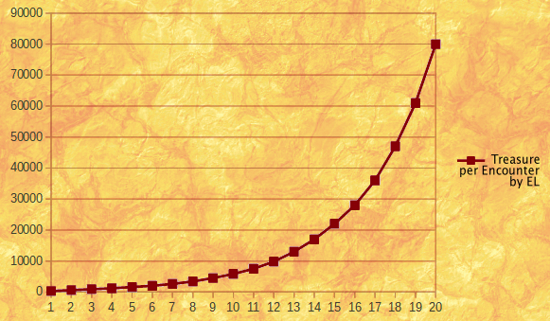
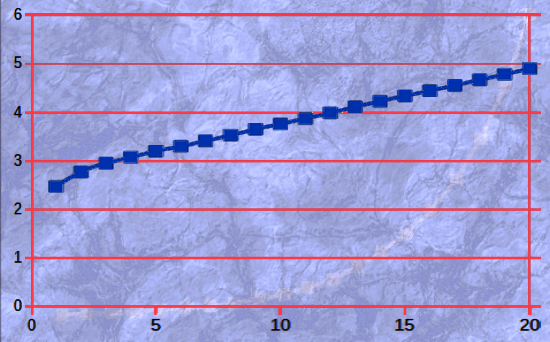
    Another trap to watch out for are graphs to different scales – as a general rule of thumb, we assume that two graphs are of equal significance. Consider the examples below:

If you saw the above two graphs in a news report, you might conclude that an armed uprising was narrowly averted, but things have been steadily improving since. This is the sort of combination that supports the government that’s in power.

On the other hand, if you saw these two graphs, you might conclude that the public has just had a crisis of confidence in their government. This is the sort of combination that supports the opposition of the government in power.

And, in both cases, the data is the same. Here’s a true comparison of how the public might really have felt!

    The presence of any of these indicators is a strong signal that the facts have been massaged to fit the message by someone. Their absence doesn’t prove that they haven’t been interfered with, though.

    More importantly, these give you a foundation for assessing the reliability of the source beyond this one article or report.

    4. Multiple Sources

    It used to be that if the same story cropped up from multiple sources, it was considered more credible. In fact, that was never completely true; they might all have been getting their facts and primary analysis from the one source.

    These days, the gold measure is whether or not the primary or core analysis is consistent across multiple sources with different biases. It doesn’t happen often, because news media have become more partisan, but when it does, it’s a genuine indicator of credibility.

    To assess this, you have to be able to identify the bias and spin placed on the interpretation and strip these away from the reports (but don’t throw it away just yet). If Fox news says something complimentary about a Democrat, it’s more likely to be correct than if they are Democrat-bashing. If the New York Times reports a scandal involving a Democrat, it’s more likely to be correct than if they report a scandal involving a Republican.

    If content matches known bias from the source, or from the reporting, it is more suspect than if it runs counter to that bias. The same thing is true in all sorts of other areas, from court cases to being stopped by the police for speeding – it’s generally known as an “admission against interests”. It’s still no guarantee, but it’s a better indicator than most people realize.

    5. What’s the source of the factual content?

    If the National Enquirer were to publish a story that said that 80% of Americans believed in aliens visiting Earth, and the source was an Enquirer reader’s poll, you would be highly skeptical. If they were to give the source as a prestigious university – Harvard, for example – you would be somewhat less skeptical – probably enough that if you cared, you’d go looking for a second source for confirmation, instead of dismissing the story out-of-hand.

    If the data is from a pollster, look for who commissioned the survey – their bias could potentially be reflected in the results, not just the interpretation.

    Oh yes, if a poll claims a 2.5% margin of error, the real number will probably be within 5% of the reported value – and that could be in either direction. If they claim a 5% margin, factor in a 10% margin of error, which is probably overstating it. This is correct nine times out of ten.

    6. Beware Your Vulnerabilities

    If you can’t articulate a completely clear reason for believing that a story is true, you have to consider it to be suspect.

    “I trust the source” or “It makes sense to me” or “It MUST be true” don’t count.

    In particular be suspicious of the phenomenon of Misattribution of memory, especially in the form “I heard it somewhere but don’t remember exactly where”. That won’t protect you from false positives – remembering the source incorrectly – but it will improve the accuracy of your cynicism.

    7. Beware The Echo Chamber

    Information entering your ecosystem from outside is either more obviously false or more likely to be accurate than information being re-transmitted from inside it. The reason is the Echo Chamber.

    There have been recent studies that suggest that the Social Media Echo Chamber doesn’t exist, but that other Echo Chambers do. I reject that finding, for several reasons:

    1. It seems unlikely that social media would be the one exception to the rule.

    2. I have personal experience of encountering individuals who so irritated me by proselytized for a particular point of view on social media with dogma that I blocked them, excluding a contrarian position from future exposure through my social media.

    3. The study misidentifies social media Echo Chambers and how they are supposed to work. “There is a common fear that people are using social media to access only specific types of political information and news. The echo chamber theory says people select information that conforms to their preferences.” – the true effect is about the credibility that people attach to certain sources and communications, and the lack of credibility that they attach to sources and communications that do not agree with their biases. They may or may not seek out disparate perspectives – but if they do, it’s only to see “what lies are [x] telling today?”. It doesn’t matter how many sources tell you that you’re wrong if you believe that they are lying – this will only reinforce your internal bias and polarization.

    8. Who Benefits?

    Whenever you encounter a communication – be it an advert, a link, a tweet, a Facebook post, an item in a newspaper or magazine, or a segment on a news / current affairs program – always identify who the communication is attempting to benefit. This can not only help to expose bias at work, it provides a framework for identifying whether or not the facts, the interpretation, the internal logic, or the predicted consequences can be trusted. Isolating the location of any falsity helps distinguish between reaction to misinformation, innocent misinformation, accurate reporting of misinformation, willful falsehood, and all the other varieties of deception. Once you know the merits of each part of the communication, you can determine the appropriate way to treat it.

    In particular, pay attention to any call to action, explicit or implied.

    9. Inherently Suspect Assumptions

    When the one incident is described, reported, or explained several different ways by those of differing political or social standpoints, there are a series of questions that I always ask before completing my analysis of the way I perceive the event.

    1. Is it possible for both sides to be right?
    2. Is it possible for both sides to be wrong?
    3. Is it possible for this to be a more complex or complicated situation that’s being oversimplified?

    It’s rare for one side or another to have a monopoly on the truth. That was a point I tried to ram home in my 2017 article, Bilateral Political Incorrectness for RPGs, the most recent part of the (irregular) Lessons From The West Wing series.

A Healthy Skepticism

These nine methods will greatly assist in the maintenance of a healthy skepticism. They aren’t infallible – but are a good starting point. The rest is just practice.

With the state of politics in the world right now, these are tools that we all need. It’s a lucky coincidence that they can be applied to improving our games – whether it’s D&D / Pathfinder, Star Trek, Babylon Five, Legend Of The Five Rings, Pulp, Superheroes, Sci-Fi, or whatever. So what are you waiting for?

About The Title

It’s rare for a title not to be fairly clear in meaning by the time I get to the end of an article. It’s even more improbable that such a title would be so appropriate that it doesn’t get changed as a consequence of the first failure. But that’s potentially the case, this time around. So I thought that I had better attach an afterword of sorts to deal with the issue.

The Olympian Perspective is a metaphor for being able to exercise omniscience – looking down from above like a God, free from distractions and prejudice and able to make impartial and unbiased decisions.

It’s often advocated as a position or attitude that GMs should adopt toward their games.

It is also often mis-characterized as demanding detachment, not caring about judgments or decisions one way or the other.

It’s also the attitude that I want to suggest to GMs in the way that they interact with, and understand, the real world in this era of false news and echo chambers. This article is aimed at equipping the GM to do so.

Comments (2)

Giving PCs Choice And Having Your Plot, Too


Image by Victoria Borodinova from Pixabay. Cropped (to make the image larger on the web-page), contrast enhanced and saturation enhanced (though the original hardly needed it) by Mike.

A slightly shorter article than usual, this time around, because my available writing time has been compromised by some medical tests ordered by my cardiologist.

I’ve had to squeeze in as much writing as possible in advance – so this article was written on Sunday, biting into my weekend to find the necessary time.

(Update, for the record: Preliminary report is “no red flags”. Full report pushed back to later January, with the promise that the Cardiologist would call me in sooner if there was anything needing urgent attention. In short, routine, and no cause for alarm.)

Okay, on with the show….

Some plots sneak up behind PCs and mug them. Before they know it, they are mired in the narrative and in it up to their eyebrows.

Other plots are more like roadblocks, standing in the middle of the road and insisting, “you shall not pass”. Anything that obviously poses a direct threat to the PCs and/or any ambitions they might hold qualifies.

But those aren’t the only approaches that you can take. If those are the only colors on your palette, I’m about to expand your world – a little.

The Falling Dominoes

The simplest way of getting the PCs into an adventure is to make it a logical consequence of an adventure that they have already had. Embedding what might at the time seem to be nothing more than a casual encounter into that early adventure, but which is actually the first part of the adventure hook to a future plotline works very well in a number of ways. For example, along the way the PCs have what appears to be a wandering monster encounter like any other, at the end of which, they find themselves in possession of a slightly ornate key that glows faintly with a magical signature when they cast Detect Magic..

A key is one of the hardest plot hooks to ignore. It’s right up there with the Cryptic Message, and the Mistaken Identity. Right away, it demands an answer to the questions “what does it unlock?” and “how did it come to be where we found it?” and “What is the magic?”

These questions will gnaw away at the players, especially since it’s far more the expected thing that they will be resolved quickly. But, instead of doing that, the GM teases the players with hints:

  • the PCs encounter a work of some sort by one of the greatest mages ever to have lived, someone who never cast a standard, by-the-book, spell – and recognize the signature as matching that of the key.
  • a professional pickpocket attempts to steal the key, only to be caught red-handed by the PCs. Taken into custody and found guilty at what passes for a trial in these parts, he is offered a deal but refuses to take it, preferring to lose both his hands than give up the name of his buyer.
  • a collector of unique magical works intercepts the PCs to say that rumor has it that they have a curious key; he offers 2,000gp for it, and (if rebuffed) will increase his offer to 5,000, and not a penny more…

Sure, the PCs might have taken that last offer at one point – but all of the prior encounters have built up the significance and potential value of the key in their minds. They would be pretty sure that 2,000 was very much a low-ball offer, and the speed with which it was increased to 5,000 pretty much confirms it. Barely without noticing it, they have swallowed the hook of the adventure.

And if they do decide to sell? A day later, the purchaser is found, incinerated by a red dragon, the key still in his possession. It could just be a coincidence, but…

The Multi-vector Adventure

A fourth approach is to lay out multiple plot hooks at the start of an adventure and let the players select the one that appeals to them – not knowing that all these plot hooks lead to the same adventure from different directions. If you’re subtle about it, and don’t give the game away, you can get away with this for years.

But there is a problem: while it preserves the appearance of player independence, it is in reality a magician’s force. It doesn’t actually matter which the PCs choose, they remain on the GM’s railroad tracks.

This can be acceptable if there are bail-out points built into the adventure, points at which the PCs can depart from those tracks if they wish; choosing not to do so is voluntarily committing to the next part of the adventure. But it shouldn’t be like that all the time; save this technique for critical parts of the plot that the players have already signaled an interest in.

There is also the problem that the players might choose answer (d), none-of-the-above, and refuse to take any of the GM’s plot hooks, preferring to do something else instead. The need to have some sort of adventure take place (you CAN’T let the campaign get boring) often leads GMs to complicate their world with lots of half-baked and off-the-top-of-their-head creations and plotlines that rapidly spiral out of control. This can even be a campaign-killer.

If there is any risk whatsoever of the PCs refusing the plot hooks, you should always have at least the outlines of an adventure that they can stumble into the middle of, just by being at place X. Even if the whole adventure has to improvised on the basis of those notes, that’s still better than having total freedom with which to mess things up.

To Every Vector, A Tale

But here’s an alternative that might have appeal: Never introduce an NPC or a location without having a future plotline associated with them. Whenever the PCs are in the vicinity, that plotline can be activated. This can be minor, recurring, persistent little subplots, such as the Mayor who wants one of the PCs to marry his incredibly-ugly daughter, or the Official who has chosen one of the PCs to become his successor (a position the PC has no interest in accepting). It might be a legitimate romantic interest, but one with many obstacles standing between the PC and wedded bliss.

So, the PCs enter a tavern to seek shelter for the night. There are three people in the tavern already – a drunken and somewhat depressed dwarf, a human who does his best to hide his face and keep to the shadows, and a local businessman who is pleading with the bartender, “But you must know someone, John?”

Each of these transients represents an entirely different plotline, and if the PCs choose, they can pick up on any of them – or brush it off. Plus, there’s a plotline for the Barman, and a plotline for if they don’t pick any of these and are simply present at the Inn when the location becomes involved in a plotline.

Make sure that each of these will require the full attention of the entire party, and make them choose. Insist that these choices be discussed in character; any Metagaming will result in a fine of XP. And sit back and wait for the PCs to come to the adventure.

If all the adventures have been prepared to the same extent, it’s no skin off the GM’s nose which one the players choose. That extent: enough to get through the first day’s play and some notes on what the rest of the adventure will look like.

And note that you don’t have to pull the trigger on a plotline just because the PCs are interacting with a person or place; you can hold back until the time is right, or you need something in a hurry, if the NPC or location is a recurring element. You can even have a secondary plotline designed to do nothing more than make make these campaign elements recurring ones.

  • A place that gives a fair price for their booty.
  • A place to stay that is comfortable and reasonably secure in a city that they will have to visit regularly.
  • An NPC who assists the party for their mutual benefit.
  • A bad penny.
  • An NPC who shows up regularly to humiliate the party in some fashion – a darts champion, or poker player, or whatever.

The list is (almost) endless.

You can even have plot hooks that dangle repeatedly but which will not amount to anything – yet – because you haven’t figured out what the plot will be. Someone who seems to be following the party every now and then. The same suspiciously-similar item for sale in several town fairs and marketplaces. The same distinctively-colored bird that gets seen overhead a few hours before a wilderness encounter. Things that you can have fun teasing the players with, that will have to eventually have some sort of payoff – but, for now, are just bits of random life within the campaign.

This tiny image cannot adequately express the beauty of the original image – so click the artist’s link and see for yourself! Image by Sarah Richter from Pixabay

Many Streams, One River

Some adventures can be considered an inevitable consequence of success, which is to say they will automatically be triggered by the GM when (a) the PCs achieve a particular standard of success, and (b) have time on their hands. Once both conditions are met, the adventure will come to them, whether they like it or not.

It doesn’t matter what adventures the party have had to get to this point; the new adventure occurs simply because the players have done something. Because of this, I refer to adventures with this structure as “Many Streams, One River” plots.

There can be a number of these, but they should always be less than the number of “streams” within the campaign, by some margin. Otherwise, these “master plots” can become the dominant factor within the campaign.

Image by Janos Perian from Pixabay. Janos only has 25 images uploaded at the moment, but if they are all of this quality, this probably won’t be the last time I put one on display. Cropped to show off more of the 3D image.

The Heroic Advantage

Some genres have a natural advantage, in that the PCs know that they are playing Heroes and have an obligation built into their construction and backgrounds to deal with whatever menaces and villains present themselves.

It doesn’t matter what the plot hook is, the PCs are obligated to swallow it.

This makes life very easy for the GM in some respects, but it also makes it much harder in others. There are singular dangers to the campaign that must be dealt with – when invoking The Heroic Advantage.

    “Not What We Signed Up For”

    It’s absolutely essential that the GM be explicit about the Heroic expectations that he is placing before the PCs in advance.

    “You will be playing an Elite Force assembled by the Elven Council to deal with an ominous threat that some Elves have foreseen in visions. You are the 12th such elite force to have been created; on previous occasions, the time of danger came and went without incident. Afterward, some of the previous groups disassembled and went their individual ways; some remained together and dealt with such lesser threats as presented themselves, in the process gaining fame and occasionally fortune.” is unequivocal in its demands, and expects characters to be designed to match.

    It’s necessary for the GM to follow through on these expectations, too. If you were gathering such an elite force, you would give them the best training, the best equipment, and so on, that you possibly could. The training is theirs forever, they might or might not have to give the equipment back. Those summoned to form such a group might be one-part prophetic guidance, one part logic, one part politics, and one part sheer talent in the choice. “We have to have a Dwarf, they will only get in the way, otherwise”. “[X] is the best in a generation at [Y], she must be included!” “They must have a Cleric for spiritual guidance, and the only one that the other faiths will listen to is a cleric of [Deity!]” – and so on.

    If you have the time, look back over the background to the Zener Gate campaign, which I developed right here in front of everyone (see “Improvising A Campaign: introducing the Zener Gate campaign!“, especially the set-off section in purple at the end of the article, and you will see that PC involvement and engagement is very much demanded and defined by the campaign concept). Right now, it’s reached the point where the PCs have limited communications, access to reference materials through those communications, can carry a reasonable amount of gear, have obtained equipment that will eventually let them gain partial control over their jumps (once they figure out exactly how to work it), have encountered a different Zener Gate team from an alternate timeline that are doing their best to screw everything up (from the PCs point of view), and found that there’s even more complexity to time travel than they thought there was!

    It can often be helpful to outline these “menu options” in advance, “character hooks” to guide the construction of the party, first come, first served. “I want to play a tough guy in the front lines of the fight, so I’ll take the Paladin slot from the class list. I like the idea of being a member of an unusual race, so I’ll take that slot on the racial list. An Orcish Paladin might be fun. Finally, why is he part of the team? Being ‘the best of his generation’ could be fun, but there’s room for a lot more roleplay being ‘chosen for political reasons but will come to earn the party’s respect’.

    With those choices made, the GM dutifully crosses them off his list of acceptable choices – if necessary, adding them to the list and then crossing them off!

    The key with such things is always to have at least one more option (and preferably more) than the number of players, so that each player always has a choice. Whatever’s left at the end is reserved for new PCs if someone else joins, or for NPCs – or can simply be left out to create a ‘gap’ that the PCs will have to fill with sweat and expertise.

    In a simplified form, this is how I filled the roster for my Zenith-3 campaign back in 1998. That campaign, with most of those same characters, remains in operation to this day, more than 21 years later. 10-20 years from now, it will be complete – if we all last that long (I’ll be 76 at the top end of that range, and my oldest player, in his eighties!)

    Image by silviarita from Pixabay. I almost used this as the main illustration for this article. You can probably see why. Cropped and blur + sharpness applied selectively to focus attention on the image subject.

    The Perils Of Similarity

    One of the big dangers of such ease is that the GM gets lazy. My players often call it “enemy of the week” syndrome. This is one respect in which the heroic advantage can become a millstone around the GM’s neck if he isn’t careful.

    Just because the players “have” to take the bait each time, doesn’t mean that the bait shouldn’t have different flavors and textures. This requirement actually makes it harder to ‘get the characters into an adventure’ than it often is without the Heroic Advantage.

    Nor can you assume that the players will ‘take the bait’ in exactly the manner that you have anticipated. They may sniff it, lick it, nibble at it, come at it from an unexpected direction, check it for traps, add seasoning…. you get the point.

    Again, laziness is the enemy; in any regular campaign, where the PCs weren’t obligated to swallow the hook, the GM knows that he has to sell the players on his prepared plotlines, has to engage their interest and keep it riveted upon the story. The one unacceptable choice must be to say “Who Cares” or “Nothing we can do” and go home. You have to work just as hard at this with the Heroic Advantage in play, because even then, these options are not off the table.

    The Diorama Problem, or, Pulp Without Juice

    Another problem is that the plots can all start to look alike to the players. This is another aspect of GM laziness stemming from using the Heroic Advantage as a crutch to your creativity.

    I have two different names for this phenomenon, as you can see – which usually means that I haven’t yet found a universal code for the problem.

    No matter what your campaign genre, no matter what your campaign concept is, you need variety in the adventures. You need to continually being players to the adventures in ways that they were not expecting, but in ways that maintain the credibility and integrity of the campaign and its structure. Which includes the odd occasion when a completely straightforward adventure is exactly what it seems to be!

    The best plot twists are the ones that the players won’t see coming. I have to admit that I overuse plot twists, to the point where players start looking for them and anticipating what they might be (with a roughly one in six rate of being correct).

    One way of differentiating between adventures is to place them in different contexts, and the easiest way of doing so is to focus on the personal lives of the PCs on a reasonably regular basis. If those “personal stories” are always evolving, it doesn’t matter quite so much that the rest of the campaign isn’t evolving as quickly. And it means that those stories that DO contain a significant milestone in either the primary adventuring lives of the PCs, or in the campaign Background, are all the more attention-getting when they happen.

    And that’s what we want.

Image by Arek Socha from Pixabay. This image is a cliche when it comes to symbolizing beginnings, so I almost didn’t use it – but then remembered that there’s a REASON it’s a cliche. And it seems to fit this section of the article. Cropped to enhance the landscape aspect and focus attention on the sunrise.

Epic Vs Gritty Vs Heroic Fantasy

All this is true regardless of campaign genre. It’s as applicable to Fantasy Campaigns (even of the Murder Hobo variety) as it is to Pulp or to Superheroes.

But it’s not universally true of all campaign styles.

That’s one reason why it’s important to define the style or tone of a campaign, make sure that the players know it, and appraise everything else in light of the particular style you’ve chosen.

There are three campaign styles that are sometimes misunderstood or confused, and the differences are critical to the plot approach that you’re using.

EPIC means larger than life. The PCs will become Significant Individuals, perhaps even rivals to the Deities or more, no matter how lowly their beginnings. The adventures they have will contain repercussions that change the entire world around them, in part defining the context for their next adventure.

GRITTY means local adventures, with no guarantee that the PCs will ever be anyone important, no matter how skilled or advanced they become within their professions; there will always be someone better. I some ways, these are easier adventures to write, in others they are much harder – unless you reduce your adherence to verisimilitude to in-name-only along the way. That’s because “Gritty” as a concept is fundamentally at odds with character advancement on the D&D scale. Somewhere along that advancement track is a point at which you have to say, “no more” and end the campaign – though perhaps not the campaign world, new PCs may be just around the corner! Generally, the line of departure is specified by what Wizards and Clerics can do. My experience (which is out of date, I admit) is that multiple fifth-level spells tend to be close to the limit, but that’s just a personal opinion.

HEROIC tries to plant a foot in both camps at the same time. It tends to lack the sweeping change possible guaranteed in an epic campaign, but can be far greater in scope than a Gritty campaign – thereby avoiding the problems associated with being “street level” when you can do too much to impact that street.

Purely as an aside, I think that maybe D&D / Pathfinder made a mistake in maintaining a daily spell allocation. A lot of the problems would be a lot smaller if 4th-6th level spells were weekly, 7th and 8th level spell allocations were per week, and 9th (and above) spells were monthly or even yearly affairs. If you wanted to, you could make these changes progressive and bake them into the spell slots acquired at each level.

In the old days, Mages had to get a lot better at spellcasting because they were useless at anything else. These days, there’s no such excuse – they may be weaker in martial terms than their peers, but it’s a simple matter to enhance their effectiveness in that sphere, and can even make the system more credible.

Food for thought, hmm?

Image by engin akyurt from Pixabay. Perhaps I should have chosen a different metaphore – one with more illustrrative options. As it was, I would have been lost without Engin’s offering.

A Straight Thread With The Occasional Knot

As a general rule, I think of plotlines as extending a straight thread from beginning of campaign to end – with the occasional knot or temporary sidestep that has nothing to do with that straight thread. Except that the “straight line” runs directly through an N-dimensional maze, that’s the essential structure of my Zener Gate campaign.

More complex visions are possible. You may have several straight threads that lead from beginning to end, but that are loose and disconnected from each other for most of their journey, only coming together in the buildup to a big finish. That’s the model for my superhero campaign.

If I look at the Pulp campaign that I co-GM, still another pattern emerges – loops and swirls and spirals instead of a straight line, while all the while each PC has a personal story running that is far more of a straight line.

If I look back over recent adventures, they have been set in 1937, 1938, 1934, 1936, 1935, 1936, and 1936 again – at least in terms of world history as it impacts the storyline. The last “defining moment” in terms of pinning down the internal date was that the Japanese invasion of China has not yet started but Hitler’s command of Germany is well-established. The next one planned is the Berlin Olympics, which haven’t happened yet, in-game. For background, we draw on whatever year is relevant to the plotline, and stitch them together into a coherent world history more in the breach than in the observance. This stuff stays in the background – because the moment that war is declared, certain PCs would be called to duty, and the campaign irrevocably changed. So instead, we will cycle back-and-forth endlessly between 1930 and 1938 or -9 – until we, or the players, are ready for the campaign to end. And yes, when that happens, we do have an “end of an era” adventure in our back pockets.

Image by Peggy Choucair from Pixabay

Is Internal Adventure Structure Relevant?

The answer to this question is both “Yes” and “No”.

“Yes” in that variety of adventure tones are required in any campaign, and that the tone of the introductory hook should either match, or progress to, the tone of the main adventure.

Most GMs and writers know this instinctively; you can have a lull in the action before returning to the tone established, or you can have a rising intensity throughout (with the occasional quiet moment as punctuation), but having an adventure with less energy and vibrancy than it started with creates an anticlimax.

“No” in that these are the only respects in which the internal structure of an adventure makes any real difference to the structure of the “box” that surrounds it and connects it to other adventures and spans in between to form a campaign.

How you link adventures to form a campaign is a difficult art to learn without experience and experimentation. Ultimately, the purpose of these structures are to deliver the PCs (and hence the players) to the “front door” (or the “open window”) of the adventure in the correct mindset to engage in the internal content. Whatever methods you choose and master has to satisfy that requirement. Anything else is window-dressing – nice to have but not necessarily essential. Utilizing a variety of approaches (and mastering them) is just as important as matching the ideal approach for any given adventure. What will you use as bait next next time?

Comments (2)

Things Easier With Pixels, Things Not


Image by Clker-Free-Vector-Images from Pixabay, color tweaks by Mike

I don’t have many pet peeves – technology that suddenly stops working without explanation, or won’t do what you tell it to in a timely fashion are two of the biggies.

Computer Gamers and Game Companies describing what they do as “Gaming” as though all other forms of game-playing were irrelevant is another. Computer Gaming and Tabletop RPGs are chalk and cheese in many respects.

TTRPGs are as much like a computer game – even a computer RPG – as they are like a TV show or movie, which is to say that there are superficial resemblances deriving from certain aspects of the production that are similar – and that’s it.

Interaction

The manner of interaction is completely different, for one thing. To the extent that there are any similarities, it’s the computer RPG simulating being like a TTRPG, and not vice-versa. Most computer games use either mouse-point-and-click or keyboard controls (and I include PlayStations and the like – just because they only have four keys…).

TV show interactions are even more limited – feedback through various sources, some social media interactivity (depending on the show), and the occasional public vote conducted using telephone call-ins. Everything else is basically the same as it was in the 1950s (if you conflate emails with traditional mail).

Display

Computer Games – with the exception of text-based games, which went out of style nearly 40 years ago – are intensely graphical in nature. They can’t leave anything to the imagination for a number of reasons – first, you might need to interact with whatever-it-is (even if such interaction does nothing, if the game only has objects with which you can interact, they aren’t exactly hidden or surprising); secondly, because they need to create immersion in order to keep you playing, and thirdly because different people will imagine the same thing quite differently from one another, limiting the appeal of the game for those who aren’t especially imaginative. And that bites into profits, and that’s unacceptable.

TV shows can’t leave anything to the imagination, either – though they can occasionally substitute a representative visual facsimile for something the censors would deem unacceptable. For the most part (especially in modern times), the attitude is that if you can’t show something happening in a given time-slot, it doesn’t exist in programs that air in that time-slot.

TTRPGs have a default operating mode of “within the imagination”(s) of the players, making them completely different in the demands placed upon them from the other two forms of media under discussion. GMs focus on delivering descriptive narrative and ways of ensuring that the interpretations of each player at least overlap.

Movement

Television and movie images are inherently capable of movement, however illusory – so much so that movies derive their name from the earlier term, “Moving Pictures”.

Most computer games rely on mobile animated elements set against a still or scrolling background, and so simulate a fully-moving image at a fraction of the computing demands that full animation presents. Only very old or very simple computer games rely purely on fixed images (see my earlier comments on text-based games, which inevitably normally have either still images or no images at all).

Most Tabletop RPGs have no images – again making them different from the other two media – except perhaps from something from a game supplement, used as eye candy, or to depict something for which it is important that everyone be on the same page in imagining – such as the shape (and implied capabilities) of a monstrous creature. Virtually all of them are Still images, though.

Atmosphere and Ambiance

In my book, these are the real big-ticket items when it comes to the differences between the three media kinds.

Television has no less than five weapons at its disposal; movies have the same five, but more money to spend on each of them. Unfortunately, they often also have micro-management-by-committee, a recipe for safety and blandness; so they have greater obstacles to overcome, simply because there is more money available to splash around.

  • Music is almost continually present in both movies and TV shows, an almost subliminal presence. Each major character normally has their own theme or motif, often a slight variation on the main theme; producers have learned the hard way that this aids character recognition, even if the audience aren’t aware of it.

    Sometimes, key locations will have their own themes, too. Understanding the way that music adds to a cinematic experience can be difficult, simply because most of us aren’t aware of the music in a production most of the time.

    The 4-disk director’s cut of The Lord Of The Rings goes into the subject in some depth, with further releases in that trilogy adding to the subject.

    But there’s a simpler technique if all you want is an appreciation of the value brought by a soundtrack: the inappropriate Mashup.

    1. Load in a movie and add subtitles for the hearing impaired so that you can read the dialogue;
    2. Turn the sound all the way down;
    3. Play a soundtrack from a completely different tone or style of movie and see how much the ‘flavor’ and nuance of the movie changes.

    Some suggested Mashups for the purpose:

    • The Maltese Falcon and the Star Wars Soundtrack;
    • The Sting with The Exorcist’s Soundtrack;
    • The Great Escape with the Apocalypse Now soundtrack; or
    • Titanic with the soundtrack to Bram Stoker’s Dracula.

    This won’t enlighten you as to technique – that will require far deeper study – but it will at least demonstrate the power of the soundtrack to evince ambiance and atmosphere.

  • Sound Effects, better known in the visual media as Foley and Sound Design, are also far more ubiquitous than most audiences realize. Unless it’s a live broadcast, every sound that you hear on-screen has been made for the purpose by an expert – and frequently using something completely different to the object creating the sound on-screen. The most famous example is probably coconut shells for the sound of horses’ hooves!

    The job has undoubtedly changed somewhat with the advent of libraries and digital archives of sound effects, and – of course – it was Star Wars that launched the related field of Sound Design into prominence. These days, it can be hard to remember just how groundbreaking that movie was in this context. But so evocative are the sound effects from Star Wars that you can play them (and there are many of the iconic sounds available over the internet, or at least used to be) and you are instantly “in” the movie – no visuals or soundtrack or dialogue needed.

    Don’t believe me? Try the “Star Wars Dogfight” (fifth from the bottom) on SoundBible.com or the Lightsaber Turn On (third from the top) and be convinced for yourself!

    For a deeper look at Foley, I can recommend this article at techradar, which has links to a number of documentary excerpts on the subject, and here’s a two-minute excerpt from The Shining from mashable and the famous T-Rex scene from Jurassic Park, both with deliberately bad foley effects showing how much they can add – or detract – from a scene.

  • Costume Designers work very hard at their craft. Much of the detail they put into a costume will never be noticed by the viewing public but costume designers carry much of the burden of generating a feeling of authenticity – whether it’s a suburban shopping mall or the bridge of a starship, the inhabitants of a hobbit village or the finery of an Elizabethan court. Again, I can’t not recommend the documentary extras of The Lord Of The Rings highly enough, but a documentary on the creation of Dr Strange’s costume won’t vanish from my memory quickly, either. I don’t think it’s the same documentary, but this youTube video should at least hit the highlights. Like Foley, much of the artistry flies beneath the radar. But good costuming is essential to creating the atmosphere of a scene.

    For example, below is a portrait of Richard Sackville, Earl of Dorset, painted in 1613, and a closeup showing some of the detail in the clothing – and another in which the image has been translated into an entirely inappropriate setting.

    Original image provided by Wikipedia, Motorcycle image by Alexas_Fotos from Pixabay, collage by Mike

    When you look at the motorcycle image, Richard almost looks like he belongs – the swagger and attitude fit – so you start casting about, mentally, trying to find some explanation for the completely incongruous wardrobe choice. You might remember Meatloaf’s lacy shirts, or the New Romantics, and before them, glam rock. But then the motorcycle isn’t quite right.

    And, of course, a subdivision within the broad category of Costume is makeup and prosthetics – everything from Gandalf’s false nose to Thor’s Hair (and, for all I know, his beard).

  • Architecture & Set Design
    Costumes clearly don’t work except in the right context or setting – and that’s where the Architects and Set Designers come into the picture. Together, they are responsible for a huge proportion of the style and ambiance of the presentation. In one of the Stargate SG1 box sets – I forget which, but it was one of the later ones – there was a DVD extra that looked behind the scenes at the set construction, giving a more functional presentation of the work they did than any other such documentary snippet that I’ve come across. (The Lord Of The Rings trilogy, normally my first go-to for such, was more about the use of miniatures, but there is also some interest in the design and construction of Bag End – but this wasn’t done in the usual fashion for such things, so its general utility is lacking for educational and reference purposes).
  • Which, quite naturally, leads us to Visual Effects. Most people equate this with lightsabers and spaceships shooting blasters and phasers at each other, and anything that explodes or emits showers of sparks, and they would be right to include those – but the totality encompassed by Visual Effects, even excluding CGI and Motion Capture, is far greater. Everything from creating weather on demand to cars that have to be driven on camera – or appear to be driven on camera, or appear to drive themselves! Mechanical effects are also often incorporated into set design and makeup. For example, a set may be built with break-away doors or walls to enhance a fight scene. Stunts and stunt work also fall within the jurisdiction of special effects – and that’s why even shows like Elizabeth, about the British Historical Monarch, have a special effects team.

In their own way, Computer Games emulate or incorporate exactly the same tools as TV and movies, but the balance is slightly shifted in some cases.

  • Music is just as important for Computer Games as it is for TV, but generally doesn’t get the same level of recognition – and that is a fraction of the recognition that pop artists get. The best way to get some idea of how important music is to Computer Gaming is to look for walk-through videos, because many of them save space by dumping the sound, or replacing it with their own commentary. For example, there is a series of flash-based games called Disaster Will Strike, whose walk-throughs (from memory) are soundless. Many flash games also give the player the option to turn off the music independent of the sound effects (or reduce it’s volume to zero, which does the same thing). Sometimes, to save on memory and processor demands, I’m forced to turn the music off but I rarely do so if I can avoid it.

    There are even some games that are music-based – both free to play and gambling oriented. The first are fairly easy to find, and all seem to be basic variations on guitar hero and hitting the right arrow at the right time. The latter are much rarer, but if you’re interested in some music games that you can bet on, you’ll find some at my bonus code.

    Other sites are moving in the opposite direction, aiming to make the player more comfortable by providing music of a genre they like while they play. You can even access various podcasts while playing these games. The front-runner in this movement is Fanduel – look for the TuneIn feature and enjoy music genres including R&B, Classical, College, Classic Hits, Soul, and more.

  • Sound Effects are, once again, the other half of the audio jigsaw. Like foley, in most cases you don’t notice these unless they are lacking, or not properly synchronized with the action. Again, some games give you the option of turning these off separately to the musical soundtrack, giving you the chance to explore the contribution made by the Sound Effects. That contribution will vary from game to game, of course.
  • Costume is often a bigger deal for computer games than it is for TV shows, at least so far as design is concerned. The reason for this emphasis is that in TV shows you have an actual actor who carries some of the load; in computer games, the designers have to produce the entire character. On top of that, every possible action has to be scripted and animated.
  • Architecture & Set Design Like costume design, in some ways this is more elaborate than designing for TV or movies, but in most respects, less. These are often digitally-painted static backgrounds, which can never be permitted to intrude upon the game-play or the action. In other cases, they are frames for active game elements like doors that make it appear as though the whole scene were animated. The more layers of independent and interactive elements there are, the more realistic the world seems – and the higher the demands placed on the technology that operates the game and its functions.

    Certain games acquire a reputation for outstanding graphics by pushing the boundaries of what is possible. The history of computer gaming is littered with milestones – some of them obvious, such as the transition from 8-bit graphics to 16-bit, back in the mid-80s, but to properly address that history, it needs to be divorced from the history of the underlying technological infrastructure; at best, this divides the story into chapters.

    Information on the subject within these constraints is surprisingly hard to come by; website after website seemed promising only to abandon computer-based gaming for consoles at the first opportunity. I’m happy for consoles to be part of the story, but game evolution (mostly on the PC, or system-independent games played through a browser) did not stop on the day the first console was released.

    Evolution Of Video Game Graphics from Silicon Republic contains some useful information, and is a good starting point. It contains a link to a 13-minute youTube video covering 1952-2015) at the bottom of the article that is directly about the subject. Other youTube videos that tackle the subject are this one (1958-2018) 10’39” and this one, claiming to cover 1962-now in just 11 minutes. A more comprehensive series on YouTube by Stuart Brown, A Brief History Of Graphics (originally presented in 5 parts and now stitched together into a single 45 minute documentary) promises still more depth.

    But the ultimate resources (because you can return to them time and again) are a pair of books, available through Amazon: An Illustrated History of 151 Video Games: A detailed guide to the most important games; exploring five decades of game evolution (US $26.88), and The Ultimate History of Video Games: From Pong to Pokemon (US $17.60).

  • Visual Effects occupy a special niche within computer gaming simply because they lean toward the more pyrotechnic and fantastic. I don’t know about anyone else, but many of my visualizations of the way various D&D spells work is still rooted in the AD&D games of the 80s such as Pool Of Radiance and the other Gold Box D&D games from SSI. Explosions and ray blasts and collisions between objects and the like are an inherent component of computer games.

    Which means that they are an inherent part of distinguishing one computer game from another. Much of the difference in “look and feel” between Balder’s Gate and Diablo, for example, lie in the special effects.

TTRPGs traditionally have none of these. They have to create ambiance with word choice, pacing, and narrative content; they need to employ the same tools, plus tone, and triggering events, to create atmosphere.

If the PCs act differently to what you had anticipated, the atmosphere has to immediately change in response, or the GM’s narrative will feel ‘out of step’ with the in-game reality. The GM needs the active cooperation of the players to succeed in generating atmosphere within a game.

The Use of Augmentations in TTRPG

It’s no wonder, then, that GMs are turning to the same tools used to create ambiance and atmosphere in the other media forms under discussion to augment the reality that they are spinning out of cobwebs and phrasing.

At a general level, these forms of game augmentation can be divided into two main branches – visuals and audio – each of which can then be subdivided into three primary subcategories.

Visuals

I’m going to start with the visuals and do my best to keep the discussion general and confined, rather than bogging down into too much detail. These, after all, are not new subjects here at Campaign Mastery.

    Images & Maps

    In the form of maps, visual augmentation from within this category is as old as RPGs. These days, it encompasses vastly more – such as seeking out images on the internet that depict a character or setting for illustrative purposes. I’ve devoted a number of articles to this subject already, both its utility and the practicalities involved – everything from using Google Image Search (which has changed in the way it works twice since the article was written, and not for the better – but not so much that the old article is completely out of date!) to how to change the color and tone of images. This is the augmentation tool that I use more than any other (one of these days I’ll have to publish an excerpt from one of my adventures with all the graphics that I use integrated into it – it will have to be a special project because of copyright restrictions constraining my choice of images).

    Miniatures

    Miniatures and Battlemaps are even older than RPGs, since their earliest incarnations derive from Wargames, including the predecessor games that led to original D&D. They are so important that they have their own category and tag here at Campaign Mastery, currently containing twelve posts.

    Props

    Props are something that you either love or hate. There can even be dispute over exactly what should be included in this category – are handouts and prepared notes to the players “props” or not?

    This uncertainty has impacted on this classification’s representation here at Campaign Mastery – there’s only one post explicitly tagged as “props”, but I’m sure I’ve done more than that. In fact, the relevant section of the Blogdex currently lists no less than ten articles on the subjects of Props and Handouts (and I really should think about doing one on character notes. And there was the recent poker game in the Pulp Campaign, which employed two stacked decks to actually let the PC concerned see and hold his hands. So much to write, so little time…)

Sounds

The side of the coin with which I am far less familiar is the use of Audio enhancement. There are reasons for that, but I’ll get into that a little later.

    Audio Textures

    Audio textures are foley for the RPG. Designed to be playable on a continuous loop, they contain things like birdsong and wind, or rain, or thunder, or the generic ‘clank’ of steel striking steel. They may include the sound of horse’s hooves if the PCs are riding.

    Ideally, you would create unique audio textures from layers of elements so that you can match perfectly the circumstances in your campaign, and there is software that lets you do just that – if you have the samples that you need to include. In practice, I suspect that you would probably put together four or five “standard mixes” – travel (good weather), travel (bad weather), indoors (inn), and combat would probably do 90% or more of a campaign.

    I looked at some of the problems and requirements involved in using sound in an RPG (thinking only of music at the time) in The Hollow Echo Part 1 – Adding Music To Your Game – but that was written and published three years ago, and things move fast in the software world. How many of the resources are still valid is unknown. I can report that I found several new ones searching for “Star Wars Sound Effects” earlier in writing this article, so if they are gone, it’s not the end of the world.

    Soundtracks

    Which brings me to the question of soundtracks, which was dealt with specifically in the article listed above. Because I took as broad an approach as possible in looking at the advantages and limitations, what to choose as a soundtrack, and so on, it should all still be relevant, and spares me from getting into too much detail here. In fact, I’ll just quote from the concluding paragraph: “Music in RPGs: There are a lot of people who swear by it. There are others whose circumstances limit the utility of the proposal. My opinion is that if you can solve the problems and if you can achieve a suitable environment, it can’t help but add to the gaming experience – but those are two very big caveats. Fall down in either area, and you may find that it’s a detriment of devastating impact.”

    There’s also some material on both props and sounds in Taking advantage of the sensory hierarchy that readers might find useful.

    Vocal Inflections & Accents

    The remaining enhancement is the most commonly employed one. We all have a go at it now and again, no matter how hopeless we are at it! There have been at least two articles on the subject here at Campaign Mastery that are worth perusing, especially if this is the only string in your bow:

    Speaking In Tongues: Writing Dialogue & Oratory – before you can speak it, you have to write it – and

    The Secret Arsenal Of Accents – how I integrate foreign languages and accents into my vocal performance even though I’m hopeless at them.

    A third post that looks relevant is actually about PCs and the oratory skill (or its equivalent), and not about GMs orating.

The Limitations and Flaws

Okay, so I’ve cast an eye over the field, and it looks rich. But there are pitfalls to consider, too.

Visuals

There are five major issues to contemplate. Virtually all the images that you can present will be still, not animated – limiting the usefulness of the image. You can compensate to some extent by focusing your attention on wallpaper-sized images, big enough that you can zoom in and pan around. I’ll only select something smaller than 1200×800 if there’s absolutely nothing worthwhile that’s larger. What’s more, it’s normal for me to select three or more contenders for any given image and then select between them. Of course, I’ll save the others to a separate folder for future use!

Another problem with images is that they are often dismissed as nothing more than eye candy by the players. They don’t realize how much work went into finding and editing the image in question. You need to be like a Foley artist in this respect – you don’t want your work to be noticeable in it’s contrivance, but you don’t want it to be irrelevant, either. This is a question of what you choose to depict and what you will leave to the imagination – especially if miniatures can enhance and bolster that imagination. A picture, after all, Should Be Worth 1,000 Words.

Miniatures are frozen snapshots – no movement that is not supplied externally – and symbolic representations, rarely accurate in depicting individuals. Provided you can get something that is a reasonable representation, though, they can be extremely useful. If you don’t use them, you have to work extra hard at describing combat situations so that the players are aware of their environment and the limitations it imposes on their courses of action – and any opportunities it opens up. One of the biggest problems that I note is miniatures that are not sufficiently distinctive. It’s not quite as bad as needing to give each PC his own distinctive color pattern, but it’s also not quite accurate to dismiss the thought. Pre-painted miniatures takes all the ham-fistedness out of the equation, but also restricts individuality. A custom paint job is nothing but individual, but it makes you totally dependent on your skill at painting figures.

In between, there are a number of intermediate skills. For example, you might settle for painting over a pre-painted miniature’s shield – a flat and relatively simple shape that makes it possible to render examples of the same basic character as individuals. Or you might get good at painting beards onto characters (or not). I once knew a guy who was terrible at painting miniatures – but, by being extremely careful and delicate, he had mastered the art of dunking figures heads or crests just enough that he could change hair color. Contrast that with someone else I once knew who spray-painted small pieces of steel wool before coating them in a clear lacquer that permitted these ‘hairs” to be glued in place as an actual beard or hair appliance, or fur-cuffs. He could change a sword into a dagger, or a dagger into a spear, so well that you couldn’t tell (after painting) that the figure hadn’t arrived from the factory that way.

What you do with miniatures depends on what skill level you have access to.

Props are often clunky, limited, time-consuming to create, and usually only broadly indicative of the “reality” they represent. I find that they tend to be more trouble than they are worth, most of the time. But there are exceptions. In particular, some way of indicating who you are speaking as can be exceptionally useful – I know one GM who has a stick with a slot cut into the end, onto which he can attach a name-card. When speaking in character, he simply holds it aloft to indicate who’s talking.

Most of the time, I find that it isn’t necessary with well-written dialogue.

What I do find necessary from time to time are handouts and notes to the players. I consider these to be props, too, even though they both function at a metagame level; they are both ways for the GM to speak to the character, telling him something that “in theory” he already knows, but that the player controlling him does not. I’ve given away most of the handouts that I’ve produced over the years here at Campaign Mastery, one way or the other.

There’s one problem that applies to all of these both individually and in combination: Overload. This can be a real problem; too many inputs can overwhelm the listener. “He’s like this picture, but dressed fancier, and he has a green glowing wand that he waves around something like the way I’m waving this stick, and oh yes, he’s wearing….” This is too much for most people; they can mentally adjust the image that they are being shown according to the GM’s words, but the costuming just fades into insubstantiality when you start concentrating on the waved stick – and so does the image. The real problem in this example is the choice of an insufficiently representative image. Pick one with the right clothes, collage in the head with the face that you want, and collage in a green-glowing wand – if necessary, importing a hand that is gripping it. Then repair any holes in the background. It’s better for the elements to look somewhat hacked together than for one of them to be wrong.

Another form of overload was made palpable in the pulp campaign a while back. The story is spelt out in An Experimental Failure – 10 lessons from a train-wreck Session. But both players and campaign survived this brush with calamity – with some hard lessons learned.

Unfortunately, most GMs regard themselves as writers first and foremost – accurately, of course – and few of them have ever attempted to master a painting program of any sophistication (Microsoft’s free “paint” program doesn’t count). That means that they often lack the skills needed to perform such editing collages. That isn’t always the case, and in reality it’s far less common than the people concerned think; it’s often a confidence issue, not a real limitation. As I said, a poor execution is preferable to an execution that’s lacking.

The final problem to be discussed in this section is also common to all three modes of visual enhancement: GM Workload. Each of these augmentation techniques comes with an overhead, especially when you are first starting out. It takes time to write good foreign-tinged dialogue; it takes time to search out suitably illustrative images, and more time to edit the ones that aren’t quite what you need. It takes time to customize miniatures and plan how they are to be arranged on the battlemap. It all takes time, and most GMs are already crunched for prep time.

Used correctly, these enhancements can ultimately save you prep time – I don’t know how long it takes the average GM to write 1000 words (it would take me somewhere between two and five hours, depending on how much of it flowed naturally); if it takes 30 minutes to find and edit an image that replaces that thousand words, that’s a net gain; if it takes two hours, that’s a break-even; if it takes four or more hours, that’s probably a time loss. Of course, if I have three or four quick images, that probably makes room for that longer job. It’s all a balancing act; and key to it all is making darned sure that the value of the image is as close to that mythic thousand words as possible.

Sounds

I have to grope a little more when it comes to sounds, because I don’t have experience in using them; my one experiment in that direction was a disaster, a tale told in The Hollow Echo Part 1, and revisited below. But before we get that far, consider this: Sounds can overwhelm voice, which remains the primary communications mode within a game. It can sometimes be difficult hearing everyone even without adding a soundtrack and/or ambient campaign noise to the environment.

In order to play sounds, you will need some sort of Technology. At first, that seems no problem – almost every PC and mobile phone has the necessary software by default these days; throw in a Bluetoothed speaker and “Bob’s your uncle” as the old Australian slang would have put it. Except that the software provided is rarely the most user-friendly way of going about the task – ideally, you want something that can display a list of tracks and repeat the one you select immediately and effortlessly. The default media players tend to be lousy at that. To say nothing of wanting to mix sources and fade from one track into another, or play two tracks simultaneously. None of these are difficult problems to solve in terms of the technology; but most apps neither need nor want this functionality. Finding the combination of hardware and software that does exactly what you want, as painlessly as possible, may take quite some time. In the meantime, you will be stuck with a second-best or third-best solution at best.

Loading times can vary enormously. Even something as trivial as the power levels of your device, and whether or not you’re on battery power, can make a difference. So can innumerable under-the-hood conditions that you never get to see. And you have to not only load the software, but the file, and perhaps at the same time that you have a word processor and file explorer and graphics display program all running. This brings me back to that disaster of sound that I mentioned earlier.

Disaster is probably too harsh a term, to be honest. But here’s the story: “There came a time in [my Dr Who] campaign where the Doctor (the sole PC) was to encounter the Daleks, and for dramatic purposes, and because I could, I wanted him to hear their famous “Ext-er-min-ate” before he saw them. After a bit of a web-search, I found a wav file that was good enough for the purpose. At the proper moment, I double-clicked the sound file to play it – after spending 30 seconds trying to get Windows 8 to display the folder. And waited. And waited. And waited. And then, with all the dramatic tension irretrievably lost, it played. Biggest anticlimax in ten years or more of GMing.” – all that’s a direct quotation from The Hollow Echo. Actually, it was a little worse than described – the file took so long to load and play that the player started speaking, and so missed the first part of the file. “…erm-in-ate” has even less impact, hard to believe as that might be.

After this event, I ran some tests. Sometimes, the file took 3 seconds to load. Sometimes, 2 or more minutes. The more things that I had open, the more the trend was toward the high end – but it wasn’t consistent. Even loading it up ahead of time, with the laptop set to “mute” so as not to have premature recognition by the player, did not result in consistent performance, though it helped. The greatest reliability came from having the file playing continuously, muted, until I needed it – then pause it, un-mute (wait if necessary, it often is, for the un-mute to take effect) then hit play – spending the time in between engaging the player in game-related conversation and switching the software to single playback, not looped.

Too many moving parts, too complicated, too likely to stuff up on me.

Having a longer file, and audio tapestry, which I wasn’t trying to synchronize with in-game events, would make a huge difference. This was a sound effect that went awry; ambiance might be an entirely different kettle of fish. And YMMV. So take the object lesson to heart as a warning – and do some testing and playing around in advance of committing yourself to using this enhancement.

The third sensitive point is “Appropriateness and Originality”. It’s relatively easy to achieve originality with an image that you can alter to suit your purposes; it’s a lot harder with sounds. That means that your sound mix has to be closer to “perfect” to start with, and most of us aren’t equipped to create what we need. That means using someone else’s work; so long as it’s for private use, you probably won’t need to worry about copyrights (but be careful if you podcast your games). But it also exposes you to a whole lot of associations that may be unwanted.

For example, let’s say that you’re using a soundtrack mix that you’ve created yourself using classical music and selections from various movie soundtracks. One track ends and the next cues up – and a player exclaims, “hey, that’s the music from the toilet paper commercial” – or “from Indiana Jones” – or whatever. Because these pieces of music have all been used before, often for all sorts of things, these associations can pop to the surface and intrude into your game at the most extraordinarily-inconvenient times.

Finally, as with images, there’s the ever-present problem of GM Workload – not only in prep but at the game table. A couple of seconds’ pause while the next image comes up doesn’t matter much since once it does, you don’t have to do anything to it except show it to everyone. That’s not the case with a sound file – hit play, make sure the volume’s right, why isn’t it playing yet, oh it’s still loading, here we go, whoops it’s on repeat (or not on repeat) and this is the wrong track….

Not All TV Shows Are Created Alike

There are four ways in which every TV show is different. First, no matter how similar they may be, every show is different, and so the demands made are different. And that means that some shows are more difficult than others. Stargate is not the same as Deep Space Nine, which is not the same as Battlestar Galactica, which is not the same as The Flash, which is not the same as… well, you get the point.

Each show has a different budget, season-on-season, and on any given episode. Financial planning is critical for any department in producing a TV show, and you often have to rob Peter to pay Paul – “bottle episodes” used in advance to save money for a bigger show that is only being scheduled now. In a perfectly just world, the budget would be proportionate to the difficulty – but it never is.

To make up the difference, you have only the Skill and Dedication of the department affected. But dedication can only go so far – and the unions tend to frown on unpaid labor, even if it’s labor of love. That’s why penny-pinching when it comes to hiring department heads is often a false economy, and producers know it. Hiring the best might be more expensive on paper at the start of a season, but the time saved by knowing what you have to do and how to do it will add up over the course of a season or two to more than counterbalance that initial expense. Once the changeover takes place, it’s all gravy – a better show for nothing extra spent – from there. At least until some other producer steals the talent away, or they retire, or you promote them to some other job, which will almost certainly happen within a year. Then it’s a question of hoping that the good stuff rubbed off on the number one assistant, or starting all over again.

And yet, despite the obvious differences between TV shows that the above analysis makes clear, the Standards Of Success against which all television sows are ultimately measured remains unchanged and applicable to all: they are either convincing enough or they are not. Meeting this mark won’t guarantee eligibility for an Emmie, but not doing so will almost certainly guarantee time in the unemployment queue. Whether or not the person ahead of you in line is someone else from the same production often depends on how quickly and ruthlessly changes can be made, and on how much money the studio was hemorrhaging on this turkey. Convince them that the promise of success is still within reach, and the necessary changes have been made, and the show might continue – on strict probation, and probably on a budgetary diet that it can ill-afford.

…and Not All Computer Games are Create Alike, Either

Life isn’t all beer and skittles for those who make computer games, either. It’s often the case that they don’t get paid until the game starts selling, for example; changing that requires some external bankroll, perhaps from a game company that has other successful titles. Even if you do get paid, it may not be the full amount you are owed according to your contract; once again, that might be pending until the money starts coming in. Too many industry horror stories start with developers who believe in a project so much that they sink their own money into it.

Setting that aside, there are several practical hurdles that have to be overcome.

First cab off the rank is Dynamics – have you ever played a computer game with a half-second delay while the program figured out which button you pushed and what you want the game to do? I have, and it’s not fun. The game needs to be instantly responsive – and that means not waiting to load the next screen, either. Yes, that really used to happen! I’ve played some games where you would tell it to save your progress and have time to make a cup of coffee and get a slice of cake before the save was finished – and a similar delay awaited you if you ever needed to restart from that saved position. Nothing – not game-play, not pretty pictures, nor soundtracks – can hold up the Dynamics of the game.

Second comes Pacing – by which I mean the speed at which events unfold within the game. You can’t have patches that are too slow and portions that are overwhelming; you need time for the player to assimilate the state of events and react accordingly.

Third consideration is the Rate Of Progression. Too many games are too slow to progress either at the start or the end; getting the rate of progression right means always promising that the next run will get the player closer to success, if they play as well as they have just done.

So those are things that every game has to get right – but the content of each different game imposes different restrictions and parameters on each of these choices. So every game is already different.

Fourth is a criterion that is similar to where we started with TV: the Difficulty of Creation. The greater the level of originality, especially under the hood, the greater the difficulty of creating the game. More than five years ago, I reviewed the Kickstarter campaign for a computer game in development called Witchmarsh in glowing terms. The game developers had taken the game as far as they could with the funding they were able to tip in, and needed more to finish it. Their campaign was successful, but progress was slower than expected, and false starts numerous. I’m quite sure that the original funds raised will have been depleted long ago, but such is the power of belief that backers still get regular progress reports and those participating are all still working away to make the project a reality. The last update through Twitter was only a week or two back. It has definitely become a labor of love for those working on it; if that were not the case, they would have abandoned it long ago. And, as a labor of love, the developers have gone beyond even the speculative possibilities raised in my article. All of which only adds to the complexity and difficulty.

It’s always harder to break new ground.

The next problem is closely related to the previous ones: the difficulty of play has to be right. I know that sounds like I’m repeating the same things that I discussed earlier, but this is actually an independent variable that has to be closely matched to the increase in difficulty as you get deeper into a game – so this is about the rate of progress that you make, relative to the increase in difficulty. There is, for example, “Reach The Core”, a mining/tunneling vertical scroller that can be a lot of fun at early levels – but there are so many upgrade paths, and they are so poorly explained, that it’s hard to pick the right ones. And as a result, progress starts to slow to a standstill as you get to the more difficult levels – and the game quickly grows boring, thereafter.

A very similar game, but with more responsive controls, better explanations, and more limited ‘improvements’ available, is Mega Drill! (mustn’t forget the exclamation mark). I’ve played this through to the end at least a dozen times, striving to achieve the top rank of success. I finally got there about a month ago, haven’t played it since – but occasionally get the itch to do it again, because it managed to be fun throughout.

Game developers rarely speak in terms of a budget of dollars – their budget is in time, in man-hours, or in lines of code. But it’s a constraint that can be just as hamstringing as any other. I can best illustrate this by talking about a completely different type of software, and a very old computer by modern standards on which it was to run. A change in the requirements required a change to the code, which carried the program executable’s length to just more than an additional page of virtual memory – in effect, the program was now too big to run efficiently on that old computer, which slowed its execution to a crawl. The users were faced with a choice: upgrade to a (gasp) modern 386 PC (which had enough RAM and processing speed to cope with the higher requirements) or trim some of the status messages to recover enough space for the whole thing to load in one gulp. The fastest and quickest and cheapest fix was the latter, but I persuaded their manager that it was a false economy because another change would inevitably come down the pike and put them back over the limit. He chose the most expensive solution – a temporary cutback on the function reporting until a new PC could be obtained, tested, and installed – with the larger version of the program in operation on it. A temporary fix while a more permanent fix was prepared, in other words. They were, at last report, still using that 386 to run that software – 25 years later. For a commercial installation, that’s amazing longevity!

Finally, the most difficult criterion to assess: Game-play. Just like in an RPG, this is king; everything else is subordinated to it, of necessity. And yet, it’s the hardest thing to put your finger on – a game either has great game-play or it doesn’t. And there’s all sorts of nuances to that “doesn’t” – some games miss the mark by more than others. They still score a “fail” on the game-play test, but by a greater or lesser extent – which is in direct proportion to how long the game can be tolerated.

A special case

Spare a thought, too, for those poor souls who are hamstrung at every turn by the nature of the product they are developing – and who nevertheless have to somehow produce a game that is good enough to earn revenue for those paying for the development. I speak, of course, of games in which the game-play is already well-known and innovation is so rare as to be almost unheard-of – gambling games. I don’t care if it’s a poker game, or a slot machine, they must be very easy to code (because all the basic functionality has been developed for you already) and very, very hard to do really well, because it’s all been done before.

Run through our list of factors that define how difficult it is to make a genuine advance on the state of the art – or just create a really playable game. The only real areas that the game developers in this case have to explore are the graphics and the sounds and the special effects. And yet, they are constrained in all those areas by the need not to interfere with the basic game-play.

As you can tell from the disparate approaches reported earlier, sometimes they are reduced to throwing things at the wall and seeing what sticks.

Neither Are All RPG Campaigns created Equal!

If every TV show faces unique combinations of tools and challenges, and every computer game faces its own unique combination of tools and challenges, why would anyone expect all RPG Campaigns not to be just as distinctive? There are nine ways in which, even at this general level, each would be distinguishable.

    1. Clarity of concept

    How clear is the concept at the heart of the campaign? A fuzzy concept permits a game to range all over the place – not necessarily a bad thing – but prevents the concept being a jumping-off point for ideas, and adventures can be wildly inconsistent in direction. A muddy concept is worse, containing internal contradictions that the GM has not resolved; the campaign will eventually tear itself apart. “You are good guy murder hobos” – contradiction alert! “You are all evil, but will be forced to not only work together but in the general interests of society as a whole, for your own survival, advancement, and the achievement of your ambitions” – that’s a fuzzy concept because it has two contradictory ideas (“evil” and “altruistic”), but it resolves this contradiction by providing a reasonable justification for the “out of character” behavior required, so it’s only slightly fuzzy. This was the concept at the heart of my Shards Of Divinity campaign – and it required a redefinition of the different alignments in order to permit “reasonable” game play on the part of otherwise “evil” characters.

    2. Strength of concept

    This is tied directly to the first criterion in part. It’s a measure of how many original adventure ideas can be spun out of the core concept. You can have a concept that is clear but weak, or one that is clear and strong; I’m not sure that you can have a really fuzzy or muddy concept that is nevertheless strong. So this can be handicapped by the clarity of concept, but is otherwise independent of it.

    3. Breadth of development

    The more aspects of a campaign are touched by the concept, the greater the breadth of development. Breadth is actually about how the concept has manifested in a campaign plan and in individual adventures and game content; the number of aspects of the campaign touched by the concept is the result of the development of the campaign. This is all about what I often describe as campaign prep, and about the connection between that prep and the core concept(s).

    It’s important to distinguish between potential and actual development. Potential is coming up with ideas; Actual is translating those ideas into substance. The latter is what matters, because it’s what it visible to the outside world. I’m sure we’ve all encountered individuals who were great at ideas and terrible at execution…

    4. Compelling Plotlines

    It doesn’t matter how great or poor your ideas are if all that comes out of them are insipid and uninspired plotlines. You need stories that are going to arrest the player’s attentions and keep them coming back to the campaign’s game table, time after time. Attendance and participation need to be a compulsion.

    5. Immersive Reality

    Believe it or not, it is possible to have a really immersive reality without compelling plotlines, and vice-versa. In the first case, everyone likes the idea of playing, but the adventures never live up to the anticipation; the execution falls flat. If you have compelling plotlines but no immersive reality, game-play becomes a purely intellectual exercise, an exercise in wits. There’s probably a 50-50 chance that the campaign will collapse into a players-vs-GM conflict at regular intervals. Neither outcome is really all that stable or likely to last.

    Another way of looking at the relationship between these elements of uniqueness is that 1 constrains 2; 1 and 2 permit or inhibit 3; 3 makes 4 and 5 possible.

    6. Interactive Characters

    I’m not just talking about PCs or NPCs here; this is the capacity for interaction of the totality of all characters in the game. If your concept and development ensures that the NPCs are more interesting than the PCs, the game is in trouble; it should always be the other way around. It’s great to have NPCs that are fascinating for the players to interact with, but the PCs are the stars of the show.

    Beyond the degree of fascination they can hold, you also have to contemplate how much fun there is to be had from the characters interacting. I have – once in more than 30 years – had a 4-hour game session in which every word was said in character, and all that happened was the PCs interacting with each other. Once. Every other time I’ve come close, someone has broken character for a side conversation, or game mechanics have intruded, or I’ve had to provide ex-cathedra narrative.

    On of the smartest things I ever did was give the PC’s headquarters in my superhero campaign an AI, because it means that lots of ex-cathedra narrative can be handled as dialogue and interaction between this NPC and a PC!

    7. Game System Compromise

    No game system is ever perfect. Nor is any game system ever perfectly suited to any given campaign. Thus the game system compromises the potential of a campaign in two ways – and choosing another game system can be better or worse in either respect. My goal with the original Fumanor campaign was to capture some of the flavor of Rolemaster, but actually translating the game from 2nd Ed D&D into the ICE game system was a total nightmare. It looked good on paper, but in execution it was close to unplayable. 3rd Ed came to rescue on that occasion!

    8. Playability Compromise

    Every campaign is further compromised by the to make it practical for play. Without this need, you could use House Rules to tweak and modify every rule in a game system, trying to achieve a perfect match between campaign and game system.

    9. Expression Of Complexity

    At the heart of every campaign are some complex ideas, whether the GM recognizes and understands them or not. “Ethics and Relative Morality in a world of Absolutes” was part of the complexity built into Shards Of Divinity. These are deep waters, and we never got to do much more than soak in them from time to time in the campaign – but if it had proceeded to its planned completion, there would have been some very hard questions for the PCs to answer, with the fate of worlds riding on their answers. Which is fine if you know there’s a right answer, and have some hope of determining what that is – but when you aren’t sure there is any right answer, only degrees of “wrong”?

Demands of an RPG are arguably higher than those of the other media forms, but the tools available are more limited. Again, it’s no wonder that some form of augmentation is desirable.

Mastering The Facility Of Augmentation

This article is finally winding it’s way toward a conclusion (and toward 10,000 words, which I think it will get to first!) It’s time to look at the practical measures that can be taken by a GM to employ these augmentation tools.

    The right tech, used correctly

    Find out what tools you need and learn to use them. That could be google image search plus an art editor – I use Krita – plus an image display program, the Fastone Image Viewer. Those, or their equivalents, are the minimum for really using images – or it could be something else for the implementation of music and/or sound effects.

    As a side-note, I use DuckDuckGo more often than Google these days, but still use both. DDG is easier to work with when what you want is the image and not the website that the image comes from; but occasionally you come across an image that is what you want but that the server hosting it won’t open for you for some reason. I use “Search Google For Image” from the right-click context menu directly from inside DDG to look for an alternative source – sometimes I don’t find one, but usually I do. Interestingly, the two search engines have relatively few results in common – so if I don’t find “US Army Dental Surgeon 1936” (or whatever) in one, I’ll look in the other before trying a new search term.

    Timing

    Test, under conditions that are as much like the ones you will face at the game table as possible. Time those tests. Rehearse, especially dealing with high-risk problems like accidentally closing the folder with the file that you wanted to double-click on (it happens!)

    The Limitations Of Representation

    Identify the ways in which your representation of the game environment limits you, and seek solutions to reduce the scope and extent of those restrictions. Make your minis and maps more user-friendly, in other words! And don’t forget to think outside the box – See The Bigger They Are, The Bigger The Headache: The Proxemics Of Scale and 52+ Miniature Miracles: Taking Battlemaps the extra mile for some ideas to get you started.

    The dangers of expectation

    Do something once, and it works, and your players will expect it to be present every time, and to work on all of those times. Do something once and it doesn’t work, and your players will expect to never see it again. Okay, that’s a slight exaggeration, I have to admit, but the sentiment is correct.

    The problem comes with the commitment of prep time. Sometimes, an enhancement activity is simply unsustainable given the available prep time.

    It’s worth remembering, though, that you will get faster with any tech that you’re just getting to know, in part because you’ll learn what you need to do and how to do it more efficiently, and in part because you’ll work smarter, not harder, without even realizing it. Things like designing your adventures to accommodate the assumption of whatever enhancement you have chosen to implement.

    The Constraints Of Prep

    Finally, remember that this IS just an enhancement most of the time – you can live without it if you have to. Managing prep time is about prioritization and time management, and the more professionally you approach the scheduling of what you need to do, the more successful you will be. There are four posts related to game prep that I particularly want to emphasize:

Conclusion

The use of technology-based resources can enhance games or simply discardable color, but they can be disproportionately expensive in demands on the GM. If these practicalities are taken into account, and media employed as a supplementary augmentation of what the GM is doing anyway, or used to substitute for prep-work the GM would otherwise need to perform, they can be worth the effort.

It’s essential to be critical in choosing what to represent, and what not to. (more)

As much as 1/3 of my prep time in most of my campaigns is employed in searching out appropriate visual representations that I can show the players. The typical day’s play involves 20-40 such representations (depending on the campaign). Almost 1/3 of them need to be edited in some way, and some require massive alteration requiring hours of effort. Occasionally, one needs to be created from scratch, often a still-more time-expensive activity. Yet, the sue of such imagery reduces the writing workload by more than half – call it by 2/3, so I get 50% more prep done in a given time-frame.

This is an augmentation of my capabilities as a GM that is worth the price. But it needs to be carefully managed, and rigidly controlled, lest it get out of hand. There are times when I still need to rely on the imaginations of my players, and do it old-school.

But that’s the secret to all forms of reality augmentation in TTRPGs: planning, flexibility, and discipline. All things that any good GM should be practicing already.

Whew! Finished at last! It’s almost 5 1/2 hours late in posting, but – given that it’s roughly twice as long as a normal post – that’s not too bad!

Comments Off on Things Easier With Pixels, Things Not

Further Thoughts On Exotic Creations


This is a post in three parts, all gathered together right here for your convenience.

You see, I was very rushed for time when completing last week’s article on exotic creatures for TTRPGs, and almost immediately, afterthoughts started coming to me – things that would have been added if I’d had a few more hours.

But, if I had done that, some of Part 2 and all of Part 3 of this article would have gone into my “too short” file, and never seen the light of day (or VDU, to be more accurate). So, serendipity strikes again!

It would probably be helpful if you have at least skimmed that previous post, especially the sections “Skin”, “Sinew”, “Bone”, “The Reskinning”, and “Fur, Hair, and Textures”. This is roughly the first quarter of the article, so that shouldn’t take too long. If you don’t have time, you can still read what’s below, but might not get as much out of it. I’ll keep this post to about 1,000 words less than usual to leave time for everyone to catch up or refresh their recollections.

This combines elements of the image from my previous post (loggerhead turtle by David Mark with an underwater swimmer Image by Engin Aakyurt, both from Pixabay, with compositing and digital magic by Mike. How big do you think the turtle is now? (The largest known real-life specimen measures 84 inches (213 cm) in length). And yes, I did think about hiding a mermaid somewhere in the image!

Further Thoughts On Exotic Creations, Part 1

I need to start with a couple of links that I was remiss in omitting. The first is to the previous time I looked at this specific subject in any detail – more than ten years ago – which was in Building The Perfect Beast: A D&D 3.5 online monster generator when I reviewed a software tool for the creation of NPCs/Creatures and used it to construct a species, the Leonines, that I needed for my Shards Of Divinity campaign.

Next, I should have pointed readers looking for further information to my three-part series from 2013, Creating Ecology Based Random Encounters. Part one focuses on the “random encounters” part of the subject, Part two looks at creating smarter “random encounter” tables by creating a simplified ecology that the table contents then reflect, and Part 3 expands the principles to encompass Urban & Dungeon encounters and other special circumstances (“wandering monsters”).

Finally, I should have pointed people to an article looking at incorporating a specific and very popular breed of creature into a game world: A Population Of Dinosaurs and the impact on RPG ecologies. This relatively technical and math-heavy article focuses on a way to calculate how many species or variants of a base creature there will be, revealing some surprising and very important factors for the GM to consider along the way. For example, I calculate that there were probably 33,100 species of dinosaur, of which we have (correctly) identified about 666.

Let’s go back to that first article, though. Paul of Dingle Games has been a valued supporter of Campaign Mastery ever since it was published, and we still send a steady stream of traffic his way (and get a steady trickle back). The final link that I should have included in the previous article was to Dingle’s Games.

So, why are the generators there better than any others around? Because they let you choose the development path you desire for the creation. It’s done the way you would do it with pencil and paper. And you can change your mind. A lot of other generators let you select options but not see what the effects are.

Currently, for free, you get access to the NPC Generator to a Max 5th Level (OGL / 3.5); a separate NPC Generator, again to a Max of 5th Level (Pathfinder); a Treasure Generator (OGL / 3.5); an Encounter Generator (OGL / 3.5); and a separate Encounter Generator (Pathfinder RPG).

If you subscribe, the limits are raised from 5th level to 30th (OGL / 3.5) or 20th (Pathfinder), and multiclassing is permitted. And you can Save & Edit Unlimited NPCs / Monsters, and a whole lot more. Most significantly, you get access to the Monster Creator enabling creation of your own monsters and templates (Both OGL / 3.5 and PFRPG). Currently, you can get 30 non-consecutive days of access for $15.

But one of the most valuable assets that you get access to is Paul himself – if there’s a bug or a problem, or a request for an addition, he’ll put it on his to-do list. Though there only seem to be bug fixes since 2014.

I don’t know about anyone else, but I’m familiar enough with the 3.5 game system that I can translate any creature or character created using it to whatever is needed more-or-less on the fly. So this is a page that’s definitely worth your bookmarking.

Fish navigate the halls of this vision of Atlantis provided by Image by Simon H. (aka Schoggimousse) from Pixabay.

Further Thoughts On Exotic Creations, Part 2

The process described in last week’s article is all well and good when you have a clear concept in mind – but what if you don’t? What if you only know that you need something, but have no idea what that might be?

The answer, of course, is to create a clear concept, and then use it as your guide through the process. But that is usually a lot easier said than done.

Fortunately, I’ve offered many tools for solving this problem (and for solving many similar ones, as well).

  • Parts 2, 3, and 4 of the Characterization Puzzle series contain three such tools: The Thumbnail Method, The Inversion Principle, and The Window Shopping Technique. The first part looks at NPC characterizations in general, and the final part is about how to select from amongst the three tools. Of these tools, for the most part (more on that, later), The Thumbnail Method and The Inversion Principle are the most easily adapted to the creation of Creatures.
  • I offered a fourth NPC generator in Inversions Attract: Another Quick NPC Generator. Again, it needs a little adaption to be used for creating Monsters instead of Characters, but the basic principles still stand.
  • A fifth technique that can be adapted is described in Backstory Boxes: Directed Creativity. I generally use it for generating character and campaign Backstories, but there’s no reason you can’t use it in a more focused manner.
  • Finally, my 6-part series on Writer’s Block is chock-full of techniques for getting through this and similar problems.

So, simply employ one or another of these techniques and the world will fawn at your feet, right? If only it was that easy!

Before you can find your way to the right answer, you need to ask the right question. And that’s not easy if you don’t know what the right question is about!

Normally, your subconscious identifies the question and the answer pops into your head as the “clear concept” that was assumed in last week’s article. The absence of such a concept is a sure indicator that this process has gone astray – and the process itself is so simple that there aren’t many places to look for the problem. If you’ve got the right question, the techniques given above will help you with some free association from which to identify an answer, and you can proceed from there, so the second of the two possible problems has been dealt with.

The Fundamental Question

What you need, in order to identify the leading question, the “right” question, is to answer the still more fundamental question, what is the purpose of this encounter?

There are some basic answers to this question: Information, Action, Roleplay, Misdirection, Resource Gain, Resource Loss, Intimidation, and Specific-Function.

  • Information usually means giving the PCs information, but it can also mean giving some NPC the chance to acquire information about the PCs. The first is, essentially, a roleplaying encounter; the second is, at its’ heart, an Action encounter.
  • Action – Some players require a regular dose of action in order to really enjoy their gaming. Even if your players number none of this type, genre and/or realism will still demand the occasional action sequence. Action is targeted either at the group as a whole or at a single individual, even if the whole group are involved in the Action. Your key to unlocking the concept you need is to find an idea that will especially impact on the target – so that can be something that does lots of damage in one hit, or a number of somethings that do less damage individually, or that has an interaction with a specific trait of the target PC. An encounter to “get the Mage to use up his Sleep Spells” or “Make the Telepath run short of Psionic Potential” or whatever is a perfectly valid expression of the ‘right question’.
  • Roleplay is a far broader category than most people realize. The mere sight of a particular creature can inform the party, causing a roleplaying interaction between themselves. An encounter with a “wanted” poster can qualify as a roleplaying encounter, in the same way. Repeated attacks by creatures with a particular vulnerability – once that vulnerability is identified – are a strong hint that none of the other local residents can target that vulnerability, instructing the party on the best tactics to employ. An encounter with a “wanted” poster can qualify as a roleplaying encounter, in the same way. The purpose of the encounter is to put certain information or choices in front of the PCs (and hence the players) but it doesn’t have to be as straightforward as someone answering or asking questions. So the valid “right question” is, “What encounter can deliver these facts, choices, or emotive directions (as appropriate) to the PCs in an interesting manner?”
  • Misdirection If you can provide direction with an encounter, you can provide misdirection – especially if the whole encounter is planned in advance by some third party (in-game).
  • Resource Gain – the purpose of this type of encounter is to bolster the PCs ability to handle future encounters (or to hobble it, if someone especially clever is manipulating things behind the scenes). For example, in my Shards campaign, you gained a huge bonus to scrying/divination abilities if the target had something belonging to the caster for the spell to focus on, or vice-versa. When a mage wanted to be able to find someone easily, he either employed a thief to grab something personal from the target, or arranged a ‘chance encounter’ to sell the PCs something. Players often assess the viability of a potion, they rarely think to assess the container that it comes in. What you need in this case is a Justification for the resource that is to be gained to be found/gained as a result of the encounter. The “right question” is, therefore, “What type of creature might have such a resource and not need it during an encounter with the PCs?”
  • Resource Loss Similarly, there can be encounters that are designed to do nothing more than bleed resources from the party. The simplest and most common example is inflicting hit point losses on the party to use up their healing capabilities for the day. The often-neglected part of the requirements are that the party not be able to replenish those resources by simply resting. The loss, in other words, has to “stick” – unless your purpose is simply to give one character a chance to demonstrate that he has such abilities, in which case you aren’t concerned with replenishment. The “right question” is usually, though, “What type of creature would require the party to use such a resource and have the loss ‘stick’?” This doesn’t have to be as tricky as it sounds – consider an encounter with a creature that the PCs can defeat, but which will inflict enough harm that resources will be depleted in the process, then have the party discover amongst the creature’s effects a patrol schedule that shows that pausing to rest will result in an encounter with many of this creature, or even worse, with a group of something tougher. Sometimes, it’s not what the encounter is with, it’s how you use it!
  • Intimidation encounters are intended to convince the players that a particular direction or approach is too tough for them, at least at the moment. For example, a bunch of goblins fake up a series of Demonic skulls and mount them on poles, with warnings (in some language the Goblins have learned that is used by something tough, such as Bugbears) to “Turn back” or “Here be Demons”, etc. An illusory demon of high type completes the intimidation – so long as the PCs don’t see through it. This might well result in the Red-Finger Goblin Clan steering prospective attackers to the camp of the Grass-Foot Goblin Clan and leaving the Red-Fingers alone. Note that the DM is not trying to steer the PCs – he doesn’t care if they press on, regardless – it’s an NPC who is responsible for the “Intimidation Encounter”. A kingdom that taxes those on it’s out-lands disproportionately highly (while secretly subsidizing them) will create the appearance of poverty in a “buffer zone” around their wealth, perhaps persuading potential thieves and marauders to look elsewhere for a quick gold piece. This is just as much an “intimidation” encounter as the earlier goblin example. The right question is, “What could reasonably be there to cause the party to go in direction X instead of Y?”
  • Specific-Function encounters are a bit of a catch-all category for whatever’s left – they are designed to achieve some specific effect on the party or the environment. For example, you might want to force the Wizard to cast a lightning bolt for some reason, or you want to inflict a specific kind of harm on a specific character, or you want to trigger some change in the environment that will either help or hinder the PCs going forward. Usually, if you are far enough along in your thinking to have a specific function need in mind, you will already have formulated a correct “right question” – “How do I get character A to do B?” or “How do I do B to character A?”.

The key is to identify what you need the encounter to do, either at a metaplot level or at a game level, and then design the encounter to have that effect. If you need to, use the idea-generation techniques listed earlier to devise an answer to the specific form of the general question, “What can achieve what I need the encounter to do?”, then use the techniques of last week’s article to construct what you have devised.

Which brings me back to the caveats applied to some of those solutions. The techniques are great at characterization of NPCs – that being their purpose – but they can be used to create solutions to some of the specific types of problem described above. They are not so useful outside of that limitation.

That still covers much more range than many people will realize. Just as personality traits are often described using animalistic terminology, so personality traits can be applied to describe the natures of such creatures. “Playful”, “Sly”, “Subtle”, “Sneaky”, “Cowardly” etc can be used to define the personality of a new creation. You then need only to choose a social structure that either reflects or encourages this trait, and you are on your way.

This exotic image comes courtesy of Artie_Navarre from Pixabay. It’s not the sharks you have to worry about, it’s the Aquaents (Aqua-ents, get it?)

Further Thoughts On Exotic Creations, Part 3

I was reflecting on what I wanted to say in the preceding section when a still broader thought presented itself for consideration. It started with something more specific, though.

Sometimes it’s more useful to make choices guided by a desired interaction with one or more specific PCs. For example, you might want to shine the spotlight on a character that is due for some “love”. Designing an encounter whose primary purpose is to give that character something important to contribute achieves this purpose. For example, a creature that shunts its’ prey into some kind of Shadow Realm in which the ability to attack is available in direct proportion to how well you can hide in shadows – an ability with which it is a master – would thrust the rogue into the spotlight, while leaving most Wizards and Fighters and Clerics flailing, unable to land a solid blow with weapon or spell.

In time, that reminded me of a maxim that I have long used: Encounter design should be driven by verisimilitude and plot function, first and foremost.

Plot Function is a metagame consideration; I make no bones about it. But it’s also a pathway to identifying the traits that you need an encounter to have, a pathway to function. Where that pathway intersects with the capabilities of one or more characters, the very nature of the encounter compels the creature to carry out their Plot Function in the meta-realm.

This is as abstract as it gets. It suggests that Every encounter should have a Plot Function, i.e. an identifiable purpose within the adventure. Even if that purpose is only to delay the PCs, or create a sense of Realism, or sustain an impression of the game world, or fill time in the real world because the GM hasn’t been able to get as much prep done as he needed to – and was able to recognize this fact in time to do something about it.

Identify the need, the plot function, and you are one step closer to creating an encounter that will carry out that plot function and satisfy that need for you. Last week’s article, and the links and content above, give you the exact tools that you need.

A Broader Tool

But it’s an even more powerful way of viewing the whole encounter situation than that.

It is sometimes said (in fact, I said it last game session) that “No GM’s plan survives contact with the Player Characters” – more in jest than in seriousness, it must be admitted, though there’s an uncomfortable grain of truth buried in that joke somewhere.

If you have designed your encounters with a specific, articulable, Plot Function in mind, you can avoid some of the worst of that unpalatable aphorism, and become less inclined to dictate the path of the PCs with railroad tracks: because you know what the purpose was, if it doesn’t work out the way you wanted to, you can identify the consequences (and do something about them) more readily.

From the GM’s point of view, this failed plot function is but the first domino to fall, with the next being whatever the reason was that this plot function was considered necessary to the overall plot. That in turn will have a consequence, connecting it to the next domino in the chain.

When you can identify the end result of a chain reaction, you can determine whether you need to stop it, or can let it play out. The results may not be what you originally envisaged, but that’s all right – they don’t have to be. By giving you a tool to understand what the ultimate consequence will be, you begin the process of assimilating that destination into your thoughts and planning. And that’s the first step with being able to cope with it, from a game/campaign standpoint. Often, you will find that it wasn’t so critical, after all. Much of the time, even when it is that critical to the broader plot, you can identify a future point where the chain reaction can be snuffed out – its always better to do so in a different adventure, because that lets the PCs enjoy the fruits of their success.

The more you get used to doing things, to thinking about things, in this way, the less stress you will feel when the PCs depart from your planned script, and the more readily you will be able to just keep on playing, taking events in your stride.

It might still be true that “No GM’s plan survives contact with the Player Characters”, but you won’t care. Whatever plans you had were just a first draft, after all, to evolve in response to the changed in-game circumstances. This is liberating in more ways than the obvious one – because this loosens the reigns of prep demands, and that leaves more time for the things that really matter. Every aspect of your GMing can benefit from this change in perspective!

Which is the last place that I expected this subject to lead, when I started writing last week…

Comments Off on Further Thoughts On Exotic Creations

Skin, Sinew, and Bone: (re-)Imagining Fantastic Creatures


Loggerhead turtle, Image by David Mark from Pixabay, contrast tweaked by Mike.
Is it 2 feet across or 2 hundred – how can you tell?

Of late, I’ve had to create fantastic creatures for several of my campaigns, and despite the clear and obvious differences between the game systems employed, I found myself struck by a number of similarities in the process employed.

When I tried to articulate those similarities for an article here at Campaign Mastery, it refused to gel into a coherent picture.

Now, I’ve been at this game long enough to recognize that when that happens, it means that you are on the edge of a fairly profound breakthrough in terms of process and awareness, so I tried again.

The discussion promptly skewed off into side-discussions that were ultimately irrelevant to the core question. So I scrapped it again, and started work again, from a slightly different perspective.

Which took me back to experiencing problem #1.

To cut a long story short, I had to discard a few assumptions that had been part of my approach to creating new creatures for almost a decade before I discovered a logical path through the process at a conceptual level.

Almost immediately, the results began to pay big dividends. In my superhero campaign, the PCs are about to have an encounter. I’d been dropping some hints as to the nature of that encounter as they played through the previous game session, and thought I had a good handle on what it was going to be. The only problem: not only was the nature of this encounter fairly predictable, given the circumstances and environment, but the hints and clues presented only made it more so. True, I had a plot twist in mind that would have put a new spin on the encounter, but that would have altered the result only in details, and not in kind. The predictability would remain.

This new perspective permitted me to reappraise the whole concept of the creatures to be encountered, while remaining true to the hints I had been dropping, and to produce an infinitely more interesting choice of creature – and one that the players will never see coming, despite the clues that have been given them.

So far as I am concerned, this validates the conceptual framework involved, so today’s article will offer it for the consideration and understanding of my readers.

Skin

I hadn’t been writing for Campaign Mastery for very long before I was introduced to the concept of re-skinning creatures from published sources to create new varieties of critter to encounter. If you factor in ad-hoc translations between game systems, this was the foundation of the approach that I have been using ever since.

In essence, Re-skinning means taking an existing stat block and set of abilities (defined within a set of game mechanics) from an existing creature and wrapping a new concept or idea around them. The name and some of the flavor text change, but the core mechanics remain as per the original – but because the trappings of the encounter have changed, and the concept of the encounter is different, the players never recognize the original model.

Yeah, right. If the players never recognize the original, it’s either because they’re lazy, or because there are a great many similar creatures that could have been the foundation. Because it can advise them as to the tactics to employ, they have a vested interest in making the effort, and that begins to defeat the purpose.

On top of that, there are the sociological problems that come with re-skinning. These are a little more difficult to explain, but I’ll do my best: it’s rare to throw away all the flavor text, that would constitute reinventing the wheel; but also preserved are the underlying assumptions that manifest in that flavor text, and sometimes those can be incongruous with the creatures as they manifest as a social structure. The distaff consequence is that you may have thrown something away that you should have kept.

In a nutshell, either way, re-skinning assumes that the resulting creatures as they manifest within your game will posses a homogeneity and consistency that makes rational sense – and that’s not always the case. Heck, it’s not always the case with the source material – though most of the monster source-books these days are far better than the AD&D monster manual (or worse, the creatures from Tunnels & Trolls).

Frankenstein’s monsters rarely posses more clarity of focus than the source donors.

It’s almost enough to cause me to recommend that the social structure of the creature should be the dominant factor in choice of the creature to be re-skinned – but, while that solves the consistency issue, it will rarely yield creature you want, even when re-skinned.

That’s because most GMs look at creatures from a game mechanics perspective first and foremost, and not as literary creations. To achieve what we want, if we are to start with this foundation, we have to look beyond mere re-skinning to replacing sinew and possibly even bone.

Sinew

The term “re-skinning” is highly appropriate, and embodies the problems that result – because what we’re talking about when we use the term is an act of superficial creation.

And if you only get the superficialities right, there’s a slim chance that the substance underneath will match the re-imagined surface details.

The ‘Sinew’ and ‘Bone’ of a creature contains the abilities that characterize it, both those explicitly defined within game mechanics and those merely implied by terms such as social organization, and the creature’s stat block contents. Everything, in other words, that remains unchanged in traditional re-skinning.

If we are to base our creature on something with the correct social organization, some of this material will be compatible with the substance underneath, and some will not. The material that is compatible is the ‘bone’, the core social constructs of the species and the abilities, both defined and assumed, that make that social structure a reasonable one for the target creation.

So the first step is to choose a creature that has the right social structure, and the second is to determine what parts of the description must be retained and what should be replaced so that our desired “skin” fits.

This often involves rather more analysis than is compatible with the quick-and-dirty “pick a monster from the book and make it fit” approach that is often recommended by proponents of re-skinning – or, at least, that’s how it might seem at first glance. The reality is just a little different – so long as you keep the core concept that you want to create in mind, the reality is that you can do this almost as quickly as you can glance and make a tick or a cross.

Except, of course, that you don’t want to mark up your source-books – if no other reason than the possibility that you will want to use the same source creature in multiple different “skins”. Nor are abilities etc often indexed, even numerically. So it will take slightly longer while you make notes.

Once you have the essential abilities selected, you then have to consider the bone.

Bone

The bone of a creature, the skeletal structure, starts with any template and the size and the number of Hit Dice or equivalent.

These decisions are fundamental to the capabilities of the end creation, so much so that some people have suggested that getting them right should be the starting point of any re-skinning process.

  • Template: is this correct, and appropriate? If so, then any elements that the template provides elsewhere – which may be bonuses, stats, abilities, and more flavor text – also need to be conserved. If not, then those become voids that may be self-closing or may need to be patched.
  • Size: in game mechanics, a creature’s size has relatively minimal impact. Psychologically it’s a different story; greater size justifying greater stat values, more hit dice, more abilities and more potent expressions of those abilities. But the importance of size is even greater than this already-murky relationship suggests; size is inextricably linked to behavior in ways that few understand very well, and one of the ultimate expressions of that behavior is social structure, which we have already determined. It follows that any size adjustment needs to be reflected in both the elements that we have already chosen to retain and any that we have marked as needing separate consideration.
  • Of course, the relationship between size and Hit Dice (or points spend in a point-based system) must then be considered. It’s impossible to do this until any contributions from template and size are earmarked, because those are only indirectly part of this assessment. In a nutshell, the number of abilities typically goes up with increases in Hit Dice (sometimes in a linear relationship, sometimes not), and any already-included abilities including those from templates etc will increase in potency. It follows that if you are going to reduce the number of Hit Dice, you will need to reduce the breadth of abilities and may need to reduce the potency of those not so eliminated – whether these have been tagged to be retained or not.
  • These considerations may also dictate the incorporation or modification of additional flavor text and explanatory material within the creature description.

The Re-skinning

Progress report: So far, we have chosen a template that reflects the social organization that is appropriate to the creation being assembled, marked for retention any flavor text that relates to it and any abilities that justify or reflect it. We have considered and either retained or removed the impacts of any templates that are part of this source, possibly replacing them with a different template completely; we have considered the size of the source creature and adjusted that to match the creation’s desired characteristics, reshaping the abilities and stats of the source creature accordingly; we have then considered the HD that do not derive or reflect size or template and scaled the results up or down accordingly, altering the number and potency of abilities accordingly.

So we’ve made major strides; in fact, by a process of elimination, we have eliminated from consideration everything that should not be impacted by a re-skinning, and scaled everything to a level appropriate for the re-skinning. In a nutshell, we know what we’re keeping and what we can replace.

It’s also been a lot more work than a traditional simple “re-skinning”.

In effect, the totality of the original source creature has been split into constituent elements which sum to provide those sources, and individually tweaked and marked as independent of the re-skinning process. Everything that’s left can now be re-skinned. as usual.

The best approach to doing so is to select a secondary source, preferably one that is already at the appropriate scale and has no templates to complicate the picture. Considering this secondary source one item at a time, answer one simple question: does this conflict with the material already established?

  • If it conflicts, it needs to excluded, leaving a blank slot to be filled by the GM.
  • If it doesn’t, it gets incorporated directly into the creation.

You then need to incorporate a description for the new creature.

Fur, Hair and Textures

The final steps are to fill in any blanks, if necessary by importing something from still a third source, and then read over the totality and make sure that it holds water. Because the results are polishing and usually even more superficial than a traditional re-skinning, I think if this as applying the final cosmetics – fur, hair, and texture – to the creation.

Part of this process is totaling the various elements that you have selected into the whole that belongs to the creation that you have assembled.

Making your life simpler

The way you annotate your work can make your future life a lot simpler. Rather than taking the time to write everything out, you can simply refer yourself to the source material, especially when it comes to abilities, together with any adjustments. The results are a list of bullet points that capture the entirety of that part of the description:

Spacer Spacer

Spacer Spacer

STAT BLOCK
XXX ## notes, other stats eg HD and HP
XXX ## notes,
XXX ## notes,
XXX ## notes,
XXX ## notes,
XXX ## notes,

ABILITIES

  • Ability Name, ability citation, any adjustment;
  • Ability Name, ability citation, any adjustment;
  • Ability Name, ability citation, any adjustment;
     
  • Ability Name, ability citation, any adjustment;
  • Ability Name, ability citation, any adjustment;
     
  • Ability Name, ability citation, any adjustment;
  • Ability Name, ability citation, any adjustment;
  • Ability Name, ability citation, any adjustment;
  • Ability Name, ability citation, any adjustment;

FLAVOR TEXT

  • Block 3 Physical Description
     
  • Block 1 Social Description
     
  • Block 2 Other Description
Spacer

A couple of explanatory comments about the above generic example:

  • Note the separation of Abilities into three blocks – those from the source creature (bone), those from templates (sinew), and those from the second (or third) source creatures or created by the GM. This makes further adjustments and variations easier to implement.
  • Note also the sequence of passages of flavor text at the bottom, which are numbered in the sequence of their generation but presented in a more typical and useful sequence. Each of these would (in reality) be one or more paragraphs.

There’s nothing inherently “wrong” with the concept of re-skinning. It’s when too many shortcuts are taken that problems begin to present themselves.

An Example

The GM has an idea: Giant Seahorses that are akin to underwater-dwelling oriental dragons. The only creature source-books he has available is the Pathfinder (1st edition) Bestiary and Bestiary 2.

The Sinew

First problem: the GM has no idea of the normal social organization of seahorses, so he can’t use that as a guide to the social organization of his Dracohorses, but he’s fairly certain that the standard Dragon social models won’t fit. After reflecting on the choices, he decides to let the size be his guide, and to base the creatures on marine life of equivalent size: Whales. In particular, he likes the notion of these creatures swimming in pods.

He also likes the notion that this species is sentient but uses this sentience merely to construct elaborate fiction, communicated in song – not something that’s mentioned in the Bestiary 2 entry for Whales, but that the GM is bringing in from the outside. He theorizes that they incorporate real events and navigational references as they are experienced, and that his Dracohorses would be able to navigate simply by recalling the story describing the route. This requires that they somehow tag their stories with markers that differentiate real experiences from fiction creation.

Reading over the Whale entry, he starts listing things that he thinks would carry over. Gargantuan, yes. Initiative +2: no. Blindsight, yes, low-light vision yes, perception +23 – to be unpacked, it seems high. +18 natural AC, no. Swim speed 40′, to be improved. Tail slap, needs more thought. Bite, no. Capsize attack – needs more thought. Stats – extremely high STR – to be reduced. High Con, yes. Average Wis, yes. Low Int and Cha – no. Can’t be tripped, yes. Feats: diehard, yes; great fortitude, no; improved bull rush; no; improved initiative, no; iron will, yes; power attack, no; skill focus (perception), yes. Which begins to answer the perception question from earlier. Skills, perception, yes, swimming, yes. Racial modifier +4 perception – no. CR 10, HP 15d8+90 – the +90 is from CON, so that will be a yes. The 15d8, and CR 10, maybe not – the first seems high relative to the second, and must be due to the size. That means that if the CR increases (which seems likely), the HD will also increase, at a x1.5 factor.

If I trim out all the “no” answers from that litany, I’m left with: Gargantuan, Blindsight, low-light vision, perception +19, Swim speed 40’+, Stats – high STR and Con, Average Wis, yes. Can’t be tripped, diehard, iron will, skill focus (perception), yes. Skills, perception, yes, swimming, yes. HP +90 (CON) at 15 HD from CR 10. There are a couple of maybes: Tail slap, and Capsize attack.

That tells the GM that he needs to think some more about his creations’ attack modes. He realizes that he’s been thinking about draconic breath weapons, but those don’t make a lot of sense underwater. Reading up on the Capsize special attack, he decides that his creature is to appear far more delicate than a whale, which is a blunt instrument in comparison; that says that the capsize attack is a no. He rather likes the thought of the tail slap being expanded into an area attack, a sweep through a range of hexes attacking multiple targets, but realizes that he will need some custom rules to cover the idea, which means that as written for the whale, the answer is no.

That’s all sinew, and a starting point for Bone.

The Bone

Bone consists of Template, Size, HD, consequent impacts on ability slots and potency, and any flavor text to be imported from these sources.

The Template

Whales use the Animal creature type, which the intention to increase INT rules out immediately. Instead, the GM wants to apply the Dragon template. That has a number of profound implications:

  • HD: d8 becomes d12.
  • Base Attack Bonus equal to total HD instead of 3/4 of HD. With whale at 15HD, this is a +4 to all attack totals.
  • Creation keeps the good Fort and Reflex saves and upgrades the Will save from Poor to Good, to boot.
  • Skill points increase by 4 per HD.
  • Acrobatics is no longer treated as a Class Skill. Climb, Fly, Perception, Stealth and Swim are still treated that way. Added to the Class Skills list are Appraise, Bluff, Craft, Diplomacy, Heal, Intimidate, Knowledge (all), Linguistics, Sense Motive, Spellcraft, Survival, and Use Magical Device. However, many of these make no sense in terms of an underwater creature – Craft and Use Magical Device are particularly problematic, and Appraise and Survival are dubious, as are any knowledges related purely to inland/surface world conditions.
  • Lose the restriction to INT 1-2.
  • Add Darkvsion 60′ – except that we already have Blindsight from the Whale, so this seems to be redundant.
  • Lose the Alignment restriction. However, some flavor of Neutral is probably still appropriate.
  • Lose the Lack of treasure. However, it makes more sense if this remains as an added attribute to the finished creation.
  • Weapons proficiencies are less restricted, especially if the Dragon can assume humanoid form. In this case, it can’t. The important thing is that if the Creation has a Breath Weapon described as a natural weapon, it is automatically proficient in its use.
  • Lose the ability to be trained to wear armor.
  • Add Immunity to Magic Sleep effects and Paralysis effects.
  • The flavor text associated with the “Dragon” template doesn’t really fit – “reptile-like” isn’t right, and the wings don’t make a lot of sense in the context of the Dracohorse.

There’s a lot of things that appear to be common to most dragons but are not listed as part of the template. To find them, you need to turn to page 90, and the entry details on Dragons:

  • Age Category Table: In general, this should be applicable to the Dracohorse. However, sea creatures generally mature faster and live longer than terrestrial creatures, so the “Age in Years” column probably needs some adjustment: 0-1, 2-3, 4-5, 6-10, 11-20, 21-120, 121-360, 361-600, 601-900, 901-1200, 1201-1800, and 1801+ would seem more appropriate.
  • The Ability Scores Table: We’ve already looked at the stats of a Whale in generic terms. The question is, do those adjustments fit the Draconic table, and if so, what are the “Base” scores for a Dracohorse? That requires an age category assumption, that we’re comparing adult with adult.
    • The Whale has STR 38, but we’ve already said that we want to dial that back. However, page 292 of The Bestiary gives a base STR for Gargantuan creatures of 34 (and a base DEX of 6, a base CON of 22, which we’ll get to in due course), so if we take that off, we get a STR improvement of just 4, while an adult Dragon gets base+14 – which comes to STR 48, not a reduction at all. Which means that any further reduction has to be balanced with an increase that we can apply elsewhere. So let’s adjust the whale base STR by -10 for our creation, giving a total of 40 and a racial Base of 26 after size adjustment.
    • The Whale has DEX 6, equal to the base value for creatures of this size. Dragons of adult age get Base-4 Dex, which suggests a DEX of just 2. That doesn’t fit with the view we have of nimble, maneuverable sea horses (albeit giant and draconic ones) – so let’s use that entire +10, and +6 besides, boosting the base. That gives us a DEX of 18 and a racial base value of 22. It also means that we have to find a -6 adjustment somewhere.
    • The Whale has a CON of 23, which is one better than the base CON for size of 22. Adult Dragons get a CON 8 better than the base – but we’ve already said that this CON seems about right to us, so dropping the base for the Dracohorse by 8 not only pays the 6 we owe, but gives us +2 to apply elsewhere. That gives a CON of 23, unchanged, and a base CON of 15.
    • The Whale has am INT of 2, to which it is limited by the Animal Template (that no longer applies). Dragons of adult age get an INT of Base+6 – so even if we leave the base at 2, the INT would rise to 8. That doesn’t seem enough, but applying the +2 left over from CON gets us up to a total of 10. Still not quite enough – Dragons are notorious for being smarter than they look – but it’s close. I think increasing the base to 6 – another +2 on top of the CON-derived adjustment – is good enough. So that’s INT 12, and INT Base of 6.
    • The Whale has a WIS of 11, which we have already said seems about right. On reflection, it might even be a point or two too high – or too low. Dragons of adult age get base +6, and while that fits the general perception of dragons, it’s rather too high for this creature – besides, I already know that I’m going to need some points to boost the CHA. So let’s drop the base to 4, giving a total WIS of 10, and saving 6 points to boost the Charisma base.
    • The Whale has a CHA of 5, which is too low in my personal opinion, but it is what it is. The adult dragon gets +6 to charisma – implying that if the two were equivalent (as assumed), the base would be -1. Adding the +6 saved from Wisdom to this gets it up to a base of 5, and a net score of 11. That’s still not enough – Seahorses are often considered quite pretty and iridescent creatures, and even at a gargantuan size, some of that charm should survive. In fact, I’m going to steal 10 more points from STR and apply them to Charisma – giving a base CHA of 15 and a net of 21. However, this also drops STR to base 16 and net 30. Which is only slightly less than the STR of a whale of equivalent size.
  • The Draconic Age Category table also preempts the discussion of HD. We’ve already seen that the Whale has 15, and an adult dragon gets Base + 10 HD – so if they are equal, that defines Base for a Dracohorse as 5HD. Whether or not we want to dial this up or down remains to be determined.
  • The same table discusses natural armor. The Whale has an AC of 22, comprising 10 base, -2 Dex, +18 Natural, and -4 size. Obviously, the DEX component is going to change because we’ve given the Adult Dracohorse a Dex of 18 instead of 6. That makes a huge difference! The key points here, however, are the +18 Natural and -4 for size. The latter is obviously still applicable, while according to the Dragon Age Category table, Dragons of adult age only get +14 Natural armor. That means that the AC 22 would drop to AC 18 from that alone, which will rise to the mid-twenties once the DEX adjustment is taken into account. That fits our mental image of a seemingly frail creature (relative to a whale) that is quite dexterous and nimble, making it a lot harder to hit than it might seem.
  • The final entry in this column is “Breath Weapon” and that’s of particular interest. The adult dragon gets Base x6 Breath Weapon, so a 2d6 base breath weapon would become 12d6, a 3d6 base weapon would become 18d6, and a 4d6 base weapon would become 24d6. This still requires more investigation to nail down, but it’s a foundation.
  • Next comes the Dragon Attacks and Speeds table. Gargantuan Dragons have a fly of 250 ft and have the “clumsy” maneuverability trait. That doesn’t fit – the Dracohorse swims, it doesn’t fly, and our vision is that it is anything but clumsy despite it’s size. So that’s one aspect of the Dragon “insertion” that will need custom treatment.
  • Bite attack? Not with this creature. But I note a later column, “1 tail sweep”, which seems to fit exactly the default attack mode that we had in mind for this creature. So transposing the content of the two columns should work well, and maybe dropping the results one size category – so that only at Colossal size does the Dracohorse get a bite attack. Consulting the attack mode description, I note that the range of effect would also need to be adjusted for smaller dragons; 30ft is nominated for gargantuan, so 25ft for huge, 20′ for large, 10′ for medium, 5′ for small, and 1 5′ space for tiny, would seem to work.
  • 2 claws? Seahorses don’t have arms, so that doesn’t seem right. But losing this attack mode could justify an increase in the breath weapon’s potency, so that a smaller base attack value is needed to reach similar levels of damage. At gargantuan size, two claws doing 2d8 damage each = 4d8; so a 3d6 base breath weapon would become 18d6+4d8 – which is a bit better, on average than 18d6+4d6 would be, which totals 22d6. So that seems to check out.
  • The next columns relate to the range of the breath weapon, and requires us to choose between a line attack and a cone attack. To be honest, given the environment in which the two apply, the ranges for the cone weapon seem more rational. But until we decide on the breath weapon’s nature, we can’t decide. Checking the attack description, however, shows this as a Supernatural ability and not a natural attack – and we definitely want it to be the latter. I’m thinking more along the lines of a pressure wave expelled from the snout of the seahorse, perhaps based on a Water Elemental attack mode.
  • Dragon Senses – “Dragons have Darkvision 60ft and Blindsense 60ft” according to page 90. This is NOT quite the same thing described in the template. A whale’s blindsight is 120ft. I often find it more useful to contemplate how many rounds of vision creatures have – whales swim at 40ft per round, maximum speed, so that gives them just 3 rounds warning. Dragons are supposed to have acute senses, but 60′ – if the dragon travels at 250ft per round – is less than 1/4 of a round’s warning. Throw in the clumsy maneuverability, and by the time a dragon can perceive an obstacle using these senses, it’s too late. In effect, Dragons can’t use anything close to their natural speed except when the weather is good and the light bright. Underwater is a whole different environment; water is great at absorbing light.
    • Ultraviolet light is fully absorbed at approx 25m (82 ft) depth.
    • Violet colored light is fully absorbed at approx 100m (328ft) depth.
    • Blue colored light is fully absorbed at approx 275m (902ft) depth.
    • Green light gets to about 110m (361ft).
    • Yellow light gets to about 50m (164ft).
    • Orange light gets to only 20m (66ft).
    • Red light only gets down about 5m (16ft).
    • Infrared light is the least energetic of all, and is fully absorbed at about 3m (10ft) depth.
    • Visibility underwater is defined as the distance at which a test pattern called a “Secchi Disc”, and the global record for visibility is 79m (259ft). Many factors act to reduce visibility.

    It’s sensible to assume that a creature’s range of vision would evolve to suit its speed and vice-versa, to give it enough time to change course if confronted by an obstacle or predator. The three-round figure used by the whale is reasonable for a creature with good maneuverability and sufficient acuity, which the whale has. If our underwater Dracohorses are to have an underwater speed of 60ft, they need 180ft range of visibility, increasing to 240ft or even 300ft if they stay “clumsy” in maneuverability. It also makes sense that creatures would not retain any capacity to see colors that won’t support this range of vision – green, blue, and violet are in, everything else is out. This focus would enable greater acuity within those color ranges than humans can claim. The base amount provided for Dragons is nowhere close to being sufficient, and will need to be increased.

  • Frightful Presence: I’m not sure this quite fits, either. “Charming presence”, however, might be useful.
  • Spell-like abilities: A dragon’s caster level for it’s spell-like abilities is equal to its total HD. That’s fine.
  • Damage Reduction: Dragons gain this as they age, but it’s different for each different type of Dragon. Their natural abilities are treated as magic weapons for the purpose of overcoming damage reduction.
  • Immunities: in addition to those listed in the template, Dragons gain immunities to 1-2 additional forms of attack; which ones vary with type of dragon.
  • Spell resistance: A dragon’s SR is 11+ it’s CR.

Arguably, almost all of that if not all of it, should have been part of the Template. At the very least, the template should have referred the reader to it! But, setting that aside, let’s think about the specifics of those last couple of items, which vary with Dragon Type – Damage Reduction and Immunities.

  • Black Dragons get immunity to acid and the ability to breathe water. They live in swamps. They also get DR 5/magic at Young Adult, rising to DR 20/magic as Wyrms.
  • Blue Dragons get immunity to electricity and the ability to create or destroy water. They live in deserts. Damage reduction is as per Black Dragons.
  • Green Dragons get the same as Black Dragons, and live in forests. Damage Reduction is as per Black Dragons.
  • Red Dragons get the Fire Subtype, which has to be looked up elsewhere in the book. When you do so, you find it confers immunity to fire damage and vulnerability to cold. Damage reduction is as per Black Dragons – again.
  • White Dragons get the Cold Subtype, which presumably confers the opposite abilities to the Fire Subtype. Damage reduction is (surprise, surprise) the same as for Black Dragons.
  • Brass Dragons: As per Red Dragons.
  • Bronze Dragons: Immunity to electricity and the ability to breathe water. Damage Reduction remains unchanged.
  • Copper Dragons: Immunity to acid. DR as usual.
  • Gold Dragons: as per Red Dragons.
  • Silver Dragons: as per White Dragons, plus immunity to acid.

So much for varying by Dragon, at least as far as DR is concerned – I expected that some types would get DR sooner than others, or might get different amounts of it..Not the case at all. So the DR can translate across directly to the Dracohorse. Additional immunities…. I’m tempted to include “Breathe Water” but have another source for that. Electricity tends to be fairly rare underwater, and poisons and acids tend to get diluted very quickly, except in regions where vast quantities are being released – volcanic eruptions and vents – which are also where you’re likely to sustain heat damage, so the Fire Subtype doesn’t make much sense, either. That leaves the cold subtype as the only possible contender from the existing Dragon types, or something new.

According to Wikipedia, “The temperature of the deep ocean drops gradually with depth. As saline water does not freeze until it reaches -2.3?C (27.9?F) (or colder, as depth and pressure increase) the temperature well below the surface is usually not far from zero degrees” (C). That’s cold enough that the cold subtype makes sense, enabling the Dracohorse to penetrate to greater depths.

Except for the effects of pressure, that is. For every 33ft (10m) you drop, the pressure increases by 14.5 psi (1.019451 kg per square cm, or 0.9866665 atmospheres). Humans can only survive pressures of about 2.5 atmospheres – above that, the oxygen we breathe becomes toxic. Tardigrades (tiny creatures also known as water bears, about 1.5mm in length – the exposed tip in a sharpened pencil would make two or three of them), in contrast, can cope with more than 1200 atmospheres. But if we restrict ourselves to normal fishy depths, that’s about 1000m down, or about 100 atmospheres – some forty times what humans can cope with. Using gills instead of lungs can account for some of that, the rest would have to come from different biochemistries. But “immune to crushing damage” seems completely reasonable, under the circumstances.

I mentioned that I had spotted a second source of Water breathing that seemed appropriate to me. That source is the aquatic subtype. “Aquatic creatures always have swim speeds and can move in water without making swim checks” – sounds right. “…can breathe water” – there it is. “…cannot breathe air unless it has the amphibious special quality.” that’s fine. Treat Swim as though it were a class skill – why do they need to, if they don’t have to make swim checks? Maybe there’s a technical reason that escapes me. It doesn’t matter anyway, because they get that from the Dragon template.

Size, CR, & HD

Everything we’ve talked about so far is based on a gargantuan adult. That gives a minimum CR of 6. But, contemplating the scale of such creatures, I am continually tempted to drop them a size category – leave the gargantuan to the Great Wyrms and whales and drop down to something closer to a Dragon Turtle in size. That took me to the core rule-book, and the most confusing table that I’ve ever seen – it seems to imply that a creature that stands about 100 ft tall, i.e. has a footprint, standing, of 20′ x 20′, is the same size class as a creature that is 20′ long and 20′ wide. The terms used in the table are not explained in the rules, and neither are the columns, so I might be misinterpreting them. In search of a little clarity, I turned to my D&D 3.5 PHB, and page 150. I found “gargantuan” illustrated by a purple worm of unknown length, rearing 50′ high, and with a base footprint roughly 20′ wide and about 25′ above-ground. For stability, I would expect the below-ground portion to be at least another 25′ in length, probably more. I couldn’t find an equivalent illustration in the Pathfinder core rules – but the details in the size tables look virtually identical.

In other words, the standard size tables make a lot of assumptions about shape and posture and dimensions that may not apply. But a gargantuan creature would be about 100′ in length, tip to tail, if ‘unfolded’ into a straight line.

Seahorses have a snout and head, a neck, a body, and a tail that coils beneath them. Length is usually measured from the top of the head to the bottom of the lowermost coil. The coil can be as much as 2/3 of the total length of the creature (measured by eye from photographs), but only about 1/2 the usually-measured length (ditto). So one-third of 100ft in length is about 35 ft; giving a rough size of 75′ in head-top-to-coil-bottom length. A Huge creature, in comparison, would only be about 2/3 of the total length, so from 70ft, we would be talking about something only 47′ tall. That makes a big difference – instead of being about 15 times human size, we’re talking about something only about 5 times. On top of that, seahorses tend to be relatively thin, side-to-side – so a huge sized creature would be roughly the same side-to-side width as a human, or a horse. That’s just too thin. So my first instincts, to keep the creature gargantuan, seem to have been correct.

Whales have a CR of 10. Dragons have an age-based CR – so a CR of 10 for an adult creature would be a base CR of 2 for a Wyrmling. Adult dragons, looking at them by individual type, are given CRs of 11 to 15. That suggests that the base needs to be increased in the case of our Dracohorse, and yet, it makes sense to me that an individual Dracohorse would be slightly down on the CR of most Dragons. So I’ll leave that as is.

Which brings me to HD. According to table 1-2, in the Bestiary, a CR10 creature of the Animal type gets 15HD. That matches what we have for the Whale. Looking up Dragon for the same CR, we get 12HD. That seems reasonable, since the HD in question are larger. But it does mean that the bonus HP are going to diminish – from the 90 that they are now, to 12/15ths of that value, or +72.

According to table 1-6, that gives a base BAB (Fast track) of +10, a Good Save of +7, and 5 Feats. It also means that some of the feats that were inherited from Whale may need to be reduced in potency. Well, as it turns out, the only one that might be affected is Skill Focus (Perception). The other feats that were retained from Whale – diehard and iron will – are all or nothing, you have it or you don’t. That doesn’t mean that they don’t have to be taken into account, of course. That leaves space for two more feats. Looking over the list of specifics imported from “Dragon”, I don’t see any feats listed. So we have two feats free to allocate.

But, at the moment, we have Blindsight 60′ and Darkvision 60′, and neither of them adequate, given the Dracohorse’s anticipated speed through the water of 60 ft. I calculated earlier that 240′ would be better. So, if we get rid of the Darkvision, and take a second load of Blindsight, we can go to 120ft. Take Blindsight twice more using those remaining feat slots, and we get it up to the 240′ we want. That gives the Dracohorse four rounds at top speed to maneuver, despite being saddled with a “clumsy” maneuverability.

Come to think of it, what exactly does “clumsy” mean? Maneuverability is not explained in the core rule-book, or anywhere in the bestiary that I could see. I checked twice to be sure. In the Hero System, maneuverability is described by a Turn Mode, which is the number of spaces that you have to travel in a straight line before you can make a 60-degree turn. That works, because it’s a hex-grid based system, and the hexes have a uniform size. What’s more, base Turn Mode is calculated from your current speed of movement – it’s either 1/5th or 1/10th of your speed in the universal scale that they use for character abilities, I forget which. You can buy increases or decreases to that amount. One memorable PC could only turn on a skill check; 75% of the time, he could do so, the rest of the time, he had to advance another Turn Mode worth of spaces before he could try again. For some reason, he was always flying into things…

Flying into things, or swimming into them, is not what I want this creature to be doing – not by accident, anyway. But the squares system used in Pathfinder doesn’t lend itself to a simple conversion of the Hero Games solution. In other words, other than GM interpretation, I can’t tell what “clumsy” means. Never mind, though.

The Re-skinning

Stats have already been determined, so all that remains is spending the extra 4Î12HD=48 skill points, which I won’t bother with right now, and writing up the descriptive paragraphs, which I’ve skimped on more than a little in the course of this example. What I want is a placid, easy-going sea creature with a foul and violent temper when provoked.

    Dracohorses tend to aggregate in pods of up to 16 individuals, consisting of one leader of Mature age or better, 3-5 adults of younger age than the leader, at least 3 of whom are females, half of any remainder in young and juveniles, and the balance in wymling and very young. The young are playful, carefree, curious, and explorers; the adults keep close tabs on them and intervene should anything really dangerous approach, but otherwise let the young explore as desired. Every few hours, the leader will cast the latest experiences of the pod in the form of a fictional narrative incorporating real events and settings. What brings these narratives to an end, no-one knows for certain; a single narrative can be sustained and extended for decades or even centuries. Dracohorses have very long memories. While they have a level of Wisdom that leads them to make mistakes on occasion, this memory means that they rarely repeat a mistake. They communicate only through their songs, which no surface-dweller has ever learned to translate. It is believed, however, that marine Deities understand the songs. There is some evidence that Dracohorses can understand Human and Elven languages.

    Their breath weapon distinguishes them from other marine life and characterizes them as Draconic. It is a pulse of water that travels in a straight line from their snouts to strike a target. It is relatively more potent than might be expected from the size of an individual.

    Dracohorses are at their most dangerous when working as a pod. They are quite intelligent enough to coordinate attacks, and if you thought one breath weapon was bad, contemplate being hit by ten or more at the same time.

With all the core decisions made, and since I’m running out of time to get this article finished, I’ll leave the rest to the reader. What’s important is that you recognize the flaws in the standard process of re-skinning, and can see that this variation on the technique, although a little more work, avoids those pitfalls to yield a better end-product – better in terms of the quality of interaction possible between creature and environment and PCs. This process yields creatures that feel like they “belong” – and not like they were put together using something akin to a dartboard. And it doesn’t matter what your campaign genre or chosen game system is, that’s always beneficial.

Update 22 October 2019: There’s More To The Story

Readers should be aware that I have written a (much shorter) sequel to this article which builds on the content above and integrates it into a more holistic whole-of-campaign approach. You can find the continuation at Further Thoughts On Exotic Creations (opens in a new tab). Cheers!

Comments (4)

Anatomy Of A Save


Image by Keith Johnston from Pixabay

During play this Saturday past, I had reason to dissect a Save.

The entire process took only a few seconds at the time, thoughts following one on another so quickly that there was barely enough time to get a fleeting impression of one before it was chased out by the next.

I was helped in this process by the fact that it’s not the first time I’ve contemplated the subject. In fact, it’s something that every RPG designer knows quite intimately.

This prior experience permitted me to spare just enough mental capacity to recognize that each of those thoughts were mere surface impressions of much deeper subjects – and that, the next time I had to contemplate the subject, a quite different element within those subjects might be the one that’s relevant to the situation.

That means that every GM should have at least passing familiarity with the content of those thoughts so that when they need to do so, they have a foundation to build their own trains of thought upon.

1. Other Kinds Of Die Roll vs Targets

To start this discussion, I need to first address some laziness and imprecision of nomenclature. It’s quite common for all sorts of die rolls to be labeled as “saves” even when that terminology isn’t all that accurate, especially when the GM’s plot mandates that a check be made. These checks may be to comprehend a situation, receive a clue to a situation from one’s education, to carry out some obvious action, or for many other purposes – some of which I will describe later in the article (if all goes according to plan!)

For now, suffice it to say that there are two types of other die roll that are NOT necessarily saves.

    Stat Rolls

    The most like Saves are usually Stat Rolls. These are rolls that are employed to check on success or failure when a character is using native talent or raw capability, rather than an educated or refined expertise. Nowhere is this distinction more stark, more compelling, or more important, than when understanding the differences between Reflexes & Instinctive Reactions, Acrobatics (a trained expertise) and raw Dexterity.

    Real life immediately complicates the situation; military training is aimed at implanting (amongst other things) certain triggers that cause a trained response to be employed instinctively. That’s often the difference between life and death for a soldier, and between the success and failure of an engagement. I can also accept the premise that training or native skill in certain expertises might imbue additional reflexes and instinctive behaviors – hunting comes to mind, as does the unconscious shifting of weight to retain balance on the deck of a sailing ship.

    It’s also quite arguable that some instincts can be trained out of an individual. This is one explanation for why most people can overcome seasickness, for example. Certainly, most of us grow out of motion sickness in general, and pity those few unfortunates for which this does not occur even as we regard them – perhaps unfairly – as strange or unusual.

    Skill Checks

    The other major type of die roll is to determine the usage or application of trained expertise, usually in the form of skill checks. These are employed for two primary reasons: to determine how well something actually being done with the expertise, or to determine whether or not the character can recall and associate some theoretical, abstract, or learned knowledge or skill with the situation as presented to them. I am sometimes tempted to call the first “applied skill” and the second something else (such as “theory”) but that seems to shortchange the latter, suggesting that it is nothing but understanding of principles. The most accurate descriptive terms that I have found are “Applied Skill” and “Applied Knowledge”, to be honest – but that then gets hung up on some game systems defining some skills as “knowledges” and some not. This, of course, is the game designers groping around the same issues and trying to put in place a solution that distinguishes between book-oriented education and craft-oriented training.

    Is it Really A Save?

    Complicating the whole situation is that sometimes one of the above can actually be used as a saving roll. It all depends on circumstances and their interpretation within game mechanics.

    In particular, one needs to contemplate the derivations of the various types of rolls, and what the different constructions might symbolize.

    Stat rolls are a mathematical derivation of some measure of character ability.

    Skill rolls are the total of a base score (usually derived from the stat roll of an appropriate foundation measure), plus an adjustment that reflects training and expertise. Further adjustments may reflect the quality and availability of useful tools and resources; while in other cases, it may be deemed that some tasks are simply impossible without certain tools or implements.

    Saving Throws generally derive directly from a stat roll or from a different (but similar) mathematical treatment of a character ability measurement. The treatment that most strongly diverges from this fundamental principle was in an AD&D campaign in which the bases of the saving roll was the mean of two stats – INT and DEX for Reflexes, STR and CON for Fortitude, and WIS and CHAR for Will saves (the logic was strong in some cases and specious in others). Since this is the most extreme divergence from the principal that I can recall encountering, it’s fair to say that that it doesn’t diverge very far at all, and the principle is generally sound!

2. The Subdivision of a Stat

There have been attempts to subdivide stats into “more responsive” values that distinguish between different aspects of the rather broad and coarse stats that are commonly employed. I don’t want to burrow too deeply into that particular rabbit hole in this article, but some consideration is necessary. Because it’s relevant to the example that I intend to offer (the one which derived from last Saturday’s play and sparked the entire article), and because is the most definitive in terms of the differences between types of roll, I’m going to focus on Dexterity and the Reflex Save and why the two exist separately at all.

    Dex: Fingers vs Feet

    Dexterity conflates capacity in two quite different and distinctive areas – deftness with the fingers and agility. Ever since AD&D was published, people have been questioning that conflation. There is no doubt that the two are related, but they are also quite different and ability in one area does not necessarily translate into ability in the other. Quite the contrary!

    The situation is rendered even muddier by the sloppiness exhibited in some early game designs in which the stat was labeled Dexterity but then defined as “acrobatic potential” or “nimbleness of foot” or something that clearly referred to Agility, or was labeled as “Agility” only to include in it’s definition “Deftness of fingers” or “Usage of tools”. I tend to be ruthless when encountering such, getting out a bright red pen and making corrections, often accompanied by exclamation points! But, for the purposes of this discussion, let’s ignore such sloppy designs.

    I have even encountered at least one example in which the ability “to use a keyboard or numeric keypad” is part of the definition of Dexterity, as though that were somehow distinct from things like Carpentry. I, for one, have seen absolutely no evidence that the two are in any way related.

    What most people mean by this stat has remained more or less unchanged since those days of AD&D.

    Dex: Deftness, Agility, and Reflexes?

    But the inclusion of a Reflexes Save, while an obvious requirement in some form or another, muddies this neat picture. The fact that this saving roll is also derived (in most systems) from the Dexterity score implies, in the eyes of many, that Reflexes are also a part of the melange that is the Dex stat.

    What’s more, the breaking out of that save, in effect, partially subdivides the stat already – why not complete the job and subdivide the whole thing into its constituent parts?

    The mechanics of doing so can vary, but they all boil down (in the end) to ensuring that the average of the three components equals the compound score.

    This is true even if the rules require that the constituents be generated individually and then averaged to get the compound score. Though, the question then needs to be asked, if you have the three components, what do you need the compound score for?

    The 3.x (compromise) standard: Dex to Dex and Reflex Save

    I’m not entirely sure that the analysis in the preceding section has actually clarified matters all that much, though it has shed some additional light on part of the problem. To keep from getting bogged down or side-tracked, for the rest of the article I’ll be using the 3.x rules as a standard for discussion whenever it’s relevant, and contrasting with those rules as necessary. There are lots of reasons why this is a good idea, not least of which is that the ubiquitous of the 3.x/d20 system at least means that most readers will be familiar enough with it to understand the discussion and its relevance to them.

    Why Subdivide at all?

    I would argue that the compound score needs to be the basis of all its derivative scores so as to preserve the relationship between them – there might not be a direct correlation between deftness of hand and speed of reflexes, but there is a difficult-to-pin-down relationship – and by acknowledging that, and building it implicitly into the game system in the way 3.x does, you avoid the messy business of actually having to define the relationship and relevance of the components to each other.

    But that only turns the question on its head, and takes us back to the issue that’s been lurking in the weeds this whole time: why subdivide at all? I have two answers, one founded in what the game rules are supposed to simulate, and the other in a far more metagame head-space – and, on this occasion, I think the metagame answer is the “real” one.

    The “real world simulation” answer is that Deftness, Reflexes, and Nimbleness are all different things that are interrelated but not indistinguishable; so separating them permits greater fidelity of characters. You can have an acrobat who is all thumbs, or a carpenter who has two left feet but who makes the wood with which he works sing. Of the three, it also seems clear that reflexes and agility are more closely entwined than deftness and reflexes. If you assume that these two closely-entwined concepts are conflated for reasons of practicality, you end up with something that very closely resembles the 3.x handling of the question (which in turn derives from the AD&D version, and may even predate it)..

    The parts of the picture that this overlooks are that the Reflex Save is never used as the basis of skills that are more Agility-oriented than Deftness-related. Of course, explaining the reasons for such a rules construction (which would be inherently confusing to an inexperienced gamer) would be difficult and possibly dull. The rules, as presented, avoid all that confusion by not treating a Save as a Stat.

    The Metagame explanation has no such deficiency, and preserves the existing rules structure perfectly: the two are separated in the rules because it permits them to be treated differently in other parts of the rules.

    Under this theory, you can forget all the deep naval-gazing about what the rules simulate or quantify or represent; they are simply ad-hoc constructs that yield a playable game, and the rules are a far more abstract representation of reality than most simulationists are willing to admit – or willing to accept, perhaps.

    These decisions, and the thinking behind them, are inevitable in any game design. The questions posed are relevant to every rules system, only the specifics and parameters vary. The problem of how to represent reality in a reasonably-accurate-but-playable way are at the heart of every RPG rules system.

    Nevertheless, the differences and distinctions between these different applications of the general concepts – Reflex Saves, DEX checks, and Skill Rolls – are essential to interfacing a character with a game situation, and have to be clearly understood by the GM so that he can ask for the right kind of check, if nothing else!

3. The Situation

The character in question was walking down a New York dock when he heard an insistent car horn beeping behind him. Turning, he saw a sleek black sedan racing down the narrow dock between the waterside and warehouses and many stacked crates being loaded and unloaded. Workers were forced to dive for cover to this side or that, onto or behind crates, or over the side and into the East River as the seemingly out-of-control vehicle careened toward the PC at high speed!

Let’s put this into context. This is a Pulp campaign, which means that dangers are hyped up, action is dramatic and energetic and stretches reality all out of shape. Think “swashbuckling” but in a 1930s context – something like Indiana Jones meets Jerry Bruckheimer production.

    Solution Options

    You may have noted that there was little in the way of detailed description of the scene – not enough for the character to even know what his options were. We rectified this situation by spelling out three obvious choices for the character, which also provided some of those details – a compressed form of writing that accelerates the action.

    The options were (1) leap for cover behind some crates, with no idea what might be in them; (2) leap in the other direction, ending up in the river; (3) leaping for a hook attached to a crane, about 1m (about 3 1/4 feet) overhead, by bouncing off one of the aforementioned crates.

    Always implicit is Option (4), Something else. It should also be noted that the distance to the vehicle, and its speed, are never mentioned. That implies that the options we have offered are the only ones for which there is time, and any “Option 4” solution must take only the second-or-two of duration that these require.

    More context: an ordinary person can get about 1/3 of a meter (1 foot) off the ground in a standing jump. An athlete might be able to manage 1/2 a meter (about 20 inches). You can get a little higher with a running start, and a lot higher if you have a pole that you can use to translate your horizontal motion into vertical. The PC had no such aids, but did have the crate to use as a trampoline / launch platform, was naturally physically-capable, and “within his element” as it were. So two half-meter leaps were quite reasonable as solutions.

    It can be argued that the player should have no say in determining a reflex action, but in the opinion of both myself and my co-GM, that takes too much free will from the character. Presenting options for the player to select between is a compromise that works for us. In a different campaign, where the “action standards” are different, the choices might be anything that the player can think of, perhaps within a real-time limit, or might be fully-dictated by the GM, subject only to a veto from the player that then has to be justified. Depending on the situation, I have used all of the above in my superhero campaign, for example, and have even permitted / required the character to make one or more skill checks to see if they think of any other (prepared) options.

    The player immediately chose the most difficult third option, because it would permit him to drop after the vehicle’s passage and leave him in a position to take further action if it was warranted.

    Once such a decision is made, regardless of who is making the choice, the next step is to engage the relevant game mechanics.

    The Game Mechanics

    The character in question had no acrobatics skill – something he may or may not choose to address in the future. Under the game mechanics (and most games will work in the same way), if you don’t have the relevant skill, the roll required defaults to a stat check; in this case a dex check.

    This is simple enough in the game system that we were using, but would have been more complicated if we were using a d20 game system for some similar action (a runaway cart barreling down a hill toward a PC, for example), because everyone has a REFLEX Save. It can be argued that if you have the Acrobatics skill, that should take the primary role in determining the outcome – especially since we had given the character a choice of actions. “Volition means that this is not a reflex action” is the line of argument. But what if the character is not very good at Acrobatics, but has a very good Reflex save? Or perhaps the character should get a synergy bonus from the Acrobatics on his Reflex Save?

    Personally, I find the Volition argument compelling – but interpret it as meaning that a character must have the relevant skill in order to have choices of action.

    Sidebar: Should Characters Be Penalized For Not Having The Relevant Skill?

    In most systems, this is the case automatically – to some extent. But I want to focus on two in particular as case studies.

    In 3.x / d20, Saving Throws improve with character level and skills improve when skill points are allocated to them – and don’t improve otherwise, except from equipment modifiers and magic and the like. Because they are advancing at different rates, it’s easy for Saving Throws to exceed skill totals in relatively short order. Which brings back to prominence the question I posed earlier: if a character has both Acrobatics and a Reflex Save, which one should be checked in circumstances where both are relevant? And what if the other choice has a noticeably higher score than the one deemed most appropriate? One way to solve that problem is to assume that the two scores are on different scales and apply a correction – an increase – to the DC when employing the lower of the two. This is quite justifiable because of the distinction that can be made between a deliberate choice of action and an instinctive reflex. It can be quite plausible – depending on the action – that the difficulty of performing some tasks is much greater when they are performed instinctively compared to when someone with the appropriate training attempts to perform them. If the Saving Throw is 18 and the Skill only 14, then the same task might be DC19 when performed instinctively and DC15 when performed deliberately by someone who knows what they are doing. The implication of that is an answer of ‘yes, characters should be penalized with a higher DC if they lack a relevant skill, even when making a Reflex Save.’

    Things are a little more complex in the Hero System:

    — Stat saves are calculated as 9+(STAT/5), round in the character’s favor.

    — For 1 character point (1 XP, aka 1 build point) the character gets 8 or less (written 8/-) in a skill.

    — For 2 XP, the character gets 11/- in a skill.

    — For a certain number of XP that varies from skill to skill (usually 3, 4, or 5) the character gets 9+(STAT/5), round in the character’s favor.

    — For additional XP, the amount varying from skill to skill (usually 1, 2, or 3) the character can increase this score by +1.

    — Checks are made on 3d6, with the goal of getting under the skill level. The GM can apply modifiers to the target to increase or decrease the likelihood of success.

    That means that it’s routine for Stat Check values to exceed skill rolls in things that the character isn’t very skilled in, but might or might not be less in subjects in which the character IS very skilled – and you can’t put the Stat Check value up without also increasing the Skill Checks (all of them) that are based on that stat.

    This can actually provide a disincentive for the purchase of skills if the character has a very high or very low stat value. The GM using this game system has to actively compensate with an incentive that matches or exceeds this disincentive – but there is absolutely nowhere in the rule book that tells you this, let alone gives you guidance as to what that should be.

    For example, consider DEX 40 – a quite reasonable value in a superhero campaign for some characters. That gives a Stat Check of 9+(40/5)=9+8=17/-. Skill roll progression, depending on how much you spend on a skill, will be 8/-, 11/-, 17/-, more. You can argue that unless you intend to put a skill roll into the “more” category, you are better off spending nothing on the skill and defaulting to the 17/- skill roll.

    I counter this with two – no, three – propositions:

    — First, there are some “everyman” skills that everyone has to a minimal standard unless they take a disadvantage to give them a deficiency. These skills are at 5/- for no points.

    — Second, some tasks are only possible are only possible if you have 8/- in the relevant skill, some are only possible if you have at least 11/-, and some are only permitted if you have spent the points to get better than the two basic levels of expertise. Other tasks are equally possible regardless of skill level, but take twice as long at the 11/- level, four times as long at the 8/-, six times as long at the 5/- level, and ten times as long if attempted “unskilled”. Furthermore, any difficulty penalties are doubled if you don’t have the appropriate skill.

    — Third, I am a big fan of “quality of success” / “degree of failure” assessments – and some “quality of success” outcomes are off the table unless you have the appropriate skill.

    The latter two propositions are applied depending on whether or not success will eventually be achieved with persistence. In my home-brew system, as used for my superhero campaign, many of these details are explicitly stated within the rules, but are all employed in a common-sense manner that is so predictable that it’s rare that I need to consult the rules for any specific skill. In the Adventurer’s Club campaign, we might occasionally use the “greater time required” option, but for the most part, we will do it all with quality of success, which is assessed with an awareness of the probabilities of a 3d6 roll.

    Thus, missing a target by 1 will usually be a lot worse if you only have 11/- in a skill than doing so if you have 17/- in that skill – and worse still if you are attempting to use a skill that you don’t actually have.

    So the answer to the question posed by the section title is an emphatic but unofficial “yes” in the case of the Hero System. The specifics may vary, but there is always a benefit to spending the points required to buy a skill, regardless of how good your “unskilled default” might be.

    The Odds Of Success

    Even though I’ve labeled the discussion as a sidebar, the above provides essential context to the application of game mechanics to the proposed task at hand – leaping to a hook on a crane 1m overhead by using a crate as a stepping stone.

    In this case, the character does not have the skill deemed relevant – Acrobatics – and the game system subsumes Saving Throws into Skill Checks. Nevertheless, by the time his general competence and skill levels were taken into account, he had a 17/- chance of success on 3d6, less any penalties for difficulty that we GMs chose to access.

    If we consider rolling or leaping to the side to be an essential step to all the different solutions we had placed before the player, they were all of similar difficulty magnitude.

    The Roll

    The player rolled three sixes – an automatic failure – and that meant that we were directly into interpreting the magnitude of his failure and what actually happened. It was this outcome that triggered the thought process described at the start of this article.

4. Moments Of Interpretation

Many rolls don’t require interpretation, for one reason or another.

    Success

    For example, if the character succeeds, on many occasions he simply achieves whatever he set out to do. Narrative need only begin with the consequences. This is a Simple Success.

    There are times, however, when a simple yes/no outcome is not good enough. A character painting a portrait, for example, or laying out a book, or just about anything creative or craft-related – These require some assessment of Success Degree.

    Failure

    Likewise, there are lots of times when failure simply means that the character did not succeed in whatever they were attempting – Simple Failure. But, equally, there are times when Degree Of Failure is a relevant consideration.

    Criticals

    To some extent, this practice is merely nuancing something that many GMs already implement in their games – Critical Successes and Failures. It’s simply adding more shades in between those outcomes and a “bare minimum” success.

    Relative Interpretation

    Once you have multiple levels of success open to you, the next thing that you need is some method of selecting between them. There are many possible approaches to this, but the simplest is to simply consider the degree of success or failure revealed by the die roll. If you need 14 or less, and you roll 17, that’s a failure by three. If you take the relative probabilities of those outcomes into account, it’s a considerably bigger difference on 3d6 than it is on a d20. So, depending on how many nuances you have broken the skill into, you might interpret this as a far worse failure than if you had needed 11/- and rolled a 14. Or vice-versa. It’s all a matter of interpretation.

    There are other ways of indexing possible outcomes. Distance from a critical failure, for example, places all the possible results on a continuum, and means that if you succeed by enough, you effectively get the benefits of a critical success even if you don’t roll one – a six might be good enough. Or Distance from a critical success. Either way, you are committed to either bunching results together into ‘bands’ of rolls that lead to the same outcome, or into creating many more layers than you probably need.

    For my superhero campaign, this no problem – explicit interpretation structures are woven into the description of each individual skill, once again based on a common-sense interpretation of the situation. For the Adventurer’s Club campaign, that’s not much help.

    This gives a great deal more flexibility to the campaign, but also places a premium on improvising outcomes.

5. The Anatomy Of A Reflex Action

So, looking at this particular roll and situation, the immediate response should be to dissect the proposed course of action. Many of these will be the same every time, regardless of the situation, especially if one adopts a less literal interpretation. This is important because each represents a potential failure point.

    a. Awareness

    The character needs to become aware of the cause of a need to act on instinct.

    b. Reaction

    The character needs to associate that cause with the need to act on instinct.

    c. Opportunity

    The character needs to subconsciously evaluate possible responses.

    d. Target

    In this case, the character needs to aim himself at his proposed landing point on the crate.

    e. Leap

    He then needs to carry out the leap to that targeted point.

    f. Landing

    There are times when landing will end the instinctive action of a leap this way or that. But not this time – instead, the character needs to land, dropping to his haunches, still balanced, and ready to leap off again.

    g. Rebound

    That second leap can be considered the rebound of the character. It has to be in the right direction and deliver enough upwards motion to reach the eventual target. You will note that there’s no re-targeting – no time, it all has to happen in one smooth motion – the ‘aiming’ of this motion was done back in step ‘d’, and the intermediate point reached in step ‘f’ is only a means to that end.

    h. Grab

    It’s quite likely that the hook has a motion of its own; the grab is not just to hold onto it, it’s to get it into a position to be held on to.

    i. Hold

    Finally, the character has to hold himself in place long enough for the danger to pass beneath him.

6. The Metagame Factors

Before any assessment of how badly the character fails, and what happens as a result, takes place, there are always some metagame considerations that have to be taken into account. These always function as mitigants, if they have any effect, but they can also rule some potential failure modes out of the question.

How important is it to the campaign that the character succeed?

This is often a critical factor in terms of restraining the GM from being remotely as lethal as he could be. In this case, it immediately ruled out killing the character for all sorts of reasons – inappropriateness to the genre (not being heroic enough for a PC) being a main one.

How important is it to the adventure that the character succeed?

While there would have been several ways around the problem if the character were to be left temporarily infirm, they would all have involved a player sitting around twiddling his thumbs for the next several game sessions. My Co-GM and I both consider this unacceptable, and rewrite adventures repeatedly if necessary to avoid it. “Everyone plays, everyone contributes” is our goal for each adventure (and each game session). So this ruled out incapacitating the character.

How important is it to the encounter that the character succeed?

Which leaves us with a minor injury or inconvenience as the absolute worst-case scenario. Within the bounds of possibility remaining, we needed the car to get past the character, one way or another, in order to complete the plot-relevant actions we had plotted for it – after that, we didn’t care one way or another. So a twisted ankle on landing? Okay, a little inconvenient adventure-wise, but that’s as bad as it can get.

Information explicitly conveyed

By describing the threat, we explicitly conveyed that the character had succeeded in steps (a) and (b) – he knew that there was a threat and that he needed to take immediate action to get out of the dangerous situation.

Options Explicitly Offered

Furthermore, by explicitly offering a range of options, and getting a decision from the player, we had explicitly ruled out a failure of step (c). We had presented the results of the characters assessment.

That meant that the failure lay in imperfect action of some sort. I instinctively went for the most dramatic option – the character leaped, but underestimated the motion of the hook, grabbing it only with their little finger, which could only hold for an extremely painful half-second or so. Just long enough, in fact, for the car to pass beneath the PCs’ feet.

7. How Long Did The Hold Have To Be?

Before I could announce that, however, it needed to pass a plausibility test.

How fast was the car going? How long was it? If I didn’t like the results, I would have to amend my first instinct and have the character land on the top of the vehicle and then try to grab hold.

We’re talking 1930s, so 60-70mph was a reasonably good top speed – but it takes time to get up to that sort of speed, and time translates to distance – and there wasn’t all that much distance on the dock. Even giving the car an initial speed as it screamed around the corner onto the dock, it wouldn’t be anywhere near whatever it’s top speed was.

Having said that, the car was clearly a powerful one, probably with a V12 aircraft engine (based on the length of the hood in the image we had chosen), so it wouldn’t be slow, either. I couldn’t see that it would be much faster than 50-55 mph – or much slower than 40 mph.

Fifty is the most convenient of these numbers to work with, easily translating up to 55 (take off 10% of the time) and down to 40 (add 20%). So that’s where I started.

The image on the screen was about 6.5 inches in length, with the width of the vehicle estimated to be about three inches, allowing for the somewhat side-on perspective. I also knew that this was a Bentley, a quite wide and heavy car, better known these days as a luxury vehicle but considered a performance car at the time. So, roughly 1.3m wide (4 1/4 feet). Which gives a length of 2.82m (9 1/4 feet).

9 1/4 feet is 0.0017390152 miles, according to Google. A car traveling at 50 mph will take 0.0017390152/50 hours to pass a given point, given it’s length = 0.000034780304 hours = 0.00208681824 minutes = 0.1252090944 seconds. Call it an eighth of a second.

Even tacking on an extra 20% to that isn’t going to be very much. The PC could hang on for as little as 1/4 of a second and be well clear.

8. Interpretation Of A Failure

Given the metagame considerations that were in play, and the high native ability of the character – you don’t expect to fail 17-or-less rolls on 3d6 very often, it’s well under 1% of the time – it also seemed reasonable that the character would be able to do most of what he had attempted. 17/18ths of it, to be exact! But that would put the point of failure on the holding on to the hook, and that didn’t seem reasonable if the character got any sort of decent grip on it. So, logically, the grip had to be the point of failure.

But if the grip was the complete point of failure, he would have dropped to land right in front of the oncoming car – an outcome ruled out by the metagame circumstances. So I would need the grip to be an almost complete failure, and the hold to be an ever-so-slight success – effectively taking part of the failure from step (h) and transferring it to step (i).

He wouldn’t have to hang on for very long, after all. So I ruled that he grabbed on with his little finger only, and that his pixie could only hold him for half a second.

    Hanging On By His Little Finger

    Of course, the character can’t start his leap as the car gets to his position, he’s going to have to anticipate it’s arrival to be out of its way. But if he leaps when it’s about twenty feet away, that doesn’t increase the travel time to much more than 3/8 of a second. So 1/2 a second would be plenty, and he would land a couple of feet behind the spare tire.

    I also factored in that this character is one of the physically strongest of the PCs – his preferred ‘soft weapon’ is a capstan bar – a heavy iron bar over 2′ in length and more than an inch thick. If anyone could hang on by his pinky for half a second, it would be this PC.

    Reasons To Interpret A Failure (or a success) When You Don’t Have To

    #1: In a word, Flavor. Without interpreting success or failure, you have sterile outcomes that provide no toe-hold for consequences beyond the immediate success or failure. Such interpretations provide a foundation for flavor text that transitions from game mechanics to roleplaying within the game.

    #2: I’ve mentioned a number of times the degree to which game mechanics is disruptive to the pacing, tone, and intensity of a game. Anything that softens or counters that impact is a significant improvement.

    #3: It gives you a hint, a starting point, and that makes the job of devising the flavor text easier. So it can save you work in the long run.

    #4: It adds an enhanced sense of realism, even to the unrealistic and fantastic.

    There are probably more, but those are enough to be going on with!

9. Other Kinds of Save

That brings to an end the example of the process of dissecting a Save. Along the way, I’ve looked at when you might need to do so, and why it’s reasonably desirable to do so. But almost all of the discussion has been framed around that example, and Reflex Saves. With that in mind, let’s look at the different kinds of save there are – and these are almost ubiquitous, system to system, regardless of the specifics and mechanics involved.

    FORT saves (passive)

    Fortitude saves are generally made to resist some ill effect or to resist the onset of an undesirable condition. That can include exposure to diseases and environmental pathogens; it can include resisting blacking out from high g-forces; it can include withstanding shock, or blood loss; or simply maintaining activity despite extremes of temperature.

    A key point about FORT saves is that they are passive. The character doesn’t have a choice about making the save – it’s completely involuntary, a test of how the character is reacting to the adverse conditions that have triggered the role.

    This contrasts markedly with Reflex saves or their skill substitutes like Acrobatics, in which a character can attempt something knowing that it will trigger a Reflex save or other check.

    WILL saves (passive)

    WILL saves are also passive, and used to test a character’s determination despite adverse conditions, more than anything. That includes the determination to do what the character wants and not yield to some external mental influence. A lot of the time, WILL saves are underutilized; for that reason, when GMing, I never require a FORT save when a WILL save is just as appropriate.

    PERC checks

    Okay, so now we’ve moved beyond the “official” types of Save and into the realm of checks that GMs frequently use as saves. One player I know describes Perception checks as “Save Vs Surprise”, and in many ways, the term is appropriate.

    Perception Checks come in two flavors, and for metagame reasons, it’s usually necessary to treat them completely differently.

    Passive checks deal with the character noticing something without an active examination of the scene or locale. Example: PCs discover a building with a huge number of carved demonic images on its walls as reliefs, heavily overgrown. After they spread out to find the entrance, each has the chance to notice that one of the images blinks every now and then. This is a passive Perception Check. Obviously, the GM can’t have the players roll these checks, or if he does, they have to be made without the players knowing what the rolls signify; anything else tells the players that there IS something to perceive, which means that they will keep looking until they find it.

    Which brings me to Active Perception checks. These are usually quite separate from, and different to, a search roll, but that depends on the game system. If a PC says, “I’m looking closely at the gargoyle with the bright red eyes – what are those eyes made of?” then they are using an Active Perception Check – specifically looking at something and asking for more detail about what they can see.

    I can’t speak for anyone else, but I absolutely hate having nothing to say when an active perception check is successfully made. It immediately makes the game world’s artificiality obvious – and makes it look as though I haven’t done my homework, to boot. Of course, you can always make something up on the spot off the top of your head – but that’s even more likely to get you into trouble because the rest of the adventure that you have planned makes no allowances for your little exercise in unbridled creativity. I solve this particular problem by carefully visualizing whatever the PCs are looking at before I start to answer, assuming that I don’t have more information prepped for delivery.

    Another example of an active perception check is “This looks like good country for an ambush – I’m looking for any signs of trouble waiting for us.” That does no good if the ambushers are invisible (a particularly nasty trick to use) but under normal circumstances, you would have to think very carefully about whether or not there was anything to see before you could give an answer. (I’ve sometimes gotten good mileage from deliberately understating or extremely heavy-handedly overstating the absence of anything to make the players paranoid).

    Sidebar: Extra Senses

    Again, I don’t want to get too deeply into it – this article is quite long enough already – but it would be remiss of me not to at least mention the issue of characters with unusual senses that most characters don’t have. Does this confer an advantage when making a perception check? Does it only do so when making an active or a passive check? Does a Perception score function identically and equally for all senses? Those are just some of the minefield of issues waiting to blow up underfoot when extra senses come into play.

    Oh, and while I”m within shouting distance of the subject: how about ordinary senses other than sight (spot) and hearing (listen)? Say, flavor, or enhanced odor discrimination?

    Comprehension (INT) checks (passive vs active)

    An NPC explains something complex to the player character, simplifying it as much as possible because the PC doesn’t have the relevant skill. The test for whether or not the PC understands – and how much they understand – is a Comprehension Check.

    These come in two flavors – there are the comprehension checks that deal with implied statements and subliminal messages – “reading between the lines” activities, in other words – and there are comprehensions that come from reading things, or listening to lectures or speeches – “face value” activities. Since the first involves actively analyzing what you have heard and relating it to other information, that’s an “active” comprehension check, while the second is clearly a “passive” check.

    There’s no official practical difference between the two, and many rules systems don’t even actively list this application of an Intelligence check. The unofficial difference would lie in the relevance of other related skills, in particular something like deduction or detective.

    Idea (INT) checks (passive vs active)

    You know a player is really stumped (or has given up) when he utters that immortal phrase that every GM encounters sooner or later: “Can I roll to have an idea?”

    Sometimes the GM can see this coming and simply has the player make a roll to get a hint without being asked – which enables them to weave the question into the game narrative more strongly.

    Idea checks are prime candidates for “will eventually inevitably succeed” interpretations.

    Education checks (Skills) (passive vs active)

    And then there are skill checks that are actually saves. I’ve already discussed active skills like Acrobatics so instead I want to move directly onto passive skill use, where checks are used to associate flavor text with significance, beyond that which is possible for the player alone. For example, a character might describe the animated corpse of a creature with the ears of an Elf and glowing blue eyes. While the character has a skill level in an ancient society – call it Atlantamuria – since this is an original creation of the GM, the player doesn’t know very much about it beyond what the GM has already revealed. So it would take an Education Check on the relevant skill to determine that the description matches a creature from Atlantamurian legend.

    Like a passive Perception check, the GM can’t ask for the roll directly without giving the game away. And that’s why these checks should be considered Saving Throws and not ordinary skill checks – they are handled differently, or should be.

    The same can’t really be said of active Education Checks (“My character knows Golthrokbin Legends, can I make a roll to see if there’s anything similar in their mythology?”) – they get included only for the sake of consistency.

10. The Save vs Uncertainty

One of the worst things to do is to hold up the game while you attempt to make up your mind about something that isn’t all that critical. If all your prep is for the city of Castlemaine and the PCs make a unilateral decision to head to Gracemeyre chasing some off-the-cuff rumor that the GM tossed out last week, taking pause to think is justified; but if it’s a saving throw, there should be no more than a couple of heartbeats between the announcement of the roll result and your delivery of an explanation. Equally, if the situation demands a saving throw be made, awareness of how to handle that save – both written and unwritten rules – should be as close to instinctive as you can make it. You have to make your (metaphoric) save vs uncertainty.

The more you’ve thought about this stuff in advance, the less time you have to spend thinking about it at the game table. You have to be able to dissect a save at lightning speed, and use the results to make a decision as quickly as the player can roll his dice. This article gives you all the tools that you need; how you use them is now up to you.

Comments (2)

Every Shadow Has A Vanishing Point


Malham Cove in Yorkshire, Image by Tim Hill from Pixabay. Inset is at the actual size downloaded (it also comes larger).

My apologies for the delay in posting this. I was struggling with exhaustion for hours last night (my time) in a bid to get it done; sometime between 11 and midnight, I succumbed, awaking almost 4 hours later, slumped over the keyboard. I still wouldn’t have been able to post it on time without that delay, but it would have been a lot closer to expectations.

Introduction

It still astonishes me that my co-GM for the Adventurer’s Club campaign knows so little about illustration and sketching. A little while back, he revealed that he doesn’t understand perspective, for example – not even the basic stuff that most schoolkids learn in the first few years of their education, in fact, as soon as they realize that showing the side of something as well as the front makes it look more real.

Where there’s one person with such a blind spot, there are likely to be others.

That’s a problem because the ability to sketch, however simply, is a vital tool for the generation and exploration of ideas. It may not be something that you will need every day of the week, but there will be times when its absence will be keenly felt, and can even make the difference between being ready to play and not.

I was contemplating this in the bright sunshine at the bus stop last Saturday morning, and realized that even those with some idea of how to sketch something might have only a vague understanding of how shadows work, a contention supported by the number of claims that the shadows cast by Apollo 11 prove that the moon landings were faked.

In particular, I was contemplating how easy it would be to add an explanation for the basic properties of shadows to a description of how perspective works, for the benefit of anyone laboring under this handicap, when I came up with the title of this particular blog post.

And immediately realized how powerful and useful a metaphor that was for a number of other things that GMs should understand. I had the outlines of this article written in my head by the time the bus arrived, and so clearly that all the reminder I needed was to note the title on a scrap of paper.

So here goes….

Top view of neighborhood illustration, Image Credit: Perspective Vectors by Vecteezy

Top View / Plan View

The place to start learning about perspective is by contemplating the most fundamental view of all: the top-down or plan view, with no perspective at all. Shadows can sometimes be employed to suggest three-dimensional shapes, but that’s about the limit of it – and even that gets sacrificed if it gets in the way of even relatively trivial details. The illustration depicts just such a top view and the most immediate impression is how false, flat, and artificial it feels.

As an exercise in diagramming a street and number of buildings, plus dressings like trees, this is excellent, but that’s damning with faint praise in terms of realism.

Imagined Perspective

Contemplate a box viewed end-on. If you were to sketch that, you might draw a square. But that wouldn’t tell you much about what you were looking at, or the position of the observer in three dimensions, relative to it. Those shortcomings are simply addressed, just by adding a horizontal line that indicates the horizon. Since this, by definition of what a horizon is, is at eye level, this immediately indicates where we are relative to the box – and gives immediate information about the approximate size of the box, to boot. In the case being illustrated, our eyes are directly in front of the face of the box, and about 1/3 of the way down from the top of the box. We immediately assume that it is located on the floor, and that means that the box is a little taller than the observer – maybe 6’6″ or 7′ tall – and, of course, it’s as wide as it is tall.

That’s all the information that can be gleaned from the sketch above, and even some of that is potentially misleading – it assumes that we’re standing and of fairly typical human height, somewhere between 5’6″ and 6’2″ tall. What if this is a view from very close to the floor? Suddenly, the box is much smaller – and, assuming that it’s still on the floor and not hovering in mid-air, that size might explain why we’re down on the floor to look at it.

Still, if you were drawing such a sketch, you would presumably know what the size of the box is supposed to be, and from that, the height above ground of the eyes of the person observing it can be deduced. Still, that’s a lot of meaning for such a simple representation of reality.

Size – Distance relationship

The mind employs all sorts of shortcuts to process the world around us, and some of these explain humanity’s ability to create representational images at all. Artists have been manipulating these processes for millennia, to play cognitive tricks on the viewer.

This image combines the gorilla image (by gnav) and a fence image (by by OpenClipart-Vectors), both from Pixabay, with a quick background.

The most fundamental such shortcut equates relative size with distance with implied depicted size. This is illustrated by the gorilla images to the left; notice how putting the fence behind the gorilla makes the fence seem more distant, while the image with the fence in front doesn’t look right because if the ape was that large, the fence would have to be impossibly tall and there’s no sign of that. If the ape image had been of a whole ape, though, the discrepancy would be harder to spot. This is how “forced perspective” works – we equate small things with distant things and vice-versa, and so the eye can be fooled into thinking it’s seeing a 50′ woman – or a 2″-tall man, ‘just’ by constructing realistic sets to the desired scales.

I write ‘just” because it’s not necessarily that easy. If you look at a photograph of a miniature, ninety times out of 100 you can tell immediately – the focal plane is too narrow, meaning that the model blurs in back as well as in front, and the shadows are too sharp, and there’s not enough air between camera and subject, and dust motes and other textures aren’t scaled properly – and we synthesize all those flaws into an instant conclusion, even without being aware of any of these problems specifically.

That The Incredible Shrinking Man rarely falls prey to these problems, or their larger-scale equivalents, explains why it won the Hugo Award for Best Dramatic Presentation when the award was first issued, in 1958. That it did not succeed as well in this regard despite arguably better critical reviews justifies the lack of similar recognition for The Amazing Colossal Man, a close contemporary of the Shrinking Man.

Singe-point perspective

The geometrically-fascinated ancient Greeks were well aware that things appeared smaller if they were farther away, and naturally spent time analyzing the phenomenon. They soon realized that straight lines could be represented with great accuracy using single-point perspective.

What is single-point perspective? Consider the box diagrams to the right. In figure 1, I have simply copied two sides of the box and moved them up and to the left of the box. If they were unchanged in size, the results wouldn’t look quite right, though many would not be able to explain why; it’s because the back of the box, being further away, has to be smaller than the front. This has also been made in figure 1.

If I simply connect the visible corners of the box, it immediately takes on the feeling that it has three-dimensions, a demonstration of the fundamental truth of the proposition. Figure 2 shows this completion – but it goes one step further and explains why: it’s because Single-Point perspective is perspective from a single vanishing point.

Vanishing Point

Figure 2 also depicts this – simply by extending the lines that are running from front corner to back corner of the imaginary three-dimensional object, we find that they converge to a point. What’s more, any box that was behind the one depicted and in line with it would also have the same vanishing point.

If the vanishing point weren’t on the horizon line, if it were above it, one would get the impression that the box was resting on it’s bottom front edge, with the back floating in the air. There are similar problems if the vanishing point is below the horizon line, but it’s the front edge that appears lifted off the ground. If these constructions are explained visually – the presence of a figure lifting one side or the other, as appropriate, for example – and supported by shadows, it is completely plausible; without such confirmations, the results simply feel “wrong”. The only vanishing point that yields the impression of a box flat on the floor is the one with the vanishing point on the horizon line.

Forwards

An awful lot of illustrations use a single vanishing point about 1/3 of the way down the center of the page, give or take, or the equivalent with the paper turned on it’s side. This is a completely natural view of straight lines, as shown by the photograph to the left.

How do you determine where a vertical division should be, in order for it to appear to occur with regular spacing?

Well, you can use some complicated maths to calculate the apparent distance, or you can use a simple geometric trick:

The illustration below takes you through the process step-by-step.

  1. In figure 1, I’ve drawn lines from the vanishing point to the top and bottom of the shape to be repeated, and drawn that shape.
  2. In figure 2, I’ve found the center of that shape by drawing lines from corner to corner.
  3. The third step is to draw a line from the vanishing point through the middle of the shape.
  4. That’s the hard work done! Step 4 is to draw a line from the bottom of one side of the shape through the middle of the other side. Where it reaches the top line to the vanishing point is where the next vertical bar has to drop.
  5. In figure 5, I’ve done several more.
  6. Erase the working (I’ve left mine very faintly) and put the tops and bottoms to the shapes, and hey presto! You’re done.

When doing this kind of work, you should always proceed from the large to the small, because your accumulated errors (and there will be small errors to accumulate) will shrink with the scale if you do. If you work from the small to the large, the accumulate error will grow, and you can get to the end of a lot of work to find that you’ve stuffed it up completely.

Note that a similar technique enables you to tile floors or draw concrete slabs, perfectly.

Image by invisiblepower from Pixabay

Vertical

It’s not really any harder to do a single-point perspective looking down than it is to do one looking horizontally outward, but the results are far more dramatic, as the forest image to the right reveals. These are sometimes known as birds-eye or aerial views, but that’s a misnomer; these more accurately refer to a horizontal view from a position of considerable altitude.

The more accurate term to describe this sort of image or a drawing from a similar perspective is an overhead view.

Object Rotation

Okay, so by now you’ve mastered the basics of perspective, it’s time to move on to something a little more difficult. Let’s take the box that we started with a little while back and rotate about a vertical axis to that one of the edges is closer to us.

It’s obvious from what we’ve already done that one face will run to a vanishing point, the same as in the single-point example. Let’s assign that to be the face to our left as we look at the box, so that the shape of the process is as per the example we’ve already got. Since the face on the right is also going to have a back edge that has to be shorter than the leading edge, it also has to run to a vanishing point.

To show an object with two faces pointing toward the character but not directly at him, you need two vanishing points.

The diagram to the left is rather more complicated than anything we’ve dealt with so far. Don’t let that put you off; as we get into it, you’ll see that it’s not as confusing as it might first appear. So, there’s our box; the side to our left is running to the vanishing point labeled a, while the face to our right is pointing at b. The panel on top is actually pointing toward both.

The rest of the diagram is there to explain a practical limitation regarding the placement of these vanishing points.

The Placement Of Two Vanishing Points

A is within the left-hand 1/3 of the page, and that’s fine, as shown by the green indicator beneath the “1”. Now, in theory, the right-hand vanishing point can be anywhere to the right of that point, at least according to some people. In practice, you soon learn that b should never be placed in the middle of the page (the red section under the “2”, and should only be placed in the right-hand side of the page with caution and forethought – because unless you get it exactly right, it simply won’t look real.

In fact, it’s generally far better for the second vanishing point to be located off the page, somewhere on a span that’s also 2/3 of the page wide. And, as a general rule, the greater the separation between the two, the more believable the end result will be. This example has b located on the right-hand-side of that ‘extended page’, and the results are just fine.

Two-Point Perspective By MmrobertsOwn work, CC BY 3.0, Link, compressed vertically, and variation by Mike.

Two-point perspective

The placement of the vertical edge between the two faces is also important, as shown in the diagram to the right. In the first version, that edge is slightly to the left of the middle of the page, while in the second example, I’ve moved the edge closer to what is sometimes referred to as the “near” vanishing point. The result is that the building appears to have the larger side facing us more directly, with the smaller end presented at a more oblique angle.

One Point Perspective, revisited

It’s also worth considering what happens if we move vanishing point b further and further to the right. If you think about it for a moment, you could rephrase that as moving the vertical edge facing us closer to the ‘a’ vanishing point, relative to the ‘b’ vanishing point, exactly as I’ve done in the second version of the diagram. That means that the top and bottom of that larger face – the side with the windows – will continue to flatten out until, with ‘b’ infinitely far away, they are parallel with the horizon – and what we’re effectively left with is a single vanishing point.

That means that one point perspective is really just a special case of two-point perspective, one with some of the complexity stripped out of it. It also means that having any edges perfectly parallel to each other is a special case, a simplification that only works properly when one vanishing point is so far away that it might as well not exist.

Image by photo free from Pixabay, background tone by Mike

The Need for Three Vanishing Points

The obvious implication is that as we shift our observation point up or down, relative to the top of the box or building, the oversimplification of representing the ‘vertical’ edges with perfectly parallel lines begins to become more and more unrealistic.

For a fully 3D image, we’re going to need a third vanishing point – one that’s up in the sky if we’re looking sharply up, or below if we’re looking down.

What’s more, as a rule of thumb not to be broken unless you know exactly what you’re doing, this vanishing point should be at least as far below the horizon line as the a-b distance, and preferably 2-3 times as much.

Of course, the more aggressively up or down we’re looking, the closer to the center of the page this vertical vanishing point becomes, eventually devolving into the other type of single-point perspective.

Three-point perspective

The result of what three-point perspective makes possible is represented by the line drawing of a building shown to the left. This has all three vanishing points off the page – two a long way above the top and a long way to the left and right, respectively, the third one a long way down the page. If you look closely at the image, you can note that none of the sides is drawn using parallel lines; they all converge at vanishing points.

Yet the result, even with the quite simple monotone coloring and total lack of texture, is clearly far more realistic feeling than the simple two-point or one-point examples I’ve been using so far.

Isometric Projection

What if all three vanishing points are all the way out to infinity in their respective directions at the same time? Then all the lines are parallel – and what you have is isometric projection. This is a simplified form of 3D that has gained a lot of popularity in computer games because it takes a lot less computing power to render content than a more realistic approach would.

The illustration to the right depicts an example of isometric projection.

That’s really all you need to know about straight lines and perspective. Curves get a lot more technical, but if you stick each sphere and cone in a rectangular ‘box”, and think about what you’re doing, you should be able to cope.

Shadows

A shadow is constructed using an additional vanishing point at the light source and one at the point on the ‘ground’ vertically below that vanishing point.

That makes it sound quite simple, doesn’t it? It’s just more of what I’ve been showing you how to do all article.

Before I walk you through an example, though, it’s worth pausing for a moment to remind yourself of what a shadow actually is.

The Absence Of Light

We talk about shadows all the time as if they were something real; they aren’t. They are a contrast, the result of an interruption of the light traveling from the source toward the surface on which the shadow is to be cast.

A shadow is the absence of light. It may be a convenient shorthand to treat shadows as a projection of the shape onto a surface – in effect, taking the simulated 3D shape and eliminating the third dimension.

The distinction is fine, but important, because there are times when casting a shadow when you need to stop and use this as a guideline to lift you out of a state of confusion. Without it, you’re stuck trying to use 3D geometry to try and solve your problem, and that’s a much more difficult tool to use.

Technique

I’ve deliberately made the shape in this example a little more complex; I knew that I was only going to be able to present one definitive image to describe the process.

Click on the image to open a larger version in a new tab.
  1. I started with the horizon line and vanishing point (e) and outlined the shape.
  2. I positioned S, the sun, and dropped a vertical line to a for the seat of the light.
  3. I drew line a-b-c and line S-d-c. Obviously, where these intersected was the location of point c, which I hadn’t known previously.
  4. I next drew a line from the vanishing point to the intersection point (c).
  5. a line from a to pass through k gave me L at the point where it intersected the e-c line.
  6. a line from S through j provided confirmation that L was correct.
  7. a line from S through f, and locate the intersection with the e-c line, gave me point g, the top of the notch.
  8. I drew a line vertically from f to h.
  9. a line from a through h to g confirmed the position of g and gave me the vertical line of the notch.
  10. a line from S through m to n gave me the bottom of the notch (actually, I was a little sloppy in doing this line, and in too much of a hurry to redo it the way I should have).
  11. a line from S through h to i gave me the start of the angled part of the notch.
  12. I then drew the outline of the shadow and filled it in, then erased my working. I added the blue and gray background splashes of color. The inset shows the result without clutter from the labels and working.

All that was needed was a ruler and pencil, or their equivalents since this was a digital file – and knowing what to do with them.

I’ve seen this a thousand times on TV (usually cricket, not baseball), but couldn’t find an illustration of it that was available for reproduction here. So I made my own, using a pitcher image by OpenClipart-Vectors from Pixabay

Multiple Shadows

I stated that it was a vanishing point at one light source and one seat of that light source. That’s an oversimplification.

The reality is that each light source casts it’s own shadows. Two light sources equals two vanishing points at the light sources and two more at their respective seats.

That’s right, you need one complete set of shadows per light source.

If the only time shadows showed up was by day, that would be no problem – here on Earth – but I’m obliged to consider alien worlds and the like under binary stars, and we humans have created light sources more than intense enough to cast large shadows at sporting grounds – and smaller, sharper, deeper shadows from candle-light. So I’m afraid I can’t quite let things go that easily.

The image to the left replicates a situation that I’ve seen many, many times on television coverage – a figure with four, six, or eight shadows from the stadium lighting. I usually see it with cricket, but if Major Leagues taught me nothing else, it was that baseball is also played under lights.

This image of One-day Cricket, Australia vs England, at Bellerive Oval in January 2011 demonstrates the power of the lights used. Image by Christopher Neugebauer from Hobart, Australia – One-day Cricket: Australia vs England, Bellerive Oval, January 2011Uploaded by BaldBoris, CC BY-SA 2.0, Link, Colorspace, contrast, and saturation tweaked substantially by Mike.

The image to the right is a photo from a day-night cricket match played in Tasmania several years ago. Such matches consist of half the match being played in the afternoon, while the other half is played after a half-hour interval in the evening – and hence telecast in prime-time, which is a large part of the appeal of these games. And yes, the grounds really do come up looking that lush and grassy!

Blur & Fade with distance from the edge

The other phenomenon that’s worth noting is that each shadow fades with distance from the light source, and blurs with distance from the edge of the casting object. I was careful to replicate this effect in the baseball pitcher image above; if I hadn’t done so, it would have looked a lot less realistic.

Shadows on sloping surfaces

This is exactly the sort of complication that you have to understand the nature of shadows to resolve. In a nutshell, if the ground slopes, falling away from the horizontal plane, the shadow that is cast has more room to grow, and fade. Effectively, the seat of the shadow shifts in the opposite direction – so if the ground slopes down to the left, the seat will need to move up and right. If there is am abrupt change in the incline – say, from flat ground onto a ridge and sloping ground into a gully – only those parts of the shadow that fall on the ridge or beyond will be affected.

The results can be visually-confusing if there is not some other indication of the slope of the terrain; a bare surface will no longer cut it. If you introduce the effects of terrain, you generally need to indicate what that terrain is – which means making it believable as well. Which is moving beyond the scope of this article.

Shadows on a curving surface

Similarly, if there is any sort of bulge, depression, or curve to the surface – the side of a hill or whatever – shadows will bend and curve in response, and will either shorten or lengthen (depending on whether or not the shadow has as far to travel before intersecting the surface on which it is being cast).

That’s where the Apollo-11 conspiracies fall apart; it’s far easier to explain the shifts in angle of the shadows of one object relative to the shadows of another with uneven terrain than it is to explain how a government that leaks like a sieve could involve tens of thousands of people in a conspiracy and have none of them leak the ‘truth’ – ever. To say nothing of an enemy superpower that would have to be party to such shenanigans, and innumerable others in other countries.

Every Shadow Has A Vanishing Point

Which brings me back to the title of this article. By now, you can tell that it has a double-meaning even if taken literally.

Meaning one: all shadows fade out at some point, some distance. Long before that point is reached, they will have blurred in form into a far more general representation of the shape casting the shadow. But there comes a point at which all shadows cease to exist, for all intents and purposes; if that point is reached before the end of the shadow, it simply fades into nothingness.

The other literal interpretation is quite specific – each shadow has its’ own light source, and each light source has its own vanishing point. A pair of them, in fact – one on the reciprocal of the nominal surface, and one not.

But, quite frankly, those interpretations both pale in comparison to the wealth of meaning that can derive from treating the statement as a metaphor.

As a Gaming Metaphor, Interpretation 1

Let us consider a complex object as an abstract representation of all the parts of the GMs plot, and each of the PCs is a spotlight. The shadows of the shape of the plot are only really tangible when a PC shines a light on that part of the plot; the rest of the time they fade and vanish into the murk.

It doesn’t much matter which part of the complex structure the PCs examine first, because they all interconnect. However, some parts are going to be far more viscerally satisfying to discover after an appropriate build-up, so it behooves the GM to shift his plot around so that whatever the PCs look at first is one of the more interesting parts of the plot.

But there’s still greater depth of meaning to this metaphor interpretation, because it also serves as a reminder that the consequences of any given plotline should not last indefinitely without the GM being guilty of misrepresenting the campaign to the players. At the very least, they should have the opportunity to set things ‘right’ (they might blow it, but that’s not the point).

There should be a statute of limitations on plot threads, a limit to how far a single plot can cast a shadow onto the campaign. The GM should plan accordingly. Of course, the brighter the light source, the greater that limit will be….

As a Gaming Metaphor, Interpretation 2

There are analogies to shadows being cast upon the tone of a campaign, too. Not every day can be rainy and bleak; some have to be sunny and bright, if only to make the rainy days more miserable.

There are also analogies to shadows being cast upon character personalities. No one can be a complete sourpuss all the time – not even Montgomery Burns or Scrooge McDuck.

As the old Ferrengi Rule Of Acquisition is alleged to recommend, “every now and then, declare peace – it confuses the hell out of your enemies!”

As A Gaming Metaphor, Interpretation 3

Of course, as GMs, we love shadows, especially to hide things in. But there are limits to that, both in terms of any single occasion, and in terms of the technique as a pattern. Predictability in a GM generally means that he either needs to up his game or is luring the players into a trap.

This shouldn’t be anything as overt as “the first monster after a meal break always has a peppermint-flavored potion of healing”. Even the least-paranoid player will smell a rat around that one.

But, “every sinister villain wears a signet ring” is an altogether more subtle deception. It can even turn that player-paranoia loose on your behalf, implying that there’s a “Fraternal Order Of Sinister Creeps” i.e. some sort of conspiracy going on. The more time the PCs spend investigating, and investing themselves, in this theory, the more blind they will be to the one exception, who “befriended” the party years ago and has been funneling tidbits that turn the party loose on his enemies ever since..

The Blue Tree Project is a global symbol of Mental Health Awareness. The link is to the web page of the organization.

As A Real-Life Metaphor

Even more important, there is a real-life metaphor here, one that can’t and shouldn’t be ignored.

Shadows have long been a metaphor for depression. When you’re trapped in that head-space, you seem to be surrounded by them. The universe itself can seem like a malevolent entity actively plotting to make your life as miserable as possible.

All too often, the sufferer sees no way out of their situation, and takes the only escape they perceive – and their own life. The younger the victim, the greater the tragedy this represents; but everyone matters to someone, whether they can recognize it at the time or not.

A Half-heard statistic from the TV this morning shocked me: Australian Suicides (presumably amongst young adults) in 2018 were triple the number killed in car accidents. I don’t know if that was in a state-level context, or a national context, but either way it’s unacceptable.

It’s a number that is likely to only worsen without intervention of some kind. Not only are there are the usual sources of teen angst, but there’s wage stagnation and the perception that past generations have sold the younger generation’s birthright out from under them, and that climate change poses an existential threat. In the US more than anywhere else, but sadly not exclusive to that nation, mass killings and terrorist brainwashing / recruiting are also existential threats. Life was so much better when we only had nuclear annihilation to worry about; such times seem so naive these days.

Something that is not unacceptable is the value of gaming to providing an escape from those shadows.

Look, every teen and young adult (aside from a lucky minority) will experience some cause of intolerable pain in their youth. How justifiable the resulting angst is, really, will always be open to debate; what matters is that to the afflicted, they feel they have the weight of the world on their shoulders. Even if they do not intend to commit an act of intentional self-harm, their situation can nevertheless lead them to indulge in self-destructive behavior.

I’m no exception to this general truism. Nothing I tried, when under the spell of this bout of depression alleviated the pain, or even masked it. With one exception: once a week, more often if I was lucky, I could step outside my own shadow and, for a while, be someone else. Someone whose problems always had solutions, someone whose destiny was always within their own hands and close at hand, whose life was their own to chart.

I make no bones about it – eventually, one of those self-destructive behaviors would have caught up with me; gaming saved my life by starting and encouraging the healing process.

I’m not advocating gaming as any form of therapy unless so recommended by an appropriate professional. At best, gaming provides a respite from the overt symptoms of depression experienced by a sufferer; it is not a cure-all, but it can provide relief of a most profound kind.

And for that reason, I think the world needs more gaming. We need our youth thinking of new business models and new solutions to old problems – and implementing those solutions.

The lesson of smiles and frowns is worth remembering.

  • If you smile at others, regardless of how you might be feeling, you make it significantly more likely that they will respond by feeling good and smiling back, no matter how they were feeling previously. And, when they smile back, our subconscious takes that as genuine, whether or not it is an automatic response to our feigned smile, and our own mood improves. Smiling is a self-fulfilling prophecy.
  • If you frown at others, regardless of how you might be feeling, the opposite effect occurs. Sourpusses bring down the moods of everyone around them, whether they realize it or not, and the only way to counter the effect is to shoulder your burdens and smile at the world.

All shadows have a vanishing point, beyond which they fade into insubstantiality. The trick is to avoid cloaking oneself in them in the meantime. And never assume that you can’t help someone else who’s having a hard time of it; even if you can’t intervene directly, you can help just be being around – and doing things that make you smile at others, that are genuinely pleasures.

Gaming makes me do that. And it makes others do that. And that makes it part of the solution that should not be overlooked or dismissed as trivial.

All shadows have a vanishing point, and all demons can be bested – if we try hard enough and provide the help that people need.

Comments Off on Every Shadow Has A Vanishing Point

Eight Little Tips: A Confection Of Miniature Posts


One of the working titles for this article was “The Post Like A Box Of Chocolates”, referencing the famous line from Forest Gump. My eventual choice is less colorful but more descriptive, I think. This image of delicious-looking artisan chocolates by David Greenwood-Haigh from Pixabay, frame by Mike

Like most article writers, I accumulate ideas that prove to be too small to be a worthwhile post in their own right. Every now and then, I gather these up and compile an assemblage of unrelated miniature articles as a single item. That’s today’s recipe…

1. Surrounding Language

English is full of synonyms, words and phrases that mean almost exactly the same thing. This is largely attributable to the language’s willingness to steal nuanced ideas from just about anywhere it finds them.

It doesn’t always happen – the Finnish term “Sisu” has yet to make any real inroads into the English language, perhaps because it’s so hard to pin down an exact meaning of the term. It describes an attitude to life and the consequences of living life with that attitude – part bravery, part bravura, part self-confidence, part developing the abilities that justify self-confidence. Supposedly, it is Sisu that makes the Finnish such greats at motor-sports.

This subject came up on Twitter recently when a writer asked which term she should use, A or B? Which one was correct? (The specifics don’t matter, so I’m not recounting them).

A was correct English, B was a colloquial expression used throughout the world by English speakers to mean the same thing.

I offered this as my response to the question posed, but – as always – I then looked for an RPG bent. Here it is:

The language used to describe a character, or used by a character to describe a situation or scene, can carry nuances about that character’s perspective or personality. Don’t waste it.

Often, when we’re roleplaying, and especially when we’re DMing and playing an NPC, we fall back on using our own natural phraseology and manner of speaking, simply because we have so much on our minds already. That’s one reason why I like to write canned dialogue in advance when I can predict that it will be needed – it affords the leisure time to build such nuance into the dialogue.

This can cause it’s own problems – you have 10 different responses prepared for use depending on what the PCs say and do, scattered over three pages – now find the right one without having to scroll back and forth or flip pages wildly. Solution: you need an index:

    “If Players say A, -> Para 1”
    “If Players tell B, -> Para 2”
    “If Players ask C w/out explaining B, -> Para 3”
    “If Players ask C after explaining B, -> Para 4”
    ….. and so on

What this tweet exchange reminded me was that it is often worth the extra second or two that it takes to pause and recast what you were going to say in more expressive language – expressive not so much of the mood of the NPC (which is what a fiction writer would try to capture, first and foremost), but expressive of the personality and nationality of the character in question.

The more you can distinguish an NPCs vocalizations from those of the GM speaking ex-cathedra, describing a situation or a rule or whatever, the more your players will learn to recognize the cues and respond with roleplaying and not with third-party perspectives and statements of action. This produces immersion, which is always a good thing for all manner of reasons.

2. Few Cover Versions Top The Charts

.I was pondering success in RPGs – what is it, how do you achieve it, how do you recognize it, how do you quantify and measure it, if you can so at all – in response to a question on Quora, when a thought intruded from a previous question I had responded to. That thought is summed up in the title statement of this section: Few Cover Versions Top The Charts.

You have a far greater likelihood of success with original material. If you lack the capacity to do so (for whatever reason) and must do a cover version, you have to work twice as hard to achieve success – you not only have to impart your own original and distinctive spin on the song, you have to then ensure that the quality of result is, at the very least, equal to the original version.

It’s no different when it comes to RPGs. You can recycle characters, scenes, adventures, even campaigns, sourced from the ‘outside’. If your players have never encountered these, they will respond as though they were original works to you, and all is well (kind of – see the next item). If, however, they recognize the source material, your task just became two or three times as difficult. You need to present a homage to the original, while imparting your own original flavoring, while maintaining consistency of characterization, and presenting the resulting collage to the same standard of quality that the source material did.

Often, it’s better to simply start with the source material and change it, justify that change, then change it again in some other respect, then justify that change, and repeat until it bears little or no resemblance to the original.

With a character, for example, you might start with appearance, personality, and capabilities all the same as your source. You start by changing the capabilities to something that suits your story needs a little better and is just a bit different to the original. You then make sure that every action supposedly attributable to this character throughout the adventure is adjusted to reflect the change, and every incident in the character’s background likewise needs adjusting. That in turn, changes the personality of the character just a little, so you have to repeat the adjustment process for that change. But the character’s appearance can also be tweaked just a little to reflect those changes. And, in the process of doing so, you get a new idea for further tweaking the character’s concept (that nebulous thing that ties all these aspects together) with an original twist. So then you have to repeat all the steps above – capabilities, personality, and possibly appearance – to incorporate the new twist. By this point what you have is a character that superficially resembles the original, but which is no more like them than Yellow is like Red, or Oranges like Grapefruit.

2a. Ripoff Blues

It’s harder with a decent plot, because everything tends to tie together more directly. But the process is exactly the same. You might be stealing a plot from, say, NCIS – I did just that for the Zener Gate campaign a few months back. Because I knew that none of my players watches the show (never mind watching the repeats,.of which the source was one), I didn’t have to change it that much.

In the course of that adventure, a key fact was rammed home to me, quite forcefully: when you watch a TV show, the personalities of the protagonists produce blind spots and processes that impact on the unfolding of the plot. If this doesn’t happen, the characterization is sloppy and inconsistent, which so mars a TV show or movie that you are less likely to want to steal a plot from it. But the director’s art is to keep you within the story, so – as much of the time as possible – they want you to share that character’s foibles by proxy. When there’s a risk that your more Olympian perspective will reveal a key point about the plot, they distract you, with every tool at their disposal. Thus, you will know from the show’s M.O. that “it can’t be that simple” but you aren’t given the time to find the flaw until the show itself brings it into the open.

And that’s a problem when translating that adventure into RPG terms – not only are the PCs going to be different characters to those participating in the original version of the story (in most cases), but the players have a LOT more time to think, and find those questions that the characters in the source material didn’t come up with until much later, if at all. In this particular case, the PCs thought up a key question that required one of them to be in the right place at the right time to discover whodunit very quickly and easily. What should have been a surprising twist would have become completely obvious and not at all surprising. In fact, the whole adventure would have fallen fairly flat.

So, you have to change things – on the fly – and depart from the script you’re using even though you’re hip-deep in that script as written.

This happens so regularly that I know to expect it to happen at some stage, and that I will have to scramble to fix things. Part of my process in adapting such plotlines is asking myself where things could go wrong and making preliminary plans to respond.

That, right there, is a hot tip. But here’s another one: I’ve discovered that the mere process of writing an outline of the expected plot, bullet-point style, and revising it to put your own twist on it, is usually enough to restore your own Olympian perspective. Suddenly, you discover all sorts of plot holes that you didn’t notice before, distracted by the director’s shell game and artistry – and can plug them in advance.

The last time I ran a “rip-off plot” without making such adjustments was 10, maybe 15, years ago, combining two B-grade novels with points of distinct interest – “The President’s Plane Is Missing” and “The Red President”. The basic premise of the blending was that the US President decided to fake being in a plane crash aboard Air Force 1 for the popularity boost he would get, and which he needed to get some controversial legislation passed. A mole within his circle of trusted advisers, in the know regarding this plan, informed an enemy nation of the President’s intentions, and they decided to kidnap and brainwash him using a new technique they had developed, a process that would take about 72 hours. In the meantime, they had to arrange for the President’s fiction to stand up to scrutiny for at least that long, so they used all the intelligence assets at their disposal to enhance the supposed crash and making it look like the President was lost and wandering about the snow-topped mountain, dazed and incoherent.

The plot was supposed to start unraveling when others attempt to use the President’s absence to squeeze greater status and power out of the system for themselves, including an unscrupulous Vice President and even more untrustworthy Union Boss. But they would need time to recognize the opportunity, and more time to put the wheels in motion. That would only happen if they thought the President was lost, probably dead, so the fiction had to stand up to scrutiny for at least 24-48 hours to create these problems for the PCs to overcome en route to rescuing the President just before the brainwashing process was complete – leaving everyone uncertain about his probity and eventually forcing his resignation.

What happened? The PCs went directly to the crash scene, rushing in an attempt to rescue the aircraft before it crashed, discovering the enemy agents in the process of “cleaning up” the site and “enhancing” the fiction. Within 5 minutes, they knew that the President wasn’t lost, he’d been kidnapped – and an active search for the kidnappers was underway, spearheaded by the PCs. As a result, the VP made no power-play, pretending to great concern for the President and the Nation, and so didn’t overplay his hand, and the whole purpose of the plot from my GMs perspective – to force the current leadership of the nation out of office – fell into a cocked hat.

Too many moving parts to cope with that monkey wrench being thrown into the machinery. From virtually page 1 of the adventure, I was improvising and unprepared to do so.

I’ve never made that mistake again.

  • Synopsize your stolen plots.
  • Make them your own through revision.
  • Look for “soft spots” where things can go wrong, and plan responses. Because they inevitably will.

3. The Cliffhanger Challenge

I had a peculiar dream the other night – the particulars don’t matter much, just that it came in two parts, with a (dreamed) intermission, and that part 1 ended with a cliffhanger. Part 2 was just beginning when my alarm awoke me.

When I reflected upon the dream, I realized that the interval between a cliffhanger ending and the resumption of story is a critical factor in how the plot unfolds, and even whether or not it works as well as it should. This is something that I had been aware of, without actually noticing, as a result of watching multiple episodes of TV shows in “bunches” separated by longer intervals.

Cliffhangers come in two basic flavors: Drama (including emotional scenes, revelations and plot twists) and imminent threats, i.e. preludes to action. Either way, they are the culmination of the day’s play, the moment of peak intensity.

If the cliffhanger was an emotional scene, it always worked. If the resumption were a revelation or plot twist, it depended on the length of the interval – too much and you have too much time to get used to the new situation and start integrating the ‘new reality’ into your comprehension. The characters involved don’t – and so there is a dichotomy between what you’re thinking and what they are doing, when you are supposed to be on the same page, putting yourself in the protagonists’ shoes. And if the cliffhanger was a call to action, it depended on whether or not sufficient excitement could be recaptured using a teaser/recap – if it could, the action ‘worked’, i.e. was viscerally satisfying and tense; if not, the action fell flat and became very ho-hum.

It was also possible to over-stimulate with a recap, in which case the resumption felt as though it had been ‘over-hyped’ – and again, it fell flat.

Now, let’s put these thoughts into the context of RPGs. By definition, these are interrupted, in theory resuming at regular intervals. Those might be anything from a few minutes (after a meal break), a few days (weekly play), or a few weeks (fortnightly or monthly play) – or, in extreme cases, the interval might be measured in months (when a campaign shuts down for a period of time, for example while the GM is on military deployment or spending three months in Europe or whatever). The way you approach a cliffhanger ending should take into account the expected interval to the resumption of play.

4. Mini FX

The other day, I was remembering an old friend who I haven’t seen in a very long time, by the name of Ace. An occasional player in RPGs, but more interested in model railroads, a hobby that he supported by painting miniatures back in the days when they were all monochrome lead figures. We bonded over artistry in general and rocketry and sci-fi, but largely have lost contact following the death several years ago of someone who was our intersection point, much of the time, Kevin Dillon.

So, anyway, I remember discussing visual FX for miniatures, and coming up with a number of ideas that we talked about experimenting with, back in the day. Do they work? I have no idea. Try them and tell me.

    Faded Colors

    I remember Ace making the point that people prefer to face away from the sun as much as possible, and in a wilderness situation, having it out of your eyes could be critical. In particular, when walking, we lean slightly forward in order to generate forward momentum. The net effect should be that colors on the top and back of a uniform or costume worn in a wilderness situation should be more faded than the rest, for added realism. The difference could be slight, almost unnoticeable, but the enhanced realism that results justifies the effort – sometimes.

    Mud

    Paint your mini, then add a spatter of mud to the boots. Ace used to use a mixture of real earth, light-colored paint, wood glue, and coffee grounds for the purpose, applying them with the tip of a cotton bud, one stain at a time. I suggested capturing a little with the top of a straw (blocking the other end with a thumb) and then exhaling forcefully through the straw to achieve a natural “spatter”. The closer to the mini you placed the business end of the straw, the more confined the spatter would be. Furthermore, if you used a waxed paper straw, you could then cut the tip off and be ready to go again in a second with minimal wastage.

    Snow

    If you place a thin layer of glue or transparent varnish on the top of a painted mini – shoulders and maybe the crown of the head – you could simulate snow with talcum powder and maybe some light blue paint. Then spray-paint the whole figure with a clear varnish. Avoid the hands and arms; these are usually kept mobile, which prevents snow from accumulating on them.

    Unfolding a paperclip and heating it with a cigarette lighter permitted the cutting of small holes in “snowdrifts” to match the positions of the legs. If the figure has a base, you will often have to cut it off to get access to those legs. A little application of the same mixture covered up any sooting and created consistency of effect. In this way, you could have the figure slogging through snow that was inches or feet deep, as desired.

    Leaves

    I suggested bleaching tea leaves and then painting them either green or golden/brown/red shades using an airbrush, to create leaves. These could then be placed with as much care as seemed appropriate on the base of a painted mini using a light glue or varnish as an adhesive and then covered in more of the same to preserve them. Ace was a little dubious about this one, as I recall, but interested in trying it.

    Cobwebbed Victims

    Apply a little light glue to the hands, feet, and perhaps head of a painted mini. Press a ball of cotton wool down onto the figure, lightly contacting all these areas. Wait for the glue to dry, then gently prize the cotton wool away, leaving strands attached to the glued positions. Using tweezers, grab the far ends of these cotton strands, pull them tight, and glue them down either to other extremities or to the base or to a background added to the figure, diorama style. Once the glue is dry, apply light paint (very light gray and maybe a hint of blue) to create the impression of webbing.

    Wire Shrink-wrap

    When I was into electronics, I bought from Tandy some wire shrink-wrap insulation. This was a small sleeve-like tube of clear plastic that, when exposed to the heat of a cigarette lighter, shrunk tight around the wire. It was intended for joints in hobbiest circuits. When I described this stuff to Ace, he was taken by the idea of covering a painted mini in this stuff, shrinking it, and then painting the shrunken cylinders, to create armor. Where you would buy such stuff from, these days, I have no idea.

    Magical Shields

    Carefully cut the shield off an existing mini, being careful not to distort its shape, then use it to create a mold. Use that mold to cast a translucent resin (possibly with sparkle), which can then be attached to the figure in place of the original. Additional effects can then be painted on, using the resin shield as a base.

5. Consider the Superficial

When you have encounters, remember to consider briefly the initial impression that the PCs should have of the NPCs and vice-versa. It’s part of your job as GM to convey those impressions through the actions, words, and behavior of the NPCs – before you start describing specifics.

I often find that contrasts help considerably in this when they are applicable. “The immaculately dressed and groomed civil servant takes in your disheveled appearance with one icy glance, before saying….”

“The majestic headdress of Ostrich Feathers died royal blue swivels in your direction as the King regards you with a raised eyebrow.” – the implication being that the PCs are under-dressed relative to this magnificence.

You get the idea.

6. Philosophic Opposition

It’s very common, especially in superhero and pulp campaigns, but true in all campaigns to at least some extent, that unless an NPC has a particular reason to be hostile to any PCs that he encounters, that they are generally cooperative.

The reality should be somewhat different. Everyone should have an opinion which leads them to prejudice certain groups and activities, either for or against. Their position might not permit them to express this attitude openly, but it should still color their interactions with any PCs that trigger them.

We have, for example, an Elven Warrior-Prince. What prejudices might he trigger in a general encounter? An innkeeper, say? Well, the innkeeper might distrust elves, or dislike royalty, or foreigners – but those are obvious. He might react to the prince being over-dressed for the neighborhood (because the PC can afford to be well-dressed and is expected to represent his people), or putting on airs (the PC is just being Elvish, but the NPC is reacting as though a human were behaving that way), or being out of touch with the working classes (a more sophisticated form of the anti-royalty prejudice), or might react badly to the PC pulling out a pouch of gold and requesting a room for the evening (too many NPCs have an immediate reaction of greed).

The Innkeeper glances from side to side nervously and whispers “Put that away, you fool, or you’ll get both our throats cut! One silver a night, soup for luncheon served in the common room is included, any disturbance and you’re on your own, take it or leave it.”

7. Break Decision Paralysis With Activity

In the Zener Gate campaign this last weekend, the players reached a point early in the day’s play where they had no idea of how to solve the problems confronting them, or what to do next. After permitting them a few minutes to try and escape their decision paralysis on their own, I took matters into my hands as GM.

First, given what the players had described of the NPCs was it reasonable that they would be unable to come up with any ideas to advance their situation – or at least, to clarify it?

Second, at what point does that reasonable behavior become unreasonable?

Third, how much should game time be compressed relative to real time when nothing is happening?

Applying (3) to (2) tells you when you should intervene. Of course, if the answer to the first question is “No”, then intervention should be as soon as you realize that the players have no idea.

Intervention comes in three forms – a PC has an idea, a PC gets to do something, an NPC invites a PC to do something or demands that the PC do something. I prefer to offer one from each of these menu options at more or less the same time.

In this particular case, I gave one character a glimpse of a big-picture perspective that had escaped his more mentally-sharp companion, suggested a wild idea that had come into the mind of that companion (one that I knew would be rejected, but that would kick-start the player choosing alternative courses of action), and had an NPC invite the first PC to accompany him, on the morrow, to “the graveyard” for more materials – titanium alloy and electronics. Result: the two quickly evolved a plan of action that would redefine the circumstances enough that any of several solutions might become possible. By the end of the game-time day, I had one PC involved in a wrestling match with three mechanical spiders based on a Martian War Machine while the other was trapped in a speeding carriage with mutated apes clawing their way through the canvas-and-leather roof…

It didn’t particularly matter what the action was, or what the thought was. One was helpful, one was not – choosing between them was up to the PCs. But by stimulating them and then distracting them from their paralysis, it came to an end.

It’s also worth noting that this is somewhat harder to do with a single player, either because only one member of a group is experiencing the indecision, or because it’s a single-player game; either way, you are lacking the interaction of two players verging towards overcoming the same problem at the same time, which gives both of them a boost in getting themselves moving. You will often need to place an NPC into the same mindset and then help both NPC and PC climb out of the mental “hole” in order to get the PC moving again as well.

Misery may love company, but that doesn’t mean that you should let company be miserable together – not when one or more of them are your players.

Comments Off on Eight Little Tips: A Confection Of Miniature Posts

The Lego Assembly: Character Development Alternatives


Image by ElisaRiva from Pixabay, Licensed for Editorial Use Only.

Character Development for an RPG is unlike it’s analogue in any other medium.

That wasn’t always the case; we have learned how to do it the way most GMs and players do it now, the hard way.

But I’ve recently become aware of a perception that the modern way is the only way, and that’s not necessarily the case.

There are advantages to the alternatives, and denying those advantages simply blinds you to something that in some circumstances might better suit the campaign to be played.

So here’s the agenda for the day: after a quick definition of what we’re discussing, I’ll look at a number of techniques (most of which have fallen out of favor) including some from other media forms: the television model, the literary model, the existential model, the structural model, the thumbnail method, the inversion method, the window-shopping method, backstory boxes, the relationship model, the functional model, and the modern model. Having laid the groundwork, I’ll then present a new model that incorporates many of the best features from several of the techniques discussed, the Lego Assembly.

I’m not going to claim that this “new” idea (by the end of the article, you’ll understand those inverted commas) is going to be suitable for every campaign. Instead, I want to put the question itself on the radar for readers; because there is no such thing as a ‘one-size fits all’ solution to the requirement. I want GMs to at least be able to consider the alternatives.

By the time I count a wrap-up section, I get no less than 14 moving parts to this story, so I won’t be able to go into great amounts of detail about many of the options – fortunately, I’ve written about some of them before. Even so, this will be a longish article and It’s only just begun – so let’s get this show started…

Definitions

Character development is a tern that is used to mean three different things, often all at the same time or without distinguishing between the specific meaning intended.

  • There is non-game-mechanical character construction, or the initial formulation of a personality;
  • there is in-game refinement and extension of personality; including character personality growth (i.e. external to, but often reflective of, character improvements through game mechanics, or vice versa;;
  • and there is the GM’s creation of NPCs to be dropped into a campaign in an advanced state of readiness despite their not having experienced the developmental process that the PCs have undergone to that point in game time.

The Television Model

The television model has remained essentially unchanged since the 1950s. You define a character as he is now, to the bare minimum required for usage, then add background elements and refinements as they can be made relevant to specific episodes (“adventures”). This means that the actors discover the character’s background at about the same pace as the audience.

There are several advantages to this approach, most notably flexibility and responsiveness – the character can evolve with the plot. It inherently connects the character with the stories in which he participates.

Unfortunately, these advantages can be misused, turning them into liabilities. First, there’s a constant problem with consistency; any failures in this area permanently weaken the character. Second, it ties the quality of the characterization to the quality of the plots and the seamlessness with which the character integrates with them. Clumsy and Ham-fisted integration not only weakens the story, it weakens the character. Third, there is a constant risk of the “if only” syndrome: “If only I knew about this back then, I would have done things differently!”

The distinctions between the roles of players and GMs, as compared to the roles of actors and writers/producer, mean that the television model doesn’t translate directly into RPG usage – that would put the GM in command of character development and leave the player simply to interpret the character he has been handed. Wait one – that’s exactly what happens in convention gaming, where the GM provides characters and plot!

Characters developed using this method start of inherently shallow, and only gain substance as opportunity permits. It’s easy to develop a bias or blind spot where one specific character is concerned, constantly overlooking them in the allocation of development opportunities – and dooming them to stay shallow. It’s also easy to play favorites, and these can be self-fulfilling prophecies simply by virtue of the GM utilizing early character development as a springboard to more.

So the Television Model has significant problems.

The Literary Model

The obvious alternative is the Literary Model, in which a character is defined as he is at the start of a story and that original state is refined and redefined as necessary, retroactively, to achieve maximum penetration of the character into the storyline as it develops.

This subordinates the character to his role as a facilitator of the story. It avoids the shallowness of the Television model, but can replace it with slabs of text that need to be digested and integrated in the mind of the reader. Bad writers tend to deliver this text as exposition; good writers find ways of delivering it as interactions with other characters and with the world around the character, revealing the latter as the story proceeds.

This approach often breaks down when applied to an RPG simply because it becomes infinitely more difficult dealing with a large group. There is a huge potential for character misidentification when this is the situation. It is also more difficult to grasp and apply nuance; in essence, overload is a problem that forces a more simplistic approach to characterization. I once heard an editor define a “good writer” as one who knew what to leave out, what to merely hint at, and what to establish definitively. That advice suggests that characters can be more richly developed than the depictions actually presented on the page simply to give the writer greater understanding of how the characters will react, and greater flexibility in the narrative paths possible within the story.

There is a huge focus on the writer as a solitary figure in terms of character development. It can sometimes become obvious that several of the characters derived from the same mind with the same habits and thought patterns, something I have heard described as the “generic salesman” problem: ‘Character X is approached by a generic salesman…’

This singularity makes the literary model relatively easy to translate into the RPG sphere; each player becomes ‘the writer’ of a particular character, and the GM becomes a co-author to them all, providing the situations which lead to character development beyond their characters’ initial states. However, this translation is necessarily compromised by the way in which the GM and players ‘collaborate’, i.e. play the game; the players, of necessity, remain ignorant of the story until it unfolds, knowing only what their character knows at the time. That creates a logical discontinuity between a character as a player develops them and the character variant that would present the optimum accessibility to the storyline.

If that happened in the writing of a novel, the writer can simply go back and revise the character, and this may happen a number of times at different stages of the writing process – revisions that are ultimately invisible to the reader, who only sees the end product. It also requires the writer to revisit everything already written, as character reactions and responses may have changed.

The Existential Model

This is the original RPG characterization process – start with a bunch of stats and a fairly cardboard cut-out of a characterization, and use the interactions that the character has with his fellow PCs, with NPCs, and with the game mechanics, as informed and shaped by those stats, to derive a personality over time.

This clearly resembles the Television Model more closely than it does the Literary Model. In particular, it leaves characterization subject to all the inherent flaws in that approach. Most players, after being bitten by these flaws, turn to an adaption of the literary model for their initial character development, giving their characters more substance prior to the commencement of play, even if subsequent development uses the Television Model.

Effectively, this replaces some of the potential drawbacks of one model with those of another. It also introduces new wrinkles to consider – such as the player who isn’t into roleplaying and never develops their character adequately, and the situation when a player develops a character to the point where they are actually no longer able to play that character as a whole.

Nevertheless, this also has a benefit that causes the approach to be often remembered with affection by those of us who have been playing for a long time: it adds ‘discovery of the characters’ to the sources of potential pleasure that can be derived from the gaming process. This affection tends to be colored, as does all nostalgia, by selective memory retention – while there can be no doubt that when this process works at its’ best, it can be a rich and pleasant experience, but there will also be times when it is a millstone around the players’ neck. For this reason, it is usually supplanted, eventually, by other approaches.

The Structural Model

In the Structural Model, each character is assigned (or chooses) a role within the assembled group of characters, and then employs that role and one or more other developmental techniques as the process of turning that role into an individual who just happens to have that function. When GMs started thinking about the PCs as a “party” before play began, and requiring them to design characters according to standard roles within that party, this model of character development was the result.

To be more honest, this is more about setting initial parameters for a character according to a structured approach of some sort and then employing one of the other approaches to the task of actually developing a character beyond that simple outline. Nevertheless, as a means of creating a dynamic and resourceful party who can integrate relatively seamlessly, both as a group and with the campaign, it represents a huge step forward.

I employed the simplest possible interpretation of the structural model for the Zener Gate campaign – I had the players discuss the characters they had in mind with each other before they started actually constructing their characters. There were some areas in which they desired redundancy, others in which they were happy for the other character to take the lead, and each had elements that they wanted to claim as their own provinces of expertise. But, while this worked well with only two players, I would be cautious about employing it with larger groups; it might take a LOT longer to actually resolve character designs, and its possible that no satisfactory compromise could ever be reached.

One of the greatest advantages to this approach is that it permits the GM some input into the characters, ensuring that they will fit the campaign that he has in mind.

The Thumbnail Method

The thumbnail method is something that I presented as part of the Characterization Puzzle series in 2010. This is more of a method of generating content for use within one of the models already presented, or one still to come. It functions by directing and structuring an exercise in free association, which makes the players’ subconscious desires more accessible, while sparking moments of inspiration. The article itself focuses on the GM using the technique to generate NPCs (because the focus of the blog is on GMs), but I have used it for PCs as well.

The Inversion Method

Described in part 3 of the same series, this employs two sources of information – cliches and existing characterization – and generates a character who can act as a foil for another. There are times when this approach is brilliant, such as creating an interesting cast of NPCs with which to surround the PCs, or when the person creating the character knows the personality of their ultimate opponent in the campaign, without the inputs, it might seem that this is useless for the purposes being discussed in this article.

Not so! Think back to the Structural Model – no matter how the GM defines the entries within the “casting call,” there will be cliches and expectations and exemplars. On top of that, it’s often easier to pick an existing model as being everything that you don’t want for this character – for example, if you’re in another campaign with the same players, you might decide that you want your character in this second campaign to be something completely different. There are your inputs – just build your character to avoid those cliches and embrace the opposites of the source material and you’re on your way.

Once again, though, this is more concerned with generating content for a characterization than with the process of how and when that characterization gets refined. It’s a partial solution, but it’s incomplete in this context.

The Window-Shopping Method

This was a completely new technique that I developed in early 2010 and presented in the fourth part of the Characterization Puzzle series. It works by assuming that there is a “right personality” that can immediately instinctively intuited but not articulated or defined. It then manifests that “right personality” through its interactions with the “real world” in the form of answers to the question of “what would the character buy from store X”, then uses these specific interactions as the seeds to articulate the personality. It’s not a random generator, giving more directed and coherent results, but it has even more variety of outputs possible despite this.

This is certainly restricted in its application to the purposes under discussion in this article, more suited to generating content than in identifying the content to be generated.

Backstory Boxes

This is a variation on the Thumbnail Method (above) that I presented in The Backstory Boxes – Directed Creativity back in 2015. I use this technique for NPC development when I get stuck or feel that whatever I’ve come up with is too ‘bland’ or ‘stock’. In the past, I have used it to reinvent a PC, to generate new PCs, to generator organizations and species and even a Pantheon of Orcish Deities! In fact the biggest problem with this process is that it often produces a lot more result than you actually need – exhibiting the same flaws as the literary model, in other words.

The Relationship Model

I’ve not actually employed this one yet. It’s at its best when developing NPCs to interact with an existing established party. In essence, you define what you want the principle relationship between the new character and an existing NPC to be, then give the character a trait that will trigger that response. If that doesn’t sufficiently define the character (and it probably won’t), pick another character and a different relationship, and repeat as necessary. Then take that list of traits and start constructing a coherent character using them as a starting point; Backstory Boxes or the Thumbnail method would work especially well for this purpose. Further development then employs one or more of the other developmental techniques.

The Functional Model

The GM supplies a list of possible functions within the group (defined in such a way that there are more ‘slots’ than there are characters to be developed, and employs some selection technique to enable players to choose from those functions not yet allocated to any players’ character. This is a more sophisticated refinement of the Structural Model. This technique was used in its pure form to create the original Zenith-3 group of PCs and a minor variations later used to assemble the PCs in the Adventurer’s Club campaign. Note that once a function has been assigned to a particular character, that character then develops as an individual around that central concept, without input from the other players or PCs.

In many ways, this is a more generalized form of the relationship model, focusing more on what the character has to be able to do than on his (potential) relationships, but the same advice applies.

The Modern Model

The most common approach that I have seen used and recommended, especially for the construction of PCs, is what I have labeled “The Modern Model”. A derivation of the literary model, this attempts to define a finished personality prior to play, to the standards of the literary model. The GM is then expected to conform his adventures to the characters that have been defined.

That expectation is where things sometimes go off the rails for these characters. Duplicated functions within a group are a second hazard. Different standards of being “acceptable for play” between players and GM are also a concern.

If the GM intends to “leverage” the characters that have been created by the players to custom-fit adventures to the PCs, this technique is especially strong because it gives him so much to work with. On the downside, it takes part of the world-building that is normally exclusively the GM’s domain and removes it from his control, potentially introducing inconsistencies and contradictions. Quite often, it’s necessary for an ongoing dialogue between the GM and the Player to direct a rewrite of the resulting character because the original proposal simply won’t quite fit the game world.

Like all the techniques described, this has its flaws and its benefits..

There are variations in which ongoing character development derives from whatever circumstances are encountered in-game and player choices in terms of response to those situations. This describes the outcome when the GM makes minimal changes to his planning to embed the individual characterizations of the PCs into his campaign, and risks them becoming mere observers to the onrush of events.

The Lego Assembly

The other day, I thought of a new technique to add to this repertoire, one more closely related to the Television approach, but which incorporates strengths from several of the other approaches that I have discussed – which is one reason why I’ve taken the trouble to walk through them.

It divides a character into several working pieces and turns the process of character development into a more genuine collaboration between the owning player and the GM.

    Initial Profile

    The player designs the Initial Profile. This is a rough draft of the character, usually in note form, concentrating on the personality as it will usually present in play, where the character comes from, how old they are, and a couple of the key turning points in the character’s life.

    The Initial profile may or may not be constrained by one of the approaches described earlier, that’s up to the GM, who also sets those parameters. The player is free to make the character an exception to those parameters if he has an idea, after discussion with the GM.

    Foundation Bricks

    The GM then defines a number of the foundation bricks – fundamental questions that need answering. Critical events that would have impacted the character from the campaign background, parts of the personality that he thinks need to be explained in an in-game context, and the like. Basically, questions that he wants the player to answer.

    The player then determines the content that is in those bricks, verifying their content with the GM when it comes to campaign background interpretation, and with an eye toward consistency with the draft character profile.

    Structural Bricks

    When you’re building a Lego House, the corners are the structural bricks. They hold the roof up.

    These are sometimes necessary justifications and chains of events that explain selected character traits that the GM considers unusual or requiring such justification, but more commonly, they expand on some aspect of the character’s current in-game situation. The traits are the dominant personality elements described in the initial profile, but not ALL of them – the player has to select at least two and no more than four.

    Some possible structural bricks of the more common type are ‘work history’, ‘work colleagues’, ‘social circle’, ‘professional achievements’, ‘education and teachers’, ‘childhood incidents’, ‘immediate family’, ‘home’, ‘ancestry’, ‘character flaws’, ‘quirks’, ‘political views’, ‘most despised’, ‘responsibilities’, ‘ambitions’, ‘hobbies’, ‘weekends’, and ‘work attitude’. There are others, such as ‘rogue’s gallery’ or ‘enemies’ but these are very common choices.

    The GM can then select 2-4 more that he wants the player to complete, and 2-4 that he wants to leave at loose ends. In general, anything that will impact the way the character will perform in-play should be defined, anything that doesn’t have such immediate impact can be set aside.

    The player fills out content (in outline form) for those bricks that the GM has directed, then chooses 2-4 more that he wants to be left incomplete, before completing the rest. As a general rule of thumb, 2/3 of the possible structural bricks should have content assigned.

    Let’s look at some examples of these Structural Bricks:

    James’ Immediate Family:
    – Older Brother, Rob, hero-worshiped
    – Younger Sister, Evaline, social switchboard, always in touch with everyone and has the latest gossip
    – Mother +23 years, Anne, battler on struggle street* and professional underdog
    – Father +26 years, Jack, mysteriously vanished ten years ago

    This specifies relationship, relative age, name, and interaction with the PC, whose name is obviously James.

    * I’ve used a couple of Australian slang terms simply because of the character they impart. But they might need some explanation for those unfamiliar with them.

    A “Battler”, or more fully, “Aussie Battler” (or even “Little Aussie Battler”) is an ‘ordinary’ or working class individual who perseveres through their commitments despite adversity. Typically, this adversity comprises the challenges of low pay, family commitments, environmental hardships and lack of personal recognition. Exemplifies the British “stiff upper lip”, someone who keeps going, day after day, no matter what troubles are being piled on them – and there are always troubles being piled on them. The term is often used as an indicator of pride and respect for the positive qualities exhibited by the individual. The closest equivalent in American is “Little Guy” but that has slightly different connotations and lacks the overtones carried by the Australian vernacular.

    “Struggle Street” is more recent in origins, and a meaning has yet to crystallize from general usage. The Urban Dictionary lists the term, but the definition they offer is completely unrelated to the common usage in Australia. So I guess it falls to me… “Struggle Street” refers to a residential locale occupied by those at the bottom end of the poverty ladder, for whom everything is a ‘struggle’. These residents are often caught in a poverty trap or poverty cycle that prevents them ever rising above these circumstances. There are consequent psychological impacts – depression, self-neglect, substance abuse (especially alcohol), and antisocial behavior, which collectively add to the difficulties to be overcome before escape from these circumstances becomes possible. Climbing out of these holes is often the work of generations – and it’s very hard for a single individual to rise above the circumstances enough to simply make progress, never mind several generations in a row who can do so sufficiently to escape the poverty traps. “Struggle Street”, as a term, can also be applied to those suffering from situations that are psychologically analogous to those more literally experiencing such circumstances.

    As a general rule, these two terms are contradictory; while both refer to those in poverty situations, the difference is in the reaction to those circumstances. However, there are many variations on those responses when you view this is a cyclic pattern of existence – “the battler who continually fights his her way up to the point of escape from the cycle only to be overwhelmed by a tsunami of negative events that mean they have to start over” would be a perfectly valid interpretation of the conditions and history summed up in the much more succinct and colorful “battler on struggle street”.

    James’ Weekends:
    – During the football season, hangs out on the couch or meets ‘the guys’ down at Jerry’s Bar & Grill. Hates to miss either a lead-up show or post-game analysis. Always has a small amount of money riding on the game. Consumes copious amounts of beer and snack food, especially salty stuff.
    – The rest of the year, tries to get in shape with jogging and visits to the gym and take care of all those chores that have built up while he’s been on the couch. Never quite gets there with either of these goals.
    – Saturday Nights are movie nights (unless there’s a game on). It’s normal for there to be an argument about what to see which leads to everyone going their separate ways at the theater. They reunite for ice-cream afterwards and describe their experiences / review what they saw.
    – Deliberately orients his life around making room for these activities – small scale shopping expeditions every weeknight, for example.
    – Seriously resentful of overtime demands that interfere with his habitual schedule.
    – It’s not that he has nothing planned, it’s that he deliberately plans to do nothing.

    Just putting those two together is enough for a very strong impression of the character to start to emerge, and shows the power of this technique.

    Decorative Bricks

    Anything else that the player might need to reference in the course of play is a “decorative brick”, and the player can fill out as many or few of these as they are likely to need. However, it’s commonplace for the contents to be name-dropped in conversation and for players to underestimate how much of these they will need to complete. It’s also true that ad-hoc completion of these is rarely as satisfactory or well thought-out as taking a couple of minutes to do them in advance.

    A decorative brick, by definition, is something that is not definitive of the personality, lifestyle, or circumstances of the character. Quite often, these are filled with nothing more than a name or location. More are often identified in the course of play. Quite often, a decorative brick is identified by extension from a structural brick – for example, who are ‘the guys’ that James meets at “Jerry’s Bar & Grill?”

    Sometimes, you can open more avenues for personal development by giving just initials and a surname, rather than full names. That doesn’t work with structural bricks, because the identity of those contained therein is part of the definition by extension that they employ to fulfill their purpose.

    Anything that wasn’t selected as a structural brick is, by definition, a decorative brick.

    The In-play Profile

    Finally, the Player takes all of this material and creates a more substantial profile for use in play, taking what is known about the character and synopsizing it, leaving out what is not. It’s a good idea to number both bricks and bullet points within a brick for cross-referencing in such a profile, which is the equivalent of “see X.X for more information”.

    The process of preparing the Profile for play will often throw up additional items that can be added to the Lego-like note structure. Add them.

    Then turn the notes over to the GM; they belong to him, now – especially the parts that haven’t been completed, and the content of the decorative bricks.

    Brick Completion

    The GM can use these notes in a number of ways, depending on their relevance and level of completion. First, he can draw on existing content to anchor the character within an adventure. Second, he can provide additional details to fill out a brick whose contents have been hinted at. And third, he can add content to one of the potential structural bricks that were set aside.

    These inclusions can be strategic, i.e. centrally important to the adventure; they can be superficial splashes of color; or they can be something in between, creating an encounter that’s important in terms of what the character is doing before or after the adventure. How the GM uses them is up to him; the only caveat is that unless it’s a structural element that’s already been defined by the player, the GM has to add or expand on the content. GMs being fairly busy folk, however, they will normally do so to the barest extent possible – which is probably going to be only one or two bullet-points (as compared to the several that have been shown in the examples). They will provide only the essential information to use the NPC in the adventure and no more.

    That puts the ball back into the players’ court. They can either expand on the information using the GM’s seed input as they see fit, or leave things as they are, to let the GM expand on the contents at his own pace. Sometimes, the GM may tell the player outright, “I’ve got further plans for this character”.

    The GM can also give the player far greater flexibility in their character’s activities as a result of the player having done this prep work. Instead of choosing something for the PC to be doing, even from the shortlist provided by the details in the structural brick, the GM can simply tell the player, “It’s the weekend and the Hawks are playing the Jets in 30. Where are you and what are you doing?”

    Reinforced Structures

    Sometimes, a GM can provide content for a decorative block that the player wasn’t expecting. For example, “Romance” might be a decorative brick, one that neither the GM nor the player elected to construct in advance (leaving it open for later development). However, in the category “High School”, the player has dropped a decorative brick “First Kiss: P W Nelson”. He might be mightily surprised if the GM subsequently fills that out with “Peter William Nelson” instead of a girls’ name – and that thrusts how the character feels about homosexuality into the spotlight, assuming that the character is male. He might be ashamed of it, like to pretend that it didn’t happen that way, even have invented a “Penny Wong Nelson” out of whole cloth to cover themselves. Or he might have been intrigued, and simply never brings it up because of the social attitudes towards gays – and, of course, because he’s now in a hetero relationship. Suddenly, what was a decorative brick has become an entirely new structural element of the character, brought out into the open because “P W Nelson” is back in town.

    This is an example of reinforcing the structure – adding new definitive elements to it that don’t contradict what’s already established, but that open the door to new areas of personal growth in the character’s profile.

The End of the Beginning

By integrating the development of the character with the development of adventures, the GM becomes an active collaborator in the character without taking control from the player. By leaving some areas blank, some areas only vaguely completed, and some areas of particular relevance complete, the character has room to expand into new situations within the game and in particular adventures, while the GM has the opportunity to seed the character with connections that will become relevant later in the campaign, connecting the two more strongly. The character is defined sufficiently well that the GM can throw more scope for defining adventure elements into the players’ lap, and loosely-enough defined that the character has room to grow and develop.

The end result is something approaching the literary standard that has been achieved through a more television-model approach. This takes the strengths of several of the approaches described and few, if any, of the weaknesses and unites them into a cohesive form. The character is defined enough to play and loose enough to evolve.

It may not suit every campaign. It may not suit every player, or every GM. But when it works at all, it should work a treat. And, in the meantime, a greater awareness of the options and alternatives available to them should at least permit GMs to choose how they want players to develop the characters that they will play in a more intelligent and thoughtful manner, increasing the odds that they will employ the optimum for the campaign that they want to run.

Comments Off on The Lego Assembly: Character Development Alternatives

Value Added Rarities


Image by Steve Bidmead from Pixabay

I saw an answer on Quora the other week which related to the consequences of a 200-tonne asteroid made completely of gold crashing to Earth.

The answer dealt with the economic repercussions based on the resulting crash in the price of gold because the value attached to many commodities is a measure of their rarity.

This didn’t seem right to me, not completely anyway. It’s not rarity that causes the value of a commodity, it’s scarcity relative to demand.

Rarity is only half the story.

Rare Earth elements are both scarce and in great demand because they are essential to mobile phones and laptops and all sorts of other electronics due to their use in magnets and materials that respond to magnetic fields.

EE Doc Smith in the Skylark series made the point that platinum in quantity would posses engineering applications that would be a huge boon for mankind. Of course, he was largely making this stuff up off the top of his head, he could not know that platinum would one day be in equal demand for electronics as for jewelry, because it is a far better conductor (as are the other noble metals) of electricity. The smaller we make our digital devices, the greater the industrial demand for gold and platinum grows; already our computer chips are so tiny that their internal connections cannot be made of anything else or the chip would overheat and cease to function. Right now, gold is the preferred material, since it is more common (and hence helps keep the price of the chips down); but it is forecast that within a decade, platinum will be necessary.

Spices were once so valuable that they were traded as currency. But the reason they were valuable was that they were in demand – not only for the flavor contributions they could make, but to disguise the flavor and odors of meat that was going off but was still edible – and that the potential demand massively outstripped the available supply.

Purple is associated with royalty because the only really purple die available, named Tyrian Purple, used to be made exclusively in the Phoenician city of Tyre, in what is now Lebanon, from the ground up shells of a small mollusk that was exclusively found there. It took more than 9,000 such shells to create a single gram of the die – that’s 3-and-a-half hundredths of an ounce. Tyrian Purple died silk was literally worth it’s weight in gold. Purple die has only become available to the lower classes since 1856, when English chemist Henry Perkin accidentally created a synthetic purple that he patented and marketed under the name aniline purple – and earning himself a fortune in the process. (I’m always amused by cleric and mage robes being colored purple in illustrations, as a result of knowing this story. Many of them must have been wearing the value of their entire church or tower on their backs…). These days, that artificial color is known as Mauve, and the die is now commonly known as mauveine by chemists (Tyrian Purple was richer and darker in tone, more what we think of as the color of dark grapes).

But the poster-child for this principle is Salt. So essential to life that it was also traded as a currency, Salt is hardly rare – though salt from seawater contains dangerous impurities and needs to be refined before it is safe to consume. Again back in Phoenician times, its worth is now believed to have been equal to that of gold, by weight (though some historians are not certain of this). Salt’s value lay in its ability to preserve meat and fish; any value as a flavoring was secondary (though it is worth noting that pepper, which has no value except as a flavoring, has also been used as a currency). Some historians suggest that Roman soldiers were part-paid in salt, from which derives the old saying of people being “worth their salt”. So ubiquitous was the practice – in part due to the ultimate extent of the Roman Empire – that the word “Salary” actually derives from the Roman word for Salt.

The obvious world-building questions

There are some obvious questions that most established readers will expect me to raise at this point. Some of them would have occurred to almost anyone who’s reading this. Nevertheless, any given post is always some reader’s first, so it’s worth asking them explicitly, anyway:

  • What is valuable in your world that isn’t, or isn’t known, in ours?
  • Why is that commodity in demand? What’s it good for?
  • Who, in particular, wants it?
  • Where does it come from?
  • Who makes/mines/obtains it?
  • How is it obtained? Is that particularly difficult or dangerous to do, and why?
  • What has to be done to it to transform it into its valuable form?
  • Who has money and who doesn’t, as a result?
  • How much is this commodity worth?

I’ve highlighted that last question because it seems to be a critical question, and the only one that can’t reasonably be invented off the top of the GM’s head. It’s also the most complex question there, because the value has to reflect all the other answers and more besides.

But, before I get any further into that, it might be helpful to add to the state of confusion with one or two quick case studies.

Image by Tim C. Gundert from Pixabay, cropped, contrast enhanced, and background colors by Mike

A Confusion over Platinum

The impact of demand vs supply in terms of determining the value of a commodity is highlighted by the confusion over the value of platinum.

Supply first: Platinum is 16 times rarer than gold, and is found in nuggets of similar or smaller mass.

Specifying weights actually adds to the confusion experienced by most, simply because these elements are so heavy. A cubic cm of gold weighs 19.32 grams, and one of platinum weighs 21.42 grams. As a comparison, steel is approx 8 grams per cubic cm and water is 1 gram per cubic cm. To get oz per cubic inch, multiply by 1.73 to get gold=33.4, platinum=37, steel=approx 14, and water = 1.73 oz per cubic inch.

So a 12″ x 1″ x 1″ bar of steel would weigh about 168 oz, or a little over 10 lb. The same bar, if gold, would weigh 25.05 lb, and if platinum, 27.75 lb – the same as two-and-a-half of those iron bars (plus another quarter-bar for platinum).

Ten such bars are roughly 250lb and 280lb, respectively.

Saying that coins made of these, and other materials, are all approximately the same weight and size, makes zero sense until another word is introduced into the subject: adulteration. That’s the practice of mixing common or “base” materials – usually nickel, tin, or lead, or some combination thereof – into the coin material and then politely ignoring the fact.

According to D&D 3.x and 5e, 1 platinum coin is worth 10 gold pieces. From rarity alone, it should be 16, but maybe the presence of subterranean races has made platinum easier to find.

D&D 4e sets the value of platinum at 100 gold pieces.

As I write this, platinum is worth US$845.10 per oz, and gold, US$1222 per oz – in other words, platinum is 69% as valuable as gold.

Wait a minute – 69%, not 16 times? Or 10x? Or 100x?

The price of gold is clearly inflated by demand. Part of that demand is industrial, and part is economic – gold being the commodity in which most countries keep their treasury reserves. How big a factor is this demand?

Well, on rarity alone, if platinum is worth $845.10, gold should be worth one-sixteenth of that – $52.82 per oz. Instead, it’s worth more than 23 times as much.

Okay, so let’s assume adulteration, and use the straight rarity value since the only demands in fantasy times are coinage and jewelry. How much precious metal is actually in D&D coins?

This sort of calculation would be relatively easy if we specified the adulterating substance used – lead, say, or tin – and if the game rules didn’t specify that both size and weight were the same. But that fact means that the adulterated coins have the same density, and since gold and platinum weigh different amounts, and one is worth many times the other, that requires the adulterating material to be different in the two coins.

Let’s say (for the sake of argument) that the weight of both coins is 1.
Platinum is 16× the value of gold, so there’s only 1/16th as much precious metal by value in a platinum coin. So the other 15/16ths has to be something else – and gold is heavy. Not quite as heavy as platinum – and that means that the adulterating material has to be something just the right amount less dense than gold. Steel would be too light. We need something that’s 19.32 × (19.32 ÷ 21.42) = 17.42 grams per cubic centimeter in density. At 18.9, the closest match I can find is Uranium – no, I don’t think so. Next best would be a mixture of 26.4% lead and 73.6% tungsten (11.34 and 19.6, respectively). Except that Tungsten was only identified as a new element in 1781 and first isolated as a metal in 1783. Lead, of course, was well-known in Roman times, so that part of the formula, at least, is practical.

Of course, the magical coating of steel with Tungsten Carbide might be great explanation for plus-whatever weapons. So we can meet the rules specifications by stating that platinum coins are 69% ground-up plus-one weapons….

Copper Currency

Many nations used copper currency in the 19th and 20th century, including my native Australia. I still have a couple of US pennies from my visit there, as keepsakes. Inflation has killed off many of those coins; the price of producing the coins outstripping their value; the 1?ó and 2?ó coins were withdrawn from circulation in 1991, and the government has debated killing off 5?ó coins on a number of occasions in the 28 years since.

In medieval times, the time period upon which most fantasy and fantasy RPGs are based, copper currency was rare. Copper pieces did exist in some cultures, but were disliked or even despised by the commons.

In Britain, the common currency was based upon a pound of silver, (hence “pound sterling”) which was divided into 240 equal portions to create pennies. For smaller transactions, making change, etc. pennies were cut into halves (hence the “halfpenny”), quarters, sixteenths, or even (rarely) thirty-seconds.

The material of which these “copper coins” is made also makes them something of a misnomer in many places. Australian copper coins were actually 97% copper, 2.5% zinc, and 0.5% tin, which is pretty close to “truth in advertising” compared to other currencies.

Contrast that with the US 1?ó piece, which prior to 1982 was 95% copper and 5% tin & zinc – but which is now a zinc core comprising 97.5% of the coin and a copper plating comprising the remaining 2.5%. There is actually more copper in the nickel (75%) than in the modern US penny – and still more in the modern dime (91.67%).

Things aren’t much better across the pond: until 2008, the British penny had the same composition as Australian ‘copper’ coins (actually bronze). In 2008, the Brits shifted to copper plated steel. The ratios aren’t cited on Wikipedia, but we can guess from the US values – 97.5% steel, 2.5% copper.

At least with the more valuable coins, the precious metal incorporated constitutes a significantly greater value than the adulterating material – except, perhaps, in the case of platinum (see above). With copper coins, that ratio is quite likely to be very close to even.

True Value

But that brings me to a truth that stock market investors and economists understand very well – but few others appreciate: the value of a currency is whatever we agree that it is; it is more properly measured in terms of the work that it will do, i.e. its buying power.

When the US was on the gold standard, the value of a dollar was fixed – it was always worth so much gold. Floating the dollar was one of many measures undertaken by FDR to combat the Great Depression. From that time on, the value of a dollar depended on what it would buy you – when the material being bought is a foreign currency, it’s called an exchange rate. You can, in fact, estimate the value of the USD by the impact that its strength has on exchange rates – there was a period following the GFC in which Australian Dollars were at parity with the USD, or close to it, because Australia dodged the worst of that economic crisis through astute handling of our domestic economy and a timely stimulus response. These days, it’s back to being worth around 0.66-0.68?ó US to each AUD. This value changes depending on local economic conditions (boosts it if good, reduces it if bad) and the strength of the US Economy (reduces it if good, increases it if bad), so the exchange rate is a reasonable index for how the local economy is doing relative to the US standard. Since the 66?ó value is about what we expect, anything better means that Australia is doing well.

The same is true, in my book, for every price quoted in a source-book – this is the “theoretical” value of the item, i.e. what you would expect to pay for it. The reality on the ground might be very different.

Which reminds me of an episode of the West Wing, in which the President’s private secretary is considering the purchase of a new car, and it is revealed that she intends to pay the “Sticker Price” – even though that factors in room for the salesman to negotiate and is actually inflated above the true value of the car. Car salesmen expect to have to “do a deal” for less than the advertised price, in other words – a distinctive example of the difference between a “theoretical” value and the “true” value.

The Rarity Matrix

I’ve devised a fairly simple – some might say, oversimplified – system called the Rarity Matrix which makes it quick and easy for the GM to decide what the value of any commodity should be. This takes into account, in general terms, every essential factor that I could think of. What’s more, by noting the constituent measures that combine to define that value, a rich background for that commodity can be derived – one that goes a long way toward hinting at the answers to some of those other questions, or that can simply add to the plausibility and richness of the substance as an element of a campaign.

These are actually fairly easy to construct for yourself on scrap paper as needed – the following is just an example.
 

Rarity Matrix Scarcity Index
Demand Index 0 0.25 0.5 0.75 1 1.25 1.5 1.75 2 2.25 2.5 2.75 3
– 1 -3 -2.75 -2.5 -2.25 -2 -1.75 -1.5 -1.25 -1 -0.75 -0.5 -0.25 0
– 0.75 -2.75 -2.5 -2.25 -2 -1.75 -1.5 -1.25 -1 -0.75 -0.5 -0.25 0 0.25
– 0.5 -2.5 -2.25 -2 -1.75 -1.5 -1.25 -1 -0.75 -0.5 -0.25 0 0.25 0.5
– 0.25 -2.25 -2 -1.75 -1.5 -1.25 -1 -0.75 -0.5 -0.25 0 0.25 0.5 0.75
0 -2 -1.75 -1.5 -1.25 -1 -0.75 -0.5 -0.25 0 0.25 0.5 0.75 1
0.25 -1.75 -1.5 -1.25 -1 -0.75 -0.5 -0.25 0 0.25 0.5 0.75 1 1.25
0.5 -1.5 -1.25 -1 -0.75 -0.5 -0.25 0 0.25 0.5 0.75 1 1.25 1.5
0.75 -1.25 -1 -0.75 -0.5 -0.25 0 0.25 0.5 0.75 1 1.25 1.5 1.75
1 -1 -0.75 -0.5 -0.25 0 0.25 0.5 0.75 1 1.25 1.5 1.75 2
1.25 -0.75 -0.5 -0.25 0 0.25 0.5 0.75 1 1.25 1.5 1.75 2 2.25
1.5 -0.5 -0.25 0 0.25 0.5 0.75 1 1.25 1.5 1.75 2 2.25 2.5
1.75 -0.25 0 0.25 0.5 0.75 1 1.25 1.5 1.75 2 2.25 2.5 2.75
2 0 0.25 0.5 0.75 1 1.25 1.5 1.75 2 2.25 2.5 2.75 3
2.25 0.25 0.5 0.75 1 1.25 1.5 1.75 2 2.25 2.5 2.75 3 3.25
2.5 0.5 0.75 1 1.25 1.5 1.75 2 2.25 2.5 2.75 3 3.25 3.5
2.75 0.75 1 1.25 1.5 1.75 2 2.25 2.5 2.75 3 3.25 3.5 3.75
3 1 1.25 1.5 1.75 2 2.25 2.5 2.75 3 3.25 3.5 3.75 4

Before I get into meanings and usage, you should understand what the table content is and how was it derived. The value in any cell is the total of the row and the column index values, -2.
The only other thing that you have to do is pick a base value and a starting point on the table to represent that base value. I’ve picked index values of one and one, as you can see; which gives a value of zero in the table. This could represent 1 silver piece, 1 gold, or 100 gold; that’s up to you, the table doesn’t change with scale. (I was originally going to pick 2 and 2, but this choice gives more room for greater values).

The table can be extended indefinitely in any direction.

The Scarcity Index

The first step is to estimate the scarcity of the commodity to be valued relative to the base. Shift your column one to the right for each increase in rarity, or one to the left if the substance is more common than your base.

The first step covers materials that are 1.5x rarer; the second 3x rarer; the third, about 6x rarer; and every 4 steps is 10x rarer. These multiply – so to get about 16x rarer, it’s 4 steps + 1 step = 5 steps (10×1.5=15). That’s where we would find platinum, if gold was our basis.

    The Danger Shift

    Shift the column to the right to represent how much more dangerous it is to gather/acquire the material. Gold mining is a physically challenging task, with some danger involved, but it’s nowhere near as dangerous as diamond mining, for example. 1 step would be “just a little more dangerous”, 2 would be “significantly more dangerous”, and so on. Potentially, up to 8 steps could be made this way – gold mining vs stealing dragon scales from the original owner, for example. Once again, and in compound with scarcity, this can move you off the scale to the right or to the left.

    Note that the scarcity might already reflect, in whole or part, any possible danger shift. Don’t count it twice; isolate the two factors as best you can.

    The Scaling Shift

    The best way of shifting scales back to a value actually shown on the chart is to change units of measurement, a scaling shift.

    This is fairly easy with metric measurements – 12 steps to the right changes from grams to kilograms, 12 steps to the left from kilograms to grams. You don’t need to specify, because this also scales perfectly.

    It gets a little trickier with non-metric measurements (and there are rather too many of them to list here). So let’s pick a couple: Pounds to Ounces: There are 16 ounces in a pound, so that’s five steps to the left, while going in the other direction is five steps to the right. There are 14 pounds in a stone, so that’s also 5 steps. There are 143 stones in a tonne – so that’s 4+5=9 steps. Just reverse the direction to reverse the change in scale.

    Let’s be clear on what this says: the ultimate result is 1 [unit 2] of the material to be valued is worth so many times 1 [unit 1] of the base material. The two units start out with the same scale, lb for lb, oz for oz, and so on. So, with platinum, the scarcity shifts the value 5 columns to the left, but going from lb to oz shifts it back five columns to the left – so the comparison so far (assuming danger levels are about the same) is “1 oz of platinum = 1 lb of gold”.

    Tip: Another very useful attribute of the table: steps up are the same as steps left, and steps down are the same as steps right! That’s by virtue of using a consistent increase in both columns and rows, and one reason I did the table this way. It’s just too convenient a trick to ignore.

    Tip #2: It’s often advisable to leave this until last, or to perform only a partial adjustment at this point. Try to keep yourself to the middle of the chart, if you can, for maximum flexibility.

Image by Josch13 from Pixabay

The Demand Index

The other axis deals with the demand for the material. There are more possible shifting factors here, and some of them are a little more arbitrary. The first step is to estimate the level of base demand excluding the factors considered separately below – practical uses, superstition-based uses, use as a common currency, and official policies/laws regarding the material. These shifts are up or down (up indicating a reduced demand, down an increased demand).

Few materials will change very much, but one major factor that isn’t included on that list is portability. Spices, Salt, Rare Dies – these have all been worth their weight in gold, which gives them a high portability. If you use gold as your basis, then that doesn’t produce an automatic shift, but if the commodity being valued lacks that portability – lumber, for example – then steps up would be indicated.

    The Practicality Shift

    If there is a practical use to the material that no other material can satisfy, as shown by the analysis of gold price vs rarity, it can increase the value of a commodity by a factor of 24. This moves the demand down the page (i.e. increases it). 24 is more than 15, so we’re looking at 4+2=6 steps down the page for anything so extreme. Few materials are in such demand for practical applications in a fantasy/medieval culture.

    If there is a practical use to the material that no other material can satisfy quite as well, halve the number of steps. If there is a practical use that other materials can satisfy as well or better, subtract one or two from the halved total (two if possible) – just don’t decrease the demand to less than it was before making the practicality shift.

    The Superstition Shift

    Some cultures believe Rhinoceros Horn is an aphrodisiac. This causes them to be assigned huge value on the black market (because trade in them is illegal). Part of that value is due to the direct danger posed by hunting a very big and sometimes bad-tempered animal; part of it is due to the indirect danger of capture, prosecution, and imprisonment; and part is the value attached by this belief, regarded as superstition by most in the modern day. Well, the two danger components should be reflected in a Danger Shift (as described earlier); the rest belongs to a Superstition Shift.

    A Superstition Shift moves a value measurement downwards on the Demand Index, effectively increasing demand.

    1 space = +77.8% (or less)
    2 spaces = +216%
    3 spaces = +462%
    4 spaces = +900%
    5 spaces = +1678%

    The pattern of increase might not be immediately obvious, so let me point out that 900 + 778 = 1678, and 778 is ten times 77.8.

    Therefore, 6 spaces should be 10×216+900=+3060%.And, when I do the math, I get +3066% – close enough.

    The Economic Shift

    If a commodity is used as a medium of exchange, i.e. a currency, that automatically increases the desirability of that commodity. People who otherwise might not have wanted it, now have a perfectly legitimate reason to do so – and that group might outnumber those who would already have wanted it, quite substantially. This is reflected in an Economic Shift, usually down the table (increased demand).

    4 spaces = exclusive currency, meaning that no other medium of exchange is used by the society.
    3 spaces = one of a select group of currencies – the normal D&D/Pathfinder situation.
    2 spaces = a common currency used unofficially in addition to an official medium of exchange.
    1 space = an unusual/minor currency used unofficially in addition to an official medium of exchange.

    Of course, if the basis is a medium of exchange and the commodity is not, even if it could be, then the adjustment is in the other direction.

    The Incentive Shift

    I struggled to find a suitable name for this impact on demand and failed to find anything more suitable than “Incentive Shift”, which doesn’t really explain anything. So let’s try and clear up any confusion: from time to time, Governments have attempted to cultivate interest in developing/finding certain resources by declaring them tax-free or partially tax-exempt. This naturally encourages the citizenry who can afford to do so to convert some of their cash resources into the commodity, increasing demand for it. As more of the resource is found, assuming there is more of it to be found, supply will increase, reducing the value, so as investment strategies go, this is strictly short-term, but it can be extremely lucrative in that short-term. The longer the period of time that passes without such new sources being discovered, the greater the risk that the “incentive” will be removed.

    The second factor that should be contemplated under this topic is similar – if there is a suspicion or expectation that demand will shortly increase substantially, there is an immediate increase in the desire for the commodity. Wheat, if a drought is expected (and again if one is actually underway or worse than forecast), for example; steel, if war seems imminent; and so on.

    And of course, in third place, is the unsubstantiated but pervasive wild rumor.

    Put all these together to estimate an increase in demand using the Superstition Scale as a basis.

Commodity Value

Okay, so you’ve moved left and right and up and down on the table like a drunken sailor. The greater probability is that you’ll have moved down and right, if at all, unless a differential in scale has been necessary to keep your movements “within bounds” of the matrix. The result is that you have ended up with a number in a cell.

That number is the result of taking all those factors into account and applying a liberal degree of fudge factor.

It is the value, as stated earlier, of 1 [unit 2] of the commodity, relative to 1 [unit 1] of the basis. Actually, that value is x10 to the power of the result.

That sounds complicated, doesn’t it? It isn’t.

  • Write a 1.
  • Look at the whole number that is part or all of the answer. If it’s more than zero, write that many zeros after the 1.
  • If it’s less than zero, move a decimal point that many spaces to the left – which means writing one fewer zeros than the whole number.
  • Now look at the part after the decimal point, if any.
    • If it’s 0.25, write “1.778×” in front of whatever you’ve already written.
    • If it’s 0.5, write “3.1623×” in front of whatever you’ve already written.
    • If it’s 0.75, write “5.6234×” in front of whatever you’ve already written.
  • Perform any calculation to get the value of a commodity relative to the base commodity, in the units specified.

Hint: you are best of guesstimating the scale of the eventual value and using that as your basis. If you expect the price to be in Silvers, start with 1 silver. If you expect it to be in the tens of gold, start with a basis of 10 gold.

Image by Omar Hadad from Pixabay, cropped by Mike

An example

Let’s work a practical example: a rare wax created by giant bees that is especially efficacious at neutralizing poisons when a small quantity is added to boiling drink or food being cooked.

Base value: 1 gp.

Initial position: 1,1.

1. Initial Scarcity (relative to gold in this case): +5. The value 5 to the right of the starting position is 1.25.

    2. Danger Shift: +4. Giant Bees, individually, aren’t much more dangerous than many other creatures – though they could kill a serf or a child – but they don’t come individually, they come in swarms of 20 or more. And they can fly.
    The value that’s 4 to the right of the 1.25 is three across and one down (to stay within bounds), giving 2.25.

    3. Scaling Shift: To give myself a little room to move, I’m going to shift from 1 gp weight to one 100th of a gp weight – that’s an 8-space shift to the left, and brings me back to a value of 0.25.

4. Base Demand: This substance would have great portability, even more than gold, so I am going to shift the value two spaces down, from 0.25 to 0.75.

    5. Practicality Shift: This stuff isn’t a cure-all, or a total preventative. But there is still very definitely a practical purpose, and one that nothing else matches. That’s up to six steps down. However, a cheaper alternative does exist: food tasters. So that’s half the 6 steps = three. Three steps down from the 0.75 is 1.5.

    Of course, that’s assuming that the stuff really does what it is supposed to do. It might just be a superstition. But this is a fantasy game, and fantastic substances and cures and treatments are par for the course, so I’m going to say that the assumption is correct. So let’s talk superstitions.

    Image by Csaba Nagy from Pixabay, cropped by Mike

    I can easily accept that it might be believed that a dose of this stuff would ward off colds and chills and help prevent wounds from becoming infected – whether it really would or not. That would fit with the modern mind considering it a antibiotic, so players would also be prone to accept this; the GM might know better (it’s magical, not medical) or may not have made up his mind on the subject yet. That doesn’t matter; the belief alone needs to be taken into account when assessing the demand for the product. So, while it’s not a vitality potion or youth potion or anything like that, it’s still pretty good stuff if the superstitions are correct; I can’t see it having only a 2-space increase for this factor, nor can I see a 4-space increase as making sense. Right in the middle is a three-space increase, so that sounds good (and it also matches the impact on demand of the actual proven effect of the stuff). Three steps down from the 1.5 becomes 2 steps down and one right, giving a value of 2.25.

    6. Economic Shift: This stuff might be rare, but it’s also going to be fairly fragile. I can’t see it being robust enough to be a medium of exchange. But Gold is a currency – one of a set. So I now have to move three spaces UP the chart because the basis of comparison has demand factors that don’t impact the commodity. Three steps up from the 2.25 gives me a value of 1.5.

    7. Incentive Shift: I can believe that the nobility might put a bounty on this stuff in terms of tax relief. It’s too dangerous gathering it to try and make it a royal monopoly, so they have to accept that half of what it’s found will be expended by the superstitious, leaving only half for those with a reason for their paranoia. There is, however, no reason to expect that demand will suddenly increase, and there are no wild rumors circulating about it, so that’s the only source of an incentive shift, and it’s going to be mid-sized – two steps sounds about right. Two steps down from the 1.5 gives me an ultimate value of 2.

8. Commodity Value:

  • Write a 1.
  • Look at the whole number that is part or all of the answer. If it’s more than zero, write that many zeros after the 1. In this case, it’s a 2, so write two zeros: “100”.
  • If it’s less than zero – it’s not.
  • Now look at the part after the decimal point – there isn’t any.
  • Perform any calculation – there isn’t one.

Result: So, the end result is that 1 one-thousandth of a gp in weight of this stuff is worth 100 gp. That’s probably a single dose. This seems completely in line with magical potions, which might be guaranteed to work, but cost more.

But what if:

Example 2

I’m not going to work this example all the way through. I just want to give an example of the final step which has something after the decimal point:

8. Commodity Value:
Matrix result = 1.75

  • Write a “1”.
  • Look at the whole number that is part or all of the answer. If it’s more than zero, write that many zeros after the 1. In this case, it’s a 1, so I write one zero to get “10”.
  • If it’s less than zero – it’s not.
  • Now look at the part after the decimal point – in this case, .75.
    • If it’s 0.25 – it’s not.
    • If it’s 0.5 – it’s not.
    • If it’s 0.75 – it is – write “5.6234×” in front of whatever you’ve already written, giving “5.6234×10”.
  • Perform any calculation: “5.6234×10” gives 56.234. If the units were 1 gp and 1/10th of an ounce – about right for an exotic perfume, say – then a bottle with 1/10th oz of perfume in it would cost 56gp, Two ounces worth would be 112gp, and so on.

But what if:

Example 3

A third example again restricted to the final step, to demonstrate working with a matrix result less than zero:

8. Commodity Value:
Matrix result = -1.5. This can happen when there’s a scale shift that doesn’t go far enough.

  • Write a 1.
  • Look at the whole number that is part or all of the answer. If it’s more than zero – it’s not.
  • If it’s less than zero – it is, it’s minus-one – move a decimal point that many spaces to the left plus one – which means writing one fewer zeros than the whole number. So I have to write 0+1=1 zero and then a decimal point in front of them: “.01”
  • Now look at the part after the decimal point – 0.5 in this case.
    • If it’s 0.25 – it’s not.
    • If it’s 0.5, write “3.1623×” in front of whatever you’ve already written. So I get “3.1623×.01”.
    • If it’s 0.75 – it’s not..
  • Perform any calculation: “3.1623×.01” gives 0.031623 as the result.

Obviously, this is not a very useful result – it might be 1 pound of this stuff having a value of 0.031623 gp. There are two things to do: change the scale, and change the currency for something smaller.

Stones are a unit of measurement rarely used except when it comes to human weights, these days. A better choice would be to say that 100lb of this stuff costs 3.1623 gp – which can then be translated into gold, silver and copper according to the values in whatever game rules you are using. So this is sold like bags of concrete.

Exponential math

This system works by virtue of the mathematics of exponentials – I’ve done it all by base ten, so ordinary Logs and ten-to-the-x give simple results.

10^n × 10^m = 10^(n+m).
10^n ÷ 10^m = 10^(n-m).

But the system hides most of this complexity from the user.

So, if you have a × b × c ÷ d, you can work it by getting the log of each item (a, b, c, d) and calculating e = log(a) + log(b) + log(c) – log(d) and then working out 10^e.

That’s exactly what the system does – with all the mechanics under the surface.

Just thought people might want to know.

Practical Usage

Look, most of the time you won’t need to use this system – you can simply pluck a value that seems reasonable out of thin air using established prices as a guideline and a precedent. If you have to, you can use the values given here as a basis for adjusting those values – if something, say “Moonwood,” suddenly becomes more dangerous to gather, the single factor is all you have to change, and the rest works itself out. You can apply this system in part, not just in whole.

It’s a resource – use it to expand your repertoire and put some structure into your price-list.

This isn’t the first time I’ve written about valuables and how much coins might be worth. Those looking for more might find the following to be useful:

Comments Off on Value Added Rarities