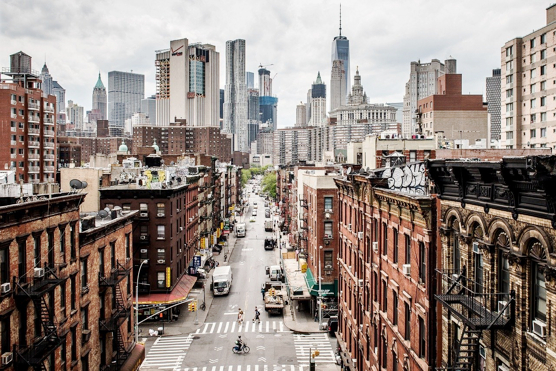
This road is symbolic of the final part of the adventure (which we aren’t up to playing yet, thanks to Covid-19) – More open, but still twisting! Image by ant farts from Pixabay
This is the third, longest (53,566 words!), and final part of my review / demonstration of the “Tangled Web” campaign sub-structure. I’m going to presume that you’ve already read part two, which you can find at this link and dive straight in right where I left off. And, if you haven’t gotten in on the ground floor of everything that’s going on here, you should start with part one.
Don’t worry, we won’t go anywhere while you get all caught up!
So, a quick snapshot of where we’re up to.
Part one of the series dealt with the beginnings of the adventure (and this is all one big adventure), showing where the PCs were at in their lives and the things that were occupying their attention, then enmeshing them in the politics and international intrigue of the home-dimension of their parent organization. It also contained the transitions from Phase 1 of the Adventure (PCs at home) to Phase 2 (Spy Games) and from Phase 2 to Phase 3 (Central American Travels).
I sometimes get asked how to narrow the focus of a campaign that has grown Cosmic in scope to something more local, or, more commonly, how I transit from a cosmic / high-concept adventure to a smaller, more gritty, more local adventure within a campaign – this provides an excellent example of doing both.
Part two dealt with the majority of those Mexican Travels and the use of passage from A to B as a vehicle for delivering a series of isolated mini-adventures. It’s an excellent example of isolated, stand-alone adventures combining to create a campaign, and of pacing within such a campaign; each adventure had very little relation to the one before it, but the fact of the prior adventures provided context for each adventure that followed. I interrupted it just as the last of those was escalating to an epic finish to this mini-series for a number of reasons – not least because of the length that the previous post had attained.
Conceptually, that big finish was going to be more directly related to the next phase of the sub-campaign, so it made a certain amount of sense in that respect to draw the line at this point.
So, to recap the current situation: Using magic as a Technology on an industrial scale; Experimental parts to be used in a grand experiment that held huge promise if successful but huge danger if not executed perfectly, big reality-altering explosion that could (potentially) wipe out all life on earth, which the PCs narrowly survive….
Synopsis, Session 14 (from Session 15) – continued
The PCs had just engaged in various rescue operations in the town that had grown up around the experimental facility and assessed the scope of the situation before regrouping. Their ‘diplomatic escort’ and guide, Maynor Morales, came up with a desperate plan, having decided that the optimum outcome was for the researcher, Dr Esperanza, to survive and learn from the experience. Convincing the PCs of this, he began expounding a plan that was complicated by the need to avoid creating paradoxes.
“We have to travel back in time, using this magic circle to protect us from the chaotic effects outside, until a moment after the out-there versions of us lose sight of the Clippership, having returned to deal with the catastrophe. We can then rejoin it and complete our journey to Neuvo Laredo, having lost just eight or nine minutes.
“Using the circle as a vehicle gives us an opportunity to rescue Dr Esperanza en route. Zeitgeist, I was greatly impressed by your ability to see through solid rock at a great distance.”
This was something that she had been doing to lead rescue crews to trapped people in the town.
“I want you to search the ruins of the Laboratory until you find her body, and then concentrate on the heart.
“If we were simply to travel back in time by most methods, we would perceive only the Astral Plane around us. By traveling within the timeline when I reverse our Temporal Vector, the illusion can display the world around us. At some point, then, Zeitgeist, you will see Dr Esperanza’s apparent death.
“The first instant that she is definitively alive, but still trapped, we will exchange her body within the rock with a facsimile. Specter, Zantar, you have shown an uncanny facility to combine the normally incompatible; I need you to put your heads together and come up with that facsimile and find a way of ensuring that even an experienced mage such as myself cannot distinguish between the duplicate and the original.”
A fresh challenge, made more difficult by the demands placed on it. But that, in a nutshell, is how the PCs rescued Dr Esperanza without erasing her knowledge of the disaster, prevented the global catastrophe, satisfied the Oracle’s Prophecy, and got themselves back on track in terms of their own mission. Ultimately, overcoming the difficulties and problems required all of them to coordinate a precisely-timed operation. They essentially had to amputate her artificial legs and leave them behind to create the impression that she had died, then return her to a point where she would be found, just barely alive.
This was not a solution that could ethically be applied to most people, but could be applied to her because her legs were mechanical in nature, and this had been emphasized during the group’s initial encounter with her.
Problem solved, the PCs returned to their own mission, heading for Nuevo Laredo and their planned entry into the USNA (which comprised the old USA and Canada into a single nation).
Additional Notes
Everything above was originally intended to be presented as the conclusion of Part 2. It was a dynamic action-heavy conclusion to the PCs Central American sojourn, involving confrontations with Architecture-turned-golems and other such. Ultimately, it was the rescue of Dr Esperanza that was the climax of the climax, and involved the most significant developments at a campaign level.
In particular, the refinement of time travel techniques, which I’ve called out above, warrants further discussion.
In this campaign, the “astral plane” is defined as the ‘medium through which time flows,’ a higher plane of existence if you will. This plane can be accessed in various ways, as mystics have been doing for centuries, leaving their mortal bodies behind and projecting their minds into the realm from which all of space and time are accessible (at least in theory). It follows that parallel worlds can be reached across the Astral Plane, and from a temporal perspective, are as branches off the primary time-line – which achieves that significance purely as the home space-time of the dimensional traveler.
Most time travel is a simple out-and-in, as shown:

Time protects itself from paradoxes by spinning off a new alternate world whenever a time traveler does something to impact the timeline – like arrive – one in which they did not. There is a threshold of change required before such changes actually manifest in a new timeline, but in general, a time traveler can monkey around to his heart’s content without changing his personal history or circumstances one iota.
This situation rapidly becomes more complicated when you think about it for a while. For example, Time travelers from timeline A implies another bunch of parallel time travelers from parallel timeline A1, both heading for the same point on their common timelines.
This is explained with the theoretical statement that each timeline actually consists of an infinite or near-infinite number of parallel timelines that have minute differences that did not exceed the threshold – one atom of uranium decayed in timeline A0 and a different one in A, for example. To all intents and purposes, the two are identical. As soon as a time-traveler touches down in A, he finds himself in A0 without realizing it, and his presence immediately raises the energy of change above the threshold, so this timeline is not actually there for time-travelers from A1 to reach when they arrive.
This doesn’t work if all the arrivals are at the same instant in time – but there is error in the transit mechanism that is more than enough to ensure that this doesn’t happen. In fact, the more significant a point in time is (and the more interesting it is to time travelers as a result), the greater the margin of error generated.
This was the only form of time travel that the PCs knew of. What Maynor showed them how to do was something previously considered impossible (because the approach they were using didn’t permit it) – time travel within the traveler’s own native timeline.
There were several steps involved:
- Isolate the travelers personal timelines from those of the broader space-time around them in a bubble of temporal force;
- Use an illusion on the outside of the bubble to effectively make the bubble and its contents invisible to those on the outside;
- Use a second illusion to show those on the inside an image of what was going on outside the bubble (necessary as no photons not already within it would be able to penetrate the bubble);
- Do whatever you wanted with the personal timelines of everyone within the bubble.
Unlike the normal method, this permits surgical precision based on the position of the sun and other dynamic phenomena. But the difficulty means that even ‘experts’ in time travel and mages of the caliber of the PCs would find it difficult.
So, with that all foundation and context understood, I can move on.
Excerpt from Game Session 16
Last time, the great Mana Explosion was detailed and how the PCs put (most) of the jam back into the jam-jar afterwards. But there was an important coda to the disaster, one that kicks off the transition to the next phase of this epic adventure.
When you are underway again, Maynor approaches Specter and – choosing his words carefully – says, “I don’t have any logical basis for this assertion, but I got the distinct feeling when I was talking about the Time Travel rescue of Dr Esperanza that this not only wasn’t the first such expedition into other frames of reference that you’ve been on – and that you plan another one, soon.”
Specter gave a noncommittal non-denial.
“I haven’t that much personal experience in the field, myself – just enough to know that everyone’s first impression is that it’s just another inter-dimensional jaunt, and that this impression is completely 100% wrong. But I still remember most of what I was taught at the academy about it, if a little vaguely in patches, so if you think it might be helpful…”
Naturally, Specter was not slow in accepting. What’s more, because the other team members might also have need of the information, he quickly brought them into the discussion.
It should be noted that this was a multimedia presentation with full-screen diagrams. These won’t fit the landscape available at Campaign Mastery so I have reduced them to the maximum width permitted and hope that they will still be clear enough.
The Time-travel lecture that followed started with concepts familiar to the PCs and quickly moved beyond those concepts, but the whole lecture is presented below because readers might not be familiar with the material. See also my previous series on Time Travel In RPGs:
It’s also worth remembering that these illustrations are supposedly snapshots of a dynamically-evolving display being constructed by hand, on the fly, by the NPC giving the lecture. As such, they contain the occasional error that has been emplaced deliberately.

“Time isn’t a straight line. It’s a tangle of vibrations back and forth, twisting at critical moments and events – the more momentous the event, the greater the angle of change. It’s normal to depict timelines as two-dimensional representations even though they actually twist through three temporal dimensions (and contain three spacial dimensions) represented as one – a line.
“But this is an oversimplification. In reality, each critical event has a wide spectrum of possible outcomes. Usually, no matter how significant it might feel locally, and might eventually become, these timelines are almost indistinguishable from each other. It takes time for a domino effect to grow into something significant. And many of these outcomes are functionally the same – it generally doesn’t make much difference if you linger for an extra tenth of a second over your morning coffee, for example. Or for a tenth-and-a-half. But technically, both of those expressions of free will results in a new timeline. Before you know it, your timeline looks like this:

“And, of course, this phenomenon repeats itself at every critical event, defined as an event with more than one outcome. Such events occur every nanosecond in almost every particle in existence throughout the universe at the most minute level. But they also occur at the macro-scale – as I indicated, a fraction of a second longer lingering over a cup of coffee that does not amount to anything more significant, for example When discussing time travel, we normally ignore such events. And we simplify our maps of time by discarding low-probability outcomes. If I discard everything with a less than 60% chance, I get this:

“Now, each timeline represents a cluster of multiple similar timelines, and they are no longer so neatly defined. They have grown ‘fuzzy’. Some simplify further, abstracting their representation of time:

“It’s very important to remember what you are ignoring when you do this; it can catch you out, otherwise. Here’s a truer picture of the probability, with still more coalescing into three central strands. If you look very closely, you will find that they aren’t quite identical.

“Nevertheless, it’s often useful to start with the abstract representation and then work up to a more accurate reflection. Here, I’ve drawn a series of arcs at equal lengths from the critical event that caused the timeline to trifurcate. And, at point t, we have a time traveler.

“He can go into the past of the timeline that he is in, but that inevitably creates a new critical point – one branch containing the traveler’s arrival, and one that doesn’t. Incidentally, that was something that our recent rescue avoided – the potential for a divergent timeline did not exist until the force-field bubble was dropped, but by having a very specific and detailed plan and following it to the letter (as much as we could), we minimized the potential for divergence and maximized the probability that all timelines would carry the changes that we made. Eliminating choice and chance eliminates bifurcation and creates inevitability. Anyway…
“When this time traveler. reaches point t again, there will be a version of himself that returns into the past – and studies have found that the instant of the previous versions’ arrival have created a callus over that moment of arrival in those timelines in which he arrived from the future which resists with the full force of the timeline’s integrity, the arrival of a second version of the same time traveler. into the same timeline.
“Instead, the time traveler. finds himself entering the branch in which the first time traveler. didn’t arrive in the timeline, the ‘ignored’ branch – again bifurcating that timeline into one in which he arrived from the future and one in which he didn’t.
“The more inevitable it is that the time traveler. will return to the past, the greater the percentage of available timelines in which a time-traveler arrives in the past.
“The number of timelines is always one plus the number of time-travelers, at a minimum.
“Of course, reality is more complex; you can arrive at any point within the spacial dimensions contained within the timeline, so it’s theoretically possible for multiple versions of the same traveler. to arrive at different points within the same timeline at the same time. In practice, though, there’s that callus – and so we get a sorting mechanism in which the versions don’t intersect, except possibly in the Astral Plane.
“One way of avoiding the bifurcation of a timeline and the creation of a critical point is by the time-traveler deliberately targeting a variant timeline; if it’s virtually inevitable that the time traveler. will do so (and that doesn’t happen by accident), AND the time-traveler doesn’t make any sweeping changes in the other timeline, his arrival – in theory – doesn’t create a critical event. You can reliably observe but change nothing, or change something and introduce unreliability to your observations.
“Experimentation has shown that the more the target timeline differs from the one experienced by the time traveler., the weaker the resulting callus. I’ll leave the significance of that for you to ponder some other time. Instead, let’s focus on another aspect of time travel of more immediate practical value.
“It doesn’t matter how similar or how different they are, since we know that a time traveler. ALWAYS arrives in a timeline in which he had not previously arrived, it is ALWAYS just a tiny bit divergent from the one he knows. Maybe a die rolled a six instead of a five in a casino somewhere, or one radioactive atom decayed instead of another one – good luck finding a variation that small, somewhere in the entire universe! – but it will be at least a little bit divergent. And that means that the right way to represent it is with a bifurcated or trifurcated timeline.
“The time traveler. has three options: he can arrive in the past of a timeline, as shown by t-to-1; the can arrive concurrently to his present, as shown by t-to-2; or he can arrive at a future point, as shown by t-3 and t-4.
“The difficulty and accuracy of the trip is proportional to the angle between the temporal vector of the traveler. at the instant just prior to departure and a line connecting that point to the concurrent instant of arrival.
“So t-to-1 presents the greatest difficulty in accuracy, followed by t-2, then t-3, and then t-4. And that reveals a second fact: in futureward travel, the less divergent the timeline targeted from your own, the more easily you can be accurate; and the more divergent, the more difficult to be accurate. When traveling into the past, or a point concurrent to the past, this is reversed – the more divergent, the easier it is to be accurate, the less divergent, the harder.
“It’s as though there were a finite amount of uncertainty to go around. If you use some of it up by predicting the future you want to try to go to, there is that much less of it to throw you off course; but if you try for a very precise past, your arrival point will have to soak up a great deal more of that uncertainty, so your arrival time and location within that past will be greatly inaccurate.
“But that’s assuming a straight line between departure point and destination, and any inter-dimensional traveler. knows that just doesn’t happen. There are all sorts of astral-plane phenomena and dangers that throw or force a traveler. off that straight line; in reality, a traveler’s course looks more like this:

“And that introduces a new variable: the angle of entry into the target timeline, something that’s not always entirely under the control of the traveler. Once again, there’s fixed total uncertainty. So if you control both the departure and the target specificity, the only variable left to soak up the uncertainty is relative vector of travel on entry.
“That vector can differ in two respects – which, on vector analysis boil down to the same thing: angle of entry or relative rate of time compared to that of the timeline.
Since it’s only the vector component that aligns with the instantaneous vector of the timeline that matters, the more acute the angle of entry, the faster you will ‘appear’ within the timeline, but the less of your personal time-travel vector will be available to ‘match vectors’ with the timeline.
“The greater the differential between the two, the more stress the differential places on the physical and mental reality of the traveler. Entering at too sharp an angle can kill you.
“A lot of those intricate maneuvers are therefore an intentional attempt to approach the target point from a suitable angle that will minimize stress.
“But there’s one more factor: individuals continue to experience the passage of personal time during transit. The greater the distance covered, the greater the opportunity for encountering… something.
“There are thus competing priorities in any temporal transit, and the artistry of time travel is finding the ideal compromise between the two while avoiding temporal hazards.
There are two kinds of critical event. The first type is one that’s inevitable, given the history of the base timeline – one of those is created when a player is dealt a hand of cards, or draws a lottery number from a barrel. These are ‘tethered’ to the originating event – the one that makes the critical event inevitable. These tethers ensure that at an appropriate duration after the originating event, there will be a consequential critical event across multiple timelines – it’s as though the event creates a shock-wave that intercepts all the branching timelines at the same instant, give-or-take a little uncertainty.
“Since it’s really hard to have no effect on a timeline when you aren’t there one instant, and are the next, a time traveler’s arrival always generates a shock-wave of this type, though the degree of impact can vary so substantially that the shock-wave is often described as extremely fuzzy.
“The other kind of critical event is one that isn’t inevitable, but that arises out of the behavior of people. The power of free will, and all that. Whenever someone sentient makes a decision, that creates a critical event.
“Although it’s usual to assume that decision is synonymous with action, that isn’t the case. Nor is it at all likely that the instant of decision will be exactly the same across multiple timelines – it’s far more likely that it isn’t. So these are like an unexploded bomb connected to a random number generator.
“This is important to a time traveler. because the first type of event generates additional temporal stress – experiencing the same inevitable critical point on multiple timelines is wearing and fatiguing – while the second type of event generates additional uncertainty.
“It’s sometimes convenient to map all these factors onto something that takes a more statistical approach than the depiction of multiple timelines. This is called a Probability Map. A typical one, with a bifurcation caused by a critical event, looks like this:

“Notice that the presence of the alternate timeline impacts the distribution of probabilities over the map – the zones just outside the high probability regions have a greater probability of containing a timeline matching the specific parameters on the side closest to the other timeline, representing the graduated presence of timelines that are neither extreme completely, but are somewhere in between (quite literally, in most cases).
“By assessing where your departure timeline is and where your target timeline is within the map, you can estimate the relative significance of the various factors which cause stress and uncertainty. Or so I’m told; I never fully got my head around this part of the theory.
“Anyway, moving on: the instant of departure is critical, because of the way a real timeline is always twisting this way and that. Let’s say that you are aiming to correct or influence a critical event. Since it doesn’t matter how similar the target timeline is to your own, it will be divergent to some degree, it’s easiest to analyze by using two parallel timelines, like this:

“This shows seven different departure points, some before and some after the critical point in question. You can target a critical point before the event occurs if you can predict its’ existence and it’s of the first type and not the free will type – though there’s a little of the inevitable about a free-will event and vice-versa. What I’ve described are the theoretical absolutes, bear that in mind.
“The remote past is bad for both stress and accuracy. A little later and almost the same initial temporal vector is merely poor, because the separation between the timelines is less – so there’s less room for things to go wrong. As soon as the critical event becomes probable, you are likely to get the best possible combination.
“Waiting just a short span of further time until it becomes inevitable is usually the same as a concurrent equivalence – it’s okay, because of the shortness of the gap, but the temporal vector stops being in your favor. Waiting until you know the outcome of the event deteriorates the situation back to something as bad as the remote past.
“But there can still be minor confluences, where the trend is similar to that of the target timeline – which means that it is usually better to jump from frying pan to fire than to jump from safe ground into either. Waiting until another critical event has produced significant variation is the worst choice of all.
“Always assess your target point and timeline, and try to plan your time travel accordingly. Sometimes you can’t choose the point of departure, but can choose the point of arrival; sometimes it’s the other way around; and sometimes, it just sucks to be you.

“The final diagram I can show you describes a portion of the same but incorporating the consequences of having participated in the critical event that you are trying to change on one timeline already, in a ready-reckoner manner. This isn’t strictly correct, but as a tool for estimating the consequences, it’s excellent.
“But the resulting diagram is so complicated that I’ve taken each of the paths and replicated them separately at the bottom of the diagram. In essence, the more of the timeline’s events that you have experienced, and the more of the consequences that you have observed, the longer your effective travel in terms of stress and uncertainty.
“This is simulated by going ahead to the point beyond the target by the amount of certainty, then to a point behind the target by the amount of certainty, and then to the target point.
“Starting when the critical event is only possible, and not certain, produces a long path – but not a lot of messing about when you get there. This is shown by the blue traveler’s journey, labeled 1.
“Starting when the critical event is inevitable, but not yet resolved, produces a shorter direct path, but longer time trying to vector in on the target point. Overall, this yields more stress or more uncertainty or more of both – and the natural tendency is to minimize uncertainty because the temporal vectors are a closer match, as explained earlier. This is shown by the green line labeled 2.
“Starting when the critical event has taken place but the consequences are still being observed is worse still. Now almost everything is going against you. This is shown by the yellow line labeled 3. Note that there is not a lot of difference between this and a transit beginning AT the critical moment.
“Finally, if you wait until the consequences have second-generation consequences, you get the red path labeled 4. The universe doesn’t really want you messing about with its settled history; events have their own momentum within the temporal vector, and it takes a lot of effort to undo something.
“That’s why we couldn’t just find the Peregrin and take the whole ship back in time, or travel back to a point when we were already on board. The level of uncertainty would be low, so the Temporal Stress would have been off the charts – and it wasn’t certain whether or not we would be able to heal while the light-show was going on outside. Instead, we had to wait until the old ‘us’ were no longer in a position to notice it – then, just after we disembarked, we could board and it could leave. We’re still experiencing some Temporal Stress, because we’re in two places at the same time – so we’re getting pounded by shockwaves from inevitable critical events elsewhere.
In a previous adventure, the PCs had discovered that existing in two different space-times at the same time caused increased rates of exhaustion, reduced capacity for concentration and intellectual activities, slowed decision-making, mental fog, and even low levels of physical trauma, but they had not investigated or understood the mechanism behind that effect; they simply accepted that trying to ‘cheat’ the universe by being in two places at the same time was inherently stressful and tiring.
They had also learned that if they aimed to return to a point concurrent to the duration they would have experienced in their first timeline if they had not gone dimension-hopping, there was little or no such stress. They termed this ‘Temporal Shock’.

This diagram sums up with the first two figures, what they knew then, and with the third and fourth figures, what they now added to that knowledge.
The first figure represents a student trying to steal some extra study time before a big exam. As a general rule, the performance loss will be slightly greater than the benefits of the extra time – the extra coming from being present (even if not involved) during critical event e. Note that the student leaves during critical event f, or the performance deficit would have been even worse.
This applies to all relevant numeric values – so if the student were to study enough to get an extra 20% on his exam results, he would lose about 24% of his intellectual and physical capabilities and experience 24% greater fatigue.
The best approach to dimensional travel is shown by the second figure. Despite experiencing critical event d, the traveler. returns to his native timeline at a point at which his subjective time is equal to or less than the interval between departure and return so far as anyone remaining on the timeline is concerned. There would still be some Temporal Shock induced by the critical events affecting the timeline in his absence but these would be momentary and manifest only on his return to the timeline, just as there would be a singular instance of Temporal Shock upon entry to the parallel world on which critical event d takes place.
The third figure shows the traveler actively attempting to change the outcome of history after they had experienced two critical events. From the moment they arrive, they are subject to Temporal Shock from critical events a, b, AND c, which are ongoing throughout their temporal excursion AND for an equal interval of time when they return to their own time-frame because they returned to a moment just after they left. Note that while their own experienced history has not been changed by their actions, some parallel-world equivalent of them may have instituted a similar change in their native timeline, so effectively they return to a world in which history has been changed more-or-less the way they changed it.
The fourth figure shows the worst possible choices. The time travelers return to a point in time prior to their departure, and even if they don’t interfere in events, they are subjected to temporal shock not only from the critical events marked at a, b, and c, but also all the critical events that they are experiencing for a second time. This can double or triple the base level of Temporal Shock leaving the character significantly impaired for long after their temporal jaunt is complete.
The greater the impact on other people’s decisions, the greater the Temporal Shock experienced. Watching without interfering is much safer.
All this was also directly relevant to the PCs future plans and their primary assignment. If the nukes they were after had already been detonated before they began their time-travel, it would be a lot harder for them to succeed, and more of their capacities would be inaccessible. It also meant that they would have a greater likelihood of success, and experience less temporal trauma if they had clear plans in place.
It also meant that the tiredness everyone was now feeling wasn’t purely the result of the expenditure of effort in first the rescue of the townspeople, the restoration of the planetary Mana field using a self-perpetuating spell crafted with Rheezok assistance, and the rescue of Dr Esperanza – some, perhaps most, of it was the result of existing twice at the same time, made worse by it occurring within the one timeline.
“I realize that there’s a lot to unpack – this isn’t the same kind of practical instruction that I gave you earlier, this is altogether a more complicated subject. But the guidelines and principles should help you plan when and where you need to go.
Some practical advice:
- “Being multiple places at the same time, even on different timelines – bad. The more similar the timelines, the worse it is – so being on the same timeline twice is as bad as it gets.
- “Multiple jumps are much worse for temporal shock than one big trip – but much more accurate. You can minimize one source of stress only to maximize another if you’re not careful.
- “It’s always safer to go back to a time when nothing was happening than to a time when fates were in the lap of the gods – unless departure is from a time that is not equally sublime. If your departure point is a time of high tension, transit to another time of high tension and wait it out – you’ll encounter greater risks from events, but less inevitable harm from Temporal shock.
- “Try to always give yourself ample time to do everything and more besides. It’s astonishing how quickly it can be eaten up. And everything takes longer than you think when you’re fighting Temporal Shock.
- “Once you’ve experienced an event, live with it if you possibly can. Attempting to change it will probably be fatal – and probably unsuccessful. The fates will seem to be conspiring against you, every random chance biased against you, almost as though the universe was conspiring against you.
This practical advice clearly derived from the information presented in the lecture, and had a deep impact on the team’s future plans. They had been planning to jump back in time a week or so, at which point they would have barely enough time to get everything done to a superficial standard, and at which point the problem with the nukes might already be an inevitable crisis. This plan was completely incompatible with the advice Maynor had given
While no decisions were made in this respect at this point in time, they were all thinking about it and revising plans. And that was the point of delivering this info-dump at this point in the game; this was information that the PCs had to have to make rational decisions, delivered by someone whose bonafides had been established to their satisfaction. The information would have been utterly irrelevant earlier in the adventure; they already knew the part that was critical to what they were doing then (the basics of Temporal Shock).
The need to deliver this information was a key point in planning the mini-adventure to which this lecture was post-script. In some ways, you could say that the entire purpose of this particular set of events was to justify the delivery of the lecture, which required the prior experience of time travel as the solution to the crisis presented by the mini-adventure. That required an emergency dire enough to justify time travel as a solution; working backwards from that gave me the basics of the adventure. The combination of the events with a society in which they would logically transpire raised the question of what the authorities would know, given that the society would have access to sources of information beyond the normal – and that led to the creation of the Oracle. Each piece of the puzzle was built upon what was to follow.
Game Session 15 (cont)
The party then reached Nuevo Laredo I provided a potted impression of the place which may or may not bear any resemblance to the true-life relationship between the American city of Laredo and the Mexican town named. This was extremely abbreviated because events always seem to compress as a trip is coming to an end – while any lack of events seems to get drawn out.
Before they knew it, they were in possession of a ‘more appropriate’ vehicle provided by the Coahuila Government – a brand-new Chevy Gladiator(1), the same as a thousand others that would cross the border daily, for trade between the two was brisk – in fact, it was the only real reason for the existence of Nuevo Laredo.
(1) The basic Chevy van in a dozen configurations (some of them even officially recognized by the manufacturer) were marketed under this name in Mexico at this point in time. In the in-game reality, most of these were sold without engines fitted because the technology preferred in Coahuila was so different to the internal combustion employed north of the border. This particular model had both an internal combustion engine for use in the USNA and an ‘exotic’ steam engine (a two fire-sprite model) and was equipped with seating for 9 passengers, a small cargo space (in the mode of the people-movers (European designation) and mini-vans (US designation) that were becoming popular at the time (mid-80s), and diplomatic plates.
Maynor keeps the “Diplomatic Vehicle”. He intends to return to LA, gather some experts, and return with them to Coahuila to assist in recovery efforts after the disaster that befell them a few minutes ago – and instruct a certain engineer on some of the theory and practice of spellcasting while she is recuperating. If he times it right, he will arrive shortly after they departed back in time. He will also send a few students (who he thinks could benefit) down to spend some time with the Rheezok, but he will return to Los Angeles.
His final advice is to remember that if they contact him back whenever, he won’t know who they are, and the results could be catastrophic. Nevertheless, satisfied that they will use the information wisely, he provides contact information. Ideally, you should wait until there’s only one of you in this timeline before time-jumping again – but the urgency of your mission may not permit that, so remember when you get back to this point in time that you are already here twice and will experience Compounded Temporal Shock.
He suggests hiring a vehicle and recuperating in a local hotel if you can afford the time. If not, good luck!
With a jaunty wave, he then piloted the vehicle into the traffic and departed for Los Angeles, leaving the PCs on foot in a strange city in the US with only their forged documentation and some spending cash (intended to last them for three days) for company.
The PCs immediately revised the advice they had been given to incorporate things they knew but hadn’t been able to state. Travel back in time immediately, then rest in a local hotel and hire/purchase a couple of local vehicles is a more sensible plan. The further in time they could get from the imminent possible detonation of a nuclear device (a critical event if ever there was one) and/or a confrontation with whoever has it, the better they would be when those events did take place. And crossing the border with diplomatic plates won’t mean squat to anyone days or weeks before you do it, so this would provide additional protection against possible scrutiny by US Intelligence.
More Key Points & Notes
Maynor had been the one constant throughout Phase Three of the adventure, and his departure was symbolic of the end of that phase. This signaled a major change in the tonal quality of the mini-campaign – until this point, events had been driving the PCs forward, dictating what they encountered and what their imperatives were; as the architect of the locations and individuals through which they traveled, the societies and the manner of transport that they were able to provide, the mini-adventures and content of Phase Three in general had been provided by me as GM. Suddenly, the players were in total command; unless speaking as one of the NPC members, my sole contributions to the discussions were of the nature “that’s up to you”.
As the discussion continued, a consensus began to emerge, a broad plan of action, but (rather than binding them to it at this point), I had the players hold off on any final decisions until the next game session. My ulterior motive in doing so was to ensure that Phase Four had the feeling of the new beginning that it was intended to be. Everything up to this point had been aimed at enabling this new beginning to take place (with a few bits of campaign-building along the way); they had transitioned through multiple settings, each of which would have been suitable for ongoing campaigns. This was intended to create the sense that what was coming would exceed all the others, as it was the one chosen as the focus of this new campaign-within-a-campaign out of all the possibilities.
There is some similarity in this to the approach that I will typically take when starting a new campaign, regardless of the genre. At first, it will take some form of grand tour in which some of the possibilities are presented to the players; slowly, or suddenly, the PCs will be put in the position of making critical decisions for themselves, and I will start integrating those decisions into my own planning.
To be fair, I already had a strong sense of how the campaign was going to develop through phase four – I had been working on it for months – but critical decisions were still in the hands of the players, and may plans would have to be modified to take those decisions into account.
Synopsis, Session 15 (from Session 16)
Zenith-3 are on their own, in the USNA, in disguise, on a mission to prevent some domestic terrorists from detonating one, maybe two Russian Nukes that they have bought on the black market.
They have traveled from one end of Mexico to the other to reach this point, and are collectively not far from being sufficiently exhausted that mistakes could creep in.
Right now, they face the big decision of how far back in time they are going to travel – they need sufficient time to establish these “new” identities, both in the eyes of officialdom and the press, but they have only a small amount of “traveling cash” on them, courtesy of UNTIL. When they get established, they have a phone number to dial after opening a local bank account, and UNTIL will then deposit enough funds to obtain a base of operations – go too far back and you won’t have access to that.
The plan at the moment is to go back in time, get some hotel rooms here in Laredo, and get a good night’s sleep. They will then research the possible locales suggested by UNTIL for a base of operations, trying to narrow it down to something more specific than the four states suggested, finding out what they can from Laredo, then hire or buy a couple of cars and drive to them for a closer inspection.
Ideally, you will finish those inspections just as the money from UNTIL becomes available. That will give you a couple of days to do something to get noticed, and then you can head for the rendezvous and hook up with the UNTIL agent who stumbled on the situation in the first place, and who has been looking into it since.
St Barbara [aka Nightshade], you have one other option up your sleeve. UNTIL didn’t want any chance of a security leak so they’ve instructed you not to even let the Champions know about this side-gig – but Backlash, currently serving as the Chairman, showed up for the mission briefing anyway, and that means that you can take advantage of a top-secret slush fund – emergency funds accessible (and known only to) the Chairmen of Champions Organizations. Not even acting Chairmen and 2iCs and field commanders get told about this money.
Drawing on that money will tell Aleph Prime and Backlash that one of the teams is doing something covert, and the location of the withdrawal will tell them where it’s happening. Which might very well be how Backlash knew to crash that mission briefing!
It would probably avoid questions if you used the Champions Funds only as a bridging loan for a few weeks, but that means that you’ve would have more time up your sleeve, and that could be very useful.
The other consideration is that you shouldn’t go back any earlier than the bad guys reportedly obtained the Nukes – about eight weeks ago – or you risk finding yourself in an alternate timeline. And UNTIL won’t be listening for your call until 4 1/2 weeks ago. If you actually buy a property – and UNTIL thought that would be preferable if possible – you will probably need to pay a premium to avoid a delay while the paperwork gets done. This is usually 2-4 weeks. The problem is that doing so will attract attention, and you don’t want to attract undue attention!
So how long will you need? How far back do you want to go?
The players began by laying out a schedule built around the concept of a grand tour of the four states suggested as suitable by UNTIL. The basic plan was to spend three days exploring each, in two vehicles, with a fourth day as reserve and rendezvous; any unused time could be spent as “time off”. They would then choose their base of operations from the choices they had found during their road trip, and spend a couple of days arranging the purchase; one of the key considerations would be the capacity for immediate possession; the players were all cynical of UNTIL’s forecast that they would find ample choices in such a short period of time, expecting no more than two or three results per vehicle per state (the NPCs, not being ‘local’ in different ways, deferred to this assessment). They would spend up to a week outfitting and refurbishing it (forgetting completely the lesson of how quickly they could do so using their paranormal abilities, as had been demonstrated in Leon), leaving about a week to establish their new ‘superhero’ identities sufficiently to get some assistance from local law-enforcement should that prove useful before making rendezvous with the UNTIL agent. Adding all this up, and throwing in the occasional ‘day off’ gave them a total of about 31 days.
Checking the weather back then further narrowed their choices to Monday, May 26, 1986 – with departure from Friday, July 4, 11:05 AM.
They then departed, only to run headlong into another phenomenon hinted at in earlier adventures: The Astral Plane was not the blank slate that theory described. There were various aspects and attributes of local regions just as the sea along one piece of coastline will be different to that along a completely different coastline on the same continent. Normally, such phenomena can be maneuvered around, doing nothing but adding to the perceived transit time, imparting some sense of transit to the journey, and creating a little random uncertainty about the precise arrival time; but by sticking close to the one time-line, they were effectively hugging the coast instead of going out to sea and then back toward their destination, trading increased risk of encounters in the “shallows” for greater precision.
Sure enough, they encountered Dimensional Shoals caused by the passage of many time-travelers in and out of the local timeline (Warcry, an ex-member of the group, got the blame, but the PCs had themselves been popping in and out of local time regularly since the campaign started). What was more, there was a vampiric squid or maybe sharks (my notes say one thing, my memory something else) who lived in the shoals and consumed the future lifespan of time-travelers who intruded on their domains.
Even more bone-weary than they expected, but wary of the time-traveler’s equivalent of Jet Lag, they arrived shortly after the hour of Noon. They secured accommodations at the first hotel they encountered and then decided to take the afternoon off for social activities. Each went their separate ways using tourism pamphlets from their hotel to choose activities that sounded interesting – some went to the movies, one went golfing, and so on. Each also chose a lunch location that sounded interesting or appealing to them.
And that was how the rest of the game session played out.
Key Points & Notes
Notice how there is virtually no mention of the big finish to the previous phase of the adventure, nor of the transition to this next phase; instead, it’s all relating to discussions held and decisions made way back in the first part of the ‘Spy Games’ phase, and how they intend to modify the basic plan given to them by UNTIL to better suit what the PCs think they need in order to achieve everything UNTIL wants them to do.
The other source of input into this synopsis was the discussion that had taken place at the end of the previous game session. None of the players made much note of the fact that they had been delivered to the US precisely at the moment they were designed to arrive: before noon on July 4, which is when UNTIL expected the nuclear weapons to be activated. The original schedule had aimed to get them there on July 3, but they had lost a day’s travel to the various tasks foisted on them along the way.
The change of pace after the transit back in time was also no accident – the PCs had been traveling at an increasingly breakneck pace to reach this point, suddenly they had a whole month in front of them. Choosing to decompress, and engage in ‘character activities’ provided a mental reset for both players and characters. It also bought me time to make the necessary adaptions of my plans to fit within the decisions made by the players without making it an obvious stalling tactic – the fact that I was prepared with lists of the activities on offer and photos of the different venues of interest gave the impression that I was as thoroughly prepared as ever…
Synopsis, Session 16 (from Session 17)
Zenith-3 are on their own, in the USNA, in disguise, on a mission to prevent some domestic terrorists from detonating one, maybe two Russian Nukes that they have bought on the black market.
They traveled from one end of Mexico to the other in just 3 days – by way of Brazil! – but that left the team exhausted and critically short on time to do everything that UNTIL wanted them to do and then defuse the plot before it was too late.
To buy themselves some time, they have traveled into the past in the city of Laredo, Texas, located so hard up against the Mexican Border that there’s a town on the other side named Nuevo Laredo, which was your portal into the American city.
Timing was critical; while you would have liked more of it, a Hurricane struck the city on the 25th – no fatalities or serious injuries, but it would not have been conducive to carrying out your plans in such weather – so you had to make it the 26th, leaving you a thirty-three day Schedule to follow.
After a little R&R in Laredo yesterday afternoon, the team settled in for a good night’s sleep at the Laredo Six-Star Inn. All except Vala/Zeitgeist, of course, who doesn’t need much in that line of things.
Key Points & Notes
Essentially, the entirety of the previous game session was tossed out in a single paragraph of two sentences. The rest was context, a reminder of the bigger picture.
The longer a synopsis, the more baggage it conveys to the players. Heaven knows there was enough such baggage to mention – but none of it was relevant to the day’s play at hand.
Synopsis, Session 17 (from Session 18)
Zenith-3, in the Guise of Team Shadow, have traveled back in time to May 27, 1986. They actually arrived yesterday, and spent the afternoon on R&R before attempting to get a good nights sleep since they were all exhausted to some degree (except Zeitgeist [Vala], who’s an Energizer Bunny).
One by one, those plans failed for various reasons which can be generally characterized as people becoming aware of the scale of what was being proposed, and needing to change the plans for the day accordingly.
Union Jack had discovered that the funds provided by UNTIL, which would have been perfectly adequate for three days, wouldn’t stretch to thirty. Even the attempt would force the auto-shoppers to buy junk without more money. He offered Nightshade [St Barbara] several solutions to the problem, but wanted her to choose between them.
Before she was set on a decision, Basalt [Knight] showed up, having determined that there wasn’t enough time in the day to examine the number of cars likely to be for sale without some information on what capabilities to prioritize. He had a planning tool taught to him by his old partner when he first joined the Police Force which would solve the problem, but he wanted St B and Union Jack to weigh in.
They were just about finished doing so when Zantar [Defender] and Zeitgeist [Vala] arrived from a before-the-shop-opened expedition to the local Bookstore.
Defender was worried about the logistics of researching targets and planning the activities to follow, but had come up with a plan – do the research as you travel between potential sites using the best guidebooks, selected according to a logical argument that he had devised. Union Jack had also deduced that the mission at hand was likely to center on Oklahoma or Northern Texas, which he called “Zone Red”.
The last to arrive was Specter [Runeweaver], who had been delayed by ‘oversleeping’ (compared to the others) because of a nightmare. He was worried about the dangers of having too big an impact on History, especially if zeitgeist [Vala] were to go “Fundraising”, something she had mentioned the previous day.
With that, the day’s activities were almost completely revised. As before, Union Jack and Basalt would shop for a pair of used cars for the team to use, based on what the team could afford and the criteria that had been identified as most crucial. Runeweaver and St Barbara would make a fast trip to the Bahamas, from where they would withdraw some of their accumulated UNTIL salaries to bolster the team’s finances. As soon as they had done so, Zeitgeist [Vala] would relay their new operating budget to the car-shoppers so that they could take the information into account. She, meanwhile, would have scouted and hired an automotive workshop for the next couple of days. Zantar [Defender], with Zeitgeist’s assistance when she was free, would, in the meantime, be preparing a set of protocols on Base Selection for the team to discuss.
St Barbara decided to withdraw $6000, a thousand more than the minimum Union Jack had estimated would be needed from each of the two senior team members. Runeweaver decided to withdraw a thousand more than that again, to provide an extra buffer.
Weather: Increasing cloud, light winds growing stiffer in the evening, High 86°F, Low 68°F, Sunset 8:27PM.
We rejoin the team as Vala is bringing Union Jack and Blackwing up to date (telepathically) while they finish their lunch. St B and Runeweaver have a choice to make – you can grab a light lunch in Barbados and then head back to Texas to put the cash in the hands of Union Jack, or you can head back immediately, hand off the cash, and then get some lunch.
Key Points & Notes
There was a lot of roleplaying and no small amount of comedy that has been glossed over in the preceding summation.
Vala started her in-game life by stealing from drug smugglers and other criminals, and taking advantage of rigged games at illegal Casinos, and proposed such activities as a way of enhancing the team’s finances, using the euphemism “Fundraising”.
Vehicle Choice
I wanted the players to make important decisions with minimal input from me. The net results of my research into available vehicles (described in How Good Is That Rust-bucket In The Showroom Window? had yielded 163 possible vehicles – some of which were obviously unsuitable for the intended purpose. These were as fully specced-out as I could make them, incorporating data from multiple sources and modifying model histories to integrate with the campaign history as necessary. I didn’t assume that the design imperatives would remain the same, or that the vehicles that were historically popular were going to remain so – everything was adjusted to factor the backstory in. I had histories for each model that a car dealer could relate if engaged on the subject by a PC.
All of which requires some method of cutting through the resulting fog to arrive at the vehicles the characters (one PC and one NPC, who had to agree) would select as the most suitable.
To make this a player-driven choice, I devised an interactive system. Here’s the relevant part of the adventure, extracted:
Just as she is delivering that decision, there is a knock on her door. It’s Basalt [Blackwing] in his new “civilian” identity as Frank Hudson.
(roleplay. He has ordered breakfast for two – more Breakfast Tacos and another pot of coffee are on their way. He intends to eat three of the Tacos himself but the fourth is up for grabs – who wants it?).
* Zantar [Defender] did some simple maths. If there are 60 cars in the lot that we have to go through, and we spend a whole six minutes looking at each, that’s six hours, plus time for lunch. If there are 100 cars, we can only spend about 3½ minutes looking at each. That’s not a lot of time. Having defined the problem, he then dropped it into his lap and left to deal with his own problems.
* What’s needed is some way to sort the wheat from the chaff. If they can give a ‘no’ to most of the cars in a minute or so, that leaves a lot more time to look at the ones that you might actually want to buy.
* Normally, it’s really hard for car buyers to pick a priority, but he has a trick that one of his ex-partners on the force taught him years ago to cut through the fog. But this is a potentially important choice, so he thought St B should provide some input. And anyone else who wants to weigh in – they will all be living intimately with the results for several weeks.
* What he’s done is get a bunch of playing cards, and scratched off the printing that was on them – St Barbara, the price will be on your bill when you leave – and written down a number of key parameters, for example Size or Age or Price. Some of them have sub-options – for example, under Horsepower, you’ve got the choice – as it was new, as it is (estimated), or as it will be after he and Union Jack tune it up. There are also three blank cards that can be used to drop a second of those options into the mix – for example, you might care most about gas mileage at highway speeds, but want to add gas mileage in stop-start city traffic somewhere else on the list.
* You take each of the cards, and you put them in rough order. There are 13 of them. The end goal is to get a top ten, in order, so you can start by picking the three least important things and discarding them. Next, look at the options and pick between them. If you want to add a second option, you have to discard another of the cards that you’ve kept.
* Once all the options are selected, it’s time to start prioritizing. Pick the one that you care about the most, and put it on top, then the one you care about the least, and put it on the bottom. Then look at the ones you have left, and do the same thing again. Do that five times, and the job is done.
> Explain the sortable database, and the ranking system, and that I will simply sort the database according to the sequence of criteria that the players choose. It will take 10-20 uninterrupted real-time minutes to actually rank all the cars, and spit out the top half-dozen or so (2).
> Note that there’s no entries for ‘safety’ or ‘comfort’. The first impacts on all sorts of other values but is hard to actually nail down. An attempt was made to define the second in terms of the extras, but that doesn’t address the fundamentals of one model being more comfortable than another. That’s why you want three or four choices from each dealer.
* The sales lots are also busy places – if we select a vehicle, there is no certainty that it will still be available by the time you go to actually buy it. That’s another reason for having multiple choices.
* He also needs to know what sort of budget they have available. He understands that Union Jack has been looking at that question.
> Let the other characters fill him in on what has been decided in that respect.
> Make this a group activity. You want debate. Use Union Jack to stir the pot and prod as necessary. NOTE THE RESULTS.
(2) it actually took less than five. But I took a 5-minute break at the end of it.
There was lots of discussion and roleplay before the decisions started to be made. Somewhere, on a scrap of paper, I have a list of the criteria as decided and prioritized by the players. One moment, and I’ll go look — — — — here we are:
- Economy, Highway, Tuned-up
- Current Condition
- Best Highway (Cruising) Range, Tuned-up (3)
- Worst Urban (Stop-start) Range, Tuned-up (3)
- Rust Level
- Size
- Height (headroom)
- Estimated Price, factoring in expected discounts (4)
- Top Speed, Tuned-up
- Horsepower, Tuned-up
The rejected criteria were:
- Age
- Acceleration
- Gearbox (Automatic or manual)
These were all sorted in the sequence from most desirable to least desirable and the rows then numbered so that the results could be sorted by dealer.
(3) These are usually provided as a range because there are so many factors that can affect the result. “Best” means taking the highest value in this range, “Worst” means taking the lowest.
(4) Every dealer has vehicles that have been on the lot for a long time. They don’t make money that way; after a while, it’s better to discount the price and get rid of a white elephant. Vehicles that are especially collectible or rare are a different story. Both factors can be taken into account in assessing how much below the sticker price the dealer will go (and how reasonable that sticker price is in the first place).
Exploration Methodology
So the players had now decided how they were going to fund their setting-up, and how they were going to decide what they were going to spend their money on. Next was how they were going to actually look for a Base Of Operations. Through the NPC, Zantar, who was the closest thing they had to a logistics expert, the next section of the adventure explained the problem and the solution that he had devised, for player approval:
You are just finishing that up when Defender (and Vala?) arrive(s), with a bundle of books held together by some sort of glowing energy. Defender doesn’t seem to need to carry them, they are following him around. You hope too many people didn’t see him like this!
“Good morning, Sue-Ellen, Frank, Roger,” he says, effortlessly reeling off the cover names that were assigned to you. “I’ve ordered Breakfast to be delivered here, something called “Fish Tacos” – and an order of their regular breakfast offering for anyone who wants it.
“Sue-Ellen, we have two problems, and I think I’ve partially solved one of them – but need your approval and input before I can continue, and need Carmen’s assistance and your authorization to solve the other one.”
He starts by spreading open a map of Arkansas. “I got this from the concierge. The price will appear on your room service Bill when we chuck out.” On one side, there is a map of the US with several states crossed out in black texta.
“To maximize our efficiency, which Roger tells me is important, we need a search pattern that delivers us as closely as possible at the end to our next state of interest, with the exception of the final state, Nebraska, where we want to be as close as possible to our chosen new base. This reduces the time and fuel from one search to the next, and then to the results.
“Texas abuts one corner of Arkansas, so that’s where we start. The far corner connects to the next state we want to search, so the best approach is simply to divide the state in two along that diagonal, and each team zigzags back and forth between places of interest, like this:
“And then we do the next state the same way, and so on. The last one is a bit trickier because we don’t yet know where we want to go from there. The point of greatest accessibility is the center of the state, so that’s what the search pattern givers to us. Put it all together and it looks like this: (show map 15-8-02-01a)
“I should also point out that when UNTIL recommended these four states, they did so for a reason. In particular, the states they left out should be considered significant. They didn’t want us to spend any more time than necessary in Texas, and they didn’t want us going to “Oh-Kloh-Homer” at all until we met our contact in the city of the same name. That has to be because they consider that to be the enemy’s stronghold, and Texas abuts it. Roger pointed that out to me, and he’s right – there is a Zone Red that we need to avoid until we’re ready for action. And that includes when we’re making pretty for the cameras.”
(Pause for reply)
“That’s the easy half of the problem. Then we have to appraise the specific routes that need to be taken.”
He turns the map over, unfolding it still more and more again. “This is what a quarter or so of Arkansas looks like.” (show map 15-8-02-01b)
“At this scale, it’s too hard to read without looking very closely. But when you do that,” he says, passing the map around, (same map, zoom in)
“…you discover that each state has hundreds if not thousands of potential targets for us to investigate. What we need is a way to separate the fishes from the squid.
(Pause for reply. Union Jack comments, ‘this sounds familiar’.)
“To start with, trying to research that many targets – something like 16,000 or so of them – is utterly impossible. If we have 20 hours in the library, that’s 72,000 seconds, with three, maybe four of us searching – doing a state each, let’s say – so that’s a total of 288000 seconds, best case. Or 18 seconds per location.
“Vala’s abilities can speed us up 10-fold and it still wouldn’t be enough to be useful.
“So I thought of an alternative – “He is interrupted by a knock on the door. It is room service, with a platter of Fish Tacos, a tall jug of iced water with slices of lemon and lime floating in it, and another pair of Breakfast Tacos. “Who wants these?” asks Defender, waving at the ‘Breakfast’ Tacos.
(roleplay)
When he finishes stuffing his face with the fish, and licking appreciatively at the sauce on the vegetables, he returns to what he was saying before he was interrupted.
“This morning, I went out and bought us these,,” he says, opening the bundle of books. As he lays them out on the table, you can see that he has bought two copies of a guidebook for each state (including Louisiana, which you aren’t supposed to be going to, but just in case….)
“No bookstore can lose shelf space on inadequate products. Any book that is new might not have been tested sufficiently, and so must be suspect. It follows that if said shelves contain multiple copies of a book that is dated last year, given the perishable nature of the information content, it must be a more than adequate guide to the subject. If the books were no good, they would have been taken off the shelf and sold at a discount. These guidebooks all met that standard, several times over.
(Pause for reply)
St Barbara, you suddenly realize that it’s about 7:30 AM – and no bookstore that you’ve ever heard of is open at this hour.
(Roleplay)
“I propose that we use these resources to do our research while we are traveling from one inspection target to the next,” announces the Kzin – who remembers his cover name? Anyone? (It’s Brust)
“If there is no information in the guide-book, and we deem it worthwhile, we can stop and gain information from the most reliable source, the town itself. Most, I have learned, will have some form of community information center, or a gossipy shopkeeper, or a mayor, or a policeman – someone who can tell us about the location. Most of the time, it won’t be worth the effort.
“That’s my solution to the problem of optimizing the efficiency of our research,” he concludes. “But it’s only a partial solution, because it does rely on us asking the right questions of each location that we investigate. We need to construct a protocol, or perhaps several, that will permit us to separate the fish from those pesky squid.
“I have some ideas on that, but I need your approval, and Vala’s assistance, to craft such a suite of protocols – and you will then need to sign off on it. I submit that this would be a far more efficient use of the time earmarked for research than the current plan.”
(Pause for response – roleplay)
Key Points & Notes
I wasn’t making those logistics up – Any time you have a lot of specific things to research and not a lot of time, you have one mid-sized number divided by a very large number, resulting in a fairly small number.
The alternative was for the players to decide on some criteria to restrict the search, in the same way that they had done with the car choice. I figured that this was at least a 50% chance, but the esteem in which the NPC is held when it comes to analysis like this left them all comfortable with his solution.
Someone knocking on St Barbara’s door and announcing “We’ve got a problem” is an ongoing joke within the campaign. But it’s justified every time. It should be noted that St Barbara is a PC, and the nominal team leader.
The “I’ve ordered breakfast” line was another ongoing joke for this sequence exclusively – it reflected (1) the casual approach the PCs had all been taking toward their budget, and (2) the natural desire to put their team leader (who each thought they were awakening early) in a better frame of mind to deal with the policy decision they were placing in front of her.
By the time these decisions were made, the ‘action plan’ the PCs had drafted was history, irrevocably shattered by the actual ‘boots on the ground’ experience and some brutal realities.
The Used Car Lots and Dealers
These were created out of whole cloth and were the first things emplaced within Laredo that didn’t really exist. I deliberately made the dealers ‘colorful characters’ to facilitate roleplay during what might otherwise have been a fairly boring set of exchanges. I made sure that both had a realistic business plan, given the existence of the other just across the road.
Wormwood Motors holds about 60 cars and is considerably smaller than his rival across the road, which has at least half-again as many. Glancing over the two, you can see distinctive differences in the way the two owners operate. Sal Wormwood is the more traditional in approach; he prices more consistently and is more content to let cars sit until someone makes an offer he can live with.
“Six-shooter Al” adds a much thicker profit margin, but is far more willing to do a deal; if he makes a small loss, he will make it up on the next sale, and either way, he frees up space in his lot for another car, another chance to sell. Overall, he probably makes more money per sale than Sal.
But his approach is even more psychologically-beneficial than this first glance suggests – customers are more likely to buy if they think they are getting a deal that may not be there, tomorrow. By making more room to dicker, he makes it more likely that he gets a sale, and by inflating the asking price, he not only gets to look more generous, he makes it more likely that the price he eventually gets is still enough that he turns a small profit. So he makes more per sale, sells more frequently, and hence is prospering. He might look ridiculous in his white cowboy three-piece suit, but he definitely has more going on under his hat than just his hair. At the same time, Sal’s approach lets him look more generous, with lower prices across the lot – so he probably makes more sales than he otherwise would, too.
This situation actually holds some benefits for the customers, too, you realize. Sal doesn’t have a profit margin that can both afford unhappy customers AND let him be relatively stiff-necked on prices – he has to be as honest as used-car salesmen get. And Al’s whole modus operandi is based on volume, on making sale after sale after sale – and any whiff of unscrupulousness would put that at risk. He, too, has to be as honest as they come in his line of work. Just count all the tyres before you try and drive off the lot.
An interesting thought comes to you as you start working through your chosen used-car lot, starting in one corner and working along the rows of cars systematically – what if the pair of them are secretly in cahoots? It’s so perfect a dynamic that they have set up between them that, while it would not be impossible for it to be a lucky coincidence, it’s also just as possible that both of them are a great deal sharper than they look. Something to bear in mind as you’re bargaining!
There are other differences. Wormwood has more big cars and fewer trucks, and is more haphazard in its layout. If there’s an organizing principle, it isn’t obvious.
This results in people wandering all over the place – but also means that you can come to look at a low-cost Chrysler and fall in love with the big Cadillac parked beside it.
Al has more small cars and more trucks and less in-between, and is far more systematic – small cars here, then medium, then the big iron, while the back of the lot has trucks and vans organized the same way but in the other direction – small stuff near the big cars, big trucks and prime movers near the small family cars. He seems to think about his potential market, his customer base, in a more coherent fashion than Sal.
Al has more variety in models, but more of the same model – row after row of Escorts – while Sal has more makes and fewer of any particular one.
They don’t have to be used-car salesmen – they could be selling horses, or carriages, in a fantasy campaign, or whatever – replace “models” with “breeds” or “makers”. Its the personalities and sales strategies that shine through.
At the used car lot, decisions were made that resulted in choosing a Red Cavalier – a 4-door in better condition than the Navy one they had first looked at, a range of about 600km, pristine condition, $5040 – and a Purple Buick Skylark Station Wagon, not a lot of get-up-and-go, range of about 540km, air con, cassette deck & radio, slight fading, superficial rust but mechanically sound, $7850 on the sticker.
Meanwhile, Vala had located a workshop and hired it for a couple of days. The intent was to spend time on both cars getting them into absolutely tip-top shape. At the workshop, Union Jack pinned a pair of lists to the noticeboard. The first list contains everything that is contained in a GOOD servicing. These should be done annually for continued good operations, according to Union Jack and Blackwing. These 18 items probably don’t need to be done, but doing them will only take 2-3 hours per car and will reassure.
After that comes the five-year/10000-mile service, a 16-item list, the first half of which is basically an engine rebuild taking 6+hours each engine. Parts of the rest of the list are quick, but some are mechanical and may take many hours.
Base Selection Criteria
This was far too important a matter not to let the players dominate. Since the plans were being developed by an NPC, this was particularly tricky. I also needed his proposal to reflect his personality, experience, and intelligence – so it had to be logical but with scope for players to have input. I was also aware that by this point, the players were beginning to have decision fatigue, which also complicated the situation.
Since the process starts by draining the oil, which will take half an hour, once it has begun, there’s time for a team meeting to get Defender’s results.
Vala, you know these already (having helped him frame the questions), and should have formed opinions on each subject; it can therefore be assumed that you will be in a position to give those thoughts before anyone else responds, but to give you time to come up with those opinions, I’ll actually come to you last, okay?
★ First, he thinks that 4 separate protocols are needed according to the size of the community being examined.
At the bottom of the scale are what he calls “drive-through” assessments. These are communities of a few hundred people or less that one of the teams passes through en route to somewhere more promising, and it’s a protocol for assessing an unusual and unexpected possibility in a place you expected to find none.
Above that is the “small scale” protocol, for communities of up to 2000 people or so. 1000 people is enough for somewhere to be called a “City” using the crazy American nomenclature.
Second from the top is the “middle scale” protocol, for communities of 7000 people or less. 5000 is the target required for a community to be called “a township” within the American system, but they can be more dispersed than the demands of a city. A single township can consist of a number of smaller communities including ‘cities’.
Anything bigger than that is a major city. There won’t be too many of these, and most will have 10-20000 people or more.
Defender’s thought is that each of these would present different concerns and different opportunities, and so they need to be assessed differently.
★ Next, he wants to avoid a rigid structure. These assessments will be fairly seat-of-the-pants and there’s too great a risk of leaving some factor out, and the importance of factors might vary from one location to another.
What he wants is to simply list factors that should be considered in rating a potential target – and what sort of targets the teams should be looking for. Each car will have three team members in it, and they should debate the value of each possibility until they reach a consensus. He thinks a score our of 5 should be simple enough as a tool for summing up an impression.
(Pause for discussion)
★ The most important factor is going to be size. There are six team members, who are used to having their own space around them. On top of that, you may need to accommodate the occasional guest or two. On top of that, you may need to accommodate a couple of staff to look after the place when the team aren’t around. That’s 8-10 bedrooms, and anything that size is going to be rare. So the teams will be looking for a very big place, and nothing that’s not big enough should even make the short-list.
(Pause for discussion)
★ The size of the grounds will be significant too – the larger they are, the harder it will be to maintain them, but the more privacy they will provide. Again, no hard- and- fast rules, a judgment call on the balancing of two conflicting value assessments.
(Pause for discussion)
★ Privacy is another item that needs considering, even beyond the size of the grounds. Communities that are likely to be prone to gossip and rumor should score lower unless there’s a way to avoid that gossip – so it becomes more valuable for a possible location to be already furnished in a smaller community, for example.
(Pause for discussion)
★ Next, he pulls out his map of Arkansas, and folds it to show the corner closest to Texas. In the part of Texas that is visible, he’s circled a number of place names. (show map 15-8-03-07)
He thinks that the name should not be one that can cause confusion if someone is talking about it.
(Pause for discussion)
That shouldn’t be enough to rule a really good possibility out of contention – but it should cost it a point or so on the 1-5 scale, and that might be enough, depending on how many contenders they find.
(Pause for discussion)
★ The smaller the community, the more important it will be for a major center to be reasonably close – the team will want furniture, and may need to purchase high-end security systems, generators, communications gear, and computers and who knows what else. A medium-scale target will have some of this, a large city should have it all, a small target might not have any.
(Pause for discussion)
★ To avoid people noticing when the team come and go, there should be at least three and preferably more roads in and out of the community. But any sort of traffic hub that’s not too far away – another judgment call – would count.
(Pause for discussion)
★ The general location is something that should be borne in mind. The current mission may be focused on the Southern states, but this is supposed to be a long-term mission. Do they want somewhere closer to the West Coast, where the team will have allies, or to the East Coast, where the majority of missions are more likely to take place because that’s where the majority of the population live, or somewhere more central, or somewhere South or North? The ability to come and go via Canada might be very convenient at times. And they now have friends in Mexican places, who might occasionally be helpful. There’s something to be said for everywhere, but those somethings are not created equal.
(Pause for discussion)
★ After that, he leads into a discussion of any political or social red flags. He’s not sure what they might be, he doesn’t know America well enough – but he’s sure there will be some. Are they enough to cause an outright rejection, or should they be treated more like the place names?
(Pause for discussion)
★ And, while thinking on the subject of location, there should be a penalty on the score for anywhere that’s too close to Union Jack’s “Zone Red”. While proximity to the current mission shouldn’t be a positive factor in the base location, any risk to the current mission has to be avoided.
(Pause for discussion)
★ Local political considerations. And national political considerations. This country is in the middle of reinventing itself after the greatest possible tumult short of Civil War, and it has no idea of what the ultimate shape will be. Again, there will be red flags but he doesn’t know what they will be, and thinks that should be left to the judgment of the teams doing the assessment. A place that’s big on social contributions by residents might suit some team members personal preferences, but the expectation of involvement should probably constitute a red flag.
(Pause for discussion)
★ Price. How important a factor should Price be – especially since some locations will be overpriced, and some will be relatively cheap, according to the basic laws of statistics. Should price even be a consideration? Should a great price be worth an extra point on the 1-5 scale, and should an awful price cost a location a point? Or is price no object?
(Pause for discussion)
★ Availability. The team want to take… what was the term, again? Oh yes, “immediate possession”. This is something rare on Earth, as he understands it, and will make the purchase stand out if it’s something the team have to ask for when they buy – but will raise no eyebrows if it’s already on offer. So that’s got to be worth a higher rating.
(Pause for discussion)
★ Maintenance. The team can do some of it themselves, but that’s not a priority for them. So let’s assume that someone else will have to do at least some, if not all, of it.
That someone will expect to be paid. Who will pay them? UNTIL? Us? The first is an easy out – but they might not agree to it. The second is far more constraining – but it improves security by limiting dependence on the UN organization, and that might be really important given the American political attitude at the moment. Sure, UNTIL expects that to change sometime after the Presidential Elections this November – but that’s still six months away, and it might take years after that to become official. That’s a long time for such a security exposure.
But how much staff can the team reasonably afford? Should a location with an income stream to pay for its own maintenance get bonus points, or even be mandatory But an income will raise new security issues, even while the income allays other problems.
(Pause for discussion)
★ Speaking of security, Supervillain activity in the region should be an immediate down-check if it’s a regular occurrence. That probably kills off the major cities, but it needs to be said. We aren’t looking for a place that needs superheros, we’re looking for a place where we can pretend not to be superheros, so that we can go wherever we need to.
Superhero activity is another no-no. If the Crusaders have been there in the last 30 days or so, or twice in the last 60 days, or three times ever, there’s too great a chance of exposure. Especially if they decide we’re Super-villains – and they might.
So, super-activity of either camp in the area is problematic. How big is “the area”? It’s not reasonable for activity at one end of the state to impact a contender at the other. A mile away is too close. Where should the line be drawn? Or should that be another factor left to the team doing the assessment?
★ This is already a long list, but he’s not done yet, not quite. The choice of these four states may be most appropriate for this particular mission, but he wants to suggest for discussion that they write off western Nebraska and maybe Western Kansas as well, and spend the time saved looking into a couple of Wild Card contenders that might be better long-term choices. He’s not going to suggest which ones they might be – the team has plenty of time to nominate a couple. Chicago maybe, or Detroit, for example. Or Houston. Or Dallas. Or maybe somewhere more East. Or more West.
(Pause for discussion)
★ And, while he’s on the subject, he wants to point out that while some of the team are from cold climates, and Union Jack puts up with cold weather, Frank and himself are from more tropical climates. Maybe that factor alone should be enough to rule Nebraska, and maybe Kansas, out completely.
(Pause for discussion)
Those are his thoughts on the subject.
This was less about making up the players’ minds for them and more about delineating the criteria that they then had to take into account. There was spirited discussion about some of the points, on others the decisions were quick and pretty unanimous. Decision fatigue was less of a factor than expected because of the roleplaying / bullpen nature of the discussion. As a general rule, they accepted this list of things to consider, but went with the recommendation the NPC had made right at the start – don’t have a rigid structure. They did decide to rule out Nebraska and Kansas (too cold) in favor of elsewhere ‘to be decided’.
About half the content on this list actually came from out-of-game conversations with the players and especially with the player of St Barbara, the team leader.
What emerged from the discussion was a protocol for choosing between each assessment.
- Every contender found would be rated by the three people in each car, who would debate the subject until a consensus score out of 5 was decided.
- Each day, each car would choose their top three results. These would then be compared with the top three of the previous day (if any) with the three best overall resulting. This deliberately limited the scope of the discussion to be had.
- That meant that at the end of each state, when the group reunited, each team would have three recommendations. Each person within the team should choose one of them that they felt particularly strongly about and try to ‘sell’ it as a proposal to the other trio. A consensus would then be reached as to the three best choices in that particular state.
- At the end of each state after the first, the three best from that state would go up against the three best so far. Whenever the teams decided to stop looking, they would therefore be left with just three choices.
- They would then rank those choices in order of preference. This would give them a first choice and a couple of backups in case that choice was no longer available.
I had been working for months on these explorations and had some idea of how long it would take to play through the full four-state explorations. I also had a much clearer idea of how many contenders the two teams would have to rank – remember that the players all thought that three or four each per state would be going well.
Synopsis, Session 18 (from Session 19)
Zenith-3, in the Guise of Team Shadow, have traveled back in time to late May, 1986. Over the 24 hours or so since you arrived, your plans have largely gelled into a coherent form.
Union Jack is now in charge of the money, after planning a budget to stretch the available money that was intended for three days to the 30-days or so Team Shadow intend to use for setting up operations. Union Jack had also deduced that the mission at hand was likely to center on Oklahoma or Northern Texas, which he called “Zone Red”.
Basalt then used a planning tool to set priorities that would make the search for the best car choices relatively painless instead of logistically impossible. As a result, he and Union Jack have purchased a Red 1983 Chevrolet Cavalier and a Purple Buick Skylark Station Wagon that has been given the hot-rod treatment by a previous owner, and have started an extensive inspection-and-maintenance operation to get the two vehicles into absolutely tip-top condition.
Zeitgeist, meanwhile, had found and hired the premises of Jerry’s Truck And Auto for 48 hours as-is.
Zantar, at the same time, had been considering the logistics of the research task facing the team and found that their plans simply wouldn’t work. He came up with an alternative approach using guidebooks that could be described as ‘research on the run’.
Since he already had his head wrapped around the subject, Zantar, with assistance from Zeitgeist, next started planning the parameters, protocols, and processes of the team’s forthcoming explorations.
Specter’s been thinking ahead, deeply concerned over the fine line that the team will have to walk later in the mission – they will need to establish their credentials as superheros in these identities, but can’t do anything too significant without changing history in unpredictable ways.
Specter and Nightshade then spent the morning on a high-speed side-trip to the Bahamas, where they withdrew the additional funds that Union Jack thought necessary from their accumulated UNTIL salaries. After lunch, they went shopping for camping equipment and supply reserves.
While the Red car was lifted into the air with the hoist and its oil was drained, Zantar went over the results of his planning with the team, much of which boiled down to a multitude of factors that could influence a decision, but one of the major ones for which there could be no half-measures was the size. Anything else would be a decision influence, but the team was six people strong, and could conceivably grow further. Throw in room for some maintenance staff and guests and eight bedrooms – and reasonably large bedrooms at that – was the absolute minimum for a Base Of Operations.
To help disguise the team, it was decided that Basalt would function as the Leader of Team Shadow with Union Jack as his Second.
Tonight, Union Jack and Basalt will be maintaining and upgrading the cars, with the assistance of Zeitgeist and Specter, respectively. Zantar will begin planning specific routes for each car to take to maximize the amount of exploration possible in the limited time and budget allocated to the purpose. Nightshade was in charge of keeping the team fed and bolstered with coffee.
Key Points & Notes
There had been a lot of deciding-how-the-players-were-going-to-decide, but as a result, they all felt a sense of ownership about the decisions. This was important because the two NPCs, because of their known skill-sets, were going to be making crucial decisions, but I still wanted the players to be in the driver’s seat.
This was achieved, first, by having the methodology be discussed and agreed-upon amongst the players even if the initial proposal came from one of the NPCs; and second, by having the NPCs then formulate and make recommendations and proposals and not decisions.
There was, in other words, a clear chain of command with the players on top.
The decision about the leadership came about quite accidentally, it wasn’t on anyone’s radar. The basic logic was as follows:
Team Zenith-3 were known to have two humanoid females (one human and one with angel wings), two humanoid males (one with a bizarre form and one that used magic), and a male Kzin. Team Shadow would have two humanoid females (both apparently human, but one with angel’s wings if you looked closely enough and were resistant to psionic manipulation), three humanoid males (one with a bizarre form and one that used magic), and a male Kzin. The fact that the individuals appeared to be different, and that they had one more human male in the team, might not be enough to keep their identities as Zenith-3 a secret, especially if the smallest female was in charge.
This was mentioned in an off-the-cuff comment, but it evidently fell on fertile ground, because the players grabbed the idea and ran with it. It wasn’t something that needed addressing right away, but was aimed more at the next phase of the campaign when they would become ‘active superheros’ in the USNA environment.
But they felt that it was better to make the change of command now, so that the policies of Team Shadow would be those put in place by the new commander, and he had time to get used to being in charge. That would all help distinguish Team Shadow from Team Zenith-3. Which was fair enough.
The decision to put Basalt (a PC) in command and Union Jack (NPC) as his deputy was something of a surprise, but — okay, before I can explain that, I need to briefly touch on the history of the character.
- Basalt started with the identity of Knight and one particular player. That character was transformed into a gargoyle by his suit of armor when he attempted to remove it, the suit becoming his stony skin. This change was intended to be temporary, recurring whenever triggered by attempts to remove the armor.
- When the player who owned the character (briefly as it turned out) left the campaign, writing the character out was an option but it would have deeply impacted the team’s capabilities and the planned plotlines. So, with that player’s blessing, Knight acquired a new owner/player, the transformation became permanent because the new owner liked the idea, and took the name Blackwing.
- He slowly became more and more psychotic, manic, and overconfident, which led to a burst of violence in which several enemy NPCs were killed. While exonerated by the various legal systems to which he was answerable (one in a spectacular trial in which Denny Crane (Boston Legal) went up against Special Prosecutor Perry Mason. The results were a two-all draw in which the character was exonerated on a technicality.
- His own command was not so lenient; he was reduced in rank and pay, and placed on six month’s probation, during which time he was not permitted to hold any office or authority within the team. Since he was nominally second-in-command and primary tactical commander in the field, this effectively stripped him of the offices he had already earned.
- At which point, the second owner had to step out of the campaign for personal reasons and Knight/Blackwing acquired a new owner. We reinvented the character from the ground up, keeping only the core concepts, and I planned a gradual rehabilitation with the new owner’s approval.
- This rehabilitation took the form of the character gradually becoming more violent and feral again, but obviously fighting the urges. His self-confidence began to get out of control again as his sense of personal invulnerability grew. And then a figure in black started showing up, stalking the character as it were. Eventually, there was a pre-arranged confrontation which left Blackwing vulnerable, and the figure in black divested him of the armor – which his group had been in the process of ‘unraveling’ when the PC stole it, seduced by its’ dark power – but revealing that the physical changes that it had made in the character were permanent, but would now only manifest when the character wanted them to; the rest of the time, he appeared to be his normal, human, self. Blackwing became Knight once again – but there were aftereffects. Those were directly addressed in Phase One of this adventure, described in Part One of this series.
- Significantly, at much the same time, the character received notification that his six-month probation was up. There had been a change at the top of the administration responsible, with a by-the-book no-nonsense type being installed, who thought the character was guilty as sin (because he was) but who would follow the rulebook explicitly, giving him a second chance – but keeping a closer watch on the character than usual. If the character was truly reformed, all would be well; if not, sooner or later there would be another slip-up and they would throw the book at him. This, too, was part of the rehabilitation process.
Okay, so now that you know the history of the character, you can see how momentous a decision it was to put him in charge – the fact that he was an ex-cop, a detective, and a citizen of the USNA all weighed into the choice. But mostly, it was about style and competence and a signal of trust in the character.
The choice of an NPC as second-in-command was equally surprising, for different reasons – while an expert in administration, bureaucracy, planning and problem-solving, he was new to the team and still finding his way. But he was the type who took his responsibilities seriously, and this signaled a confidence in his abilities that he himself didn’t feel.
This was a change in campaign direction that was player instigated – phase four of the adventure would be, in part, about my getting used to the new command structure and style at the same time as the players were.
It raises an important point, though, and that is the reason for this extended discussion: either the players are in charge, and your NPCs do nothing but lay options at their feet, or your NPCs are in charge and the PCs have to extract what little freedom they can find within the objectives and guidelines laid down by that authority.
Either can work, so long as the players know what they are in for. In this campaign, the players were in charge, no matter what their NPC superiors came up with – though they at least paid lip service to NPC directives. But it’s important for the GM to understand the PCs relations with authority and construct his adventures accordingly, and to make that relationship clear to the players, too.
“Who’s in charge here” is always an important question. “What makes you so important?” is the natural followup, and a question of equal importance.
If the PCs were in a James Bond campaign, there would be no question that M was in charge – but that 00-whatever would have a free hand so long as he delivered results without causing the government embarrassment. That’s the sort of authority structure that I wanted the players to enjoy in the Team Shadow sub-campaign; call it Limited Autonomy.
Excerpts from Session 19
Nightshade went on a Pizza run – the PCs choices reflecting the characters’ personalities and backgrounds. When she returned, food in hand, the purple Station Wagon is up on the hoist. Standing under it are Zeitgeist, UJ, Basalt, and Defender, with many fingers being pointed at the underside of the car, whose tyres look even more oversized from this angle.
As you hand out the Pizzas, UJ brings you up to speed. “In an effort to make this vehicle look road-legal despite his modifications, the previous owner got creative. They cut almost an inch out of the chassis lengthwise – axles and all – then spot-welded them back together, then used paint to hide the modification.
“At the same time, they increased the rake of the side-panels slightly, so that the tyres look like they jut out far more than they actually do when measured. That meant rearranging the layout in the engine bay – but neither Basalt nor myself have ever seen the engine bay of this particular make and model before, so it wasn’t immediately obvious. More to the point, they’ve also had to cut a slice out of the oil pan to get it to fit.
“It’s completely mechanically sound, and would stay that way for maybe 1000 miles. And then it would hit a hard bump and the oil pan would rupture, and the engine would ‘lunch itself’ to use the colloquialism Zantar offered.
“Worse still, the chassis modifications are quite illegal. That’s why our inspired mechanic tried to hide them. We were just discussing what to do about it.
“What do you think?”
Before the player answered, I had them make a Leadership roll – using Bureaucracy if she hadn’t actually taken the Leadership skill – at +80, a modifier which means that most of the time the character would succeed if she was half-competent in the field.
>> Success >> You’ve had plenty of this sort of decision thrust on you over the last couple of years, while leading the team. So it would be very easy for you to offer an opinion. But, if you do, the ‘new’ team leadership would always be leaning on you, at least in private, and so wouldn’t be prepared to make good decisions when in Public. So the correct answer is “Basalt and you are in charge, now”.
>> Failure >> You’re not in charge anymore, but are just as entitled to an opinion as anyone else. So, what do you think?
** The car yards are open until 8PM. Since the car is illegal, it’s illegal to sell it without disclosing the modifications. The salesman didn’t, but you have no witnesses to that fact – which means that if the owner of the sales lot, Al “Six-shooter’ Dunning, wants to fight it, he would have a fair chance of winning.
** The next best car inside the team’s budget is the White 1983 Lincoln Continental Mark VI Pucci Designer Automatic Coupe. The good news is that it’s more than $4,500 cheaper.
** That means that intimidation is the best weapon you have – if you can convince ‘Six-shooter’ that you will fight, you might not have to.
** Al has already seen UJ (in civvies) when the cars were bought, but Basalt did most of the shopping and negotiating on the lot. UJ should pose as an international gangster and Basalt as his personal Mechanic and Driver, and should do most of the talking. The ‘mobster’ should also have a lawyer, a bodyguard, and a secretary. Nightshade is an easy choice to play the last role, and Zantar is more intimidating than a Specter in civvies, so he should pose as the Bodyguard. That leaves either Zeitgeist or Specter to be the lawyer. The question is, which would be more effective: Zeitgeist pretending to be a lawyer while maintaining her illusion, or Specter pretending to be a lawyer while Vala taps minds and provides legal guidance to Specter and comms for the fakes.
An opportunity for the players to work as a team while hamming it up in some spontaneous role-play – a bit of light relief after the serious tones of the preceding game session. This is part of actively planning the intensity and emotional pacing of the adventure – if the serious, deep-and-meaningful moments are going to stand out, they need to contrast with ‘the rest of the time’.
And I got to have fun as the not-quite-scrupulous salesman, Sal Wormwood, as a bonus – so I got to chew the furniture, too.
They succeeded in intimidating him enough to get a cheque (I think Americans spell it ‘Check’) out of him, made out to the car yard across the road, and a small refund in cash. This enabled a denouement of the brief sequence with Al “Six-shooter” Dunning, who wasn’t sure whether to cash the cheque or frame it.
Various ‘daily life’ snippets followed – weather, shopping. But this led to the critical decision to upgrade both vehicles – installing air conditioning in the Cavalier and upgrading the brakes on the Lincoln to disc brakes all round. This addressed the major shortcomings of each vehicle.
There was a casual demonstration of Zantar’s powers. This enabled him to write far more quickly than would be possible by hand.
Ultimately, he hands over five books of directions for each car and a set of maps – one for each state, including a ‘rehearsal’ book giving directions through Texas to an overnight stop somewhere called “Dalby Springs” near the Arkansas border.
Zantar then reclines for a nap; he doesn’t usually show how much using his powers takes out of him, so this suggests that he’s loosening up around the team a little more, a side-benefit to this team retreat! After a few minutes, however, his tail begins to twitch and then to swish from side-to-side, something that only happens when something is bothering him. Basalt, hand-holding is one of your responsibilities now – Perception check to see if you notice at +40. (At first, he didn’t).
>>Failure>> You don’t notice as he grows more and more agitated until his eyes open and he announces loudly “It makes no sense!”
When prompted, Zantar explains that he’s been reflecting on his “secret identity”, and those of the team, prompted by the conversation a couple of days ago about the team composition being “a big hint” to Team Shadow’s real identities. Basalt, everyone should probably hear this, knowing Zantar.
“Individually, our identities make sense, and if we were a random assemblage of individuals, would be acceptable within the bounds of chance. But, at the conclusion of the phase of the mission that we are about to commence, we are no longer presenting ourselves as a random assemblage of individuals; we are presenting ourselves as a non-random assemblage of investors, supposedly pooling our resources to buy a significant property somewhere, and furnishing it to our separate tastes, and then becoming co-occupants.
“This raises logical questions – how did we all meet? What made us decide to pool our resources and buy a shared dwelling? And because those individual identities are so well-tailored to us as individuals, there are virtually no points of intersection to provide satisfactory answers to such questions.
“Moreover, what are the odds of a group of unlikely investors consisting of an English Human, a Scandinavian Male Human, A Scandinavian Female Human, a Generic Seeming-human, An American Male, and a Kzin, coming together at the same time as a new superhero team consisting of an English Human, a Ghostly Male Human, A Female Human, a Generic Seeming-human, An American Male made of rocks, and a Kzin, finding each other to unite as a team?” (Pause for response)
“From a collective point-of-view, our meticulously-prepared civilian identities make no sense, and pose a security risk to the entire mission.
“Well, we can’t do anything much about our superhero team identities. But perhaps we can do something to remove the unlikelihood of such a group coming together in civilian life, providing a distracting rationale and justification for our mutual assemblage.”
(pause for response)
“It won’t last for long; it will soon be an open secret within the local community that a human has sold an expensive dwelling to the new superhero group. But it should last long enough, if it makes enough sense.”
(pause for response)
“Our civilian supposed identities are, currently,
- Myself, Brust, tourist and inveterate explorer;
- (Pointing at Basalt) You are Frank Hudson, Manhunter;
- (Pointing at Union Jack) Roger Woodchild, Prospector;
- (Pointing at Specter) Isaiah Lucas, Ski Instructor and Competitive Woodlogger;
- (Pointing at Nightshade) Sue-Ellen Wilson, Talent Scout, and,
- (Pointing at Zeitgeist) Carmen DeLamber, French Heiress, recovering from extensive plastic surgery performed in the South of France.
“The only one of those that demands the appearance of wealth is DeLamber. What if she is the sole investor, and the rest of us, her employees? Does it not make more sense for such a person to be traveling with an Entourage And could we not further enhance our believability by retaining the backgrounds provided by UNTIL as our past lives prior to coming to work in the employ of Miss DeLamber?
(pause for response)
“If we adopt this premise, then… let’s see…
- (Pointing at Zeitgeist) Carmen DeLamber, French Heiress and traveler., seeking to add to a portfolio of investments globally in anticipation of market resurgence when the US rejoins the global community, with a perfection that can only come from plastic surgery;
- (Pointing at Basalt) Frank Hudson, her Bodyguard, Head of Security and former Manhunter;
- (Pointing at Specter) Isaiah Lucas, her personal trainer, former Ski Instructor, occasional Competitive Woodlogger and would-be romantic liaison whose affections for DeLamber are unrequited;
- (Pointing at Nightshade) Sue-Ellen Wilson, her Personal Assistant, former Talent Scout and Assistant Film Director,
- (Pointing at Union Jack) Roger Woodchild, her Business Advisor, former Investment Banker, Business Owner, and Prospector;
- and Myself, Brust, her maid, spiritual advisor and fashion consultant, a tourist and inveterate explorer who ran short of funds, needed to find employment, and discovered that he liked it.
“Suddenly, it makes sense that we are a group. Our cover stories have more depth and believability. We can develop personas that are somewhat different from our own based on those backgrounds, that will serve to further distinguish those identities from our superhero personae.”
(discuss. — UJ will observe that UNTIL’s not very good at thinking outside their usual parameters; they are used to providing identities for individuals who can come together coincidentally, but not building identities for sleeper agents, which is effectively what Team Shadow are.)
This took something that the team had taken for granted (and largely ignored during their Mexican jaunt) and put it firmly in their own hands – the civilian identities that they were going to adopt. There were some fixed points due to the documentation that had been provided, but outside of those restrictions, they had free reign, and could adapt their identities to suit whatever situation they encountered when out ‘shopping’ for Bases of Operations.
The proposal was accepted as a workable basic concept (with some amusement) but the identities were not fixed in stone.
This was important to reinforce that while NPCs may have made pivotal decisions on the characters’ behalf, those characters were not stuck with the results; this was very much their campaign.
I should also point out that I work hard in these canned speeches to let the personality of the NPC show through. I don’t know to what extent the players are aware of this, but I like to think that it helps distinguish them from each other, and helps define those personalities in the eyes of the players, in exactly the way that their character would observe and interpret the personalities.
Finally – and it’s worth repeating if I’ve mentioned it already – notice that my primary role is to stimulate and lead the conversation. I regularly pause to let the players discuss or respond to events, with the implication that I will modify the canned speech that follows as necessary.
If you examine the structure of those ensuing paragraphs closely, though, you will find that most of them work either way – either starting a new and related chain of thought for discussion, or extending the old one into new areas if the players had nothing to say.
Once all the work is finished, and clean-up is completed, only one task remains before an early night: Who is going to be in which car? Zantar has already determined that the planned routes are more efficient if the Red Cavalier (car 1) takes the second of his planned routes, and the White Lincoln (car 2) takes the first.
Zeitgeist and Nightshade are to share a tent, which is difficult to do if they aren’t in the same car. Union Jack recommends that – as the command structure of the team, and as the two most experienced drivers, he and Basalt should be in separate cars.
That makes Specter and Zantar co-passengers. Basalt, they are the most likely to disappear into their own heads at any given moment, and Union Jack doesn’t have enough experience with the team to keep them sensible. Besides, you’re in charge now, and you probably want Runeweavers’ Mana recharge problem where you can keep an eye on it (he’s becoming addicted to Mana boosts).
That would put Union Jack in with the ladies, and you in with the Bobsy Twins. That puts three of the team’s four weirdness magnets in the one car, but that can’t be helped.
Route 1 is more likely to encounter the KKK and other white supremacist groups; the apparently-Caucasian trio with two women is less likely to get into trouble with them than the all-testosterone car with a Kzin in tow, provided St Barbara can be trusted to keep her temper in check when she doesn’t have command considerations to distract her. A relatively stable character like Union Jack should help with that.
So the most logical allocation is for you, Specter, and Zantar to take route 2 in the slightly cramped confines of the Red Car (given the size of the occupants), while Union Jack, Zeitgeist, and Nightshade take the ultra-comfortable White Whale onto Route 1.
(Get Decisions)
Synopsis, Session 19 (from Session 20)
Game session 19 had been a transition from one phase of the adventure to another, and that was reflected in the synopsis. I was a little short of time, so some of it is quoted directly from the text of the previous session instead of being rephrased the way that I usually do.
Anyone who wasn’t paying attention last time will be surprised at how much has taken place while they were distracted. The team are camping in Dalby Springs, Texas, a ghost town with a still-functional church, supposedly haunted by the ghost of a Vampire. It also happens to be the place where Zeitgeist has encountered a Psychometric Owl, and where the team were attacked by Giant Leeches, and where the two cars will split up and head their separate ways to ferret out potential bases of operations in Arkansas.
Last time started with the discovery that the previous owner who had given the purple station wagon the hot-rod treatment had made a bold attempt to make the vehicle at least look street-legal by making a series of even-more-illegal modifications involving slicing an inch out of the chassis length-ways – axles and all – then spot-welding the two halves back together before folding the body walls to fit the now-narrower body.
This discovery led the team to impersonate a mafia boss, with driver, bodyguard, lawyer, and accountant in tow in an attempt to intimidate Sal Wormwood into taking it back and refunding the purchase price. They gave it their all, playing up to their allocated roles for all they were worth, but Sal has been intimidated by the best and didn’t yield. Fortunately for all concerned, however, there was a 48-hour cooling-off period, so he was happy to refund the purchase price, less a small handling fee, of course. After everyone danced around the size of this ‘handling fee’ for a while, a deal was struck in which a personal cheque was issued by Sal for the price of their chosen replacement car and the balance paid in cash – which just about cleaned his cash reserves out until the banks opened in the morning.
The team then went across the road to Al “Six-shooter” Dunning’s lot and bought the White Lincoln Continental, getting almost $4500 back in the process. Before the maintenance on the cars was complete, they also added Air Conditioning to the Chevy Cavalier (the Lincoln already had Air Con) and disk brakes all ‘round on the white car in place of the Drum brakes that were standard.
Zantar completed planning the team’s exploration routes, presenting each car with a set of five volumes of detailed navigational directions designed to maximize results given the time and budget limitations, operating on the basis of an average speed of 40 mph. How close reality will track to that pace is still unknown.
The Kzin then turned his attention to the cover identities provided by UNTIL, concluding that they made sense individually but were so inadequate collectively that it was almost laughable. He suggested that rather than an unlikely coalition of investors, the group become ‘employees’ in the service of one wealthy investor, using the backgrounds provided by UNTIL as more remote backgrounds.
Zeitgeist was reinvented as Carmen DeLamber, French Heiress and traveler., seeking to add to a portfolio of investments globally in anticipation of market resurgence when the US rejoins the global community, with a perfection of appearance that could only come from plastic surgery.
Basalt became Frank Hudson, her Bodyguard and Head of Security and a former Manhunter.
Specter’s cover identity of Isaiah Lucas became her personal trainer, former Ski Instructor, occasional Competitive Woodlogger and would-be romantic liaison whose affections for DeLamber are unrequited;
Nightshade’s “Sue-Ellen Wilson” was re-imagined as her Personal Assistant, a former Talent Scout and one-time Assistant Film Director;
Union Jack was re-created as Roger Woodchild, her Business Advisor, a former Investment Banker, Business Owner, and Prospector; and
Zantar re-imagined himself as Brust, her maid, spiritual adviser and fashion consultant, a tourist and inveterate explorer who ran short of funds, needed to find employment, and discovered that he liked it. And who had picked up human customs and vocabulary from someone who was a little bit what Dick Emery would have described as “Fruity”.
For those unfamiliar with Emery, think of the character Serge from the Beverly Hills Cop movies.
The question was also raised, but not settled, on how closely guarded their identities as superheros should be. Ultimately, with Union Jack in one car and Basalt in the other, there was someone with the authority to judge situations as they arose – bearing in mind that the ultimate mission was to prevent the detonation of a couple of black-market nuclear devices.
The final decision to be made was who should travel in which car; the two females were to share a tent, so they would obviously be together in one, which meant Specter and Zantar in the other. Basalt considered them to be the two most likely to disappear into their own heads at any given moment, and Union Jack didn’t have enough experience with the team to keep them sensible; and besides, he wanted to keep Runeweavers’ Mana recharge problem where he could keep an eye on it. That put Zeitgeist and Nightshade in with Union Jack, at least for the Arkansas leg of the expedition, and Specter and Zantar with Basalt. Which put three of the team’s four weirdness magnets in the one vehicle, but that couldn’t be helped.
Route 2 was more likely to encounter the KKK and other white supremacist groups; the apparently-Caucasian trio with two women was less likely to get into trouble with them than the all-testosterone car with a Kzin in tow. Finally, the attributes of each car meant that the red family-sized Cavalier was better suited to Route 1 while the white whale of a Lincoln was more appropriate to Route 2.
The next morning, 5 weeks until Nuke Day, at first light, the team made their departure from Laredo and journeyed the 575 miles (925 km) to Dalby Springs, where they were to camp. This road trip took almost 13 hours by the time rest and meal breaks were factored in, and would contain events none of them would ever forget – from the discovery that Zeitgeist couldn’t tolerate any sort of oil or grease in her food (but dry salads were, for the most part, fine), so Car Two would have to preference Italian and Greek cuisine, to no-one being brave enough to try BBQ’d Armadillo.
Dalby Springs is a remarkable place – a ghost town with a church still in active service, a cemetery supposedly haunted by the ghost of a Vampire (who didn’t trouble the team, thankfully), the discovery of the Owl with the psychometric abilities, which Zeitgeist has decided to make a pet, and then the discovery of the giant leeches (about a foot long) cohabiting your sleeping bags – it was an eventful night. We rejoin the team as everyone else attempts to get back to sleep after the excitement, with Vala to awaken them at first light.
Key Points & Notes
I initially intended to use the Texas leg of the trip as a dress rehearsal for what would become the basic pattern of the rest of this phase, but ended up rewriting it into a more traditional narrative form.
Some of this was important in terms of how the process was going to work.
Excerpts From Session 19
I’m incorporating these to expand further on some of the points raised in the synopsis above.
Departure right on Dawn, 6:44 AM
Zantar wants the other car to take the lead to see whether or not they can follow his written directions without a safety net. The first challenge is to get onto Interstate 35.
Each car has someone driving and dealing with logistics, someone navigating, and someone reading the guidebook and taking notes on potential bases of operations, but in Texas, there are no guidebooks to consult and no potential bases to note, meaning that you can split the navigation. Who’s taking the first stint – Zeitgeist or Nightshade?
(decision)
The directions were explicit and detailed:
Once on the Interstate, you begin ticking off the miles and the place-names. Botines, Encinal, Artesia Wells, Cotulla, Gardondale, Millett, Dilley. In Texas, gaps between settlements come in four sizes: Enormous (double digits apart in miles), Large (6-9 miles), Typical (2-5 miles), and neighborly (less than 2 miles). All told, that’s 78 miles covered as the clock ticks over to 8AM.
When you slow slightly for the Dilley Bypass, Team Red Car’s Fuel Gauge reaches ~3/4 full. It’s more than 4 miles later before Team White Car’s gauge does likewise. Conclusion: Car 2 is more efficient at cruising speeds.
Still on the interstate, you continue racking up the miles and landmarks. Derby, Pearsall, Moore, Devine. That carries you another 50 miles, and the time is 8:50AM – time to pull over, grab a drink and stretch legs for 10 minutes (along with anything else that might be necessary).
Back onto the interstate for the second leg of your more than 500-mile journey. Lytle (spelt with a y and one t), plus just shy of another 8 miles gets you to San Antonio. After the break, you start to really feel the heat of the day ramping up. In the Lincoln, Union Jack first tries retracting the sunroof, but the slow progress through the internationally-famous city makes it less than effective. So he closes it and activates the brand-new Air Conditioning system. Immediately, the engine note goes up a notch, and Jack finds that he has to put his foot down that much harder to achieve any given speed. He estimates a ten percent drop in available engine power, which will drop top speed to about 95 mph.
In the Cavalier, the other team are finding the same thing – turning the air con on is like suddenly climbing a very steep invisible hill.
San Antonio is the biggest city that the route takes you through, at more than 40 miles of stop-start traffic. It’s already 10:45 AM by the time you emerge out the other side, an hour-and-a-half after you entered it.
A little more than half-way through, both cars’ fuel gauges dropped to 1/2 full, which means that Car White has clawed back everything that it lost at cruising speed by being more efficient in city traffic than Car Red. This surprises the heck out of several people, St Barbara amongst them; she would have bet that the mid-sized Red Car would have it all over the enormous lump of metal that is the White Car, but Basalt and Union Jack seem to have worked wonders.
Not long afterwards, the I-35 merges with Interstate 410. This is one aspect of the US system that almost all of you struggle with every now and then – the fact that one stretch of road can be three or four different highways at the same time. The usual practice is to use the lowest number to refer to the highway, but that doesn’t mean that the higher number has gone away!
These narrative passages were carefully-devised tests – if the players truly felt in charge, then they would react and respond to each paragraph, talking amongst themselves about the trip as though it were actually happening and this was a highlights reel of their travels (which is what happened). If they felt like mushrooms without real control over events, they would have simply sat and listened.
If the latter condition had prevailed, then I would have to revise my planned approach to the rest of this entire phase of the adventure, inserting more player control no matter how much more difficult it made my job as GM. As it happened, that wasn’t necessary (thank goodness!) – which is exactly what I had been trying to have happen, of course.
Of course, there were further decisions to be made anyway, all contributing to the structure of each day’s travels when they started looking for a Base Of Operations:
Hanger slaked, you get back on the road and rejoin the Interstate for the next stint. If you have two drivers in a car, now is a good time – half-way through the day – to swap over. That would mean Nightshade and Specter taking the wheel of the White and Red cars, respectively.
(decision)
Once again, you get down to ticking off the miles, and for the first time, you can really wind the cars up to their top speeds. As expected, both of them seem to top out at about 95 mph, but the Red Car struggles a bit more to get there. Passing Cedar Creek and Wildwood take you to the point where Route 71 merges with Route 21. You continue and get into Bastrop in short order, where you are supposed to take a left turn onto Jackson St.
6 hrs 22m since departure, the Fuel warning light comes on in the White Car. The Red Car’s needle, despite its smaller fuel tank, is still hovering a little above the “empty” mark. But this is where Zantar thought you would need to refuel, so tick off another ambitious goal achieved. This was a real test of the engine tuning by Union Jack and Blackwing, and it seems that they have come up trumps. Note that you would probably have made it easily if not for the Air Conditioning.
The schedule calls for a 10 minute break, plus 5 mins to refuel. There are no less than 5 service stations in town; but the best prices are at the last of them, Conoco. Fuel there is very cheap, only $3.45 a gallon.
Car Red $50.50 to refuel, Car White $66.81
There needs to be a regular (almost continuous) effort, whenever you aren’t adventuring in the here and now, to get players (and hence characters) into the headspace appropriate to their surroundings. Even in very conventional settings like this one, I had to keep pushing and poking the fundamental of “it’s 1986 and we’re in Texas” into their heads. All sorts of things, from social dynamics to entertainment to communications to economics are going to be different.
In this instance, it was “Fuel is very cheap” followed by a number – which tells the players what ‘cheap’ is in these parts at this particular time – and then hit them with the cost of a full tank of gas in the vehicles they have chosen – with economy one of the main considerations, remember.
One more point is worth noting in the way of explanation. Most of the adventure was written in a full-on text editor with highlighting capabilities, multi-column capacities, and so on. It looks like this:

There are five aspects of the page that bear discussion.
Acts
First, rather than categorize the content as Phase this or that, I have broken the structure of the adventure down into Acts. These are a little more granular, a new act signaling a significant change in the style of the content. Color and font are used to make these stand out. Ideally, you don’t want to move from one Act to another mid-session.
Scenes
Each Act is subdivided into Scenes: A significant change in the participants, a good spot to end play for the game session, a change in location, or a change in the subject matter – these are all good reasons for a new Scene Number.

Again, a fancy font and spacing above and below are used to make these stand out. It helps if most of the scenes are of a similar length in playing time, so that you can tell at a glance whether or not you are likely to get through the next scene before the end of playing time for the day. I will drop notes at the top of a Scene that I think will run longer than usual (one that’s shorter tends to be visually self-evident).
The information contained in the scene title is also worth noting. The main title reads (as you can see), “Scene 7: 6:12 AM, Fri 30 May, 1986 (Texas, USNA)”. This contains the scene number, the time it is expected to start (adjusted on the fly if the PCs delay or dilly-daddle) the date according to the location, and that location. And notice that the word processor doesn’t recognize the abbreviation USNA and so has thrown up a red underline. As a subheading, I’ve also noted the countdown – as time gets shorter, this always ramps up the tension. Right now, it’s a very relaxed 5 weeks.
The Footer
To make this legible, I’ve had to trim out the white space.

This contains three panels of information. On the left, we have the campaign (Zenith-3 / Regency), and the adventure number (015). In the middle, we have the name of that adventure (Part 1: Tangled Web) which also contains the name of the sub-campaign (A Necessary Fiction). Finally, over on the right-hand side is the page number, and a count of the total number of pages in the adventure.
A Different Editor
The Texas Trip, and the Arkansas explorations to follow, were not written using this text editor. Instead, I used a plain text editor which offers a couple of very useful features – like having multiple documents open, side-by-side, at the same time, and working with large documents. What I give up in exchange for these benefits is virtually all formatting control. No font size, no bold, no italics, no highlighting.
So I’ve picked up a couple of conventions – I’ll be replacing these as I spot them, because Campaign Mastery can render them, but I might miss one. A word or phrase in =equals signs= is considered to be in Italics. A word or phrase to be stated literally (usually in a foreign language) is placed in carats <>. And that’s about it. Other conventions – some of which you’ll have noted, such asterisks to denote information to be given to the players when they ask the right question, or Double-Right_Carats >> to indicate branching within the adventure, usually as a result of a skill check, and so on – remain unchanged.
I still use the full word processor to write my synopsis, though, and to add roleplaying sequences, such as the one where Zeitgeist met her owl.
Two Columns
The text is divided into two clearly-separated columns. This is to make it easier to read. Documents need to be functional first and pretty a remote second or third.
The synopsis is highlighted.
In fact, every synopsis has been given a different highlight color to help separate them. All I have to do to find one is scroll to the bottom of the document and then scroll up until I get to a highlighted section.
Again, the focus is on making the document useful.
Further excerpts from session 19
I debated whether or not to excerpt the material below. It’s a summary that I wrote up of the process that the players were to use to evaluate potential bases. Ultimately, even though it was lengthy, I decided that it was useful in terms of describing the content to follow.
While you pack up your tents and other camping gear, and (inevitably) discover that it doesn’t quite fold up and store as compactly as it did when you unpacked it, Defender reminds you of the procedure his plan is based on:
- Stops are divided into two classes, drive-throughs and full evaluations. The first means that you simply keep your eyes open as you drive through town, the second means that you actually drive around town looking for possible bases.
- One person drives and monitors logistics like fuel and time; one person navigates, following the detailed notes provided by the Kzin, which can be varied if you see some reason to do so; and the third person is custodian of the guidebooks. Roles can and should be swapped around every now and then.
- As you approach a stop, Guidebook-person reads aloud anything they think pertinent from the guidebook about the place that the team is about to explore. Once in town, they are responsible for taking any notes that the team consider necessary.
- Navigation-person is responsible for keeping track of where the car is, and which way they have to go, and giving the driver timely directions. In some cases, Zantar has been quite specific, in most he’s had to leave internal routes to the discretion of the navigator & driver.
- There are lots of considerations that could contribute to someplace being a potential Base Of Operations – or detract from suitability; far too many, in fact, for there to be any hard-and-fast guidelines. Instead, as you leave town, you spend a few minutes discussing your impressions of any specific possibilities, and give each a rating out of 5, which those in the car should reach a consensus on, compromising as necessary.
- The one critical factor that can’t be ignored is size. The team need at least six private quarters, plus one or more for additional guests or members, plus one or more for personnel recruited to keep the Base of Operations maintained while the team aren’t in residence, plus any staff needed to keep ongoing commercial operations functional. Eight bedrooms is considered a minimum. Such dwellings are likely to be fairly rare.
- At the end of the first day, each team should pick a top three contenders. At the end of the second day, the choice of top three is whatever they have found that day, plus the chosen three from the day before; and so on until the teams reunite at the designated rendezvous.
- At the rendezvous, each team tries to convince the other of their three choices, preferably with each person in a car taking one of the three favorites and championing it. The group then tries to find consensus on a top three for the state. This top three will them become the standard against which other states will be judged.
- It’s accepted wisdom in the team that UNTIL – who estimated that a search of this type would turn up a suitable location in just a day or two were being wildly optimistic, and had no real idea of what the team would potentially require in a long-term Base Of Operations. It is hoped that each team will find four or five a day.
- To prevent bias and prejudging of the other team’s discoveries, Zeitgeist will consciously “lighten” her contact with the team in the other car, but there will be regular “check-ins” on progress each night and every now and then, and in particular will avoid any particulars or impressions about any potential bases that are uncovered. If assistance is needed, it will only be available after such a check-in, so priority number one will be to hold on until check-in time. As a general rule, people will be on their own. Check-ins are at Zeitgeist’s discretion.
- The driver will be responsible for team expenditure, and will hold the money, which will be divided according to typical refueling costs. Union Jack will only make available the portion of the budget that is allocated to that particular state, plus a contingency that has to cover the WHOLE trip – once that money is gone, it’s gone. In an emergency, Nightshade or Specter can make another trip to the Bahamas for more, but this is a security risk and should be avoided.
- Route 1, which is to be followed by the Red Cavalier and Team 2, is to the south and east of the state of Arkansas. It covers an estimated 928 miles plus explorations, and has 45 major stops. Assuming an average speed of 40 mph, that works out to about 20 minutes for each major evaluation on average – some may take longer, some less. The red car has a cruising range of 350 miles to a fuel tank, but using the engine at any other speed is less efficient. The tank shows empty with about 52 miles range to go, and the fuel warning light with about 35 miles to go.
- Route 2, to be followed by the White Lincoln and Team 1, is to the west and north of Arkansas. It covers an estimated 1132 miles plus explorations, and has 69 major stops. At the same average speed, that gives only 8½ minutes per stop, which doesn’t sound like enough – but if the team are quick to decide there’s nothing of interest, Zantar thinks it will be. But there’s slack built into the schedule if they need it – up to an entire extra day and a half. Finding and evaluating possible contenders is more important than keeping to a schedule. What’s more, the teams have plenty of money if they aren’t frivolous about using it.
- Finally, Zantar has highlighted key passages in the general introduction to each guidebook that he considers to be a primer on each state, which guidebook-people should read to the others in their respective cars as soon as they get underway, and in any other odd moments they find the time if that’s not enough.
From a more metagame perspective, each time you locate a specific base, I will give you the image reference numbers that describe it. I can use those to locate specifics about each one as needed. I also want to emphasize that almost every contender that will be found will be a building that is now, or has recently been, for sale, in the relevant community, in real life. And 99.9% of the guidebook information is absolutely genuine and from two sites – Wikipedia and The Arkansas Encyclopedia!
Organizing The Road Trip
This carried the game forward to what turned out to be the most complicated and challenging period of the entire adventure, at least in terms of organization.
This is a location-driven series of encounters with buildings, communities, and occasionally individuals both likely and improbable.
I started by sketching out two routes, each covering half of Arkansas as thoroughly as possible, of approximately identical length, using Google Maps. Extensive screen captures documented the route, and gave me a list of ‘target towns’. These were divided into two classes – drive-through and extensive investigation, based mostly on their size.
Next, again using Google Maps, I retraced those routes and took careful note of the driving directions. Each stop was given a simple number, preceded by the route number. I also made a note of the expected speeds based on some fictitious standards that I came up with. The results look like this:
236 Artist Point to West Fork
-> Highway 71 North via Winslow, Brentwood
7.1 Miles @55 to Winslow
236 Winslow -> Highway 71 North
4.8 miles @55
236 Brentwood -> Highway 71 North
4.3 miles @55
236 Pitkin Corner
-> Woolsey Rd and McKnight Ave
3.3 miles @40
This describes the route from one major stop (Artist Point) to another (West Fork) with a number of drive-through evaluations along the way at Winslow, Brentwood, and Pitkin Corner. It defines a block of time in which attention will be on the team in that particular car (route 2 so that’s the White Lincoln with Nightshade, Zeitgeist, and Union Jack).
This information is plugged into a spreadsheet that allows me to handle the complications:
- Time spent traveling between targets (calculated from the distances and speeds);
- Time spent driving around communities (either measured as a distance using google maps, or guesstimated as a time and converted back into a distance using a speed estimate);
- Regular stops for rest breaks (one every 2hrs or so, unless a meal break is taken);
- Meal breaks (usually targets of opportunity depending on what foodstuff-providers are available);
- Allowance for time lost to encounters;
- Refueling stops;
(etc)
- An effective total distance traveled at optimum speed for fuel efficiency;
- Fuel tank capacity remaining;
- Fuel gauge reading;
- Ahead or behind – the schedule for each team makes certain assumptions about average speeds and how long each type of assessment will take. This tracks where the teams really are vs where the schedule expects them to be. In general, the base estimates sounded tight but doable; the reality is that they average much better on both distance and time than expected, and get hours ahead of schedule.
This enables me to implement policy decisions taken by the players – start at dawn each day, so much allowance for meal breaks along the way, work for 12 hours, then find a campsite for the night. Because the spreadsheet automatically updates, if the players decide to spend ten extra minutes somewhere, I can update the whole thing as fast as I can load it. Oh yes, after 6 hours behind the wheel, the drivers swap out if there’s someone else in the car who can operate the vehicle.
These then become the initial division points in the adventure, i.e. the different Scenes. I work hard at keeping these roughly the same length in playing time so that I can shift focus between the two groups (Two PCs and one NPC in each car) at regular intervals.
The next two steps are undertaken simultaneously – writing the scene, and assembling a concordance. The latter simply tracks the breakdown of scenes – one scene might consist of a number of stops or just one, or – on rare occasions, a long stop will get broken into two or more parts.
Each scene has a standard format (which I throw out the window when the narrative warrants):
T## Name
Relative Concordance
GUIDEBOOK
Text
EVALUATION:
Text, Pic ref, Time
CONTENDER #:
Text, Pic Ref, Time
[one entry for each contender]
Total Time: n mins
VERDICT: (if Contenders)
CONTENDER #1:
Text, rating
[additional Contenders]
FUEL:
Tank status
DIRECTIONS:
Text
GO TO T## NAME
=========================================
The theory is that each leg of the trip is taken up by (1) discussing any contenders the team found, and (2) reading the guidebook entry for the next target. Since one is about what has just happened, and the other is about what is about to happen, it made sense for this to be the break-point between scenes, making each more self-contained.
Let’s spend a minute or two looking at each of these items in detail, with what prep work I have to do to prepare an entry for game use:
T## Name
T is either 1 or 2 – team one refers to the Red Cavalier on the south-eastern route, team two refers to the White Lincoln on the north-western route.
At a major stop, the ## goes up by one (01, 02, 03, and so on). Minor stops (Drive-through evaluations, where the team simply drives through town, not stopping unless they see something interesting) keep the number of the preceding major stop.
The major stops are the places that Zantar (an NPC, remember) – knowing nothing more than the name, the economy and geography of the state, and the location on a map – felt most likely to have a base of operations. Size was an obvious factor, and so was uniqueness of name, but a lot of it is the GM’s instinct.
I will also generally add a time-check to the heading, taken from the spreadsheet.
Relative Concordance
This is simply locating the team in time and place. For “day one”, after a lot of work (and re-sequencing the whole thing at least three times, I interwove the journeys into one long narrative (almost 55,400 words). For “day 2”, that wasn’t possible because there were too many optional choices available to the players; it was going to be a lot easier to have two narratives open side-by-side and simply switch between them at flagged points.
That means that the day one concordance is all about what the other car is doing as this narrative starts; I couldn’t maintain that one “day 2” so those are about how long its been since we last looked in on the car and what may have happened since.
GUIDEBOOK Text
This is the section I research. I look at Wikipedia, I look at the Arkansas Encyclopedia, and I try to think like the combination of a Guidebook writer and editor. This is basically the history of the place, some demographics, anything interesting about its economy, and anything else that may be of interest. If that doesn’t get me a reasonable guidebook entry, I’ll search more generally, without expecting much.
But everything then gets filtered through, and modified by, the campaign history.
I’m actually quite proud of the Guidebook entries that I’ve compiled. If it weren’t for the distortions introduced by that campaign history, they would probably make quite a good guidebook in real life!
If all else fails, I’ll extrapolate from the images that I found for the Evaluation section (including some that I already know won’t be of sufficient size or quality to get through the filtering that gets applied).
EVALUATION Text, Pic ref, Time
This is where I show (and tell) the PCs in the car what they see, hear, etc, as they drive through the town, and give the NPCs impressions of the place if that’s relevant – mostly, I leave that interpretation up to the players.
95% of the images that I use are genuine, the results of careful google image search. Another 2% are tweaked or modified in some way – that occasionally includes local maps of the settlement. And the last 3%? Two percent are screen captures from Google Street View (usually edited or modified slightly to keep everything looking consistent – it’s unusual to go from ‘not a cloud in the sky’ to ‘about to pour down any minute’). And that leaves 1% that are completely fictitious because I simply couldn’t get what the narrative required any other way.
Next, I sequence these into a narrative – the goal is to tell the story of what the settlement is supposed to be like (and in most cases, actually is like, according to the research done). The guidebook entry and the evaluation narrative work together – the first sets up an initial impression, the second fills in the blanks (and sometimes contradicts the first).
This is intended to be as interactive as possible in play. I’ll use all sorts of tricks to achieve this – mostly of the “if they spend an extra X minutes doing Y, I need something later to delay them X minutes.” It might be roadworks, or a slow driver that they can’t overtake immediately, or whatever – it basically just chews up time. Or, if the possible action is one that will speed things up, it will come with its own delay to keep the schedule on track – possibly in the same town, possibly somewhere completely different.
CONTENDER #, Text, Pic Ref, Time
To be a contender, a place has to have, or be capable of having, six or more bedrooms (one for each team member), and be available for immediate occupation. Everything else is negotiable.
In theory, contenders get found ‘in the middle’ of the tour through the town, but for practical reasons, most of the time they get extracted so that the players have a complete context (the characterization of the location) to place around whatever they’ve found.
I usually only use one image for each contender, carefully choosing or creating the most representative one. On the rare occasions where I need a second image, I will usually insert that (with a frame) into the main image.
The time factor is extremely subjective; it could represent going to the local library or historical society to ask about a property, or grabbing a real estate agent, or asking at the bank, or talking to the postman or the neighbors. The key principle is to tell the players everything that they need to know and could reasonably find out (which usually isn’t everything that there is to know, Bwa-ha-ha… sorry, where was I?)
I need to take the abilities of the PCs and NPCs into account, and the personalities of the NPCs as well. One is British and from a parallel world about 75 years into the future, but is a gifted bureaucrat and problem-solver (he used to be the Crown Prince’s personal ‘fix-it’ man). The things that he notices will stem from that background. The other is an alien, a martial artist, very zen and controlled, and very good at seeing through or past assumptions, enabling him to think outside the box. He knows less about humans and human society than anyone else – but is more observant and intelligent than most. One PC is a telepath, the other is a trained police detective – different approaches yielding different results.
BREAKS / STOPS
These get inserted either before or after Evaluation or after Contender listings – most of the time.
If one is due, or almost due, it’s back to Google Maps to look for takeaways. The information used in constructing these entries is therefore a blending of historical and contemporary information.
In general, colorful or unusual gets a tick; if nothing stands out, then convenience relative to their route will decide the matter. On day 2, there’s at least one point where they have to pull over onto the shoulder and break out some snacks and sandwiches packed for the purpose.
I try to use these to break up the narrative. If the NPC has anything to bring up – for example, one early question was whether or not to use scare tactics and intimidation to get someone to leave a desirable target, should it be chosen – this is often the time. Again, interactivity and roleplaying is a priority.
ENCOUNTERS
These get positioned wherever is logical – they can even interrupt other things. Anything from seeing a centaur in the distance to… well, that would be telling.
I’m very careful to estimate how long it will take the PCs to resolve an encounter, which is quite tricky to do when you don’t know how they will choose to resolve it. I prepare narrative for the most likely way(s) and base my estimates on that.
Deciding on where to place an encounter is more difficult to explain – generally, these are used as punctuation and whenever the preceding narrative seems to be growing a bit dull. I try hard to split them evenly between the two groups of PCs. If an encounter is going to take significant time, it will almost certainly get broken up into multiple scenes so that I can ‘check in’ on the other team.
Total Time: n mins
Adding up everything that takes place, tells me how much time the characters spend within the community. This gets put back into the spreadsheet.
VERDICT (if Contenders) for each CONTENDER, by number – Text, rating
This is a discussion between the players in the cars (and the occasional voice from on high from a player not there) and the NPC about the relative suitability of the possible base, any drawbacks to be noted, and so on. As the number of potential bases rises, I expect standards to go up – the movie theater may have been an interesting possibility but it comes with too much baggage, for example – its time on any shortlist will be short-lived.
The rating is the opinion of the NPC in the car. They, and the PCs present, have to reach a consensus. It’s generally a rating out of five but they’ve started accepting half- and quarter- point marks because they’ve found more contenders than they ever expected to.
It’s up to the players to document these collective opinions. It’s their choice that will decide which one eventually becomes their chosen base of operations.
I don’t think either team has yet found a five-out-of-five (but there’s been at least one four-and-a-half) – but there are some coming.
FUEL Tank status
I take the percentage fuel remaining after the activity in the community and look it up on a pair of tables that I’ve compiled, enabling me to translate that number into a verbal description. This also tells me what the remaining range in the tank is, which I will often mention. Because the spreadsheet takes into account the efficiency of the engines under different traffic conditions to calculate its answer, this bottom-lines the travel.
DIRECTIONS Text
I generally summarize these into narrative form as the full-stop on this particular location. But nothing is set in stone, and what actually gets found (Google street view) may yield variations.
GO TO T## NAME
If the same scene contains another location, this will be absent, and it’s only there for Day 2 onwards – it tells me to switch my attention to the other document and where in that document to pick up the story.
=========================================
And this marks then end of the scene, a separator to visually distinguish where the combined narrative is up to.
Very little of this shows in-game, which is all about the content, not the planning or structure.
What this does is put into practice something I’ve advocated a number of times: break a big problem or process into a series of smaller ones. In this case, I’ve broken the task of searching a state for a suitable base of operations into a series of searches in different locations, made those searches as interesting as possible (dressing them up with roleplaying and encounters) – and, because I don’t want to telegraph which places are the interesting ones, then applied the same principles to everywhere else the PCs are going to go along the way.
As the narrative proceeds, I’m using greater and greater narrative compression. The ‘routine’ has been established and can now be hand-waved.
Virtually none of this will show in the synopses – which is why I thought it important to expound on it all before what is the heart of Phase IV of the adventure gets ‘underway’ in this article.
Synopsis, Session 20 (from Session 21)
Strangely enough, no synopsis appears to have been produced for this session. I suspect that this is a confluence of two factors – going into Covid-lockdown immediately after it was played, and the ability to simply summarize the text. Or maybe I wrote it and filed it somewhere else – there’s one obvious place to check, so just talk amongst yourselves for a moment….
Nope, not there either.
In lieu of that, here’s one of the actual entries from “Arkansas, Day 1”. I’ll leave the image references in place, and add the occasional drop-in clarification in [square brackets].
T2 8+47 AM 203 Mineral Springs until 9+2
[CONCORDANCE]
Less than four minutes down the road from Tollette lies the community of Mineral Springs. Team one are still about ten minutes out of their next target, Lewisville, as Team two behold the emerald-green Water Tower (03-203a).
Within its 2.26 square miles, Mineral Springs is a town bursting to achieve the status of a City (and the federal and state funds that can be accessed with the title). It is tantalizingly close at 974 citizens, but will have to wait a year or two longer to get there. That’s all right; they’re patient. That comes, in this case, from Religion; Mineral Springs makes the top ten religious communities within the US. Almost everyone attends either the Baptist (03-203b)
…or Presbyterian churches here in town (except one Lutheran couple who drive to Wilton for services every week). As a general rule, the residents don’t care *what* religion you are, so long as you are actively religious and *seen* to be actively religious. That said, you don’t think a Satanist would be welcomed.
(pause for comments)
EVALUATION:
It isn’t too long before you come across the Luna Hotel. (03-203c) (5 min)
This, according to your guidebook, was a cheap provider of accommodations in the town until a rival, the Original Springs, opened about a block away (03-203d). (6 min)
There isn’t enough clientele to support two such operations, and the Luna lost badly to the more modern, more stylish, newcomer. (7 min) As a result, the Luna is now on the market (8 min). You need to inquire at the First National Bank (and Real Estate) to get the price (03-203e).
[notice that it is assumed that the players decided to do so.]
You are directed to speak to Wilson Hauptmann (03-203f),
…who looks as trustworthy as a Shark but works harder because of it, and is really something of a sweetheart – evidenced when he gives a couple of customers an extra month to make their overdue mortgage and knows everyone by their first names and knows the health and names of their families. He even gives one of those customers a $20 bill because she doesn’t appear to have been eating right, lately.
This is a favorite NPC construction trick of mine, which I deliberately violate a lot so that it doesn’t make me predictable – a deliberate contrast between two traits.
I should also point out that because I’m using the same laptop to display the images and read the text, I always end a line when an image is referred.
And the final takeaway – notice that this entry, from the very beginning, shows only lip service to the basic structure. There are images in the Concordance section, and the evaluation section consists entirely of a Contender evaluation!
*** He confirms that the Luna is for sale to someone with a new vision and some deep pockets. (15 min) The price is $65K+20% Fees, duties, etc = $78K as it stands.
This is a definite contender as a Base.
VERDICT:
There are some serious drawbacks to take into account. The Luna is right on downtown, which will bring added scrutiny from a curious population. You aren’t sure that any of you could pretend to be religious enough to fit in, and you aren’t sure that your cover identities would be all that credible in this social environment. That makes the Luna a 1, maybe a 2, out of 5. Perhaps the best thing to be said about it is that it takes the need for those unpalatable choices discussed earlier off the table – there IS an alternative to driving people out of their homes.
(discussion)
DIRECTIONS:
Route 27 West 13 Miles to Ben Lomond, then Highway 71 South 9 miles to Wilton, continue South 5 miles to Ashdown
Speeds
13 miles @ 100mph ETA Ben Lomond 3+0
~3 miles in urban areas @ 35 mph
9 miles @ 50mph ETA Wilton 3+17
5 miles @ 50mph ETA Ashdown 3+23
T1: 2+50
61 min ahead of schedule
AC: off
Fuel Tank: a bit over 1/2 full
lunch in apr 1 hr 40 m
driver change in apr 3 hr 10 m
Sched stop in apr 5 hr 10m
Okay, so there are a couple more things needing explanation. One way that I write times, and especially time intervals, is H+M. So “ETA Ben Lomond 3+0” means “ETA Ben Lomond 3 Hrs after starting this morning”.
The block of details at the bottom is a status check. Most of it proved to be unnecessary, so it isn’t anywhere near as extensive in later parts.
It says that Team One have been on the road for 2 hrs 50 minutes, and are currently 61 minutes ahead of schedule. The car’s Air Con is off (affects power, top speed, and fuel economy, all badly), and they have more than half a tank left. The rest is ‘the relatively fixed schedule’ for the car – how long until lunch, when they are due for a driver change, and when they are scheduled for the first of a couple of breaks that afternoon. I only ever tracked the ‘next three’ such events, because that usually covered everything a player might ask about.
As for what they found in this particular day’s play, that’s spelled out explicitly in the next synopsis.
Synopsis, Session 21 (from Session 22)
After several months, Australia came out of Lockdown and gaming resumed. Because it had been a while, I made the next synopsis far more comprehensive than would normally be the case.
UNTIL have inserted Zenith-3 into the USNA as a covert branch of the Champions to handle emergencies that HAVE to be dealt with even though they don’t technically have the authority to operate on American Soil.
To create the necessary anonymity, they created new identities for the members of the team – Nightshade, Specter, Zeitgeist, Basalt, Union Jack, and Zantar. They also created civilian identities for each of these superheros to occupy when not doing superheroic things.
UNTIL then teleported the team to the 5th Reich, where everyone played spy games with each other. The Reich was not at all what you were expecting, and changed the way you saw Fuhrer Muerte’s administration – from an enemy (however covert) to a government with some distasteful associations. It was probably fairer to describe it as what Nazi Germany could have been if they didn’t have Hitler in charge and actually cared about their citizens.
The Reich had connections through to House Aries of Demon, who dominated one of the political parties who were currently engaging in the Presidential election campaigns of 1986. Both parties were promising to reshape the policies of the US with respect to the rest of the world – unless UNTIL / Z3 did something to upset the apple-cart.
UNTIL had been using the 5th Reich to insinuate agents into the US for some time, so it was only natural that they use this channel to get the superheros into place to undertake their primary mission – and to prepare for future occasions when Team Shadow might be needed.
Muerte’s people got them out of Brazil by air in a light aircraft that did Mach 1.2, then ferried them to a fishing vessel which secretly had more in common with a world speed record attempt boat than it did to commercial fishing. This vessel – somehow you never quite got the name of it, which was probably no accident – conveyed you to Guatemala, in mere hours with a refueling stop in Jamaica.
Once on land, they met the representative of House Aries, their “Diplomatic Escort” and Guide, Maynor Morales. After Ragnarok, Central America and Mexico had fragmented into guerrilla states; each had developed its own methods of rapid transit, and in each, the group would have to perform some ‘favor’ for the ruler in order to gain permission to continue.
King Hector of Guatemala was the first, and his attempt to have Maynor possessed by the Ghost of a Mayan High Priest (a means of gaining control over the mage) failed; the Jeweled Egg that adorned the statue of the forgotten Mayan Deity worshiped by the High Priest was recovered and delivered as promised.
In Tabasco, King Rohaz sent them (and his two best remaining hunters) to end the menace of a “Monster” that had been taking his best men for weeks or months. The “Monster” turned out to be the Rheezok, alien mages of incredible skill and ability, each capable of casting multiple spells simultaniously, and who had a prior relationship with the human Refugees from the Empire Of Mandarin, which included Maynor Morales. By now, Morales had learned that the group he was escorting had paranormal abilities, and so they were able to join him in negotiating a peace treaty with the Rheezok. As part of that treaty, the Kingdom of Tabasco (which they had been systematically undermining) was ceded to them, and Zenith-3 promised to do what they could to earn diplomatic recognition of the Rheezok. They would also try to find them a more suitable home-world, their own having been destroyed by the Ice Queen.
From Tabasco, they moved on to Veracruz, where the Aztec Empire (or an unreasonable facsimile) had been reborn, and where they were tasked with finding and arresting a bandit and anyone helping him. This proved a lot easier than they expected.
In Leon, Christianity was dominant, but the King was civilized and quite reasonable. He asked for an hour’s honest labor at reconstructing a temple that had been devastated in Ragnarok; because magic would be used to verify if they had truly worked as hard as they could, Zenith-3 were able to completely restore it, both inside and out, in the hour.
That earned them permission to continue on to the Republic of Coahuila, a steampunk society, where they caught the train to the capital. After an encounter with the King’s Oracle which the team are still assimilating, President daSilva tasked them with delivering some experimental parts to a laboratory. This took them hundreds of miles out of their way, but it gave the President the political cover that he needed to place his fastest transportation at their disposal, and that more than made up the difference.
Dr Esperanza had an intriguing take on a practical near-perpetual energy generator that gave Maynor kittens, but which had the potential to solve some of the most difficult global problems. She saw only the potential, he saw only the dangers. Both were probably right.
Morales was, shortly thereafter, proven to be right about the risks, as a Mana explosion at the laboratory threatened to extinguish all life on Earth. The team not only survived their proximity to the explosion, but were able to undo the disaster (with help from the Rheezok), conduct rescue efforts that saved many of the local townspeople until help arrived, then rescue Dr Esperanza, who had been killed in the cataclysm, all while costing themselves only about eight minutes lost time, thanks to some clever twists on standard time travel.
At the border, Maynor got them across in a hired vehicle, setting them down on the streets of Laredo, Texas. Near exhaustion, the team then time-traveled back into late May using some of the new tricks Maynor had taught them, and began planning and equipping themselves to establish a new Base.
The group’s finances were a problem; intended by UNTIL to last them a week at most, the team now had to stretch them over more than a month, and that meant that they were just about broke. To solve that problem, St Barbara took Runeweaver on a high-speed low-altitude flight to the Bahamas, where they accessed funds from their accumulated UNTIL salaries, which they rarely touched.
This enabled the team to buy two excellent second-hand cars – a red Ford Cavalier and a White Lincoln – and completely rejuvenated them with a comprehensive service. Zantar used his military logistics training and an unsuspected instinct for interesting destinations to plan the team’s explorations of Arkansas, while Union Jack took charge of the budget.
To help conceal their identities, it was decided that Basalt would take command of Team Shadow (who have the working public name of The Alliance, a name with which none of the members are satisfied), with Union Jack his second-in-command. Since Jack was to join Zeitgeist in the Lincoln and Basalt was to be the primary driver in the Cavalier with Zantar and Specter, this placed one member of the team’s hierarchy in each vessel, permitting them to split up and cover more ground.
Filled with camping gear and other potentially handy items, they formed a caravan to their overnight halt near the Texas border, where the two groups were to separate the next day. This enabled them to shake down and tweak their procedures, to everyone’s satisfaction. They camped overnight at Dalby Springs, now a ghost town (with a still-functional church), a hunting club, and a cemetery supposedly haunted by a Vampire.
They weren’t troubled by that possibly-mythic figure, but did have problems with giant Leeches cohabiting their sleeping bags, and Zeitgeist found an Owl with psychometric abilities; she decided to increase its intelligence and make it a pet. This refugee from Earth-Mandarin was already on the verge of sentience, and chose the name “Exeter” after careful consideration. By day he sleeps, in the late afternoon or evening he finds his way to the White Lincoln, and by night, he hunts. Zeitgeist has found the culture and etiquette of owls to be almost as complicated as that of humans.
The next morning, the teams split up to explore Arkansas, looking for any potential bases. None of them had any faith in UNTIL’s assertion that two or three days searching in any state they cared to nominate (from a provided short list) would find something that was good enough to do the job.
All of this is old news to anyone who’s been reading this series from the beginning, but it was aimed at reorienting the players in the big picture. It’s at this point that ‘new’ material started to appear:
Team One, in the Cavalier, took back roads to Texarcana, and then headed south. Team Two, in the Lincoln, traveled through Texarcana on the Interstate and a little ways East before turning north and west.
Team One hadn’t even left Texas – they were flying down the dirt roads between Maud and Redwater – when they spotted a Centaur wearing a torn flannel shirt and a cowboy-style jacket, a quiver on his back and a bow in hand. Rather than interrupt whatever he was doing, the Cavalier kept going, but observed that this promised to be a very unusual road trip.
Team two were the first to strike pay-dirt, though – Etheridge House in the city of Hope was on the market and large enough for the team (just barely). But it, and the city around it, were just barely adequate in so many ways that it was almost completely discounted as a contender. You were convinced that you could and would do better. More importantly, it started the teams developing a methodology for assessing potential bases.
Team one then found a couple of barely-passable choices that weren’t on the market, in the town of Fouke, which led to the first policy decision by Basalt – unless there was no other choice, the team would NOT drive people out of their homes either through acts of intimidation or psionic influence.
It was when they reached Mineral Springs that Team two found a more serious option: The Luna Hotel was a cheap provider of accommodations in the town until a rival, the Original Springs, opened about a block away. There wasn’t enough clientele to support two such operations, and the Luna lost badly to the more modern, more stylish, newcomer. But there were some serious drawbacks – this was a very religious community and the Luna was in a prominent location that would attract interest. But it was cheap, and it made it onto the list accordingly.
Team One made their own find a little while later, in the city of Waldo. On the way out of town, they found a very attractive little bed-and-breakfast. On inquiring, though, they found that it was thriving and not for sale.
Team two had the right to feel smug when they went two-nil up over the group in the Cavalier. In Ashdown, they found two homes for sale side-by-side, each large enough for three or four people easily, with a covered walkway connecting the pair. These were a genuine contender, right on lunchtime.
Team One started making up ground when they explored Magnolia. This was a tourist town whose population swelled five-fold during their festival season – 40,000 curious pairs of eyes looking everywhere for the next point of interest. The rest of the time, the population was too small to hide much activity, and too large not to have their own sets of curious eyes. There are a lot of properties with a significant accommodation capacity, and a percentage of those would always be on the market, but there were so many security problems that the team weren’t satisfied. Nevertheless, in aggregate, they were a viable candidate.
In Mount Holly, they struck out again, finding a perfect ten-bedroom mansion that had been sold just last week. In fact, it took them until they reached Camden to uncover anything really suitable. In that city, they discovered that the Comfort Inn Hotel was up for sale. Still in operation, the notion of a consortium of unlikely investors coming together to buy such a property makes enough sense that the eclectic nature of who you are supposed to be would become an asset to the cover story. And, of course, you don’t care whether or not the hotel makes a profit or a loss; you keep the existing staff on, maybe raising salaries a little to buy instant loyalty, and simply reserve a room each as “owners’ suites” from which you can come and go as you see fit. The only problem is that at 75 rooms, this might be a bit big even for UNTIL to swallow. But even with those caveats, it has to be a serious contender.
It then occurred to Team One that this is the worst possible time to be trying to acquire something that can pass as a base. The political situation is such that the economy has largely recovered, and one way or the other, the US will be re-entering the international community. As a result, optimism is incredibly high amongst investors, pushing the price up and persuading many that might otherwise be selling that their investments are about to pay off, no matter which party wins the election. Still, that only made things harder, not impossible!
As the teams continued to uncover reasons for optimism without actual results; both became convinced that it was just a matter of time, a far cry from their initial pessimism. Maybe UNTIL had known what they were talking about, after all.
The community of Horatio, when scrutinized by Team 2, made another important contribution to the project by adding a new criterion to the list: low Klan activity. If they don’t welcome blacks, how might they feel about Rock-men and Giant Cat-people? Not to mention the perpetual pushing of buttons on half the team. At best, it might be tempting fate. Many of the shops downtown were adorned with discrete Klan symbols, and so were a number of the vehicles – many of whom were being driven by Hispanics. There has always been tension between the Latin populations and the Blacks in the USNA – it started looking like the KKK may have found a way to exploit that to bolster their numbers. It also puts a potential new spin on the crisis that this mission is ultimately intended to confront and overcome.
As we rejoin play, Team one is en route to the town of Louanne after departing Camden, while Team two have left DeQueen and are heading to Lockesburg. It’s the latter – Nightshade, Zeitgeist, and Union Jack – who we will join first, as the Great Arkansas Road Trip resumes.
Synopsis, Session 22 (from Session 23)
And this is where the campaign is up to – tomorrow, as I write this, I have to generate the synopsis for session 23 of this adventure, describing what happened the last time we played. Here’s what I came up with:
Zenith-3, operating as Team Shadow, have split into two teams and started searching Arkansas for possible bases of operation.
This sets aside all questions of “why are we doing this” to get right to the current activities – which means that the ‘why’ was not particularly relevant to the day’s play in session 23. It has to be remembered at all times that these synopses aren’t intended to document fully what happened, they are aimed at preparing the players for the session ahead.
Team One consists of Basalt, Zantar, and Specter. So far, they have explored Texarkana, Fouke, Bradley, Lewisville, Stamps, Waldo, Magnolia, Mt Holly, Stephens, Camden, Louann, Smackover, El Dorado, Strong, and Crossett.
Team Two contains Zeitgeist, Nightshade, Union Jack, and occasionally, Exeter the Owl. They’ve explored Honan, Fulton, Hope, Columbus, Saratoga, Tollette, Mineral Springs, Ben Lomond, Waldo, Wilton, Ashdown, Magnolia, Foreman, Horatio, and De Queen.
Despite early expectations, both teams have encountered success.
Team Two have four potential locations to their credit:
- Etheridge House in Hope (02-202d),
- the Luna Hotel in Mineral Springs (03-203c),
- a Barn in Wilton (05-203c),
- and a double house in Ashdown (05-204L).
But, despite a slow start, Team One have eclypsed that.
- In Magnolia, they found so many hotels that some were surely on the market at any given time – but only counted that as one ‘find’ (06-103b)
- – and later, the Camden Comfort Inn Hotel (07-106j).
- Then, in El Dorado, there was a former Bed & Breakfast (08-108c),
- and the Rialto Movie Theater (08-108d).
- And in Crossett, there were two large houses – this one (10-109h)
- and this one (10-109i),
- both with 7 bedrooms, and the Old Rose Inn (10-109j),
- and the Hotel Crossett (10-109k).
I hope you’re keeping track of the potential bases you’ve found and what ratings you’ve assigned to them! If not, let’s pause now and get your notes up to date.
Blair, you were keeping track of Team Two’s finds….
(interact, refresh memories – some notes from the previous synopsis [p113, main]) might help.
Saxon, you were taking notes for Team One….
[as above]
As I expected, Saxon (Basalt’s player) had no problem laying his hands on his notes, though he hadn’t cottoned on to the image codes – which I’ve left intact in the examples above – being used as the index to let me quickly find the specifics of each potential base. (In fact, the only redactions from the synopsis being presented here are directions to me about changing from one folder of images to another).
Also as expected, Blair (Nightshade’s player) was completely unable to locate the list that he had been keeping. This was because while Saxon kept all his notes in one plastic sleeve, Blair’s had been on loose sheets of paper kept with his character – which he had just transposed into a binder, so this problem is not expected to recur.
But it did cost us a little playing time while the notes were re-made and old soup rehashed. This problem would only have been made worse with delays, though, so better it happen now…
Okay, where were we? Oh yes.
Part of the disparity in finds stems from the fact that Team Two’s route has taken them right up to the border with Oklahoma, which is entirely too close to the Zone Red deduced by Union Jack. Klan influence is strong in many of these communities, and seems to have infiltrated the Latino community, a matter that is likely to be of future concern.
But, mostly, it’s because Team 1 have fewer targets but more =big= targets.
But that’s far from all that you’ve found. Both teams have stumbled over several species of non-human that, one way or another, appear to have insinuated themselves into the local ecology and environment. Some have found niches for themselves in the local society, such as the Koblids who have indentured themselves to the farmers around Center Point, the Centaurs who occupy the wilderness in eastern Texas, Exeter of course, on top of the humans who simply joined in and made themselves at home in the wake of Ragnarok.
There are decisions that have been made along the way about the process that you’re using to prune the lists of potential bases down to manageable numbers at the end of each day, but I’ll remind you of those when they become relevant.
You each left your campsite at 6:12 AM this morning. We last visited Team One at 3:02 PM, local time, some four =hours= and one minute ahead of schedule; their fuel tank was reading a little over 1/2 full, so they probably had about 220 miles of range. Zantar is currently trying to learn how to drive the Red Cavalier, with moderate success.
Team Two last held the spotlight some time before that, at 1:26, when they were more than 2 1/2 hours ahead of schedule, with a fuel tank 3/4 full, giving them a range of almost 300 miles before they need to refuel. Nightshade is currently doing the driving.
Which means we’re probably overdue for looking into the White Lincoln, so why don’t we start there….
This employs maximum compression – entire incidents of game play have been reduced to a single place-name in a list. That gives the false impression that those explorations were, outside of the few that contained incidents or potential bases, unimportant. Even the players picked up on this point, so it should be expanded on at this point.
Decades of American TV shows and movies have created the impression of Arkansas and the ‘deep south’ in general being the desolation frequently shown in the westerns. This is because they were mostly filmed in and around Los Angeles and the relative deserts of California. In other words, a lot of people think that the south is like Nevada.
Even Dallas didn’t do a lot to dispel this impression – that it was all too dry, only flourishing when an environment could be artificially maintained.
Nonononono!
To some extent, to be fair, this is also a projection of the environment the players are most familiar with – that of Australia. I don’t think it would be a problem to the same extent with American players, even if they were all from the East Coast and had never visited out west.
But it was an impression that had to be dispelled and replaced with a truer impression of what the state was like, environmentally.
The same is true of the history and society and general impressions of the population and a whole slew of other factors.
When the PCs first arrived in Arkansas, I read to them selected passages from the “Guidebook” to the state that I had compiled as their guide to the state. This represented my opening salvo in countering many of these myths and misconceptions.
(I could just quote the relevant passages here, but I think that it might be more useful to quote the whole thing. I’ll give it a different background so that skimmers don’t think it’s a continuation of the synopsis. I’ll also inset it to further set it off from the main body of text).
Apologies to anyone who feels that any of the material that follows disparages or misrepresents their state or community.
Arkansas was first inhabited by bluff-dwellers 10,000 years ago, and detractors sometimes claim that it hasn’t progressed since. It held the first permanent settlement in the Mississippi Valley, which made the region a cornerstone of the Louisiana Purchase negotiations. It is often forgotten that the French ceded the territory to the Spanish in 1782, only for them to take it back in 1800, and sell it to the US in 1803.
Arkansas is not fully part of the deep south, and is cut off geographically from the Midwest, forcing it to chart it’s own course, flirting with both and with its own pigheaded politics, to boot.
Arkansas can generally be split into two halves – the highlands to the northwest and the lowlands of the southeast, but this is an oversimplification. In reality Arkansas is 5 different states in one – mountains, hilly areas, eastern Arkansas flatlands and the swamps of the Delta, and western dry spots. Each has its own personality.
The southeastern part of Arkansas along the Mississippi is sometimes called the Arkansas Delta. This region is a flat landscape of rich soils formed by repeated flooding.
Farther from the river, in the southeastern part of the state, the Grand Prairie has a more undulating landscape. Both this and the Delta are fertile agricultural areas. The Delta region is bisected by a geological formation known as Crowley’s Ridge, a narrow band of rolling hills. Many of the state’s largest settlements are atop the Ridge. The largest city in this region is Jonesboro.
The biggest city in the state is Little Rock, in the almost-exact center of the state. It has been the capital city since 1821 when it replaced Arkansas Post as the capital of the Territory of Arkansas. The state capitol was moved to Hot Springs and later Washington (not the one in DC) during the Civil War when the Union armies threatened the city in 1862, and state government did not return to Little Rock until after the war ended.
Northwest Arkansas is part of the Ozark Plateau. This region is split by the Arkansas River; natives of this part of Arkansas refer to the southern and eastern parts as The Lowlands (but they don’t refer to the rest as the Highlands, go figure). The Ozark and Ouchita Mountains are in this area to the west. The state’s highest peak is Mount Magazine which is 2753 feet above sea level. The Northwest is a major population, education, and economic center. Western Arkansas has many caves.
The Crater of Diamonds State Park near Murfreesboro is the world’s only diamond-bearing site accessible to the public for digging.
The west of Arkansas is timberlands both in the center and to the south, densely forested with numerous small, isolated communities. The biggest city in the southeast is Pine Bluff.
Prior to the Civil War, Timber was the major industry, and it has experienced periodic resurgences since. The number two industry (and taking over the number one spot whenever Timber falls short) is cotton, generally operated plantation style.
After the civil war, reliance on the plantation economy suffered as cotton prices declined rapidly. Because they didn’t diversify until it was too late, the state became an economic backwater.
The Southeast has wheat in the number three slot, other regions have mining, tourism, or other industries.
White rural interests dominate Arkansas politics through the disenfranchisement of African Americans. This practice and the most blatant gerrymandering were overturned during the civil rights reformation but more subtle techniques have been adopted in the wake of Ragnarok to once again put white interests first.
Arkansas finally began to diversify its economy post WW2.
Arkansas is home to a dozen Wilderness Areas, which have been set aside for outdoor recreation and are open to hunting, fishing, hiking, and primitive camping. No mechanized vehicles nor developed campgrounds are allowed in most of these areas.
Southern Arkansas, especially in the East, is still close enough to the Gulf Of Mexico that this body of water is major influence over the state’s weather. Generally, Arkansas, has hot, humid summers and slightly drier, mild to cool winters. Snowfall is infrequent but most common in the northern half of the state. The half of the state south of Little Rock is more apt to see ice storms. Arkansas is known for extreme weather and frequent storms. A typical year brings thunderstorms, tornadoes, hail, snow and ice storms. Between both the Great Plains and the Gulf States, Arkansas, receives around 60 days of thunderstorms. Arkansas is located in Tornado Alley, and as a result, a few of the most destructive tornadoes in US history have struck the state. While sufficiently far from the coast to avoid a direct hit from a hurricane, Arkansas can often get the remnants of a tropical system, which dumps tremendous amounts of rain in a short time and often spawns smaller tornadoes.
The state has eight cities with populations above 50,000. In descending order of size, they are Little Rock, Fort Smith, Fayetteville, Springdale, Jonesboro, North Little Rock, Conway, and Rogers. Of these, only Fort Smith and Jonesboro are outside the two largest metropolitan zones.
Arkansas first designated a state highway system in 1924, and first numbered its roads in 1926. Arkansas had one of the first paved roads in the country, the Dollarway Road, and was one of the first members of the Interstate Highway System. The political investment in the highway system came at the expense of other modes of transport, and even today, more than 90% of the state’s food and good distribution is by road, with rail, river-based shipping, and air sharing the rest.
Any area with a central government that has had more than 1000 citizens at some point in its history is considered a city; without a central government, these are called “unincorporated communities”, which are administered by a central authority that is not part of that community (but is usually nearby). Several unincorporated communities and zero or more cities may form a township. Multiple townships and/or cities aggregate to form a county, which provides overall administration for the region. One community is designated the county seat, where offices and administration for that county are located. The lowest level criminal courts are the county courts, and most counties maintain some sort of prison.
The state has developed a definite culture of its own, embodied in the military and in native entertainers like Johnny Cash, Charlie Rich, Jimmy Driftwood and Glen Campbell – from rusty as nails to eastern sophistication, all atop a country veneer. 70% of the population are Protestant, and religion – like country music – is taken seriously – more-so in some places than others. The culture of Arkansas includes distinct cuisine, dialect, and traditional festivals.
Sports are VERY important to the culture, ranging from football, baseball, and basketball to hunting and fishing. If there are no professional league teams based locally, the citizens will look for lesser teams (working down to the high school level) to support – VERY vocally.
Participating in some sort of sport or recreation is considered essential by the majority of citizens and anyone who doesn’t take part in such will find themselves viewed as strange outsiders.
Arkansas features a variety of native music across the state, ranging from the blues heritage of West Memphis, Pine Bluff, Helena–West Helena to rockabilly, bluegrass, and folk music from the Ozarks.
Perhaps the best-known piece of Arkansas’s culture is the stereotype of its citizens as shiftless hillbillies. This reputation began when the state was characterized by early explorers as a savage wilderness full of outlaws and thieves. Just as Australians are proud of their convict heritage, so citizens of Arkansas are prone to revel in this reputation and even play up to it for the benefit of strangers. This has led to many tales in which an Arkansas native has taken a ‘city slicker’ to the cleaners while making the stranger think that he was the one doing the swindling. Arkansas natives generally won’t instigate such activities but are more than happy to take up the challenge.
Despite its hillbilly reputation, Arkansas has elected only three Republicans to the US. Senate since Reconstruction (i.e. Post the civil war). And yet, reflecting the state’s large evangelical population, the state has a strong socially-conservative bent, which often leads to the election of Republican-dominated lesser offices.
Some say that Arkansas feels like a soviet-block country, because of the abject poverty, willful incompetence, good-ole-boy corrupt politicians and government, illiteracy, deplorable infrastructure, appalling lack of work ethic, incivility, etc.
News services that do reports on the best and worst states to live in consistently rate Arkansas as one of the worst states in the United States, if not the absolute worst.
Of course, given the build-up, and current levels of awareness of distortions arising from slanted media coverage, the players would be left hesitant to accept the characterizations offered in the last two paragraphs as gospel, too. In fact, the response at the time was ‘We’ll just have to see for ourselves.”
A number of the early towns visited also reinforced this theme as the ‘locals’ were visibly and clearly playing up to the stereotypes for the benefit of tourists. But the negatives were also immediately shown to have some basis in reality:
As you drive from Texas into Arkansas, you immediately notice a deterioration in the quality of the highway. The interstates here are much more poorly constructed and poorly maintained than in Texas. For example, there is not much shoulder, making it dangerous to pull over on the side of the road – but this doesn’t stop native Arkansans from frequently doing so and abandoning cars on the sides of highways. Since there is no state inspection of vehicles for road-worthiness (unlike Texas), there are many cars on the roads in a shockingly-maintained condition that is hazardous to both their drivers AND those unfortunate enough to be driving next to them.
There is little or no gradient built into highways, or any other roads, on turns, making it difficult to stay in your lane and dangerous. There is little or no reflective material in the paint making lines difficult to see at night or in the rain.
Additionally, you share the road with an inordinate number of large trucks. There’s a traffic jam on the I-30 at least once a week. That’s when you discover that every second vehicle is an 18-wheeler. The reason for this inordinate barrage of trucks is that there are very few rail lines in the state and most things coming into and out of Arkansas must be shipped by truck on the few available roads.
This heavy traffic combines with the general poverty of the state to leave the roads and highways in a constant state of disrepair from overuse. There are still section of road where the effects of Ragnarok are visible (and other forms of infrastructure are also affected in some communities).
Once you get off the interstate, infrastructure becomes exponentially worse, something that is usually attributed to a lack of standards or even firm guidelines. Almost every parking lot, for example, seems designed to facilitate traffic accidents.
Many drivers & vehicles are uninsured (if not uninsurable), and the combination makes insurance more expensive in Arkansans than anywhere else in the US. There seems to be a complete inability in the population to use turn signals, but this might be due to the incompetence and laziness of driving inspectors instead of failure of those vehicle components; ANYONE can get a license in Arkansas if they want one, no driving test required. The same is true of any skill or occupation. Want an electrical license? Fill out the right form, send it in with the right license fee, and wait. There are two exceptions: the Arkansas Bar requires an appropriate period of legal study (but not graduation), and MDs, likewise; and surgeons need to meet national licensing standards.
Consequently, incompetence is the norm – in almost everything. If you go to a fast food restaurant and order a basic combo (fries, drink, sandwich), nothing extra or extravagant, there is a seventy percent chance they’ll get your order wrong – forget your fries, or put the wrong sandwich in your bag, or not give you any ketchup although you asked for it – or they will overcharge you, or give you the wrong amount of change. This problem is pretty much ubiquitous for every type of service in the state, e.g. auto maintenance, healthcare, telephone or cable TV service, plumbing, etc.
There are innumerable gas stations and convenient stores throughout the southern part of the state which range from very untidy to disgustingly filthy. It’s rare for anyone other than the owner (and often not them, either) to have sufficient work ethic to clean ANY store or business regularly.
Many people will tell you the cost of living here is low, which is at best only half true. In general, rural areas are less expensive than urban areas. Arkansas is a sparsely populated, very rural state. Dallas-Fort Worth in Texas ALONE has almost TWICE the population of the ENTIRE state. When you look closely, however, you find the only thing that’s really less expensive is housing and rent, because there’s much less demand. Pretty much everything else is MORE expensive. For example, Food will cost about $30 a week more PER PERSON than in Louisiana, Oklahoma, or Texas.
Locals like to gossip, and will happily relate personal stories. “An older, affable man in his mid-forties told [the guidebook author] of his twenty-five children – at least, those were the ones he knew about. He noticed the look of surprise in my face and quickly put my astonishment to rest, “Course, they ain’t all with the same woman.” Half jokingly, I asked, “Do you know all their names?” “Naw, I can’t be bothered with any’a that,” he replied, not in the least nonplussed. “It must be hard supporting that many kids,” I offered. “Well, I used ta work three jobs tryin’ ta pay all the child support, but that was wearing muhself plumb out. Now I mostly just git muh pay’n cash, so I don’t have ta bother with none’a that. I figure if them there women wuz dumb enough to have kids with me, the government can help pay for them, ‘cuz they like payin’ fer no-hopers.” But he may have been playing up to the stereotype for my [benefit. You can’t tell.’
The Ozarks are absolutely gorgeous and buffalo river is a place deserving of fairy tales.
A woman who spoke [to the guidebook author] reported stopping for gas in the west of the state: the attendants told her to “get out, they didn’t serve my kind there”. Surprised and confused, she asked “what was my kind?” And they answered something about her being a harlot because she was wearing red shoes. This happened to be a time where she was wearing running shoes.
The state is rife with blatant KKK ties – look for signs on every 2-mile marker (the state govt won’t let them have the first mile marker). The state headquarters is in a town named Zinc.
Family roots run deep, and there is still a bit of mistrust of outsiders. It’s one of those places where someone who moved in 30 years ago is still an outsider, who may be treated politely, but is not quite accepted as a local.
Locals will tell you that Arkansas has the best BBQ in the world – not Texas, not Tennessee. Jones Barbecue, out in the middle of nowhere in an old shack that has been there for years making BBQ the same way, is a national prize winner. Fayetteville has an annual festival, Bikes, Blues, and Barbecue. Arkansas claims to be the home of cheese dip – a claim that’s contested, but the annual cheese dip contest is a serious competition in these parts.
The food is great although it is often greasy, and meals can consist of nothing but fried items; even the vegetables are fried.
Arkansas is a great example of southern hospitality, hugs from everyone and they treat you like family immediately.Be prepared to hear, ‘Y’all come back now!’ repeatedly – whether they want you back or not.
All this operated to begin breaking down the biases, myths, and misconceptions embedded within the players awareness’s, enabling a richer and broader perspective to take their place. Arkansas is, at least in the game reality (and, I suspect, in real life) a far more complex place to live than the cartoonish stereotypes would have you believe; a state with its problems (some of its own making, some not) but with its positives and advantages, too.
The overall impression left by the first couple of sessions was that Arkansas had been gifted several opportunities to escape the stereotyped image – mineral booms, oil booms, timber booms, railroad booms – and had managed, one way or another, to squander all of them, usually through a ‘live for today and let tomorrow take care of itself’ attitude. If that money had been invested in a more prosperous future, anticipating that the gravy train would not last forever, it would not now be so economically distressed, and the brain drain vicious cycle would not be operating to condemn it to more of the same.
You could sum all this up by saying that I had to make game-Arkansas feel like a “real place” to the players. Only once I had done that could potential bases of operation be properly assessed. And, even after that impression had been created, I still needed to ‘lock it in” so that it would not be forgotten. I suspect that I will need to visit this topic in the next synopsis since it will be delivered in the first session of the new year – in late January.
The missing parts of the story
The degree of compression in the synopsis skips over this step-by-step, brick-by-brick construction of a more rounded impression of the state. I didn’t want this to be a superficial intellectual reappraisal,. I wanted to embed it as bedrock in the players’ minds, just as I would any other location that was going to be recurring touchstone within the campaign (once that’s been done, I can spend less time doing that and more time on encounters and other interesting events and discoveries).
[The problem is that I had no idea, working in advance, how long it was going to take. I think the job is now largely done, but I allocated almost all of “day one” in-game to the purpose – and we still have at least one full game session left in that game period.]
To close out this article, then, I thought that I would transcribe into this post the actual pre-play adventure notes for both the session so comprehensively compressed and the one just played. Once again, to help distinguish them, I’ll use different background colors.
This will completely unedited – all image references will be left intact, etc – exactly what I ran the game sessions from. Of course, if I have any observations to make along the way, I’ll interrupt myself as usual.
Prepared Material for Session 22
Starting right away with an observation: I didn’t know how much of this material we would get through in a game session when I wrote it, so it was more or less one continuous stream that could be interrupted at the end of any location’s evaluation. After the first couple of sessions, I did word counts of how much material we had gotten through, and that gave an accurate guide to session 22, but overestimated progress in session 23. Oh well, it was just a guideline, anyway.
For the record (starting as the teams leave Texas behind, and ignoring synopses because their length is subject to other factors):
- Game Session 20: 8,952 words
- Game Session 21: 11,198 words
- Game Session 22: 11,083 words
- Game Session 23: 9, 649 words
- Game Session 24 (not yet played): 9,491 words
- Game Session 25 (not yet played): 5,004 words
- “Day One” Total: 55,377 words + synopses
[Session 24 has slightly more roleplay with NPCs than previous sessions, so the players will be providing more of the ‘words’. Session 25 has a LOT more roleplay between PCs so they will be providing a LOT more of the ‘words’. Plus it has more encounters, transitioning to Day 2].
You will notice that the final format of the content, described earlier, has not yet evolved.
Final note before I get started: I’ll be doing my best to make the presentation below look like it does in my actual working document, including using extra blank lines as separators – but if that doesn’t work, I’ll edit for clarity first and fidelity second.
Synopsis p113, main document
No that’s not a typo.
208 Lockesburg 11+48 AM to 12+2 PM [Major Eval]
Six minutes after Team One exit Camden, Team two reach their next target, the town of Lockesburg. It’s a little more removed from the border and “Zone Red”, and almost half-way *back* to Mineral Springs by virtue of the zigzag route mapped out by Defender.
Lockesburg is a 3.5 square mile city containing about 610 residents in about 300 households. The median age is 31, and 19% of the population are below the poverty line.
The city was once a center for local business and trade and served as the county seat for 36 years. It lost much of its importance when it was bypassed by the railroad in the late nineteenth century and suffered a second blow when that led to the loss of status as the county seat in the early 20th century. Surrounded by productive farm land, this is a typical rural township, Arkansas style.
Lockesburg wasn’t intended to be the county seat, anyhow; the original seat was Paraclifta, which was centrally located – until part of the county was separated off to become Little River County. Paraclifta was no longer central, and opportunists saw possibilities. The Locke brothers, founders of Lockesburg, and owners of much of the land around the then-tiny community, were amongst them, and offered 120 acres of land to expand the township and house county facilities. Their rival opportunists in the town of Royal Appleton only offered half as much – so the Lockes won. They contracted for the construction of a courthouse and the jail for $12,400, a sum they expected to recoup more than 10-fold. The construction ran over time and over budget and eventually came in at double the contracted amount, and even then, the builders had cut corners.
The county jail they built had an especially chequered history. It was built on the cheap in 1869-70, heard its first case in 1871, fell down in 1883, was replaced with a new building in 1884, burned down in 1887, and was replaced a second time in 1888 – only to lose relevance in 1905 when the town lost its standing.
But in the short term, the town prospered, and many people abandoned Paraclifta to move here, dismantling and relocating entire buildings on the back of horse-drawn wagons. In 1870, Lockesburg got it’s post office; by this time, William Locke was mayor and his brother Matthew was postmaster – this in addition to income from their local farm holdings and the commercial operations they had set up and owned. The whole set-up was positively feudal in mode, and feudal societies always attract religions.
The Masons were the first, opening a hall in the same year as the first hotel in the town; they were soon followed by the Methodists, Cumberland Presbyterians, and Baptists. By 1890 there were three general stores, a millinery, three blacksmiths, a shoe shop, a drugstore, three doctors, and a popular hotel – which was operated by another member of the Locke family, John, and his wife.
it was around 1897 that the Locke family made the fatal blunder that ultimately undid their entire burgeoning dynastic empire. The Kansas City, Pittsburgh and Gulf Railroad (which eventually became the Kansas City Southern Railway) was seeking a route through the area en route to Texas and the Gulf, and as the largest, most prosperous town in the region, they were heading for Lockesburg as their first choice, but too many locals were unwilling to sell a right-of-way to the railway company.
It is rumored that the clan Patriarch, William, thought that the railroad would return with a better offer. They didn’t; instead they routed the line about 15 miles to the northwest, through what would become De Queen, and prosperity – and families – began to migrate there. In less than a decade, De Queen was the county seat and prospering, while Lockesburg was not, and decaying. To their credit, the Lockes were able to keep the population relatively stable, but the value and the businesses went elsewhere – even those owned by members of the Locke family.
In 1972, the fossilized bones of the hind foot of an unclassified dinosaur were discovered in a shallow pit on the land of local resident Joe B. Friday. A professor at the University of Arkansas (UA) in Fayetteville (Washington County) gave the bones the informal name Arkansaurus Fridayi. To date, they are the only dinosaur bones uncovered in Arkansas – but that doesn’t stop out-of-state dinosaur hunters from searching the area for fame and fortune on a regular basis.
Today Lockesburg is the home of more than 30 businesses, including two banks. Visitors are attracted to the area by whitewater rafting at the nearby Cossatot River State Park-Natural Area. Approximately 14 miles south of the city is the 30,000-acre Pond Creek National Wildlife Refuge, which is home to many species of migratory birds. The Refuge is also available for many outdoor activities, including fishing, hunting, and wildlife observation.
Some have described Lockesburg as the town which wouldn’t die, and De Queen residents sometimes refer to it as “Methusela-burg”. Locals claim that their neighboring community was named “De Queen” as the outcome of a revenge-motivated plot by William, but not only is there no evidence of this, and there is no readily-perceived opportunity for him to have done so, and his character was not reputed to be a spiteful one; on the contrary, he was fair and even-handed but ambitious; principled, and a touch greedy.
The citizens of modern Lockesburg have taken this character to heart and made it their own; almost every business in town has a sign, “we dicker” (or equivalent), and citizens =hustle= to pull in passing travelers.
EVALUATION:
Lockesburg looks big enough on the map (07-208a)
…to be interesting, and the history suggests that there might be a lot of vacant properties for sale, so it’s easy to see why it has been targeted in your search for a base. But when you cross into the city limits, there’s no sign of a settlement in sight.
In fact, before you see any urbanization at all, you pass farms, farmhouses, fields, barns, sheds, and haystacks. These then give way to a leafy park on the right, and a truck stop to the left – one without the diner you thought obligatory. After the truck-stop, there’s a looping road to the left that rejoins the highway a little further on with no other signs of habitation (07-208b).
You knew that you were approaching the town the back way, but this seems ridiculous! It’s only when you approach the crossroads in the center of town that urban development becomes visible (07-208c).
That’s when you realize that the (greedy) Locke brothers’ descendants must still own most of the land alongside the highway, so townspeople would have to have taken up residence further back – and the main street of Lockesburg isn’t in fact the road named “Main Street”, it’s the one that runs at right angles to it. Everything you had seen as empty may once have contained houses – but the houses went away with their owners, long ago. In some cases the land was reclaimed for farming, in some cases it went back to nature, and in some cases, it’s kept ready for new citizens who might never come. (5 min)
Sure enough, turning to the North permits the real Lockesburg to begin to unfold, starting with the Gas Station (and the vintage car that has just been refilled while a hot-rod pickup waits patiently) (07-208d). (6 min)
In the distance looms the obligatory water tower (07-208e)… (7 min)
but it’s taller than most for some reason. Between you and the waterworks is a park, and the town visitor’s center (07-208f)… (8 min)
which is currently closed. Turning left at the Methodist Church (07-208g)…. (9 min)
…you enter a residential neighborhood and start looking for mansions and for-sale signs. There are a lot of empty lots, and most of the homes are inadequate to your needs (07-208h)… (12 min)
…but after you drive past the post office (07-208i)… (13 min)
…the houses begin to trend larger and better appointed (07-208j)…. (13 min)
…until you find yourself looking at something on the scale that you’re looking for. (07-208k) (15 Min)
VERDICT:
The sign on the letterbox – William Locke III – tells you that this particular example is unlikely to be up for sale anytime soon, and that the odds of finding anywhere else comparable within the town are slim to non-existent. Lockesburg is another dry well. Evaluating Lockesburg has taken 15 minutes.
Directions Take Highway 371 East 7 miles, turn left (watch for the exit) onto Route 26 and head NE 8 miles to Center Point.
2.2 miles in urban settings @ 35 mph
7 miles @ 55 mph
8 miles @ 80 mph
ETA Center Point 12+20 PM
T2: 5+54
142 min ahead of schedule
AC: on in urban environments
Fuel Tank: between 3/4 and full
driver change in apr 5 m
Sched stop in apr 2 hr 5 m
=================================================================
106 Louann 11+51 [Drive-through]
Team Two are approaching the turn onto the real main street of Lockesburg when Team 1 finally reach their next whistle-stop, the town of Louann, their trip slightly delayed by traffic. Currently, it is home to 285 individuals in 0.24 square miles – about 800m x 500m.
There’s a Fire Department, a church, and a post office packed into its ten streets – four running one way and six the other.
The racial makeup is 63% White, 36% Black, and 1% Hispanic. The median age is 38 and there are 90 men for every 100 women. 45% are in poverty including 66% of the region’s children.
There’s no real prospect of finding a new base here, but you never know your luck in the big city, and since you have to drive through the town anyway, this is another ‘drive-by’ evaluation.
Your first view of Louann is not promising (08-106a) –
In fact, you pass the city limits and travel almost half a mile before seeing any sign of community, and that’s a speed limit sign. About 100 yards later, you get your first view of the real Louann (08-106b).
There are basically a number of houses beside the road (08-106c)…
…and small side-roads leading to more houses (08-106d).
Before you know it, Louann is behind you. You saw nothing to suggest a surprise prospect.
In it’s own way, that’s encouraging. When Defender planned the research project that determined these routes and targets, and outlined the limited scope of what he thought was doable, there were obvious doubts that it would be enough – but Defender’s statement that the net being cast would be wide enough is borne out every time you pass through a location he =didn’t= target and don’t find anything, as predicted. And that gives growing confidence that when the schedule says there =might= be something, =and= it’s worth spending time looking for it, there really might be something, if you look hard enough and creatively enough.
Your fuel tank meter touches empty, but the “look for gas” light indicating that you are on your last 10% of range has not yet lit up. You don’t need to stop for fuel yet, but it’s time to start watching for the opportunity.
The distance between communities that you are used to has a profound impact on how people react to such things. In Australia and even New Zealand, communities are spaced far enough apart that it’s extremely dangerous to let a tank reach empty; you might still have 45-50 miles of fuel range, but the next fuel supply might be 60 miles away, or more. In the US, the same is true in the western desert regions, but anywhere else (including the California coast, the average gap between fuel points is 15 miles – and as many are substantially closer together than that. Europe is somewhere in between, with an average 25 miles between settlements.
Another consideration is that your car performs more efficiently at low fuel levels because you no longer need to accelerate and brake the weight of the fuel. The white Lincoln is too heavy for this effect to be very noticeable, but the cavalier is much lighter and smaller. This effect is far more pronounced in stop-start traffic, and at high speed, and you have both immediately in front of you. So it’s not just a more casual attitude toward low fuel, it’s also being fiscally responsible.
T1: 5+41
199 min ahead of schedule
AC: ON
Fuel Tank: showing empty
driver change in apr 20 m
Sched stop in apr 2 hr 20 m
=================================================================
107 Smackover 11+55 AM to 12+1 PM [Major Eval]
Eight minutes after Team 2 reach Lockesburg, their eight target, Team 1 get to their 7th target, the town with the decidedly suggestive name of Smackover, about 160 miles away as the St Barbara flies. In fact, the ladies and Union Jack are looking at the (closed) visitor’s center as Basalt guides the Cavalier through the city limits.
Smackover is a small city in a region of southern Arkansas that resembles a sunken swamp interspersed with rolling hills and steep knolls. The name ‘Smackover Creek’ first appeared in a 1789 letter written by the commandant of Fort Miro to the French territorial governor – it sounds better in French, La Bayour de Chemin Couvert. The name of the settlement is possibly derived from the french ‘Chemin Couvert’ (meaning ‘covered way’) but later histories =written by the locals= attribute the name to an 18th century French description of the south-central areas of the area, “Sumac Couvert” meaning “covered with Sumac”, a reference to the dense growths of Sumac trees in the region.
By 1830, settlers with land grants had migrated to the area and an agrarian economy based on two large cotton plantations owned by the Saxon and Reeves families, and a host of minuscule other farms, had been established. A consequence was that slavery in the community was minimal.
Harsh economic conditions after the civil war took a huge toll; farms that had been in families for fifty tears were sold on the courthouse steps to the highest bidder. Many families who had been solvent ten years earlier were now destitute. By 1908, a large sawmill had opened and the owner had become convinced that oil could be found in the region. Few paid him any attention, but Sidney Albert Umstead went around buying land and leasing what wasn’t for sale, anyway. He invested everything that he owned in the search for oil.
On July 1, 1922, his wildcat well reached a depth of 2066 feet and a deep rumbling growl emerged from beneath the earth’s surface. The crew stepped away in fear, and so had a grand view when a thick column of black gold burst forth. Within 6 months, more than 1000 wells had been drilled, with a success rate of 92%, in an oil field occupying 68 square miles. The population of 90 had become 25,000.
Lawlessness was so rampant that, among the twenty-five petitioners on the incorporation document that officially created the city, none were willing to hold public office. Later that month, the town saw a multi-day riot.
Unfortunately, conservation laws to protect the environment were absent in Arkansas, and as a result, wells were allowed to “run wild” until the natural gas had been vented into the atmosphere. This practice eventually ruined the giant oil field, which could be compared to a punctured aerosol can that has half of its contents remaining but no remaining interior pressure to propel them out. The town’s population steadily declined as oil companies and their employees moved away to more lucrative finds in Texas and Oklahoma, and 12 major oil companies were replaced by about 100 independent operators, and by WW2, only four of those were left.
The war created a huge demand for petroleum and the oil field was the focus of renewed exploration and drilling. This discovered four new, untapped deposits which continue to deliver oil to this day, but the industry has none of the ‘robust vigor’ that was so prevalent 50-60 years ago. The landscape is scarred by oil and saltwater running freely over the earth and into its streams as a result of the unbridled quest for the black stuff.
Although the boom days are over, Smackover is still a viable community with a stable population. The petroleum industry still plays an important role in its economy with fifty percent of its population depending upon the oil industry. Smackover still hosts a four-day Oil Town Festival every June.
The main street still appears much as it did in the boom days, and a secondary tourism market is slowly developing. The Arkansas Museum of Natural Resources is located there. It is also home to 2600 people and has been experiencing a population boom over the past decade (+19% from 1970 to 1980). 73% of the residents are White, 26% are Black.
The oil boom brought about significant development of the community. There are long-established churches, five city parks, a nature trail, a country club, and unlimited boating, fishing, and hunting opportunities. The population, and all these fixtures, are concentrated into just 4.2 square miles.
The city is steeped in pure Americana; a street-mounted antique stop light is located in the center of town and Western-style store fronts line Main Street.
Median age is 39 years. 81 males to every 100 females. 15% live below the poverty line including 19 % of children; these are substantially better numbers than most of the neighboring communities.
The citizens of Smackover consider their school system to be the town’s most important asset, having noted the economic, social, and demographic collapses of other communities following amalgamation of their schools.
The city has hot, humid summers and mild to cool winters.
EVALUATION:
The place is an ecological disaster that could use a protracted visit by St Barbara once the political walls come down. But even that might be impractical, given the scale of the area that has been contaminated, and salt water doesn’t mix very well with her powers, anyway (08-107a). (1 min).
It’s fair to say that Smackover’s infrastructure was the best that money could buy – in the early 20th century. It’s getting on for 60 years old now, and while some of it has been well-maintained, most of it is showing signs of age and cost-cutting (08-107b).
(2 min)
While some buildings have obviously had care lavished on them, like this church (08-107c),
(3 min)
…and some of the homes are well-maintained (if not big enough for your needs) (08-107d),
(5 min)
…more are decaying shacks, now uninhabited (08-107e)…
(5 min)
…or (worse) run-down hovels of varying size that are still occupied (08-107f).
(6 min)
VERDICT: There is nothing of value for you here.
While determining this, your fuel warning light lit up, warning that you only had about 35 miles range left in the tank. One look at the prices being charged by the only surviving gas station in town convinced you that this was not something you should act on immediately! El Dorado is only about 10 miles away, and it is to be hoped that prices there are more reasonable. El Dorado will also be within 5 minutes or so of being half-way through your planned day, when you should think about changing drivers – if Basalt trusts either the unlicensed Specter or the inexperienced and overconfident Zantar to take the wheel! Even if he doesn’t, a few minutes rest break would be a good idea!
Directions: travel SE 7 miles on Route 7 and watch for the turnoff to the right, then 2.2 miles South into El Dorado. If you miss it, there’s another chance heading East 3 miles or so later.
0.5 miles in urban settings @ 35 mph
8 miles @ 85 mph
ETA El Dorado 5+55
T1: 5+50
220 min ahead of schedule
AC: ON
Fuel Tank: warning light illuminated.
driver change in apr 10 m
Sched stop in apr 2 hr 10 m
=================================================================
108 El Dorado 12+7 to 12+21 [Major Eval]
Team 2 are one minute past the Lockesburg City Limits on their way out of town when Team One reach the city named for a vision of paradise.
Located in the West Gulf Coastal Plain, which covers the southeastern and south central portions of the state along the border of Louisiana, this is a lowland area of Arkansas characterized by pine forests and farmlands. The city is 16.2 sq miles in land area and home to a population of more than 25,000 people. Natural resources include natural gas, petroleum deposits and beds of bromine flats.
El Dorado was at the heart of the 1920s oil boom in the state. During World War II, it became a center of the chemical industry, which still plays a part in the economy, as do oil and timber. To a lesser extent, it also suffers from the same problems as Smackover.
It experiences hot summers when high temperatures tend to be in the 90s °F, and cool during winter when high temperatures tend to be in the 50s. The warmest month of the year is July with an average maximum temperature of 92.7°F, while the coldest month of the year is January with an average minimum temperature of 32.9°F – 0.9° above Freezing. The drop in temperatures at night is 22-23 degrees F (12°C) all year round. Rainfall is fairly evenly distributed throughout the year.
El Dorado has two airports, one commercial and a small general aviation airport, both of which are owned by the city.
The population is 50% Black, 45% White, 1% Latino. Median age is 38, For every 100 females, there are 79 males. 25% of the population live below the poverty line, including 36% of children – so except for the racial profile, it is very ordinary demographically. Which stands to reason, given the size of the population.
The city offers many outdoor activities and parks for recreation including tennis courts, baseball and softball fields, golf courses, and walking trails. The city also contains a botanical state park. Memorial Stadium is a fully-equipped 6,000-seat football stadium and track, and home of the El Dorado Wildcats, the local college football team.
El Dorado has been a regional center for the performing arts for many years. The South Arkansas Arts Center, known locally as SAAC, is an independent community-supported nonprofit organization which operates a 22,500 square foot facility containing three visual art galleries, a ballet studio, a 207-seat theater, educational classroom space, and an open studio for local artists. They present eight to twelve contemporary performance events each year on stage and host rotating art exhibitions each year of national, regional and local significance in the Merkle, Price, and Lobby art galleries. El Dorado also has a number of annual events, with themes geared toward a wide range of target groups.
There are nine radio stations (7 using the FM band and 2 AM stations), and three television stations (one NBC affiliate, one local station, and a PBS station operated by the Arkansas Educational Television Network). The transmitters are all located East of El Dorado in Huttig. Other networks broadcast from nearby Shreveport.
EVALUATION:
Downtown looks clean and prosperous (08-108a). (3 min)
Entering the back streets of the city, you drive past numerous typical homes that are too small (08-108b)… (7 min).
…but you’ve grown used to these and ignore them, looking for the singular gem. And this time, you find one – a former bed and breakfast that looks newly-restored (08-108c). (9 min)
VERDICT:
Six bedrooms for guests and 2 for staff would afford plenty of capacity for the team and a couple of staff to care for the place when you aren’t in residence. This would leave zero capacity in reserve, however, and be likely to attract attention, so it isn’t the perfect solution. But it’s a definite contender, maybe a 3½ out of 5.
EVALUATION 2:
And, on the way out of town, a bonus, when you come across the rather dilapidated Rialto Movie Theater (08-108d). (12 min)
There are no for-sale signs, but equally, there’s no indication of repairs or even basic maintenance being carried out. A structure of this size would take months to renovate, and you could easily simply fake an attempt to do so. A fictitious architectural firm, some spurious blueprints to be submitted and rejected by the city authorities – the process could easily be held up for years. Meanwhile, you secretly subdivide the interior – two movie theaters and assorted other chambers – into accommodations and facilities. Your biggest problem would be utilities, since they have probably been disconnected and getting them put back on would be an improbable act – you would have to find ways of stealing the water, power, and drainage capacity that you would need. So, again, not perfect, but definite potential – probably also a 3½ out of 5. (14 min)
VERDICT cont:
Two distinctly different properties to put on the list, neither perfect – but perfection may be too much to ask. Besides, the plan isn’t to pick one right now, it’s to generate a short list that you prune as you go.
This gets you past the half-way mark of your planned first day by almost 10 minutes. Time for a rest break, refueling, and, if you have an alternate, to change drivers. Exxon have two outlets (one in a Rainbow Mart), Shell have two more, and Gulf and Marathon have one each. Right in the center of town is an independent station, but they are much more expensive than the other outlets you’ve seen. There are two actual fuel refineries within the city limits, and you reason that every additional mile that the fuel has to be trucked adds to the price, so your best price will probably be at the Marathon station. Sure enough, their price for Premium is just $3.06 a gallon, a good 40 cents cheaper than you’ve seen elsewhere in town, and half the price in Smackover. Refiling your tank costs $58.67. As you drive away, it’s 6 hrs and 14 min since you broke camp this morning.
Directions: travel South-East along Highway 82 to Strong and then East to Crossett.
3 miles urban @35 mph
17 miles @ 55 mph
Strong ETA 6+50
1 mile urban @35 mph
24 miles @ 55 mpg
6 miles urban to main CBD @ 35mph
Crossett ETA 7+18
T1: 6+14
242 min ahead of schedule
AC: ON
Fuel Tank: full
Sched stop in apr 2 hrs
Sched stop in apr 4 hrs
Sched end of day in apr 5 h 45 m
=================================================================
Interrupting to explain that directions are given at Major Evaluations and include any drivethroughs that are to follow. So the above shows that from here, Team 1 are to head to their next major evaluation in Crossett with a drive-through in Strong.
209 Center Point 12+19 PM to 12+51 [Major Eval]
Team One are pulling up at the Marathon Gas station in El Dorado as Team 2 are slowing to enter the community of Center Point – which is something of an intriguing name, given that (so far as you can tell), it’s nowhere near the center of anything.
This place already has two strikes against it because it’s dangerously close to Zone Red, and because the guidebook index shows three different places =in Arkansas alone= with the same name! But if there’s a brilliant choice to put on the table, it deserves to be rejected AFTER proper consideration, and not before.
Center Point, =Howard County,= is an unincorporated community. According to the guidebook, which is very short on details, Center Point is also the closest community to, or the location of, four sites of historical significance – one camp-site (the only such listed, about which you care not a whit), and three houses, two of them to the East on Route 26, and one to the south on Route 4. Since your route into ‘town’ is on Route 26, making this a quick whistle-stop was a no-brainier.
Center Point was once important, serving as the county seat from 1873 to 1905. Near the geographic center of the county as it was then, it actually got it’s name because the post office established in 1849 was located at the crossroads that served as a hub for trade throughout southwestern Arkansas.
This is a tiny hamlet that didn’t know how to stop fighting the Civil War. There was a spirit of Lawlessness in the region during the war (when most of the young men were off fighting for the Confederacy) which continued into the Reconstruction, when regular conflicts would materialize between Confederate sympathizers and Union supporters. Martial law had to be imposed =repeatedly= to restore peace. =Resistance= to martial law resulted in three dead, 12 injured, and more than 60 arrested – from both sides. Many of the White citizens fled the city, leaving possession to the army and the Black citizens, some of whom claimed movable property like clothing for themselves. Eventually the violence was suppressed, the army left, and the whites who had fled (most of them) crept back, one by one, until the cycle repeated itself. To the locals, this was just ‘robust political debate’, a practice that they still occasionally follow. One Colonel suggested that it was the spending power of the soldiers that was the real motivation for the friction.
Although Center Point had been a legal and business center for most of the 19th century, railroad construction connected with the nearby Nashville instead, whose citizens began to lobby for a relocation of the county seat. A fire in 1901 devastated the downtown area, completely razing nine businesses and eight homes. This distraction enabled proponents of Nashville to win a county-wide election in 1904, and the county records were moved the next year. This was the beginning of a slow death for the township, and something that the residents still mutter darkly about from time to time.
Development in the early decades of the 20th century seemed to show growth, such as the establishment of a school, but these institutions and the county legacies all slowly withered and died. The school burned down in 1943, and after seven years of failing to rebuild it, the district was consolidated with that of a school in Nashville. The courthouse was torn down in 1945 so that a store and cafe could be built on the site. A tornado destroyed both, =and= the Methodist church, in 1968, but the congregation rebuilt the church. Two fires in 1972 destroyed the last two historic businesses. The Post Office closed later that year.
Because of its past importance, Preservationists lobbied intensively, and managed to place the three houses mentioned on the National Register of Historic Places as well as the Ebenezer Campground, which had been the site from which the Army based themselves during the periods of martial law.
.
13 years ago, there were still two grocery stores, a laundromat (called a ‘washateria’), a restaurant and bakery, two gas stations, and five churches (one in semi-decay). Now only a handful of houses, one of the gas stations (which also serves as a general store), and a hair salon, continue to function – and the salon operates out of a trailer. Everything else burned to the ground during Ragnarok.
- Clardy-Lee House AR 26
50 feet past the ‘city limits’ of Center Point lies the Clardy-Lee House, a once-great mansion that has been left to the elements for three decades and one cataclysm. Restoring this place would be a civic virtue, but it would cost millions and take years. Just enough remains to show you what could have been, and it’s a heartbreaking sight. (08-209a)
- Adam Boyd House AR 26
Route 26 ceases to exist at the exact center of Center Point, where it intersects with Highway 278. About 500 feet later, and about 100 feet outside of town, it reappears starting with a left-hand turn. 1000 feet after that, a turn-off to the right, opposite the Cemetery, takes you to what is theoretically a 285-foot lane, at the end of which lies what is left of the Adam Boyd House, whose chimney is marked with an arrow in this picture. And yes, someone has cut through the gate with an angle-grinder (yellow, arrow) (08-209b).
A single-story dwelling which was constructed in 1848 in the architectural style known as a ‘dog-trot’ according to the rusting plaque in front of the burned-out hulk, The house is now a crumbling ruin. The rear portion has collapsed into a pile of brick; the wooden floor and interior walls are splintered and uneven. It is so far gone that even the local historian, though a staunch preservationist, has said, “Frankly, it is not worth restoring. Too much of the historical value would have to be lost just to make the building livable.” No joy here, then.
- Russey-Murray House AR 4
Also known locally as ‘the old brick house’, this place is to be found 1.7 miles farther along highway 278 beyond the turn-off of the reconstituted Route 26, about 3 minutes drive. Unfortunately, when you get there, all that’s left is the turn-off onto the land and some concrete foundations. There isn’t even a plaque to tell you why the place might have been significant. Thankfully, the guidebook is more forthcoming, though you have to chase the information down through three separate references to find it. (08-209c)
According to legend, the Russey-Murray House was a sturdy house, made of bricks forged by American Indians, wrought from the unsettled wilds of Arkansas under the watchful eye of their master, John Russey, in 1851. Once thought to be the oldest brick building west of the Mississippi (but it wasn’t), it was still likely to be the oldest dogtrot (a type of house with a breezeway separating its two portions) in Arkansas – though the breezeway was later covered. It had already collapsed by the time the National Register approved its’ preservation, just as the Adam Boyd house had burnt down.
All told, it’s taken about 7 minutes to explore Center Point, and despite having three potential targets, not one of them has been worth the time expended on it. What’s more, you have another 4 wasted minutes heading back into and through what is laughingly considered a town before you can turn onto Highway 278 and head toward your next opportunity, the town of Dierks.
In fact, the most notable contribution towards the success of your mission is that you have now implemented a Driver Change, and St Barbara is now behind the wheel!
DIRECTIONS:
8.5 miles NNW on Highway 278 to Dierks
2.33 miles @ 35mph ave
8.5 miles @ 55 mph
ETA Dierks 6+47
T2: 6+39
159 min ahead of schedule
AC: on in urban environments
Fuel Tank: between 3/4 and full
Sched stop in apr 2 hrs
Sched stop in apr 4 hrs
Sched end of day in apr 5 h 45 m
=================================================================
108 Strong 12+54 PM to 1+9 [Drive-through]
Three minutes after Team 2 depart from Center Point, Team one see the first sign that they are reaching the minuscule community of Strong, whose name makes it sound like the perfect place for a superhero team to call home.
Officially, this is just supposed to be a drive-through evaluation, but you’ve been reading the guidebook and think that the town offers more promise than that.
So far, you’ve covered 186 miles, explored 8 official targets, and had lunch, all of which should have taken you 10h 51m by the official estimates – but you’re now just over 4 hours ahead of schedule. You’re supposed to cover 12h of ground per day, at an average of 40 miles an hour – at the rate you’re going, it will only take about 8 hours to complete your targets for the day.
You’ll keep going until you get the full 12 hours done, of course, because you don’t know what tomorrow may bring, and you might need every minute of the advantage that you’ve built up to make your long-term schedule – but you can certainly afford to spend a few extra minutes looking into a hot prospect or two along the way! The unilateral decision has therefore been made, without actually discussing it, to do an unofficial but full-scale evaluation of the multiple prospects Strong seems to offer.
GUIDEBOOK:
Strong is a small city of 700 people with a rapidly declining population. At it’s peak, in the mid-70s, the population barely scraped 1000, the number of residents required for an urban center to be officially designated a city, but it didn’t sustain that population for very long.
The “city” occupies 1.11 square miles. The racial makeup is 42% White, 54% Black, and 6% Hispanic/Latino (there is some overlap). Median age of the residents is 36, and there are 75 males for every 100 females. 32% live in poverty, including 48% of children, which is worse than usual for Arkansas.
October, May and April are (respectively) the three most pleasant months in this part of the world, while July and August are least comfortable. Located in Union County, just seven miles north of the Louisiana border, this area is more like the swamp-and-bayou state than many parts of that actual state.
The community was founded in the early 20th century as a settlement along the railroad tracks, and originally named Victoria. It grew quickly at first, becoming an important shipping station for local farm products, especially cotton. The current name derives from the surveyor sent to inspect the land offered to the railroad by owner Solomon Coleman – who did not offer to sell the land to the railroad, just grant a right-of-way. William Strong accepted the offer after inspecting the land, and Coleman had 120 acres surveyed and subdivided and began to sell lots. The first settler was Henry Clay and his family; Clay would become the first law-enforcement officer within the community. It was recognized as a Second-class City on Sept 7, 1903.
Confusion over the name arose sometime after its incorporation as Victoria, when Coleman named the train stop Strong. When the post office was relocated from nearby Concord to the growing community in 1903, it was found that a post office named Victoria already existed, so a year later, the city was re-chartered under the name Strong. Even into the 1940s, locals continued to refer to it as Victoria, and there are still a few old-timers who do so to this day.
Growth continued to be healthy in the rechristened city, with timber becoming an increasingly important part of the economy. By 1920, the population exceeded 500, and growth would remain steady until the 1960s, despite the city being struck by a tornado in 1927, completely destroying an area three blocks wide and a mile and a half long. Thirty were killed and 100 or more injured. Some of the dead were buried in combined funerals, with as many as 15 being laid to rest at the same time. When the central business district was rebuilt, they were substantial brick structures.
In the 30s, Strong had a reputation as a rough place, home to several houses of prostitution. Local moonshiners took advantage of prohibition, and when it was repealed, the city had no less than eight alcohol-serving establishments, able to accommodate more than 1/4 of the local population simultaniously. This included one infamously named the “Bloody Bucket”. Alcohol-fueled fights were common, and deaths an occasional consequence.
The Great Depression hit Strong hard, and recovery was slow. Following WW2, there was a concerted effort to restore prosperity to the area. Several targets were nominated for civic improvement. The first project was a citywide clean-up program. For several weeks, the business district closed each Wednesday, and citizens went around town cleaning and repairing whatever needed work. After the cleanup, streets were graveled, the city park was renovated, a municipal water system was added, a medical clinic built and opened, and a volunteer fire department established.
Slow growth continued through the 1960s but it was declining in pace. After one last growth spurt in the 1970s, Strong began a general but slow decline, which it has yet to arrest.
A Bank, two taverns, two sawmills, a large warehouse, an apartment block, a hotel, a movie theater, a general store, and a livery stable were all abandoned and empty at the time of the guidebook’s writing. Some of these were being remodeled into homes or apartment blocks, and some have been deliberately distressed in an effort to lure tourists to the “ghost town that will not die”, but some have simply been abandoned. There are some engineers who are closely monitoring the decay of the latter in comparison to the deliberate deconstruction of other structures.
EVALUATION:
The first thing you notice is the local speed limit, which has been set at a somewhere-in-between value of 45mph; most communities in Arkansas using 35., while the highways restrict speeds to 55. You soon discover that Strong is a relatively dispersed community these days, with many empty lots. Since it’s common for there to be no fences between properties (it’s just one more thing that needs to be maintained), this gives the township a very open feel, a casualness that you would expect to find reflected in the attitudes of the locals. Every time you think you’ve reached the end of the built-up area, after a short stand of trees, there is a new clearing. You suspect that many non-local drivers get caught out by this, accelerating beyond the speed limit because they think the town is about to come to an end when it’s just getting started! It’s the same situation on the back streets – the view down second avenue is quite typical (09-108a). (2 mins)
This is in marked contrast to the brick building – and it is effectively one big brick building – that was constructed on main street after the tornado. These days, businesses and tradesmen who would not normally conduct business on a main street are on public display – you pass a carpenter sawing lumber on two wooden horses in what would, in most places, be considered a sidewalk, while the customer waits next to his parked pick-up. But about one in three of the shopfronts now stands empty; you realize that the city must be sponsoring rents to keep as many doors open as possible, enabling businesses that don’t usually feature in such locations to use a shopfront as a workshop (09-108b). (4 mins)
One of the benefits of a slow decay and a determined local administration is that a huge amount of greenery has had time to become established. Nothing now remains of the decaying structures of yesterday; they have all been torn down and the land cleared and planted with grass, bushes, and trees, to now resemble a park. Some lots are offered as ‘ready to build”, like this one (09-108c). (6 mins)
Notice that you can’t see another building anywhere in the shot – there must be some, but privacy (despite the general lack of fences) is remarkably high. Others are small cottages on tracts of land described as ‘plantation-ready” (09-108d)…. (8 mins)
…while still others are “plantations, ready to harvest” (09-108e)… (10 mins)
…or ‘recreation areas’, including one described as 105 acres and an ongoing business (09-108f). (12 mins)
So non-urban are the urban areas that the occasional specimen of wildlife roams freely within the town limits. Even normally very shy creatures seem at home (09-108g). (13 mins)
In several of the towns you’ve visited, it’s been the immaculate condition of the church compared to the houses that has been the defining imagery. Here, it’s the sign on the wall of the high school (09-108h)…
…with letters out of alignment, coming adrift, bent out of shape, and even the wrong size. You have the impression that should one of these come astray, it wouldn’t be replaced; instead, careful plaster-work and color matching would be used to make the wall look like the missing letter had never even been part of the sign. (15 mins)
VERDICT:
If you like small towns, this would be a great one to move to, you think, but it’s a near-certainty that you would need to build for yourself. If you had unlimited time and a substantial budget, it would be a great place to set up a public base from scratch, and the community would appreciate any influx of vitality and confidence far more than most; they would bend over backwards to accommodate you. In this case, though, you are looking to establish a covert base in something of a hurry – and only traffic is in a hurry in Strong. But even though the verdict was a wet firecracker, that was still 15 minutes well-spent, you think.
Directions: East on Highway 82 to Crossett, 28 minutes away. Revised ETA 7+33
T1: 6+57
233 min ahead of schedule
AC: ON
Fuel Tank: a whisker below full
Sched stop in apr 1 hr 20 m
Sched stop in apr 3 hr 20 m
Sched end of day in apr 5 h 5 m
=================================================================
209 TEAM 2 ENCOUNTER, 5 miles @ 55 mph = 12+56 PM
210 Burg (Township)
You’re about five miles out of Center Point as Team one study the shopfronts of Strong, when you come across a farmer striving to plow a field, presumably to sow a winter crop. Although, he doesn’t seem to be working very hard; the ones who are really striving are the ten small lizard-like men with red skin who are harnessed into a yoke and pulling the plow while the owner sits in a folding chair in the shade of a large tree, a whip at his side. You can drive on by, or stop and talk to the motley crew – though you had better get their owner’s permission first or he might use that whip when you’ve gone…. (09-209d)
Owner: “Sure’n they’s due fer a break, anyways. (with ‘come here’ hand gestures). Sooey! Ten minutes! Gather round, get yoursselfs a drink from the trough, then these folks wanna talk to you some.”
The Koblids have very little English. Vala can speak with them directly, as can anyone who speaks Imperial Mandarin. They get paid for their work in food and lodgings and are satisfied with their lot.
The farmer recognizes some of the words in their answer, or interprets (correctly) their gestures, and says, “Figured it’d be somethin’ like that. Now lissen up, ah ain’t gonna repeat myself. The Koblids jes ‘peared outta nowhere, all plumb tuckered out and dusty, oh ’bout five years ago, trying to steal chickens from mah coop. They got caught, but mah wife figured someone wouldn’t try ‘at lessen they wuz starvin’ hungry, so she fed ’em up some. Next day, they wuz tryin’ tah help out and makin’ one unholy mess ’cause-a they had no bloody idea what they wuz doin’. But they learned quick-like, and became the farmhands that I hadn’t had since the sky burned. The way I figure it, if’n they don’t work for me, we all starve. And when I pass, this place is all theirs – I ain’t got no kin left. So they’s workin’ for themselves, too. Besides, the tractor will be fixed next week.”
If asked about the whip, he simply says that sometimes when things get loud you need a loud noise to get their attention. And if a snake shows up, he might need it as a weapon, because the Koblids keep tryin’ to befriend them.
“Mine isn’t the only farm in these parts with Koblid workers, either – probably six in ten do, and more than half would-a gone under without it. But his is likely one of the only ones they will actually inherit when the time comes. So sure, you can arrest him for not payin’ ’em wages – even though they ain’t citizens, and ain’t even human, so the labor laws don’t apply to ’em. And the ones that will be hurt the worst if you do will be the Koblids.”
(This all reveals another facet of the complicated post-Ragnarok world that the players probably haven’t considered). 10 mins.
Revised ETA, Dierks 1+10 PM
=================================================================
210 Dierks 1+10 PM to 1+26 [Major Eval]
As Team One look at casual Deer in Strong, Team Two reach Dierks.
This city of around 1250 people, first settled in 1848, was (at the time) a dense forest of Pine, Oak, and Hickory trees. Only one wagon trail connected the settlement to anywhere – in this case, to Center Point.
During the Civil War, the citizens were vehement Confederates and tension was high between locals and the Union Militia. The KKK was active in the area at the time.
It was once known as Hardscrabble, but the name was changed in the early 1900s to commemorate Hans Dierks, eldest of four brothers who owned the Dierks Lumber and Coal Company. The DeQueen and Eastern railroad was established to move workers and supplies into the area and carry lumber to market, prompting rapid growth and an influx of more tolerant attitudes.
Dierks is located in the central north of Howard County, along the southern edge of the Ouchita Mountains. It sits in the valley of Holly Creek, a southwest-flowing tributary of the Saline River, which has been known to occasionally burst its banks producing local flooding. The city has a total area of 1.9 square miles, all land, but 7 miles northwest of the city limits, Dierks Lake (a reservoir on the Saline River) provides a popular fishing spot and three different camping areas: Jefferson Ridge, Blue Ridge, and Horseshoe Bend.
The climate in the area is not greatly dissimilar to that of similar areas within the southwest of Arkansas. What variation exists is due to the mountains, which give the community an elevation of 443 ft. The area is subject to occasional tornadoes, the last of which struck the town in 1952, killing eight and destroying many buildings. This is now considered a 70-year disaster.
1952 was a bad year for the community; in August, the Dierks Bank failed, owing $160,000 in investor funds. By 1954, the Horatio State Bank had taken possession of the building previously occupied by the former bank and opened a branch. These days, three other banks also have branches in town.
Population density is medium, and the racial profile is 96% White, 1% Black, 1% Native American, And 2% Latino. Median age is 38, and there are 85 men for every woman. 13% of the population are in poverty.
The local school district includes an elementary school and a high school, whose teams (football, baseball, basketball, and hockey) are the Outlaws and whose mascot is a horse named Blue. The Outlaws were the Class B State Champs in Football in 1975.
Dierks reflects its logging heritage in an annual Pine Tree Festival the first weekend of August every year, which is held at the local park (if it’s not under water). There are vendor’s booths and various games and activities, including Loader contest, BBQ cook-off, tractor show, car show, talent show, and a concert with a country singer or band.
Dierks’ residents describe themselves as good god-fearin’ folk, and there are seven churches within the community. They also pride themselves on being the Gateway to the Ouchita (“Waa-sheet-a”) Mountains.
EVALUATION:
Dierks is a community trying hard to look like they have cleaned up their act from a somewhat rebellious past – perhaps trying a little too hard, as they also seem to be proud of their history and heritage and want to embrace it (09-210a). (1 min)
There may be four banks funneling capital into the town, but there are seven churches soaking it up, leaving relatively less for the community to access – so there is one supermarket, and it’s in a shed located on a side-road. With one ice machine and one soft-drink vending machine. And a confederacy flag on the wall (09-210b). (2 mins)
This is such prime recruiting ground for the Klan that you would be astonished if they weren’t around, just keeping a lower profile than usual. Sure enough, it’s not long before you spot a pick-up truck with Klan symbols (09-210c). (3 mins)
Even if you were willing to overlook these minor quibbles, the fact of the matter is that none of the unoccupied buildings around town are big enough for your needs. The houses are too small (09-210d)… (4 mins)
…and/or too rustic (09-210e). (5 mins)
And it’s only when you locate the largest home in town (09-210f)… (7 mins)
….that you realize that you haven’t seen a single building =of any kind= with a ‘for sale’ sign showing. Not a one. That implies some sort of private sale, old-boys’ network – and the ‘old boys’ in these parts aren’t friendly beneath the surface.
VERDICT:
You’d probably love to make life uncomfortable for them, but that’s exactly the sort of thing you can’t afford to do at this point, not without risking the primary mission. But in terms of an operational BOps, this is far too close to one or more enemies to serve even if there was a reasonable building to consider.
Directions:
NNE Highway 278 (labeled Highway 70!) 3.3 miles to left turn (stays Highway 278), 7.4 miles approx NNW to Burg then NE followed by slightly W of North 3.8 miles on Highway 278 to Umpire. Into the mountains (10-210g), where the =real= rednecks live (supposedly)!
1.4 miles urban @ 35 mph
3.3 miles highway ’70’ @ 55 mph
7.4 miles highway 278 to Burg @ 55 mph
Burg ETA 7+28
3.8 miles highway 278 to Umpire @ 55 mph
Umpire ETA 7+32
T2: 7+14
152 min ahead of schedule
AC: on in urban environments
Fuel Tank: 3/4 full
Sched stop in apr 1 hr
Sched stop in apr 3 hrs
Sched end of day in apr 4 h 45 m
=================================================================
109 Crossett 1+37 PM to 3+2 [Major Eval}
Team One might have fewer targets, but they have more =big= targets. Crosset has a population of 6,500 occupying 5.79 square miles of land, making it one of the largest communities that you’ve visited in Arkansas; it’s actually large enough to have suburbs. It’s taken almost half an hour to drive here from Strong. What’s more, the city is about 7 miles wide (E-W) and 3½ miles deep (N-S) – exploring it fully will consume quite a lot of the advantage that you had built up since just crossing it once from NW to SE will take about 15 minutes. Realistically, 45 minutes to an hour can be consumed poking around just the key points of a city this size – which forewarns you of what it will be like when you have to evaluate Little Rock on Day 3. And that’s before you spend any time considering possible contenders, and you are sure that there will BE some in a city of this size. Still, that’s what the saved time is there for!
GUIDEBOOK:
There are four properties on Main Street in Crossett listed on the National Register of Historic Places, as well as the Crossett Experimental Forest, located 7 mi (11 km) south.
60% of the population are White, 39% Black, and 1% Hispanic/Latino. The median age is 38 years and there are 83 adult men for every 100 adult women. 17% of the population are below the poverty line and 30% of the children, both notable lower than many other places within the state. Politically, the city only leans conservative, making it one of the most progressive locations in Arkansas outside of Little Rock. This attitude is the legacy of the founders of the city who forged an official relationship with the School of Forestry at Yale University in 1912, and the lumber companies in the region became the leading employer of Yale-trained forestry graduates, which resulted in improved manufacturing and farming practices. It was the Yale influence that led to the creation in 1934 of the Experimental Forest.
As calamities unfolded in the first half of the 20th century, Crossett seemed to dance between them, untouched; the Roaring Twenties, Great Depression, two World Wars and even the Civil Rights upheavals of the 50s came and went without major disturbance to the community. Following the Brown v. Board of Education (Topeka, Kansas) decision in 1954, leaders in both the black and white communities engaged in talks which finally resulted in the integration of the Crossett schools in 1968 without incident.
The climate is characterized by hot, humid summers and generally mild to cool winters. October, May and April are the most pleasant months in Crossett, while July and August are the least comfortable months. It is located just nine miles north of the Louisiana border.
The major employer in the town is the Georgia-Pacific paper mill and allied industries make up a substantial portion of what’s left.
Property is very expensive here, with some homes priced at more than $500,000. Most homes in the city are priced below $79,000.
However, the cost of living is almost 30% lower than the USNA average.
The city is large enough to have a zoo and a first class airport, capable of handling small corporate jets on its 5,000 foot runway. This is not an accident.
EVALUATION:
The welcome sign is, appropriately, beside a pine nursery and a stand of old-growth forest preserved from exploitation (10-109a). (0 mins)
The main shopping center is neat and modern, and there are very few empty storefronts (ignore the cars, which are too modern) (10-109b). (5 mins)
The public library is reassuringly large and well-maintained – in fact, you’ve seen smaller county administrations (10-109c). (10 mins)
While the edges of the roads have an ‘unfinished’ and untidy look to them, and most are unmarked with center-lines (and sometimes narrow), the verges are very green and shady, and homes are well-separated. Large blocks of land appear to be the norm. As with other towns you’ve looked through in this part of Arkansas, there don’t appear to be very many fences between properties, creating a stronger sense of a local community – that might be problematic for the keeping of secrets (10-109d). (15 mins)
The Post Office still manages to retain a ‘municipal building’ feeling to it – the locals’ progressiveness appears to have its limits. Bonus points for incorporating the town logo into the sign, however (10-109e). (20 mins)
Rather more modern and not far away is the Biedenharn Museum & Gardens. This is a city which thinks there’s more to culture than country AND western (10-109f). (25 mins)
Some houses are small and designed to use the size of the blocks of land to create greater privacy (10-109g). (35 mins)
But many take advantage of the space available to accommodate 5, 6, 7, or even 8 bedrooms. Some are clearly built on double-blocks.
CONTENDER #1: This plain and unassuming brick dwelling is a 7-bedroom and on the market for $612K (10-109h) (40 mins)
CONTENDER #2: This looks like a 4-bedroom until you notice the extra rooms on the second floor. A very unpretentious 7-bedroom house, then – again on a double-block, to have such a vast lawn. It would set you back $605K (10-109i). (45 mins)
There are two properties that are even larger, and in danger of becoming excessively run-down; both need renovating to at least some degree. The first (CONTENDER #3) is the Old Rose Inn, which was damaged during Ragnarok and never reopened after the subsequent death of the owner. It’s $725K, and would probably need $125K in repairs before it could function as anything more than a private residence. But it seems a shame for it to go to waste, it still has hints of past greatness about it. With 28 rooms per level, and some extras on the third level, even if you removed every second wall to open the rooms out into private suites, there is still more than enough capacity for the team (10-109j). (52 mins)
A little smaller and quite a lot creepier, but with even greater hints of former glory is the Hotel Crossett (CONTENDER #4) (10-109k).
Now quite dilapidated, it would cost $600K to acquire it’s 23 rooms and probably another $4-500K to refurbish. It does occur to you that you could hire an army of workmen to restore these places and have a perfectly-obvious justification for not being around while the repairs are carried out. This place is probably old enough to be on the national register of historic landmarks but its condition seems to have precluded that. Restoring it would erase some of the historic value but preserve what’s left. Although the building looks to be in rough condition, closer inspection shows much of the damage to be cosmetic, but not all. Probably 1/2 of the building is still structurally sound, quite enough for you to use as temporary accommodations. Alternatively, you could buy it and leave it like this for a while until ‘the blueprints are finalized’. (70 mins)
VERDICT:
There are four contenders here with varying shades of appeal. #1 is only just big enough but it is modern and new. Perhaps a 3½ out of 5.
#2 is slightly bigger in capacity but the rooms are smaller; it is modern and new, and traditional at the same time. Same score, but for different reasons.
#3 is a lot of work but more than big enough to house the team in luxury and deserves to be saved. Probably a 4 out of 5, maybe even nudging toward 4½.
All of which goes double for #4. It’s so good that it even generates its own cover stories! If it had already been refurbished, it might be a 5 – but as it stands, it’s only a 4-to-4½.
It’s taken so long to thoroughly examine Crossett that you’re overdue for a 5-minute rest stop.
(roleplay)
T1: 8+50
241 min ahead of schedule
AC: on in urban environments
Fuel Tank: a little over 1/2 full
Sched stop in apr 1 h 10 m
Sched end of day in apr 3 h 10 m
Directions:
North on Route 133 to North Crossett then Route 133 to a right turn onto route 8 to Fountain Hill, highway 425 into Fountain Hill, then NW then West on Route 160 then Route 8 to Johnsville, North on Route 8 to Highway 63 to Warren.
4.3 miles in Crossett to North Crossett @ 35 mph
ETA North Crossett 9+1
12.6 miles through North Crossett on Route 133 @ 95
Turn right onto Route 8
3.8 miles @ 75 mph
Turn left onto highway 425
ETA Fountain Hill 9+12
0.3 miles through Fountain Hill on Route 8 @ 60 mph
0.2 miles through Fountain Hill on Highway 425 @ 55 mph
Left turn one block after the Fountain Hill United Methodist Church on Mulberry St onto Route 160
0.4 miles through Fountain Hill to the University Pointe Apartments @ 35 mph
ETA Through Fountain Hill 9+13
10.7 miles @ 75 on Route 160 to Johnsville
ETA Johnsville 9+22
You then have to stay on route 160 to drive through Johnsville and then turn back to the NE through back streets to join Route 8.
0.3 miles @ 25 mph
13.2 miles on Route 8 @ 80 mph
Right turn onto Highway 63
2.5 miles on Highway 63 to Warren @ 55 mph
ETA Warren 9+35
=================================================================
210 Burg (Township) 1+40 PM
You knew from looking at the map that Umpire, your next planned target, was going to be a lot smaller than Dierks, and from the fact that you couldn’t even find Burg on the map, that it was going to be even smaller than Umpire! But 15 minutes after leaving Dierks, and about 4 minutes after the other team reach Crossett, you bear witness to what there is of this tiny place.
According to your guidebook, Burg is a populated place where a minor road branches off the highway. It has a cemetery. When you get to it, it’s four homes, a caravan, and a shed. Looking through the trees, you spot another farmhouse or two in the distance. It has a total population of about 60 people. It’s so small that there isn’t even a posted speed limit. (10-210a)
T2: 7+28
160 min ahead of schedule
AC: on in urban environments
Fuel Tank: a whisker below 3/4 full
Sched stop in apr 45 m
Sched stop in apr 2 h 45 m
Sched end of day in apr 4 h 30 m
=================================================================
As you can see, there’s quite a lot that never got mentioned in the synopsis!
Prepared Material for Session 23
And so to the material actually played through this weekend.
211 Umpire 1+44 PM to 2+23
Four minutes after whistling through Burg, and seven minutes after the first team reach the City of Crossett, Team Two reach the township of Umpire, which is an unincorporated community in Howard County – essentially a small collection of houses and perhaps a store or two in a single spot without a municipal government; what local government it has is provided by some nearby community or by the county overall. It has frequently been noted on lists of unusual place names.
In the early 1890s a new gristmill opened in the area. There was a celebratory baseball game after which a schoolteacher addressed the crowd and suggested the name Umpire for the new post office, reportedly because the Umpire did an outstanding job overseeing the game – though it’s also possible that this story is apocryphal. Despite it’s tiny size, Umpire has both an Elementary and High School. There is also a small Seventh-day Adventist School. It is located almost 850 feet above sea level, and has a population of about 420.
Umpire includes 6.697 nearby mining claims, only 18 of which are active. All are located in the mountains north of the community There have been 79 actual =mines= opened, and only 43 of those actually produced Uranium, which is the primary mineral of interest in the area.
The area is one of small, fast-flowing creeks and rivers. Mineral run-off frequently gives the water a silvery sheen, as though it were made of cobwebs.
Thick forests pocket the region and are home to deer and other wildlife. Drivers need to beware as these can emerge without warning onto the roads. Hunting and fishing are popular tourist activities.
EVALUATION:
Umpire is too close to zone red for comfort – the Oklahoma border is only 39 km away! Which means that any prospects here have to be evaluated with a grain of salt. Which is something of a shame, because – much to your surprise – this turns out to be a target-rich environment. You weren’t even in town proper when you came across a stand of forest with a buck calmly watching traffic drive past (10-211b). (1 min)
Just around the corner, there is a dirt driveway off to the right, which leads to a six-bedroom home atop the hill and past a stream (10-211c).
This might, perhaps, be too small because it takes four men working full-time to look after the 500 attached acres of farmlands. But it’s for sale and definitely has to go on the list. (2 min)
A little closer to town, atop another ridge, this time with a gravel driveway, there’s an even larger farm and larger farmhouse (10-211d).
This would accommodate 10 or more people and even has it’s own in-ground swimming pool! Again, staff numbers might reduce the viable accommodation space too low, however.(4 min)
Just past the second farmhouse there’s a scenic photography rest-stop containing an extremely picturesque creek, fulfilling one of the tourism promises of the guidebook. This creek (10-211e)…
…actually runs through the property of the second farm! (5 min)
The town itself is unremarkable; most of the homes are too small to be of interest, though the setting is extremely pretty (10-211f). (7 min)
But the real potential of this location lies in those abandoned mines. Even excluding the ones that actually contained Uranium as too dangerous still leaves 36 shafts that were dug thirty years or more ago on sheer bravura, that subsequently proved worthless, and that should be reasonably safe – especially if surreptitiously reinforced and shielded by the team. There’s even a large settlement not too far away where any needed supplies / furnishings could be obtained. Throw in a hire truck to transport them, and the proposal at least sounds viable (10-211g).
But assessing the potential requires information that no-one on the team could provide – how deeply were the shafts dug? How stable were they? How toxic are the environments? How much would it cost to buy the abandoned claim and disused worthless mine-shaft Does the potential security gain from simply moving into one offset the legal risks – and the zone red risks? How tightly regulated are abandoned uranium mines, and how many hoops would the team have to jump through?
Zantar doesn’t want you to actually inspect any of these mines – that might give the game away – but he =does= want you to get as much information from the US Geological Survey office as they will give you. It turns out that the USGS share office space with a number of other government agencies in the one building in Umpire, which looks like a large, repurposed, house. Only the size of the lawn makes it clear that this is a civic structure, because only a government office could afford to maintain it! (10-211h) (12 min)
Erik Burns, the USGS Geologist stationed there (10-211i)
….proves to be one of those instantly likable people that seem to get on with everyone. He’s more than happy to ramble on about any subject, and very difficult to deflect until he’s said his piece.
To actually reach the mine-shafts, he tells you, you would need to travel Northeast from Umpire to the Burg-sized hamlet of Athens and then either turn off onto route 246 and the hamlet of Vandervoort, or continue to the town of Langley and turn left onto route 369, which eventually connects with route 375, which connects to route 246, and leads to the town of Hatfield. Trails leading to the mines, he says, all connect to =one= of these roads. Which one depends on which mine you’re looking for. (10-211j)
You’ve at least heard the names of some of these towns before – Hatfield, Cove, and Vandervoort are all your list of destinations. The rest are a complete mystery. He then starts talking about safety, and uranium density, and purity, and shipping costs, and potential customers, and thorium cross-sections, and the quality of dust masks, and water seepage, and a dozen other things that he thinks you should know, each time adding a pamphlet or booklet to a box for you to take with you and study. You notice that many of them have a price printed on the back – by your rough estimate, he’s given you almost $100 worth of publications. Do any of you feel guilty about taking such advantage of his generosity? If so, what are you going to do about it?
It isn’t long before you are weighed down with a box full of materials on mining licenses, mineralogical reports, a list of the claims and how extensively they were worked, when a mine site was last active, monitoring regulations, and a whole bunch of government forms – and the information that all disused Uranium Mines are carefully inspected every 3-6 months to ensure that no-one starts unauthorized mining operations that could lead to fissionable material being smuggled to one of the US’ many enemies. This alone takes the ‘mine’ idea off the table, at least in this part of the world – but it would have looked =highly= suspicious if you hadn’t taken the other materials after hearing about the inspections. (+8 min)
VERDICT:
The mines were a nice idea, but not one that will work.
The farmhouses would work, but are too small to properly maintain the land they sit on AND house the team. But they do provide renewed hope.
It’s now been two hours since your last rest break, so it’s probably a good idea to pause for a snack somewhere in Umpire. (+10 min). With that factored in, the time-hack is 8+9 when you finally leave town.
Directions: Continue West 18 miles on Highway 278 to Wickes.
1 urban mile @ 35 mph
18 miles @ 55 mph
ETA Wickes 8+32
T2: 8+12
149 min ahead of schedule
AC: on in urban environments
Fuel Tank: a whisker over 1/2 full
Sched stop in apr 1 h 50m
Sched end of day in apr 3 h 50 m
=================================================================
212 Wickes 2+54 PM to 2+58 [Major Eval]
Team 2 always had the more ambitious schedule. They have covered 339 miles as they approach Wickes, seven miles from the Oklahoma border, investigated 11 designated targets (and had lunch) in 8h 32m. They are also ahead of schedule by more than 2 hours. Their plans are much like those of Team 1 – do the full day’s work and get ahead if they can, purely so that they have some flexibility up their sleeves.
Nevertheless, and bearing that tightness of schedule in mind, Wickes is probably too close to Zone Red for anything worthwhile to come from it, and the same is true for the drive-by evaluations that follow; you can’t take them seriously. The major target after this one, Mena, might be a different story, since it’s one of the larger population centers in these parts.
The immediate task is to evaluate Wickes.
GUIDEBOOK:
Home to about 500 people (and growing at double-digit percentage rates each decade), Wickes is located in the foothills of the Ouchita (“Waa-sheet-a”) mountains. Five rivers originate in the county around Wickes, including the Cossatot, which is considered the hardest river to navigate in Arkansas because of its rapids – the name is an Indian word meaning “Skull-crusher”.
Wickes has historic places such as the 100-year-old City Hall and the Lighthouse Drive-in. Nearby is the Boggs Springs Youth Encampment of the American Baptist Association, a retreat of Missionary Baptist churches, and the Cassatot River State National Park, which is the largest wilderness preserve in the entire state. A number of rare species of plant and two unique varieties of fish can be found there. A mountain lodge atop Ward Mountain is also famous.
The community occupies 2.34 square miles, giving it quite a low population density. About 10% of the population have Latino or Hispanic roots, 80% are White, more than 3% Native American, and there is also a considerable Asian presence. Median age is just 26, which is as much as 13 years lower than other places you’ve visited, and there is something very close to gender equality. 37% of the population live in poverty, but the median household income is $9,430 – a lot higher than some of the other places you’ve been – which implies that there are some big earners at the top end of town.
Wickes incorporated as a second-class city in 1944, just in time to be decimated by sending a generation of men to War; 5 of 6 did not return.
Wickes’ story seems to steal all it’s other important elements from the histories of nearby towns, it all sounds awfully familiar. Railroad town, boomed off the back of the timber industry, and a bit of coal or other minerals, but these days it survives on the poultry industry.
EVALUATION:
Altogether, there are more red flags here than you can count. Economic Disparity? Check. Strongly Religious? Check. Historically respectful in the rural South? Check. High poverty rate? Check. High youth demographic? Check. Right next to Zone Red? Check.
All of which might be doing the town a disservice – but if even half of them are accurate, it would be enough to knock a five-star prospect down to an also-ran. Some of the locations are very pretty, there is no denying that, and there’s one house for sale that is almost (but not quite) big enough, with 6 bedrooms (10-212a). (4 mins)
But it says something that the majority of pictures about the town show pictures of the surrounding wilderness (10-212b).
And the majority of the rest are pictures of the roads =out= of town (10-212c).
VERDICT:
Which road led out of town again?
T2: 8+46
146 min ahead of schedule
AC: on in urban environments
Fuel Tank: 1/2 full
Sched stop in apr 1 hr 15
Sched end of day in apr 3 h 15 m
Directions NNW then NE on Highway 88 via Hatton, Vandervoort, Cove, Hatfield, and Potter Junction to Mena.
1.6 miles @ 50 mph in Wickes on Highway 59
2.8 miles on Highway 59 @ 55 mph
ETA Hatton 8+38
0.2 miles @ 35 mph on Country Road 18 in Hatton
1.8 miles @ 50 mph on Country Road 18 to Vandervoort
ETA Vandervoort 8+44
0.5 miles @ 35 mph on 3rd Street in Vandervoort
Turn Left onto Route 246
0.2 miles on Route 246 in Vandervoort @ 35 mph
1 mile on Route 246 toward Cove @ 75 mph
Turn Right onto Highway 71
4.1 miles on Highway 71 to Cove @ 90 mph
ETA Cove 8+48
1 mile on Highway 71 in Cove @ 35 mph
3.2 miles on Highway 71 to Hatfield @ 90 mph
ETA Hatfield 8+52
1 mile on Highway 71 in Hatfield @ 35 mph
5 miles on Highway 71 to Potter Junction @ 80 mph
ETA Potter Junction 8+58
1 mile on Highway 71 in Potter Junction @ 35 mph
5 miles on Highway 59 (the same road) to Mena @ 55 mph
ETA Mena 3+31
=================================================================
212 Hatton 3 PM to 3+3 [Drive-through]
Just 2 minutes after leaving Wickes, Team Two enter Hatton. It is so close to the preceding town that if the latter were larger, Hatton would be nothing more than an outer suburb. It’s also even closer to Zone Red by almost 2½ miles – and when you only have 7 to play with, that’s quite a lot. This unincorporated community is so small that it has never taken part in a USNA census, instead being considered part of the township of Ozark, which is an “everywhere else” catch-all within the county. Hatton’s major reasons for existing are manganese mining and wheat harvesting. There’s absolutely nothing here to attract your interest even without Zone Red considerations – unless you care about the early wheat harvest, I guess (10-212d).
T2: 8+51
155 min ahead of schedule
AC: on in urban environments
Fuel Tank: a whisker below 1/2 full
Sched stop in apr 1 h 10 m
Sched end of day in apr 2 h 10 m
=================================================================
212 Vandervoort 3+6 PM [Drive-through]
Less than three minutes after Hatton comes the community of Vandervoort. To get here, you actually have to drive off the main route, which is why the directions are so complicated.
This tiny community occupies almost 0.3 sqr miles and is home to a population of 87 people in 40-odd households. Population density is even lower than most low-density community.
It gets its name from the maiden name of the mother of an early 20th century railroad financier. Originally, it was named Janssen (with a double S) for his wife’s maiden name, but there was another town in Arkansas named Jansen (with only one S), and mail for the two towns was constantly being mixed up, leading to the change of name.
Since the community was bypassed by Highway 71, it has steadily declined. It is now principally a retirement community in Arkansas, and is the home of Watkins Trucking, a post office, a restaurant, and a city hall/rural volunteer fire department. In the surrounding area, many families still operate chicken, hog, and cattle farms.
There are almost 4800 mines near Vandervoort, but it is officially one of the 15 poorest cities in the entire state, so they aren’t very productive. There’s nothing of value in terms of a potential BOps here.
Notice the utter lack of speed limits… (10-212e)
T2: 8+54
156 min ahead of schedule
AC: on in urban environments
Fuel Tank: a whisker below 1/2 full
Sched stop in apr 1 h 5 m
Sched end of day in apr 2 h 5 m
=================================================================
109 North Crossett 3+9 PM [Drive-through]
After more than an hour spent in Crossett, it is actually a relief for Team 1 to be back on the open road. It’s surprising how quickly you’ve settled into the routine of this gypsy exploring!
North Crosset is an offshoot of Crossett that lies, unsurprisingly, just to the north of the city. Officially, this is a “Census-Designated Place” which is a concentration of dwellings that only exists as a separate entity in the minds of the US Census. So far as the residents are concerned, they are a part of Crossett.
This adds another 10.35 square miles to that city’s area and another 800-odd people. 10% of the population are Black, about 1/3 the percentage present in the city proper – so this is a White Suburb of the city. Median income is about 50% higher than the primary city, so this is also an affluent almost-suburb. Perhaps because the locals don’t want plebeian hordes in their vicinity, Route 133’s speed limit comes to an end about 2 miles past the Crossett city limits – a full mile before the end of the built-up area.
Given these facts, you’re fairly certain you know exactly what you’ll find if you look: modern, expensive homes, lots of trees and parks and gardens, significant snobbery levels, and absolutely nothing of interest to the team.
And yet, one glance at the guidebook contradicts this impression conclusively. The eastern part of North Crossett is given over to a College of Technology that in turn is part of the “University of Arkansas at Monticello”. That means that the ‘wealthy’ are researchers and educators and other professional services that support the institution. But you’re probably right about it being leafy, and about there being nothing of interest to you there. (No Pics)
T1: 8+57
239 min ahead of schedule
AC: ON
Fuel Tank: 1/2 full
Sched stop in apr 1h 5 m
Sched end of day in apr 3 h 5 m
=================================================================
212 Cove 3+15 PM [Drive-through]
Five minutes after Vandervoort, and six minutes after Team 1 whistle through North Crossett, Team Two drive into the community of Cove.
.
360 people in 1.6 square miles – which is actually an extremely low density for a town. 95% of the population are White, 4% Native American, and 1% Hispanic or Latino. Which leaves the Black population lost in rounding errors, it is that low. Median age is 32, and there is something close to equality in gender. Per Capita income is $4000 less than the typical level even in these small towns, and 29% of the population are below the poverty line.
Cove is located at 1000ft above sea level in the hills of the Ouchita (“Waa-sheet-a”) Mountains. May, September and October are the most pleasant months, while July and January are the least comfortable months.
A post office was established in 1897. For about a year, it was known as Venuice, but the name Cove Station was chosen in 1898 (‘Leroy’ was also considered). The name was eventually shortened, and applied to the business communities that had sprung up around the railroad station, which was a mile from the previously-existing settlement; that is now known unofficially as “Old Cove”. As a result, Cove juts a finger almost all the way to the Oklahoma border. It now contains two grocery chain stores, a convenience store, a Mexican restaurant, a bank, a hardware store, and two automotive care businesses, one of which sells petrol. The post office, a popular series of hiking trails, and a Baptist church also continue to operate.
If it weren’t for it’s proximity to Zone Red, this community would deserve a far closer look than it is going to get under current circumstances – an insular community like “Old Cove” sounds like the perfect place to find what you’re looking for. But, under the circumstances, it doesn’t merit much of a first glance, never mind a second – you already have much better choices on your short list. Downtown Cove isn’t all that attractive (11-212f)
and it certainly doesn’t hold a candle to the Lake Cove Recreation Area and it’s many hiking trails and breathtaking views (11-212g)
T2: 9+3
165 min ahead of schedule
AC: on in urban environments
Fuel Tank: a little below 1/2 full
Sched stop in apr 55 m
Sched end of day in apr 2 h 55 m
=================================================================
212 Hatfield 3+19 PM [Drive-through]
Hatfield is just 4 minutes past Cove. The name immediately conjures up images of the notorious feud with the McCoys, (10-212h)
but you have no idea if the two are in any way connected. The population of =this= Hatfield is 410 and seems fairly stagnant and unlikely to change, from what you are reading. It’s another 96% White town, and that, in combination with the size and the proximity to Zone Red, makes worthwhile targets unlikely.
The town is contained within 1.3 sq miles at typical small-town population densities. The headquarters of the Christian Motorcyclists Association is located here, which is an interesting blend of conservative and radical – but suggests that less desirable blends of those traits might also find a home in these parts. Unwilling to waste time on so unlikely a prospect, you blow straight through town without stopping. Some of the views are pretty (10-212i),
…but that’s not enough to hang a base on.
T2: 9+8
167 min ahead of schedule
AC: on in urban environments
Fuel Tank: closer to 1/2 than 1/4 full
Sched stop in apr 50 m
Sched end of day in apr 2 h 50 m
=================================================================
109 Fountain Hill 3+21 [Drive-through]
The next event of note after we last looked in on Team One was arrival at Fountain Hill, one minute after Team 2 drove out of Hatfield.
Fountain Hill is a town of 159 people occupying 0.57 square miles (1.47 km²) that is reached by team one 11 minutes after leaving North Crossett. Team 2 are, at that moment, noticing that Mena is a great place to go antiquing.
60% of the residents of Fountain Hill are White, 35% Black and 2.5% are Latino/Hispanic. Median age is 39, and there are 85 males for every 100 women. 11% of the population live below the poverty line, and only 4% of the children, which is notably better than the Arkansas average. Joseph Jackson, father and manager of the Jacksons, was born here in 1928.
The town is so small (11-109a)
…that it doesn’t even have a speed limit until you reach the turn onto Highway 425, having driven along one complete side of it, but – being prudent – you nevertheless slow to a compromise speed of 60 mph. You reach the Highway, having completely traversed one side of this basically square-shaped town in just 18 seconds. Turning left, you see a speed limit sign restricting you to normal highway speeds (55 mph).
But you only have to travel on the highway for about 300 meters before you reach your turnoff to the left, a block after the Fountain Hill United Methodist Church on Mulberry St, which proves instantly recognizable, 13 seconds later (11-109b).
You actually get held up waiting for traffic coming the other way for longer than that!
That puts you onto Route 160, and crossing the town at an angle. 650m and 40-odd seconds or so later, you reach the University Pointe Apartments – a surprisingly unprepossessing collection of temporary buildings (11-109c)
– and can accelerate back up to 75 mph.
T1: 9+9
253 min ahead of schedule
AC: ON
Fuel Tank: a whisker below 1/2 full
Sched stop in apr 50 m
Sched end of day in apr 2 h 50 m
=================================================================
212 Potter Junction 3+24 PM [Drive-through]
It takes a whole 6 minutes to reach Potter Junction, which is where the road from the nearby town of Potter joins the highway you’re on.
It is also known as Old Potter, and that name gives the history of the place – the railroad must have passed near here but not through here, and so the nearest railway station became the center of a new town, with everything that was here migrating to there. So that becomes Potter, and this, Old Potter – technically part of the same settlement, but in practice, it’s own unincorporated community. Located at 1030 feet above sea level, part of the hills of the Ouchita Mountains.
You slow for the speed limit through town even as Team one are driving around Crossett looking for landmarks, contenders, and just getting a feel for the place (11-212a).
Potter, according to your guidebook, has almost 900 citizens; so far as you can tell, Old Potter would struggle to hold a tenth of that.
But that doesn’t really matter, because from this point onwards, as you approach the more substantial community of Mena, the highway contains one roadside business after another. Eventually, Old Potter will become the Mena City Limits. But this is a conservative part of the world, so that might take a few decades. They are technically considered to be separate communities some five miles apart, but human nature and opportunism is no respecter of lines on a map.
First there’s the Fish Net Lodge, before you even get to Old Potter. Then the Creative Touch Florist, which is followed by the Loaves & Fishes Christian Book Shop, the Outback Barn (a barn construction company that is housed, appropriately enough, in a large barn), the Humane Society of the Ouchitas, Copelin Motors, Mena Feed & Supplies, The Pleasant Hills Animal Clinic, and then the official Mena city limits sign!
That is followed by the South 71 Church Of Christ, A&J Off road Rentals, the Polk City Fairgrounds, the Southside General Store, Architectural Salvage by Ri-Jo, and the Ozark Inn, all before you see any substantive difference between Old Potter and the city of Mena, all 200-400m apart.
Certainly, there was no change in the speed limit – and no prospective contenders, either.
T2: 9+12
172 min ahead of schedule
AC: on in urban environments
Fuel Tank: closer to 1/2 than to 1/4 full
Sched stop in apr 50 m
Sched end of day in apr 2 h 50 m
=================================================================
109 Johnsville 3+29 [Drive-through]
As Team Two approach the city of Mena, a little less than ten minutes after they departed Fountain Hill, Team One arrive in Johnsville.
To get into town, you actually have to drive past a sharpish right-hand turn in the road you’ve been following and then make an extremely tight right-hand turn back almost the way you came 250m or so later.
This unincorporated community in south-western Arkansas. It has not been included in any Census. It’s a very small town and has a very small population. They used to have 2 stores but now they only have one which is closed on Sunday. Throw in a single church, which is NOT closed on Sunday, a used car dealership, and a small takeaway, and you’ve reached the limits of interest this area holds.
When you get to the turnoff, you can already see that there’s nothing for you here, so you don’t bother, saving yourselves another minute against your timetable. (No Pics)
T1: 9+17
262 min ahead of schedule
AC: on in urban environments
Fuel Tank: between 1/2 and 1/4 full
Sched stop in apr 45 m
Sched end of day in apr 2 h 45 m
=================================================================
213 Mena 3+31 PM to 4+19 [Major Eval]
Two minutes after Team 1 leave Johnsville, Team 2 pull into Mena. This city’s shape is roughly circular, approx 1.5 miles in radius, with four protrusions sticking out – one along route 88 to the east, one along route 8, one alongside Polk Road 76 which runs parallel to route 88 north, and one, of course, along Highway 75. That means it takes about 7 minutes to traverse it – and it has a lot of streets to traverse in its official area of just under 7 square miles (18 square km)! So this might take a while.
Looking at a map of Mena and Surrounds, it’s obvious that there have been two phases of construction – the heart of the town is on a NW/SE orientation, while the outskirts and surrounding roads are on a north-south orientation (11-213a).
Of course, you’ve been in Mena unofficially for about 5 miles before you even reach this point – that’s so far to the SW that it won’t even fit on that map!
Mena is the county seat of Polk County, and is surrounded by the Ouchita (“Waa-sheet-a”) National Forest; it serves as the gateway to some of the most visited tourist attractions in Arkansas. It was founded by Arthur Edward Stilwell during the building of the Kansas-City,-Pittsburgh-and-Gulf Railroad (now the Kansas City Southern), which stretched from Kansas City in Missouri (NOT the state capital of Kansas) to Port Arthur, Texas. Train service to Mena began in 1896.
Like Vandervoort to the south, this was named for the wife of Jan De Goeijen, a friend of Stillwell, or more exactly, for Stillwell’s nickname for Folmina Margaretha Janssen-De Goeijen. Janssen Park, in the center of town is also named for her.
It took less than a year for Mena to become incorporated as a second-class city, and a year later, the Bank of Mena was founded. A year after that, the county seat was moved from nearby Dallas (not the one in Texas) to Mena. Two years later, the population was 3,423. In contrast, Dallas has never grown larger than an unincorporated community.
A black community called Little Africa developed on Board Camp Creek east of Mena. The community was small, with a population of 152 in 1900. In 1901, a black man, Peter Berryman, was lynched after an alleged altercation with a white girl. No one was arrested. Several other instances of racially motivated hate and violence toward the Black community have been noted; this, combined with declining job prospects, drove most Blacks to leave; by 1910, only 16 remained. Ten years after that, the Mena Star was advertising the town as “100% white”. A local chapter of the KKK was organized in 1922. Five years later, the Commercial Club Of Mena created advertising which used “No Negroes” as a selling point. Even today, the city has less than 0.5% Black residents.
In the 1950s, a government program to stockpile manganese led to the reopening of local mines closed since the 1890s. The program ended in 1959, and the mines again closed. Shortly afterwards, the USGS moved its regional headquarters to Union, where there was still actual mining in the vicinity that it might care about.
In the early 1980s, drug smuggler Barry Seal moved his operations to the Mena Intermountain Municipal Airport, where he owned and operated many planes and helicopters, as well as advanced radar equipment. He was taken down last year by the Crusaders, in their third visit to the city. In 1985, they had ripped apart a White Pride gathering, demolishing the town convention center in the process, and in 1984, they attacked the 4th Of July Parade after a neo-nazi affiliated group, the Freedom Brigade, were granted permission to march. 87 were hospitalized, about 1/3 of whom were =not= part of the Freedom Brigade. While the first two actions won them few friends in the region, greater forgiveness was shown after the third. Not that there’s any evidence that they care.
In 1911, a damaging tornado struck the town. It typically snows 5 months of the year, though in three of those months the average amount is 0.2 inches. In the summer months, the average temperature is in the low 90s(F) (33C).
There are currently about 5250 citizens. With such a large population base, broader statistical determinants wash out much demographic individuality; median age is a little high (41 years) but otherwise the population is right on the state statistical medium.
An estimated 1.2 million visitors a year come to Mena to enjoy its nearby natural features which include a scenic drive and state park. Camp Pioneer is a 163-acre Boy Scout camp east of Mena, and Camp High Point is a Girl Scout camp also located in the area.
Population density is relatively low, about midway between a small town and a densely-packed city like Texarcana.
The only indication that you’re entering Mena is that the speed limit drops from 55 to 45 mph. (11-213b)
EVALUATION:
The problem with vital, active communities is that available properties get snapped up fairly quickly. In effect, they are all desirable real estate, only the degree of desirability varying. And there are locals with the money to snap up anything desirable. Combine that with the proximity of Zone Red, and it would be easy to vacillate between abject pessimism and wild-eyed optimism. Still, it wouldn’t be fair to either yourselves or the city of Mena not to give it a thorough evaluation. As usual, you start downtown, getting a feel for the prosperity of the location – and eyeballing the windows of every real estate agency you pass. Mena looks fairly unremarkable at first (11-213c). (3 mins)
It’s only when you discover two antique shops side-by-side that you begin to appreciate that Mena has qualities unlike everywhere else you’ve looked (11-213d). (4 mins)
Mena appears to have an upper class who are seriously interested in the finer things in life. The Arts shop just down the road would be remarkable in any city for its size, but when you put still another antiques dealer right next door, it establishes a pattern (11-213e). (5 mins)
The first church that you come across is tidy and unspectacular, suggesting that the community are more secular than most (11-213f). (7 mins)
But the next one is far more lavish in scale and decoration (11-213g)… (10 mins)
…and the third one is positively opulent, even architecturally grand, more deserving of the title “Temple” than mere “Church” (11-213h). (12 mins)
Still, this fits the pattern that you have begun to detect – there are people with money here, and they aren’t afraid to show it – but at the same time, utility is not something they willingly sacrifice for appearances. The County Court House is neat, tidy, utilitarian, but with a couple of almost understated artistic flourishes, like the decorative band around the second story ceiling (11-213i). (14 mins)
It’s a similar story when you come across the National Guard Armory – initially rather plain, but the more time you spend looking at it, the more expensive it begins to seem as small stylish design flourishes begin to accumulate (11-213j). (16 mins)
.It is into this context that you start your search for potential Bases. Some of the houses on the outskirts, where you hoped land would be cheap enough that someone would build big, are rustic cabins (but the vehicles on display still hint at wealth) (11-213k). (19 mins)
But most are neat and tidy, if small – and way too small for your purposes (11-213L). (22 mins)
Even when you find a bigger house, closer inspection inevitably shows that this simply means that the bedrooms are bigger, not that there are more of them (11-213m). (26 mins)
Some carry even this trend to extremes like this one-bedroom offering (11-213n). (30 mins)
There are a few larger buildings, but they are not available – for example, the Elks Lodge, which was lent to the community to serve as the local hospital between 1935 and 1951, but was then handed back to the local chapter of the Elks (11-213o). (33 mins)
For any who don’t know, the Elks started as a social club in 1868 for minstrel show performers, and borrowed rites and practices from Freemasonry, including racial and gender restrictions on membership. The former lasted until 1973, the latter continues to this day. Over time, they became the socially-acceptable face of right-wing ultra-patriotism. They have participated in a number of national programs of civic benefit over the years, in a similar fashion to the Rotary Club. Presidents Harding, FDR, Truman, Eisenhower, Kennedy, and Ford were all Elks members, as were General Douglas MacArthur, General Frederick Funston, General Patton, and General Pershing. Other famous Elks include Lawrence Welk, Will Rogers, Jack Benny, Clint Eastwood, Gene Autry, William F Cody (aka Buffalo Bill), Buster Keaton, Vince Lombardi, Mickey Mantle, Babe Ruth, and Irving Berlin.
Also not available are this magnificent Victorian home, recently restored (11-213p)… (36 mins)
…and this more modern offering (11-213q)… (40 mins)
…or this privately-owned mansion (11-213r). (42 mins)
VERDICT:
Ultimately, Mena was another dry well, but it helped crystallize in your minds the observation that there was a demographic ‘sweet spot’ that optimized the prospects of both a location of sufficient size having been built, and being on the market, and of sufficiently-recent maintenance and circumstances that it would be a viable choice. Every one of those failures just underlined that the right place IS out there, waiting to be found. If it hasn’t been, already! Besides, there is always the proximity of Zone Red and the activities of the Crusaders to consider – that alone is enough to put even a perfect choice onto shaky ground.
EVALUATION REDUX:
But Mena has one more surprise to spring. Just after crossing the city limits (11-213s)… (43 mins)
…you find this former sawmill, which has been fully converted into a large home, ten upstairs bedrooms and several big rooms – a kitchen, a dining room, a sunken open-plan living room, a spa, four bathrooms. Fully furnished, and on offer for just $880,000, it’s a few miles out of Mena, and extremely isolated – maybe even isolated enough that you could ignore all the Zone Red down-checks (11-213t). (48 mins)
VERDICT REDUX:
It’s not quite perfect, for that reason, but it’s at least the equal of anything else you’ve seen, even with the prominent negatives that come with the location. And one final thought: In their real superhero identities, the team are well known to have inclinations toward small-l liberalism; while this set of identities have yet to establish a reputation, this is quite possibly the LAST place on earth that one would expect to find a pro-liberal superhero team. It’s just one more layer of protection for your assumed identities. And that might just be worth the risk of the Crusaders coming back to town. A 5 out of 5 – if the Crusaders Question is disregarded. And where there’s one, there are almost certain to be others to find – perhaps without that drawback! You still have several more states, and more than half of this one, to explore!
T2: 9+20
173 min ahead of schedule
AC: on in urban environments
Fuel Tank: between 1/2 and 1/4 full
Sched stop in apr 40 m
Sched end of day in apr 2 h 40 m
Directions: Route 88 East then Highway 71 North to Acorn (total 5.4 miles), then Highway 270 East, North, WNW, NE (15.3 miles) to Y City. The road skirts through a valley between two mountain ranges of the Ouchitas.
0.4 miles exit Mena @ 35 mph
5.4 miles to Acorn @ 55 mph
Acorn ETA 9+59
0.5 miles through Acorn @ 45 mph = 1 min
15.2 miles to Y City @ 55mph = 17 min
Turn right onto Highway 270
Y City ETA 10+20
=================================================================
110 Warren 3+41 PM (T2 10 into Mena) to 5+8 [Major Eval]
NARRATIVE / CONCORDANCE:
Team 2 are looking at the second church in Mena when Team 1 approach a more serious stop of their own, the city of Warren. As your car gently brakes to urban speeds, you can start looking around. Warren’s size is such that it takes about 7½ minutes to drive from one side of it to the other – plus 3-to-6 minutes at traffic signals. Your immediate priority in terms of an efficient search is to face each traffic signal no more than once, but even so, this is likely to be another extended evaluation.
GUIDEBOOK:
The Guidebook entry for Warren has told you that the city is located in northeast Bradley County on high ground 2 miles (3 km) west of the Saline River, a tributary of the Ouchita (“Waa-sheet-a”) River. It is a city of 7000 occupying 7.07 sqr miles of land.
Although the area had been settled by European-Americans for approximately thirty years, the city itself was not incorporated until 1851. Tradition says the city is named after a former slave, freed by Captain Hugh Bradley, the namesake of the county and leader of the main early settlement party which established the city.
Around the turn of the twentieth century, Warren found itself in the middle of a boom in the timber industry, a resource which continues to be important to the city’s economy, although the lumber yards that were central to Warren’s prosperity are no longer in operation.
The city’s Victorian-era courthouse was originally built in 1903 and still maintains the exterior character with which it was constructed, even though the interior has been completely modernized and the building was half-razed during Ragnarok.
The climate in this area is characterized by hot, humid summers and generally mild to cool winters. Tornado strikes have occurred on at least two occasions. The first was on January 3, 1949, killing 55 people and injuring 435. On March 28, 1975, another tornado killed seven people and injured 51. Both were rated F4; the decrease in toll of the second is attributed to better meteorological and communications equipment, which yielded a whole seven minutes of warning.
The Bradley County Pink Tomato Festival is held yearly, normally the second week of June, and is one of Arkansas’ longest-running annual community festivals. The festival celebrates the South Arkansas Vine-Ripe Pink Tomato, a special variety of tomato grown nowhere else which holds the distinction of being both Arkansas’ state fruit =and= its state vegetable.
Warren High School’s athletic emblem and mascot is The Fightin’ Lumberjacks. Warren claimed the state championship in Basketball in 1931 but has not achieved significantly since, a sore spot on the local ego. This is predominantly thought to be a problem of funding that came to a head in the 1982 mayoral elections and became a hot-button issue.
As a result, it is felt that this issue will =finally= be addressed, and it is popularly expected that within a decade, the current investment in training and facilities will lead to the city establishing a rich sporting heritage. Certainly, maintaining the current levels of investment has been a key platform in campaigning this year, and should there not be clear signs of progress in the next five or six years, public dissatisfaction with the current conservative government is likely to become palpable; nowhere else in the country are the fortunes of the political mood so closely tied to sporting achievement.
The median age is 39 and there are 81 adult males for every 100 women.
EVALUATION:
You weren’t too surprised that the mountainous areas of the north-western part of the state were green and leafy – trees =like= those conditions. But the south of the state has so far proven a revelation – neither as redneck as you feared, and far more comfortable as a place to live than you expected. Warren is just another example (12-110a). (1 min)
You also note that – as has been a pattern elsewhere in Southern Arkansas – fences are something of a rarity. Right away, Warren seems an interesting and deliberate blending of the traditional and the modern. Or perhaps it would be more accurate to say that the locals think of the traditional as having an intrinsic value that can be harnessed to compliment modern functionality. The court-house is typical of this attitude – historic landmark on the outside (and perfectly restored, where necessary) and ultra-modern where it counts (12-110b). (5 mins)
The Bradley County Prison, which also houses the Warren Police Department, is all business, and gives the impression of being cutting-edge and no-expense-spared – but the wooden doors appear constructed of antique timbers (12-110c)… (8 mins)
…and there is an undeniable sense of style to the Branch Library that is both intriguing and enticing (12-110d). (12 mins)
You find the same principle embedded in building after building. The Bank of Warren, complete with a lone angel keeping watch from above, is still another example of the blending of traditional style with modern functionality (12-110e). (22 mins)
Quite often, churches starve the community of funds. You can tell a lot about a town by examining the places of worship, you have discovered. Not quite sure what to expect, you are surprised by the first church you examine – St Luke’s Catholic Church. Small, utilitarian, and even plain compared even tot he house next door, it bears the scars of its post-Ragnarok repairs openly – look above and to the right of the stained-glass window (12-110f). (26 mins)
The New Zion Church takes this philosophy to an extreme. Plain to the point of being spartan, first glance suggests that the place is decaying and still exhibits the wounds sustained in the fireball bombardment of Ragnarok (look at the round window), and the obvious repairs to the front wall at ceiling height and the join to the tower to the left (12-110g)… (32 mins)
…but closer inspection shows that the damage has been carefully preserved while the structure itself has been repaired and reinforced. The population of Warren seem to embrace the fact that Ragnarok actually happened, and isn’t to be wallpapered over, in a way that you’ve rarely seen anywhere in the world. That’s not to say that they can’t do Majesty when that’s the brief, just that they put it in it’s place – as evidenced by the First Baptist Church of Warren, which is grand architecture on one side, and a public playground and soup kitchen on the other, with a sign that reads “All Welcome – no church attendance necessary” (12-110h) (37 mins)
CONTENDER #1
All this raises expectations and obvious concerns as you start poking around the property market. Surviving old houses tend to be either tiny or huge, and the respect for the traditional suggests that this might be a target-rich environment. The principle of repairing and refurbishing with ‘state of the art technology where it won’t detract from the historic value’ suggests that many buildings that would be rotting hulks in other towns will be not just habitable but exquisite, and ready to occupy – so what contenders you find should be quite highly-rated. But that also increases their desirability to others, suggesting that there might be rather fewer of them on the market than you would hope. The first contender to come to your attention is this very traditional four-story mansion named “The Bailley House”, which has just been freshly repaired and boasts satellite-TV, air conditioning, ducted-floor heating, a BBQ pit and a heated swimming pool – and a real estate agent posting a “SOLD” notice over the “For Sale” sign (12-110i). (40 mins)
CONTENDER #2
is another historic building, The Ederington House (known locally as ‘The E House’). It is located on the main street of central Warren, and its fence bears a sign (not visible in this photograph) stating that it has been granted it’s own listing on the register of historic landmarks. The building was designed by a local architect who went on to statewide fame, and employs deliberate asymmetry to create the impression that it is much larger than it actually is, both externally and internally. The trees are a deliberate architectural feature, designed to ensure that the corners of the structure cannot be seen, further reinforcing the effect. Unfortunately, while signs suggest that the E House was on the sales register recently, contracts were exchanged a couple of weeks ago according to the notices pasted over those signs (12-110j). (44 mins)
CONTENDER #3
is another recently-refurbished house in Green and White, also located on Main Street. It’s been a long time since you saw bars on windows purely for decorative effect, and yet, they work. While the main building is only six-bedroom, just barely big enough, the sign out front states that this comes complete with a 6,000 square-foot 14-bed nuclear bomb shelter, fully supplied for a five year emergency. For comparison, a typical modern 3-bedroom house, with 2.5 bathrooms, is 2,000 square feet. So the shelter would have 7 residential rooms in a space large enough for nine, but would be designed to accommodate two people to a room. That means that if you have guests, you can hide them underground, literally! If the builder knows what he’s doing, you would not expect this place to come cheap, and at 950K, it doesn’t – but you would be getting a lot of property for your money (12-110k). (48 mins)
CONTENDER #4
at first looks big enough, and very tastefully incorporates the stone front wall of the original house on the lot with a completely modern house built in a traditional style – but it’s “only” a five-bedroom, according to the fine print on the for-sale sign (12-110L), and the building seems to be a lot more shallow than you would expect. (55 mins)
CONTENDER #5
is the exact opposite – an old building on Myrtle Street that’s been refurbished and extended, it’s described as a twelve-bedroom two-story dwelling that would suit sub-letting or could function as a bed-and-breakfast. While the building looks adequate for an eight-bedroom dwelling, squeezing those extra 4 bedrooms in has to mean that the rooms are comparatively small, perhaps the right size for university student dorm-rooms (12-110m). (58 mins)
CONTENDER #6
is of ample size, with no less than 19 bedrooms listed – but this is a building that has yet to be restored, one of the few. Its downstairs windows are boarded up, and so is the patio beneath the master bedroom, which gives the distinct impression of being tacked on as an afterthought. According to the sign that’s just barely visible, there is to be a public auction in a week’s time. Based on the current condition and the likely valuation once ‘enhanced’ in the Warren style, you would expect no shortage of bidders, so this is probably too expensive for you – and is definitely far too public. But it would be interesting to come back in five years and see what’s become of the place (12-110n). (62 mins)
CONTENDER #7
is a very interesting option – the former home of Orval Faubus, the 36th Governor of the state of Arkansas (12-110o).
Faubus is notorious now for refusing to comply with the unanimous decision of the Federal Court in the 1954 case Brown v. Board Of Education which ended segregation in schools, ordering the National Guard to prevent black students from attending Little Rock Central High School, an event now known as the Little Rock Crisis. It led to a number of confrontations with the Federal Government of Eisenhower, in which Faubus become one of the most controversial political figures in the US, loved or hated in equal measure. Eisenhower stripped the Governor of control of the National Guard and sent in the 101st Airborne to enforce desegregation; in response, Forbus closed all Little Rock schools for the the 1958-1959 school year, which is now known as “The Lost Year” in Little Rock. Nevertheless, he was elected to no less than six two-year terms in the position, five of them after the Little Rock Crisis. He was nominated to contest the Presidential Primaries against his will in 1960, he refused to campaign and lost the nomination with only 0.7% of the vote, and two of his six terms as governor followed. In 1966, he decided not to contest what would have been a difficult race for a seventh term. In 1968, he was one of five democrats considered to be the running mate of presidential candidate George Wallace, but was not chosen. This seemed to reawaken the political fire in the man, who subsequently tried and failed to secure the Democratic Party’s nomination for Governor in the 1970 and 1974 elections. Forbus’ political decline occurred when the Democrats reformed their own party in response to public acceptance of the progressive policies followed by Rockefeller. There were even rumors that Faubus had been approached by the Republicans to run as Governor on their ticket in 1976, and although this was denied by all concerned, it shows how far the Democratic party had drifted from Faubus. Faubus is also well-known for moving house every two years except when in gubernatorial office, and for remaking his properties into as close a resemblance to the Governor’s Mansion as possible..
…Which brings us back to this house in Warren (12-110o).
It LOOKS like a governor’s mansion, with it’s four white marble pillars and both the national and state flags above the door. Despite appearances, you would expect that this place has a lot of security features that won’t be immediately obvious – for example, the shutters are probably steel, bulletproof, and motorized to all snap shut at the flick of a switch. The glass is likely to be tempered and thicker on one side than the other so that objects (and people) in a room aren’t quite where they appear to be from the outside, and so on. The asking price is high, at $1.65 million, but might still represent value for money. But is the extra security worth the extra scrutiny that would result from buying such a high-profile property? (65 mins)
VERDICTS:
#1 is no longer available – if the purchase doesn’t fall through. But you can’t count on that.
#2 is no longer available. If there was going to be a problem with the purchase, it would have happened by now – or it will happen quite some time from now, when the bank forecloses.
#3 is a viable candidate, in particular because there’s probably all sorts of hidden touches that can be exploited – a tunnel from the main house to the bomb shelter, for example. On the other hand, until you uncover them, they could also be considered security vulnerabilities. No more than a 4-to-4½ out of five, as a result.
#4 isn’t big enough internally – or rather, the rooms are too big, internally.
#5 ticks all the boxes – but the number of bedrooms crammed in is less than desirable. Which means that it doesn’t rate especially highly – and that means that you’ve seen better choices. A two out of 5.
#6 has bucket-loads of space and it’s raining potential in the vicinity. It’s far too publicity-exposed and under-ready for your needs, though – a 1 out of 5.
#7 is tempting. Central location, fully furnished, huge, added security features – but there would be a short-term publicity exposure. But it’s an interesting option, and worth at least a 4 out of 5.
By the time you have finished exploring Warren, the time for a rest break has come and gone. Belatedly, you get out and stretch your legs.
*** If Basalt turned the driving duties over to Zantar, tell him that Zantar’s driving style has given you several heart-stopping moments over the last few hours; he seems incapable of recognizing that the other lane of a two-lane highway is reserved for traffic going the other way, and is adept at not changing lanes until the last possible second. While there is no denying his reflexes, cultural issues – like the accelerator having more positions than off and hard down, and the significance of red lights, and giving way to emergency vehicles with their sirens sounding – remain a challenge for the Kzin. Basically, he has no knowledge of, nor respect for, the rules of the road that you would need to know in order to pass a driving test. You have recovered from your six-hour stint and feel more than adequate to take the wheel for the final leg of the day.
*** If he did not: Zantar renews his offer to take the wheel for the last stint.
T1: 10+49
274 min ahead of schedule
AC: on in urban environments
Fuel Tank: between 1/4 full and empty
Sched end of day in apr 1 h 10 m
Directions: NW via New Edinburg to Fordyce
2.2 miles @ 23.5 mph = 5.6 mins
13 miles @ 95 mph = 8.2 mins
New Edinburg ETA 10+54
0.6 miles @ 60 mph = 0.6 min
10.5 miles @ 90 mph = 7 min
Fordyce ETA 11+2
So, here we are at the end of our epic journey, at least for now. I thought that I would close with one final tip for handling synopses:
You may have noticed that even when material recurs from one to the next, I don’t just copy and paste, I take the time and trouble to rewrite, highlighting different aspects of what was experienced. This isn’t just a convenience for readers; when you hear (or read) the same thing time and again, there’s a tendency to tune it out. Rephrasing, rewriting in this way, keeps the important information fresh in players minds, and in my mind as I prepare to GM the next game session.
The great advantage of summation and compression is that it leaves things out (by design and definition) – which has the side-benefit of permitting such different ‘slants’ on the material instead of letting it – and those experiencing it – get rusty.

 2
2