Campaign Mastery helps tabletop RPG GMs knock their players' socks off through tips, how-to articles, and GMing tricks that build memorable campaigns from start to finish.

The Imperial History of Earth-Regency, Part 3: Birth Of An Empire – 1782-1910


This entry is part 3 of 12 in the series The Imperial History of Earth-Regency


Pieces Of Creation is an occasional recurring column at Campaign Mastery in which Mike offers game reference and other materials that he has created for his own campaigns.


All images used to illustrate this article are public-domain works hosted by Wikipedia Commons or derivations of such works.

Introduction

The Magna Carta was one of the most pivotal documents in history, not so much for its specific content as for the principles which that content embodied. (John II and several monarchs who followed would go on to reissue the Magna Carta, each time varying the specifics to some extent. The final version had virtually nothing in common with the original beyond the general principles).

This revolutionary document shifted the economy of England to an income-based/income-taxed system, replacing the flat-levy system that had been in place. It mandated a standardized currency. It recognized the right of ordinary people to own property. It established the legal protection of property rights and held those protections binding over all (“Common Law”). It established the parliamentary system of Government, created & empowered the civil service, and gave structure and authority to Law-Enforcement and Judicial systems.

Many of these innovations were intended by the Barons to circumscribe the power of the throne, others were intended by the Throne to restrict the power of the Barons; both placing it in the hands of the commoners, who they would then “Represent”. But all were capable of generous interpretation, depending apon which of the two factions emerged as triumphant. On Earth-Regency, the victory went to King John, and it was he who interpreted and refined these radical social changes.

The empowerment of the individual citizen of the British Empire set the stage for the aristocracy of talent to emerge. In the person of one somewhat-short and slightly-dumpy individual of legendary nasal size, one such ordinary citizen was about to transform the very Empire from root to tip. The name of this legend: Napoleon Bonaparte.

'King Washington I' - based on the 1796 portrait by Gilbert Stuart.

“Il Spectre” & The Conquest Of Europe: c.1782 – 1816 (~250 years ago)

When we left off last time, King George had responded to the Colonial Crisis in the Americas by appointing George Washington as King and Regent of the United States Of America and elevating himself to the position of Emperor George I of the Greater British Empire. The other great houses of Europe – Germany, Italy, and Prussia – had seen the writing on the wall and had banded together in a last-ditch attempt to remain free of the British Colossus. The result was what has become known as The First Global War, and it marked the point of near-total historical divergence from other dimension’s histories, after a long period of growing differences.

It was the plan of the Great Houses to deceive the English Empire. A carefully-orchestrated series of petty confrontations with each other gave the impression that the Great Powers were at each other’s throats, and when each began an arms buildup, it was clear that this was in response to these provocations. England determined to remain aloof, especially when each of the other houses sought alliance with the English, making a strong case that any such alliance would easily overthrow any one house that was not so allied. The strength of England slumbered as the other powers prepared for war.

Given the apparent political situation it was clear how the conflict between the houses would develop. Germany, trapped between the Italians and Prussians, would be forced to fight a war on two fronts. They would have the advantage of defending, but they were at such a decisive overall disadvantage that it was inevitable that they would fall. Thereafter, it would be a question of which side had suffered the greatest losses in getting that far; the stronger side would inevitably prevail and non-English Europe would find itself united under one flag – only to find itself in turn surrounded, or so the English Tacticians thought.

While the “Foreign Rabble” squabbled and wore each other down, English eyes had been focused on the conquest of Asia, starting in India and continuing throughout the region. Their best troops and officers had been sent to the subcontinent, save for a few reserved to nibble at the edges of foreign colonies destabilized during the coming conflict. English intelligence had been completely deceived, having grown overconfident, and it was clear that they were under no threat from the other European Powers were too busy squabbling amongst themselves.

And so it was that there was no alarm raised by the presence of three armies numbering over 2,000,000 men each directly on the English Borders. To further lull the English, their enemies then conducted what amounted to war games with live ammunition, luring the Imperial observers into seeing what they were meant to see. On the 18th day of “Battle,” many of the seemingly wounded and slain arose from hiding and joined their fellows for a sudden strike into English territory. The two massive “conflicts” were instantly transformed into a massive pincer movement driving toward France, while the bulk of the English military command, including all their “A”-grade units, were a continent away. It fell to one relatively junior officer, Napoleon Bonaparte, to take command of the poorly-trained and ill-equipped forces which remained and resist forces which outnumbered him eight-to-one.

The First Victory

Napoleon knew that surprise was a weapon that could cut two ways. If he could make his opponents think that the forces he commanded were more powerful than they truly were, he could cause them to fall back in disarray, giving the Empire time to raise a stronger response. Detaching one man in 20, he impressed every able-bodied citizen within arms reach to pad out the “units” so created. This gave him sufficient “forces” to make it appear that the defensive positions they occupied were fully manned, while giving him a force capable of decisive action – against one of the invading columns. For tactical reasons, he chose the completely land-based column to the North.

Because the impressed forces were literally fighting for their homes and families – they were all locals – they had an advantage they were able to convert into a minor victory. This in turn injected a fighting spirit into the rest of Napoleon’s irregulars that led them to fight like wildcats. While they eventually fell beneath the onrushing hordes they faced, they made the enemy bleed for every mile.

As a result, and believing that the Imperial forces still lay before them, they brought their reserves to the front – exactly what Napoleon had been waiting for. The invaders had no idea that beyond a hard crust of defensive units, the heart of the Empire lay essentially undefended. It was only when Napoleon counterattacked far to the rear, and cut their supply lines, that they discovered their error. Caught in mid-transit, the reserves were turned around as rapidly as possible, but Napoleon eschewed traditional tactics and did not pause to subdue the liberated territories; as a result, the full military strength of the Empire arrived hard on the heels of the panicked messengers from the invading column’s rear. Caught flat-footed and badly out of position, they were scattered and overwhelmed. From this central position within the heart of the enemy column, they captured virtually the entire column in one bold stroke and three days of battle.

The coming of ‘Il Spectre’

This victory raised espirit de corps within the Empire to unprecedented heights, and gave the southern invaders pause. They were sure that the only way such a result could have been achieved through traditional tactics was through the use of overwhelming force. And if their intelligence had so badly underestimated the Imperial military strength, it was all too possible that the Empire had simply been letting them overextend themselves. Cautiously, they began to fall back, dogged at every step by Napoleon’s irregulars.

Napoleon, meanwhile, had devised a different trap to deal with the nervous invaders. Attacking with a tenth of his forces, he led the inspired troops into an attack which reeked of desperation, and which was overcome with relative ease. Eighty per cent of his small force was wiped out, and again the invaders were forced to reassess their tactical position. Perhaps a combination of overconfidence, ill luck, and a desperate counter-attack had led to the northern flank’s defeat after all – based on the casualties they had inflicted, it appeared that over 85 per cent of the Imperial Armies on the continent had now been defeated, there could not be many left. The invaders might be fleeing from nothing.

Having brought the retreat and consolidation of the invaders to a halt while they reconsidered, setting the trap, Napoleon now set about springing it. With a few hundred men, he again staged a desperate attack, ordering his men into a full retreat and false rout. The mid-level commanders, sensing a dramatic victory, charged off in pursuit; the diffidence and defensiveness of the now-cautious senior commanders was overwhelmed by the thrill of victory. In full pursuit, they were caught by surprise when Napoleon’s unsuspected main force attacked both flanks, grinding them between the Imperial forces without mercy.

The nervousness of the invading high command was now converted into panic. Under Napoleon, Imperial forces seemed able to come and go at will, capable of materializing from nowhere, winning a decisive victory, and then vanishing as mysteriously as the came. The Italians nicknamed him “Il Spectre” – “The Ghost” – and again began falling rapidly back.

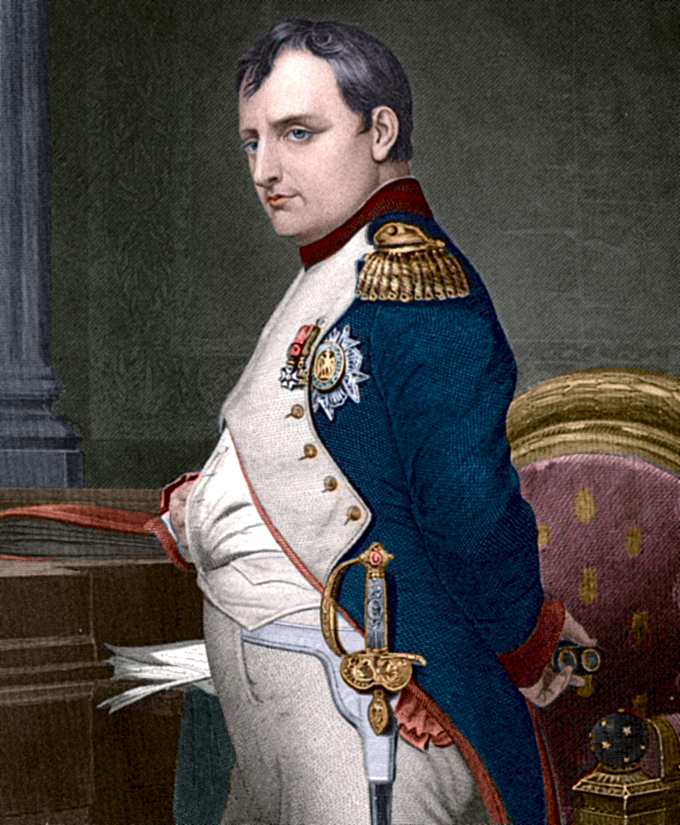
'General Bonaparte' - portrait of Napoleon by Delaroche

The Ghost Strikes

Napoleon, meanwhile, had achieved such preeminence amongst the Imperial forces that as the first elite forces returned from the Asian Campaign, it was inevitable that they would be placed under the Frenchman’s command. He directed that they assemble close to the Italian border, and attack on specific dates, before turning and fleeing back aboard their transports, to sail a couple of days down the coastline, regroup, and repeat the process.

These landings, supposedly in captive territory, were cleverly calculated to reinforce the “legend” that Napoleon had generated around himself. The invaders were perpetually lured out of position, repeatedly attacked from unexpected directions, and the retreat soon became a rout. Only then did Napoleon fully commit the elite units he now commanded, spearheading a drive north that again cut the enemy supply lines. Not realizing that they outnumbered the forces blocking them from their homelands over ten to one, the now-surrounded invaders surrendered en masse.

Napoleon was by now enshrouded in myth as the greatest general the Empire had ever seen, and his tactical abilities struck fear into the hearts of the other imperial powers. They scrambled over themselves in their haste to surrender to the little general in an attempt to secure favorable terms before it was too late to remain the heads of their respective Kingdoms. But the Emperor was indisposed to clemency; this was a far different situation to that which the Empire had faced with their rebellious colonials. He determined that the heirs of the former Empires would be permitted to reign as Regents within the Empire – if their parents were publicly beheaded. The Empire intended to show that they could be ruthless as well as merciful. Little did they realize that in the process they were setting the stage for a still greater and more expensive future conflict.

Bonaparte The Great: The Consummate Politician c.1816 – 1823 (~230 years ago)

But that lay many years away. For right now, Napoleon was a popular hero. It was almost inevitable that he would enter politics, and when he did, he went on to be just as effective a civil leader as he had been within the military. The first non-native to become Prime Minister of the British Empire, he would prove to be one of the most significant men in its history.

Napoleon’s first problem as PM coincided with his election. A volcanic eruption in Indonesia blanketed the world in clouds of dust dropping temperatures significantly, ruining crops, and inciting economic havoc. When combined with the aftereffects of The First Global War, also known as the Napoleonic War, the situation in the Empire was growing desperate. This no doubt was a significant contribution to Napoleon’s electoral success, as the public latched on to the closest thing to a savior that came readily to hand.

The Napoleon Reforms

Economics was not Napoleon’s forte, but he succeeded in grasping the elementary concepts by virtue of oversimplifying the situation. He saw that some areas of industry, especially paper mills, were booming, while others, such as wheat farming, were in dire straits. Yet, wheat was far more essential to the health of the Empire than paper. This gave Napoleon the conceptual wedge that he needed to get a handle on the situation. He ranked every industry within the Empire by profitability and by importance to the empire, according to his own prejudices at first. This was then used as an index to the tax rate to be applied – the least-profitable, most-essential occupations attracted no tax, or even in some cases government subsidies, the most-profitable, least-essential occupations were most heavily taxed.

The benefits of the resulting taxation system have been debated ever since. There are those who argue that it prolonged the economic woes by slowing the growth of those industries which were lifting the Empire back into prosperity, while others vow that it supported essential industries at the expense of luxury frills. Certainly all agree that if the resulting tax rates were locked in, they would be unbelievably repressive; but Napoleon from the first recognized that economic factors would naturally fluctuate, and hence (with the full support of the King) decreed that the tax rates should be reviewed annually. In the process, he implemented the first census of the Empire. Six months later, he accepted an amendment which individualized the rates by region, recognizing that what was an essential industry in Glasgow might not be so important in Florence. In years to come, this basic system would be further refined to take into account indirect employment and a growing sophistication in economic understanding, but the essential taxation principles would remain unchanged. As a consequence, it would be many years before the introduction of personal income taxes, and even then they would only be applied in narrowly restricted cases. Certainly, the innovations were credited with averting the Manchester cotton spinners’ strike of 1818.

To an outside observer, the net effect of this system was fairly minimal. Instead of lobbying for tax breaks and government subsidy, the special interests lobby for the relative importance of their industries, arguing that they employ more people, or provide key components or raw materials or trained staff to more essential industries. From that perspective, the system is neither better nor worse than the tax systems with which people would be more familiar; just simpler and different.

The Civil Code Napoleon

By Napoleon’s era, continental Europe had largely been reduced to English vassalage, and thus he never gained the opportunity to make himself an Emperor; instead, he entered the British Armed Forces, rose to the rank of Brigadier-General and the highest-ranked field commander within the Army, before retiring into political life and being elected Prime Minister.

Napoleon had been brilliant as a general, overseeing the final conquest of Central Europe and the Russian States; as a political leader, his tendency to overreach was neutralized by the various impediments, checks, and balances in place within the Government. Only his positive innovations proceeded to take effect, his errors were (mostly) stopped. (It’s worth noting that the civil service’s philosophy of preventing mistakes by politicians largely dates from this era).

It is also significant that Napoleon was the first Prime Minister not born in England, heralding a more cosmopolitan political approach that reinvigorated an empire that had been becoming politically moribund.

Napoleons’ “Judicial Reform Code” proceeded to modernize the legal system of the British Empire on Earth-Regency in exactly that the same way that the “Napoleonic Code” did in those Realities in which he became the Emperor of France.

The Asian Expansion continues

Nor did the Empire’s Asian expansion stop entirely during the Napoleonic era, as evidenced by the founding of Singapore in 1820, though it did slow and become more conservative. Bonaparte only served as Prime Minister for 6 years, but between his tax and legal reforms, he reshaped the Empire as no other politician had before. The census in the year of his death showed that Empire now totaled a population of 125 Million – a 10% increase in the time of his rule despite a significant economic downturn, mass starvation, and the legacies of a crippling war. This was a clear signal of the confidence that his presence brought to the population.

Napoleon’s Successors: The Reformers 1823-1832 (~220 years ago)

Napoleon’s death in office cut short what promised to be a civil golden age. But history never stands still, and life went on.

The 2nd Earl Of Liverpool, Robert Banks Jenkinson

Robert Banks Jenkinson, Prime Minister

Bonaparte was succeeded by Robert Banks Jenkinson, whose administration began diffidently; Jenkinson seemed almost unwilling to change anything his predecessor had put in place, or to implement anything Napoleon-the-Great had not planned, but he could only tug on the coattails of Bonaparte for so long. In 1823, he began to cautiously advance his own policies, encouraging judicial reform; where Napoleon had rewritten the fundamentals of the system, Jenkinson categorized and regulated the penalties for crimes, applying principles not dissimilar to the basis of the tax system, where the economic and social harm cause by an offence was directly related to the crime. This eye-for-an-eye approach was actually a progressive move, as the immediate effect was a review of the actual harm committed by each offense, leading to the abolition of the death penalty for over 100 crimes.

'Emperor William I' - a portrait of King George III

Emperor William I

The next lasting milestone in Imperial History came in 1832. The Emperor had died and been replaced, but that had little impact on the Empire overall, as prosperity continued to steadily return. But at the beginning of the year, public unrest was rising over the prickly issue of just who was permitted to vote in the election of government, and over worsening corruption within the Government.

From an outside perspective, this was the first example of a new historical pattern that would hold true for the next century – the history of the Empire was now the history of Britain, writ large. When, in our history, Britain experienced civil unrest, Earth-Regency’s history showed civil unrest throughout the “Civilized World”.

This unrest continued until the middle of the year when the new Emperor, William I, pushed Legislative reform through parliament with the support of the House of Commons. With two of the three legislative branches voting in favor, the House Of Lords had no way to overturn the decree.

The political structure on Earth-Regency will be explained in more detail in a supplement following this history of the Empire. Selected sections of that article have been quoted in this manuscript.

Although superficially packaged as Civil Service reforms, the real effect was to dramatically widen the Gulf between the House Of Lords and further erase the power of the old Nobility. Members of the House Of Lords, and their families, now had a choice – they could retain their honors, with the prestige and benefits that came with them, and accept responsibilities commensurate with the authority that resulted, or they could have the vote, and the protections of Common Law – while still being answerable under that law for their actions. In other words, they could be as entrepreneurial as they wished – if they forfeited the safety net of the common man and the right to participate in the election of the Lower House. At the same time, a requirement for citizens to be financially solvent before they were eligible to vote was removed from the Imperial statutes.

Because the Government of England was essentially the Government of the “Civilized World” – the laws and edicts of the British Court being able to overrule those of the Subject Kingdoms – participation in the English elections was extended to all citizens of the Empire. A citizen of the Kingdom of Italy would not only vote for their national parliament, they would also vote at the same time for the Imperial Parliament.

Given the distances and level of communications technology available within the Empire, it was clearly impractical for all the elections to be conducted simultaneously; it could be 6 months or more before the returns were received from some of the outlying colonies. The possibility was never seriously considered, so blatantly outrageous was the idea. Instead, national elections became an ongoing series of referendums on the performance of the Imperial government of the day, and the timing of national elections remained a local decision by the national governments.

It might be thought that the result would be anarchy; it was as though there was a by-election every few months, and the Imperial Civil Government could never tell, from week-to-week, what size majority it could command in the Lower House of the Imperial Parliament – or even when it might suddenly find itself the minority. Nevertheless, there were sufficient member nations, and elections were sufficiently-widely separated, that changes occurred gradually and permitted an overall continuity of government.

With the great increase in the number of voters, the margins of victory shrunk correspondingly, and it became far easier to unseat the Government of the Day. No longer could the Government count on an entire term for people to forget its mistakes, its unpopular legislation, or any scandals – at most they were only ever six months from a vote of No Confidence. Seemingly by accident, the governments elected by the people became far more answerable to the people.

At a stroke, the King, by giving the People more power over their elected representatives, had destabilized that branch of the Government, providing a significant advantage to the House of Lords (to which all nobles of Confirmed Title, including the Royal Houses of the Subject Kingdoms, were automatically members) and hence a positive incentive for members to accept the new burdens which had been layed on them, while at the same time reducing their power over policy – and as the only political force not weakened in the process, had elevated his own position.

The Evolution of Political Realities

At this point in time, there was very little difference between small business and the common man in terms of policy demands; the biggest distinction between the parties concerned spending on the Colonies and the Outlying districts of the Empire. The Tories wanted to concentrate on building up the heart of the Empire – England and Western Europe – while the Whigs wanted to push for self-sufficiency and expansion of the outlying colonies. Almost immediately, the new legislation showed its power, as the Canadians threw the Tories out of office and elected the Whigs.

What resulted was a delicate balancing act for the politicians – upset any faction, and they would have the government out of power in short order. Instability in elected office forced the moderation of policies. When the Whigs regained power following the Spanish Elections, they brought with them an innovation that would be a permanent element of Imperial Politics thereafter – the Referendum. When faced with the need to make a difficult choice, the only chance to retain government afterwards was to put the question to the people in advance – which usually meant a delay of 2-3 years before implementing the policy. The House Of Commons thus became subject to a new political balance – conservative politics verses progressive politics.

If the government didn’t know what issues would be relevant in 2-3 years, they could not pose the right questions of the voters, and would almost certainly lose office. The party that was best able to adopt a long view and devise policies to suit forthcoming conditions was the party that would govern. Policies had to be carefully thought out in advance – but they had to not only be practical, they had to be seen to be practical. After all, there would be years of consideration and review to expose any deficiencies.

At the same time, anything too wild and speculative would be torn to pieces by the time enough voters had weighed the issues. Lower-house politics became less about day-to-day reactions and more about devising and implementing carefully considered directions for the advancement of the Empire, a strange combination of innovation and conservative policy.

The Upper House, in reaction, found itself subjected to influences toward which it already leaned; continuity and stability became conservativism and tradition, and at the same time, this was the House that more and more dealt with day-to-day matters of Government – restoring some of the authority that had been stripped from the Nobles in the past. The instrument that chained them to their responsibilities restored much of the power that had been stripped from them.

Over the next 40 years, these patterns would entrench themselves as one aspect of Imperial Governance reacted to another and the overall political structure of the Empire fell into place. In a nutshell: The House Of Commons was elected by the Imperial Citizenry and not only served the interests of the Citizens, it devised policies for the betterment of the Empire in the mid-to-long-term, and had a cautiously progressive tone.

For those policies to be implemented, the Prime Minister needed the support of either the House Of Lords or of the Emperor, guided and advised by the Civil Service. The House of Lords, including the peerage of all Kingdoms within the Empire, represented the interests of Big Business and “Old Money” and dealt with the day-to-day political practicalities – running government Departments, etc – with a conservative style based heavily on tradition and traditional values. It fell to them to implement the practical structures that were required to implement the policies developed by Parliament and approved by the citizens. Tenure within the House Of Lords was offered by the Monarch and carried significant benefits, but came at a heavy price, as Common Law protected ordinary citizens from the Nobles and Civil Servants (including the Police force), but the peerage had no such protection from John Q. Citizen.

Ruling over all was the Imperial Throne, whose decrees could only be vetoed by the combined forces of both Houses of Government, and whose decrees were otherwise treated as Law. The Emperor’s role was to set Imperial Policy, defining the overall shape of Society, and to react to unusual situations – disasters, wars, etc – as they arose. The style and personality of the Monarch, more than anything else, dictated the Tone of the Empire.

Outside Observer Comment: The resulting political structure is not too far removed conceptually from an Americanization of British Political Structures.

Unfortunately, by the time this structure’s evolution was complete it had been rendered semi-obsolete by a factor that was already taking shape and beginning to turn traditional roles on their heads. The Industrial Revolution had begun.

The Industrial Era & The Reign Of The Empress Victoria – c.1832-1909 (~150 years ago)

A number of social changes were underway as technology began remaking society from an Agriculture-and-Trade basis to an Industrial one. These can generally be summed up as four interacting themes, all consequences of the age of machines that was now dawning. These were (in no particular order):

  • Firstly the factories and the consequences for employment and commerce;
  • Secondly, the shift from an illiterate society to an educated one;
  • Thirdly, Civil Rights issues and reform would be a recurrent refrain throughout the next century or so;
  • And last, the growth into maturity of the Colonies founded in the Age Of Exploration.

It’s worth noting the date. Although machinery and even industrialized factories had been around for a while, the inhabitants of The Empire date the Industrial Era not from the invention of the steam engine or other such technological achievement, but by the date on which the technology had a significant impact on society.

In this case, it was the Factory Act of 1833 which forbade the employment of children below the age of nine. This was the first legal age restriction on employment, and began a series of social reforms in the mid-19th century. It was followed a year later by the abolition of Slavery in Britain, a change which many of the regional Kings resisted, implementing local laws to maintain the practice. The last to bow to Imperial pressure was the Russian Kingdom, which emancipated their serfs 29 years later (1863).

One reason for the delay was that colonial and regional issues arose to occupy Imperial attention. The first such was the result of the potato famine in Ireland, which began an economic downturn in the region that lasted until 1842. This led to a massive emigration to other parts of the Empire, especially Australia and North America. These new colonials found the contrast between the frontiers and the heart of the Empire overwhelming, especially the prejudice against colonials who were generally treated as second class citizens. Agitation for equal status and recognition under the law would be an ongoing political problem for years.

Coronation portrait of Victoria - click the thumbail for a larger image

The China War

These early manifestations of the forces for internal change within the Empire took place against a background of other significant events. The death of Emperor William I in 1837 led to the accession of the Empress Victoria, whose relatively stuffy moral beliefs and quirks quickly transferred throughout the Empire; but for the most part, she was distracted from domestic problems by the beginnings of the China War.

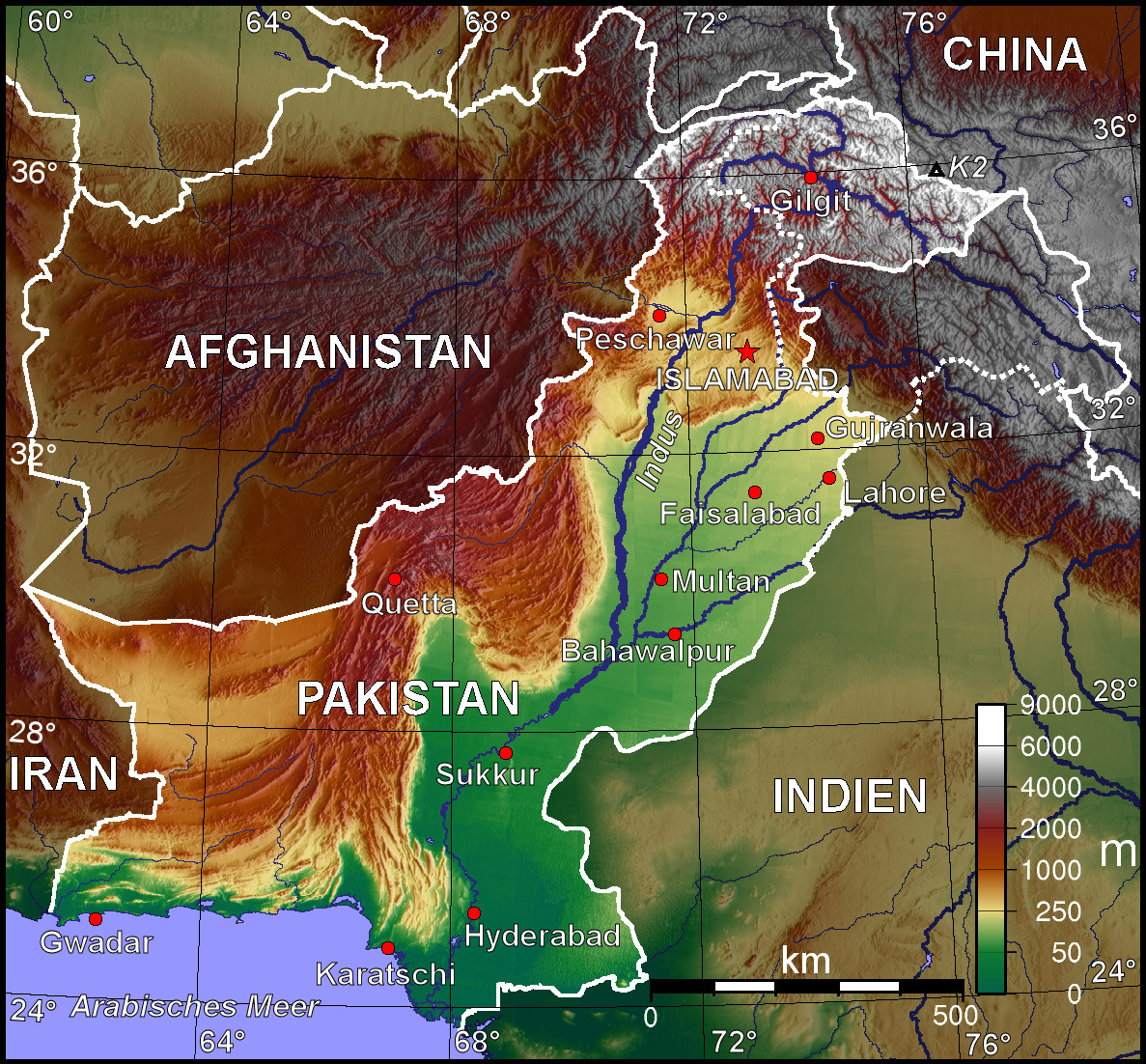
Chinese forces had been busy creating an empire of their own in Central and Eastern Asia, and for some time the two political colossi had been butting heads and getting in the way of each other’s expansionist plans. From the British perspective, the Chinese were not fighting fair, however; their principle weapons were superstition and myth, which the Empire had trouble countering. By now, the British controlled Pakistan, India, & Indonesia, while Afghanistan was something of a no-man’s land that no one wanted. But when the British sought to annex the regions they named Thailand, Burma, Kampuchea, and Vietnam, relations deteriorated to the point of conflict.

The British Empire had vastly greater military resources to draw apon, but was distracted by its social and domestic issues, and a new and mistrusted military commander in the Empress Victoria, while the Chinese were focused with a singularity that approached obsession. They believed that they had mystic powers that made them collectively invincible, and the fervor and success of their attacks, and the incredibly advanced weapons under their control – of which the British never succeeded in capturing a single specimen – soon had the troops sent to fight them convinced as well.

Morale is a very insubstantial thing, but its importance cannot be disputed. Until now, the Imperial Military had wrought miracles in the field, notable under the command of Napoleon; but he was dead, and that seemed long ago and far away to the outmatched and outnumbered forces in the East. The Chinese won victory after victory on the mainland, and it was not long before Western Siberia, India, and Pakistan were under direct threat. The British troops had no confidence in the Military abilities of Victoria, and it seemed there was nothing to prevent the “Golden Horde” from capturing the entire Eurasian continent.

At sea, it was a different story; while their weapons were just as powerful, and the British ships even more vulnerable to those weapons, the Chinese fleet was a bad joke as navies went. Their ships were slow and flimsy and delicate and ungainly, earning – and deserving – the nickname “Junks”. When the Chinese were able to surprise the British and close to short distances, they were victorious – but almost every time the British blew the colorful Junks out of the water long before they were within range to pose a threat.

The British launched a series of sea-based raids which succeeded in capturing Southern Korea and the city of Hong Kong, well behind the advancing front of the Chinese empire. This was enough of a warning to the Chinese that they did not possess the overwhelming superiority that they believed, and a truce between the two empires was negotiated after three years of bloody warfare. England retained the captured territories, but lost the annexed regions which had sparked the conflict, Eastern Siberia, Afghanistan, and the island of Borneo.

Neither side held any illusions that this was a lasting peace; it was a respite which would enable each to address the deficiencies in their respective military commands, nothing more. A resumption of hostilities was inevitable. In the meantime, what can only be described as a cold war between the two would rage.

The Victorian Age

Wars are always expensive, and wars a long way from home more so. Three years of conflict with China had been very expensive, and the prospect of reinvigorating a thoroughly overmatched and dispirited military would be more so. It was going to be necessary for the Government to fund the shortfall with additional taxes, without imposing additional burdens on an already-stretched economy. The solution was the reintroduction of Income Taxes; but the House of Lords didn’t want them (as their members had higher incomes than anyone else) and the House of Commons didn’t want them because the party who introduced them would be booted out of office for at least a generation.

It was now that the Empress Victoria began to make her mark as a monarch; she negotiated a bargain with the Prime Minister. Income Taxes would apply to everyone, but an Exemption would be placed within Common Law – so that only the nobility had to pay them. In return, Victoria demanded that the Government support her legislating ladylike behavior on the part of the female population, starting by outlawing their employment as miners and in other forms of “Hard Labor”. What was more, the labors of male children were to be strictly supervised to protect them from excessive work demands. Victoria was determined to civilize the Empire, and this was her first step. It occurred in 1842, even as news of the massacre of 150,000 troops in the Khyber Pass by the Chinese and the collapse of the truce with China were reaching the heart of the Empire.

Meanwhile, the Empire had begun its preparations for the resumption of War. They first had to modernize their military and address the endemic morale problems; the former was simply a matter of money, which had now been provided for, but the latter meant that the newly-stabilized government would need to be realigned once again to be able to cope with this new threat. The supreme commands of the various military branches were made specialist military roles and the military were removed from the direct control of the Monarch. Only the monarch could order their use, but once the order was given, it was up to the military itself and a new specialized series of branches of the Civil Service to determine the actual military objectives and plans, under the guidance of the joint leadership of the houses of Commons and Lords.

Unfortunately for the Empire, Victoria found this too convenient a way out; unless she deigned to take a personal interest in the matter, i.e. it bore some relation to her personal mission of cultivating the “Civilized Virtues Of Society”, she abdicated all responsibility and placed the matter directly under the control of the Civil Service. This was in direct opposition to the essential concept of the Empire as established by George I, and would lead to the bloated bureaucracies of the latter 20th century.

Another problem to emerge from the China War was the need for significant government investment in research, which had until now been principally privately-funded; but with so many industries going their own way, this was going to be extraordinarily difficult to coordinate. The only solution was to nationalize (“Imperialize”?) key industries such as communications and transport. Communications in particular would benefit, as the Empire immediately authorized the construction of the Transatlantic Telegraph Cable, intended to link the expanding communications networks throughout the Empire into a single global network.

Dances With Politics

This had an immediate impact on Imperial Politics. The cable would not be complete for several years (it was first used in 1866), and even then the Pacific Region and African Subcontinents would not be linked in, but the inevitable end result would be the virtual elimination of the communications delays that prevented simultaneous elections.

The Lower House were practically salivating at the thought of being able to actually see out a four year term without the constant threat of dismissal, and painted a rosy picture of the forward planning that such terms would permit.

The Lords saw this as an imminent threat to the now-traditional roles of government, and countered with suggestions of a Lower House able to ignore public opinion for three years out of four – or five out of six, if the rumored plan to extend the term of Parliament were correct. In truth, this was bald-faced propaganda; there was no such proposal on the table, but it aroused public anger at the then-Government. More significantly, it marked the first intrusion of the Upper House into the field of Public Opinion, which immediately proved to be a formidable new weapon in their political arsenal.

At the same time, the Leader of the House, the Right Honorable Duke of Glengarry, exacted his revenge on the Lower House for their secret discussions and deals with the Empress Victoria by having his own secret discussions with her. Pointing out that as the social reforms would be publicly popular (another little white lie, they weren’t), giving the Lower House the capacity to ignore popular opinion would also give them the capacity to ignore her plans for the Empire. By manipulating everyone else in this fashion, the Peerage were able to persuade the Monarch that entrenching the accidental pattern of the past into law would be in everyone’s bets interests, and further to persuade the public – to whom the lower house were still answerable on short notice – that attempts to block such a political change would be bad for them. Victoria issued an Edict to that effect, which the Upper House did not want to block, and which the Lower House could not afford to try to block – a move that would have been doomed to failure in any case.

The transformation of the Imperial Government into a political hotbed was now complete, and the Empire showed itself to be the true legacy of King John the Great, with each of the 4 elements of Government (this includes the Civil Service) making and breaking political alliances with each other and seeking to play one element against another. Some modern critics of the Government have suggested that this event marks the date at which Power slipped from everyone’s grasp, while other, more astringent historical commentaries, flag it as the first hint of the inevitable slump into Decadence.

Such criticism aside, Victoria’s 4th Decree maintained the status quo by dividing the world into 12 zones, whose elections would be evenly interspersed over a four-year period. To ensure that regional issues did not overwhelm policy as each corner of the world became of electoral dominance, a 4+1 pattern was adopted. This meant that while Germany and England/France had adjacent zones, their elections would be perpetually 20 months apart. Which meant that every 20 months, instead of every 4 years, the regional European situation would become important to the Government – ensuring that they were never ignored.

The Asian Comedy Of Errors

The final problem arising from the China War was to find a way to gather intelligence from within the Chinese Empire, a task at which the Empire had never succeeded. They had, in fact, never even managed to get a spy more than 2 miles into Chinese territory – or if they had, no such spy had ever succeeded in reporting back. The only hope lay in the newly conquered territories – and that meant making special efforts to obtain the loyalty of the citizens there, in the hopes of obtaining some spies who were of the same racial stock as the target.

Accordingly, in 1843, both Korea and Hong Kong were declared full and individual Kingdoms within the British Empire – a shortsighted move which immediately led to heightened resentment and unrest in all the other British Colonies, especially India and South Africa, which had been loyal to the Empire for decades now, and who saw this as a deliberate slur against them. In 1857, this resentment would explode into violence, as India demanded recognition as a Kingdom in its own right.

The Empress Victoria refused to be blackmailed in this fashion, and ordered the rebellions to be suppressed ruthlessly. This drove many recognition movements in many Imperial colonies underground, where they would fester and ultimately threaten the survival of the Empire itself. In India, the focus of the current wave of repression, the sense of persecution that resulted made the “subject nation” ripe for sedition, an opportunity which the Chinese lost no time in exploiting. Underground cults based around the old religions flourished, in particular that of the Thugee, This was one of Victoria’s biggest mistakes, and one which would ultimately come back to haunt her Empire.

For the next quarter century, the Empire seemed quiet, peacefully investing in technology and domestic infrastructure; but beneath the surface, tensions heaved. So angry were the various colonies and subject nations that to support any of Victoria’s social reforms would have been electoral suicide, and would have led to mass uprisings that could culminate in Civil War. The House of Lords and the Civil Service now emerged as the political heavyweights within the Empire – both arch-conservative and unwilling to promote change of any sort (unless it led to greater profits). It would not be going too far to suggest that Victoria had inadvertently given the general public the same morale problem that had beset the army at the time of her ascension – they had no faith in their Monarch or Government.

The Middle-Class Entrepreneurs

Instead, they put their faith in themselves and in what they could create with their own hands. As has been suggested, Infrastructure investment and exploration was at an all-time high, and many entrepreneurs hitched their wagons to a dream. The discoveries of Gold in California, Diamonds in South Africa, and other mineral wealth in other corners of the Empire, the railroads and steamships, all led to the rise of small-to-large businesses – outside the control of the traditional (Noble) corporate heads.

As the wealth and power of the emerging middle class consolidated, the shape of the Lower House – which had become more-or-less redundant at the hour of its greatest influence – began to change. Divisions that had been about Colonial Power shifted to issues of Wealth and its circulation. The existing political parties split and recombined until the ideological divide was reshaped into the contrast of Workers Rights vs. Business & Management. Along the way, the Whigs lost their political identity and were reconstituted as the Labor Party – but for many years to come they would be in the political wilderness.

The Rise Of Labor

It was not until 1869 that the Labor Party managed to accumulate the voting numbers to sweep into power, but their arrival heralded a series of significant developments. They tested the waters by abolishing the practice imprisoning debtors who could not pay, instituting the concept of Bankruptcy in the wake of the failures of a number of speculative enterprises. The following year saw the legalization of Trade Unions; as a concession to enable the passage of the legislation, they were forced to make the practice of picketing illegal. At the same time, the Civil Service completed remaking the military in its own image, by prohibiting the practice of selling Commissions in the Armed Forces. Henceforth, the military would be a professional organization, a meritocracy.

One of the consequences of the rise of independent contractors and competitive bidding for contracts was the inevitable corner-cutting that made low-bids profitable.

Zulu costume by the Lewes Bonfire Society

The Reinvention of the Tories

Nine years after the arrival of the Labor Party and their remaking of the industrial culture of the Empire came the inevitable result; in 1879 the Tay Bridge collapsed in a storm taking a train with it. The subsequent enquiry – conducted by the Civil Service at the insistence of the Empress Victoria – revealed a scandal of incredible proportions. Everyone involved from start to finish had cut corners and/or provided substandard or shoddy workmanship, from the people who provided the under-strength bricks to the concreters who diluted their cement slurry with sand. The Bridge had been a disaster waiting to happen, and only good fortune had prevented a far worse calamity. An immediate secondary investigation was launched to review the safety of all other public works carried out within the Empire over the last 15 years. The resulting outcry was enough to force the Labor Party from power, electing the Tories, who had remade themselves into the ‘friends of the Middle Class Citizen’.

At the same time, the colonies’ resentments had reached boiling point. The first to act were the Zulus of southern central Africa, who had been experiencing substantial levels of oppression at the hands of the colonials, especially those of neighboring South Africa. What began as a peaceful protest over their treatment soon degenerated into a violent uprising against the Empire. The Empress Victoria – who had been quiescent for decades, contenting herself with tea parties and leaving government in the hands of others – was forced to act. She had not changed overly as a person, and neither had her response – the uprising was to be put down by the Army without mercy.

The first significant outing of the new-look military command proved that there was still a crack or two in the system. Although the Zulus, lacking modern armaments, were easily routed, the Army commanders were so abrasive toward the colonials that South African resentment of their lack of status within the Empire overcame their good sense (given that they had just seen the power of the Empire).

They demanded independence of recognition as a Kingdom by the Empire – and if they were not granted the latter immediately, they would take the former by force and without apology. Much of the army were trapped behind enemy lines and cut off, and for the first time in almost 50 years the Empire faced a significant military threat. The Boar War would grind on for many years to come.

Being called apon to exercise the power of the throne repeatedly in such close succession reawakened Victoria’s social agenda. She had been forced to set it aside, decades earlier, as it had become a hopeless cause; but the new Middle Class, and the new Government, represented an element within society that would welcome Victoria’s innovations. So it was that in 1880 Victoria resumed her “civilizing” of the Empire, with a decree mandating school education for 5-10 year olds. She then sat back and waited for people to grow used to the idea for a year or two, having learned patience and political maturity.

She followed it with the Married Women’s Decree of 1883, which granted married women the right to own property in their own name; and a year after, by extending the vote to agricultural workers – something that Victoria personally disliked, but felt to be necessary. She had to extend and expand the scope of the middle class, and that required the serfs and peasants to be able to aspire to a better life. With time, enough of them would acquire property and prosperity sufficient to make the Middle-Class targets of her reforms general throughout the Empire.

In the meantime, the influx of people who viewed themselves as having more in common with the working class proved sufficient to restore the Labor Party to government, temporarily bringing a pause to Victoria’s social agenda. The last act of the outgoing government was to establish Greenwich Mean Time as the prime meridian of the world – a propaganda move intended to remind every Imperial Citizen of their place within the larger whole. 1883 also saw the eruption of Krakatoa near Java, causing a tidal wave that killed an estimated 30,000. It would be years before the Empire would suspect the real cause of that catastrophe.

Liberty Regina Victoria - based on an illustration NYFreiheitsstatue2

Golden Jubilee

Four years later, the Empire celebrated as June 21 marked Victoria’s Golden Jubilee. Although she had made a mess of things on several occasions, she had become a fixture, an element of permanence within the Empire. The French Kingdom had been contracted to mark the occasion with the construction of 5 especially magnificent structures in different corners of the world. In India, they completed the construction of the Taj Mahal (whose religious significance and nature was an attempt to counter past mistakes in dealing with the residents). In the Kingdom of the United States, Birthplace of the Empire, they erected a colossal statue of Queen Victoria overlooking New York Harbor. Paris saw the creation of the Eiffel Tower, while in Australia they sponsored the commencement of a bridge to span Sydney Harbor. The 5th and final monument was located across most of the Empire, as a common rail link connected France, Italy, Germany, Austria, and Prussia for the first time.

Sydney Harbour Bridge - photo by WikiWookie


It took eight years for Victoria’s agricultural middle class to become a reality, but the steadily mounting standard of life throughout the Empire had now given her social agenda a momentum that could not be stopped, only slowed. In 1891 she made Primary Education both free and compulsory; in 1892, she limited the working underage – the under-18s – to a mere 74 hours a week. At the request of the Civil Service, she implemented Local Governments throughout the Empire in 1894, and in 1896 she officiated at first Empire Games, modeled after the Olympics of Ancient Greece. In 1897 she celebrated her Diamond Jubilee, and at the request of the Labor Government of day, she promulgated the Workman’s Compensation Act which made employers liable for the insurance of the workforce.
Eiffel Tower and general view of the grounds, Exposition Universal, 1900, Paris, France.

The Boer War

South Africa had long since become the loudest colonial voice for equal treatment, and not even the forcible suppression of their secession attempt 30-odd years earlier had derailed the deep-felt anger and resentment the Boers felt over their lack of independence within the Empire. In 1898, the time was ripe for another attempt, with funds provided by the Chinese. Tensions between the two great empires had not eased, and despite 75 years of mutual separation the cold war between them had showed no signs of abating. The Empire had continued to fail at its attempts to place spies within the Chinese Empire for all that time, a matter which had reached the point of desperation amongst Imperial Intelligence. Unknown to the Empire, internal problems had delayed the Chinese prosecution of the inevitable war, but those problems had now been resolved. The Chinese Emperor had been replaced by a shadowy ruling class called the Mao, who were far more subtle and Machiavellian in their tactics. It would not be until 1902 and the end of the Boar War that these facts would become known to the Empire – and only with Victory on the part of the Rebels, as the Empire was forced to choose between the granting of full Status as a Kingdom or of an even more humiliating military defeat.

The Taj Mahal - photo by Amal Mongia - click the thumbnail for a larger image

The Final Days of The Victorian Era

Victoria was drawing close to the end of her days, her sheer longevity having marked her as one of the most significant Monarchs of the Empire. Even while her troops were fighting and dying for her reign in South Africa, she continued with her social agenda, raising the school leaving age to 14 years. The next steps would have been to broaden access to University education, while removing Women from the workforce; but her health failed before she was able to carry out these plans. Nevertheless, the social momentum she had created would eventually compel these social changes, so it must be said that ultimately she achieved her objectives, with an uncompromising determination characteristic of every British Monarch since the accession of King John the Great.

Her final act was to respond to the threat of imminent uprisings in other British Colonies by setting down clear standards of social welfare, prosperity, and self-sufficiency which when met would permit, and compel, the founding of an independent Kingdom within the Empire. India, Pakistan, and Australia became Kingdoms on January 1, 1901, exactly three weeks before Victoria passed into the pages of History for the last time. These Kingdoms would be followed by South Africa in 1902 and New Zealand in 1907. It would be the 1970s before the last British Colony would become a Kingdom.

The last decade of this era, and the first of the 20th century, would see the culmination of the social changes instituted during Victoria’s reign. The creation of Secondary Education to prepare students for University, the creation of the 8-hour working day, Juvenile Court, and Old Age Pensions – all took place as the Empire began to move from the Industrial Era to the Technological Era, an era which would pose its own, more serious challenges. In Victoria’s era, the consequences of conflict were largely intangible; in the new century, the survival of the species would be at stake.

Comments Off on The Imperial History of Earth-Regency, Part 3: Birth Of An Empire – 1782-1910

Evil GM Tricks For Over-Resting PCs


Over-resting PCs

A bit of thought and planning ahead of time can put a rest to this problem

Have you heard of the five minute adventuring day? The characters blow their powers in the first combat each day and then choose to rest so they are fully charged tomorrow for the next challenge. This is not only boring, it’s terrible storytelling.

We just posted a new lesson in the Faster Combat course for game masters about the problem of over-resting and what to do about it. I’m going to expand today on one of the solutions to over-resting, as there are many cunning and evil tricks within this solution you can employ to prevent PCs from abusing rest periods.

Over-Resting Taxes Your Game

In game systems with a generous rest mechanic, players typically abuse the rules. Over-resting, where the PCs take a break too often in their adventures to recuperate, taxes the game.

Within the Faster Combat point of view, where we want to run combats as fun and fast as possible, rest gives characters their expended powers and abilities back. This means they face more battles fully charged, which results in a few combat-lengthening problems for you:

  1. Battles take longer because players have more choices to make. As powers get restored, those become options again for players who have to take time each round now to consider.
  2. Pacing goes to hell. How can you offer easier encounters to mix things up with when you don’t know what state the PCs will be in?Great pacing includes PCs steadily weakening to increase the drama, then getting a rest opportunity before the critical battles.
  3. Your story goes to hell. The PCs stop at ridiculous times and places to recuperate, stretching sense of disbelief.”You don’t want to press ahead a bit so you can camp outside, under the stars, in fresh air with a warm fire?” “No, we’re down to 50% hit points. This room full of monsters we just killed will do.”
  4. Nuclear arms race begins. PCs tackle foes with a full array of powers knowing they can rest and regain their abilities after the battle, so you have to keep dishing out difficult combats.But as the PCs gain levels, you need to make encounters even more over-the-top to compensate. Woe to the GM who errs in treasure pacing, because too many magic items will make the arms race unstoppable.
  5. Entitlement sets in. The minute you prevent players from taking their “hard earned” break after the morning’s first battle, they accuse you of railroading, meta gaming or worse.Your players are not evil, they’ve just become accustomed to driving into every combat in their shiny Porches. This is unhealthy, and further entrenches their sense of entitlement.

Dynamic Foes vs. Rest

Lesson 2.11 in Faster Combat addresses solutions to over-resting in RPG. The lesson is titled They Can Sleep When They’re Dead. One of its teachings is to make your foes dynamic.

Make foes react to PCs who rest often, and have your foes use their native cunning and abilities to make PC rests painful.

This is excellent advice and it works. And right now, I’m going to dive deeper into this one solution and offer you several evil tricks to show you how to run Dynamic Foes vs. Rest.

Full Alert

After an incursion and the PCs stop to recover, the alarm should sound within the dungeon or region. “Enemies afoot!”

The whispered grapevine should be at full bandwidth. At water holes, trading lines and crossroads where denizens meet, foes should warn each other, or at least set each other up to whack the PCs. “They are heading your way next!”

Word will spread and the PCs will meet only alert and prepared opponents tomorrow.

Make the PCs’ tactical error known to the players. In your descriptions, gives clues the monsters have been up all night or week preparing for the group’s arrival.

Roleplay it. Have foes inform the PCs of their mistake. “We’ve been expecting you since Moonday. Prepare to die!”

Mustering

Once intelligent monsters know PCs are about, they will bolster defenses by adding to their ranks.

Option 1: You can hand-wave these efforts and just up the monster count.

Option 2: Better, go Gygax on the adventure and create probabilities for mustering. 1d4 new mercenaries will join the band starting one day after Little Eye travels back to town and starts recruiting.

Option 3 (my favourite option): slaving. Here’s a chance to merge your dungeon’s encounters together in strange and cool ways.

What happens when the ogres attack the bugbears and subjugate them – six hours ago? (Hint: awesome roleplaying, story and tactics potential.)

What happens when the smart slime colony drives the leprous dire hounds into a cave and starves them until the PCs arrive? As the party nears, the slimes recede into the shadows. Who let the dogs out!

In Riddleport, I have another method of mustering that’s working well. There are summoners and Outsider alliances that result in numerous summoned creatures from the planes occupying the city.

Some foes last only a short time before the magical summoning wears off. Others last longer because they arrived through means other than spell.

Either way, I can drop in demons, devils, dragonspawn, drow or whatever into encounters I need based on pre-determined factions and alliances. If the PCs over-rest, I can muster on a moment’s notice because just about everybody in the pirate city is connected in a mob-like way to one faction or another.

Watch And Learn

The PCs look so peaceful in their sleep, don’t they? Well, except for the paladin crying out during another one of his not-so-chaste dreams brought on by the wizard’s terrible Slow Bat Soup at dinner.

Have foes approach to watch and study during PC rests. Then make sure they use this knowledge in battle.

Due to the slower pace, have foes watch while the PCs travel and fight others. Who leads and why? Often, killing the scout means future traps will be more successful. Do the PCs need light? Which ones? What buffs do the characters use and how long do they last?

Most importantly, what significant tools and weapons do the PCs have? Items are the easiest asset to take away, so foes should consider targeting known tools and devices first.

If I were an intelligent creature waiting for the invading force to arrive, I’d want to get a close look at my foe and learn their methods and tactics. Take out ranged threats first, perhaps through rear guard actions. Spellcasters have gotta go too. And hit the party before they seem to gain in power from magic just before they enter battle each time – best attack before they’re prepared.

Flying PCs means stage your defense in low-ceiling areas. PCs with reach need to be fought toe-to-toe. Sundering, tripping and disarming weakens the ones wrapped in heavy metal.

Hit the ones immune to fire with cold. Let spellcasters know which targets are likely to be more susceptible to mind attacks, which seem likely to dodge magical attacks, and which seem able to withstand a lot of magical abuse.

Fake Havens

Bring the battle to the PCs. Have foes create areas that seem safe but are death pits.

That pile of stones on the hill is set to roll down with a rope tug. The tunnels underneath lead to trap doors for easy and silent popups under sleeping PCs. Exits are easy to block and the place filled with water, fire or poison.

Create spaces that give foes tactical advantage, especially flanking or many-to-one situations.

Create spaces where you can divide and conquer. Separate PCs and attack individuals en masse, one at a time.

Spy Game

Frequent rests make NPC encounters seem natural.

“Tohm, you are on guard. In the distance you see a wounded warrior stumbling toward you. As he approaches he pleads for water. His name is Petr.”

“The GM is bored, so he’s adding some roleplaying. Ok, we’ll bite.”

Turns out Petr is a spy. And a saboteur. He’ll ruin stealth or steal a critical item just as PCs enter combat. He’ll leave messages that reveal the PCs’ weaknesses.

You can only do this once, maybe twice. Then the players get smart.

So you get smarter:

  • Introduce two NPCs. Who hate each other and try to kill each other. But are secretly a team.
  • The PCs find three alive but unconscious on the battlefield. The survivors do not radiate evil (that’s why you pick neutral spies).
  • The NPC enters on the last round to help save a PCs’ life as the character lies bleeding on the floor. It’s just the GM having mercy again.
  • Flying creatures do not even need to hide their nature. They just need to stay beyond range of the party’s missile weapons.
  • Do the PCs sweep for invisible foes before resting? How creepy would it be for the invisible spy to sleep on top of a PC each night to keep them both warm. It’s all about the flavour text, people.
  • “Oh man, this new pet dog is awesome. Look at his teeth! I told you I could train him. He breathes fire, too!”

Forwards And Backwards

PCs will leave a trail of destruction so wide only a dead dwarf would fail to track it.

There are two things players never do. They never look up and they never go back.

Why go backwards anyway? It’s boring. “We already killed that stuff and got the loot.”

Mobile foes will use this to advantage to track and approach from an unexpected direction as the PCs rest.

Better yet, they will attack the PCs when the party is most vulnerable. This is often during combat or just after combat. It’s also when half the party is trying to cross the threadbare rope bridge.

You need to hit the lesson home, though. Players will think it’s just more foes spawned from your infinite critter generator. You need to show the PCs the mobile foes came from their future, warned and given enough time to react.

One way to do this is for surviving PCs to stumble onto the mobile creatures’ lair later in the adventure. Through roleplaying or clues, players learn their foes slit off, with one (or more) groups to attack the PCs proactively, and another to defend the lair.

In the end, though, who cares? The PCs had a couple extra battles to fight. So what?

Hit them where it hurts most – their pocket book. There are two currencies in D&D style games: treasure and XP.

Treasure first. Foes warned in advance will hide their most valuable stuff that can’t be used as a weapon or defense. The crown jewels have got to be buried. Best case is rivals show up to town a week later with a ton of bling harvested from methodical searching in the PCs’ wake.

XP second. Foes might flee. You can’t level up when foes flee and leave behind just a few terrible traps. Foes offer less XP when divided because the difficulty level goes down.

If you can swing it, give story objectives associated with foes. And when foes have time to prepare because the PCs rest so much, the object gets nullified along with the XP bonus.

In Faster Combat, we teach you how to create and use Mission Stat Blocks – special goals used to help you merge story with combat, and to make combats faster because fights end not when one side’s last hit point has bled out twelve rounds from now, but when the mission objective has been reached in dramatic fashion three rounds from now.

Alliances

In dangerous times your enemy’s enemy is your friend.

Once word spreads through the grapevine the PCs are coming, foes will form temporary allegiances.

Now it’s two – or even three – on one. And all because the PCs gave their foes time to team up.

Turn this scenario into an exciting one of roleplaying, politics and tactics if possible. Make the monster alliance tenuous so PCs can break it up through clever play. Even make it possible for the PCs to turn the alliance on itself so the characters can do a bit of their own divide and conquer.

Bring The Dungeon To The PCs

Have foes and their plotlines interrupt rest instead of forcing PCs to travel to specific locations to unlock progress.

One time I ran combats every hour of sleep. The PCs got not a lick of rest. The night culminated in a fight with the stage boss. The PCs were sorely depleted and it was an awesome battle.

The adventure’s Stage One objective was accomplished at the same time because the stage boss had a clue on him who his master was and where the master might be based.

The PCs never had to step foot outside of camp because the adventure came to them.

The party was at a disadvantage the whole time. If the party had not stopped to rest, they could have scouted and generated tactical advantage for themselves. But instead, their foes did that to them!

The party survived the night, but unfortunately they retreated back to Hommlett. Others came along and cleaned up the abandoned foe lairs. The stage boss in particular had some nice baubles stashed away.

Conclusion: Be Consistent

These tactics all hit home the need for PCs to press on and not wimp out so much.

However, none of these GM tactics offer a one-time permanent cure.

You will need to adapt your style a bit so you reinforce the message that over-resting is bad, over and over.

Make your foes dynamic and smarter (at least up to their Int score – their leader’s Int score) and reactive. Use all the techniques outlined above often.

Over time your players will learn not to abuse your game’s rest mechanic. They will learn it’s better to forge on a bit until it’s tactically sound to take a break.

This not only adds more drama and story opportunity for your game, but it makes combats faster. Weakened PCs have fewer options and decisions to make.

Players who’ve learned to forge onward instead of rest up will manage their resources better, which also means more efficient decisions during combats.

And you can roll out a larger variety of encounters not maxed out to the party’s level +4 every combat, which means fewer rounds needed to reach resolution.

Bonus points if you use our Mission Stat Blocks to give thrilling combats a purpose and an even shorter duration.

Check Out Faster Combat

If you are curious about this online course for GMs I’ve been mentioning, it’s 52 lessons on how to run awesome combats in half the time with twice the story and excitement.

You study at your own pace, and I’m always around to answer your questions. Lessons contain step-by-step instructions on how to GM create Mission Stat Blocks, killer Combatscapes, Turn Efficiency and many other important GMing concepts.

Check Faster Combat out >>

It’ll give you a lifetime of new GMing skills.

Comments (6)

The Imperial History of Earth-Regency, Part 2: The Road To Empire – 1220-1782


This entry is part 2 of 12 in the series The Imperial History of Earth-Regency


Pieces Of Creation is an occasional recurring column at Campaign Mastery in which Mike offers game reference and other materials that he has created for his own campaigns.


Portait Of Sir Francis Drake by Henry Bone

Welcome to part two of this series of articles introducing the history of Earth-Regency. Part 1 showed how a small change in one weak Baron’s attitude enabled King John The Great (John II) to use the Magna Carta to strengthen the power of the monarchy instead of handing most of it over to his rebellious Barons, and how John II used the increased military strength to conquer most of France and force an Oath of Fealty from the King of France, who continued to rule in the south as the vassal of King John and Pope Innocent. John had direct rule over the northwest, while the north was “given” to The Germans, but was able to wrest its independence back quickly. They sought to return to the rule of the French King, who was undoubtedly tempted but did not have the forces required to hold the larger realm. At first, the only external impact of these changes was that France was unable to periodically bleed England of its best troops, and as a result, England’s military and political power grew.

The Rise Of Rivals

We begin this part at the opening of the Age Of Exploration. The German Empire has waned, and England controls continental Europe East to the Italian border, North to the Danish Empire and Holland, and South to the Spanish border. Hemmed in by the English, those powers are forced to seek other regions for expansion.

The Danish Empire become master traders, accepted as neutral by each of the other powers, and the perfect go-betweens – for a price. The other Empires, also with strong navies, began exploring further and further afield – first Africa, then the Americas, and the Pacific Islands. Of course, the British were not far behind; were they not cautious when it came to protecting what they had already claimed, they would have been the preeminent global power. As it was, they were merely the equals of the other seafaring nations. Thus the Portuguese, Spanish, and Dutch emerged as new rivals to British dominance.

It was a situation that was intolerable to a Kingdom which had grown accustomed to being the foremost power in the known world.

British Colonialism

Increasingly, England began pouring resources into exploration and conquest overseas. While they had been preoccupied with internal security, the other great naval powers had been able to keep up; but once England committed to intercontinental exploration in force, they had little hope of maintaining parity.

The War Of The Roses

The balance between expansion and security was a delicate one, and inevitably, the Kingdom overstepped the mark, weakening its internal defenses sufficiently to tempt England’s enemies. A secret alliance between Spain, Portugal, France, and the King’s cousin, Henry Tudor, the Duke of Richmond, was formed in an attempt to exploit that weakness. So began the War Of The Roses. The year was 1455.

Twelve days later, it was over.

R.I.S.K.

John the Great had learned the value of intelligence from the events surrounding the Magna Carta, and had vowed to never be reliant on blind chance again; it had been clear to him that if it were not for that one turncoat Baron, his planning and plotting would have failed in the end.

The commons could, for the most part, be ignored when it came to matters of conspiracy against the throne; it was amongst the nobles that sedition might succeed, and amongst his Continental Rivals that he must stand prepared. The King of France had sought to gain through treachery what he could not gain by force, and had come uncomfortably close to success.

After his victory against the Nobles, King John had commissioned the establishment of the Royal Order Of Intelligence Service Of Knights, which would in more modern times come to be known by the (abbreviated) acronym, RISK. Two branches were formed – one (the publicly known branch) of gifted commons and minor nobility, who were given special Knighthoods in exchange for loyal service; and the other, never revealed to the public, amongst the Nobility.

John knew that the latter group would not come to fruition for decades after his reign ended; but he left careful instructions to his successors, explaining the purpose of the hidden branch and the steps which had to be achieved to forge a group which could achieve that purpose.

Reconciliations

Paramount amongst the interim goals which had to be completed before the second group could become an effective reality was the reconciliation of Crown and Peerage. Behind locked doors, King after King had made secret deals with Baron after Baron. Whatever any given Baron desired, so long as it was not the Throne, and was within the capacity of the Crown and the abilities of the noble, it was granted – once. A tax shelter? Done. A favorable marriage? Done. Public prominence? Done. Many of the seemingly weak monarchs who followed John The Great did not deserve the reputations they earned; instead of being weak, they parleyed short-term losses into long-term gains, following a plan they were incapable of having devised alone.

Most of these deals were kept very secret. By the time of Edward I, the Lords of England were united behind the throne, and the time had finally arrived for part two of the plans layed down so long ago by King John.

The reality of accord between Throne and Lords was kept secret, hidden behind false tales and rumors of disaffection. From each generation of Lords, four were chosen, by personality, for specific roles; in return for which they received a number of benefits not available to most. There was a designated hot-head, a designated vain fool, a designated ringleader, and a designated sly intellectual. None of them knew who the others were, enabling them to watch each other.

Their assignment was to each seem to be “perfect” for a given type of conspiracy. If approached, they were to play along, get the maximum information possible, and lay a trap for the conspirators. So effective were these two intelligence services that no matter how weak the King’s personality appeared – or was – there was no effective rebellion against the crown.

The War Of The Roses, Revisited

Henry Tudor had been the hot-head of his generation, one of the people who any foreign powers seeking to meddle in British Politics would naturally consider approaching to act as figurehead of a foreign-backed grab for the throne. The Spanish/Portuguese conspiracy took the bait.

No sooner had their representatives departed than Henry was in a carriage to Buckingham Palace. England had been forewarned that the two were up to something by their intelligence service’s more prosaic branch, which had by now infiltrated most of the other Governments on the continent.

King Edward IV of England - click on the thumbnail for a larger image

The Price Of Victory

Henry bargained hard with King Edward IV, and Edward was forced to agree to the terms demanded; Henry was adopted as Edward’s “Son” and heir, but his line would not retain the throne; Edward’s son would in turn inherit from Henry VII. The final condition demanded by Henry was that Edward’s grandson marry Henry’s granddaughter, strengthening their position within the peerage to undisputed second in line of succession thereafter.

With the deal done, the trap was layed for the foreign soldiers being “lent” to support Henry’s “uprising”, and quickly sprung. The Spanish troops were captured and taken into custody as soon as they disembarked.

Reprisals

England now had all the justification it needed for it’s own foreign adventures against the nations which had conspired against it, and promptly declared war on Spain and Portugal.

The latter was the first to fall; it could not stand against the armies of the British. Spain could not come to their aid; it had its own problems.

Spain was already isolated along it’s northern borders; England began by blockading the Spanish seaports for two years while the Portugeuse were sacked. Having weakened the Spanish, and resisted all attempts by Spain to negotiate, the English invaded. There was a technical violation of the French Borders – which Charles II carefully failed to notice. (Arranging that had taken much of the two years). Over 500,000 men at arms swarmed through France and into Spain all along the Spanish-French border.

The Fall of Spain

Spain, as had France decades earlier, was forced to surrender. But always in the past it had been an international coalition of forces who had gone to war, and with whom England had been forced to share the spoils; this time, they stood – and conquered – alone. But so big, and so obvious, were the events that the secret order within the Royal Intelligence Service was exposed for the first time.

The Growth Of Empire

With the fall of the Spanish and Portuguese Kingdoms, their colonies were captured, one after another.

Most of the British colonies were not so much chosen for their settlement prospects as for their positioning with respect the colonies of other nations. Australia, for example, had been colonized as a knife at the throat of the Dutch in the East Indies. Britain conquered South America & Central America, settled North America, seized control of the entire African Coastline, and took Canada from the Dutch and French. Spanish expatriates held Central America, Portuguese dissidents held remote islands here and there and parts of the African Interior, and the Dutch had Indonesia; the rest of the colonies now flew the Union Jack.

The Spirit Of '76

The Spirit Of '76 by A M Willard - click on the thumbnail for a larger image

1776

Then came the US War Of Independence. In 1776 there was an uprising against the British Throne, or more specifically, against the remote administration. The locals hadn’t asked for much; it would have taken only a small effort at listening to their complaints and attempting to resolve them.

Trouble between England and its colonies had been inevitable since the time of John the Great. The Civil Service, whose roles were supposedly to assist and advise the King, had grown, in the nature of all bureaucracies, into a labyrinthine monstrosity. Gradually, they had become the conduit through which the Throne and Government exercised power. The colonist’s list of grievances – most of them petty and small in comparison to the scope of the Empire – had fallen between the cracks of this subcommittee and that committee-of-the-whole, and their pleas for relief had never reached the King’s ears.

The Enemy Within

In effect, a new struggle for power over the Empire had begun. The civil service bureaucracy had usurped power a little at a time, and it was not until their manifest failure to deal with the Colonists as equals under the British throne that the fact became apparent. The rebellion was suppressed quickly, but in the process, it had attracted the attention of the British Monarch to the position and failures of the Civil Service.

It was now that another of the long-term impacts of the influence of John the Great came home to roost; the King had almost-absolute power, but had rarely wielded it. Because the American Revolution involved a case of high treason, King George was required to hear the cases personally, and the rebels were at last in a position to put their case directly to the King.

The Post-revolutionary flag of the Imperial States Of America. Click on the thumbnail for a larger image

An Empire In Name

After deliberating for 3 days, George found the rebels guilty, and sentenced them to form an independent government of the British Model under the English Throne; and to ensure that distance did not hinder swift and practical administration, he appointed a Regent to serve as King’s Representative In America. In the process, he made the transition from King To Emperor, acknowledging in Law what had been the case in fact for centuries.

On January 1, 1777, George III, King Of England and Greater Britain, declared himself Emperor George I of the British Empire. In effect, he created a new layer of Bureaucracy, giving each member of his Empire it’s own Regent, to rule on his behalf, as King, and elevated himself above them.

The Bureacratic Purge

He then preferred charges of High Treason and Negligence against various senior members of the Civil Service; the specifics being that they had been too busy empire-building and nest-feathering to perform the tasks appointed to them, and in the process had manifestly failed their oaths to him. One month later, the head of the Civil Service, the Chancellor Of The Exchequer, and various others were hung for high treason. He also cut the civil service payroll 40%.

The upheaval galvanized and revitalized an empire that had been growing moribund. George interviewed the descendants of the royal families of Portugal and Spain, and appointed the most able of them Regents of their countries, dismissing from service the bureaucrats who had formerly administered the conquered territories. Ireland, Scotland, Wales, and on and on, they all received their own Kings, preferably from amongst the traditional royal lines of the nation in question. Where there was no native royal line, a Regent was appointed. Another way to look at these developments is that George had invented a series of rewards for loyalty that had been considered impossible.

King Louis XVI of France - click on the thumbnail for a larger image

The French Revolution

King Louis XVI, knowing of the growing disaffection of his subjects, and uncomfortably aware of the fact that he was almost completely surrounded by the British, decided to have a revolution of his own before his people made him the focus of an undesired one; in 1782 he petitioned the Emperor Of Greater Britain, still George III, for direct admittance to the Empire – on condition that he be appointed the nation’s Regent.

This was another significant turning point; the remnants of France became the first conquest of the Empire achieved solely by political forces. They would not be the last. The Great Houses of Europe now numbered 4 – Britain, Germany, Italy and Prussia, with the first threatening to devour the others whole, one piece at a time. It was a situation not to be tolerated.

Meanwhile, to the British, the mysteries of the East beckoned. The road to Asia had been opened. Or so it seemed…

Comments (4)

A Good Name Is Hard To Find


This entry is part 1 of 11 in the series A Good Name Is Hard To Find

Introduction

Let’s talk about the art of naming characters, especially NPCs. This is one of the (thankfully few) aspects of the GMing craft that doesn’t come naturally to me. I can usually get there in the end, but off-the-cuff names can be a real struggle.

To deal with this handicap, I have evolved a system and a process for coming up with character names that does most of the work for me, and that works even more effectively with a little targeted prep time. This series of articles is going to contain that system and process, because what works for me might work for you, too.

As with many of my articles, this started out as a one-post extravaganza, and quickly grew once I started writing. It’s now expected to be a five-part series.

  • Part One will discuss the philosophy of character names and the differences between a good name and a bad one.
  • Part Two outlines a number of ways of deriving the “seed” of a character name. Like an adventure seed, this is a starting point for a character name, but its output isn’t immediately ready to use in a game. There are 12 such sources for seeds.
  • Part Three deals with name formats, their significance, and how they cam be used to refine or extend the hidden subtext within a name. There are at least 7 choices here.

  • Part Four will show how to apply the process outlined in part 2 to the naming structure chosen in part 3, using one of the 84+ combinations to generate name seeds for a specific character, and how to turn that name seed into an actual character name.
  • And finally, Part Five will review a number of the tools that I use to enhance the process of transforming a name seed into a character name.

At this point, it’s undecided whether or not posts on other subjects will be interspersed between these 5 sub-articles.

having laid out the agenda, let’s get to work!

The Virtue of a Good Name

A great choice of name immediately brings the character to whom it is attached to live in the minds of the audience, or in this case, the players. It can conjure an image of the character, imply speech patterns and mannerisms, suggest a personality profile, hint at a social structure and the character’s place within it. It can convey information on attitude, education, occupation, and intellect.

It can compress a pre-existing character concept into a single, easily-digested concentrate and download that concentrate directly into the minds of the audience. It can prompt choices of action by the players or create doubt and hesitation.

Coupled with other aspects of the character – speech, description, relationships, actions – it can be the glue that holds a character together.

A good name embellishes a character.

Finally, a good name can serve as a touchstone, a shortcut for the GM to get himself into the mind of the character.

If it has the right sounds, it can even get you into the right accent – I’ll never forget Peter Jurasik describing his technique for getting into character as Londo Mollari in Babylon 5: he would simply recite “Good Morning, Mister Garabaldi” in the pseudo-Hungarian accent that he had chosen for Londo and it instantly “locked” him into character. This doesn’t happen often with just a name – but it’s one heck of a fringe benefit when it does occur.

The Pitfalls of a Bad Name

If a good name can do all those things, is it any surprise that a bad name can be just as significant? The wrong name can tear an otherwise great character concept apart, reducing it to mediocrity. It can undermine every other significant aspect of a good character, resulting in an NPC that is full of mixed signals, forgettable, or even just a collection of random characteristics.

Why is a name so powerful?

The reason the name means so much is that most players will hear a description – once. Players ‘experience’ each action that the NPC carries out – once. They have each dialogue with the NPC – once. In order for all these elements to glue together, there has to be some common connective tissue – and the one that will get used repeatedly, time after time – by both the players and the GM – is the character’s name.

Okay, So Names Are Important!

So how do you know a good name from a bad one?

The rest of this article lists a number of rules to follow that will help avoid bad names – but that’s not enough.

Representative

A good name will articulate one or more central themes of the character, and will add substance to the character beyond that theme. Identifying the central theme and choosing the means of articulating it is what the second part of this series is all about, so I won’t get into it here.

The name has to encapsulate the most important, most significant, most central concept at the heart of the character.

Avoid The Famous

Choosing the name of a famous character or real person is the first refuge of those with no imagination, or who make no effort, and this impression swamps whatever content you wanted the name to carry. The results are usually a name that is passable but never right. Consider, for example, “Bankroft Holmes”; it takes only a few seconds to connect that with Mycroft Holmes, the somewhat-indolent-but-a-deductive-genius brother of Sherlock Holmes. The lack of originality makes this name marginal; but how much worse would it be to actually call your character “Mycroft”?

Actually, there are even better reasons not to do so. If you ever hope to publish anything related to your game – and a lot of people do – you don’t want any copyright problems to bother you. Even holding them at arm’s length can be a risk.

I wasn’t always aware of this problem, I must be honest. But because of it, I would have difficulty publishing the novelizations of my Superhero campaign that I wrote in the 90s, simply because there are already several groups in comics named “The Champions”, because Hero Games have put out several game products that refer to “UNTIL”, and so on. In fact, the campaign has a great many cultural references that would require editing – sometimes just the names, sometimes a complete re-conceptualization. And the nagging worry that I may have missed one, or not sufficiently distinguished the re-imaginings from the source of inspiration, would take all the fun out of such a project.

Avoid The Loaded

Some names are associated with traumatic or notorious events in modern history. These should be avoided when naming new characters. The associations can overwhelm the character you are trying to portray, reducing them to a caricature. Obvious examples include “Hitler”, “Bin Laden”, and “Darth” anything.

Avoid the Cliché

In fact, that last point can be enlarged to this one, which pretty much speaks for itself.

Avoid names that end in S or Z

A practical hint. Such names give real trouble with possessives. They not only look strange in print, they are difficult to pronounce clearly, and can lead to unnecessary misunderstandings. Consider, for example, a character named Pass. At first glance, a perfectly acceptable name. But when we try to use the possessive form, we get “pass’s” or “pass'”. Try saying them out loud, and you’ll soon get the point. Even a character named “Past” can get a little tongue-twisting. It’s easier and better to avoid trouble in the first place.

Ensure it’s pronounceable

Practice saying the name out loud half a dozen times in reasonably quick succession. If you have trouble pronouncing it more than once, consider a simpler name.

Ensure it looks right

When you use the name in a simple text sentence, does it look right on the page? “Halla Malloram” might be the perfect name for the character you are trying to create (though I doubt it), but the alliteration looks strange and will almost certainly produce malapropisms and spoonerisms.

Ensure it sounds right

Another problem to watch for is where the ending of one part of the name, combined with the beginning of the next part of the name, combines to give or to suggest an inappropriate word. “Chopper Linquist” might be an acceptable name, or even a great name, but there’s a “pearl” in the middle of it. Okay, so this example is reaching a bit, but that’s preferable to any of the several examples that came to mind more readily involving obscenities.

Contemporary Names

Choosing names that are contemporary with your game setting is a big advantage. Not only does it assist with verisimilitude, and confine your choices to reasonable ones, it automatically builds in an additional layer of meaning. To make this work most effectively, determine the character’s age at the time his name was assigned; this will be the year of the character’s birth most of the time, but in the case of orphans and amnesiacs may be years later. It is this name that determines which names are “contemporary” for that particular character. This approach also permits characters that change their names to choose appropriately.

Walking a fine line: Alien Names

Special care must be taken when crafting names for non-humans. While there is no need to create a whole new language, it’s best to set down some name-generation rules and construct names using it. I’ve written in the past about the language house rules for my Shards Of Divinity campaign, in Ask The GMs: Rubbing Two Dry Words Together.

The same techniques can be applied to character naming for original and alien cultures. Consider the examples of the Borg in Star Trek (both Next Gen and Voyager) and of the Kzin and other aliens in Larry Niven’s Ringworld.

It must also be remembered that the more alien the species and their language, the more they will need to adopt “human” conventions simply to converse with us. It’s easy to invent a species that communicates by releasing different odors, but humans will name individuals for reference, and conversational needs will soon lead to the aliens adopting those names for their own usage – unless they are sufficiently strong-willed to choose their own to start with. At best, the name might have some association with the dominant “scent” of the individual’s name in “perfume-tongue” – Apple, Pippin, or Grannysmith for someone who uses an apple scent, for example.

Don’t be predictable

GMs are like everyone else; they fall into patterns and acquire habits, both good and bad. These can lead the GM to adopt a particular naming style that becomes predictable. When that happens, the players will get used to that naming style and pay less attention to the names the GM gives to his characters – with the result that subtexts built into the names and characters by the GM are often overlooked.

Sound like you, not someone else

Don’t steal your names from Tolkien unless your game is set in the world of the Lord Of The Rings. Don’t steal your names from Star Wars unless you’re playing Star Wars.

In the bad old days, everything was fair game. I can remember a D&D game from many years ago – in fact, the second RPG game I had ever played – in which the PCs were named “Dilbo”, “Grak”, “Darth Violet”, “Alabaster The White”, and “Hank Solo”. They were, respectively, a Halfling, a Half-Orc, a Wizard, a Cleric, and a Fighter/Rogue. (You can groan now.) My character in that game? “Wülfex Stariskos”, usually abbreviated to Wülfstarr, a character cursed to have the appearance of a Lycanthrope for some offence committed by his long-dead parents, and whose central focus was on learning how to remove or lift the curse. Thankfully, gamers are usually less juvenile these days – at least the ones I play with.

Beware the Cute

“Dilbo” and “Darth Violet” (fresh wince) also points up another naming pitfall. No matter how cute the character or its race is supposed to be, avoid naming the character in any sort of cutesy fashion. Not only does it make it look like you don’t take the character seriously, it encourages players and outside GMs not to take YOU seriously. One of my players has only half-learned this lesson; his character names run from the excellent to the abysmal. He thinks he is being funny when he attaches a name like “Spuriouset” to one of his PCs, and can never seem to realize that he’s the only one laughing.

Yes, there will be occasions and characters whose names are deliberately cute, for effect. Save these names for those occasions, no matter how tempted you might be.

Beware the Diminutive

Related to the previous point is this: Diminutive versions of names, often chosen to convey youth or innocence, can often trespass into the realm of the “cute”. Whenever you create a character, spare a thought for how that name will render in the diminutive; and whenever you create a character whose name is intentionally of the diminutive form, make doubly sure that every aspect of that name conveys the subtext and message you intend and no other.

Consider an NPC I created for the previous incarnation of my Superhero campaign, James Fingreiz (pronounced Fing-Greez) – or, as the PCs came to know him, Jimmy Fingers. “Jimmy-The-Fingers” was a teenaged street punk who was there to develop a crush on one of the PCs. He tried to impress by being macho, but that didn’t work. Time after time, he got himself into trouble or complicated the PCs lives by getting in the way. Several Angst-ridden conversations between Jimmy and the target of his affections followed – and, of course, he took all the wrong messages and signals out of these. He took ever more daring risks to prove himself worthy, infiltrating villain organizations (gathering intelligence in the process that the team needed to have) – and then getting caught. Finally, the PC in question (the Player was getting desperate) told him flat that no romance between them was possible because he didn’t have powers and would always be in danger when they were together. Predictably, this backfired, sending Jimmy off on a quest to become worthy of the woman he loved. The final sequences in this plotline form part of the new campaign. (Much to the PC’s chagrin, Jimmy has encountered a couple of romantics along the way who have done their best to help him achieve this goal instead of sending him home where he belongs).

This was a case of very carefully choosing a diminutive version to emphasize the youth (and the age disparity) between the NPC and the PC. The players have never even heard the character’s full name; to them, he first introduced himself as “Jimmy-The-Fingers” and became “Jimmy Fingers” thereafter. Every aspect of the character was designed to contrast with that of the PC who the NPC was targeting; innocence and naivety vs. maturity and experience; petty hoodlum vs. heroine; swarthy vs. Anglo-Saxon (Danish, to be more specific). And the name was then chosen to embody, represent, and reinforce those aspects of the NPCs makeup. He was designed NOT to be taken seriously as a figure of romance by the PC, and the name achieved this perfectly.

First Syllables matter

Complicated names are usually abbreviated for convenience, and more than any other source, those abbreviations derive from the first syllable of a name. “Sebastian” becomes “Seb”, “Barbara” becomes “Barb”, “Donald” becomes “Don”. It should come as no surprise when “Quiximacolte” becomes “Quix”.

It’s also important to be sure that the diminutive or abbreviated forms of the name don’t lead to unfortunate and inadvertent explicitisms. “Falodin Uss” might seem a perfectly reasonable name, but reducing the christian name to a single syllable produces a meaning that is not at all desirable.

Consider the Nickname

Does the name suggest a nickname that is undesirable? Surnames that are also nouns, or sound like nouns, are especially prone to this problem. Consider the obvious problems that would afflict a character named “Richard Weed”, for example.

Real parents have this problem all the time – or fail to consider it, and mar their children’s lives throughout their formative years.

But it’s too strong to advise GMs not to choose names for this reason alone; it is a factor that they should take into account, but there may well be times when an unfortunate nickname can explain the source of character personalities far better than a small mountain of prose. Consider a character named “Geoffrey Rubb” – he will almost certainly be nicknamed “Grubby”. Whether this turns the character into someone who is indifferent to hygiene and cleanliness or someone who is pathological about neatness is up to the GM – but that nickname will have a major effect on young Geoffrey.

As with several other criteria, this sort of thing is fine when done deliberately, but can be troublesome and detracting when it occurs accidentally.

Flavor is more important than meaning

I think every player and GM goes through a phase when they want the character names to mean something, usually when they first come into contact with the use of a book of baby names as a character generation resource.

The problem is that most of these meanings are ancient in derivation, and have little relevance in the modern mind. “Richard”, and it’s derivations, “Ritchie” and “Dicky”, means “Strong Power” or “Hardy Power”. But those are not the connotations that come to mind when I hear those derivations; I associate “Ritchie” with “Ritchie Rich” and “Dicky” with “Richard Nixon” – and both of those are very different to “Strong Power”. A lonely child trying to buy affection from others, and a manipulative Machiavelli, respectively, would be closer to the mark.

So forget the fancy meanings; the flavor that a name imparts in your mind when you hear it is far more important.

Beware Alliteration

One of the staples of the pulp genre, that has made its way into the superhero stable via Superman’s pulp origins, is the alliterative name. “Lois Lane”, “Lana Lang”, “Clark Kent” (pronunciation is more important than spelling), “Felix Faust”, “Brick Bradford”, “Peter Parker”, “Reed Richards”, the list goes on and on.

The problem is that these all smack of “cute” – and “cute” can get in the way of the actual message you’re trying to encapsulate in the name, as mentioned earlier.

Even used sparingly, these can stand out as exceptions to every other character name you’ve offered, weakening the verisimilitude of the campaign. So resist the temptation – unless it’s genre-appropriate, and even then, think twice.

Beware the Follow-on

When a character’s name consists of more than one word, avoid christian names that end with the same sound that is at the start of the surname. This is a recipe for pronunciation difficulty on almost every occasion. “Foccult Tuttle” doesn’t exactly trip off the tongue.

There are occasions when you can get away with this – but it’s additional work, and usually unnecessary work.

Know the Genre Rules Of Naming

We’ve already touched on this rule lightly, but it deserves to be rendered a little more explicitly. Know the “rules” (rarely actually written down anywhere, that would be too easy) for the genre of your game and use the naming conventions to anchor your game that little more solidly into that genre. Pulp names usually have short first names and action-oriented, dramatic or powerful surnames. Superhero names tend toward the obvious. Western Surnames tend toward the practical and occupational.

It is also useful to have some notion of the way subcultures influence names. Many common names in the US derive from Jewish sources; nothing wrong with that, but picking a name at random can lead to mistakes like applying such a name to a non-Jewish character. Names with such derivations would be fairly rare and noteworthy in any era prior to WWI – in the Old West, or in the era of the American Revolution. That’s not to say there might not have been some exceptions to the general rule – but, as with many other rules in this list, do it deliberately, when it’s appropriate, not inadvertently or through laziness.

Intelligence permits clever names

Some names – stage names, supervillain and hero names – can be chosen for effect, or for concealment of a character’s nature. The more intelligent the character choosing the name is, the more likely this should be. At the same time, there is something to be said for deliberately adopting a stereotypical name, in that it can lead your opposition to underestimate you.

Never Be Temporary

There are two types of temporary names: the unsatisfying attempt, and the unimaginative placeholder.

The unsatisfying attempt is a name that doesn’t quite achieve your objectives, but that you use until you can think of a better choice. The problem is that a temporary name constrains the imagination to a range of similar solutions, making it that much harder to find the perspective that will ultimately give you the right idea. Worse still, you can forget that you need to find a better name until it’s too late.

The unimaginative placeholder is even worse, and more pernicious. One of my players has the habit of using “Bob” in this way, every time the PCs meets a character that I have to invent off the cuff, if there is even the slightest hesitation in my giving them a name. Every time he does so, it completely derails the mental process which was busy choosing a name at the time. One of these days, I’ll name a Machiavellian arch-enemy “Bob” out of sheer spite. Once again, the problem is that the placeholder restricts your thinking and, at the same time, pressures you to accept the first half-way decent choice that comes to mind. Both are unacceptable.

A Good Name is Hard To Find

To be honest, I operate as much by instinct and “feeling” when it comes to naming characters as I do by working through a detailed checklist like the one I’ve presented in this article. Many of these principles are in the back of my mind, but few are at the forefront of my thinking.

What I’ll be concentrating on is the character, their personality, and the role they are to play in the adventure at hand. I’ll pick the item that it’s most important to communicate to the players, or to reinforce, and then try to think of names that encapsulate that meaning. I’ll keep trying and discarding possible names until I find one that works – then decide whether or not I’m satisfied with it.

Consider, for example, the name of an NPC from the current Pulp Adventure: Pastor Esteban Dominguez. The title came first, when the background of the character suggested a somewhat-gifted amateur archeologist. We wanted the character to be intelligent, and we knew that he was going to be using religious institutions for his own purposes; both suggested that he be a member of the religious infrastructure. Archbishop and Bishop gave the character too much authority; so we were left with “Priest” or one of the titles that were synonymous with that designation. While the character was to have served in a prestigious capacity as a support worker, we wanted him to be a country boy at heart. The mediocrity and pretentiousness of “Pastor” (as compared to the more commonplace “Father”) seemed to sum up the personality and authority we wanted the character to have.

Secondly, we knew that we wanted the character to be Hispanic in ethnicity – originally from the US, but now living in Mexico. That meant a Spanish-based surname; and the choice was further narrowed by our desire for his name to be fairly commonplace. There were any number of surnames we could have chosen, but Dominguez was the first to come to mind, and it fitted the criteria perfectly.

That left a christian name, and this was the most difficult choice of them all. We could have used “Enrico”, or a dozen alternatives; or we could have given him an Anglo christian name. We went through nearly a dozen choices before coming up with “Esteban” – a name with a slightly formal connotation, a distinctive, and with a hint of both education (it’s polysyllabic), and a hint of both menace and respectability in our minds. Finally, we repeated the name to ourselves a few times to ensure that the combination “felt right” and then aloud a few more times to ensure that it sounded right when someone else announced it.

A good name may be hard to find, but the results make the effort more than simply worthwhile.

Comments (9)

The Imperial History of Earth-Regency, Part I: The Middle Ages – 1189-1220


This entry is part 1 of 12 in the series The Imperial History of Earth-Regency


Pieces Of Creation is an occasional recurring column at Campaign Mastery in which Mike offers game reference and other materials that he has created for his own campaigns.


Richard I, King of England 1189-1199

Richard I, King of England 1189-1199, from Wikipedia Commons; Click the thumbnail for a larger image

Introduction

A couple of weeks ago I described my ground rules for handling alternate histories in RPGs and promised to excerpt the writeup I did for my superhero campaign of Earth-Regency.

This is a world in which the sun never sets on the British Empire, in which the known world is – theoretically – either British or belongs to a mysterious people known as the Mao.

The changes in history that lead to this profoundly different history – without leading to a profoundly different society – really start with the events surrounding the signing of the Magna Carta. So that’s where this series starts….

Royal_Arms_of_England_(1198-1340)

The Royal Arms Of England, 1198-1340, from Wikipedia Commons; click the thumbnail for a larger image

Part 1: Imperial History through the Middle Ages

Although there were some small differences in history, the trickle of divergance between the history we know and that experienced by Dimension-Regency only became a raging torrent in the era of Robin Hood / King John II. The reign of John II received more than it’s fair share of negative spin-doctoring over subsequent centuries, so let’s begin by briefly setting the record straight on the situation he faced when called to the throne.

The Economic Crisis

The economy was virtually bankrupt. Richard I had kept the kingdom running by selling three northern counties to the King Of Scotland in 1189 for 10,000 Crowns, but had expended almost all of these in funding the third crusade, as well as the funds liberated from the Treasury at Winchester.

The Civil Crisis

Richard was a king in Absentia most of the time. Civil authority had devolved into the hands of the ruling Barons, who took full advantage of what was effectively absolute authority.

The Religious Crisis

The only potential rival to the authority of the Barons was the Church, but it had become estranged from the throne over the appointment of Stephen Langton as Archbishop of Canterbury. The Pope of Rome had supported Langton at the time of his appointment, but King Richard had refused to accept the political appointee and had chosen Grey instead, who was personally loyal to Richard. In retaliation, the Pope shut down religious services throughout England – no baptisms, no last rites, no weddings, no funerals – and no church tithes. The Church in England became extremely poor, a situation not at all to the liking of the churchmen caught in the middle. These monks and scholars, who would later write most of the histories of the era, needed to blame someone other than the Church for their misfortunes, and targeted the aristocracy.

King John II

John thus faced opposition from virtually every other authority figure in the land. He was used as a scapegoat for all the sufferings inflicted on the commons by the Barons, and by the Pope.

John did reasonably well, under the circumstances; he reigned the Barons in, somewhat, and managed to reestablish the treasury. He proved a clever general, leading a number of audacious and forceful attacks into France.

John played political games which would make modern diplomats and senators look like amateurs. He played Baron against Baron, Nation against Nation, Barons against Pope, Pope against the King of France, the French King against the Dauphin, (The French King’s son and heir), and even the Germans, the Swabians, and the Flemish bought in. John trod a fine line of promises – promises, which, like all ‘good’ politicians, he never completely kept. But he was in command at all times. He played forward and rearguard actions against friends, relatives and enemies alike.

John failed in his next outing to France because he could not get the support of the Anglo-Saxon Barons of the north. Despite this lack of support, John was able to utilize good Generalship to lead his troops toward a strong victory. At the height of the conflict, the Barons who had refused to support John mounted a more direct challenge to the throne, with the support of the King Of Scotland. John was forced to abandon the conflict in France, leaving the troops under the command of his nephew, Emperor Otto of Germany, who fouled up what had until then been a successful campaign.

The Pope had excommunicated John, but the King had regained his good standing in the eyes of the Church by giving them England. The Pope immediately dismissed Grey and elevated Langton to the position of Archbishop. John never had any intention of honoring this compact; he stalled, and then utilized the rebellion to distract the church from the issue, by invading Scotland. John forced the Scottish King to swear fealty to the English throne, and took the King’s two sisters or daughters as hostages, a normal but all important practice of maintaining power, insurance to keep the trust.

He invaded Ireland, and forced Anglo/Norman Barons, Chiefs and petty Kings to give allegiance. He invaded Wales, took thirty hostages, stopped off at Chester and overcame a couple of his own unruly Barons, again forcing them to support him. His forays were impeccable. His two main objectives were to protect his money, and the hostages in his royal castles, both supervised by trusted men. Hostages were not ill-treated; many roamed relatively freely on their own cognizance, but they were an important political tool of power in those days.

Philip I of France

King Philip I of France, courtesy of Wikipedia Commons; click on the thumbnail for a larger image

Philip I of France

The Barons in the north had appealed to the French King Philip against the progressive abuse. The King of France was presented with a glorious opportunity. But John kept up his onslaught of the Barons. He wrecked their estates, took more hostages, and redistributed the power more evenly.

Finally, John was reluctantly forced to deal with his rebellious barons at Runnemede outside Windsor Castle in June 1215. He had danced his force of 2000 knights around southern England for a month with promises that he would meet them. They had marched from Northampton, to Bedford, to Stamford, to Brackery (Brackley), and to Oxford. The force became desperate, some were becoming irresolute, and supplies were low. On May 5th, the Barons arrived in Wallingford and formally renounced their allegiance to King John. Despite victory after victory in both the political and military arenas, John was forced to negotiate a settlement with the Barons by virtue of the fragility of his own command.

In addition to the terms that had been offered by King Henry 1st over a century earlier, John was forced to offer additional concessions. These were John’s agreement to release his hostages, ensuring his loss of power, and to allow virtual rule of England by the 25 Surity Barons. The frills also included formal recognition of many authorities and existing unofficial practices of John’s era, notably the civil authority of Sheriffs and Serjeants, much of which had already been conceded by Henry 1st.

King John II signing the Magna Carta

King John II signing the Magna Carta, courtesy of Wikipedia Commons; click the thumbnail for a larger image

The Magna Carta

It took four or five days under a tent to formalize the agreement in what was called the Magna Carta. The document was sealed on June 15th, 1215; but probably it was really argued and agreed four or five days earlier by Stephen Langton, Archbishop of Canterbury – the same man who had been rejected by Richard the Lionhearted. It became law on June 19th. In apparent defeat, John instructed William, Earl of Salisbury, to return all confiscated lands and parks to the Surety barons. The Magna Carta was born and John shared rule with an oligarchic committee.

By giving England to the Barons – seemingly unwillingly – John ensured that he was unable to fulfill his promise to give it to the Church. Pope Innocent immediately annulled and abrogated the Magna Carta, describing it as a conspiracy against, and persecution of, his vassal, King John of England. He ordered Stephen Langton to excommunicate all the Barons who were signatories to the Magna Carta. On September 24th 1215 Pope Innocent excommunicated the rebellious Barons personally, because Langton had refused to do so. The Baron’s attempt to implement the Magna Carta resulted in armed conflict. In hindsight, it was another masterful move by the astute politician, King John, playing the Church against the Barons.

The Puppet Master’s Finest Hour

John behaved as expected of a correct vassal of the Church, in effect relegating his Barons down in the pecking order to mere under-tenants, a very different social and power status, and essentially, reduced them to being landless. He retired to the countryside and defended his royal castles beyond, and nominally complied. He released a few hostages, and readjusted some of his administrative functions and loyal men.

The Barons had negotiated an instrument which legalized what amounted to high treason. They could present John with any concocted grievance and unless corrected within 40 days, he could virtually lose his throne, under the terms of the Magna Carta. But they still lacked most of the hostages – they still lacked real power. They were apprehensive about John’s loyal tenants-in-chief, the real power behind the throne. The rebels controlled London and little more – John now held the North strongly, as well as a fortified ring of castles around the capital. In time, the Barons would inevitably be forced to return to the negotiating table, giving up the power claimed through the Magna Carta in exchange for John’s refuting the agreement with the Church. John’s power would again be absolute, having played rebellious Barons against a greedy Pope – and having acquired Fealty from Scotland, Wales and Ireland into the bargain.

The Magna Carta

The Magna Carta, originally known as the Charter Of Liberties, enacted in England, 1215, courtesy of Wikipedia Commons; click on the thumbnail for a larger image

It all unravels

However, a long-hidden alliance headed by the French recognized that at the current moment, John was vulnerable, and invaded, and John was never able to force the withdrawal of the Magna Carta – he needed the troops subject to the Barons in order to secure the boarders. For once, John had been caught short in his planning.

That is how it is recorded in our history. But in Dimension Regency, events turned out a little differently…

The Regency Twist

In that reality, one of the rebellious Barons turned coat on his fellow conspirators. Baron Kay of Wessex forewarned John of the Barons’ plans and of the conspiracy against his rule that the French had orchestrated. John therefore knew that he needed to distract France while he was engaged in dealing with his domestic rebellion; he falsified orders to a unit of the French Army, making them agents provocateurs against the Italians, and at the same time planting some falsified intelligence which would eventually fall into the hands of the French, suggesting an alliance between the Pope and the Flemish aimed at starting a war between Italy and France. This relieved some of the pressure on Otto, enabling him to at least hold onto the territory John had captured, which in turn meant that the French could not afford to leave themselves vulnerable by invading England while John was resolving his domestic problems.

What’s more, the presence of additional troops courtesy of Baron Kay, the need to subdue one less opponent, and the presence of a mole within the highest councils of the enemy command, all permitted John’s forces to succeed more rapidly in the ensuing moves against Scotland, Ireland, Wales, and his domestic Barons. Baron Kay advised John that the conspirators were counting on deterioration of morale after a long campaign to force John to the negotiating table. This forced John to actually keep his word to his troops, secretly meeting them en route to Oxford, bearing with him fresh supplies. The resultant morale boost late in the campaign was carefully hidden from the Rebellious Barons; they overconfidently declared their independence at Wallingford, and demanded a meeting between themselves and John at Runnemede to negotiate terms of his surrender of power. John seemingly went along, and in no respect were events overtly different to those documented by normal history; Once again a treaty, the Magna Carta, was “forced” out of him, and once again he played the Church against the Barons. He then starved the Barons out until they were forced to surrender, exactly as he had planned.

The small differences

The terms of the Magna Carta were not exclusively to the advantage of the Barons; some of them replaced the practice of Tithing with a general taxation system, and established common law – in theory, to protect the commoners against the throne, but the wording negotiated could in fact cut two ways – something the Barons learned when John made an example of Baron Ethan of Chinchester for his abuse of the peasants on his lands. John thus became a public hero to both the commons and the church, ensuring that history would record his rule in markedly different fashion.

At this point, another of John’s ploys came home to roost, as the Italians and French negotiated a peace treaty, and the French discovered the planted intelligence accusing the Pope and the Flemish of being the instigators of the Franco-Italian conflict. This weakened the church’s support considerably, ensuring that they were in no position to attempt to force John to honor the terms of his agreement assigning England to them; he renegotiated the deal, offering them an equal share of the spoils of victory from the ongoing invasion of France.

John then turned his attention back to the campaign against the French, which had stalemated under Otto’s inept leadership, leading a flanking force to surprise the French. Taking advantage of the tactical stagnation on both sides, and the reduced numbers of French defenders, he was quickly able to cut the supply lines of the resistance and capture fully one-third of the French Army, and leaving the way clear to invade Paris itself. The French had no alternative but to surrender and negotiate terms.

England thus acquired the Northwestern third of France, an Oath of Fealty from the French King, and undisputed dominance of Western Europe. The Northeast of France was turned over to the Germans, and the Southeastern provinces were given to the Church, placating the Pope. The Germans soon discovered that claiming possession a territory was not the same as owning it, and Northeastern France declared independence. They attempted to return to the control of the French King, who was undoubtedly tempted – but he had been left vulnerable by the heavy occupying force to his Northwest. Laying claim to those provinces would have overextended his forces and left what little remained of France vulnerable to renewed British aggression.

The dominos begin to fall

European History was disturbed only slightly by these changes for a considerable period of time. The essential difference was that France was unable to periodically bleed England of troops, and that as a result, England grew in power both militarily and economically. In time, the Dutch, Portuguese and Spanish emerged as new rivals to European Dominance as the age of exploration began, and Naval power began to overtake infantry as the premier field of conflict.

That was when England’s growth, in both budget and manpower, truly showed itself, overcoming the Spanish in South America, settling the North American Continent, Seizing control of the entire African Coastline, and taking control of Canada from the Dutch and French. Spain held Central America, Portugal held remote islands here and there and parts of the African Interior, the Dutch had Indonesia; the rest was British.

Then came the US War Of Independence – but that’s a subject for part 2…

Comments Off on The Imperial History of Earth-Regency, Part I: The Middle Ages – 1189-1220

The Ethical Reviewer


From time to time, gaming companies offer us products to review here at Campaign Mastery. Past such reviews include Tome Of Monsters from 4 Winds Fantasy Gaming in ‘Perfect Skin: Some Musing On The Design Of Monsters’, Players Option: Flaws in ‘On The Nature Of Flaws’ (also from 4 Winds), Nobis: The City-States from Pantheon Press in ‘Nobis: Going Renaissance and Loving It’, and Eureka! from Engine Publishing in ‘Eureka! Some Inspiring Notions’. We have also occasionally been invited to review websites and online utilities; one of our most popular articles is just such a review, ‘Building The Perfect Beast: A D&D 3.5 Online Monster Generator’.

I always get an ego-boost from such offers, but there have been a few such offers I wasn’t able to accept, and thinking about why was the initial inspiration behind this article.

Setting Standards

We pride ourselves at Campaign Mastery on offering value for money – and, since time is money, this means that we want every article we post to be an honest attempt at rewarding anyone who takes the time to read it by offering a substantial contribution to their games.

That means that reviews take as much time to write, if not more, than a normal article – if they are to be done right. The time to write the article is going to much the same, and on top of that is the time to read, assess, and appraise the product being reviewed.

To achieve the value-for-reader’s-time targets that we have imposed on ourselves, we have established an unwritten set of standards – at least, unwritten until now, because the bulk of this article is to be a discussion of these standards:

  • Honesty,
  • Impartiality,
  • Fairness,
  • Usage,
  • Value For Money,
  • Substance,
  • Depth,
  • and Scope.

Why write this article?

I have two motives in writing this article – firstly, educating our readers on the principles that shape what we offer for them to read. Second, offering the writers of other sites some food for thought; while there are some excellent and ethical reviewers out there, there have also been all too many reviews that clearly violate these standards. The results of such violations are always a review that misleads the reader to some extent, eroding the credibility of the publishing site. There may be other motives as well – such as needing something to post this week – but those are secondary concerns.

Honesty

Whatever opinions we present as part of a review will be our honest impressions of the product. If there are things we don’t like, or have trouble with, it’s our duty as reviewers to make those clear in the review, because it’s a reasonable expectation that some of our readers would also encounter those same issues. Equally, if there are things we like, you need to be told about those as well.

Sometimes, these opinions are misinformed – we may have missed a key paragraph of text, or a key menu option. Part of the honesty standard is to offer Mea Culpas when this occurs, and another part is to welcome replies to our reviews from the publisher of the product.

We’re also mindful that ANY product takes a long time to develop; people have invested long hours in its development and must be assumed to have done so to the best of their ability. You wouldn’t be happy if someone trash-talked something you had spent a lot of effort creating, so negative elements in a review are always delivered with an air of regret on our part. There’s nothing we like better than being able to laud a product without reservation.

Impartiality

Through twitter, I have friendly relations with a number of game product publishers, such as Robert Thompson from 4 winds and Jonathon from Nevermet Press. Johnn has been active in game product development as a professional writer for even longer, and has even more contacts within the gaming community.

No matter how much we may like a publisher personally, we try to leave that on the shelf when reviewing a product from by that publisher. The same is true of other sources of bias, such as how much we like past products from that publisher – we regard those as setting a standard against which the new offering can be measured, nothing more.

Those are both general sources of bias. Sometimes there is a potential bias relating specifically to the product being reviewed, such as being offered a free copy or reciprocal endorsements. While we do our best to maintain impartiality in such circumstances, we will always describe any such biases openly and prominently so that the reader can take them into account when assessing our review.

Fairness

This criterion relates to our expectations of a product. If it relates to encounter generation, we don’t expect it to make omelets as well – so much the better if it does, that’s an unexpected bonus (and worthy of note). We don’t expect a product to do anything more than the publisher promises – on the cover, on their website, etc. Sometimes, that leads to pleasant surprises. There have been game products that I would not recommend for their primary purpose – but which are absolutely fantastic and worth purchasing for some extra that has been offered.

Usage

A key question that we always have to answer in a review is whether or not we would use the product in one of our own campaigns, and if so, in what capacity – and, if not, why not. The goal is always to present enough information that each reader can decide for themselves whether or not a product is something they want to consider buying.

A related question is whether or not we like a product enough to spend our own money on it. We have been quite positive about Holly Lisle’s ‘Create A Character Clinic’, reviewed in ‘Creating Alien Characters: Expanding the Create A Character Clinic’. This product’s advertising on Holly’s website was enough to persuade me to buy it – but I got a set from Johnn for my Birthday before I could do so.

This is, essentially, putting your money where your mouth is. It also plays into a related criterion: Value for Money.

Value For Money

There have been any number of products, gaming and otherwise, that I have come across over the years that I would happily have recommended – at half the price.

Now, setting the price of a product is a black art that no-one has ever fully mastered, because it hooks into all sorts of other criteria, especially in terms of expectations. Something not only has to BE value for money, for the price to be justified, it has to appear to be value for money before the buyer cracks open the covers. If it doesn’t do that, the price is so high that it will negatively impact sales.

The biggest service that reviewers can offer is to bring a product to an audience’s attention that is value for money even if it didn’t appear to be so from the product advertising, about which most modern audiences tend to be cynical – or warn them about products that sound great but that fall short of achieving what they promise by such an extent that they aren’t worth the asking price.

Substance

In my bio page here at Campaign Mastery, I state that I have never read a game supplement without thinking that I could have done at least some part of it better than it has been done (and I don’t except products like Assassin’s Amulet that I have co-authored).

Sometimes, that statement relates to some content that hasn’t been executed as well as the rest of the product, but at least as often, it refers to something that could have been included but has been left out – usually, I think, because the authors didn’t think of it.

I always like to add “something extra” to a review – part of the “value for money” ethos of Campaign Mastery – that carries the article beyond simply being “I liked this” and “I didn’t like that”. In other words, I like the article to have substance beyond simply being a review. That happens naturally, because when I read something, I’m always asking myself “How Can I Use This?”, and sometimes the answers are something original.

It’s a huge ego-boost when the publisher replies with a “great idea” comment about such ideas. It happened most notably with the Eureka! review.

Depth

I like to get my hands on the mechanics of anything I review. Why does it do things a certain way? What Else can be done that way? Is there anything I can learn about creating effective game mechanics from it?

Reverse-engineering products in this way adds depth and insight to a review, so it is worth doing for its own sake. I started doing it for the reasons nominated in the preceding paragraph, but these days I consider that a side-benefit.

Scope

The final criterion is to look at the whole, not just part of a product. This comes back to giving enough information that a reader can decide whether or not to buy the product based solely on the review, and on deciding whether or not a product is value for money.

It all takes time

None of these are achieved quickly. Some criteria are, nevertheless, relatively painless; others take time and effort and some deep thought on top.

It follows that if time is short, there are two options: publishing a substandard review (according to our own arbitrary standards, admittedly) or not publishing a review at all. Given the commitment to quality that we strive for at Campaign Mastery, that’s no choice at all – better no review than a substandard one. (As a side-note: we apply the same standard to weeding out spam comments – even marginal ones tend to go into the trash. Have some legitimate comments been thrown out with this bilgewater? Almost certainly. But that’s better option than polluting the contributions of our readers. Better no comments on a post than spam – no matter how flattering a superficial piece of spam might be, once language and grammar are cleaned up. Have we missed the occasional piece of spam? Again, almost certainly – but those occasions would be few and far between.)

But here, once again, my personal and professional ethics manifest themselves. I try never to do half a job. I take pride in what I write and the contributions that I’m able to make. It is my most sincere hope every week that someone’s campaign, somewhere, is improved by what I write.

If I accept an offer of a free product, I feel compelled to thank the person or company extending the offer by publishing a review of that product. I won’t accept an offer unless I have the time to provide recompense with a review that’s up to scratch. Usually, there is no insistence on such reciprocation, not even a request for it – the offers are made with no strings attached. My pride and ethics attaches the strings.

The ethics of paid articles

We frequently get offers of payment for publishing articles with links to gambling sites, and almost as frequently, we turn these down. If reviews have to meet our own ethical standards, non-review articles have to do so even more stringently. I couldn’t and wouldn’t write an article for no other reason than as an advertisement for a site offering online bingo or internet poker or whatever without being sure that the article had some intrinsic value to our readers.

Anything less than this approach is taking advantage of our readers in an unconscionable manner. Our readers come to Campaign Mastery to read something that will enlighten, empower, or improve their games, or at least make an honest attempt at doing so. No matter what other interests an article might have, it has got meet that primary objective.

Our articles must have inherent validity and value or we damage our most valuable asset – our credibility.

But sometimes…

Nevertheless, there have been a few occasions when we have been able to naturally fold a paid link into an article that has genuine merit in its own right. There have even been one or two occasions where the site that we were being paid to promote has enhanced an article – for example, my article ‘A Different Perspective: changing the dynamic with a different metaphor’ which considers the benefits of using mechanisms other than die rolling to simulate complex situations, a principle that I put to good effect in a subsequent Ask-The-GMs about the best way to simulate a fishing tournament without reducing the game to a procession of die rolls (‘Ask-The-GMs: How to set up a fun fishing mini-game’).

Ethical Reviews

Wikipedia defines Ethics as a branch of philosophy that involves systematizing, defending, and recommending concepts of right and wrong behavior.

In this article, I’ve tried to set out a summary of what we here at Campaign Mastery consider ethical behavior when it comes to reviews – and to explain to various publishers why I haven’t accepted their offers of free merchandise.

Bottom line: we want you to be able to trust what you read on this website. We don’t want you to have to rely on our legally-obligated disclaimer (‘Material Connections’).

Some other time, I’ll go into the actual process that I use to write a review. Just don’t get me started on the ethics of RPGs…

Comments (8)

GM Toolbox: Conclusion


This entry is part 14 of 14 in the series GM Toolbox
GM Toolbox

What tools go into your GM toolbox?

Written by Michael Beck, with contributions and editing by Da’Vane.

As we started with in the Introduction, Michael Beck provided four reasons for writing the GM’s Toolbox.

We only presented two of those reasons since they made ideal opening statements from Michael explaining his motivation for the series, without having to have read the series first.

He also presented two more reasons, which we will share with you now, having concluded the series, because they will make better sense.

Categorizing Roleplaying Tips

One initial motivation was to have an overview over all the topics the GM has to handle. As you can see, it is quite a lot.

Just the index of this tip would consume a page (so throw this list at a player who thinks “GMing can’t be that hard”, of course after saying: “Ok, you try.”).

By creating this index, I hoped to categorize new tips out there, so I can easily compare them to the tools I use and can quickly draw a comparison. You can use this series as an index in the same way.

Also, sometimes I just forget about a good tool because I only used it once. By mentally putting it into a certain space in my toolbox this may help to remember nice tips.

Getting an Overview of My Own GMing

Michael: One motivation of this large roleplaying tip grew by writing it. By giving examples, I forced myself to see where I have gaps in my knowledge or what aspects of my GMing needs improvement.

That was a nice experience to actually question yourself about how you perform in each aspect of your game. Before finishing this tip, I asked Johnn to look for gaps in the index and he suggested some more sections.

Partially, these had been aspects of the game I never cared much about, or just got used to not caring about that much. I think I got by writing this, thinking about what Johnn was asking in his GM Interviews, the 10,000 Foot view of my GMing.

Maybe writing down in a few words, your own tools which you use for each aspect will grant you the same 10,000 foot view. It’s awesome, try it.

Da’ Vane: I had exactly the same experience when I was forced to write about my own GMing abilities in a way that added to this series.

I know from my academic studies that working with material makes you better at it, so you become more skilled using the tools you use the most, and the ones you neglect you find become harder and harder to use.

This is why revision is such an effective means for learning and preparing for exams. The act of writing about something forces you to process the information you are writing about, so the more you write about it, the more proficient you become at it.

Discussion works in the same way. Any means of actively engaging with the material helps you to learn more effectively, and learning is the key to becoming a skilled GM.

By reading other people’s tips on GMing, and then commenting on them in a way that is more than just saying “That’s a good idea,” you are learning to become a better GM, and heading towards becoming a true Games Master.

Someone who doesn’t take their power at the gaming table from a book, and feel bound by it, but from their own expertise and their own skills, because they know they still have the power to run a great game even if the books weren’t there.

Someone whom your players know they can trust to run a great game for them without hesitation, and whom they know will put themselves into the game, using their own skills and abilities, rather than just copying it from someone else.

Anybody can move a few miniatures around and roll a few dice for the bad guys. If you think this is not true, then you’ve not experienced many of the ways board games, card games and war games have been using these tactics to add spice to their games without a dedicated GM for years.

Look at how advanced various CRPGs have become in the past few years, from the likes of Baldur’s Gate all the way to modern classics like Oblivion. Yet, the advantages of having a GM are far beyond this, and consist of one thing that computers and dice will never be able to complete with – human experience.

The quest for artificial intelligence may march on, but nothing replaces actual intelligence on the far side of that GM’s screen.

I’ll leave you with a saying of mine which is applicable, and defines the whole point of learning, and the whole point of this series. “Experience is learning from our own actions. Intelligence is learning from the actions of others.”

About the Authors

Michael Beck considers himself a novice GM, but is encouraged in sharing his tips at www.spielleiten.wordpress.com (German language). Having played RPGs for roughly 10 years now, he accepts the challenge of living with his girl-friend, two cats, a non-finished PhD-thesis and two running roleplaying campaigns.

Da’ Vane, or Christina Freeman in the real world, is the owner of DVOID Systems, and the primary writer of their D-Jumpers series of products. With an academic background in science, especially socio-psychology, she is what many would regard as a “know-it-all.” However, the truth is that she doesn’t know everything about everything, but she knows a lot about a lot, especially about her passions which are games, stories, learning, and people. She is a consummate geek goddess, and yes, she is single if you feel like tracking her down and hitting on her some time….

Comments (3)

A Twist in Time: Alternate Histories in RPGs


The latest iteration of my superhero campaign has just gotten underway. Being set (mostly) on an alternate-history Earth, it holds a number of elements that may be of interest to readers, especially if I explain the thinking that led to the various choices that were made and my approach to the construction of a detailed alternate history.

The Point Of Initial Divergence

The first question, whenever creating an alternate history, must always be “what was the first difference?”

I had already determined that this was to be a world in which half the planet was under the control of a British Empire that was more substantial than any known in our world; in fact, all bar Asia, Oceania, Siberia, was to be part of this British Empire, while the rest of the world was under the control of the mysterious Mao (rhymes with “how”).

India, due to its historical connection with Britain, would be excluded from Asia, and part of the British Empire, as would Sri Lanka (still known in this world as “Ceylon”); to balance that, with some regret, I gave up the rest of the Pacific, including my homeland of Australia, Antarctica, and South America. I also chose to have Central America and the Middle East as disputed territory between the two. Because I would need their advances in electronics and miniaturization for various social and technological phenomena, the Empire would have to claim Japan, not the Mao.

Clearly, the age of exploration would be greatly altered. Changes to relatively recent history, like the 20th Century World Wars, wouldn’t cut it. Instead, I went all the way back in history to the point at which Britain ceased to be an absolute Monarchy – the signing of the Magna Carta – and chose to ‘meddle’ in the events which led up to that singular event. The change needed was only subtle – I made King John a little wilier, a little shrewder, and a little more intelligent. I had expected to need a more dramatic change, but…

Research

I already knew of the broad significance of the Magna Carta and had some appreciation of the circumstances that led to its signing, but – having decided that this was potentially the point for this history to diverge – my next step was to research it more thoroughly. I read up on the relevant Wikipedia pages – Magna Carta and King John I – along with a number of other websites such as Magna Carta 1215 and Useful Dates In British History, and finally, a webpage that was once a useful general resource, The University Of Wolverhampton’s Distance Learning LLB Curriculum, but which has been replaced by a page that is more concerned with Distance Learning (and its pro’s and con’s) in general – still, no doubt, useful information, but not for the purpose for which I employed it (hence there is no link).

I also read relevant chapters of various History references that I have. At all turns, I was seeking not just What happened and When, but the more difficult questions of Why and How – and that all-important element, a discussion of the consequences and effects that events had on the future.

Of course, there’s a lot of context and interpretation in analyzing historical events; not all of these sources agreed with each other, and I did not agree with all of them, either. So this mish-mash of research was filtered through three sieves – plausibility from a 21st century dramatic context, internal consistency, and finally, whether or not the interpretation advanced the chain of events in the general direction I wanted it to go.

The Substitution Principle

It was going to be important to me that society have a recognizable shape and pattern, so that the players could simply sit down and start playing with no culture shock; the campaign was to be in the near future of such an Empire, about 2050, but a future derived from a campaign world that was already 20-50 years ahead of our own in technology. Technology and its repercussions, and a changed history, would already pose sufficient culture shock for the players, there was no need to add to the burden.

That meant that anything that was fundamental to our culture had to stay, or – if removed by events – be replaced by an analogue. This meant backtracking all the way back to the historical beginning and adding another plot thread to the background to bring about the existance of that analogue. The first example, of course, is the Magna Carta itself. Despite the erosion and removal of almost all the provisions of the document over subsequent years, the principles that it established were fundamental to modern society. That meant that the Magna Carta had to stay, but the weakening of the monarchy that its adoption reflected had to be removed.

With a little thought, I was able to devise a course of history that permitted John to come to the conclave with his rebellious nobles in a position of strength, and for him to offer the nobles a subtly altered version of the Magna Carta which recognized the Crown as the Protector Of The People – a fairly nice-sounding title of no obvious importance, just something that sounded nice at the time. The Nobles, thinking that John had made a mistake and granted concessions he did not intend, rushed to sign. Only then did they find that this innocuous title gave John all sorts of controls over what the Nobles could and could not do, while he was free to do things in this capacity that he was forbidden from doing on his own behalf. Rather than stripping John of a measure of authority and control, the Magna Carta restricted the Nobility, granting them absolute authority – within the bounds of constraints that John controlled.

In the process, a three-pronged power structure was established, which in due course would develop interdependencies, because the eventual result was Common Law – the British equivalent of the Bill Of Rights, insofar as it established what rights and privileges the common people had, and which the Nobility was required to provide and defend. The Monarch was the people’s spokesman and ultimate defender, and without them, the Noble’s estates would quickly fall into ruin.

Everything Stays The Same Until It Changes

Another of the principles that are the foundation of my approach to alternate histories then came into play. Having made the key change to history, I tracked it’s consequences forward in time, assuming that nothing that had not specifically changed had remained the same as recorded in the history books. Little by little, deviations from history accumulated; only if I reached the point where history was no longer trending in the desired direction did I go back and seek a series of events that would restore the desired shape. Slowly, the power balance in Europe was reshaped. There was still a Napoleon Bonaparte, who became the most successful General in Imperial History, and who also introduced significant social and legal reforms. There was still an American Revolution, and while it failed (since the English military strength was not being sapped by conflicts closer to home), it still forced democratic reforms on the Empire, and so on. There was still a First World War, and still a Hitler, and still a Blitz, and so on.

The Principles Of Genius

I believe I’ve mentioned this one in the past, but it’s worth reiterating. The concept is that a man (or woman) of genius will advance the art of their chosen field by as many steps in any alternate history as they did historically. Should something happen to prevent one of them doing so, it will set that field of study back by precisely the number of steps that the individual contributed, historically.

This plays into a second, related, principle: no advance is possible until the foundations exist. Sir Isaac Newton invented Calculus (as did a number of others, independently) in order to analyze and understand certain celestial observations, which led him in turn to his laws of motion. If those celestial observations had not been made, due to inadequacy of telescopes – and it was Newton’s study of telescopes that led him to his advances in optics – then Newton would have remedied the lack, at the expense of another of his historical discoveries.

Social and political changes have a role to play in these functions, because they dictate who one scientist can easily communicate with, and the ends to which their researches will be put, and where their patronage is coming from. That means that in some cases where a scientist had to ‘reinvent the wheel’ in order to advance their field, he was now free to advance his field by two steps instead of just one.

Working forward through history, from year to year, backtracking as necessary, produced a workable timeline. (Unfortunately, I never got to finish writing that history – too many projects of greater importance intervened. I only got as far as 2015 – though I have draft material that completes the history, and that I have to finish as soon as this article is written!) Some discoveries came sooner, some later; these brought some social changes sooner, and some later; and the whole history evolved forwards. (It’s my intention to use that history as a series of articles in Monday Posts once the GM Toolbox series concludes – that’s the only way I’ll find time to finish it!)

The End Result

A few of my objectives for the end product haven’t been mentioned yet, but need to be acknowledged. The first is overall tone: the previous incarnation was a world which was initially in very Dystopian condition, and in which the side effects of the PCs adventures slowly transformed into a more Utopian situation. As a distinct contrast to that, I wanted this world to be (at least superficially) trending toward the Utopian when the PCs arrived – things would be good, and with prospects of getting better. Sure, it would have it’s problems, but the overall tone would be positive – more Eureka than Blade Runner – at least at first. In the course of the campaign, it would grow steadily darker, until the Big Finish, when the PCs will get the opportunity (if they play their cards right and haven’t made any serious mistakes along the way) to usher in a new Golden Age.

The other objective was to provide an environment with a lot of scope for adventure. To that end, now that the preamble has been disposed of, I can finally get to the original point of this article – outlining the current political situation within the Empire.

The British Empire

There are essentially three divisions of power: the Nobles (now gathered into a House Of Lords that must ratify all legislation), a representative lower house elected by the people from amongst the candidates proposed and endorsed by various political parties, and the Crown, which appoints a Civil Service to provide a continuity of bureaucracy. The Crown is the Protector Of The People, the safeguard, spokesman, and authority when it comes to the rights of the ordinary citizen. As such, it decides who can vote, controls electoral boundaries, and so on. The Lower House is led by the Prime Minister Of the Empire, while the House Of Lords is led by the Lord Chancellor. Through modern technology, the Crown is in direct contact with the populace – and can also shape opinions. Complicating everything is the supposed subservience of the Civil Service which – in reality – has developed a degree of autonomy that they will aggressively defend. Half the Lords are appointed by the Crown – often from the ranks of the other bodies of government, and occasionally from the general public – and the other half hold hereditary memberships. Governments have a proscribed lifespan of 3-5 years, within which span a fresh general election must be gazetted.

Each country or nation member has its own, lesser parliament, organized along similar lines. Some nations are divided into districts, or states, or counties; these also have elected bodies. It’s quite possible for a nation to have a government of one political party while the overall Empire is controlled by the policies of a rival party. The national governments are constrained to authority over local issues only; deciding what is a local issue, what is a national issue, and what is a Imperial issue is the purview of the Imperial Government, as advised by the Civil Service – which must obey the instructions of the Crown.

In theory, Governments are elected by the people to represent their interests and decisions, but the rise of lobby groups and political donations as an avenue to power means that they are more about the Economic emphasis of the authority they exercise. The result is a complex situation in which there are many channels – and backchannels – of power. Industry elects governments, but can be overridden by popular sentiment, which is shaped by the Crown. The balance of power in the Lords is appointed by the Crown, which can also withdraw an appointment for specific reasons – and which acts as a check on the authority of the Government; in theory, the Lords are to take a longer, wider view. But there are backchannels to the House Of Lords by which Industry and Union groups and other factional interests can lobby, and the Lords can always be overridden by the Crown. However, the crown must always honestly reflect overall public opinion on any issue, something it can shape but not control – and which the other branches of government and lobby groups can also influence. And, functioning as the interface between them all is the Civil Service – which can have its own agenda.

The result is a perpetually-boiling hotbed of political intrigue in which no branch of the Government can dominate, or can thwart the intentions of the people for very long. Go too far, and the government will find its legislation blocked, with the support of the crown and the unions; or, should the Lords seek too dominant a position, they will arouse the ire of the populace, who will beg the monarchy to alter the balance of power within the Lords accordingly. And, should the monarchy go too far, it will either strangle the economy apon which they depend, or it will unite both branches of government against the Throne – and the combination has a veto over the powers of the Monarchy.

This would suggest a political conservatism, a creeping paralysis – but the Empire is too complex for that to work. The Civil Service, through reforms based on modern technology, is incredibly efficient; only if everything is perfect (or at least getting better) for everyone can a government afford to simply mark time. Any dissatisfaction, by anyone, will be seized apon and amplified by a hungry media pack, which are yet another influence over public opinion. The added complications of conflicting governments at different levels of hierarchy within the Empire ensures that no-one can get complacent; there is always something new coming up.

Registered Eccentrics

Various branches of the government, over time, have been forced to recognize the power of Social Gadflies. An outgrowth of the Court Jesters combined with the “Bread And Circuses” appeal of distracting the public, Registered Eccentrics are people specifically permitted to speak their mind – no matter what they might have to say – or do any crazy thing they like, so long as it doesn’t hurt others. Selected entertainers, social commentators, some reporters, and superheroes – these people are there to keep the government, in all its branches, honest, and the people safe.

Altered Histories

The rules for creating an alternate history in this way are simple, and the results credible (for the most part). Selecting the right departure point, and being willing to put in the research and development time, are all that’s needed to shape a culture into whatever the story of the PCs is going to demand. Along the way, surprises lie in store for both you and for the players – but that’s what makes the process fun. And, as a side benefit, you gain a greater knowledge and appreciation of the interlocking of cause and effect within the history of the world around you.

That’s not a bad deal.

Comments (6)

Beyond the Game III: Learning to Become a Better GM


This entry is part 13 of 14 in the series GM Toolbox
GM Toolbox

What tools go into your GM toolbox?

Written by Michael Beck, with contributions and editing by Da’Vane.

GM’s Toolbox, looks at tools, tips, and techniques you can use to improve your games. Toolbox offers you a skeleton for running a campaign, rather than fleshed out tips. This series is presented in a discussion style, and we ask you to contribute with comments about your own tools, tips, and techniques at the end of this post.

There are plenty of things you can do beyond the core game as GM to improve everyone’s experience. There are points where roleplaying interacts with real life, sometimes with negative impacts on the game itself.

Some of the following are not just a GM-only job. However, your players often expect you to be responsible for these things, simply because you are the GM, and that’s reason enough.

In part I, we went over a few ways to improve your game experience outside the game using handouts and props, as well as a campaign newsletter.

In part II, we covered some of the issues around organising the actual game itself, including finding players.

In this part, we will cover the ways in which you can improve your abilities as GM.

Quick Ruling

Often as GM you have to deal with a situation that is not described by the rules or is something nobody else at the table knows about.

Skimming through the rule books for an answer is often not the solution you are looking for, because it takes too long or ruins the tension, unless you already have a fair idea of where to look for the rules.

So, you will have to do some ruling quickly. This ruling should fit the situation and be coherent with the core rules. There may be some extra wishes to this ruling, like not exploiting possible weaknesses in the system or making sure that the ruling provides tension while being fair when it is resolved.

Michael: In my experience, rule-light systems like Savage Worlds or Cthulhu bring you often in the situation of spontaneously deciding how things work. In contrast, systems like D&D or Shadowrun seem to have a rule for everything, but there is seldom anyone who knows all of these rules. So, in the end, you end up with the same level of detail in the rule-system.

The basic tool here is to avoid it, for example by preparing rulings and references beforehand. This keeps rule discussions to a minimum, especially if you are enjoying a high authority towards your players.

Nevertheless this is not always possible. Knowing the basic mechanisms helps a lot here. Check out the rules mastery for dummies articles on campaign mastery for good tools for quick ruling.

Da’ Vane: Preparation is key, and failing that, a good grasp of the underlying principles of the game system at hand are often useful, as this allows the GM to recreate any rules needed to keep the game flowing as smoothly as possible.

The actual rules might be slightly different, but if the differences are relevant then there is often some hint about the situation that would suggest to the GM a possible refresher of the rules might be useful to avoid the need for quick ruling in the first place.

As stated in my comments throughout the Campaign Mastery series, a GM’s power within the game should be more or less absolute, coming from a mixture of both the authority that being a Games Master following the rulebook provides, and the expertise gained from running the game and knowing the players, which is the very essence of GM mastery in the first place.

As GMs progress, they will slowly build up their expertise so this becomes more of their power, requiring less and less authority from the rulebooks, at which point a GM can pretty much play entirely by quick ruling everything, with rules systems only providing guidelines. This makes for a smoother game, which in the end is the best outcome for everyone.

Johnn: In my games I welcome rules lawyers. Instead of being threatened by them, I welcome their feedback during games and between games.

We have a group understanding that rules discussions end fast, suggestions are welcome, and I make ad hoc rulings to keep things moving.

We also have an understanding that a player can point out something anyone is doing wrong, including me, at any time. This helps us learn the rules properly, as a group, through gameplay. When I stand corrected, I always thank the player.

Knowing Your Players

Knowing your players can increase the fun your group is having at the table. Important questions here are:

  • Why are the players roleplaying (have fun after work)?
  • What are the players roleplaying (what kind of characters)?
  • How are the players roleplaying (power-gamers, deep character backgrounds)?
  • What is important in the eyes of your players (sticking to the rules, nice stories from your side)?

Michael: I try to watch my players closely during sessions. Often I’m too busy for that, but this is not good. There should be nothing more important as my players.

So I’m working hard on this one. Here again, Joe Navaro’s book about body language and nonverbal communication comes into my mind. As well as the classification of players by Robin Laws.

Da’ Vane: By knowing your players, you can tailor the game play experiences to them, as well as learn how best to handle any potential issues that might arise before they come up.

Most issues within games come down to a mismatch between player expectations and what the GM is presenting, so being able to better synchronise with your players’ wishes will make for a better experience for everyone.

A good start is by identifying what your players want, and then catering for those desires with your encounters, while skimping on those your players find disinteresting. You aren’t going to get anywhere if you have a party that prefers tactical combat encounters, and you insist on giving them investigative puzzles to solve instead, or scenes with lots of roleplaying and storytelling.

If you have a mix of players who like a variety of styles, make sure they are all covered, and do your best to make sure they all get adequate time doing what they enjoy.

Don’t let a few players dominate the game at the expense of the others. If you can, try to find creative ways to combine different styles of play into a single encounter.

Fighting GM Burnout

Remember the time when you started your last campaign, fresh, enthusiastic, full of ideas? Well, as we know, this feeling will not hold forever. I think it’s quite natural that every GM has a burnout now and then. As such, it’s good if you have tools to get you motivated again.

Michael: I found a great tool for myself – The Funny One-Shot. Other possibilities for me are watching my favourite movies or lying on my back remembering my first roleplaying experiences.

Also thinking about some radical changes in your current running campaign may not only surprise your players, but also gets you motivated again, because it’s new!

I also like to listen to these guys sessions over at RPGMP3.com.

Da’ Vane: GM burnout can be a tough one, and the best means to overcome it is to have a change of pace, often by running or playing something else. Let someone else take charge for a while, so that all the stresses and responsibilities of being a GM can disappear, while you get back to actual gaming. You might even pick up some new tips and ideas to take back into your own game.

Johnn: Check out these articles to help if you have burnout:

9 Symptoms Of GM Burn-Out: Avoiding GM Burn-Out Part I

8 Tips For Recovering From GM Burn-Out

Remedies For GM Burn-Out

Playing With Fire: Dodging GM Burnout

Master Your Tools

There are tools suited for advance preparation and improvisational use. This is a nice place to talk about these two kinds of tools. The first tool is used before actual play, and it is allowed to take some extra time for better results.

The latter is used in minutes or even seconds during play, where the results are not so important, since the priority lies on the game keeps running.

However, one should never forget there is some possible conversion between the two types of tools:

  • A tool suited for advanced preparation can be used multiple times and the results can be stored somewhere for use during play as it is needed, similar to an improvisational tool.
  • An improvisational tool can be used during preparation and have the results tuned until it fits with the rest of the campaign material, similar to an advanced preparation tool.

You may find your tools are not doing their job well enough anymore. If this is the case, then you need a means to get new tools. It sounds simple, and you may be able increase your GMing skills simply by going through your actual toolbox from time to time and think about improving your tools or getting some new ones.

Michael: Well, you are reading this stuff here, so you actually already know about one tool I use to get new tools. Without further commenting, you can find a lot of new tips at roleplaying tips and campaign mastery websites, as well as on many other sites.

Da’ Vane: Games mastery is becoming a body of knowledge that is quickly rivalling that of any other social science, because it is driven by passion and enthusiasts who want to improve their skills and abilities.

It is also becoming much more academic, as more people are becoming competent and desiring to take their passion into a professional capacity. Combining this with the increasing popularity of gaming in mainstream society, of gamification within our daily lives, and the increasing important role of education and teaching, the role of Games Master will become even more popular and important.

Games started out as a means to safely explore situations and learn new skills through play, and this method of thinking has now gone full circle within the teaching community. The tools for learning to be a better GM are the same tools for learning to have a better life, and come from the same source.

So, everything you learn has the potential to improve the tools you have in your GM Toolbox, regardless of what its original purpose might have been.

About the Authors

Michael Beck considers himself a novice GM, but is encouraged in sharing his tips at www.spielleiten.wordpress.com (German language). Having played RPGs for roughly 10 years now, he accepts the challenge of living with his girl-friend, two cats, a non-finished PhD-thesis and two running roleplaying campaigns.

Da’ Vane, or Christina Freeman in the real world, is the owner of DVOID Systems, and the primary writer of their D-Jumpers series of products. With an academic background in science, especially socio-psychology, she is what many would regard as a “know-it-all.” However, the truth is that she doesn’t know everything about everything, but she knows a lot about a lot, especially about her passions which are games, stories, learning, and people. She is a consummate geek goddess, and yes, she is single if you feel like tracking her down and hitting on her some time….

Comments Off on Beyond the Game III: Learning to Become a Better GM

A Game For All People: The Perfect DnD Recipe


This article is being written in advance of reading any material concerning the actual content of DnDNext from WOTC.

Unless you’ve been living under a rock somewhere, the odds are that you’ve heard the announcement of D&D… well, no-one’s quite sure what it’s going to be called yet. The most common handle seems to be DnDNext. As it happened, I was on Twitter when the news broke, and when the official announcements were made a little later.

Kudos to those like @Morris of Enworld who kept their professional integrity by not jumping the gun on the announcement the way others did – who should have known better. Brickbats to those who succumbed to temptation.

There were a lot of reactions, ranging from skepticism to celebration, but overwhelmingly the prevalent emotion on display was one of cautious hope. The goals announced for the new edition in that initial press release were certainly laudable, and even if Wizards only come close to them, the final release will be cause for celebration.

You can read Morris’ write-up of how Wizards told him about 5thEd – which is another term that’s been extensively used to describe it – at the Enworld Website.

Possibly the biggest jaw-drop for me came when Wizards openly admitted that they had completely and deliberately ignored feedback from playtesting of 4th Ed D&D. This was something that had long been suspected, but no one expected them to come out and acknowledge it. At the time, I could only wonder who much of the pain of the edition wars could be laid at the doorstep of that decision. Well, they certainly reaped the rewards of that misguided policy – half of their market feeling abandoned and unwanted, and ripe for someone else to capture – and well done to Paizo for doing so with Pathfinder. The reason Wizards came clean was to explain why they were going to take an extra year or two in development of the new edition – they were deliberately setting out to do what they didn’t the last time around – and again, Kudos to Wizards for that. Well, there will be more on the playtesting regime in due course, I’m sure. At the moment, all I can say is that I know more than I can say.

The sentiment that I expressed at the time was that Wizards were putting their credibility on the line with the announcement of that policy. If there should even be a hint that playtesting feedback is ignored this time around, it will lie in tatters. There were those who felt that Wizard’s credibility had already been lost, and were not interested in taking part; but most people seemed willing to give Wizards a chance to put their money where their press release was. They say they’ve learnt from their mistakes? From where I stand, they deserve the chance to prove it, from where I stand.

But the key announcement was the objective of unifying fans of all editions behind the new one. Most people were asking “how can that be possible” – or even making declarative statements that it was pie-in-the-sky. But within ten minutes, I had conceived of an approach that would permit it to happen, based on the thoughts that I had made public in a previous blog post (Top-Down Plug-in Game Design: The Perfect Recipe). I’m about to share those thoughts with you, readers, and hence with the wider world beyond – and, specifically therefore, with the powers-that-be at WOTC, in the hope that they will be helpful in clarifying their thinking.

That’s where the disclaimer at the top of this article comes in. Aside from those published at the time of the announcement and it’s immediate aftermath, I’ve avoided any blogs describing their author’s thoughts on the subject, and I’ve avoided reading any playtesting material that may or may not be in my possession – all because I want to offer this perspective uncontaminated by reality or by anyone else’s thoughts on the subject, and definitely wanted to avoid violating any confidences.

Only once I have these thoughts off my chest will I feel free to delve into the thoughts of others on the subject.

In adopting this course, I run the risk of everything written here being old hat; if it’s all been said before, then I apologize in advance for wasting everyone’s time! But it’s my hope that I have something here to contribute….

A note on terminology

I learned my pattern of thought as a computer programmer, and from time to time that leaks out. I’ve tried not to use esoteric jargon, simplified terms where possible, and coined new ones where they might prove more familiar.

The Goal: A Universal D&D System

So, what’s the objective? It’s not just to take the best from all the different editions and blend them into some sort of homogenous whole; I doubt that would satisfy anyone. The objective has to be to combine everything that’s been learned through the various editions and package it in such a way that a single set of rules can be used to play any edition of the game. The only way to do that is by making it modular.

The Foundation

If there’s one thing that they seem to have gotten right in 4th ed, compared to any other edition, is that characters are not only more equal in capabilities but the operational need for teamwork seems to have been better integrated. It’s my understanding (possibly inaccurate) that this was achieved by abstracting uniform character capabilities and then varying the specific implementation of each capability to make each class unique. Every advantage received a matching vulnerability to someone else’s advantage, and so on. It seems to me that this is the correct foundation of a unified game – defining a “Player Character” as a template which is adapted to the description of each level of each character class.

This goes beyond a unified stat block; it would specify that at a given character level, a character can achieve an effect that does X (it might be an extra dice of damage, or a greater chance of success at a task, or whatever, but each character type would have their own X received at that particular character level. This approach, defining the base mechanics of the game in terms of what a character can do, should preserve the game balance that most of those I know who have played 4th Ed report as the best attribute of that version of the game, and makes it possible to extend it to all the other editions.

The Skeleton

Using the character as the basis of the system, its starting point, permits a system skeleton to be crafted – a list of all the things that a character might want to do, from examining an object to paying a bill. To be comprehensive, this will need to be abstract in nature, and fairly simple. “Look Around You”, “Hit a target”, and so on. These should be divided into tasks until they meet the minimum requirements of the simplest version of the system, but how these tasks are to be achieved should be left indeterminate – for now.

Standard Routines

In addition to defining the system at the broadest scale – the skeleton – the design should define the system at the smallest possible scale. These routine tasks should specify how standard system interactions are to take place; how to resolve a skill check, and so on. The library of these procedures forms the standard routines, the abstract “how to’s” of the game system. There will be surprisingly few of these, in my opinion, because so many tasks – when abstracted – are basically the same, or should be. That was one of the big advances of D&D 3.0.

Black Boxes

Each entry in the skeleton thus becomes a “Black Box” with defined inputs – the information to be provided – and a defined output, or result, with the transformation between the two defined – at an abstract level – by the standard routines. Laying these entries out as templates permits the construction and integration of additional “black boxes” as necessary.

Each Black Box contains an essential game system or subsystem. Each would come in a variety of styles, one for each of the varieties of game system to be encapsulated. In fact, there are only four styles that I can see as being necessary to achieve Wizard’s objectives:

  1. Minimalist,
  2. General,
  3. Martial, and
  4. Detailed;

though, perhaps, a fifth would be worth considering, if the authors had the inspiration:

  1. Next

Minimalist

This is the simplest acceptable rules design, giving only an absolute success or absolute failure from straight die rolls. A simple check that gives a simple ‘yes’ or ‘no’, ideal for younger players.

General

This is not much more complicated than the minimalist design. The primary difference is that there are two new concepts to be incorporated at this level: “floating” targets, where a characteristic value of the target defines the number to be achieved, and characteristic bonuses.

Martial

A step forward in sophistication. For each black box there is an overall difficulty assigned by the referee according to an overall general impression of the difficulty of the task, each of which corresponds to a fixed difficulty number by character level. This still gives straightforward “yes” or “no” results, and is therefore comparable to both 4th Ed and 3.x – but (hopefully) with some of the problems discussed in the past ironed out (refer to my Sept 23, 2010 article, ‘How Hard Can It Be’ – Skill Checks Under The Microscope for a discussion of some of those problems).

Detailed

Finally, there is the ‘detailed’ standard, which operates with a base target number based on the overall difficulty of the task, a series of modifiers which adjust that target by specific amounts for specific factors, as listed in a table, and a check for success that contains an explicit adjustment for the character’s level and another range of modifiers. Depending on the task, there may be rules (to be applied when the GM deems appropriate) for partial success, or for delayed success (where a task simply takes longer to achieve a result of character-specified standard). This is the version of the rules that is compatible with AD&D and with 2nd Ed.

The Advantages

By packaging each task into it’s own little “module” and presenting mechanisms of increasing complexity and sophistication as “black boxes” that can fit into that module, the game contains not only all the previous versions, but it permits a GM to mix and match with complete confidence that the game will still play properly. That means that an individual GM can choose to default to the Martial Level, for example, except for specific modules like “examining a scene” where the Detailed Level can be employed. Or a GM can change from one level to another depending on the circumstances then operative within the game, permitting it to be cinematic when desired, combat-oriented when that is appropriate, or extremely specific when that is most useful. This would confer a new standard of gameplay to the rules that uses the greatest asset of each generation of rules when it confers an advantage to the game system and ONLY when it confers that advantage.

Even more usefully, it permits GMs to homebrew their rules as desired while containing and encapsulating the changes, making it easier to integrate different game settings and optional rules as desired. There could be a specifically “Eberron” set of Black Boxes, for example, or a specifically “Forgotten Realms” set. This extracts the influence of the game setting from the rules and makes it explicit. By including such a set within the core rules as a fifth standard, the rulebooks would define how GMs are to approach creating their own campaigns, what is permitted and what should be tinkered with only after careful consideration because it could have undesirable consequences.

Character Capabilities

One of the biggest areas of incompatibility over the years has been in defining “what a character can do that’s extraordinary”. The first couple of editions did this with Magic Items, Class Abilities, and Race Abilities and modifiers. 3.x abandoned the racial modifiers but introduced an additional mechanism, Feats; and 4e did away with Feats and replaced them with something else again. Straightening this confusion out will be one of the greatest challenges for DnDNext, but it is something that must be done if it is to succeed in being compatible with all previous versions of the game system. But, in fact, it’s easier to achieve than you might initially think; only two additional concepts are needed.

The first is Defined Progressions which essentially state how many abilities a character or a monster/encounter gets, according to their Hit Dice.

The second is a standard template, or set of templates, that define what an acceptable ability/feat/power can do – in other words, a set of rules for creating a power. The differentiation between sets of templates would be in terms of requirements – if you can only select an ability if you have already taken a lesser ability, for example, and can only use that lesser ability as a basis for a single higher ability. Higher abilities could be more powerful, or could be used more frequently.

These templates become the models for everything from Feats to Class Abilities to Magic Spells – making it easy for GMs who want it to replace the standard Vancian magic system with something else without risking game balance.

What will the reality hold?

Will I be disappointed if the reality of what WOTC are offering bears no resemblance to this structure? Not really; I’ll only be disappointed if whatever they offer doesn’t work and isn’t fixed.

Comments (10)

Beyond the Game II: Roleplaying and Reality


This entry is part 12 of 14 in the series GM Toolbox
GM Toolbox

What tools go into your GM toolbox?

Written by Michael Beck, with contributions and editing by Da’Vane.

GM’s Toolbox, looks at tools, tips, and techniques you can use to improve your games. Toolbox offers you a skeleton for running a campaign, rather than fleshed out tips. This series is presented in a discussion style, and we ask you to contribute with comments about your own tools, tips, and techniques at the end of this post.

There are plenty of things you can do beyond the core game as GM to improve everyone’s experience. There are points where roleplaying interacts with real life, sometimes with negative impacts on the game itself.

Some of the following are not just a GM-only job. However, your players often expect you to be responsible for these things, simply because you are the GM, and that’s reason enough.

In part I, we went over a few ways to improve your game experience outside the game using handouts and props, as well as a campaign newsletter.

In this part, we will cover some of the issues around organising the actual game itself, including finding players.

In part III, we will cover the ways in which you can improve your GM abilities.

The Gaming Room

Having a nice place to game is awesome. Sadly,  this is the one thing a lot of us can’t control very much. A nice gaming room should contributes to the atmosphere, be cosy and comfortable for the players, and offer enough space for the GM. Ideally, it should also be isolated, in the sense that nobody disturbs the group, or protects the rest of the world from loud screaming gamers who decided to make a dance of joy at three o’clock at night.

Michael: Here the tools I used to get close to the above remarks. When my girlfriend and me were deciding what kind of living room table we should get, I only had one criterion in mind: It should be large, or better huge. It’s almost ironic that here in Germany, you can only find really large tables in second hand stores.

During gaming sessions, I sit at one table head and use the floor as the largest shelf imaginable, also I’m using slipcases for my rule-books, because firstly, standing books consume less place and, secondly, it’s faster to find a book in slipcases then in a pile of books. In my old flat, we played in the basement (old house, old basement, for that dungeon feeling!) with a lot of posters on the walls and nicely isolated to the rest of the world (except for coldness). Having candles or smaller lamps is almost better everywhere than the ceiling lamp.

Da’ Vane: Most of my roleplaying sessions take place in public places, so finding somewhere that is convenient and quiet can be quite a challenge. Luckily, a gaming club that I attend has actually secured long-term use of a private function room in the upstairs of a pub, since it’s a regular event on a quiet day (Sundays) and everyone tends to spend a lot on refreshments and food in the bar downstairs, so it is convenient all round. It’s also nice since, while it takes a journey, you get the whole feel of having a day out and socialising that makes it more like a mini convention than a personal gaming group.

Scheduling Sessions

It might be a big disappointment when sessions don’t take place because of misunderstanding in scheduling sessions. If you are encountering this disappointment frequently, you may think of using some tool here.

Michael: I’m the big scheduler for all three of my groups, and the two in which I am a player.

For scheduling, I use doodle.com. We are doing pretty fine by making a doodle for the following two weeks after each session, and repeating this pattern every other week. This gives the guys one week to enter their availability in doodle, and the GMs have enough time to prepare.

After everybody does their entries, I juggle around the dates and schedule the sessions in such a way that there are as many sessions taking place as possible without overwhelming a certain GM (including me).

The Cthulhu group, does not fall into this pattern – we have Wednesday as fixed date. The reason for this exception is that the campaign is very long, and we need this fixed schedule to have at least hope to finish it.

Da’ Vane: Scheduling sessions is easy for our group, since we’ve settled on a fixed routine where we meet every Sunday. Although the sessions are fixed, the games that are run for each session are not, since there are a large number of players and GMs, and a wide range of tastes within the group. So, we run games in four-week cycles.

At the moment, we currently have one or two games each cycle, since not all players attend every cycle because of other commitments. This gives a freedom of choice, while allowing for a wide taste, and quite a few campaigns have been run over the years.

A few players have lamented the lack of a long term campaign, since it can be several cycles before a game is repeated. This means there can be a year or two between playing the games, but in general, being able to play in different games better suits the play styles of the group as a whole.

Finding Players

There is no game without players, and sadly, players have the tendency to leave at a certain time for various reasons. This is the point when you need new players.

Michael: I don’t really have a tool here. Today I told some guy that we are pretty crowded and I don’t see possibilities to start one more group with him. So, finding new guys is not that much of a problem for me.

This resulted from something I did for the students’ council of mathematics in my local university: In the introductory weeks for new students, we organized a roleplaying evening where the students could test what this roleplaying is.

After that evening everyone of them got a dice for free. Don’t underestimate the dice for free! If you want to interest somebody in roleplaying, play a short one-shot with them and after that gift a D20.

This weird and kind of special relic will keep them reminded of the fun of roleplaying, and they will come back seeking for more.

You may also want to check out Johnn’s e-book – Filling the Empty Chair.

Da’ Vane: Players hasn’t been an issue at the gaming club I attend, which has a steady number of players, including quite a few regulars who have been going there for several years.

It’s one of the larger groups in London, and convenient to reach, so most people who want somewhere to go for a game will generally find it, although there has been a significant decline in gaming overall within London and the UK, as things seem to be switching back to the less communal model that was popular during the last decade.

A lot of this stems from the decline of brick and mortar stores within London over the last few years. Roleplaying has always been more popular in the university towns however, but if you aren’t at university, it can be impossible to reach any of these places.

On a personal note, I’ve always struggled to find players for local games, because it’s not so much as case of filling the empty chair as finding the empty chair. I find I have a tendency to keep missing players, as gaming is always something that people seem to have done in the past but given up, with no idea that I’m actually looking, simply because everyone else is too busy doing other things in their lives.

The people I used to game with have grown up and moved away. It’s a predominant attitude for the area in which I live, which is a gaming dead zone. I’ve tried a few times to contact local gamers, but nothing ever comes from it.

About the Authors

Michael Beck considers himself a novice GM, but is encouraged in sharing his tips at www.spielleiten.wordpress.com (German language). Having played RPGs for roughly 10 years now, he accepts the challenge of living with his girl-friend, two cats, a non-finished PhD-thesis and two running roleplaying campaigns.

Da’ Vane, or Christina Freeman in the real world, is the owner of DVOID Systems, and the primary writer of their D-Jumpers series of products. With an academic background in science, especially socio-psychology, she is what many would regard as a “know-it-all.” However, the truth is that she doesn’t know everything about everything, but she knows a lot about a lot, especially about her passions which are games, stories, learning, and people. She is a consummate geek goddess, and yes, she is single if you feel like tracking her down and hitting on her some time….

Comments (1)

The Future Is Bright: The coming boom in RPGs


I’m not possessed of any special abilities when it comes to prognostication, but I’m as capable of forming opinions as anyone else. Two stray thoughts occasionally click together for me to form a new idea, and when that happened recently, the implications spelt out an unexpectedly rosy future for RPGs and the recording and media companies – provided they don’t annoy too many people in the meantime with overprotective nonsense like SOPA, of course.

Genesis

The catalyst for this new enthusiasm for the future derived from one of the final episodes of a BBC TV series called “Turn Back Time: The High Street”. The TV series is not yet available on DVD, but there is a book available through Amazon (shown below) which is definitely now on my shopping list. (If you want to know more about the TV series, here’s a link to the BBC’s episode guide and one to for the series).
Turn Back Time - The High Street

Getting back to the subject at hand, the series was summarizing the social changes of the 1960s in the course of the second-last episode and the rise of the social and economic force called “Teenagers”.

As an employment shortage grew, opportunities for teenagers to earn disposable income began to grow, and industries emerged to target those disposable incomes. Since it was easier for one teen to sell to another, and wages for employing them were lower, this created an ascending economic spiral for the emerging social class. During the 1980s and beyond, many of these employment opportunities dried up with erosion of the purchasing power of teenaged incomes, followed by the rise of minimum wages, and a series of recessions and economic shocks such as the oil crisis which produced a general shortage of employment.

For some reason, this economic history – which I had heard before – connected with another notion, that of an aging population, and because I was concentrating hard on preparing for the return of my superhero campaign, now set in the equivalent of about 2050 on a parallel world, for the first time, the two notions connected together.

Implications Of An Aging Population

As the population ages, the ratio of those under the age of retirement to the number of jobs available will drop, quite substantially. Employment will become easy to find once again, and as a result there will be a marked rise in opportunities for younger employees – not just for the poor-paying typical employment with which we are familiar in modern times, but even middle-class incomes.

I have seen estimates that claim the there will be as many as ten jobs available for every jobseeker. In order to attract staff, companies will have to offer more. There will also be increased educational requirements. Scholastic programmes have already started to change in anticipation of this need; I know that my cousins were studying calculus years before it was part of my schooling. Even when I was attending university, the first year chemistry course was virtually identical to the one that I had passed in High School a year earlier, so this is hardly a new trend.

Inevitably, better-paying jobs and greater competition for employees means that disposable incomes will rise, and so will the demands placed on those earning those incomes. There will he an increased need to discharge stress – these people will be working hard, and partying harder.

The New Teen Market

These factors will combine to make teenagers a major market segment once again, and what will sell best to them are independence, identity, and entertainment. Specifically, I would expect boom times in:

  • Low- and mid-priced cars;
  • teen-oriented car accessories;
  • teen fashions;
  • music;
  • Teen-oriented movies and media in general – shows like Buffy, and Charmed; and finally,
  • Games of all kinds, especially those that can reinvent themselves for a modern audiance and that are immersive in nature.

And the type of game that best fits that prescription? RPGs. You heard me: Role-playing games.

The Gaming Future

RPGs reinvent themselves all the time. They are fundamentally immersive. They are just far enough outside the mainstream that they will still appeal to teenagers looking for a mild dose of rebellion. They are priced from cheap-as-chips to inexpensive, but with almost unlimited capacity for expensive extras like miniatures and landscapes and 3D virtualizations and game-related software. They are ideal for a better-educated populace.

Whether or not this bright future includes tabletop RPGs, or will be the exclusive domain of computer-based games like World Of Warcraft, remains to be seen. My personal feeling is that there are unexploited potentials for synergies between the two.

Picture, for example, software that simulates a game world, a-la World Of Warcraft, in which an adventure-designer permits a GM to operate their home-brewed game world in a manner more akin to that of a table-top RPG.

Or software which, after the input of character abilities, permits each player to select their action for the next round and then integrates them all into an animated round of battle that can be viewed and replayed from multiple angles before pausing for the selection of the next round’s actions.

This sort of interactive roleplaying technology is well within the grasp of current software engineering, led by systems such as those developed to individualize the reactions of computer-generated characters in the Lord Of The Rings movies. I would predict the first such to arrive within the decade.

But even without such radical new developments, the future of the hobby seems assured. And that’s one heck of a silver lining for those of us who care about the hobby.

Comments (5)