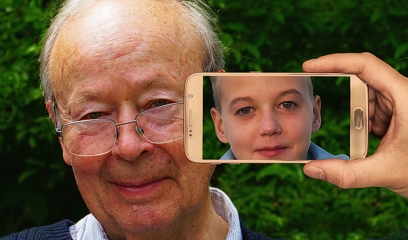
Photograph by Pixabay.com/geralt
Anagathics (n) – drugs and treatments that halt and reverse the progress of aging.
At least, that’s what they are called in Traveler – since we don’t exactly have any proven medications that achieve this yet, nor even research into the science on which such treatments could be based that’s advanced enough to make treatments even theoretically practical, there’s no real need for a label for the generic field of study. At the moment, we’re still in the early stages of understanding the root science, usually referred to as Gerontology.
And, of course, so much of the field is corrupted by the often-questionable pseudo-science used to market the latest salves and creams from purveyors of beauty products that most attempts to research the subject online falter – if not crash-and-burn outright.
Back in July, two-and-a-half months ago, I reported on some ideas deriving from the book I was reading at the time, “The Biology Of Human Survival” by Claude A Piantadosi, M.D., and applied those to defining elemental biology and how it could be used to inject new color and vitality into those well-known fantasy creatures, in (In)Human Survival: The Biology of Elementals and More..
There were even sections (written ad-hoc as the article took shape and ideas flowed) regarding elves and aging – the primary subjects of today’s article.
The section on Aging drew on analogies with environmental stress over time to derive a practical method of simulating aging in RPGs. The section on Elves built on the concepts described and applied the notion of redundancy as a safeguard against data corruption to the DNA of long-lived species.
Reading the book is slow going – I don’t have a lot of time, and many of the sections require thought to digest and analyze, since my knowledge of physiology is amateur at best. As a result, I have only recently completed a chapter which is actually largely dedicated to the subject of aging.
And that, in turn, has prompted some new thoughts on the subject of aging and what might one day be done about it – appropriate for many sci-fi campaigns – and the possibility of a “naturally-evolved” equivalent, which applied the concepts to that staple of fantasy gaming, Elves.
Describing those ideas, and their source, is the purpose of today’s article. I had hoped to be reviewing a kickstarter campaign currently underway for a fantasy game product, but the permissions required didn’t arrive in time. Most of the factual content derives from Chapter 12 of the above-cited book, “Air as Good as We Deserve”.
Oxygen, The Enemy Of Life
Every higher organism that we know about requires oxygen to survive. So it’s really interesting to note that oxygen is poisonous to most animal cells.
It was Joseph Priestley, discoverer of Oxygen, who first suggested that it in it’s pure form, it might not be good for us. More than a century later, the reality of Oxygen Toxicity on the Central Nervous System was proven by Paul Bert, a French scientist.
The toxicity of Oxygen is a function of the partial pressure of the oxygen in the atmosphere being breathed. The partial pressure is the pressure that would result if that gas occupied the entire volume at the same temperature as the mixture of gasses of which the gas concerned is one element. If you add up all the partial pressures of a mixture of gasses, you get the total pressure exerted by that mixture.
Although the details are a lot more technical (and useful), in a nutshell, if the air is 30% oxygen, the partial pressure of the oxygen is 30% of the total pressure of the air (assuming both to be at the same temperature).
While we need a minimum partial pressure of oxygen in order to breathe – the required pressures etc being one of those “useful details” I alluded to – that’s all you need to know to be able to follow this article, which is more concerned with too much oxygen.
Different organs are impacted to different extents; the two most directly concerned are obviously the lungs and the brain.
Above 3 atmospheres of oxygen, brain functions are disrupted by Oxygen Toxicity in an hour or less. At about 1.5 atmospheres, brain functions are not affected (and if that were all that were involved, life would be indefinitely sustainable). In-between those values is where the interesting happens. At 2 atmospheres, toxicity occurs after about 5 hours of exposure. This shows that as oxygen pressure rises above that 1.5 atmospheres threshold, survival time plummets.
The lungs are somewhat more resilient, being able to cope with 5 atmospheres of pure oxygen for about 6 hours. However, Oxygen Toxicity occurs eventually at much lower pressures – at about 1.2 atmospheres, the tolerance limit is about 30 hours. This is noticeably lower than the effects on the brain.
It’s how the oxygen becomes toxic that is of greatest interest and relevance. In a nutshell, the oxygen is not perfectly “consumed” by the lungs, resulting in the creation of two different free radicals – any chemical – atom, molecule, or ion – that contains at least one unpaired electron is a “radical“. They can often be thought of as the products of an incomplete or partial chemical reaction, and the chemistry of radicals has many important biological functions – for example, free radicals are used by white blood cells to create hypochlorous acid with which to kill microbes, and muscles can only relax after contraction through the functioning of a radical-based (Nitrous Oxide) reaction. NO is also an important mediator or trigger in many other processes, from blood clotting to neurotransmitter function and the immune system. Excessive production of NO is toxic through the formation of secondary chemical derivatives named Reactive Nitrogen Species; Insufficient NO appears to be involved in hypertension and related cardiac conditions.
The unpaired electron of radicals makes them extremely chemically reactive.
So the body naturally contains and produces radicals, and would die without them. Because of this, biochemical controls are present to eliminate excessive radicals (and to trigger the creation of more if there aren’t enough). Higher oxygen pressure becomes toxic by increasing the rate of incidental radical creation beyond the limit that these control mechanisms can cope with, permitting the radicals to damage and puncture cell membranes, shut down key enzymes, break down DNA, and trigger carcinogenic mutation within cells. Obviously, the higher the partial pressure of oxygen, the more free radicals result, and the more damage to the organism these radicals can inflict in a given time-span. The tapestry of biochemical processes upon which life depends can literally become so threadbare that it unravels completely.
The bottom line: while cells require oxygen-based reactions to generate their energy, oxygen in excess can tear those cells to pieces because the biology can’t absorb that much oxygen in the environment..
The damage that results comes from free radicals, and that – interestingly enough – is one of the damage mechanisms of radiation, and stress, and pollution (poisoning, in other words), and diseases. Free radicals are thought to be produced by damaged biochemical processes in cancerous cells, responsible for some of the toxic effects on neighboring cells that permit cancers to grow, and to spread to other organs, and to metastasize from benign forms to virulent.
Oxygen is a necessary evil; no other reactions convey as much energy to and through biological systems. But it’s very much a deal with the devil when it becomes too much of a good thing.
Oxygen, The Enemy Of Life part II
How many of my readers have spent any serious time thinking about the way cellular structures work? You have a bloodstream that carries key ingredients to a cell – but it doesn’t flow through the cell, so it’s “cargo” has to be released, delivered through a cell wall, where chemical “handlers” make use of it to fuel the various functions of the cell.
Our fundamental biochemistry evolved through a number of stages. To start with, early “cells” probably couldn’t do anything more than reproduce – they would not even have had cell walls at that point, just what we now consider the cell “nucleus”. That might have come next as a natural defense against environmental changes, providing a means of optimization and containment of the biochemical environment. Somewhere along the way, the ability to encode information into complex molecules as a means of preserving information came along, probably right after self-replication. Then, function differentiation enables cells to behave differently, and some learn to form larger, multi-cellular organisms. Further biological differentiation separates the great biological kingdoms – microbial life, plant life, and animal life (probably in that order).
As soon as plant cells adapt to utilize chlorophill, they begin consuming carbon dioxide and releasing oxygen as a waste product into the atmosphere. Prior to this time, there was little or no atmospheric oxygen to speak of, it was all in compounds with other elements. That atmospheric oxygen also dissolved into the water, where animal life learned to extract it using gill structures. Eventually, some aquatic life migrated onto land, and well, we all know the basics of the rest of that story.
The anatomy of our cell structures reflects this evolution, because the environment in which those key biochemical reactions can take place was defined by the environment in place when the reactions were first developed.
That’s why cells have walls – to contain an environment within that differs from the environment without. Huge amounts of our early evolution is directed at optimizing the conditions under which those reactions occur most efficiently.
All of which means that there are parts of some cells where free oxygen is an absolute no-no. Why? Either there are chemicals involved that would react with oxygen, or there are chemical reactions that would be disrupted by Oxygen radicals, or both.
In fact, you can view free radicals as overcoming – through their increased reactivity – the protections that have evolved to keep oxygen away from where it is unwanted.
Defeating the enemy?
Keeping oxygen away from where it’s unwanted is thus a critical necessity of cellular biochemistry for both animals and oxygen-producing plants. So critical is this function that in human biochemistry a number of mechanisms have evolved to cope: special enzymes, radical “scavengers”, and cellular “machinery” to repair oxidative damage. There are 5 major antioxidant enzymes; a few of the more significant radical scavengers include vitamins C, A, and E, and whole families of related compounds. These defenses are all maintained in specific locations in cells where unregulated oxygen reactions are undesirable.
When production of those pesky Reactive Nitrogen Species discussed earlier exceeds the cellular capacity of antioxidant defenses, the normal oxidant-antioxidant balance is disrupted, which is called oxidative stress. If not checked, oxidative stress alters other biological processes in a domino effect by altering the structures or functions of proteins, lipids, and nucleic acids. Oxidative stress is also associated with the damaging effects of atmospheric pollution, diseases such as arteriosclerosis (the hardening of the arteries) and Alzheimer’s, and other aging processes.
Supplementary antioxidants have been shown to augment the natural defenses against oxidative stress. Although it seems to have calmed down recently, it wasn’t all that long ago when “antioxidant” was a ubiquitous marketing must-have when it came to selling foods. The driver of the decline was the rejection as unproven of the underlying science by the US Food & Drug Administration in 2012.
The human capacity to produce and utilize antioxidant defenses declines with age, something that is still seized upon by the makers of skin treatments, even though the scientific evidence of antioxidant benefits varies from the promising but inconclusive to the outright dubious. The fact that many if not all such studies have been funded by the cosmetics industry and comprise largely anecdotal evidence or other methodolical flaws leaves the case in an underwhelming state.
Nevertheless, as the old saying goes, “Where there’s smoke, there’s fire” – and there is enough smoke around the relatedness of aging and antioxidants that this share of the dietary supplements field alone is worth more than $2 billion annually, world-wide, and rising. This field is a blend of genuine science, traditional remedies of uncertain efficacy, and snake oil products / sales pitches, which always raises questions of reliability about any information originating from these sources.
At best, then, the science of supplementary antioxidants as beneficial is unproven. The theory seems reasonably sound, but there have been a long succession of such theories that sounded good only to fail deeper scrutiny.
The problems seem to be three-fold:
- First, do antioxidant supplements actually survive the process of consumption to reach the bloodstream and increase the antioxidant load of the body? Or does the presence of dietary antioxidants simply trigger a reduction in internal generation of antioxidants to maintain the same overall levels? Or does the dietary process so disrupt the antioxidants that they have no effect?
- Second, does an increased antioxidant load in the blood lead to a supplementation of the body’s natural capacities, particularly in individuals whose capacity for self-generation of anti-oxidants is affected by aging or other factors – can the antioxidants get from the bloodstream to where they are needed?
- And Third, is the decline with age of antioxidant capacity cause or effect (or both?) Can any actual improvements in condition be medically proven? Or are the benefits overblown?
But, for the moment, let’s assume that there are direct correlations between various diseases and symptoms of aging and the body’s accumulated cellular damage from free radicals. This is sometimes known as the Free Radical Theory Of Aging.
It might not be the whole story – in fact, it almost certainly isn’t. But it’s enough to suggest that antioxidant therapy might produce a mitigation of the aging process, all else being equal.
One of the major alternative theories of aging is that of replication error in DNA – it is well known that there are occasional “transcription errors” when DNA replicates. The theory is that these errors accumulate over time to produce the effects of aging.
There’s a significant overlap between these theories that can’t be entirely ignored – free radicals are known to cause DNA damage, so as a causative mechanism for accumulated DNA damage, a link between the two theories can be established.
Personally, the DNA-damage theory of aging explains why, when you get old, your new skin cells are “old”. It’s as though the specifications to which the cells are manufactured keep changing, and not for the better. That supports the latter theory.
On the other hand, such damage would be more or less random in nature, while aging symptoms are largely uniform across the species. What’s more, I know of no instance in which hands are reduced to stubby appendages or feet/legs to flippers purely from aging – both known outcomes from induced mutation from radiation or from chemicals such as Thalidomide. That raises serious doubts about the DNA-damage theory, in my book.
It is possible to resolve this problem by specifying that aging is controlled by specific types of genetic damage that cannot be repaired properly, and that gross mutations of the type raised in the preceding paragraph are either weeded out or repaired naturally, and that it is this repair mechanism that is damaged or inhibited by the external mutation factor.
This in turn suggests that a specific type of unrepaired damage leads to each symptom of aging or perhaps that a few such problems lead to a cluster of related symptoms, raising the prospect that a few specific treatments aimed at repairing those specific forms of damage would, collectively, provide substantial improvement in longevity and quality of life.
This may or may not be a true position, so far as the science is concerned. But RPGs often require simplification of scientific principles, and it’s a good enough working theory that we can move on to impacts.
The rise of new problems
Human lifespans have been increasing for quite a while, anyway, as causes of death are eliminated or brought under control. Malnutrition, Infection, the lack of remedial surgical techniques – one by one, previously fatal conditions have been controlled or contained as mortality factors.
The Wikipedia article on Life Expectancy contains a most interesting table showing the life expectancy at birth for typical representatives of different eras and locales. In Classical Greece, for example, the expectation was 25 to 28 years – but if you lived to age 15, you would probably live to an age of 37-41 years. And rare individuals might well exceed this range – this is very much an average, the peak of a bell curve.
Assuming that the bell curve is symmetrical about a peak of 39 years from the starting point of 15 years, we get an estimated peak of 39+(39-15)=39+24=63 years. For anyone to live longer, their age has to be offset by an increase in the numbers dying early, which violates the symmetry but preserves the overall average.
The late medieval English Peerage had a life expectancy at birth of 30 years – but if you survived to 21, your life expectancy was an additional 43 years for a total of 64. Again, if the bell curve is symmetrical about that 64 years, we get 107 as the end-point.
The 1950 world average life expectancy was 48. The 2014 world average is 71.5 years. But there is no longer any resemblance to symmetry. In developed countries, the number of centenarians is rising by 5.5% a year – at which rate, it will reach a global total of 4.1 million in 2050.
There’s more than a little truth to the suggestion that each breakthrough in life expectancy simply brought a new type of mortality into common experience. I doubt that very many citizens of ancient Greece experienced Cancer-related deaths, for example – disease, malnutrition, and infection would have carried them off before they were routinely old enough for that to be a common cause of death.
There was a time when heart disease was the biggest killer in the western world. When that was defeated, cancer arose. Now that we have started learning techniques for dealing with that, enough will survive to discover a new source of mortality – there are some suggestions that mental conditions such as MS, Alzheimer’s and Parkinson’s diseases increase mortality directly, or those might even be the major killers in a post-diabetes world; 9.7% of the US population suffer from that disease, which carries a 10-20 year reduction in life expectancy, and the rates are growing.
“Aging,” as we think of the term, therefore means different things in different eras, and is more related to infirmity through age-related conditions than about survival directly – these days.
Perhaps it’s not so inappropriate that such a large part of the “publicly known” research is coming out of industries concerned with the cosmetic and superficial, after all.
So anagathic treatments would be more about ameliorating the effects of aging than about actual improvements in longevity, though there would be some cross-over.
Let’s think, then, about what outcomes are most reasonable to achieve.
Sci-Fi Anagathics
It’s entirely likely that different symptoms would be impacted to different degrees. To some extent, this might be due to prioritization of research, or weighted severity of impacts – appearance might be reduced by X years, while propensity for arthritic problems is reduced by Y years, for example. Increased mobility and capability would lend itself to a somewhat more active lifestyle than simply sitting around in a nursing home, and that in itself could add another 10-20 years to the average lifespan.
Benefits can therefore be divided into three categories:
- Preventative (delays the onset or worsening of the condition within the effectiveness range of the medication);
- Remedial (repairs damage already experienced); and
- Indirect, as described above.
Rather than try to list every possible condition experienced during aging, I would suggest employing broad categories and subdividing when necessary:
- Cosmetic (Skin, Hair, Spots)
- Sensory (Taste, touch, sight, sound, balance)
- Structural (Bone brittleness, circulation)
- Mobility (Musculature, balance)
- Intellectual (Memory, reasoning, flexibility)
- Internal (Digestive, resistance to Cancer, resistance to Organ Failure)
Nor is it really necessary that one treatment do it all. Several independent treatments are more likely, reducing the likelihood of complications. Medical plans stretching out over the coming decade or so would specify which anagathic treatment was to be administered and when.
The most logical form of that treatment is nanotechnology of two types – one delivering antioxidants to where they are diminished or depleted, and the other targeting a specific aging aspect or group of symptoms.
It’s likely that the treatment would be less effective each time it was administered; first-generation Anagathics would delay the aging process, but only provide limited restorative capabilities.
The age achieved when first administered would also be a factor.
Later-Generation Anagathics
These limitations would be eroded, generation-on-generation. Effectiveness would increase, especially in terms or restoration. Treatment might even be split into two strands – specific restoratives and a more preventative cocktail that rises in strength as the subject ages lives longer.
The tolerance and effectiveness of repeat doses would increase, as would the efficacy window of each treatment.
It’s entirely reasonable to expect each generation of Anagathics to be punctuated by the rise in statistical significance of a new leading cause of death among the subjects, or perhaps, the return of one thought defeated (through an entirely different causal chain). For example, as we age, appetite generally diminishes; some of that may be due to programmed inactivity, some of it due to the weakened senses of taste and smell, and some of it simply programmed in because the elderly consuming fewer calories would provide a survival benefit to the species as a whole.
It’s also worth noting that reducing the diet to a point short of malnutrition has been shown to produce an extended lifespan – suggesting that this may be an anagathic treatment that we already enjoy without realizing it!
The Ultimate Anagathic
It’s quite possible that preventative Anagathics would improve to such an extent that they can be taken regularly without diminution of effectiveness, leading to the virtual abandonment of restorative treatments as no longer necessary. Lifespan could be extended to an effectively unlimited degree – so long as you kept taking them. But there would still be limits to the human lifespan; no mechanism can be designed to last forever, and we would now be a long way removed from what we have been prepared for by evolution.
Once again, this is likely to take the form of some new mode of death that’s already known and relatively rare, but that the race survives long enough (the anagathically-extended ones, anyway) to experience as a more frequent outcome.
Social Effects
These would be inevitable, and would likely take two contradictory forms at different points along the age scale. Initially, people would take advantage of relative health to become more active – perhaps even more active than they had ever been. As they aged further, however, they would probably become far less likely to tolerate personal risk.
Larry Niven’s Known Space series looks at the impact of anagathic treatments on the society at large in a number of the stories, especially cases where the treatments are less than legal – for example, having a brain transplanted into a clone body. Look especially for the stories involving Beowulf Shaeffer.
Equally, some of Heinlein’s stories are relevant and useful – in particular, Methuselah’s Children, Time Enough For Love, and Glory Road.
But there would undoubtedly be effects beyond those suggested by these sources. Business effects, for example – with the one CEO likely to live for hundreds of years, and similar prognostications for management, advancement is likely to be stultified. This is likely to cause frustration at the pace of promotion which leads to horizontal transfers as a means of accelerating that pace. Even so, opportunities would be limited, so it would be far more common to start your own business, or take some years off to acquired additional qualifications.
We already live in a world in which 30% of new businesses fail in their first two years, 50% in the first five years, and 66% within the first ten – now contemplate the statistics if the number of new businesses increases five- or ten-fold. While a few of them would survive, economies can’t grow fast enough to sustain that level of enterprise; even if the total number of successes at each milestone doubles, that’s a small fraction of the much larger pool.
Investment in start-ups would become far more risky, simply because more of them fail; so fiscal conservatism would become more acute, even approaching the point of policy paralysis.
Of course, if Anagathics are less widely-available, due to expense for example, the social impacts would be equally profound if different in character. Jealousies and resentments would be magnified by the rarity.
The one thing that can be accurately forecast is that there would be profound social consequences.
Let’s talk about Elves
It’s easy to translate these concepts into an explanation for the longevity of Elves and other races. Some campaigns give Dwarves an increased lifespan, for example – a naturally higher restorative factor, repairing the damage of aging, would be in keeping with their naturally higher Constitutions.
But shifting to an organic basis that has naturally evolved means that the organism would have naturally evolved to accommodate it. For example, you might find that the clotting mechanism that deals with wounds would be more rapid, restricting blood loss and enabling quicker healing with less risk of infection.
In particular, repairing damage becomes easier if the ongoing rate of damage is reduced, just as it’s easier to repair a machine if you can turn it off. One of the key factors in the survival rate in pure-oxygen atmospheres is metabolic rate.
Rodents have a high metabolic rate, after 50 hours of exposure, they start to die from a combination of lung injury and other factors. By 75 hours, 50% of them will be dead. Only one or two percent will survive through the 100-hour mark. After 120 hours, virtually all will have expired.
Primates, including man, are less susceptible; 100 hours is roughly when we start dying. At the 150-hour mark, the chances of survival are about 50-50. At the 200-hour mark, only one or two percent will survive; and by 275 hours, the survival chance has dropped to essentially zero.
Birds have a lower metabolic rate; at about 175 hours, they begin to die, but by the 200-hour mark, 98% or so are still hale and healthy. At 250 hours, 75% will have survived. At 300 hours, that’s down to about 25%, but that’s still high compared to the higher metabolic-rate species. It’s not until 400 hours that bird survival rates hit 0%.
Turtles have one of the lowest metabolic rates known amongst air-breathing species. At about 250 hours, they start dying, but by the 400-hour mark, only about 5% will have died. The shape of the curve suggests that a fair number would survive past the 1000-hour mark.
This suggests that Elves, with naturally anagathic capabilities, should – if anything – have a deeper sleep state than that of humans, whereas most of the game systems seem to suggest the opposite.
This threw me for a loop for a few minutes, threatening to bring my entire theoretical construct crashing down. But then I had an interesting notion regarding personality development. What if Elves maintained a simplified “archive copy” of their past personality profile which could take over while the “real mind” was waking up? Perception of issues would be simplified, and the most recent developments in personality would be absent.
There are all sorts of personal experiences that produce profound personality development. Personal tragedies, marriages, the birth of children, and so on. These landmark events and the profound changes they induce in thinking would trigger the creation of a new archive personality.
While the character sleeps, this backup personality – almost indistinguishable from the main personality – is on standby to command the body while the main personality is snapping out of it’s sleep state.
I particularly like this notion because a comparison between the ‘old’ mind and the current one would reveal the impact of spells such as Sleep and Charm, and even permit the backup to take over if such outside influence was detected. Thus, the Elvish resistance to such spells can be explained as a byproduct of their longevity.
Couple this with a natural resistance to changes to DNA as suggested in the article linked to at the start of this piece, perhaps in conjunction with the addition of fresh fruit (EG blueberries or blackberries) and nuts as a dietary need to provide the antioxidant “payload” to be distributed through the Elvish body, and Elvish Longevity can be fully explained, With bonus justifications for other Elvish Traits.
Why is this useful?
If you have some logical rationale that explains an unusual capability, not only can you use that knowledge in formulating descriptions of the capability ‘in action’, but you can interpret new phenomena in the context of that explanation – making your job as GM a lot easier and more interesting.
For example, accepting the above justification of Elvish longevity and ‘repose’: An elf joins the rest of the party in a tavern. They all get roaring drunk before their social outing is rudely interrupted by a press-gang. An elf can switch to his back-up (not drunk) personality – he may be thinking in crude, black-and-white extremist terms, relating directly to where that personality was last updated, but he’ll at least be thinking clearly.
Now, the ability to go from dead drink to wide-awake and thinking clearly is useful, but it’s “ordinary” enough not to be all that impressive. But, unlike most such cases, an elf can go back to being dead drunk as soon as the battle’s over…
Everything that you can define, pin down as being just a little different from everyone else, helps make your campaign unique – and easier to run.