Campaign Mastery helps tabletop RPG GMs knock their players' socks off through tips, how-to articles, and GMing tricks that build memorable campaigns from start to finish.

Interaction Flows – A Planning Tool


Image by Kristin Baldeschwiler from Pixabay, background tint by Mike

It happens to everyone eventually – you look at your plot and realize that one of your PCs is going to have to interact with an NPC in a one-off scene, an NPC with whom they might never come into contact again.

There are many different ways of handling this. Some GMs will use a random generator to create a personality and let it go at that. Others will look at the momentum of the scene and decide how easy the interaction is going to be. Still others will focus on making the interaction unforgettable or challenging, even if that means that the personality makes absolutely no sense in terms of the NPC’s in-game role. A fourth group will take the functionalist approach, defining the personality as something appropriate to the in-game position of the NPC, even if that makes the personality a little (or a lot) cookie-cutter predictable.

Today, the plan is to show you a better way. I’m going to use a modern setting for the purposes of this discussion, but the technique works for any genre of game.

At the heart of the technique is an eight-step process, so let’s spell that out first, and then look at the elements in detail, and how to enhance and refine the results.

The goal is to make even your throwaway characters sufficiently interesting and well-rounded that they are distinct individuals who are capable of sustaining ongoing appearances within the campaign – because you never know what PCs will decide to do, and their choices can transform the status of that NPC from one-off to recurring guest-star.

The last thing you want, therefore, is for any NPC to be boring cipher.

The eight-step process

  1. Think about the previous character interaction that will have been experienced by this PC.
  2. Do the circumstances of this encounter forecast or mandate a particular interaction between the PC and NPC? If yes, proceed to step 5.
  3. Think about the preceding in-game PC-NPC interaction within the planned narrative, even if it was not an interaction with either this PC or this NPC.
  4. Choose an interaction mode that will contrast with both the interactions identified in steps 1 and 3.
  5. Given the in-game situation in which the interaction will take place, and the known personality profile of the PC, choose a basic personality for the NPC that will yield the desired interaction mode.
  6. Given the in-game occupation of the NPC, and the minimum level of competence indicated by the interaction mode, select personality traits that are compatible with the result of step 5 and that justify/reflect that minimum level of competence.
  7. In any aspects of the character not already defined, select one or two traits that are going to be memorable, expressive, and distinctive, even if they act to limit the future advancement of the character within their career.
  8. Generate any other required parameters or traits accordingly to create a cohesive character.

Analyzing the process

Okay, let’s break this process down.

    1. Previous interaction experienced by this PC

    There are two things that you ideally want this encounter to contrast with, and the first is the last part of the story that this particular PC was involved in.

    What you don’t want is for one particular player to be able to complain that every time he encounters an NPC, they are unhelpful, but other players do not encounter the same resistance. Or for one of the other players to complain that the NPCs always cooperate with the character belonging to Player X. You don’t want those opinions to manifest even if they are never spoken out loud!

    But even beyond that sort of reaction, justified or not, ensuring such a contrast helps simulate the ups and downs of life, and makes the game feel more ‘real’ to the players in a broader sense, so it makes good sense, anyway.

    2. Mandated interaction mode short-cutting the process

    It might seem that this exclusion question would make more sense as item number one in the process, but there’s good reason not to do that; even though the interaction mode is being pre-specified by the nature of the encounter, having that previous interaction from step one in the back of your mind permits it to influence and nuance the dictated interaction.

    For example, the NPCs employer might be allied with or otherwise supporting the PCs enemies, or simply be hostile toward the PCs for some reason; as a result, he has given instructions that his employees are not to cooperate. Or it might be basic corporate policy for this employer.

    So the encounter is one in which the PC is to be frustrated and not to obtain whatever he or she is looking for – goods, information, cooperation, money, whatever.

    That does not preclude the NPC having a different opinion to that of his boss, it simply limits what he can do about it. I had a similar situation arise a while back in the Zenith-3 campaign; during the encounter, the NPC was extremely regretful, but had to refuse the PC’s request even though he was not legally permitted to do so. The NPC then met the PC “by complete chance” shortly thereafter and ‘accidentally’ left the information that the PC wanted, and which was supposed to be publicly available, ‘lying around’ afterwards.

    The encounter previous to this for the PC involved was one where the same ‘boss’ (a corrupt politician) had called in favors which resulted in a flat refusal to cooperate with another reasonable request from the PC. Clearly, there was a significant difference between the encounter described above and an outright refusal – but, nevertheless, it was a refusal to cooperate, as mandated by the situation.

    Nuance can make all the difference in the world.

    3. Preceding PC-NPC interaction within the narrative flow

    The other thing that you want to contrast with is whatever was happening just before this encounter takes place. Except, of course, when you deliberately don’t want to contrast the two, but that tends to be an exceptional circumstance.

    The motivation for ensuring a contrast here can be summed up, “Dice have no memory, but players do”.

    Most of the time, the participants in one scene will have no knowledge of what happened in the scene immediately prior to this one, and the encounter should start from a neutral position (influenced by the interaction intended to occur, of course).

    But, at the same time, you have to tell a cohesive story, woven around the PCs and their interactions with the game world, and the players know what has happened even if their characters don’t. It’s the players who are both audience and stars of the show, and their characters who are their roles in that show, and that can never be forgotten.

    Contrast between scenes helps keep that story narrative alive and fresh and interesting, with ups and downs and highs and lows.

    4. Contrasting interaction mode

    My example earlier in the analysis of the process has probably taken most of the air out of this step of the process. Contrasting with one interaction is easy; contrasting with two separate interactions is a little harder, but still leaves innumerable possibilities for you to choose from.

    But there’s one additional requirement to be met, and there are likely to be relatively few of those innumerable possibilities that survive that consideration: your choice has to advance the plot, or at least to enable the plot to advance. It has to fit into the overall story, in other words, and that can be the most constraining requirement of them all.

    Life is so much easier in this respect if you have no pre-planned plotline at all, but there are such serious drawbacks to that methodology that I can’t recommend it.

    5. Base personality profile derives from PC and interaction mode

    Once you know how the NPC and PC are to interact, you can start to design a character that will have that particular interaction with the PC. Essentially, this involves giving the NPC a motivation for having that particular reaction toward the PC or for causing the PC to have that particular reaction to the NPC, or both. Nothing that does not contribute to this set of reactions should be considered fixed, not yet.

    6. Justify the minimum level of competence required

    It will happen regularly that a character with the personality traits that create the specific interaction you have chosen will find their career path hindered by those traits. That’s true about half the time, in my experience.

    Sometimes, this hindrance will be so severe that you have to wonder how the character actually rose to the position they are now to occupy.

    The nature of that position makes a significant difference to this factor; a research scientist is different to a lawyer, who is different to a hot dog vendor, who is different to a wizard, who is different to a cop. So you have to start by thinking about the actual requirements for holding that office, and sketching out the beginnings of an implied personal history that ends with the character occupying his current position – perhaps securely, perhaps precariously.

    The other half of the time, the personality traits can or will make the NPC more ideally suited to their current role. Most of the time, this does not pose a problem, but occasionally they can be so suited to the role that you have to wonder why they have not been promoted out of it; in such cases, you need to weaken the character’s suitability in other ways, just enough to justify the situation as the character finds it.

    There are other solutions that can be employed occasionally – an employee recently fired or suddenly retired, or even suddenly promoted, forcing their supervisor/boss to act in both roles until they find a replacement, for example.

    In almost all cases, this will sketch in additional character personality traits. Once again, though, don’t incorporate anything that doesn’t directly contribute to this requirement – not yet, anyway.

    7. Make the character uniquely memorable, expressive, and distinctive

    The next step is to add in a quirk or distinctive personality trait or two that will make the NPC stand out and be memorable. Care must be taken to ensure that these traits do not upset the careful balance that you achieved in the previous step – you may need to strengthen or weaken some of the traits that you added, or even replace them entirely with the quirk. There are too many combinations of traits and quirks and occupational roles to try to get more specific than that.

    As an example, however, at one point a PC needed to consult with a representative of the New Orleans Historical Society at their offices – they were trying to track down some extremely specific and obscure information, the details of which don’t matter. Following some of the additional advice that will follow later in this article, I decided that it would be interesting and memorable to have the individual occupying a position as a historian (unqualified) to be fascinated by a particular vision of the future. So I quite deliberately made them a Trekkie.

    This meant that the NPC could be quite knowledgeable and helpful, but also totally memorable. Especially once I threw in some blonde dreadlocks, peace symbols and other badges demonstrating activism and idealism to go along with that primary quirk.

    8. Complete a cohesive character

    By now, you probably have a fairly good idea of the personality of the NPC, and in most cases, that’s all that you need – see Creating Partial NPCs To Speed Game Prep.

    Well, almost all. If you don’t have one in mind already, it’s time for one of the most critical decisions of the character construction – the character name. You may also need names for their employer, and/or for their boss.

    I’ve written a LOT of articles on the subject of choosing a good name, why it’s so important, and how to go about it; you can find most of them listed in the Blogdex on this page.

Refinements

There are a number of further hints that can be applied to enhance and refine the process and its results. In fact, some can be relevant general advice even if you don’t employ the process described. I’ve already hinted at one of them – the second one on my list.

    Interaction Mode flow, not stark contrast

    Complete reversals of fortune are less common and strain credibility more than gradual morphing from one extreme to the other, with the occasional mountain or valley along the way.

    But there are two flows possible, and you only need to accommodate one to tick this box – the overall flow of the plot is probably the easiest and potentially the most useful, but the flow of the plot from the perception of the one character helps to maintain a consistent narrative flow through the narrative thread, and is probably better in the long term.

    There is, however, no need to be consistent in this respect. You can switch from one continuity flow to the other at the drop of a hat; this is a tool in service of the plot, and not a chain to bind you.

    If there can be one rule of thumb in this respect, it’s that early in an adventure, it’s better to make the plot threads flow, and later in an adventure, it’s more useful to focus on the overall flow of the adventure rather than on the individual plot threads experienced by any particular character. But the differences aren’t absolute, and this guideline can be ignored at the drop of a hat if you find it warranted.

    Occasionally, play against type

    Playing against type happens so frequently that it has become something of a cliche, almost as ubiquitous as the cardboard cut-out. There was a time when this wasn’t the case, and playing against type was great characterization advice, but those days have passed.

    Unless you get clever about it, of course. A character who is striving to overcome an innate lack of ability for some very good reason, where that reason is supported by the character traits that make them tick, is perfectly acceptable – if not overused.

    A character whose personal focus is the diametric opposite of their professional focus in some respect – like the historian whose personal philosophy and ethos and ideals are grounded in a vision of the future – is perfectly acceptable – if not overused.

    I think you can see the trend…

    Subvert every cliche that you don’t embrace

    I’ve given this advice before, I think. But it still remains excellent. There will be times when you want or need to embrace a cliche, in which case, go all the way with it, totally over the top – and then put a layer of characterization beneath the surface that doesn’t quite fit the cliche. This only works well if the specifics of the encounter give an opportunity for that subsurface layer to find expression in actual play or dialogue, however. If you can’t do that, then you can’t undercut the cliche and give the character depth.

    If you can’t embrace, subvert. That goes beyond making the character the exact opposite of the cliche indication, it demands character traits that make the cliche absolutely impossible in this particular case – or that redirect it to support those it would normally victimize – the Tax Collector who supports the poor and vulnerable, the sleazy lawyer who hates corruption in public office and is willing to do whatever it takes, the rural cop who passionately supports minorities, the research scientist who can’t balance his checkbook because he gets distracted writing complex formulas on the stubs…

    Organization traits, contrasts, and confluences

    There’s a lot to be said for treating organizations as characters with their own personality traits, ambitions, lines they will not cross, quirks, and so on. These don’t mandate the personality of those who work for or serve the organization, only the ways they require the employee to behave. The character’s personality determines how they feel about and react to those mandates.

    Characters whose personality traits permit them to act as required without qualms or conscience problems are likely to get retained, trained, and promoted. Characters who see ways to take advantage of the required actions to their personal benefit will often be capable of suppressing any such qualms or conflicts, and are also likely to do well – at least for a while. Characters who encounter difficulty in following the rules and policies laid down will not last and are unlikely to be promoted beyond the bottom rungs of the ladder. But sometimes these characters can suppress their qualms by doing ‘good things’ in their off-hours, rationalizing their ‘professional’ activities as the means of doing those ‘good things’.

    For any given profile of an organization and a give character profile, there is an ongoing interaction – a relationship – between the two, just as there would be a relationship between two characters, one that can be as conflicted and complex as any other.

    Use these facts to your advantage – when creating an employee and an organization, start with the relationship between the two; this will be directly related to the interaction mode between a PC and the Employee. So start with the defined facts and find the combination of traits that supports that, and the organization will define itself.

    Fixed Points in a maelstrom

    You can extend this principle to work backwards from known elements within the adventure to define unknowns, either before that point or subsequent to it. Using the principle of interaction mode flows, you can work both backwards and forwards to define the personalities of virtually every encounter.

    This confers a sub-current of inevitability to the adventure in which each encounter feels like it perfectly belongs there, creating an internal logic and storytelling momentum that, even though it may not intrude upon conscious awareness, is nevertheless felt by the participants in the story.

Let it Flow

Humans are fairly good at perceiving trends. The momentum and internal logic that I just described are the results of an awareness of trends, flows, and sub-currents within the events experienced by their characters.

But that’s a side-benefit. The real payoff for this approach to character design and placement is that it is faster, easier, and provides greater internal consistency, which in turn creates greater verisimilitude – especially when coupled with the Partial Characters concept, which translates the principles of sandboxing to character construction.

So, let it flow!

Whew! It feels good to be back on my regular schedule! I expected the “post little posts as quickly as possible” approach to be liberating, but I found that it came with a lot of pressure to post something regularly – and while the approach made room for the medical testing that I needed, it simply wasn’t possible to post some parts as quickly as I wanted to, producing pressure to perform. So, while it got me through a difficult period, it is not an experiment that I will be rushing to repeat anytime soon…

Comments Off on Interaction Flows – A Planning Tool

On The Priorities Of Graphic Depiction 8: Examples


This entry is part 8 of 8 in the series Priorities Of Graphic Depiction
The story so far…

This is the last in a set of mini-posts that I have written and published as quickly as possible (given a number of health-related interruptions), something I’m calling a mini-blitz. My normal publication schedule will resume at the end of the series.

Each of the posts so far has examined one of the specific image categories nominated in the first post of the series, dividing them up into strata of commonality (if you’re looking for a specific article in the series, there’s a list at the end of this article).

The goal has been to define a set of policies, processes, and principles that use the game value of the result to define how and how hard it is worth searching for a particular image within each category / strata combination. Along the way, there have been a number of tips and tricks to enhance the productivity of specific image searches.

This final part of the series will look at more than a dozen example images from my different campaigns, sharing a few war stories along the way, and giving me a last chance to offer some final hints and tips. In a few cases, concerns about copyright restrictions, or about associating real people with in-game identities of which those real people might not approve, have led me to drop in a couple of ringers of more impeccable credentials.

1. Dr Who Materialization

I always open a Dr Who adventure with the materialization scene, in which the TARDIS appears from nowhere. These are “unique” images that are hand-crafted from a location image; I’ve previously isolated a TARDIS image and partially faded it’s lower half, giving the impression that it’s fading in – in fact, I have three different ones showing slightly different angles and fades.

These composite images are the very literal essence of establishing shots, giving a graphic depiction of the locale in which the adventure is to take part. Sometimes, it will show something critical to the adventure, but more often, the location will be used to set a tone for the location, permitting more important location images to be placed within a context and interpreted correctly.

In direct terms, the game value of these illustrations is minimal, but with these added benefits, considerable effort is easily justified. And, on top of that, they serve as punctuation, signaling that the adventure is moving forward.

In order to preserve this function, I am careful to avoid depicting materialization scenes mid-adventure – I’ll show the Tardis already in place, instead.

I discovered the power of the materialization scene by accident in the course of adventure two of the current Dr Who campaign. So far, materialization has been shown on the planets Oa and Escar, an alien monastery, a cargo hold aboard the colony ship Carthage, the dry stores compartment of the nuclear submarine USS Ardent, the TARDIS docking bay on Gallifrey, An alien wasteland on Cornova-III, and the hanger of a Gas Giant mining operation.

2. Towns in Zenith-3

In my superhero campaign, the PCs are on a journey of exploration through Arkansas, looking for a suitable location for a base of operations. There are hundreds of these, which poses a different challenge – trying to distinguish one from another..

Overall, I employ a structured approach to representing these towns. I start by writing the history and demographics of the place, as delivered by the guidebooks being used as primary reference material by the PCs. That gives me a sense of the character of the location.

Next, I search for key images to convey that character – my first preference is to use actual images from the location, my second preference is to use a high-quality similar image, my third preference is a screen capture from Google streetview.

There is a focus on the economy of the location (banks and shops); then a focus on the culture (parks, churches, government), then anything unusual or distinctive.

Where a town has something that distinguishes it, I’ll often front-load that to appear in advance of anything else.

Next, I need to convey a sense of the housing commonly available in the location. Real Estate websites and Google Streetview are my primary sources for these images.

After that come any images of potential bases, described in-game as Contenders. There are several sources for these – to start with, I have a list that I generated before starting; if any image found for the town matches one of those, it might well find itself situated within the town in question. Next, there are any images of the town that show buildings that are obviously suitable. And sometimes there are notable buildings identified in the research back at the start of the process.

Increasingly, as planned, these travels are being used as a delivery mechanism for interesting encounters and mini-adventures – for example, two of the PCs are currently attempting to rescue some kayakers from some giant (sentient) spiders. These collectively are telling a broader story about the game setting, a foundation that will be used for later adventures. These need to be illustrated, as well; and all these illustrations then have to be integrated into a single cohesive and coherent narrative.

Occasionally adding to all this are maps, which are employed only sparingly, but sometimes nothing less will suffice.

To represent these, I have chosen a trio of images.

To start with, we have a mountain road which is leading to Hollis. Actually, I think it’s a generic image result that matched the narrative of the scene.

Next, we have a somewhat unusual potential base – an abandoned logging camp. This is actually a composite image generated to match the narrative. The biggest change was transforming an Autumn scene into a Summer scene. If you look closely, you can still see the dead leaves on the roofs of the buildings – I decided to leave them there as leaves and debris would have accumulated over time, and any leaf falling would have died no matter what it’s state was beforehand. But leaves like those were everywhere on the ground, and there was no green foliage visible behind the buildings when I started.

Finally, here’s an example of a potential base that wasn’t pre-planned – this was simply a large house that turned up in an image search for Pine Bluff.

Oh, all right – one more, just because I’m very pleased with it! This image, which brings a whole new meaning to the term ‘ghost town’, has not yet appeared in-game. It has been built around a screen capture from Google Street View, as you can tell by the map inset in the lower left corner. Each of the buildings was individually sourced and composited, and then I used the same sort of ‘fade effect’ that was used with the TARDIS Materialization image (shown earlier) to create the Ghost effect. (ADDENDUM: I wasn’t sure that readers would get the full effect at the reduced size, so you can now click on the image to get the full-sized image in another tab).

3. Locations in Pulp

A Pulp setting brings a different set of problems and opportunities. These adventures are set in a time when there were cameras, so for every image search, you have to choose between searching for a modern image and searching for one appropriate to the era of the setting.

There are so many considerations that go into that decision that it’s almost instinctive. How likely is it that the location has changed since the 1930s? In many cases, the answer will be, massively; in other cases, the answer is “not at all’. There is also an element of practicality, of ‘this is what we can find’.

A third consideration is how picturesque any period images might be. Part of the remit of such campaigns is to bring the era to life as a game setting, and “color” from back then helps achieve that.

For example, from the current adventure, we have the San Juan police having a parade…

Yes, those are tanks being shown off by the police force…

….and then there is this image of Rio:

Notice how there’s virtually no-one visible in the street. Conclusion: The downpours are reasonably predictable!

But here, for contrast, is a modern image of the Carpathian Mountains of Ukraine from our previous adventure (which was written before the current invasion started):

Very picturesque!

And, of course, sometimes there’s nothing for it but to create your own. In the part of this series that covered locations, I displayed the image of the Valley that I manufactured for the current adventure, for example, and for the next adventure, here’s the airfield hanger from Twin Bridges, Montana – winterized.

It was clearly summer in the original image.

4. NPCs In Pulp 1: specific NPCs

The same considerations are in play when it comes to NPCs, especially real people from the era – usually politicians, occasionally actors and businessmen, but also thrown into the mix are official portraits. But we’ve used everything from toys to propaganda posters as sources.

We’ve found that if we can get a name, we can usually get an image. It’s when no name can be turned up in our research that images become hard to find.

And yet, there are strange anomalies. There are relatively few images available of New York mayor LaGuadia, for example, so we’ve had to recycle and reuse the same two or three images multiple times.

This is actually a composite of two images, if I remember rightly – the hand is from a toy, but was further enhanced with digital paintwork, and the color deepened.

5. NPCs In Pulp 2: important NPCs

When we can’t identify a real person, usually because it’s a character created specifically for the adventure, we have to use someone else’s image to represent them.

Our primary criteria is always to select images that show a lot of personality, first because they tend to be more interesting to look at, and secondly because we can use the personality content as inspiration. Generally, I will perform the initial selection and present a set of 4 or 5 possible choices to my co-GM, who narrows the choice down to a couple; I then make the final selection from that pair.

There are five general searches that we use to generate the short list, and we only move on to the next one on the list if the current search hasn’t produced enough results that fit whatever criteria we have applied.

Those criteria usually include image size as well as image content, and the presence of any anachronisms that can’t get painted out – sunglasses were uncommon except by prescription, and T-shirts had not yet been invented except as undershirts, for example. Digital watches are a definite no-no, as are mobile phones!

Telephone styles in general are often a problem – no pushbuttons allowed! But there are innumerable ways to trip up if you aren’t careful – we once found what we thought was the perfect “look” for one of our NPCs, only to notice at the last minute that a computer monitor was reflected in the lenses of his glasses. It was only faint, but once you saw it, you couldn’t unsee it.

Tie styles are another trap – especially when it comes to images from the 70s! Too wide or too colorful or with anything other than a simple pattern – they are all incorrect for the time period.

The five criteria are Emotion/Style, Occupation, Descriptive Terms, Descriptive Synonyms, and Antonyms.

    Emotion/Style

    The first choice of search is always to try and match the overall emotion or style that we want the character to possess. “Angry Man”, “Suave Man”, “Determined Woman”, etc. It is also common to add “1930s” as an additional search term.

    Occupation

    It’s also normal for us to replace “Man” or “Woman” with an occupation. “Angry Lawyer” or “Angry Lawyer 1930s” are far more likely to give useful results.

    Descriptive terms

    If that finds too many images, or doesn’t find enough, we add some descriptive terms to the search. “Blonde” or “Tall” or “Scarred”, for example. Due to the way search engines work, this works in either situation.

    Descriptive Synonyms

    But, sometimes, even this fails to find a suitable image, or enough suitable images for a full short list. When these searches fail, it’s time to replace the occupation with another descriptive term; we will often have to try several synonyms because this search is less likely to produce satisfactory results.

    Antonyms

    Being forced to compromise is sometimes not enough. Our last resort is usually to replace some of the search terms with antonyms, because a character who “doesn’t look the type” can often be used in place of a character who does.

I decided not to use any of the archived images I have stored away as examples because I couldn’t be sure which ones were in the public domain and which were not. Instead, I went hunting and found the image below.

This image came from searching on Pixabay, my go-to clip art source, for “Dangerous Man”. It’s exactly what might be used for a featured criminal in a pulp campaign. Image by Sammy-Sander from Pixabay

6. NPCs In Pulp 3: generic NPCs

I’ll let you in on a little secret: there are no generic NPCs per se in our pulp campaign. We treat every NPC as though they were Important; the only difference is that these NPCs tend to have fewer preconceptions. That way, if we – or the players – decide to elevate the character in importance, the image is good enough to support that role within the campaign – though sometimes we won’t name a generic NPC.

An illustrative example took place in Adventure #30 in the campaign, “The Locked Door”. As usual, before the main plot started, we embroiled each of the PCs in a mini-plot that told them where they were and what they were doing when the main plot begins. One of those mini-plots was a restaurant sequence in which a couple of over-excited children were going to interact with a generic mob boss.

After discussing our options, we decided that we wanted to make it clear from the visuals alone that this was a mob boss, and that we would simply describe him as a ‘businessman’. That meant that we needed a really iconic representation; we soon decided that none of the photographic alternatives that we found were quite generically iconic enough, though they might have been fine for a specific crime-boss; that meant using character artwork.

I have the impression that we found the image that we ended up using for ‘Crime Boss At The Restaurant’ on DeviantArt, but a reverse image search doesn’t show it; instead, the image is all over Pinterest in multiple categories.

This is a cropped, enlarged, and sharpened version of the image; you can see the full original image at Pinterest.

While we didn’t name this particular character at the time, we should have done, as it became necessary for some of the restaurant staff to address him by his surname and the mobster’s moll, by his christian name. I think we invented a name on the spot – “Reggie Romano” or something along those lines – but we should have anticipated the need.

7. NPCs In Pulp 4: Undefined NPCs

The less you know about a character, the more inspiration you can draw from a good image – and the more important it is for that image to contain inspiration for you to draw upon.

Perhaps a more typical example comes from Adventure #27, “The Fate Of The Golden King”. We needed a super for a flophouse and after tossing the question of what tone he should project around for a while, settled on “creepy” from memory. Or maybe it was “old man”. In any event, we somehow found an image of Australian author Patrick White, taken in Kings Cross in 1980 by William Yang. I’d love to show it to you, but it’s clearly copyrighted, even though it has appeared on many sites quoting White. You can look at it by clicking on this link.

What we really wanted was someone world-weary, who was tired of fighting for his prosperity every day, bowed down by the burdens casually visited upon him by the transient ‘tenants’ of the flophouse, and who was skirting the edges of sanity without actually crossing that line. The image found doesn’t quote capture all of that, but it comes close enough and looks vaguely unsettling when shorn of its literary context.

8. Priorities In Fantasy

Let’s be honest and clear – there are probably less than 1/10th as broad a subject matter available when it comes to Fantasy as there is for a more modern game setting such as something in the Pulp genre. The consequence is that most of the time, Fantasy images will be much more work to find and the game value of such images will need to be considerably higher in order to justify that effort.

That doesn’t mean that it’s not worth the effort, just that you need to be a little more selective at times. There are plenty of landscapes to use out there, both of exotic locations in our world and the work of a great many talented digital artists. Using the Pulp techniques described, you will often find something suitable for most of the important NPCs and many of the common ones.

The chances of success when searching for the latter are generally enhanced if you add a search term describing what the NPC should be doing in the image – “medieval money counting”, for example. Or “blacksmith forging horseshoes”.

You will often struggle to find illustrations of the more exotic creatures from the many sources both official and unofficial, but casting your net a little wider and being prepared to adapt the creature description and stat block to what you find from an appropriate image source can both broaden the encounters in your game and stir your creativity; that said, though, since 3.0, the artwork in the various official sourcebooks has been excellent and quite suitable as an illustration.

The more outlandish a vehicle or object, the greater the struggle to find a good image, but objects can be surprisingly tricky at times as well. Good photographs of wooden barrels, for example, were hard to find the last time I looked – I actually needed them to insert into a scene for Pulp Ultimately, I ended up making our own image from multiple parts of the one source and adding a barrel-maker to conceal some of the imperfections and prevent the image from being totally static. Again, I don’t think it’s an image that I can share.

To illustrate this section, I thought that I’d offer up a pair of images. The first is of a Bavarian Castle, and the second, a Fantasy Knight in an enchanted Forest..

Neuschwanstein Castle, Image by Unknown author – This image is available from the United States Library of Congress's ;Prints and Photographs division under the digital ID ppmsca.00179. Public Domain image licensed under Commons:Licensing. For more information, see Link

9. Sources Of Sci-Fi

There are some subjects that have very few illustrations in Fantasy but are relatively well-represented in Sci-Fi, and vice versa.

There are hundreds of aliens to pick from, for example, so you have no excuse for not choosing one that exactly matches what you want to convey. There are almost as many spacecraft to choose from. But try searching for a cryogenic chamber! Or a steel coffin…

There are four terms that can be added to searches to increase the chances of finding what you need. The first is the fairly obvious, “SciFi”. The second is a variation on that, “Sci-Fi” – and it will often find results that the first search doesn’t. Third, “Futuristic”, and finally, “Concept Art”.

If none of those work, then it’s time to go without the additional terms and look for a contemporary representation that can be edited.

When it comes to critters and creatures, additional search terms that can be useful are “Fantasy” and “Horror” – plus those listed earlier.

For interiors, it’s not uncommon to have to rename / repurpose depictions of one type of room to another, perhaps adding some window dressing. But it’s worth searching thoroughly because sometimes there can be the perfect image lurking in the results, even if initial attempts are fruitless.

It’s fair to say that greater patience is needed for sci-fi than for anything more contemporary like Pulp. Whether or not it’s worse than fantasy depends on what you are searching for!

“Gadgets” is notable, by the way, as a particularly difficult search term. Try “Machine” or “Device” instead!

This is the look that I chose for the Martians, inventors of Time Travel, in my Zener Gate campaign. The actual image derives from a 2017 movie that has been pretty solidly slammed by reviewers, Valerian And The City Of A Thousand Planets.

Rotten Tomatoes describes the movie as “a visually exquisite but narratively slipshod adventure,” while praising the opening sequence which chronicles the future developments of technology that creates the setting for the movie. “And then the rest of the movie happens.” (From the article ‘30 great scenes in rotten movies‘).

Mr Movies Film Blog’s S-Littner was more generous in his review, in which the film is described as a “visual smorgasbord” and “a breath of fresh air” in a summer of “Lackluster, unimaginative blockbusters”. Connecting the film with the Fifth Element, by the same Director, and from this review I would expect this movie to have a similar feel to it in some respects.

Bill Watters at Bleeding Cool takes a middle-ground position in his review, which he subtitled “Amazing, but with Caveats”. Describing the film as “deeply flawed”, he nevertheless considers it “required viewing” for any fan of the science fiction genre.

And if you’re wondering why I’ve described it so extensively in this caption, it’s because there’s a fair-use exception to copyright when it’s part of a review, so this is what permits me to show the image here!

The second image that I have is designed to show you what is possible with relatively little effort. The original of this image, by Tim Shaw, shows up in multiple places as an example of futuristic architecture (especially Pinterest), which is where I recommend you view it. In creating my version, used for the “Museum Of Realities” on Gallifrey in my current Dr Who campaign, I pushed the contrast and colors to achieve an almost comic-book appearance, then replaced the background with a hand-painted reddish-gold almost sunset-like sky. The net effect is a completely different feel to the building.

10. Sources Of Superheroics

When it comes to superhero campaigns, 25% of the images you need will be modern photographs, 20% can derive from Fantasy sources, 30% from Sci-fi sources, and the last 25% are the most problematic, because they are genre-specific.

In general, that means that the first 25% are fairly easy to find, the next 50% are a little more work, and the last 25% are the most difficult.

When it comes to depicting superheros and villains, you have two choices: use what you can find (possibly editing the colors) or use a service like the Hero Machine. A third choice available only to relatively expert digital artists is to use nude photographs and convert the skin tones into costumes. Be prepared to spend 10-20 hours on each such image, so I reserve it for only the most essential images.

I used this image to represent a tragic NPC named “Skygge” in the Zenith-3 campaign. A parallel-world version of one of the PCs who had barely escaped a horrific experience, only to be found and “rebuilt” as a cyborg by a crazed technologist to preserve her life – temporarily. The original image is named “Cyber Chick” by Lycee Anaya, a 3D artist, and posted to her website as part of her portfolio. From there, it’s appeared all over the place and used to illustrate all sorts of articles.

The Power Of Images

An image, it is said, is worth a thousand words. In the case of the right image, I would tend to agree. But few groups will have the patience to listen to the GM for 1000 words of description and narrative; RPGs are supposed to be interactive.

But that’s only the start of assessing the power of images. The mere fact that you are slicing chunks of narrative out of your delivery and replacing them with an image that can be absorbed and appreciated in a fraction of the time means that images often accelerate the process of play.

And, on top of that, images can conjure emotional reactions, something that prose can sometimes struggle to achieve when delivered orally (which is not the same as reading it on a page).

And, on top of that, there’s the benefit of getting everyone on the same page, as noted in earlier parts of this series.

That’s a powerful weapon to have in your arsenal – but that’s only if the image is right. Those advantages can quickly drain away if you are forced to compromise because you can’t find that “right” image – which may in fact, not even exist.

If you had unlimited time at your disposal, it would be easy to achieve the maximum possible benefits. The reality is that this is a luxury that is a rare event, and that demands that you maximize your efficiency in searching for illustrations, spending your time where you get the biggest return on your investment of time.

Achieving that requires understanding the value to your game of each image relative to the degree of effort required to achieve it, hopefully restricting your compromises and corner-cutting to those illustrations where it doesn’t really matter.

This series has aimed to give the reader that understanding, and a bunch of tips along the way to enhance your prospects of success. Hopefully, it has achieved that purpose.

This series has taken more out of me than I expected, especially with interruptions and delays caused by medical issues. I’m not sure that I’ll have a post ready to go for the usual publishing schedule, though I’ll try.

Image by WallpaperUp.com via Wallpaper Safari, colorized by Mike

Comments Off on On The Priorities Of Graphic Depiction 8: Examples

On The Priorities Of Graphic Depiction 7: Events & Effects


This entry is part 7 of 8 in the series Priorities Of Graphic Depiction

So this was all ready to post – and then my internet connection went out. Thankfully that was only a problem for a day or two. But it has delayed the series slightly.

The story so far…

This is the sixth in a set of mini-posts that I’m writing and publishing as quickly as possible, something I’m calling a mini-blitz. My normal publication schedule will resume at the end of the series.

Each post examines one of the specific image categories nominated in the first post of the series, dividing them up into strata of commonality.

So far, the series has looked at Objects, People, Monsters (and other encounters), Vehicles, and Locations. In this penultimate post, I turn my attention to Events that may need depiction.

The goal is to define a set of policies, processes, and principles that use the game value of the result to define how and how hard it is worth searching for a particular image within each category / strata combination.

There are all sorts of things that occur in an RPG which the GM might wish to depict for various reasons. Most of those reasons would contain no surprise for those who have read other parts of this series; a common frame of reference, for example. Others speak to the integration of a location within an environment, or bringing a dramatic presence to an event that would otherwise be unremarkable..

Most of these fall into the general category of weather effects, but there are others – avalanches, flash floods, lava flows, spell effects – that lie beyond this simple classification. “Effects & Events” is very much a catch-all label for anything that doesn’t fit the earlier categories.

In general, the contents of this category are all things that can happen to, or be encountered by, the PCs, but that don’t fit one of the earlier categories.

Image by Pexels from Pixabay, contrast enhanced by Mike

Mundane

The most common effects are mundane interactions that are essentially the same everywhere and every time they are encountered – campfires, for example.

There functionality of such illustrations is analogous to some that have already been considered – they act as punctuation within the game-play, for example, and the darkness can be a location in its own right. Like a vehicle, there is also an implied passage of time inherent in the depiction of such phenomena. So there are lots of good reasons for presenting a graphic depiction of such phenomena at appropriate times..

This game value is even greater in proportion to the difficulty in locating a suitable image. As a general rule, you will be spoilt for choice. This is a good thing, because it permits a different image to be used each time, useful in a repeating and regular event.

I actually suggest gathering a dozen or so examples and rotating between them, perhaps in a random sequence. Once these become familiar, you can add to them.

Most weather events are common effects. Like bathing an island fortress in cloud, or an extraordinary sunset (even if it happens around lunchtime).
Cloud image by Pexels (minor edit in lower corners by Mike),
Sunset image by David Mark (vertically stretched by Mike), both from Pixabay.

Common

Common images are weather phenomena. A group of adventurers will encounter weather every day, but sunny days and good weather tend to be incorporated into location images and taken for granted. It’s exceptions to this that generally need to be depicted, and those exceptions will be different on a regular basis.

Consider a rainy day, for example – the rain can be light, heavy, or monsoonal. It can and will be affected by wind, and what can be seen through the rain is always going to be different – rain in a forest is quite different to rain on a plain.

This sub-category can also include other temporal markers like dawn and sunset.

All this means that generic representations have only a limited utility, and greater specificity is required – and that means that ‘common’ images can actually be specific in their requirements, and rare and hard to find.

It can be tempting to attempt to create your own images, adding weather effects to preexisting location images. Unfortunately, that’s not as easy as it sounds; weather effects beyond fog and mist are extremely difficult to do well, at least with Krita. Other packages might offer better options.

It also has to be noted that such specificity is often a task that often far exceeds any reasonable game value (there can be exceptions), but – again – to some extent that’s a limitation of the software that I have available, and hence, subject to change.

In the meantime, it can be necessary to use generic images; these can be enhanced by structuring the narrative accordingly.

Weather happens all the time, even if it’s usually less than noteworthy. Some events are less frequent – like volcanic eruptions. Image by Berdan Mardinly from Pixabay, cropped & enhanced by Mike

Specific

Specific images tend to refer to unusual events that are nevertheless natural phenomena. Volcanic eruptions, aroauras, comets in the sky, icebergs at sea, even tsunamis…

Paradoxically, the drama inherent in such images permits the event/effect that they feature to fully occupy the attention, permitting generic images of the phenomena to be utilized in many cases. That means that these are often easier to find than many “common” images are!.

Unique

As usual, unique images are those so specific in their required content that you either have to make them yourself, or find the image you’re going to use first and then write to it. Spell effects, rainbow bridges, and – perhaps surprisingly – futuristic gadgets – are all included. Steel cryochambers.Supernovae. Galaxies. Planets. In fact, most astronomical phenomena fall into this category.

So do most spell effects. And that includes illusions in which you can tell that you’re looking at an illusion.

Finally, things like floodwaters affecting a specific location fall into this category.

Unlike most unique images, however, I have to question the game value of most such presentations. It’s also worth pointing out that most images are static, and you may be better served (when it comes to spell effects) with a narrative that emphasizes the dynamics of the spell.

In fact, as a general rule of thumb, the more easily you can find a ‘unique’ image, the greater its game value. But there are exceptions!

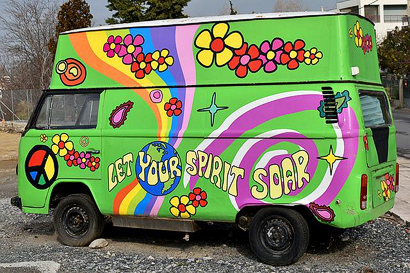
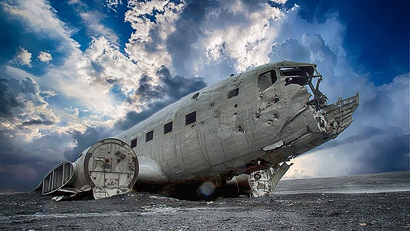
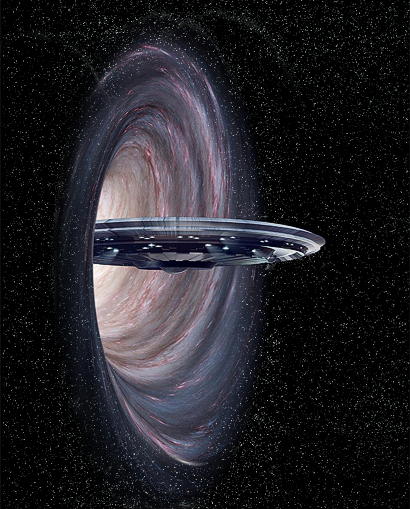
Spell effects are usually very specific in their description, and often carry implications and overtones that are important to the interpretation and plot relevance of the effect. So, two images that celebrate that, plus a space-warp for the Sci-Fi crews.
The first image is by Stefan Keller (stars added by Mike).

the third comes from Genty (rotated 90 degrees to the left by Mike), all via Pixabay.

The final post in this series will look at some actual experiences from my campaigns, some war stories if you will. These were significant enough that they have remained in memory.

Comments Off on On The Priorities Of Graphic Depiction 7: Events & Effects

On The Priorities Of Graphic Depiction 6: Locations


This entry is part 6 of 8 in the series Priorities Of Graphic Depiction
The story so far…

This is the fifth in a set of mini-posts that I’m writing and publishing as quickly as possible, something I’m calling a mini-blitz. My normal publication schedule will resume at the end of the series.

Each post examines one of the specific image categories nominated in the first post of the series, dividing them up into strata of commonality.

So far, the series has looked at Objects, People, Monsters (and other encounters), and Vehicles. Which must mean that it’s now time to turn my attention to Locations.

The goal is to define a set of policies, processes, and principles that use the game value of the result to define how and how hard it is worth searching for a particular image within each category / strata combination.

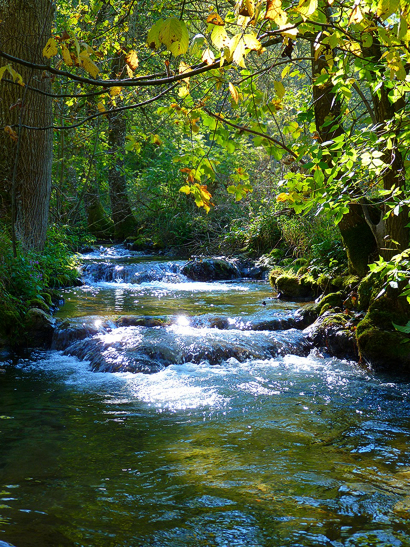
When I searched Pixabay for “Island”, three of the images dovetailed wonderfully to tell a story of exploration through key locations. First, the island itself, image by Julius Silver;

Second, a cliff-side waterfall suggesting that the island is much bigger than it seemed (magic!), image by Pexels;

And finally, a path through the undergrowth – image by Kanenori (all three images from Pixabay.
Throw in an encounter or event at each location for some interaction, and you have a road to adventure!

Locations

At it’s most elementary, a location is someplace for something to happen.

That something could be roleplaying, or a skill test, or a combat, or a narrative passage that conveys essential information to both PCs and players.

But when you start digging a little deeper, complications start to emerge. For example, let’s say that you have a map and you have an image; the first describes the tactical situation, the second gives a sense of the atmosphere and trappings, the look-and-feel of the location.

Which came first, the map or the image? If the map came first, the image is a mere representation of what the location is like, not what it actually is. If the other way around, then the map is an estimation, an approximation, of what is depicted in the image.

Either way, what do you do if there’s a discrepancy that you didn’t notice and take into account during prep? Which do you regard as canonical?

Most GMs will choose the map, in the process undermining the credibility of not just this image but all images presented to the players. Counter-intuitive though it may be, I would sooner adjust the map.

The even better answer is to tell the players in advance that the image is just to convey an impression. By taking the implied promise of accuracy off the table, you can keep the map as accurate without the resulting price-tag.

Regardless, that elementary definition tells us what we need to know, because it establishes a direct correlation between the basic commonality of the image and its game value. The more important the image to the plot, the more specific it has to be, and its Game Value is commensurate to that plot functionality.

Locations as punctuation

A location image does more than set the scene for something to happen; it signals the end of the previous sequence of events, serving as punctuation within the adventure. New locations almost always work well as break points within an adventure, a good place to end for the day or take a five-minute rest break.

Locations as time

There is also something of a psychological ‘reset’ that occurs when you present a new location. It’s as though we subconsciously associate the change in scenery with an associated passage of time, and with everything that such a passage implies.

The GM needs to explicitly connect the new scene with the one just past if there is not such a passage of time, or the players will experience a discontinuity between what their head and their instincts are telling them which is distracting and undermines the verisimilitude in both areas.

It might say something about human nature that unless explicit mention is made of the arduous nature of the transition, most players will usually respond to a new location as though they were refreshed – “a change is as good as a holiday”, so that’s something else that the GM has to explicitly mention. The only exception to that is when the previous location, or the events that follow it, deliberately embed awareness of the difficulty in reaching the next location into the narrative.

Tonal Shift

Finally, there is a natural expectation and receptiveness to a shift in tone or intensity with a new location. That makes them serve as ‘mile markers’ of the journey through the adventure from start to finish.

Game Value

All of these imbue a location image with Game Value regardless of the commonality of the image. The rarity of an image still provides increased value, however, but it does so with subtext, tone, and other intangibles.

The greater the ‘rarity’ of the image, the more these intangibles are communicated to the viewer – that is the determinant of ‘image content quality’, the ambition that you hope your image search will satisfy.

This is an important point to understand. For any given basic search, there will be dozens of location images to choose between. To some extent, temporal content will restrict your image choices, but when the ability to edit images is taken into account, that ceases to be a definitive factor; it’s a consideration and a constraint, but nothing more.

That permits other factors to come to the fore, the intangibles mentioned earlier foremost amongst them. It’s more important for an image to convey the right intangible messages than for it to match precisely other restrictions because they can be edited in or out in many cases.

I’ve lost count of the number of air conditioners that I have painted out of windows to make a modern-day image reflective of the way a building might have looked in the 1930s for the Adventurer’s Club campaign, for example. Each time, the building in question had the right look and the right context – but one or two too-modern features. Massed phone lines are often another item that needs to be redacted. And don’t get me started on modern cars….

A valuable tip: what you lack the time or skill to paint out can sometimes be conveniently covered over by importing some relevant image. An old car in place of a new, for example. Or a convenient wall. A snowbank (doesn’t work in a summer scene, of course). Even a convenient tree!

Mundane

Mundane images are the most easily found with an image search, it says so on the tin. Unfortunately, there can be a gulf separating expectation from reality, and the breadth and depth of that gulf is largely a function of genre.

For example, search for “Science Fiction Corridor” and you’ll get fewer usable results than if you search for “Lunar Colony” even though you would expect corridors to be more ubiquitous. The reason is because Lunar Colonies are “sexy” subjects while corridors are boring.

“Castle Corridors” on the other hand, are reasonably well-represented, at least in comparison. Why? Because there are any number of actual castles out there with corridors, and some of them will have been photographed.

Mundane locations are therefore fairly generic in nature. A snowy field is more about the snow than about anything underneath it. Drop a genre element or two on top (and anchor it with a suitable shadow) and it can be anything from a sci-fi setting to a fantasy wonderland with minimal effort.

Generic scenes, by their nature, add little to the setting in terms of intangibles, but they provide the same basic benefits as all location images.

Common

Common images can be a little trickier, because you are generally forced to deal with anachronistic elements. I’ve already mentioned air conditioners for 1930s locations; for one particular image used in my Dr Who campaign, I had to paint out modern rubbish bins, and two modern cars, replacing the latter with snow and road in one instance and road, sidewalk, and wall in the other. It wasn’t difficult but there was a lot of fiddly detail required.

You are more often forced to compromise with common images, in my experience. The more specific your description of a village, the less likely you are to find an exact match – unless you do the image search first and then base your description around a chosen image.

The problem with that approach is that there are only a certain number of usable ‘village” images available, and once you have used them, you are inevitably looking at photo-editing something, and some time thereafter, will inevitably be faced with choosing between a more accurate depiction of a village that is going to involve more work to prepare, or a less accurate depiction that is also going to be less work.

If you have the time in hand, the first one would be your choice every time – but GMs rarely have excess prep time to devote to projects of such limited value. There’s almost always something you could better spend that excess time on than a common scene – so almost certainly, you will tend to choose the quick-and-easy option and compromise the fidelity of the image’s relationship with the narrative.

All this makes ‘common’ images much harder to deal with than most people expect. There are few easy answers to the problems described; you simply have to do the best that you can in the time available.

Venice is an unmistakable location.Mbr />Image by liudanao1991 from Pixabay.

Specific

Many of the problems with Common images go away when you turn to more specific locations, because there will often be either real images of the location to choose from, or because it’s a more interesting subject, and so has been depicted by artists more frequently.

Either way, it’s far more common to find usable images, even of small and obscure locations – with the same caveats regarding anachronisms.

With the greater range of search results, a different problem manifests itself, however. What you find is very dependent on what search terms you feed into the search engine, and getting the most out of them involves a deeper understanding of how the search engine works than most people ever need.

When you search for an image, it’s commonplace to employ search terms that describe the image content, and sometimes that can be successful. But most search engines work by finding the search terms within the text, offering up all the images found on a relevant web page, and then sorting and weighting the results based on the image information itself. It’s also not uncommon for more recent images to be weighted to appear closer to the top of the results.

With most image searches, that approach is more likely to find what you are looking for, and it’s relatively easy to do, which is why the search engines do it that way. We, on the other hand, are using image searches for a purpose for which they were never intended, and since we can’t change the search algorithms, it’s up to us to adapt by using different search terms, i.e. image searches that are more likely to produce viable results. And this can be harder than it looks.

The best approach is always to be flexible, and think around the problem. Use synonyms – if you are searching for a snowy village, “winter hamlet” might find the perfect result. Creativity in selecting search terms, and making multiple attempts, can be the difference between ‘easy’ and ‘hard’, and between greater compromises and better results.

Unique

As usual, it’s when you get extremely precise about what you need that it becomes unlikely that you will find it with an image search. That leaves you with three choices: compromise with a less precise image, create your own, or adopt a half-way position between these extremes, creating something that is close but still not perfect.

It can actually be quite surprising how little specificity you need to reach these levels of restriction; some subjects are surprisingly hard to find represented. For example searching for cave entrances will find you many images taken from inside the cave looking out, but images of cave mouths from the outside tend to be rarer than hen’s teeth; if you need such an image (and they occur in almost every genre, at least occasionally, and often regularly), you will almost certainly need to make it for yourself. Fortunately, that isn’t all that hard to do.

Which of the three alternatives you employ in any given case will vary with the subject matter, as the above example implies. It all depends on how closely what you find matches with what you wanted.

Of course, you can always ‘cheat’ and do the image search first, based on a generic label or description, choosing an image that looks good and describing it in your narrative and other planning. This compromises the adventure content to match the image results available, but if you aren’t locked into a specific need, it can often be the easiest solution here, as it has been in other categories.

I’m going to close this mini-post with a surprising real-world example. For the current Adventurer’s Club adventure, we needed a jungle valley with a certain grandeur and scale, completely surrounded by mountains or better yet cliffs. The valley needed to be large enough to have a flat floor through it’s center, and it could contain nothing man-made – all such objects were specified by the plot and unchangeable; they would need to be constructed and inserted behind layers of vegetation.

This is a very specific set of requirements, but a valley seen from a mountaintop sounds picturesque enough that I was hopeful. Unfortunately, nothing was quite right; there were alpine valleys and Canadian valleys that had the right shape and size, but were full of the wrong trees, and there were jungle valleys that had the wrong shape and often the wrong size, but the right vegetation.

In the end, I created my own, disassembling 14 source images into more than 70 components and layering them (with some paint-work) Some components were blurred and some sharpened, some were color-shifted or otherwise manipulated.

I shared the unfinished image on social media as a work in progress. Below, I have not only shown that unfinished image but the final version without the all-important details.

Above, the unfinished composite. The distant background is mostly complete but needs some clean-up work and the sky has holes that need patching; the foreground is also mostly complete, but needs some further editing. It’s the mid-ground, where some of the important bits are to go, that needs more work.

Above you can see the completed image. This took most of my spare time for a couple of days; for someone with less experience, it might have taken a week or more. If you were too look too closely, the image’s nature as a composite would become obvious, but at the working size (3196 x 1410) it looks just fine – and at the size shown here (556 x 245) the seams are completely invisible.

As usual, the more important an image’s content is to the plot, the more easily you can justify taking the time to do something like this. It’s a perpetual balancing act between the cost (in time, which is a function of your skill with your chosen photo-editing application) and the benefit to your adventure. If it’s a quick and easy edit, it’s relatively easy to justify; if it’s more involved, it needs to be sufficiently important.

Two mini-posts remain in this series – Events and Effects is up next!

Comments Off on On The Priorities Of Graphic Depiction 6: Locations

On The Priorities Of Graphic Depiction 5: Vehicles


This entry is part 5 of 8 in the series Priorities Of Graphic Depiction
The story so far…

This is the fourth in a set of mini-posts that I’m writing and publishing as quickly as possible, something I’m calling a mini-blitz. My normal publication schedule will resume at the end of the series.

Each post examines one of the specific image categories nominated in the first post of the series, dividing them up into strata of commonality.

So far, the series has looked at Objects, People, Monsters (and other encounters), and now it will turn its attention to vehicles. I’ve expanded this post more than most because it’s both useful to do so and the post will be published in the usual window for CM.

The goal is to define a set of policies, processes, and principles that use the game value of the result to define how and how hard it is worth searching for a particular image within each category / strata combination.

Vehicles

There are three, no four, attributes that combine to yield the Game Value of a vehicle.

    Distinctiveness

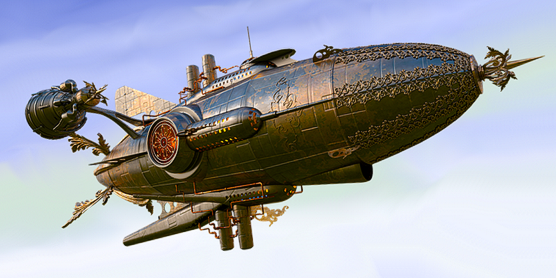
    The more unique the vehicle, the greater the imaginative leap required to visualize it from description alone. With some players, that doesn’t matter too much, but with others it can make all the difference in the world. Either way, it is something that they need to concentrate on in addition to playing, and that means that they can benefit from a graphic representation doing that part of ‘the work’ for them. Hence, the greater the distinctiveness of the vehicle, the greater the game value of an illustration.

    Image by Jean photosstock from Pixabay, sky by Mike.
    Try describing this vehicle in a couple of hundred words – whatever the impression your text creates will be inadequate next to the graphic visual image.

    Plot Impact

    The more important the vehicle is to the plot, including as a setting, the greater the Game Value because important pieces of roleplay will take place there. Making an RPG immersive is one of the greatest challenges faced by a GM, and illustrating a vehicle with significant plot impact punches above its weight in this area.

    It doesn’t even matter too much if the vehicle itself has low plot impact, being nothing more than a place where things happen while characters travel from A to B. If significant events take place there, then it can be considered an important location, and that earns it the same plot impact as though the vehicle were plot-significant.

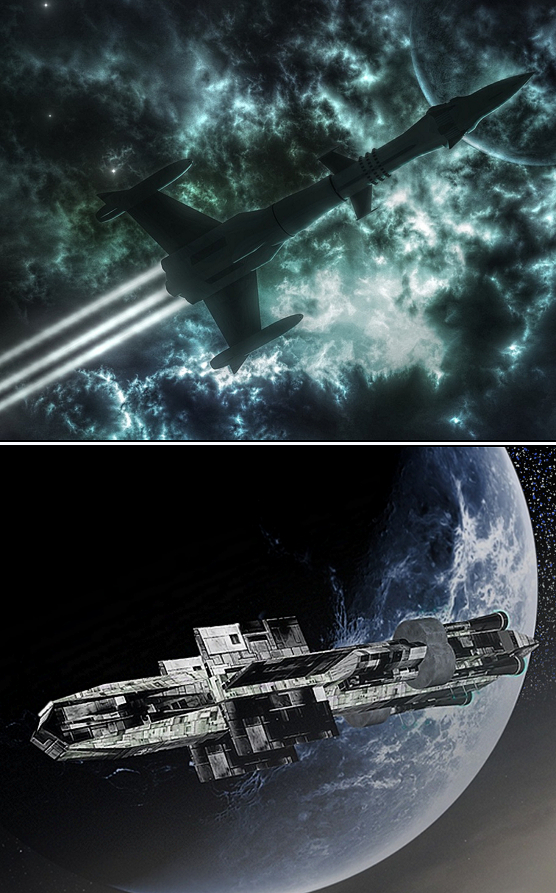
    Both of the spacecraft images below would be suitable as either a base of operations for a group of PCs or as a vehicle for the regular use of a group of PCs, but they convey very different impressions and subtexts. The first image is by Thomas Budach, while the second image was shared by Thomas Budach, both through Pixabay. Images rotated and cropped by Mike.

    Campaign Penetration

    I struggled to find the best terminology for this aspect of a vehicle. Simply put, if it’s going to appear in multiple adventures, if it greatly expands the choices open to the PCs, if it functions as a mobile headquarters for a recurring character of any kind, then the vehicle achieves a higher level of campaign penetration than it’s relevance to any specific adventure or encounter, and that gives it greater game value than might meet the eye.

    Metaphor, Metagame, and Implication

    These three elements, even in combination, are not as significant as those described before them. That’s why I have grouped them together into this one banner headline rather than counting each separately.

    Proposal One: Metaphor

    Telling players that their characters have traveled from A to B is not as effective as telling them this while showing an image of the vehicle that conveyed them. The vehicle itself is a metaphor for the act of traveling. One picture is worth at least 500 words in this case, maybe more – even if absolutely nothing of interest is going to transpire on board and you intend to hand-wave the entirety of the passage.

    Proposal Two: Metagame

    A vehicle can contain a cultural context that holds significance beyond it’s simple existence. Think back to the first appearances of the other schools in Harry Potter and the Goblet of Fire (the Durmstrang Institute and the Beauxbatons Academy) – the first thing you see is their mode of transport (the carriage drawn by pegasi and the ship rising from the sea floor). Both of these begin the process of establishing these schools and their styles even before they are introduced by Dumbledore.

    This is foreshadowing, which readers might not have realized is inherently metagaming – it’s the GM using his foreknowledge of the plot to hint at what is to come, and (in this case), manifesting it in an image. The image is therefore a critical piece of the plot, designed and intended to subtly prod the thoughts of the players in the “right” direction.

    And that gives such images a level of game value beyond any that meets the eye.

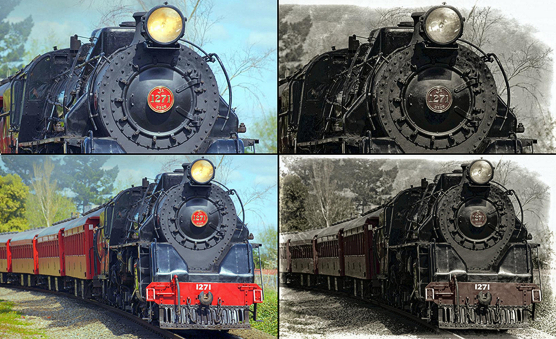
    This image places two representations of the same train from two different sources side-by-side. Which image you choose depends on the impression that you intend to convey. The mostly grayscale image was provided by Brigitte Werner, the color image is from blizniak, both from Pixabay, cropping and compositing by Mike.

    Proposal Three: Implication

    The players see an alien spaceship land. Even if the pilot is about to appear in its doorway and steal the spotlight, the first hint that the PCs will have as to the nature and intentions of the occupant is that spaceship. Depicting the ship lets the players process exactly what their characters are seeing, and that gives it a higher game value because it conveys implications about the contents.

The analysis below, as usual, is based around the first of the four attributes just discussed. That means that the primary source of nuance and differentiation within each resulting sub-category are the other ‘three’ attributes – Plot Impact, Campaign Penetration, and the three-legged Metaphor / Metagame / Implication bundle. Collectively, these comprise the Importance of the vehicle. Even the most common types of vehicle can have enough Importance to justify an extensive search; rising rarity simply elevates the “minimum importance”.

Mundane

Mundane vehicles are widely available in the campaign. Depending on the genre and time period, availability of images can range from the hard-to-find to the routine. For example, if you search for “1970s car”, you’ll be spoiled for choice; you will usually be better of with a more specific search – “1970s Ford”, “1970s sports car”, “1970s pickup”, and so on.

This fact provides the solution to the problem of the hard-to-find categories. For example, searching for “Carriage” brings up a lot of railroad images but not too many of the horse-drawn variety; to actually get results you are better off ditching the term “carriage” completely and substituting the specific type of carriage that you want, something that I’ve learned the hard way. Your starting point should therefore be the Wikipedia page dedicated to the type of vehicle desired – for example, this page for Carriages, and this page for Boats (hint: hover your mouse over each of the types to get a pop-up preview of the page, which generally includes a brief description).

Things become a little more problematic again when the vehicle is a type that doesn’t actually exist yet (and might never exist). For example, “Space Freighter”. Once again, adding “concept art” can find images that would otherwise be missed. In general, you are forced to apply functional descriptions as search terms because any other kind of specific yields few or no images at all.

Being well-read in the genre can make a huge difference. If you know that, for example, Space: 1999 contained exactly the right “look” for the vehicle you’re after, searching for “Space 1999 Vehicle Concept” will usually find you choices that are more useful because they have the right appearance for your intended purposes. Knowing many of the different sci-fi television shows, novels, authors, and artists can be a lifesaver. For example, do an image search for “Chris Foss Spaceships” – here, I’ll make it easy for you:

DuckDuckGo Image Search: Chris Foss Spaceships.

Foss is a quite famous sci-fi artist whose work features on a number of sci-fi novel covers; his style tends to be instantly recognizable.

Nevertheless, as a general rule of thumb, image searches for spacecraft and the tend to be either too broad, or too specific; there doesn’t seem to be much middle ground. Be prepared to aggregate the best results from multiple searches in order to find enough choices.

Other additions to the list of search terms that can be useful are “Primitive”, “futuristic”, “Sci-fi”, “Scifi”, “Interplanetary”, “Interstellar”, “Intergalactic”, and so on, both singly and in combination. The sheer number of possible search terms that result can quickly become overwhelming; it’s almost unheard-of to search for all the possibilities. That means that a significant fraction of the possible terms never get searched for, and a significant number of the possible results will never get found. To combat this, I try to perform subsequent searches in alternating sequence – first to last, then last to first.

Further expanding the scope of potential results (and I’m sure I’ve mentioned this before), the algorithms used by the different search engines are all different and frequently find different results. Learn to use them all; have one primary go-to (mine is DuckDuckGo because I find it more convenient, my fallback is Google (which used to be my #1 choice, but they have made it progressively more annoying and hard to use), after that Qwant, then Bing – except that sometimes I’ll scramble the order to avoid over-reliance on the same sources..

    The devil’s in the inconsistent detail

    Two of the biggest problems that you will face is technology that looks too dissimilar and technology that looks too similar.

    Two alien races should have differing engineering philosophies, and that should translate into a distinctive appearance for their respective spacecraft (or sea-craft, for that matter). At the same time, the same physics will usually apply to both, and so there should be some consistency, too. And that can be a very difficult duality to achieve.

    Star Wars doesn’t quite pull it off; their designs are too variegated for consistency. Star Trek does a better job – Vulcan, Romulan, Klingon and Federation ships all operate on similar physical principles, and so there’s a consistency of general design principles, but each race also has its own style. If a ship shows up in an episode that looks different, it will prove to operate on different physical principles, often with benefits and disadvantages that the rest don’t share.

    For contrast, study the different ships of Babylon-5, in which the technologies and design priorities of each race are distinctly different and so each race’s ships are similarly distinctive (Earth ships look like they were designed by Chris Foss…). Each race’s design ethos also translates into many other design manifestations – from homes to diplomatic quarters to weapons to… well, you get the point.

    Decide where your dividing line has to be and stick to it like glue; that is your only pathway through the complexities of inconsistent consistency and consistent inconsistency!

Game value of images can range from the trivial to the monumental, but even the trivial ones tend to still offer some reward to the GM who seeks them out.

Image by pschulz from Pixabay. If you needed this ship to belong to a specific individual or nation, it would be easy to replace the name with something more appropriate to its plot function. “La Petite Sirène” says French, for example.

Common

Common vehicles are less widespread but still easily obtained if you go to the right place. They are vehicles that most travelers would see regularly if not with great frequency. For example, while sailing the Mediterranean, it would not be all that surprising to see a Spanish Galleon in the appropriate era, or a Dutch Trader, but a Barque showing the colors of Turkey, or one of the Scandinavian countries? Much less likely.

Or, to take a D&D-relevant example, Carriages would be mundane, Royal Carriages would not – but there are enough nobles that you would probably see one every month if you were traveling regularly. Or carriages might even be ‘common’ and wagons ‘mundane’ in your game world.

The same search tips and techniques apply to common vehicles, as do the same problems.

A gorgeous picture of a very specific aircraft, the SR-71 Blackbird. Image by WikiImages from Pixabay

Specific

Specific vehicles are where things often start to get sticky for the fantasy GM and easier for the sci-fi GM, because – as with all searches – the more specific you can be, the more targeted your search results. You may get fewer matches, but the average result will be a better match. But specific for the Fantasy GM means something that matches a specific style, and they can be very hard to match.

At one point, for the Pulp campaign, we needed to find an image of a longs hip being excavated. There were a number of viking long-ship images, but very few of them matched that specific criteria. What’s more, they were all photographed from above, we needed one that was at or above the eyeline of the observer. I ended up getting a ship from one image, the dragon-prow from another, some oars from a third, and some colorful shields in a row from a fourth, then compositing everything with a background image that was itself a composite of multiple images. This search was so specific that the full criteria approaches ‘unique’ status, but even discarding the additional requirements, there were so few matches that the general principle still holds.

Despite this, there is a ray of hope that gets bigger all the time. Artists keep creating images, and those images keep getting curated on the web. The pool of possible results is always growing. That doesn’t mean that obscure images will suddenly become commonplace – but it does mean that there is always hope that someone’s artistic product and your need will intersect!

Unique

The bullet train (image by Armin Forster from Pixabay) is probably a unique vehicle whenever it appears in an adventure…

…but so might this custom supercar (image by Lee Rosario from Pixabay)….

…or this cloud-riding fantasy ship (image by gene1970 from Pixabay)…

…or this rusted wreck in the desert (image by nightowl from Pixabay, cropped by Mike)…

…or this futuristic personal transport (image by Mystic Art Design from Pixabay)…

…or this flower-power van (image by Thanasis Papazacharias from Pixabay)…

…or this mothballed, cannibalized, and derelict aircraft fusilage (
image by Pete Linforth from Pixabay)…

…or this space-folding flying saucer (image by Vicki Hamilton from Pixabay). It’s all about the vehicle being EXACTLY what you need, in the right type of setting.

Which brings me to the problem of unique vehicles. These are either something completely specific, like the Millennium Falcon, or Galactus’ spherical ship (from the Comics, not the movie), or the Battlestar Galactica (original or revised version). Or maybe Thor’s Chariot – which (surprisingly) has no unique name (the Norse named his goats, his hammer, his belt, his servants, his gloves, and his staff – but not the chariot drawn by those goats. Go figure).

Quite often in this category, though, ‘unique’ is a misnomer. You might need a ship with a particular figurehead or a specific name, for example, and have multiple other requirements, just as we did with the Viking ship; but we weren’t looking for a specific Viking ship, any ship that matched our needs would do.

Many of these are relatively simple editing jobs in Krita. It’s usually easy to paint out an existing ship name and replace it with a new one, for example.

What this adds up to is that the most unusual vehicle images are often less work than a highly specific one, because – ironically – you can compromise more regarding the image content when you know that you are going to be editing it anyway.

Another week of medical to-ing and fro-ing is in prospect, interfering with my ability to post. I’ll try to get the next mini-post, Locations, done for the usual posting time, but it may be delayed 24 hours or more.

Comments Off on On The Priorities Of Graphic Depiction 5: Vehicles

On The Priorities Of Graphic Depiction 4: Monsters and Encounters


This entry is part 4 of 8 in the series Priorities Of Graphic Depiction

This post has taken a lot longer than expected, delayed by medical testing that was like a black hole sucking in time. And there’s more of it to come, I’m afraid…

The story so far…

This is the third in a set of mini-posts that I’m writing and publishing as quickly as possible, something I’m calling a mini-blitz. My normal publication schedule will resume at the end of the series.

Each post will examine one of the specific image categories nominated in the first post of the series, dividing them up into strata of commonality.

The goal is to define a set of policies, processes, and principles that use the game value of the result to define how and how hard it is worth searching for a particular image within each category / strata combination.

Image by Felix Lichtenfeld from Pixabay. It’s even scarier at a larger size!

Monsters and Encounters

‘Monsters’ have a commonality, in game terms, proportionate to the danger level they pose. In fact, in an RPG (regardless of genre), increasing rarity equals increasing deadliness.

There is even a level above the uppermost tier of commonality where you are dealing with named and discrete individuals, which are better treated as unique NPCs. In D&D that’s individuals like Beelzebub and Odin, Hercules and Tiamat.

Encounters are a little stranger, since monsters are already covered. Weather events are dealt with in the Effects category, NPCs are in the People category, environments are in locations – there’s not a lot left.

Or is there? There’s a lot of ground between the basic level of danger represented by the bottom tier of “Monsters” and nothing at all; in fact, in some genres, almost everything will fall into that category. Deer, birds, bees, sheep, cattle… So “Encounters” is being used as a label to reference “ordinary” animals (and plants), while “monsters” is being reserved for creatures that are the products of the collective human imagination.

Encounters

With that determined, I can look more closely at the commonality strata as they apply to these different categories.

Mundane Encounters

are

  • the small creatures – birds, small lizards, rabbits, mice, and the like;
  • small fish (did you know that properly-cared-for goldfish grow 1/2″ every year and can get to 14-16″ in length?); and
  • insects.
  • And most plants – grasses and bushes.

These creatures don’t add much Game Value in and of themselves. What they do is add a living, active, ingredient to the landscape in which they appear. If you need such an illustration, it should be judged as a Location image – at least under most circumstances.

There are a few exceptions to bear in mind. The first is where there is some additional plot relevance to the animal’s appearance. The second is where the animal is somehow out of place, which lends additional significance to the very fact that the animal is where it is.

For example, recently in the Zenith-3 campaign, I used a very picturesque Elk in the middle of ‘town’ to illustrate how small and decentralized the community in question really was. A second example is the (forthcoming) appearance of a toucan in flight in the Adventurer’s Club campaign, which (in combination with some other images) should suggest an environment teeming with life.

The examples show that there can be plot value in such images by virtue of the impressions that they suggest to the players, but outside of such purposes, they have very limited utility. If you can make valid use of an image of this type, they tend to be fairly easy to find, permitting you to select the image that adds the maximum value to the campaign.

Common Encounters

The contents of the Encounters category begin to diversify markedly in the Common sub-category.

  • small creatures that are inherently dangerous – some frogs, snakes, and so on – and
  • larger creatures that are not so dangerous – goats, sheep, deer, etc.

This also includes

  • the smallest dinosaurs (up to, say, 1 foot in length);
  • apes up to the monkeys,
  • mid-sized fish – up to the size of trout, salmon, and barracudas;
  • and any plants that are shorter than a person, including those smaller plants that can be considered exotic or dangerous (Venus fly traps, orchids, etc) – which complete the category.

These are a bit of a mixed bag in terms of Game Value – some can be quite high, others not so much. Aside from the dinosaurs, you should have no trouble finding what you need, so rarity is not a real consideration.

Let’s deal with the exception noted above. If you do an image search for “small dinosaur” you will be presented with a few options; opening the source page of one of the results should give you the scientific name of the species that has attracted your attention, and an image search for that specific variety of dinosaur will usually yield a better range of results from which to choose.

The impact of the creature on the plot should guide your decisions; if the creature is not significant, you can usually live without the illustration. Exceptions are the same as for the Mundane variety of encounters. As a general rule of thumb, and to state the obvious, the more dangerous the creature is, the more likely it is that the encounter will be significant to the plot.

Specific Encounters
  • …start with the mid-sized hunters – eagles, hawks,
  • jaguars and most of the big cats,
  • wolves, wolverines, etc,
  • all the way up to and including alligators and crocodiles;
  • And the really big herbivores, including elks, moose, elephants, hippos, etc.
  • Most dinosaurs also belong in this category, all the way up to multi-ton plant-eaters.
  • The larger apes, excluding the really big ones (gorillas, orangutans) are also part of this category, as are
  • fish up to the size of dolphins.
  • and plants that are bigger than a person and shorter than a house. That includes virtually all the fruit trees, vines, etc.

Basically, anything that’s left that isn’t in the fourth subcategory, below.

As you can see from the listed contents, these creatures tend to be a lot more attention-getting and potentially quite dangerous (at least in most game systems). That makes them much harder to ignore, from the perspective of the players, and that translates into a high Game Value for an illustration (from the point of view of the GM).

In D&D, these are the sort of encounters that you use to let the PCs blow off a little steam without doing much to reduce the emotional intensity that has built up. Used in this way, the image has considerable Game Value.

I would be prepared to spend 5-10 minutes ferreting out an image for one of the encounters on that list. Maybe less for the fish, depending on the Story Value. Not that it should take that long, as most of these images will be broadly available. In fact, in many cases you may find yourself spoiled for choice.

Unique Encounters

Any animal that can’t be ignored, even if you are in a safe place.

  • Raptors, T-Rexes, etc,
  • Lions, Tigers,
  • Gorillas, Bears, arguably Rhinos,
  • Kangaroos and Cassowaries,
  • Great Octopi and Giant Sea Squid,
  • Whales, Sharks, etc.
  • Plus trees taller than a house.

Everything said in the last section holds true for this category except for the last paragraph.

Some of these have loads of images to choose between, but there are some that are surprisingly hard to find. You will either strike gold very quickly or you will need to get creative. And that won’t be as easy as it sounds in some of these cases.

Monsters

Attitude counts for a lot in this category, as does sentience, because it allows creatures that have more tools at their disposal than they are endowed with by their nature..

Mundane Monsters

Anything small than a man in weight that is not intelligent.

While a few examples, like Blink Dogs, may have sufficient plot value to justify an image search, these will be rare exceptions. More often, the depiction in your monster sourcebook will be as good as anything you can find online.

Common Monsters

Anything up to man-sized that is intelligent, and anything that can be considered inherently magical that isn’t in one of the two higher tiers. Like Unicorns.

It’s far easier to find interesting images online for most creatures in this category, and that (coupled with obvious plot relevance) yields obvious Game Value that justifies a search.

These include some of the favorite choices of subject matter for many artists. Which brings me to a useful tip: adding the words “fantasy art” to your search term can open up whole new worlds of results for your inspection, as can adding the words “concept art”.

Specific Monsters

Anything man-sized or larger that isn’t in the fourth category, excludes anything that is not considered sentient. That’s all your Ogres and Trolls, Ents and Elves, and a great deal more, besides.

Unfortunately, these are less popular as image subjects, so the increase in Game Value is matched by a decrease in image availability. Accordingly, you will often be in for an extended search of 30 minutes or more before you find anything useful. Fortunately, those image search tips offered in the previous section are still valid.

Unique Monsters

Beholders, Dragons, Mind Flayers, and anything of similar cache. Like the top tier of Encounters, these are the creatures that can’t be ignored, even if you think you’re in a safe place with respect to them. That would also include your higher-type Demons and Devils, of course, and Djinn, and Greater Elementals.

These are all creatures that should be treated as top-level NPCs, but often aren’t, even by experienced GMs.

On top of that, anything special brewed up by the GM as a featured monster – like the menacing Halloween creature used as an illustration at the start of this mini-post – also goes into this sub-category, which suddenly seams almost bursting at the seams.

Some of the most popular subjects for fantasy art occupy this category, but that can be a mixed blessing; two artists can have different visions for the same subject that are wildly incompatible. This can completely undermine the verisimilitude that justifies the image search in the first place, if you aren’t careful!

Sometimes it can be more valuable to do the image search first and create the encounter second, drawing upon what you find for inspiration.

Next: Vehicles!

Comments Off on On The Priorities Of Graphic Depiction 4: Monsters and Encounters

On The Priorities Of Graphic Depiction 3: People (NPCs)


This entry is part 3 of 8 in the series Priorities Of Graphic Depiction
The story so far…

This is the third article in this series, and the second of a set of mini-posts that I’m going to be writing and publishing as quickly as possible, something I’m calling a mini-blitz. My normal publication schedule will resume at the end of the series.

Each post will examine one of the specific image categories nominated in the first post of the series, dividing them up into strata of commonality.

The goal is to define a set of policies, processes, and principles that use the game value of the result to define how and how hard it is worth searching for a particular image within each category / strata combination.

The first mini-post dealt with Objects. Today, the subject is NPCs.

People (NPCs)

Compared to the category of Objects, People are relatively straightforward.

Mundane

Mundane NPCs are your generic crowd scene, or representatives from such a scene. These can be divided into four subcategories:

  • Crowds that say nothing more than “the location is crowded.”
  • Crowds that are important because of the common activity being depicted.
  • Groups that are important because of some collective common feature.
  • Individuals with whom no significant interaction is expected.
    The Location is crowded

    The crowd are superfluous window dressing in such images; the importance is actually dependent on, and attached to, the location itself, and (if anything) the crowd is likely to be obscuring that, though they would impart a greater realism to the scene. Such images should be evaluated as depictions of the location, which will get dealt with in a later mini-post.

    Depictions of activity

    Shoppers in a bazaar or marketplace, for example. This category is a half-way house in which the activity of the crowd and the location tend to be of equal significance, but an image of rioters would also fit into this category with no location value being evidenced.

    Such activity depictions tend to be plot-significant, so these images are immediately possessed of Game Value. Depending on the nature of the crowd, they may be either easy to come by or extremely hard to find. “Medieval rioters” would be quite difficult, for example, although you might succeed by thinking outside the box – a still of villagers from Frankenstein, for example, might fit the bill.

    Common features of a group

    The King’s Guards. The palace courtiers. The Riot squad. An invading army of orcs, or androids, or martians. An ordinary group of people all suddenly wearing the same badge, or mask, or whatever. A demon horde.

    No way any of these would ever be relevant, is there? Quite often, it’s the mere fact that there are a group of them that is the most important fact to convey; the actual appearance of the group is secondary in such cases.

    This can get tricky, because you might be able to find an image of a representative member of the group but not of an assembled group. That puts you in the position of displaying the individual as a representative member, or of editing the image to insert additional copies of the individual which are then manipulated to create diversity to the required level. I’ve worked it both ways, depending on the Game Value of the group, but in general, the first would be the most acceptable compromise if an actual group shot can’t be easily obtained.

    Individuals of no plot importance

    The final subcategory deals with another form of window dressing, the movie-set extra. These exist for no other reason than to add verisimilitude to a scene, but they can be useful in hiding inappropriate content from the viewer in a visually-arresting way. It’s just as much work to insert a small dragon into an image as it is to paint out an air conditioner, but the scene-plus-dragon is likely to be the better result.

    I’ve also used this technique to cover street signs, fire hydrants, and to replace inappropriate (modern) vehicles with something more era-specific; the general term I use for the procedure is ‘time-shifting’.

    For example, you can take a modern image (without too many people) of a British village’s historic town center and use a few bits of window-dressing to set the image in a medieval era. All you need to do is recognize the possibility of the altered image when viewing the source, and plan what you are going to need to correctly “dress” the scene.

    Beyond such purposes, though, rent-a-crowds have very limited Game Value.

So there are some functions of appreciable Game Value for images of mundane (in plot terms) people, and some of negligible value. This makes your intent in choosing to display such an image (assuming that you can find or make one) critical. You need to have a specific purpose, and you then need to select images or image elements that achieve that specific purpose. Anything more that you might get out of the image is a bonus.

Clearly, some of these will be more easily-obtained than others. As a general rule of thumb, the greater the Game Value of the resulting image, the more difficult it will be to find the right image. This simple relationship means that you should search until you find something suitable if a search is warranted at all.

Ideally, you will find two or three images to choose between, but there is often a degree of luck associated in finding anything at all. Therefore, when undertaking such a search, I don’t take the first result, but continue until either I have enough such options, or the search extends beyond what I consider the Game Value in prep time – at which point I choose between whatever I have found. That might be one image, or a pair of images, or even more – if the plot value was high enough that I had continued the search after achieving that ideal result (it has happened).

Common

Common People, from the standpoint of Game Value, are NPCs who may be named, but whose identity as individuals is subsumed to some other factor. That factor may be a personality trait (“angry young man”) or a social trait (“fop”) or a profession (scientist) or whatever.

The interaction with one or more PCs gives these individual NPCs significant levels of Game Value, and this was one of the drivers of the high Game Value score in my initial insight into the subject (the chart shown in the first post of the series)..

Naming such individuals gives the option of addressing them by name, having them introduce themselves, etc – it makes interaction easier. But it is often unnecessary. The rule of thumb I employ derives from the anticipated interaction between the NPC and the PCs – if this is such that it would be reasonable for the NPC to offer their name, or if the PC is likely to be directed to speak to the individual by name, then I name them.

Searching for such images is usually a case of searching for depictions of the “other factor”, possibly with additional qualifiers. Having a broad vocabulary helps. When searching for “Brazilian Deckhand 1930s”, the actual image chosen after a recent search was found using just “Tropical Deckhand”.

Because you will expect to make multiple searches, you need to be decisive. Use any tools on offer (image size especially) to narrow your search down. Any ‘contenders’ should be opened in new tabs and keep going until you have five or six of them, then winnow down to the most satisfactory image.

What’s more, amortized effort is again a consideration – the same NPC may reappear multiple times in the campaign. It’s worth spending a little extra time on such image searches because there will be virtually no effort required for subsequent appearances.

In terms of availability, people are one of the most commonly photographed subjects. That tends to produce a lot of images for you to choose from. Specific restrictions bite into that ubiquity – some more than others. Some searches will yield a lot of results, some few, and it can be unpredictable. So budget your time expecting trouble and take advantage of it when random factors align in your favor.

Specific

This sub-category generally indicates the need for an image with multiple specifics, but not a real, named, individual. Luftwaffe Captain with a scar, Riverboat Gambler with cane, Monstrous Hulking Porter, Beautiful Blonde Concierge… you get the idea.

The one thing that members of this sub-category always have in common is that you expect there to be considerable interaction between this NPC and one or more PCs, either now or in the future. That in turn means that the character that the image is to depict will play an important role in the plot, and that it is all the more important for the players to be clear about the character that’s doing the talking..

All the advice in the previous section still applies. Both the Game Value of the image and the difficulty of finding a match have increased, but in proportion, so the same standards of results apply. The increased plot value / interaction level goes on top of that, so this is a search in which it is worth taking your time and being a little more exhaustive.

I’m going to reference this sidebar again in the final part of the series, but it’s an important search tip for right now: you will often get better results, faster, if you do your image search and then write your descriptions, etc.

In the Adventurer’s Club campaign, we set a high standard for such images in terms of the amount of personality conveyed by the image. Sometimes, those results are achieved by searching for the personality profile we want (and being less selective with respect to other character traits), but more often, we will search for some specific desired quality and cherry-pick the results that show the most personality regardless of the makeup of that personality – then we can pick between the population of the resulting short-list.

The image above could be any government or business figure. The emotional content is subject to interpretation, but the image itself displays a lot of personality; it has impact.

Unique

There are two types of Unique individual. The first is someone real, often doing something specific – Stalin making a speech, Lincoln tipping his hat, Churchill looking stoic, etc. These are no more difficult to find than Specific images, but have much higher Game Value by virtue of the baggage and reputation that they carry. This is even true of images of individuals that the players won’t necessarily recognize – for example, James Buchanan – at least until you provide a relevant biography.

The other type is of an individual whose specifications are sufficiently distinctive that the likelihood of a successful search plummets. As noted earlier, the Game Value of such an image tends to rise proportionately, which means that you can justify spending quite a bit of time and effort generating a custom image, which is quite likely the only way that this sort of image search can succeed.

In both cases, the Game Value is about as high as it can get. These are always important characters in the adventures in which they appear (otherwise there would be no point in such distinctive characters appearing).

Depicting important characters is therefore about as important as it can get.

To close out this mini-post, I thought that I would repeat an image first shared about a year ago, of Brother Simon, the Pacifist Dalek, which is an example of the second sub-type of unique character.

Next: Monsters and Encounters

Comments Off on On The Priorities Of Graphic Depiction 3: People (NPCs)

On The Priorities Of Graphic Depiction 2: Objects


This entry is part 2 of 8 in the series Priorities Of Graphic Depiction
The story so far…

This is the second article in this series, and the first of a set of mini-posts that I’m going to be writing and publishing as quickly as possible, something I’m calling a mini-blitz.

My normal publication schedule will resume at the end of the mini-blitz.

Each post will examine one of the specific image categories nominated in the first post of the series, dividing them up into strata of commonality.

The goal is to define a set of policies, processes, and principles that use the game value of the result to define how and how hard it is worth searching for a particular image within each category / strata combination.

Objects

This first mini-post is likely to be one the larger ones of the series. It deals with objects – which is to say, things. This is a category full of nuance and shadings and exceptions, many of which will need explicit examination within.

Mundane

As a general rule, mundane objects are ubiquitous within the game environment and have virtually no Game Value. If you mention a lantern, the exact design doesn’t matter very much, and spending any time describing the details is counterproductive.

And if the exact design does matter, the mere fact that it mattered enough to search out an image instantly telegraphs that significance to the players, even if there is no reason for them to recognize it. If you wait until they do recognize the importance, they will already have formed a mental image of what the lantern looks like, so the image is at best superfluous, and at worst counterproductive again.

There are, however, a number of exceptions to this principle.

  • Objects that are iconic to a culture that is different to that the PCs are used to can carry greater Story Value by symbolizing the whole ‘we aren’t in Kansas anymore’ message. The vase and other objects in the image above clearly illustrate this principle.
  • If there is something else visually obvious about the object, it can carry greater Story Value by representing that the owner has unusual objects.
  • Some objects are especially symbolic of culture, no matter how mundane they might be. Food is a great example.
  • Some recurring objects can, by virtue of the repetition, have a greater Game Value. But these are usually a lot more specific than this category.
  • Any Vehicle that does not have enough Plot Significance to warrant illustrating the interior is considered to be an object, and some of those will be ubiquitous enough to be a Mundane Object. You can quickly determine this to be the case when you don’t care what the ‘object’ looks like, just that it looks ‘good’ or ‘cool’.

Searching for such images is a lot easier with a touchstone term. The basic search term is the name of the type of object – “lantern”, to continue the example. A touchstone term defines a specific subcategory with a descriptive term. That term could be “oriental” or “Babylonian” or “gold” or, well, anything your can think of that will winnow through the chaff and get you the image you want.

Always remember what the search terms mean when you enter them in an image search – they are terms that appear on the web page where the image being displayed can be found. If you are very lucky, and depending on the subject of the search, that might be a description of the item. But it might not. “Babylonian Artifact Restored” might be an even more successful search term than “Babylonian Lantern”, even though it is more likely to throw up non-lantern results. You have to Design your search terms.

As a general rule, availability of these images is quite high, because – once again – you don’t particularly care (or shouldn’t) what the image result is, so long as it will look good. But even so, unless there is some specific Game Value that will be achieved, these images are not worth the time to pursue.

With one exception, in addition to those listed above: Immersion. This is always hard to achieve, but a succession of relevant images is one way of doing so. Such a sequence contains, collectively, greater game value. This is especially important when setting the stage for a mystery plotline.

Common

Common images are Mundane objects with one element of specificity about them. That specificity must have specific game value or it doesn’t count.

That usually means that you are looking to compile a consistent “look”, and (as explained earlier) that gives the image results a greater Game Value.

It also means that you are justified in making a quick search for images of the specific objects. You may not find everything you want, but a little creativity in your search will usually find most of your wish list.

The same exceptions listed above still apply, and now warrant something more than a cursory search. My personal standard is to try to find three choices for each image, enabling me to choose between them.

I also pay special attention to the background behind the object. There are three possible options:

  • A plain background, which may be cut away digitally and replaced with a more relevant setting;
  • A background that constitutes a reasonably relevant image already; or
  • A background that constitutes an irrelevant image that will be difficult to redact and replace.

Clearly, the second option is the most efficient, the first is an acceptable outcome, and the third should only be considered if the proposed illustration has the highest possible Game Value, i.e. you consider it essential that you have something to show at that point. And that is especially rare when you’re still dealing with common objects.

Another way to look at these potential illustrations is as seasoning for your adventure. As with cooking, a little can go a long way, and it is very easy to use too much salt, pepper, or spice. Be selective and take the time to prioritize your desired results. The default option should still be not to add an illustration unless it carries extra Game Value.

In practical terms, the stricter requirements mean that only 10-40% of the images found under a “mundane” level search will still be relevant, possibly less. That’s another way of saying that it will take about 2½ times as long to do an adequate image search.

That in turn sets the threshold that you should apply – unless the object has at least 2½ times as much Game Value as some generic “flavor” object, it’s not worth the effort to search. That’s a threshold that only examples that are right on point can reasonably sustain. If the result isn’t at least some minimum shade of perfect, forget it; you’re better off without an illustration.

Specific

As the specifics of what you want increase, the difficulty of finding exactly what you want in an image search also increase, and it becomes increasingly practical as a solution (if you have the skill) to edit an image to get what you want.

The effect of the latter is to broaden the scope of a search that has become so narrow as to be difficult and time-consuming. The greatest probability is that it will still be so, even after that compromise.

In many (but not all) cases, the Game Value of the image as an illustration will also have increased, but has it increased enough to justify the time and effort involved?

Sometimes, the answer will be yes, and sometimes no.

The answer will be different from individual to individual, depending on how skilled they are at image editing and manipulation. But it will also, inevitably, be fuzzy in other ways.

You see, when an illustration is provided by the GM, the assumption is that the players will find it useful or even need it, but that’s something that will vary from player to player and from day-to-day. On one occasion, a given player might need the extra support to get a clear understanding of what’s happening in-game, and on a different occasion that same player might not.

It’s usually the best that you can do to play the odds, while allowing yourself a margin of safety.

Most of the time, you can ignore this and simply go with your gut; it’s when the effort required is close to the limits of what is acceptable that this assessment is most likely to be unreliable.

A “Specific” image is one in which most parameters of image content are fixed and unalterable, but the object is nevertheless sufficiently popular as an image subject that there is a reasonable likelihood of finding something that can be manipulated to be “close enough” for game purposes.

In the first post in this series, I discussed the cars that the PCs could choose between in my Zenith-3 campaign. One of those was a Sky Blue and Burgundy Sedan DeVille. The image that I found for this car was White and Burgundy. It had to be edited to provide the image that was ultimately used. In fact, about half of the cars on the list needed image alterations of this kind. Most of these changes took less than an hour, a couple took a full evening each. All told, the available prep time meant that this editing took a little less than two weeks.

The only reason they held enough Game Value to justify this was because we were in Covid Lockdown, and hence I had substantially more prep time than would normally be the case. In normal times, I might have edited the images representing the cars that the PCs chose after the fact, but not doing them all in advance.

There is also the possibility of ‘amortizing’ the effort over multiple adventures.

One of the ongoing ‘bits’ in the Zenith-3 campaign is the mysterious appearance on one character’s pillow each day that she is where she is expected to be of a set of perfectly-fresh gourmet muffins and an exotic, even magical, coffeepot. This always has two stalks, each of which dispenses a different beverage designed to ‘match’ the muffins.

Every time this coffeepot has appeared, it has been a different color. It took a while to isolate the coffeepot from its background the first time it appeared, but because I saved the file in Krita’s native format, it took only a handful of minutes to change its appearance the next time.

The image to the right is a compilation of the four colors that it has manifested so far in the campaign.

Oh yes, when the last cup of beverage has been drawn from within its depths and it is set down, it vanishes the first instant that no-one is looking. What’s more, the players have discovered that if they stay put in a strange place for long enough, the muffins and coffeepot will start showing up there – it just takes them a couple of days to find the PCs.

This involves a more sophisticated calculation – first use and ongoing use – because it can generally be assumed that ongoing use will require a lot less time than doing the initial image editing, while the recurrence increases the Game Value of the illustration.

Technically, because the examples are all supposed to be the “same” coffeepot, this would be a unique object; but because the images are different each time, it should be treated as four separate objects.

I use the same logic and technique when I have the TARDIS materialize in the Dr Who campaign – a different background each time, and I have three different “pre-faded” materialization to choose between. It takes very little time to marry a chosen background and a prepared Tardis Materializing (it usually takes a lot more time to find the right background, to be honest).

Because the baseline Game Value of these images is higher, anything on the exceptions list becomes a high priority.

Unique

Unique images have to match specifications so exact and so distinctive that the chance of finding one of them in an image search is essentially nil, and there is a near-certainty that a base image will have to be edited to get what you want.

Such images do not all have the same Game Value as illustrations, however. It depends on how central they are to the story. What can also be said is that even those of comparatively low Game Value – “Magic Sword,” for example – this value may be high enough to justify a search.

It’s usually a lot less work to find a suitable image and alter your description to fit, than to create a bespoke image. For that reason, it can be a good idea to do a lot of your image searches as you go.

There is a compromise approach that should also be borne in mind: curating a list of required images, with some sort of priority rating. That rating tells you how much effort to put into the image, taking everything discussed here into account. One-star might be “quick search, take anything remotely compatible”; two stars might mean “ten minutes search, accept only good images of a decent size”, and so on; that’s up to you.

As a general rule of thumb, I like to have two or three alternatives to pick from – sometimes more – as I may have said already. There are times when an image that is ‘good enough’ (or even ‘perfect’) pops out of the woodwork, and is accepted immediately, though.

Next: NPCs.

Comments Off on On The Priorities Of Graphic Depiction 2: Objects

On The Priorities Of Graphic Depiction 1


This entry is part 1 of 8 in the series Priorities Of Graphic Depiction

A False Start

Last week, I was discussing an image that I had composited for the pulp campaign with my co-GM.

I made an off-hand remark about how justified I felt about expending the time and effort on the image.

He agreed, positing that the greater the demands on the imagination of a scene, the more useful it was to relieve that load, enabling the players to focus on the game situation.

That sparked a thought that seemed like it would make a good post for Campaign Mastery, so here we are.

My initial reaction – the thought that I mentioned – was that there were two spikes in the utility of graphic depiction – one that focused on the specific but big-picture, and one that focused on isolating a specific from the innumerable possibilities that arose from a more generic subject matter.

The chart to the right describes this first impression, and it’s an insight all on its own that it would be worth exploring in a post.

Unfortunately, a second thought a moment after showed that it’s half-false and half-misleading. There was a critical factor that this alleged relationship was completely ignoring.

A Better Beginning

The missing factor: the potential importance to the plot of a clear representation. This could be said to multiply by the commonality of the subject to give a more reliable index to be charted against the game value of a graphic representation.

So, an image could be of something quite common (a low uniqueness) and even if very central to the plot, it would have a low game value. Or it could be of something quite unique, which means that even if not central to the plot, it has some game value – but if it is central to the plot, its value as an illustration achieves astronomical value.

And, I was all set to write today’s article on this subject – but the presence of one additional factor implied the possibility of more, so before I committed myself, I invested a bit more time in thinking about the subject, and sure enough….

The Final Attribute: Availability

…I found that there was an assumption buried within the analysis to date: that all images desired would be equally available. It took only a moment’s reflection thereafter to realize that this flawed assumption would completely invalidate any analysis that didn’t take it into account, and that there was no one-size fits all answer to accommodate the attribute of availability.

The more I thought about it, the more relevance seemed to attach to this question of availability. At first, I thought there were three types of impact, but further reflection suggested that two of the three were closely related.

    Availability Manifestation 1 – The Likelihood Of Success

    The first primary impact is on the likelihood that you will find an image matching whatever specifications you might have, or one that is at least close enough.

    A secondary outcome would be an image that could be quickly and easily modified to transform it from unsuitable to ‘close enough’ – introducing a sub-variant factor to consideration, which also has to be taken into consideration. The easiest way of doing so is to expand the concept of quality of result to include the potential for modification to achieve suitability.

    Availability Manifestation 2a – The Importance Of The Hunt

    A problem that needs to be considered is that you can’t know the outcome of a given search until you actually undertake that search. While you can make educated guesses about the likelihood of success based on the specifics of the search, and your capacity to compromise, there are perpetual surprises of both the good and bad kind.

    Going on an image hunt is not unlike rolling a skill check – all sorts of things can be reflected in the bottom line, but in the end, it all comes down to luck and the scope for the manifestation of that luck. You can never be completely sure of the outcome until you roll those dice.

    ‘Availability’ is a critical assessment that can never be perfect. That means that the greater you can refine your estimates of the likelihood of success before you start, and in the early phases of the search, the more accurately you can assess the likelihood of success – and whether or not it’s worth you continuing with the hunt, or should switch to an alternative approach.

    Availability Manifestation 2b – The Value Of Image Generation

    Not everyone is as adept at image generation as I am. That should surprise no-one. There are also artists out there who can generate works that leave me awestruck in the same time (or less) as it would take me to churn out something just barely adequate.

    Also, to be completely honest, sometimes works seem to go a lot more smoothly and quickly than I expected before I started, and at other times, the simplest job seems to have unanticipated complications that add hour after hour to the project.

    Again, we have a ‘best guess’ fuzziness attached to each project; you can’t predict in advance with complete precision where that project will fall.

    What can be said is that if you honestly evaluate each project relative to an accurate perception of your skills, the actual difficulty and project time will fit more-or-less on a standard distribution, a dumbbell curve, centered on the ‘best educated guess’. In the long run, therefore, your estimates should average out if you are honest with yourself.

    But it’s possible to bias the odds in your favor by choosing a base image that is more suited to being manipulated to meet your needs than one that needs a lot more work.

    There are all sorts of skills involved, and you get better with all of them with practice – so the bar of what is achievable in a reasonable time-frame keeps rising, and the accuracy of your estimates improves constantly. This means that it doesn’t really matter how adept you are with a (digital) paintbrush; being unskilled simply means that you have more scope for improvement.

    Generating an image yourself is always a compromise over finding the perfect image ready-made. Sometimes, that’s a compromise worth making; sometimes, it isn’t – and often, you can’t tell until you are neck-deep in the project.

    That’s the point of the (ongoing Image Compositing for RPGs series – collected hints, tips, and tutorials to boost that learning curve into the stratosphere.

    “Availability’ is not a simple linear measure of the chance of finding an image that can be modified to your needs; each possible answer also has to be evaluated with respect to the amount of work required, and the amount of prep-time available. It might be that a less-acceptable image with a lower overhead is going to be a better, more practical, choice than one that would yield a better result but would require three times as much work to complete.

    Game Value vs Availability

    It’s worth taking a moment to define exactly what the goal of the analysis was supposed to be. What I wanted was to develop a schema that identified the relative value attached to searching for, or manufacturing, an image. Such a schema would enable a master listing of priorities that would yield the maximum ‘bang for buck’ for image searches and define a threshold point at which the generation of images (if one could not be found) was worth the time it was likely to take.

    I’m not entirely sure that this goal is still a viable one, given the complexities that have now been introduced – but any guideline is better than none. So it’s still worth making the effort. In order to yield a result from these efforts, though, I intend to simplify outrageously. I’m not looking for a definitive set of answers, at least not anymore. A process for making decisions, in which each of the considerations is taken into account, is going to be more universally useful.

Strata of Commonality

If you take another glance at the prototype chart reproduced above, you will notice that Commonality has been divided into four classifications. This still makes a great starting point, so let’s look at each of them.

Mundane

    ‘Mundane’ incorporates all sorts of everyday items. Most of these will have very limited game utility; what limited functionality they provide can also be achieved through more important images, at least most of the time.

    In general, mundane objects should not be graphically represented. It is said that one picture is worth a thousand words – if you can’t see the need for at least 500 words being spent on the description, it’s just not worth searching for them, outside of some specific exceptions.

    Vehicles are a special case, so don’t worry about them for the moment. We’re talking pots and pans and treasure chests and the like.

    There is a huge contextual element here, however. Space suits may be mundane items in a sci-fi environment, but they would be exceptionally rare in a fantasy one – and, in a steampunk environment, would have a completely different look-and-feel. What’s more, even in a sci-fi campaign, the graphic depiction of a space-suit does so much to ‘sell’ the genre that they have a game value beyond the mere fact of their ubiquity.

    Perhaps the greatest value of mundane objects is as ‘set dressing’ to enhance generated images of greater value. These can be transformative – take an image that could belong to any number of settings and toss in a mundane object of greater specificity, and you have suddenly nailed the scene to a far more specific setting.

    Throw in an object that clearly doesn’t fit within that range instead, and you introduce a deliberate contradiction that serves as a visual metaphor for a far more complex situation – so much so that the results probably belong in the ‘unique’.range, below.

Common

    There are two ways of interpreting ‘Common’. The first deals with generic backgrounds and setting illustrations – these can be useful as foundations of more specific images, or for the capture of genre / setting atmosphere. Or they can impart absolutely nothing of significance. But they tend to be easy to find, so the return on invested time can be relatively high.

    For example, a generic image of snow-topped mountains doesn’t add much specific information about a setting – but they carry a sense of grandeur, of sweeping epic scale, that even a thousand words might not be able to convey. Atmosphere alone can justify their use as an illustration.

    The other is where the subject is so common that dropping the label is going to result in fifteen different interpretations in the minds of players. For example, “Innkeeper” – everyone will immediately have an image in their reminds as to what he (or she?) looks like, and everyone’s interpretation will be different.

    Now, that might not matter – or it might be critical. It all depends on the role of this particular NPC within the adventure.

    You can even take advantage of the multiplicity of impressions. For example, you tell the players that they are greeted by an innkeeper in a surly tone, then give each player a strip of paper and ask them to write a line describing what they imagine the innkeeper looking like – race, dress, features.

    From that time forward, those descriptions are how each PC sees the NPC – until something happens to reshuffle the strips of paper.

    But you don’t tel the players this – you simply incorporate visual elements that no-one else can see into the narrative as the scene proceeds. “He accepts your rebuke of his manners and tips his hat at you in apology.”

    “His hat? I thought he wore a leather cap?”

    “He does, with a broad rim and silver buckle”….

    The players may not know What is going on, but will soon be in no doubt that something more than meets the eye (quite literally!) is transpiring!

    Once again, the field can be subdivided, though into more distinct and nuanced classifications than just “generic” and “atmospheric”. I’ll have more to say about that when I get into specifics a little later in the article.

Specific

    The more specific your search subject, the lower the likelihood of an exact match, and the more you either have to compromise or edit whatever you find to make it fit for purpose. In fact, the likelihood of any result is markedly lower.

    That can be compensated for, to some extent, by making more exhaustive searches. You can also sometimes find results that won’t show up in Google Search results by trying a different search engine – I’ve noticed that they usually all give different overall results with a few images in common. My search priority these days is usually DuckDuckGo, Google, and Bing (in that order) and I’ve recently added a fourth string to my bow, Qwant.

    After that, some of the big image repositories and clip art providers, like Pixabay sometimes have images that none of the search engines seem to find. I keep a large set of links to these for the purposes of searching out illustrations for Campaign Mastery, anyway. You might not have any equivalent justification, but don’t let that stop you. Avoid (as much as possible) sites that watermark their free images, though. I include Wikimedia in this category.

    The deeper that your search has to proceed, though, the more you encroach upon the point of simply not finding what you are looking for. Being aware of this, I also open any images that could potentially be edited to give the desired result, preparing the ground for a potentially-necessary Plan B.

    It is also important, when making such assessments, that the points made earlier are kept in mind – “is it actually worth the investment in time to edit this image into something with game value?” – the more time you spend in the search, the less time there is available for such editing; there comes a point where the answer to the italicized question becomes “no.”

Unique

    This is really an extension and extrapolation of the trends identified in the last category; the only real change is that the Game Value increases massively by virtue of the “unique” label.

    When it comes down to it, with very very few exceptions, “Unique” images follow one of two paths:

    • You perform all searches with the expectation that whatever you find will require editing to convert potential game value into actual game value; or
    • You choose the best image that you can find and modify the adventure to fit, not the other way around.

    In terms of time, choice two is the obvious winner. So if I find an image that will “work” with this approach, that’s job done and move on to the next; if I don’t, then I’m looking at the ‘editable’ options that I have gathered in the course of the search. Pursue both options simultaniously, in other words.

Classification of Image Categories

Okay, let’s get down to brass tacks. I’ve divided image subjects into six categories. I’m then going to look at how each category intersects with the Strata of Commonality just discussed, permitting advice that is as specific as I can make it. The six categories are:

  1. Objects
  2. People (NPCs)
  3. Monsters & Encounters
  4. Vehicles
  5. Locations
  6. Events & Effects

There is some overlap – “Unique People” clearly overlaps with “Encounters”, for example, and “Objects” can include “Vehicles”. These overlaps were necessary to ensure comprehensive coverage.

    Objects Vs Vehicles

    If the PCs involvement / engagement with the vehicle is enough that it may require depiction of the interior, then the “Vehicle” category is the important one, with the “Object” treatment (exteriors only) a fallback position.

    If there is not likely to be any Game Value in the interiors, then the Vehicle is an “Object”, and the advice attached to that category should be your guide.

    Vehicles like motorcycles that don’t have an “interior” require a further exercise of mental gymnastics – pretend that the vehicle in question is actually one that has an interior and then assess the engagement as above.

    People Vs Encounters

    The “People” category has two non-exclusive objectives – implying the personality of the individual, and providing a common mental image to the players to aid in recognition of the NPC as an individual. If neither of those is the purpose of the image, it should be treated as an “Encounter”.

    Encounters are more related to what the individual is doing in the image, which should match up with the plot purpose of the encounter. “Why is this encounter happening?” at a meta-plot level is the guiding principle.

I want to conclude this overview section with a comment about player agency. Giving players a choice is always a better choice than not, but it does make image searches more complicated. For example, in the Zenith-3 campaign, the plot had the players buying a couple of vehicles from amongst the options at a pair of used-car lots. What attributes the players chose to prioritize would dictate which options best matched; since I didn’t know this, I had to prepare for a large number of contingencies. I described the situation and the prep involved in How Good Is That Rust-bucket In The Showroom Window?

There were more than 200 vehicles in the spreadsheet that contained the results. After the players decided on their key parameters, from highest to lowest, I simply had to sort the results accordingly to determine which vehicles best matched. Then it was just a matter of playing around with the budgets to derive a set of choices. I could simplify this somewhat because these were to be bought from used-car lots that were no doubt trading in vehicles even as the PCs were searching – any option that yielded too many possible combinations or that didn’t look to be “fun” / interesting, I simply marked as “sold” while the PCs were looking around the lot.

Because I could perform “theoretical” sorts in advance, I could manifest a shortlist of the options that would represent the options to be put before the players. This ended up being a list of twelve vehicles; there were more, but another key metagame factor was whether or not I could find an appropriate or editable image of the vehicle.

For those who may be interested, the twelve second-hand cars offered to the PCs in post-Ragnarok 1986 were:

  • 1983 Black Coupe DeVille Cabriolet d’Elegance
  • 1982 Sky-Blue and Burgundy Sedan DeVille
  • 1984 Black Escort LX 5-door Hatchback
  • 1984 Beige Escort Series I Liftback Wagon
  • 1984 Black Escort 3-door Hatchback
  • 1984 Navy Blue Cadillac Sedan DeVille Automatic
  • 1983 Lincoln Continental Mark VI Pucci Designer Edition – one of the two chosen
  • 1984 Brown Chevrolet Cavalier Station Wagon
  • 1983 Cherry Red Chevrolet Cavalier, badly faded
  • 1982 Purple Buick Skylark Station Wagon – the second vehicle chosen, but it turned out to be a good-looking lemon
  • 1983 Bright Red Chevrolet Cavalier – the vehicle chosen as a replacement for the Lemon above.

Each of these had their virtues from the PCs perspective. That meant that each had to be presented to the players when they were looking at their different purchase options – I had no idea which ones the players would eventually choose. To get two cars, I had to illustrate 12 (plus three interior views).

That’s a lot more work than shows in the ultimate results. Player Agency is the enemy of efficient prep – but that’s a necessary evil. The only real restrictions placed on the players choices were (1) that I could find / make a suitable illustration of the vehicle; and (2) that I wanted them to end up with two different makes and models so that I could compare and contrast the two, and so that the players choices had measurable impact on the game-play. Because if it makes no difference, it’s not really player agency, is it?

Where To From Here?

This article is now approaching an unmanageable length, given the available time. So I’ve decided to break the rest of it into smaller mini-posts, which I’ll deliver over the next week or so, a day or two apart. Each will examine one of the specific Image Categories listed above, breaking each down into the four levels of Commonality.

Comments Off on On The Priorities Of Graphic Depiction 1

Selling The Adventure: marketing for GMs


Yesterday, I was browsing around in an online digital music store when I came across an Album that I would most certainly have purchased much sooner if I had known that it existed.

This is one of the major problems that has beset the music industry over the last twenty or so years.

The Drake Of Sales

I’ve often suggested a sort of Drake Equation for marketing. The total number of sales is equal to:

  1. The total number of people who will consider buying gaming products,
  2. Multiplied by the fraction of that number who are interested in the genre of your product,
  3. Multiplied by the fraction of that number who are interested in the type of product being offered some people don’t like PDFs for example, some people won’t buy anything else),
  4. Multiplied by the fraction of that number who do not dislike the medium of your product,
  5. Multiplied by the fraction of that number who do not turn away because they do not play the game system that your product is tied to,
  6. Multiplied by the fraction of that number who do not bear a grudge or a dislike for the publisher of that game system,
  7. Multiplied by the fraction of that number who do not have a personal dislike or animosity for someone involved in the product,
  8. Multiplied by the fraction of that number who dislike the artistic or visual style of your product enough that they won’t buy it,
  9. Multiplied by the fraction of that number who will not purchase your product because they have already bought something similar that fulfills their needs,
  10. Multiplied by the fraction of that number who are not turned away by the price of your product (which can actually be a factor slightly larger than one if the price is cheap enough, but this is a factor relative to the perceived need for the product) ,
  11. Multiplied by the fraction of that number who might by your product anyway because of the subject matter or the look of the product (yay! Another increase!),
  12. Multiplied by the fraction who can or will purchase from the marketplace in which you are selling (some people may not buy online, others may not buy from Amazon or whatever),
  13. Multiplied by the fraction who aren’t turned away by the reputation of someone involved,
  14. Multiplied by the fraction who won’t acquire a copy illegally
  15. Multiplied by the fraction of that number who actually learn of your product’s existence.

In essence, this litany of potential disasters defines the general potential customer base and then whittles away at it by defining aspects of a product that might turn away a potential purchaser. There are 14 factors listed to define that whittling; if each of them turns away a mere 10% of the potential customer pool, you will sell to only 22% of the potential marketplace.

That number isn’t all that realistic, though. Many of these factors will be closer to 99.9% than they are to 90%, some will be lower by a little and some by a lot, some may even be greater than one for reasons of reputation, or a polished look, and many of these factors impact on the perceived value-for-money of the product.

Applied Drake – Assassin’s Amulet

Take Assassin’s Amulet – the primary reason for publication was to present the map and build an adventure around it, i.e. to sell a module. Everything else that we included is all intended to broaden the appeal of the product to include people who may not be interested in the module per se, but who might like a new character class, and a bunch of articles on how it would fit into a society, and new magic items, and so on. For those who are primarily interested in a game module, AA is horribly overpriced; it’s the job of everything else to create the perception of value for money through the very basic tactic of actually increasing the value for money. We had decided to sell for $20, so we wanted the product to have an actual value in the $30-35 range. (I actually wanted us to sell for $15 a copy, plus a margin of a dollar or two to cover production and sales costs, but was overruled by my more experienced co-authors).

But always, the problem was that last factor. No-one can even contemplate buying you product if they don’t know that it exists. I estimate that we reached about 0.05% of the potential market at best with AA.

The Marketing Of Music

And that’s the problem faced by music distributors these days. The industry has systematically turned away every avenue for discovery of their product out of sheer greed.

Radio used to be the primary publicity tool; getting your band’s song on the air guaranteed sales the next day. Live performances and reputations were often the next most powerful mechanism – one hit made another more likely simply through name recognition. Magazine coverage (interviews, reviews), which didn’t actually permit readers to hear the song or album of course, were – at best – a relatively minor contributor, but one that could help get that all-important broadcast. Word-of-mouth was an even smaller contributor, but one that could domino unexpectedly into a hit from nowhere.

But the record companies decided that it was their content that let a radio station attract sponsors and advertisers, and that this was all good for the radio station, so that they should charge each time a song was played.

The record company executives had a point, but overlooked that each time a song was played, it wasn’t just free advertising for their product, it was subsidized advertising. And this was a good thing, because bribery and corruption and other such scandals were frequent occurrences.

Even while Radio was riding high, along came the Music-oriented TV shows. Always hungry for new content, these added a visual and entertainment dimension to the product, and sales went up. And then – in the US – came MTV, and the film clip (Australia had been there since the mid-70s but not 24/7).

Sales exploded, and everyone was making gobs of money. But then the record executives again bit the hand that was feeding them, and applied the same logic as they had earlier done regarding radio – “these clips are horribly expensive to make, but you get to show them for free. We think we should get paid for producing your on-air content.”

So MTV started winding back it’s 24/7 music, which was starting to suffer from generational issues anyway, and went for non-musical content and reality TV. And that sucked all the oxygen out of music sales. With video and radio gone, or at least heavily muted as advertising tools, all that were left were Live Gigs and magazines, and whatever trickle survived of the earlier marketing kings.

(You may be wondering where the RPG-relevance is in all this. Patience, I’ll get there – take a deep breath.)

Throughout all this, it is worth noticing that at no point did the end customer get any consideration at all; they were considered (at best) a necessary evil, a wallet delivery system, at least in their eyes. This is an important observation, because the next thing to happen was the rise of File Sharing.

If the record companies had been on the ball, this could have been a replacement marketing tool, one that was fully under their control. Flood the internet with (free) album previews, engage the customers through an online review mechanism, evolve that into social media (i.e. “free advertising”) – the losses due to piracy were large only because the marketplace had been shriveled by past marketing decisions and greed. If the internet were used to replace/supplement Video and Radio, regrowing the market to its former size, not only would the piracy problem be much smaller, but it could in fact be treated as marketing, simply by leveraging everything that an MP3 didn’t give you in order to sell CDs.

Instead, they considered those using file sharing as parasites who would kill the industry, and declared their own customer base to be enemies.

In time, a compromise was reached, through the advent of Apple Music and the iPod. These days, there is more music being produced than ever – its getting uploaded to YouTube and other such sites. Almost ALL the marketing save word of mouth (enhanced by social media) has disappeared, and those creating this music are left with the naked problem – no-one can buy your product if they don’t know that it exists.

The Marketing Of RPG Products

Last week, I found a product on DrivethruRPG that was now heavily discounted, but that I would surely have purchased (or at least seriously considered purchasing) at full price had I known of it sooner.

The rise of self-publishing has meant that there are more writers getting published than ever before – but only a few who get taken up by a major publisher will ever hope to make more than a hobbiest.

It’s damn hard to make a living out of writing. It used to be that only one in ten could do so; now, because there are more writers out there but no more success stories, it’s one on ten thousand, or less. Still, there’s a pot of gold at the end of the rainbow for the lucky few. But notice that this is exactly the same problem facing the music industry.

There’s a very good reason why “The End Of The Rainbow” is the category that Campaign Mastery uses as a metaphor for Inspiration. It means that I/we (depending on who is doing the writing) think that there are ideas for adventures, characters, and/or campaigns that can be generated or can derive from the content, that it has value as a generator of ideas beyond the direct utility of the content.

(Okay, here comes the real relevance!)

Selling The Adventure

It may astonish readers, but GMs face an existentially-similar problem every time they dangle a new adventure in front of the players. Nightmarish horror stories abound of players not “taking the bait”.

In the most extreme cases, players may then turn around and blame the GM for running a boring day’s play!

The GM has to get the players to “buy in” to the adventure, usually by means of an adventure hook that captures their attention and fires their imaginations.

This is a marketing problem, but few if any seek to employ marketing tools & techniques to solve it.

I have identified seven marketing ‘elements’ – it’s probably coming on too strong to call these ‘essentials’ or ‘principles’ – that have applicability to this, and to related GMing problems. It’s my intention in this article to describe them, explain them as much as necessary, and then to adapt them into RPG-relevance.

I want to make it clear that I am not a marketing expert by any stretch of the imagination, I am very much just a curious layman in these matters. For that reason, neither the list nor the treatments applied are comprehensive, and I am not going to pretend that they are.

This means that there are almost certainly relevant aspects of marketing that I didn’t think of, or wasn’t clever enough to interpret. This article, then, is very much a foundation for GMs to build on with their own experiences and expertise. This is a beginning, not an end.

Seven Elements Of Marketing, applied to RPGs

I’ve always been fascinated by marketing techniques, the art and science of creating the impulse to buy in a customer.

It’s an interest that has helped me publicize Campaign Mastery, that has assisted in the development of Assassin’s Amulet, and that has enabled me to recognize when I am being subjected to marketing in television adverts, and in stores and supermarkets, however imperfectly. That gives me at least a chance of resisting the sales pressure, or giving in if that seems more appropriate – it gives me at least partial control over my spending. So there have been a number of real-world benefits to my education on the subject, however limited.

The resulting awareness has also spilled over into a number of articles here at CM that may be of interest, and that should be good starting points for anyone wanting to take this subject further.

Of course, I have written more directly about marketing a few times, too.

I’ve included these links here in the middle of the article because they serve to establish what credibility I can muster on the subject of marketing, and establishing that will help ‘sell’ the content that remains. So these contributions to the subject of marketing are, themselves, functioning as a marketing exercise – an effect that is at least somewhat mitigated by my making readers aware of the PR-intent of the exercise, but ‘complete disclosure’ demands no less.

So with this preamble having established both my bona-fides and enabled expectations to be reasonably settled, let’s get to the real meat of the article!

1. Product Differentiation

Fundamental to all marketing efforts is the identification of the distinguishing features of the particular product, and especially anything that differentiates it from any similar products on the market. It might be cheaper, or more efficient, or more effective, or any of a dozen other things.

These will then become the central focus of attempts to market the product.

For example, the Pepsi taste test invariably finds that more people choose a Pepsi over a Coke. Marketers quickly realized that one point of differentiation between the products is that Pepsi contains an extra teaspoon of sugar, making it sweeter, and that meant that while it would be more agreeable to drink without accompaniment, coke would be more palatable when consumed with foods, especially salty snacks. Pepsi devised the taste-test to present their product in the best light relative to their rival, based on the differences between their products.

If you have a new campaign to “market” to the players, you need to identify what distinguishes this campaign from all the others on offer, and from campaigns using similar or the same game system that may have been played in the past, or may even be going on concurrently.

Take Fumanor: One Faith as an example. The premise to the previous campaign, Fumanor: The Last Deity was that most Divine beings had been destroyed in a cataclysmic event a century earlier, forcing the survivors to unite into a single pantheon. This left gaps in the portfolios represented by the different deities; small ones could be papered over by expanding the ‘interests’ of the survivors, but there was one large gap that needed to be filled with a newcomer to their ranks. Thoth, the god of knowledge, had been destroyed by his attempt to acquire knowledge of the Gods’ enemies, but he had set in motion an elaborate plan to select and elevate his own replacement, one who would not have the same vulnerability that had been his own undoing. There was more to the story, of course, but that had been the central premise. A key part of the story was “marketing” the new pantheon to adherents of the old multiple-pantheon structure, in particular churches dedicated exclusively to one mythos, forging recognition of the new pantheon to their human worshipers. The One Faith campaign dealt with the attempts to unify the churches and social institutions behind the new banner, discovering secrets held by one institution that were to be shared only reluctantly.

2. Create a perceived need, then fill it

This is the bottom line for a significant level of advertising, especially the more successful campaigns. Creating a need takes many forms; it can be creating dissatisfaction with the existing products in the marketplace, or appealing to the senses, or environmental or social justice, or teasing the curiosity of the viewer. The most effective choice is always one that plays to the product differentiation, and there have been times when artificial ‘differences’ have been manufactured in order to support a planned advertising line.

An example of the latter that does not seem to have rebounded, post-COVID, is the souvenir tie-in with popular movies. There used to be one of these every month or two, but I don’t see them returning until the theater industry rebuilds further. The reason is that attendance numbers are still fragile, and the certainty of success of a blockbuster remains weakened or absent. These tie-ins represent significant investment on the part of the stores creating and selling the tie-in products, with significant lead-times required for the design and manufacture of the products; to be certain of success, it has to be clear at least a month or two in advance that a movie will be successful enough to make the tie-in profitable. The fact that these businesses are themselves operating with more fragile bottom lines means that there is less capacity for taking a risk, further undermining this promotional mechanism.

Most examples of this principle are more prosaic, and often formulaic. Show a kitchen counter that looks clean, superimpose some animated germs to imply that the appearance is deceptive, then show a cleaning product and an even cleaner kitchen counter that positively gleams, and the advertisement is pretty much complete; anything more is just a refinement on the basic package. This works by creating a sense of need – implying that most cleaning products will create the appearance of cleanliness but not the reality – and then satisfying that need on a visceral level by positioning the product as the solution.

Or, perhaps, the advert shows a group enjoying a meal or a picnic or whatever, then shows the product as being a key element of such a social occasion, and – hey presto – job done. Given the constraints that were placed on such social events through the early phases of the pandemic, I’m somewhat surprised that this advertising was not more prevalent as restrictions were relaxed; people would have been made more receptive by their inability to host such festivities during times of lockdowns and other restrictions, so creating a perception of need would have been relatively easy.

There are times when creating the perception of need is more difficult, or a particular attempt to do so is less successful. It’s by no means always as easy as the discussion above tends to suggest. It’s also easy to fail to make the leap from need to the particular product being advertised as the solution. And there have been past attempts where the story itself was simply not entertaining enough to hold viewer’s attention long enough for either or both of these to be established. So there are at least three ways such advertising can fail.

Targeting the advertising at a particular market segment can improve the odds of creating the sense of need. Connecting the solution to a point of product differentiation helps connect the product to the sense of it being the solution. Some newness about the product – either because it’s legitimately new, or because it can be packaged as “new and improved” – also helps, simply by implying that the existing range of products on offer don’t do the job of satisfying the need in an adequate way.

You can spend months studying this aspect of advertising, and the more that you understand it, the more aware you are of the attempts to manipulate your purchasing intent – create it, shift it from one product to another, capitalize on it. And that helps to insulate you from it, giving you greater control over your spending.

But this sort of awareness also helps when the shoe is on the other foot. It was a major discussion when planning the content for Assassin’s Amulet, for example; the intent was to include content that could be excerpted for stand-alone articles at Roleplaying Tips and here at Campaign Mastery to create “buzz” about the product and, yes, a sense of need/desire toward the product.

When attention turns to new campaigns, two scenarios suggest themselves.

The first is where the GM has the ultimate control, and the players simply participate in whatever he has brought to the table; this technique can be adapted to create enthusiasm toward the proposed campaign.

The second is where the players have a choice, and can choose not to participate in a particular campaign for whatever reason – from dislike of the game system that is proposed to disliking the premise of the specific campaign. The goal in ‘advertising’ the campaign is not just about generating enthusiasm, it’s about persuading players to participate in the first place.

In either case, the first step is to create a sense of need. Often, this can be achieved simply through the GM’s own enthusiasm for the campaign, but sometimes it can mean focusing on product differentiation: “We’ve been playing a lot of [genre x] lately, so I thought trying something from [genre y] might make a nice change of pace”. Or, if not straying too far from the usual genre, it can be an emphasis on product differentiation and what will make this campaign different from the last, and from the one before that, and so on.

These approaches generally bundle the satisfaction of created need with the creation of that need, but sometimes these still need to be handled separately.

Another powerful tool in this department can be the idea of a campaign of limited scope – a trial run, or an isolated adventure that may or may not progress to a full campaign if the players have fun.

An exciting name can be a big selling point, too, a name that intrigues or that implies promises with respect to content can create anticipation in the player’s minds – the absolutely critical key to such is making sure that you satisfy that sense of anticipation, even if the creation was due to sheer sloppiness on your part.

Key words can be critical in creating these expectations. “Post-apocalyptic” is one of these triggers, “deep space” is another. The phrase “adventure to adventure” or simply ‘adventures” (plural) can imply a more episodic approach.

Sometimes, a simple misunderstanding can create expectations that you nevertheless have to satisfy. I’ve described in the past how the original intent for the sequel campaign to the original Zenith-3 campaign were completely different to what the NPCs within the campaign had in mind, and how the current Zenith-3 Regency campaign had to change fundamentally to accommodate what the players expected (and were looking forward to).

It’s an imperfect science, then, but it can be a powerful one.

3. Know Your Target Market

There are resistances that you can’t simply overcome – I already know that proposing a Star Trek campaign will fall on deaf ears, because the players I have access to are simply not interested in such a campaign. To sell such a proposal, I would have to repackage it, perhaps as a Star Wars or Traveler -oriented campaign.

This is an example of knowing your target market, what they are willing to entertain, and what is a bridge too far.

In many respects, it can be easier for those engaged in more traditional marketing of products; they can target by gender, or by socioeconomic stratum, or even a specific segment of a market. Because they are dealing with mass-market advertising, they can afford to only succeed with a portion of that market and still have a successful marketing campaign. In fact, they would go into such a situation expecting to only succeed with a fraction of the available market, but weight of numbers works to their advantage.

A GM promoting a proposed campaign to his players has no such cover; practically by definition, he has to target specific individuals, and that’s a very different proposition.

Evolving social demographics are a perpetual challenge for the traditional marketer; the normal approach of determining which member of a household generally makes the purchasing decisions with respect to the category of products, and explicitly targeting them, begins to break down fairly comprehensively when society itself undergoes some form of metamorphosis. With families in Lockdown, the traditionally-identified purchaser of an item might no longer be valid, but that won’t be the case universally; you could view this as a fracturing of the market base, requiring greater focus on what the disparate sub-groups have in common, or you could back away from stereotypical advertising and take a more generic approach that tries to encompass both the new decision-makers and the old.

When the transformative influence ends, not everything will go back the way it used to be. As a result, the old approaches may no longer apply, and new patterns have to be adopted.

For example, there has been a big push, starting pre-Pandemic, for greater diversity and inclusion in advertising here in Australia. As the Pandemic arrived, and the accompanying restrictions and associated demographic changes in who had purchasing power and who did not, this push began showing dividends, mostly in the form of tokenistic inclusions (for which a number of advertisers were quite rightly called out). Then the Pandemic impacts took hold, and the entire campaign for inclusion was de-prioritized in advertising, in favor of making ads that appealed to a broader audience because the advertisers were less secure in knowing who their target audience was going to be. As we have emerged from Pandemic restrictions, not all the old social patterns have reverted, so advertising continues to be more broadly-oriented, but the push for diversity and inclusion has been subsumed into that broader pattern; with no fuss being made about it, greater diversity IS being shown. It’s not at all abnormal now for a family scene to be a family with same-gender parents, for example. Unless you are specifically looking for it, you would hardly notice. There’s also a subtly-greater emphasis on showing community spirit, or of being a good neighbor. It’s as though the big push has had the desired outcome, but with the key transformative moments being masked by the impact of the Pandemic on the advertising content, hidden from view under the banner of appealing to a more general audience.

The imminent end of an ongoing campaign and raising of the question, “what will we play next” is, in some ways, quite akin to a transformative social event. The strongest influences tend to be differentiating the next campaign from the current one, and appealing to as broad a base as possible.

I’m acutely aware of this, as my Zener Gate campaign is winding down and will conclude sometime in the current calendar year. The current plan, approved by the players, is to resume the Warcry campaign, perhaps best described as a superheroic science-fictional family soap opera space-opera. With time travel, but that’s often less of a focus than a more Doctor-Who-esque bouncing around from one interesting place to another, especially at the moment. That contrasts very strongly with the Zener Gate campaign, which is paramilitary and political with a central focus on time travel within the timeline of the Earth and associated solar system. There are heavy sci-fi elements to both, and both have time travel, but that’s where the similarities end.

In promoting this plan, three individuals had to be targeted: the first was the central focus of the campaign, the titular character, and his player; that was easy. The second was a player in the campaign from its previous incarnation who was not a part of the Zener Gate campaign; that wasn’t all that hard, either. The third was a player in the Zener Gate campaign who might or might not choose to join the renewed campaign, replacing a player whose passing brought the first version of the campaign to an end. He likes space opera, but not ‘cosmic’ level adventures; this would be both, so it could have gone either way. In the end, he chose to come on board, so we’ll see how it goes!

4. Create a sense of value-for-money regardless of the actual price

This is a tricky one and something that not all marketers actually acknowledge. It’s all about perception of price and product positioning within the market, and that can be a difficult thing to control.

Entire advertising campaigns have been draped around the positioning of a particular product as a ‘premium brand’ and worth the higher price being demanded for it. If your product costs twice as much as that of a serious competitor, you are at a serious sales disadvantage, especially when economic times are hard; this attempts to turn that liability into an asset.

The key is to find virtues that you can allege are manifested by the premium product that do not attach themselves to the competitor. “Longer-lasting”, “Mega-pack”, “Eco-friendly”, “Sustainably sourced”, and many other terms like these, are the weapons, as is the blunt declaration “Premium” – usually accompanied by the caveat, “at an affordable price”.

These are designed to create the impression that a product manifesting these virtues should cost a whole lot more than the ‘premium’ product being offered does, implying that it is both socially-responsible and a bargain. Despite the higher price.

The other end of the marketplace also has its own version of this necessity. The perception to be overcome is not that it is overpriced, but that it is so low-priced that quality has been compromised. One of the most common approaches is to supersize the product so that the net price is just a little less than the average mid-range competitor, making a huge virtue out of “value for money”, but there are more sophisticated tools as well. “Convenience” is one that comes and goes. Attempting to position the product as ‘closer to nature’ can sometimes work, and when it won’t (because the premium product already has that marketing space claimed), “purity” can be a substitute (it’s really hard to have both qualities at the same time).

Before we can translate all if this into the sphere of RPGs, we need to decide on the equivalence of the concept of cost.

Ultimately, this is an amalgam of three factors:

  • Actual financial cost;
  • Time;
  • and Effort.

The last of these can be further divided, into

  • Complexity, and
  • Learning a new game system.

The resulting four attributes are the ‘cost’ of a proposed new campaign.

The financial cost can include everything from purchasing game-day food, to travel costs, to the purchase of roleplaying references and sources. The latter is generally a one-off up-front cost, the others are ongoing costs of participation.

The time cost can include not only the time spent participating, but the travel time, and even the cost of not doing something you otherwise would.

The complexity cost can relate to how complex character maintenance is, to the nature of the plotlines inherent in the proposed campaigns and the effort needed to keep them straight in the mind of the player, to any demands outside of the gaming table that are imposed on the player. Some of these can be one-time cost, dealt with during character construction; others are ongoing costs that have to be dealt with regularly or periodically.

Finally, there is always an inherent cost in effort required to learn a new game system, if one is involved, and this can be the deal-breaker in any proposal. This not only is a direct cost at the start, it can become an ongoing cost as well, and it acts as an amplifier to everything listed under complexity.

The GM needs to sell the proposition that an offered campaign will be worth these expenditures, and the inconvenience that they carry. Sometimes that’s easy – if a player already knows the game system, for example, and has already bought anything required for it, two of the costs are either diminished or completely obliterated, and that yields a far more favorable cost-benefits ratio. Playing a new game system that a player has always wanted to try out can be a completely different mitigating factor.

The suitability of the game system to the proposed campaign is a critical factor that falls within the scope of this heading. A game system that has been home-brewed to exclude the mechanical parts that the players don’t like, in the process distancing it from its primary reference genre, may be quite a different proposition to a ‘warts and all’ implementation of the game system.

5. Identify and utilize perceived product/producer strengths

Perceptions can often differ from reality. A manufacturer can have a reputation for high quality that can be ‘rubbed off’ onto a medium-quality product, for example. Some cleaning products are perceived to be more effective than others because they are perfumed with a scent that is associated with disinfectant or soap. Other scents are known to arouse hunger – the odor of freshly-baked bread, for example. Some institutions are regarded as more professional and trustworthy than others.

These are all assets that can be taken advantage of, even if they don’t actually contribute to a material point of product differentiation. A perceived benefit or advantage doesn’t actually have to be real or verifiable; it will still influence the interpretation and credibility of actual points of product differentiation to make them more effective. The same facts are true for everything from toothpaste to cough medicine, from bank loans to baked treats.

Applying these facts to an RPG requires a little self-assessment with no sugar-coating. Is there something you are known to be particularly good at? Is there something you are known to be relatively poor at? Then your proposition of a new campaign should emphasize the first and downplay the second.

I’m known for my intricate plotting, for rooting my campaigns in their backgrounds, and for an equitable sharing of the spotlight. I’m not so well known for being a military strategist. If I postulated an alternative-world-war-two campaign, it would never get off the ground on its own merits; not only would I not be seen to be playing to my strengths, I would be lauding my virtues in an area in which I’m known to be weak.

If, however, I were to pitch such a campaign with a co-GM or advisor of known militarily strategic expertise, and provide explicit details regarding the historical variations and their causes that implied a coherent and plausible background, I would have negated the liability (even turned it into an advantage) while playing from a position of strength. Suddenly, a concept so divergent from my personal strengths that it would be laughed out of the room sounds very intriguing, an option that none of my players would have considered credible.

I have told my players repeatedly that I expect the current Z-3 campaign to be my last superhero campaign; it still has at least 16 years of game-play before it reaches the planned crescendo, plans that are preliminary and not set in any form of concrete at this point, and yet there are already known plot loose ends that are not intended to get resolved in the current campaign simply because not everything ever gets tied up in a nice little bow. If I were to gather those plot threads together, I could conceivably formulate a third Z3 campaign. I don’t intend to do so, because I think it would be anticlimactic after the current campaign has run it’s epic course. Besides, I’ll be in my mid-70s at that point!

That potential is there because it adds to the credibility of the campaign I’m running right now, not because I ever expect to use them in a sequel.

But if I were ever to intimate that I had changed my mind, I would expect my current set of players to sign up immediately – not only do I have form within the genre, but such a campaign would clearly be playing to my strengths as a GM.

In the meantime, though, I can launch other, shorter, campaigns that play upon that same set of strengths, and expect to get sign-ups.

It’s important to note that any campaign I proposed would me chosen because it sounded like something I would have fun doing, and something that would enable me to entertain the participants; I’m not choosing a campaign based upon my strengths or weaknesses, I’m thinking about what assets I have to convince potential players that they would enjoy participating by virtue of those strengths. I could propose, for example, a Fantasy campaign set in an age when existence was soft and malleable, when even the Gods were finding their way. This would play to another known strength, the big concept, so I would expect player interest – but their first question would be about the game system. Or I could offer a game of political intrigue set on the fringes of a great galactic empire. By implication, that hearkens back to the ’embedded rich plotting’ advantage.

The goal is to sell the campaign that you want to run to the players. That means taking advantage of your known assets and neutralizing known weaknesses (or better yet, turning them into assets).

6. Products that earn the greatest profit should be placed at eye level, then down for the next two shelves. Products earning the least profit per sale should be at the floor or on the top shelf.

This is actually a maxim of shelf-arrangement employed by successful supermarkets, but it’s just marketing in a different environment.

You could paraphrase it as placing your most profitable commodities in a location where they require the least effort on the part of customers.

There are also corollary rules regarding which shelves go where. Again, the most profitable shelves should be near the checkout – once people have committed to a purchase, you want to translate that into an actual sale as quickly as possible.

Once again, to translate this into the RPG medium, we need to decide on what is going to be the equivalent of most profitable. The easiest solution is to pick things that we’ve already discussed, but the more useful approach would be to consider something that we’ve only lightly touched on – fun value.

The translation thus becomes, “whatever will generate the most fun for the players should be the option that comes most readily to hand.” Unlike the previous section, then, this is about the content of a proposed new campaign; it’s not about the adventures, per se, but about the context and framing mechanisms that will lead from one adventure to the next.

But this is still about marketing; you want the players to whom you propose the campaign to feel that something fun is right at their fingertips in the proposal. It’s about making the proposed campaign a salable product from the point of view of the players concerned, then getting out of the way. “You are a rogue AI hiding out in a computer system, forced to manifest as characters in various simulated realities until you find a way to escape this confinement” – this promises variety, and a bit of silliness, but with a serious undertone linking adventures together. Saturday Morning Cartoons meets The Great Escape in a Tron-inspired environment. I can see this appealing to two or three of my current players, were I to propose it.

Only I might know that the majority of those “computer games” are a cross between Star Trek and Star Wars – or different Fantasy milieu – or Sherlock Holmes mysteries set in the 24th century, or whatever. In effect, it would repackage these campaign concepts into a form that will appeal in a way that the straight concept might not. And that’s marketing, too.

7. Use anticipation to build excitement

It was well known that Walt Disney had experimented with waiting times to build anticipation for the rides at Disneyland by the time that I first visited there, just a few days after Space Mountain had first opened to the public. The fact is even referenced in Dream Park.

The outcome of these experiments was that it worked, up to a point; but that there was a cliff to the response, after which additional waiting time detracted from the entertainment value of the ride. Disney used portable fencing to define the length of the waiting line – if it was full up, patrons would go somewhere else for a while rather than mill around aimlessly while waiting for a slot to open up.

Get it right, and the anticipation would be converted into excitement when the patrons actually boarded the ride, enhancing their enjoyment of the experience. Disney’s designers worked hard at getting it right.

It’s also true that not all attractions were created equal. There was always a long line for Pirates Of The Caribbean; there was a long line for Space Mountain (because it was new); there was a shorter line for the Haunted Mansion, and a still shorter line for the Jungle Cruise, and so on.

This principle works for RPGs, too. Given a bit of lead time, anticipation can become excitement (if the quality of the ‘ride’ is not a let-down). Too much, and it can become a negative. Too little, and you don’t take full advantage of the ‘free extra enthusiasm’ that can be generated.

Every campaign, every ‘ride’ has a different optimum point, and it will vary from one participant to another when you’re dealing with such a small group. That makes this tricky for a GM to get right, but so useful when you do that you have to keep making your best guess as to the right answer.

There are a multitude of factors that come together to define the ‘right time’ in any specific case, which also makes it hard for me to offer much in the way of specific advice.

But it is possible to cheat, and that can be a safe workaround. To cheat, you propose the campaign and then release information packs until you reach the point of play commencing. Since you won’t have time to generate these once the countdown has started, it’s best to generate them in advance. There should be no more information packs than there are players participating is something that I’ve found to be a good rule of thumb. Releases should be at regular intervals, and there should be enough time for players to assimilate the material before the next one arrives.

One should contain the campaign background in a narrative form. One should deal with any house rules, or should provide the game rules if it’s a new game system. One should probably focus on the available character construction options. One should focus on important NPCs and organizations. One should focus on the most recent events, and the location where play is to commence. And that’s probably more than enough; unless you have 5 PCs, you will need to conflate some of these, or forego them in favor of in-game attention.

Other key decisions can play into things. Two of these decisions are: character construction in advance, or simultaniously, at the game table? and, Do you want to run a session zero that brings the PCs together? Or some other form of prequel adventure?

Broader Application

Seven elements of the totality that is marketing in the 21st century. Hopefully I have demonstrated the relevance to the concept of selling potential players on a proposed campaign.

But that’s just the beginning. Every time you introduce a new NPC, or location (dungeon?), or crisis, the same principles apply – you need to make these convincing (unless they aren’t supposed to be), and that means marketing.

You have a captive audience, who are practically begging to be convinced to buy in – but closing the deal is up to you. Marketing can provide many tools to help you do so.

Comments Off on Selling The Adventure: marketing for GMs

Attitude to Burn: Blog Carnival June 2022


Image by raghav bhadoriya from Pixabay, cropped by Mike


rpg blog carnival logo

Attitude and Intensity

We all have NPCs who are more driven than most, more obsessed or more sassy. This is never as easy as it sounds.

We all have to raise our voices a little just to be heard clearly from all parts of the gaming table.

Simply employing the “intense whisper” for the dialogue of such characters works well in movies and on TV, but is liable to be completely inaudible at the gaming table. And describing the speech pattern that way has all the impact of wet spaghetti.

So, how do you convey intensity or attitude at the gaming table?

For June’s blog carnival, I want to know about one of your PCs or NPCs who had or has attitude to burn, what they care so passionately about, and how you play this so that the (other) PCs are aware of it. “WHY” is usually an integral part of the story, too. Did you have to / ask to / want to change the character’s stats to reflect this situation?

The understanding is, of course, that these will then become a pool of characters and techniques that other GMs can call upon in their own games.

Campaign Mastery last hosted a year ago (anchor, roundup, and sequel).

Em’ridge

As my contribution to this discussion, let me tell you about a PC who appeared in the first D&D session that I ever ran.

    First, a little context.

    I had a whole suite of house rules developed as part of my first campaign. So much so that I decided that a playtest was warranted. On top of that, since this was my first ever campaign, I wanted to test the level of interest that the campaign background could sustain.

    I wasn’t intending to measure myself against the standards of a novice GM; I knew that I would be competing for players with GMs who had been running the game for years, who were either part of the first wave of players when the game reached these shores, or those who were treading on their heels shortly thereafter. A number of the players who I hoped to attract were somewhere in between this elite group and those with the same level of experience as I possessed – about a year’s worth, as a player, at the time.

    Design and Prep for the campaign had started around July or September of 1981, when I didn’t even have that much experience under my belt. I spent about 3 months on the background, the initial dungeon (which would be considered a mega-dungeon, these days), and on the house rules that needed to both convey and reflect the background.

    For the playtest, only the first level of the dungeon was ready. Because of the standards that I wanted to test against, I invited six or seven of the “elite”-level players that I knew through the University Of NSW Science Fiction Society (who had introduced me to RPGs earlier that year).

Em’ridge was one of the characters created for this one-off game session / playtest. From memory, he was a fighter/mage, but I also have vague recollections of there being some Ranger in there somewhere as well. And that’s just about the last time that the character class of this PC will be mentioned in this write-up.

What’s In A Name?

Well, in this case, there’s an apostrophe.

Em’ridge’s player had constructed a simple table, that he shared with no-one. At the start of each game day, or after experiencing any one or more of a long list of ‘triggers’ (some of which would bias the results), the player would roll a d6.

    1 or less = prickly, prone to anger
    2 = sad, wistful, and reflective
    3 = cautious and apprehensive, potential to panic, potential to overcompensate
    4 = content, happy-go-lucky, “normal”
    5 = joyful, exuberant, hyperactive
    6+ = same as he was previously

This table made it easy for the player to run Em’ridge as a manic-depressive in a society that had never heard of the concept, never mind the term. No-one else knew about this table, not even me as a GM; if anyone asked about the die rolls, it was simply a generator of the character’s “mood” or an “air” that he had around him. The player, a 2nd or 3rd year psychology student, had reasoned that such individuals must have existed long before there was a diagnosis for the condition, so he had constructed this neat little simulator.

But he didn’t make a grand announcement of the character’s attitude; he reasoned that the character himself would have been unaware that he was mentally ‘different’ to anyone else.

The only clue that people had, initially, was that apostrophe, because whenever the player would refer to his character in the third person, or would introduce himself, the vowel that bridged the apostrophic gap in the name would correspond to the psychology then in effect:

1. EmARridge
2. EmERridge
3. EmIRridge
4. EmORridge
5. EmUHridge

This not only provided an indicator, a pattern that would have grown recognizable after further exposure, but it kept the mechanics from intruding into the roleplaying. In effect, he created a personality outline that he used to guide his “performance” of the character.

Personal Rituals

To accompany this behavior, the character had a number of personal rituals that the player had worked out. There was a generic one used at the start of each day’s play, and after every meal, that signaled a potential change in mood, a check that all the character’s weapons were where they were supposed to be, and ready for use.

Unless the character was in EmARridge mode, at the start of combat he would use a round to conduct this ritual ‘readiness check’, and that was the first big clue to the others of what was going on. If the character was in EmIRridge mode, he would do it twice, which came as a rude shock to the rest of the party, who were already up to their neck in the battle by the time Em’ridge entered the battle. It was also often misinterpreted by the other side, too.

There were others.

Every coin had to be untouched by corrosion, checked and polished individually each night; if one were flawed, he would pester one of the other PCs to exchange it for one in better condition.

When the character took off his armor, he lined up the pieces from large to small; if there wasn’t room to do so, he would stack them in that order. The character claimed that this structured process made it easier to put the armor on properly if necessary.

The character absolutely would not touch food that had anything white in it – if the soup-pot had a visible bone in the stew, it had better be gray or brown.

When the group went shopping for equipment, Em’ridge would draw up a list of all the items most commonly sought out on such expeditions, then ask a particular PC to be in charge of acquiring enough of that item for the entire party. This was “more efficient”. Since he always chose one of the lists that was likely to be harder to find to do himself, there was no grumbling.

When he counted, he used fingers and toes – and if he didn’t have enough of them, he got one of the other PCs to “provide” him with extras, simply by standing where Em’ridge could see them. The character wasn’t dumb – one extra set of fingers represented tens (ten, twenty, thirty, and so on); a second enabled him to count almost all the way up to four digits, and so on. Since several members of the party were both illiterate and innumerate, this was also accepted and assumed to be a technique that the character had devised for himself before his formal education and training began.

I don’t think the game went on long enough for anyone to decide if there were more; these were just the ones that got noticed.

    It’s worth mentioning that marathon gaming sessions were the order of the day in that era, at least in these parts. We convened at 10AM, spent 10 minutes or so making small talk, spent another ten minutes while I briefed them on the most significant things they needed to know about the game background, another 90 minutes on character creation, and after a ten-minute break, were ready to start play. We broke for half-an-hour’s lunch at about 1:30, and for dinner at about 7 PM; and the game session came to an end at 2AM, because twenty minutes later was when the last train left the local station. That’s a 16-hour stint, less interruptions and meal-breaks. So there was a fair amount of opportunity for such personal foibles to show itself.

The true obsession

But all this was just underpinning for the character’s true fascination: an obsession with fire.

Each night, when the PCs were setting up camp, he insisted on being the one who set and lit the campfire. He would gather chunks of wood, branches of various sizes, twigs and other small flammables, would carefully arrange them in a stack, lovingly stroking each piece before emplacing it, would carefully anoint selected pieces of timber with lamp-oil before carefully setting them in their pre-ordained place, all while murmuring his appreciation of the sacrifice they were about to make.

Once the fire was lit, he could sit and stare into it for hours. If someone got his attention – plonking a serving of roast meat in front of him, for example – he would extremely poetically call their attention to some aspect or attribute of the flame. I can’t recall exactly what was said, so many years later, but in general terms he might point at the way the fire rose up like a wave only to die back, tethered as it was to the burning wood.

If someone was foolish enough to mention fire to him during the day’s travels, he could extemporize poetically about the flames he had seen on another occasion, and what made them memorable (to him); he would talk the ears off of anyone in the vicinity. All delivered in a natural voice but with reverent tones.

The Cleric (and the only character who was not multi-classed, because the latter was encouraged under the house rules) suggested that perhaps he worshiped a fire god. Unfortunately for him, Em’ridge happened to overhear the comment (I had him roll) and he came back with the proposal that fire was the one thing that the gods could not fully control, that it was always trying to escape and run rampant, and only extreme care prevented this from taking place – or something like that.

The List Of Proverbs

The player must have been intending to make this his character’s theme all along, because he had prepared a list of proverbs and sayings about, or related to, fire (many of which the player had created himself), and potential meanings for them as metaphors.

I don’t remember many of them, these days, either, but one went something like “Weather is the fire in which all must burn” when it started to rain, and another said “You cannot divide the flame, only the fuel; it is an inevitable consequence with a mind of its own.”

This gave the character many ways to work fire into any conversation, and many more ways to use it as a referent in a discussion of any other topic. But the player was careful not to go too heavy with this; it was just a reminder of the character’s obsessive fascination with fire.

The End Result

There was once acute manifestation of the character’s quirk – staring into the flames, barely blinking, using them to meditate. Other manifestations were small and fleeting, for the most part, and the character’s other unique aspects supplemented what could have been a one-trick pony to give it richness and complexity. Everything was designed by the player to convey the maximum amount of in-game and meta-game information with a minimal share of the spotlight, without being so overwhelming that the character couldn’t have a normal conversation about ordinary events when it was warranted.

Most importantly, the player never simply came out and said “my character is manically-depressive with an obsession for fire”; instead he employed the old writer’s maxim, “Show, don’t tell”. He created a pattern of behavior and let that do the talking for him; the results were more organic, and more natural, and both of those traits made the character’s obsession clear with no need to shout it from the rooftops.

Besides being a perfectly satisfactory playtest, it was a masterclass in applied characterization, something of value to all of us – player and GM alike.

So that’s my contribution. Now, can anyone else add to the conversation? Pingbacks seem wonky and unreliable these days, so make sure to drop a line and a link to your contributions in the comments space below. At the end of the month of June, I’ll aggregate and review the contributions.

Comments (4)

Cosmology and Research, Part 2


This was intended to be part of a single, self-contained article – but the more I look at it, the more inevitable it seems that what did happen, would happen. Make sure you’ve read Part 1 before continuing!

I intend to dive straight in and pick up exactly where I left off, but first, there’s a bit of housekeeping.

Whenever you incorporate a table of contents, which I did in part 1, you give the impression that the planned content is set in stone, and to the extent that the planned sequence of topics is logical, this is true.

Behind the scenes, until that table is published, things are less fixed. They move around because the flow of narrative is smoother, or because the content of a section provides a better lead into the next topic than expected, or simply to better space out the illustrations dotted here and there to space out the blocks of text. So long as you also update the table of contents, no-one will ever know.

Except when you have to ‘fess up, because occasionally mistakes get made, and something that was intended to be in one place accidentally doesn’t get moved when it’s parent section in the hierarchy does.

This happens in adventure writing all the time, too, and that’s directly relevant to the RPG-related content of this post.

There was meant to be a subsection to the discussion of books on cosmology and astrophysics that got left out, for whatever reason. So, to start with, I have to take a slight side-step and plug that void.

Planetary Types

    The State Of Cosmological Texts (cont)
    The Price of Reference Books

    In (the previous section), I made the point that any book on Cosmology or Astrophysics that’s more than 5 years old is likely to be so out of date, such has been the rate of progress in the field, that it is as likely to be misleading or counter-productive, and recommended choosing the textbooks and reference books that are being used in university classrooms right now. This practice won’t get you right up to date – it takes time to produce and publish these books – but it will get you past the worst of the out-of-date material.

    There is an inherent problem with that approach, and it’s something that I meant to address before moving on.

    Textbooks tend to be expensive at the best of times, and the more current they are, the more this is true. There are two solutions to this that are worth considering.

    The first is that bulk-purchase discounts from university bookstores are often a way to get significant discounts, especially at the start of first semesters. Some such stores will sell online, even if you aren’t a student at the faculty in question. Other such bookstores will impose a premium for non-students or even refuse to sell to them outright, but with so many institutions out there, you should be able to find one that gives you access to the marketplace.

    I would look, at least initially, at institutions that provide remote-distance degrees, then at institutions located near to you, and then at the largest national or international institutions.

    The alternative is to look for bargains. The hard way to do this is repeated searches across multiple bookseller sites for the books that you specifically want – and don’t ignore eBay, especially at the conclusion of a year of study; there will always be students looking to sell their old textbooks to finance the purchase of those that they need for their next year of study, or who have changed majors and no longer need the old books. Institution Noticeboards, especially if they are online, can be a prime source of private sales.

    But there is another approach, one that may require a little more flexibility on book choices but that can pay off significantly, and that’s using a bargain comparison site. At least one has a section dedicated to Astrophysics & Space Science books that would be a great place to start. Find a book whose title sounds promising, open it in a new tab, and by clicking on the “more” at the end of the description, you will get a publication date. There are other controls, such as price, that can help focus the selection.

    Options like Humble Bundle, which mostly sell bundles of e-books and PDFs, can also be an extremely cost-effective solution – but you are taking a bigger risk concerning the publication date.

    Getting up-to-date in this area doesn’t have to mean breaking the bank.

Dr Who: Venturi Station

About 18 months ago, I published Vortex Of War: A Dr Who campaign construction diary, in which I described both the process of creating my current Dr Who campaign in detail, and the results of that process. There was a lot of focus on campaign structure, and pacing. Adventure number six was named Venturi Station and it was inspired by parts of the cover text from a Star Frontiers module, “Bugs In The System”, though it used virtually none of the interior content.

The adventure was outlined in broad strokes in a large 244 word paragraph, which is partially quoted below (I can’t quote the whole thing because it contains spoilers that I don’t want my player to read).

A gas giant named Venturi contains huge clouds of petrochemicals that are being mined for pharmaceuticals by an orbiting siphon, which concentrates the clouds, extracts the good stuff (discarding the rest) and then transporting the concentrate (at subzero temperatures) as a frozen sludge to an orbiting collection station, once every hour (when the collection station is directly overhead). [Unusual] electromagnetic disturbances in the atmosphere [have been taking place], and the collector [has been damaged] several times, forcing the collection station to send down repair crews. The last such repair crew were killed until there were only two left, before evacuating back to the collection station. [One of the survivors] is being held in the sick bay of the collection station because his bio-readings are all over the place, in fact he should be dead based on those readings. The commander of the station is preparing to send a second repair crew when the Doctor arrives.

Anything in [square brackets] has replaced a lengthier part of the outline to protect secrets.

I though it important to give this redacted summary, however, because it highlights how and in what ways these initial outlines evolve when they expand into a full adventure.

    The Needs Of Story

    The first step in any such expansion is always to decide how you are going to proceed. In this case, there were multiple elements to the adventure outline that needed to be juggled:

    • What did I need the characters to know and how was I going to put that information in front of the player?
    • How many NPCs did I logically need, who were they, how would they interact both with each other, and with the PC, and how was I going to introduce them?
    • Speaking of interactions, what were the characters to actually do? I didn’t want this to be a pure gab-fest, there needed to be some scope for interaction with the plotline.
    • What is the purpose of the plotline, in terms of the campaign, and what do I need it to contain in order to achieve that?

    The last one is the easiest to answer. In the previous adventure (which was re-titled at the last minute to “The Eternal Upgrade”), the Master, the Doctor, and Quasima the Azurite, had defeated a plot by the Cybermen aimed at achieving galactic domination. They had dealt with this plot by rewriting galactic history, changes that were much more far-reaching than followers of Who might expect. Only the three participants would be aware of the changes, to everyone else continuity would be seamless. So the purpose of this adventure was to bookend that event and to rub the players nose in the changes, making them feel a bit more real.

    A secondary purpose was to continue to evolve the personality and capabilities of the companion, Quasima, who has been growing more confident and capable in recent adventures.

    The second question has quite a high variability – a space mining operation could be anything from a small city (most of whom would be cookie-cutter background) to a handful or two of characters. In some measure, it depends on exactly when in Who continuity the adventure is to take place, and the technological level associated with that time period.

    The first question was a really critical one; the process of the mining operation needed to be detailed and to at least sound plausible, and that meant that the gas giant itself, Venturi, needed to solidly conceptualized – hence the research that I reported in part one.

    The third item produced the first major decision of the writing – I would move the arrival of the PC and his companion closer to the start of events. This would create opportunities for action and activity and exposition and interaction. Everything else would come from the plot needs and breaking up the information on the gas giant and the mining operation, which made that the key to unlocking the structure.

    Dr Who: Defining Venturi

    Clue number 1 is the name, Venturi. That is (broadly speaking) another word for wind, so winds had to be a prominent feature of the gas giant. I wanted this particular gas giant to be an outlier, so that the Doctor would know of it – and would expect there to be no such mining operation there. That ticks off the campaign-level requirement, the need to make the changes to history apparent and tangible.

    I knew that I wanted it to be larger than most gas giants by a considerable margin. I wanted to define the chemistry in terms of climatic cycles. Liquid chemistry and a swirling wind-flow from deeper in the planet outwards, with complex carbon-chain building-block molecules forming on the liquid surface and floating on and through the liquid until they were carried upwards, where interaction with high-energy sunlight caused them to form still more complex compounds. And for some reason, I very firmly wanted it to be a bright blue color. Beyond those foundations, though, I didn’t have a clue.

    The first thing I had to do was discard a prejudice – because Jupiter is larger than Neptune or Uranus, the size specification oriented me towards Jupiter-like chemistries. I spent quite a bit of time trying the different Jupiter options before concluding that none of them would work.

    That meant a Neptunian chemistry, but that left me with a size problem; while there were large Neptunes, none of them approached the size that I wanted for Venturi. I was going to have to devise a new variant on the planet types already discovered or theorized with any level of acceptance.

    An important clue came with a decision as to how the massive size was to be demonstrated to the player in-game – I decided that this super-planet had managed to capture a small Jupiter-sized gas giant of it’s own. Typical satellite-to-primary ratios being on the order of 10-to-1 or more, that meant that the size of Venturi would have to be ten times that of the small-Jupiter “moon”.

    Where there can be one, there can be two, maybe more. That raised the possibility that super-Neptune had absorbed a ‘wrapper’ of Jovian chemistry, forming an upper atmosphere. The next problem to overcome was the restriction upon the size of Jupiters – past a certain point, they don’t get any bigger, gravity being enough to compress them down to roughly the same physical size.

    I solved that partially by making the liquid a less-compressible one than most hydrocarbons – I didn’t go into what made it that way, just that it was so. By definition, that meant that it would occupy a larger volume than was indicated by mass, and have a lower density, while at the same time, lowering the overall mass of the planet and hence the gravitational attraction. As a result, gravity would flatten the layer of “ex-Jupiter” Hydrogen, Helium, and Methane somewhat, but not as much as would normally be the case. That made the planet potentially somewhat larger, but it was only a partial solution.

    It was when I posited an interaction between the orbiting mini-Jupiter and Venturi that everything seemed to start coming together. This enabled “Hot Jupiter” effects with each high tide, creating a ‘hot spot” in the atmosphere of Venturi. That in turn would cause Venturi to “puff” out, increasing its diameter into a slightly egg-shaped cross-section.

    Gases ionized into plasma would stream away from the Hot Spot, recombining into various simple compounds as they cooled; the resulting ring-like structures would not be stable, they would be torn apart by the winds and form streaks and ribbons that would be propelled toward the opposite side of the planet. At some point during the process, they could encounter the more complex hydrocarbons being flung upward by the convection currents above the liquid ‘ocean’, enabling still more-complex chemistries.

    Such a system would be incredibly unlikely, but I only needed there to be one of them. What I wanted was an unforgettable world, and that was always going to require it to be something rare.

    There were a few additional details that would be worked out along the way, but that was the central concept of Venturi – a gas giant with unique climatic conditions.

    Further Research

    I set out to do further research into the relevant carbon-compound chemistry that would let me attach names to some of the compounds, but ran out of time. Besides, it has been my experience that calling a spade a spade – describing, in this case, an improbable but plausible planet and then labeling it rare or even unique – enhances the credibility of your creation at least as much as additional detail, if not more.

    Instead, I had to turn my attention to the mining process and the technology employed by the station. This involved

    • Some way to ‘capture’ the hydrocarbons being mined;
    • Some way to discard all the ‘unwanted’ compounds into the atmosphere of Venturi except monatomic hydrogen (especially Deuterium);
    • Using the gas flow of the unwanted compounds to refrigerate the purified atmospheric distillate, taking it from a gaseous state to a liquid, and compressing it somewhat;
    • Recombining the liquid with the Deuterium set aside earlier in the process;
    • Transshipping this liquid to the main station, where it could be separated and further refined into a number of especially desirable compounds, Deuterium, and some waste.
    • Use the Deuterium to employ fusion as one arm of a redundant power supply for the station. Use any Hydrogen contaminant to power transshipment of the processed liquids (see below) to a collection point.

    From there, some further refrigeration taking advantage of the periodic eclypses of the star by the “lunar” gas giant – which would be a regular and recurring event – could super-chill the purified liquids, permitting it to be stored in cryogenic tanks that could be shipped to a collection point.

    This was a complex enough process that it was plausible; it separated processing into two distinct locations (needed for plot purposes); and it avoided getting mired in the organic chemistry that I did not have enough time to research.

    The process is refined enough that it was clear this would not be the first time the station personnel’s species had done this, but the uniqueness of the planet being mined would pose fresh engineering challenges, and present an opportunity for some small innovations to boost efficiency (if they work). Technologically, this is a static snapshot of a dynamically-evolving concept – and that’s very hard to achieve.

    Some additional research into the weather within gas giants was necessary to get some idea of the conditions of the collector part of the station.

    Plot outline

    With these details decided, I could construct a bullet-point outline of the plot. Something like:

    • Doctor arrives, recognizes location as a human space station.
    • Gas Giant. BIG Gas Giant.
    • Vertical Zero-G shaft.
    • Captured by [NPC1]. First hint of troubles aboard.
    • Interrogation by Captain. Repair Mission underway. Introduce additional NPCs.
    • Repair Crew emergency, Rescue Plan.
    • ….and so on.

    A Cast Of Characters: Integrating Introductions

    I wanted the crew of the Mining Station to be a very disparate bunch, but all competent and all contributing equally toward the success of the mining operation. There needed to be something to bring together such a motley crew and bind them into a collective whole.

    I decided that having them all be co-owners of a business venture would provide the binding factor that I needed, but having equal shares in what was obviously a significant investment didn’t seem entirely realistic. Instead, I had one organizer putting up the seed capital, a few large investors providing funding, and a select crew recruited to fill various operational roles, with loyalty purchased with shares in the profits.

    That bound the time to somewhere in the relatively early part of human galactic expansion, a period marked by a certain rustic sci-fi look to the equipment, a dinginess that carried loads of atmosphere, a certain look-and-feel and a limited level of technology that fitted the notion that this was a more advanced prototype of something that humanity had been doing for a while.

    I could add a sense of urgency and unwillingness to simply walk away when things started to go wrong by specifying that the resulting corporation had entered into contracts that had not anticipated the difficulties encountered, which were pushing them toward a default which would bring the entire corporate house of cards crashing down.

    By the time I had finished outlining the essential tasks needed to set up such an operation, I had a crew of 12. I added an AI and a primitive automaton that would help tie the whole story into whovian continuity for the player (but not for the character) and make interaction with the historical records a roleplaying function and not a die-rolling one – always a preferable outcome if you can arrange it – and which added to the sci-fi sensibility of the whole adventure.

    These were arranged into a series of logical encounters and distributed through the early parts of the adventure outline in the same fashion as the example offered a little earlier.

    Just-In-Time Infodumps vs. Background Teasers

    In particular, I realized that between the societal and corporate background, the physics and chemistry of the planetary system, the nature of the station and its technology, and the problems that needed to be solved and associated mysteries, I had a LOT of information to impart to the player. There are three basic approaches to achieving this:

    • A massive pre-game infodump;
    • A massive in-game infodump;
    • A series of Just-In-Time Infodumps.

    The first has the advantage of generating a permanent document that can be referred to whenever necessary. But it’s an extra task to generate such a document, it can create a disconnect between the contents and the adventure, you either give away more than you want to or leave the document inherently incomplete, and it removes the presentation of information as a means to add interest to an in-game event. That’s a lot of downsides, and it’s not even the full list – read A Helping Handout and Ask The GMs: The Great Handouts Question. The first article is mostly about generating and using handouts and making them fit for purpose; the latter deals more with problems, focusing on “How long should a handout be?”

    Of course, you could simply read the handout to the player(s) before play begins, probably boring the socks off them and definitely magnifying the risks of miscommunication exponentially. Worse still, you can interrupt play long enough to do so – that’s option number two on the list. See My Biggest Mistakes: Information Overload in the Zenith-3 Campaign for some notion of how badly this can backfire.

    With both the first options carrying potential or inevitable problems embedded within their very natures, my preferred go-to is always the third answer, except on those rare occasions when it doesn’t work for some reason.

    It’s best achieved by breaking the information to be imparted into small lumps, and ensuring that these are delivered immediately before they become necessary for player decision-making. That will leave a few sections that need to be presented at some other point in the adventure (because the critical sections need them to provide context) or that can be casually imparted because it’s logical for the information to be accessible at that particular moment.

    Keeping each of these blocks tightly integrated and cohesive helps; don’t try and write them as one cohesive narrative block that you then subdivide. It’s often easier to simply outline them in note form until you have the subdivision worked out, then write them into more fulsome text passages in isolation. You can even do them out of order if that helps make them more isolated and discrete.

    Spacing The Pacing

    The final thing that I do is to run a weather eye over the content that results and assessing the pacing of the results. It may be necessary to add in some filler to spread things apart a little and let the recipients digest what they’ve just been told. This need will usually vary from one player to another and often from one topic to another.

    A lot will depend on how much you can pack into NPC exposition (with accompanying interactions), and how much has to be delivered ex-cathedra. Being able to use visuals (however crude) can also pay a big dividend.

That reminds me of an encounter in my Zenith-3 campaign that’s somewhat relevant and a lot of fun to contemplate.

PC tracks down an NPC who was a good guy, but who has exiled himself since. PC plies the NPC with questions about a certain Temporal and Cosmic phenomenon, which the NPC is quite happy to explain, with animated holographic diagrams to make the difficult bits easier to fathom. The PC, who is not a genius nor an expert of the caliber of the NPC, is barely able to keep up, but just barely manages to do so.

NPC then explains his self-confinement – the knowledge that he possesses is inherently too dangerous to be let loose out in the real world. NPC makes clear that he has done terrible things, villainous things, to confine this knowledge, as the lesser of two evils. And now that the PC possesses this knowledge, he, too, can never be permitted to leave. PC duly escapes, with the NPC and former good guy hot on his heels…

Adventure Content

Below is what you get when you spin all of these elements together, transform into narrative, and sprinkle with a bit of characterization and roleplay – the actual adventure as it has been played to date, presented verbatim.

Format

Each section has a title that consists of a number, and a bullet-point summary. The numbers mark logical divisions between parts of the story and hence logical break points for the end of play. So “1”, “1.2”, “1.3”, and “1.4” are all closely connected and play should not break them up (“1.1” is assumed to be incorporated into “1”). If I needed to shuffle things around or drop in a scene, you might sometimes get a “2.2a” or whatever.

Numbers in brackets (0601) instruct me to show a picture of that name at that point in the narrative. Text in (brackets) are pacing instructions to me as GM.

A double asterisk like this ** gives additional GM instructions, especially regarding branch points such as the success or failure of a skill check.

Words bracketed by a pair of =equals signs= indicate emphasis – this was written in a far less sophisticated text editor than Campaign Mastery content, it doesn’t support bold or italic text, so I use this to remind myself of points to emphasize.

That lets me use italics to drop in the occasional comment or side-note directed to the reader. This is material that is not part of the original adventure.

Adventure Content (played so far)

0. Retro / Status

    Last time, the Doctor and the Master collaborated to reweave the strands of history broken by the Cybermen. After three days of mindless tedium reporting on the events to the High Council, he was more than ready to escape – anywhere would have to be better than this! Accordingly, rather than show up for a fourth day of repeating the same answers, you and Quasima ‘liberated’ your Tardis and made a tun for it. As you feared and expected, the Master has completely vanished, and no trace can be found of him; he has dug a deep hole somewhere in which to hide.

    Perhaps the biggest change engineered during this rewriting was the instigation of a war between Daleks and Cybermen in order to frustrate both enemy races. There were a number of such changes, some the Doctor knew about and some inserted by the Master as surprises. The Domino effects of the consequences mean that the universe will be new and unpredictable for the Doctor as he travels.

    In the course of the shattering of time and it’s restructuring at the hands of the two miscreant Gallifreyans, a number of things about time travel that the Doctor thought fixed, solid, and reliable turned out to be none of these things. Fixed points in time, for example, cannot change, but the paths both to and from them =are= mutable, and they =can= be excised from continuity completely. He has also learned more about the Black and White guardians than he thinks is known by any other Time Lord.

    And, finally, he learned that everything that he has experienced lately has been induced by the Master in order to ensure that the coalition between them was one of the remaining Fixed Points in time, circumscribing the options of both of them until that outcome became an inevitability – everything from the Oans to the Submarine Captain who thought he had glimpsed the future, from the Pacifist Poet Dalek to the Davros booby trap targeting him specifically.

    What was more, the Master had liberally sprinkled the doctor’s timeline with challenges and surprises as a parting gift (and a distraction from his own activities). Since the =fact= of these is fixed, but the =content= of them is not, all that can be definitively said of the Doctor’s past, and his future, is that there is now and =always has been= more than one individual acting to steer troubles and ‘interesting times’ in his direction; to date, he’s been ‘blaming’ it all on his Tardis, but now a second hand has been revealed to muddy the waters.

    When you put all this together, the universe is a new and revitalized place for the Doctor to explore, with guaranteed twists and turns that he won’t see coming. For this reason, his itch to explore it has been rejuvenated, making those three days of endless debriefing all the more tortuous.

    Even Gallifray itself, and its inhabitants, have been subtly changed as a result of this intervention – much as they might think of themselves as the masters of Time, the reality is that in this instance, Time has mastered them. But the only people to notice this are The Master, Quasima, and the Doctor; everyone else in the Universe has reacted, according to their natures, to whatever stimulus has confronted them in the moment, ensuring an internally-consistent timeline that holds surprises only for the three of them who retained their knowledge of the prior course of history. To everyone else, the world is now how they have always perceived it, even if it was different up until three days ago (on the trio’s personal timelines).

    As the Tardis dematerializes, it occurs to the doctor that the entire accidental recruiting of an Azurite would have been one of the items ‘scripted’ into reality by the Master to ensure that the building blocks of reality could be manipulated to undo the Cybercontroller’s master plan. With the great rewrite now behind them, who knows what the future holds on that front, too?

    ** ensure that XP has been given, and spent.

1. Arrival

    The Tardis materializes in a space station docking bay near an instrument panel (0600a). The docking bay currently contains two ‘bugs’ (0601), a small craft designed for local space travel, with space for two more. Gravity feels about 2/3 earth normal and seems artificial in nature. There is a span of almost a thousand years in human history that used this basic technology, so where and when you are remains somewhat uncertain. Of course, you could consult the Tardis’ data systems, but where’s the fun in that?

1.2 location

    The docking bay is open at one end and reveals a deep space view that must be reasonably close to the galactic core based on the number of bright stars and the obvious blue-shifting showing that they are accelerating toward this location. There is a source of reflected light of considerable intensity but it’s below the bottom of the portal.

    Significant panels are dedicated to impressive greenery; clearly for oxygen recycling, the redundancy of their frequency is a commendable design feature.

    The door out of the docking bay is a very innovative six-bladed design with each blade twisting and extending in two halves which then interlock like an aircraft plug door so that it doesn’t matter which side pressure fails on, the integrity of the door is secured (0601a)

    This leads to a tube that connects the main spindle of what is clearly a space station of some kind (0601b). The tube contains transparent panels above, below, and to the sides. It’s slightly disorienting because the artificial gravity system only operates at full effectiveness in the opaque parts of the resulting corridor; in the middle of the transparent panels, gravity is only about 1/3 normal and makes you feel like you are both leaning away from the center of the panel, and not, both at the same time.

    But the view is nevertheless captivating, revealing a vivid blue gas giant with strange bursts of otherworldly color that erupt in a flash of light that streaks across the surface of the clouds in a direction completely distinct from the line of rotation of the planet (0602).

    To your utter astonishment, another gas giant begins to rise behind the first, a mere fraction of it’s size. It’s VERY rare for a gas giant to be large enough to have another such planet as one of it’s satellites, even if the second is at the small end of the size scale, in fact, you’ve never heard of it before. This place should be famous, on all the galactic tourist charts, but the station clearly has nowhere near enough capacity to service a tourism industry.
    (pause for reply)

1.3 activity

    This brings up the rather obvious question of just what this station is designed to do. The configuration suggests several possibilities. What can be said is that there are very limited signs of activity on board at the moment; whatever it’s purpose, it doesn’t seem to be doing it right now.

1.4 encounter

    Past the view-port=passage, there’s another door that leads to an intersection point. What’s remarkable is that the intersection is between the horizontal passage that you have been following and a vertical shaft, which is ringed by trees and a small garden. (0602a). Above and below the intersection, this connects with another tube, running the length of the spine of the station, connecting multiple levels. Normally under zero-gravity, it’s easy to float from one level to another, but there are handrails for use if the station is under acceleration. About half of the station lies upward of the level where the docking port was located, so you can go either up or down.

    With most human designs, up is more likely to lead to the command and control sections, down is more likely to lead to the functional parts of the station. Which way do you want to go?
    (decision)

    *** It doesn’t matter which way he chooses, the scene will still proceed.

    As you approach another level, a door into another intersection point dilates and a human exits into the tube, spotting you immediately (0603). “What the– okay, just hold it right there,” he says, pointing some sort of electrical tool toward you. Behind him, you can see some sort of automated greenhouse, which he has probably just been repairing (0603a).

    With his other hand, he slaps a panel on the tube wall, activating an intercom. “Captain Quaid, this is Engineer Simpson. I may have an explanation for recent events. I have just discovered two stowaways, one human and one not. Perhaps they have been sabotaging the operation.”

    “Bring them to the command deck immediately,” comes the reply. “Aye, sir”, acknowledges the engineer.

    Quasima, more confident in his abilities these days, asks the doctor telepathically, “Do you want me to stun him?”
    (Pause for reply)

2. Accusation

    Captain Quaid (0604) demands that the intruders explain their presence. Just as the Doctor is about to reply, Quasima ‘speaks’ up telepathically.

    This emphasizes two points worth noting. First, that these sections are no longer than necessary. There’s virtually nothing to this section – two sentences, and play moves immediately to section 2.2. Second, using images to depict characters means that there’s no need for descriptions.

2.2 Azurite Deception

    “You are in error, Captain. We are not the cause of your problems, in fact we are here to investigate and help, if we can.”

2.3 Business Manager

    “Did the company send you?” asks another man, who the captain introduces as Business Manager Lanning (0605).

    “I’m sure they would have done, had they known we were available”, Quasima replies. “It just so happened that we were in the vicinity.”

2.4 Suspicion

    “We detected no vessels approaching,” says a woman, her primary focus of attention the status display panels in front of her (0606)

    A male voice, bathed in surprise, erupts from one of the panels at her workstation. “Did someone say we had stowaways?”, to which the woman replies, “Stay focused, Repair Team One. Leave the heavy lifting to the Captain.” “Confirmed, Lorraine” comes the reply.

    Glancing at the instruments reveals that the station currently has a four-man repair team currently in the missing bug somewhere outside the station.

    “Do you have an answer to the question, gentlemen?”

    “Our craft translates directly from location to location, Captain Quaid. We were literally not there for your systems to detect,” replies Quasima.

    The captain, clearly unused to telepathic communications and accustomed to accepting his own thoughts without question, swallows this improbability whole.

    “Very well, gentlemen, I will take your explanation at face value, at least for now. Nevertheless, it would be prudent to take precautions – you could still be pirates running a glib line on me.” Touching a control on a glowing disk on a pedestal in front of him, angled so as to face him, (0607), he announces, “Bilson and Torch to the command deck immediately. Draw sidearms from the vault en route.”

2.5 Where and When

    Doctor, you have the feeling that Quasima has taken matters as far as he could; proceeding would require knowledge and expertise of galactic history that his species doesn’t possess. It’s time for you to take over the conversation and the place to start might be establishing where and when you are, and what’s going on here.
    (roleplay)

3. Venturi

    Captain: “The gas giant below is named Venturi for the strange winds that create the molecular excitation that produces the dramatic bursts of color on the surface.”

3.2 Venturi Station

    Business Manager: “Logically, therefore, this station is named Venturi Station. It exists to mine huge atmospheric clouds of petrochemicals which are the basis of pharmaceuticals.”

3.3 A puzzlement

    Doctor, this information allows you to refine and place the contemporary time-frame as the latter days of the Human Alliance, which overlapped with the rise of the Second Great and Bountiful Human Empire – sometime in the late 31st or the 32nd century (human dating) or possibly the early 33rd. The Human Alliance was, historically, a group of human colonies that rose to control the Galactic Arm in spite of numerous conflicts with the Daleks. The primary distinction between the Alliance and the Empire that succeeded it was equality and peaceful relations with non-humans, starting with the Silurians and Zygons. The other major distinction was that Earth was not at the epicenter of the Empire.

    But that brings up a minor mystery: Neither of these cultures should have anywhere near enough experience with aliens not to blink twice at a creature as unlikely as Quasima – every other alien they knew of was either an enemy or in the thrall of an enemy.
    (roleplay)

3.4 Solution

    “You have been seriously misinformed, Doctor,” replies the captain in a puzzled tone. “There are more than 130 species represented in our Confederation, and the Zygons were amongst the first, several hundred years ago.”

    Abruptly, Doctor, you realize what has happened – when the Master triggered war between Cybermen and the Daleks, he wasn’t just handicapping the Cybermen, he was supplying a serious check on Dalek expansion. That would have delayed the Dalek expansion, giving many of races they had wiped out in his original history more time to expand and strengthen, which in turn further delayed Dalek expansion, giving still more time to those more distant from Skaro.

    Several would have become space-fairing races during that interval. Which in turn means that several human colonies would never have happened, as other species got to them first.

    The domino effect of that one change has transformed the Human Alliance from an intrinsically human political alliance to a multicultural multi-species assemblage, and that infusion of new blood would have transformed the Alliance of the 32nd century from a time of decadence to a far more politically vibrant time.

    The captain continues “This crew is somewhat unusual, Doctor, in that everyone visually appears to be Human. They aren’t, but there are no obvious non-humans represented, purely by chance.”

3.5 A Catalog of strange events

    Curiosity satisfied on that front, the conversation returns to the current situation. A strange storm built up, proceeding against the prevailing winds of Venturi, until it enveloped the collection mechanism suspended 1000km beneath the station. That was two weeks ago. Immediately after the storm dissipated, an intense wind damaged the collector mechanism.

    It was repaired easily enough, but the same thing has happened four more times since. There were no recorded examples of such atmospheric disruptions prior to the establishment of the mining station. If it were a new technology, they might suspect that their designs had overlooked something, but it’s not; gas giant mining has been a practice for centuries.

    Oh, there have been a few refinements to the process over the years; Venturi Station uses a preliminary refinement process to discard the compounds they have no interest in, and concentrate the remainder, allowing for more efficient transfer up to the primary extraction mechanism at the base of the station. But nothing that could explain these atmospheric phenomena.

    Early suspicions were that their efforts were being sabotaged by a pro-human terrorist group, the “Sons Of Earth”, but no link to the group could be found amongst the crew, and no-one could think of a way for a lone crewman to commit sabotage so often. So they have been forced to return to the theory of natural phenomena.

3.6 Collector Malfunctions

    The most recent such collector malfunction was a few hours ago, and there is a four-man repair crew now approaching the damaged collector to do a job that should be needed once every five years or so, for the fourth time in a fortnight.

    So, what’s your opinion? What’s going on here?
    (reply)

    As you answer the captain, two crewmen arrive (0608). The Captain turns to them and orders, “These people heard we were in trouble and have come to see if they can help. I want you two to watch them like hawks, but don’t get in their way. If they find anything you think I should know, report back to me. Don’t let them take anything apart without my authorization, but other than that, anything goes – I’m giving them temporary top-level access. Understood?”

    He then makes introductions. “Doctor, these are technicians Bilson and Torch. They normally keep the non-industrial tech running around here, and help out with the industrial side of things from time to time, so they know this place better than just about anyone else, so they can take you wherever you want to go and show you anything you want to see.”
    (reply)

    The pair are eyeing Quasima with openly fascinated expressions.
    (roleplay)

4. Repair Crew

    The repair crew dock with the collector while Bilson and Torch give you a quick rundown on how the station operates.

    • Triple-redundant power supplies – electromagnetic induction, solar panels, and a fusion generator at the bottom of the spindle. Any one of them can power the station, any two of them can power the industrial processes. There are also battery backups good for 72 hours.
    • Loops sweep through the clouds of gas while an electrical current runs through the loops. This traps compounds which can be polarized electrically or magnetized in a surface field stretching across the face of the field like a dust particle on a soap bubble, while leaving others, like Methane and Ammonia, behind.
    • Physical screening then removes any material with too low a molecular weight to be of value, returning it to the clouds. Tritium is also accumulated to power the fusion reactor.
    • Cryogenic compression is then applied to condense the material from its initial slush-like state into something that’s a solid at the atmospheric pressures within the Gas Giant.
    • That pressure is is slowly reduced to a level of 1.2 standard atmospheres. This causes some substances to sublimate directly into gas, and permits others to melt out of the solid and be drawn off. This pre-processing splits the chemicals up into six different categories of compound. Three of those categories are deemed worthless, so they are raised to boiling boiled and expelled. Only the three categories of interest are then re-compressed, granulated, packed into cryogenic storage containers, and shipped up the tether to the station itself via magnetic induction.
    • Various physical and chemical processes are then used in a station processing facility dedicated to handling that category of compound to separate the constituents and refine the resulting chemical compounds. There is a separate processing facility and a separate process for each of the three classes of organic compound.
    • At full production, 100 tons of atmosphere can be processed daily, yielding 3-5 tons of distillates. When compressed, these become a cylinder 10m x 1m wrapped in steel. External motors are added and the cylinders launched into a stable parking orbit at the L2 point between the Gas Giants. Cargo vessels are supposed to call to collect these once a month.
    • There are twelve crew aboard the station, normally, thirteen if you count Dr Cord’s Synth, fourteen if you also include Duncan, the AI that translates higher-order instructions into specifics and relays those commands to the relevant subsystems on board.

    At the same time, the routine conversation of the Work crew can be heard over a number of hidden loudspeakers; the repairs seem to be going well, so far. The damage described suggests that great force was encountered, multiplied several-fold by a focal point. This breached the outer walls of the collector, shearing lines, severing wiring, shattering a number of pressure vessels, and so on; some of the parts are repairable, some have been reduced to scrap, and some have been lost within the atmosphere of Venturi. It’s like someone hit an alarm clock with a baseball bat. They estimate that it will be at least 10 work-shifts of repairs before the collector is operational again.

    Business Manager Lanning looks like he is going to be physically sick at hearing this assessment. He reminds Captain Quaid that the first transport vessel is due to arrive in sixteen days, and if there isn’t a lot more to show for the effort, this facility will be declared bankrupt less than a week later. Is it possible to prioritize the A-Prime process flow, that’s the most valuable, and would at least buy them time to get the whole facility operational again?

    The Captain seems to regard this as a reasonable proposition, but wants the repair crew’s assessment; they are the ones with eyeballs on the damage. Lorraine passes the request for an evaluation of the strategy on to the repair crew.

    It’s becoming clear how the station operates. Lanning acts as an accountant and advisor to the Captain, who makes the big decisions while maintaining an overview of the situation and environment. Lorraine acts as the interface between the repair mission and the captain, monitors the health of the personnel, and has operational command to implement the Captain’s orders. In many ways, it’s an evolution of the practices he has observed aboard a 20th century submarine.

    It should be noticed that this section conveys most of the essential information about the Gas Giant, Venturi, but leaves off some details for later exposition.

4.2 Environmental Anomaly

    A beeping sound accompanied by a flashing light commences at the captain’s control hub. Pressing a control, he silences the alarm, and warns Lorraine, “Duncan is detecting a sudden rise in electrical activity nearby, another storm may be on the way. Get the repair crew out of there, ASAP.!”
    (reaction)

    Lorraine immediately begins warning the repair crew, who start returning to the bug. This is obviously not happening as fast as she would like; after her third reminder to ‘hurry’ to the repair crew, they reply “we’re going as fast as is safe, Lorraine. Remember, it’s 140°C, 8 atmospheres of pressure, and winds of 600 km/h on a calm day down here!”

4.3 Death Below?

    Suddenly, all Lorraine’s instruments go haywire, multiple alarms sound, and the life-signs monitors for three of the repair crew go dark. The fourth remains lit up. “Morgan here, Lorraine. Everything’s electrified, must be 1000 Amps or more. The others were all in contact with a metallic surface, their instrument packs are fried and they aren’t moving. I’m about to contact the surface too, I can’t stop myself…”

    “Hang tight, Morgan, if you can hear me. Help is on the way!”

    Captain Quaid states, “Even with hotshot pilot Vanders at the controls, it will still take the best part of an hour to get there, Doctor. If their environment suits have been compromised, the repair crew will be long dead by then. The blue alien who accompanies you said that your vessel can transit directly from one place to another – can you get to them faster?”
    (roleplay)

    Quasima can pilot the Tardis, but with 4 people to rescue, the Doctor will need four physical bodies (including his own) to retrieve them. Bilson and Torch make two, the Doctor makes three, he will need one more.

    Before he knows what is happening, Simpson is volunteered to be the fourth rescuer.

    It’s perhaps worth pointing out that while each of the NPCs has been given a specific personality, I don’t come out and announce that profile. Nevertheless, a number of subtle cues have been deliberately buried in the narrative – the example in this case is “Simpson is volunteered” implying a hesitation. It doesn’t announce that he’s a coward, it just demonstrates that he’s not especially brave.

    This didn’t seem to affect him when he was first confronting the PC and his NPC companion, which implies that confronting a couple of potentially armed and dangerous saboteurs was less dangerous than the planet below. The combination of the two passages adds nuance to the character while implying that the situation is more dangerous than it might initially appear.

4.4 Rescue

    It’s going to be impossible to tell which of the repair crew are alive but unconscious and which if any are dead, without opening their suits, which would kill them instantly. The only solution is to retrieve all four and take them to the station infirmary for examination. (0609)

    Bilson points out that it’s not going to be that simple. Everyone, including the rescuers, will need to wear space suits rated to withstand the enormous atmospheric pressures (0610, ignore the background). These weigh almost 2500kg apiece, and while they have muscle-amplification technology, those are just enough to enable someone to maneuver in the difficult environment. It will take all four of them to retrieve the repair party one member at a time.
    (response)

    Quasima suggests (if the Dr doesn’t think of it) the gravitic compensators that he intended to use on the Fracture Of Harmony created by the Oans (0611) – if the Dr has four of them, the four rescuers should be able to handle one victim apiece, simultaniously..

    (roleplay the rescue. There is no sign of the bug that transported the repair crew to the collector.)

5. Infirmary

    Dr Kord and his Synth are standing by when you re-materialize in the infirmary (0612). A ‘Synth’ is a synthetic person, somewhere between an android and a robot, treated as as the latter. Although the doctor has never met any, they are an artificial replacement for the Ood, which a future incarnation will liberate from servitude. Equipped with a very limited AI that does not approach modern standards of sentience, they make good personal assistants, servants, and skilled labor; Dr Kord is a leading researcher in the biomechanical design and construction of better Synths. The Doctor doesn’t know why they went out of style, but suspects that the forthcoming Cybermen War may sour the Human Alliance on artificial pseudo-life.

    The station infirmary consists of a central hub connected to the main spindle, with four small ER-style compartments radiating off the hub. These are more brightly lit than most of the station, probably a good thing when it comes to making life-or-death medical decisions (0613). A fifth compartment contains a dispensary, and a sixth, a small surgical bay. If all four members of the repair crew have survived, it will be at capacity. You don’t think that it’s been designed to cope with anything major; small industrial accidents and routine medical needs, but not much more.

    Each of the rescuers is carried to one of the infirmary beds, and the gravitic compensators deactivated. The beds abruptly groan under the sudden load. Bilson, Torch, and Simpson begin removing the components of the spacesuits while Dr Kord does likewise to the patient carried in by the Doctor.

    Kord pauses for a moment to look at you. “Doctor, eh? Of Medicine?”
    (reply, assume in the negative)

    “Then would you please get yourself out of the way while I attempt to save this man.”
    (response).

    Sadly, it soon becomes clear that crewmen Leader and Chapp have not survived. Although their suits are insulated against the normal electrical currents to which they might be exposed, nothing short of not being there at the time could protect one against discharges of the power observed at the collector.

    By the time this has been established, Captain Quaid has arrived. Upon being informed of the repair crew’s condition, he turns toward a blank wall. “Access Duncan, authorization Quaid Alpha Two Four.”

    A face forms from a myriad of data displays (0614). “Duncan Accessed. Voice-print confirmed. Hello again, Captain Quaid; what can I do for you today?”

    “Observed facts: Electrical phenomenon on planet Venturi causing electrification of the collector mechanism. Four crewmen in appropriate pressure suits are exposed. Two survive, injured; two do not. Analyze and theorize.”

    “Working on it, Captain.

    “1% of all lightning strikes on earth exceed 200,000 Amps and 1% of those achieve the ‘worst case maximum’ of more than 350kA. Lightning on Jupiter is up to 1000 times more intense than this – the 1% of 1% value will be in excess of 200MegaAmps, or 94% of the typical annual power output of the largest nuclear reactor in US as of 2022.

    “Venturi is a super-Jupiter that comes close to being a hot Jupiter. Some of its cloud layers reach temperatures of 2400 degrees centigrade, ripping molecules apart into plasma, which constantly stream toward the night side of the planet, where they recombine into new molecules and compounds. But outside these two extremes are bands of greater stability through which these raw atoms stream, energizing local weather patterns; consequently, lightning on Venturi is as much as 1000 times more intense even than a standard Jupiter. 200 BILLION Amps.

    “Fortunately, while intense, the bolts didn’t strike the workers directly, they just electrified the metallic surfaces; and, since like charges repel, this is a self-limiting phenomenon. At most, 0.02% of the electrical potential of the lightning strikes would have found it’s way into contact with the crew, or about 40 Million Amps. Their suits would have dissipated a lot of this, surrounding parts of the station, even more; and the duration would have measured in fractions of a second, perhaps even milliseconds. Actual exposure would have been 200-2000Amps.

    “The duration becomes important; 200 Amps for a second is more than enough to disrupt human neural activity, triggering heart attacks and electrocution; 200 Amps for a millisecond would rarely be fatal, but 2000Amps for that length of time would be just as lethal.

    “All of which explains why two of the four could survive, and two not. But there is a wide scope between the state of being healthy (for a human) and being dead, and the rescued crew currently occupy different positions on this spectrum.”

    Doctor, you find this analysis fairly compelling. There have been a number of unverified logical leaps along the way, and some unproven speculation, but both are justified by the fact that the resulting prediction matches and explains the observed outcome.

    Another small infodump from the additional research.

    “Supplemental Query, Duncan. Positing the assumptions and observations which yield the observed outcome, is it possible for some form of additional protection to be added to such pressure suits sufficient to leave a future incident survivable to a degree defined as an acceptable risk by standard regulations and the Venturi Corporation’s established Charter?”

    “Working. An additional layer of electrical insulation should be applied to the external surfaces of all metallic elements of the suit. Additional metallic suit elements should be designed and incorporated that will flash into vapor upon encountering 500Amps of electrical current through the suit; these should consist of a platinum-osmium compound that will carry away some of the excess charge as static electricity. Survivability would be 99 and four 9s percent, provided that the theoretical exposure would not exceed that assumed for this event.”

    “Thank you, Duncan. Return to Sleep. All right, Simpson, you heard the AI! Get to work – the sooner we can safeguard against a repetition of this outcome, the sooner I can send another repair crew down there. Don’t cut corners, you’ll be leading that crew. The systems down there may have fared no better than our people in the wake of that electrical discharge, and ensuring that we remain operational is your responsibility.”

    “Understood, Captain,” replies the engineer.

5.2 The Impossible

    Meanwhile, Kord and his “nurse” have been hooking up all sorts of diagnostic sensors medical equipment to the two survivors. The Captain’s inquiry of the AI, Duncan, gave him time to take his readings and perform a diagnosis of their conditions.

    “Report, Doctor,” orders the Captain, then realizes that this could be confusing, and adds “This one,” (pointing at Kord), “Not that one!”

    Kord replies, “Morgan is going to be all right, but needs to be monitored for at least 24 hours. I conjecture that she took less of a hit than the others, and maybe Zygons are more resistant to electrical effects. I’ll induce regression if I have to, but at the moment don’t think it will be necessary. Our visitors and their strange blue box craft undoubtedly saved her life.

    “Jafyrd is in far worse condition. From his readouts, it’s a miracle that he survived – in fact, half of them indicate that he didn’t and all we have here is a still-warm corpse. But several of the readouts make no sense at all. His heart-rate is 220 beats per minute, his internal temperature is an unsurvivable 120°C, his synapses are lit up like a Christmas tree, and it looks like he has somehow internalized the electrical current into his nerve sheaths. Under those conditions, his heart should not be beating at all, and he should not be able to breathe. He has third-degree burns to 70% of his body, and that could well kill him in the end; it should have already melted his lungs, but maybe he got lucky and didn’t inhale the super-heated gasses. His tissues appear to have been suffused in methane, at levels more than toxic enough to have killed him by now. He’s not dead, but he should be, and I can’t explain why he’s not. It’s doubtful he’ll ever regain consciousness.”

    “Is he in pain, Doctor? If so, given that prognosis, you may need to invoke the Catastrophic Mortality provisions and grant him a peaceful death.”

    “With that much synaptic activity, he should be unable to distinguish pain from any other sensation, so while it might come to that, I see no urgent need. If you’ll all get out of here, I need to examine him far more closely, and review his recorded Last Wishes.”

    Notice that I’ve trickled in a little information about the society of this era – formally-recorded Last Wishes (perhaps only for those in dangerous occupations) and ‘Catastrophic Mortality provisions’ within the law that protect individuals from extreme pain in situations without reasonable medical hope, with implied restrictions on the application of that law.

    “Very well, Doctor Kord. Keep me advised.”

    “Of course, Captain.”

5.3 Meet The Pilot

    With everyone except the medical personnel and their patients turfed out of the infirmary, Bilson and Torch have rejoined the Doctor. “If Jafyrd has a chance, it’s because of you, Doctor. And it sounds like you’ve definitely saved Morgan. That won’t be forgotten, and it earns you a large helping of goodwill. So, where do you want to go now, and what do you want to see?”

    Before you can reply, Torch suggests, “Tell you what – you’ve met everyone aboard except one, the chief Pilot for Venturi Station, Vanders. He’s either going to be eating or playing his damned flight sim games in his quarters – why don’t we start there, and offer to join him for lunch?”
    (response)

    Venturi Station Pilot Vanders is indeed in his quarters, with the lights out, playing some sort of dogfight-in-space simulation game (0615). “Doctor, Eh? Touchy about the qualification, are we? “Cause that’s the only reason I know to insist on using the a alone as a name. It doesn’t even have to be the title that someone’s insisting on. I once knew a girl who insisted on being referred to as Princess, even though she wasn’t one. Turns out she was trying to hide the fact that she’d had plastic surgery, and was still self-conscious about the way she used to look and the nicknames others had used for her because of it.”
    (reply)

    Garrulous and opinionated, you conclude, with the cockiness that tends to accompany piloting duties; they grow so confident in their own abilities if they are any good that they tend to think that their judgment supersedes most of the social rules that are there for other, lesser, people.

    Bilson and Torch have no trouble persuading Vanders to join them for lunch, but you get the impression that you are at least half the interest. Strangers must be few and far between in an isolated environment like this, and a highly-strung pilot type The commissary is another dark and gloomy environment with most of the light focused on another wall of plants, this one featuring a design in flowers. (0616)

    Noticing your attention, Bilson comments, “Green things are supposed to help keep us in the right head-space.”

    Food is dispensed in the form of colored cubes from vending machines. The crew simply wave an arm over a receptor on the machine and the price is deducted from their earnings through a small implant. Of course, neither you nor (obviously) Quasima have such implants. Not that this matters to Quasima, because he “eats” electricity and other radiations directly.

    “Doctor, if you wish sustenance, I could attempt to reprogram the device,” offers Quasima.
    (reply)

    Torch has realized the problem, and made his way to an intercom. “Torch to Captain Quaid, a minor problem Captain. We’re in the commissary, and our guests don’t have implanted credit chips, so they can’t order anything.”

    “Well, that won’t do,” replies the Captain. “They’re working to help us, and that means they are earning credits. I guess they’ll have to go on the corporate account – we have a small number of external credit chips to use as expense accounts when VIPs visit. I think Lorraine is just about to head down to the commissary for lunch, I’ll have her deliver the necessary. Good catch, Torch. Lanning, we had better assign them some quarters while we’re at it.” A distant reply can be heard, “Deck 3, berths 3 and 4?” “Fine,” replies the Captain. “I guess we’re going to be neighbors, Doctor. When you’ve finished lunch, come backup to Ops and we’ll discuss next moves. I suspect that you’ll want to look over logs and old sensor readings, and I’ll have to instruct you on how to access them through Duncan.”
    (reply)

    A few minutes later, you are the proud holder of an expense account with the Venturi Corporation. Lorraine tells you not to worry about overusing it, the Captain drained it of all but the credits earned so far and a small bonus for field sign-up and for using your personal craft to rescue four station personnel.
    (reply)

    Most of the cubes are labeled with traditional earth dishes, Doctor; you’ve had almost all of them before. Some you liked, and some you didn’t. What are you ordering?
    (reply)

    When your cubes arrive, you are astonished to discover that not only do they seem to provide adequate nutrition (according to the very detailed label), but they have the flavor of what they purport to be, and somehow also provide the sensation of consuming what they purport to be.

    Vanders seems to have been expecting your reaction; he explains “It’s something new, Doctor. Memory RNA encapsulated in a gel that sublimates in the mouth and travels to the cortex via the nasal system – replays the memory of eating something, if you’ve ever had it before, or inserts the memory if it’s not already there. It was supposed to be a way of giving people quick skill-sets, but it never worked very well in that capacity. Sure makes lunchtime more enjoyable though, and the company is cleaning up.

    That’s what we’re doing out here – gathering the raw materials to meet the rising demand. If we succeed, we’ll all become very rich; if we don’t, we’ll all become very poor. This station is a big investment for all of us.”
    (reply)

    The final pieces of the background to the situation get delivered in this sequence. So it’s time to get the action underway.

5.4 Dr Investigates

    Captain Quaid ‘introduces’ the Doctor to Duncan and shows him how to access the various documentation. Having decided that you aren’t a threat, he returns Bilson to his regular duties as assistant to the engineer, Simpson, but leaves Torch with you as a liaison.

    (roleplay until the Dr decides he doesn’t know what he’s looking for, so he’s not going to be sure if he’s found it or not. But he does get the chance to familiarize himself with the station layout and the technology it uses).

    Also a drop point for extra info about the Venturi system if I think it’s necessary, and it gives the character a chance at a die roll that he’s almost certain to succeed at, which reinforces the ‘you don’t know what you are looking for yet, so you don’t find it’ message.

5.6 The Vanishing

    While he’s doing so, the Captain and Lorraine discuss the rostering of a second repair crew. Simpson, Bilson, Vanders, and the Synth, at least until Morgan is fit enough to resume duties. They seem uncertain as to whether two two-man teams working separate shifts are safer and more productive than a single four-man shift working a single shift; the loss of Jafyrd, Leader, and Chapp have clearly created a resources deficit.

    You are contemplating whether or not there is anything to gain from volunteering either yourself and/or Quasima, permitting two teams of three, when the discussion is interrupted by a voice from the intercom.

    “Captain, it’s Morgan.”

    “Morgan – what are you doing out of bed? Kord wants you to rest for at least 24 hours, that was quite a jolt you took.”

    “I have to know, first, Captain – Did the others make it?”

    “I can understand that, Morgan. Kord probably won’t like my telling you, but I’d want to know, too. I’m afraid Leader and Chapp didn’t survive, and it seems only a matter of time until Jafyrd checks out, too.”

    “Where is he, Captain?”

    “What do you mean, ‘Where is he?’ – he’s in the Infirmary Pod right next to yours.”

    “Not any more, Captain – I’m all alone in here….”

It’s worth noting that the adventure was somewhat restructured on-the-fly to turn this into the cliffhanger even though sections 5.7, 5.8, and 5.9 still remain.

Fantasy Usage: General Principles

Let’s talk about Fantasy application of the many hints and tips and lessons offered up in this two-part series. You may have researched the Fall Of Rome and want to implement an Orcish version of the invasion of the Goths, for example. Exactly the same principles apply.

Or perhaps you have compiled an entirely new vision of Elvish Society that you want the players to discover, the first time that they travel into Elvish territory. Same thing – you have research, but need to translate it into plot sequences that reveal the differences, without any of them seeming forced, and without colossal Infodumps.

The basic approach of doing research and integrating the results apply, no matter what the genre of game. Fantasy campaigns may let you stretch a point of logic just a little farther, and so be just a little easier than an SF campaign, but the basics remain the same.

Fantasy Usage: Many Planes of Cosmological Grit

But that’s all bonus. What I want to dangle in front of you is a new way of perceiving the elemental planes. Ignore the basic problem of extreme gravity, and you can use the various forms of gas giant as foundations for the elemental planes of air (Jupiters), water (Neptunes), Earth (Rocky planets), and fire (Hot Jupiters). You can use a lot of artistic license and metaphor, but the basic concepts survive translation, and yield conceptual descriptions of the planes and what happens within them that are quite different.

Wrap-up: Where No Writer Has Gone Before

I’m going to close this article out with a few facts that have come from research for the Adventurer’s Club campaign that might also be useful to Fantasy GMs. These will be presented as a series of bald-faced facts.

Naismith’s Law is used to plan hiking expeditions, and states that a healthy adult can cover 5km of level ground per hour, and you should add 1 hour for every 600m of uphill hiking (10 min for 100m), twice this for exceptionally steep sections (20 min for 100m). Some sources suggest half this for steep downhill sections, so 5 min for 100m. Note that these are ground distances, not elevation changes. A right-angled triangle with elevation change for one vertical side, and map distance on the horizontal side of the right angle, and the basic formula of c^2 = a^2 + b^2 gives you the actual distance to be covered.

Experienced Hikers should rest for 5 min every hour, minimum. Most take those breaks and an additional 5 minutes before every difficult or ascending section.

Horse speed in mountains = 7 mph and up to 16mph on stretches of smooth ground.

Normal horse Gaits: Walk. 4.3 mph (7 kph) ; Trot. 8.1 mph (13 kph) ; Canter. 10-17 mph (16-27 kph) ; Gallop. 25-30 mph (40-48 kph), all on firm level ground.

Most horses will want a 5 minute break before and after each difficult or long ascent but those accustomed to the terrain, at the mountain speeds given above, should otherwise be fine ridden non-stop provided they can rest for at least 8 hours overnight and are well-fed and watered.

In jungle settings where a path has to be cleared, expect a maximum speed of 2.2 mph.

10m of standard rope weighs about 3 kg, most people should carry at least 5kg of rope. Especially strong party members should carry more.

Rope weighs 3 to 5 times as much wet as it does dry.

It is often more practical to abandon wet rope than to carry it and attempt to dry it out.

Vines have 1/3 the strength of rope but do not increase in weight when wet. They lose half this strength if they dry out. 10-20m of vine can be very handy but should be replaced every second day, minimum, depending on availability.

Each male will eat at least 1kg of food per day. Foraging/Hunting may be possible but will take up time.

Each female will eat at least 0.7kg of food per day. Foraging/Hunting may be possible but will take up time.

The food limits given are the minimums for survival. Twice as much or more is needed for good health – but this gets very heavy, very quickly.

Each person requires 1 liter (1 kg) of water per hour of exertion, in jungle heat = 11kg per day plus the weight of containers.

Water is the chief limiting factor – it’s indispensable and heavy.

Progress can be defined in terms of the water load being carried – very slow (75-100% load), slow (50-75% load), half normal speed (25-50% load), normal maximum speed (which may be only 2.2 mph as stated above) at <25% load.

The only thing worse that having too much water is running out of water. As soon as you hit the final speed rating, it’s time to try and replenish your water supplies – which drops you back into a slower pace due to the heavier load.

Horses can carry 720kg max load. They require 14kg of dry food per day, they will naturally supplement this with forage. They have a greater tolerance for lush greenery than mules but can develop colic if they overindulge. They can only go two days without water but can go almost a month without food. Every 2 1/2 days without food enables them to carry 1 extra day’s water.

Mules can carry about 320 kg max load. They need 6 kg / day of dry fodder and 18 kg per day of water. Eating food that is too lush and green makes them sick with something called laminitis which can be lethal. They have a much higher tolerance for low feed levels than horses, and can work for up to 2 weeks on virtually no feed. Their digestive processes actually grow more efficient under such conditions to better utilize the available feed.

When fully laden, anything over 7 1/2 miles a day is good going. As the load drops, this will improve – until you refill the load with more water.

Horses are less desirable than mules because they carry half as much and have higher dietary needs, so they can’t travel as far on a given weight of supplies.

Being suitably equipped and refilling only to 60% or so when supplies drop below that will carry you a lot further, a lot faster, than waiting until supplies drop to near-zero and then refilling to capacity. But the latter gives more margin of safety.

Have fun!

Comments Off on Cosmology and Research, Part 2