Let’s Do Something Radical…. More House Rules for D&D
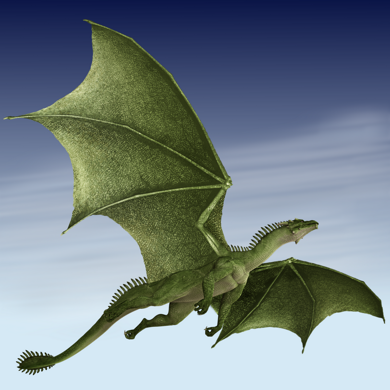
This beautiful dragon is courtesy of Pixabay.com / Parker_West, where it’s is available in glorious 2428×2500 size. With background and other manipulations added by Mike.
This idea came to me while watching the fifth and final Ashes test on the television. At first, I didn’t quite know exactly what I had, which is why this post has landed in the “short but profound” category!
Let’s try something radical (trust me)! Pick your favorite low-to-mid-level D&D monster. Now, halve it’s AC and write the number down on a piece of paper. Write a slash in front of it. Now multiply the result by the number of HD the monster has, and write that in front of the slash.
Next, take the number of Hit Points the monster typically has. Double it, and divide it by the number of Hit Dice. Round any fractions up.
These simple steps, plus a couple of house rules to frame the game mechanics around them, completely transform combat in any form of D&D (including Pathfinder), radically simplifying it while increasing verisimilitude and drama.
Those house rules:
- Attempts to hit a target by all attackers reduce the first number, whether successful or not.
- Until the AC Threshold is achieved, only critical hits do damage.
- The damage done by a critical hit is halved; one half is applied to reducing the AC threshold to zero (any remainder after this is achieved is taken as actual damage), the other half is applied as damage.
- The AC Threshold does not reset until the end of combat. It then returns at the rate of 10% per minute of rest.
- Once the AC Threshold reaches zero, the “Innate AC” becomes the target to achieve in order to do damage. This value persists from attacker to attacker and combat round to combat round.
- Every 10 points of actual damage inflicted adds 1 minute delay to the commencement of AC Threshold Reset.
That’s it, those are all the rules needed to accomplish this miracle.
So, what happens? What do these changes achieve?
Mechanically
As combat commences, both sides seem invulnerable to harm except through the rare lucky strike. In this phase of combat, participants are looking for weak points, flaws in defensive technique and other protections, etc. Those rare lucky strikes introduce a new weak point, reducing the “safe” period, and hurt the target. Once the threshold is achieved, any character can hit the target and do damage, though it is still not certain. Once you get through a target’s defenses, they tend to not last very long; overall, the length of combats should stay the same.
Cinematic
The flow of combat lends itself naturally to cinematic descriptions. “Malor attacked hard, as did Lulor. By occupying the beast’s attention so fully, Zelov the Mage was able to expose a velnerability, cracking open its defenses with his magic missiles. Crulor the barbarian was then able to savage it by way of that vulnerability, causing it to expose his throat as it attempted to protect itself, enabling Malor to end it’s existence. We recieved only a few scratches from the encounter, but it could have gone very differently had Malor’s initial strike not so threatened the creature.”
Dramatic
In theory at least, combat should be far more dramatic, with more ups and downs. Attackers on both sides should hit more often, but initial hits are unlikely to do damage beyond eroding defenses.
Simplification
Combat becomes far more of a group activity, and far more tactical. Overbearing rules are no longer required, and neither are facing rules, and you can also jetisson any issues with flanking; those are all built into these combat mechanics. In fact, most of the technicalities of combat are abstracted into this simple mechanic.
Faster
You can’t simplify combat without speeding it up, leaving more time for other forms of game-play. That would be a problem for any combat-junkies out there if it weren’t for the other effects, which means they will get more bang for their buck.
Realistic
One of the long-standing debates amongst players and GMs has been whether or not armor should be ablative, i.e. should wear away in effect in the course of combat. I’ve seen a number of proposals for doing this, because it is clearly a more realistic option, but they have all fallen upon the altar of practicality. This is the first proposal that I’ve ever seen that actually simplifies combat.
Strategic
This introduces a new strategic element into combat, encouraging a diversity of combat styles and amplifying existing points of differentiation. How you use a character who strikes often but does relatively little damage vs a heavy hitter becomes important, whereas in the official rules, all that you really care about is the total damage done at the end of the day.
Creature Differentiation
Similarly, this opens the door to a new mechanism for creature differentiation by the GM, enriching the flavor of the game world.
An Owbearish Example
An Owlbear (to pick a creature at random), according to Pathfinder, has AC 15 and 5 Hit Dice. Normal HP are 47.
So, under this set of optional rules, AC becomes 38/7. HP becomes 19.
- Attacker #1 is a 3rd-level fighter – base attack bonus +3, +3 from STR, +1 from a +1 longsword, doing d8+3 (STR) +1 (Magic) against a large creature, with critical threat range 19-20. Attacker #1 has (standard rules) AC 14 HP 29, (House Rules) AC 21/7 HP 20.
- Attacker #2 is also a 3rd-level fighter – base attack bonus +3, +1 from STR, +2 from a +2 longsword, doing d8+1 (STR) +2 (Magic) against a large creature, with critical threat range 19-20, and +1 from a +1 shortbow, doing 1d6 +1 (magic), with a critical threat of 20/x3.
- Attacker #3 is a 2nd-level Wizard – base attack bonus +1, +1 from a +1 dagger, doing d4 +1 (Magic) against a large creature, with critical threat range 19-20.
- Attacker #4 is a 3rd-level Cleric – base attack bonus +2, +1 from a +1 mace, doing d8+1 (STR) +1 (Magic) against a large creature, with critical threat range of 20.>/li>
- Attacker #5 is a 2nd-level Rogue – base attack bonus +1, +1d6 on a sneak attack, +2 from a +2 dagger doing d4 +2 (magic) against a larger creature, with a critical threat range of 20.
Attacker #5 has been scouting and has spotted the Owlbear trailing/persuing the party. Neither side have surprise on the other. The owlbear gets initiative 15 (rolled); the four attackers get initiative 17, 20, 12, 14, and 19, respectively (also rolled), so the combat order is:
Attacker #2 (Fighter)
Attacker #5 (Rogue)
Attacker #1 (Fighter)
Owlbear
Attacker #4 (Cleric)
Attacker #3 (Mage)
Combat proceeds:
- Attacker #2 unlimbers his shortbow and rolls a 6+3+1=10, reducing the owlbear’s AC to 28/7.
- Attacker #5 pulls back and conceals himself. He’ll seize any opportunities but has otherwise done his job.
- Attacker #1 closes on the owlbear and rolls 17+3+3+1=24, reducing the owlbear’s AC to 3/7.
- The Owlbear, stung badly by the ferocity of the attack, is likely to have only one chance to withdraw, but they don’t have a reputation for high intelligence and do have a reputation for aggression, so it will counter-attack Attacker #1, the only target in range, with both claws. He rolls a 19+8=27 and a 7+8=15, respectively. The First claw is more than enough to penetrate Attacker #1’s threshold, so the attack hits, and Attacker #1’s AC for the rest of the battle is 7, which means that the second attack also hits. Between them, these attacks do 2d6+8 which yields 16 points of damage. This isn’t enough to kill or incapacitate Attacker #1, who still has 4 HP left, but is nevertheless a serious injury. With both claws hitting, the Owlbear also grabs his attacker, so Attacker #1 will need to grapple with the Owlbear in his next round instead of attacking.
- Attacker #4 closes on the Owlbear to split it’s attention, but rather than attack, he uses a Cure Light Wounds on Attacker #1, healing 6 points of damage.
- Attacker #3 fires off Magic Missile doing 5 points of damage to the Owlbear. The first three points are consumed getting through the remaining AC threshold, leaving 2. This is the first physical harm actually inflicted on the Owlbear in the course of the battle and reduces its HP to 17.
- With two PCs in melee with the Owlbear, it’s too risky to use the shortbow, so Attacker #2 drops it and draws his sword, advances on the Owlbear, and attacks, rolling 13+1+2=16, hitting the target, and inflicting a further 9 points of damage. The Owlbear’s hit points are down to 8.
- Attacker #5, concerned for Attacker #1, launches a sneak attack, rolling a 5+1+2=8. This hits, though only just, and inflicts d4+2+1d6=10 points (rolled), killing the Owlbear just before things turned nasty.
- Attacker #1 is at least winded from the attack; his normal AC threshold will take 10+16=26 minutes to fully recover. Until then, he will be vulnerable to a greater or lesser extent, something the party will need to take into account before proceding.
Compare this with what would happen under the standard rules (assuming the same rolls): Attacker #2 hits with the shortbow, doing damage. Attacker #5 hides. Attacker #1 closes, hits, and does damage. The owlbear will be at about 30 out of 47 HP. The Owlbear attacks, hitting with both attacks, leaving attacker #1 with 13 out of 29 HP, slightly less than half. Attacker #4 heals 6 points, enough to shift the balance to slightly more than half, and hopefully enough to survive another round of engagement with the Owlbear. Attacker #4 uses his magic missile, getting the Owlbear down to about half hit-points. Attacker #2 attacks and does damage. The Owlbear is down to about 20 hit points. The rogue’s sneak attack won’t do anywhere near enough to kill the Owlbear, and Attacker #1 is not under the same level of threat, so he stays hidden and does nothing. The outcome remains unresolved.
So there’s more combat under the standard rules, but it’s more of the same – hit-and-do-damage-or-don’t, over and over – all the time, and would need a great deal more dramatic license to spin into a narrative. Such a simple change, but so many benefits – for just a few seconds of work with a calculator that can be done in advance!

Discover more from Campaign Mastery
Subscribe to get the latest posts sent to your email.



January 27th, 2018 at 6:15 am
This is great! I can’t wait to try this on our next adventure. We’re playing Adventures in Middle-earth, so I think this will work well with 5th edition rules. I’ve converted a goblin (AC 15/8, 7 hp) and think this will really speed things up and make them very interesting. We’re about to go up against several large battles, so this is great timing for me to find.
Thanks!
Brian Byars recently posted..Some thoughts on STR
January 27th, 2018 at 11:48 am
Thanks, Brian! You might find this review of the technique (with some actual playtesting) and the discussion in the comments that follows it to be worth reviewing, as well :) https://www.ravenousrpg.com/2018/01/21/sporadic-saturday-sweetness-2018-01-21/