Occupying A PC’s Shadow
This article was prompted by last Saturday’s play in my Zenith-3 (superheroes) game, but I use the techniques in all my campaigns.
But I want to start by quoting a question that I answered over the weekend on Quora, because it’s also relevant.
When running an AD&D game, what do you do to really make your players sweat?
A: I smile a lot, and become more generous in every possible way at the game table. “Failed your roll? ‘Nah, that doesn’t make sense, not for a character of your skill. Re-roll it.”
For a few minutes, they enjoy it. But, if it persists, they start getting nervous, and paranoid. At which point, I drop in a harmless encounter which would normally not even rate a mention, to give their nerves a focal point – and stop being “Mr Fluffy”. Which they read as an indication that the Ax-Murderer GM is stalking them!
But, if the question had been, When running an RPG, what do you do to really scare / worry your players? my answer would have been completely different. In a nutshell, I would have written:
“Know their characters better than they do”.
The GM’s responsibility
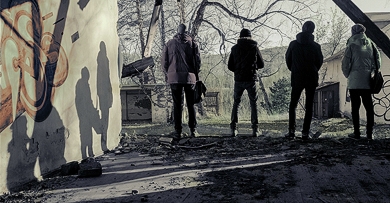
Part of the job of being a GM is to occupy the shadow of each PC that takes part (hence the title of this article). That means understanding them while having no direct control over their actions.
The benefits and advantages of doing so are almost innumerable. It enables me to tailor both campaigns and adventures to give the PCs preeminent roles, it enables encounters to be designed that will engage the characters (and through them, their players), it makes an equitable sharing of the spotlight far easier to manage, and it adds to the sense of integration between characters and the game worlds that they occupy, enhancing plausibility and a sense of realism even in the fantastic. It reduces my workload in adventure prep by focusing on avenues the PCs are likely to explore, it gives the player a deeper understanding of their own characters, increasing their levels of engagement with both character and campaign still further, and – under the theory that players and their characters share at least some common ground in terms of personality – it increases the interest in and enjoyment of the campaign by the players.
Some Background
In the Zenith-3 adventure that concluded in our last session, a plot twist that I’d been building for 20-odd years was suddenly revealed. The focal points of that plot twist were two of the PCs, one of whom has been through three different players in his lifetime.
The first player treated the character as a brick/detective. It was his first character made to the standards of this particular campaign, in which every word of background is examined minutely in the course of play. I may have provided the campaign background, but what the character had experienced in his past was up to the player (with me as reference library and research assistant). The player even commented that he’d learned more about creating personalities, not just characteristics, from that character creation session than the entire rest of his gaming ‘career’ to date.
Part of what I do as a GM is look for ‘plot holes’ in these backgrounds, things that need more explanation than the player is willing or able to provide. I dutifully point these out to the players, giving them the option to patch them, and if they can’t, and if I can see a solution, I integrate those into my campaign plan as revelations to take place during play. Sometimes, when the hole is likely to trip the player up in the meantime, I’ll even outline my answer and the core of the plotline in which it will be revealed. This enables the player a more rounded and complete view of the personality that they are playing from the beginning – which usually makes the character easier to play.
Because the player was new to this depth of engagement, his background had more holes than most – not only had the character done something completely opposed to the principles he espoused and all his professional training by stealing and using a piece of potentially dangerous equipment, but he had then lied about it. At the same time, the character’s personality seemed to shift, becoming more paranoid and apprehensive. This could all be explained by having the equipment itself influencing his mental state, so I proposed to the player that the equipment was seductive, a bit like the One Ring in Tolkien. The player also left it to me to explain how his character’s powers worked – he simply stated that they were imbued by the suit.
In play, the character displayed access to his abilities even when not using the equipment (a suit of armor). The only possible explanation for this “action at a distance” was for the suit to have changed the character in some fashion, making itself redundant – while keeping him from realizing this. In fact, the character was becoming psychologically dependent on the suit and the sense of protection that it offered – perfectly-molded body armor tougher than steel and half an inch thick (more at the soles of the shoes) will do that.
The time came when the team leader instructed the team’s scientific-type to analyze exactly how everyone’s powers worked (after they had been taken by surprise by another of these revelations). After initial measurements suggested that there was something not right with the internal dimensions of both the suit and the character, the tester made the mistake of asking the player to remove the armor. He didn’t want to, but tried to do so, and couldn’t. His muscles simply wouldn’t do what he was telling them to do. The tester suspected that the reluctance might extend deeper than suspected, and attempted to use persuasion to reassure the subject, failed, and then decided to employ more forcible measures. A flash of light, and the character being examined stood transformed into the shape of a gargoyle, only barely humanoid. The two then became distracted in examining the new physical reality of the character, and completely ignored the fact that there was no longer a suit of armor involved to be removed for independent analysis.
This transformation was only intended to be temporary, something that would occur whenever the character felt threatened – including by someone attempting to remove the suit – but the player decided to give up the campaign for unrelated reasons, and the new player liked the gargoyle idea. So it became a semi-permanent transformation. Over time, under this player’s control, the character became more and more feral, a ‘shape-shifting killing machine’.
When that player was forced by outside circumstances to give up the campaign, a third player took the reigns, initially on a trial basis (that was in 2006, and the player is still running the character, so I think the trial has been successful!) One of the first things that the new player did, before even accepting charge of the character, was to attempt to reconcile everything into a coherent picture, on the assumption that it was all the same person the whole time. The character became more balanced, got his “personal life” under control, and began rehabilitating himself both in the eyes of everyone else and in his own eyes as well – starting from a foundation of actively disliking the character as a person!
As a kind of “soft introduction,” the character had a miniseries under the new player’s control in which some of what we had collectively decided came to light and the character started coming to terms with his tangled psyche. Half of the character took his father as a role model, as many males do, especially in the absence of a strong maternal presence; because of that, the character wouldn’t let himself perceive that the father was abusive toward his daughter (and all three of his children), but it still made a subconscious impression, and part of the character both hated and was furiously angry with both the role model and with himself, while feeling guilty over his inability to intervene. Eventually, the sister ran away and joined a cult that got mixed up with aliens – as happens in a comic-book reality – and got to be rescued by the scientific type and the PC, beginning the process of self-discovery and coming to terms with his past.
In due course, he realized that the closer he came to emulating his role model in the character’s past career as a policeman, the more he resisted it, self-sabotaging. If he started getting good in the robbery division, he would put in for a transfer. If he started getting too good and it was too soon for a transfer, he did something to get himself a reprimand. At the same time, though, he had an absolute hatred and distrust of corrupt police officers and hypocrisy. All of which contributed to filling in the plot holes that I had initially identified in the character design.
Which brings me back to the revelations of the previous game session. In that day’s play, the character was finally forcibly removed from his gargoyle shape and stripped of his armor by someone the characters all thought was a villain – but who was actually just an enemy doing what was necessary. The revelations were two-fold: that the character had never been released from the dimensional confinement of the suit, in which he had been ensnared from the moment he first put it on; and that as part of its self-defense against being removed, the armor had been shunting every doubt and uncertainty to another PC – who, coincidentally, was the creation of Knight’s original character.
This addressed a separate set of contradictions in-game: we had a character who was (historically) a leader, skilled, trained, and sure, who was exhibiting poor tactical judgment and a reluctance to lead in play – a reminder that just because you write something on a character sheet, it doesn’t automatically confer the ability upon the player.
This disconnect between what the character was capable of, and what the player was capable of delivering in-play, was a different sort of plot hole, one that needed to be explained in-game and integrated into the psyche of the character the way his player was handling him.
My original draft only had the suit of armor suppressing these negatives as an explanation for the increasingly manic performance by Knight’s second player, when the character adopted the name “Blackwing”. But having the doubts and uncertainties that are natural to us all, and that hold us back from going to far, exported to the second PC made perfect sense.
A Psi Complicates Matters
Always.
In this case, the Psi in question had mentally scanned both the characters in question. So my in-game explanation for what I consider to be Metagame phenomena introduced a new plot hole that also needed filling: why had this Psi, one of the most powerful in existence, not detected what was going on?
The game session a couple of days ago dealt with the immediate psychological aftermath of the revelations and the immediate impact that was felt on the behavior of the characters, and sought to explain those – in effect, it ‘reset’ the foundations for those characters going forward.
In the process, it not only needed to address the Psi problem, it had to closely examine the personalities as they had been played in-game of the characters, providing the raw materials for the players to begin evolving their characters as they saw fit. This was something that would not have been possible had I not become at home in the characters’ shadows.
I’ll get to the how in a moment; first, let me answer the questions posed earlier. Every time the Psi had “connected” with the central character of this plotline in the past, he was actually linking to a simulation of the character that was generated by the suit. Even the character thought this simulation was the real thing, and so was completely unaware that it was being edited by the suit to protect itself.
As for why the Psi hadn’t detected the “outside influence” on the newer character, after specifically going looking for one a few game sessions ago, the explanation was even simpler – the self-confidence problems being experienced by the character were real, and the ‘dumped’ emotional states had acted only as a trigger, releasing an emotional flaw that the character had suppressed and locked up, long ago.
They were both victims of the suit. One had reacted by losing self-confidence in the field, feeling doubt and uncertainty for the first time in years, emotions that he had never learned to handle because he had never had to; and the other, being released from constraints that were being amplified and triggered by doubts and uncertainties that he no longer feared becoming wild and almost manic (reminiscent of what the first character had become at his ‘worst’, in fact, though that was left unstated).
Finding The Shadow
Before you can become so close to a character that you can be said to be occupying his shadow, you need to find that shadow.
First-order information comes from the player explaining what the character is thinking. Second-order information comes from observing the character’s behavior in the hands of the player. Third-order information comes from backgrounds and other written material provided by the player, while Fourth-order information comes from background material etc written by the GM. The process of “occupying the shadow” means integrating all of the above into a simple description of the core personality of the character, understanding how that core ‘unpacks’ into the events that shaped the character and into his attitudes to situations, and being therefore able to predict how the player-character gestalt will react to any situation you might, theoretically, place them in. Sometimes, it’s necessary to pose an adventure or an encounter just to observe a character’s reaction, filling in a blank space in your information on that character as he is in play.
First-order information
I always encourage my players to provide first-order information in-play. If they do so, and an action they have chosen does not accord with what they are trying to achieve, I will point that out to them, and offer alternative options that are a better fit, rather than sustaining a disconnect between what the character is trying to achieve and what choices the player perceives for getting from A to B.
If a character declares an action, and it doesn’t have the desired outcome, it’s too late to say what you were trying to achieve – everyone has to live with the events as described. Usually, there are exceptions and back doors that can be applied retroactively to get a “do over”.
By encouraging players to speak their character’s minds, it permits me to assist them in achieving those immediate desired ends, so their roleplay is “truer” to what the player wants. And he learns from that, becoming a better player within my campaigns in the process (the skills learned might not be fully transferable).
It also more closely simulates the in-game reality in which comms is handled (usually) by the Psionic that I mentioned earlier, for obvious reasons – she wouldn’t just be sharing intentional communications and hosting discussions, she would be conveying intentions and perceptions (something which has cause the occasional problem in the past), all raw and unedited.
That clear statements of what the character thinks or expects or desires or is trying to achieve generate a side-benefit for me in my role as GM is just fortuitous.
I have read advice here and there that the GM is supposed to be impartial. Fiddlesticks! The GM should be partisan as all get-out – his job is to generate a good time for all participants, not just in the short-term but through the life of the campaign. The PCs have to eventually win – but there is no obligation on the GM’s part to make that victory an easy one.
Second-order information
The next most reliable source of information about a character that I have is the words and actions that they perform without explaining their thought process. This places me in the position of needing to translate these actions into personality traits by observation and supposition, and hence this material is inherently a little less certain.
But there is usually a lot more of it, and patterns can still be observed.
Third-order information
This is usually more factual in nature, and requires still more interpretation by the would-be analyst. Any fact that isn’t established in-game is also subject to revision as necessary right up until it comes into play. What’s more, there can sometimes be a vast gulf between what’s on the page and what the player/character combination can actually deliver on demand, in play.
All of these combine to make this information more theoretical than actual. I often treat it as a stepping-stone to more concrete first- or second- order information.
There is a fourth source of error that can sometimes manifest, too, that needs to be mentioned: the GM has to bring any NPCs in the information provided by the player to life. It’s one thing for the player to state that there’s such-and-such an NPC in the character’s background with whom the character has a particular relationship, but the GM has to actually create and play that NPC in such a way that the player feels that the PC could and would have that relationship with the NPC. And sometimes, that doesn’t quite come off.
When this fourth problem manifests, it usually indicates – at a metagame level – that the PC is perceiving things about the NPC that they hadn’t previously observed, and their relationship will change as a result – even if those “things” aren’t part of the NPC as generated by the GM. There have been occasions where I have had to completely rewrite an NPC on-the-fly to either incorporate such “things” or to make the current situation an aberration in the normal relationship between the two.
Of course, even when events have been established, there can always turn out to be more to the story!
Fourth-Order information
This includes the campaign background, and any theorizing or analysis that the GM performs on the basis of lesser-order information until the player himself acknowledges that it “fits”, it “makes sense”. I’m never trying to tell the players how to play their characters; instead, I’m trying to understand the characters as the players are portraying them, and employing that understanding as a tool for campaign, adventure, and encounter/NPC design.
The “order” of the information represents the reliability of the information as a basis for achieving that understanding.
The Process
I’m not sure whether or not being a professional analyst would be helpful in achieving that understanding or not. I suspect that in some ways it would, while in other ways it might hinder – in particular trying to see the forest for the trees. But I don’t know – I’m not a professional analyst!
As such, I adopt a more literary approach, trying to sum up the personality of the character in a few brief words, and continually refining that summation as a result of the feedback that results when you employ it and hit – or miss – the mark.
This isn’t something that you can apply on an occasional basis – it has to be a fundamental part of your approach to GMing, so that you can get that constant feedback and become more experienced in the technique.
I start by looking for common threads and patterns in the first-order information, which I integrate into my current understanding of the character as soon as the player states it. Under the guise of better understanding what the player is trying to achieve, I will ask about any contradictions between this occasion and past ones.
Sometimes, that has resulted in a player saying “I’d forgotten about that” and changing their minds about the now; on most occasions, it will establish an exception to the previous pattern, or even undermine the perceived (and strictly hypothetical) pattern itself, as the player tells the GM, “No, that’s a misinterpretation of what I was trying to do back then.” But either way, it’s a learning experience that makes the GM better at anticipating what the character will do, or attempt to do, in the future.
I then turn my attention to any third- and fourth-order material, using second-order material as a ‘filter’ to try and weed out an erroneous or rogue associations. Always, I’m looking for patterns and parallels, and trying to imagine what was going through the character’s head. When it comes to events that occurred to the character, I try to understand what experiencing that did to the character, how he coped, and what lingering effects it might have had – being guided in particular by any actions taken in close proximity to the effect.
It sounds easier than it actually is in practice.
As an example, here are a number of snippets of information regarding the second PC who featured in the day’s play just passed:
- “I used to sit on the docks with my grandfather and fish. We’d talk for hours when they weren’t biting.” (statement during roleplay)
- Master’s degree in Archaeology (from the written character background).
- “My parents thought I was wasting my time digging holes in the ground.” (statement during roleplay)
- …was closest to his Aunt Vigdis, who encouraged his love of archaeology… (statement from the written character background)
- “I probably looked up to that old man more than anyone else in the world when I was a child” (continuation of the first statement, during roleplay).
- His father was a fisherman, often away at sea. (statement from the written background).
- His grandfather taught him to sail (statement from the written background).
- “I want to study wood-carving like my grandfather used to do” – statement during roleplay.
None of these is 1st order – they are all 2nd-order and 3rd-order. Nevertheless, when you assemble them, a cohesive picture emerges of someone whose parental figures were his grandfather and his aunt Vigdis, respectively. His father is little more than a void, and his mother gets even less attention. So compelling is this unified picture that you never question whether or not 1, 5, and 7 all refer to the same grandfather – you normally have two, after all! Assemble all of these and it becomes clear that the person who would be the character’s first choice for life-guidance would be the Grandfather, while the person he would first turn to for unquestioning support would be Aunt Vigdis.
When, in the course of the most recent adventure, the character was to encounter someone who he thought was his grandfather (conjured out of his memories), it was essential that the NPC I presented fit the mold. Little things – like sitting with legs dangling off the end of a pier, talking to the character as an adult, but simplifying things when necessary, or taking the time for one last cast of the fishing line, added up to a total acceptance on the part of the player. I don’t know about him (or you), but when the character sat down beside the old man and made one last cast with his fishing line, I could see little yellow gum-boots and the leathery texture of the old man’s skin in my minds’ eye – even though neither of those was mentioned. The NPCs’ first words were, “You’re almost old enough now, Anders, to start making choices for yourself.” There was a clear implication that the old man meant small ones – the PC would have been about three years old at the time – but by not saying so, it extended the narrative to apply to the current (adult) character. “Time to go, your Aunt Vigdis will be waiting,” implied that the old man lived with his daughter, probably too frail to care for himself full-time. The player didn’t even blink at this addition to his background. Walk with me, and I’ll make sure you don’t miss anything interesting”, said the old man. Since this was to be a walk into the character’s subconscious mind, a therapeutic tool, this statement actually went directly to the relationship between them – he wasn’t offering to guide the character’s choices, or make suggestions, just to make sure that he noticed all the choices available to him, and to assist in evaluating them. Choices and decisions were still the character’s.
In this way, the character found himself living snippets of his own background, and patterns that he wasn’t even aware of placing into it were slowly revealed to him – an overachiever who prefers others to set the standards he should live up to and who then does as much hard work as needed in order to excel, because he had learned that this was the easiest way to get the approval of, or attention of, an authority figure. The character was aware, subconsciously, of the void in his life left by his parents, and even though he had filled that void, it was still only a substitute for the real thing. Later, when for the first time in his life he was seriously injured, he experienced doubt and uncertainty for the first time, and had no-one left to pull him through. When his health returned, he found himself adrift without a guiding mission, and suppressed this lack of self-confidence, smothering it under a sense of being unable to fail when mere survival is viewed as a success. Then, when there were no authority figures to set the standards, the character’s pattern became to set himself impossible challenges so that no-one could blame him if or when he failed at them, defining his own mission in life.
All this fitted the narrative provided by the player like a glove – but it also filled in gaps and provided motivations. Presenting it in this way left the player able to make informed choices about the characters’ future behavior, while making sense of the past choices that – until now – had simply seemed like ‘the best choice on the table’.
Where to from here?
With the resetting of the mindsets of two PCs out of the four at the table, the campaign clearly felt like it was turning a corner or starting a new chapter. The last couple of adventures have all had a sense of new beginnings in other ways, so this was a continuation or new expression of that ongoing sense. It was appropriate that other aspects of the status quo receive a shake-up, too – so the adventure began to introduce a new plot-thread, an occasional campaign-within-a-campaign with a high cloak and dagger element to it that is going to introduce complications into the PCs lives that they never dreamed possible. In a very real way, they are all going to have to reinvent themselves in some fundamental ways. And, while they are doing so, the players directly impacted by the psychological revelations regarding their characters will have time to reset and set new directions for their characters, which will – to some extent – modify the ‘shadows’ that I am inhabiting.
A great campaign leaves its mark on the characters that participate in it, just as those characters should leave their marks on the campaign. If you were to take a character from one campaign as it was when it started, and insert it into a different campaign with a different GM, the character should evolve differently – no matter how similar they might be at their cores. And those differences will ultimately mean that they have different impacts on the campaigns.
Every PC is unique to the campaigns they inhabit – in a great campaign. The GM’s goal should always be to run the best campaign that they can, given their skills, knowledge, time, and the players who are going to participate. Being able to inhabit the shadows of those characters is an essential tool to achieving that.

Discover more from Campaign Mastery
Subscribe to get the latest posts sent to your email.
Comments Off on Occupying A PC’s Shadow