Campaign Mastery helps tabletop RPG GMs knock their players' socks off through tips, how-to articles, and GMing tricks that build memorable campaigns from start to finish.

On The Origins Of Orcs, Chapters 15-17


This entry is part 9 in the series Orcs & Elves

I’ve got so much campaign prep to get done that if I don’t do it in public, I’ll either never get it done in time…

*************************************************************************************************

Chapters 15-17 are all in reasonably final form. I try not to change “speaker” in mid-paragraph, but the speaker does sometimes change from one paragraph to the next. So if it seems like the tone changes direction suddenly – sometimes it does.

*************************************************************************************************

Chapter 15

The Verdonne Insurrection: Elves in the Age Of Heresies

Throughout their history, the Elves had largely been preoccupied with social and interracial problems. They had given little thought to the larger theological reality that surrounded them, and had no true conception of the vast powers against which Corellan struggled to protect his people. Elvish theological thought was focused on the Totem Spirits of Nature that guided them; their scholars debated whether the belligerency and inconstancy of other races could be attributed to their seeming inability to perceive the wisdom of their spirit-totems, and Elvish philosophy was turned continually inward, focused on defining exactly what it meant to be an Elf, and how best to have that quintessential Elvishness express itself throughout their society. Even the rearing and education of the Verdonne had been left to the Verdonne themselves, so preoccupied were the Elves in their soul-searching and expression of the results through Spellweaving to more closely conform the environment to their natures and perceptions.

The crushing disappointment of the truth of The Other, who they had romanticized into idealized and nobly tragic figures, had soured any interest in the outside world and the beliefs and knowledge of outsiders. The world hurt so much that they turned their backs toward it and became an insular and self-preoccupied society.

This was a state of acute vulnerability to the forces which had corrupted the Spider-totems with Ambitions, and when what became known as The Age Of Heresies began, that vulnerability would exact a heavy toll on Elvish society.

The weapons employed by the Chaos Powers against the Elves were curiosity, insecurity, and ego, and they would prove devastatingly effective.

The Elves of the time had accepted the presence and role of the Verdonne within their realm as a part of everyday life. The subject was no more to be given special consideration than were the presence of the Bluebird and the role of its song as an inspiration to poets and artists. The Verdonne, who were long-lived even as were their Elvish creators, slowly began to perceive that the forest they protected with life, leaf, and limb was altering in its nature, little by little. From one day to the next, the changes were so insignificant as to go unnoticed, but over a span of centuries, they added up into an increasingly alien world. After discussing it amongst themselves at length, they resolved to ask the Elves, and here the Spellweavers proved that history was doomed to repeat itself apon the preoccupied.

After the episode with the Dwarves, the Elves had created the Council Of Elves to ‘guide’ the King toward his decisions in all matters relating to other species; but they failed to apply their hard-learned principles to their own creation, treating them as part of their domain, and not as a separate species with whom they had a relationship based apon common interest. Instead of referring the Verdonne’s gentle questions to the council, they answered in simple terms and without thought, being distracted by whatever they were concentrating apon at that particular moment, replying that they were changing the forest to make it a better home for the Elves, closer to their nature.

The Verdonne questioner accepted this, and left; and he and his kind thought long and hard apon the over-simple truth of the reply. Almost thirty years passed before the Verdonne came to the realization that the more perfectly the Forest suited the Elves, the less perfect an abode for their kind it became. Increasingly, they would come to exist only at the Sufferance of their elvish masters, slaves to their whims and fancies; and yet it was by their efforts, and deaths, that the Forest remained unmolested.

The question of what should be done about this was another to be given slow and careful consideration, but in time – another 22 years to be precise – they reached the conclusion that their role was to protect the Forest as Nature had intended it to be. The Elvish manipulations were as unnatural as the destructive instincts of the Fallen Races against which the Verdonne struggled regularly. The Elves had to be treated as an enemy by the Verdonne.

The result was a Slave Revolt (from the perspective of the Verdonne) and an act of Heresy (from the perspective of the Elves). The first strike was against the Spellweavers, and those of martial prowess, and it was swift and brutal. A few at a time, the Verdonne infiltrated the heart of the Forest, where they were welcomed by the Elves. Few realized how many had gathered until their appointed leader, Silverleaf, gave a great booming cry and signaled the attack.

If the Forest Elves had been spared the worst of the Orc-wars, they bore the brunt of this unexpected assault. Their most powerful and learned were felled in the first stroke. To fully appreciate the magnitude of the calamity, it must be recognized that the Verdonne had been entrusted with the keys to all the defenses of the Forest, were trusted completely, were able to proceed unmolested to the most sensitive of locations throughout the Elvish Kingdom in preparation for the assault, were as able to instantly relay messages from one to another by means of the trees of the forest as were the Elves (in fact, messages between the Verdonne were presumed to pertain to the defense of the realm and were given priority at the instruction of the Elves themselves), and the greatest vulnerability of the Verdonne – fire – could not be exploited without irreparably harming the forest itself. The result was a slaughter.

Some Elves were desperate enough to resort to weapons of flame regardless of the risks, and in the struggle, control over the fires was soon lost. The resulting conflagration swept through the forest as an even more unstoppable and implacable foe than ever the Verdonne would have been. And yet, the desperate measure achieved its objectives, as the Verdonne fell back before the flames and fled, all coordination amongst themselves lost to the panicked cries of the Forest, retreating instinctively to the banks of the Sarner. The Elves had beaten back the Verdonne Insurrection in but a week, but within the course of that week the heart of the Elvish Realm became a smoking ruin. More than half of the population of Elvarheim were lost in insurrection.

When at last the fires abated, the survivors began to reconstruct their society in imitation of its former glory; but much context and understanding had been lost, and often the forms were preserved and mimicked without an understanding of the reasons those customs had evolved, or their purpose. Elvish society began to stagnate from that moment, and its eventual collapse became inevitable.

Though it took weeks of patient discussion and debate, the survivors formed a new Council, and confirmed the ascendancy of the sole survivor of the Royal Family. The council then directed the formation of a delegation to approach the Verdonne Enclave that had gathered by the banks of the Sarner, to learn the cause of the conflict and what might be done to resolve the Verdonne’s grievances. By the time the delegation warily approached, almost three long months had passed, and to their surprise, the Enclave had been all but abandoned. Only Silverleaf remained, mortally wounded and badly burned in the fires. He informed the delegation that his brethren had all departed, to take up the burden of the protection of forests and glades wherever they might be found; and that so far as he and his kind were concerned, Elvarheim was a true forest in seeming only, perverted and twisted as it had been by Elvish Spellweaving, and unworthy of the protection of the Verdonne, who would henceforth hold themselves fully independent of the Elvish Kingdom.

Silverleaf had been waiting patiently to deliver his message of Verdonne Independence, sustaining himself only through sheer force of will bolstered by his healing arts; this last task achieved, the Liberator Of The Verdonne permitted himself to succumb to his wounds.

The Elvish delegation were greatly puzzled by this statement. Only when information was forthcoming from their Human neighbors about the religious strife that they had been experiencing, the acts of heresy and betrayal and compounded confusion that had been experienced, did they begin to grasp the root cause of the disagreement, even though the specific misunderstanding that had been central to the Verdonne Insurrection remained unknown. By this time, almost a century had passed, and it was too late to repair relations with their creations.

So it was that the delegation returned to their devastated forest home to begin the long process of mourning, and the slow process of rebuilding, still in a state of confusion over what had transpired and why.

Chapter 16

Noletinechor: Guardians Of The Elvish Legacy

Elvish society is organic in nature, slowly growing and evolving to accommodate sustained changes in circumstance, much as does a tree. Change occurs in miniscule increments, and traditions and forms remain unchanged for centuries, until the old ways are proven inadequate to the burdens of a catastrophic and usually unexpected disaster.

The loss during the Verdonne Insurrection of their most learned, and wise, and their most adroit Spellweavers, and most subtle (and incomplete) Spellweavings, was just such a calamity, and as was their way, the elves reacted to it by debating for years what should be done to prevent a recurrence. Indeed, it was only the imminent demise of the most senior of the survivors and awareness of the loss of the unique perspectives and understandings that would result, that cut short the debate.

The elvish solution was a planned society as rigidly defined as any promulgated by Lolth; the Royal Council instituted a completely regimented career path for all the young elves approaching maturity designed to protect and preserve as much of the elvish culture as had survived.

Any who had shown the slightest potential for Spellweaving was apprenticed to the aging masters of that craft. Of the remainder, any with any talent for any of a dozen arts or crafts or disciplines that had been identified as ‘uniquely’ or ‘characteristically’ Elvish by the committees formed to debate the subject were recruited into a new vocation, the Noletinechor, or “Lore Shields”. Each was then trained intensively in each of these definitive social attributes, and those who did not achieve a satisfactory standard of accomplishment were released back into the general population to contribute to society as they wished.

From their beginnings, the Noletinechor were subjects of considerable controversy amongst the elves. Never had the free-spirited woodland dwellers been subject to such harsh regimentation, and the prospect of being forced into the Noletinechor was hugely unpopular, though the elite few who succeeded in the disciplines were greatly respected – and the subjects of considerable sympathy. They were also the butts of much Elvish humor, which did little to brighten their dispositions; that, when combined with the general hot-headedness of youth, quickly gave the members of the group a reputation for being grim of demeanor and irritable by nature. ‘Prickly… almost Dwarven,’ was the frequent comment, accompanied by a wry smile.

The Noletinechor were artisans, poets, and musicians, craftsmen of the highest caliber. They memorized the 1145 songs that had been identified as ‘Fundamental expressions of Elvishness’, they learned the 7 musical modes and 173 forms of dance that were ‘definitively’ Elvish, and were educated, in as much detail as possible, in the history of the Elven peoples. His role in that history made Corellan himself another vital field of knowledge that the Noletinechor had to master. They became, almost by definition, the experts on elvish rituals and social customs, the keepers and protectors of the legacy of an entire cultural development.

They were not warriors.

Chapter 17

The Second Great Dwarfwar: Beginnings, Boundaries and Confrontations

Having safeguarded the things that made them Elvish, the learned bodies that had created the Noletinechor had turned to the pressing question of protecting their borders. While it was recovering, the forests held little of interest to outsiders, and as yet the Fallen races did not realize that the Elven lands were now unprotected; neither situation could last. The forest had bloomed with new foliage years earlier, but the trees were just trees; they had not yet been awakened and assimilated into Elvarheim. An invisible line within the Forest demarked the territory of the Elves. Nevertheless, since the new growth formed a connecting corridor between Elvarheim and the huts of the Amrunquessor, which lay between the forests and the mountaintop dwellings of the Calquessir, there was periodic travel through the new growth.

The first indication that their grace period had expired was when one such pair of travelers, named Arudrial and Denowyn, found that many of the trees in the vicinity of Mount Elrozi had been cut down and the timber removed.

The travelers first blamed Ogres, seeking timber for their seige apparatus, or other members of the Fallen Races, seeking lumber for construction, woodworking, or bonfires. But when the scene was surveyed by the experienced Pathfinder Therialas, the true culprits were identified.

Therialas had been a tenderfoot warrior, barely adult, during the confrontation over the Prince Of Lies affair. Now a very respectable 549 years of age, he was the greatest tracker in all Elvarheim; but even with all his experience, it was no easy task to cross the five-hundred-and-ten year gulf since the last time he had seen the imprint of a Dwarven Boot. Nevertheless, he achieved the task and duly reported to the Council that undoubtedly, the footprints he had seen were those of Dwarvenkind.

This posed a new challenge for the Council to debate; the Elven lands had never had any formalized borders, and while the Living Forest of Elvarheim was clearly their domain, protected and nurtured and shaped by Spellweaving, the trees that had been felled were… just trees. Could they truly claim this as part of the Elven realm? Should they? Was this really a cause, a justification, for war?

Ultimately, the decision rested on a very human perspective, viewed through a very Elvish perspective. Instead of their normal pragmatism, the decision was founded on sentiment and emotion; many Elves had died protecting the trees that had previously occupied that region, and with their long lives, that was an even more poignant sacrifice. Further, it was a connecting corridor between the habitats of the differing branches of the Elven people. Finally, there remained the suspicion that there might be another force behind the Dwarven Incursion; Calquessir divinations had long ago revealed the connection between the Drow and the assaults by the Fallen Races, and there was the potential that this was simply more of the same.

And so it was resolved that the Elves would seek reparations for the damages, and for the incursion, and would offer to negotiate forest management for the Dwarves. A trade agreement would benefit both – in comparison to the alternative. A delegation was assembled for the purpose and given careful instruction by the ‘Dwarven Expert’ from the Council.

The Elvish delegation approached the entrance to the Dwarven mines with caution; they were used to the forests of Elvarheim, which were ringed with layer apon layer of defenses. What they were seeing as they approached was nothing but unspoiled wilderness, save for a large spoil heap – a small mountain, if truth were told – filling a valley next to the entrance with rubble. The closer they came to the unsealed, unguarded entrance, completely out in the open, the more nervous they became.

Their caution approached paranoia as they examined the silver-plated steel girders that framed the entrance, and the delicately-carved runes inset across the entrance. “Ring The Gong,” pronounced an Elf who was learned in the Dwarven script, “and wait.” A scout warily approached the entrance, and found a large bronze gong mounted to the ceiling on one side, just beyond the portal, with a hammer on the ground next to it. Warily, the scout picked up the hammer and struck the gong gingerly.

He was completely unprepared for the massive swell of ringing bells that sounded from the enchanted device, and fled back to the remainder of the party. It was clear that the Elvish hearing was more sensitive – it could almost be said, more delicate – than that of the Dwarves. In the distance, even removed some small way from the entrance, the party could clearly hear other bells relaying the summons into the shafts of shaped stone.

While they waited, the Elves examined the workmanship of the portal more thoroughly, and were increasingly impressed. The lines might be rigid and straight, and broadened to resist weathering from the elements, but the edges were crisp and sharp, and the decorative shapes were subtle and not without their artistic merit. They might have their own style and a different set of chosen materials, but the Dwarvish artisans were clearly as proficient as any Elven craftsman.

For three days, the delegation waited, while nervousness turned to anxiety, and anxiety to boredom, and boredom to irritation, and all the guidance of the council became a distant memory.

If you climb too quickly from deep under the ground to the surface, you forget how to breathe right. Weaklings die from it. You have to be slow, and patient, and take time for your body to remember how to breathe thin air. Even more if the surface is high in the mountains. Elves don’t dig deep, not like Drow, so they don’t know this. Stupid of them.

But eventually, the patience of the delegation was rewarded. A small group of Dwarves exited the tunnels and took up a defensive posture, weapons drawn and at the ready, lips curled in thinly-disguised contempt. They were followed by a Dwarf dressed in somewhat better fashion, with gems and gold practically dripping from his clothing and personal effects.

“We have come to discuss the unlawful destruction of Elvish trees by your kind without our leave. The forest is ours, and you have harmed it, cutting down that which belonged to the Elvish nation and carting it away. We demand the oath of you and all your kind that this will not happen again, and we demand wergild for those trees whose voices you have stilled,” began the leader of the Elvish delegation.

“Hear me, Elf: we want none of your sickly and twisted forest. That which we cut down and removed belonged to none, the trees were good and healthy and unprotected, and we will take as much of the lumber as we want or need. Go back and tell your scrawny little King that neighbors are polite to each other, and if he wants to discuss things in a civil manner, he must kiss my boot in apology. We have learned our lessons from your kind, and will never be as helpless again as we were when they drove us from our homes. Who do you think you are, to make demands of The Clans?”

“We are those who were injured, whose lands were violated, the party wronged – that is who we are, and the source of our demands. You are the one who will apologize, for your actions, for the actions of your kind, and for your disrespect toward the King of Elves. Withdraw your ridiculous request and apologize, and we will discuss fair recompense for the slaughter of the outlying forest; refuse and a state of war will exist between our nations!”

“Kiss my Braided Beard, you poncy snob. We’ll give you more war than you can stomach if you set foot in our domain again.”

Thus it was that the Elvish people and the Dwarvish people found themselves at odds once again.

*************************************************************************************************

The Ongoing Elvish Glossary

  • Arnost: Simple Speech (Modern “Common”, a human tongue)
  • Arrunquessor: Plains Elves
  • Ayer: Nuthanori word meaning “Squat”. Mont Ayer is the name of one of the two peaks that define the traditional elvish lands.
  • Calquissir: High Elves
  • Corellan: The First
  • Drow: “Those Who Dwell Apart” (in Nuthanorl). Added to Ogre by the Drow with the meaning of “Smart”.
  • Ellessarune: The “Shining City” of the Tarquessir, home of the Elvish King and capital of the Elven Lands to this day.
  • Eltrhinast: “Guiding Spirit”
  • Elvarheim: “Blessed Leafy Home”: The Elven Forest, homeland of the Tarquessir and the centre of Elven Power in modern times
  • Gilandthor: “The Gathering”, the formal title of the Elvish Council.
  • Hithainduil: High Elven Language
  • Illvayssor: “The Other”, a mythical race
  • Isallithin: “The Sundered”, a name applied to Aquatic Elves
  • King: A human title interpreted by Elves as “speaker to others” and defined as such within their language.
  • Magi: A corruption of the Zamiel word “Machus”, which means “of the wise.”
  • Mont: Nuthanori word meaning “High Place”. Used human-style in the naming of Mountains.
  • Noletinechor: “Lore Shields”, an elvish historical vocation
  • Nuthanorl: Low Elven Language, Common Elven
  • Sarner: A human abbreviation of the Hithainduil word “Saranariuthenal” which means, literally, “Swift and Wide”. The River Sarner runs through the central valley of Elvarheim.
  • Tarquessir: Forest Elves
  • Thuyon: Nuthanori word meaning “Tall Spires”. Mont Thuyon is the name of the taller of the two peaks that define the traditional elvish lands; Modern Elvarheim lies between the foothills of Mont Thuyon and the River Sarner.
  • Verdonne: “Quickbranch”, an artificial race created by Elves to be “The Guardians Of The Forest”.
  • Zamiel: Drow Language

*************************************************************************************************

Next time: War, subterfuge, hidden agendas, festering resentments, and the origins of the Huyondaltha as the Second Great Dwarfwar continues in Chapters 18 through 20!

Leave a Comment

A Hint Of Tomorrow: The Future Evolution Of Homo Sapiens


Last night, I caught up with a documentary that I’ve been waiting to view (lack of time) since early February. The subject, and title, of the documentary was the question, ‘Are We Still Evolving?’. And, as with many subjects that I digest, it sparked a number of thoughts, all of which are relevant to the shape of humanity in the distant future – which is directly relevant to any science-fiction setting. Because of this relevance, I thought I would take a few minutes to expound my thoughts on the subject.

Let’s start by revisiting the fundamental assumptions.

What is evolution?

Evolution is the process by which traits emerge, are conserved from one generation to another, and accumulate until the species is so transformed that it is no longer compatible with the previous form of the species (if any representatives survive). Where these traits are only preserved in a limited subpopulation of a species, it eventually gives rise to a new species.

Survival is not sufficient

The driving force behind evolution is Natural Selection. It used to be thought that the driving force behind Natural selection was the capacity to survive, and this remains a key factor during times of extreme environmental distress – if you don’t survive, you don’t pass on your genes and any mutations that they may contain – but these days we know better. It’s not enough merely for an organism to be better adapted for survival than another member of the same species, it also has to be able to reproduce. The capacity for survival is simply one of a number of criteria that, in combination, determine whether or not an individual will successfully reproduce.

Consider that if a mutation renders a species incapable of reproduction, there will be no new generation competing for food supplies and other resources, and hence more to go around for the existing members of the species, who are more likely to survive as a result. This shows that a pro-survival evolutionary trait can actually be counterproductive in terms of the survival of the species.

The distinction lies in the false assumption that what is good for the individual is also good for the species. It ain’t necessarily so, and neither is the converse: that what is bad for the individual is also bad for the species. In both cases, the statement can be sometimes true and sometimes false, depending on which specific benefit to the individual we’re talking about.

It’s the journey that matters, not the destination

It also used to be thought that once humans had achieved intelligence and began manipulating its environment to enhance its capacity to survive and prosper in relative comfort, that evolution stopped, because there was no environmental stimulus to select one characteristic over another. The human form was therefore described as the pinnacle of evolution, perhaps in need of a few tweaks here and there, but overall perfection and inherent superiority to every other life-form on the planet. These days, we know better concerning this misapprehension as well.

There are still factors that can wipe out large segments of a population. 400 years ago, one in three children survived to reach adulthood. 200 years ago, that had gone up to two in three. The ability to resist those diseases was clearly an evolutionary factor – and if the diseases remained unchanged, we would have evolved a resistance to them long ago. Influenza used to be a killer, and I don’t just mean the rare ultra-virulent strains, I mean the everyday ordinary household variety. These days, most children survive the flu with nothing more than bed rest – and even that treatment is more concerned with comfort, effectiveness, and restraining the spread of the disease than actually curing it. So long as our environment poses a threat to our health and hence our ability to reproduce to our maximum biological capacity, evolution is at work. The journey never ends, and hence the destination – perfection – is a chimera, and has no significance. What matters is accumulated generations of adaptability to whatever the environmental conditions happen to be – the ongoing process of evolution.

But isn’t evolution just a theory?

I don’t intend to get into a big arguement about science vs. religion at this point. What any individual believes and how they reconcile those beliefs with the accumulated understanding of the way the world works is none of my business, and I’m happy to keep it that way. This “counterargument” is a different kettle of fish entirely, and comes from fundamentally misunderstanding science or willfully distorting what Science is.

At its heart, Science is simply a process for proposing and validating theories about the nature of reality. No scientific principle is ever etched in stone, immutable and eternal; it’s a best approximation of our current understanding. All scientific theories must continually face attack from people looking for flaws, for holes in the logic, for exceptions that disprove the universality or accuracy of a theory. Science, in other words, gives the term “Theory” a slightly different meaning to that of colloquial English, and employing the term in its colloquial sense misrepresents the meaning.

The colloquial meaning of ‘theory’ (note the lowercase) is more akin to the scientific usage of the term ‘hypothesis’ – an untested, unproven explanation for an observed event or condition that may or may not be accurate. Only once a hypothesis has undergone rigorous testing and verification by independent scientists can it advance to the point of being called a Theory. Becoming a theory means that the hypothesis has been analyzed and codified mathematically to the point where precise predications can be made, and that those predictions are testable by controlled and repeatable experiments and have been so tested, and the results verified. In general, it is also true that no new hypothesis will be accepted until there is some observed condition or phenomena that the existing theory does not adequately explain. That doesn’t eliminate its viability as a good approximation in most cases.

Einstein’s was not the only Theory Of Relativity. There were half-a-dozen or more of them. But its predictions were closer to the observed reality than that of the others, and so it is the one that’s accepted – and remembered – these days.

That, by the way, is where the arguement for creationism being taught in the classroom falls down. Creationism, or Intelligent Design as it is now named, is a hypothesis, but it has not been subjected to the rigorous development and testing of evolutionary theory, and it cannot point at an event or phenomenon that it explains but existing theory does not. To its adherents I say: find those exceptions and do that research, and then make your case. You might even be right, but propounding dogma and rhetoric as logical arguement will never prove it, and until you do, its about as scientific as fairies at the bottom of the garden.

We used to think there were natural laws that, once stated, would stand inviolate as the last word on a fundamental principle of the universe. As our understanding of what Science is has grown, we have become less arrogant. It was not uncommon for scientists in the 19th century to believe that a complete understanding of physics was possible within their lifetimes, and several lamented that soon we would know all that there was to know, and speculated on what we would do once that had been achieved. We now double the sum of human knowledge every X years (it used to be 10, I think it’s now approaching 1 – but it may even be beyond that numeric threshold) – and there is no end in sight. But it’s not the broad principles that elude us – its the details, and the extrapolations of those broad principles beyond the limits of our understanding, and the causes and relationships between them.

The principles of Evolutionary Theory are just as solidly verified and as widely accepted as the Theory Of Gravity.

Evolution in the lab

In fact, you can watch evolution take place in the lab. Time-lapse photography of the growth of antibiotic-resistant E. Coli showed evolution in action as part of the BBC documentary “Defeating the superbug”. While this documentary is not apparently available on official DVD (it’s an episode of the BBC2 “Horizon” Science series), a Google search reveals a number of sources which claim to permit one to watch it online (well worth the effort). The images were of an experiment in which panels of successively stronger doses of an antibiotic were incorporated into a growth medium for the bacteria, until the final panel which had an antibiotic dosage as high as a human could medically tolerate and survive – any stronger and it would kill the patient outright. In the course of a week or two, bacteria which were just a little more resistant to the antibiotic successfully colonized one panel after another, growing more resistant at each step, until finally they invaded and conquered the strongest panel.

Of course, this produced only a new strain, like a new breed of dog. To actually change the bacteria so much that they became a new species, much more time would be required.

By way of comparison, how long would it take for an equivalent amount of change in humans? Well, typical bacteria double in population (assuming adequate food supplies, etc) every 20 minutes. Two weeks is therefore equivalent to 1008 generations. The human equivalent is roughly 20 years – so about 20,000 years could produce a similar amount of change – at least in theory. There’s a secondary consideration: persistence of environmental influences. In the lab experiment, there was no significant change in the environment in the course of those 1000+ generations; the same can’t be said of a time-span of 20,000 years. For one thing, there is a complete seasonal cycle in each one of those years. So, rather than constantly selecting for the one criterion, we would be diluting the evolutionary trend – the question is, by How Much? To one-fifth? That’s 100,000 years. One-tenth? That’s 200,000 years. One-twenty-fifth? That’s half a million years. Anatomically modern humans first emerged about 200,000 years ago, according to the fossil evidence, while our immediate forerunners evolved between 250,000 and 400,000 years ago. That’s the sort of timescale we’re talking about. Evolution is SLOW.

Explosive Evolution

At least, most of the time. The theory of Punctuated Equilibrium suggests that evolution occurs more rapidly in small populations or geographically restricted habitats – that there are long periods of stability and then some environmental catastrophe or cataclysm that triggers a period of rapid change. This theory is not universally accepted, as a quick scan of the “criticism” section of the Wikipedia Page linked to above, shows.

I find it quite credible that following a mass-extinction event, or some more local equivalent, there might well be a drastic increase in population amongst the survivors and occupation of multiple ecological niches which would lead to rapid differentiation. In the short-term during the recovery from such an event there would be decreased competition for food, permitting rapid expansion of population levels. The natural behavior of population growth is for numbers to increase unchecked to the point at which the food supply is barely adequate for survival plus one generation of expansion that crosses the line from sufficient food to drastic competition. Those subspecies that have diverged sufficiently to have occupied an ecological niche outside of the primary niche formerly learned have a clear advantage in this climate of drastic competition, and so begin the transition from one species to another.

But that doesn’t mean that evolution would stop at other times. It just means that the rapid increase in numbers and the availability of empty ecological niches promotes an acceleration in the rate of evolution.

Actually, evolution would still be slow – but the rapid increase in numbers would compensate. The overall rate of evolution is dictated by the base rate multiplied by the total population, multiplied by environmental/competition distress, multiplied by the number of opportunities for sustainable differentiation of sub-populations. At least, that’s my hypothesis. On certain occasions, all these factors line up and the result is rapid evolution when viewed as a species; the rest of the time, most of these factors are muted, and serve to inhibit differentiation from the norm, because each such differentiation exposes the species to a new source of competition from the current occupant of the ecological niche in question.

Evolution in the modern world

Another segment of the documentary revealed that the Sherpas of the Himalayas actually have a slightly different anatomy to the rest of us, and that this is the reason they can breathe the rarified air without the problems that plague the rest of us in that environment due to the relative atmospheric density and resulting shortage of oxygen. Less convincing was a study of the residents of a small town over a period of more than 60 years by a single scientist. This study suggested that evolution was continuing in that town, favoring a slight decrease in average height and a slight increase in average weight. While interesting, I have reservations about this research. The sample size seems too small, as does the time span; the social factors (such as the general rise in obesity in the western world) have been discounted, but the results would seem to be well within the consequent margin of error.

But that actually leads me to the key topic within this subject that this article is intended to address.

There was an elephant-in-the-room that the documentary completely failed to address. In fact, there was a whole herd of them.

Social Stratification and evolution

Selection of preferred mates continues throughout the human population. Over time, this can’t help – if sustained – but differentiate the population. But the criteria used to assess the suitability of a mate are different at different social strata; just as there are ecological niches, modern society has defined social niches. The key here is sustainability of this evolutionary pressure – for it to have any long-term impact, it will have to be sustained for millennia.

Economic flows and evolution

In pre-modern societies, and even into the early industrial age, wealth was a dominant factor, because the wealthy had better health care. Wealthy individuals could support larger families, and hence as a proportion of the population, the descendants of wealthy individuals would make up a larger segment of society. Once the feudal model of the “eldest son inherits all” was abandoned, this had the effect of dispersing that wealth more evenly amongst this segment of the population – a general migration of the wealthy into a new middle class.

At the same time, modern technology brought new means of creating wealth and new paths for the flow of money through an economy. This elevated whole segments of what were once considered ‘the lower classes’ into that middle class, eventually forming a continuum.

In modern society, the economic capability of an individual to provide for children is one of several social factors that dictate the size of a family. The gradual elimination of any social stigma attached to women in the workplace over the last century has produced a social evolution in which two-income families have become the norm of that middle-class, and in fact a way for those who are slightly lower on the economic scale to take a step up into that middle-class.

There are still a few families in which being a member of the aristocracy or the gentry – coming from ‘the right family’ – are dominant criteria for the selection of marriage partners, but these days they are viewed as being out of step with society, anachronisms and dinosaurs. They are lampooned, ridiculed and pitied in various measure by modern media; witness the character of Charles Emerson Winchester III in MASH. Increasingly, they comprise a shrinking pool of genetic diversity which is slowly being eroded by exogamy.

The overall result over the last century has been a more even distribution of wealth, position, and authority, and hence a reduction in the traditional criteria which had previously been used to determine the desirability of potential partners.

Society and evolution

You only need to examine a few “dating” websites to realize that the number of possible factors unwed individuals look for in a partner has diversified tremendously over the last century or so. A search for “What men look for in a partner” reveals no fewer than 262,000,000 results on the subject; the distaff equivalent search yields 307 million results. In combination, that’s a total of 569 million sites on the subject!

This is natural selection of the most ruthless variety: individuals excluding potential mates from consideration based on socio-economic and personality criteria. It seems logical to me that these same criteria are extant within society in general, though the choice of a partner from a more diverse community would blur the selectivity. I don’t think it is going to far to suggest that the dominant driver of human evolution is now social in nature and not biological.

This is so radical a change in behavior that it is as though the evolutionary landscape had been completely flattened; the old criteria are just one factor in many. In the short-term, this cannot help but reinforce those elements of the social and personality traits deemed desirable that derive from the genetic makeup of the individual. It is as though the entire human population suddenly exists within an environment that had been subjected to a mass-extinction event; the old criteria for opportunity to secure potential mates no longer apply.

Consequently, it can be argued that human evolution is about to kick into high gear, especially if any of the other driving factors in evolutionary explosion apply.

Diffusion

It has been suggested that this multitude of criteria has the effect of diffusing the evolutionary impact. In one generation, an individual seeks intellectual stimulation as their dominant criteria; a child of that generation might seek emotional sensitivity; the child of that generation might seek artistic capacity, or generosity of spirit, or adventurousness, or physical attractiveness, and so on.

This suggestion relies on the assumption that advancing in a different direction negates whatever evolutionary trend occurred as a result of previous generation’s choices, that each generation is resetting the evolutionary clock to zero and setting off in a different direction. This is an oversimplification that cannot be supported on closer inspection.

Each generation, statistically, the species overall within an isolated social or geographic confine would be selecting for those criteria, in the overall priority assigned by surveys of what people are predominantly seeking in potential partners. An individual from the next generation doesn’t have a completely uniform field to draw from, they have the results of the union subpopulation who selected for that individual’s desirable criteria. “Progress” may be slowed, but overall, the race is still selecting for the same capabilities in order of statistical superiority.

Unless one criterion is directly opposed by another – and there are some which are, such as security vs. willingness to risk security for advancement – the evolutionary steps will accumulate, generation after generation.

Fake it ’till you make it

There have been two developments over the last half-century or so that will act as an accelerant to these evolutionary imperatives. The first is the increase in accessibility and desirability of plastic surgery, and the quest for perfection. The dark side of that quest is the rise of new psychological disorders such as Anorexia Nervosa. In evolutionary terms, this is as much about concealing imperfection as it is achieving some personal view of perfection; it amounts to an elimination of physical characteristics as a reliable determinant of suitability as a mate, and hence elevates other characteristics to primacy.

One of those secondary characteristics is the capacity to afford such artificial “perfection”. Economic prosperity has found a new means of expression. At the same time, there is a natural reaction against such social imperatives for whom they are not available, and I suspect that the current trend toward tattoos and piercings is as much related to distancing oneself from false “perfection” and being perceived as a real person (i.e. ‘genuine’ and ‘honest’) as it is about personal expression. This is a new cultural divide and a collective identity for a counterculture, and as such it will probably have a limited lifespan, just as the members of past countercultures have been reabsorbed into the mainstream of society.

The second development is genetic screening and gene therapy. It is becoming entirely possible for an individual who has achieved an artificial “perfection” via plastic surgery to perpetuate that idealized self-image to the next generation by manipulation of the genetic inheritance of their unborn offspring prior to conception. As with all such technological developments, there are deep and complex ethical issues to be resolved, but the technology already exists and is already being used in a limited way.

The immediate consequences will be apparently beneficial, as IVF clinics routinely screen for genetic diseases and defects; given enough time, these will be eliminated or reduced in impact on society. The longer-term impacts and potential psychological and social consequences will take longer to emerge, let alone be recognized. It’s easy to envisage a teen in arguement with his or her parents exclaiming, angrily, “I’m exactly what you wanted me to be, so let me be me!”

In evolutionary terms, this represents the collapsing of many generations of development into a single child, a tremendous acceleration of the evolutionary trend of potentials towards those deemed desirable by parents.

Compound Complexities

Of course, Genetics is not that simple. The potential for intelligence is not controlled by a single gene, but by a number of them, and a complex relationship amongst them. For anything more complex than Blue Eyes or Blonde Hair, this is true. A single gene may affect more than one attribute, and while it may be possible to select for potential, there is no way to guarantee that this potential will be realized in any specific case. The individual is a complex blend of many different genetic, social, and environmental factors.

It’s even going too far to label some genetic attributes as desirable or unwanted. Doctors learned that lesson from Sickle-cell Anaemia (drepanocytosis), where it was discovered that having a single sickle-cell gene conferred a resistance to Malaria. At the price of having 1-in-4 children suffer from the Anaemia, 2-in-4 children gain resistance to a more serious medical problem – an evolutionary ‘win’ for the overall population at the price of individual heartbreak.

I was once involved in the creation of a Traveller campaign in which genetic engineering was combined with medical teleportation technology (something akin to Star Trek’s transporters, incapable of beaming anyone or anything anywhere due to the data storage, transmission, and energy requirements) to permit anagathic restoration of individuals through a very expensive process. Only the ruling class of Nobles could afford this treatment – and only years later was it discovered that there were all sorts of side effects, including a high incidence of birth defects, a compromised immune system, a tendency to develop aggressive forms of cancer, and an ongoing dependency on the treatment. The Nobles of the Imperium were all hundreds of years old, (some pushing four figures), sustained artificially, and hopelessly out of touch with the normal population as a consequence. With one stroke, they had transformed themselves (unwittingly) into an entirely separate species of human. The overall plot of the campaign was going to centre on the nobility’s search for a “cure” to these side-effects, employing ruthless medical experimentation on commoners, producing an extremely dystopian society, which in turn would result in a rebellion to be (eventually) led by the PCs in a very Star-Wars-esque narrative. (This was all worked out one New Year’s Afternoon over a decade ago by myself and my friend Stephen. We never got to run it.)

When selection takes place naturally, the effects are relatively gradual, giving the species the opportunity to weed out undesirable reinforcements and complications – even to abandon the selection if the genetic cost is too high. When selection is taking place in the test-tube, we will have to live with the consequences with no editing. This will cause an escalation of natural selection in at least some cases.

Equating genetic screening for social, intellectual, and secondary characteristics with Thalidomide is probably going too far, but at least some varieties of genetic manipulation of the species will undoubtedly result in similar problems. (I am not unsympathetic to those affected by the Thalidomide crisis; my cousin, the same age as me, was one of them, missing one forearm and hand and needing to wear a leg brace. I was always aware that ‘that could have been me’). We may yet be thankful, as a society, that not everyone will be able to afford such genetic treatments.

Environmental Distress

I made the point earlier that human evolution could be about to kick into high gear, especially if any of the other causes of Evolutionary Explosion applied. One of the causes I identified earlier is environmental distress.

Pollutants and Evolution

Modern urban populations are facing threats and environmental factors that the species has never had to deal with before. Every possible form of pollution is a consideration and present to some extent – even deliberately induced, in terms of the fluoridation of our water supplies. This environmental stress has been blamed for the sharp rise in incidence of allergies and dietary intolerances, though specifics of the logical relationship have been short. While it is possible to demonstrate the existence of a connection statistically, the causative connection has not been identified (to the best of my knowledge). The best explanation I am aware of rests on the stimulation of the immune system by pollutants to become hypersensitive to compounds found within some foodstuffs, which sounds plausible, but only talks about the how and not the why.

I propose the possibility that the environmental distress on the population caused by pollution is causing rapid (if slight) evolutionary changes in our immune systems as a species, and that while some of those changes may yield a dividend in tolerance for contamination of our environment by pollutants while others are dead ends in that respect, some of them have also resulted in alterations to the biochemistry of individuals that has conferred allergies and dietary intolerances.

I include in the category of pollutants another possible vector for the association, the manipulation of feed provided to our food supply, including the practice of lacing feed with antibiotics.

In the long run, if this theory is correct, a new evolutionary equilibrium will be attained. At the moment, we are seeing an overreaction to the modern environmental distress, one with undesirable side effects. While we have been able to mitigate those side effects through adjustments to individual diets, every such adjustment carries an economic pricetag that will slowly impact the relative proportions of afflicted sufferers in the population. Assuming that one exists, chance will evolve a tolerance for atmospheric pollution that doesn’t have any unwanted side effects, and that will spread through the urban population. It will only take 100,000 years or so – at most. But the genetic butcher’s bill will still have to be paid at some point.

The revenge of biology

Did I really write that human evolution is now more socially-driven than biologically-driven? In terms of selection of mates, perhaps it is so, but biology won’t be ignored that readily.

I’ve already touched on the rise of antibiotic-resistant diseases. Add to that the resurgence of viral diseases such as Ebola and HIV – there is evidence that both have been around for hundreds of years, periodically exploding into brushfire epidemics – and mad cow and bird flu and… new and potentially deadly diseases have been coming out of the woodwork in droves over the last couple of decades, or so it seems.

So far, the race as a whole seems to have dodged these bullets. But it’s fair to suggest that the modern environment is stimulating the evolution of our microbiological ‘natural enemies’ at a ferocious pace, and that the result is not only eventually going to be another pandemic like the Spanish Flu of 1918, which killed between 50 and 100 million people, up to three percent of the world’s population, but is an ongoing assault on our viability as a species. An additional evolutionary pressure stemming from our environment, in other words.

Health authorities have long warned that dissemination through modern transportation systems will eventually result in a pandemic that is far worse than the Spanish Flu. The problem with such prophecies is that they only have to come true once to be catastrophic. If it’s three times worse, that’s about 10% of the population – dead. Five times: 15%. Then factor in the economic cost in terms of lost productivity alone, never mind the costs of producing and distributing vaccines that may or may not be effective, at least at first.

Some areas will undoubtedly be harder-hit than others, depending on the epidemiology and local conditions. The inevitable result will be yet another evolutionary spur as those most susceptible are eliminated from the population.

Not only does this point to an eventual catastrophe-induced evolutionary spurt, but there is also the slow, ongoing, impact of this continual assault. Make no mistake: as more diseases become drug-resistant superbugs, resistance to those diseases will play an increasing role in the capacity to contribute to future generations. History is replete with waves of virulent diseases being followed by periods of relative freedom from that disease. Then the virus or bacteria evolve into something against which that acquired resistance is less effective, and a new epidemic spreads.

Global Warming

I’ve written about my reservations concerning the “Menace” of “Human-caused” Global Warming (refer to The Frozen Lands: A Science-Fiction Campaign Premise). I’m not going to go into that again, here.

Global Warming, as a trend, is relatively indisputable. And that’s yet another source of environmental pressure on the human race to evolve.

It’s also potentially catastrophic in another sense: we are, if the trends are to be believed, approaching a time when weapons will be cheaper than food. In other words, under this doomsday scenario, it will be cheaper to buy weapons and take someone else’s food. As if the global warming and potential drowning of the majority of humanity (80% of the population live on a coast) weren’t enough.

With three (or more, depending on how you count them) sources contributing, that’s a second causative factor to rapid evolution that’s conclusively in place, in my opinion. And the third?
World population forecasts by the united nations vary significantly

Population Pressure

According to Wikipedia, there are currently 7.07 Billion people on the earth. If that’s not population pressure, I don’t know what is. It’s also fair to state that we have, as a species, already occupied all the ecological, social, and economic niches available to us as a species. How many more people can the world sustain? Well, that depends on a great many factors. Western agriculture is currently retreating (slowly) from the agricultural practices that supported the booms of the mid-20th century – herbicides, pesticides, and so on. Free Range is the buzzword.

The capacity of the food supply will further shrink if (as I fervently hope) the practice of lacing animal feed with antibiotics is banned world-wide – it’s already happened in some places, while others are holding out.

In other words, we are reducing our food production to the point where it will be insufficient – if we haven’t done so already. And yet, there are other developments that have increased food production, such as the development of Norin 10 Wheat, sometimes referred to as Dwarf Wheat. Judicious genetic engineering of crops promises further increases in agricultural capacity.

Couple that with uncertainty as to how the world population will change in the future, as shown in the graph above, and there is great uncertainty as to whether or not capacities will be sufficient. There are social and economic factors at work that are not applicable to other species, and which make prediction especially difficult. That’s ignoring any reduction in arable land as a result of Global Warming, of course.

All of that adds up to: there is existing population pressure contributing to the evolutionary rate of humankind. This pressure may increase or may decrease in the future, possibly drastically – but for right now, it’s definitely present.

Crystal Ball Gazing

With all three of the primary requirements for an evolutionary explosion within the Human species demonstrably present (the extent may be subject to debate), if the hypothesis proposed holds any validity, we’re in for a period of dramatic change in the very definition of what it means to be human.

But what does that actually mean? What are the changes that can be anticipated in our biology, and how quickly might they occur? How might the implications manifest in a sci-fi game? This final section of the article will attempt to do a bit of crystal-ball gazing.

Physical Changes

We’re not talking about everyone suddenly sprouting little green tendrils, here. I would expect little-or-no gross anatomical changes. What we might get is a trend towards the ideal man and woman as described by the dating sites as what the other gender are looking for. More muscular, prettier, higher potential for intelligence and desirable personality traits, etc. Most people won’t exhibit all of these, many will exhibit none at all. The potential might be there but social and environmental factors will determine who taps into that potential and what they can do with it.

Allergies will continue to rise for quite a while, then slowly decline – unless humanity drastically cleans up its environment. However, these will become more general throughout the population and less specific to individuals. Regional trends will appear in response to variations in evolutionary stimuli. Depending on what these are and where, these could have anything from minimal impact (an allergy to goat’s milk wouldn’t bother most Australians) to socially catastrophic (an Italian allergy to tomatoes).

There might be some minor changes to jaw lines, cranial shapes, nose sizes, etc. Most of these will be cosmetic and within the range of normal appearance we are used to; it will simply be that more people will have a given characteristic.

Digestive Changes

As food supplies are stretched ever thinner, the ability to survive on fewer calories will emerge somewhere (probably Africa). This would be coupled with adaptions increasing the tolerance to Heat described below (presupposing the accuracy of Global Warming trends).

Different foodstuffs will become dominant in various regions of the world based on the allergy/intolerance factor mentioned above. This will subtly alter national cuisines.

Some of these changes will be the result of faster evolution of the digestive bacteria that we keep in our gut, a symbiosis that permits a more rapid evolutionary response than we, as a species, are capable of achieving.

Diseases

The more people there are, the more attractive a target we make to emerging diseases. The virulence of some dangerous diseases will moderate even as we struggle to develop new treatments for them. Consequently, many of these will become survivable with only palliative care and support, just as the common flu is now.

Tolerance to Heat

If the world is really growing slowly hotter, we will begin to adapt to the climatic changes. This will take the form of a darkening of skin tones, and perhaps a greater systolic pressure in some cells facilitating improved retention of water. As the area most strongly affected by thermal climatic conditions and heavily populated without external technological support, it is most likely that this change would emerge in the Middle East.

The Rate of evolution

If explosive evolution is not a reality, these changes would take place over a period of about 100,000 years. If explosive evolution, as I have described it, is a reality, then it might take as little as 10,000 years. Which means that from one generation to the next there would be about 0.2% change – spread over the entire human population. That’s 1% change a century. Even explosive evolution is SLOW.

Have you ever seen pictures of Neanderthal Man dressed in a business suit? I don’t have one handy, but the fact is that you would be hard-pressed to see anything abnormal about them. Neanderthal Man still fits generally within the range of appearance variations of humans.

Diaspora

If the race comes up with any sort of workable FTL drive, or decides to launch generation ships, all bets are off. Not only will increased mutation rates be probable due to radiation exposure, but what we will end up with is a bunch of isolated communities pre-primed for rapid adaption. The one thing that’s for certain: within 1,000 years of settling an alien world, differences in physiology would be noticeable; within 10,000 years, citizens of different worlds would show as much variation as we have on earth – everything from Pigmies to Eskimos, and all points in between, plus variations we’ve never seen before.

Impact On Society

These changes should have a marked impact on Society. Note that ideals of beauty have changed over the centuries in some details but there are many aspects that have remained consistent. That means that even if exhibiting pronounced diversification as a result of a diaspora, the general trend will be for changes to be internal and not external.

Beyond This Horizon by Robert A Heinlein

Heinlein’s second-published novel, Beyond This Horizon, is not his best work, by any measure. I have a vague memory of reading that he himself disliked it immensely, especially the John W. Campbell-esque focus on telepathy and psionics in the latter half. And yet, even without accepting the materialistic utopia that he proposed, the genetics and their impact on society seem increasingly on the mark to me, combining scientific progress both responsible and irresponsible with very human fallibilities and good intentions.

In conclusion

If evolution is being driven by society while spurred on by external pressures – and that is the thesis of the day – then the results of that evolution will reflect the society from which it emerged. What’s more, since this is a characteristic of any sufficiently intelligent organism to be readily simulated in a human RPG, it should also be true of any alien species populating that RPG. That’s something to bear in mind as you develop settings and encounters, personalities and cultures. You can either work backwards from some physical development you want to the culture necessary to spawn it, or integrate the consequences of a historical outline into the modern-day biology of your creations. Either way, evolution serves as a signpost on the road connecting what was with what will be.

Food for thought.

Comments (3)

On The Origins Of Orcs, Chapters 11-14


This entry is part 8 in the series Orcs & Elves

I’ve got so much campaign prep to get done that if I don’t do it here, in public, I’ll never get it done in time…

*************************************************************************************************

Chapters 10-13 are all in final form. I don’t change “speaker” in mid-paragraph, but the speaker does change from one paragraph to the next. So if it seems like the tone changes direction suddenly – sometimes it does.

*************************************************************************************************

Chapter 11

The Power Of Ideas

From Lolth’s perspective, the only benefit from the (premature) commitment of her people to a path overtly opposed to, and by, the other Totem Spirits was that her people no longer needed to operate beneath a veil of subterfuge. Their secret was now revealed, permitting them to operate more openly, and thereby to pursue their current agenda – whatever it happened to be – with greater speed and vigor. Having forcibly stabilized her power base, Lolth began by addressing a personal vulnerability: so long as her followers were all Drow, She was as much a hostage to their fate as they were to Hers. If, for any reason, they were to fall from grace or, despite her best efforts at ensuring their safety, be slaughtered in sufficient quantities, She would be unmade. It was essential that She develop a second tier of worshippers.

For practical reasons, these should have Strengths that her beloved Drow lacked, so that the one threat was less likely to overcome both. Any shortcomings could be overcome through Spellweaving, but Her primary criteria must be size, strength, and an innate bond with the Surface World. While She, and Her people, had spent many long years in isolation, She had not permitted herself to become ignorant of the world above the surface; just the opposite. She would spend long hours scrying through her Spiderweb Mirror, searching not only the now but the possible nows of tomorrow. It is not unfair to say that She knew more of the surface world than did the Elves or even their beloved, simpleminded, earnest, Corellan.

After contemplating the possibilities, She gathered the most powerful and subtle Spellweavers from amongst her subjects, and together they did labor for decades to produce – two berries. When ready, these berries were planted most carefully in selected places by stealth. With the passing of a handful of seasons, the vines of these berries flourished and prospered. With these preparations complete, a small company of hand-picked Drow followers were sent forth in the guise of Elves to befriend the leader of the Ogre Clan of Ketchzagrat.

The ogres were a simple people, Hunters and Fishermen and Gatherers of leaves, and were all one people, one tribe. Then came the Elves, who liked the way they lived with the land, and took the smartest thinkers to teach them religion and other mighty tricks. And when these returned, they were strong, and clever, and called themselves Magi, as had the Elves, and they warned that some of the Elves were jealous, and were arousing Humans to attack the Ogres. But the Ogre Magi had learned of a miraculous plant that would make the Ogres bigger and stronger and thicker of skin, a plant which they called Bluevein. The ogres knew of Bluevein only that it killed any who ate the leaves, but the Ogre Magi had been taught the secret of squeezing out the oil from the berries of the Bluevein. And they taught that there were two types of Bluevein plant, one with thin leaves and one with broad leaves, and that the thin-leaved variety was good for Ogre Magi only, and that the broad-leafed variety was just for Ogres who were not Magi.

To the Ogres, it seemed right that the earth to which they belonged should protect them, and so they eagerly swallowed the brew of the Ogre Magi, and they grew strong and tough and beat the humans who dared to attack them until they went away. And the Humans went to the leaders of the Elves and complained, and the Bad Elves chased away those Elves who had befriended the Ogres, telling them never to come back. And so the Ogres knew that the Humans and Elves were bad, and they named the once-Elves who were their friends Drow, which means “smart”.

Then Humans and Elves came, and tried to trick the Ogre Magi into taking away the Bluevein because they were scared of the Ogres, but the Ogre Magi told the ordinary Ogres and we hit the Humans and Elves until they went away, too. And the chief gave his cub to the smartest of the Ogre Magi and went away, and the Magi Azh-krupt became the chief of all the Ogres.

Azh-krupt told the Ogres that the Humans and Elves would come back in greater numbers, too many for them to fight even with the help of the Bluevein, because the humans would cheat. It would take a long time before the Ogres were strong enough to hurt all the Humans and Elves, but if they did what the Magi told them, they would be safe. He made it a rule that Ogres drink Bluevein every week, and the Ogres liked feeling big and strong and the Magi was the leader, so they did it. And he broke the Ogres into tribes, and each Ogre Magi took one of the tribes away to keep them safe.

The Ogre Magi did not like to be in charge, so they made it a rule that there was a Chief of each tribe, and they made it a rule that the Chief was in charge unless the Magi said different, and the Ogres liked easy rules so they did it that way. And the Ogres grew big and strong and did well.

Chapter 12

The Power Of Blood

Lolth had observed the tactics and techniques that had evolved between the Elves and Dwarves in the First Drow War, and had deliberately built an army that would enable her to utilize the most effective of them, while maintaining what she perceived as her people’s advantage. Given that She assumed that her Drow were, by definition, inherently superior to the Elves of the Surface world, she had only to choose a martial ally capable of overpowering the Dwarves. The Ogres fitted this bill perfectly – bigger, stronger, and almost as hardy, even before the Drow provided them with Bluevein. Eventually it came time to put the new alliance to the test.

There was also a security vulnerability that could be tolerated no longer: the Aquatic Elves. While the Drow had been merely estranged from their Surface kindred, and the Aquatic Elves knew not where to search for them, the Underdark Tunnels had been secure. The comfort of this veil of secrecy was now gone; the Surface Elves were now Her people’s implacable foes, and moreover knew where they resided. It might take the Isallithin a while to find the underground rivers apon which Her Drow were dependant, but eventually they would succeed. The only choice was to obliterate the water-dwellers while the opportunity presented itself.

The Drow contacted one of the newly-scattered tribes of Ogres, who happened to have settled on a riverbank, and taught them to make nets and boats and spears with barbed heads. They then told the Ogres that they had learned that the Elves were trying to sneak up on them by breathing the water in the river. The Ogres thought this was cheating, and decided to hurt the River Elves until they went away. And the Drow friends of the Ogres said that they would help.

Elsewhere, other agents of the Spider Queen were rousing other Ogre Tribes with the same story. Thus the Drow led an army of Archers and Ogres, and a small corps of Magi, in an unprovoked assault on the Aquatic Elves from multiple sides. Villages were razed and whole populations slaughtered. Fleeing in terror, the Riverdwellers were driven upriver toward the very underground channels that Lolth had feared they would one day discover and exploit, and which she had carefully mapped and charted in preparation. When they were trapped, Lolth turned the waters into flame. Hotter and hotter, she exhorted the flames, reveling in the destruction of those who were, in her eyes, an abomination. For millennia it was believed that the Isallithin had perished utterly on that terrible day (though it was rumored that, in desperation, Aquatic Spellweavers had transformed the last survivors into a new variety of Isallithin that could survive the deeper oceans, and that interference in the weaving perpetrated by the Dark Elves and haste-induced errors caused this change to go awry).

With the success of these tactics, she directed her Ambassadors to the Ogre Magi to educate their pupils in the principles of indirect warfare, and called apon the Ogres to harass the Elves of the Surface World by proxy. The objectives of these raids was many-fold. Firstly, to keep the Surface Elves off balance, never knowing if this strike was the beginning of a major confrontation or just another feint. Secondly, to enable her allies to slake their need for constant conflict without risking major confrontation. Thirdly, to probe the defenses of the Elves and locate any vulnerabilities for eventual exploitation. And finally, to erode the knowledge and resources of the Surface Elves. For there was always the chance that a raid would kill someone of high skill or power through mischance before they were able to pass on that skill – and every such setback would be twice as hard to overcome, thanks to the draining of resources that the raids would cause. A people under perpetual siege tend to lose the little things that give them an edge in more significant confrontations.

Lolth had no fear of Elvish warriors, no matter how skilled they were; she was apprehensive about what such warriors could do if backed by Spellweaving. And so, at Lolth’s behest, the Ogres exerted themselves against less-dangerous opponents – Orcs, Goblins, Bugbears, and the like – driving them by conquest, or by the simple occupation of key territories, toward the Elven lands, and confrontation.

Chapter 13

The Guardians Of The Forest

The Elvish Spellweavers had not wasted their time, either. Long before the act of genocide that would cement an implacable barrier between Elf and Drow, they had known that their Kin would be coming, in person or in proxy. The first act of the newly-formed Elven Council was to look to the defenses, especially those of the “capital” of Elvarheim, which had been named Ellessarunne. With this complete, they turned their attention to their first duty and the impact that these developments would have apon it; the Elves had been created by Corellan to be the Stewards of Nature, the guides and masters of life. That task now forced apon them the creation of Guardians to protect the forests themselves.

Long ago, the Elves had awakened trees.

The Sharing of Elven Blood with the awakened trees had created Treants – half-Elven trees.

Now the Elvish Spellweavers began to craft a still more aware form of tree-life, which they named Verdonne, which means “Quickbranch”.

The timing was more critical than they knew: even as the first Verdonne saplings were being planted, Lolth was committing her act of unforgivable hatred against her subjects’ kin. When the first bodies of the Isallithin washed up apon the riverbanks of the Sarner, the elves were stricken with grief, and for days wandered their homes of verdant green in confusion and shock, unable to comprehend what had taken place. But the spirit of Corellan moved amongst them and comforted them, and slowly they began to ask who had done this. And the Forest Elves consulted the trees, and the High Elves consulted the auguries, and the Plains Elves did beseech all the creatures of the world to search for the answers, and in time, the truth was revealed, and the Elves knew that their kindred were truly beyond redemption. Corellan was inconsolable, and in his grief and rage, he proclaimed the Drow to be a Fallen Race, and declared eternal enmity between the surviving branches of Elvenkind and the subjects of the Spider-Queen, Lolth.

And even as the first Verdonne branch sprouted and budded and began to grow, Lolth’s allies’ cat’s-paws were preparing their first assaults against the greenest of Forests.

Chapter 14

Orc-Wars and Fallen Races

By this time, the Elves numbered almost 40,000, the highest population level that they would ever record. Five thousand of these were High Elves, and twelve thousands called the forests home, but most numerous were the Plains Elves. The assault masterminded by the Drow was a masterpiece of tactical savagery.

It began with a feint by small bands of Orcs, raiding into the forests down the mountain slopes of Mont Ayer and Mont Thuyon, the twin peaks that straddle the valley of the Elves, while thousands of Goblins mounted on wolves drove across the valley homes of the Plains Elves, driving all before them toward the Sarner. At the same time, Ogres dragged steel mangonels from hidden tunnels and commenced bombarding the towers of the High Elves. The ammunition fired by these siege weapons consisted of heavy, spiked balls of steel, augmented magically to inflict greater damage on their targets by fragmenting apon impact. The Towers, which consisted of fitted stone blocks held together by the weight of the blocks without mortar, were unable to resist, and great rents quickly appeared, into which hordes of Orcs wielding short spears and bronze swords swarmed. Although individually these foes were no match for the High Elves’ arcane abilities, force of numbers took its toll and thousands were killed, especially the young and the infirm. Most significantly, these attacks prevented the High Elves from coming to the aid of their kin in the valley. In effect, they were reduced to the choice of a sure and prolonged defense, or an uncertain counteroffensive which would certainly cost the lives of their families.

Without the protection of the High elves, the Forest Elves were forced to respond to the marauding bands of Orcish raiders, and they did so with seemingly great effect; the invaders turned and fled from the forests, dashing at full speed through lines of wolf-mounted Goblins, who made short work of the Forest defenders who eagerly pursued them. With this sudden reversal of battlefield fortune, it was the Forest Elves’ turn to flee from the field of battle, hotly pursued by the faster and more mobile Wolf Riders, while the Orcish attackers reformed into a picket line and showered the plains elves with arrows from their short bows.

Even as the Forest Elves made their desperate dash toward Elvarheim, the outlying tracts of forest before them erupted into flames, put to the torch by a more substantial army of 3,000 Orcs and 500 Ogres armed with oil and torches. This force had made their way along the Sarner by stealth and remained hidden while their kin lured the defenders of the forest into the open fields. Had the High elves not been engaged in their own desperate struggle, their elevated vantage points would have permitted them to warn their Forest Kin of the danger; Lolth’s initial strike was intended not only to prevent the High Elves from assisting the others, but to prevent discovery of this intrusion until it was too late. The defenders of the forest were killed quickly where they stood and fought, or incinerated ruthlessly if they braved the inferno before them, or slaughtered, helpless, by the stealthy force if they managed to force passage through the wall of flames.

With the outer battalions of Forest Elves dead, the Wolf Riders resumed sweeping the Plains Elves toward the river, to which the force that had put the torch to the forest now retreated, reforming their ranks on the riverbanks, and trapping the Plains Elves between two armies. All told, 7,000 attackers slaughtered more than 36,000 elves in one grim day of battle. The surviving High Elves numbered but a few hundreds, the survivors of the Plains numbered barely a thousand more than this; only the Forest Elves survived in numbers. Almost 1/3rd of the forest of Elvarheim had been blackened and burnt.

But now those Forest survivors counterattacked; even as the invading hordes advanced warily into the tree line of the forest, the Spellweavers and inner battalions (originally intended to be nothing more than reinforcements, to be deployed where needed), turned on the attackers, and by sacrificing much of their power and lives, devastated the invading force. Routed, the invaders began to flee, and the bugbear infantry and their goblin cavalry support quailed, giving the surviving High Elves the chance to rally.

This was the tale of the day the Elves met the Other. It was not the joyful reunion that had been wished for. For the next 110 years, all of Elvarheim would bend itself to the protection, rearing, and education of the saplings which were intended to be the Elvish masterstroke, while those to whom the Elves owed their very existence, the Other, layed siege apon the Forest’s defenses. The bitter irony of the situation was not lost apon the Elves. While any besieging Orc who dared brave passage beneath the forest canopy was quickly killed, the same fate awaited any Elf foolish enough to seek passage beyond the protection of the Spellweavers of the Forest.

After decades of patience, success came to the Elvish Spellweavers, as the newly-matured Verdonne drove back the Orcs; but they would come again, and frequently. The Elvish sacrifices had not been in vain, and the siege was broken. For the 270 years that followed, the Forests of Elvarheim would remain inviolate and under the protection of the Guardians Of The Forest.

A pattern soon developed, a rhythm of life: this race or that would invade or assault the Elven borders, sometimes in strength and sometimes in isolation, sometimes openly and at other times from concealment or through cunning. The Verdonne, guided by the Elves, would block the incursion, and turn it back, before returning to their dwelling places to await the next assault. It even came to be perceived as ‘normal’ by both sets of combatants.

*************************************************************************************************

The Ongoing Elvish Glossary

  • Arnost: Simple Speech (Modern “Common”, a human tongue)
  • Arrunquessor: Plains Elves
  • Ayer: Nuthanori word meaning “Squat”. Mont Ayer is the name of one of the two peaks that define the traditional elvish lands.
  • Calquissir: High Elves
  • Corellan: The First
  • Drow: “Those Who Dwell Apart” (in Nuthanorl). Added to Ogre by the Drow with the meaning of “Smart”.
  • Ellessarune: The “Shining City” of the Tarquessir, home of the Elvish King and capital of the Elven Lands to this day.
  • Eltrhinast: “Guiding Spirit”
  • Elvarheim: “Blessed Leafy Home”: The Elven Forest, homeland of the Tarquessir and the centre of Elven Power in modern times
  • Gilandthor: “The Gathering”, the formal title of the Elvish Council.
  • Hithainduil: High Elven Language
  • Illvayssor: “The Other”, a mythical race
  • Isallithin: “The Sundered”, a name applied to Aquatic Elves
  • King: A human title interpreted by Elves as “speaker to others” and defined as such within their language.
  • Magi: A corruption of the Zamiel word “Machus”, which means “of the wise.”
  • Mont: Nuthanori word meaning “High Place”. Used human-style in the naming of Mountains.
  • Nuthanorl: Low Elven Language, Common Elven
  • Sarner: A human abbreviation of the Hithainduil word “Saranariuthenal” which means, literally, “Swift and Wide”. The River Sarner runs through the central valley of Elvarheim.
  • Tarquessir: Forest Elves
  • Thuyon: Nuthanori word meaning “Tall Spires”. Mont Thuyon is the name of the taller of the two peaks that define the traditional elvish lands; Modern Elvarheim lies between the foothills of Mont Thuyon and the River Sarner.
  • Verdonne: “Quickbranch”, an artificial race created by Elves to be “The Guardians Of The Forest”.
  • Zamiel: Drow Language

*************************************************************************************************

Next time: Insurrection, Aftermath, and the Beginning of the Second Great Dwarfwar – All to come in Chapters 15 through 17!

Leave a Comment

Two Emails and a ‘summon collective wisdom’ request


In the course of the last week, two different emails have been sent to Campaign Mastery that are going to form the core of today’s article. Since they are about as different as chalk and squid ink, the results might be more than usually schizophrenic, but I think it will all come together in the end.

Ask the gamemasters

Email the First: From Joey

The first email reads:

I have been interested in D&D for a long time and have tried running a game with my brothers and my mother, but I haven’t been able to get a game going for the longest time, not once! Could I get some advice on increasing their interest in the game? Thank-you for your consideration.

I have to admit that I initially misread this (despite its brevity) and thought that Joey was asking for help in increasing the involvement of players in a campaign that was dying. Rejuvenating ailing campaigns is not a subject I’ve talked about yet, so I was all set to dive in, head-first, despite not being an expert in that part of the hobby. In fact, I had a good portion of my response quick-drafted in my head within minutes of first (mis-)reading the email. Fortunately, when I went to outline the actual response, I reread the email and got it right this time.

A call for collective wisdom

Joey has managed to get his family to play at least once, but they seem less than interested in continuing. I’ve offered my response below, but this is a very different subject to the one I was going to write about in reply, and one on which the ground underfoot seems far shakier. So I’m throwing the floor – well, the comments section – open to suggestions from the audience. Can you think of anything I haven’t suggested below?

Mike’s Answer:

I’m afraid that there is not a lot of good news, Joey. Once someone has tried a game and decided that it’s not for them, it’s usually better to accept that and find someone else with whom to play. Heck, for all I know, they weren’t actually interested to begin with and gave it a try purely out of family loyalty. The first game that I ran was for my two brothers, David and Paul; both had fun, but for the older of the two, the hobby was a diversion and nothing special; he dropped RPGs from his list of activities when I left home. A couple of his kids are far more into the hobby than he ever was. My younger brother, Paul, enjoyed it far more (even though he was considerably younger than the recommended age) and five years or so later found his own group to play in; but he too has since dropped the hobby for other pursuits.

Look Elsewhere

But that actually offers a potential solution to the initial problem. People hate to be left out, especially when it comes to fun. Look beyond your family circle for players, using the techniques offered in Filling The Empty Chair (US$7 from DriveThru RPG), or the latest addition to the options available, EnWorld’s Gamers Seeking Gamers Service.

If you generate enough fun at the gaming table, your family might be persuaded to join in simply because they don’t want to be left out. Of course, if everyone is having fun already, it probably won’t matter too much if your family don’t come around; we’re all different in tastes and hobbies, and yours simply might not appeal to them.

I know for a fact that I would never be able to get my parents or sister to join in a game. It’s just not their thing. Though my sister came close, running a couple of “How to host a murder” games in which all the participants went all-out with period costumes – which goes further than I ever went at the gaming table!

Make their interests relevant to the game

Once you have a gaming group set up outside the family circle, involve interests that your family actually do have. If one of your brothers is seriously into sports, get his help in coming up with games for an Orcish Arena (shades of Blood Bowl!) – key players, team rankings and histories, the “sports”, the championship, and how the players might get mixed up in all of this.

If they are into wood- or metal-work, get their help in making some props. If into sewing, involve them in designing clothing for important NPCs. If into art, get them working on illustrations for forthcoming scenes. It especially helps if they are strong in an area you are not – consulting their expertise makes perfect sense under those circumstances.

Involve them on your side of the table, and if everyone has enough fun, they may decide to make the leap to the other side of it – or simply stay put as assistant GM. Either is a win, in terms of your stated goals.

Engage their mercenary instincts

If you still can’t get a gaming group together, start writing adventure modules for sale through RPGNow or DriveThru RPG, and get them to assist (as above) for a share in the proceeds. Of course, any module has to be playtested before you actually sell it…

Ummmmm…

…but that’s where my list of ideas for possible solutions runs out, beyond some extremely generic advice – try to find out what they didn’t like about the game(s) they did play, and see if you can improve it in that respect. So at this point in this discussion, I have to throw the floor open to suggestions from the audience, and move on.

Email the second: From Tabz

The second email doesn’t require anywhere near as much effort on my part as the first did!

Tabz writes:

Geek & Sundry’s TableTop (hosted by Wil Wheaton) has made a huge impact on the gaming community. After every show stores run out of the game that was featured and millions of people have watched the episodes.

More than that though, we’ve been getting email after email about how TableTop has helped people through difficult times by introducing them or reintroducing them to gaming. It’s blown us away and, as a response, we’re organizing the first International TableTop Day to celebrate this hobby that has meant so much to us and fans of TableTop. Felicia Day explains the day in a YouTube video (Feel free to embed the video on your own site). We’ve partnered with game publishers, local stores, and more to put on one event in many cities across the world. Everyone is encouraged to go play more games (as Wil always says) on March 30th.

We’d love for you to share this news with your readers and encourage them to go to tabletopday.com to sign up for an event OR create their own event! If you can’t write about it right now and still want to support this community event, we’d love for you to use the hashtag #TableTopDay and let your social media folks know about the event.

Ironically, Saturday the 30th is one of the few dates this year on which it’s less likely that my friends and I will be gaming than usual, but even if I can’t participate in person, I’m behind the concept in principle.

Connecting the dots

Of course, the whole concept of an international Tabletop Gaming Day is, ultimately, about the benefits of the hobby, about spreading the word about it, and about bringing lapsed players back into the fold. It’s about reminding people of the importance of having fun – and that makes it directly relevant to the question posed by Joey. It’s a day that’s all about the solution to his problem. (For those that want them, you can download more logos and banners at http://www.tabletopday.com/index.php/downloads to use on your website.

You can kick-start your participation in both the event and the cause it celebrates by offering any further advice you might have on Joey’s problem. So, I’m officially turning the floor over to you, the readers…

Comments (4)

On The Origins Of Orcs, Chapters 5-10


This entry is part 7 in the series Orcs & Elves

I’ve got so much campaign prep to get done that if I don’t do it here, in public, I’ll either never get it done in time…

*************************************************************************************************

A shout-out to the sources

There aren’t many sources of non-original material that I have used in my Campaigns, but sometimes something is just too useful. These chapters reference two such sources.

Click to get the free download from DriveThru RPG

The Grave Of The Prince Of Lies from 0one Games

free mini-module, all about Dwarves and Drow and Betrayal and Obsession published by 0one Games (“Zero-One Games”, I think) and available at DriveThruRPG – check it out, and tell ‘em Mike sent you!

I freely acknowledge the copyright of 0one Games and the author, Mario Barbati. Any content below that references the original sources is intended as homage and acknowledgement. It might also be useful as an example of how to adapt such third-party material into an existing campaign.

Click to buy as a PDF from DriveThru RPG

Relics & Rituals

The material on Spellweaving was extracted and adapted from the descriptive passages of a Prestige Class under development, though the concepts been part of the Fumanor campaigns from the very beginning. This prestige class is an effort to formalize the concepts into game mechanics, which in turn have been based on material within Relics & Rituals by Swords & Sorcery Studios and published by White Wolf.

This game supplement is available from RPGNow as a PDF (reduced to under US$11 as I write this). Some sellers still have copies of the hardcover version for sale through Amazon for about half that price – plus postage and handling – less if you buy one of the second-hand copies.

While the concepts for the prestige class were my own, elements of the game mechanics derived from this source have undoubtedly shaped and influenced the descriptive content, so I feel it only proper to acknowledge the source.

*************************************************************************************************

Chapters 6-10 are all in final form. I don’t change “speaker” in mid-paragraph, but the speaker does change from one paragraph to the next. So if it seems like the tone changes direction suddenly – sometimes it does.
Chapter 5 is first draft, extracted and modified from a Prestige Class under parallel development with this history – finishing that is part of the camnpaign prep that needs to be done. But one thing at a time!

*************************************************************************************************

Chapter 5

The Art Of Spellweaving

As they grew learned and wise, the Elves began to master the natural world, developing the art of Spellweaving. Unlike the gross magics of other species, Spellweaving is a slow and delicate shaping of patterns of nature; a single Spell might take years or even decades to weave. This is an art that only Elves, with their long lifespans and persistence of worldview and Elven Sight, could master. While some rare Humans might live long enough to learn the basics of Spellweaving, their attitudes are too inconstant, their attention spans too brief, and their faculties too limited, to permit true understanding or the delicacy of touch and deftness of control that is necessary. Elvish Spellweaving controls and shapes the most powerful of forces over vast areas. Elves view the energies of the universe as a tapestry woven from “threads” of energy, and possess the ability to feel the shape of the weave of the resulting tapestry.

It is normal for elves to grow in their abilities to work with this weave over time, eventually entering into “The Song Of Life” more directly than other species can. Most elves retire from adventuring eventually purely because they become overwhelmed with the “other world”. Eventually, some learn to reshape the patterns they perceive, becoming what the elves term a “Spellweaver”. These are both more powerful and more subtle than most human magics, and quite literally enable the elves to shape their preferred environment, manipulating it in many ways. Spellweavers form the innermost layers of Elvish society.

High Elven spellweavers use their powers to construct towers otherwise impossible, influencing the natures of the herds and farms, and shaping the raw beauty of the mountain wilderness. Beyond these simple purposes, they tend toward more esoteric and theoretical studies of the weave and less toward practical applications. Indeed, many of the greatest craftings are centuries old, and require only a little maintenance, further reducing the scope for practical applications of their knowledge. A High Elf might not be able to persuade a tree to grow into a shape suitable for a dwelling, but he could outline the peaks with eldritch fires, craft elaborate illusions to lead unwelcome strangers away from their homes and herds, and create subtle and sophisticated magic devices. Many High Elves specialize in air, earth, divinatory, and weather magics of great power, frequently cast only at need. More than any other elves, High Elves are interested more in what the weave and its properties are, and less with exploiting this knowledge in their everyday lives. Paradoxically, this makes their lifestyles the most akin to humans.

Forest Elves abide in forests which teem with life, much of it modified through Spellweaving. They utilize spellweaving routinely in their daily lives, and are the best-versed in using it for practical ends. They tend to have little interest in the theoretical extremes of the High Elves and are far more skilled than the Plains Elves. Trees grow in ways that suit the Elves, forming an impenetrable barrier about their forests, dwellings for elvish families that are green and grow with the family, community and common buildings, etc.

Forest elvish craft their dwellings by growing and shaping trees into the forms required; creating large hollows within the tree trunks, frequently 50 feet or more above the forest floor. Elvish trees can be anything up to 60′ in diameter, so these “rooms” can be quite substantial in size. A single dwelling for a moderate-to-large family might well consist of ten or twenty such trees, each containing five to ten “rooms”, which may be individually subdivided into smaller compartments. Such a dwelling “cluster” could be home to up to 150 Elves. These trees are connected by branches which form ramps and “broad” avenues (perhaps 2 inches across), which elves use to travel from tree to tree and room to room. Humans consider it possible for an Elf to go anywhere within an Elven Forest while never touching the ground – though that is something of an exaggeration, as humans are want to do.

Much of the plant and animal life within the forests have been modified through spellweaving to serve the purposes of the elves. Certain trees grow with their roots rising completely above the surface of the ground, forming shaded hollows beneath the trees that are large enough to walk through. In these places, a particular lichen grows which, when mature, glows in the dark, producing sufficient light to read by. There is a particular moss which grows along the tops of the avenues and ramps of the forest dwellings which provides a more certain footing when wet by rain. These are but two examples among many.

In modern times, the forests below the lowest levels of the Elven “buildings” there are other trees, whose tops form a thick carpet that rises no higher than the lowest avenues. These form mazes which do not bar forest wildlife below 3′ in height, with many hidden passageways through which the elves themselves can pass. These mazes are sure death for any invader, however, leading through many traps and dangers crafted through Spellweaving. Vines that grow at ground level across deep pits, naturally disguised by leaves and virtually undetectable, trees bearing seemingly-edible fruits of extreme toxicity, and many other such dangers await any who force their way through the protected outer barriers. Regularly-spaced glades are used as the locations where spellweavers work their arts, where weddings and other ceremonies are conducted, where large social gatherings take place, and so on. These glades are strong in the weave and are amongst those parts of the forest most manipulated by the Elves. Those uninvited to enter will frequently not even perceive the glades, or will be attacked by the trees themselves apon entry, or will find that anything of once-living matter about the invaders’ person – wood, leather, etc. – immediately beginning to decay and rot, or will turn on the wearer. Each such glade is different in nature, but all are natural defensive formations and strongholds within the forests. Whole armies can now be destroyed apon entry to the forests without an Elf coming into sight.

The greatest dangers to the Elven buildings from an enemy who has penetrated the forest are the ramps that lead from ground levels up to the heights, and the Forest Elves realized this long ago, and crafted traps accordingly. Perhaps 1 in 20 such is genuine; the others are vines with burning sap, weakened (hollow) limbs which are home to stinging insects – wasps, scorpions, and other such – or snakes which kill by constriction.

Perhaps the greatest enemy to these Elves and their Forests is Fire. The Elves have strenuously sought to craft alternatives which make torches unnecessary. Fires naturally occur within forests as a means of clearing undergrowth, permitting other species of plant to mature. Some plants require fires to become fertile. None of these holds true in an Elven Forest, where the spellweavers perform these tasks; and hence at best, small campfires are cautiously tolerated. Standing guard against larger conflagrations are other plants which grow, vine-like, amongst the branches of every tree. These store vast quantities of a watery liquid which is released when a fire beneath grows too hot, inundating and extinguishing any blaze.

All this makes Elven Forests a haven for wildlife, especially smaller creatures. Squirrels, Birds, and many more species abide there, as do some more substantial creatures of diminished stature – boars, grenedraken, bears, and the like. All have been modified somewhat through Elven spellweaving, to the point where none will attack a Forest Elf, and many will obey the commands of senior elves. They remain wild creatures, however, and will rarely leave their sheltered forest dens.

While High Elves study the weave itself and manipulate the unliving environment, and Forest Elves weave patterns in the nature around them, Wood Elves (also known as Plains Elves) weave subtleties into their own natures; through the exchanges of children, traits thus developed slowly spread through the general elvish population. Most of the physical characteristics associated with Elves originated with the Wood Elves.

Plains elves are in fact in many ways cleverer and more advanced than the members of the other subcultures. It is the province of villager diplomats to settle disputes between the differing socially-acceptable subcultures, and they are more adept artificers than either of the other groups. “Elvish Mail” is always of Plains Elf construction, being crafted of equal parts metal and spellweaving. Weapons from the Plains Elves are more commonly enchanted or of superior workmanship. In watercraft, since the Fall of the Aquatic Elves, none can match them. Where other subcultures either manipulate their environment or the animals themselves to their ends, Plains elves tend to take both as they are found in nature.

Aquatic Elves were closely related in many ways to the Plains Elves, and used their powers of spellweaving in similar ways. They preferred to live on coasts and in shallow waters, and modified themselves accordingly. They were sailors and shipwrights of uncanny ability.

The spider-clan of the Plains Elves long ago settled into a new environment and are now known as Dark Elves or Drow. They believed that the surface world, with its myriad distractions for the senses, interfered with the development of the abilities to sense the weave, and that by living an ascetic existence within caverns deep underground, these distractions could be avoided, producing a manyfold increase in the powers of elvish perception and spellweaving. Those elves who accepted this concept were then joined by members of the other subcastes, and in particular by large numbers of High Elves (one reason why they are so much less prevalent today). The spider-clan thus began to utilize their spellweaving abilities in all the diverse manners of all the other subcultures, from the environmental manipulations of the Forest Elves to the raw Spellcraft of the High Elves.

At this point in our narrative, these arts are still in their relative infancy, and many of these changes have not yet been achieved, or are present only in rudimentary form. Each is the result of hard lessons learned.

Chapter 6

Man

It was while searching for The Other that Elves first made themselves known to Humans, seeking leave to explore through, in, and beyond the Kingdoms of Man. Although there had been sporadic and individual contacts in the past, this was an altogether more organized approach, and exposed the Elves for the first time to the full political machinery beloved by Humans – laws, treaties, “Diplomacy”, and deception, the full range of human social relations. And it exposed the humans of the era to many facets of a perspective alien to their perceptions – for while Man accepted and tolerated the vagarities of nature, he perceived it as something to be controlled (not gently shaped); as something to be sheltered from, if it could not be controlled (not lovingly appreciated); and as something to be endured and escaped, if it could not be sheltered from, not something to be revered. “A human,” it was said, “would take the world apart to see how the mechanisms worked, and more importantly, whether or not they could put it back together in a manner more to their liking.”

The formal contact changed both societies dramatically. Humans rediscovered the potential for a more harmonious relationship with the natural world around them, which ultimately manifested in the resurgence of Druidic orders. The Elves, for their part, were forced to structure their society somewhat, formalizing relationships and obligations that had simply been there through the long centuries previous. They also chose a King to represent them to humanity; this role was not taken very seriously by Elves, being adopted for the sole purpose of making Humans more comfortable. The Elves recognized that Humans had an innate preference for centralizing authority and dealing with other centralized authorities, and while their race had no such drive, they were willing to accommodate the human need.

And so they chose the most vain amongst their people, the Elf with the greatest love of luxury and its trappings, provided him and his family with a throne, crown, clothes, and the finest furniture and food, and entrusted to him the responsibilities of greeting and entertaining visitors from other races, and of formalizing any agreements with non-Elven Authorities with seal and signature.

Since this was a purely ceremonial role, there was no need at this time for a Council of Advisors; nor did the King hold any authority over the Elves as a people. His sole function was to formalize decisions once they were taken; Elves persisted in deciding matters amongst themselves as they always had, through the binding consensus of interested parties.

Chapter 7

Dwarves!

It was through their association with Humans that the Elves first learned of Dwarves, a discovery that set in motion a chain of events that would forever alter Elvish society. Some years earlier, some thousands of the bearded folk had crossed the borders into human-controlled lands, wounded, despondent, and despairing. They had been exiled from their homes by the betrayal of one of their own, seduced by a Princess from another race called Drow. Details were sketchy, but the Dwarves had been permitted to travel to the lands to the far Sunset, where they had settled into a vast tent city. Some hired themselves out to raise the money for food, but most had given themselves over to abject despair, spending their days drinking themselves into insensibility and bitterness, or crafting improbable schemes for the reclaiming of their homes. A proud and noble people, skilled smiths and wrights, now broken and humiliated. Could these “Dwarves” be the “Other” that the Elves were seeking, inquired the Humans?

The Elves who heard this tale knew immediately that the Dwarves were not who they had been seeking, but the involvement of the Drow nevertheless made this a matter of vital interest to the Elven peoples. Unwilling to reveal to humans matters that were none of their concern, the Elves answered “Perhaps,” and urgently sent a deputation to learn the truth of the reported event from these refugees.

When these investigators returned, they bore grim tidings. The Drow had formed a matriarchal society, based on cruelty and the enslavement of others, within tunnels deep under the mountains. Family groups called Houses competed with each other for the favors of their Spider Goddess; when their population had grown to the point where these tunnels became crowded, they chose to annex those carved by another race, the Dwarves, rather than extending their own domains. The Daughter of one of these matriarchs, seeking to elevate herself and her House, had seduced the youngest Prince of the Dwarves, inveigling him through romance and sorcery until he was utterly enthralled.

At her instigation, he had raised a band of personal followers who had slaughtered those ahead of her in the line of succession to rulership of her House, a deed met with considerable approval by the Queen Of Webs. The Princess had then prevailed apon him to spy out the defenses of his people, and apon ascending to the rule of her House, a combined assault by her forces and those of his personal entourage penetrated those defenses and routed the Dwarves completely. So profound was the anger of the Dwarves that the offender’s name had been expunged from all records; they renamed him “The Prince Of Lies”.

This forced the Elves into an unhappy position. While angry at the disrespect paid to Corellan by the Drow, these were still their brothers, sisters, parents, nieces, nephews, husbands, and wives. They had come to understand why Corellan had prevented them from starting what could only be a Civil War which would entangle the entire Elven Race.

And yet, Corellan’s instructions had been not to interfere with the Drow “so long as they impose their will apon no others”; clearly, they had overstepped that boundary, and the Elves were forced to interpret Corellan’s instructions as a Divine Commandment to oppose the Drow and their dark Queen. The search for the Other was, of necessity, abandoned until the Drow problem had been dealt with.

An army of Elves was gathered at the instruction of the Elven King, and travelled to the tent cities of the Dwarves, where they announced that they were the Kin of those responsible for the Dwarvish Exile, come to aid the Dwarves in reclaiming their homeland. Alas, the Elves (for all their wisdom and learning) had little experience in dealing with other races. The Elvish attitude – “We are going to do this, we have been commanded to do so by our God. You can help if you want to” – was guaranteed to irritate and further humiliate the Dwarves, whose natural pride was already sensitive because of their situation.

Despite the growing irritation of the Dwarves, the combination was extremely effective, and succeeded in overcoming the Prince Of Lies and his Drow paramour, and reclaiming sufficient of the Dwarven tunnels for the Dwarves to return to their homes. Lolth, never one to forgive incompetence or presumption, closed the links between the Drow tunnels and the Dwarven mineshafts, trapping both the young House Mother and Dwarven Prince between the Drow and the invading armies.

Even so, it should not be presumed that the pair were without resource and skill of their own; they successfully evaded the conquering allies and fled, pursued by a mixed force of Elves and Dwarves. Ultimately they were cornered in some remote corner of the world; when they were finally trapped, the Drow Matron turned on her Dwarven lover, seeing no further use for him, and killed him and his surviving personal guard with a Curse, only to be slain herself by those who had pursued the couple so remorselessly.

Chapter 8

Legacies of The Prince Of Lies: Dwarves

All three groups had been marked by the events surrounding the Prince Of Lies episode. Despite the success of their collaboration, relations between the Dwarves and Elves had been forever poisoned by the Elvish attitude. It was natural, for an Elf, whenever engaged in, or proposing, some joint activity with a Dwarf, to remind that Dwarf of how successfully they had united in the past. They could never quite grasp the fact that Dwarves resented the humiliation of the need for the aid of outsiders. The Dwarves had not asked for any of it – the manipulations of the Drow, the exile, or the aid of the Elves. They further resented being made secondary participants in the war to reclaim their homeland. And they absolutely and definitively resented the perception that Elves expected them to be grateful for their unwanted and multiply-humiliating interference!

To be fair, relations with Dwarves were always going to be difficult; there were too many personality traits in opposition. Everything from sense of humor to stiff-necked pride would have gotten in the way. Nevertheless, events conspired to do irreparable harm to relations between the races. It must be remembered that from the Dwarvish perspective, Elves and Drow were one people. They were all Elves. They perceived irrefutable similarities between the attitudes of the Elves and the Drow – both had treated the Dwarves without respect. Coupled with the Elvish sense of humor and ability to find the sunny side of just about anything, and their never-ending ability to “babble”, the Dwarves were left with the overall impression that Elves were an untrustworthy, arrogant, and deceitful race, who delighted in belittling and humiliating Dwarves and in regurgitating past humiliations.

As a people, their racial pride had been publicly humiliated by the events; and while they did everything in their power to erase all memory of that humiliation, that pride aroused a feirce determination never to be so humiliated again. Their culture was forced down an increasingly martial path in consequence. Where once they had prized skills in finding, mining, and working the treasures of the earth, military prowess now became the dominant desirable trait.

This cultural transformation was as much a reaction to the Elvish behavior as to the Drow manipulation of events. Had the Elves approached the exiled Dwarves in a manner that did not offend the always-prickly Dwarven Pride, commonality of purpose could have produced an alliance that would have held steadfast for all time. It was the difference between “We have come to aid you in reclaiming your homes” and “We are here to lead your people back to their homes.”

Chapter 9

Legacies of The Prince Of Lies: Elves

The Dwarven reaction to the events of the first Drow War greatly puzzled the Elves of the time, and they spent long years analyzing the events and how they had led to the bitterness expressed by the Dwarvish King at the War’s end. When they reached the conclusions set forth above, they were able for the first time to see themselves through an outsiders eyes, however dimly. Humbled by their unrecognized and unremarked mistakes, the Elves decided never to speak of the Prince Of Lies or the circumstances of the first Drow War again. As the generations passed, the matter was lost to memory, and the status quo came to be accepted by the Elves as simply “the way things are”. Only humans, who were only peripherally involved in events, retained any record of the tale, and at the time they had insufficient experience with any of the races involved to understand the all-important subtexts that had dictated the consequences, so their records were woefully incomplete.

That said, the Elves were determined not to make the same mistakes in future. It had become clear to them that the authority granted, and the responsibilities delegated, to the role of King were more important than they had appreciated. This time, they had resulted in a Civil War, and perhaps perpetual mistrust with another Race; what effect might they have next time? And yet, the Elf chosen for the role had been selected not for his relevant abilities, but for his love of pomp and ceremony. While he had managed – just barely – the Prince Of Lies crisis, it was not unfair to lay the blame for many of the mistakes during those events at his feet. While the chosen King was more than sufficient under normal circumstances, events could transform into the extraordinary in a heartbeat. At such times, the King needed Advisors to guide him – although he would remain the public spokesman, the Council would make the decisions.

Years were spent considering and debating the structure of the council, and who should be eligible for inclusion, and the issues of mandatory vs. voluntary participation. Ultimately, a ruling body evolved that was uniquely Elven in character. Actually, years were spent considering and debating each of these issues.

At the heart of the Council (known formally as The Gilandthor (The Gathering) were five Elves: a representative of each of the four branches of the Elves: Mountain, Forest, Planes, and Aquatic. Of course, the Aquatic representative was unable to participate directly, but worked closely with a volunteer Elf from one of the other groups who conveyed the position of the Aquatic elves on any matter to the Council.

Supplementing these four were specialist members who were dedicated to each of the major races, and whose primary responsibility was to consider that race’s reactions to any action proposed by the Council. If this council of advisors had been in place prior to the crisis, the theory went, the Dwarven Specialist would have been able to point out the consequences of the approach adopted by the King, and a more amenable tone adopted. It might not have prevented the subsequent estrangement of the allies, but it would at least not have exacerbated the problems.

Chapter 10

Legacies of The Prince Of Lies: Drow

The impact of these events apon the Drow were no less profound. Through the presumptiveness and independent scheming of one Princess, centuries of planning had been torn apart. While the damage was not irreparable, the confrontation with the Elves had been instigated precipitously, before She had completed preparations for a decisive blow. As a result, although Shehad approved of the ambition and cleverness of the House Princess, the results were completely unsatisfactory.

She resolved never again to be caught unprepared, without a ready-to-implement backup plan for any action contemplated. In the meantime, it was clearly long past time to bring the House Matrons firmly into line, and to bind them more closely to herself; She ordered that the Priesthood of Lolth be elevated to dominance over all other elements of Drow society. To celebrate this ascension, the existing House Mothers were martyred in Her name – a rather pointed reminder to their successors of the consequences of exceeding their authority.

The sacrifices struck Drow society like a thunderclap, and a superficial peace enveloped Drow society as a whole. While the newly-elevated House Matrons would never cease their attempts to climb above those around them in power and authority, the conflicts between them became the stuff of plots, intrigues, and shadows. While each priestess was loyal to their House, they were first and foremost the Children of Lolth; should any House conflict even threaten to endanger the most trivial whim of the Spider-Goddess, betrayal from within was certain, and the punishment swift.

This change completely transformed the balance of power between the Drow Houses. Previously, there had been six arenas of primacy, all of roughly equal value: Wealth, Political Connections, Spycraft, Secular Authority, The art of Spellweaving, and Martial power. The change to a Theocracy elevated the Secular arena to dominance over all others. The ranking of the House Priestess relative to that of other Houses became the sole measure of success, and all else was merely a tool to be exploited in this pursuit.

*************************************************************************************************

The Ongoing Elvish Glossary

  • Arnost: Simple Speech (Modern “Common”, a human tongue)
  • Arrunquessor: Plains Elves
  • Calquissir: High Elves
  • Corellan: The First
  • Drow: “Those Who Dwell Apart” (in Nuthanorl)
  • Eltrhinast: “Guiding Spirit”
  • Gilandthor: “The Gathering”, the formal title of the Elvish Council.
  • Hithainduil: High Elven Language
  • Illvayssor: “The Other”, a mythical race
  • Isallithin: “The Sundered”, a name applied to Aquatic Elves
  • King: A human title interpreted by Elves as “speaker to others” and defined as such within their language.
  • Nuthanorl: Low Elven Language, Common Elven
  • Tarquessir: Forest Elves
  • Zamiel: Drow Language

*************************************************************************************************

Next time: Lolth schemes, the Verdonne are revealed, and at last the Elves find “The Other” – but it’s not the glorious occasion they hoped for. All in Chapters 11 through 14!

Comments (2)

I Got A Plot Device and I know how to use it: Bluffing in the Hero System


   ”It has to be an effective deterrent, Prime Minister.”
   ”But it’s a bluff. I probably wouldn’t use it.”
   ”They don’t know that you probably wouldn’t use it.”
   ”They probably do.”
   ”Yes… they probably know that you probably wouldn’t use it. But they can’t certainly know.”
   ”They probably certainly know that I probably wouldn’t.”
   ”Yes, but even though they probably know that you probably wouldn’t, they don’t certainly know that although you probably wouldn’t, there is no probability that you certainly would.”
      - Sir Humphrey Appleby, Cabinet Secretary, in conversation with James Hacker, Prime Minister, Yes, Prime Minister

While there are a lot of things the Hero System does well, there are a few things that it does exceedingly poorly, and one of those is the Bluff.

There are two skills that seem to cover Bluffing in the game: Persuasion and Acting. Neither is adequate to all the applications that Bluff may be put to in actual play. Blair and I recently reached the point in planning a future adventure in which it seemed inevitable that the PCs would need to Bluff their way into a situation and back out of it, and a quick review of those existing solutions showed that they were completely insufficient. So we set aside working on the adventure and spent the afternoon crafting a solution to the problem – a new subsystem for handling Bluffs within the Hero System. I am so happy with the results that it is also being integrated into my superhero campaign.

But I don’t expect our readers to simply take my word for it. Before I detail our solution (which I am also making available as a standalone free download), it’s only fair that I review those solutions already present and discuss the shortcomings that drove us to create a new game subsystem. Of course, never one to leave well enough alone, I have also had a number of thoughts about taking the system further; our goal when crafting this subsystem was to make it as similar in operation to existing subsystems within the Hero System as we could, so we were deliberately conservative. I’ll conclude this article by discussing the most promising of those further expansions that seemed to me to be a step too far for the Adventurer’s Club campaign, so that if other GMs want to tinker with the ideas, they can do so.

The Existing Rules

The two areas of the existing rules that might be considered to cover bluffing are Persuasion and Acting. The other interpersonal/interaction skills (Seduction, Bribery, Conversation, Interrogation, and so on) and Concealment are obviously not applicable to the problem (concealment is about hiding things on your person or elsewhere).

Persuasion

Champions 5th Ed: “Characters with this interaction skill can convince, persuade, or influence individuals, or tell believable lies.”
Pocket Oxford Dictionary: [Persuade:] Convince (person, oneself) of fact; impel by arguement.

To both Blair and I, that last part of the dictionary definition is the all-important hallmark of what Persuasion, as a Hero Systems skill, is all about. It covers making a thin arguement sound reasonable, or a good line of arguement seem inescapable. A poor Persuasion result can make a reasonable arguement sound ridiculous, and a good one sound “not quite right”. Persuasion is what an Army Recruiter might use to get an enlistment; what a Politician might use to get a vote or to lobby for support for or against a measure; what a used-car salesman might use to get you to buy.

Yes, this includes the art of lying convincingly. But that is not a bluff, though it may add to the apparent veracity of a bluff.

Further, toward the end of the description of Persuasion, the rules state,

“Persuasion is normally only used on NPCs. PCs are usually allowed more latitude with their decisions. However, a successful Persuasion roll should make a PC much more inclined to believe the speaker or do as he requests.”

Bluffing is emphatically not something that can be constrained in this matter.

Acting

Champions 5th Ed: “This interaction skill enables a character to alter his physical mannerisms and speech patterns to seem to be another person, to fool someone, or to fake moods and emotions. Characters can use it to hide their true identity or to impersonate another individual.”

In other words, it’s about adopting a specific identity or role and being convincing, about conveying the impression of a specific personality, or about falsely manifesting opinions, moods, or emotions. But that’s not quite a bluff, either – though it, too, may add to the evident plausibility of a bluff.

Some Bluffing examples

The Cambridge English Dictionary: Bluff: “To impose on by a show of boldness or strength” (ignoring the meanings related to personality or geography).

Bluffing is all about bravura, bravado, and chutzpah.

Bluffing is:

  • James Bond wandering around the Villain’s Lab with nothing but a lab coat and clipboard to support his attitude of having every right to be there.
  • At the core of the villainous plots of, well, just about all the Die Hard movies.
  • James T. Kirk trying to convince a seemingly hostile and far stronger opponent that the enterprise has a mutually-annihilative substance built into its hull that will destroy any vessel that destroys it in The Corbomite Maneuver.
  • “Don’t come any closer or I kill a hostage” – when you have no intention of doing so.
  • Using non-verbal arguement and misdirection and maybe even a convincing line of patter to convince a third party of your intentions.
  • “I’ve got a bomb” when all you have is some painted pieces of dowel and some wires.
  • “I know what you’re thinking – did he fire six shots or only five? Do I feel lucky? Well, do you feel lucky, punk?” – when you know full well that you’ve emptied your magazine.

And yes, it’s seeming to have a better hand in poker than you really do. (The opposite situation, pretending to have a worse hand than you really do, or simply being unreadable, is acting).

The whole arena of projecting a false impression can be divided into three overlapping areas: a convincing lie, a good acting job, and bluffing. Acting can suggest that you have the personality or the emotional capacity to do something; a convincing lie can persuade that you think you have good reason to do something; a bluff convinces that you intend to do something (or perhaps, not do something, or that you belong where you are).

The shortcomings

It’s clear that some bluffs can be covered by stretching “Acting” a little further, while others can perhaps be covered by considering “Persuasion” a little more broadly, and some can be covered by a combination of the two. If you stretch them far enough, perhaps these will meet in the middle and obviate the need for a new subsystem dealing specifically with Bluffs. And perhaps a Presence Attack can be used to cover whatever is left over.

That’s what we have been doing for several years. I’m sure it’s what the designers of Hero Games thought – that there is no need for “Bluff” because it’s already covered. Unfortunately, on any number of occasions when we have stretched the rules to cover bluffs in this way, it has felt like we were stretching. You never want the game mechanics to so completely intrude into your awareness that it takes you out of character, and the suspension of disbelief was strained to the breaking point by that awareness of stretching the rules.

The interaction factor

A further problem is that there is not a lot of interactivity to the approach. Skill checks are excellent for moment-by-moment resolutions, they don’t work so well over a sustained period – the best you can do is have the results of the last roll stand or persist until the situation changes and a new roll is required. Things get even worse when you’re talking about opposed die rolls and more than a few individuals, all of whom can be dealt with at once.

The obvious approach to a bluff is some sort of skill roll – acting or persuasion – with the other person making some sort of die roll – probably perception – to penetrate the bluff. So how do you handle it when there are ten or twenty people to be bluffed at the same time? Do you have the character doing the bluffing make a separate opposed check for each – so that sometimes he gets a good result (a success) and sometimes a bad one, for exactly the same words and actions? That hardly seems fair. Or do you have them make a single roll that is opposed, one by one, by the targets of the bluff – so that the results tend to be all-or-nothing? That hardly seems fair, either. Or all that realistic. Or very much fun. Or do you assume that their rolls will average out and not have them roll at all, assuming an overall average result? While the most consistent approach, and perhaps the most realistic one, taking all the randomness out of the system denies a fundamental aspect of the fun of the game, the vicarious thrill of rolling the dice, never knowing if the results will be good, great, or disastrous. It drains the game of all tension and excitement. Not to mention all these solutions being incredibly, undeniably, cumbersome and tedious.

And if the bluffing character moves from one room to another, to another, to another, do you really want to repeat all of this multiple times, reducing the game to nothing but a series of interactions not with the characters, events, and circumstances present, but to a never-ending set of game mechanics?

The Shades of Gray factor

Finally, the results of such checks are all black-and-white yes-or-no outcomes. There’s no scope for someone gradually becoming suspicious, or having their doubts allayed, or for degrees of suspicion. It’s too absolute.

There can be no doubt: the existing mechanics can be stretched all out of shape to cover bluffing – and doing so is not a satisfactory answer to the problem.

Design Constraints for the new solution

One of my core philosophies (these days) is that you should always identify and review the shortcomings of the existing solution before devising any new House Rules. This analysis not only serves to provide design constraints for the new rules, and to enable a comparison to ensure that the new proposals are actually an improvement over the current state of affairs, they ensure that there really is a problem that needs addressing by a change to the rules. Never include House Rules for their own sake – a house rule always has to be able to justify its existence by doing something that the existing rules don’t, or don’t do well enough. That ‘something’ might be in the way characters interact with the game mechanics, or the way the rules reflect the campaign, but that justification always needs to be there. And if a house rule is needed but the proposed solution is not an improvement, you need to junk it and start again – or find a way to live without it.

House rules can look great on paper, but they need to function in the real world, as I explained in My Biggest Mistakes: The Woes of Piety & Magic (in particular, the discussion of the Piety system). Over time, I’ve learned the hard way that this approach can save you from at least some of the headaches.

So, what are the results if we apply this principle to determine what is needed from a Bluff system that does not have the shortcomings of the built-in solution?

1. One set of Rolls

The new rules absolutely have to do away with the multitude of die rolls. It has to be persistent in some way without making the game all about the interaction between player and game mechanics.

2. Flexibility of results

The outcome of the rules has to be more varied than a black-and-white yes-or-no.

3. Simplicity of result

At the same time, the results need to quick and easy to interpret.

4. True to the system core

It’s always preferable for a house rule to recognizably resemble other rules within the game, ensuring a consistency of game interface. This is best achieved by ensuring that the new rules are “true to the core of the system” and to the general principles and philosophies that underpin the game mechanics. This can be tricky because they are often not written down anywhere, and need to be derived by backwards-engineering the existing rules – but there is a shortcut that can sometimes be used: modifying the details but not the fundamental mechanics of an existing rules substructure.

5. Flexibility of application

In discussing Persuasion, the 5th Ed Hero System rules have this to say:

“Modifiers are very important for Persuasion.” – and then some vague and (quite honestly) inadequate guidelines are provided as to what modifiers are appropriate and how large an impact they should have.

Flexibility and adjustability are going to be even more important in Bluffing. What’s more, since bluffs usually take place in dangerous situations, while Persuasion attempts only occasionally occur in such situations, the consequences are going to be far more profound to the narrative of the game. It follows that, like combat, there should be less scope for GM interpretation and more precise guidelines provided – in other words, more reliability and definition.

6. Learning to bluff

Characters can learn to bluff. It’s not a stat that all characters have equal access to, it’s more like a skill that can be learned – and improved.

7. The impact of roleplay

Ideally, far from disrupting roleplay, the bluff mechanism should compliment it, contributing to and shaping the narrative events, enhancing the gameplay.

The model of the solution

The key to the solution was suggested by another passage within the description of Persuasion:

“…Use the modifiers listed under Presence Attacks as a modifier to the Persuasion roll (for example, a +2d6 modifier would equal a +2 skill roll modifier).”

A presence attack is very close to what we want the new system to be, provided we add the principles of persistence and depletion to it, and somehow integrate it to operate off a bluff skill check instead of a character’s Presence stat.

The features of this subsystem are a base number of d6, with more dice being added or subtracted according to circumstances and roleplay; these dice are then rolled and compared to the target’s Presence or Ego (whichever is lower). There is no effect if the total is below this target, and several escalating degrees of success for achieving 10, 20, or 30 more than the minimum target. So, right away, we can tick off items 2, 3, 4, 5, and 7 from the list of criterion, and have identified the changes that are needed to add items 1 and 6 to that list.

From that point, it’s all a question of details, and a bit of tweaking to how the system integrates with the existing system and gameplay.

Persistence

We want the one roll to persist throughout the bluff. That eliminates that ever-repeating cycle of rolling dice, moving on, rolling dice again, etc. The randomness is preserved, but the more dice you roll, the greater the probability of a result approaching the average – so all the problems that came with earlier attempts to employ persistent results (described in “The interaction factor” above) go away, leaving only the benefits.

Depletion

Having the results deplete or wear off or erode with each encounter adds the drama and tension that should be present during a bluff. Will it last long enough? When will the bluff be exposed?

Skill integration

A character succeeds in using a skill by rolling their skill total, as modified by the GM, or less, on 3d6. Increasing the skill total represents learning how to be better at using that skill. Presence attack works on the principle of 1d6 to the base number of dice for every 5 points of Presence. Success magnitudes in skills are smaller, but they exist – so simply adding dice to the Bluff based on how well the character rolls his bluff skill is enough to integrate the two systems.

3d6 probability curve

Skill modifier

Circumstantial modifiers to the initial bluff roll have a twin effect: they adjust the average point of the roll relative to success or failure, and the increase or decrease the potential magnitude of a success or failure.

The average of 3d6 is 10.5, so rolls of 10 and 11 are equally the most probable results (13% each), and that 10/- is exactly a 50% chance. A skill level of 11/- means that either of these, or anything less, succeeds, so it is better than a 50% chance of success (it’s actually 62.5%). If there’s a modifier of -2 applied by the GMs, then the roll required for success shifts to 9/- from 11/-, and the two most probable results become failures. Understanding what modifiers do to the chance of success is fundamental to successfully GMing the Hero System.

If the most probable result is 10 or 11, and the mark of success is 11 or less, then the most probable outcome of the roll is a success by 0 or 1. In practice, the probability curve is relatively flat at the peak, so there is only a slightly reduced chance of getting a success by 2 – or a failure by 1.

The greater the distance from the average result, the less probable – and more significant – the margin of success becomes. A modifier of +2, for example, would mean that on a base roll of 11/-, success is achieved by rolling anything below 14 – better than 83% chance. The most probable rolls are still 10 and 11, so the most probable result is a success by 2 or 3. And the maximum margin of success (resulting from rolling a 3) shifts from 9 to 11.

All that means that modifiers of +1 or +2 (or -1 or -2) are far more significant to the outcome than adding an extra +1d6 or +2d6 to the pool of dice to be rolled for the bluff because they can not only increase the chance of success, they increase the chance of a good success, which adds those +1 or +2 dice on top of the increased chance of success. These must be carefully controlled by the GM. But what should they signify?

The significance of skill modifiers

The things that add or subtract dice to the target pool, in addition to the degree of success in the skill roll, are all external factors to the character, or consequences of roleplayed behavior and actions – the environment, the target(s), supporting actions or statements by the character, and so on. It follows that the basis of skill roll modifiers should be only that which is internal to the character – the skill at bluffing, any overall competencies they might have, and the magnitude of the bluff they are trying to pull off.

Target Roll

Presence attacks are measured against the lower of a target’s Ego (representing their stubbornness) or Presence. They are an attempt to awe or intimidate the target into doing what the character wants the target to do – which must be explicitly or implicitly stated as part of the presence attack. Bluff should not be measured against either of these – well, maybe stubbornness – they should be measured against the target’s credulity, i.e. their Intelligence. Or possibly their Perception.

PDF Icon

Click to download the Bluff Rules 1.0

The Bluff Subsystem 1.1

(The following is also available as a standalone download. Just click on the icon to the right)

Bluff: Interaction Skill, 11/- for 2 pts, 8/- for 1 pt; BASE VALUE 9+(PRE/5) for 3 pts, +1 for +2 pts.

Bluff is a presence attack which is intended to give a false impression to the target. It is based on the Presence stat. It is distinct from persuasion which is about convincing a target to act in a certain specific way and distinct from acting which is designed to convince the target of a character’s identity and may last a period of time. Bluff is immediate is aims to convince the target that the character is about to do something or is capable of doing something without any regard to specifying how that target should react to that potential action. Bluff is all about chutzpah and brazening your way out of or through a situation.

To Bluff a target, roll against your skill at a modifier assigned by the referees according to the difficulty and plausibility of the bluff. If you succeed, you then make a presence-style attack with a base of 1d6 for every point of success. Additional dice may be added or subtracted by the referees as follows:

General Modifiers

  • -1d6 character is in combat
  • -1d6 character is at at a disadvantage
  • -3d6 character is covered
  • +1d6 target is surprised to encounter the character (lasts for 1-2 rounds only)
  • +1d6 target is at a disadvantage
  • +3d6 target is covered
  • +1d6 Target is surprised
  • +1d6 Character appears to have a power or technology that increases the bluff’s plausibility
  • +2d6 Character is exhibiting or has just demonstrated that technology
  • -1d6 Target has a power or technology that might protect them against the threat
  • ±1d6 Target is idealistic (+1 if bluff appeals to idealism, -1 if contrary)
  • +1d6 Target is naive or inexperienced
  • +1d6 Target is in an unfamiliar environment and character looks like they belong in that environment
  • -2d6 Target is a zealot or fanatic

Target has a disadvantage (usually a psych lim, berserk or enraged if active) that conflicts with acceptance of the bluff

  • -1d6 Moderate
  • -2d6 Strong or enraged
  • -3d6 Total or Berserk

Target has a disadvantage (usually a psych lim, berserk or enraged if active) that accords with acceptance of the bluff

  • +1d6 Moderate
  • +2d6 Strong
  • +3d6 Total

Character has a disadvantage (known psych lim, berserk or enraged) that accords with the bluff

  • +1d6 psych lim
  • +2d6 enraged
  • +3d6 berserk

Target has a responsibility or duty that conflicts with acceptance of the bluff

  • -1d6 slight conflict
  • -2d6 strong conflict
  • -3d6 extreme conflict
  • +3d6 slight commitment to duty
  • +2d6 strong commitment to duty
  • +1d6 extreme commitment to duty

Character’s Reputation is contrary to attempted bluff*

  • -1d6 8/-
  • -2d6 11/-
  • -3d6 14/-
  • -4d6 extreme

      * if acting/disguise is in use, reputation is that of the character being impersonated

Character’s Reputation is in accord with attempted bluff*

  • +1d6 8/-
  • +2d6 11/-
  • +3d6 14/-
  • +4d6 extreme

      * if acting/disguise is in use, reputation is that of the character being impersonated

If the bluff is a threat and the character has just performed

  • +1d6 violent action (includes shoving, shots in the air)
  • +2d6 extremely violent action (includes physical attack, shooting weapon from target’s hand but not shooting at the target themselves)
  • +3d6 incredibly violent action (includes determined physical attack, wounding the target)
  • -1d6 has just hesitated
  • -2d6 has just exhibited fear or tenderness
  • -3d6 has just attempted to hide or flee
  • -2d6 if bluff repeated against this target without further demonstration of intent

Character’s demands of target are

  • +1d6 reasonable
  • +1d6 sensible
  • -1d6 unreasonable
  • -2d6 ridiculous
  • -3d6 dangerous to the target of the bluff

Target is:

  • +1d6 already nervous
  • +2d6 fearful
  • +3d6 backing away
  • +4d6 in retreat

Character is:

  • -1d6 obviously nervous
  • -2d6 fearful
  • -3d6 backing away
  • -4d6 in retreat

Roll these dice and compare the total with the Presence attack table on page 288 of the Champions 5th Edition rules.

Attempting to bluff a crowd:
Attempting to bluff 2 people at once:

  • Divide the number of dice as evenly as possible between the two.

Attempting to bluff more than 2 people at once:

  • for every doubling of the crowd after the first two people subtract 2 dice i.e. 4 people = -2 dice, 8=-4 dice, 16=-6 dice, 32=-8 dice, 64=-10 dice, 128=-12 dice, 250=-14 dice, 500=-16 dice, 1000=-18 dice, 2000=-20 dice, 4000=-22 dice, 8000=-24 dice, 16000=-26 dice, 32000=-28 dice, 64000=-30 dice, 125000=-32 dice, 250000=-34 dice, 500K=-36dice, 1M=-38dice, 2M=-40dice, 4M=-42dice, 8M=-44 dice, 16M=-46dice, 32M+=-48dice (ie zero or fewer d6 of bluff). This assumes that in any crowd, leaders will naturally emerge and that the character is actually only attempting to bluff those leaders. Mass communications are required to reach more than 250 people at one time.
  • If the results are <1d6 per person, there is a minimum result on a successful bluff of 2d6 per person.

The Depletion Options

As you can see, we chose to take a mixed option of splitting the bluff between two targets and then eroding the number of dice to be rolled. We very deliberately wanted to be able to accommodate a politician attempting to bluff an entire population.

What happens with the version of the system described above, and in the PDF, is this: Let’s say that the character is attempting to bluff two people. He gets 17d6 when all the modifiers and adjustments are taken into account. These are split as evenly as possible between the two, giving 9 dice for one target and 8 dice for the other. The player rolls the 8 dice to get a total against the first target and then one extra die to add for the second, getting 33 and 5, respectively, or 33 and 38. These totals are compared with the lower of the target’s INT or Perception Skill (9+INT/5). The targets are both above-average individuals with an INT of say, 12, which also gives them a perception of 12.

33-12=21; 38-12=26. So both are affected in the “target number +20″ bracket, which reads,

“Target is awed. He will not act for 1 full Phase, is at 1/2 DCV, and possibly will do as the attacker commands. If he is friendly, he is inspired and may follow the character into danger; he will comply with most requests and obey most orders. He receives +10 PRE only for the purpose of resisting contrary Presence Attacks made that Turn.”

I would translate that, under these circumstances, as: “Target is convinced by the bluff and will react accordingly. He will obey most orders and comply with most requests and is convinced that the character is supposed to be where he is and doing what he is doing. He will resist attempts by others to convince him otherwise with +10 INT for the purpose. He will almost completely lower his guard (1/2 DCV) and will not question or act to investigate the bluff for a full Phase.”

If, in that time, the bluffing character has moved away from the target (say into another room), the target’s convictions will not be changed.

And what if there are two more people in the next room, to be taken in by the same bluff? Then the character loses two dice of bluff. There are four ways this can be done: removing the two highest-value dice from the roll already made; removing the two lowest-value dice from the roll already made; a proportionate reduction; or rolling two dice and subtracting them from the existing totals. We have not specified a method because (a) we didn’t think of the question, and (b) it permits us to choose which method seems most appropriate to the situation.

In this case, the two were fairly thoroughly convinced, so I would choose the two lowest dice, probably both showing 1′s.

The pool of dice in front of the player thus becomes a visual aide to the erosion of his bluff. With each new person encountered, it shrinks. If the character does something to reinforce the bluff, and we decide that it works, we can add a couple of dice to the total. If the character does something inappropriate to the bluff, like getting a name wrong, or poking around at controls that should not be altered in a manner that suggests he doesn’t know what he’s doing, we can subtract a couple of extra dice. We just have to let the character roll additional dice or remove existing dice as necessary. As the dice pool shrinks, the player should feel the rising tension in the air as his bluff begins to wear thin.

Eventually, if the character keeps encountering new people, the total on the dice will drop the 8-dice target to below the target-plus-twenty range. At that point, the target who was in that range begins to question himself about what he saw, but he’s still in the target-plus-ten range so he will be only very slightly suspicious. When the results range drop to less than target-plus-ten, the character will become even more suspicious, perhaps even enough to ask his colleague – but the colleague was even more convinced and is probably still in that target-plus-ten range. Eventually, the character that was more weakly affected will become suspicious enough (ie the total will drop below a success) that he may report his suspicions to his superiors; the bluff has worn off, but the character is presumably long-gone from the vicinity.

Depletion option #1: High to Low

Take away the highest die results first, and the Bluff will wear thin and fail far more quickly. This approach is most appropriate if the character does something suspicious – asking questions, claiming to be from personnel and then examining the reactor settings, monkeying with the controls, whatever.

Depletion option #2: Low to High

Take away the low numbers first, and the Bluff will persist for a lot longer. This approach is most appropriate when the character committing the bluff does something to allay suspicions, or simply does nothing suspicious.

Depletion option #3: Middle-ground first, rising; and option #4, proportionate reduction

Both of these remove an intermediate amount from the total. The first removes threes and fours as matched pairs; when you run out of one of these, start removing fives, when you run out of the other, start removing sixes. The second is useful if you have recorded the total but not the actual rolls that comprised it, simply dividing by the number of dice that there were and multiplying by the number of dice that there are now. This is appropriate for low-suspicion activities if those being bluffed are already suspicious (a warning sounds over the intercom about an intruder somewhere in the facility, for example) or for asking low-suspicion questions.

Depletion option #5: Roll two dice and subtract the result

This is my favorite option because it is unpredictable compared to the other two. Will the character roll a 12 and lose a lot of their bluff’s effectiveness? or a two, and lose very little? The law of averages still gives a rough idea of how long the bluff will last (without reinforcement), but when you get down to only a few dice in hand over the target, individual results and the vagarity of actual rolls begins to outweigh that law of averages. This can be the appropriate option any time, under any circumstances. And you don’t need to keep the pool of dice in front of the PC, just have a record of the total. The GMs can even roll secretly for the amount of depletion so that the player doesn’t know how weak or how strong his bluff still is – just that the GM keeps rolling dice and doing sums on his scratch pad.

A Direct-Depletion Alternative

That’s the way the present version of the system works. But I’ve been thinking about it subsequently, and have realized that there are a couple of alternatives.

How about if, instead of reducing by a fixed two dice for each doubling of targets, we simply subtracted 1 point from the total for crowds of more than 1 at the time of the initial bluff, and instead depleted the dice pool based on the perceptiveness/INT of each target? 1 dice for every 5 points of whichever one was used as the basis of the comparison for that target?

Erosion by numbers alone would eventually expose the deception, but this means that it’s harder to bluff smarter characters for long periods of time. And easier to bluff characters who aren’t so smart for long periods of time.

The Erosion variant

A further approach might be to erode the totals by 1 per minute, or 1 per hour, or even one per day, depending on the nature of the bluff and how often the bluffer and the bluffed interact. If the daily newspaper is the only source of interaction, one per day would be appropriate. In a real high-security setup, you might even go with 1 per turn.

The Slow-depletion variant

You could also state that the character committing the bluff gets his first turn in someone’s presence free, but that they suffer depletion/erosion for every turn thereafter. That means that asking detailed questions, or inspecting something closely, or being interrogated by a couple of self-important guards, can bring the bluff undone, or at least burn through it more quickly, but if the character simply keeps moving without interacting with anyone or anything, they can last for quite a long time.

Wrapping up

While there are a couple of decisions that have not been made regarding these rules, and a few variations on them to consider, the overall system is sound, definitely Hero System in style, and very definitely needed.

Leave a Comment

The Dark Secrets of Hacking Interface Zero 2.0


A Guest Article by Dave Viars, line developer for Interface Zero

I’m so pleased with the way this graphic came out that I couldn’t resist uploading the full-sized image for everyone to drool over. Click this thumbnail to see it in all its glory :)

These week I’m interrupting the Orcs & Elves series to give readers wgho aren’t into it a break, and to bring you a guest article advance sneak-peek at a new Game Setting that’s on the way, in a genre that hasn’t yet received a lot of love here at Campaign Mastery…

Introduction

What’s up, amigo? How’s things going for you and yours? Not that I really wanna know, but it pays to play along with social niceties in this business, ya dig me? So you’ve come here to learn the straight skinny on how the Mediaweb works, what the hell a TAP is, how a Hyper-glove functions, and just how you can go swimming through the Deep and hack everything you come across…

Hi there! Forgive the hammy dramatics at the top! I’m Dave Viars, line developer for Interface Zero and the head rules guy for the game. Today I’m going to talk about how the internet functions of our game setting and how you, the potential player, can go about hacking it! I’m going to mostly do this In Character, so forgive me for hamming it up again, it’s all in good fun!

The Hacking Environment

Before I can really get you educated on how to Hack, we need to talk about fundamentals. I’m going to walk you through this as if you were a n00b, no offense omae, but we gotta take this one step at a time. You gotta learn to doggy paddle, before you can swim like a fish through the Deep, my friend.

The old world internet was only the start of the information revolution, here in 2090, it’s matured and reached its pinnacle. Well the pinnacle for all of us still walkin’ around in meat bodies, the Church Of The Upload would have you believe we should all be dubbing ourselves into data beings, but I’m rather attached to my own flesh, you hear me? Sure I could eat a virtual nutra-dog, but you don’t get the same real satisfaction of being full, or the heartburn later. Anyway I’m gettin’ off topic.

The Mediaweb & The TAP

The Mediaweb, as we call it today, connects everything and everyone in away you wouldn’t even believe. Ya see, the way everyone is connected to one another? It’s an implant 95% of the human, and post-human races have within their grey matter called the Tendril Access Processer, or TAP for short. The TAP was the biggest revolution to hit humanity since, well damn near electricity, ya feel me? The TAP gives us constant connection to the Mediaweb 24/7, you don’t have to worry about your service provider crapping out on you, because your head is the service provider. It doesn’t disconnect you unless you willing decide to turn it off. Whenever we want, we can look up websites, open em up in Hyper Reality (don’t worry I’ll get to HR in a moment), project our consciousness into completely Virtual Realms, keep our personal information stored away, and pretty much do more than any smart phone back at the turn of the Millennium was capable of. All of this and it’s in your head so you won’t lose it!

Most importantly, the TAP let’s you interact with Hyper Reality, the old world’s Augmented Reality, only taken to 11. Hyper Reality is friggan everywhere in 2090! Virtual Icons and control panels, objects and entertainment, directions and advertisements all just floating there, over laying the real world. Thanks to your TAP you can touch, taste, feel, see, and hear HR all around you. Now of course we got spam filters to take care of most of the garbage and viruses out there you can’t be too careful in avoiding, but the benefits seem to outweigh the drawbacks. Also while capable of transmitting “feeling” of a sort HR isn’t a replacement for the real deal, so that HR girlfriend or boyfriend program is only going to assuage you for so long. The majority of objects out there have HR controls, it’s how you’ll open most doors, tell most machinery what to do, and of course order things online by looking through HR menus.

The Hyperglove

But let’s get to what you’re really interested in now, how the hell do you make this Hyper reality filled playground do what you want? Let’s talk about Hacking. The first thing you’re gonna need, is a hyper-glove. Thanks to having what is pretty much a computer already implanted in your head, you don’t need to carry around a laptop like the real old days, but you’re also gonna need something with more power to it than a smart phone, too. That’s where the hyper glove comes in. The hyper glove is a tool used by programmers and engineers through out the world, and of course, information pirates like us. The Hyper glove is a symbol that says you’re someone who knows what the hell their doing when it comes to the Deep (which if you haven’t figured it out yet, is the mediaweb’s nickname!).

The Hyper glove works with your TAP, boosting it’s processing power and giving you the ability to access the underlying code of every hyper object and computer controlled object you run across… if you can break past its firewall of course. That’s another thing the Hyperglove lets you do. Think of it as a sort of big ass digital crowbar that lets you rip open the casing of these objects and play around with the guts, or code inside. If you can hack past the Firewall, you’re free to make some quick alterations to the code of the object on the fly.

Hyperglove Mode

Course, what you want to do to the object you’re hacking largely depends on what mode you have the Hyper-glove in. Standard hypergloves used by engineers have control and edit mode… Hackers, Law enforcement, and soldiers have the third mode, Destruction, added to their Hyper glove as well.

What do those modes do? Well, let’s say you’re breaking into some place you’re not supposed to be, and you spy a security camera down the hall. Point your Hyper glove at it, hack past the camera’s firewall, and the mode you’re currently selected in will determine what you can do! Control will let you turn the damn thing on and off or even make it point in the opposite direction for a short time while you hustle past. Edit will let you feed it new information, wiping you and your friends out from what it’s currently seeing, or make it look like a whole gang is running down the halls! Destruction? Well, that bad boy causes each system it hacks to fall into an electric feedback cycle which can cause some damage, do it well enough and the camera will end up crispy.

Defenses

Of course I’m making it sound much easier than it really is. Each item you run across either has its own internal firewall, or is hooked up as part of a larger network. Hacking the vending machine you run across outside isn’t going to cause you too much trouble usually, but the same vending machine inside of a corporate, government, or military facility is going to be hooked into that facility’s network, and have some nasty surprises for you! Fail your hack and you might get lucky, nothing might happen. Or you might just trigger an alarm. But if your luck is sour, you might trigger an Intrusion counter measure which sends a nasty bio-feedback signal up through your Hyper glove and into your brain! The Deep is full of nasty surprises in the end amigo, so watch yourself out there!

The mechanics beneath the surface

Hi again! Dave V here, stepping out from behind the curtain once more to talk system and mechanics with you. I hope you enjoyed the In character discussion of how things in our setting work, but let’s talk nuts and bolts about how that system actually runs while you’re playing the game!

Design Objectives

Savage Worlds is known to be a wonderful system which allows for excellent levels of detail and intricacy, all without giving the GM and the players a headache being bogged down by unnecessary rules. The standard philosophy of “Fast, Furious, Fun!” which is in all Savage worlds products is the same thing that we followed creating the rules for Interface Zero.

Too often in most other cyberpunk offerings the Hacker is removed from the action. They’re outside, not involved, and typically waiting on the rest of the party to do the “real” work. Other times the hacker engages in an entire mini-game involving the GM and player looking up rules just to figure out how things work while the rest of the group goes about twiddling their thumbs.

In interface Zero, we did our best to minimize that when it came to our hacking. The process is simply the player pointing their Hyper glove at the object they want to hack, deciding what mode their hyper glove is in, and then making a hacking roll to bypass the system’s firewall. Success grants one turn of effect, a raise usually grants a bigger effect. The Firewall of an object is determined by the network the player is hacking. The core book provides a range of Firewall difficulty suggestions depending on what type of network your players are running up against. It also provides a list of suggested consequences, depending on the type of network as well. In practice it means you only have to write down a single number for any building or area the players are running around in, and create or consult a simple chart when the player fails a hack! It’s fast, it’s easy, and it keeps the Hacker running right along side the rest of the group as well!

Deeper Hacking

Of course we also give more than just this quick and easy type of Hacking for those who want to get more complex in their games! You want the Hacker to go completely virtual, scout out the place ahead of time and leave in some backdoors for the group? We have a system for that built on the Savage world’s deluxe rulebook’s “Dramatic Task” rules, you can get it done quick and easy and get on with the campaign! You want to Hack someone’s brain, and turn them into your puppet? We got you covered there too. Along with a system for going completely virtual for those who want to really play in the Deep!

The TAP opens up a world of possibilities in game play, from fully uploaded digital consciousnesses called “Dubs” which can offer a form of “eternal life” to those with the cash, to viruses which turn people into stark raving lunatics with Hyper Reality inlaid red eyes that want to kill everyone around them!

Cyber-enhancement

Cool hacking rules aren’t the only thing we have going for us in Interface Zero 2.0 though, we also have a deep and varied “Enhancement” system covering a large breadth of cyberware and bioware to kit out your character’s. We also have an engaging system for what happens when you change to much of your meat. Go too far and maybe it’ll be something biological, your health will be affected… You might have to end up having to take a weekly immuno booster to keep yourself from getting sick too often, or the presence of so much ware in your body is limiting your control of it… your systems end up firing when you least expect it. You might end up going the mental route though, and find yourself with Pinocchio Syndrome; you’ll end up engaging in destructive behavior just to prove you’re a real boy (or girl) underneath all that chrome!

Beyond that, we have Drone rules made easy following the savage worlds rules for minions, Golem-mech creation rules, Solar colonies, vat grown simulacrum, android characters, brain bending psychics, and lots of other cool stuff in our setting. Interface Zero is the cyberpunk setting that will let you play and tell any kind of cyberpunk story you want too, psychics on the run from the North American Coalition’s “Psi group”, Investigative reporters digging into the heart of a mega corporations illegal experiments, mercenaries trying to earn a buck playing all sides against one another, or Corporate moguls aggressively taking out their rivals!

We really hope our setting sounds interesting to you, and welcome you to come take a look. This project is a labor of love, and is about giving everyone the best cyberpunk setting and set of rules we can give you! Thanks for taking the time to read this, and we hope you’ll check us out!

Okay, this is Mike, your regularly-scheduled author, here to wrap up this guest post.

As you can see to the left, Interface Zero 2.0 is going to be a cyberpunk tabletop RPG using the Savage Worlds Deluxe system. It is being crowdfunded through Kickstarter. At the time of this writing, it had 11 days to go and had attracted $51.231 of it’s $10,000 goal – those numbers will be updated automatically in the box to the left, so don’t be surprised if they are out of date as you read this. The funding project closes on March 2 of 2013. That means its fully-funded (several times over) and in the process of reaching for stretch goals. 797 Backers (at the time of writing) have found something of interest in the proposal – which has to increase the chances that you will, too.

I love this phase of a kickstarter project because it means that the risks are almost completely gone – the project is funded, and the only question is how much bang you are going to get for your bucks by climbing onto the bandwagon. Hopefully, the organizers have their sums right and the additional products they have included are also properly funded by the Kickstarter.

There are some really nice and potentially useful add-ons included in the stretch goals, products that would seriously increase the overall value of the package to GMs who invest in the kickstarter fundraising. The closer they get to achieving those stretch goals, the more value the total bundle represents – successful funding makes it easier to attract more funding. Tell ‘em that Campaign Mastery sent you, and let’s see if we can get this project all the way to the $85K stretch for the biggest bang of all!

NB: Clicking on the link in the box will take you away from this site. If you don’t want to leave us (bless you!), you can use the text link above, which will open the kickstarter page in a new tab/window.

PS: I should probably add that I have no vested interest in this product, I’m not secretly one of the authors or anything like that. I’m not even a backer yet – though I hope to be by the time the funding window closes. I’m promoting this because it looks like an interesting project and a potentially valuable resource.

Comments (1)

Creating the Orcs And Elves Series Titles


I’ve received a lot of compliments for the titles and logos that I’ve done over the years. You can see several of them in the illustrations for this article about my gaming schedule and the need to juggle campaigns to match player commitments when you have half-a-dozen GMs and a pool of perhaps a dozen players, including those GMs.

I’ve just been generating chapter headings for the Orcs and Elves series and thought that the readers might be interested in seeing exactly what’s involved – and who knows, there might even be a technique or two that you can pick up along the way.

The Tools

I use CorelDRAW and CorelPAINT (aka Corel Photo-Paint), both version 7, because I bought both the software and the license second-hand from a friend who was moving to a non-windows environment. I know there are more recent tools out there that may be more powerful – I even have a few of them – but these suit me. So Photoshop and GIMP users will have to adapt the techniques that I use to their own software environments.

Phase I: The Text

1. Start CorelDRAW. Open one of the previously-completed results. It will consist of text and a ballooned form of the text, overlapping in transparent and semi-transparent layers, looking something like this:

2. Save the file as the new document name. This prevents accidental overwriting of the source.

3. Ungroup and separate the layers into their constituent parts.

4. Put temporary outlines around the components without them. I use a dark orange because it’s handy to me in the RHS color swatch selector.

As you can see, there are 6 layers. They are shown in order from uppermost to the eye in the finished graphic to lowermost. I’m going to create a new one from these elements.

5. Remove all but one of the original letters.

6. Select Each of the layered elements and break them apart into separate curves, then weld these into one big curve. Move them to one side as they are done, until only the text remains in the “page”.

This shows the structure of each element more clearly, so I’ll run through them. Next to each are a pair of swatches: the first shows the fill with transparency turned off, the second shows a monochrome blue fill with the transparency still on.

  • The uppermost layer is individual letters of the text, rendered as curves, with a variation on a shiny gold fill that I created many years ago and still use regularly. No transparency.
  • The text shadow layer is the word in the actual font that I am using – in this case, Bradley Gratis, 294.188 pts (I work big because flaws become invisible when you shrink the image to usable proportions – if you work at a reasonable size, you’re stuck with any problems). Because I have used a hairline around the individual letters (a slightly golden yellow) I also have a hairline in black around these to make the text exactly the same size; normally, when rendering a font, it has no outline, just a fill. The effect makes the shadows look slightly rough around the edges, but it’s less fuss than the alternatives.
  • Shadow Layer 2 is a subtle yellow-grey-to-golden-yellow fill, rendered almost completely transparent but with a slight conical transparency oriented vertically.
  • Shadow Layer 1 is a solid yellow-brown fill, with a more acute conical transparency angled toward the top left at about 45 degrees.
  • Gold Layer 2 is a yellow-to-orange conical custom fill, brightest in the top left, with a conical transparency that is most transparent at the bottom right. Note that the transparencies all have approximately the same centre while the conical fill of this layer is offset slightly down and right.
  • Gold Layer 1 is another variation on the same Gold fill used for the text. The darkest tones have been muted to a paler yellow. There is no transparency.

These layers all have different purposes. The uppermost text layer is the communications. The text shadow is there to make it stand out. The two shadow layers give the ballooned text a sense of solidity, of being a 3D object. The Upper Gold Layer tweaks the colors of the primary layer to match this, while the bottom-most layer imparts a subtle metallic nuance to the ballooned text while connecting the whole thing visually with the uppermost layer, making it all feel like one object. It might seem almost invisible at the bottom of all the other layers, but its absence is very obvious.

7. Change the text layer to whatever I need the new layer to be. Create a duplicate and place it next to the rendered topmost layer. Create a second duplicate and place it next to the first ballooned layer, as shown.

8. Combine the first duplicate with the rendered letter, then break it apart into individual curves. The “D”, “e”, and “o” all contain hollows within, so recombine these to get the original letter-shapes back. Get rid of the original rendered letter (the leftover “C” of Chapter), it’s no longer needed. Group the rendered text.

It already looks good, doesn’t it?

9. Align the rendered text with the original shadow text, then manually move it up and left until it looks right, and then group them together so that they will stay put:

Phase 2: The Ballooning

10. Now it’s time to work on the ballooning. Take the copy of the shadow text and give it a white fill.

11. Generate a contour around the outside of the text at a radius of 30 pixels. CorelDRAW automatically fills this with black so that it’s hard to see (unless you tell it otherwise). Here I have replaced the black fill with white:

Notice how all the letters except the “o” join together? Sometimes that means that letters need a little bit of manual kerning adjustment instead of the default positioning, but the original “o” looked right. So I’m going to need to manually edit the shape slightly.

12. Extract the original text, leaving only the contoured shape.

13. construct a “patch” over the top of the offending area. Weld the patch to the original. Here’s a pic before and after the weld. The patch is shaded blue:

Although it might not be obvious, I carefully gave the patch curved edges that matched the shape of the letters, as you can see in this close-up:

Sometimes, other edits are needed. j, i, t, and g give me trouble regularly, and I don’t like the regulation capital-I that comes with the font, so I often have other editing to perform at this stage.

14. Make three duplicates of the resulting shape. Note that CorelDRAW positions duplicates on top of the original – being able to see which one is naturally on top is very helpful at this point and is the real reason for the white fill.

15. Just as the original “Chapter” layers are in order, top to bottom, so I want one of these to be placed alongside each of those layers in order from top to bottom. Once they get separated, there’s no visual way to tell which one’s on top, so I make sure I get this right.

16. Combine each with the layered, transparent object beside it.

17. Break each object apart.

18. Get rid of the original “Chapter” text, it’s no longer needed.

19. Recombine curves as necessary to create the layers needed for the new title text.

Here’s the result:

These all look fine except for the bottom one. The original fill has darkened corners, which are sometimes useful and sometimes a problem – this occasion definitely falls into the latter category. So I select the object and open up the fill dialogue box, and edit the fill. Here’s a before-and-after, note the top-left corners:

If the bottom-right had projected down – if the word ended in a backslash ( \ ) for example – that side would have needed a quick tweak as well.

20. Now it’s time to put the whole thing together. I line up each layer roughly correctly with the layer above it, then align the two.

Gold layer 2 plus Gold layer 1:

Plus Shadow layer 1:

Plus Shadow layer 2:

Group them all together and send them to the back – just in case the relative layer order has been sustained but the overall order relative to the parts that are to go on top has gotten mucked up. It happens :(

21. The final step in this phase of the operation is to align the two objects to their respective centers, then tweak as needed until it looks right:

22. Save the file, then export it as a bitmap, 1:1, ready for use by CorelPAINT.

Variations

The chapter numbers that I use are actually modifications of the numbers designed to go on the shield graphics at the start of each article. What’s the difference? And how do I convert them?

The differences are four-fold: the uppermost transparency layer is missing, and the fills and transparencies have been slightly tweaked (actually, since I did these first, it’s the other way around); there is no shadow text layer (and that causes more trouble than you might think, as you will see), the colors are much stronger and more vibrant, and they are of a different size. The difference is really stark when you put one of them next to our “Demo”:

Phase 3: Working The Numbers

So far, I have been working in CorelDRAW, but now it’s time to shift gears. CorelDRAW is a vector-based drawing program, meaning that it understands lines defined by complex formulas (that you never see or directly interact with) and fills within those lines. Everything is calculated mathematically. CorelPAINT is a bitmap editing program; it assigns color values to individual pixels, and a “line” is an optical illusion.

The next phase starts by extracting the numbers. Because I created these in batches in CorelDRAW and exported the result to jpgs, they are all lumped together in a single document:

So the first step is to extract the numbers we want.

23. Use a rectangular mask to select an area containing one pair of numbers. On the Edit menu, copy the masked area to a file, named for the number, and saved in the native .cpt format. So what you see to the left would be “30.cpt”.

I will normally process the entire set at once, so I would end up with 30.cpt, 31.cpt, 32.cpt, and so on, all the way through to 39.cpt.

24. When you open that document, the entire masked area is an object*, floating above the document. So merge it with the background with control-down arrow.

Dispelling the confusion
The things that you work with in CorelDRAW are called “CorelDRAW objects”, which are abbreviated to “objects” on the menus and dialogues. The pixels that you work with in CorelPAINT can either be part of the background or can be turned into a “CorelPAINT” object, enabling it to be moved independently around the page, rotated, distorted, resized, etc. These are also abbreviated simply as “objects” in the menus and dialogues – which is understandable because as an discrete ‘object’ you can do more or less the same things to both. Plus some specialized extras in specific programs, like playing around with the transparency of the object and the way it gets “merged” with the background, both of which I’ll be using later. CorelPAINT lets you alter the whole image at once, just an area that has been masked off (like covering the rest with tape when painting part of a car), or one individual “object” at a time. So they aren’t the same, but they are called the same thing – and can have similar things done with them. The big advantage of the native CorelPAINT file format is that it preserves the layers and individual objects as separately-manipulable items. Only when you save as a jpg, bitmap, gif, or png do some or all of these items get lost – producing a smaller image that can be seen in a web browser, but having few other advantages. All clear? I hope so!

25. This next part is a bit tricky: I want to select, with a mask, the inner part of the gold number so that I can turn it into an object, which I can then use to create the missing drop shadow. The key is the black rendered number at the top. I select a rectangular mask that completely covers the black number, then use the magic wand at a setting of 48% to de-select the white areas. I then move that mask over the top of the relevant part of the gold image, using zoom to position it precisely where I need it to be.

26. Object > Create Object from Mask turns the central portion of the rendered image into a separate image, floating on top of the rest. After carefully noting the precise position, I’ll move it out of the way, leaving a hole in the rendered image where it was located. In this case, a “virtual” rectangular coordinate of 51 across and 595 down permits me to position it precisely where it was. So, what I have now is what you can see to the right:

27. Next, I want to deal with the color-correction of the outside layer of the numbers so that they will more-or-less match the text of the word “Demo”. So, rectangular mask around what’s left of the gold number, then magic wand to deselect the parts I don’t care about. I can ignore the part in the middle, where the newly-created object used to be.

28. Image > Adjust > Color Tone to bring up my tone controls. Desaturate 25 to 30%, increase contrast 10%, desaturate 10%, increase contrast 10%, lighter 10%. The result is still brighter than the “Demo” text, but the demo text was getting brighter in that direction, so – allowing for a space between “Demo” and the number – it looks about right. Compare the result to the left with the uncorrected image I showed you earlier.

29. Next, I need to convert this masked area into another object, then move the first object back to where it was. Of course, since the larger object was created first, I will also need to bring it to the front. I then group the two together so that I can work with them as a unit and crop the image to get rid of the black version of the number, as I don’t need it any more. That leaves me with the image shown to the right:

Phase 4: Document Merge

30. I still can’t put the black shadow in – because I know the precise size and position that it needs to be, relative to the FULL size of the number, not this rough approximation. Before I can do that, I need to transform my rendered “Demo” text into an object, and enlarge the paper space enough for the steps to come. Too much white space is a temporary problem, too little can be a nightmare. I’ve put a black border around this one to show how much space I leave:

31. Next, I copy and paste the number object group from its original file into the working file. As you can see, it’s still nowhere near the right size.

If I had created the shadow in the previous stage, It would get resized when I enlarged the object and would have looked horrendous:

Phase 5: Resizing & Positioning

32. So the next step is to get the size right. Where the number has a flat element, like the bottom of the two, I’ll get the bottom of that in line with a flat element from the text – the r in “Chapter” or the m in “Demo”, in this case. Bear in mind that I’m talking about the brighter, inner part of the number. Where it has an angled part, such as the three, i’ll use that relative to the o of “Demo”. If there is a descender – and there are some – I will use the bottom of the “p” in chapter – and if there is no descender in the word (there’s none in “Demo” then I will deliberately include one for this purpose, with the intention of slicing it off afterwards – “p Demo” – if I expect to need it.

33. Once I have thr bottom of the number lined up more or less correctly, I’ll slide it across to the capital letter of the word, holding the CTRL key to constrain the movement:

34. …and then enlarge it. I want the top to be the same height as the capitol or just a little larger:

35. But that moves the bottom of the interior, which is why it wasn’t necessary to be super-accurate in step 32. So I move the numbers back and fine-tune. Then I’ll move the numbers into the final position, estimating the spacing by eye to roughly the same as an ‘e’. I may find that I need even more space beside the “Demo”.

36. Before I go any further, I need to convert the word “Demo” into an object if I haven’t already.

37. I’m finally ready to create the inner shadow. I start by ungrouping the numbers and selecting the top layer. I then create a drop shadow (Object > Drop Shadow) oriented bottom right with the following parameters: 100% Black,0 feather, offset 20 horizontally and 10 vertically, Direction: outside, curved edges. Drop shadows are automatically grouped with their parent object, so I then ungroup the two and combine them into a single object (Object > Combine > Objects Together), or Control-Shift-L.


38. One final tweak of the position, and I’m ready to move on to the next phase.

Phase 6: Final 3-D rendering

39. I combine all the objects into one. It makes following steps easier.

40. We start with another drop shadow: 100% black, offset 20 and 20 to bottom left, feather 50%, outside, curved edges:

41. Ungroup those and select only the text, not the shadow. Now, a third drop shadow: RGB 6,27,111, 75% opacity, 0, 0 offsets, pointed top right, and feather 30.

42. But if you look closely, it doesn’t quite look right. The blue over the top of the black just looks odd. Consider this close-up:

To fix this, I need to ungroup the blue drop shadow, deselect the main lettering. I can tell I’ve done this because of the 75% opacity, which is reflected in the object opacity slider. The pair of objects when both are selected have a total transparency of 100% opaque; only when only the blue shadow is selected will the slider show 75%, and that only because that was the opacity value that I selected in the drop-shadow dialogue that created it.

The key control to fix the problem is the merge-mode drop-down next to the opacity slider. All I have to do is change the blue drop shadow merge mode to “if darker”. Here’s a similar close-up afterwards:

And here’s how the whole image now looks:

Final Processing

The final steps are fairly straightforward.

43. Select all the objects and combine them together into one.

44. Mask > Create Mask from object.

45. Image > Crop > To Mask. This gets rid of any excess white space.

46. If necessary, invert the mask.

47. SAVE THE FILE. That’s the final step at full size – in the case of “Demo 30″, 3549 pixels wide and 1202 tall.

48. Resample the file to the “correct” size for use on the website – 7% of the original. Specifying the same % value instead of a numeric value means that all the results will be at the correct size relative to each other. If I wanted to use this graphic in a work designed for printing, I would keep it at 300dpi and only reduce it to 29% of its original size – that would give the correct image dimensions at full resolution. If I wanted to use it in a high-resolution display, like a map for download, I would only reduce it to 58% of its current size (600dpi) or even enlarge and sharpen it slightly (116% for 1200dpi). But, for use on the web, 72dpi does the job, and that means 7%.

Where did these numbers come from?
The largest single word to be rendered in this way was “Introduction”. I decided what size, in pixels, I wanted it to be, and noted the percentage value that resulted from the resampling.

49. Save the file as either a .jpg or a .png. The first can be reduced in file size by manipulating the quality, the second has a higher inherent quality.

Here’s the finished product:

Economies

It sounds like a lot of work – and it is. But by processing the numbers 10 at a time, I can get a batch done to completion in 2 or 3 hours. How many will I need? I’m not entirely sure. The original outline of Orcs & Elves called for about 35 chapters. The current outline requires 72 chapters – but “Dwarfwar III” was just one chapter and now it’s eight. That doesn’t happen often, but even one chapter in ten exploding like that amongst the 52 that aren’t completely finished could potentially run the total up to 107 chapters. Well, I’m both an optimist and a realist – speaking optimistically, I don’t see that happening that often, and speaking realistically, it will happen but I’ll be trying hard to minimize it because it means more work.

I’ve generated chapter numbers through to chapter 89, and can use them to make more if I have to – but I’m hopeful that it will be enough. With Chapter Titles for chapters 1-29 already done, that leaves 50 to go or about 10 hours work. That sounds reasonable to me, given the value that the chapter titles brings to the finished product. And, since there will be at least 20 articles before the Orcs & Elves series is done, the investment – when spread amongst them all – is small.

And, of course, if I’m ever minded to publish the whole thing as an eBook, I still have all those finished titles ready to be resized and dropped into place, so the work is an investment in future productivity. And, as a bonus, I got this article out of it! I hope it helps others.

Leave a Comment

On The Origins Of Orcs, Chapters 1-4


This entry is part 6 in the series Orcs & Elves

I’ve got so much campaign prep to get done that if I don’t do it here, in public, I’ll either never get it done in time…

But First, One more piece of context:

In preparing this article, and the series as a whole, it’s suddenly occurred to me that I’ve never explained just why this particular campaign prep is so important. Yes, a history of the campaign world from the Elven perspective was always going to be interesting to the players, and conceivably to a broader audience as well, but interest alone doesn’t justify the amount of effort involved in preparing it.

There are some sweeping themes that have always underpinned the Seeds Of Empire campaign, and this series is going to expose some of them for the first time. The contents will quite literally reshape the rest of the campaign.

When I was preparing the plan for this campaign, I broke it into four phases:

  • Phase I: The Golden Empire
  • Phase II: The Caverns Of Zhin Tarn
  • Phase III: Imperial Sunset
  • Phase IV: A Minor Matter Of Elves

For Phase I, I came up with seven adventure ideas, synopsized into a single paragraph each, and then further broken down into individual components. Phase II consisted of nine adventure seeds, which were similarly outlined. Phase III was made up of 11 adventure outlines, once again all ready for development into full adventures within the Campaign. Phase IV: Zero, Nil, Nix, Nada.

Why? Because Phase IV is all about the resolution of those inbuilt grand themes and I needed to have the history finished before I could work out what the adventures were that are to constitute that resolution. I had notes on the relevant history, and some very vague and unfinished ideas about how to pay off the various campaign themes and plot threads that I had incorporated from the first.

That’s not my preferred approach – I like to have the path to the big finish mapped out, at least generally, before starting, because once something is established within the campaign it’s too late to change it later if you have to.

So I need to finish writing what is now going to constitute the Orcs & Elves series – at least to a usable standard – before I can plot the rest of the campaign. I already know what the big finish is going to be, because it was spelled out as part of the other Fumanor Campaign that is running simultaneous with Seeds Of Empire. I know that the other campaign consists of a total of 22 adventures (most larger than those of the Seeds of Empire campaign), and that we are currently at the end of Adventure 9, about to head into Adventure 10, of those 22. So that means that I need roughly 22, minus 9 completed, minus 1 grand finish already specified, = 12 big adventures to get the timing to match up. Right now, I have 28 half-sized adventures, minus 19-and-a-half adventures already played, = eight-and-a-half half-sized adventures, or about 4 of those 12 adventures. That means that I need 8 big adventures, or 16 smaller ones. And how many of those do I have planned out at this point again? Zero, Nil, Nada, Zip.

Before the campaign gets through those eight-and-a-half remaining adventures, I have to have finished the Orcs & Elves series, planned out the rest of the campaign, broken that into the required number of adventures, and outlined the contents of those adventures.

Although it’s hard to predict exactly, my instincts are telling me that if I don’t start NOW, it won’t be done in time. Those Eight-and-a-half adventures could take anywhere from eight-and-a-half sessions of play through to about 25 sessions of play, averaging ten-to-15 sessions a year. So that’s between nine months and a year-and-a-half to get it all done. But, in theory, and if everything comes together, we could get 22 sessions a year in – so I need it done in six months at the latest, sooner if possible. And there’s an awful lot still to do…

So what are these underpinning themes?

Destiny. Understanding. Self-discovery. Responsibility. Redemption. Acceptance. Unification. And the resolution of the conflict between Elves and Drow, set against the backdrop of a larger conflict between two vast Empires that at least partially overlap.

The Golden Empire has been a stalking horse and a motivating force within the Campaigns, a spur to move events and create interesting conflicts while dealing with a couple of leftovers from the first campaign. Those leftovers were things the PCs of the time assumed the Gods would take care of, and which the Gods considered to be part of the burden accepted by Mortals in that Campaign. The Golden Empire is not really necessary any more, so that part of the campaign is meandering to a conclusion. Its real purpose has been to distract the key figures within the campaign long enough for the real problems to develop, and to educate the characters about various facets of the world. The heart of the Seeds Of Empire campaign has always been intended to be what happens in Part IV of that campaign, and possibly in Parts V and possibly Part VI if I am to keep them all of consistent length.

I’ve got half-a-campaign to create, and it all starts with getting the relevant background nailed down. That’s the task at hand.

The list of themes may seem vague, but if you’ve been reading the preliminaries, you will have seen how they connect with the adventures that have taken place, time after time. They are also the underpinnings of the story of the Elves throughout their existence. And that makes this a very good place to start.

These chapters are all in final form. I don’t change “speaker” in mid-paragraph, but the speaker does change from one paragraph to the next. So if it seems like the tone changes direction suddenly – sometimes it does. I didn’t keep records of who is saying what, or I’d be tempted to run a competition to see who could identify the most speakers correctly. Oh well, never mind.

On The Origins Of Orcs & other pieces of Elven Lore - a compilation of the knowledge of: Tajik the Orc, Eubani the Elf, Ziorbe the Drow, Arron the Ogre, Verde the Verdonne, and Thalazar of the Huyundaltha

Introduction


The Tale of the creation of the Elves is well-known, even in these degenerate times – how Corallan formed the first Elves from the branches of trees to be the nurturers of nature, and prompted spirits from nature to guide and shape them; how Lolth, the spider-totem, led those who looked to her astray; and how the true race of Elves closed ranks against her, driving out those who would subvert the decisions of the Elven Council. But many of the details have been lost: the cause of the schism between spider-totem and the Elven Council; the significance of membership in the Council and its origins; the true nature of the Spirit Totems; the creation of the Orcs; and their relationship with the Elves.

The Orcs know little more than the Elves of these matters, though they do at least remember through myth and legend that there was a relationship; but what little has survived the centuries in their lore has been distorted through accumulated misunderstandings and contamination by others.

Those are the stories that everyone thinks they know. And they’re all wrong.

This is the real story.

It is not a coincidence that so many fundamental pieces of truth have been lost. All these lost truths are interrelated, and the rediscovery of even a single piece would set an enquiring mind apon the path to the whole lost tale, and a paradigm shift in the self-understanding of both races. The time has come for these truths to be rediscovered; for now, for the first time in millennia, the two affected races are not estranged by war and blood.

Chapter 1:

Corallan – The First

One of the great unanswered questions is “Where did Corallan come from”? He seems to exist outside the established pantheons of the past, and his origins have never been explained, even in legend. There is speculation that he is but a guise for another deity, but every such proposal has ended in internal contradiction, even disregarding the self-evident truth that a God cannot but be true to his nature. Whatever the answer, he is undeniably a Deity the equal of any other in skill, knowledge, and ability. Elvish Lore holds that he created the first Elves from the branches of trees to be the nurturers of Nature.

Chapter 2:

Nature’s Guides

Corallan had done so in fulfillment of a compact with the Spirit Of Nature; the other half of the bargain required Nature to provide Guiding Spirits, or Elthrinasts, to the young elves. These guides would be drawn to Elves of similar personality and temperament, would Bond with the young Elf in a spiritual union, and thereafter would appear to guide the Elf from time to time, either in dreams, metaphysical visions, or actual encounters. The guidance would be, by turns, symbolic or practical, intended to encourage or discourage a given line of personal development, to educate the Elf, to help the Elf understand his own mind, or to reveal options that he had not previously contemplated. Through the link with their Guiding Spirit-totem, the Elf would learn to perceive the natural energies of the world around them directly, with no need of other senses; this ability has become known as the Elven Sight and is central to the lives and society of modern Elves.

Chapter 3:

The Sundering

As they grew learned and wise, the Elves began to master the natural world, developing the art of Spellweaving. Unlike the gross magics of other species, Spellweaving is a slow and delicate shaping of patterns of nature; a single Spell might take years or even decades to weave. This is an art that only Elves, with their long lifespans and persistence of worldview and Elven Sight, could master. While some rare Humans might live long enough to learn the basics of Spellweaving, their attitudes are too inconstant, their attention spans too brief, and their faculties too limited, to permit true understanding. The delicacy of touch and deftness of control is necessary; Elvish Spellweaving controls and shapes the most powerful of forces over vast areas. (As a side note, The Elves believe that the powers of the Gods are also Spellweaving, but that the Gods have the ability to compress time so that what might take an Elf decades takes only fractions of a second for the Deity. Certainly, this would explain some of the more incredible divine capabilities. They also hold that one of the major differences between a Deity and his avatar is that the avatar does not have this capability).

It was at this time that the Elves began to subdivide into different subgroups. The followers of the Spider-Totems were the first to leave; a representative sampling of all three land-dwelling subtypes of Elves, the day came when the other Elves looked around to find them simply Gone. Always they had stood a little apart from the others of their kinds; but this spoke of a greater unity of opinion and purpose than had been suspected. Whole communities of Elves were torn asunder, children had vanished from their families without trace or warning. Accordingly, hundreds of search parties were formed to investigate this strange occurrence.
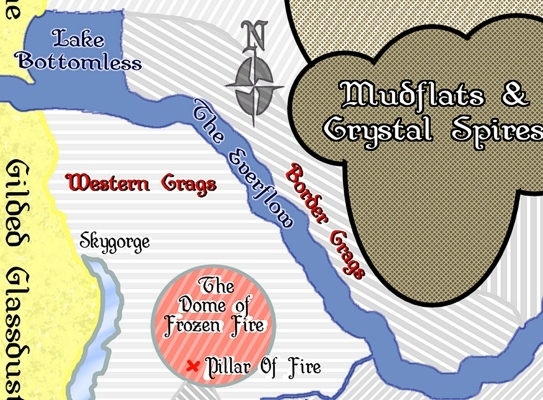
Some of the Elves searched the High Passes and Mountain Peaks; and of these, some – especially those guided by the raptors and other more solitary totems – came to enjoy the isolation and tranquility. These became the Calquessir, or High Elves. Others remained within the Forest that had nurtured them, especially those guided by the more gentle and herd-oriented Herbivore totems, where they searched for their lost kin by Arcane means and began forming ever-more-complex community bonds; these became the Taurquessir, or Forest Elves. And some found the rolling plains of the grasslands to their liking, dividing into smaller and more subtly distinct sub-groupings led by the Hunting Totems and the Building Totems. These became the Amrunquessor, the Plains Elves.

But none of them could find the vanished Spider-totem Elves.

Then Corallan summoned representatives of all four branches of the Elves to a summit. The other elves were overjoyed to be reunited with their lost kin, to know that they had not perished, had even prospered in many ways; for the Spider-representative was garbed in robes of finest silk, and bore weapons of power, and wore devices of great beauty crafted from gold and the finest gems. Yet, his pallid features decreed that wherever they had hidden themselves, it had begun to mark them; and the cruel expression of his face was most unElven and disturbing. Even as they rejoiced, they felt apprehension, and questioned him closely as to the whereabouts and circumstances of those who had been long-vanished from their company. Although the answers were evasive, those assembled learned the basics of Drow society and their purposes in setting themselves apart from the dwellers of the surface, and their history since dividing from their Kin. They answered,

“We believed that the surface world, with its myriad distractions for the senses, interfered with the development of the awareness of the weave. By living an ascetic existence within caverns deep underground, these distractions could be avoided, producing a manyfold increase in the powers of elvish perception and Spellweaving.” The elves who had accepted this concept had then been joined by members of the other subcastes, and in particular by large numbers of High Elves, who were always ready to follow their research wherever it led. The spider-clan began to utilize their Spellweaving abilities in the diverse manners of all the other subcultures, from the environmental manipulations of the Forest Elves to the raw Spellcraft of the High Elves. To protect themselves from “contamination” by Sunlight, they erected barriers and isolated themselves from the surface populace. In time, a schism erupted amongst the members of the newly-emerging subculture when the Spider-clan, closest to the Spider Elthrinast, began to expect that they would command, as they were the ones who had led the others underground; but the malicious Elthrinast spun webs of deceit and ambition amongst the High Elves and Civil War ensued. When finally the bloodletting ended, the former high elves had formed a mage-dominated ruling caste; the former plains elves, a religious caste; and the former Forest Elves, who had been caught in the crossfire, a servant caste.

And then Corallan appeared before those assembled, ending the interrogation. “Nature hath decreed that some of each of your peoples must be stood aside from the majority,” he instructed. “These few shall have as their homes the rivers and oceans of the world, gaining far more than is lost; and I shall, in furtherance of our bond with Nature, alter them that they may be at home in the places they will hereafter dwell. These should be drawn from those of your peoples whose Totems are already familiar with, even contented by, the waters: the Watersnake, the Waterspider, The Seagull, and yea, even the Beaver and Otter.”

“This is an abomination,” replied the representative of the Spider-totems, “and our people refuse to take part. Long have we dwelt apart from these surface-dwelling simpletons, and by choice so would we remain. I have been permitted to come forth from our hidden retreats for the sole reason of giving you this message: Our totems have learned to join, becoming one mind, one being, the Queen of the Spiderwebs, she who we have named Lolth in our Adoration; and we shall not permit Her to be lessened by the loss of the Waterspiders. She is our Goddess, our Mistress and our Guardian. Do not summon us again, Corallan; we look to you no longer.” And with that, he spun on his heel and stalked from the gathering.

“As my Children are ye, not my subjects;” announced Corallan in sad tones, cutting through the angry shouts of the others gathered, “and if the children of the Spider Totem have chosen to live apart, then so be it. So long as they impose their will apon no others, they shall be permitted to find their own paths to Wisdom; for who can foretell with certitude the shape of Futures still remote in their unlikelihood? Drow, I name them, Those Who Dwell Apart; and yet, the time may come when they discover that they have a role to play. We must proceed without the Spiders Of The Water; Nature, our Mistress, will brook no delay in her needs.”

And so it was that the Elven people were twice-sundered on the same day; as the followers of the Spider-queen, Lolth, declared themselves a race apart, and one-quarter of those whose totems were at home in the Water were forever transformed into the Isallithin, the Aquatic Elves. In but a short time, these became the glue that held what remained of Elven unity together. Their aquatic environs reached from the realms of the High Elves all the way to the sea, passing through all the other lands occupied by their Elven Kin. They became natural couriers and message-bearers, and while forever estranged from their Kin by physical transformation, they remained Elven in spirit. Over the ensuing generations, those lost to the aquatic totems were replenished in numbers, while the descendants of the chosen few found themselves guided by new totems – the languid Octopus, the savage Shark, the docile Shrimp, and the determined Salmon amongst many. And slowly, their communities scattered well beyond the realms of the other Elvenkind. It was the Aquatic Elves who first met Humans, though the humans recognized them not, avoiding the Seafolk from a fear inspired by the other Aquatic species, about whom all manner of wild tales had become the stuff of myth and legend.

Chapter 4:

“The Other”

It was when the Calquissir turned their attentions to the Fundamental Natures of Elves themselves that they discovered a truth which would ultimately shatter the disjointed unity of the Elves, perhaps for all time. The creatures initially created by Corallan were not dissimilar in attributes to the Humans they were modeled after; in order to achieve the attributes he desired, he was forced to create a second being to contain those attributes that were not desired. In all ways, these would be the opposite of the Elvish people. Nevertheless, they would forever be Kin to the Elves in subtle and convoluted ways. The Elves named these creatures the Illvaryssor, “The Other”, and began to search for these lost parts of their lives.

They were unsure of exactly what they would find, but logic yielded a formidable array of characteristics. Where Elves were slow to mature and long-lived, the Other would be quick. Where Elves were subtle of sensibility and thought, the Other would be rude and simple. Where Elves were wise and learned, the Other would be primitive and savage. Where Elves were born as blank slates, and needed to learn everything from their elders, the Other would have strong, even dominating instincts inborn , perhaps even an instinct strong enough to be termed a race memory. And where Elves were fair of feature, sheltered from the harshness of nature by their Spellwoven environments, the Other would be scarred, even disturbingly ugly.

At first, the Elves searched from a sense of lost kinship and curiosity; the estrangement with the Drow and physical separation from the Aquatic Elves having left a sore spot in the psyche, an itch that could not be scratched. And the chance of being able to consult a Race Memory of their early years, however dimly recalled, promised revelations of self-discovery that were beyond price. Even as the Elves searched, their Spellweavers were learning more of the Elven nature, and coming to a new appreciation of the genius of Corallan. The first Elves had not been created in adult form, as myth had long suggested; this had always seemed dubious because Elves have so little in the way of inborn instinct. The presumption had been that Corallan had somehow been aware of exactly what the fundamental knowledge required by his creations would be, and had created them with that knowledge in place. And, as much as they revered their creator, this had always seemed a little too much to ask. in fact, they now realized, the first Elves had been created as newborn babes, reared and sheltered by Nature itself. To protect these young Elves from the dangers of the wild for the quarter century until they reached sufficient maturity to care for themselves, a more aggressively-developing counterpart was needed; one ready and able to defend the community against any threat from an early age. In a sense, everything that the Elves now had was a gift from The Other, and a profound sense of gratitude and debt suffused the Elvish people of the time.

And yet the mystery remained – why were there no records of the Other? Why did they not appear anywhere in Elvish legend? Where had they gone – and why?

*************************************************************************************************

Some Notes on Language:
The only language that is even close to universal in Fumanor is “Arnost”, also known as “The Common Tongue”. Many Elves speak Arnost as their first language. “Elvish” is actually three languages:

  • Hithâinduil, vulgarly known as “High Elvish”. Attempts to preserve this language have largely failed. Not even the elves can read more than 1 in 4 words at best. The written language could be learned as a dead tongue provided that a suitable “Rosetta Stone” could be located, and provided that the character was proficient in Nuthânorl (below). To learn the spoken version would require finding someone who could already speak it – there are few candidates and less who have the time required.
  • Nuthânorl, vulgarly known as “Low Elvish” or “Common Elvish”. Almost all elves speak this tongue and many can write it. Those who can do neither will have it as a potential language and were human in recent memory. This is the most common second language, though it has also been corrupted and is now a pidgin language containing a mixture of true Nuthânorl and Arnost. Elves from Elessarune are more likely to speak this language than they are Arnost. The pure form of the language can be learned from the Drow.
  • Zamiel, commonly known as Drow. This can only be learned from the Drow themselves. The written variety of the language is especially difficult.

It’s probably worth noting that these langauges, and “Arnost” for that matter, were named by the elves of long ago, and are amongst the few surviving fragments of Hithâinduil. As this series proceeds, I will maintain and extend an ongoing glossary of terms at the end of each post, in alphabetic order.

The Ongoing Elvish Glossary

  • Arnost: Simple Speech (Modern “Common”, a human tongue)
  • Arrunquessor: Plains Elves
  • Calquissir: High Elves
  • Corallan: The First
  • Drow: “Those Who Dwell Apart”
  • Eltrhinast: “Guiding Spirit”
  • Hithainduil: High Elven Language
  • Illvayssor: “The Other”, a mythical race
  • Isallithin: “The Sundered”, a name applied to Aquatic Elves
  • Nuthanorl: Low Elven Language, Common Elven
  • Tarquessir: Forest Elves
  • Zamiel: Drow Language

*************************************************************************************************

Next time: Men, Dwarves, and The Prince Of Lies – all in Chapters 5 through 9! (And yes, despite a continual effort at concision, the chapters do get longer)…

Leave a Comment

Stop me if you’ve heard this one: An RPG, A Videogame, and a Bingo Game sit down in a bar…


Photo courtesy of stokfoto (Jeroen Thoolen).

Video Games and RPGs have shared a parallel evolution throughout their histories, going all the way back to the original such games (Colossal Cave Adventure in 1967 and [Original] D&D in 1974, which was based on 1971′s Chainmail rules for miniatures wargaming).

Throughout their histories, they have fed on each other, sometimes in a fairly conventional fashion (the various D&D computer games ranging from the D&D Computer Labyrinth Game of 1980 through to the better known Baldur’s Gate and more recent Daggerdale and the Legend Of Zelda RPG which took the complimentary evolutionary path, from computer game to tabletop), and sometimes in more indirect fashion.

The two have a lot in common insofar as the game mechanics of any RPG translate readily into computer code, they both have fundamentally similar storytelling techniques, and they both involve interaction with a narrator or GM who describes the action – in a computer RPG, that narrator is controlled by the machine, that’s all. They will often share fantasy elements and have other common elements. This commonality has existed throughout their history, but it is about to enter a new phase of development that merits a little scrutiny.

Initial Developments

Early developments in both types of gaming explored improvements in game play. The fundamentals of storytelling were being explored in both environments, while the human-game interfaces underwent considerable development. In the case of Tabletop RPGs this focused on exploration of the rules systems and examination of meta-issues and underlying design philosophies. Meanwhile, computer games developed from purely text-based to simple graphical games like Space Invaders, Asteroids, and later, more sophisticated games like Defender.

Unfortunately, these games were unable to hide the basic inability of players to interact with the game plot and narrative, reducing the plot to a basic script. More sophisticated programming techniques would be required before game play could further advance.

Glossy & Verbose

The development paths of the two game styles then appeared to diverge for a period. Programmers concentrated on the things that computer games were inherently good at, like fancy graphics and basic gameplay. Increased memory, processing power, and graphics capabilities meant that the visuals of games were increasingly sophisticated. At the same time, random selection of a number of scenarios began to be integrated into a number of games of the era, restoring an at least superficial resemblance to a truly interactive game.

Roleplaying games also worked on the aspects of their games that they were inherently good at – interaction with plot, character development, and uniqueness of setting and narrative. Character development in particular was liberated from the tyranny of randomness with the advent of point-based construction systems. New approaches to interactivity with the passage of in-game time, new methods to the simulation of skill systems, and new techniques for simulating the learning and growth of individuals as experience was gained by characters, all extended the veracity of gaming systems.

Simulation meets Interaction

Eventually, the simulation techniques inherent to computer games grew sufficiently sophisticated that they could even mimic interaction with the narrative. The results were a series of landmark efforts in the sub-field of computer-based RPGs, as TSR released their AD&D games. While the choices available to players were still confined to those inherently coded into the system and plotline, it was not always easy to tell that the plots were pre-scripted, even when you knew better.

At much the same time, computer-based tools for pencil-and-paper RPGS were developing beyond basic character generators. Everything from simple map generators to combat simulators achieved new standards of performance over the next few years.

The 32-bit era

Home computers evolved from 16 to 32-bit technology, operating systems advanced, and what we now think of as the internet became more than isolated bulletin boards. RPG aids became more sophisticated, and many applications nominally intended for other purposes such as spreadsheets, databases, appointment calendars, and more, were adapted to assist GMs. At the same time, RPGs entered a phase in their development in which two simultaneous paths were being explored: simplicity and refinement on one branch, and increasing sophistication and complexity of options on the other. All these movements culminated in a number of computer-based RPGs that set new standards for interactivity, such as games like Baldur’s Gate; but there were a number of other games in this period that blurred the lines between simulated rpg and traditional computer game with complex branching narrative structures that furnished a sophisticated illusion of choice on the part of the player. But game development then got side-tracked into the 3D and Real-time movements and away from the turn-based elements that they had shared in common with RPGs.

Gaming aids appeared to hit a peak in their development in this period. Sophisticated tools such as the official D&D character generator and Redblade made the tedium of GMing far less strenuous. Increasingly, however, this aspect of computer software development would also be diverted into the portability of documentation and tools of collaboration, as wikis and blogs began to evolve.

It was not long after these trends commenced that RPG development also became sidetracked by the d20/OGL explosion. For several years, it seemed that no other core gamesystem could survive, so ubiquitous was the d20 approach, fuelled by the runaway success of D&D 3.0 and 3.5.

In their own ways, all three strands of this narrative found themselves exploring seductive cul-de-sacs. In time, each would escape these traps, but it would not be immediate.

The MMORPG

MUDs, or multi-user dungeons, evolved from the same text-based origins as other computer games, but took a branching path instead of focusing on the graphical development of their more famous brethren. From time-to-time, the two strands of game software development converged, usually in the form of a multiplayer option attached to a traditional game. Beginning in 1997, the MUD assimilated a number of utility technologies such as chat software, added a reasonable standard of graphics similar to that of other computer games, perhaps five years behind those of the cutting-edge games of the time, and – beginning with Ultimata Online – emerged as the MMORPG. This, in effect, integrated and then supersized at least one traditional element of table-top RPGs, simultaneous multiplayer involvement. In 2004, the MMORPG exploded into popular consciousness with the massively successful World Of Warcraft. Some people were so alarmed by the success of this development that they prophesied the imminent death of RPGs as we knew them.

In part, this doomsaying was fueled by the edition war between D&D 3.x and 4e, which is still a divisive issue amongst the table-top gaming community. Guess what? It’s almost a decade later, and Tabletop RPGs are still around, and even looking more vigorous than they have in many years. The huge fanbase brought into the hobby by the success of 3.x fractured into support for a multitude of systems, harnessed the power of nostalgia to reinvent a number of classic games from the past, and hooked up with the online environment to fuel a massive wave of roleplaying blogs that continues to this day.

At the same time, computer gaming shifted from the personal computer to gaming consoles. The result was that the most interactive capability was lost – a hand controller simply doesn’t have the sophistication of a keyboard or the depth of the written word. Not being into console gaming myself, I could not even tell you whether or not these games have even achieved the limited interactivity of Baldur’s Gate, where your choices of action were limited to combinations of preselected options, and an overall fixed narrative.

The problem with WoW and other MMORPGs is that they are centralized, with a centralized structure, and the narrative is best described as “emergent” – it grows out of the actions and interactions of hundreds or thousands of players, each doing something “fun” – with that being defined largely in terms of older, more traditional computer games. It means that the game environment is constantly evolving, but in terms of an adventure with pacing and plot, it doesn’t go anywhere. Ultimately, I think it will be another in a long line of very successful evolutionary cul-de-sacs for computer gaming – though I might be wrong, and this wouldn’t be the first time, so don’t get upset if you disagree.

Online RPGs & The Modern Day

Recent years have seen genuine progress in the integration of computers and the tabletop RPG. It is now possible for players from many different geographic locations to play, across the internet, in a game with a genuine old-style GM. The first such software that I became aware of was Roll20, but I have since learned of others. The general classification of the software is “Virtual Tabletop” and it is so new than Wikipedia don’t even have a page for it yet! But that doesn’t mean that there aren’t resources and alternatives out there. Here’s just a handful:

  • Virtual Tabletop – a Wiki dedicated to telling you all you need to know about Virtual Tabletops, including a visual comparison chart. The number-one resource for the subject.
  • Guide to choosing a virtual tabletop program – a page from the above Wiki.
  • This page from Battlegrounds Links to Virtual Tabletop (VT) Programs suitable specifically for RPGs – a comprehensive list. As a bonus, if you scroll up to the top of the page, you’ll find an equally comprehensive list of Mapping Software, Sources of Free Art for RPGs, Roleplaying Aids, and Music & Sound Effects for RPGs.

An unusual engine for development

The big question is this: how to fund the future development of this software. If it takes off in popularity, becomes as big as DnD 3.x or WoW, there will be no problem – but I can’t see that happening. What we need is some well-funded sugar daddy to pay for the primary R&D for something we can adapt to become improvements in tabletop gaming software.

Believe it or not, there is such a creature.

Kids and teens have always been in the forefront of online gaming. Households are crammed with Xbox’s, Playstations, and Wii’s. But over the last half-decade, online gaming has taken off in a new direction for adults; everything from Online Poker Tournaments through to online Bingo, as offered by sites such as Costa Bingo, with innovative free-to-play games.

There’s money behind these games, money for R&D, and at the same time, they are closer in their software requirements to those of tabletop RPGs than might be expected. There is considerable overlap in the areas of the selective broadcasting to particular individuals of live transmissions, interactions between the central game and each player, and interactions and communications between players. How can you look for a “Tell” if your webcam view only updates once a second, and not in real time?

Gaming sites such as these will develop the necessary tools for their own use, tools which can be licensed and adapted to service other genres of gaming. In the years to come, simply because they can afford to fund the R&D, such sites will become a driving force for the advancement of Tabletop Gaming into the 21st century – the best friends we never knew we had. And that’s food for thought.

Update 9 Feb 2013: Play-by-Post gaming

Yesterday, Twitter user @StarArmy quite rightly took me to task for omitting a major subgenre of gaming from this article. He/She wrote,

“In your Campaign Mastery article about RPG evolution, why is there no mention of online text based RPGs such as forum RPGs? Since the mid 90s, hundreds of roleplaying games have been started on the web, played by forums and email lists. Check out Wikipedia’s article on Play-by-post gaming. I have spent much of my life GMing Star Army, [Sci-fi] a PbP community. Forum RPGs aren’t tabletop and we’re not video games, we’re roleplayers writing back and forth. Some have GMs, some not.”

The reason PbP gaming doesn’t get a mention in this article is because I’ve never played that way, and would rather send out an incomplete article than an inaccurate one. We then went on to compare the roles of the moderator of such a game (when there was not a GM) and a GM. StarArmy wrote, “A GM describes the setting and controls NPCs. A moderator is mainly there to enforce behavior guidelines.”

I have to admit that I found all this very interesting. What StarArmy was describing was, to my mind, very similar to an MMORPG, in which the story is an emergent property of the interaction of players. Strip an MMORPG of its graphical inheritance from traditional computer games, and what you are left with is a live action RPG operating in real time. An archive or transcript of such a game would look remarkably similar to the archive or transcript of a PbP game, though it would be sliced up into much smaller components due to the real-time interactivity of the MMORPG.

“Although text-based roleplaying has exploded in popularity on the web, in theory it could be played by snail mail too,” according to StarArmy. Twitter user @Canageek then added, “Keep in mind, that is also only one type of PbP. The other is just a traditional RPG played via typing on forum” – which, of course, would be a direct descendant of the PBEM (Play by E-mail) games of yesteryear.

PbP gaming would appear to be a crossover point, or perhaps an intersection point, between MMORPGs and traditional RPGs which evolved from PBEM origins. They may or may not have a directed narrative under the control of a GM; where they do, they resemble a traditional tabletop RPG played by some form of correspondence, and sped up via the speed of the modern internet. Where they don’t have a GM, the narrative is an emergent property of the chaotic system of individual actions within a common game world – all the players act simultaneously, and then react simultaneously to each other’s actions.

David Ball – Twitter user @ongoingworlds – pointed out that PbP games “are more like collaborative writing than tabletop [RPGs}”. That similarity, and in particular the resemblance to a shared-world anthology being crafted in parallel by each participant rather than sequentially, episode by episode, had also not escaped me. I had deliberately avoided clouding the subject by including the evolutionary interactions between various forms of gaming and “traditional” literary fantasy in my article – lack of time, if nothing else – but if I had done so, the resemblance to a PbP archive and a series like Thieves’ World would also have merited mention.

Text-based RPGs aren’t just a strange offshoot or hybrid of computer games, mass communications, forum technologies, and tabletop RPG elements. They are their own evolutionary path, which may have emerged from the same cultural niche as tabletop RPGs but have forged their own path. As someone who writes – both in the literary sense, and the RPG sense – the attraction of PbP gaming seems very obvious to me. I wish I had the time to investigate it more fully. But at the very least I’m glad to be able to acknowledge the gaming format of PbP here and rectify an obvious-in-hindsight deficiency. Thanks to @StarArmy, @Canageek, and @ongoingworlds for taking the time to talk to me about it – and for making the effort of bringing the oversight to my attention.
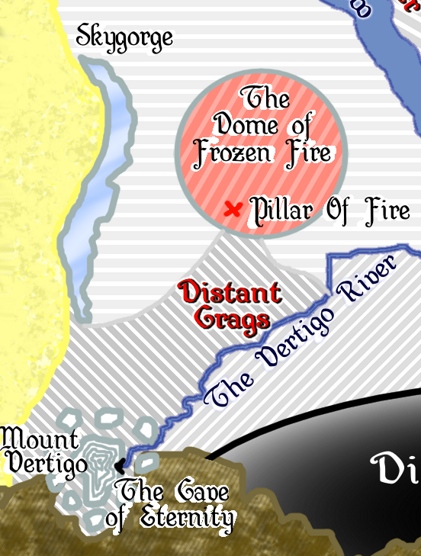
Comments (9)